Bible moment
The Bible moment
In Genesis 18:22–33, Abraham asks whether the righteous should be swept away with the wicked. He appeals to the Judge of all the earth and repeatedly asks whether the place might be spared for the sake of righteous people. Abraham names decreasing numbers—fifty, forty-five, forty, thirty, twenty, and ten. The passage ends with this conversation. It does not say that ten righteous people were found, and this scene should not show judgment already happening.
Look closely
What children can notice
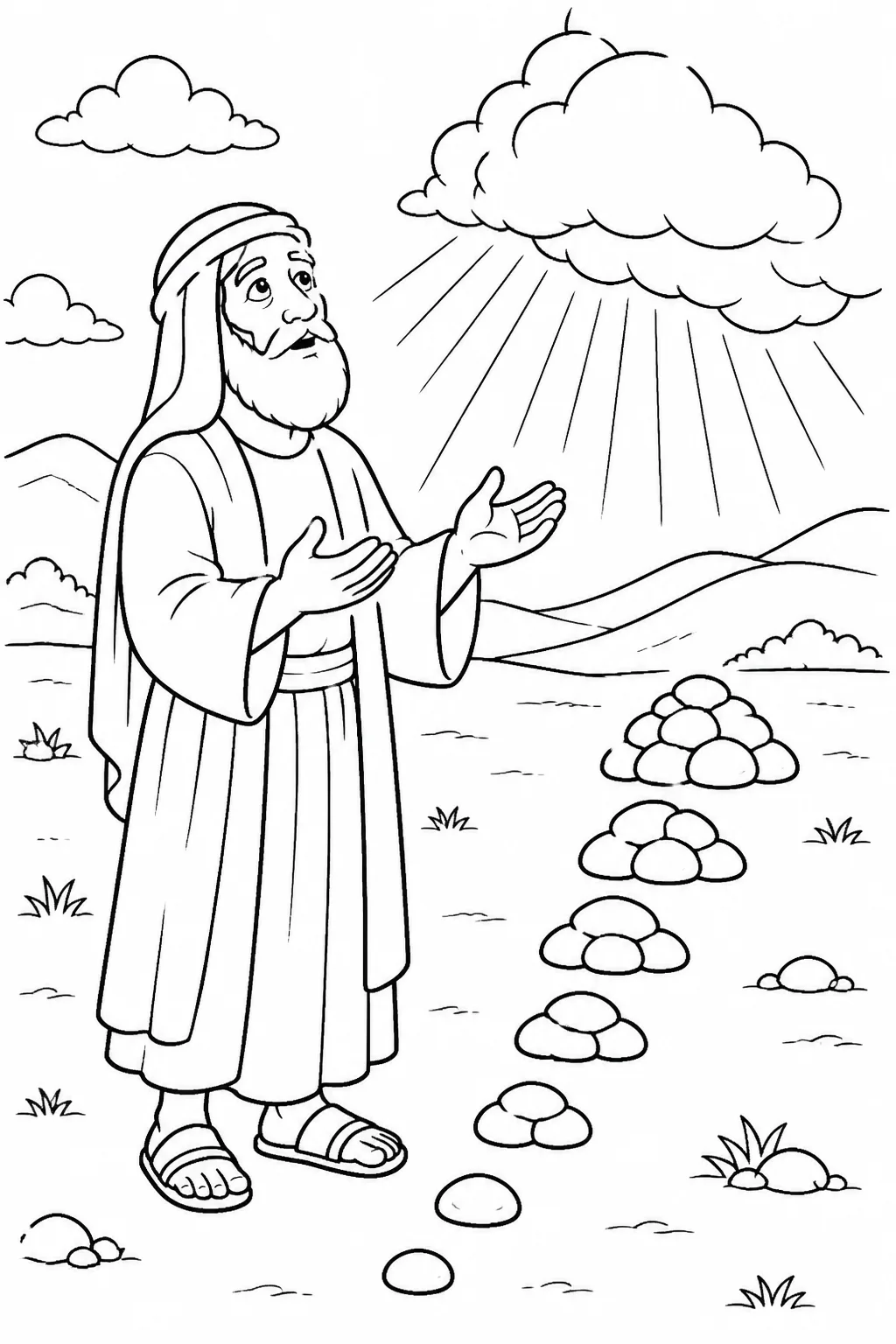
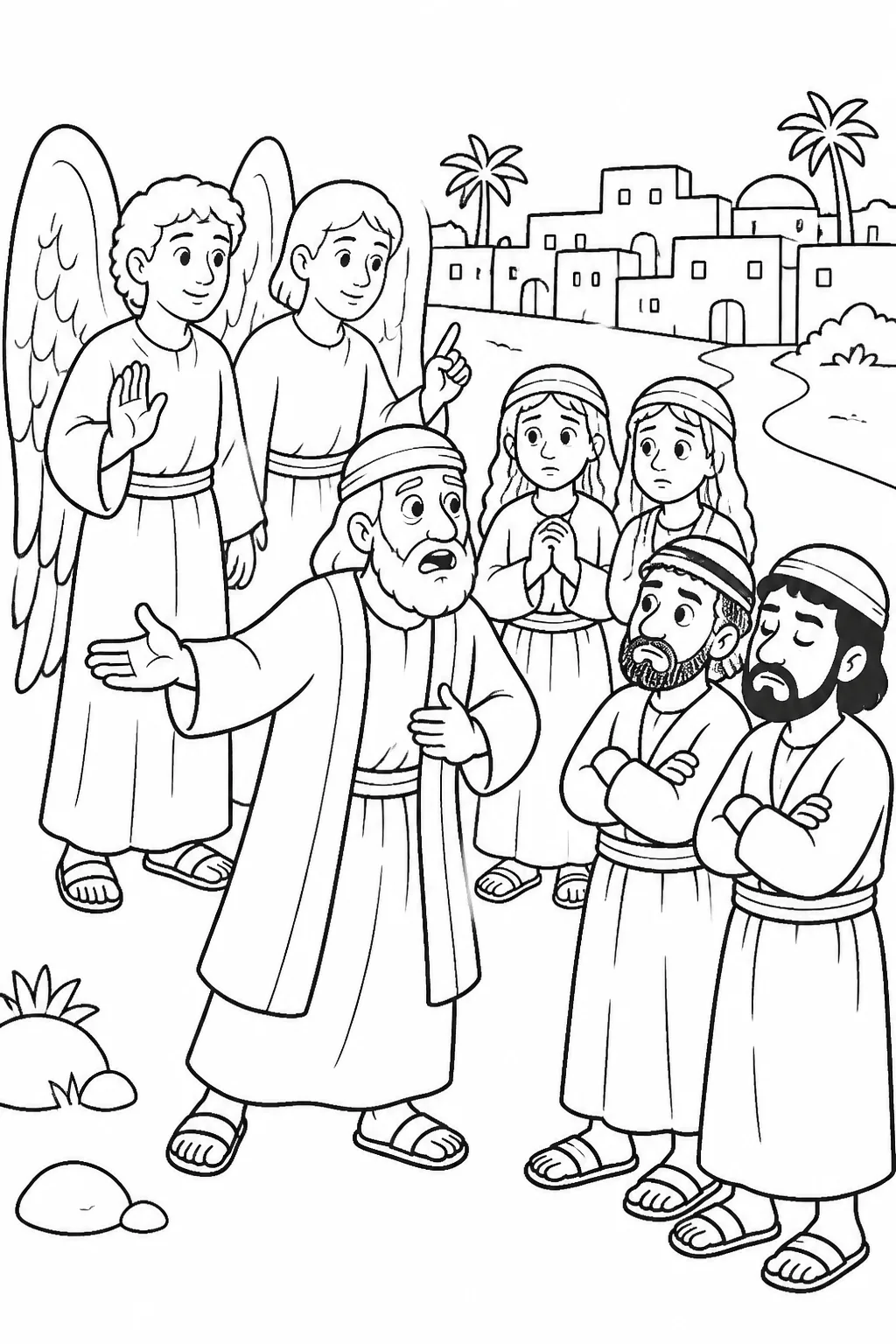
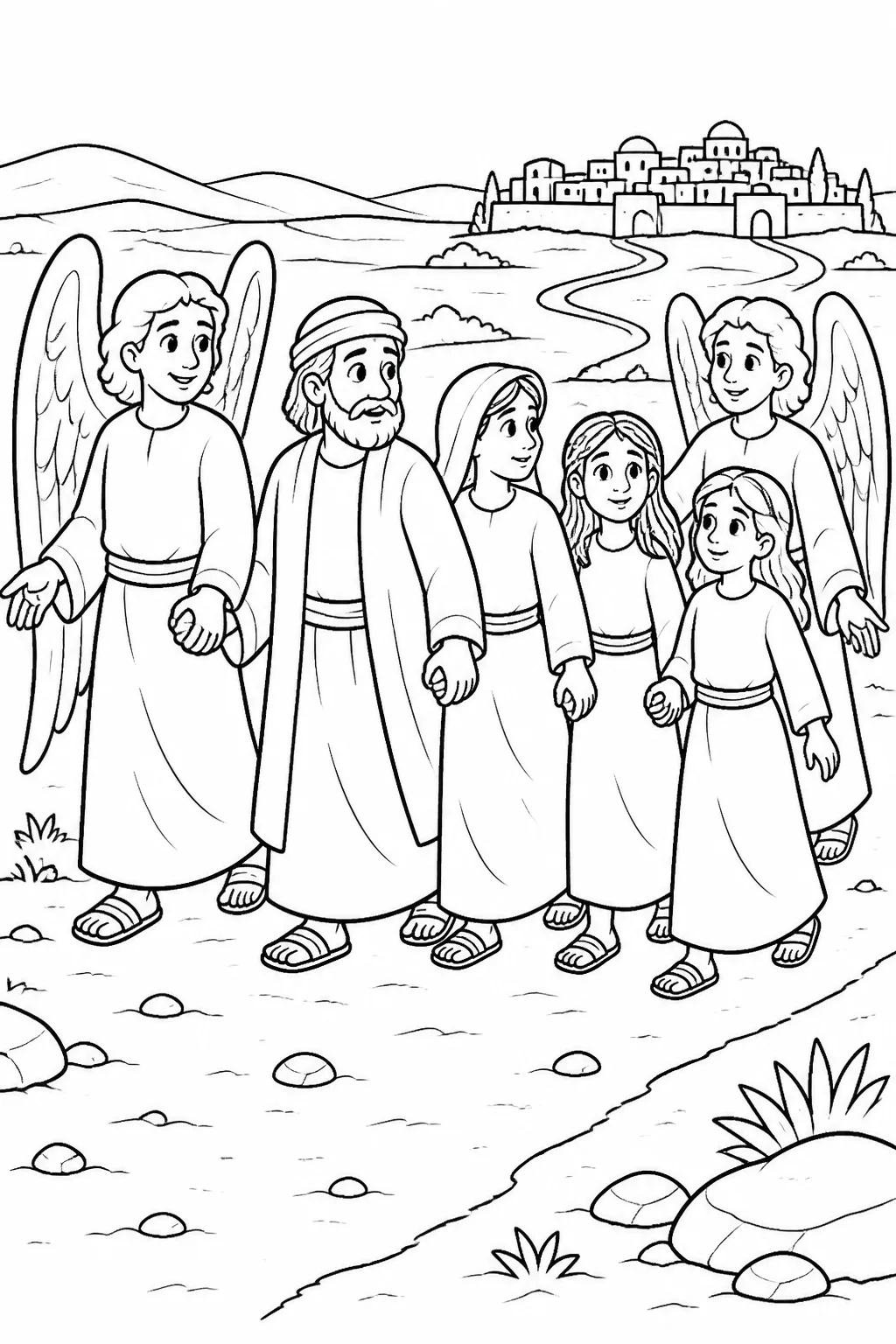
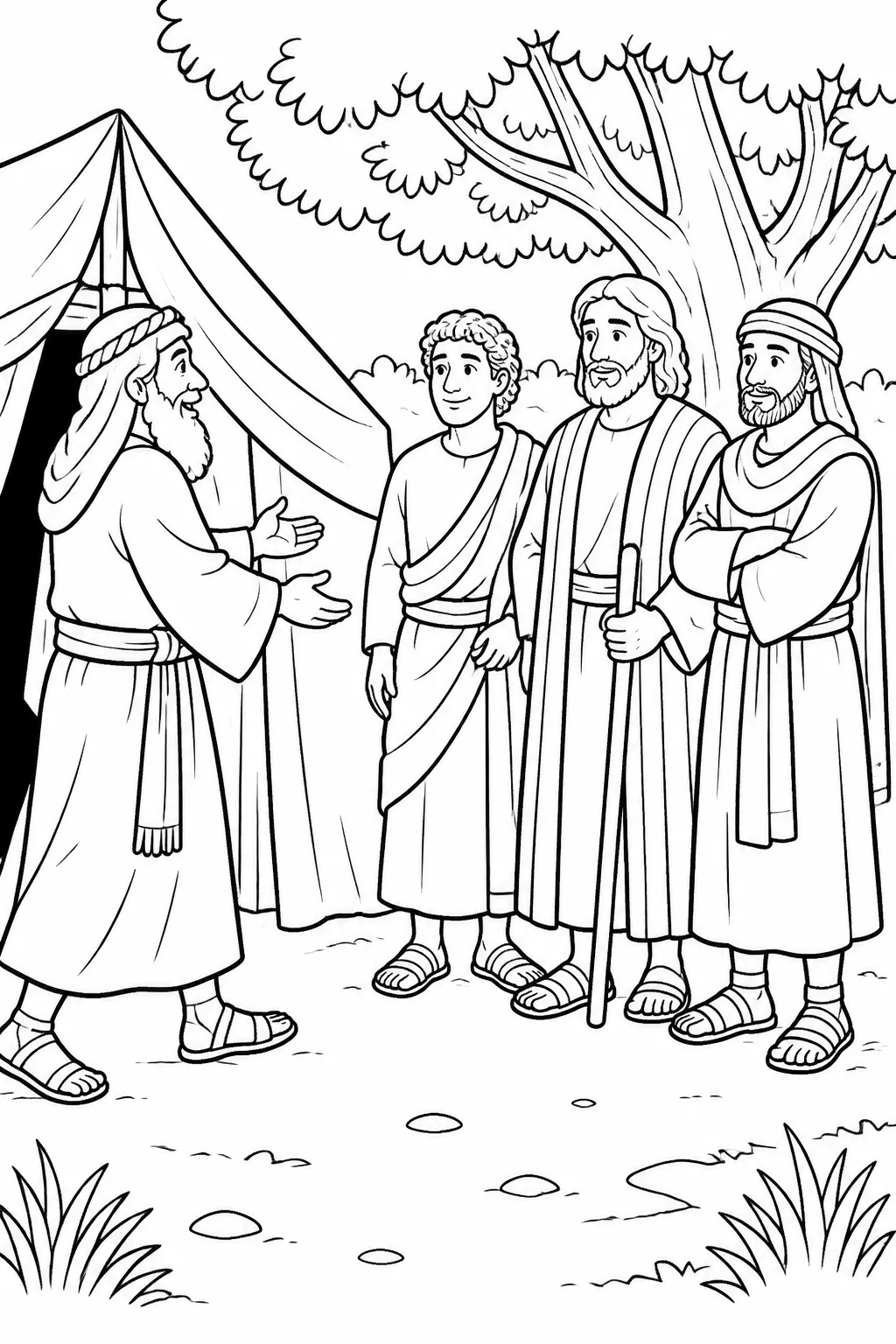
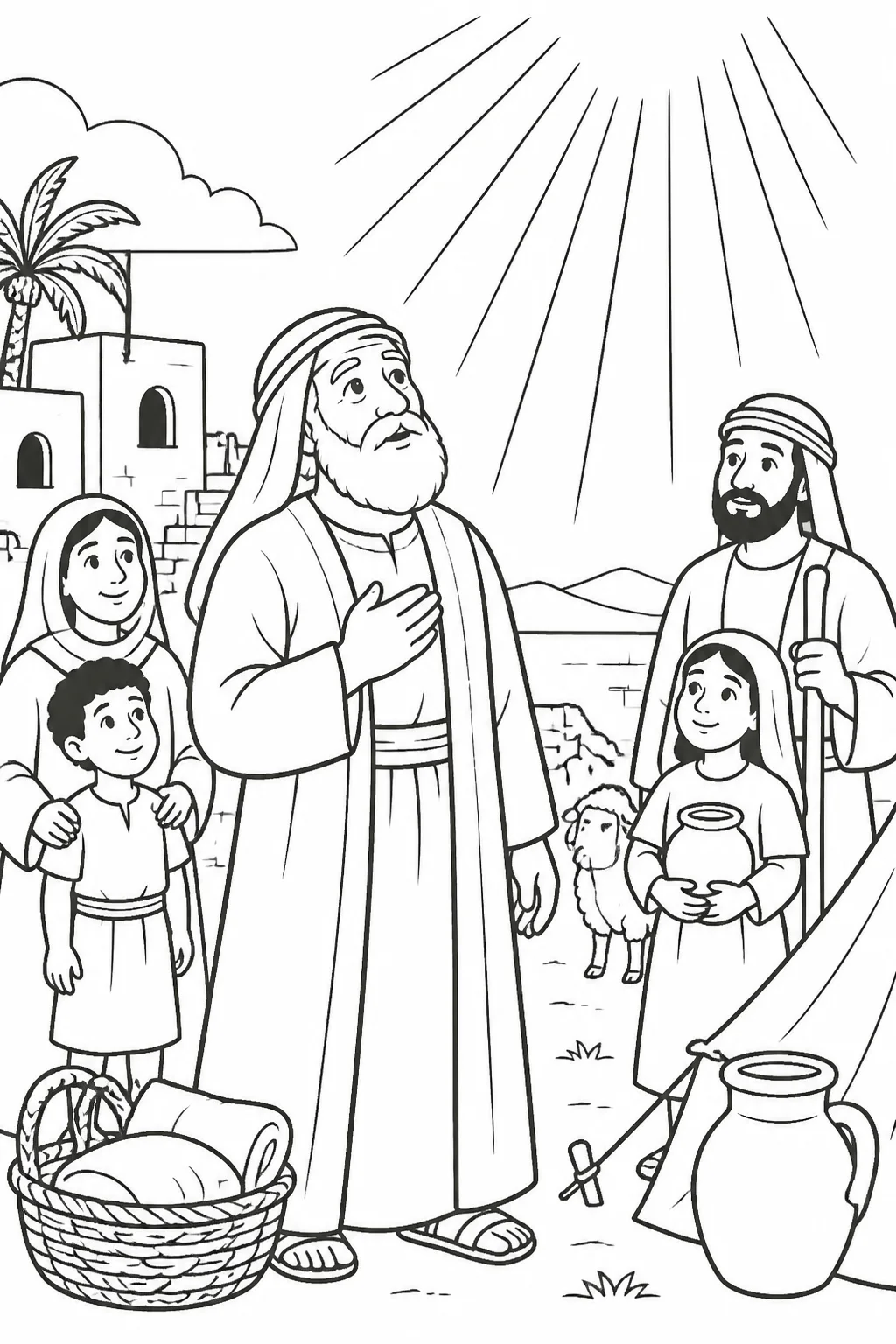
Abraham respectfully stands before the LORD and asks whether the righteous should be swept away with the wicked. A simple open landscape and Abraham’s thoughtful, pleading posture communicate intercession, mercy, and fairness. Small number markers or grouped stones may represent the decreasing numbers he names without adding people or events.
Talk together
Talk about it
- What was Abraham asking God to do?
- How can we pray for mercy and fairness?
For families, church, and class
Use this page
Use this page when teaching Genesis 18:16–33 to older children. Invite children to notice Abraham’s respectful posture and the changing number markers. Explain that intercession means asking God to help or show mercy for others. Keep later destruction and rescue scenes separate. Avoid adding people, city events, or a generic image of God.
Source note
From this passage
Genesis 18:22–33 · Sodom and Gomorrah
Abraham respectfully stands before the LORD and asks whether the righteous should be swept away with the wicked. A simple open landscape and Abraham’s thoughtful, pleading posture communicate intercession, mercy, and fairness. Small number markers or grouped stones may represent the decreasing numbers he names without adding people or events.