Bible moment
The Bible moment
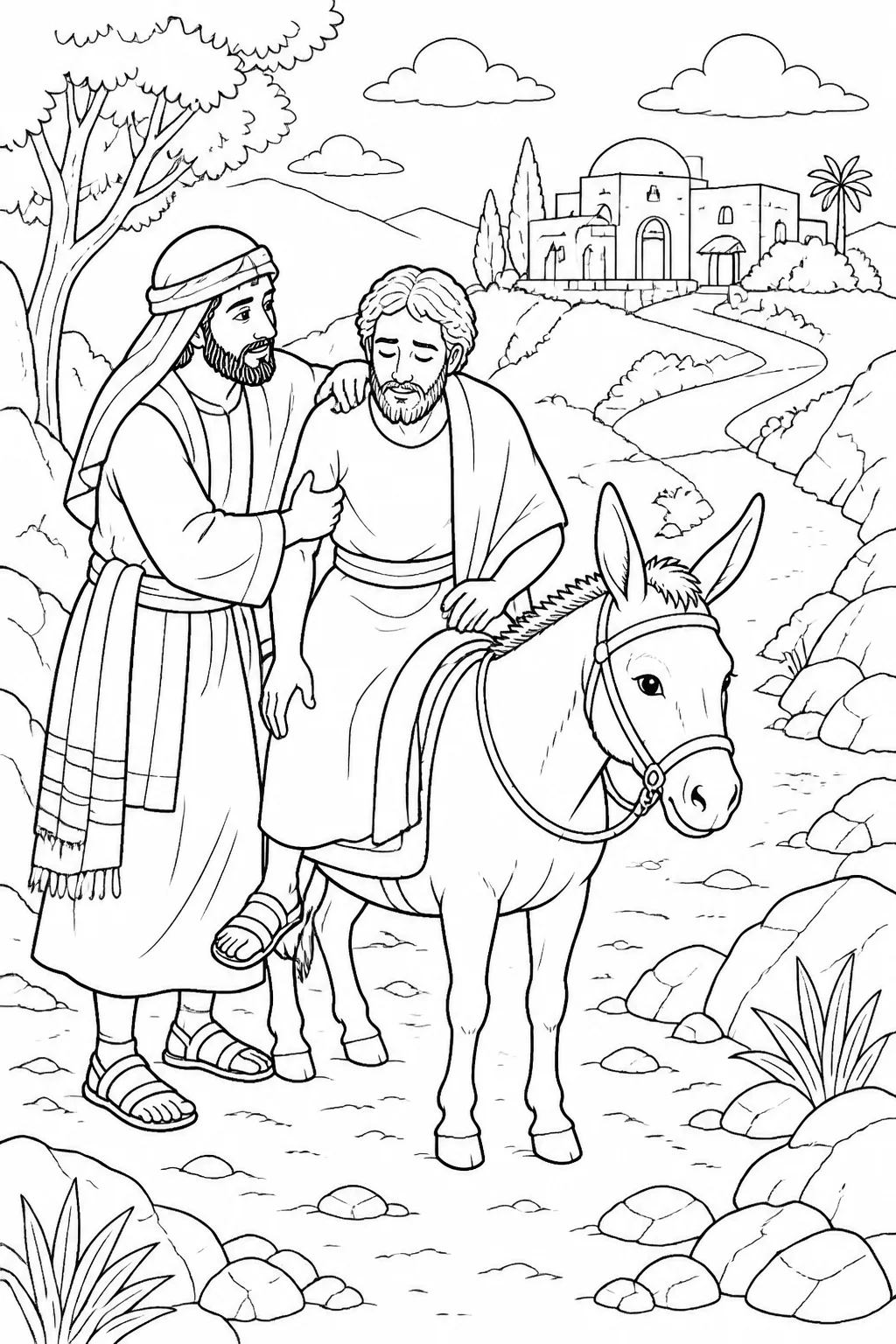
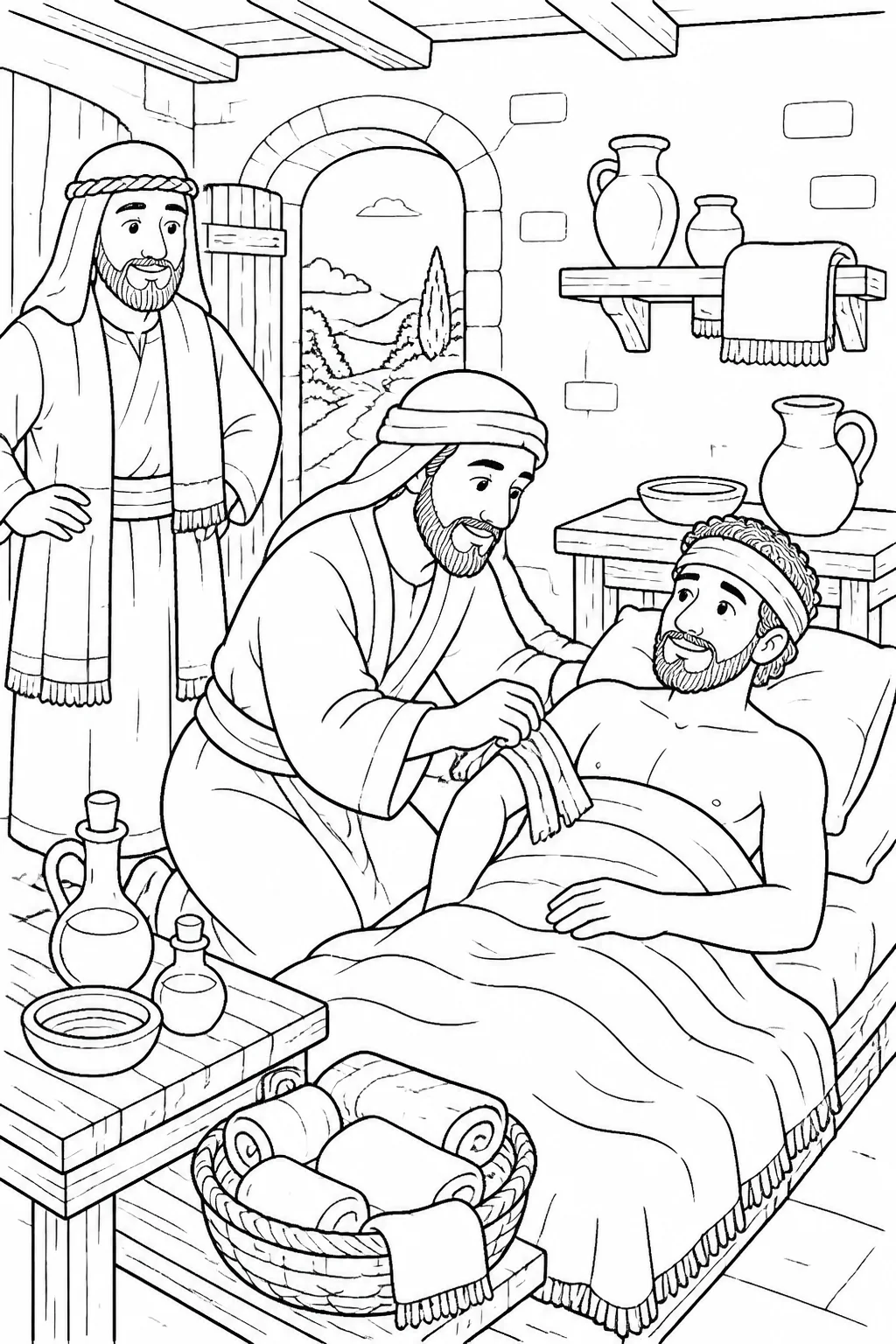
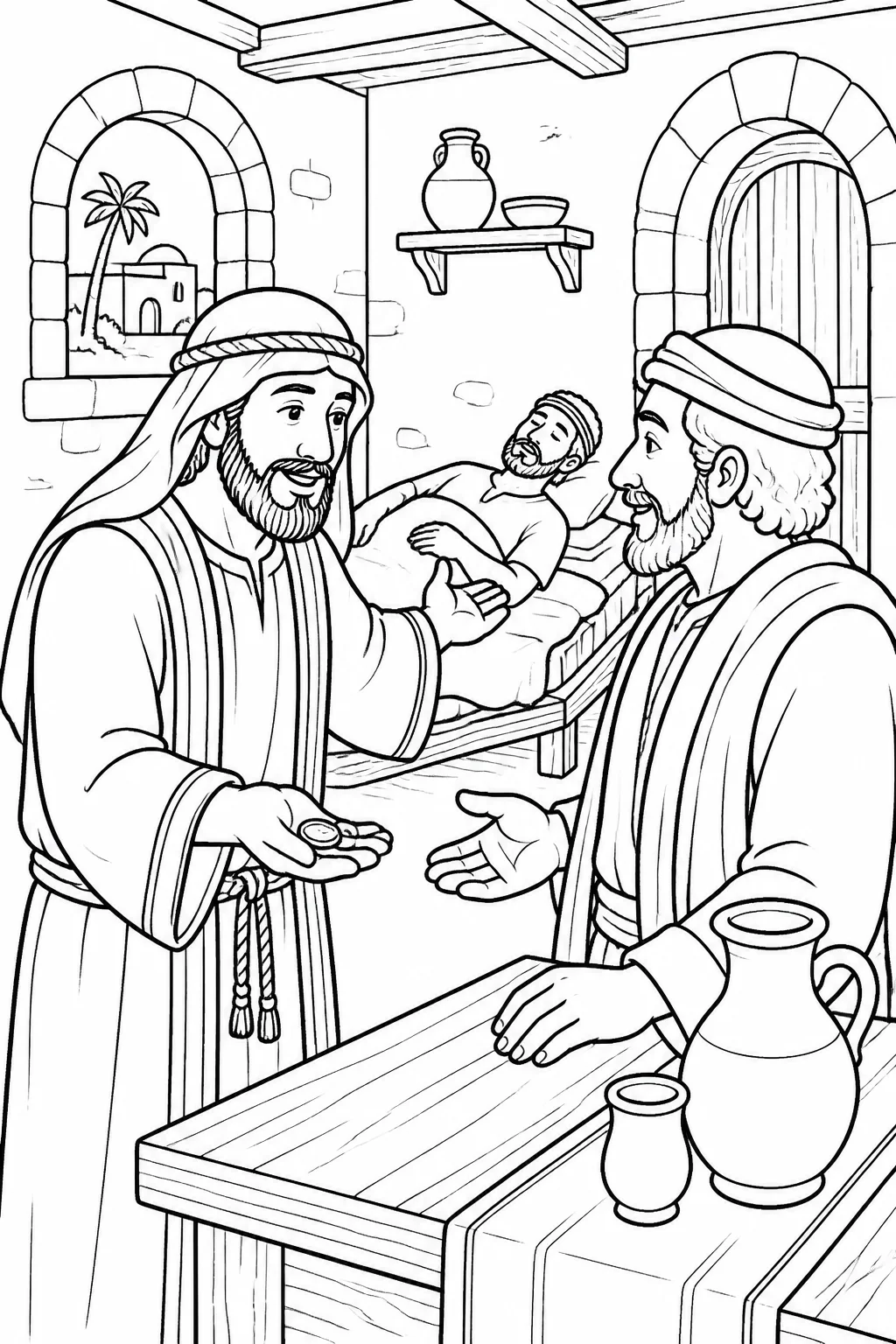
In Luke 10:25–37, Jesus tells this parable after a law expert asks what he must do to inherit eternal life and then asks, “And who is my neighbor?” Jesus describes a traveler going from Jerusalem to Jericho who is attacked, stripped, beaten, and left half-dead. A priest and a Levite see him but pass by on the other side. A Samaritan sees him and has compassion. He binds the traveler’s wounds, pours on oil and wine, places him on his own animal, brings him to an inn, and cares for him. The next day, he gives the innkeeper two denarii and promises to repay additional costs. Jesus asks which person acted as a neighbor. The law expert answers, “The one who showed him mercy.” Jesus says, “You go, and do likewise.” The passage emphasizes mercy shown through practical action, without explaining why the priest or Levite passed by.
Look closely
What children can notice
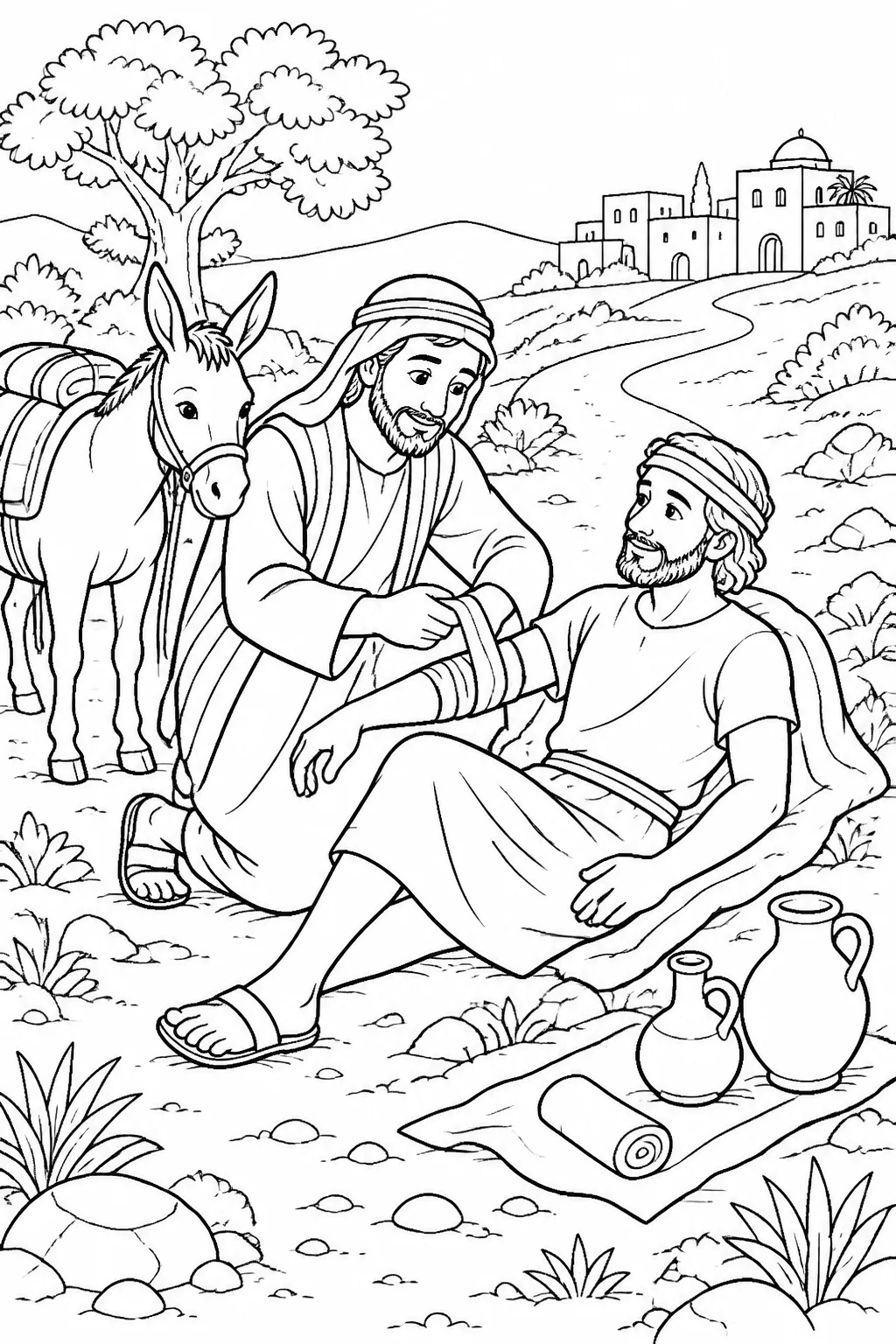
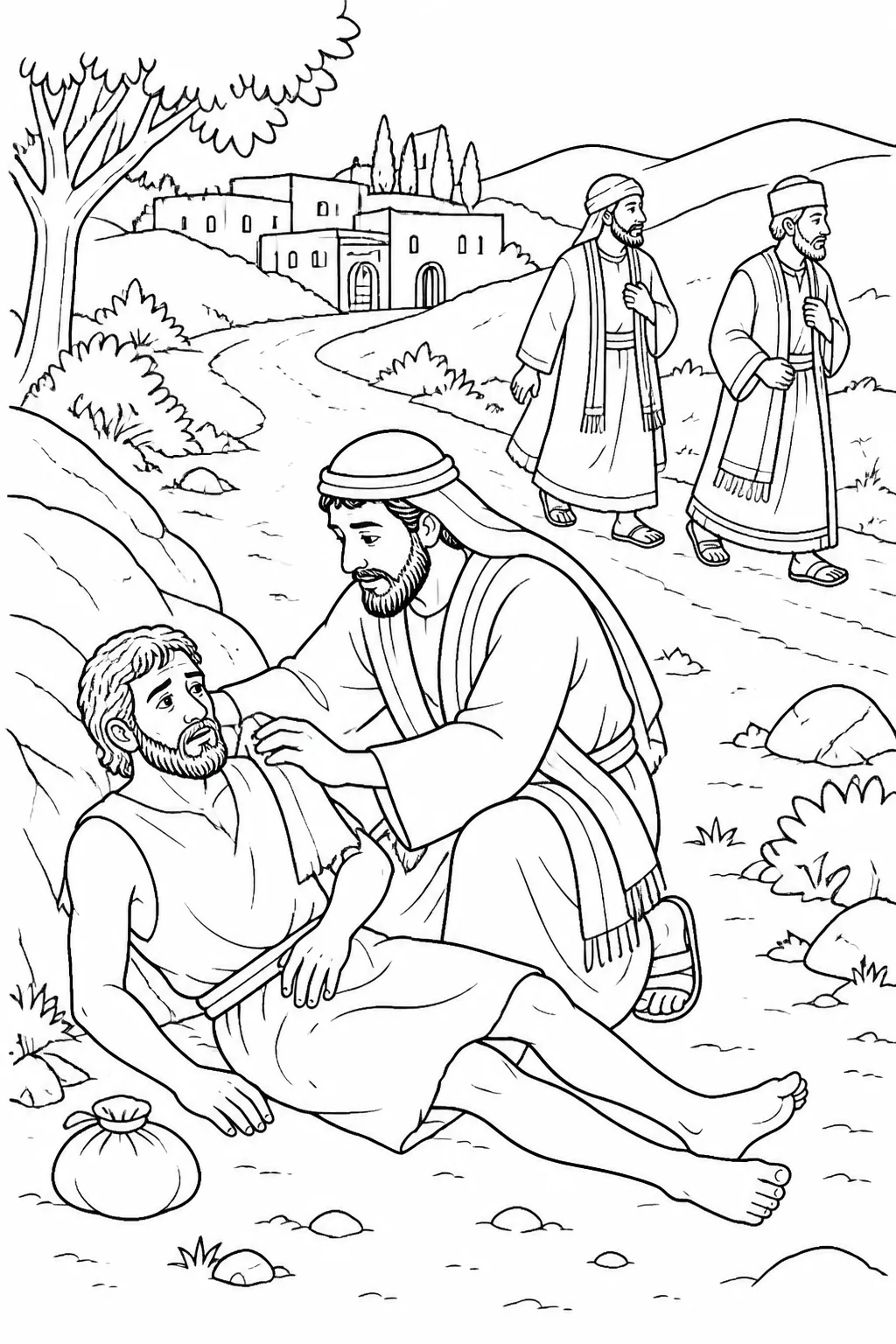
A child-friendly scene of the Samaritan kneeling beside the traveler on the roadside, gently binding his wounds with bandages while oil and wine containers rest nearby. The Samaritan’s animal stands beside them, emphasizing practical mercy and care without graphic injuries.
Talk together
Talk about it
- What kind action did the Samaritan take?
- How can you safely help someone who needs care?
For families, church, and class
Use this page
Use this page for Sunday school, family Bible reading, classroom discussion, or homeschool lessons on compassion and loving one’s neighbor. Invite children to notice that the Samaritan did more than feel concern: he acted, cared for the traveler, and continued helping. Remind children to seek a trusted adult’s help in emergencies.
Source note
From this passage
Luke 10:33-35 · Parable of the Good Samaritan
A child-friendly scene of the Samaritan kneeling beside the traveler on the roadside, gently binding his wounds with bandages while oil and wine containers rest nearby. The Samaritan’s animal stands beside them, emphasizing practical mercy and care without graphic injuries.