Bible moment
The Bible moment
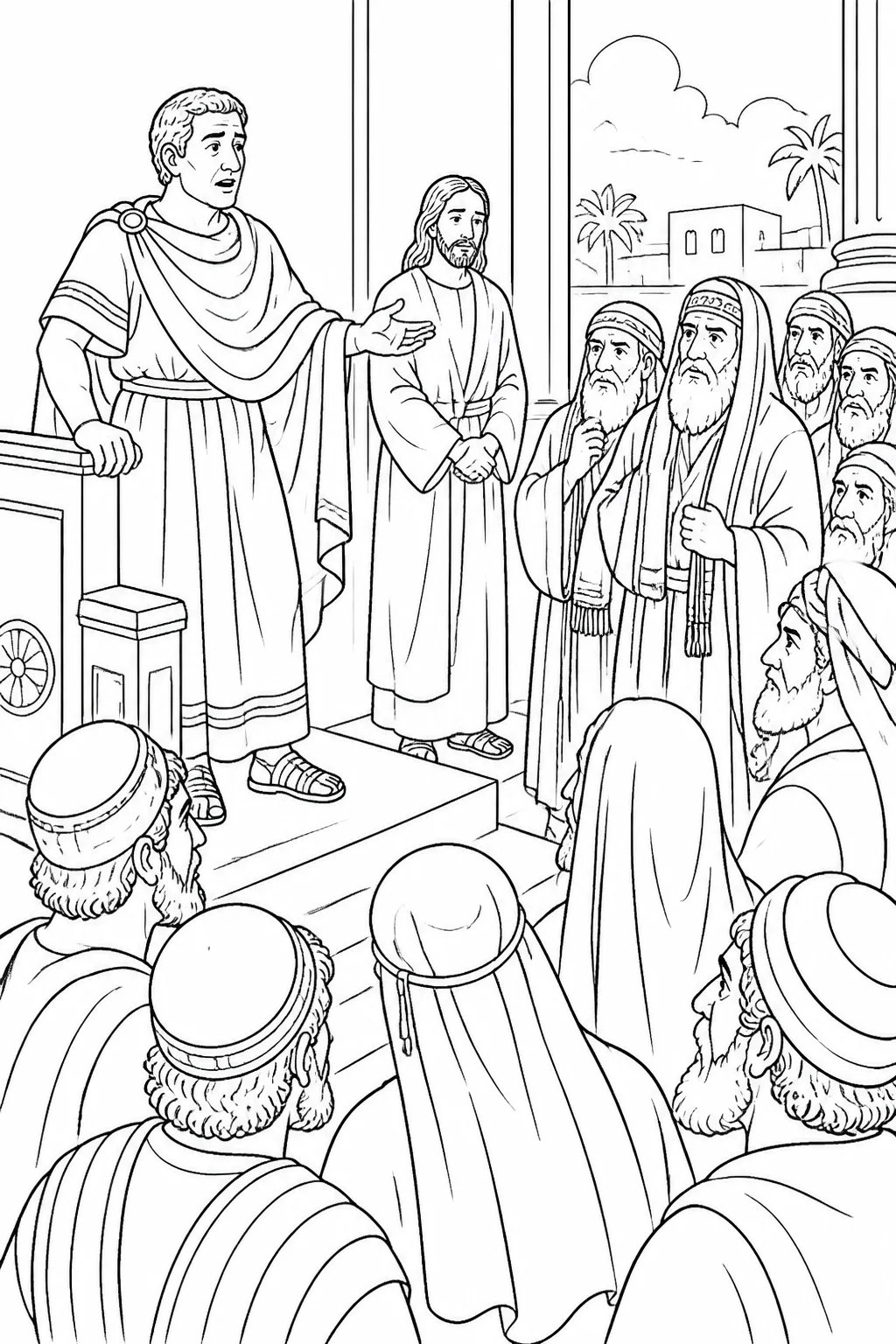
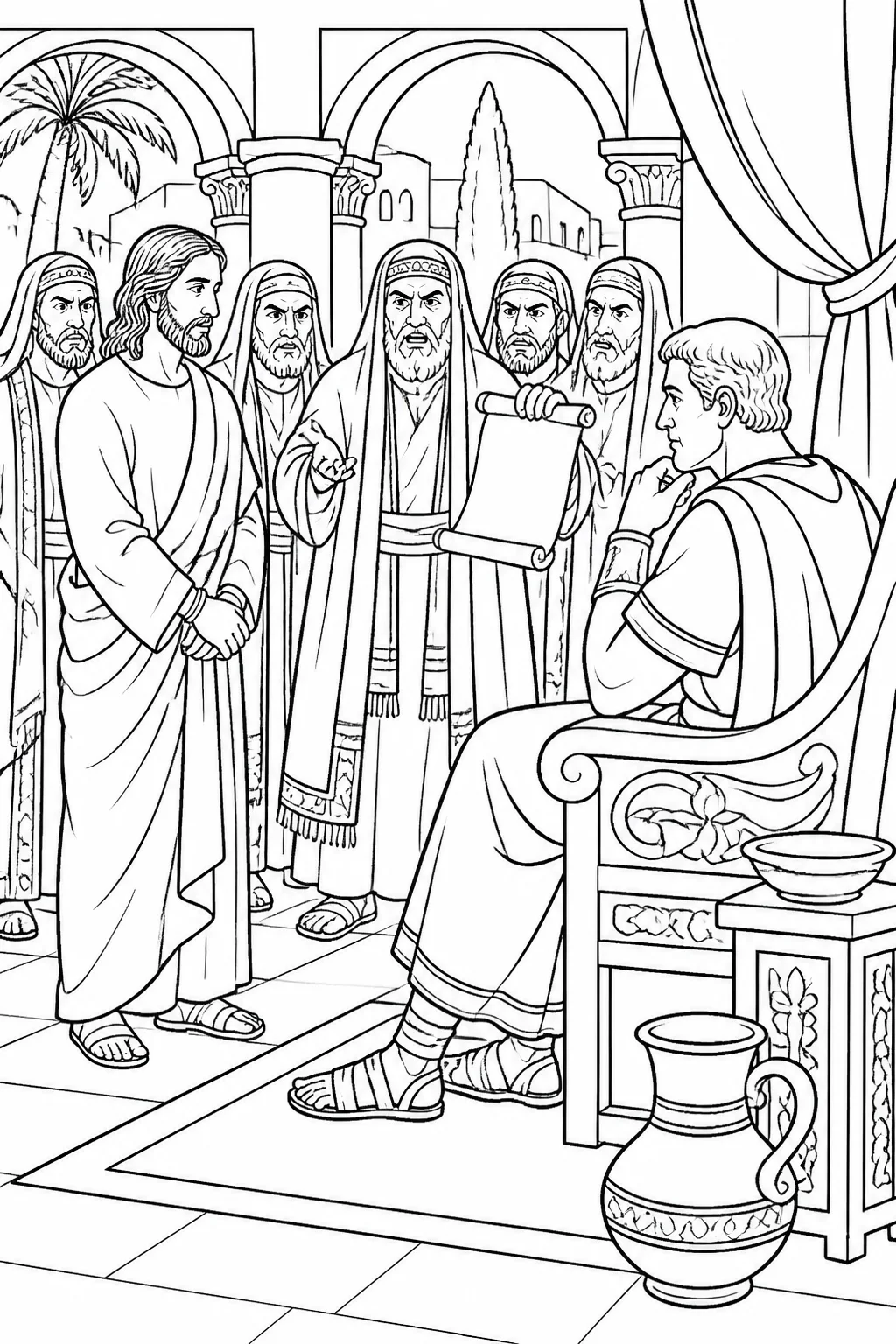
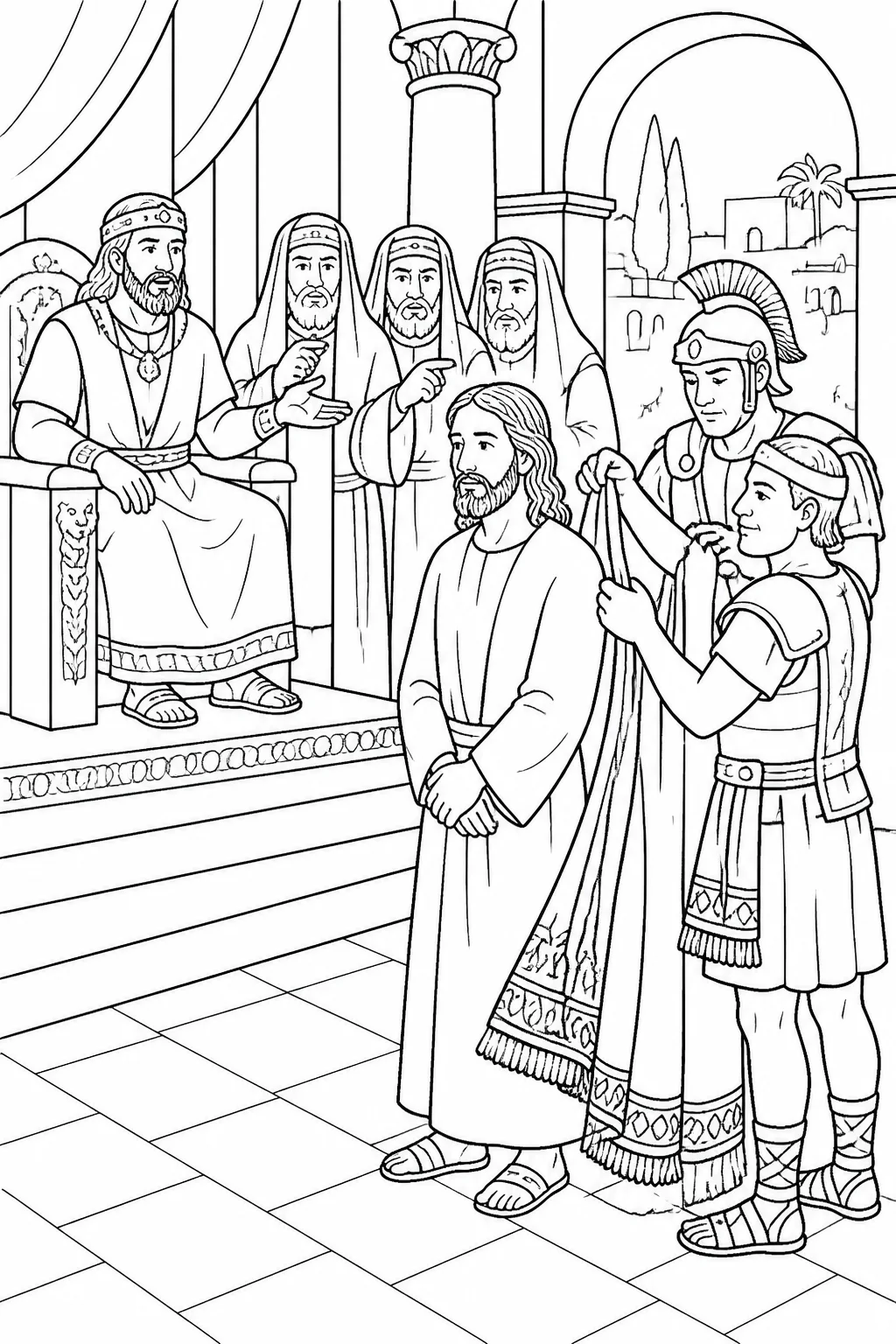
Luke 23:13–17 says Pilate gathered the chief priests, rulers, and the people. He explained that he had examined the charges against Jesus and that Herod had also sent Jesus back. Neither had found Jesus guilty of the accusations. Pilate then said he would punish and release Jesus. This passage clearly presents the stated lack of guilt, while also showing the pressure surrounding Jesus. Luke does not say that Herod formally conducted a separate trial or issued a separate verdict. The account continues with the crowd demanding that Jesus be taken away, but this scene focuses on Pilate’s announcement before that demand is recorded. Use the specific groups named in Luke rather than blaming all Jewish people. Jesus remains composed while others accuse and discuss what should happen to him.
Look closely
What children can notice
Pilate addresses the chief priests, rulers, and people, explaining that neither he nor Herod has found Jesus guilty of the charges. Jesus stands nearby while the gathered groups listen, highlighting the stated lack of guilt.
Talk together
Talk about it
- What did Pilate say about Jesus’ guilt?
- How can we show courage and self-control when others pressure us?
For families, church, and class
Use this page
Read Luke 23:13–17 with older children, then point to the difference between accusations and a finding of guilt. Invite children to notice Jesus’ courage and self-control. Remind them to speak about the specific leaders and crowd in Luke’s account, not about an entire people. Do not extend this scene into the crucifixion or add details from other Gospel accounts.
Source note
From this passage
Luke 23:13–17 · Arrest and Trial in Luke
Pilate addresses the chief priests, rulers, and people, explaining that neither he nor Herod has found Jesus guilty of the charges. Jesus stands nearby while the gathered groups listen, highlighting the stated lack of guilt.