Bible moment
The Bible moment
Luke 24:19-24 records what the two disciples tell Jesus during their journey. They speak about Jesus of Nazareth, whom they describe as powerful in works and words, and say that he was handed over and crucified. They also explain their hope that he would redeem Israel. The disciples report that some women and others found the tomb empty and said angels had appeared. They add that they had not seen Jesus. These details are presented as the disciples’ report within the conversation. This passage does not give a complete account of every resurrection appearance. Cleopas is named, but Luke does not name the second disciple. The travelers are on the road to Emmaus, after leaving Jerusalem on the same day as the events just described. The account continues with Jesus explaining Scripture concerning the Messiah’s suffering and glory. Families can read this passage carefully, remembering that the disciples are sharing what they understood and had heard at that point in the story.
Look closely
What children can notice
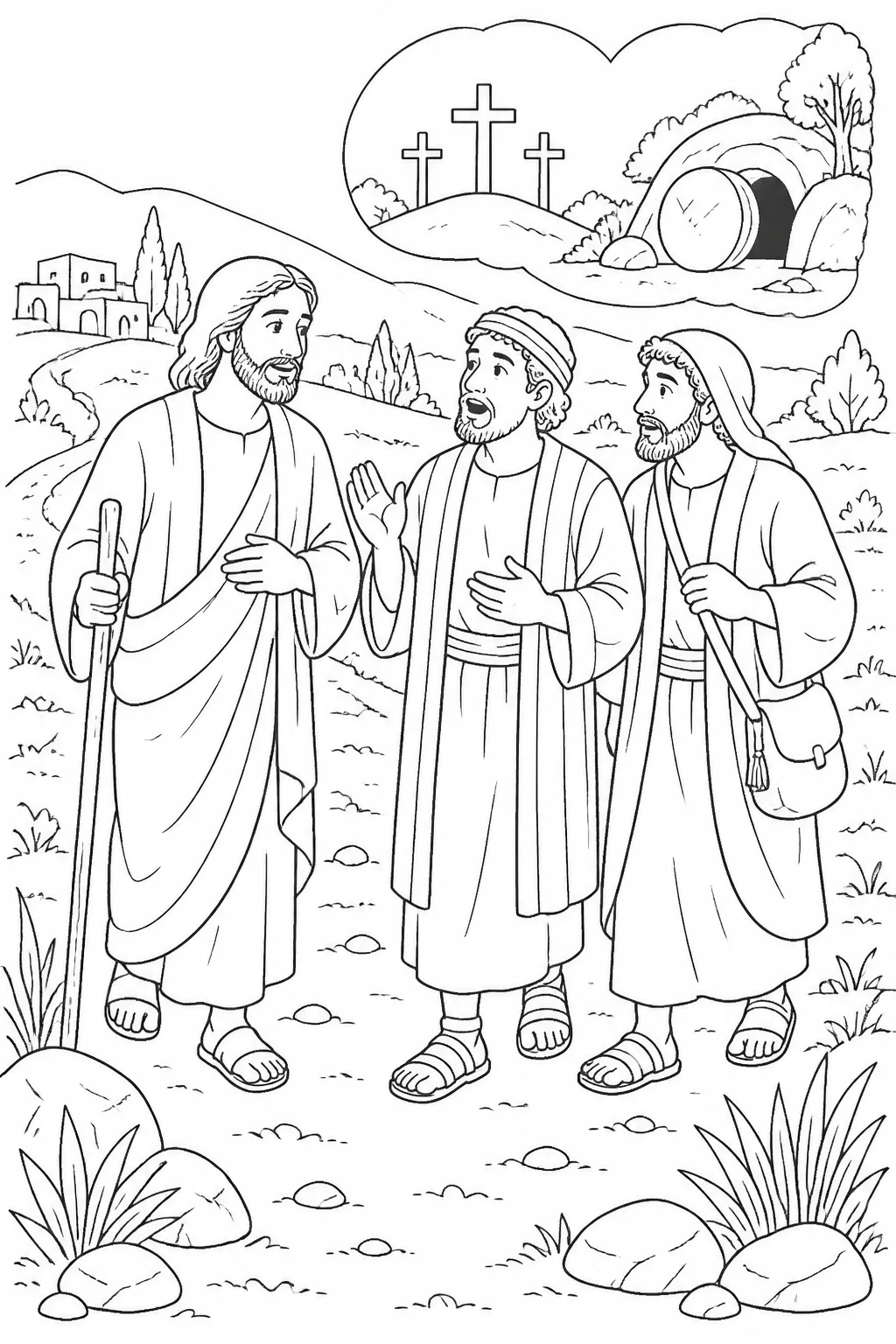
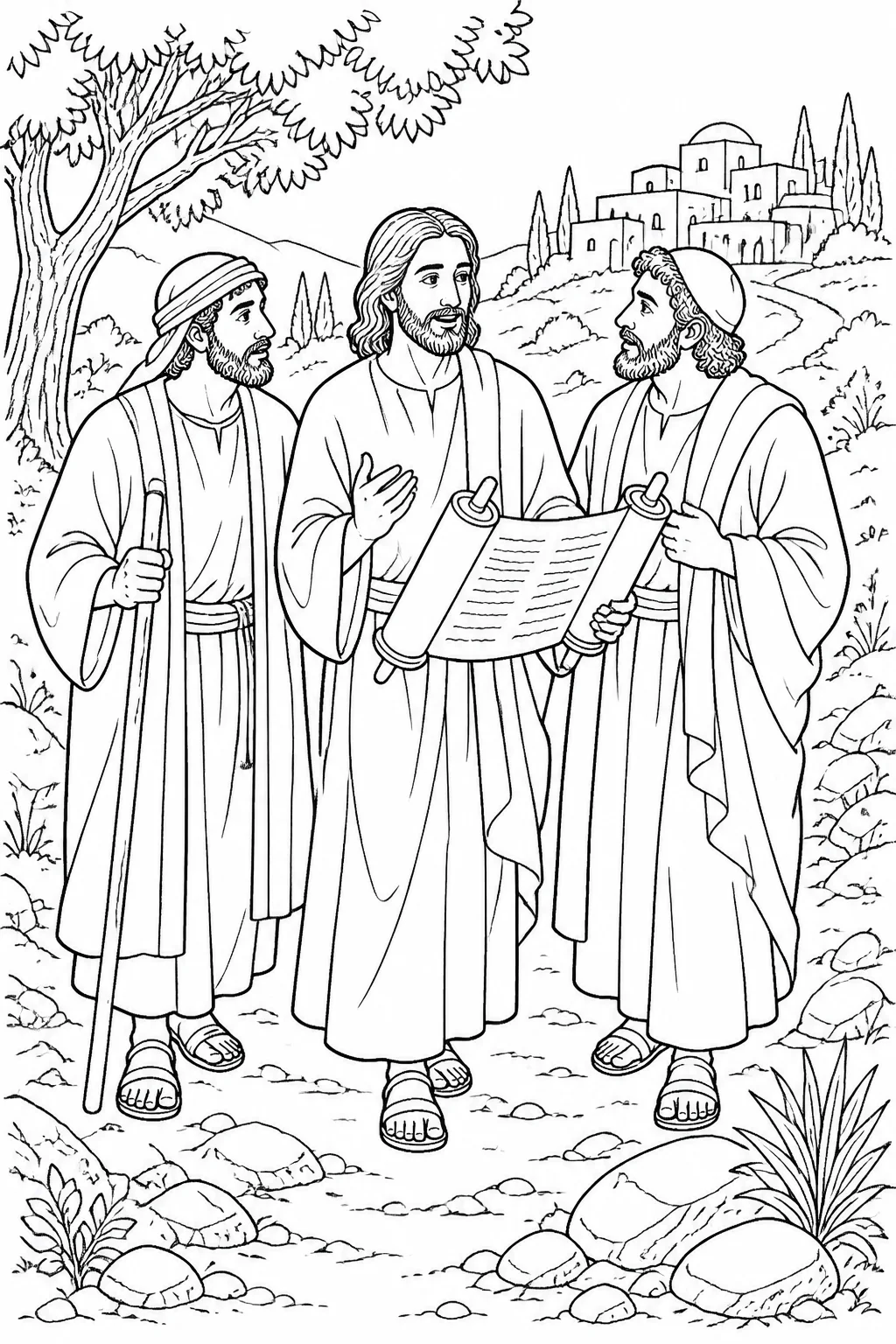
Along the road, the two disciples explain the reported events in Jerusalem to Jesus: Jesus of Nazareth, his crucifixion, their hope, and the report that the tomb was empty. Represent the crucifixion and empty tomb symbolically and non-graphically, such as through a small inset-style background or simple conversation scene.
Talk together
Talk about it
- What did Cleopas and the other disciple tell Jesus?
- Why is it important to listen and learn from Scripture?
For families, church, and class
Use this page
Use this page with Luke 24:19-24 when teaching the Emmaus road story. Invite children to identify which details were the disciples’ report, then discuss how Jesus helped them understand Scripture. Keep references to crucifixion and the empty tomb non-graphic, and avoid adding dialogue or extra witnesses to the road scene.
Source note
From this passage
Luke 24:19-24 · The Emmaus Disciples
Along the road, the two disciples explain the reported events in Jerusalem to Jesus: Jesus of Nazareth, his crucifixion, their hope, and the report that the tomb was empty. Represent the crucifixion and empty tomb symbolically and non-graphically, such as through a small inset-style background or simple conversation scene.