Bible moment
The Bible moment
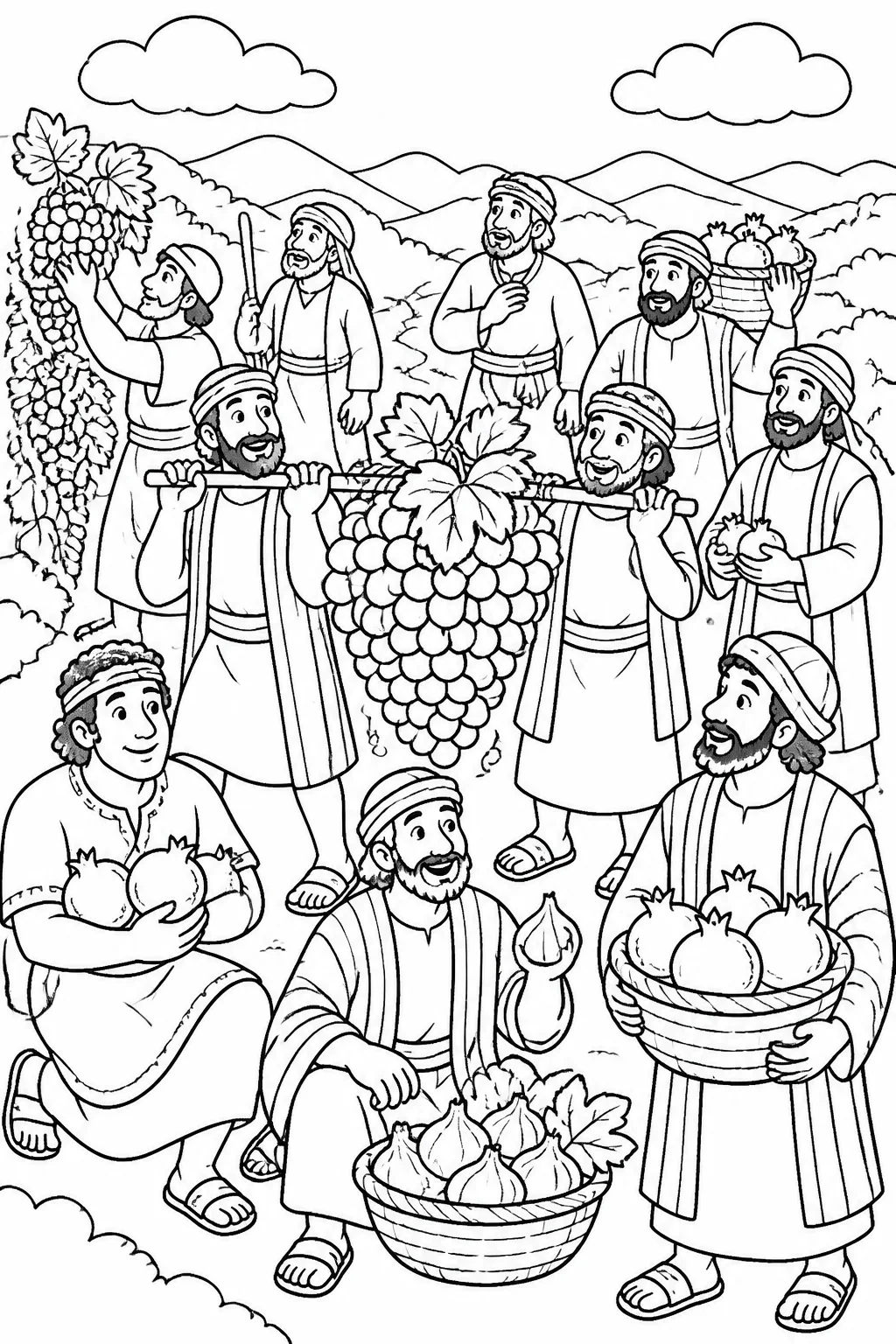
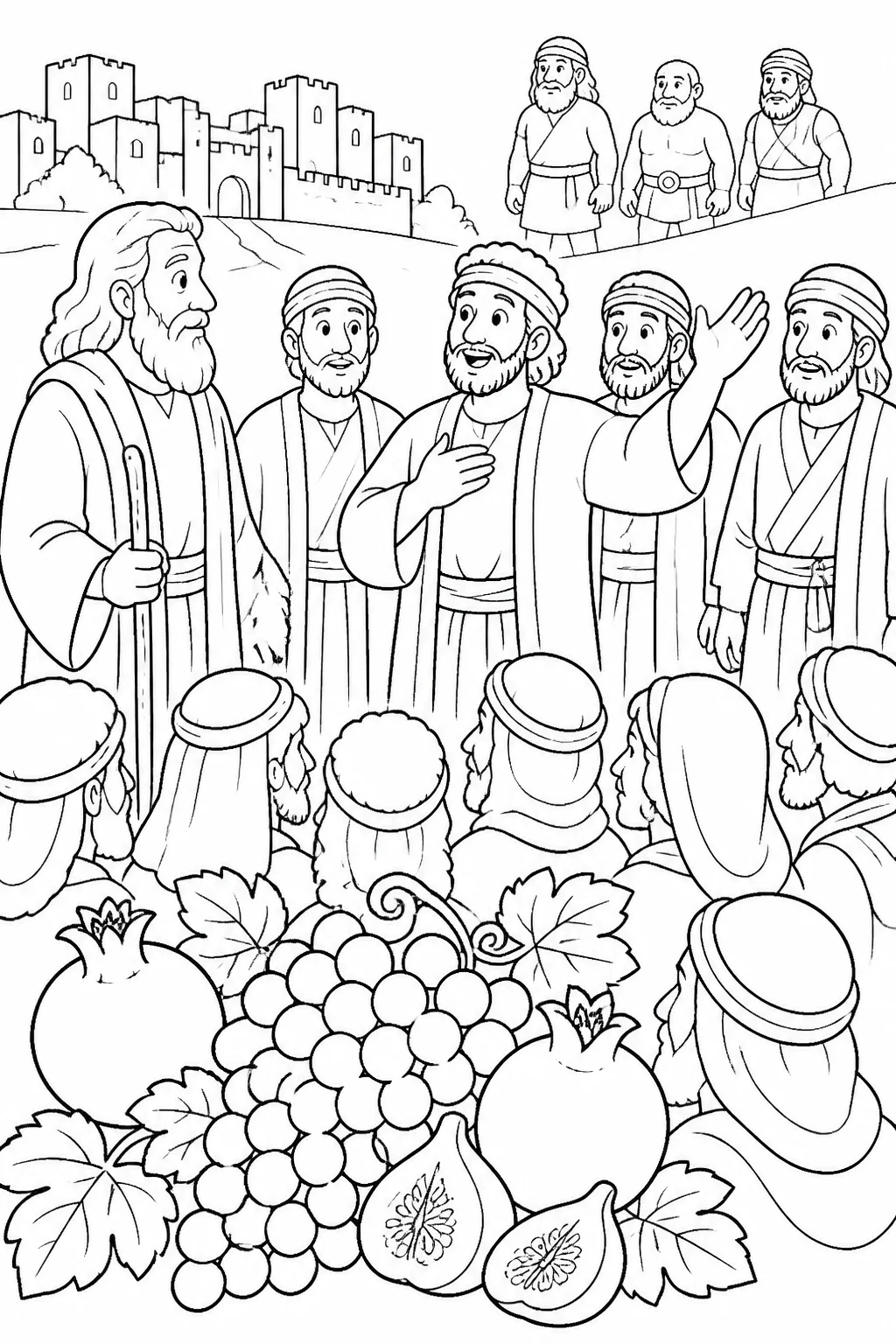
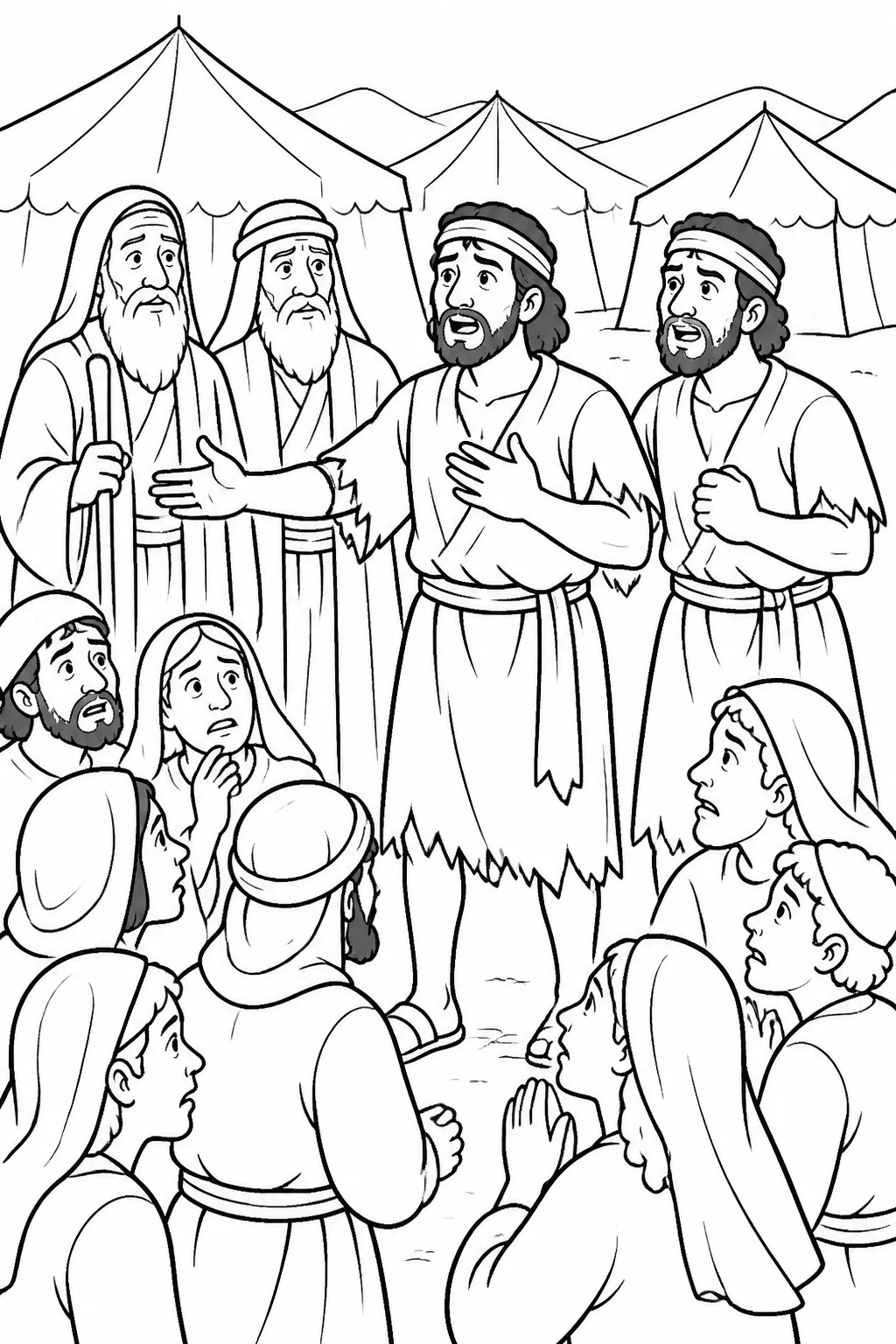
Numbers 13:21–25 tells how Moses sent twelve Israelite tribal leaders to explore Canaan. They traveled through the land for forty days, reaching the Valley of Eshcol. There they cut a cluster of grapes and brought back grapes, pomegranates, and figs. The produce showed that the land was fruitful. This scene is part of a larger account in which the spies later gave different reports about the land. Ten emphasized the strength of its inhabitants and fortified cities, while Caleb urged the people to trust the LORD. Joshua joined Caleb in calling the people to faithfulness. The LORD later judged the unbelieving generation, while Joshua and Caleb were excepted from that judgment. For this illustration, keep the focus on the careful exploration and the produce the spies carried back, rather than on the later fear, disagreement, or defeat.
Look closely
What children can notice
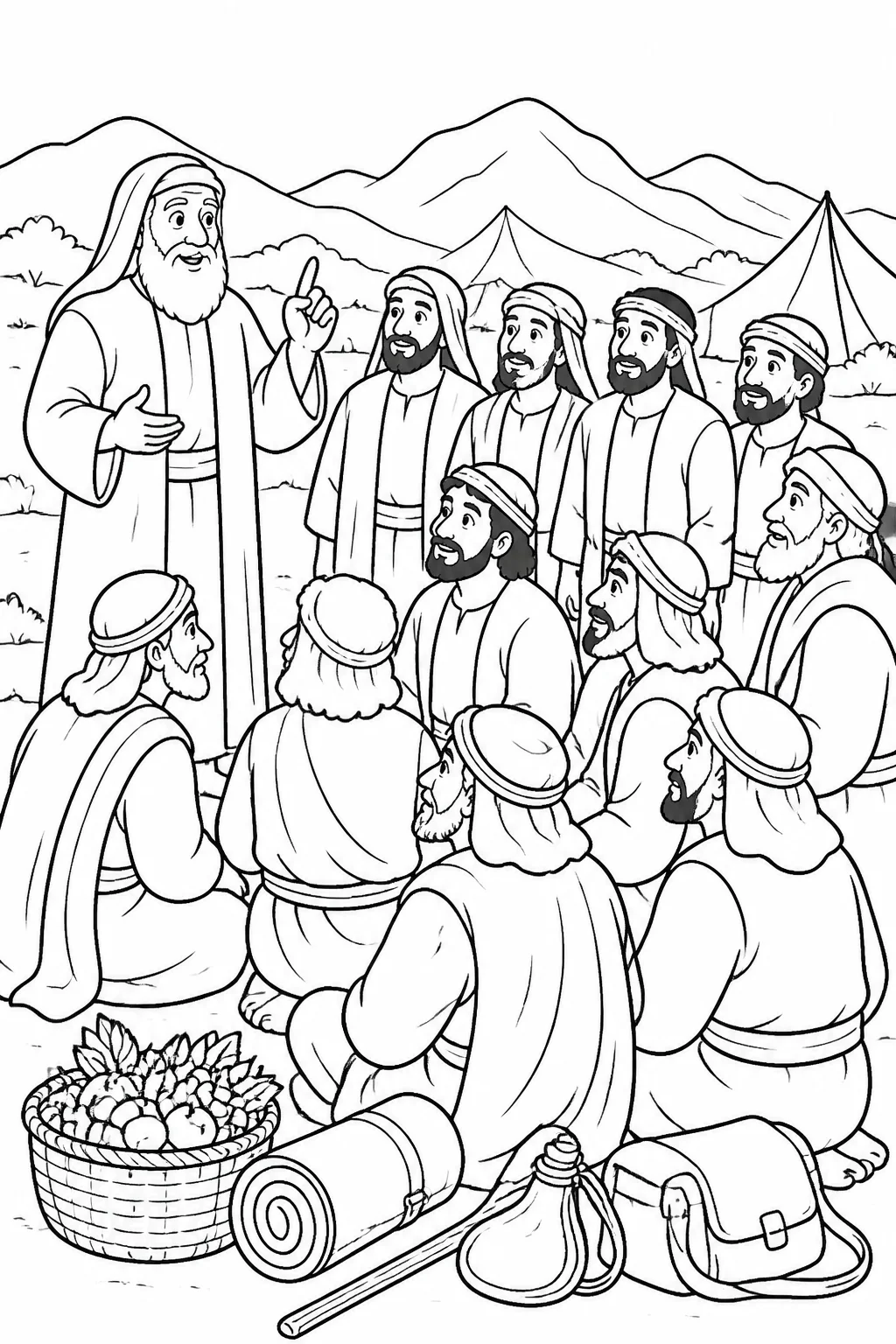
The twelve spies carefully explore the Valley of Eshcol and gather a huge cluster of grapes, along with pomegranates and figs, to bring back to Israel. The scene focuses on discovery and the land’s fruitfulness, with the spies visibly distinct through varied clothing, postures, and carrying roles.
Talk together
Talk about it
- What fruit did the spies bring back?
- How can we choose faith when others are afraid?
For families, church, and class
Use this page
Use this page to introduce Numbers 13:21–25 before discussing the spies’ different reports. Invite children to identify the produce and explain what it showed about the land. Keep later conflict gentle and factual, emphasizing trust in the LORD rather than fear or violence. This concept works for Sunday school, family reading, classroom lessons, or homeschool activities.
Source note
From this passage
Numbers 13:21–25 · The Twelve Spies
The twelve spies carefully explore the Valley of Eshcol and gather a huge cluster of grapes, along with pomegranates and figs, to bring back to Israel. The scene focuses on discovery and the land’s fruitfulness, with the spies visibly distinct through varied clothing, postures, and carrying roles.