

Sunday School resources
Your Bible story, ready for Sunday.
Find free printable coloring pages and story sheets for the Bible account you are teaching—organized around the story, not an endless wall of downloads.
Find your Bible story
Start with what you are teaching.
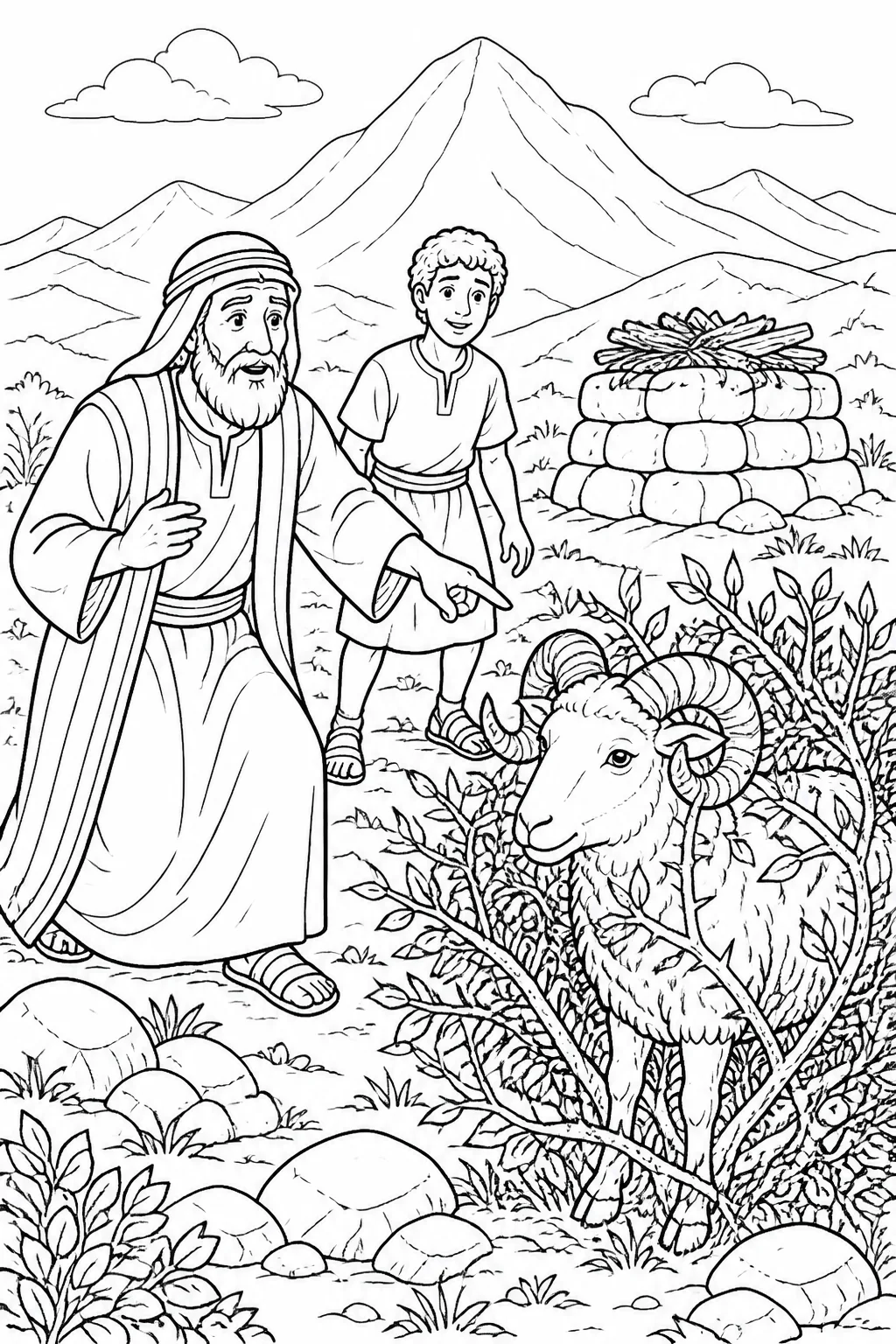
Genesis 22:1-19
Abraham and Isaac on Mount Moriah
God tests Abraham by commanding him to offer Isaac. Abraham travels with Isaac and two servants to the land of Moriah, prepares an altar, and binds Isaac. When Abraham reaches out to act, the angel of the LORD stops him. God provides a ram instead, and the LORD confirms promises concerning Abraham’s offspring, victory over enemies, and blessing to all nations of the earth.
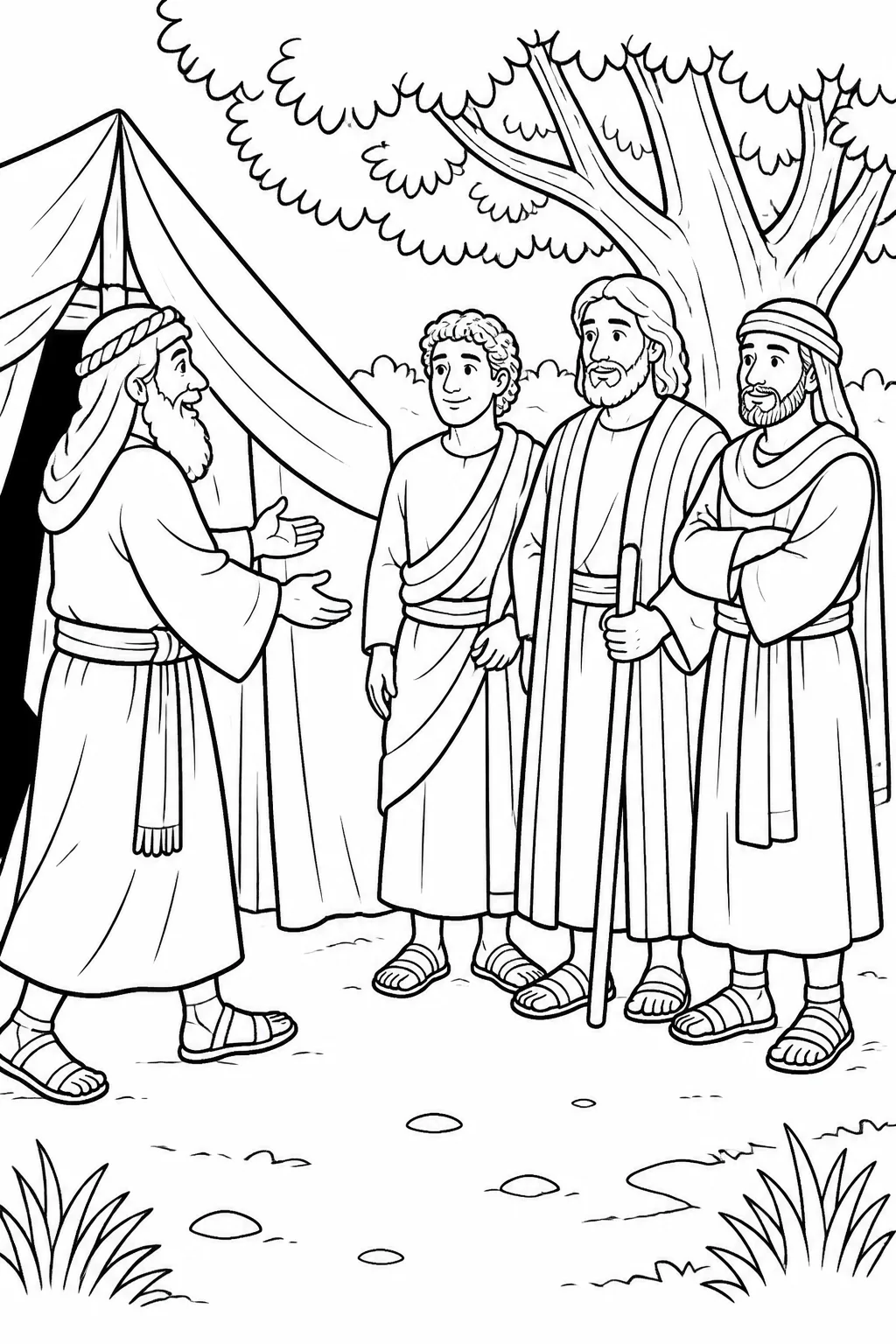
Genesis 18:1-15
Abraham Welcomes Three Visitors
The LORD appears to Abraham by the oaks of Mamre while Abraham sits at his tent entrance. Abraham welcomes three men, offers them water and food, and stands nearby while they eat. One visitor announces that Sarah will have a son at the appointed time, “at this time next year.” Sarah, listening at the tent entrance, laughs inwardly because she and Abraham are old. The LORD questions her laughter and declares that nothing is too difficult for the LORD. Sarah denies laughing because she is afraid, but the LORD says that she did laugh.
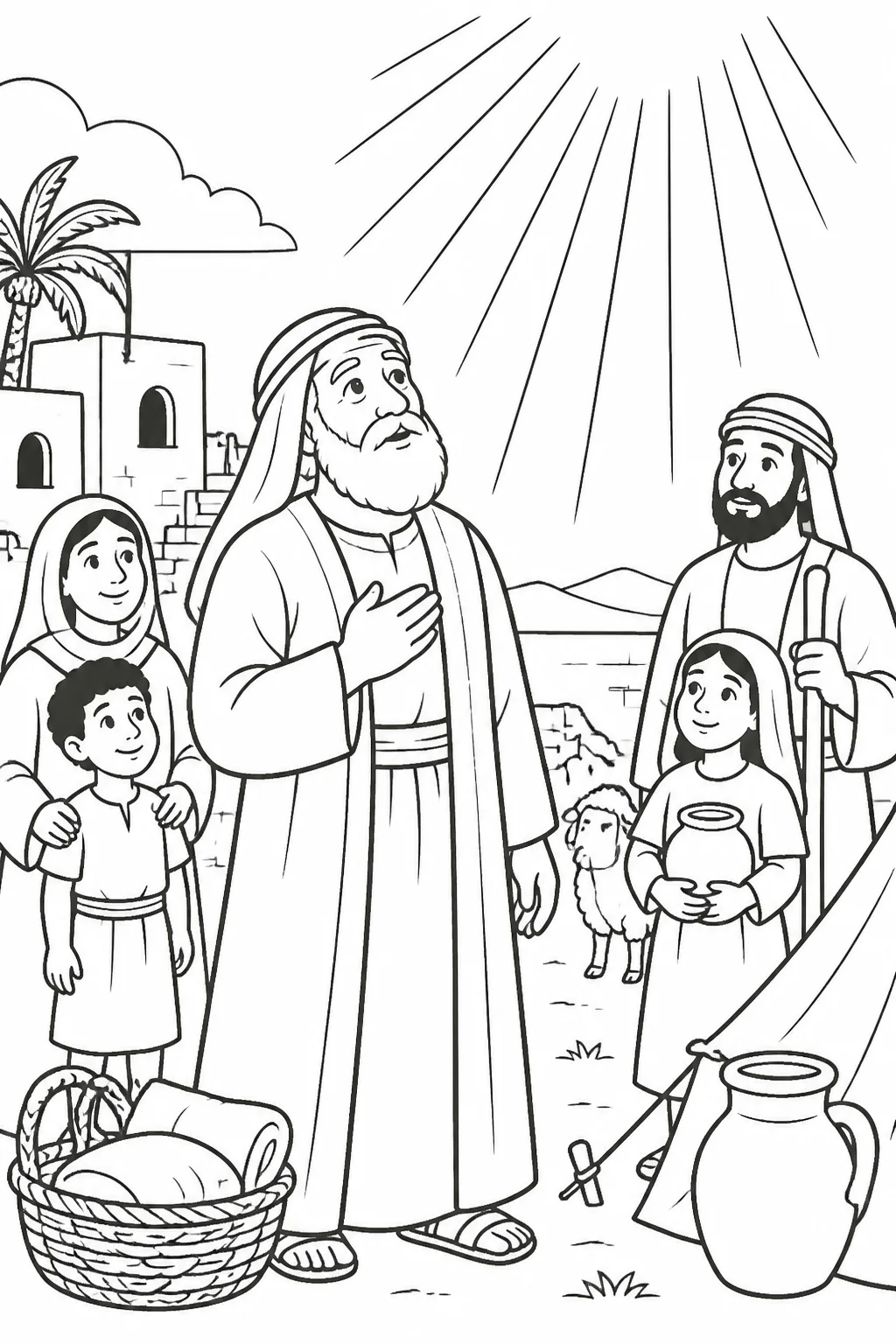
Genesis 12:1-9
God Calls Abram
God tells Abram to leave his country, relatives, and father’s household for a land God will show him. God promises to make Abram a great nation, bless him, make his name great, and make him a blessing; all families of the earth will be blessed through him. Abram leaves with Sarai, Lot, their possessions, and their household, travels to Canaan, builds altars to the LORD at Shechem and between Bethel and Ai, and continues toward the Negev.
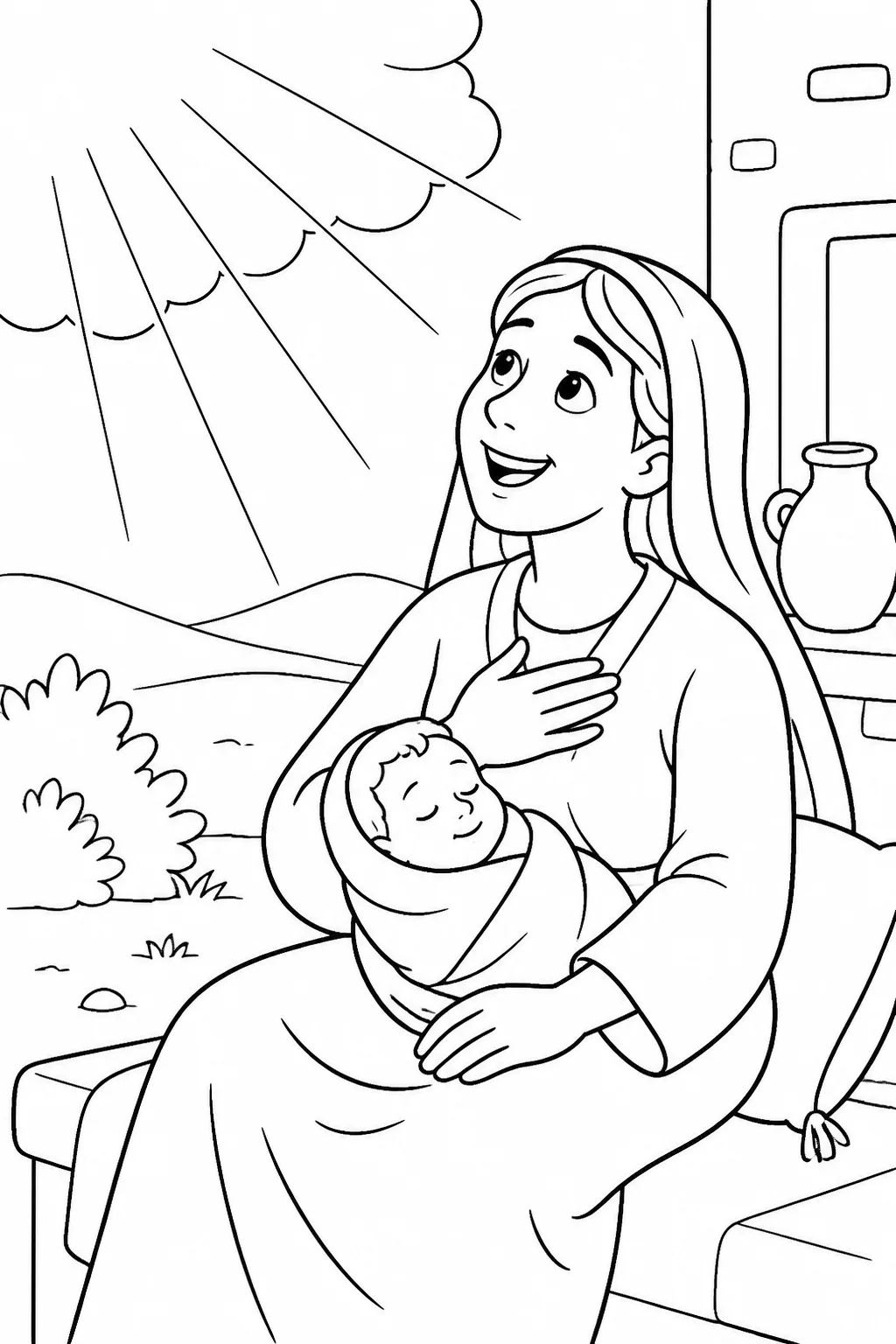
Genesis 21:1-7
Isaac Is Born
The LORD does for Sarah as he had spoken: Sarah conceives and bears Abraham a son at the set time God had spoken. Abraham names the son Isaac and circumcises him when he is eight days old, as God commanded. Abraham is one hundred years old when Isaac is born. Sarah says God has made laughter for her, that everyone who hears will laugh with her, and marvels that she has nursed a son in Abraham’s old age.
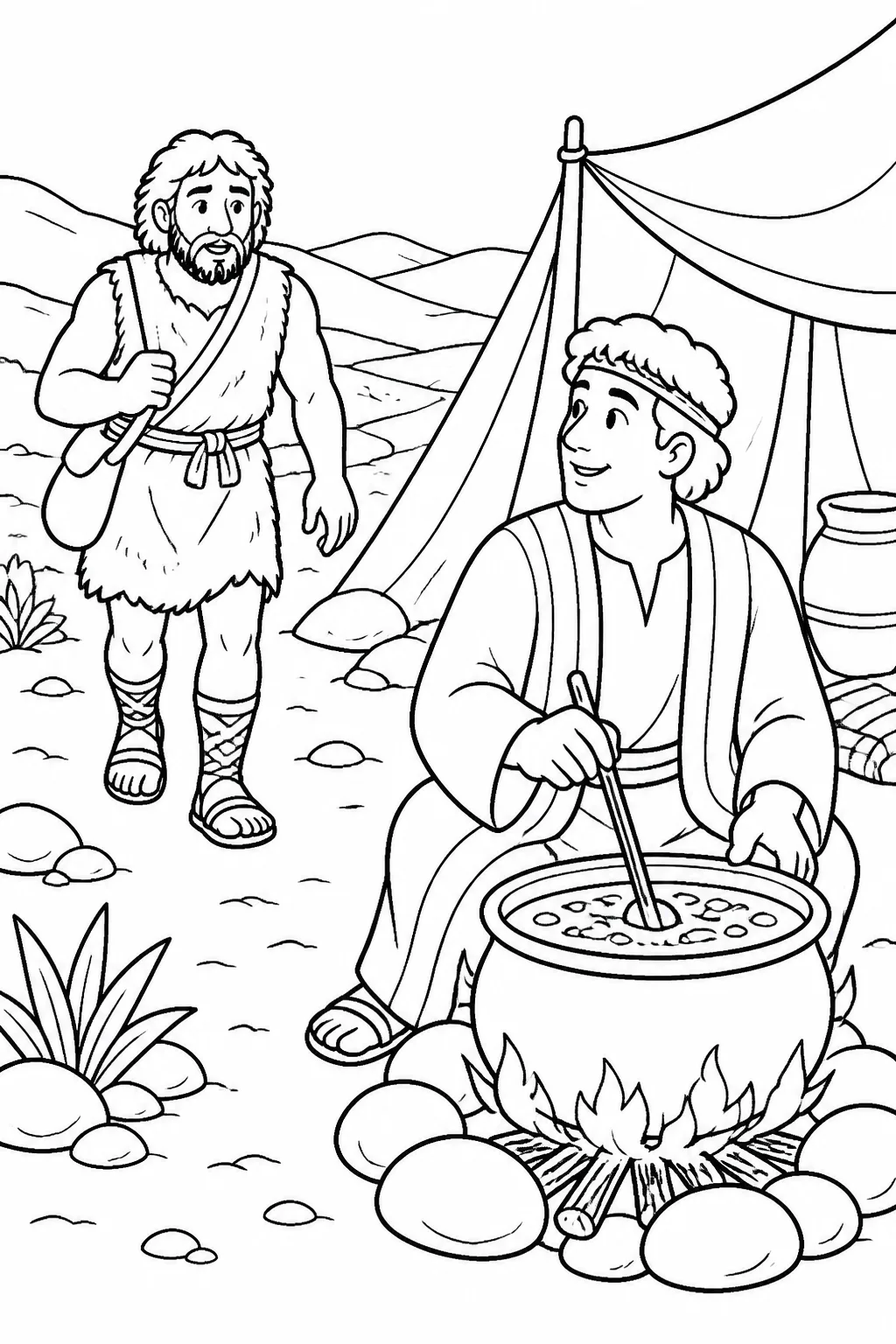
Genesis 25:19-34
Jacob and Esau
Esau sells his birthright to his brother Jacob for bread and lentil stew after returning exhausted from the open country. The passage introduces Isaac’s sons, their struggle before birth, and the different ways they live.
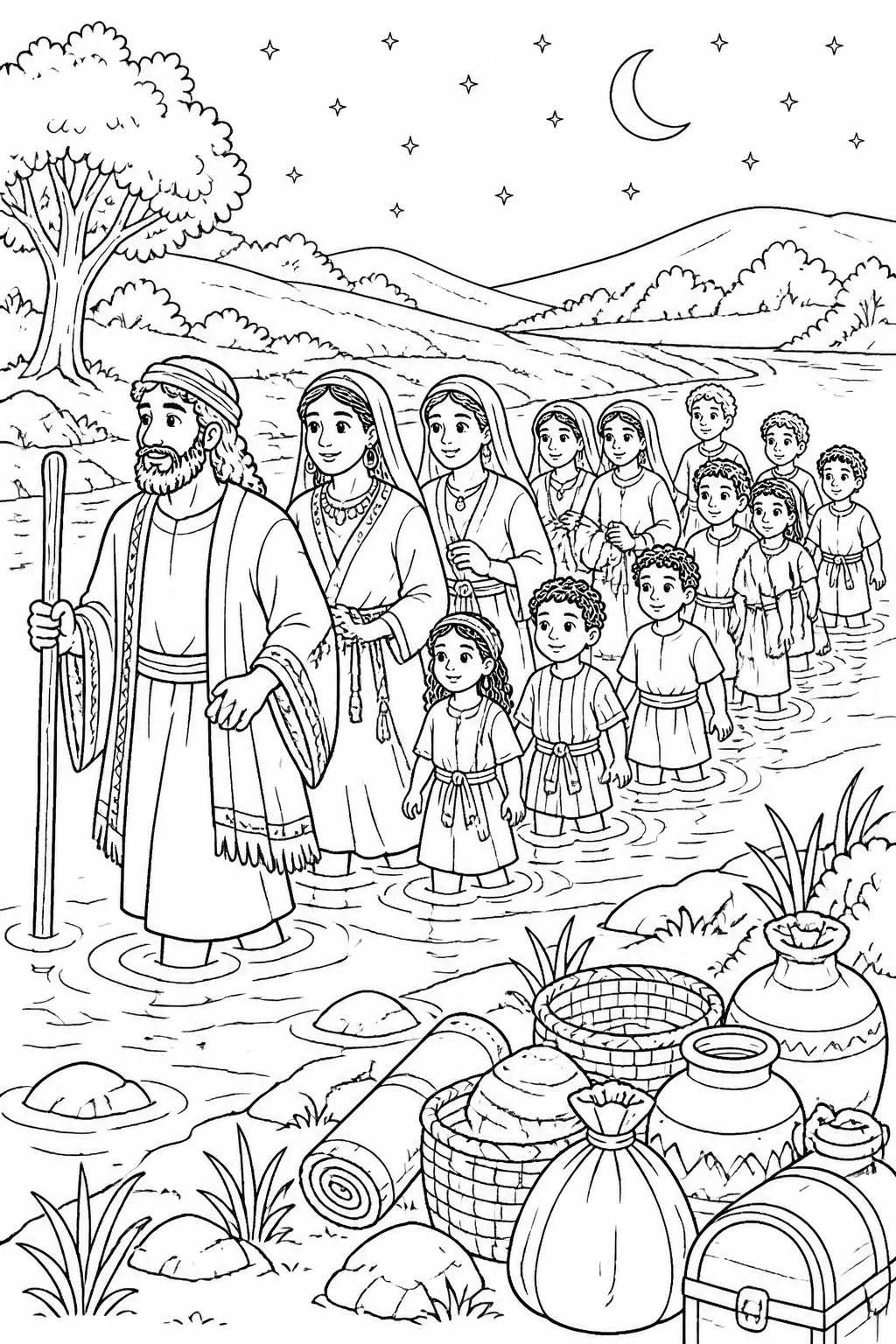
Genesis 32:22-32
Jacob Wrestles at Peniel
Jacob sends his family and possessions across the Jabbok, remains alone, and wrestles with a man until daybreak. The man touches Jacob’s hip, leaving it out of joint. Jacob asks for a blessing and receives the name Israel because he has striven with God and with humans and has prevailed. Jacob names the place Peniel because he says he has seen God face to face and lived. The account ends with Jacob limping and notes the Israelites’ abstention from the tendon attached to the hip socket.
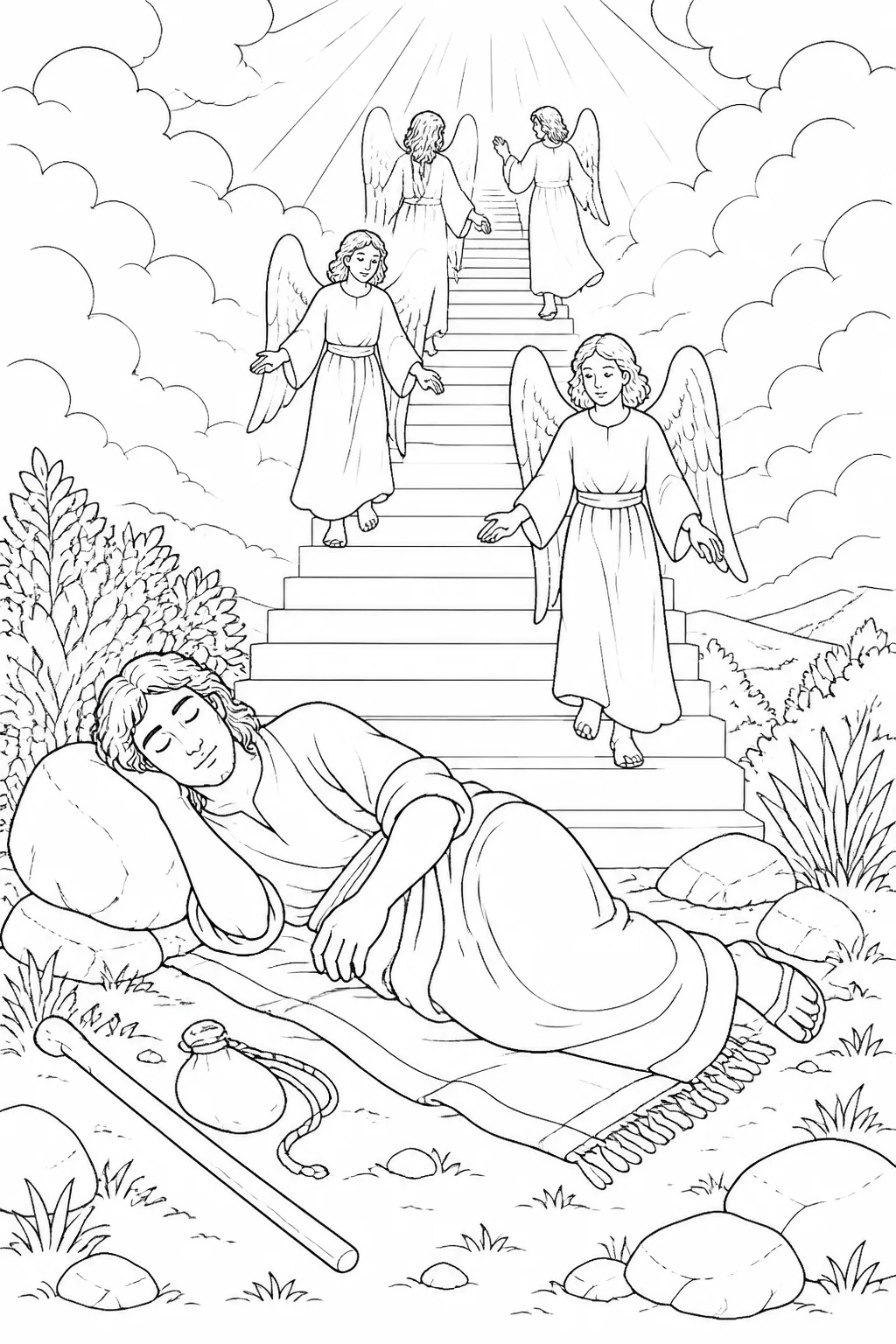
Genesis 28:10-22
Jacob’s Dream
Jacob leaves Beersheba for Haran and stops for the night at a place later called Bethel. In a dream, he sees a stairway or flight of steps reaching heaven, with angels going up and down. The LORD stands above it and reaffirms promises concerning Jacob’s descendants, the land, blessing to all families of the earth, and God’s presence and protection. Jacob wakes, recognizes the place as awesome and God’s house, sets up the stone he used as a pillow, names the place Bethel, and makes a conditional vow to God.
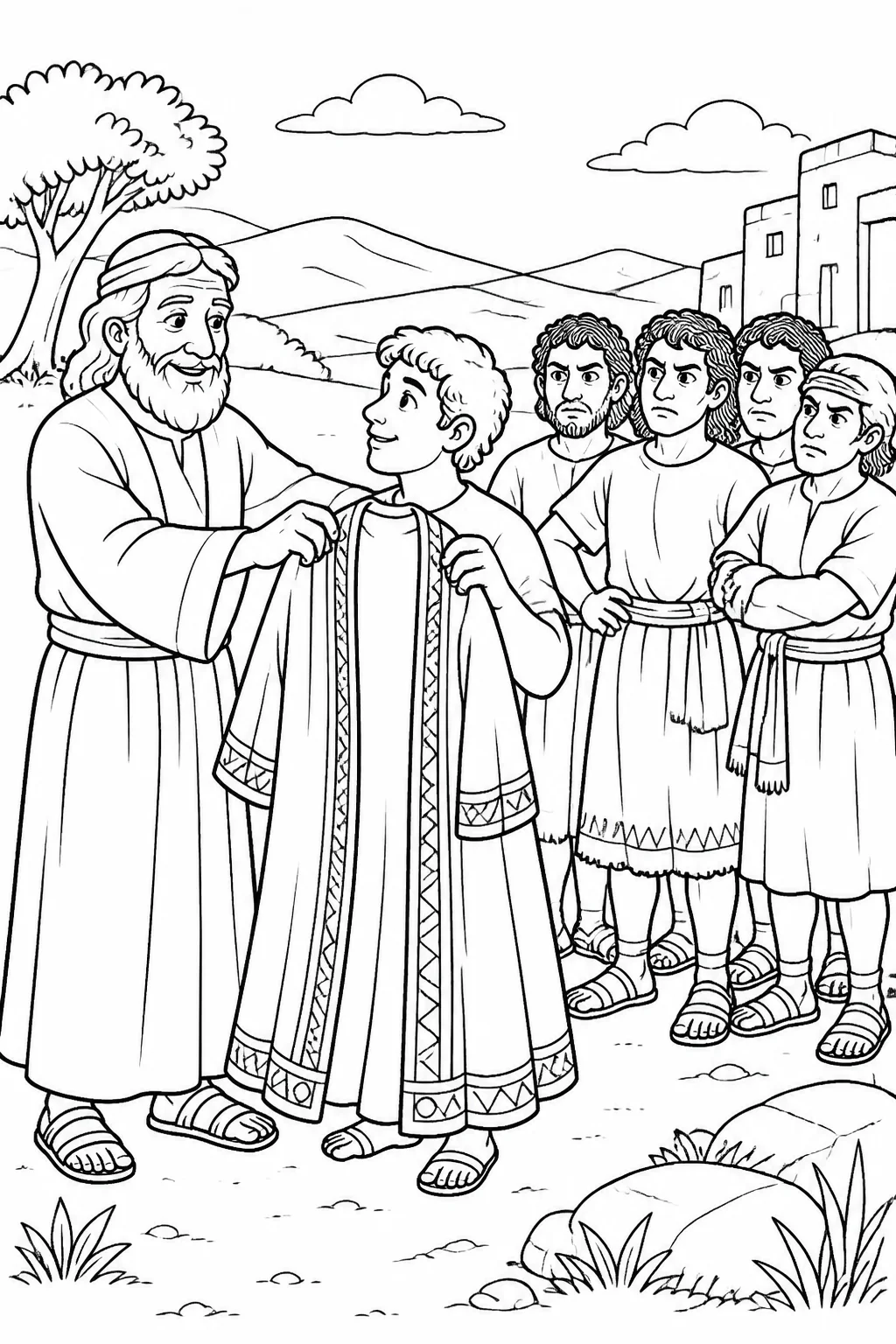
Genesis 37:1-36
Joseph and His Brothers
Joseph’s brothers resent him because Jacob favors him and because of Joseph’s dreams. They plot to kill him, but Reuben persuades them to put him in a pit. Judah proposes selling Joseph, and the brothers sell him to passing Ishmaelites. The brothers deceive Jacob with Joseph’s bloodstained garment, while Joseph is taken to Egypt. There, the Midianites sell him to Potiphar, an officer of Pharaoh and captain of the guard. The passage ends without describing later outcomes or explicitly explaining God’s purpose.
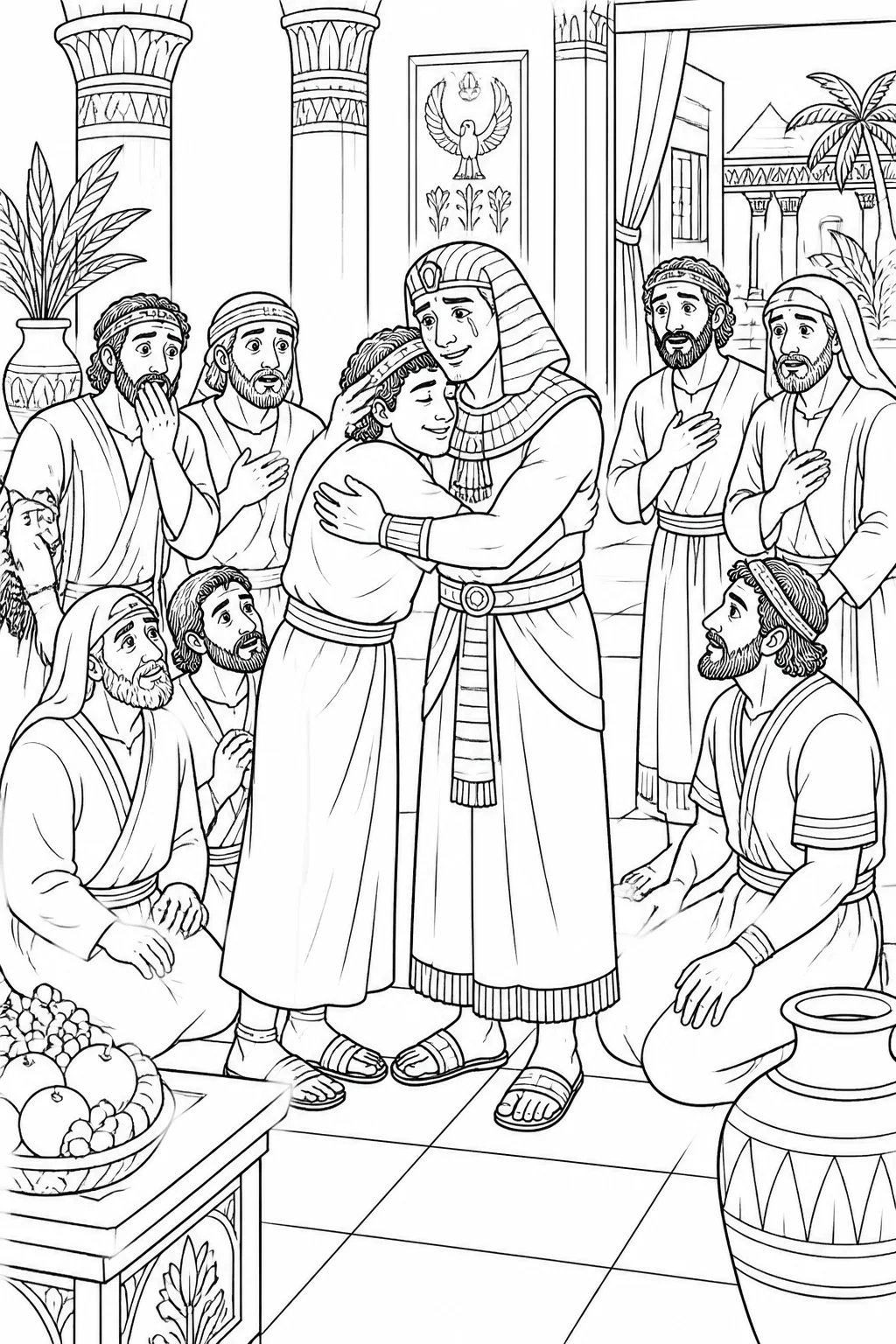
Genesis 42:1–45:28
Joseph Forgives His Brothers
During a famine, Joseph’s brothers travel from Canaan to Egypt to buy grain. Joseph recognizes them, tests their honesty and concern for Benjamin, and eventually reveals his identity. He tells them that God sent him ahead to preserve life, forgives and comforts them, and instructs them to bring Jacob and their households to Egypt. Jacob learns that Joseph is alive and resolves to go to him.
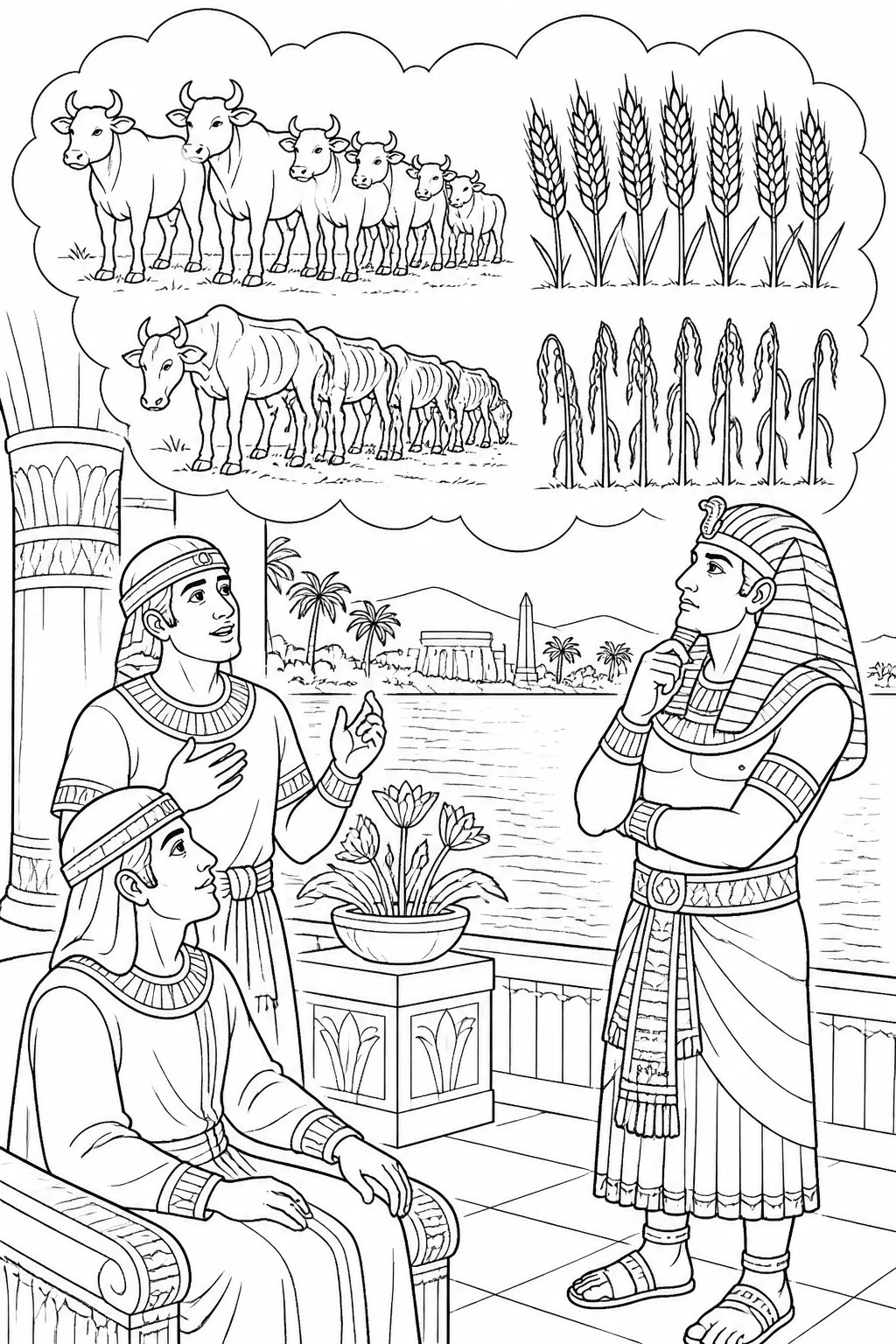
Genesis 40:1–41:57
Joseph Interprets Pharaoh’s Dreams
Joseph, imprisoned in Egypt, interprets the dreams of Pharaoh’s cupbearer and baker, attributing the interpretation to God. Two years later, Joseph interprets Pharaoh’s two dreams as seven years of great abundance followed by seven years of severe famine. He advises Pharaoh to appoint a wise administrator and store one-fifth of the harvest during the abundant years. Pharaoh recognizes Joseph’s God-given wisdom, places him over Egypt, and Joseph oversees the collection and storage of grain. When famine comes, people from Egypt and other lands come to Joseph to buy food.
Genesis 18:16–19:29
Lot Is Rescued
God announces judgment on Sodom and Gomorrah. Abraham speaks with the LORD about whether the righteous will be spared. Two angels go to Sodom, warn Lot, and lead him, his wife, and his two daughters out before the cities are destroyed. Lot’s wife looks back and becomes a pillar of salt. Lot and his daughters reach safety in Zoar, while the LORD destroys Sodom and Gomorrah and the surrounding plain.
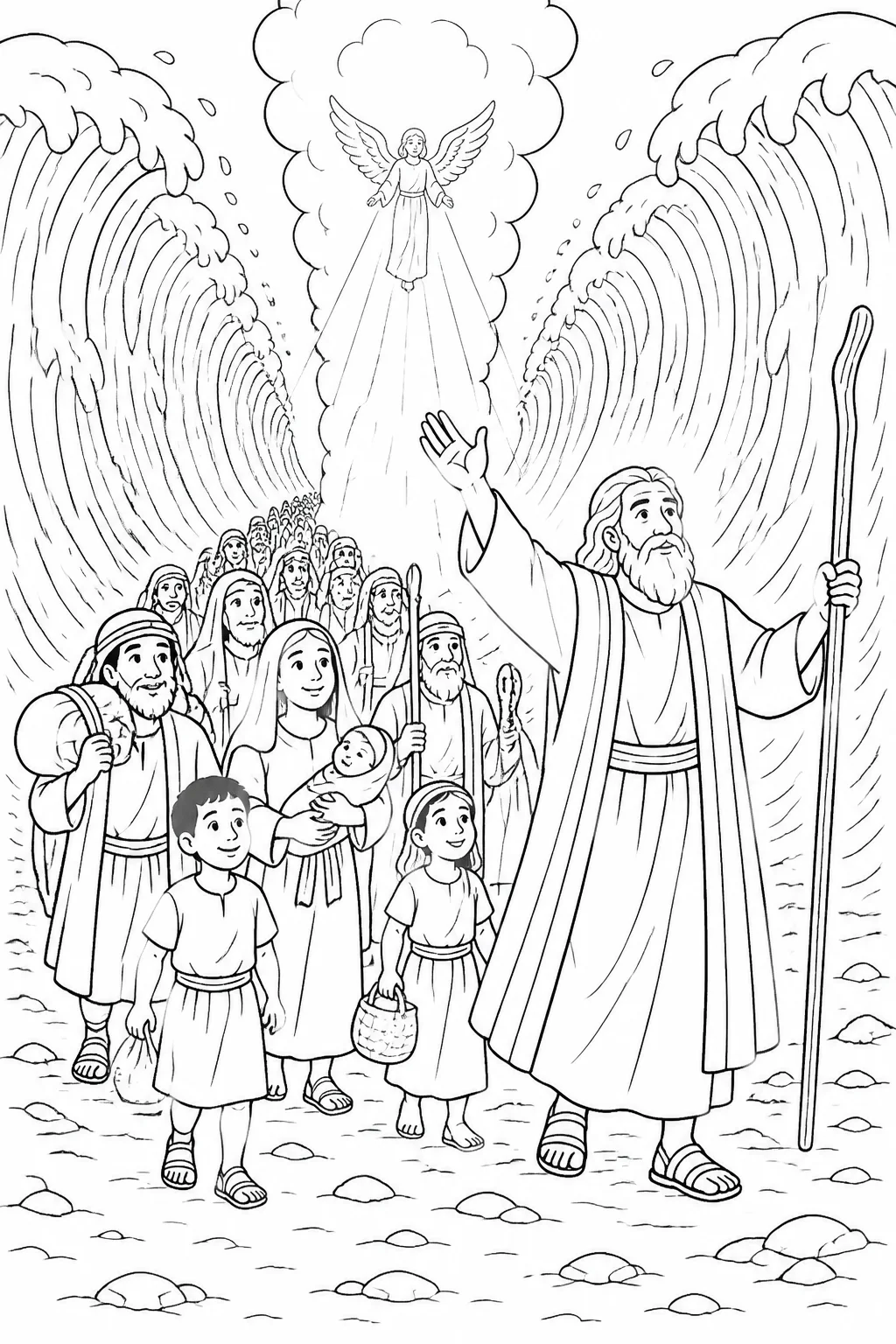
Exodus 14:1-31
Crossing the Red Sea
The LORD leads Israel to encamp by the sea, where Pharaoh pursues with horses, chariots, horsemen, and an army. Israel is afraid, but Moses tells the people to stand firm and see the LORD’s salvation. The LORD divides the sea through Moses’ outstretched hand, and Israel crosses on dry ground with walls of water on both sides. The Egyptians pursue into the sea; when Moses stretches out his hand again, the waters return and cover the pursuing forces. The LORD saves Israel, and Israel sees the Egyptians dead on the seashore, fears the LORD, and trusts the LORD and Moses.
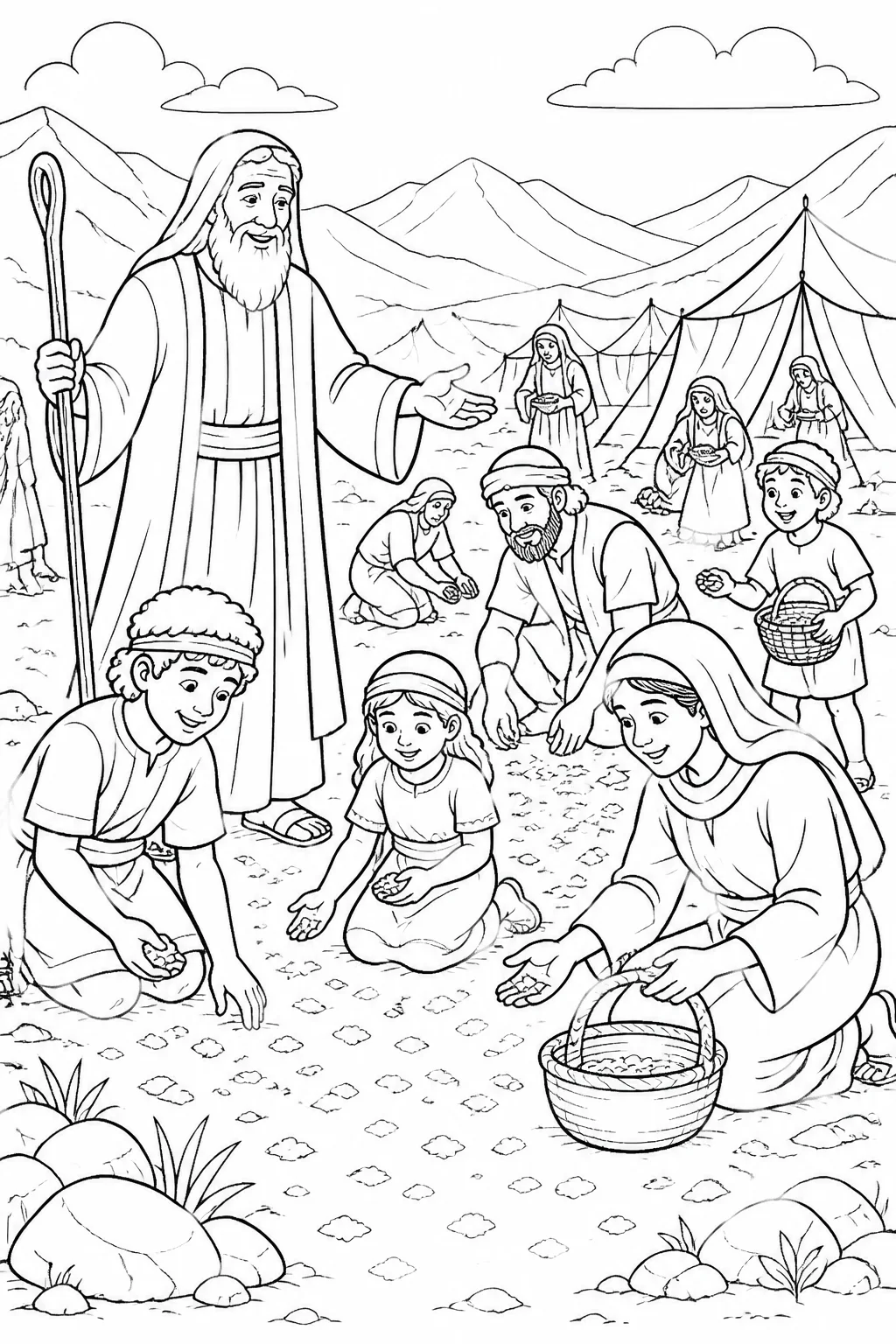
Exodus 16:1-36
Manna in the Wilderness
After leaving Elim, the Israelites arrive in the wilderness of Sin and complain to Moses and Aaron about hunger. The LORD announces that He will provide quail in the evening and bread from heaven in the morning, while testing whether the people will follow His instructions. A flaky substance called manna appears with the dew. Each person gathers according to need, gathers twice as much before the Sabbath, and keeps an omer as a remembrance for future generations. The Israelites eat manna for forty years until they come to an inhabited land.
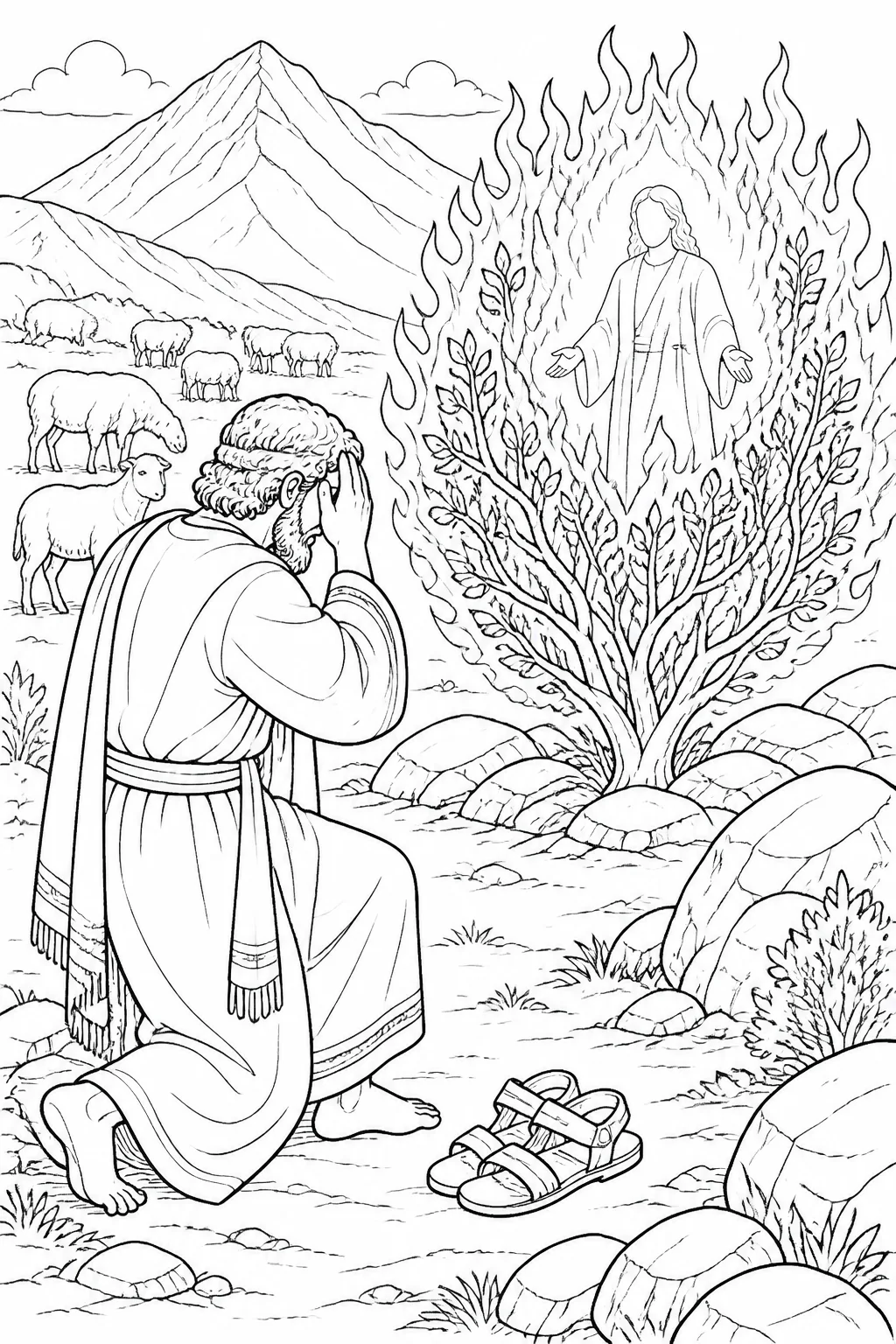
Exodus 3:1–4:17
Moses and the Burning Bush
God appears to Moses in a bush that burns without being consumed, calls him to bring the Israelites out of Egypt, reveals his name, and gives signs and help to address Moses’ fears and objections.
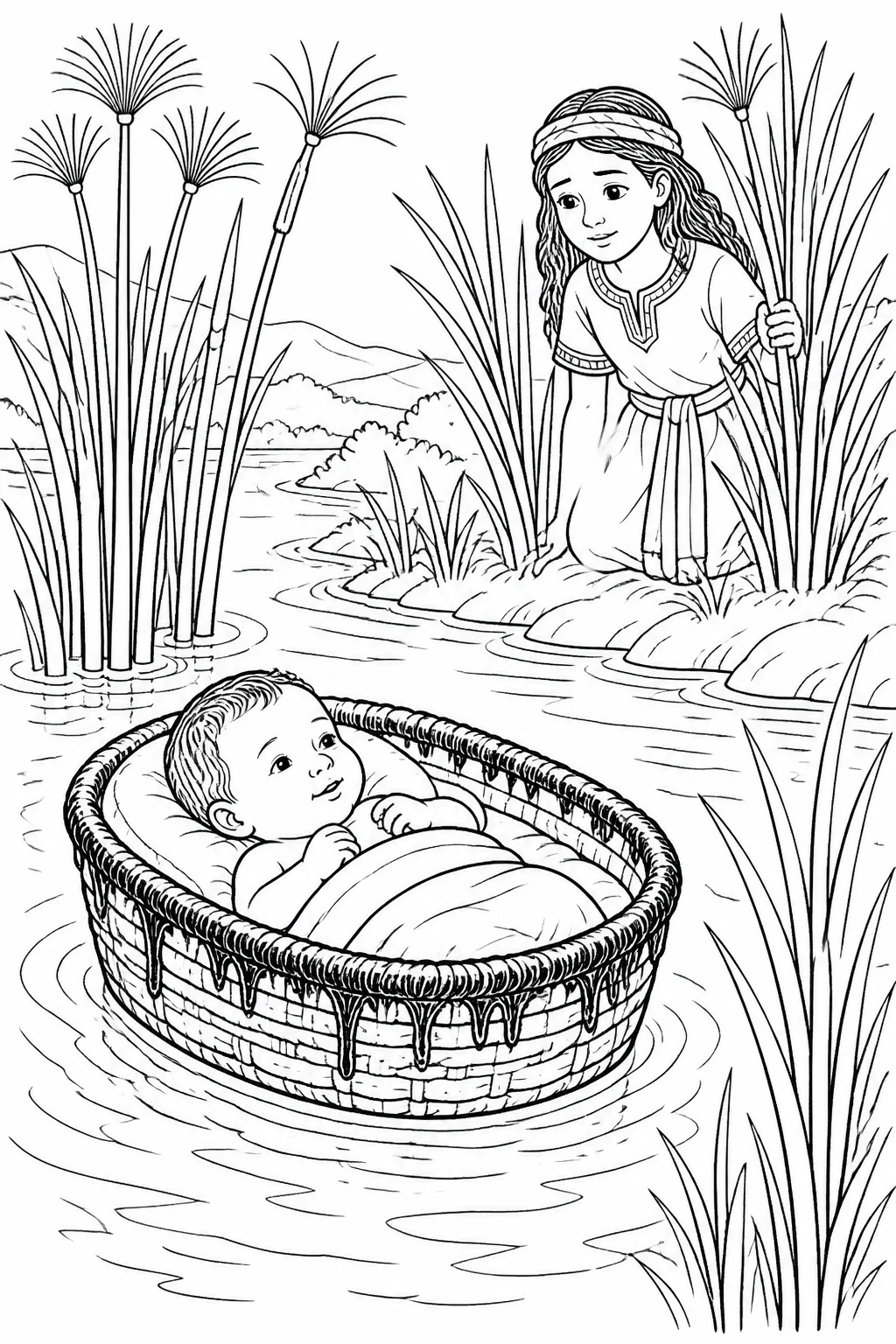
Exodus 1:8–2:10
The Baby Moses
Moses is born during a time when Pharaoh has ordered Hebrew baby boys to be thrown into the Nile. His mother hides him for three months, then places him in a basket among the reeds. Pharaoh’s daughter finds him, recognizes him as a Hebrew child, and takes him as her son. Moses’s sister arranges for his mother to nurse him, and Pharaoh’s daughter names him Moses because she drew him out of the water.
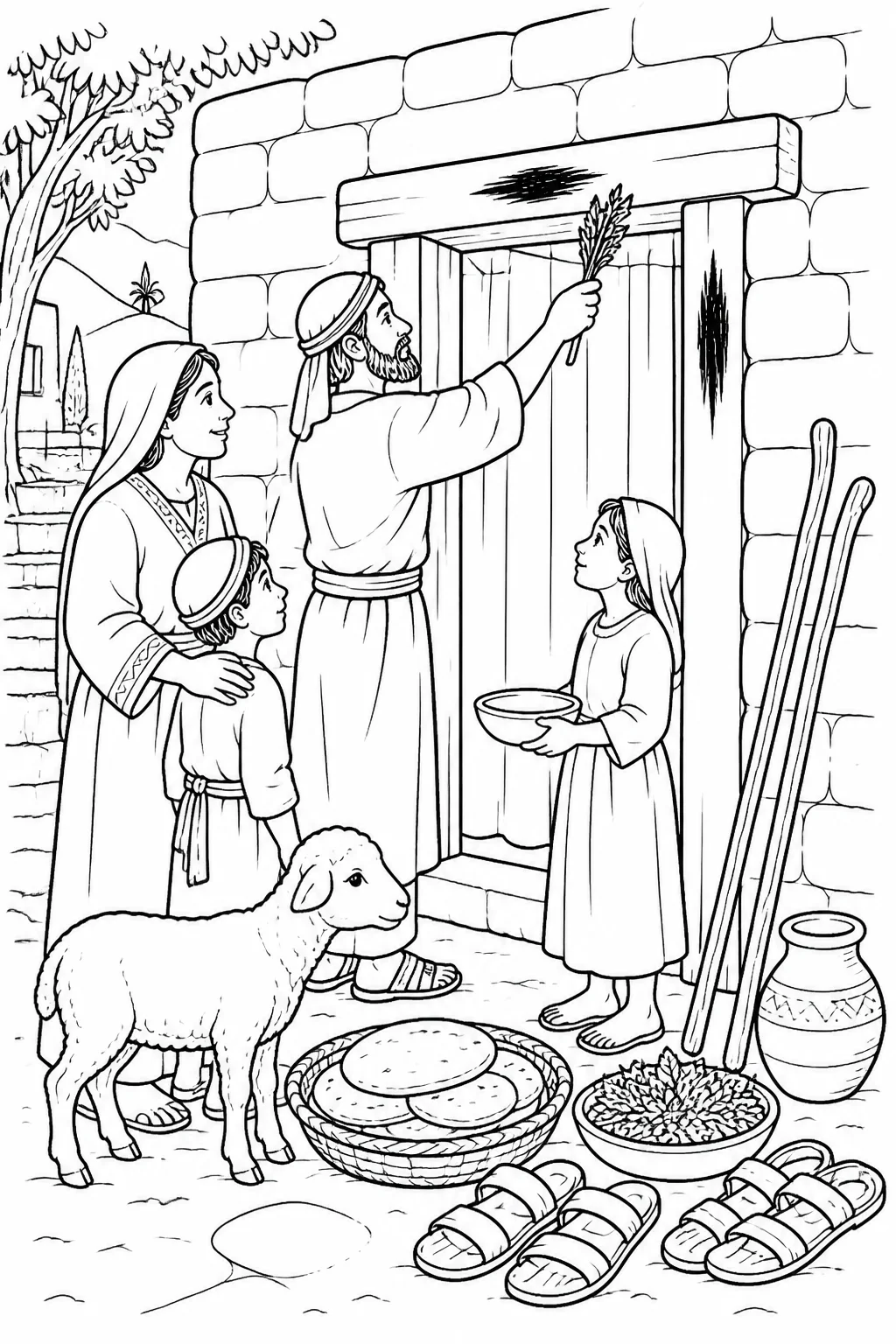
Exodus 12:1-32
The First Passover
The LORD instructs Moses and Aaron to establish the Passover for Israel. Each household selects and prepares a lamb or young goat, marks its doorway with blood, and eats the meal with unleavened bread and bitter herbs while dressed and ready to depart. The LORD strikes Egypt’s firstborn but passes over the marked Israelite homes. Pharaoh summons Moses and Aaron and orders the Israelites to leave Egypt and worship the LORD.
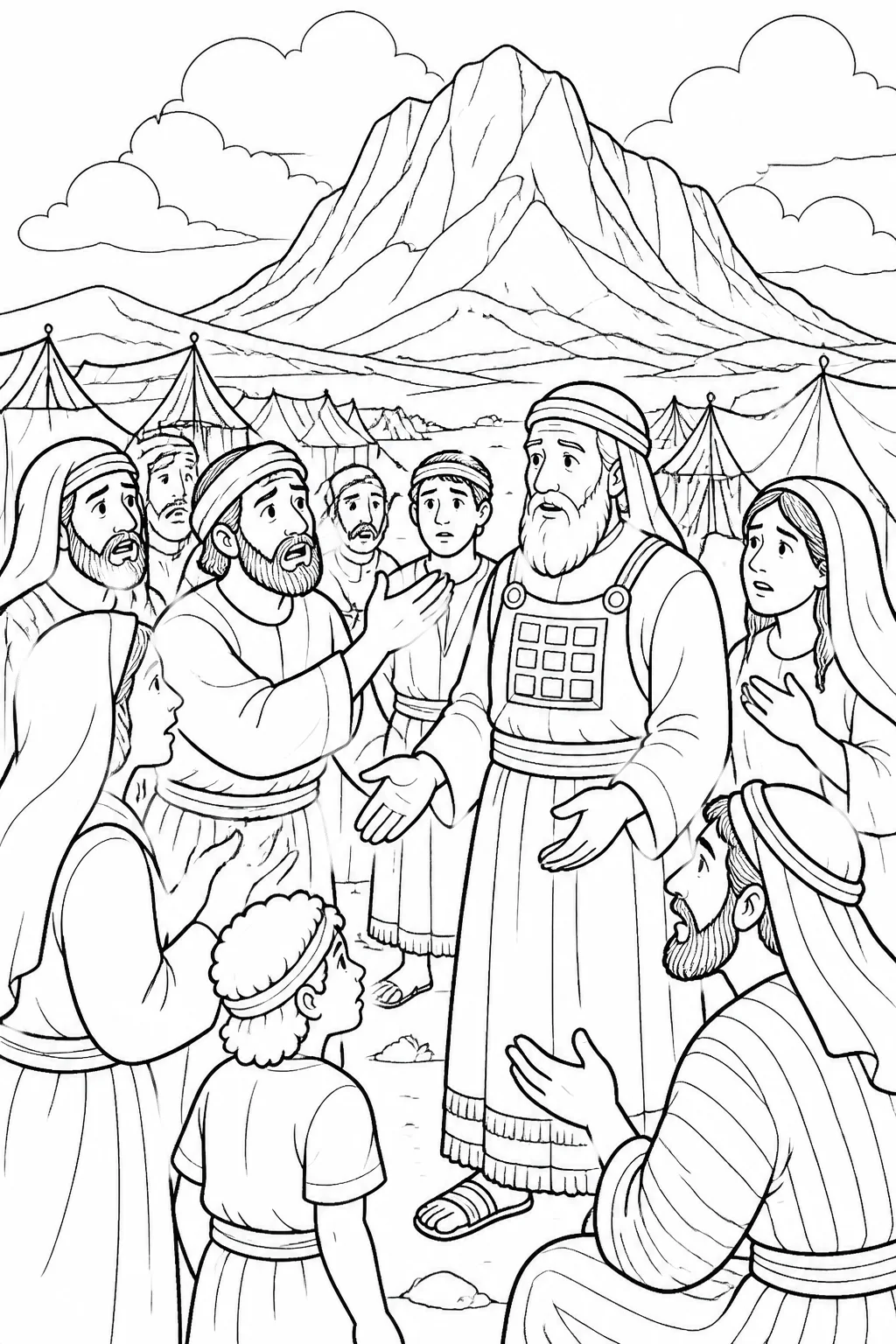
Exodus 32:1-35
The Golden Calf
While Moses remains on Mount Sinai, the Israelites ask Aaron to make a visible god to lead them. Aaron forms a golden calf from their gold, and the people worship it with celebration. God tells Moses what is happening and announces judgment. Moses intercedes, comes down carrying the two tablets of the covenant, breaks them when he sees the calf and the dancing, destroys the calf, confronts Aaron and the people, and calls for those loyal to the LORD. A plague follows the people’s sin, and Moses again appeals to God on Israel’s behalf.
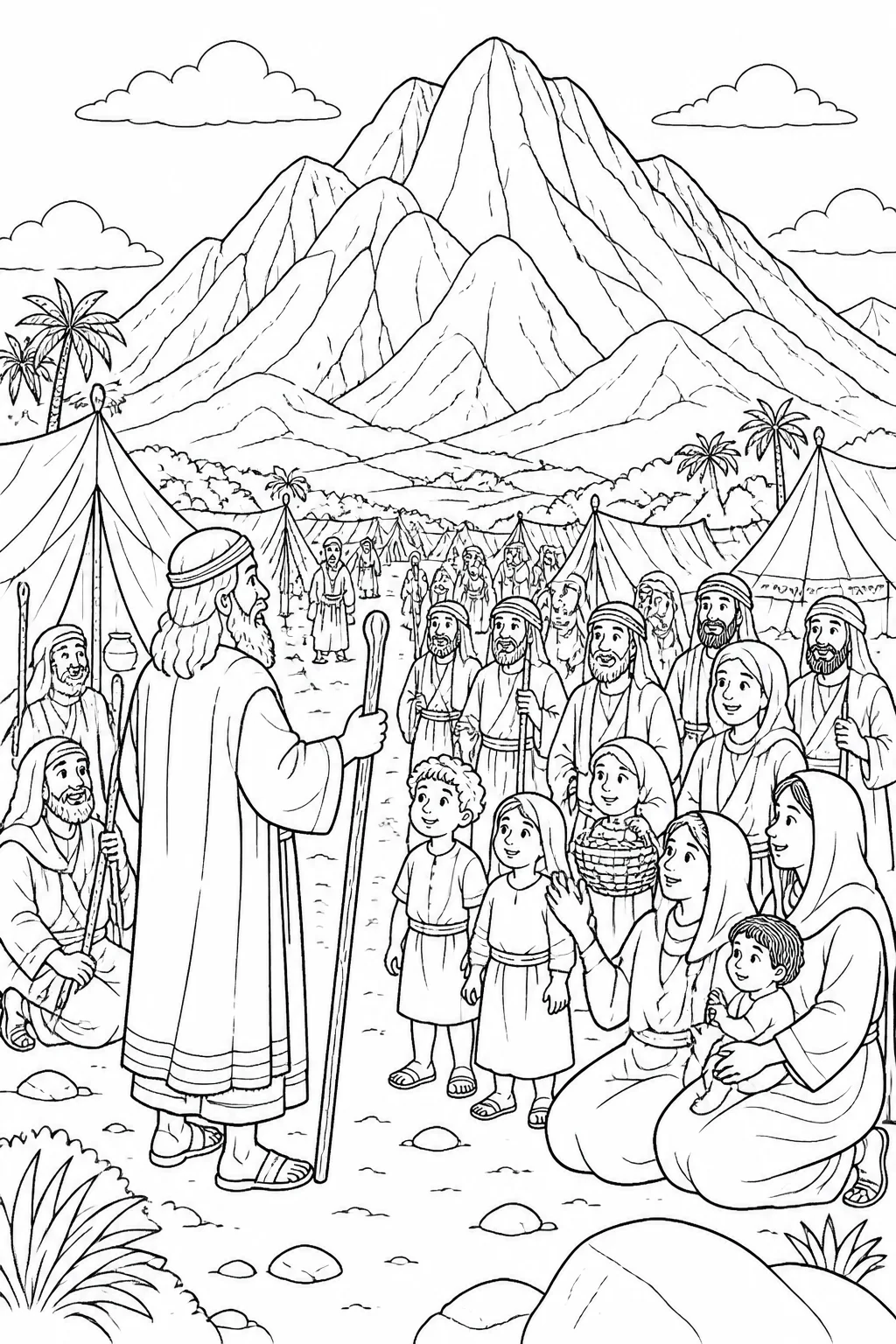
Exodus 19:1–20:21
The Ten Commandments
At Mount Sinai, God prepares Israel to be his special people. After the people agree to obey, God descends on the mountain amid thunder, lightning, cloud, trumpet sound, smoke, and fire. God speaks the Ten Commandments and other covenant instructions, commanding Israel to worship him alone, honor his name and Sabbath, and treat others rightly. The people stand at a distance in fear while Moses approaches the thick darkness where God is present.
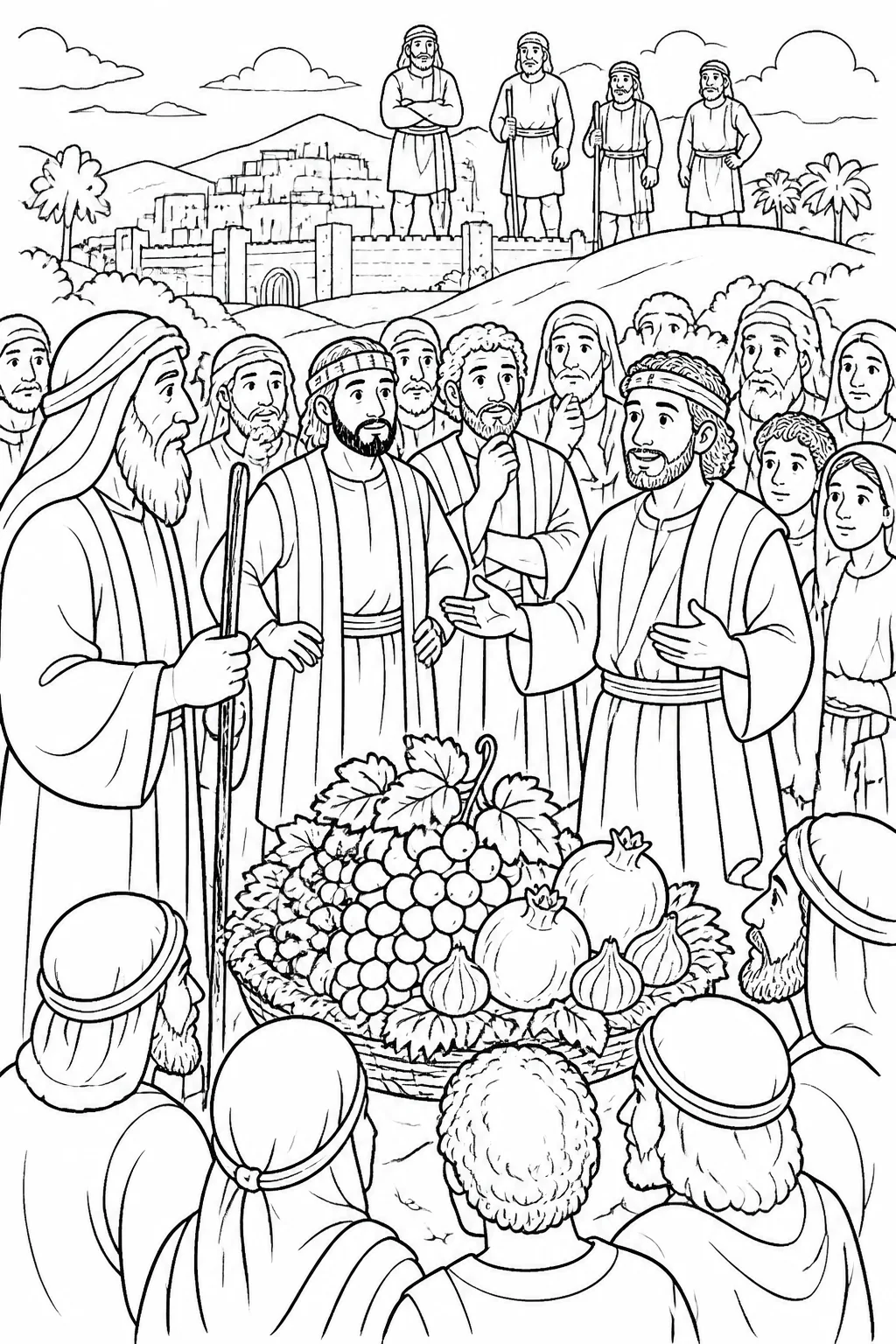
Numbers 13:1–14:45
Joshua and Caleb Trust God
Moses sends twelve tribal leaders to explore Canaan. After forty days, they report that the land is fruitful, but ten spies emphasize its strong inhabitants and fortified cities. Caleb urges Israel to trust the LORD and enter the land, and Joshua joins him in urging faithfulness. The people fear, grumble, and want to return to Egypt. The LORD judges the unbelieving generation: those twenty years old and upward, except Caleb and Joshua, will not enter the land. The ten spies who gave the bad report die by a plague. Israel then attempts to enter the land without the LORD’s support and is defeated by the Amalekites and Canaanites.
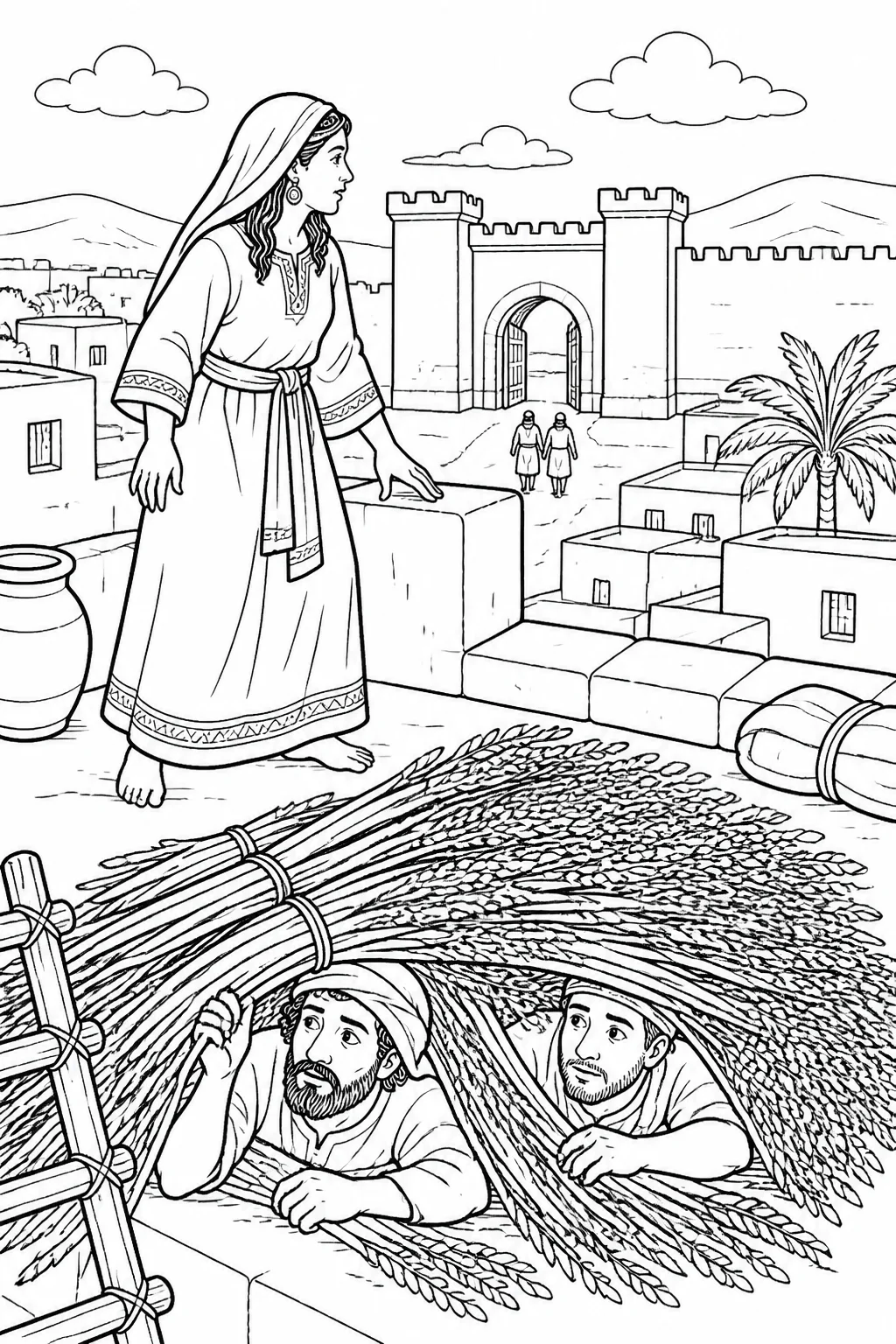
Joshua 2:1-24
Rahab Helps the Spies
Joshua secretly sends two spies from Shittim to Jericho. Rahab hides them under flax stalks on her roof, lets them down by a rope through her window, and helps them escape to the hills. The spies instruct her to tie a scarlet cord in the window, gather her family inside the house, and keep their mission secret so that she and her household may be spared. After hiding for three days and crossing over, the spies return to Joshua and report that the LORD has given Israel the land and that the people of the land fear Israel.
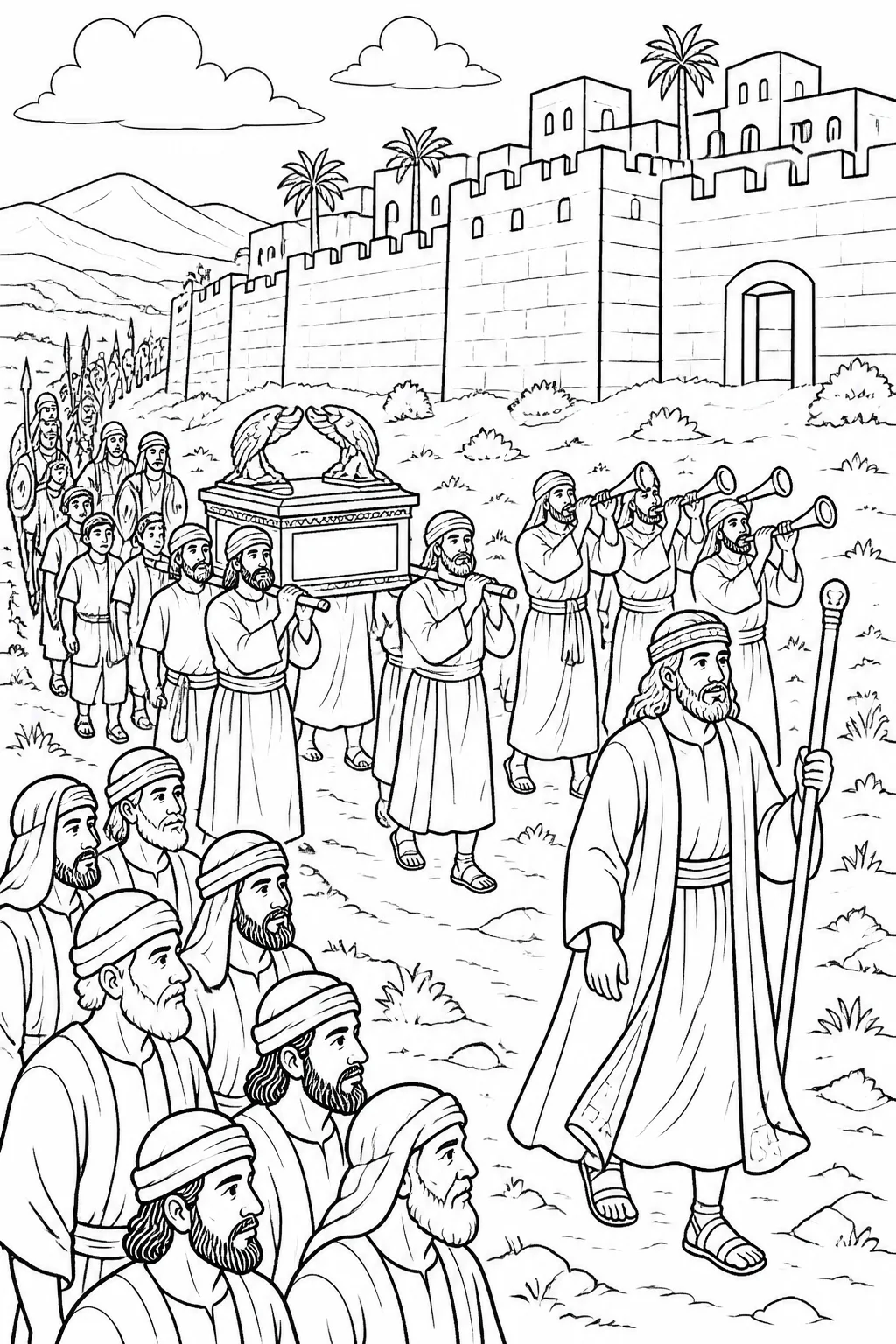
Joshua 6:1-27
The Walls of Jericho Fall
The LORD commands Joshua to have Israel march around the closed city of Jericho once daily for six days, then seven times on the seventh day. After the priests sound the trumpets and the people shout, the wall falls. Israel takes and devotes the city to destruction, while the silver, gold, bronze, and iron are reserved for the LORD’s treasury. Rahab and all who are with her are rescued because she hid the messengers and because of the agreement with the spies. Joshua declares a curse on anyone who rebuilds Jericho, and the LORD is with Joshua.
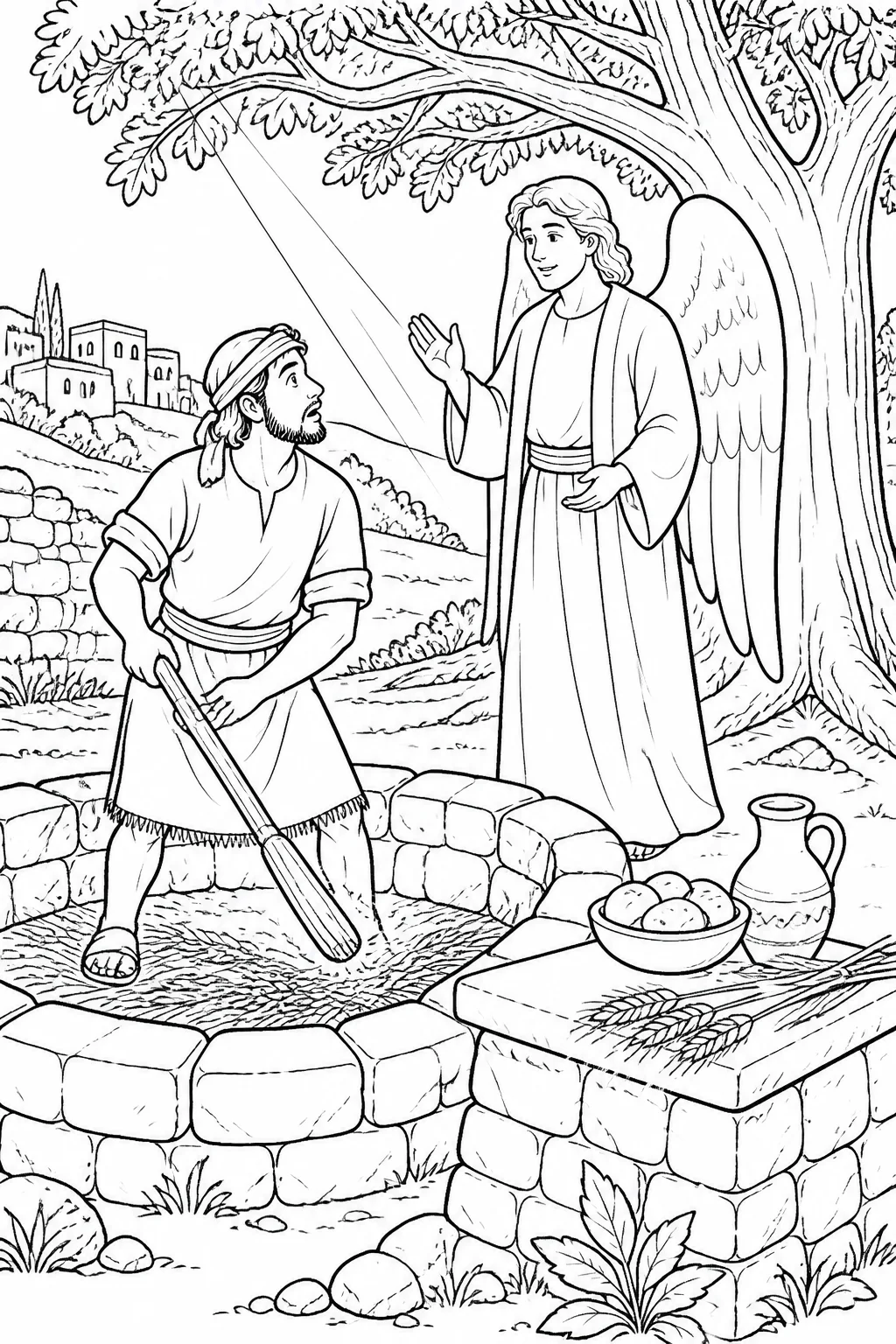
Judges 6:11–7:25
Gideon’s Three Hundred
God calls Gideon to deliver Israel from Midian. After Gideon obeys God by tearing down Baal’s altar, God confirms and strengthens him, then reduces Israel’s force from 32,000 to 300 men so Israel cannot claim the victory. Through a nighttime surprise using trumpets, jars, and torches, God throws the Midianite camp into confusion. Midian flees, and Israel pursues; Ephraim captures Oreb and Zeeb, who are killed at named locations.
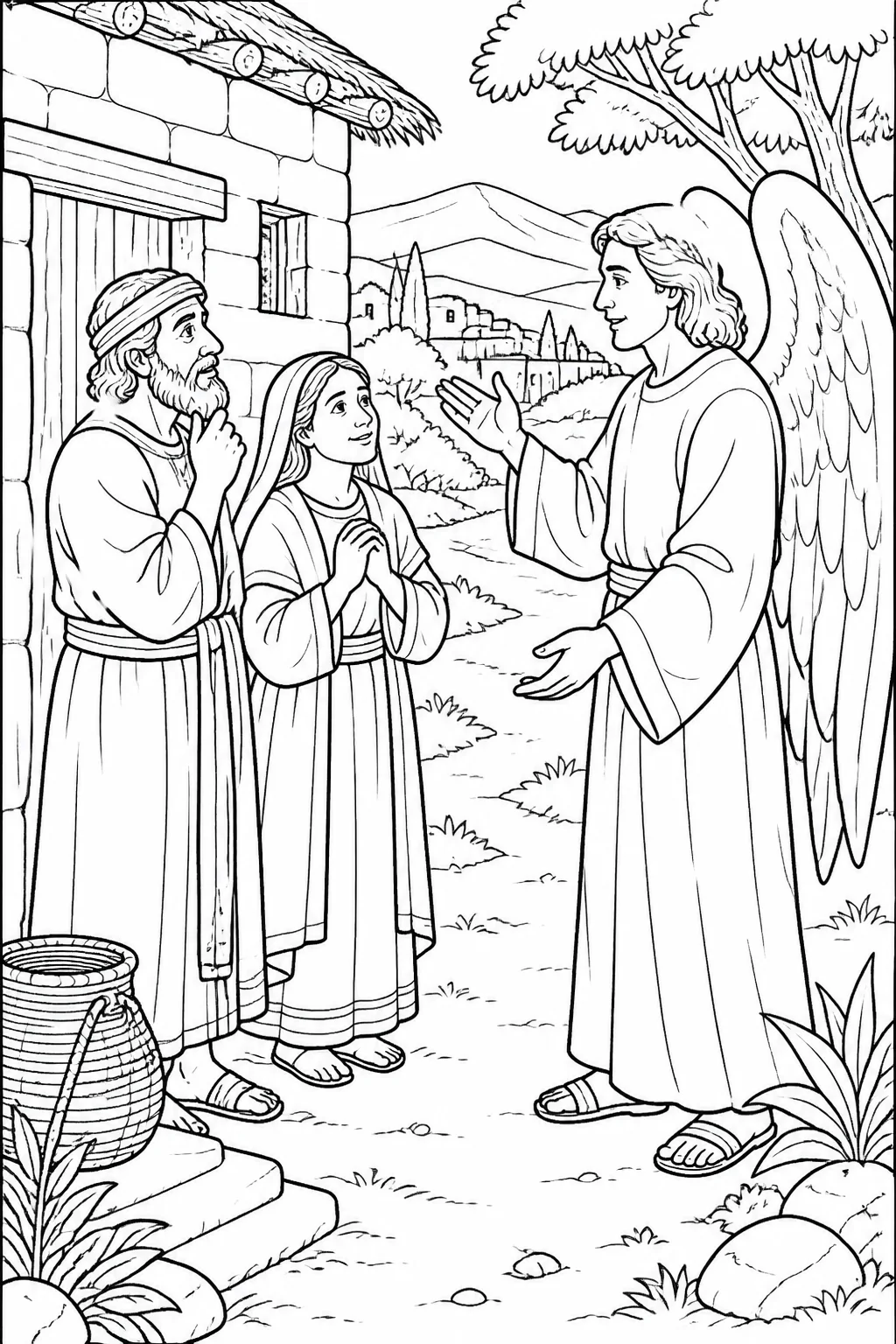
Judges 13:1–16:31
Samson and Delilah
Samson is announced before his birth as one set apart to God and begins to deliver Israel from the Philistines. His strength is associated with the LORD’s empowerment and his Nazirite consecration, symbolized in the uncut hair of his head. Samson’s impulsive choices, conflicts, and relationship with Delilah bring repeated consequences. After Delilah obtains the secret of his strength, a man shaves Samson’s hair; the LORD departs from him, and the Philistines capture, blind, and imprison him. At a Philistine celebration in Dagon’s temple, Samson prays for remembrance and strength, then pulls down the central pillars, killing himself and many Philistines. The account emphasizes calling, dependence on God, betrayal, consequences, and a solemn final act against Israel’s oppressors.
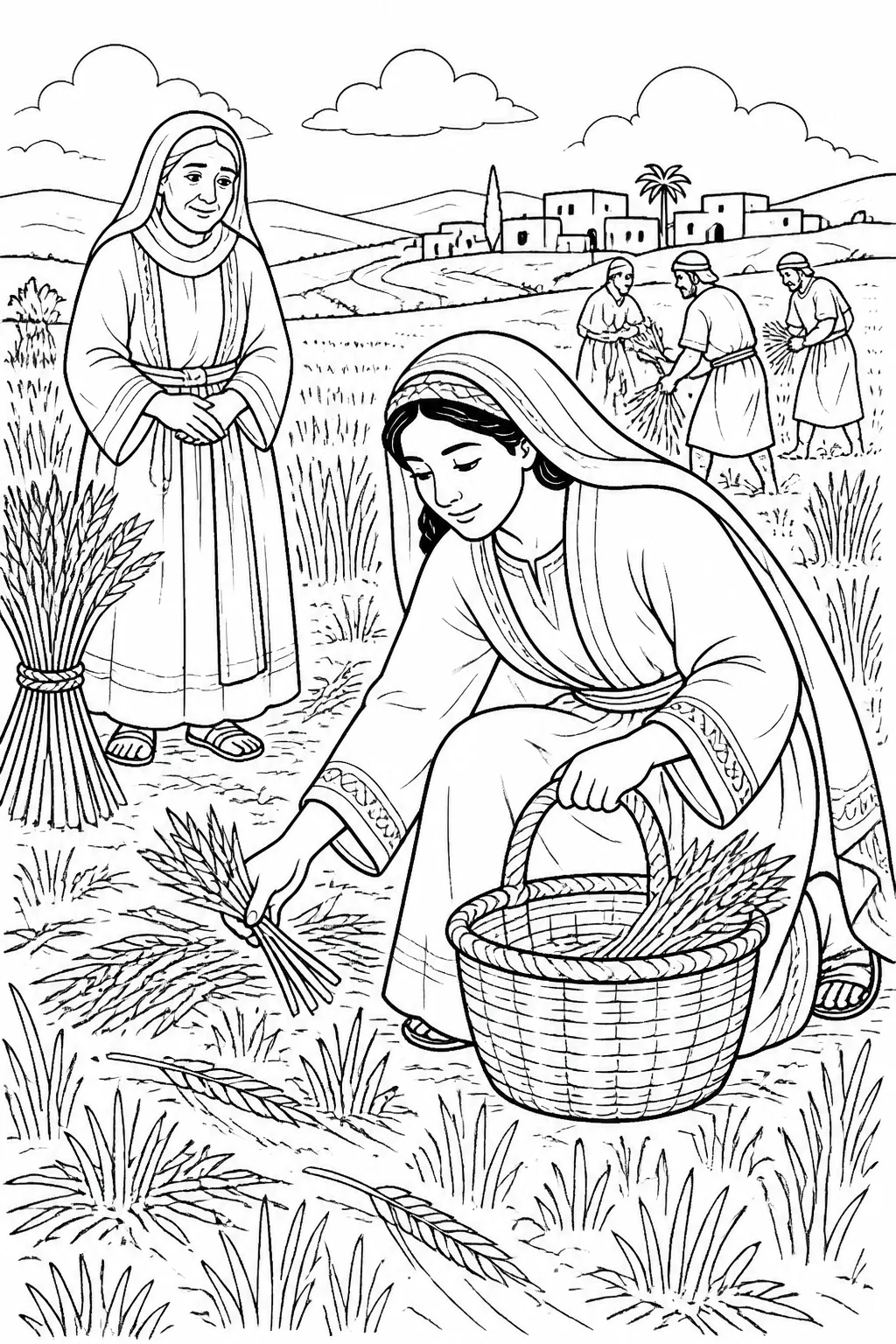
Ruth 2:1-23
Ruth Gleans in Boaz’s Field
Ruth, a Moabite woman who returned to Bethlehem with Naomi, goes to gather leftover grain and happens to come to the field belonging to Boaz, a relative of Naomi’s husband Elimelech. Boaz learns of Ruth’s loyalty to Naomi, tells her to remain with his female workers, protects her, provides water and food, and instructs the workers to leave extra grain for her. Ruth gathers grain until evening, brings it to Naomi along with leftover food, and continues gleaning through the barley and wheat harvests while living with Naomi.
Ruth 1:1-22
Ruth Stays with Naomi
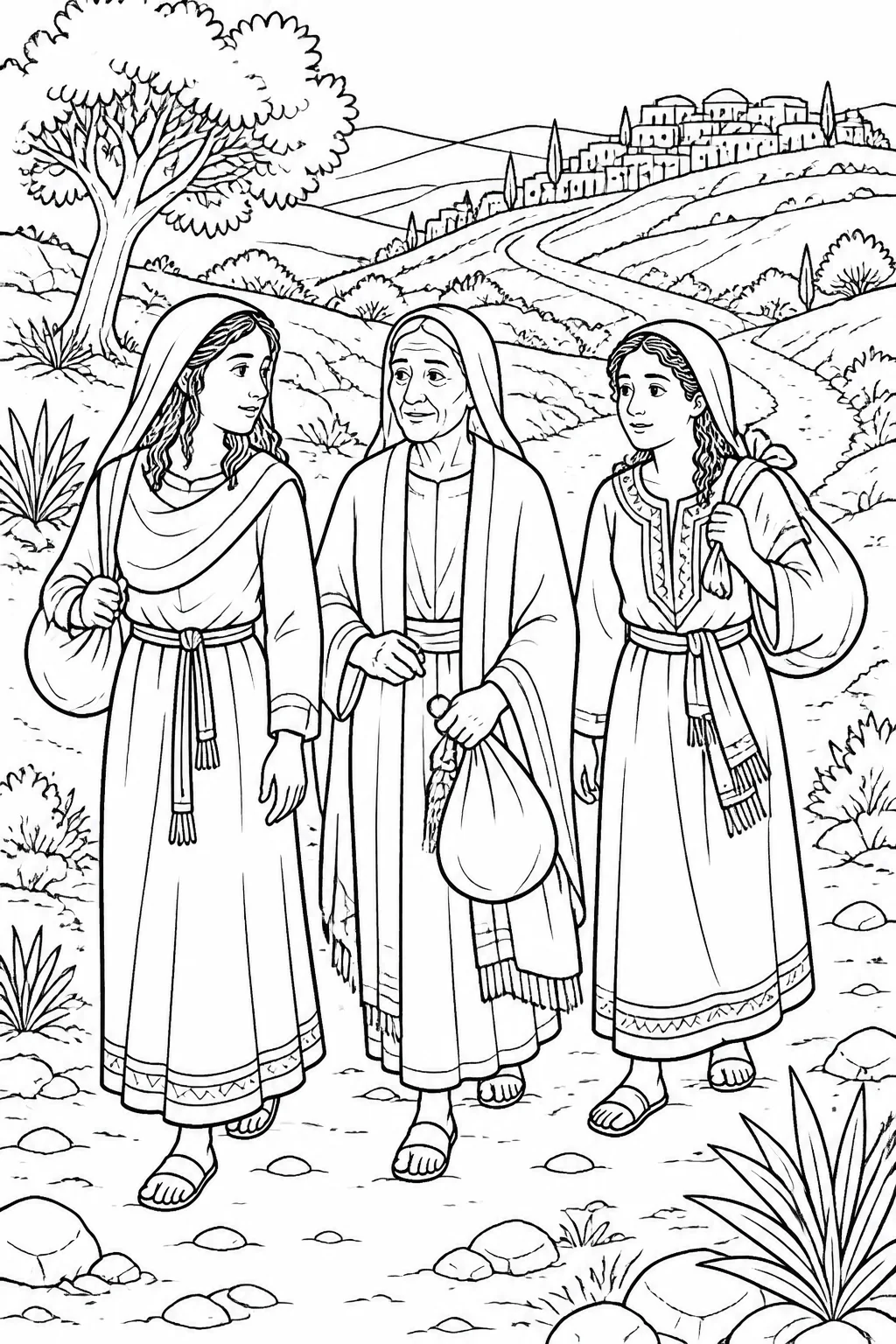
During a famine in Judah, Elimelech takes Naomi and their two sons from Bethlehem to Moab. Elimelech dies, and Naomi’s sons marry Moabite women, Ruth and Orpah; after about ten years, the sons also die. Naomi decides to return to Bethlehem after hearing that the LORD has provided food in Judah. Orpah returns to her people, but Ruth steadfastly commits herself to Naomi, Naomi’s people, and Naomi’s God. They arrive in Bethlehem at the beginning of the barley harvest, where Naomi expresses her grief and asks to be called Mara.
1 Samuel 17
David and Goliath
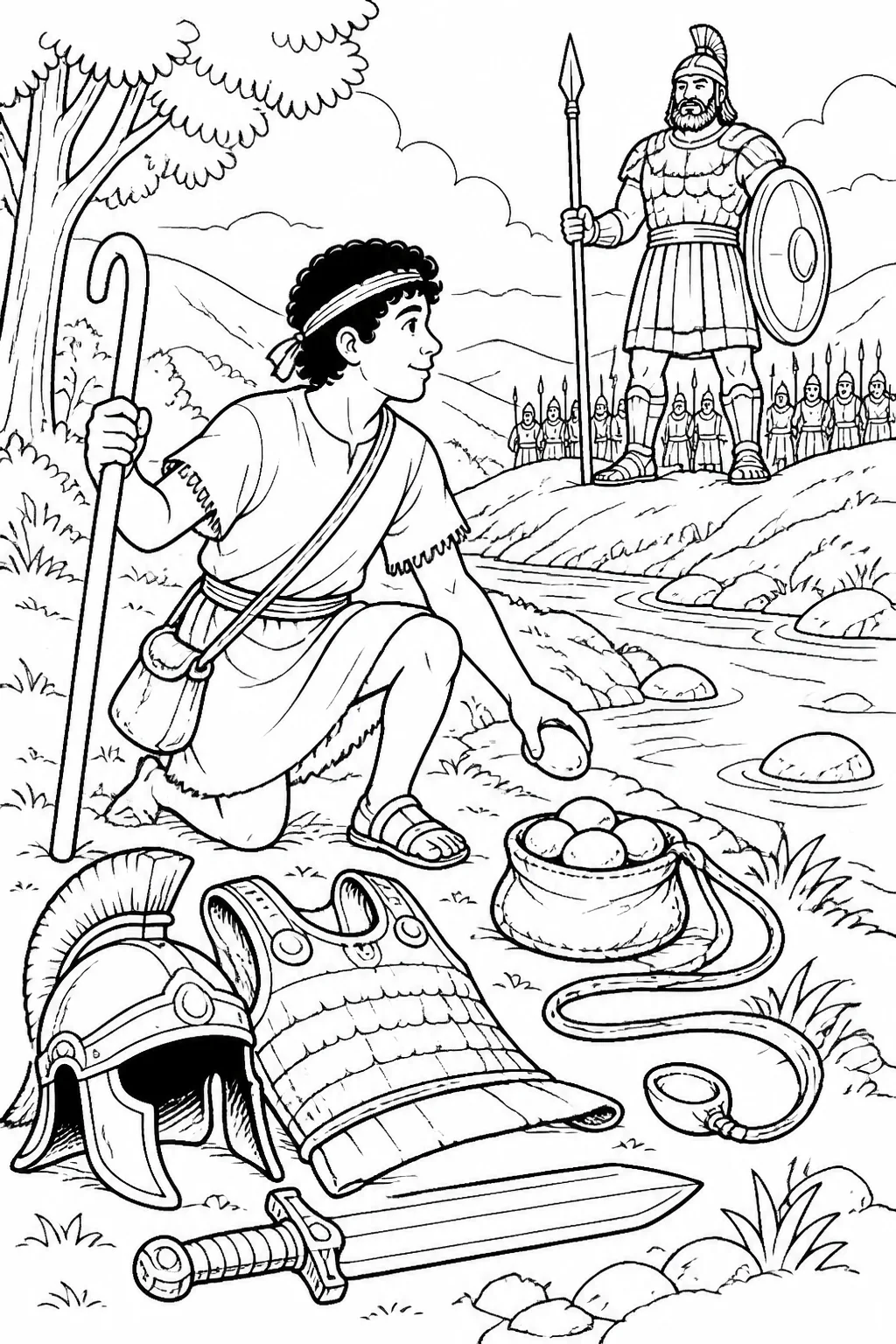
David trusted God when he faced the giant Goliath. This child-friendly story is about courage and faith in God.
1 Samuel 16:1-13
David Is Anointed King
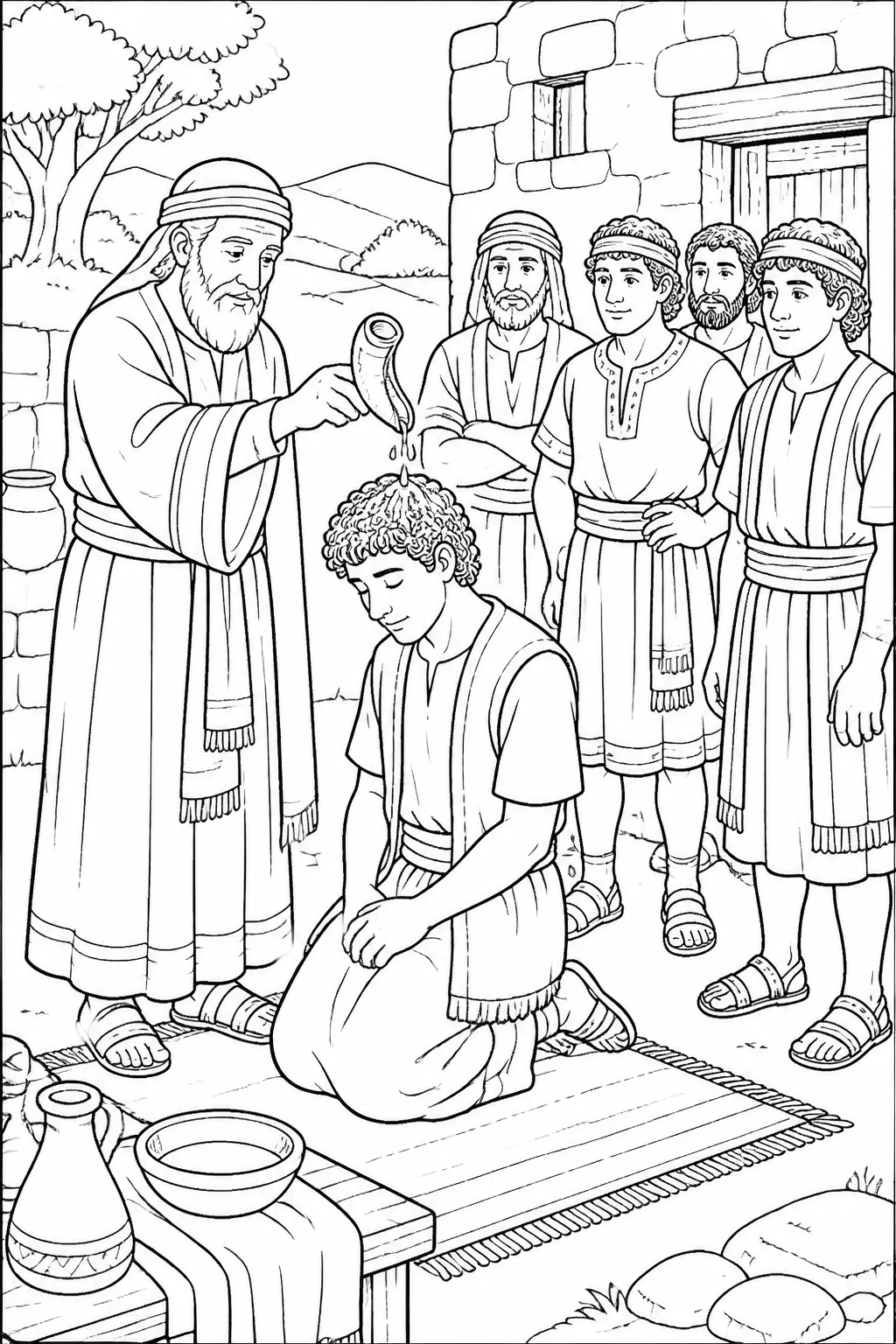
The LORD sends Samuel to Bethlehem to anoint one of Jesse’s sons as king, because the LORD has rejected Saul. Samuel sees Jesse’s older sons, but the LORD chooses none of them. David, the youngest, is brought in from tending the sheep. The LORD tells Samuel that David is the chosen one, and Samuel anoints him among his brothers. The LORD’s Spirit comes powerfully upon David from that day onward.
1 Samuel 24:1-22
David Spares Saul
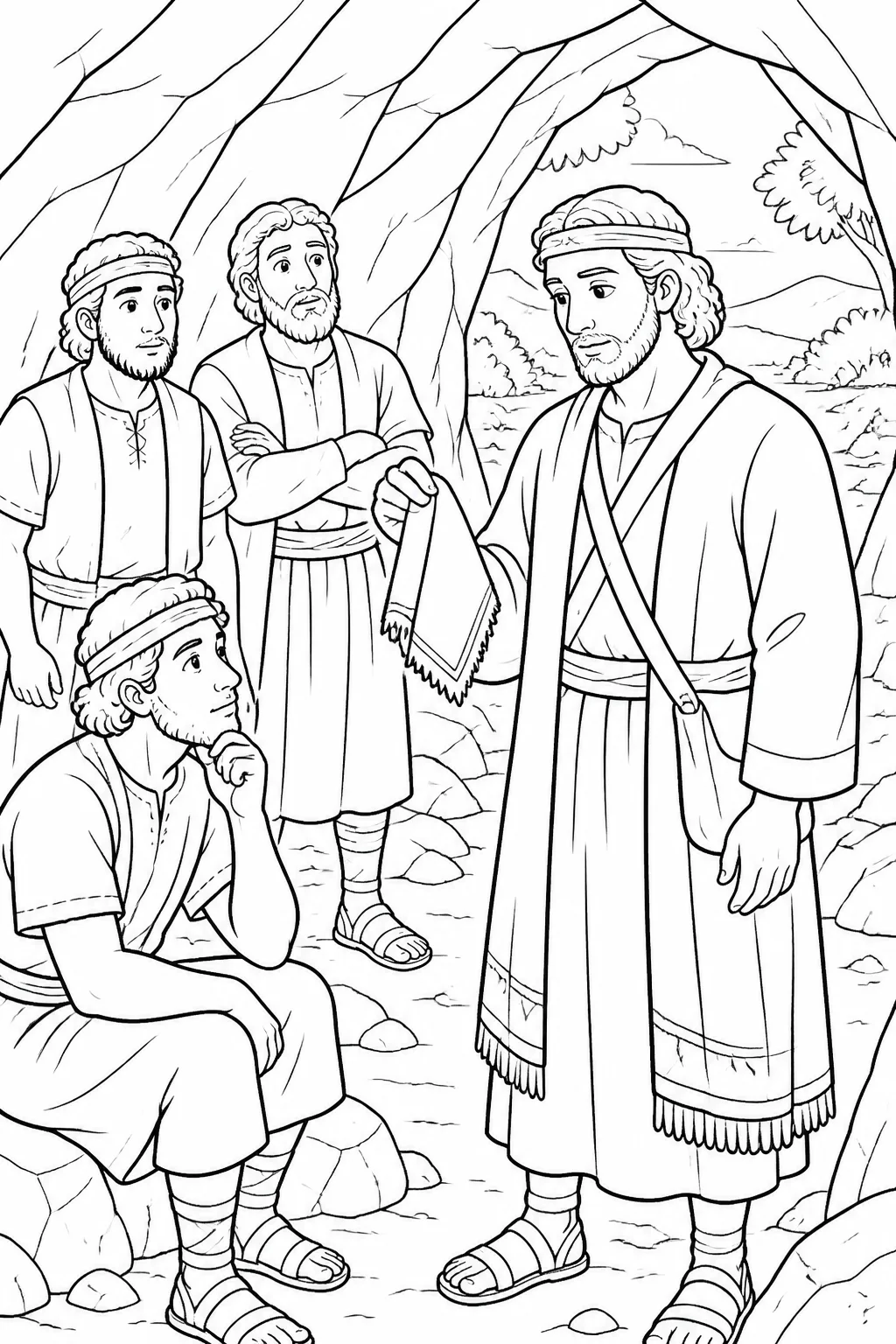
David and his men are hiding in the wilderness of En-gedi when Saul enters the cave alone to cover his feet. David’s men urge him to kill Saul, but David refuses to harm the LORD’s anointed. He cuts off only the corner of Saul’s robe, then feels guilty and restrains his men. After Saul leaves the cave, David calls to him from a distance, shows the robe fragment, explains that he has not rebelled or sought Saul’s harm, and asks the LORD to judge between them. Saul acknowledges David’s righteousness, admits David repaid evil with good, and asks David to swear not to destroy his descendants or wipe out his family name. David swears, Saul returns home, and David and his men go up to the stronghold.
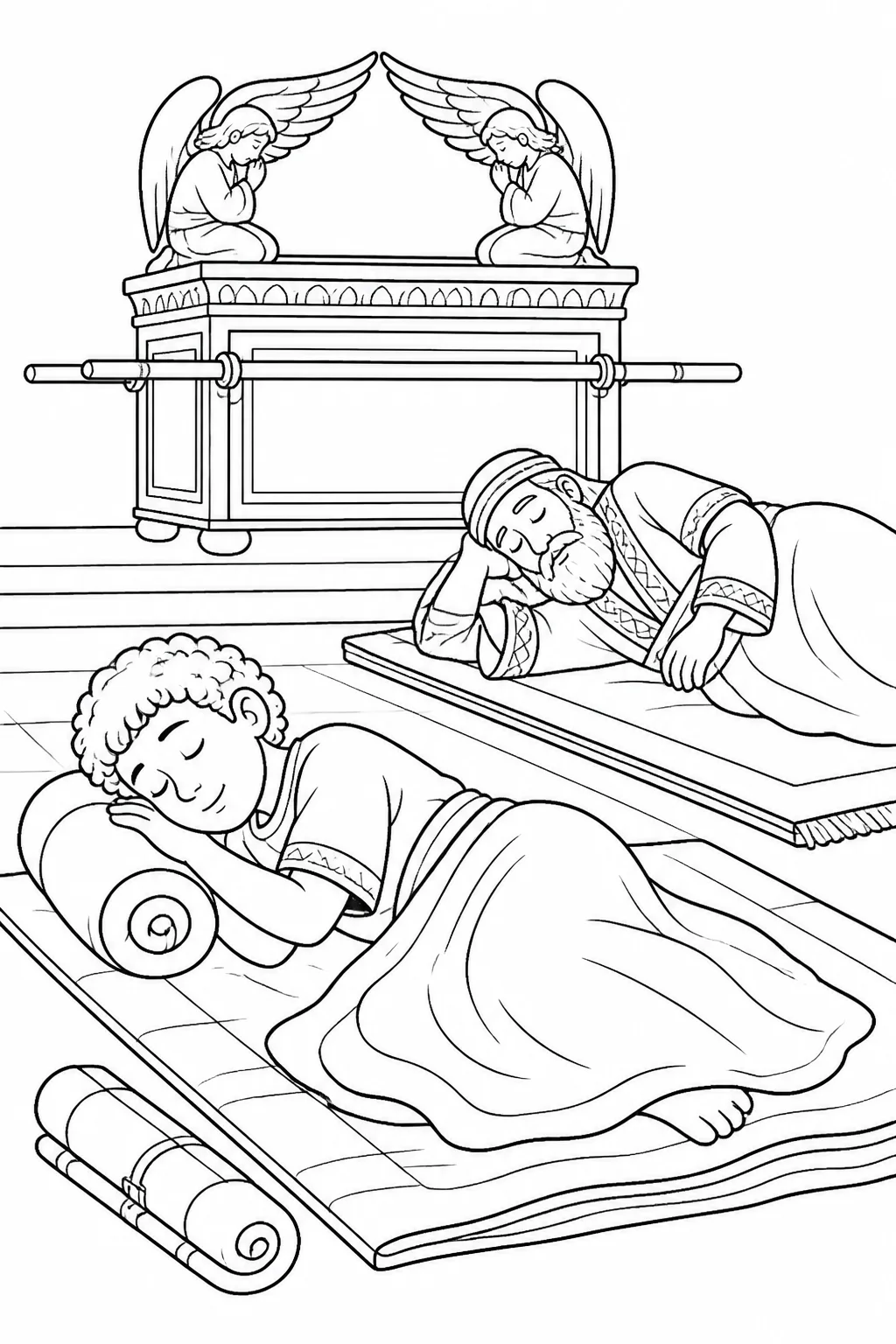
1 Samuel 3:1-21
Samuel Hears God’s Call
At a time when messages from the LORD were rare and visions uncommon, the boy Samuel served the LORD under Eli. One night, while Samuel was lying down in the LORD’s temple near the ark of God, the LORD called him. Samuel mistakenly thought Eli was calling him and went to Eli three times. Eli then understood that the LORD was calling the boy and instructed Samuel to answer, “Speak, LORD, for your servant hears.” The LORD came and stood there, revealed a judgment concerning Eli’s household, and Samuel later told Eli everything. The LORD continued to be with Samuel, and all Israel recognized him as a prophet of the LORD.
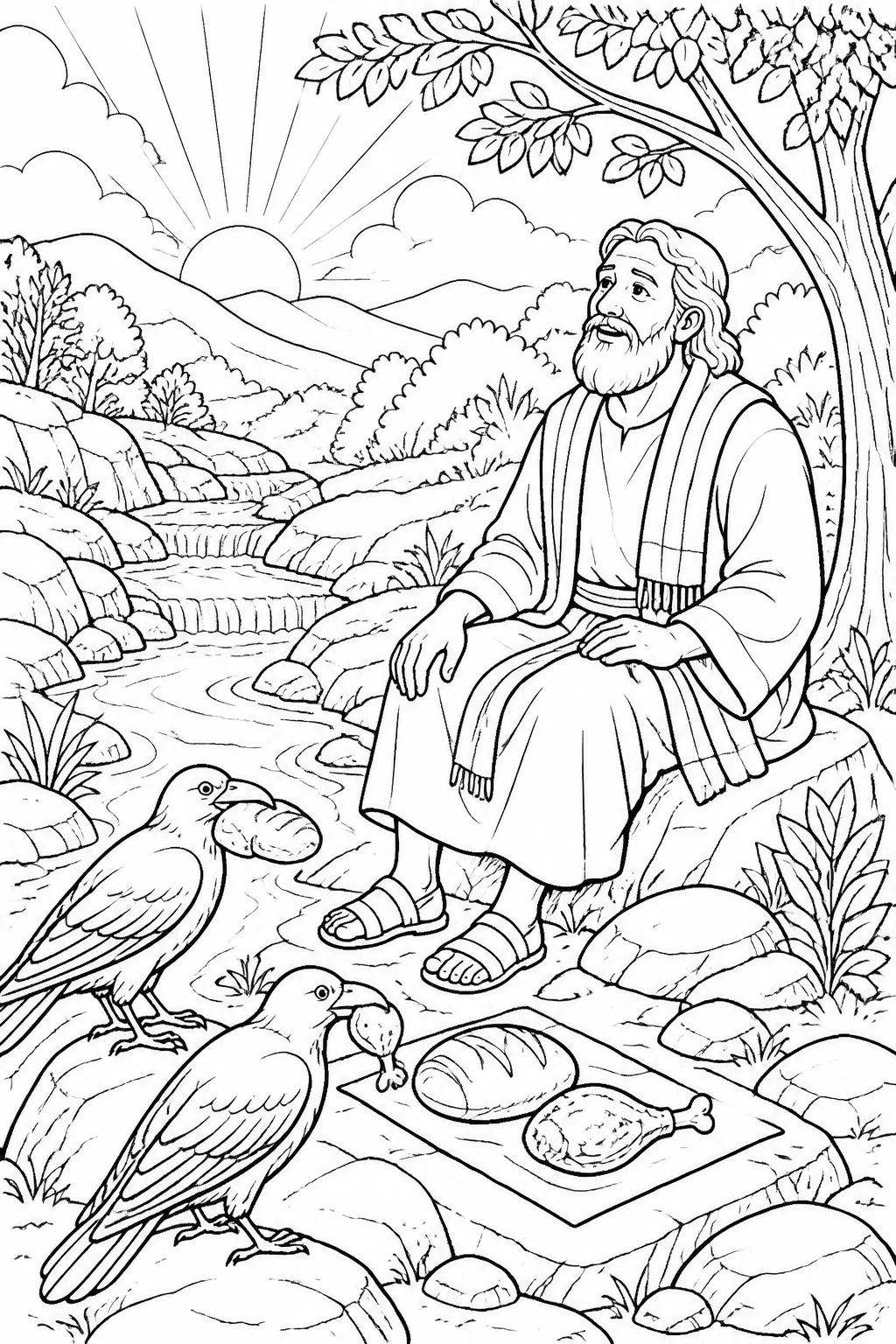
1 Kings 17:1-16
Elijah Is Fed by Ravens
During a drought announced by Elijah, the LORD tells him to hide beside the Brook Cherith. Ravens bring him bread and meat, and he drinks from the brook. When the brook dries because there is no rain, the LORD sends Elijah to Zarephath, where a widow is commanded to provide for him. Though she has only a handful of flour and a little oil, the LORD keeps the flour and oil supplied until rain returns.
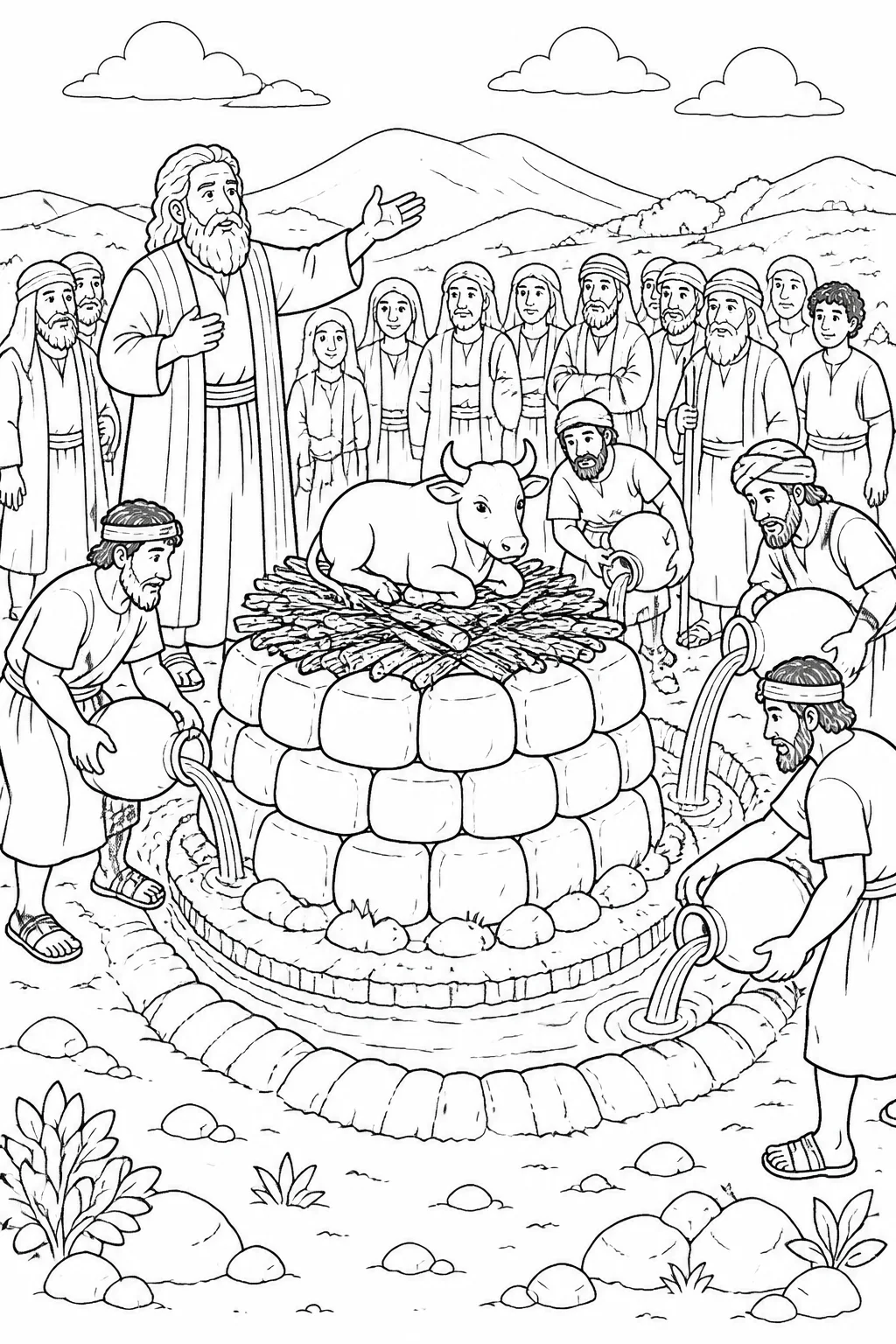
1 Kings 18:1-46
Elijah on Mount Carmel
During a drought, Elijah meets Ahab and gathers Israel, along with the prophets of Baal, at Mount Carmel. Elijah proposes that the God who answers by fire is the true God. Baal’s prophets call without receiving an answer. Elijah repairs the LORD’s altar with twelve stones, prepares a sacrifice, and prays. The LORD answers with fire, and the people acknowledge that the LORD is God. Elijah then prays again, a small cloud appears, rain comes, and Elijah travels with Ahab toward Jezreel.
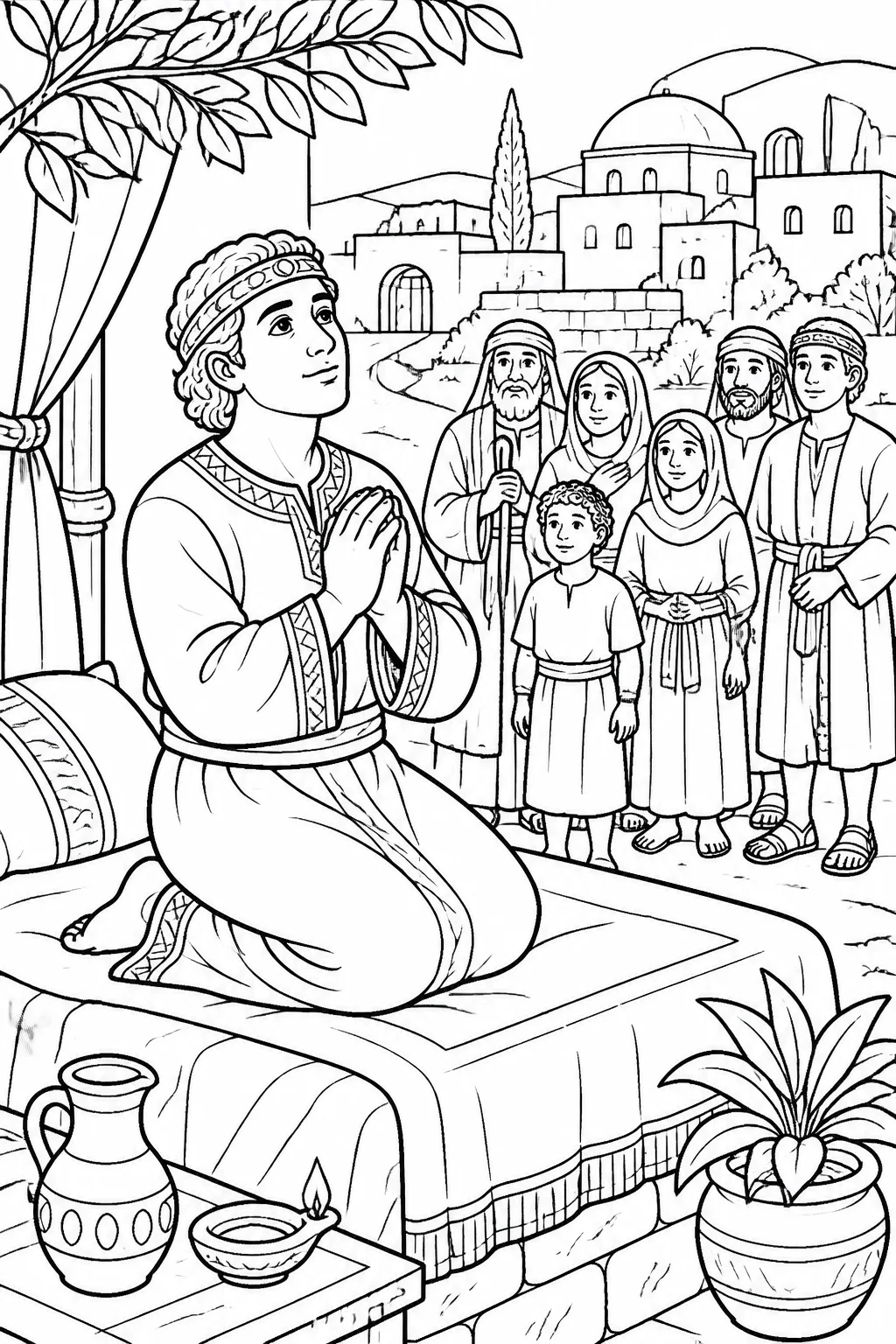
1 Kings 3:3-28
Solomon Asks for Wisdom
Solomon loves the LORD and serves as king. At Gibeon, the LORD appears to him in a dream and invites him to ask for what he wants. Solomon asks for an understanding heart to govern God’s people and discern good from evil. God is pleased, grants him wisdom, and also gives him riches and honor, with a promise of long life if he walks in God’s ways and keeps the commandments. Solomon later demonstrates this wisdom in a difficult judgment involving two women and one living child.
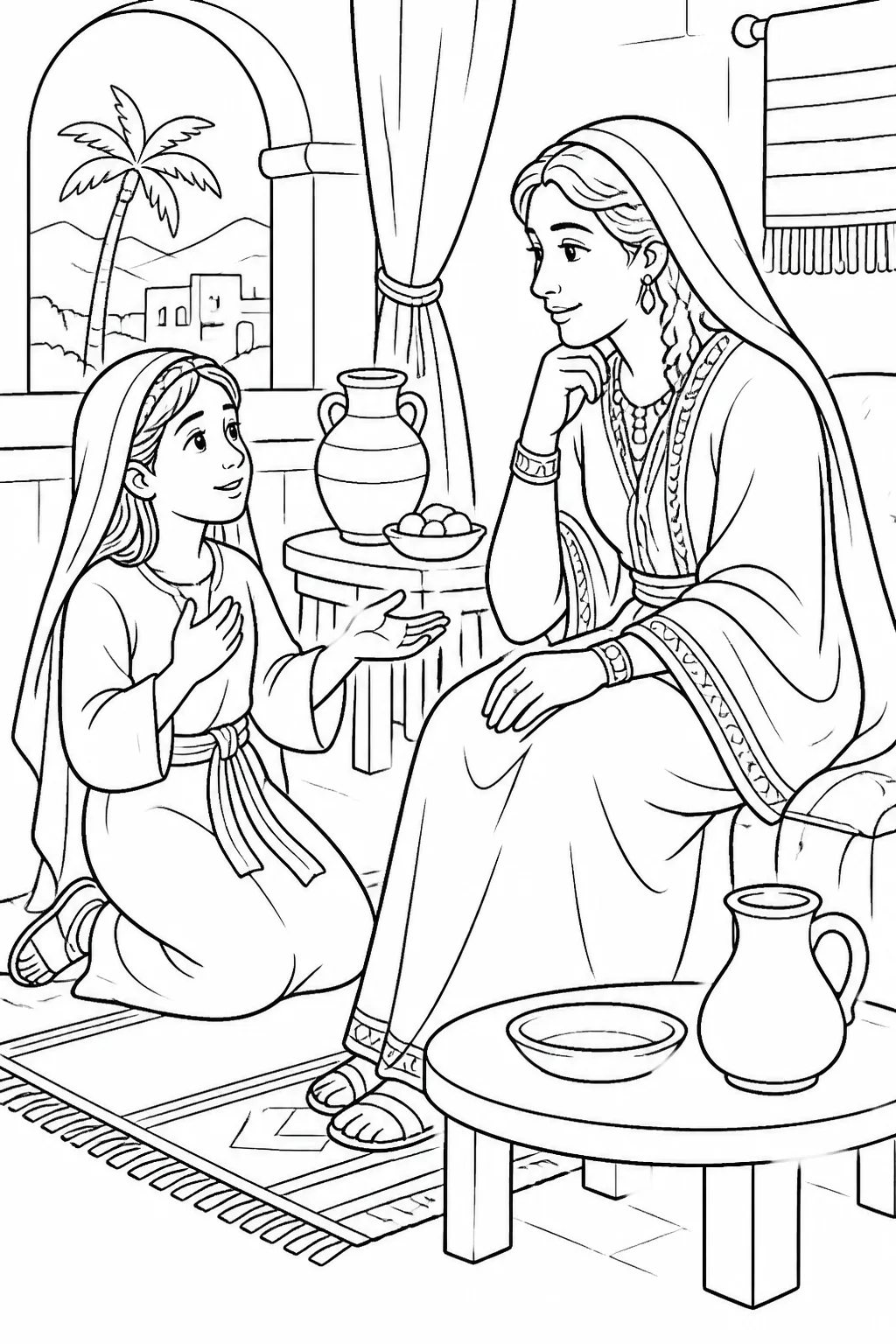
2 Kings 5:1-19
Naaman Is Healed
Naaman, commander of the army of Aram, has a skin disease. A captive Israelite girl tells Naaman’s wife that the prophet in Samaria could heal him. Naaman goes to the king of Israel and then to Elisha. Elisha instructs him, through a messenger, to wash seven times in the Jordan River. Naaman is initially angry but follows the instruction and is healed. He acknowledges that there is no God in all the earth except in Israel and asks for permission concerning his service to the king of Aram.
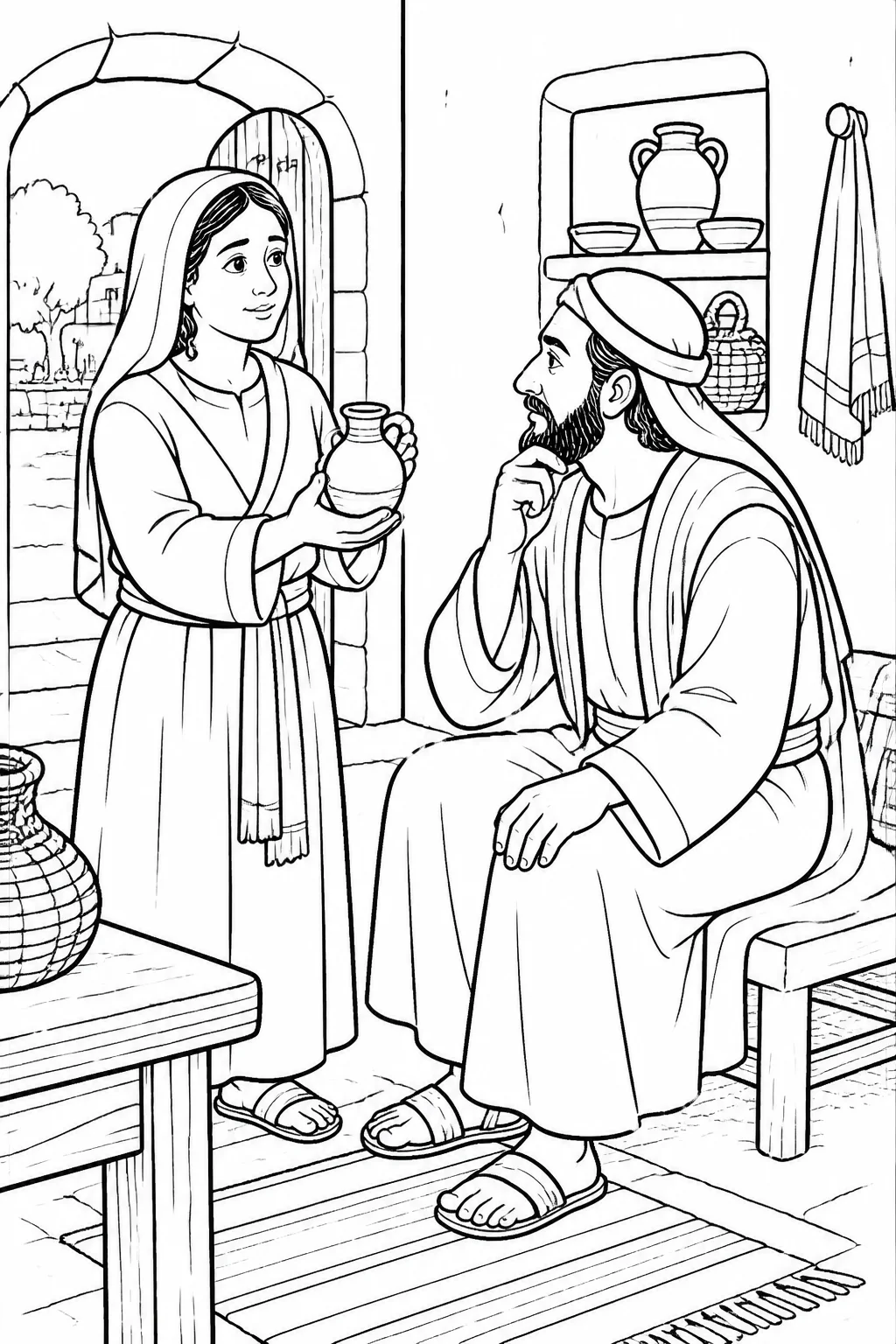
2 Kings 4:1-7
The Widow’s Oil
A widow tells Elisha that her deceased husband’s creditor is coming to take her two sons as servants because of a debt. Elisha asks what she has in her house, and she says she has only a jar of oil. Following his instructions, she borrows empty containers from her neighbors, shuts the door with her sons, and pours the oil into them until no containers remain. The oil then stops. Elisha tells her to sell the oil, pay the creditor, and live with her sons on what remains.
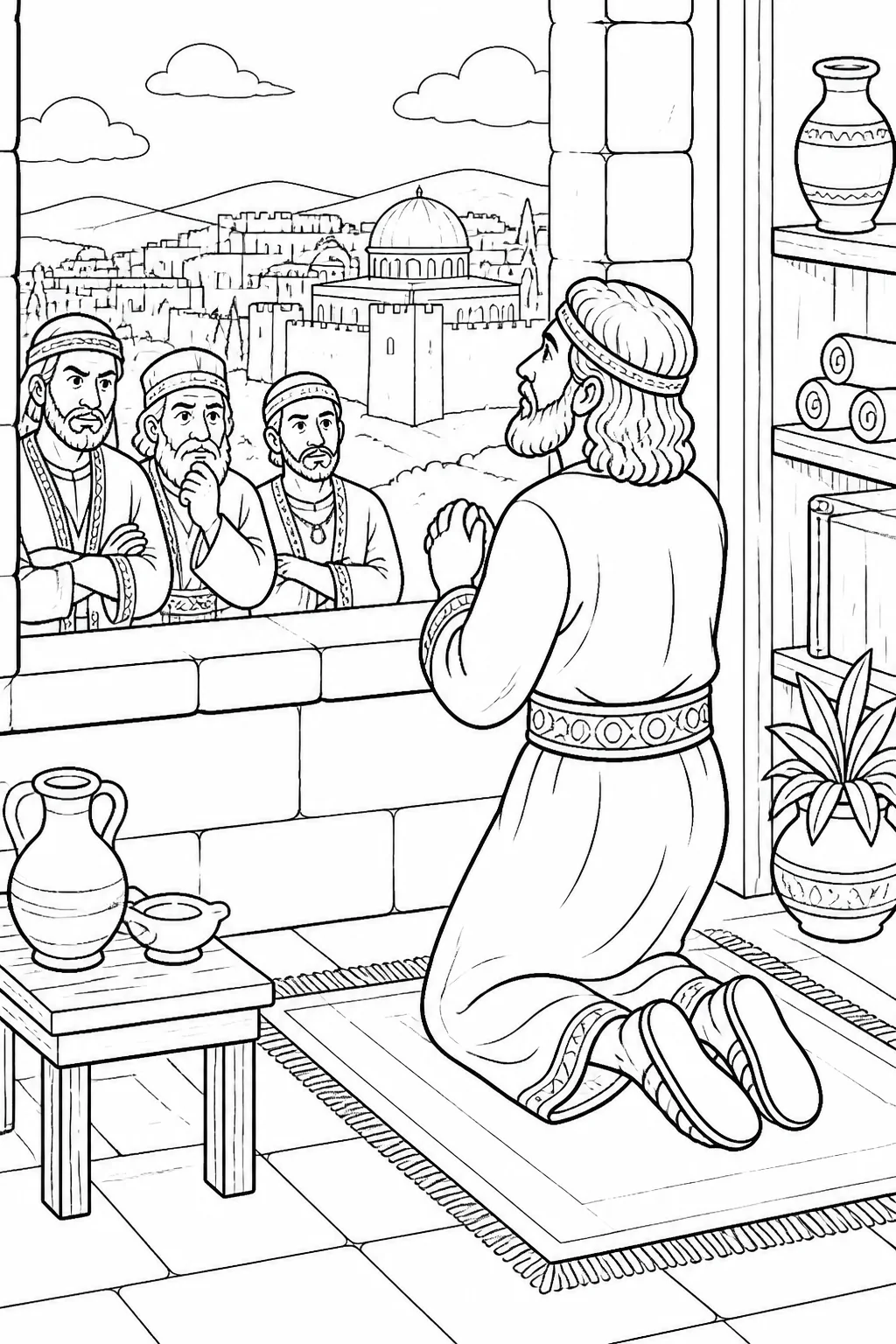
Daniel 6:1-28
Daniel in the Lions’ Den
Daniel continues praying to God despite a royal law, is placed in a lions’ den, and is protected through the night. The king finds Daniel alive and unharmed, then issues a decree honoring the living God. Daniel prospers during the reigns of Darius and Cyrus the Persian.
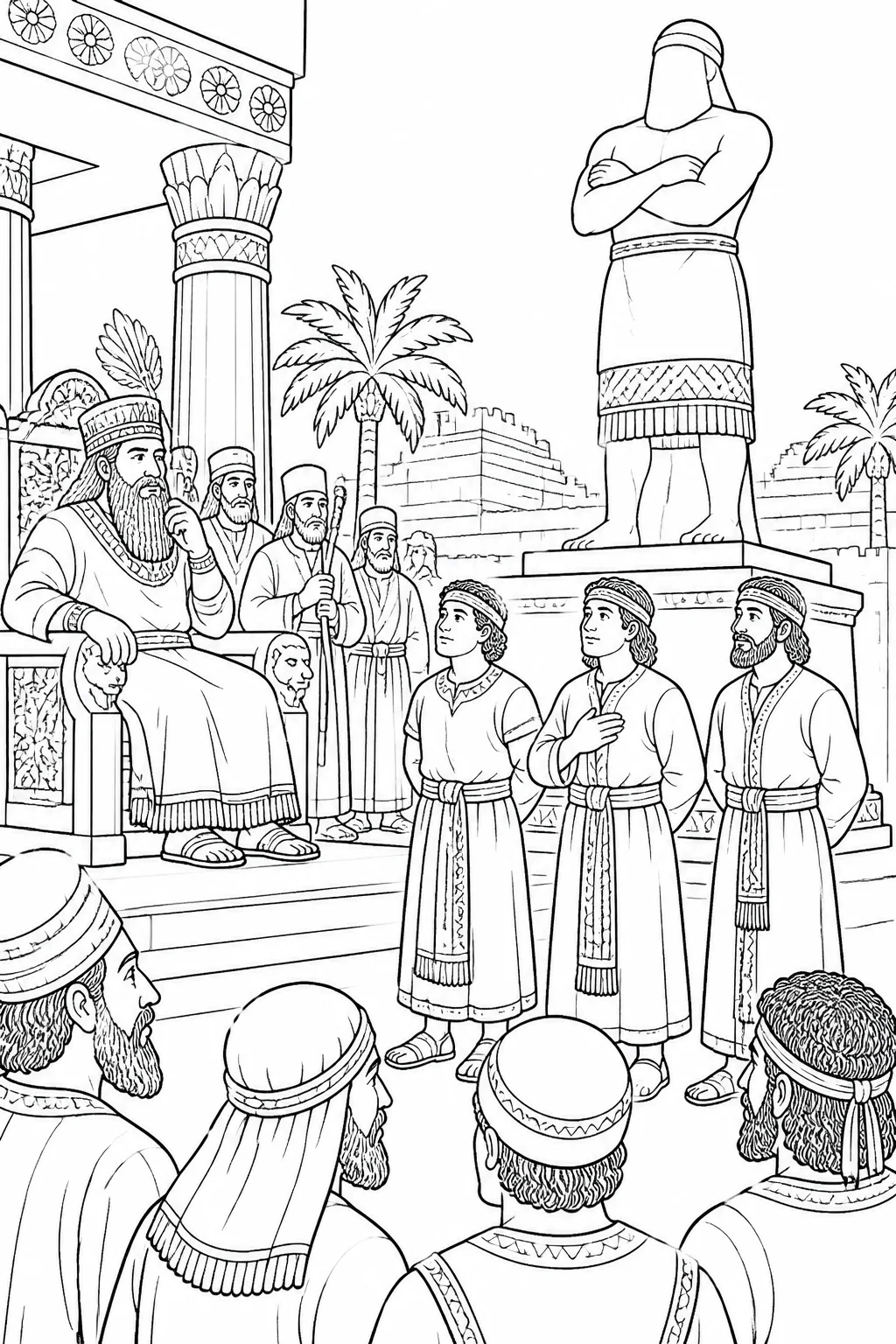
Daniel 3:1-30
The Fiery Furnace
King Nebuchadnezzar sets up a large gold statue on the plain of Dura and commands assembled peoples to worship it when they hear music. Shadrach, Meshach, and Abednego refuse because they will not serve the king’s gods or worship the statue. They say God is able to rescue them, but they will remain faithful even if he does not. Nebuchadnezzar orders them thrown into a furnace heated seven times more than usual. The king sees four figures walking unharmed in the fire. The three men come out without injury or even the smell of fire, and Nebuchadnezzar praises their God, issues a decree protecting his honor, and promotes the three men in the province of Babylon.
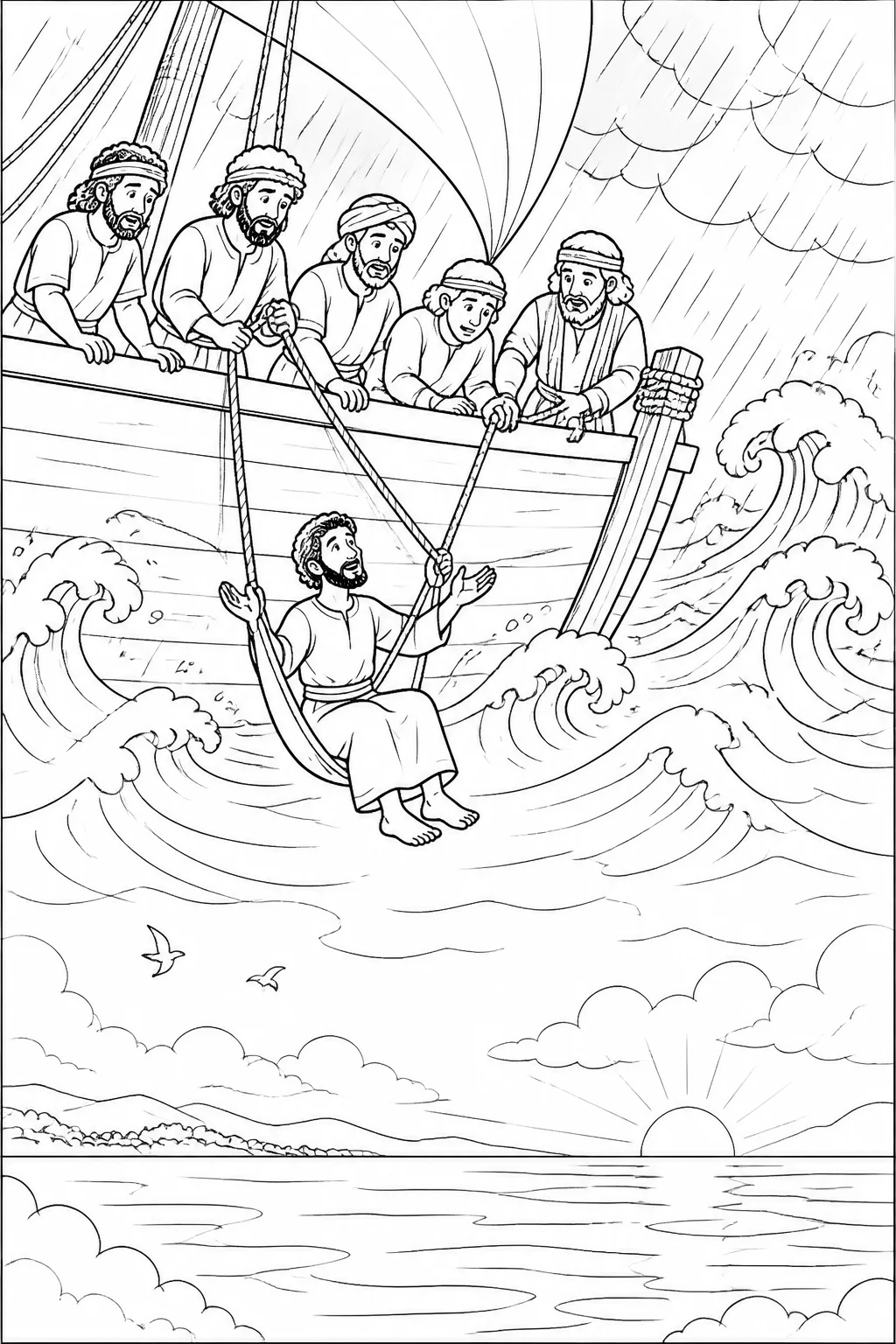
Jonah 1–4
Jonah and the Great Fish
Jonah ran from God’s instruction, but God rescued him and gave him another chance to obey.
For a real lesson this week
Built around the resources already available.
Every story opens to its printable coloring pages, ready-to-print story sheets when available, Scripture reference, discussion prompt, and complexity choices for your group.
Free to print and share.
Kingdom Coloring is free for families, Sunday School classes, churches, and classrooms. No account, paywall, or watermark stands between your lesson and a useful printable.