
Bible coloring library

Find a story to color

Browse the available free printable Bible coloring pages.

Search stories, collections, characters & artwork →

541 printable pages

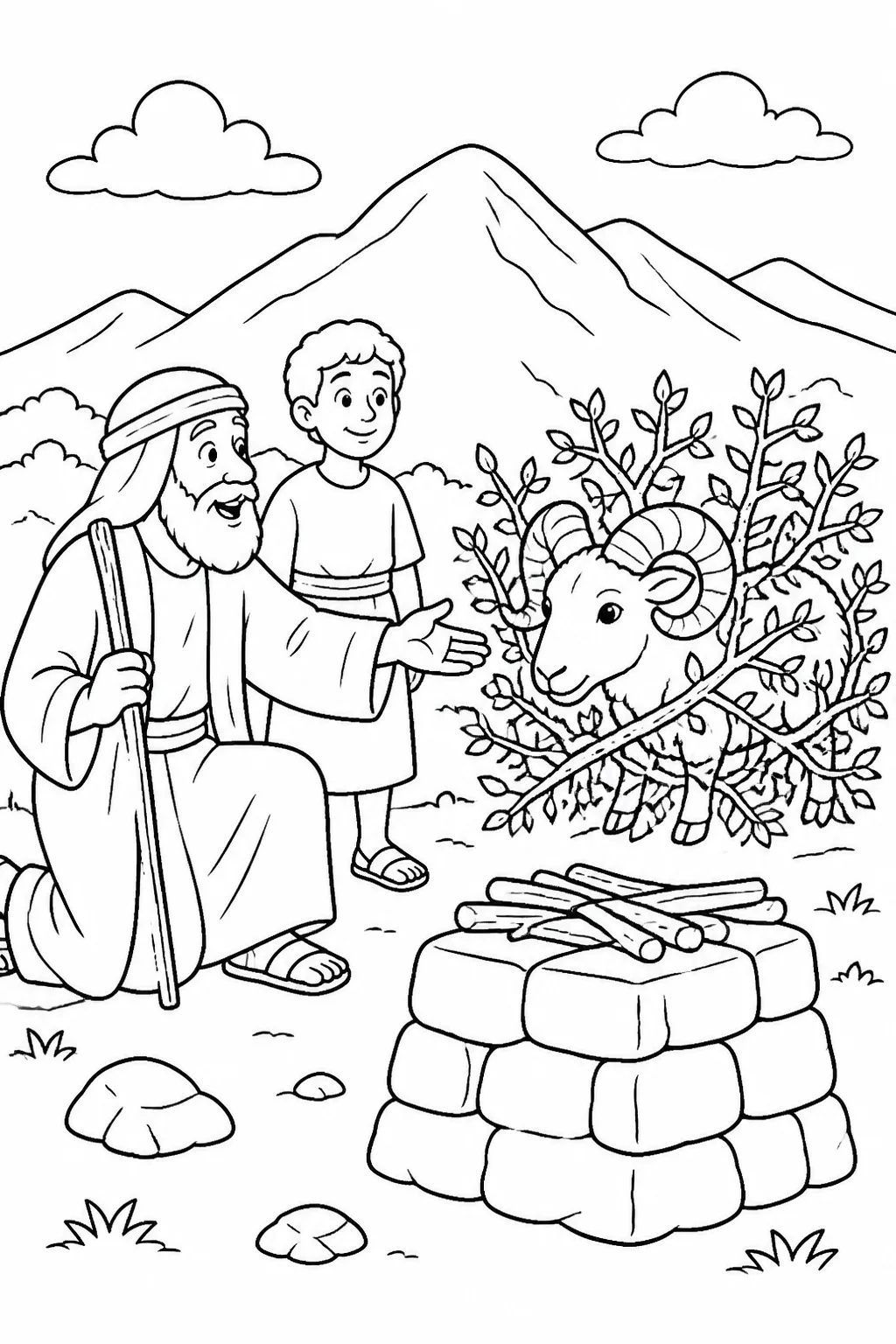
Abraham sees a ram caught by its horns in a thicket near an altar on a mountain, with Isaac unharmed nearby.

God Provides a Ram

Genesis 22:1-19

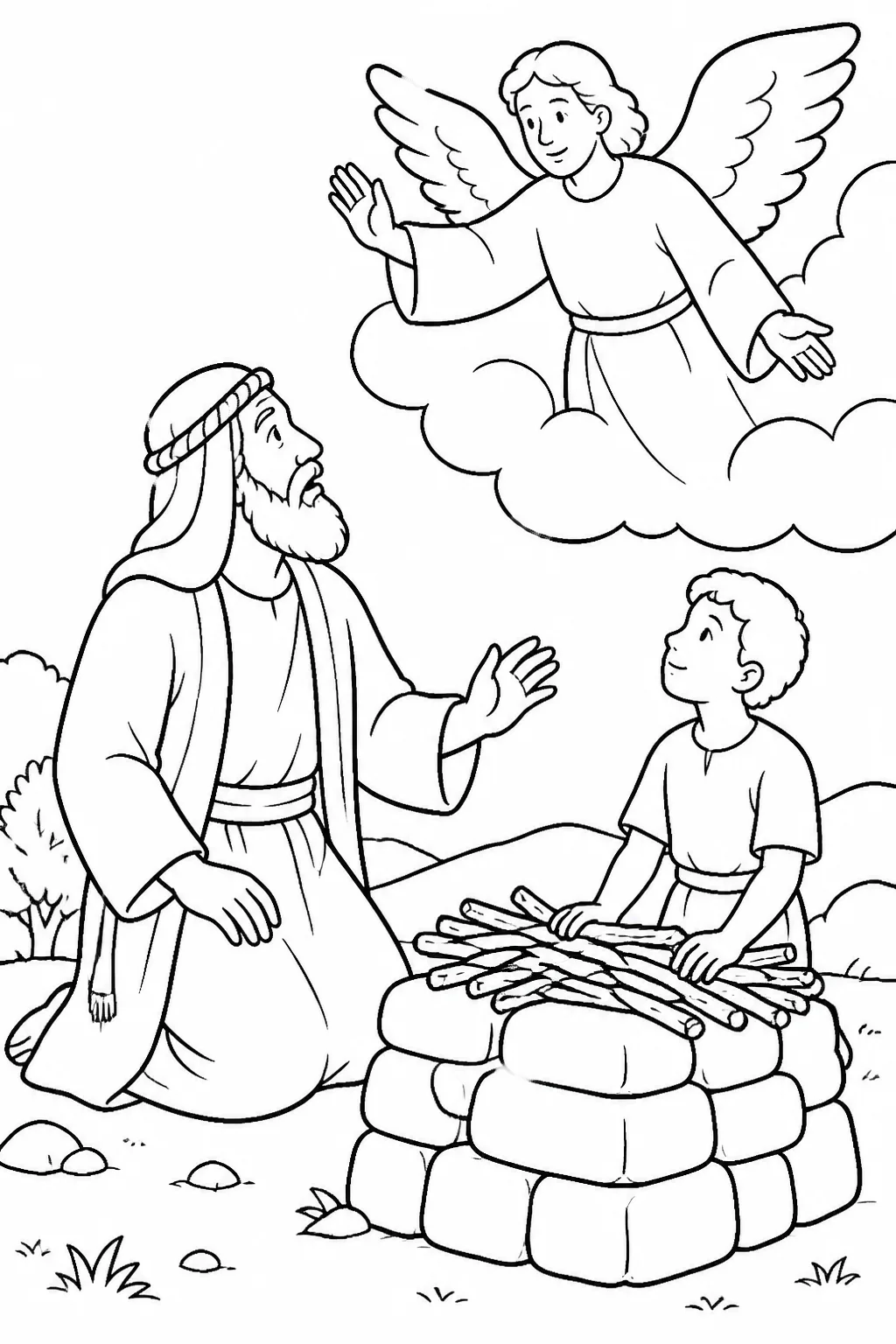
Abraham turns toward the angel of the LORD calling from heaven while Isaac remains unharmed near the altar.

The Angel Calls from Heaven

Genesis 22:1-19
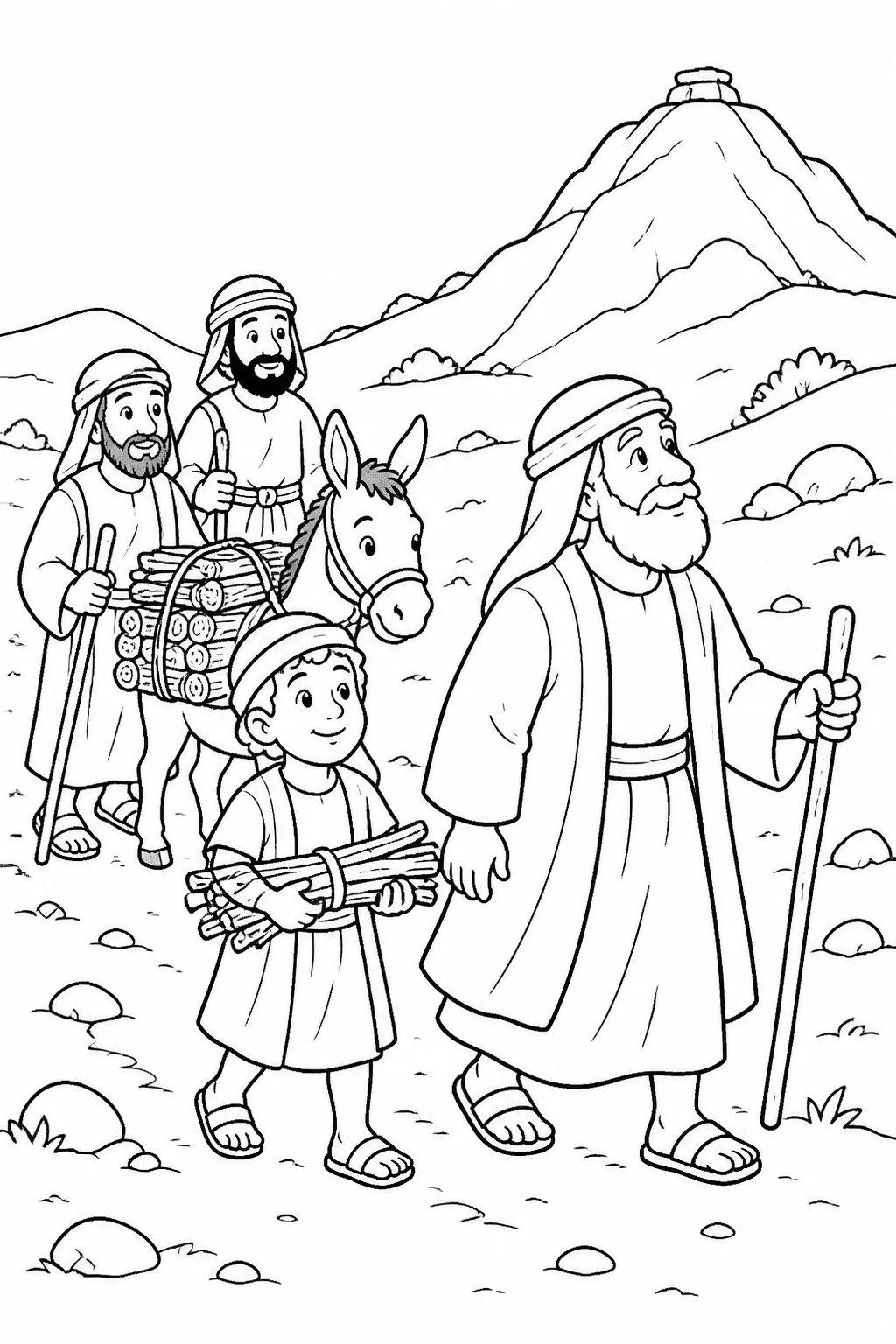
Abraham, Isaac, two servants, and a donkey travel with wood toward the mountain place God showed Abraham, based on Genesis 22:3-5.

Journey to Moriah

Genesis 22:1-19

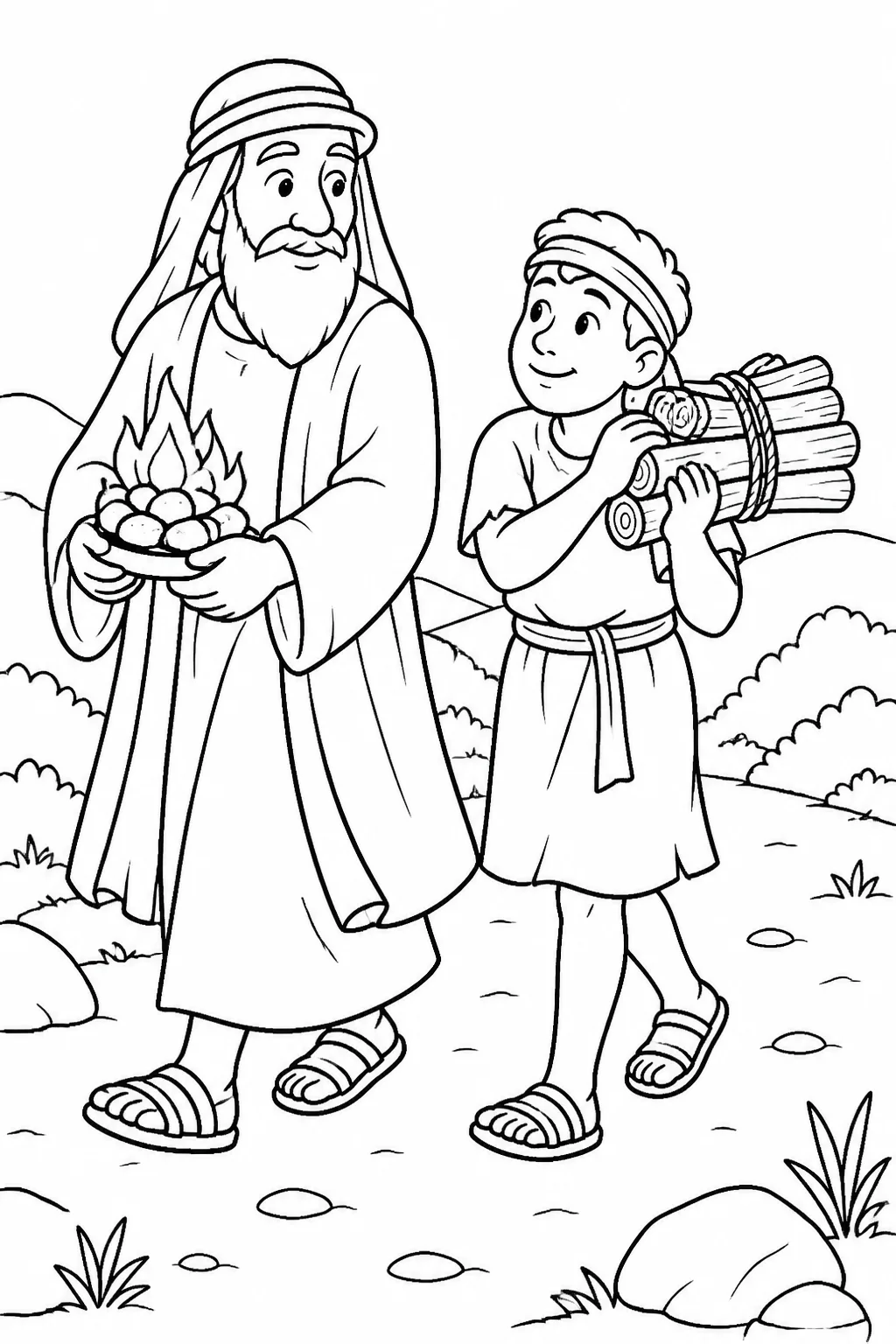
Abraham and Isaac walk together toward the place of offering; Isaac carries wood, Abraham carries fire and a knife, and Isaac asks about the offering.

God Will Provide the Lamb

Genesis 22:1-19
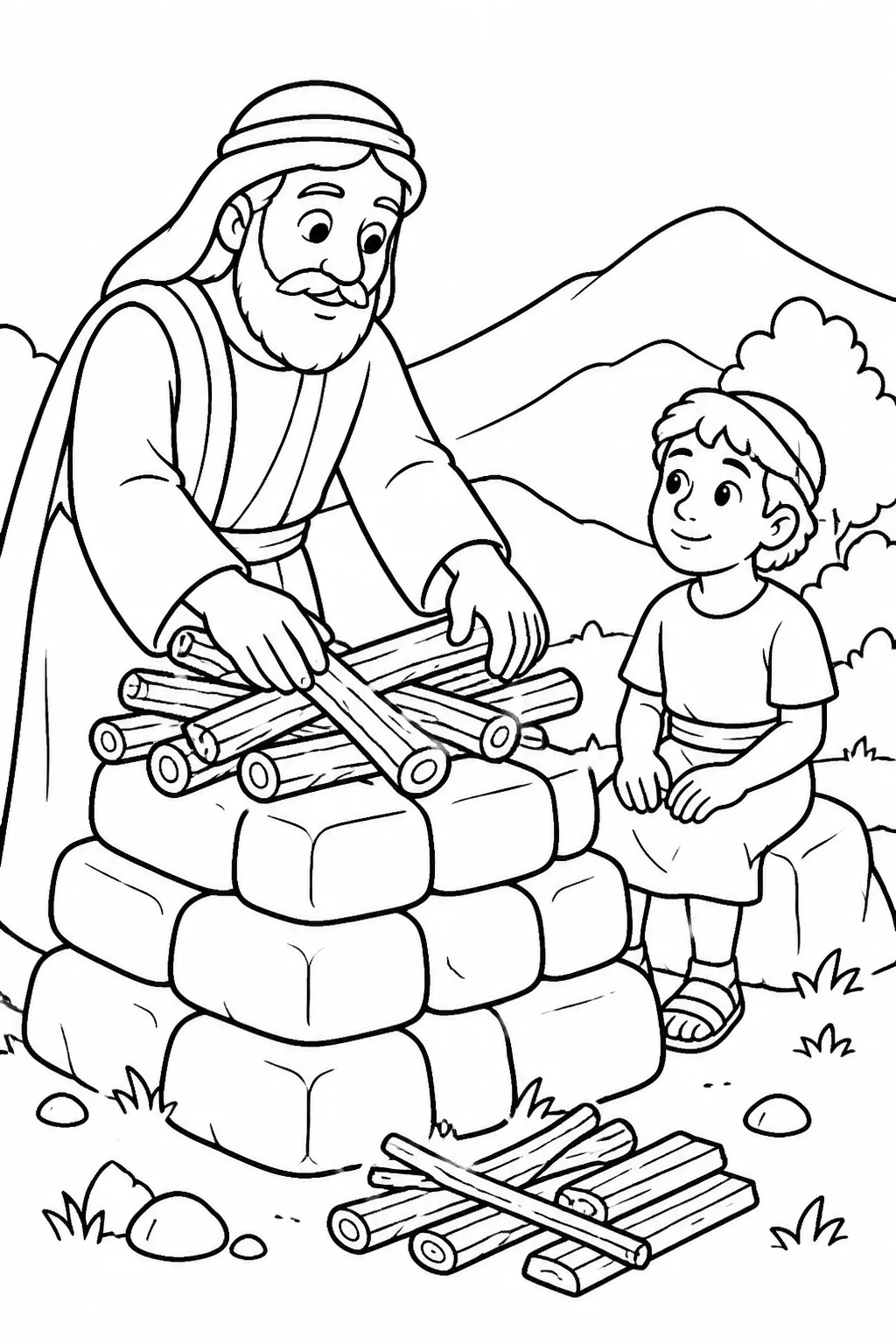
Abraham building and arranging wood on an altar on a mountain while Isaac is shown safely beside it, based on Genesis 22:9-10.

The Altar on the Mountain

Genesis 22:1-19
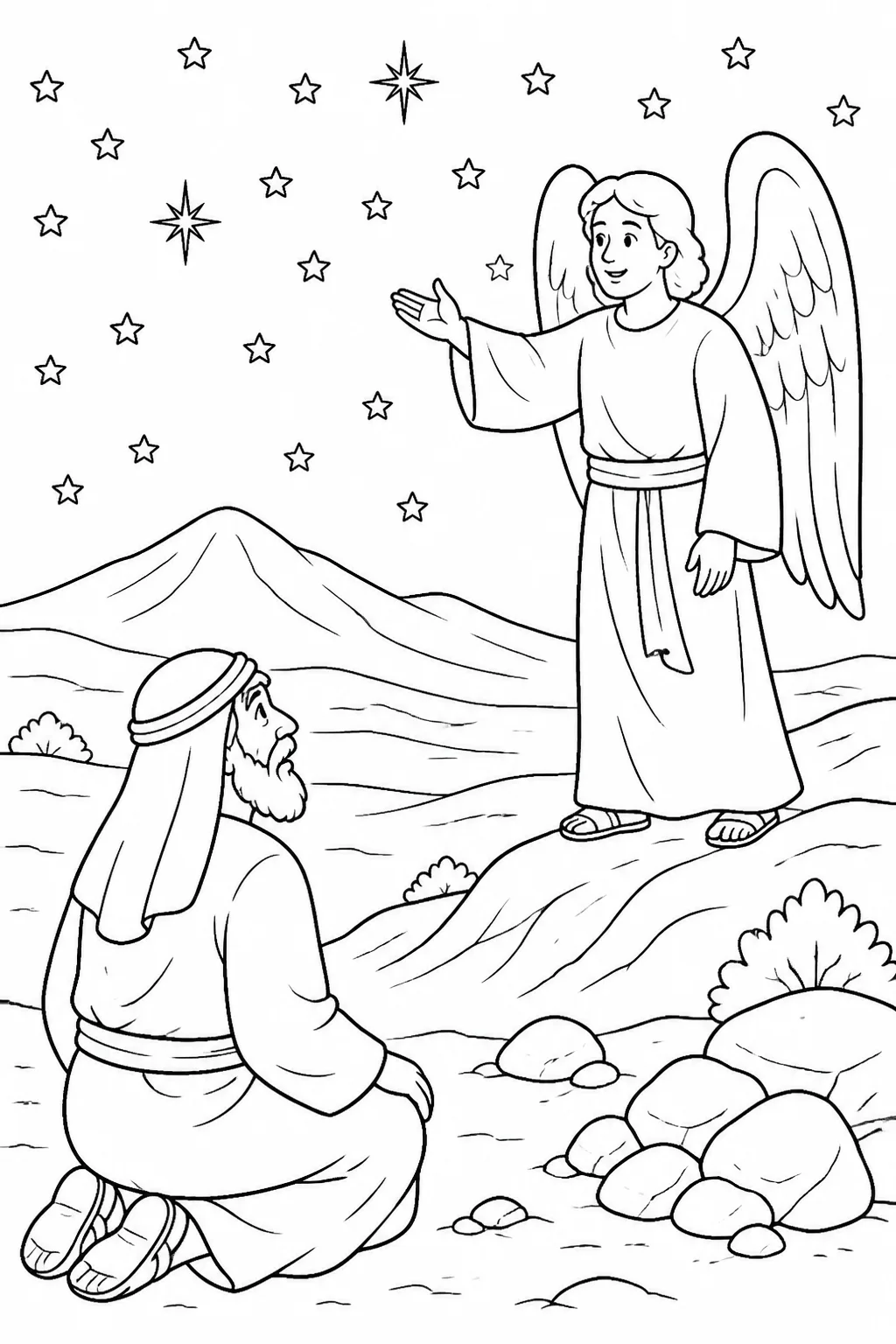
Abraham looks toward stars above a sandy mountain landscape as the angel of the LORD conveys the LORD’s promise about Abraham’s offspring and blessing.

A Promise for Abraham’s Family

Genesis 22:1-19
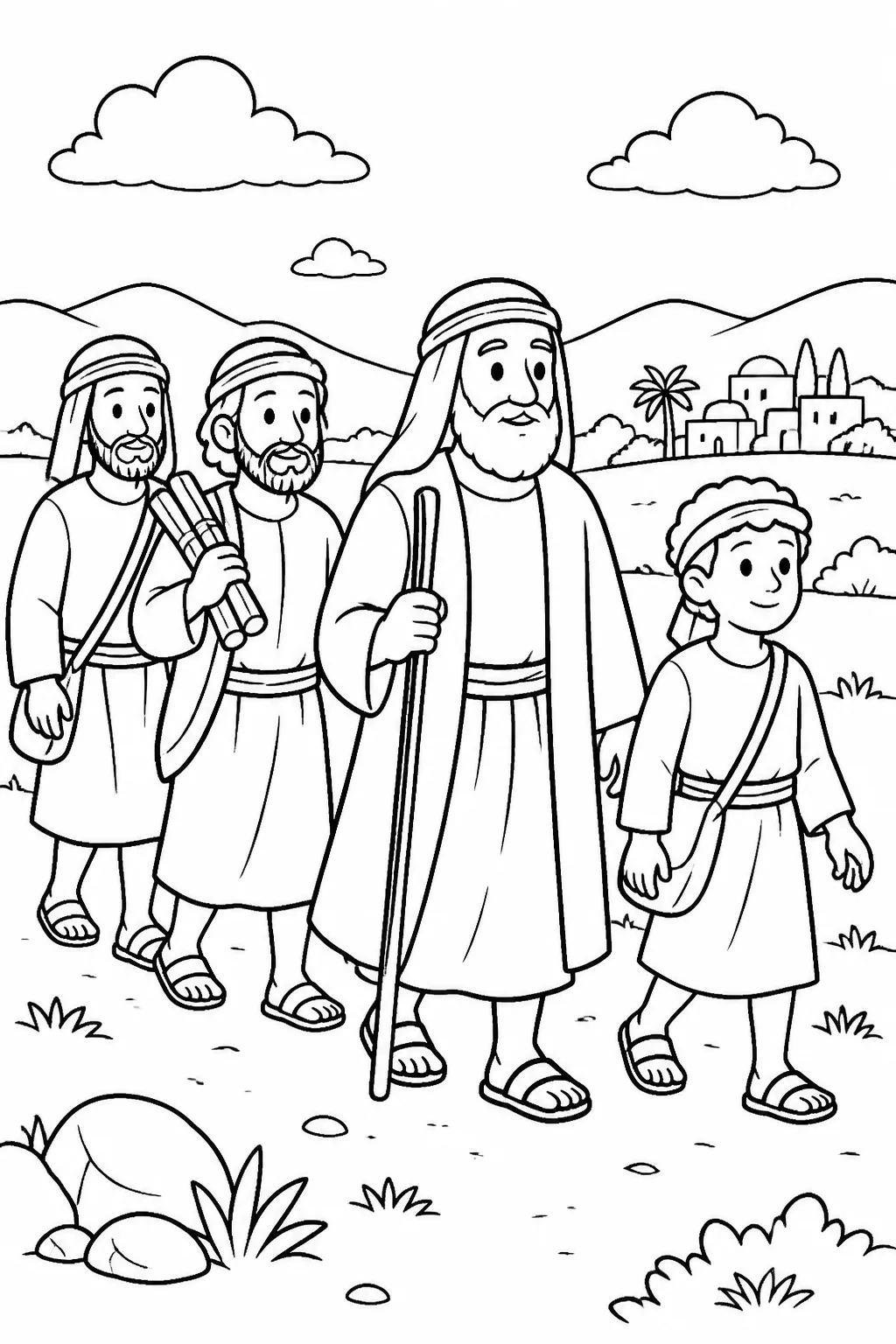
Abraham, Isaac, and two servants traveling together toward Beersheba in a calm landscape, representing their return in Genesis 22:19.

Returning to Beersheba

Genesis 22:1-19
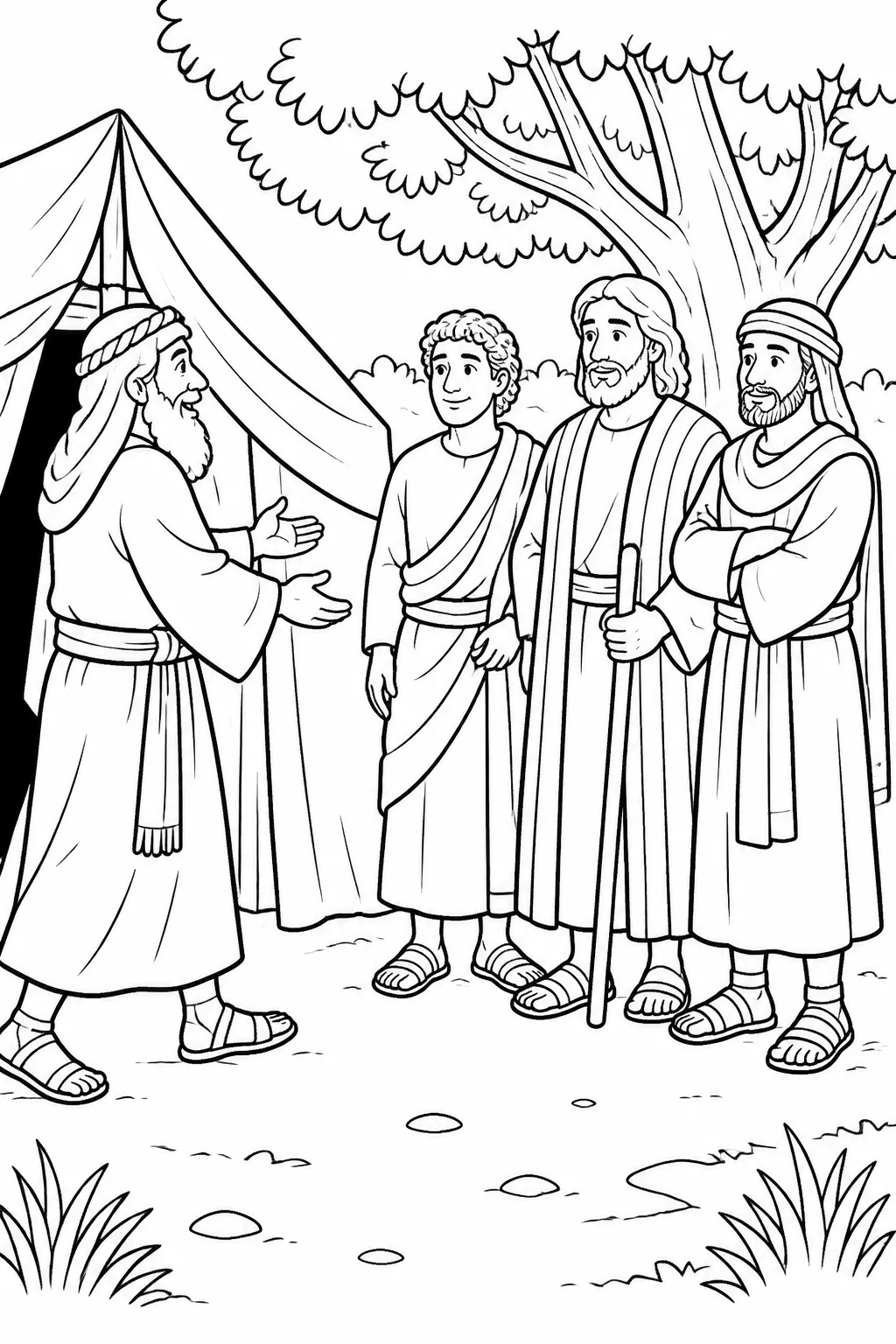
Abraham respectfully welcoming three visitors at the entrance of his tent beneath the oaks of Mamre, based on Genesis 18:1-2.

Abraham Welcomes the Visitors

Genesis 18:1-15
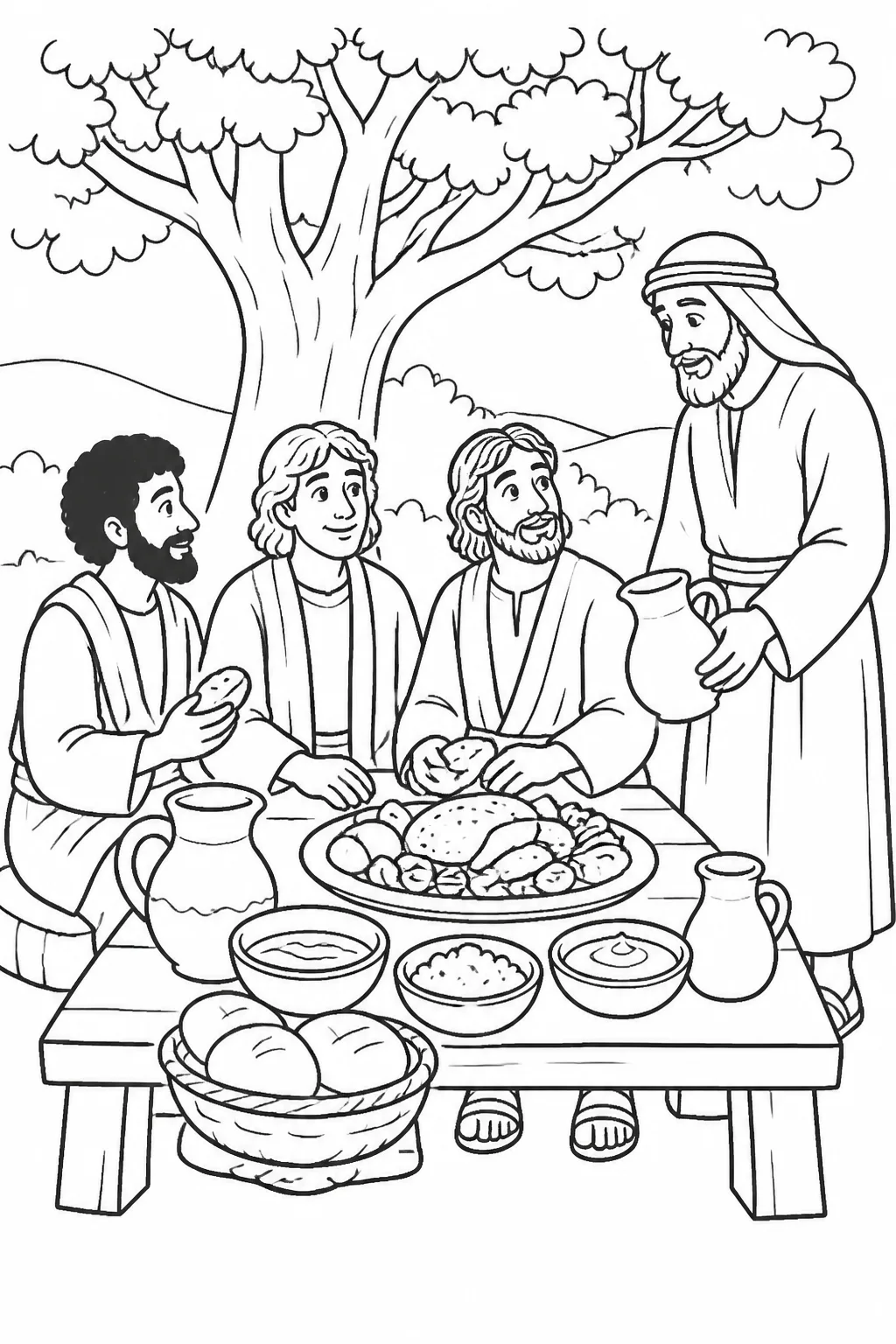
Abraham serves water and a meal of bread, prepared food, curds, and milk to three visitors beneath a tree near his tent.

A Meal Under the Tree

Genesis 18:1-15
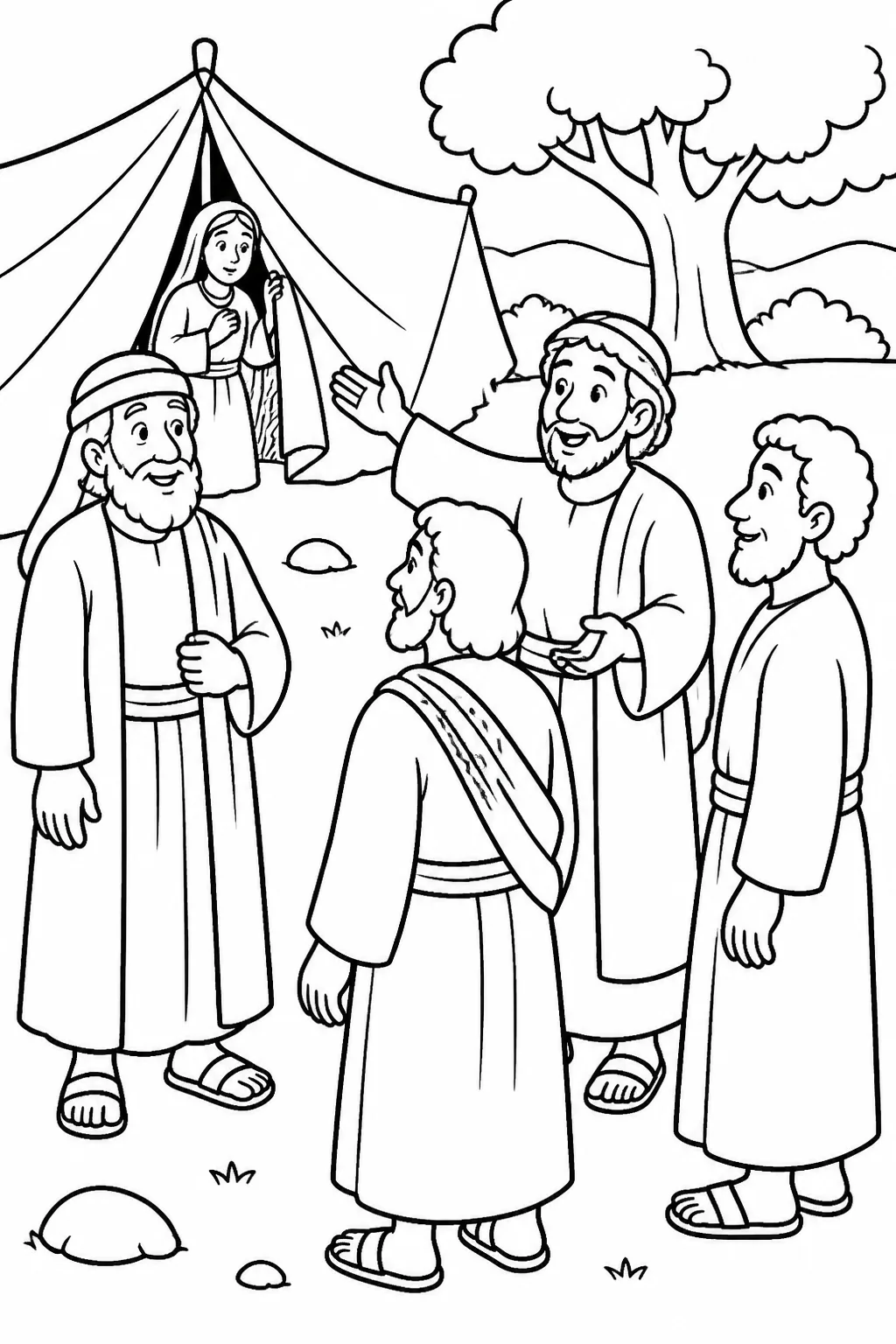
Abraham stands beside his tent near three visitors while Sarah listens at the tent entrance as a visitor announces the promise of a son.

The Promise at the Tent

Genesis 18:1-15
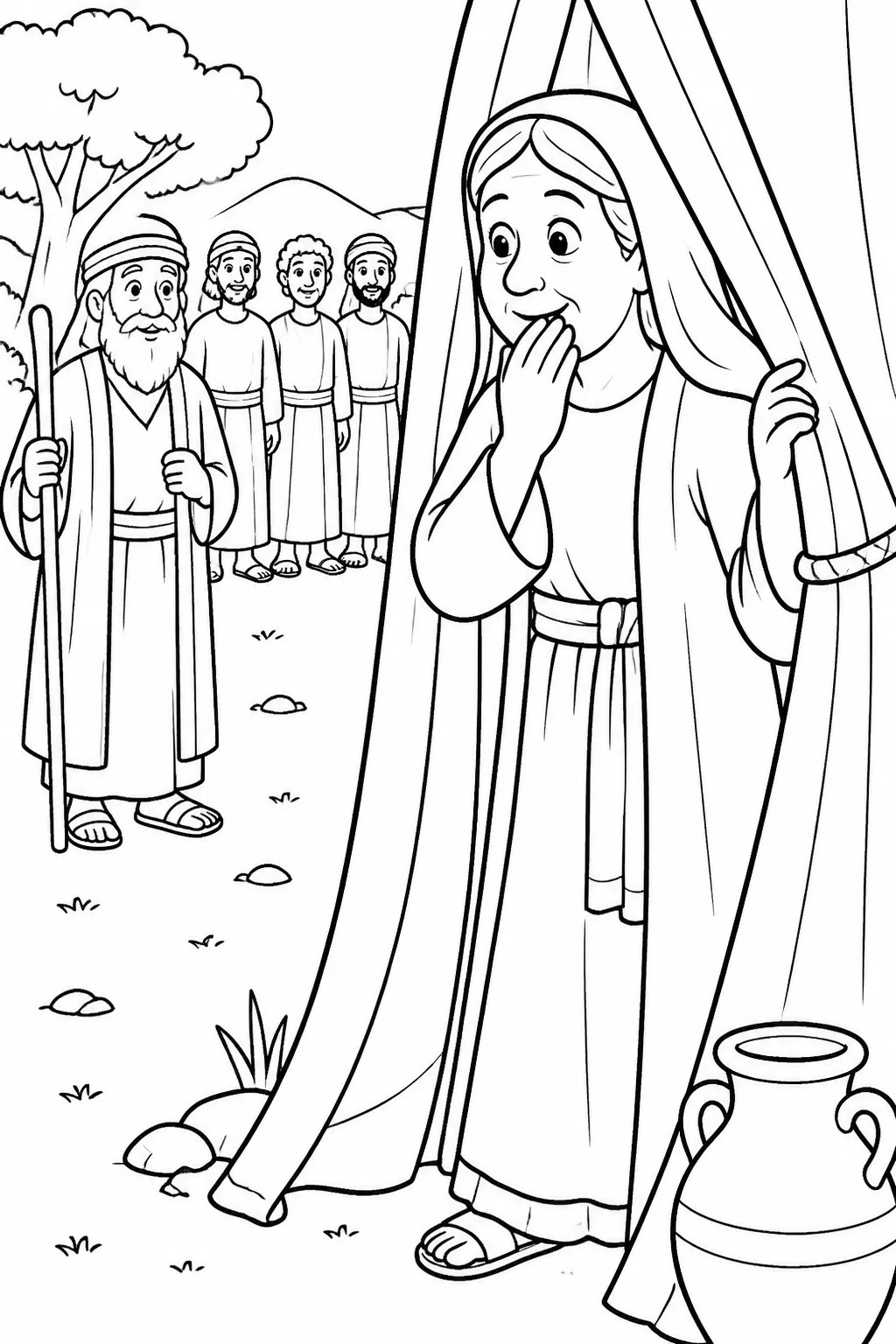
Sarah listens at the entrance of her tent as she considers the promise that she will have a son, with Abraham and three visitors connected to the scene.

Sarah Hears the Surprising Promise

Genesis 18:1-15
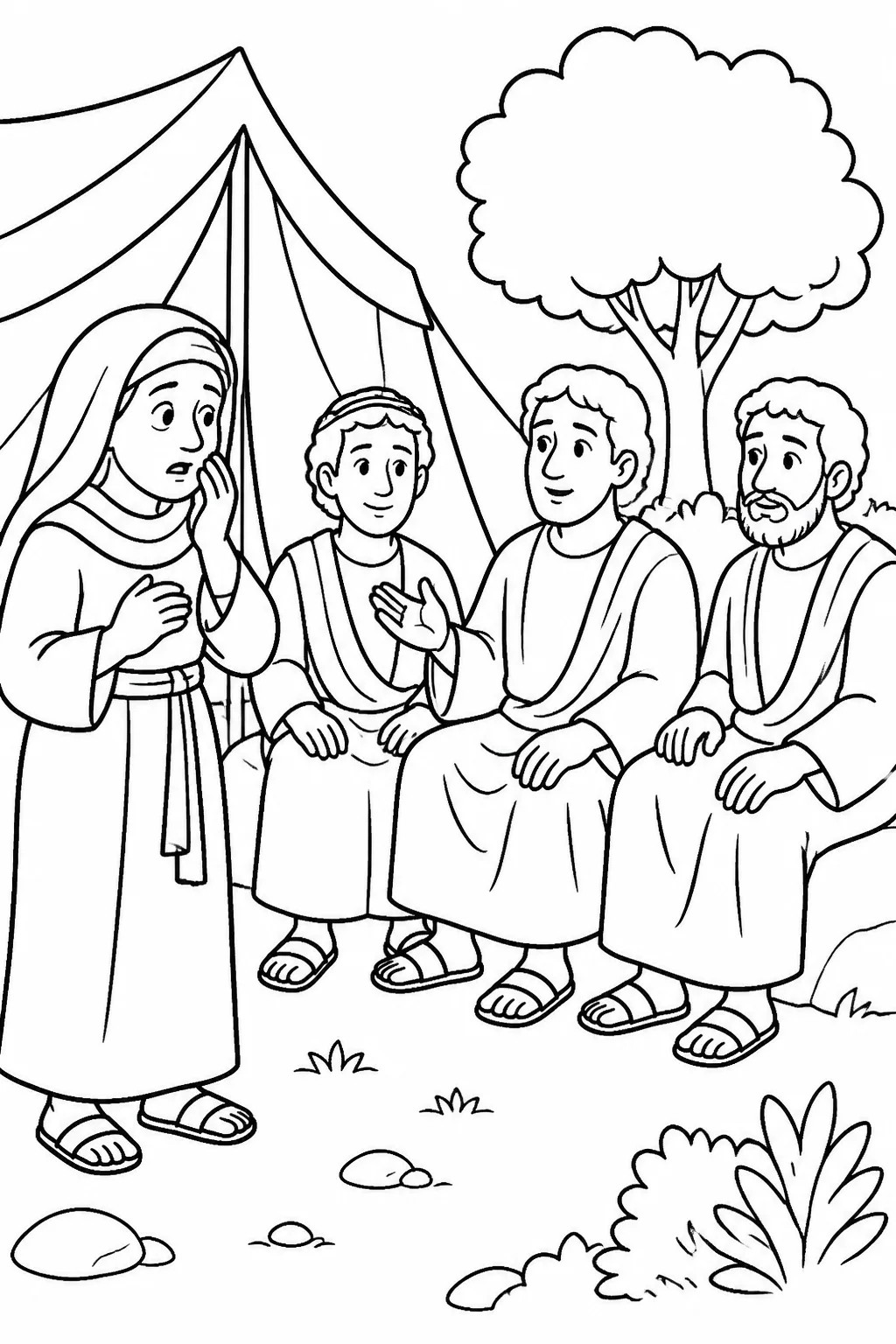
Sarah near the tent as the LORD asks why she laughed and declares that nothing is too difficult for the LORD.

Nothing Is Too Difficult for the LORD

Genesis 18:1-15
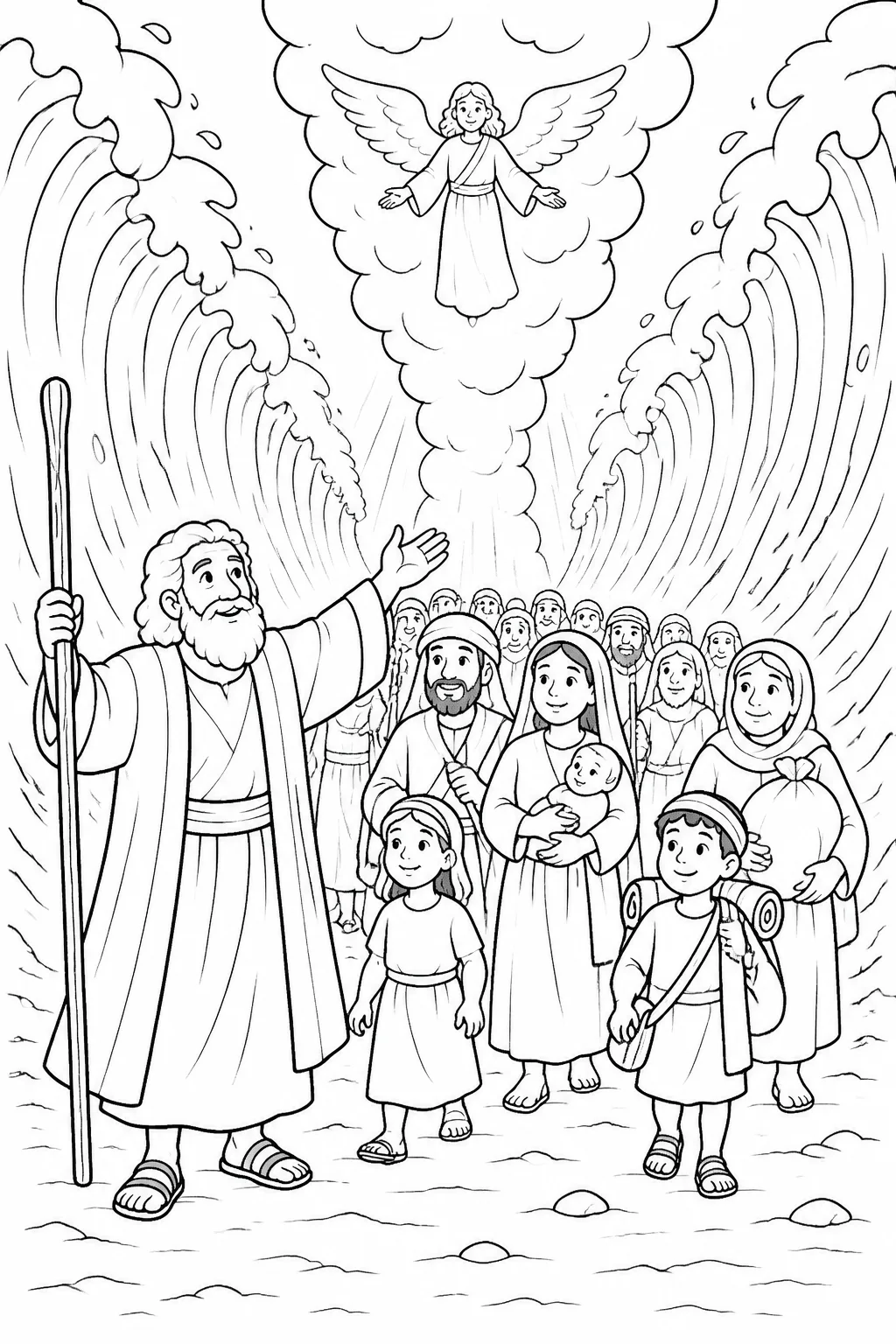
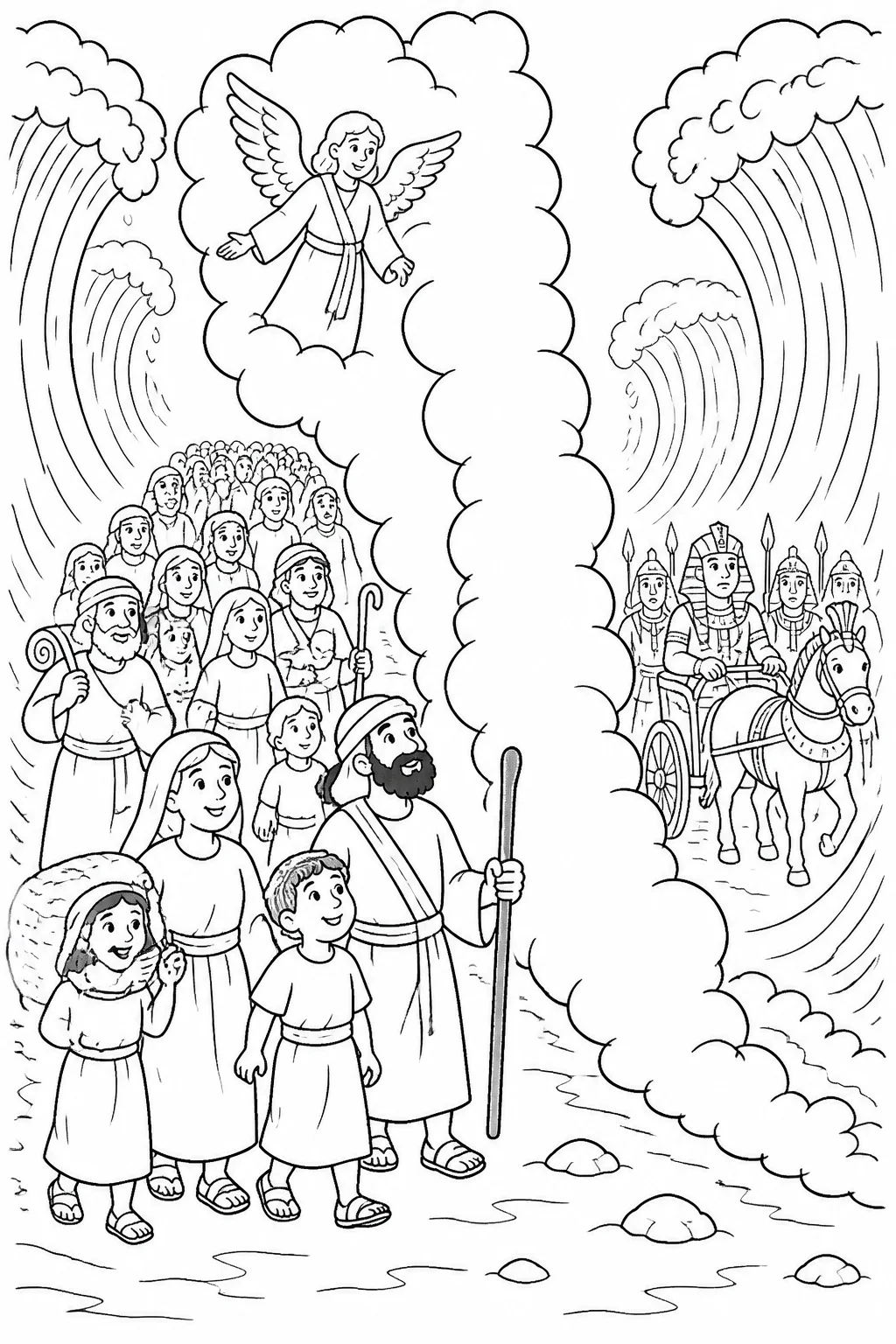
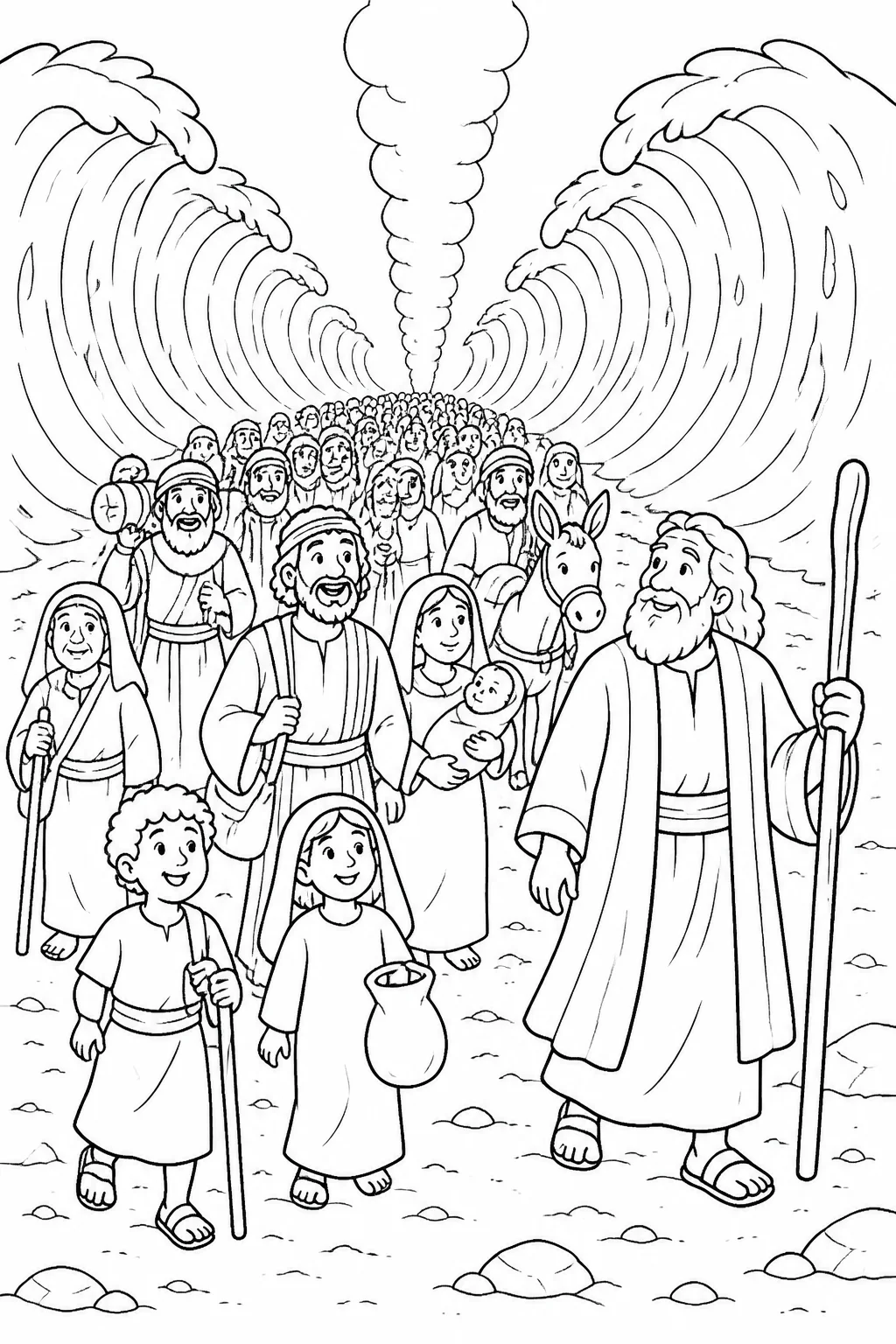
Moses leads the Israelites across dry ground between walls of water in the Red Sea while the pillar of cloud stands between Israel and the Egyptians.

A Safe Path Through the Sea

Exodus 14:1-31
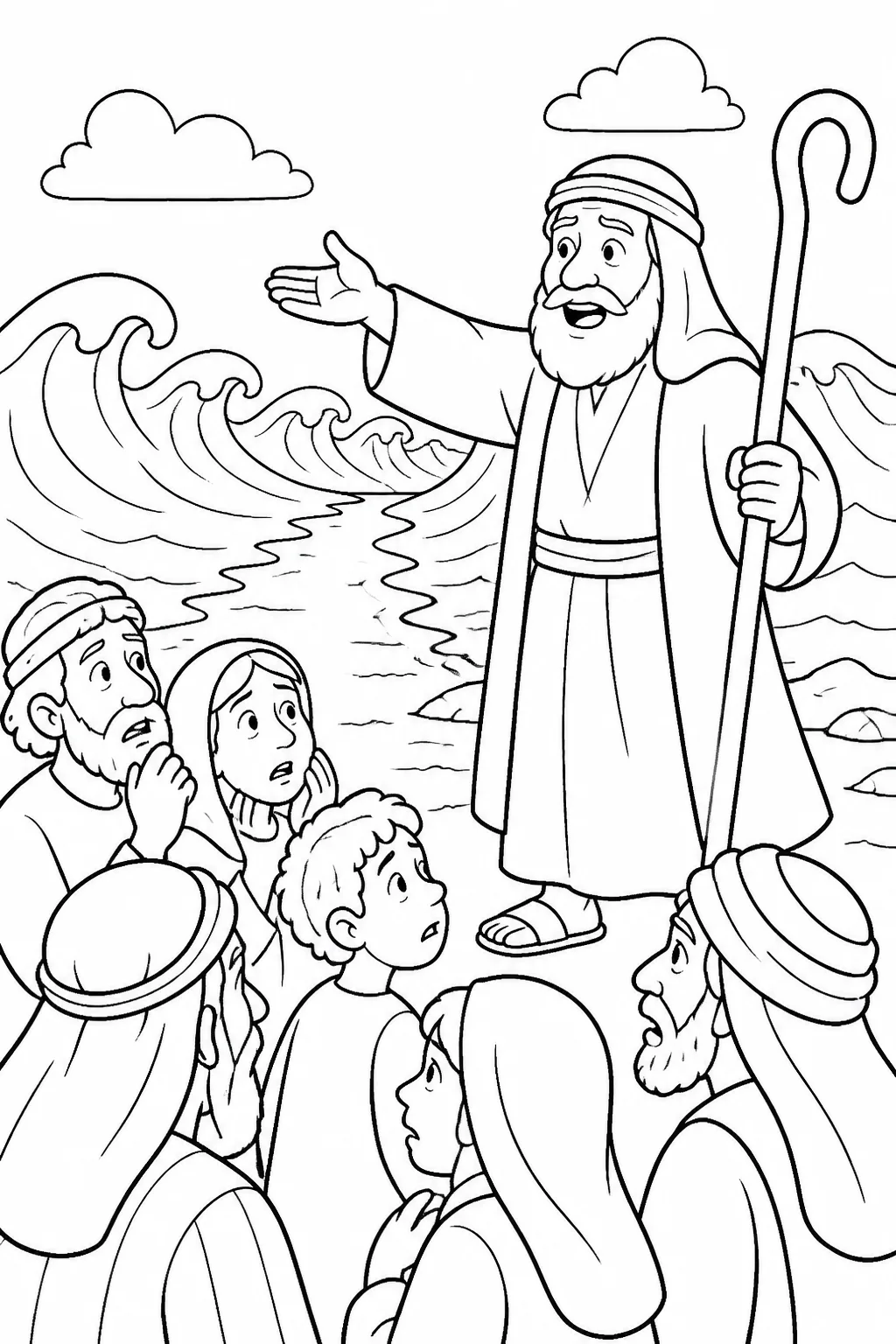
Moses holding his staff and reassuring worried Israelites near the Red Sea, based on Exodus 14:13-14.

Stand Firm and Trust

Exodus 14:1-31

The Israelites cross the Red Sea on dry ground with walls of water on both sides while a pillar of cloud stands between them and the Egyptians.

The Cloud Between the People

Exodus 14:1-31
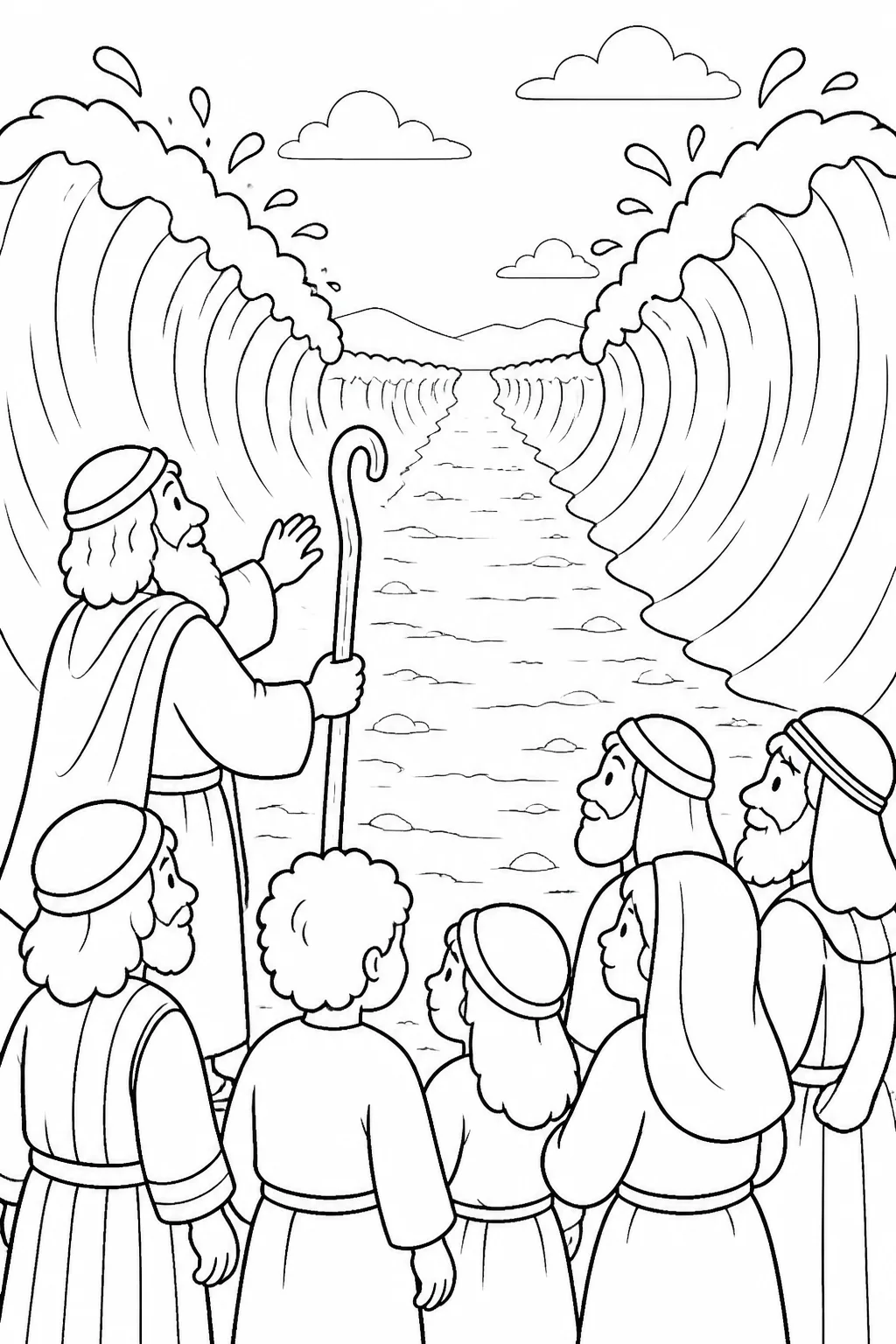
Moses stretches out his hand with his staff toward the Red Sea as the LORD opens a dry path for the Israelites.

The Path Opens

Exodus 14:1-31

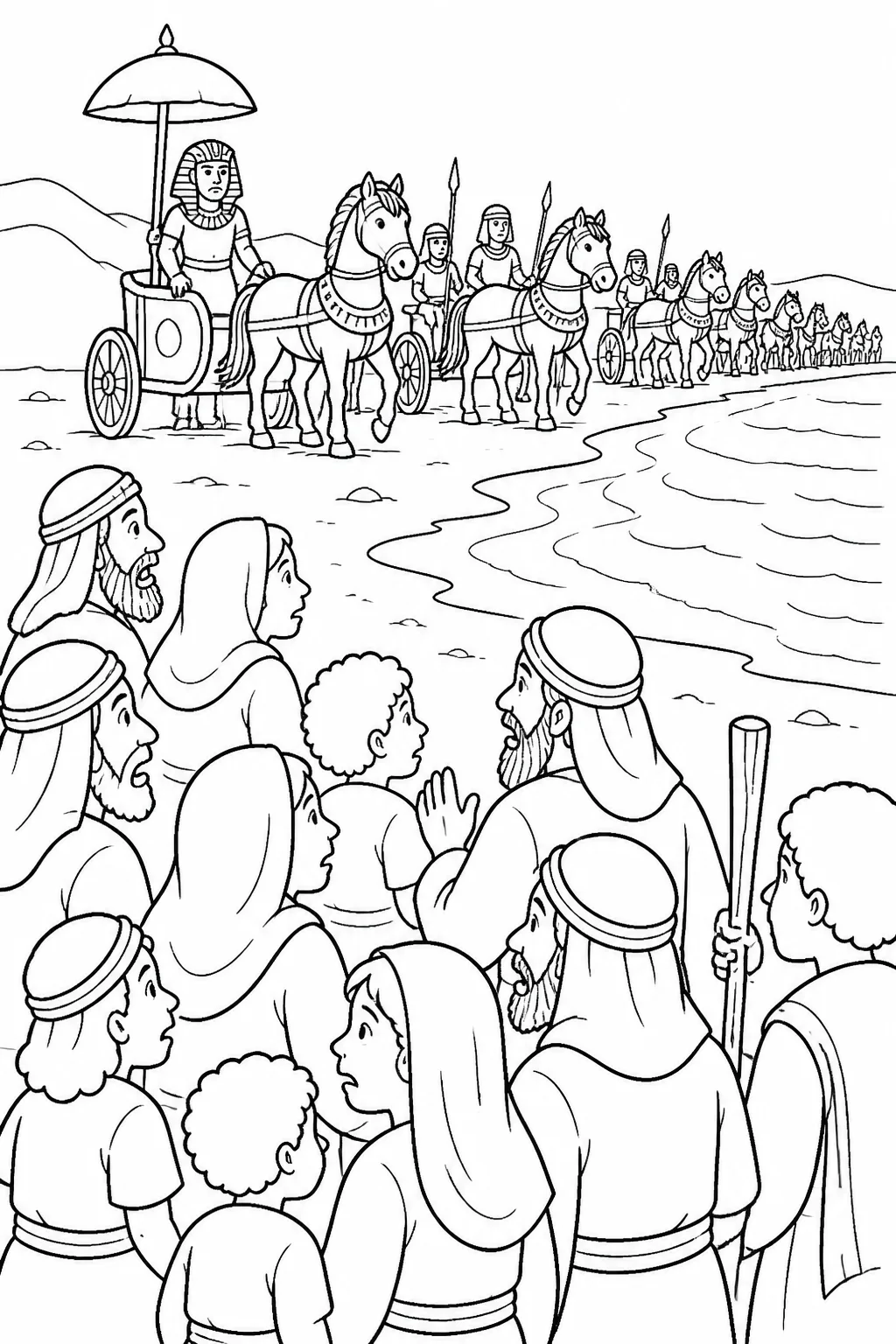
Pharaoh and the Egyptian army approach the Israelites’ camp beside the Red Sea with horses, chariots, and horsemen.

The Army Approaches

Exodus 14:1-31

The Israelites crossing the Red Sea on dry ground between walls of water, with Moses and the pillar of cloud present.

Walking on Dry Ground

Exodus 14:1-31

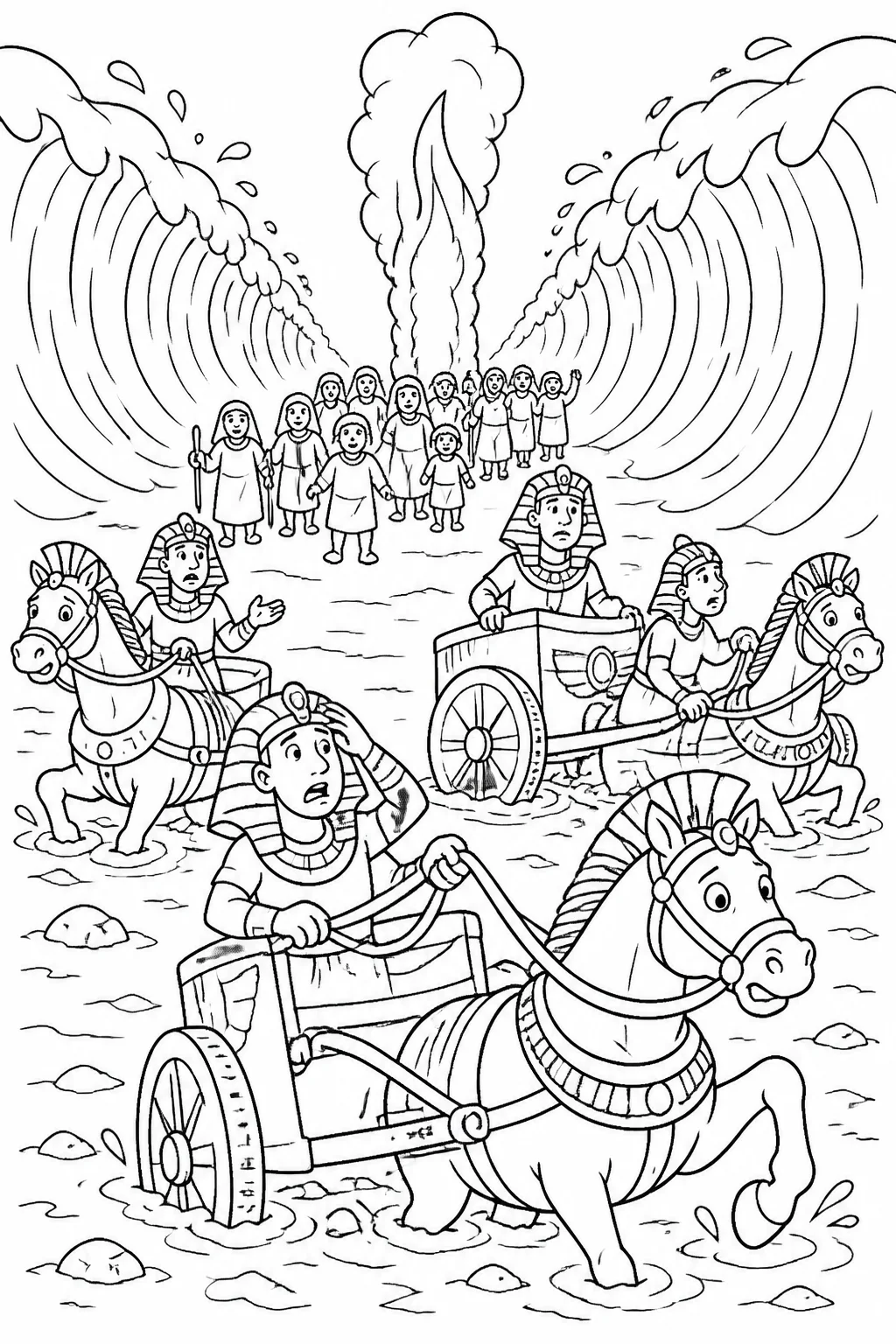
Pharaoh’s Egyptian horses, chariots, and horsemen pursue the Israelites inside the divided Red Sea, but the chariot wheels become clogged and difficult to move beneath the pillar of fire and cloud.

The Chariots Cannot Move

Exodus 14:1-31
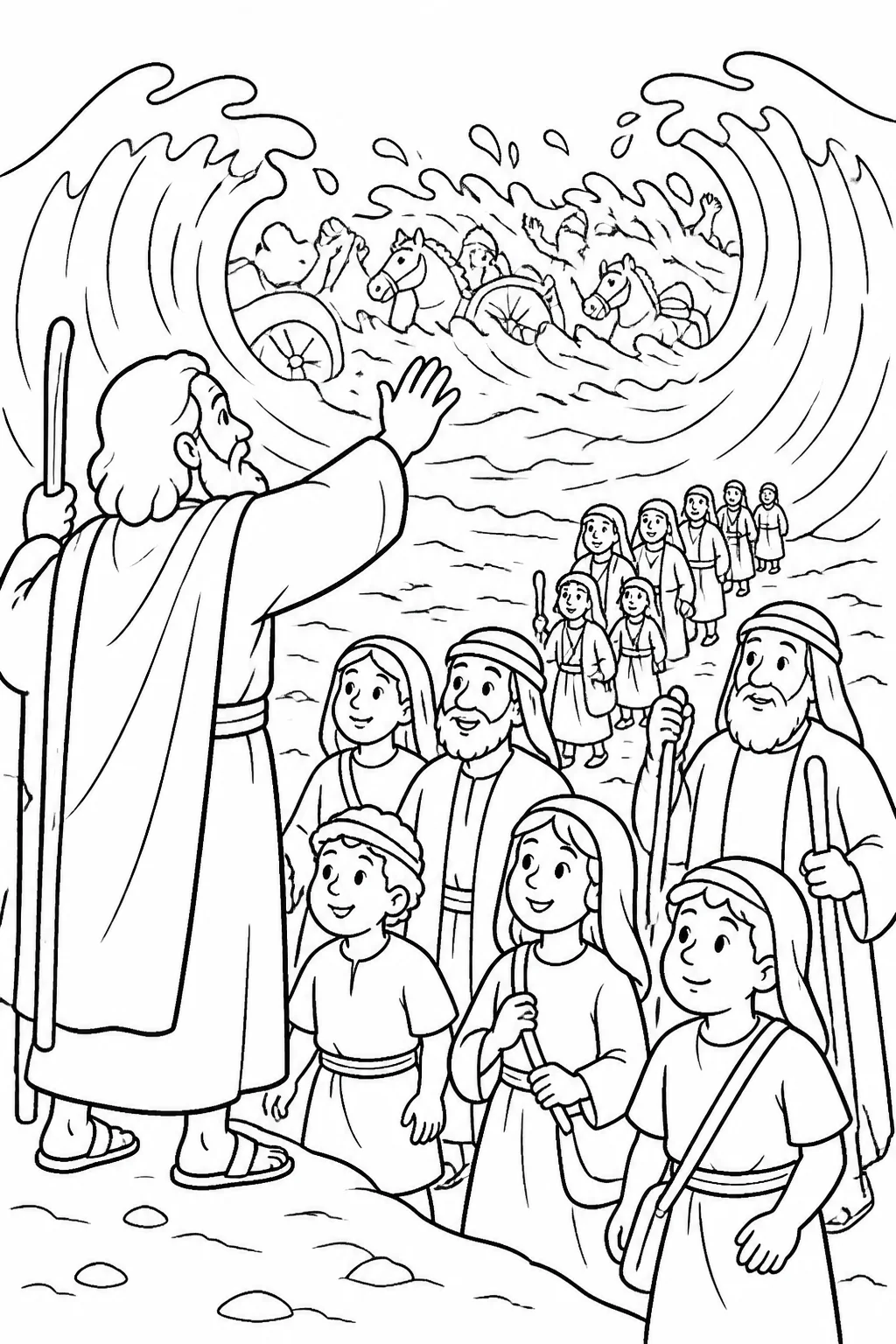
Moses stretches out his hand as the Red Sea returns around the pursuing Egyptians, while the Israelites remain safe on dry ground.

The Waters Return

Exodus 14:1-31

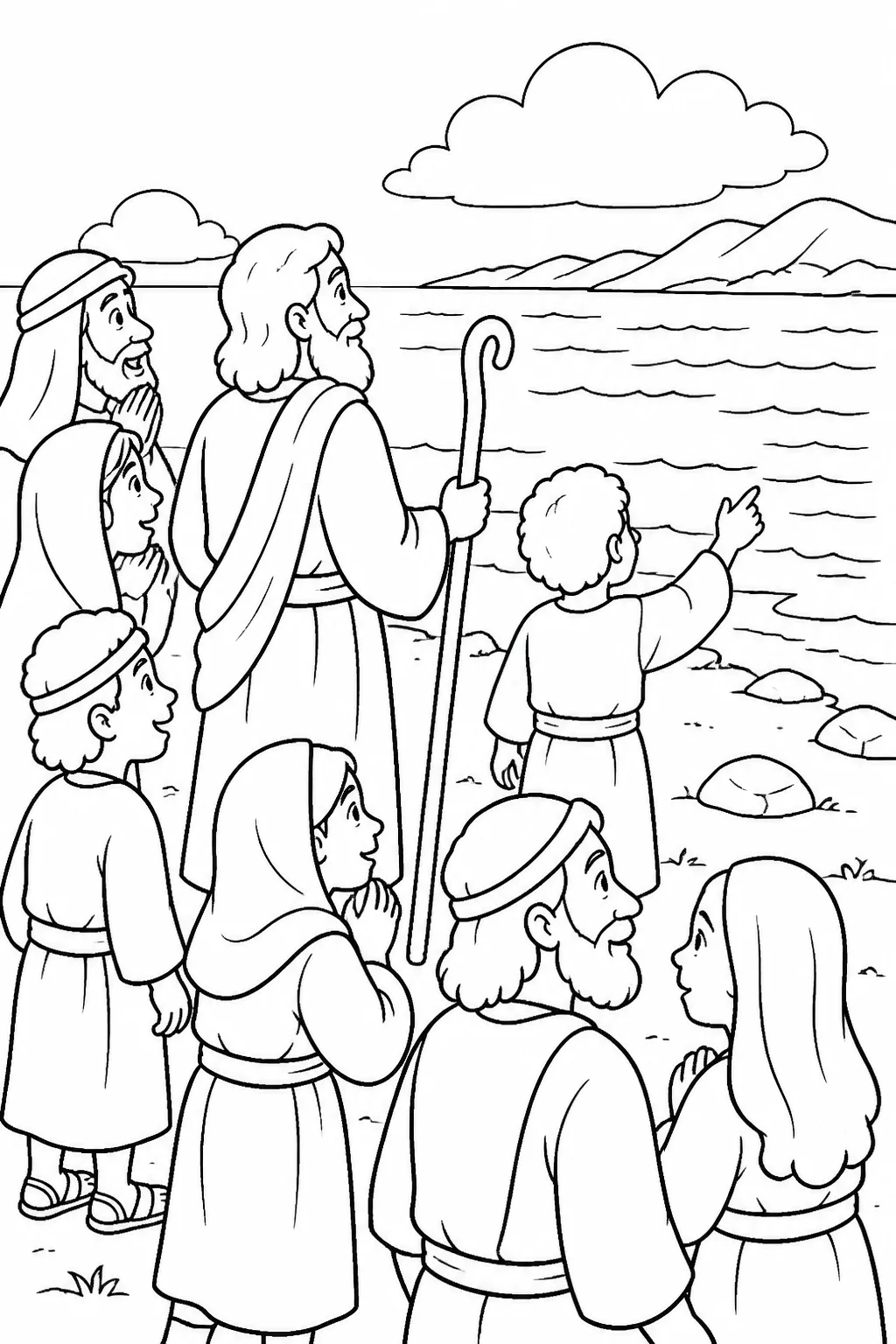
The Israelites and Moses stand on the seashore after crossing the Red Sea, recognizing the LORD’s rescue.

Israel Sees the Rescue

Exodus 14:1-31
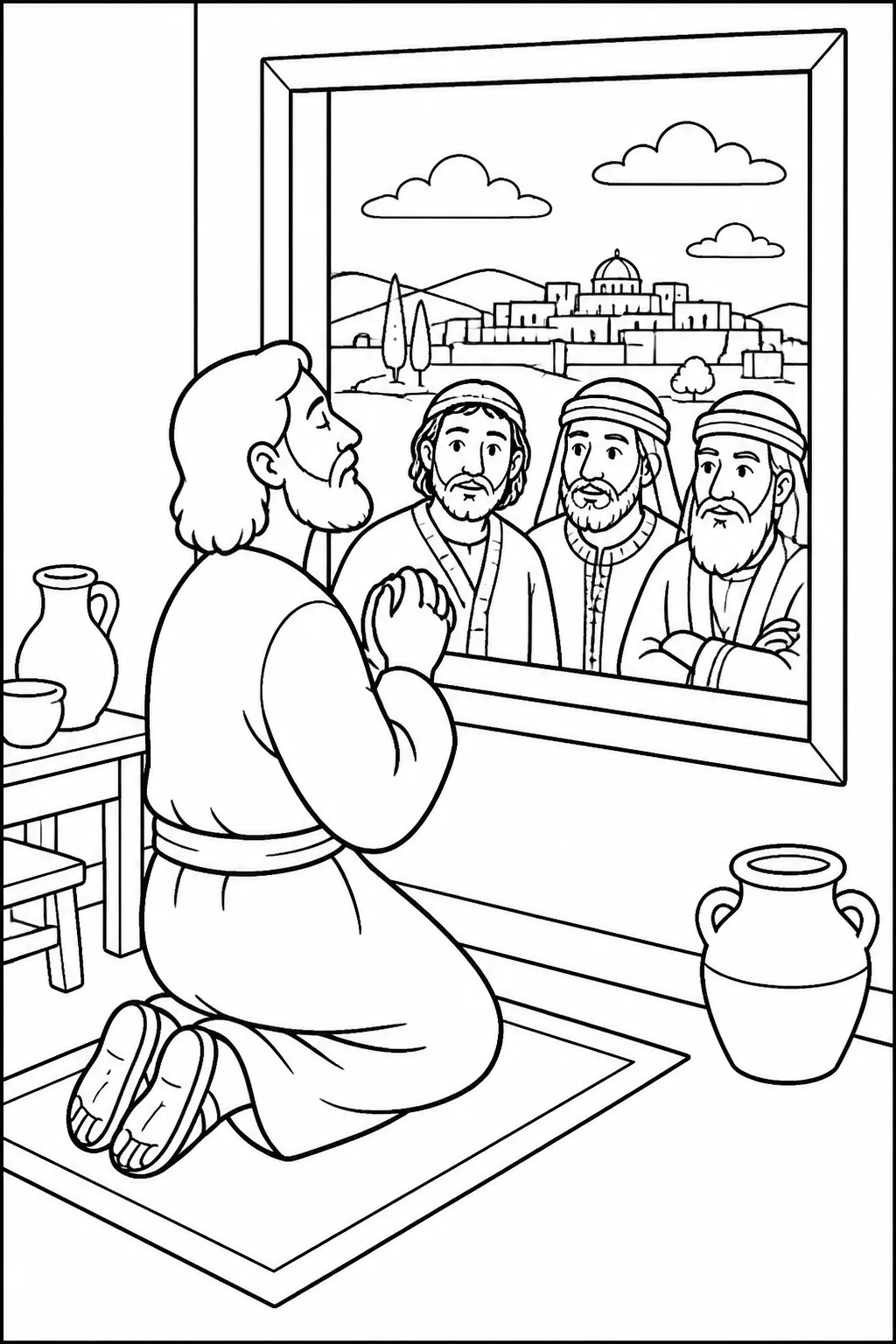
Daniel kneeling in prayer at an open upstairs window facing Jerusalem while administrators and satraps observe outside.

Daniel Prays Faithfully

Daniel 6:1-28
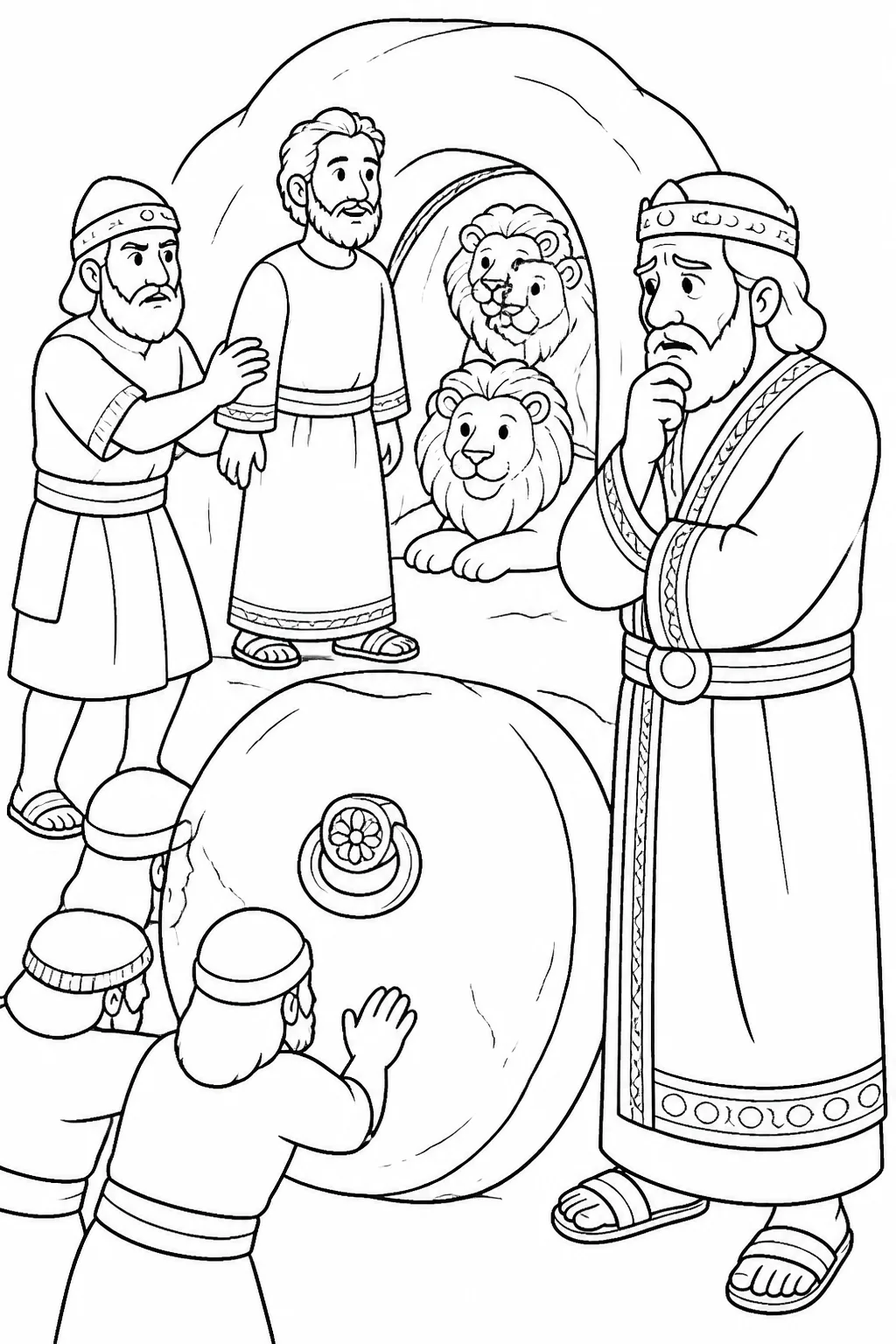
Daniel is placed into the lions’ den while distressed King Darius stands nearby; a stone and the king’s signet ring seal the entrance.

Daniel Enters the Lions’ Den

Daniel 6:1-28
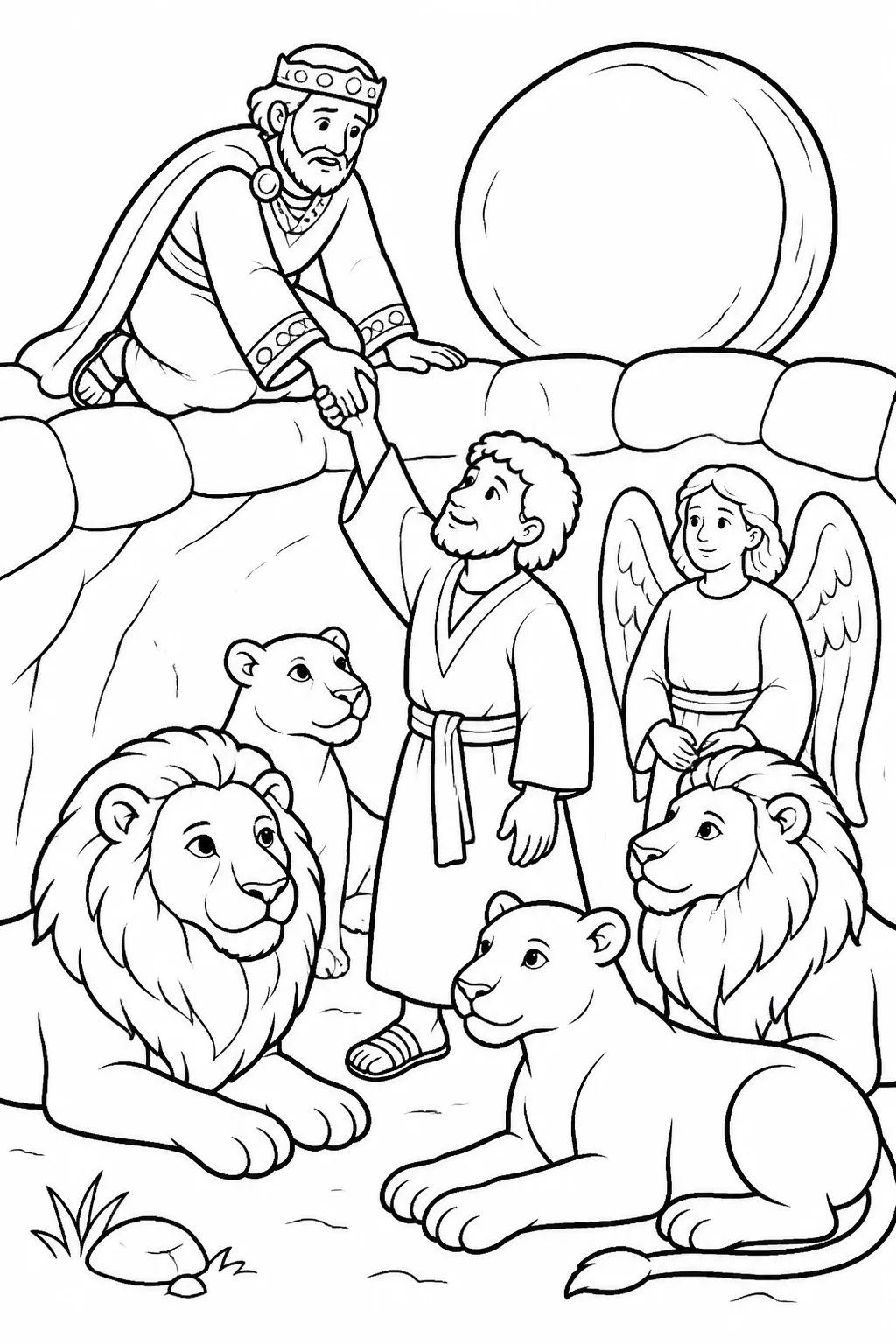
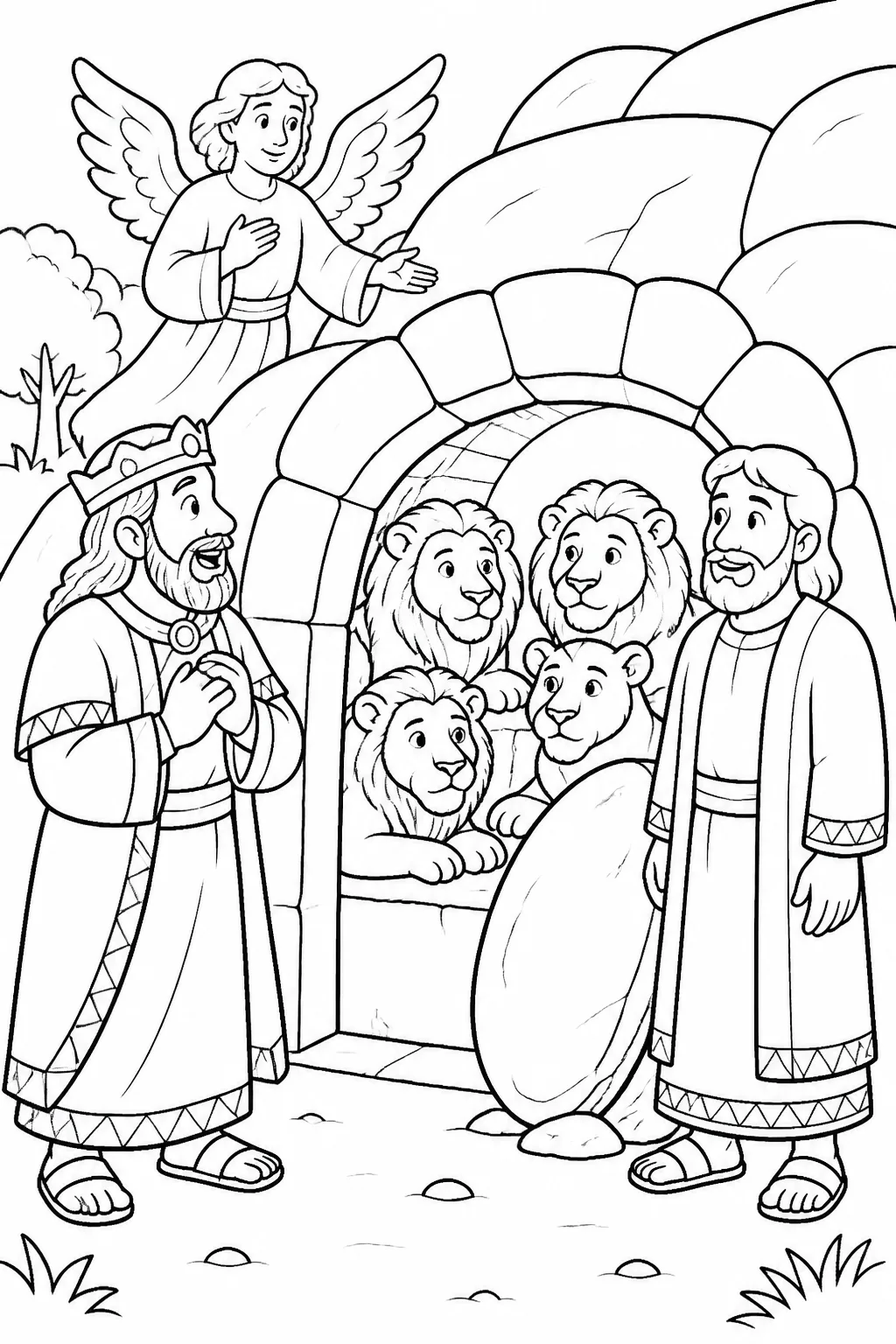
King Darius calls to Daniel at the lions’ den while Daniel answers alive and unharmed among the lions; the scene includes the den’s stone and may include a simple angel representation.

Daniel Is Safe

Daniel 6:1-28

Daniel stands beside the opened lions’ den while King Darius looks on; calm lions remain inside, and an angel represents God’s reported protection.

Daniel’s Trust Is Rewarded

Daniel 6:1-28
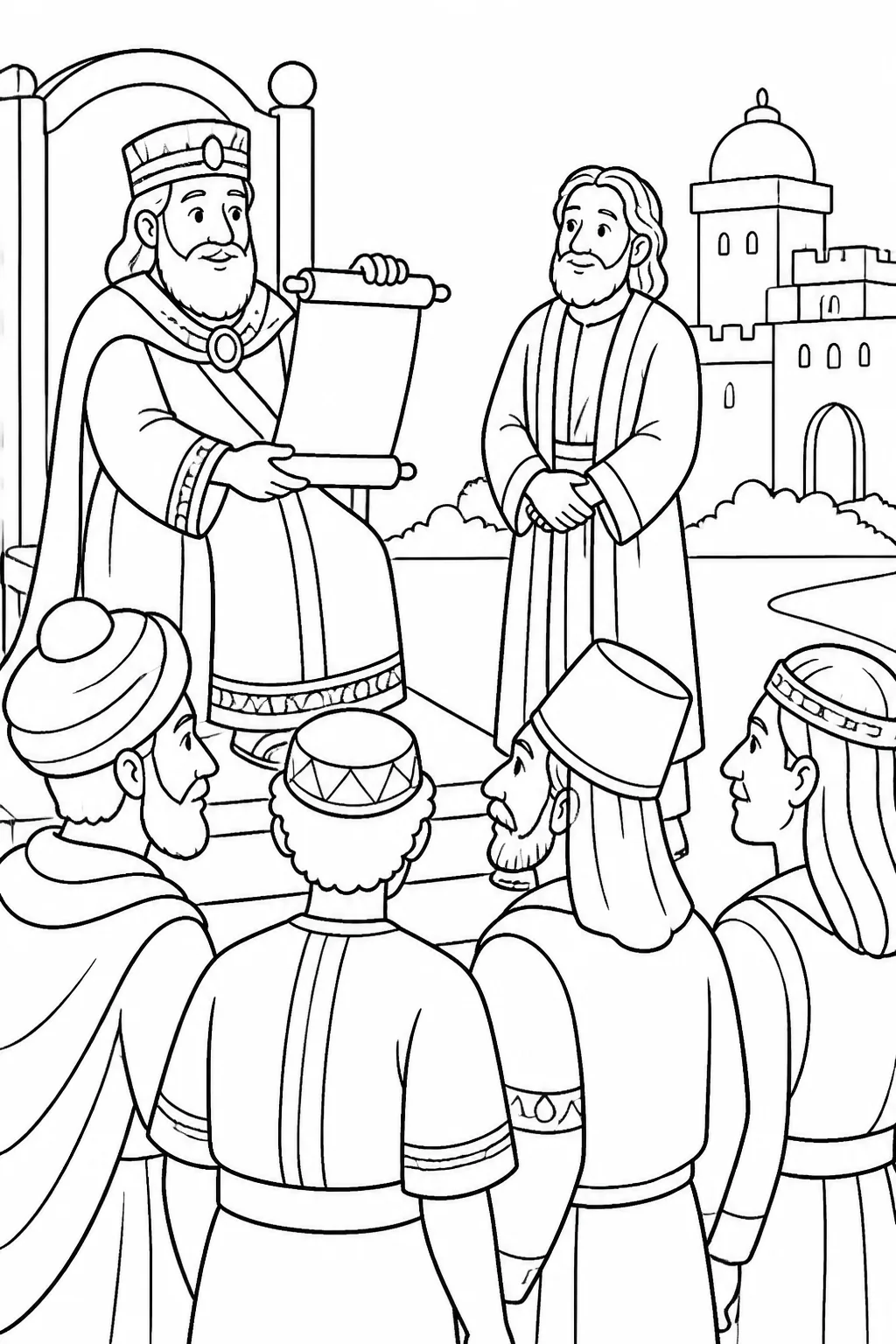
King Darius presents a written decree honoring the living God to representatives, with Daniel standing respectfully nearby.

A Decree Honors the Living God

Daniel 6:1-28
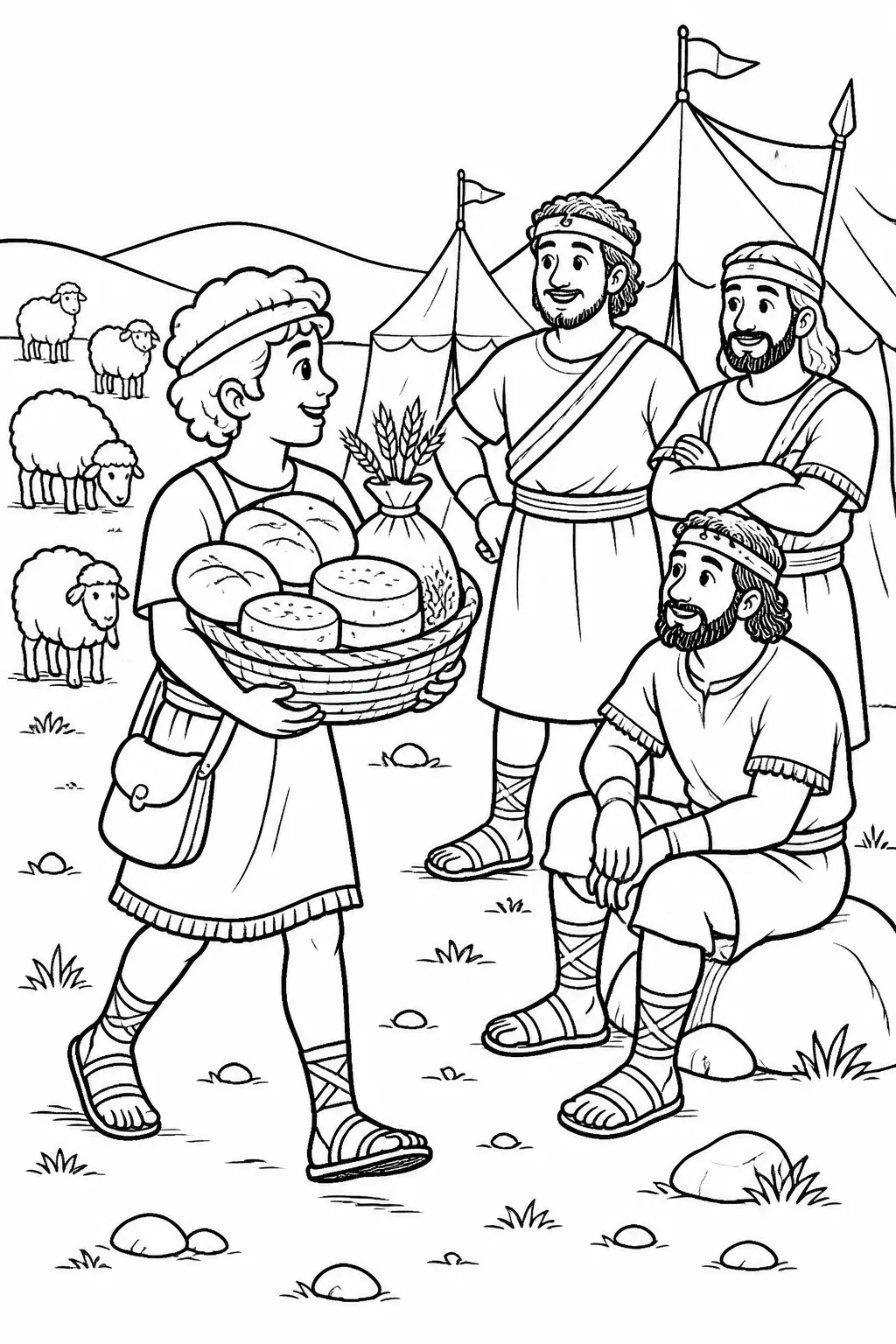
David carries grain, ten loaves of bread, and ten cheeses from Bethlehem to his three eldest brothers serving in Saul’s army while David’s sheep are nearby.

David Brings Food to His Brothers

1 Samuel 17
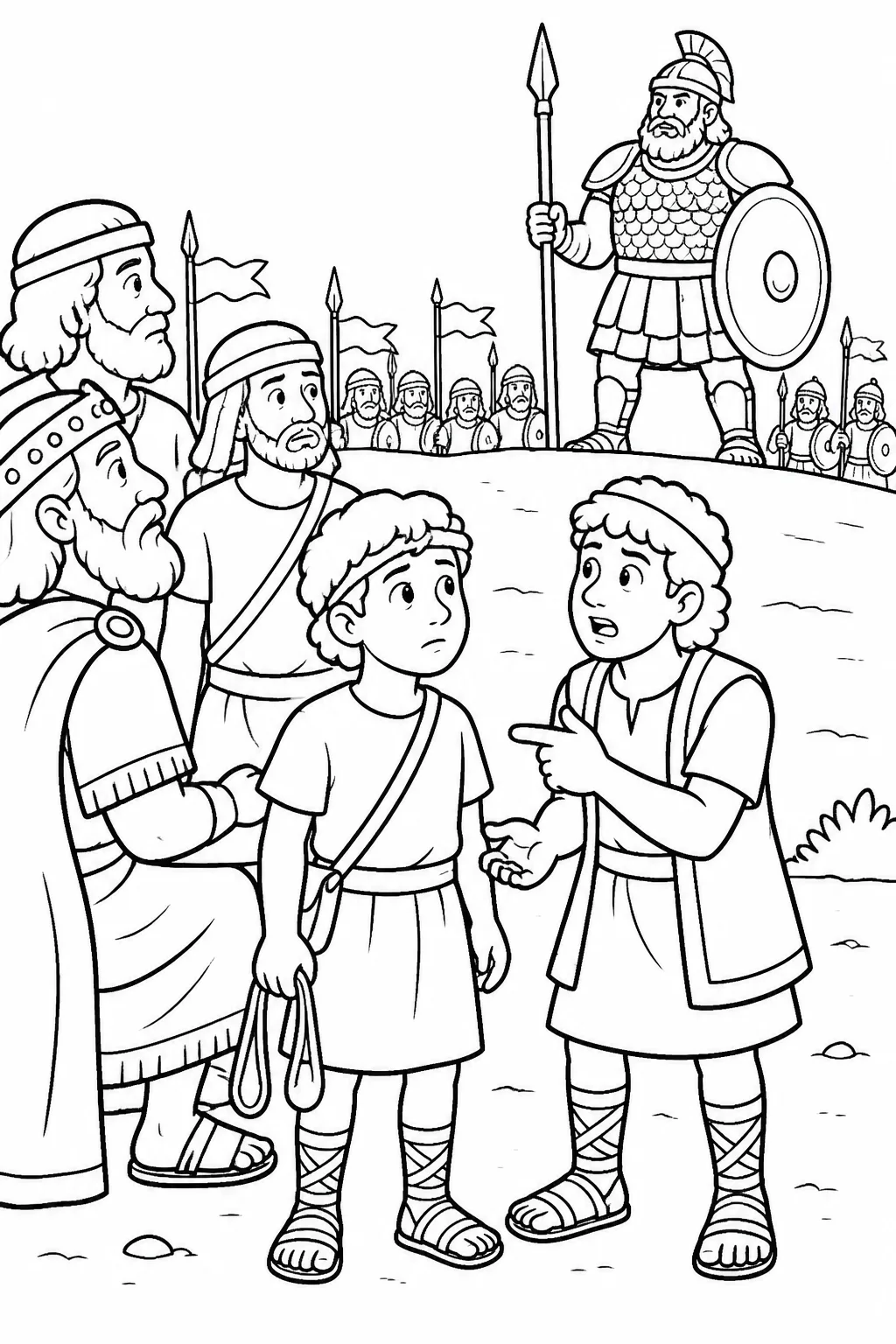
David listens near the Israelite battle line as Goliath challenges Israel, with Eliab and Israelite soldiers nearby.

David Hears the Challenge

1 Samuel 17
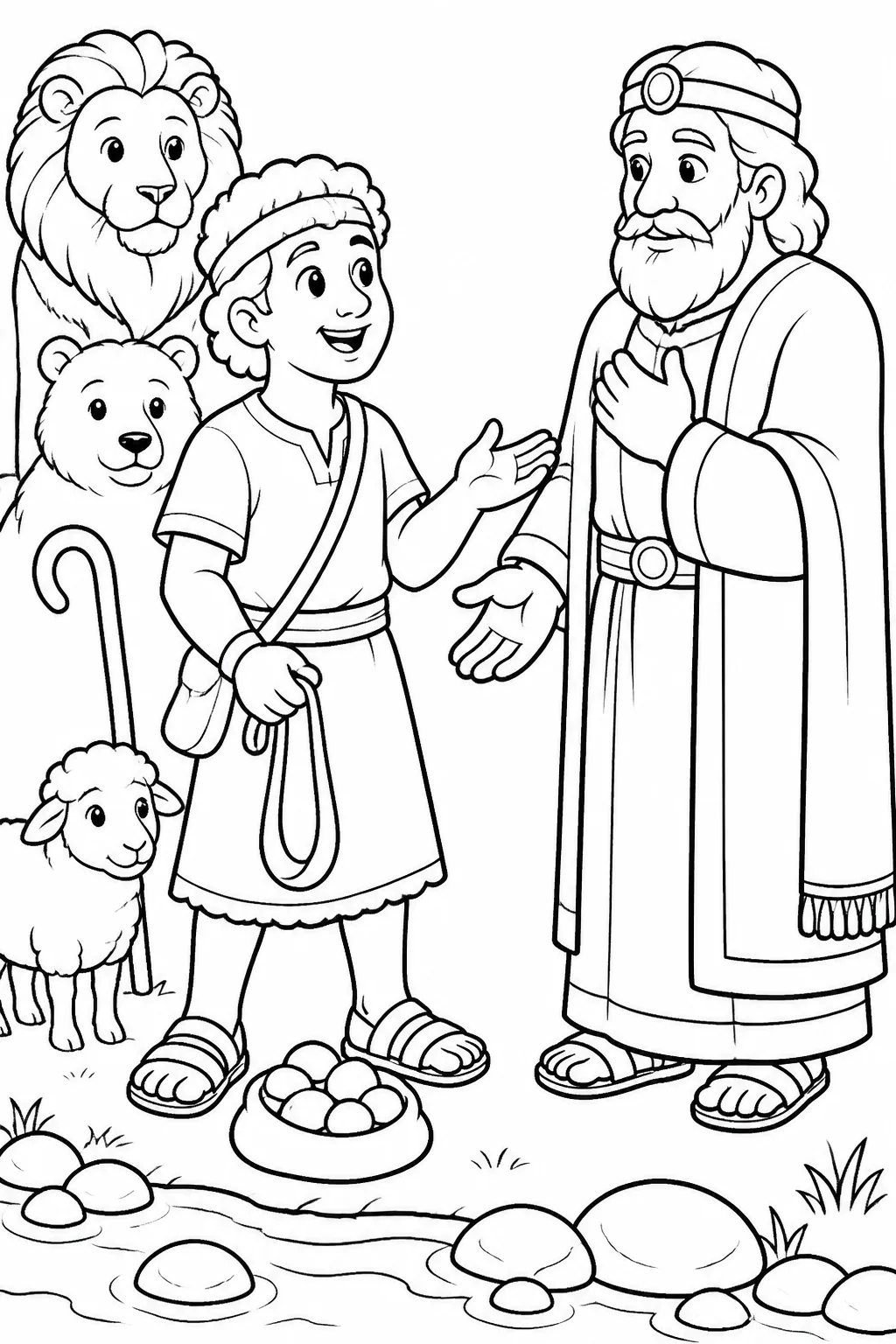
David stands before Saul and explains how the LORD delivered him while he protected sheep from a lion and a bear.

David Trusts the LORD Before Saul

1 Samuel 17
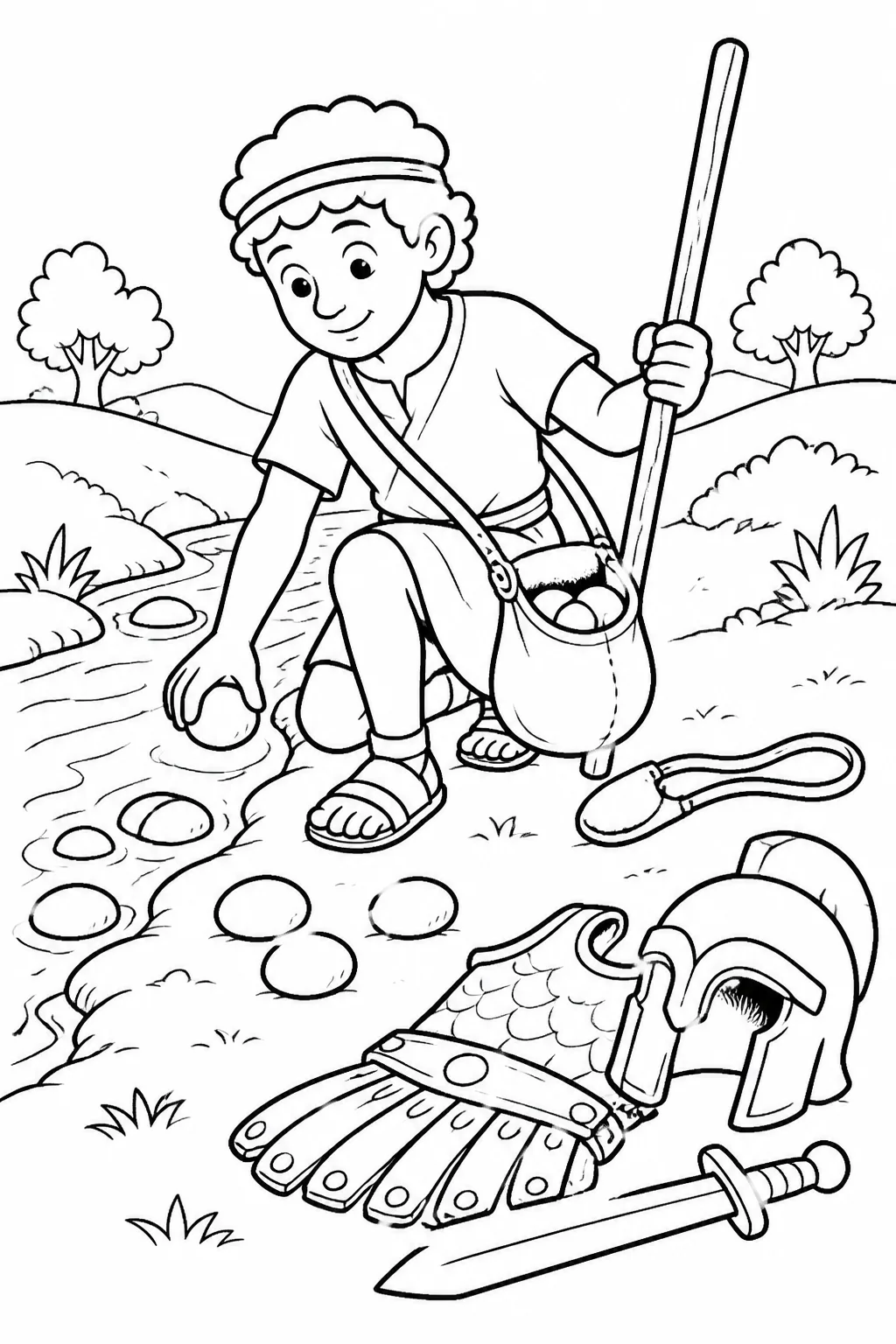
David removes Saul’s armor and gathers five smooth stones from a brook, placing them in his shepherd’s bag while holding his staff and sling.

David Chooses His Shepherd’s Tools

1 Samuel 17
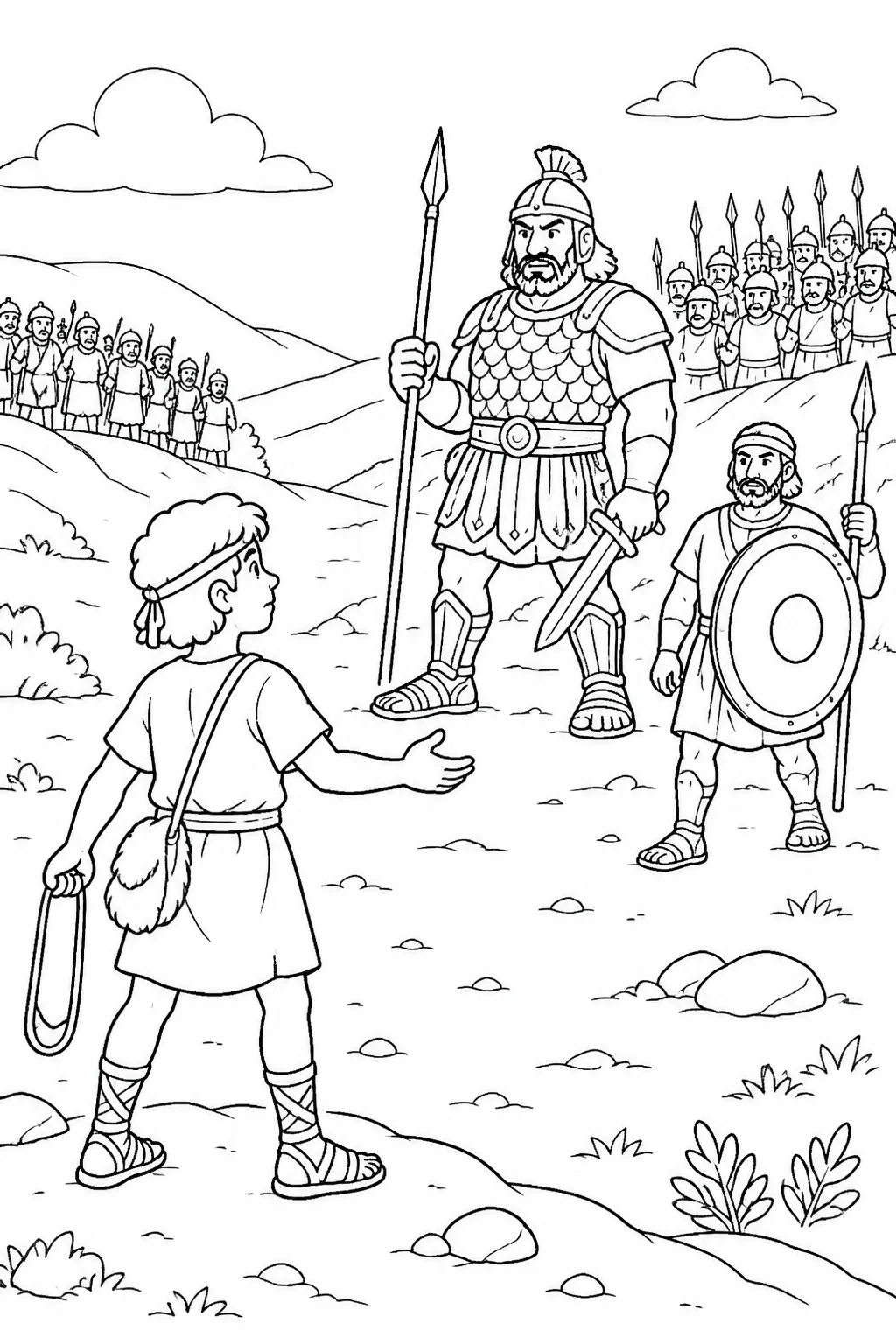
David faces armored Goliath across the battle line, holding a sling while Goliath carries his sword, spear, and javelin.

David Comes in the LORD’s Name

1 Samuel 17
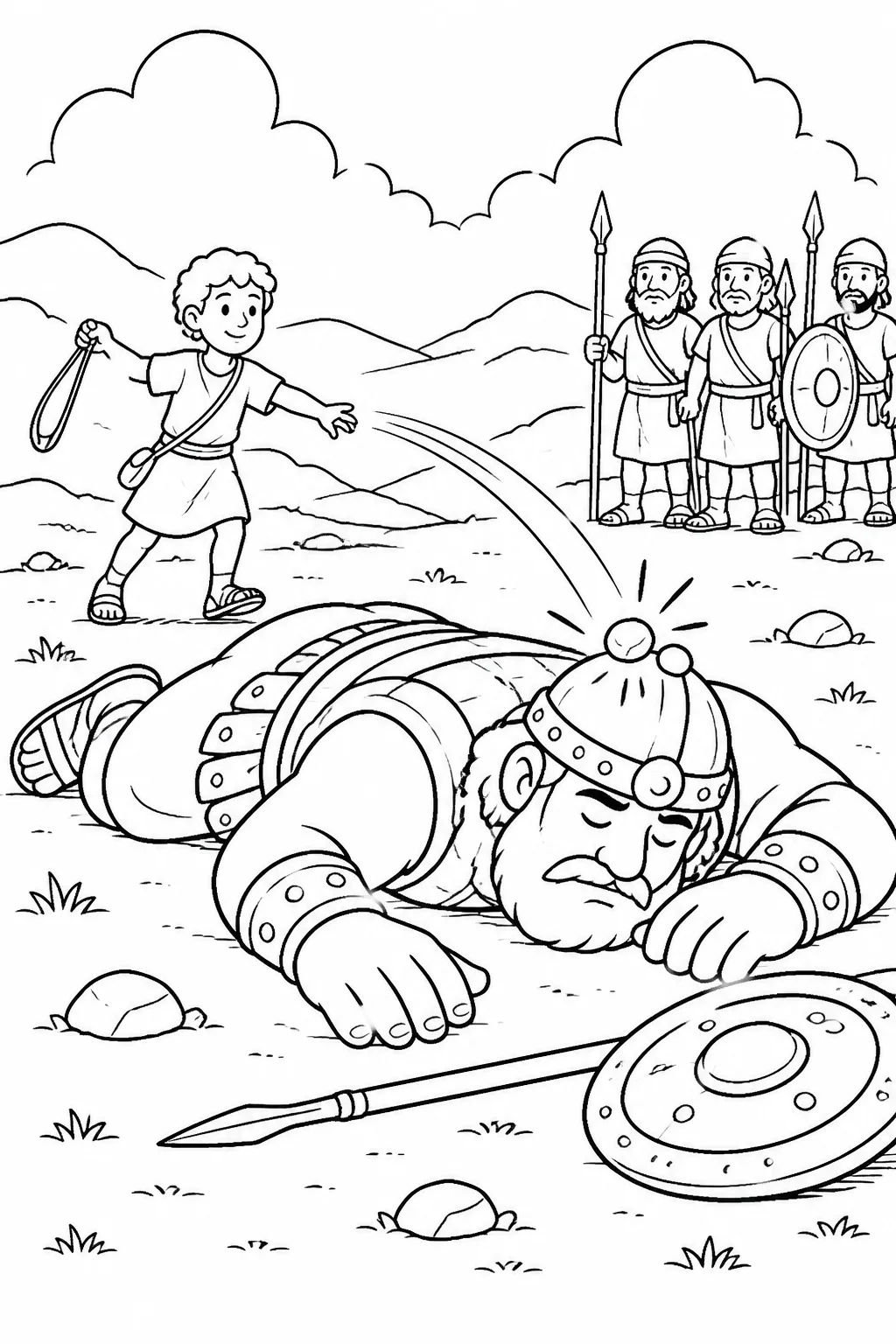
David runs toward Goliath on a battlefield with a sling as a stone strikes Goliath’s forehead and Goliath falls face down; the scene is non-graphic.

David Runs Forward With His Sling

1 Samuel 17
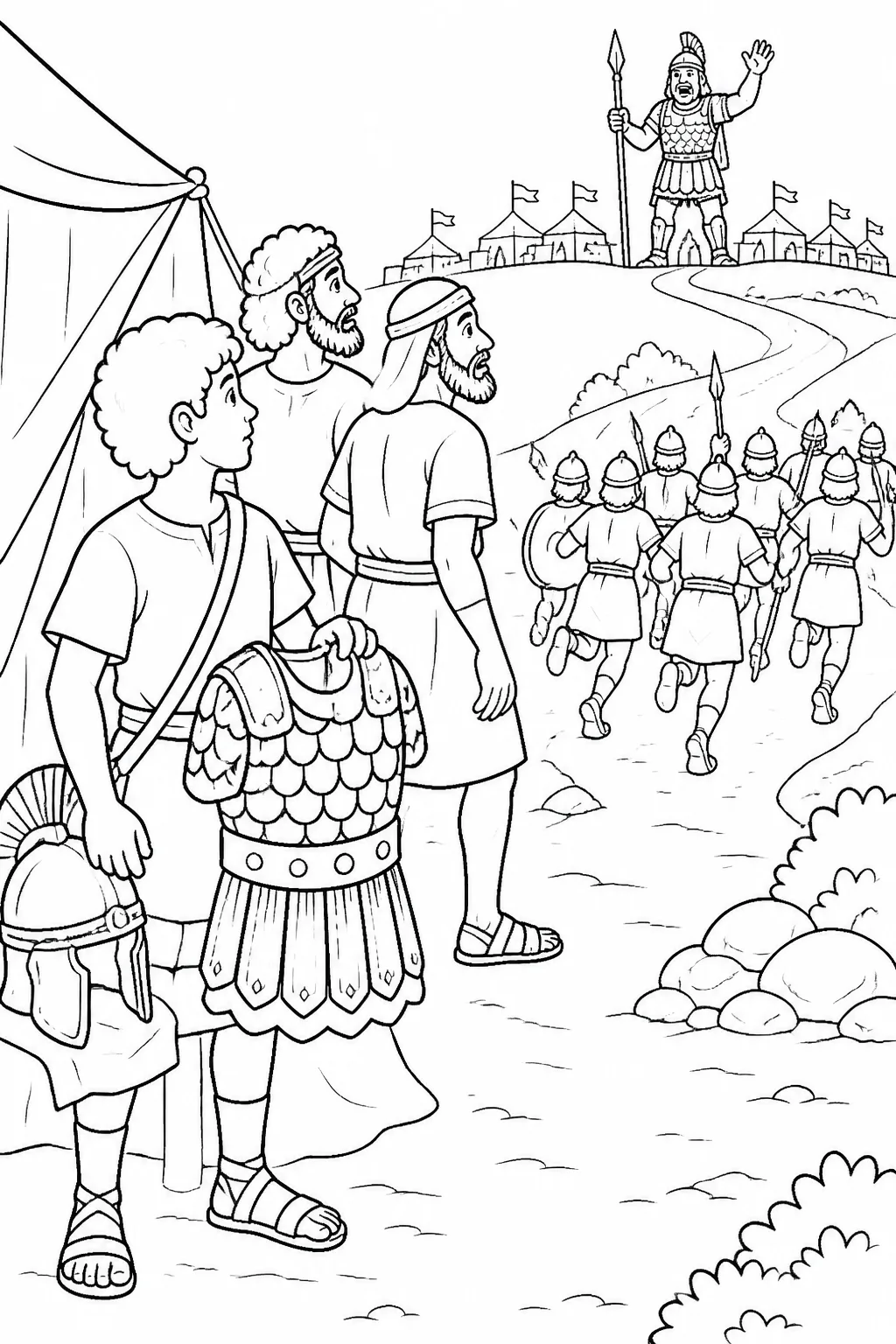
David and Israelite soldiers move along a road toward Gath and Ekron while fleeing Philistines and their camp are shown in the distance; Goliath’s armor is associated with David.

Israel Pursues the Fleeing Philistines

1 Samuel 17
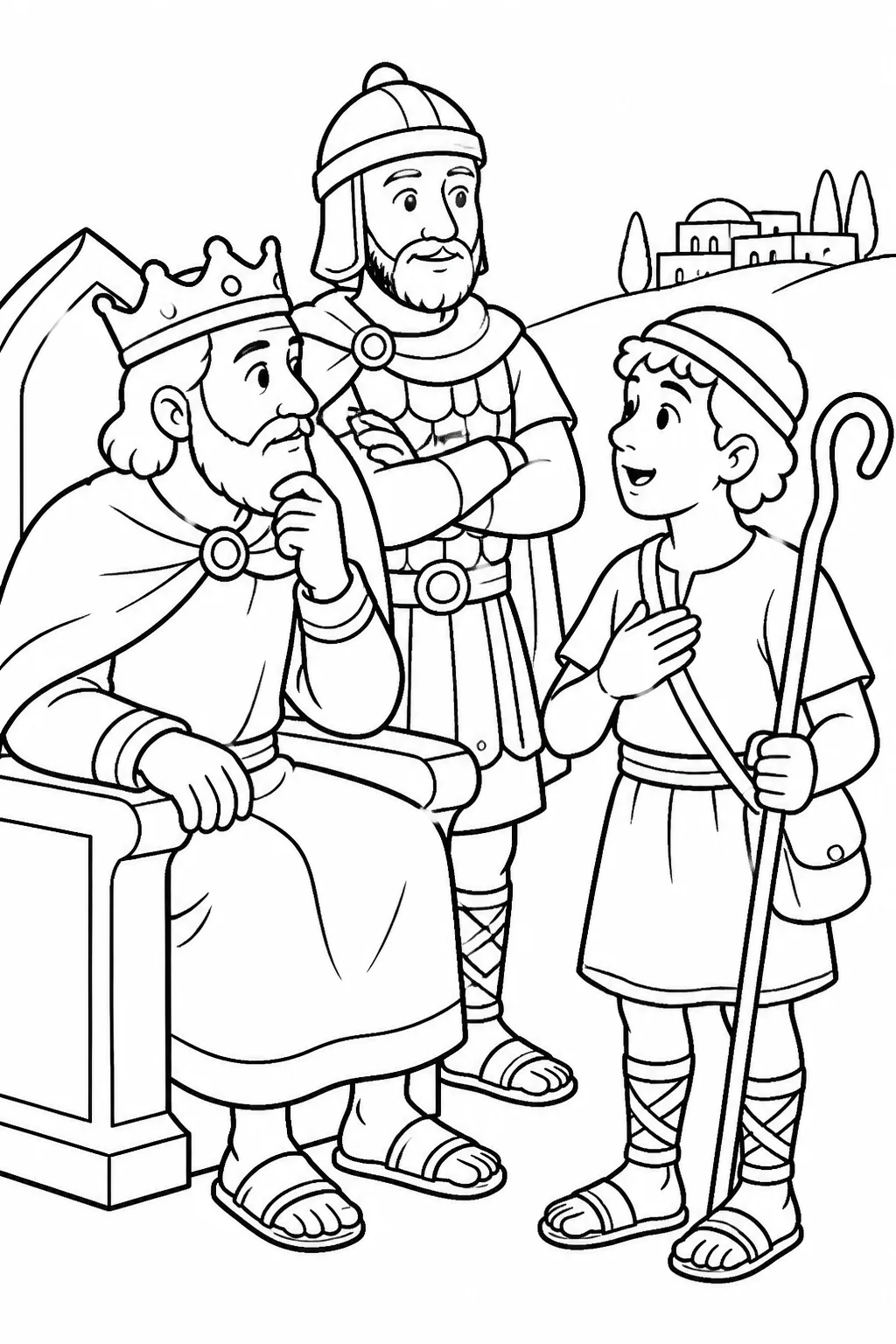
David stands before Saul with Abner present as Saul asks about David’s family, and David identifies himself as Jesse’s son from Bethlehem.

Saul Asks David About His Family

1 Samuel 17
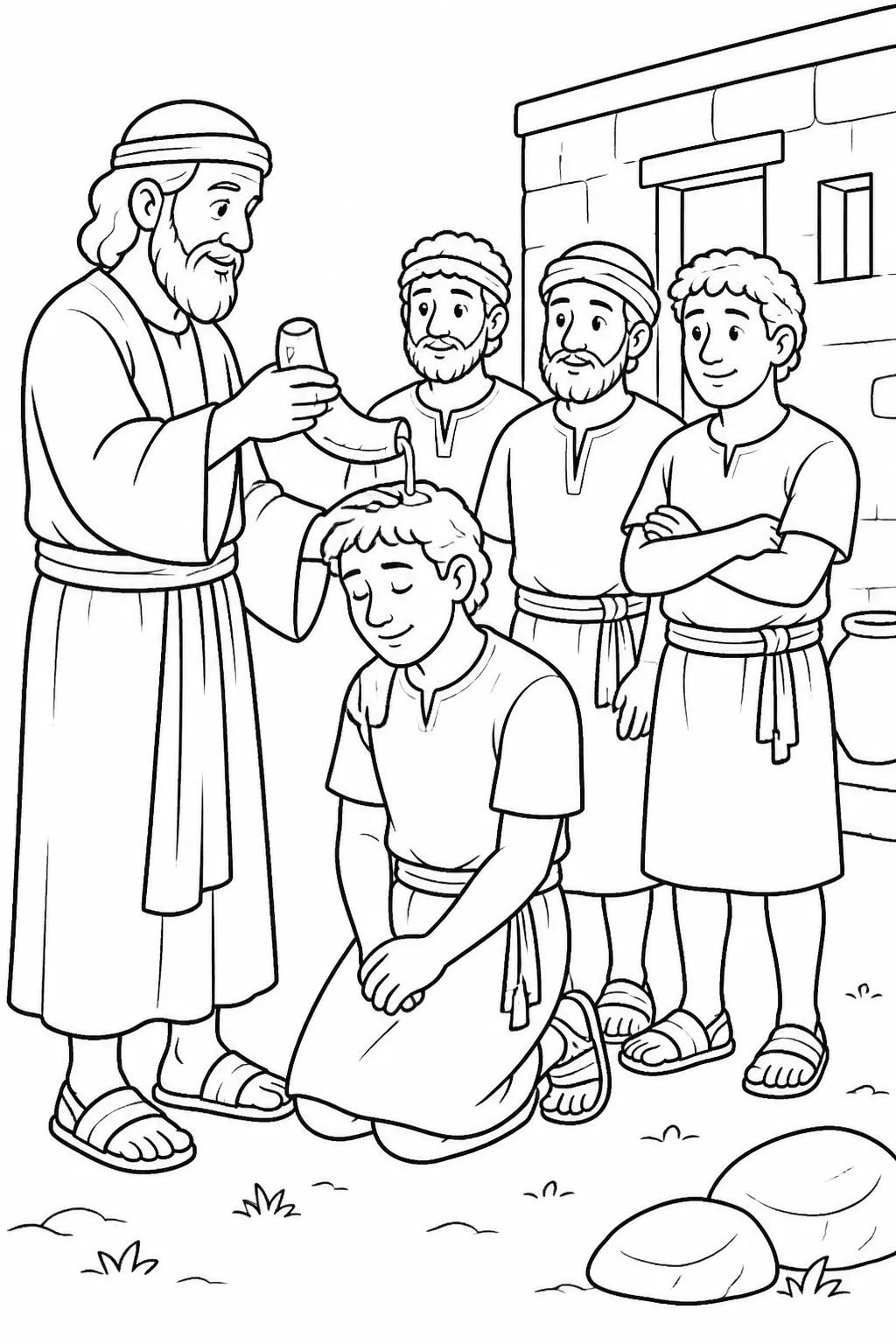
Samuel anointing David among his brothers at Jesse’s house with oil from a horn, based on 1 Samuel 16:13.

Samuel Anoints David

1 Samuel 16:1-13
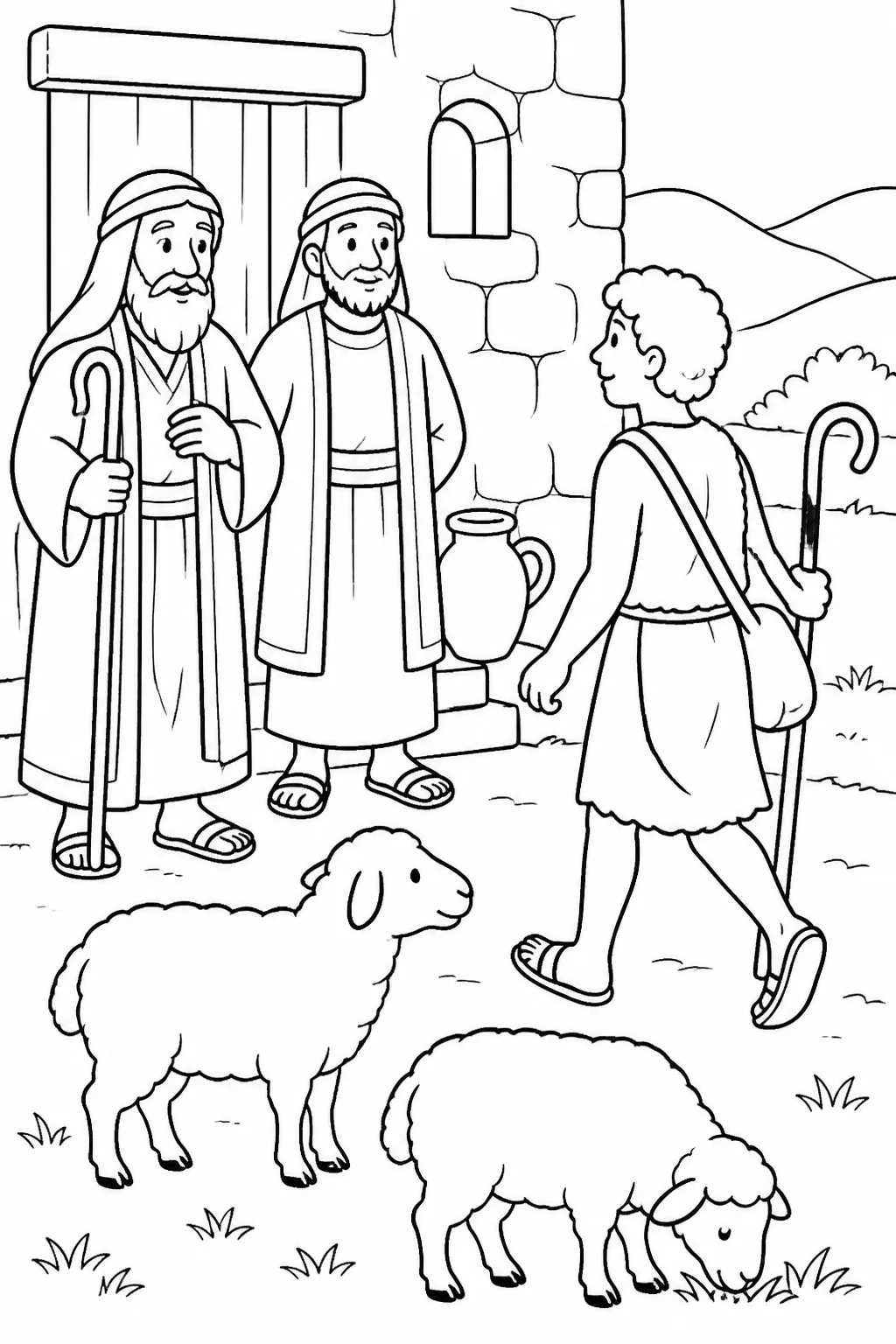
David arrives at Jesse’s house from tending sheep while Samuel asks Jesse to bring him in, based on 1 Samuel 16:11–12.

David Comes in from Tending Sheep

1 Samuel 16:1-13
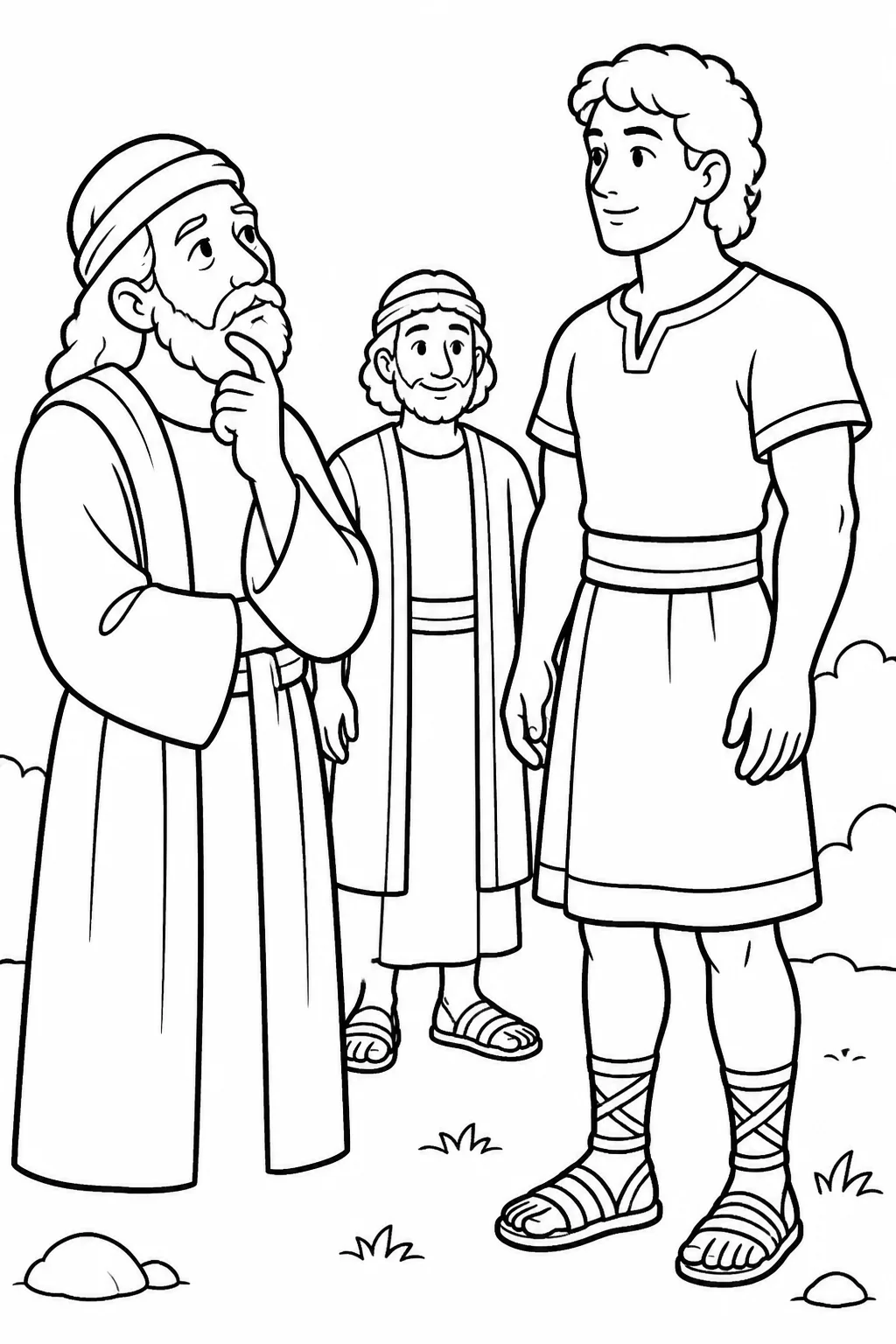
Samuel looks thoughtfully at Eliab in Jesse’s house while Jesse is present, illustrating that people notice outward appearance but the LORD looks at the heart.

God Looks at the Heart

1 Samuel 16:1-13
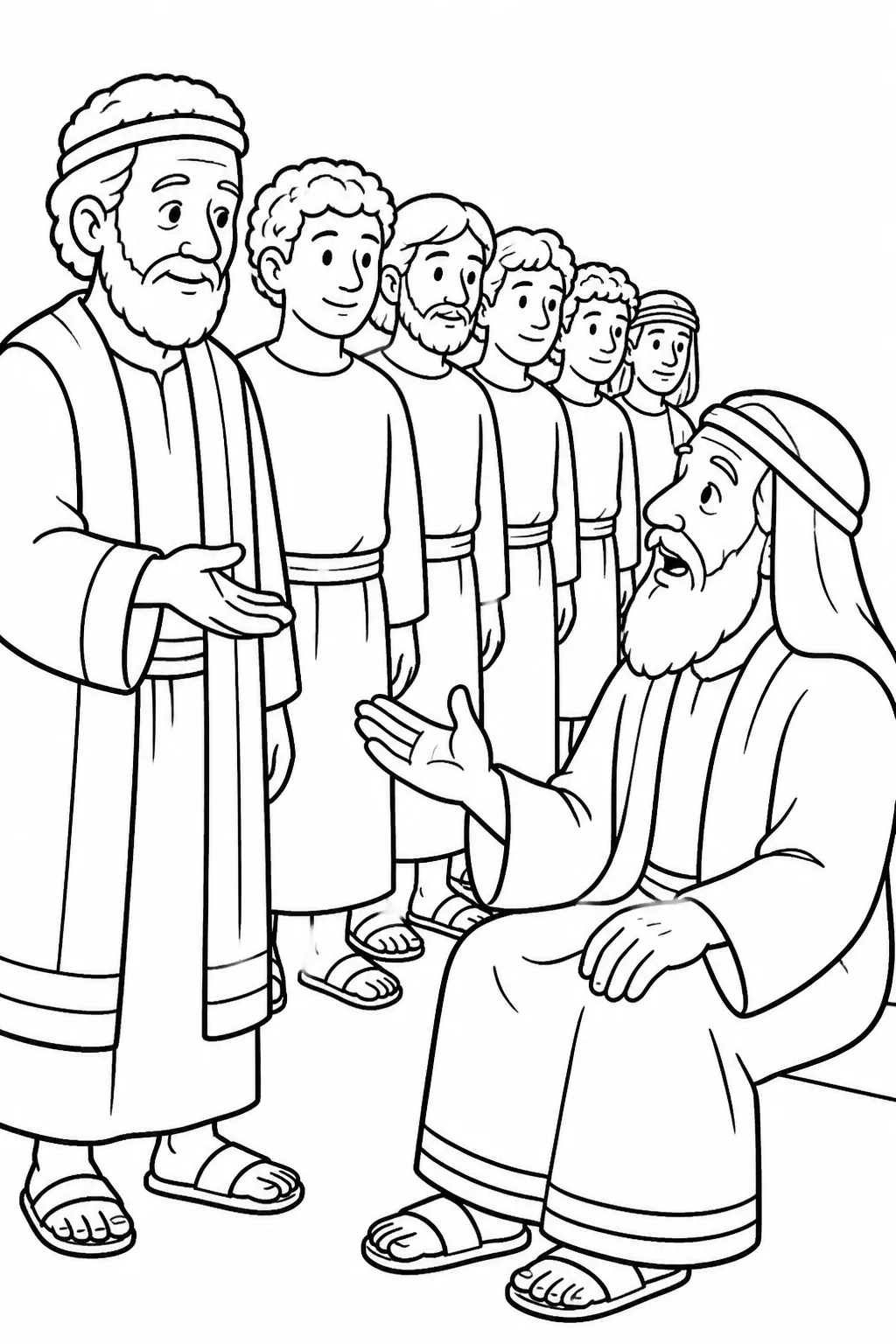
Samuel and Jesse with Jesse’s sons as the sons are presented one by one in 1 Samuel 16:8-10.

Jesse Presents His Sons

1 Samuel 16:1-13
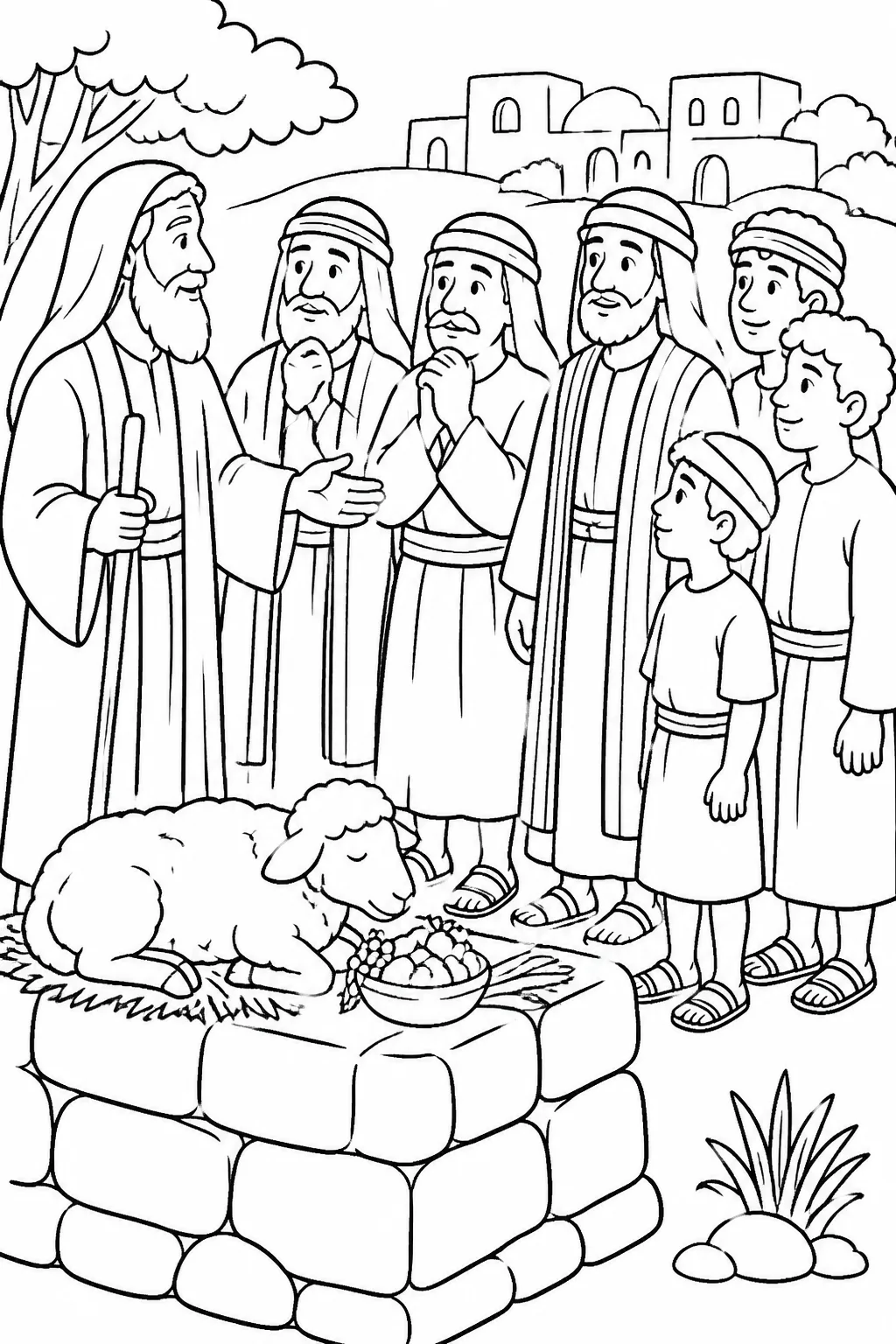
Samuel meets Bethlehem’s elders and invites Jesse and his sons to a peaceful sacrifice to the LORD, based on 1 Samuel 16:4-5.

Samuel Comes Peacefully to Bethlehem

1 Samuel 16:1-13
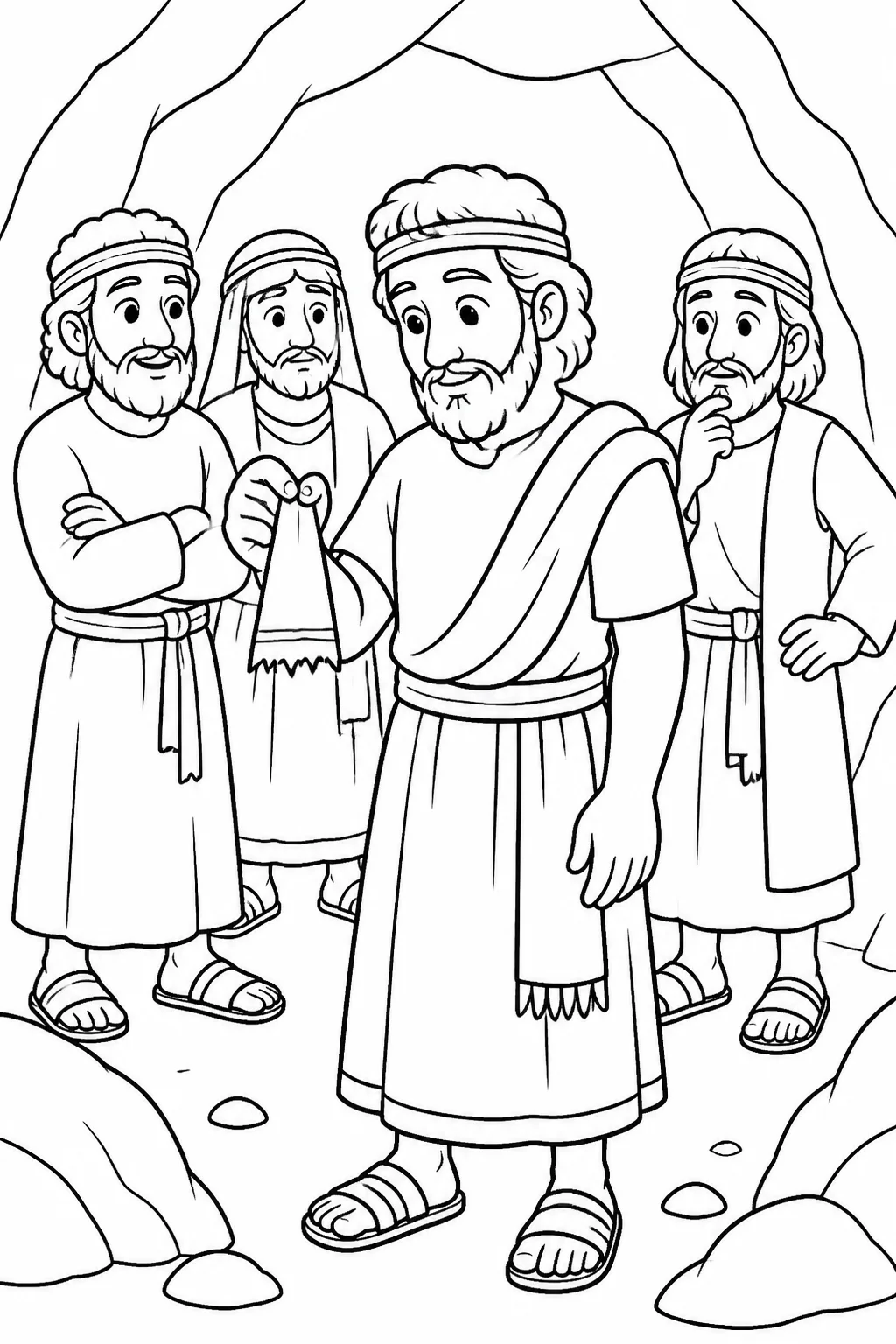
David holds the cut corner of Saul’s robe inside a cave while David’s men look on, illustrating David’s mercy and self-control.

David Chooses Mercy

1 Samuel 24:1-22

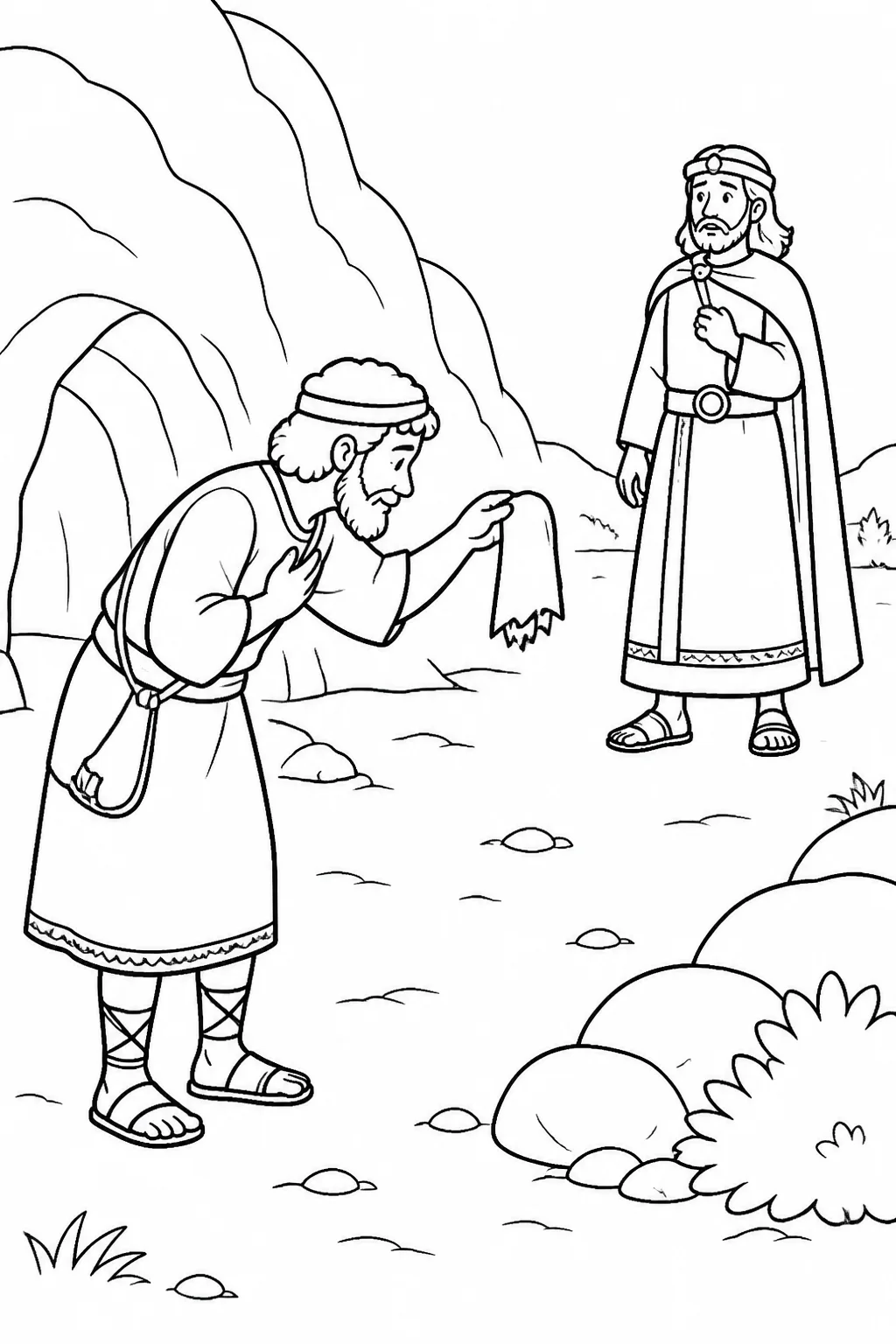
David bows outside a cave while holding the cut corner of Saul’s robe, with Saul standing at a distance as David explains that he did not seek Saul’s harm.

David Speaks from a Distance

1 Samuel 24:1-22
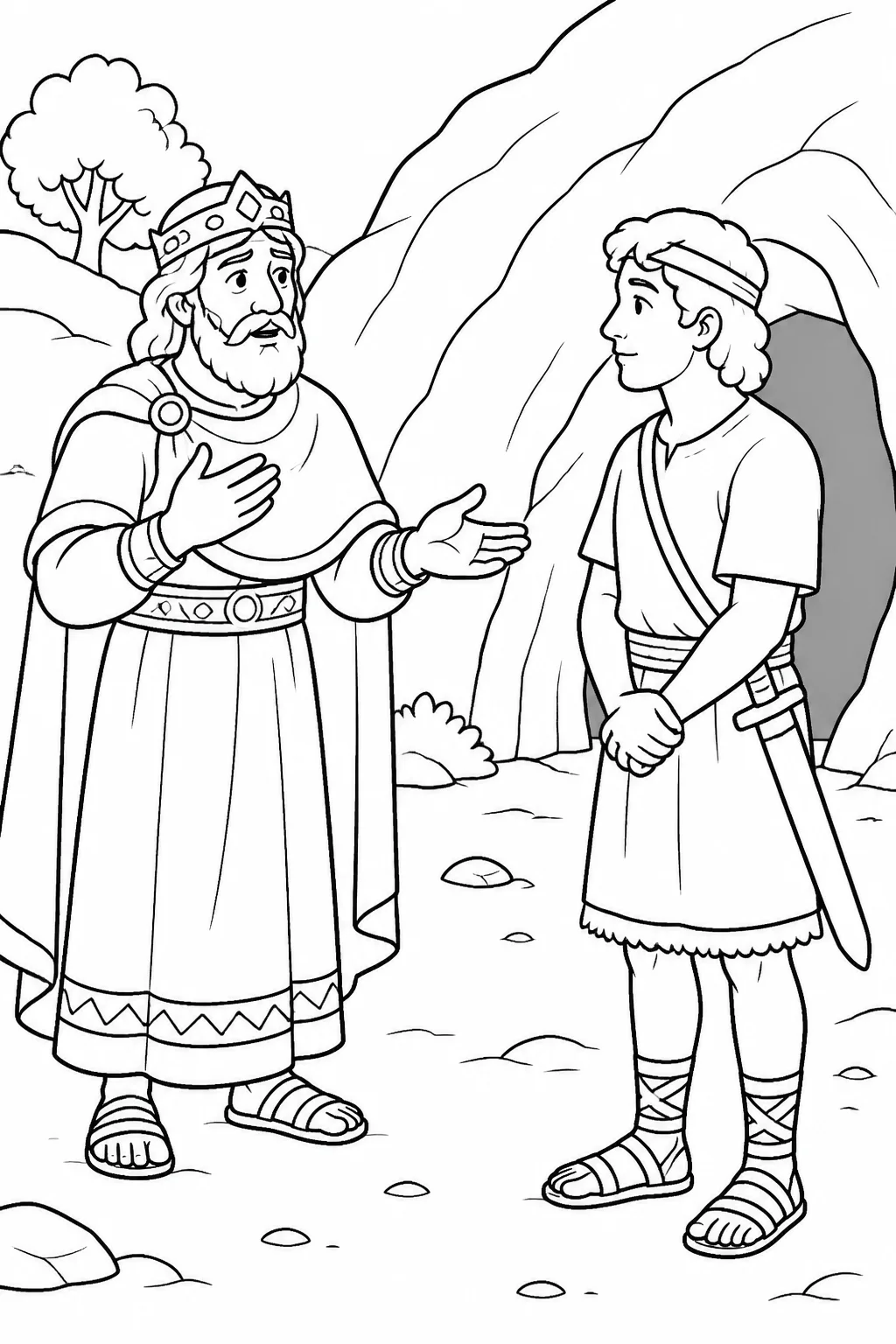
Saul faces David outside a cave as he recognizes that David repaid evil with good; David listens quietly and humbly.

Saul Recognizes David’s Goodness

1 Samuel 24:1-22
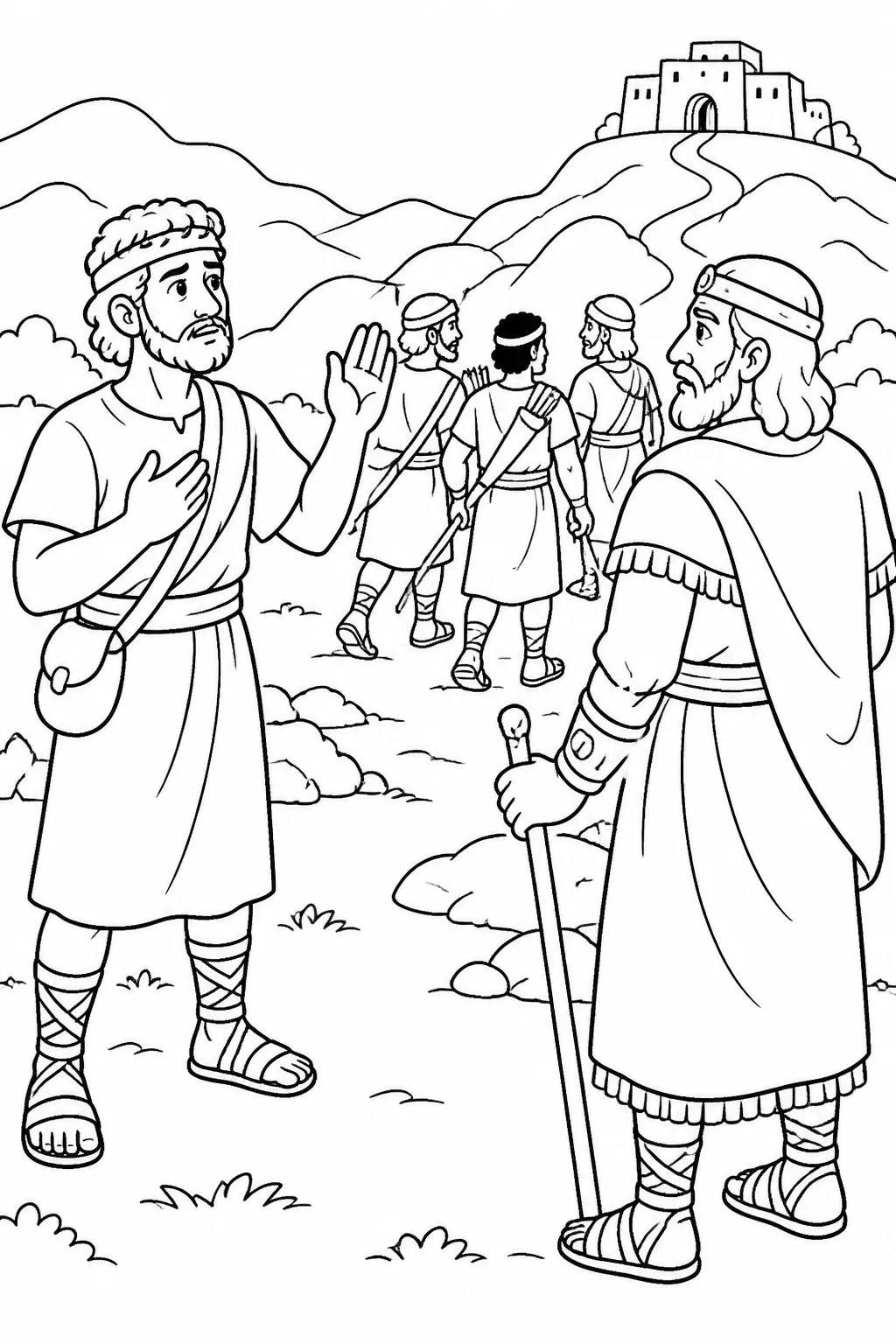
David and Saul stand apart in the wilderness as David makes a serious promise concerning Saul’s descendants; Saul turns home while David and his men head toward a stronghold.

A Serious Promise

1 Samuel 24:1-22

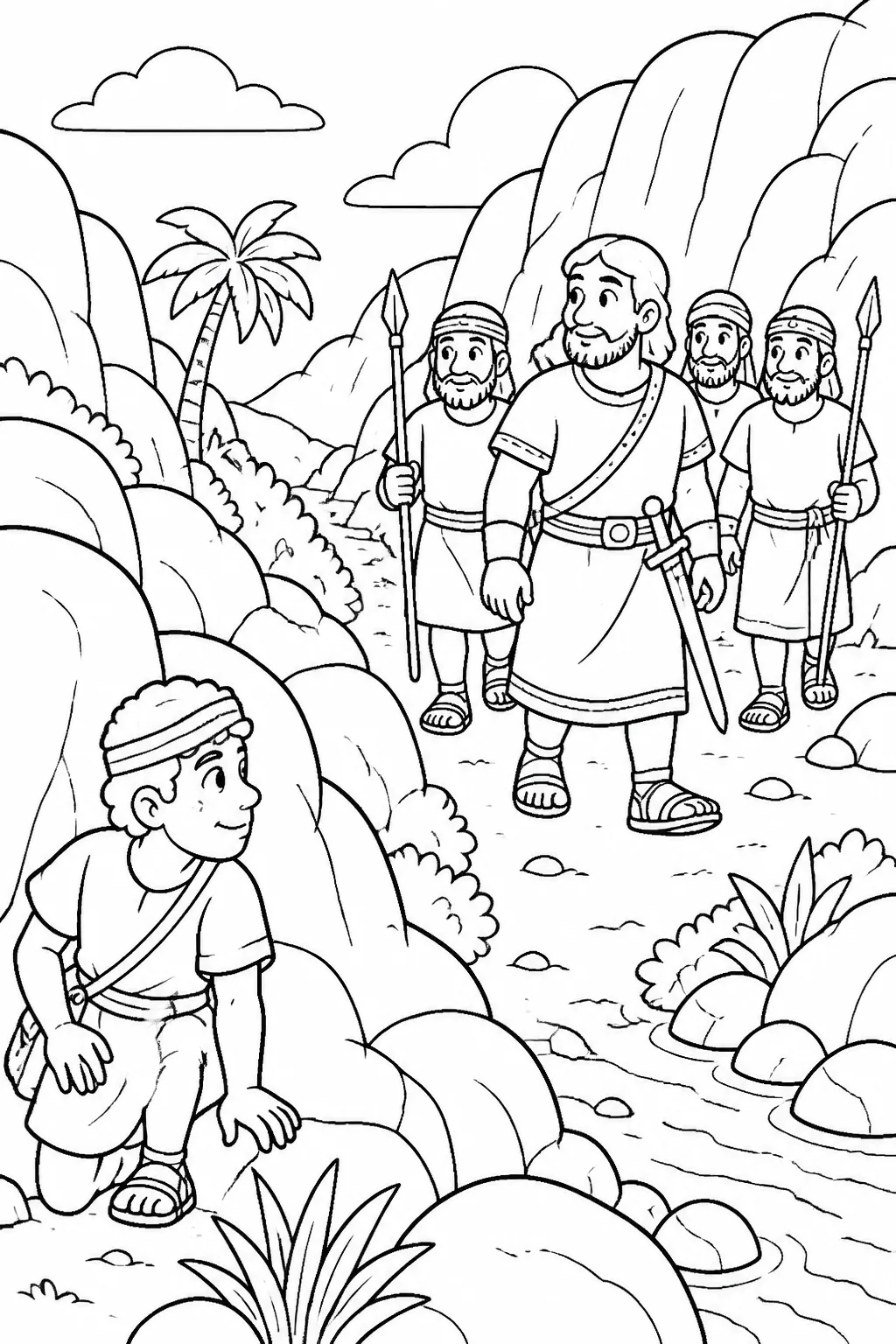
Child-friendly illustration concept of Saul and his chosen men traveling through the rocky wilderness of En-gedi while David’s hiding place is suggested nearby.

The Wilderness of En-gedi

1 Samuel 24:1-22
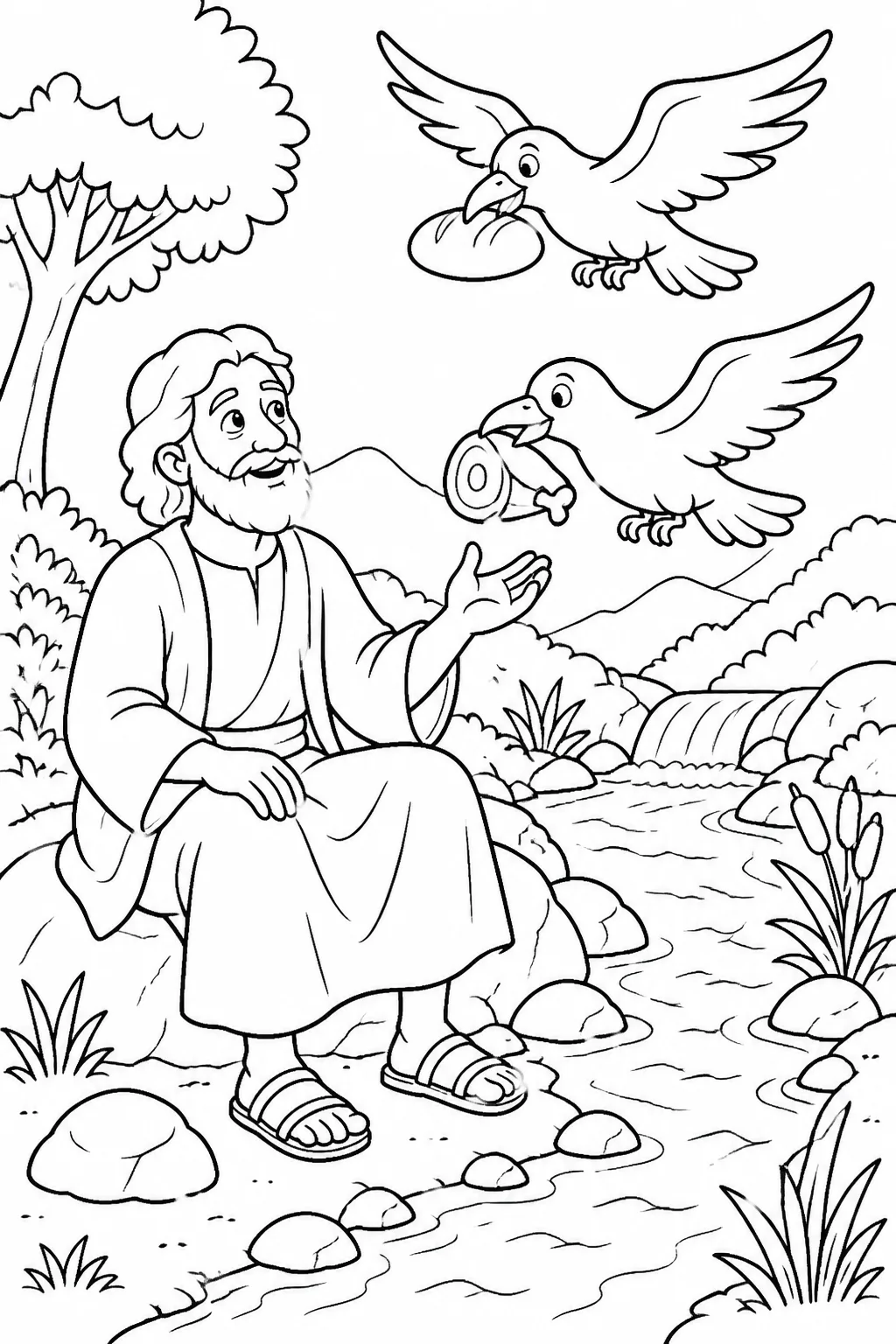
Elijah beside the Brook Cherith as ravens bring him bread and meat, with water nearby, based on 1 Kings 17:5–6.

Ravens Bring Food to Elijah

1 Kings 17:1-16
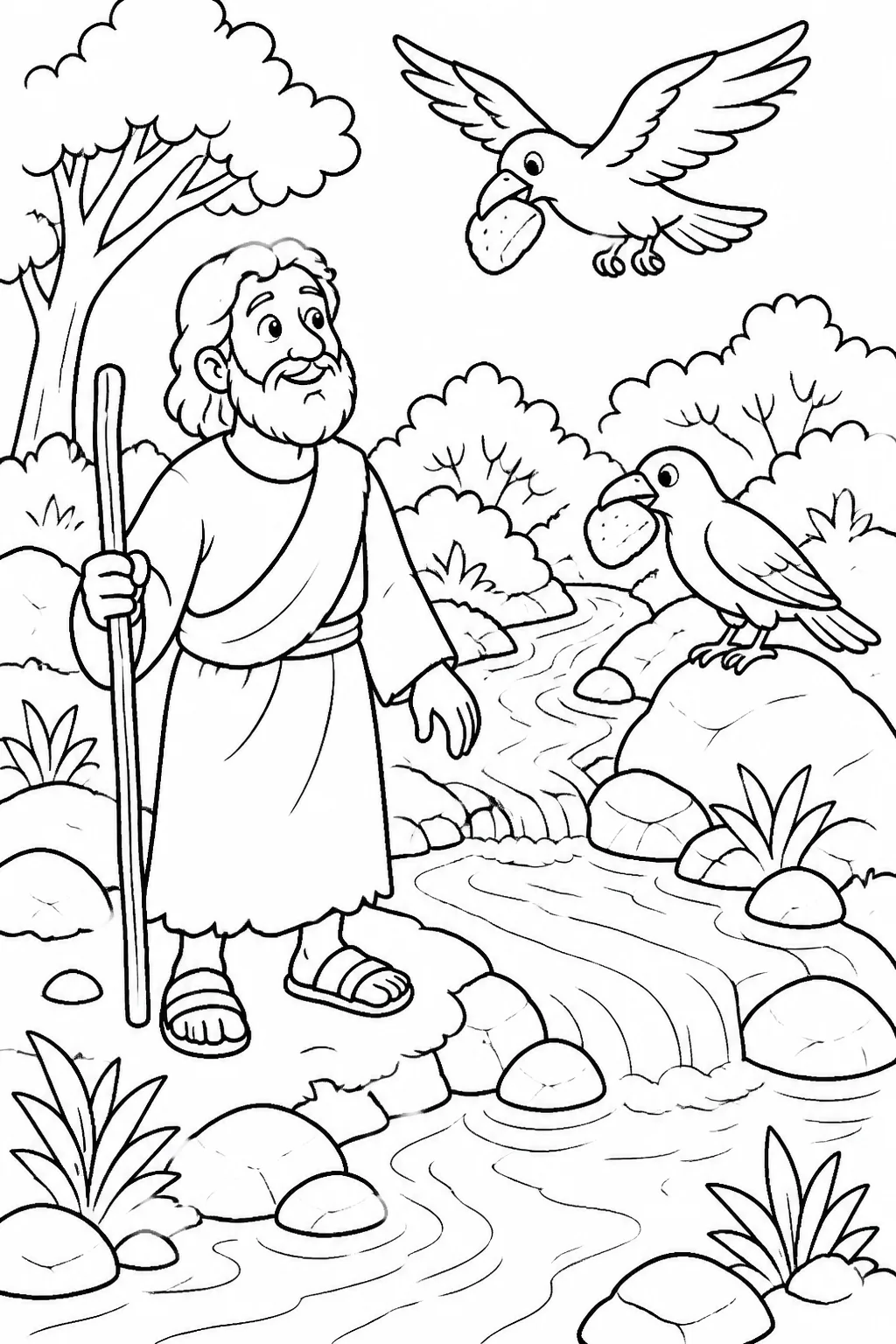
Elijah beside the Brook Cherith with nearby ravens and flowing water, illustrating 1 Kings 17:2-4.

Elijah Goes to the Brook

1 Kings 17:1-16
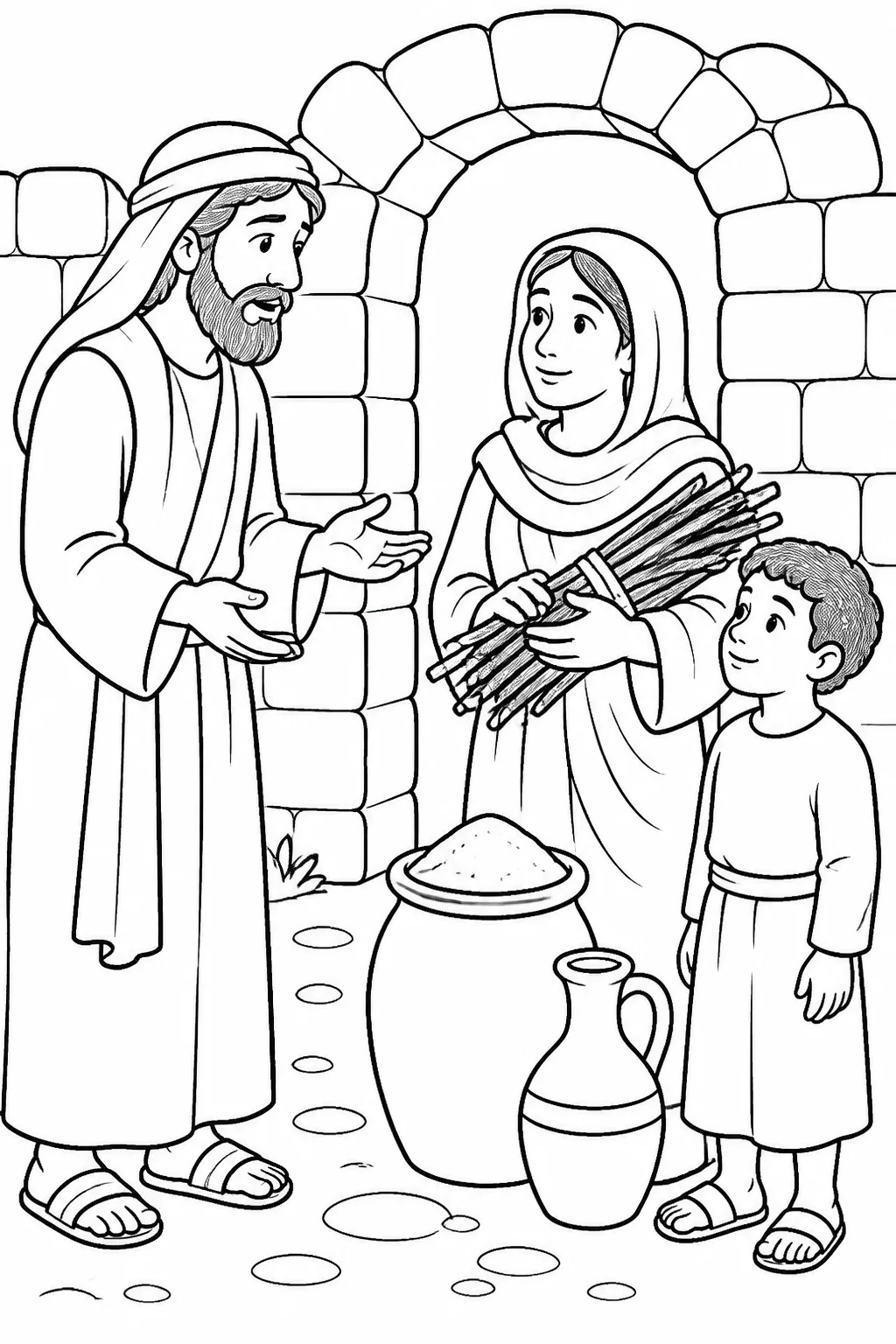
Elijah asks the widow at Zarephath for water and bread while she gathers sticks, with her son, a jar of flour, and a jug of oil nearby.

Elijah Meets the Widow

1 Kings 17:1-16
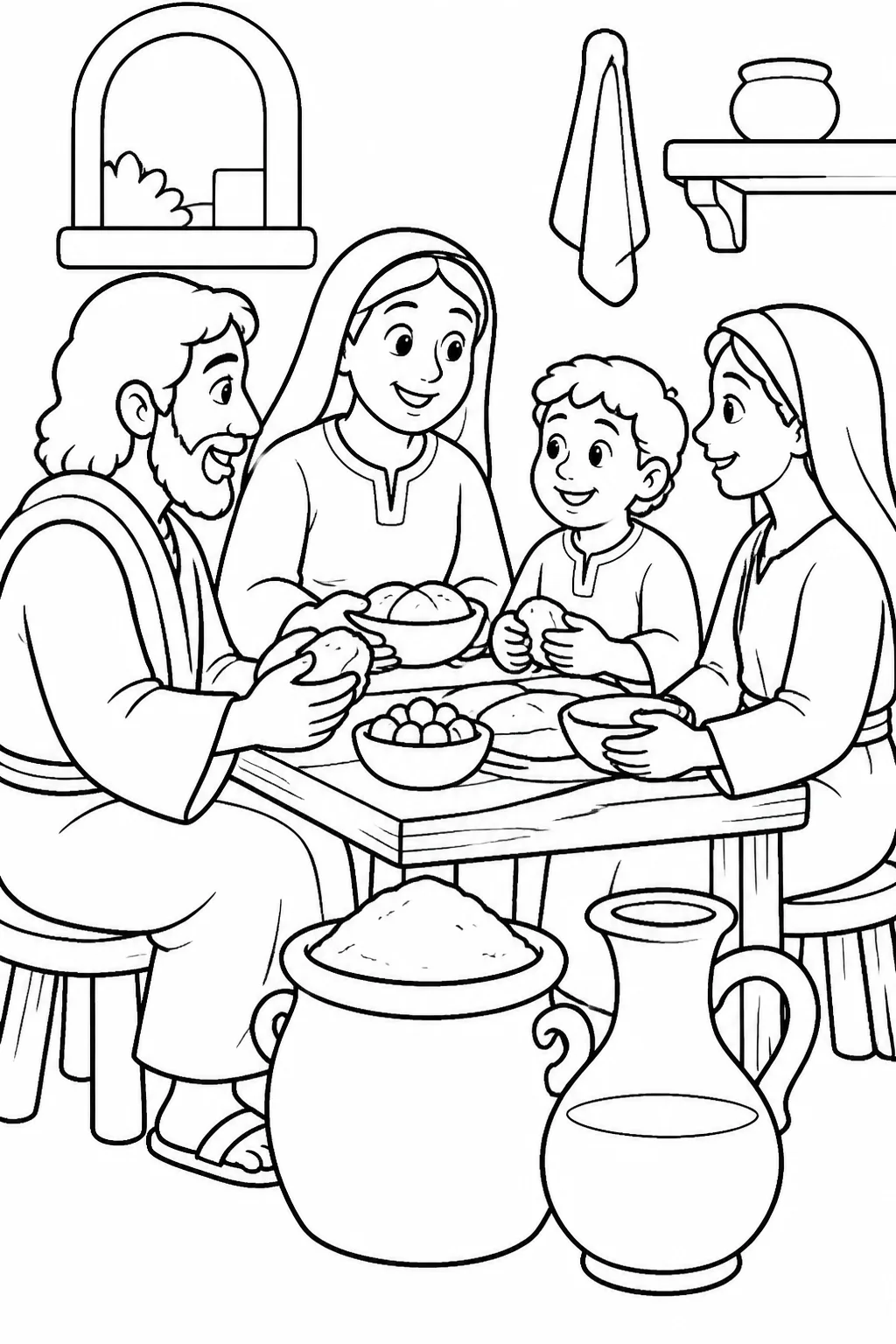
Elijah, the widow at Zarephath, her son, and the household share food while a jar of flour and jug of oil represent the LORD’s provision.

Food for Elijah and the Household

1 Kings 17:1-16
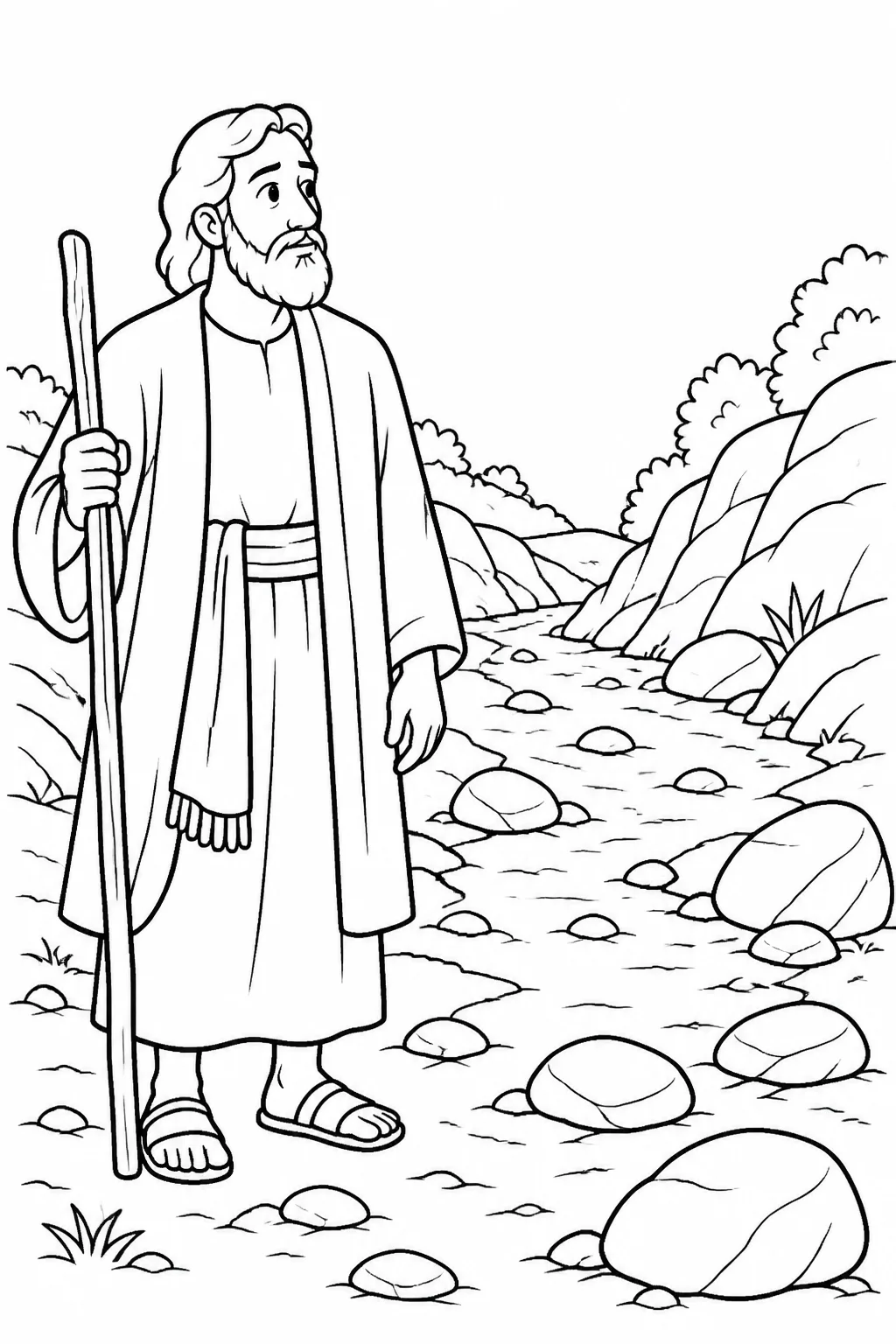
Elijah stands beside the dry bed of the Brook Cherith after the brook became dry because there had been no rain.

The Brook Becomes Dry

1 Kings 17:1-16
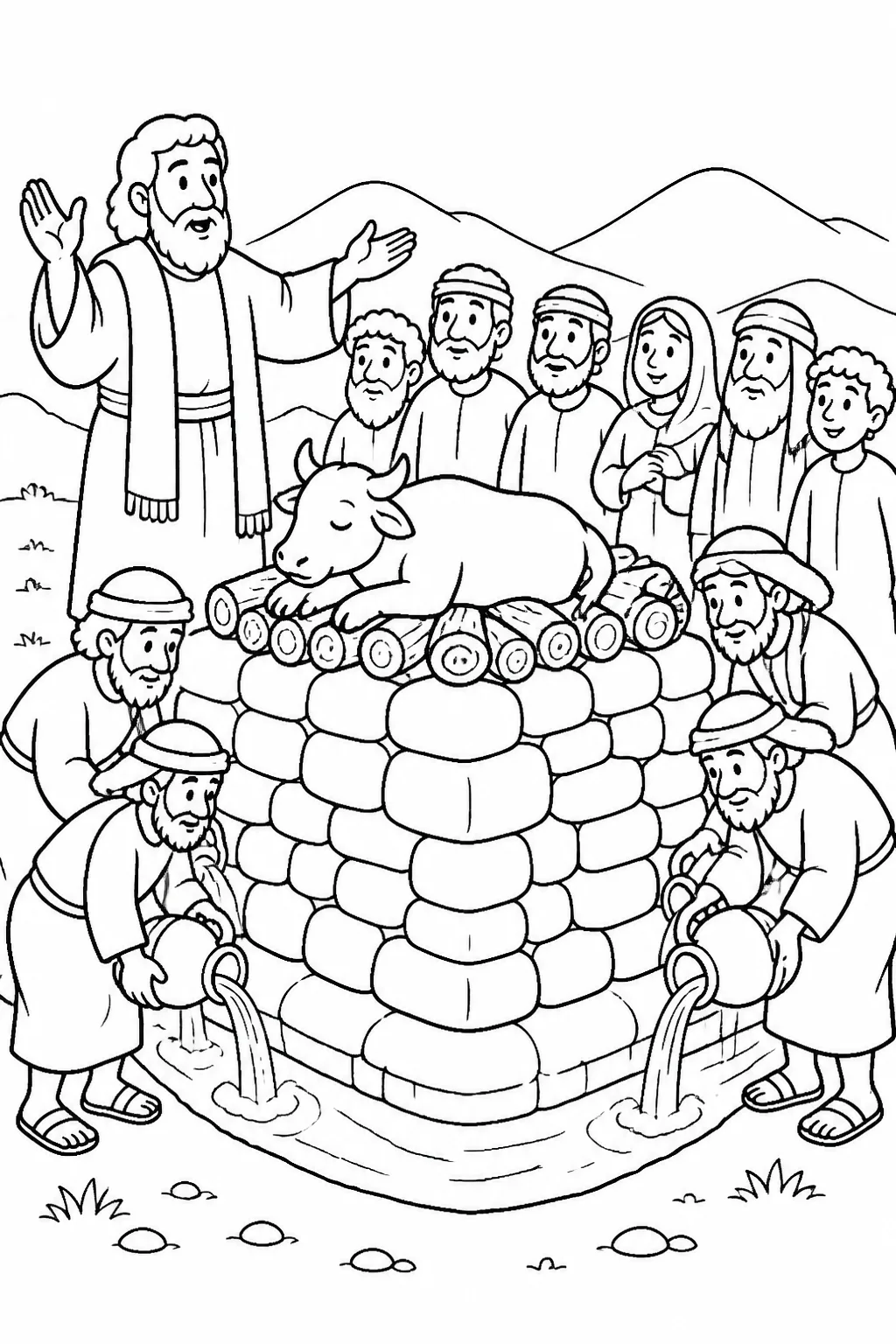
Elijah repairs the LORD’s altar with twelve stones while the people of Israel watch; wood and an offering are arranged, and water fills a trench.

Elijah Repairs the LORD’s Altar

1 Kings 18:1-46
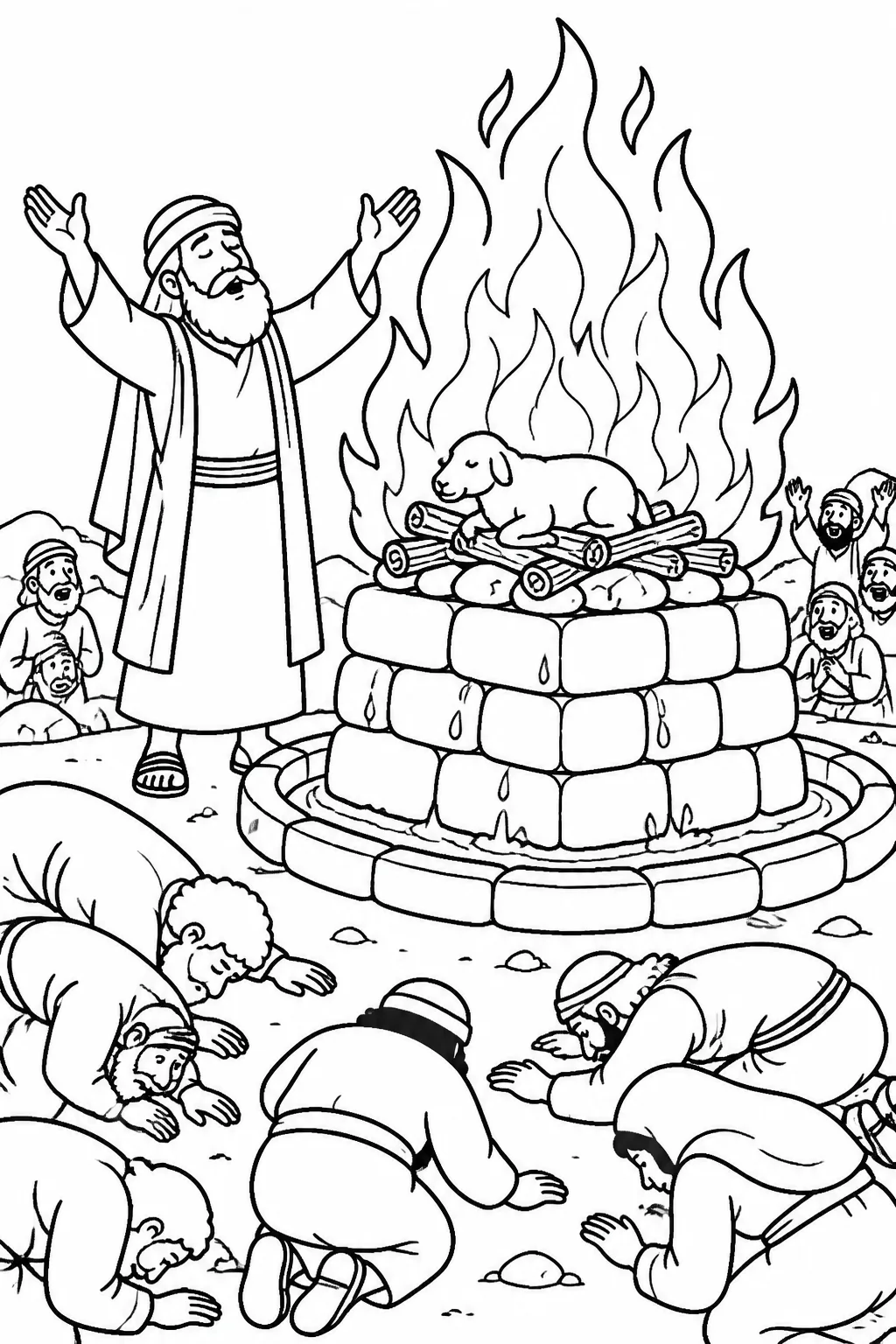
Elijah prays beside the thoroughly soaked LORD’s altar at Mount Carmel as fire from the LORD consumes the offering, wood, stones, dust, and water, while the people respond.

Fire Answers Elijah’s Prayer

1 Kings 18:1-46
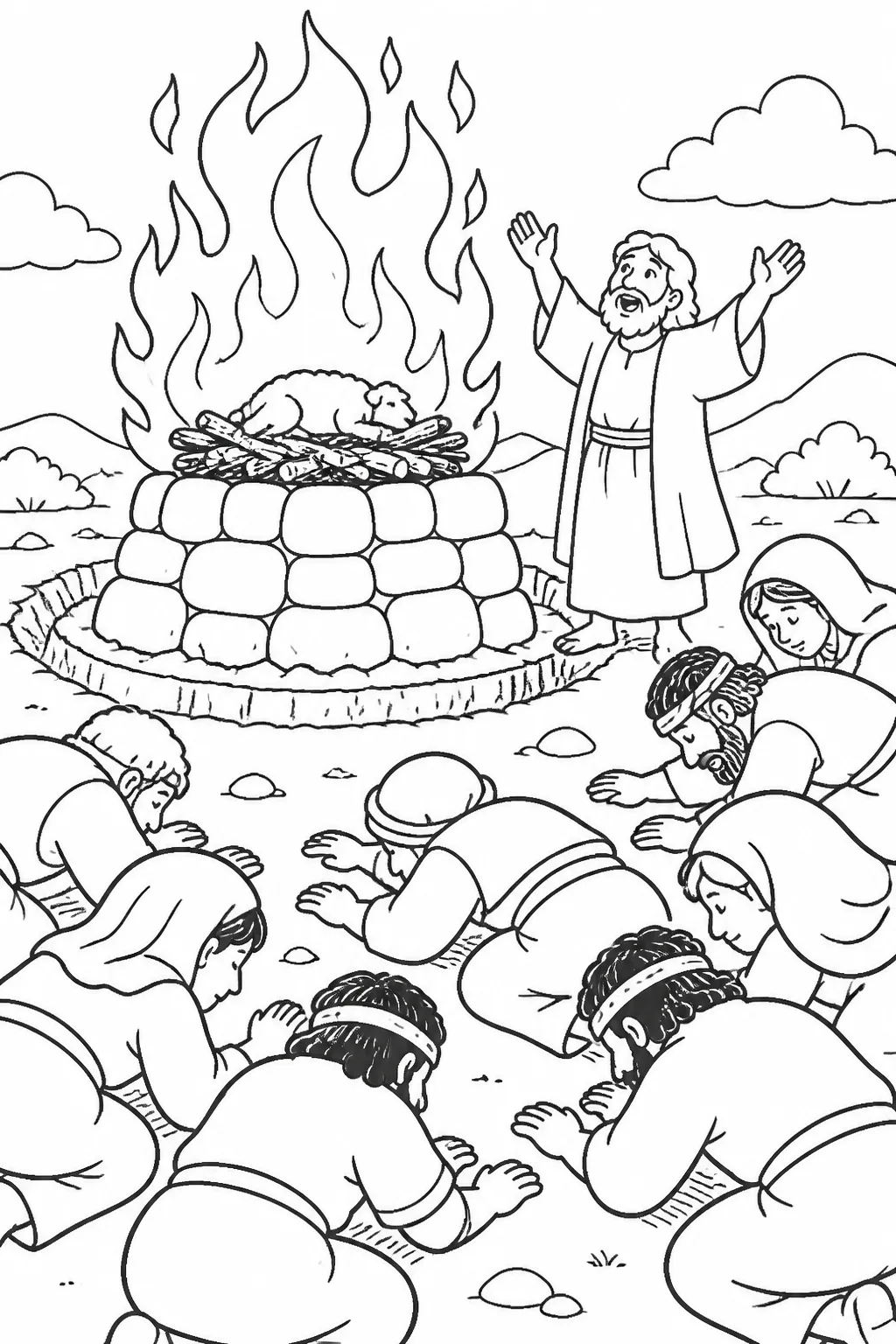
Elijah beside the LORD’s altar after fire from the LORD answers his prayer, while the people of Israel fall facedown and acknowledge that the LORD is God.

The People Acknowledge the LORD

1 Kings 18:1-46
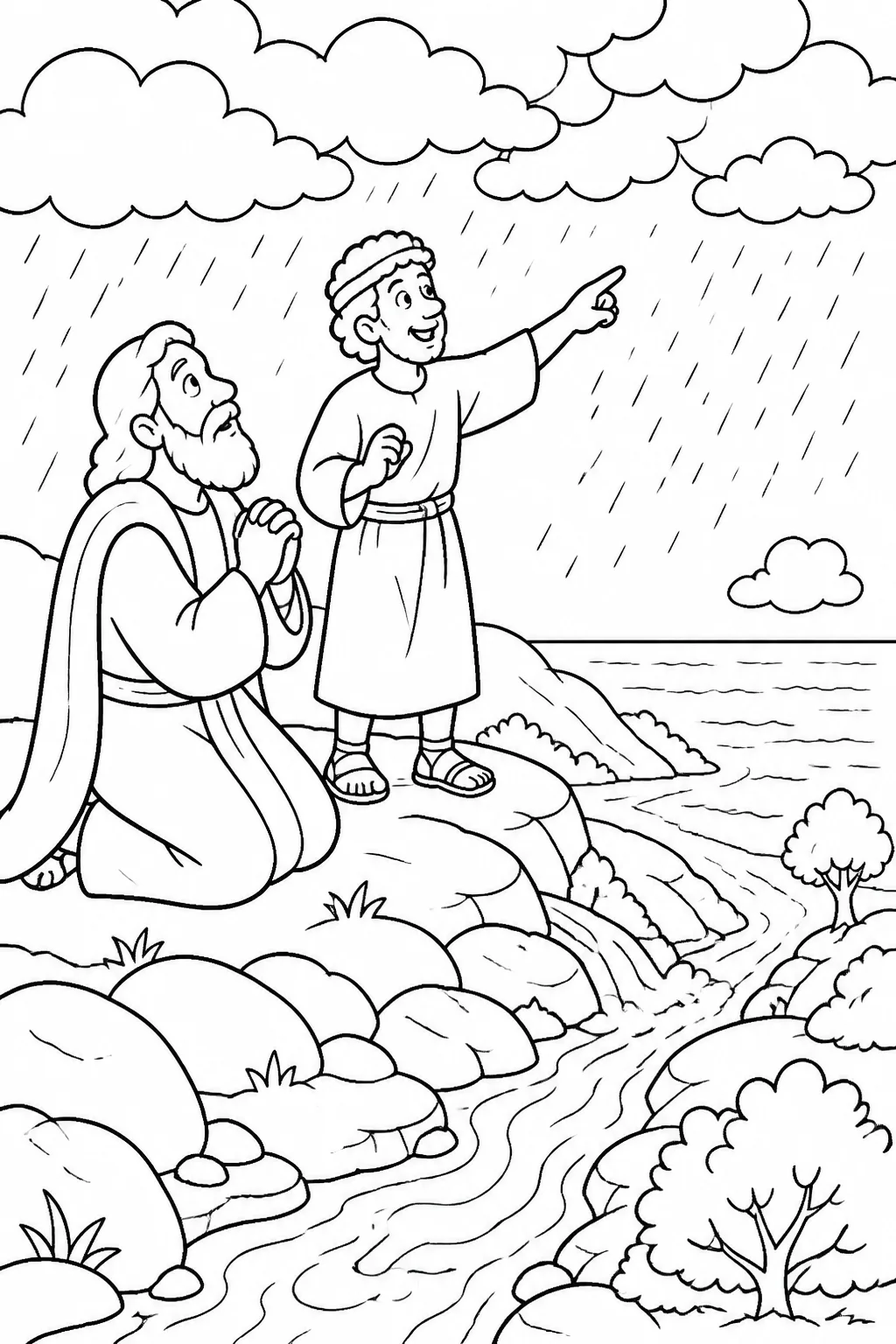
Elijah prays on Mount Carmel while his servant watches the sea for a small cloud before rain arrives.

A Small Cloud Appears

1 Kings 18:1-46
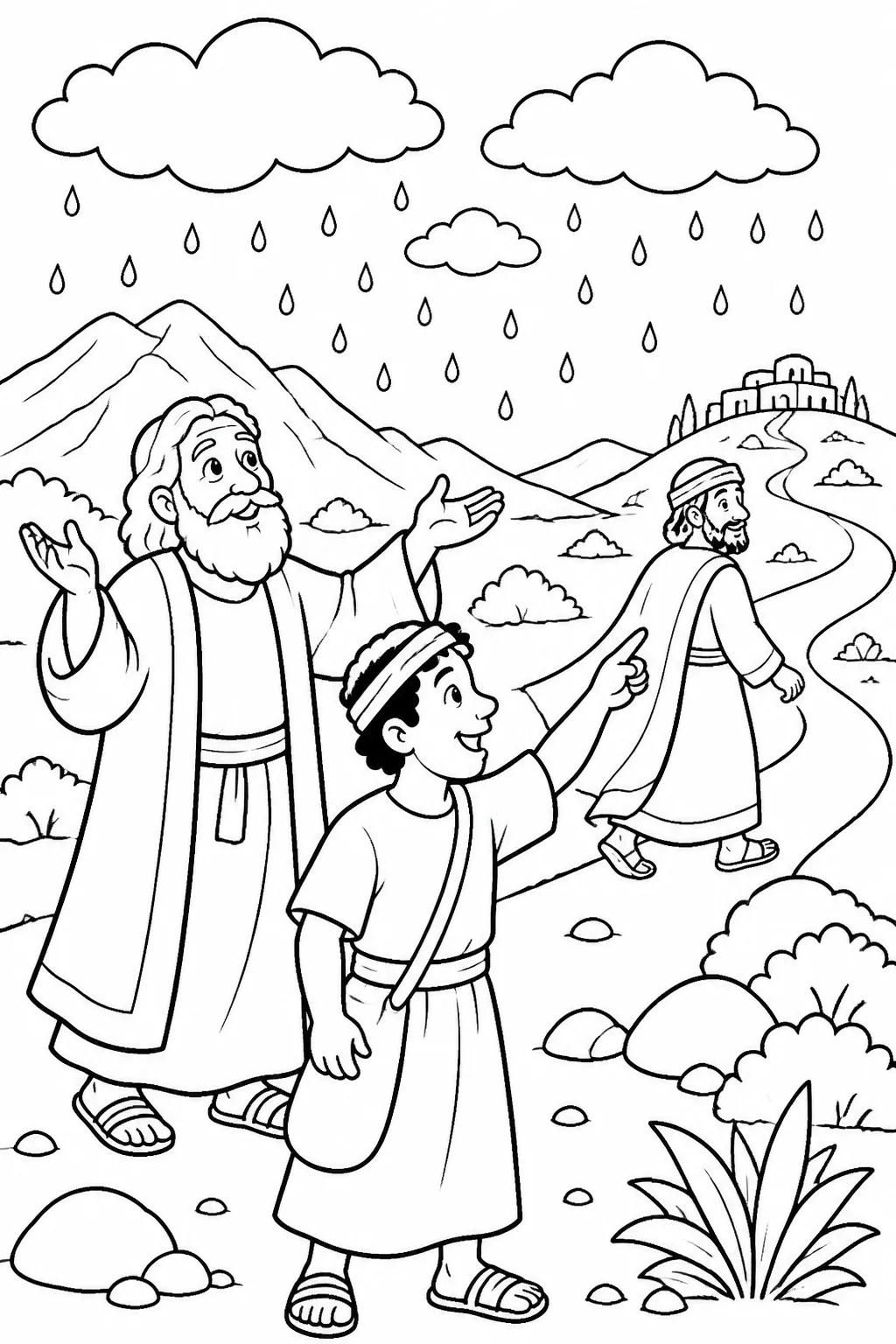
Elijah and his servant near Mount Carmel as a small cloud appears and rain returns, while Ahab travels toward Jezreel.

Rain Comes to the Land

1 Kings 18:1-46
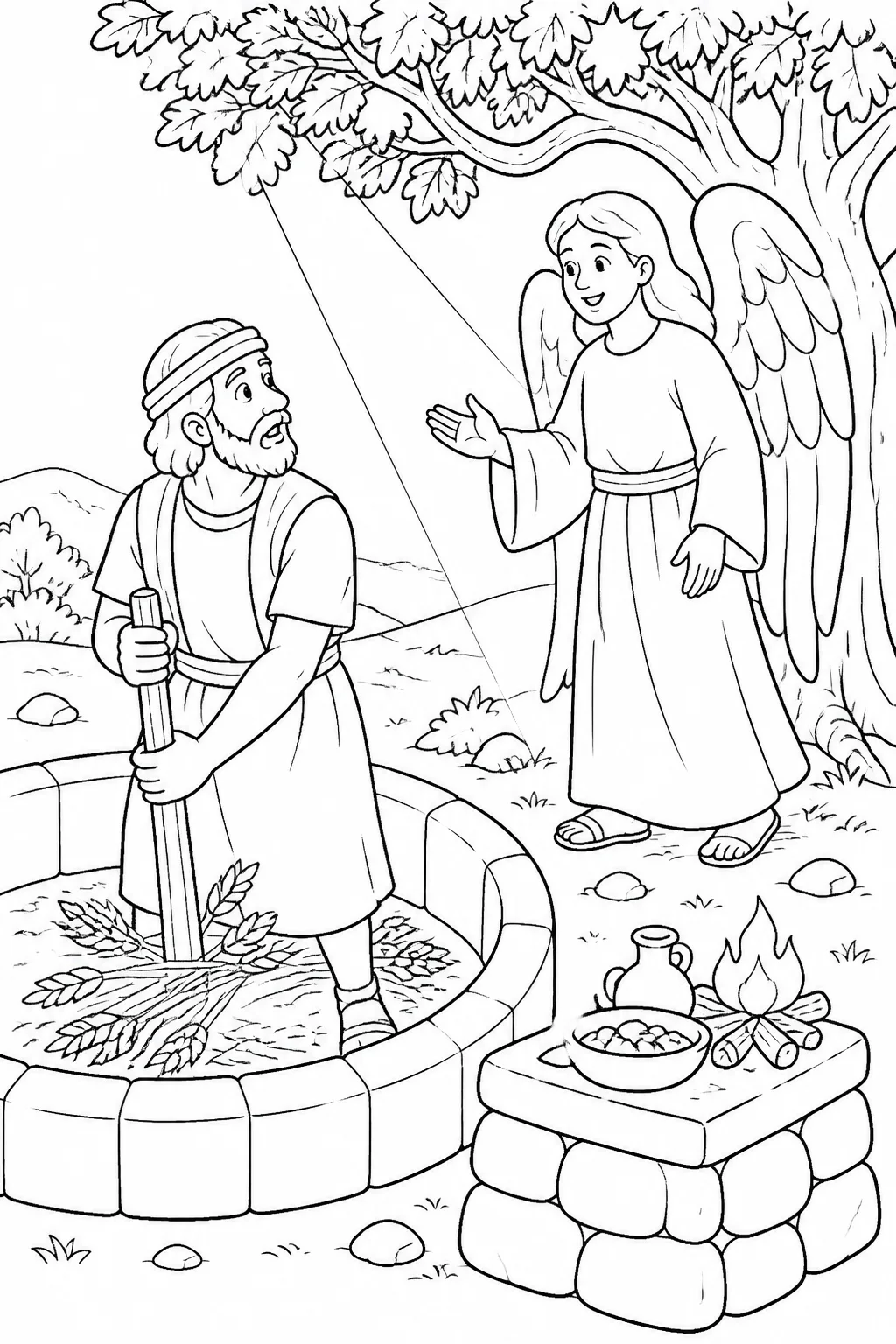
Gideon beats wheat in a winepress at Ophrah while the angel of the LORD speaks beneath an oak, with an offering and altar nearby.

Gideon Receives a Courageous Call

Judges 6:11–7:25
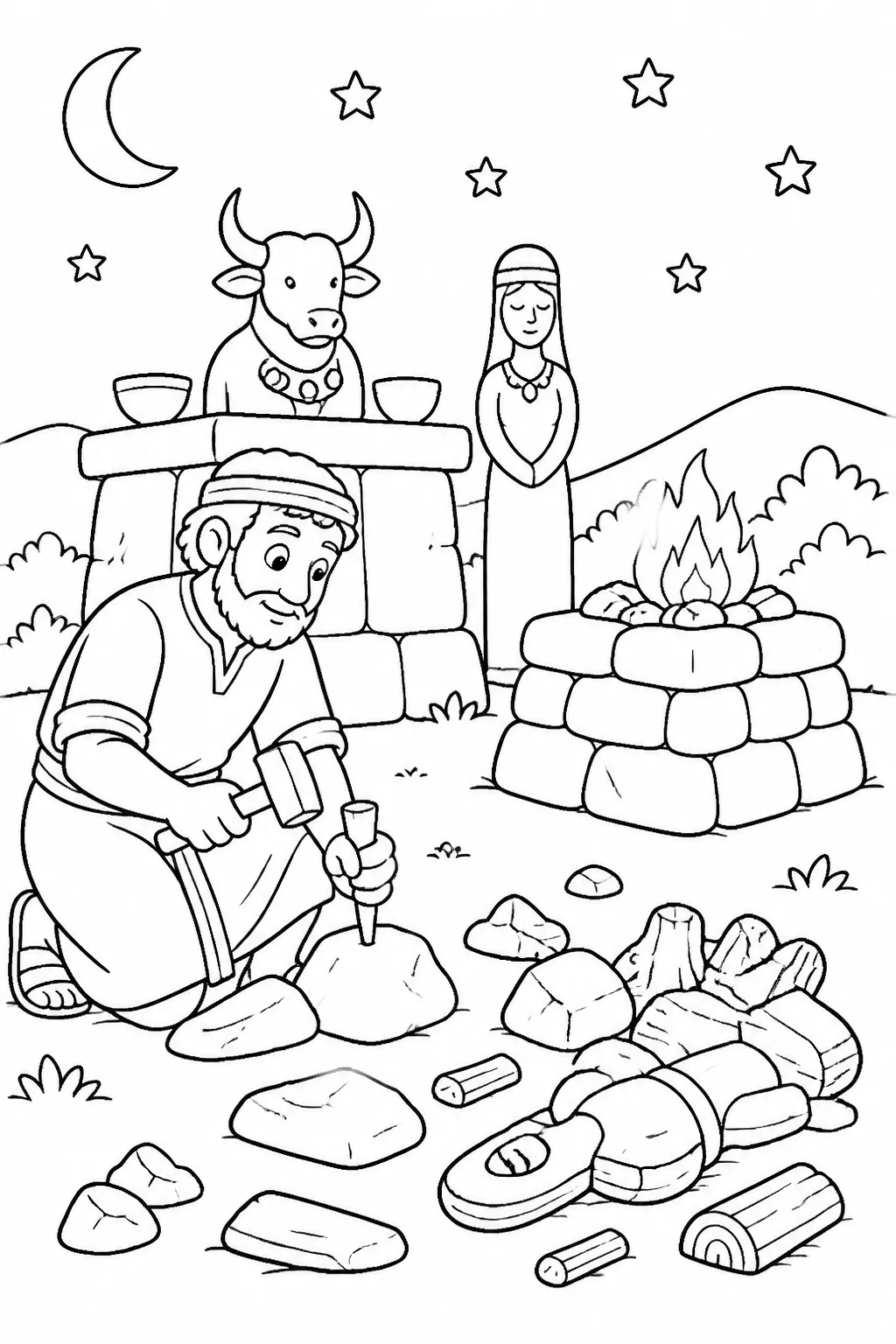
Gideon obeys God at night beside Baal’s altar, the Asherah, and a new altar to the LORD, with tools and fallen stones nearby.

Gideon Obeys at Night

Judges 6:11–7:25
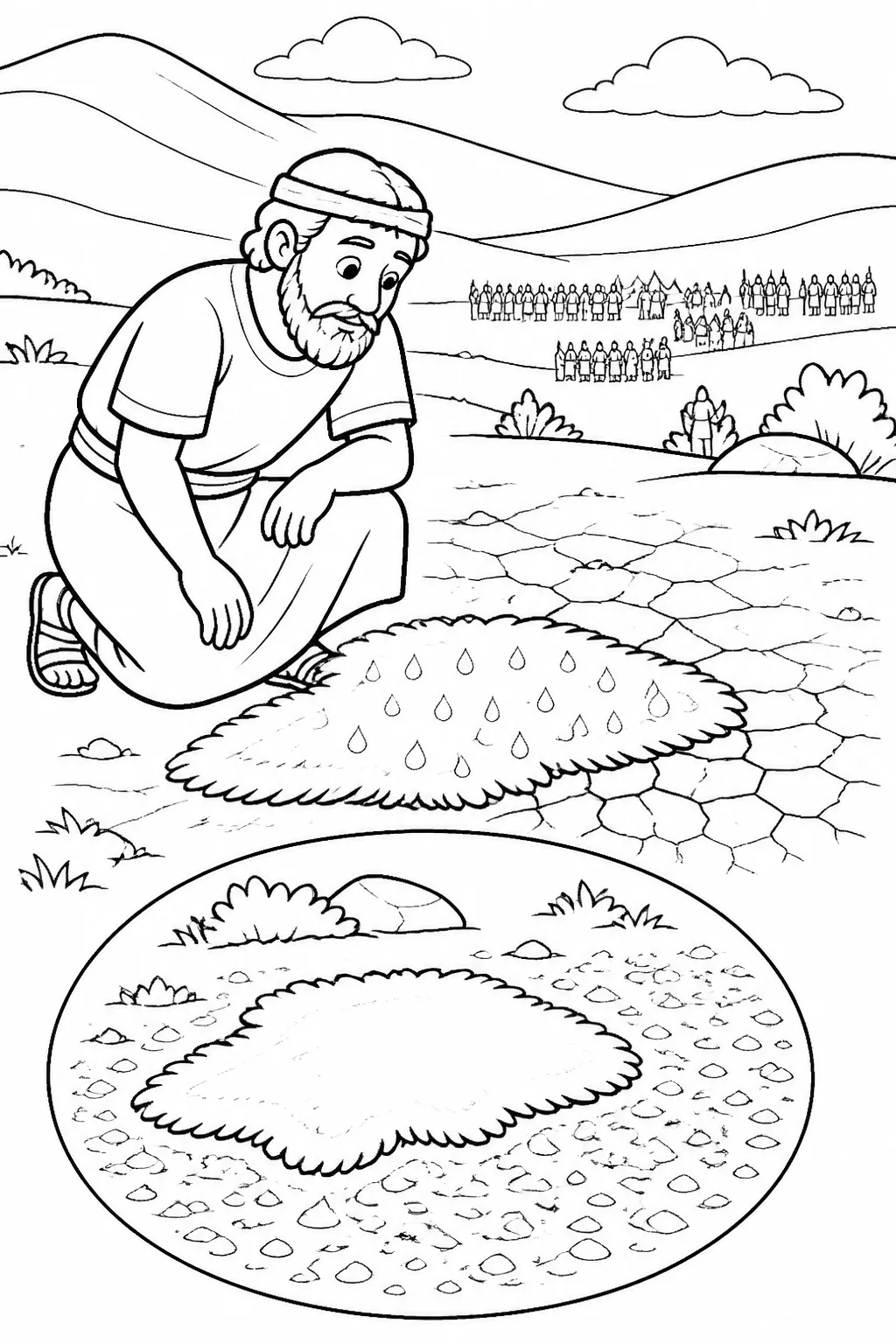
Gideon beside a fleece showing dew on the fleece and dry ground, with an inset showing a dry fleece and dew-covered ground.

The Fleece and the Dew

Judges 6:11–7:25
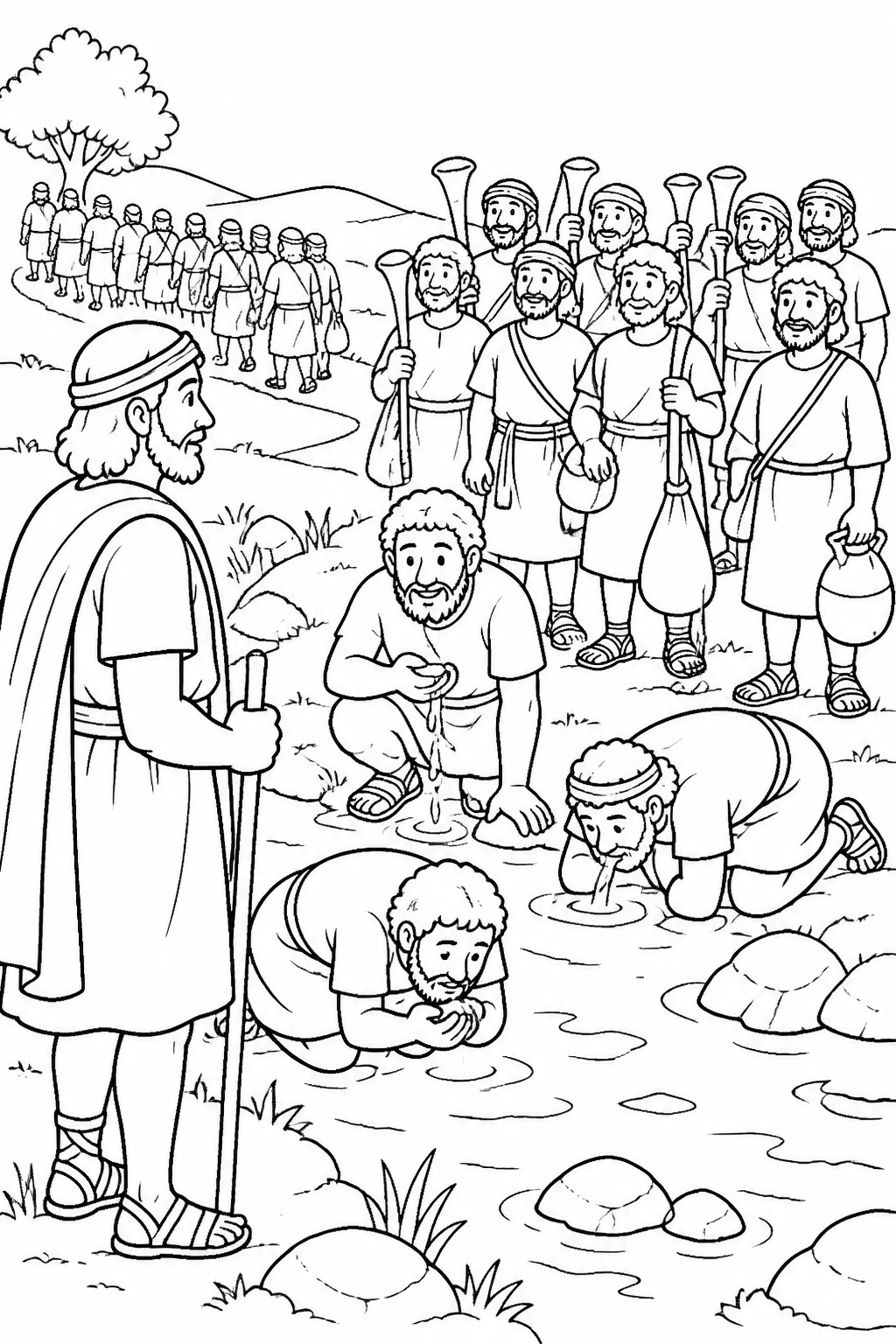
Gideon watches men drink at the spring of Harod as some soldiers depart and the chosen 300 remain with provisions and trumpets.

Three Hundred Are Chosen

Judges 6:11–7:25
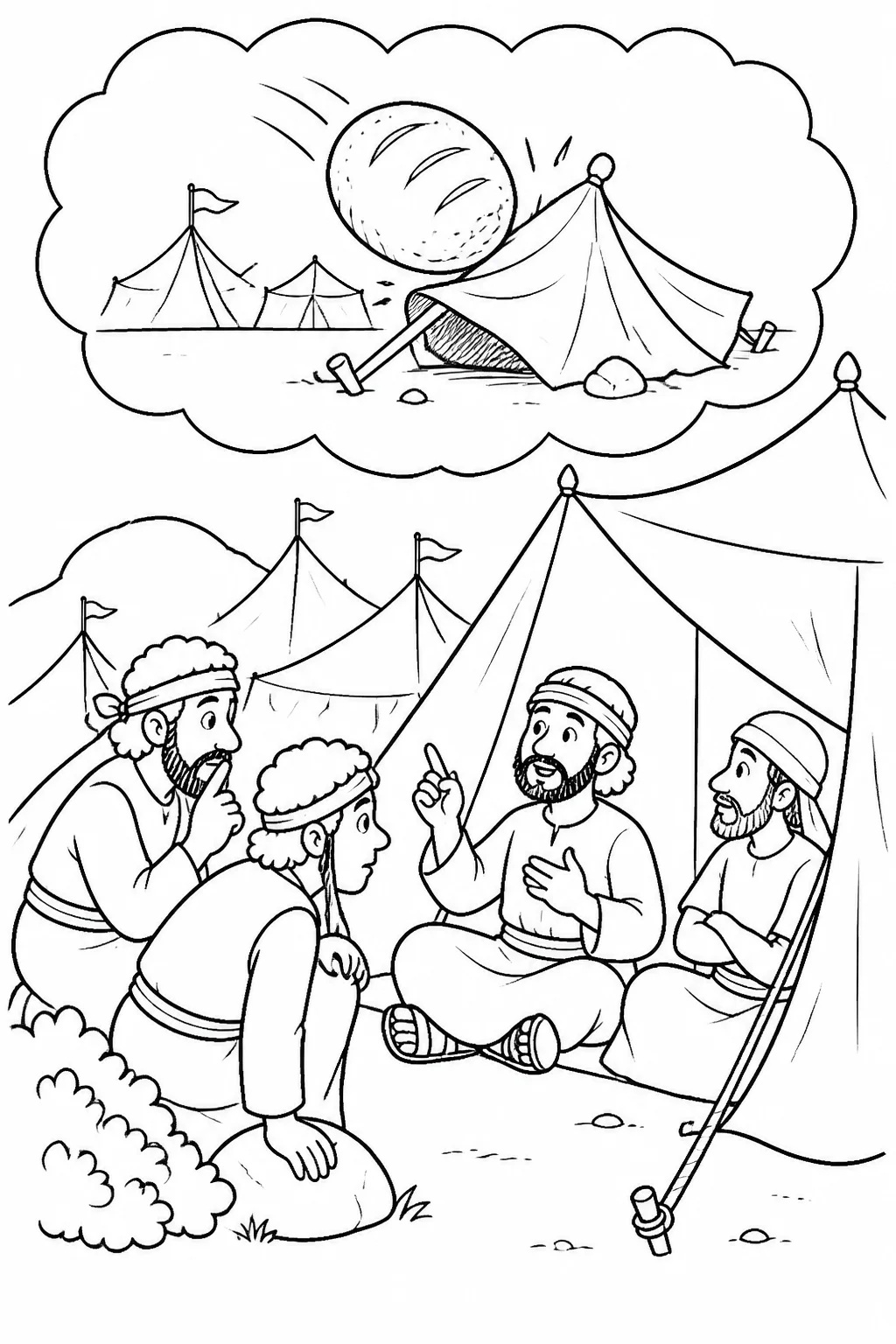
Gideon and Purah listen near a tent at the Midianite camp while a symbolic barley loaf dream overturns a tent.

A Dream Brings Reassurance

Judges 6:11–7:25
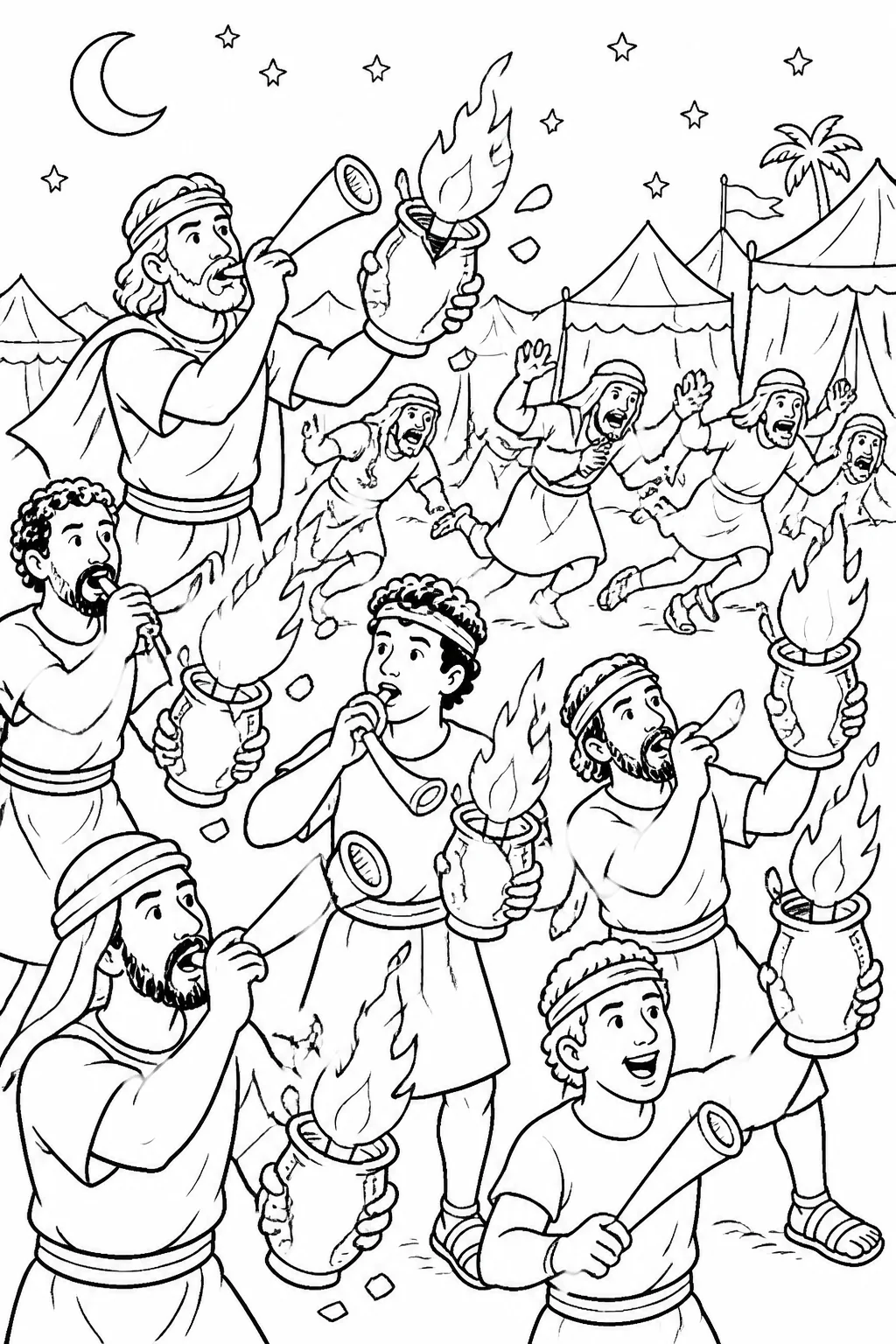
Gideon and the 300 Israelite men surround the Midianite camp at night with trumpets, empty jars, and torches hidden inside the jars.

Light Bursts Around the Camp

Judges 6:11–7:25
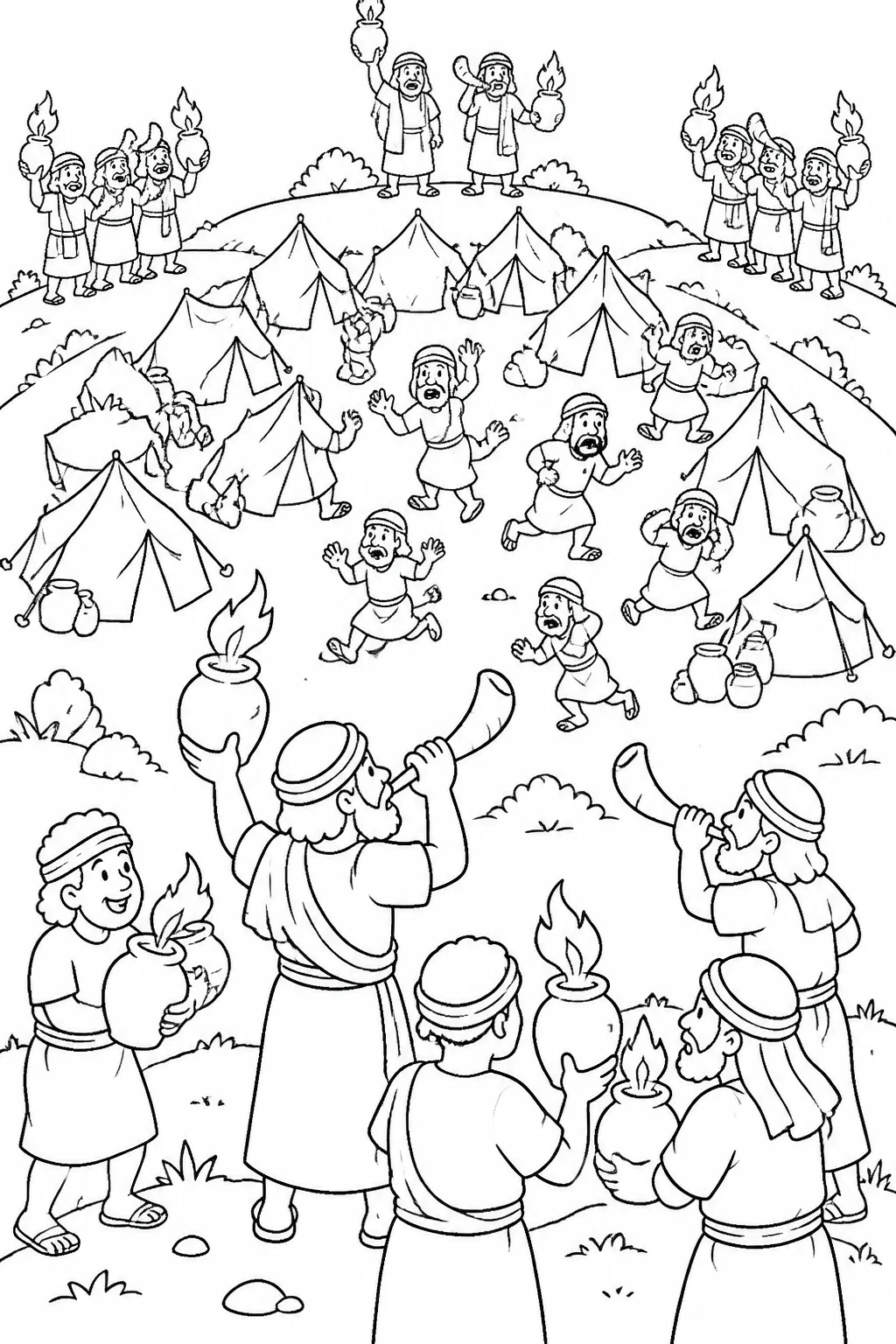
Gideon’s three companies surround the Midianite camp at night with trumpets, jars, and torches as the Midianites flee in confusion.

Surrounded by Light and Sound

Judges 6:11–7:25
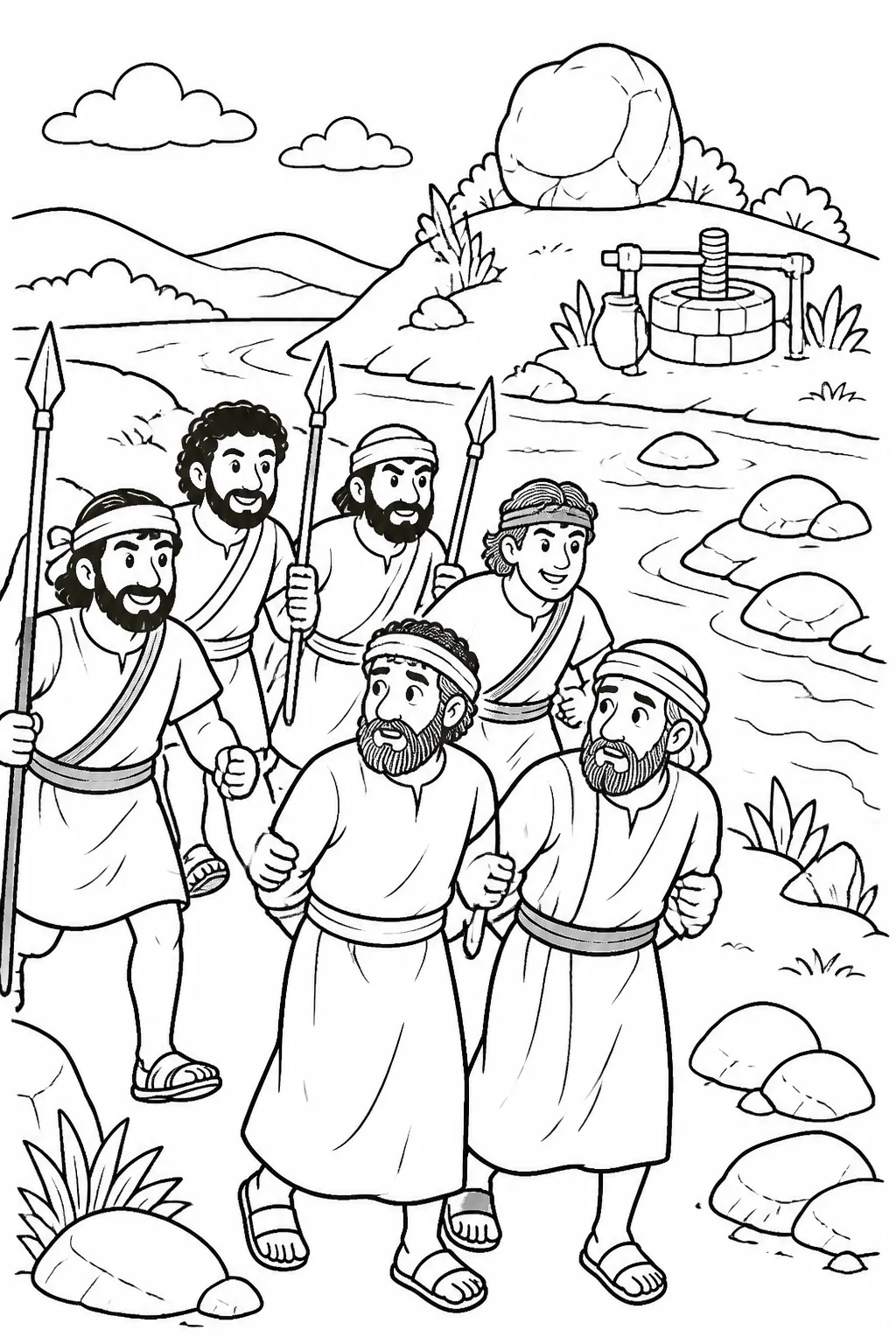
Ephraimite men pursuing Oreb and Zeeb near the waters by Beth-barah and the Jordan, with the rock of Oreb and winepress of Zeeb identified.

Ephraim Seizes the Waters

Judges 6:11–7:25
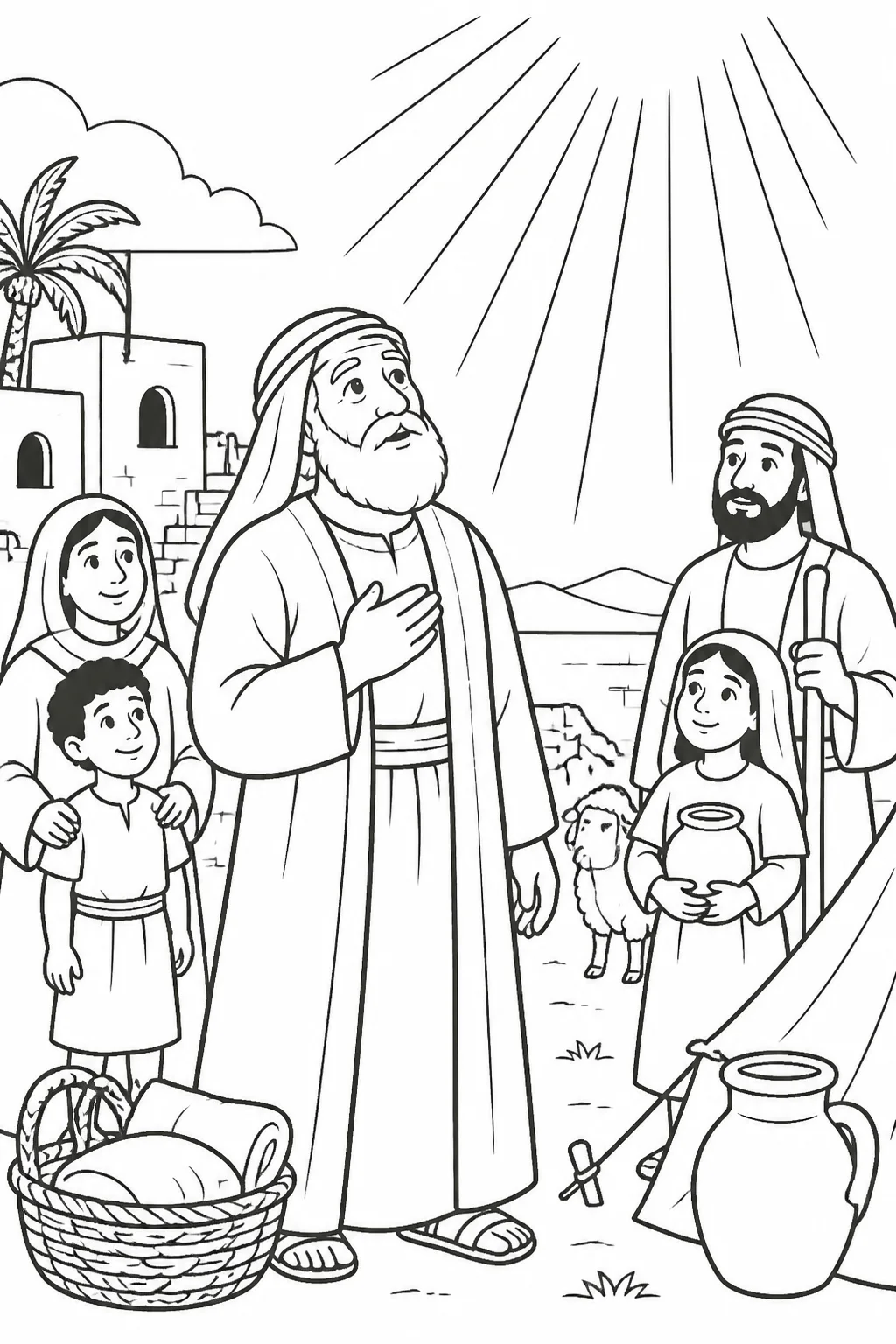
Abram listens near his homeland and household as a gentle radiant light represents the LORD’s presence and God’s call to leave familiar surroundings.

Abram Hears God’s Call

Genesis 12:1-9
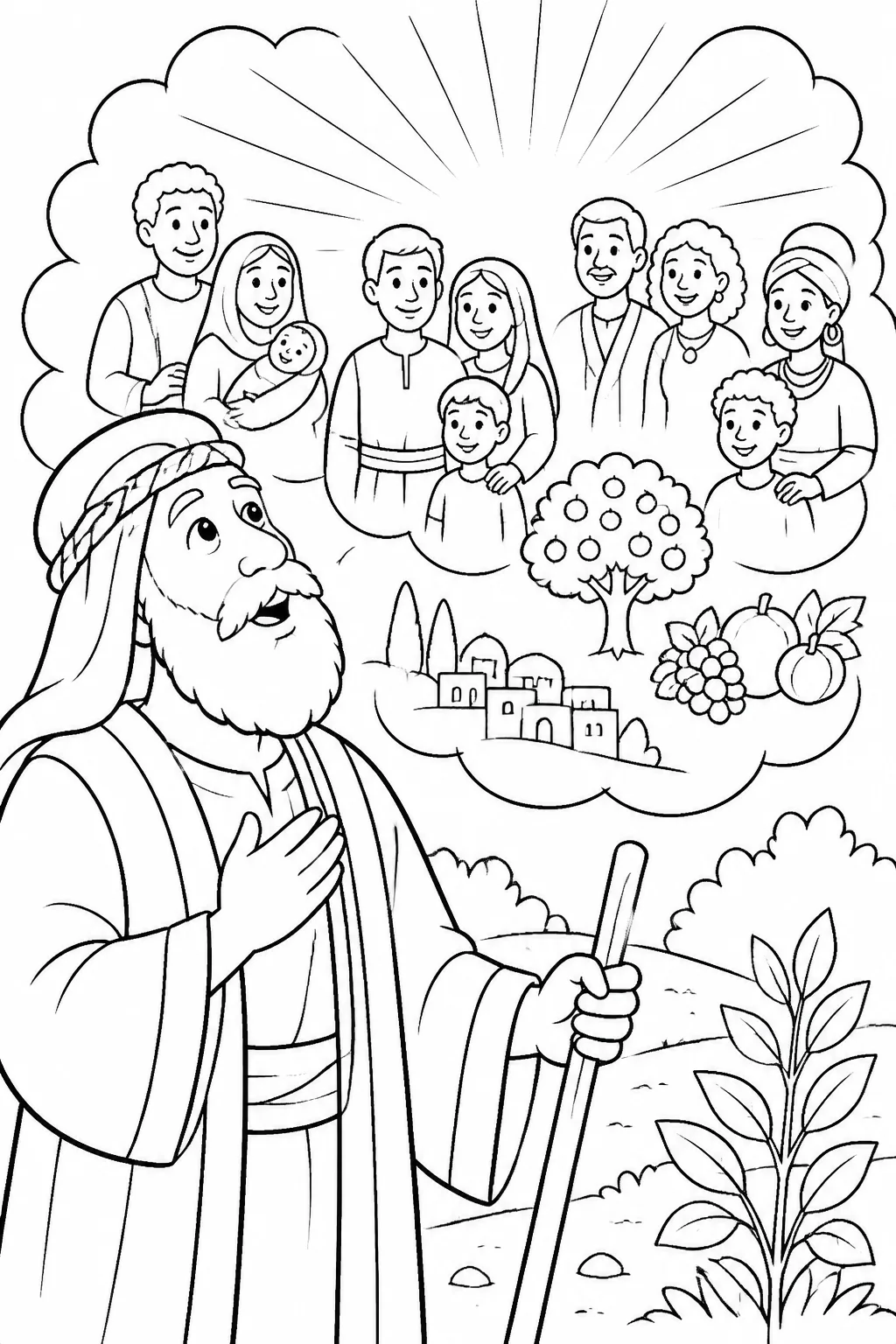
Abram looks upward while gentle light, families of people, flourishing plants, and a growing community represent God’s promises to bless him and all families of the earth.

God Promises to Bless Abram

Genesis 12:1-9
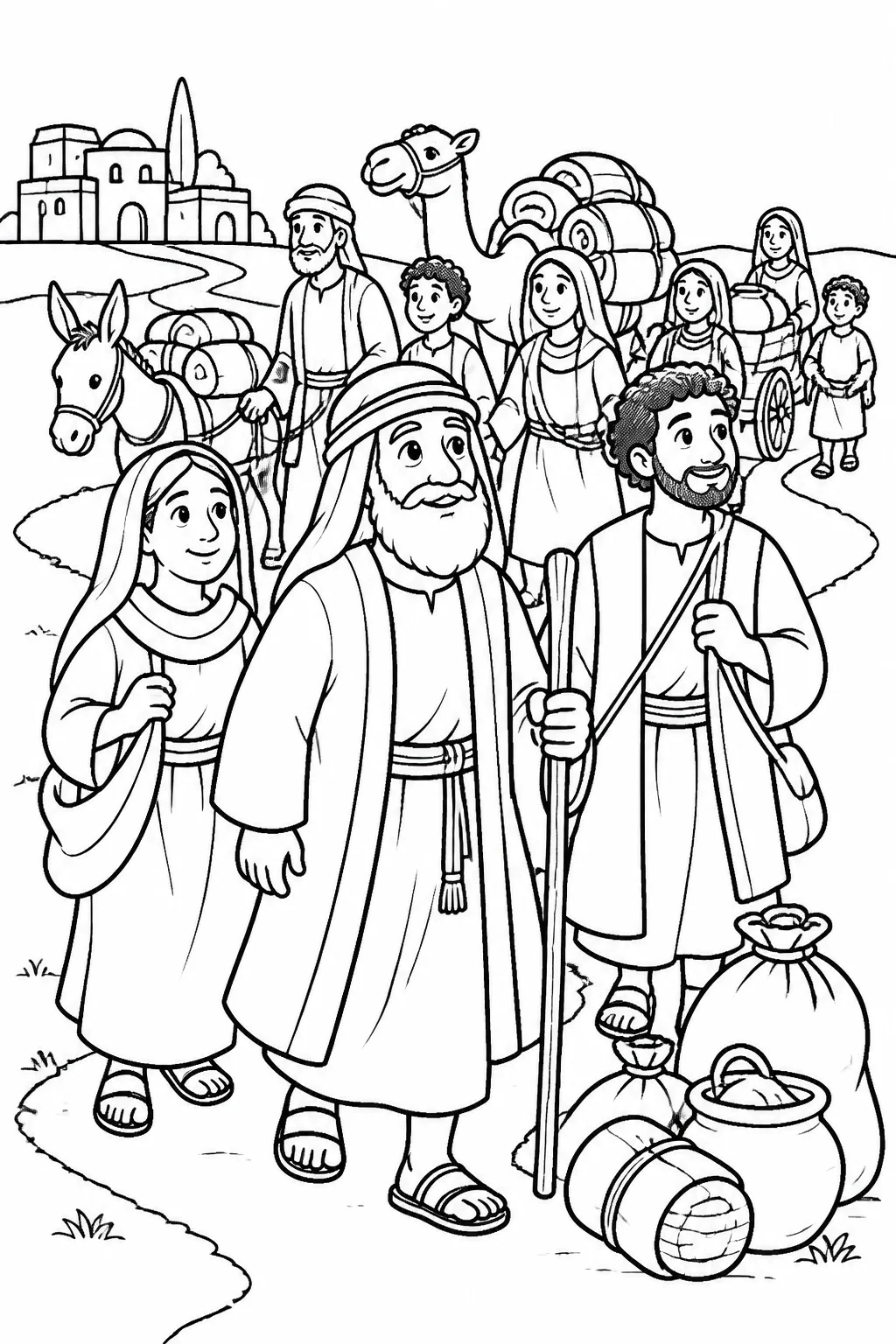
Abram, Sarai, Lot, household members, and possessions setting out from Haran along a simple path toward Canaan.

Abram’s Household Sets Out

Genesis 12:1-9
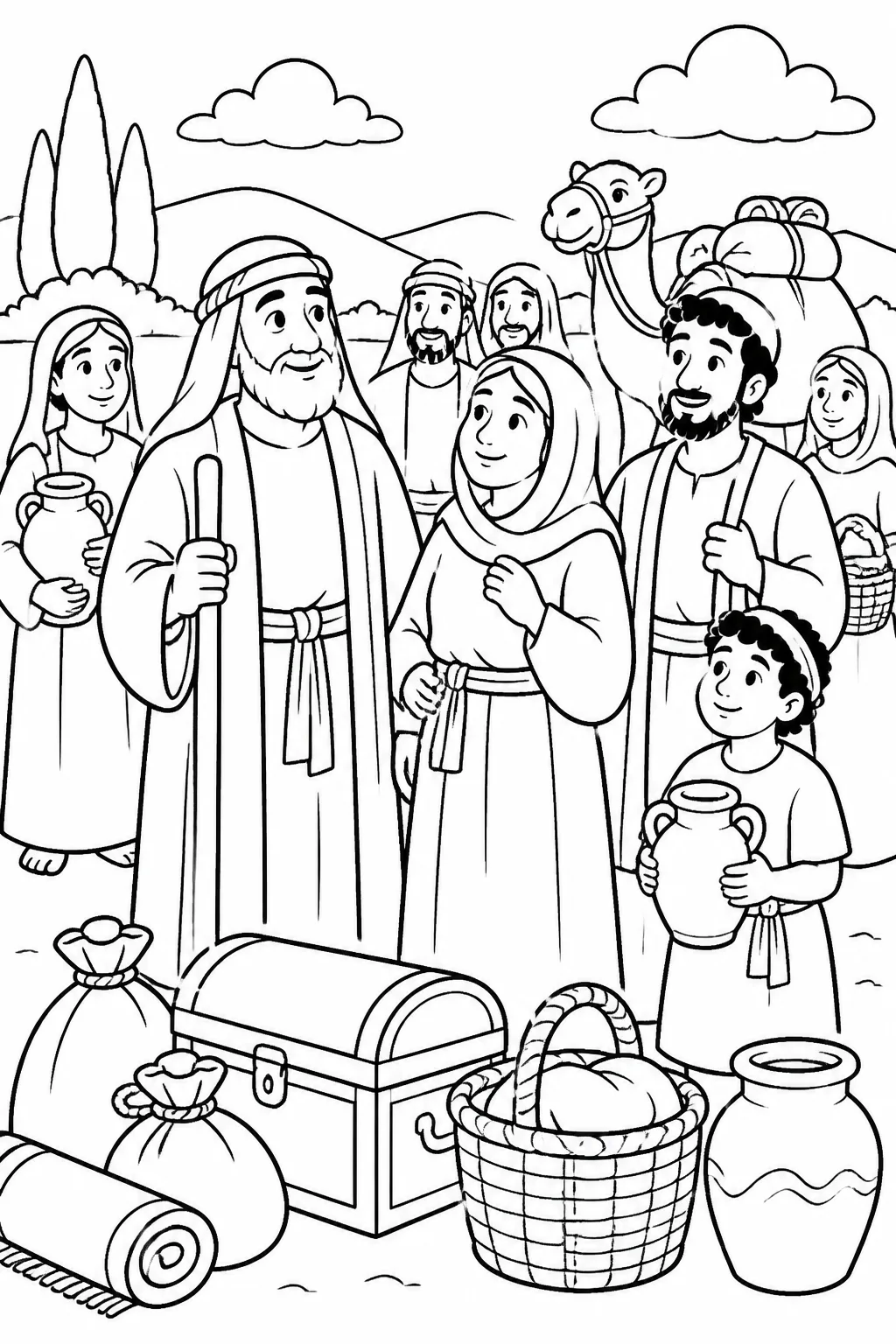
Abram, Sarai, Lot, and people from Abram’s household stand among possessions in the Canaan landscape after arriving from Haran.

Abram Arrives in Canaan

Genesis 12:1-9
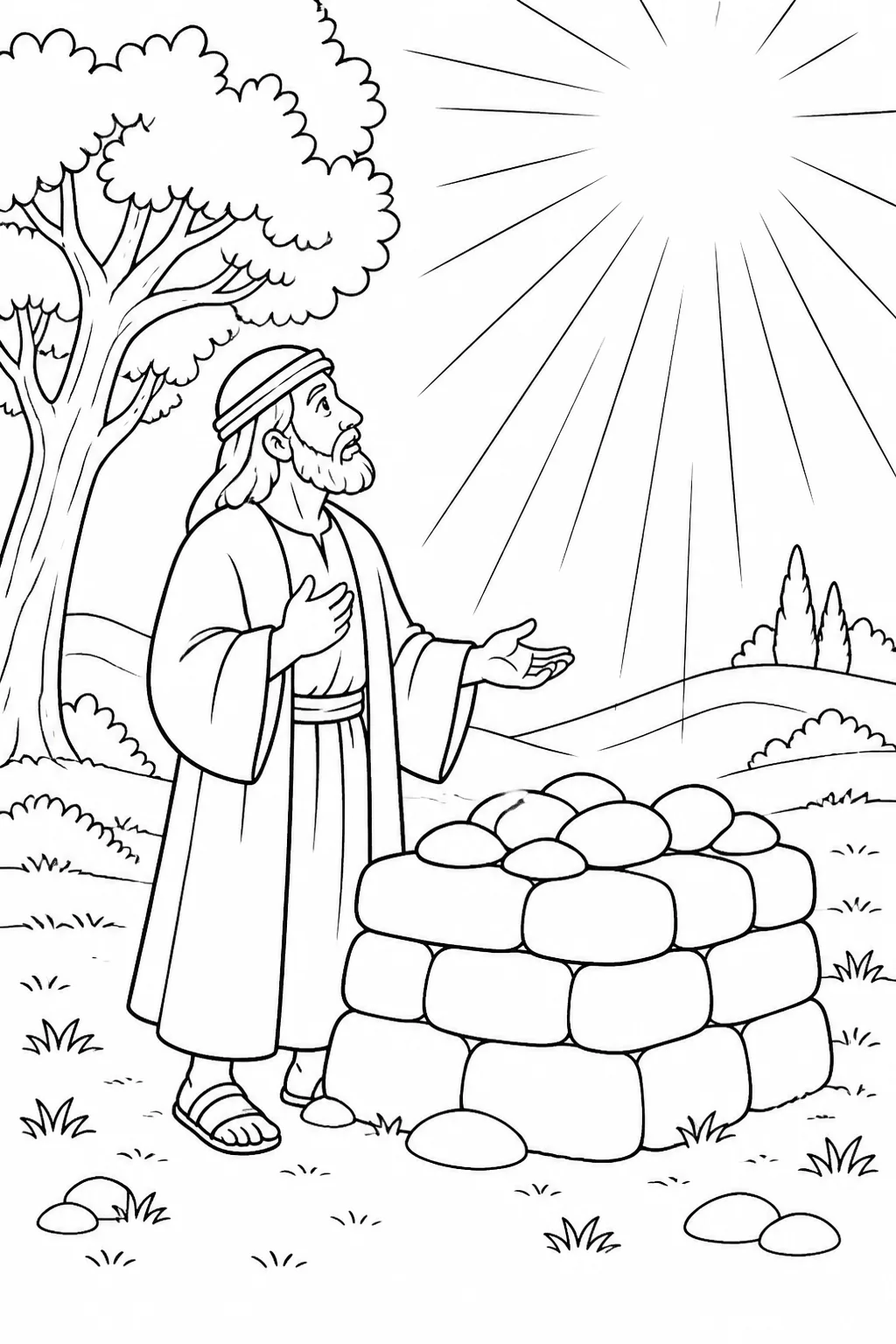
Abram beside an altar at Shechem near the oak of Moreh as a radiant light represents the LORD’s appearance and promise about the land.

God’s Promise at Shechem

Genesis 12:1-9
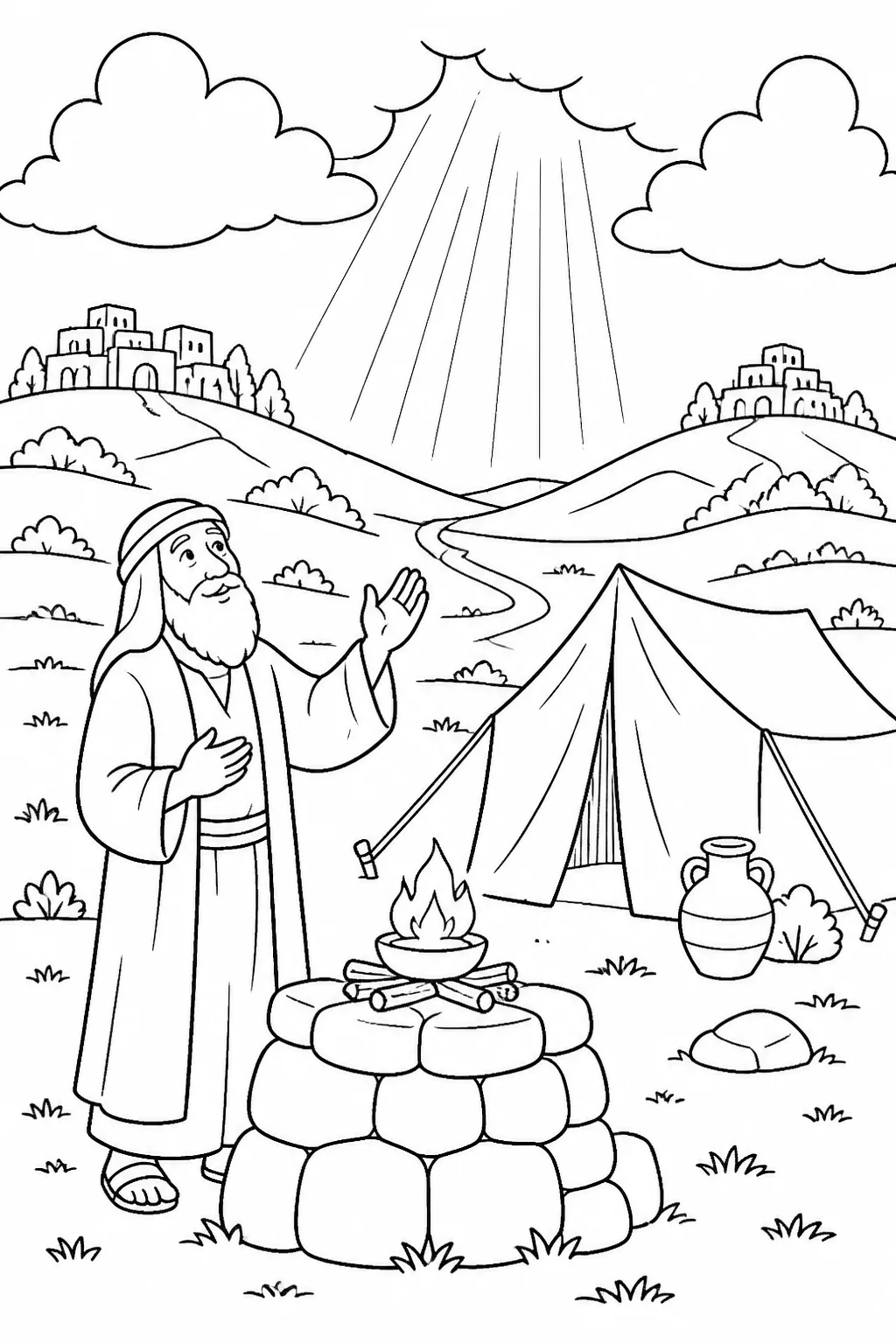
Abram beside an altar near his tent in the hill country east of Bethel, with Bethel west, Ai east, and a gentle radiant representation of the LORD’s presence above.

Abram’s Tent Between Bethel and Ai

Genesis 12:1-9
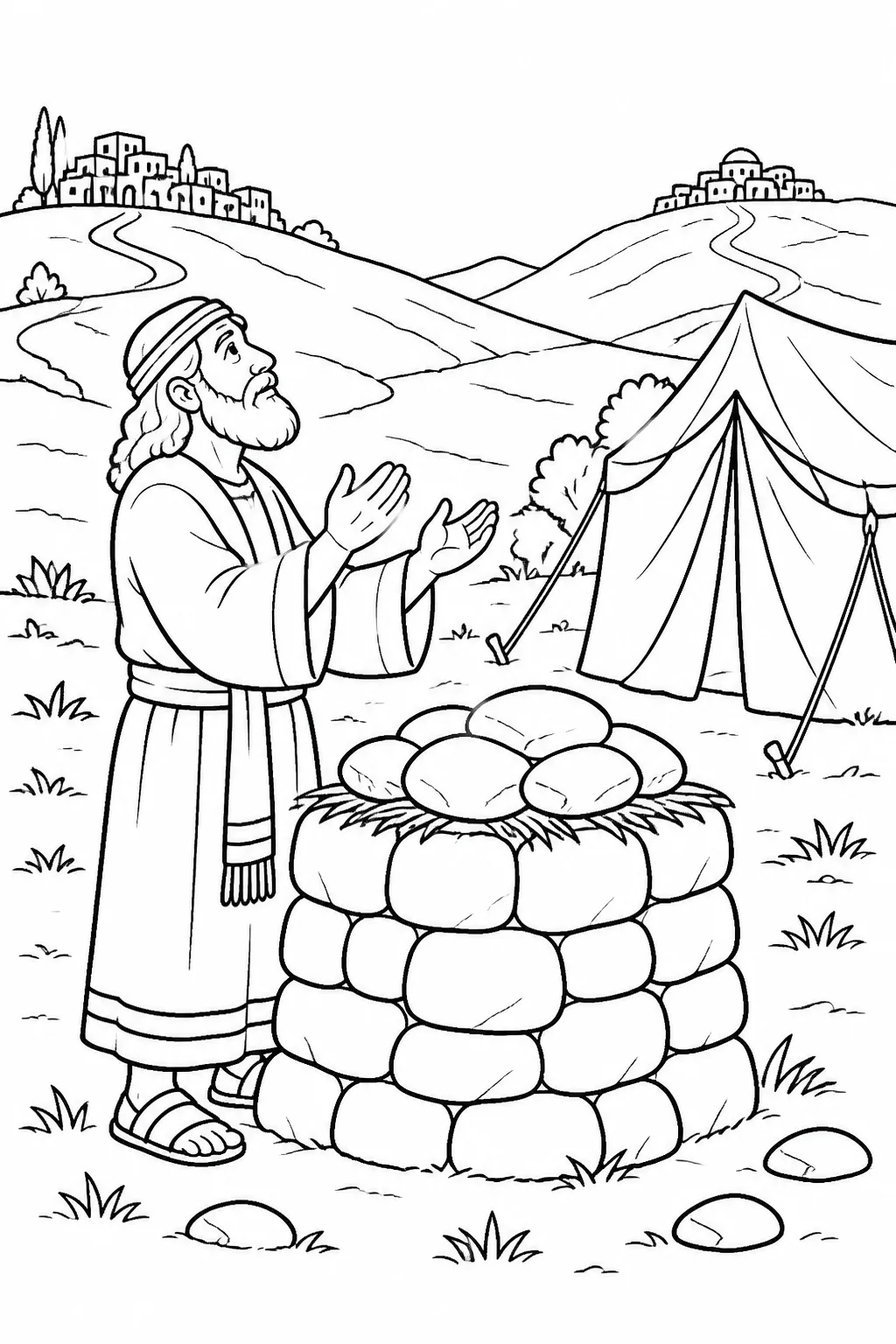
Abram beside an altar near his tent in the hill country east of Bethel, calling on the name of the LORD, with Bethel west and Ai east.

Abram Calls on the LORD

Genesis 12:1-9
Abram continuing along an open path toward the Negev, with the journey intentionally unfinished.

Abram Continues Toward the Negev

Genesis 12:1-9
Sarah smiling with thankful joy as a gentle symbolic light represents the LORD’s faithfulness after Isaac’s birth.

God Keeps His Word

Genesis 21:1-7

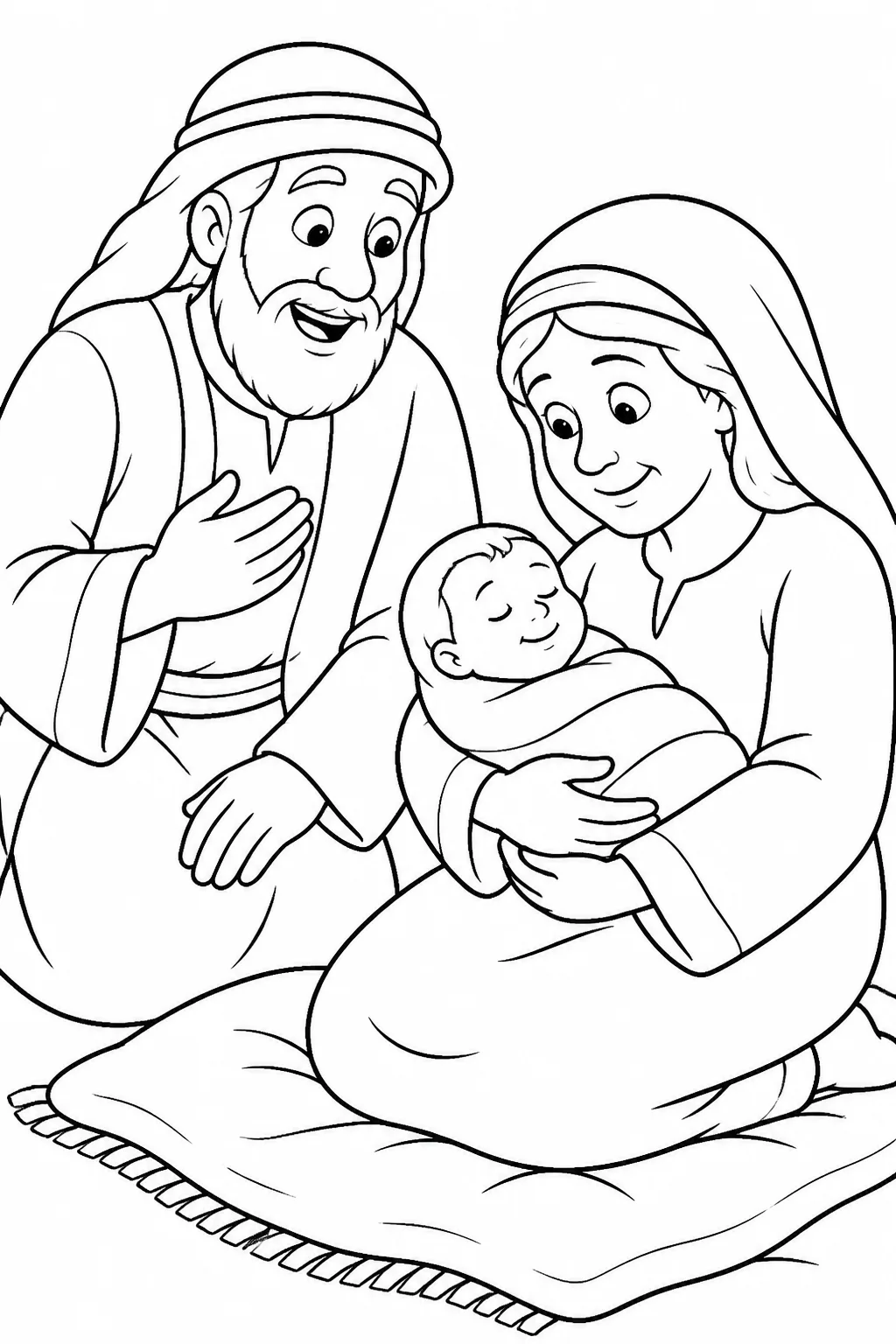
Sarah holds newborn Isaac while Abraham looks on with wonder, showing the joyful birth of Isaac at the set time God had spoken.

Isaac Is Born

Genesis 21:1-7

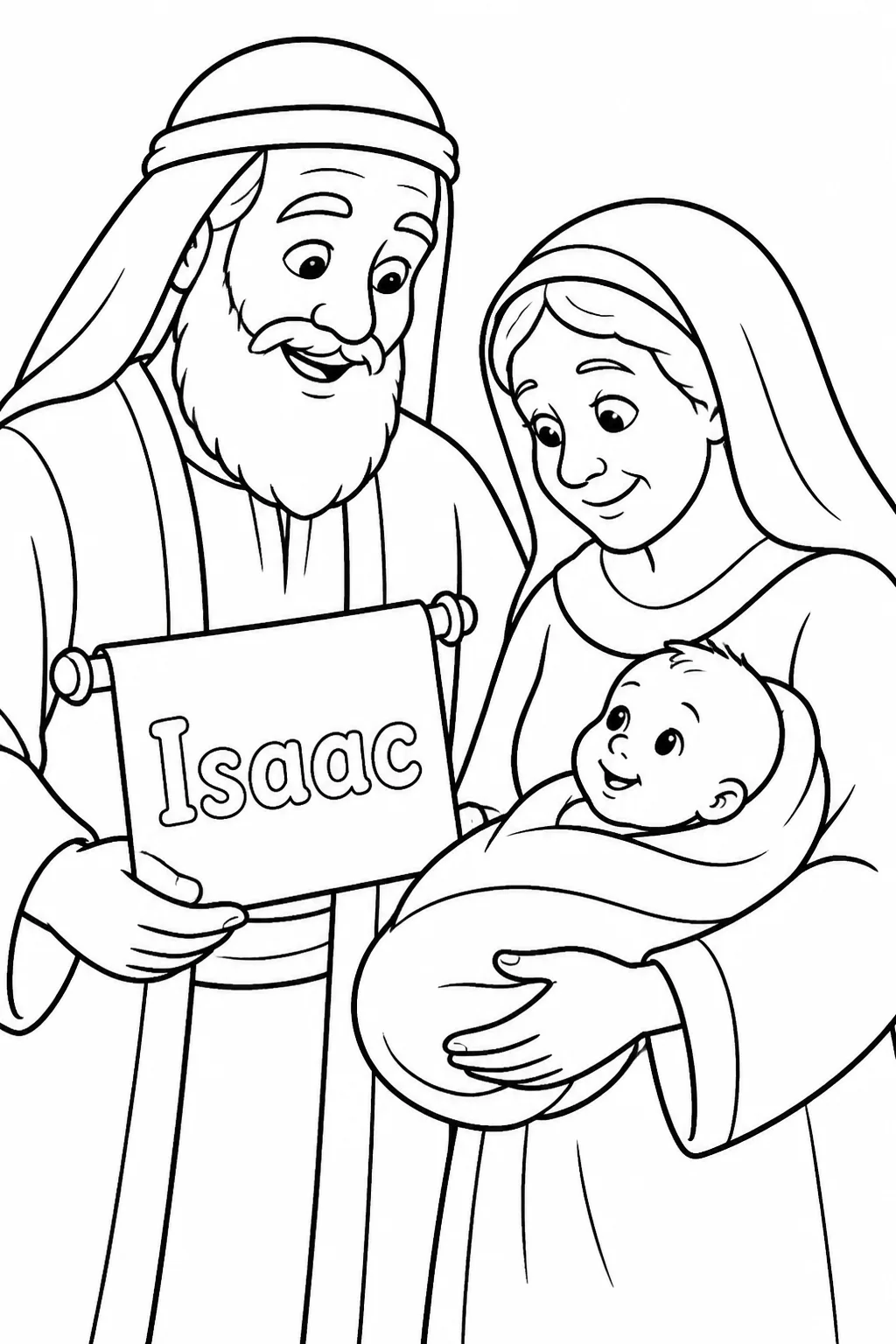
Abraham and Sarah look lovingly at their newborn son Isaac beside a simple marker reading “Isaac.”

Abraham Names His Son Isaac

Genesis 21:1-7
Abraham caring for infant Isaac beside a simple scroll or calendar marked “eight days,” representing Abraham’s obedience to God’s command.

Abraham Obeys God’s Command

Genesis 21:1-7
Sarah joyfully holds Isaac while Abraham stands beside her, reflecting Genesis 21:5-7 and Sarah’s wonder at Isaac’s birth in Abraham’s old age.

Sarah’s Joyful Wonder

Genesis 21:1-7

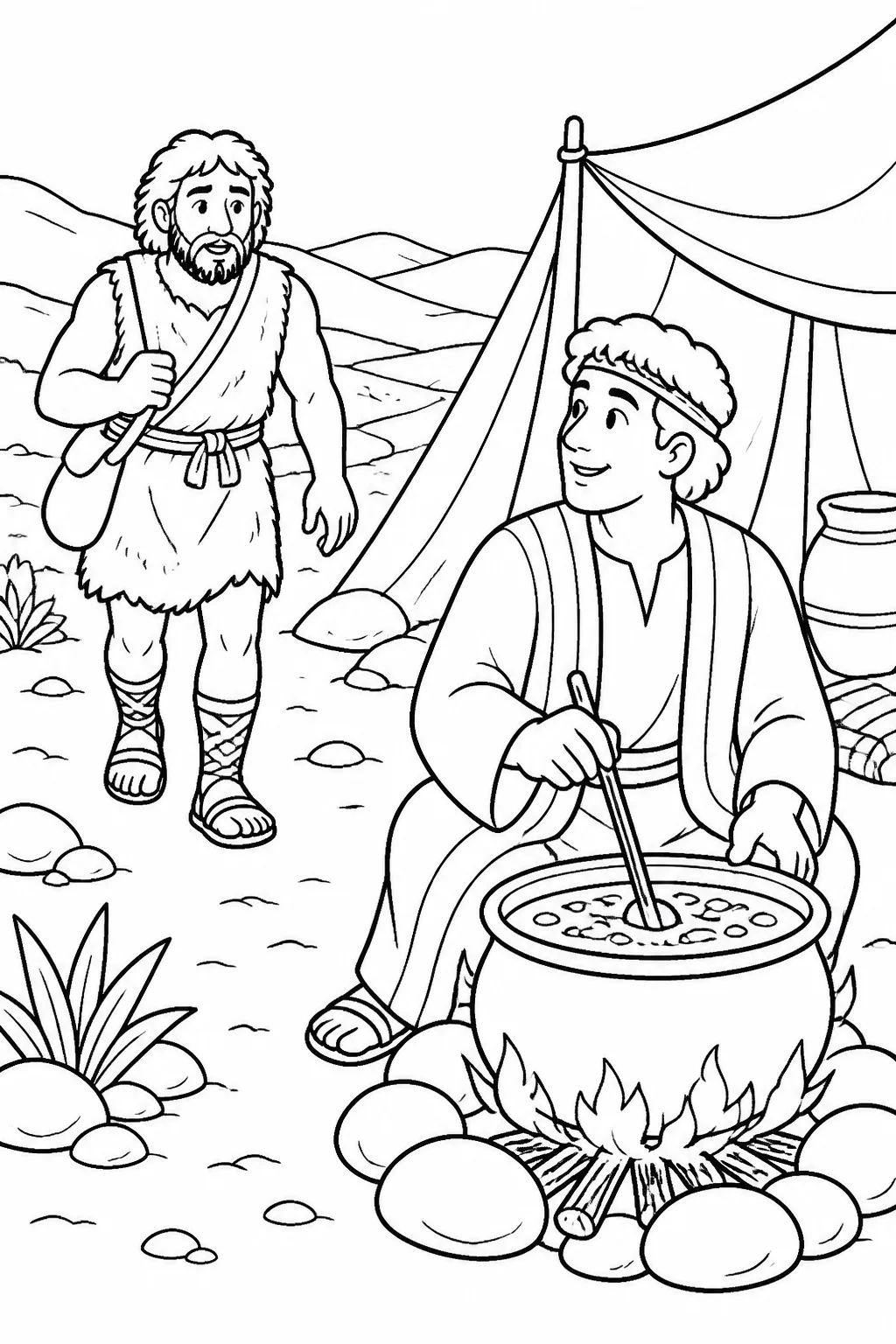
Esau returns exhausted from the open country as Jacob prepares red or lentil stew near the tents, based on Genesis 25:29–34.

Esau Returns Hungry

Genesis 25:19-34

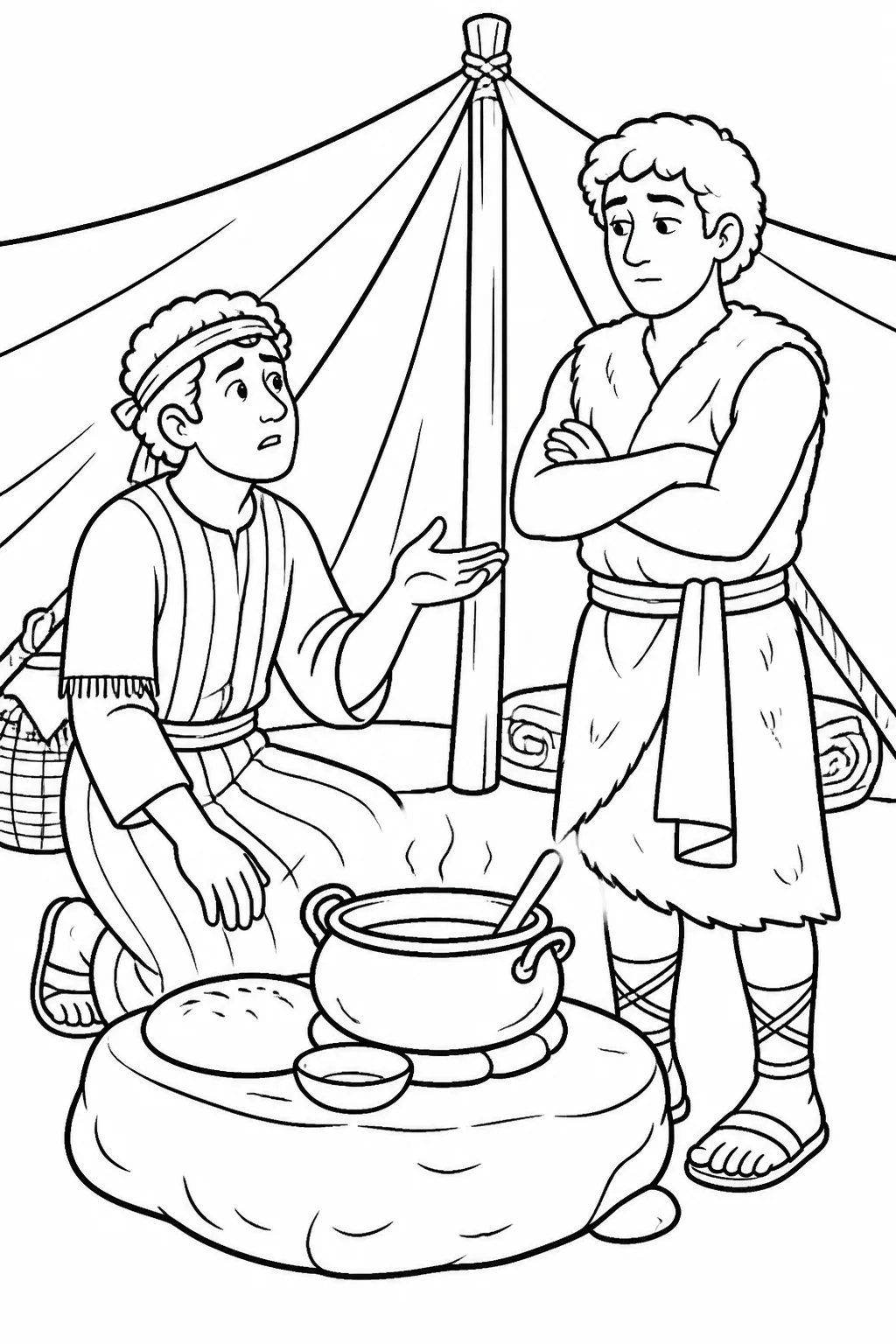
Jacob and Esau face one another beside stew and bread in a tent setting as Jacob asks Esau to sell his birthright before receiving the meal.

A Choice About the Birthright

Genesis 25:19-34
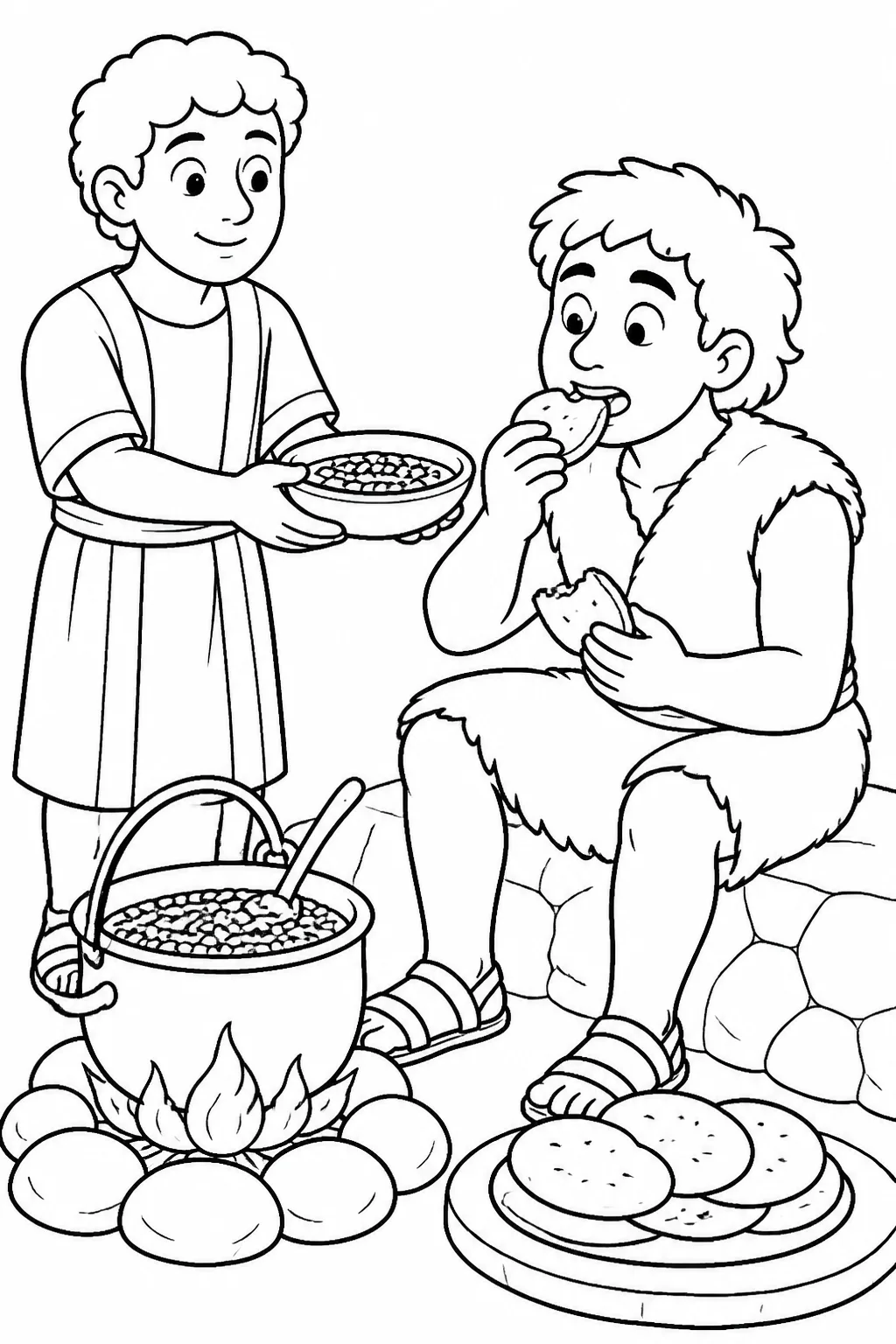
Jacob gives Esau bread and a bowl of lentil stew beside a cooking area after Esau sells his birthright.

The Meal Is Given

Genesis 25:19-34

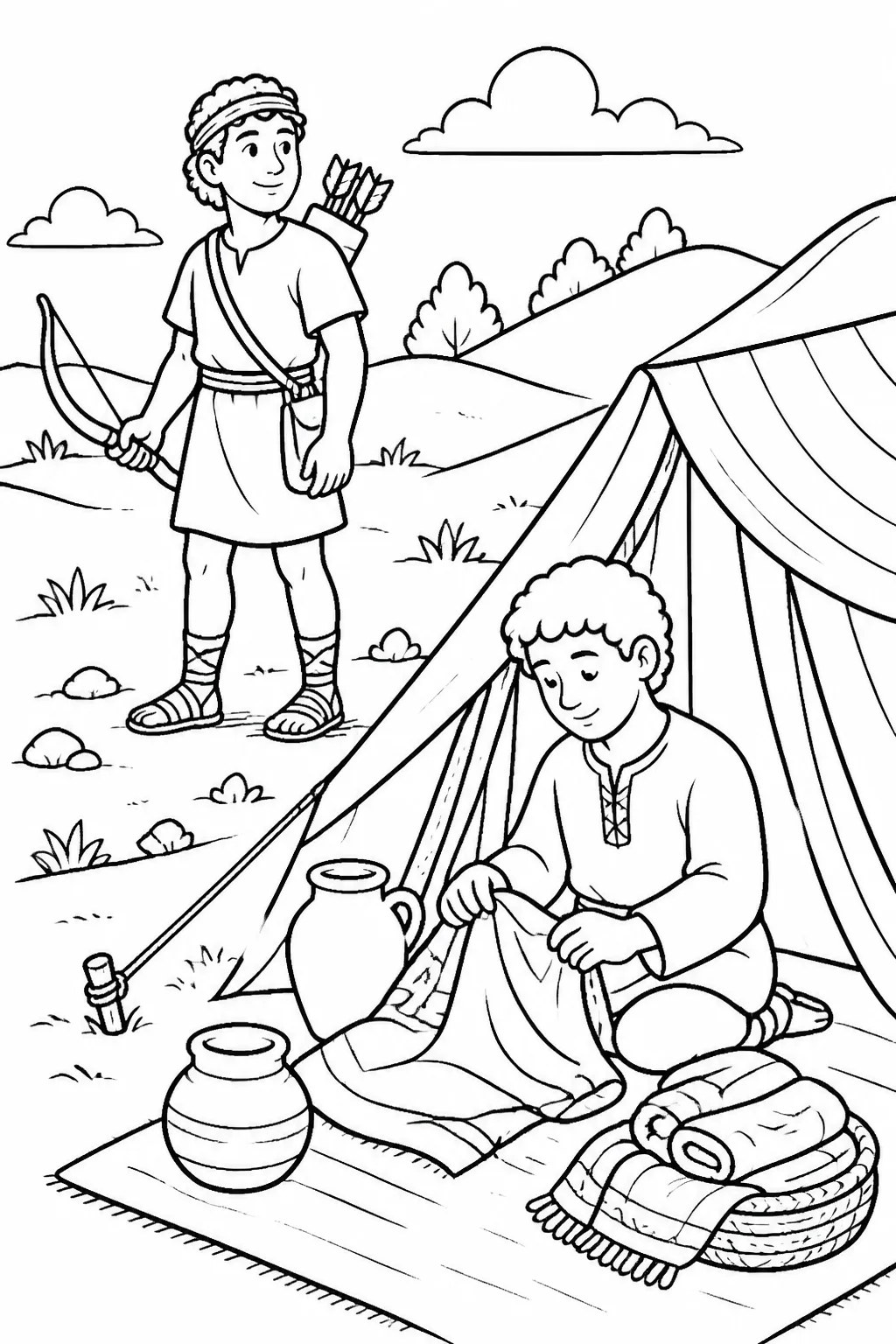
Esau in the open country with hunting equipment and Jacob among the tents, representing their different ways of life in Genesis 25:27-28.

Two Brothers, Different Ways

Genesis 25:19-34
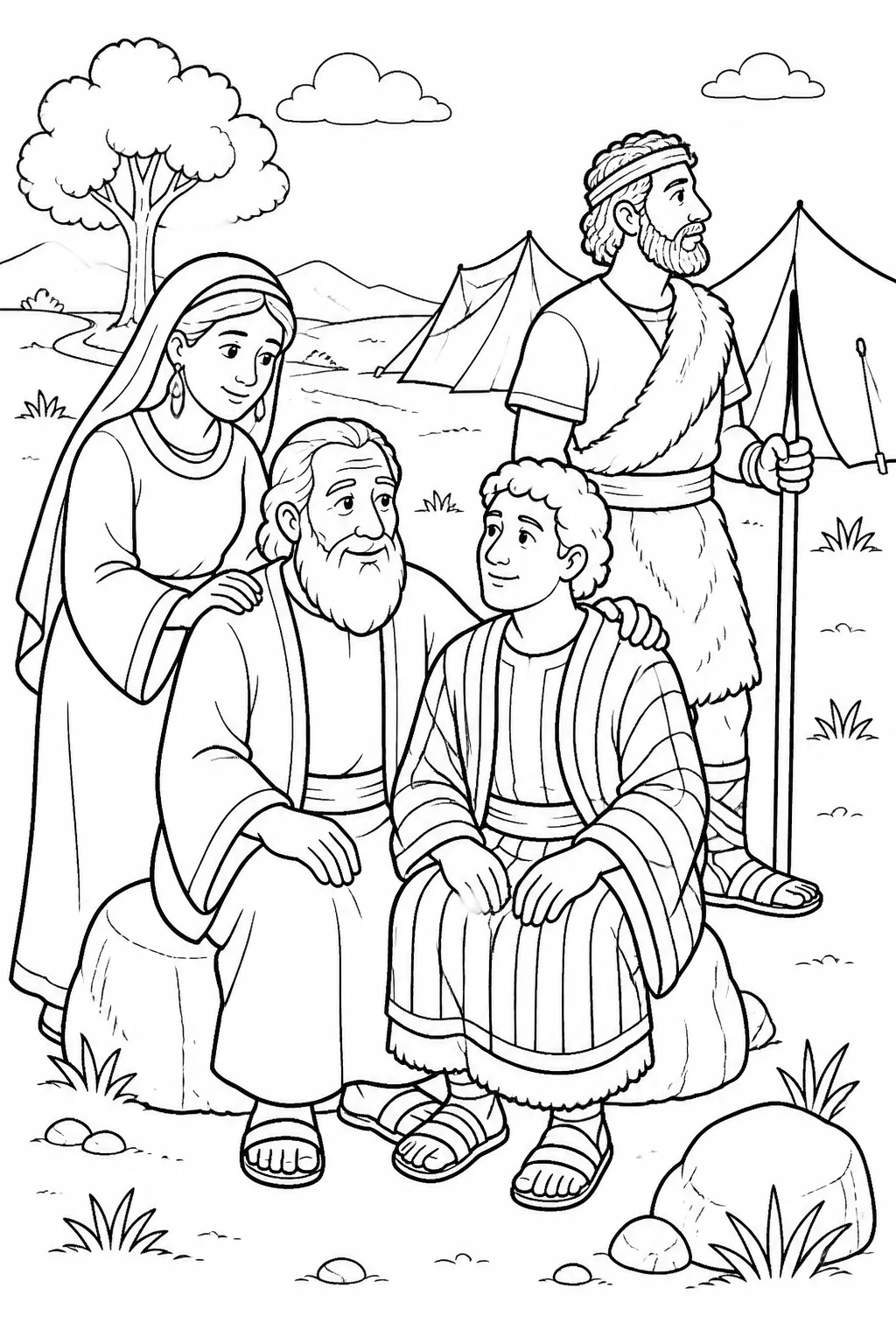
Isaac and Rebekah with their grown sons Esau near the open country and Jacob near the tents, illustrating Genesis 25:27-28.

A Family With Different Affections

Genesis 25:19-34
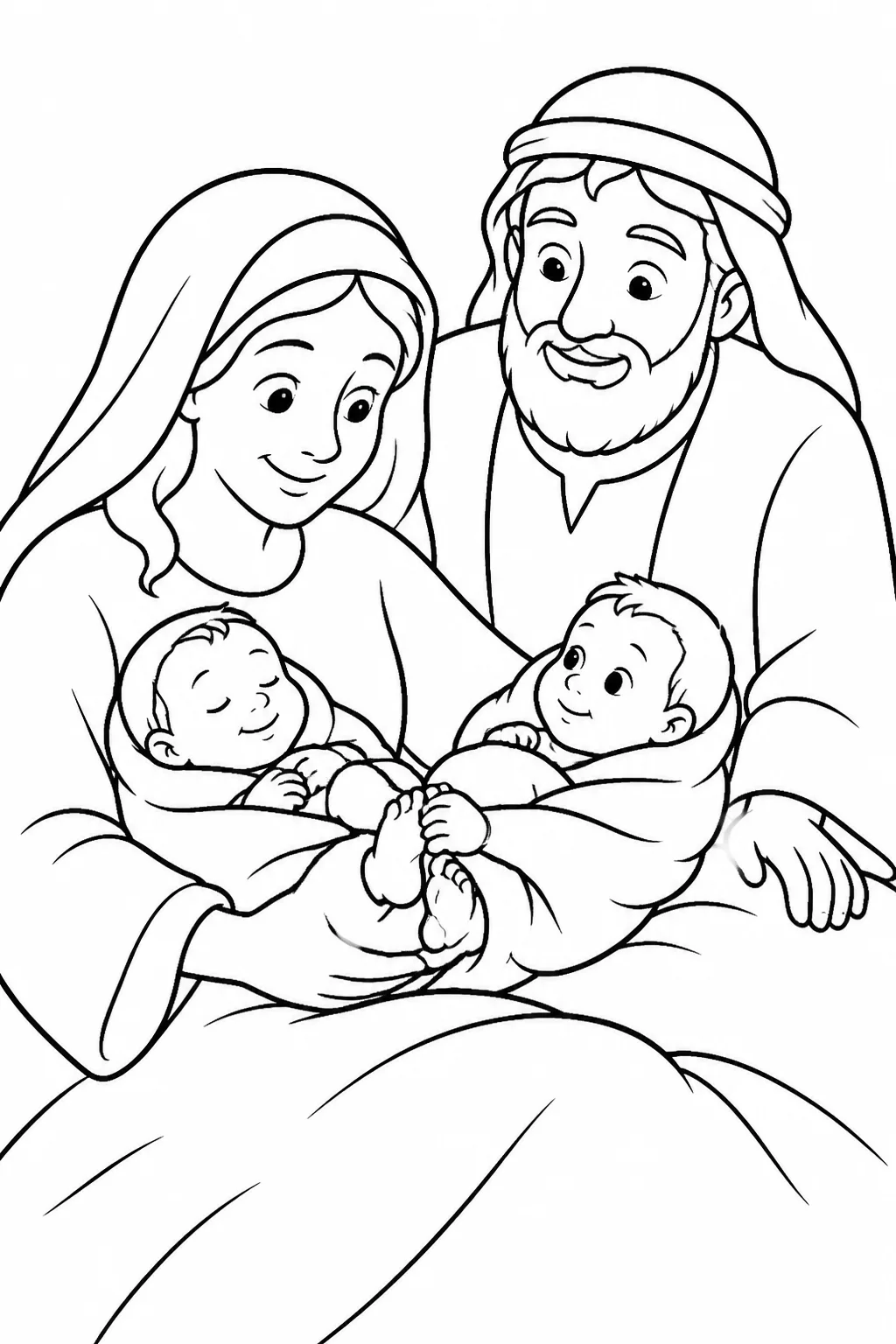
Rebekah with newborn twins Esau and Jacob, with Jacob holding Esau’s heel and Isaac nearby, depicting Genesis 25:19-26.

Esau and Jacob Are Born

Genesis 25:19-34
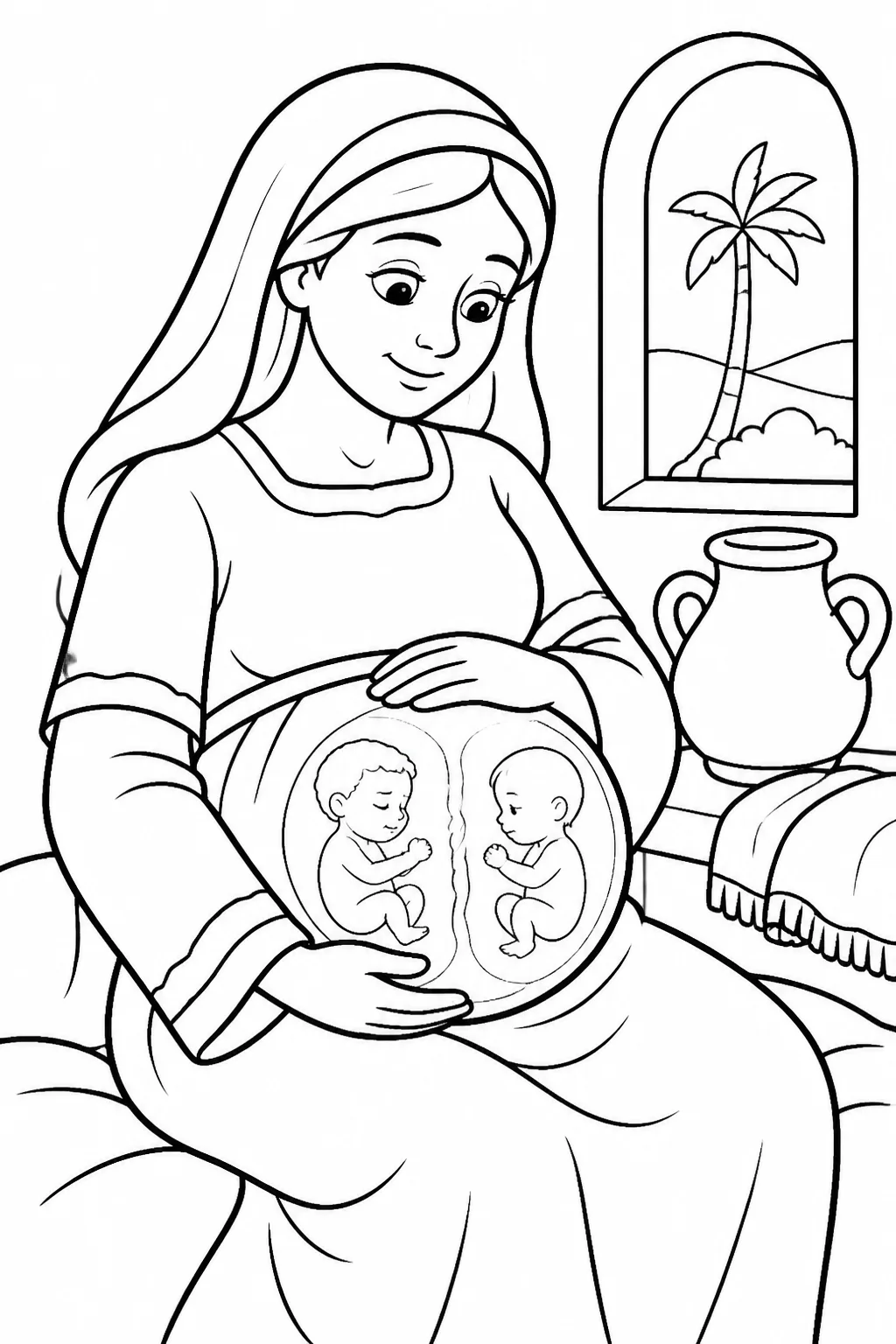
Rebekah thoughtfully during pregnancy, with simple symbolic imagery suggesting twins and no anatomical detail.

Rebekah and the Twins

Genesis 25:19-34
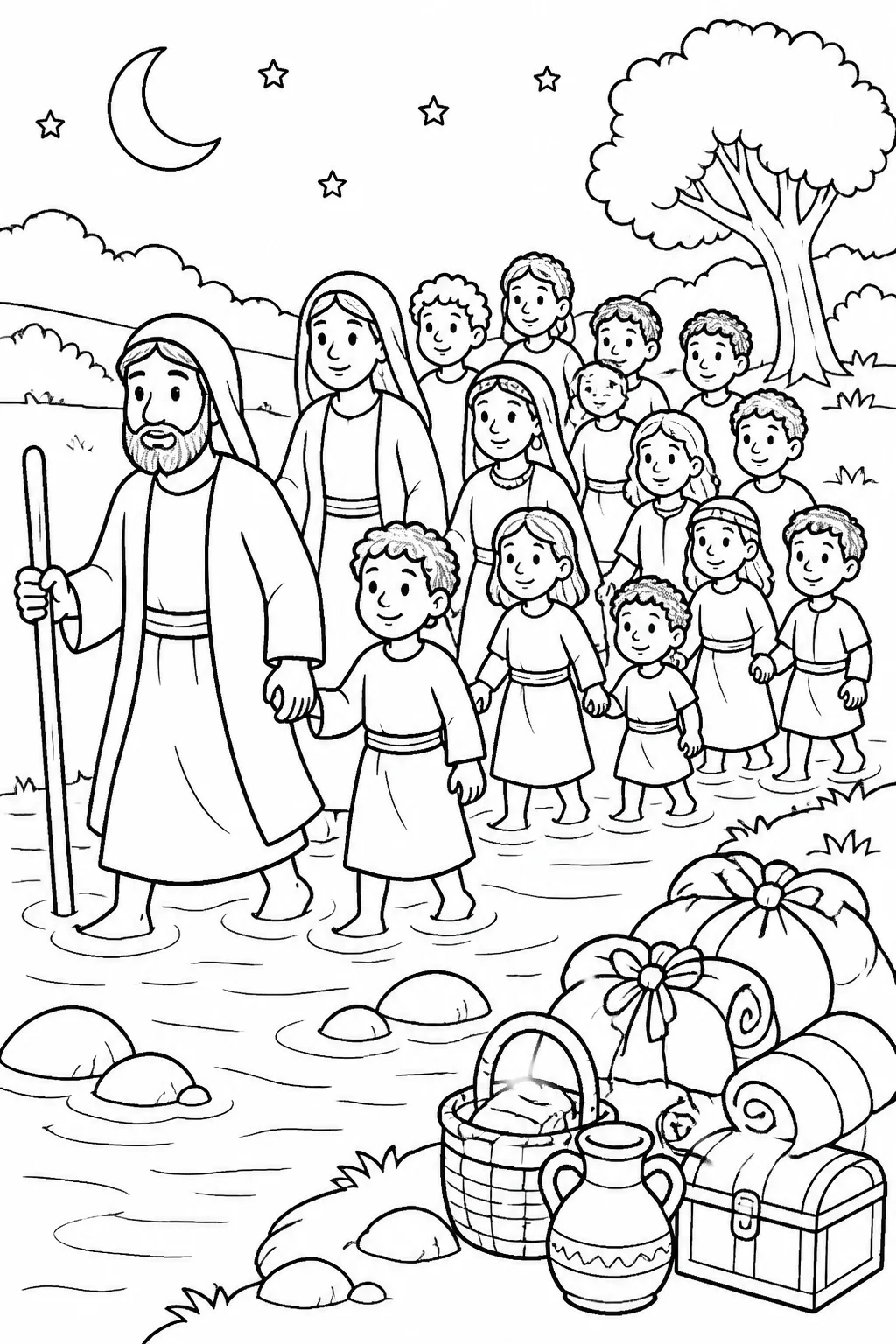
Jacob leads his two wives, two female servants, and eleven children across the Jabbok stream at night, with his possessions nearby.

Crossing the Jabbok at Night

Genesis 32:22-32
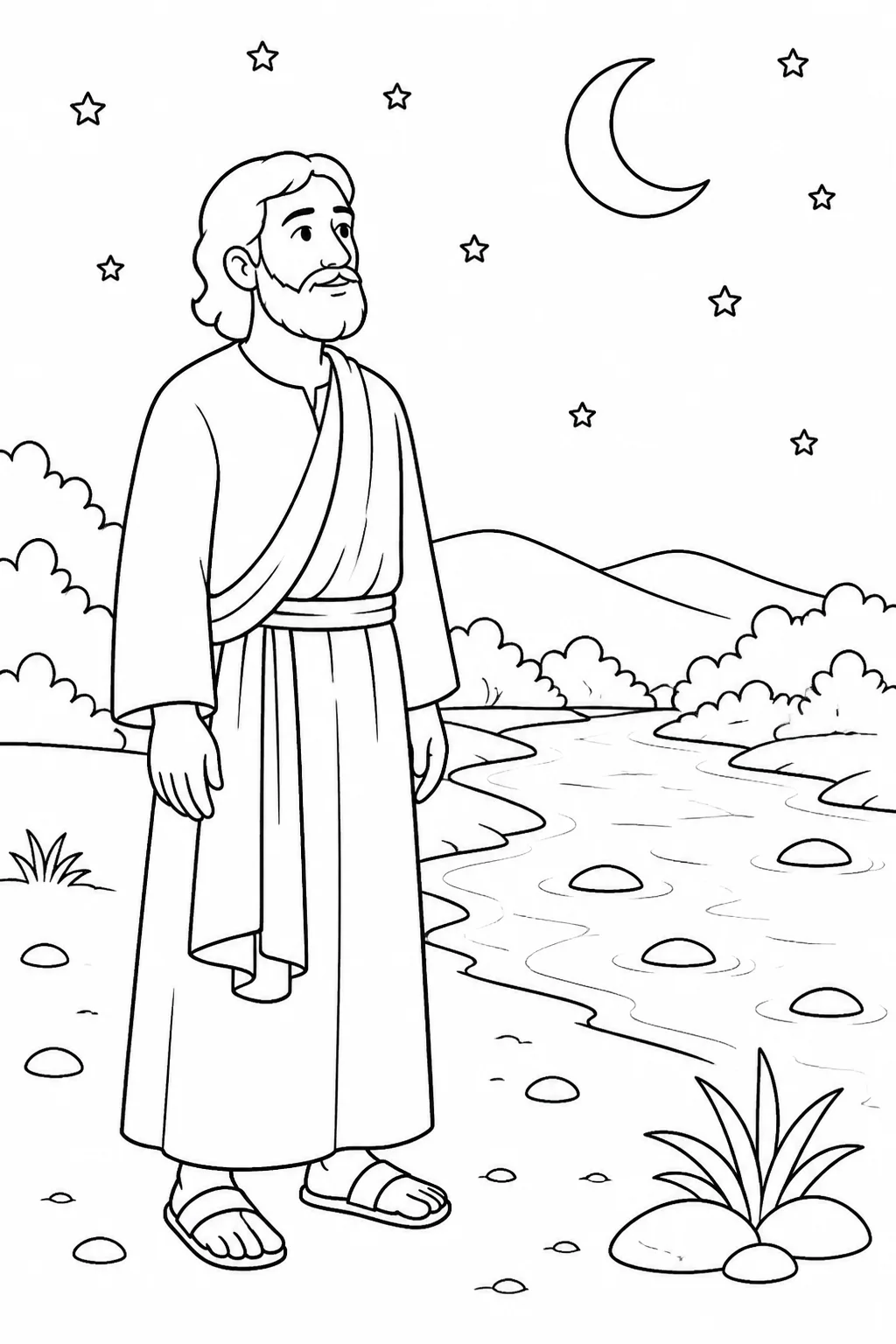
Jacob standing alone near the Jabbok area beneath a night sky, before the encounter described in Genesis 32.

Jacob Alone

Genesis 32:22-32

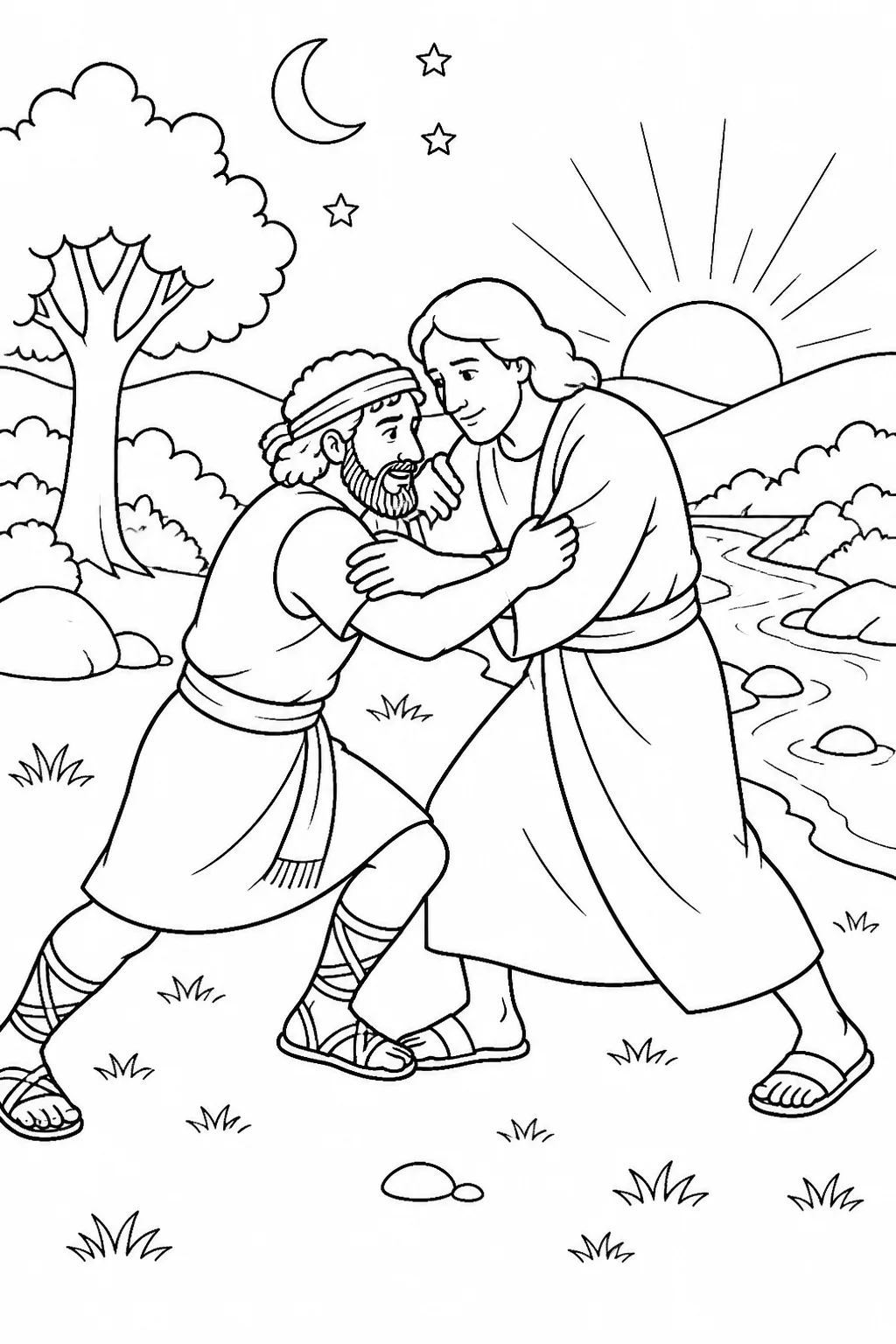
Jacob and an unnamed man in a respectful, non-graphic wrestling pose near the Jabbok area as night changes toward dawn.

The Nightlong Struggle

Genesis 32:22-32
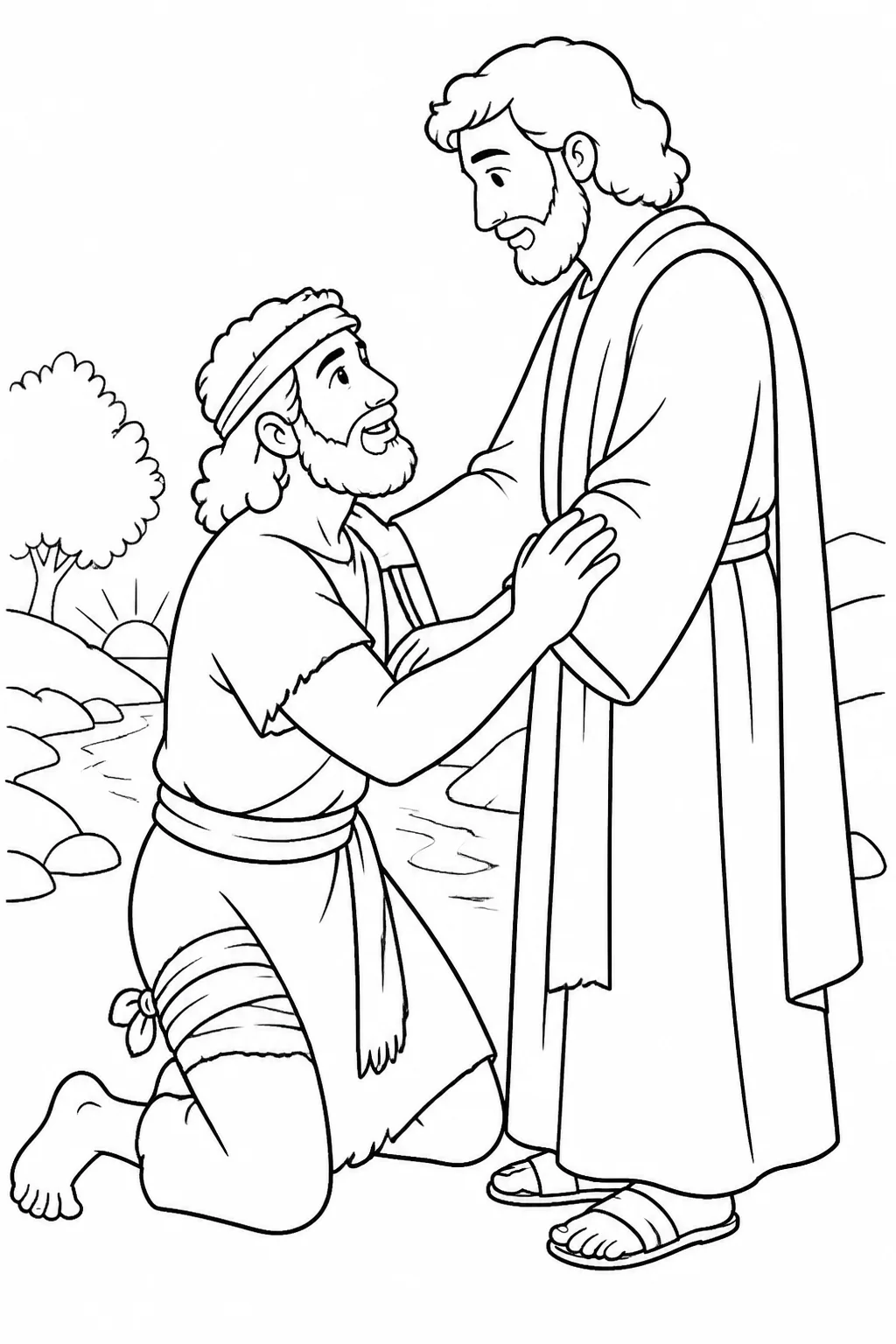
Jacob holds on to an unnamed man at daybreak and asks for a blessing before receiving the name Israel; Jacob’s hip is injured.

A Blessing and a New Name

Genesis 32:22-32
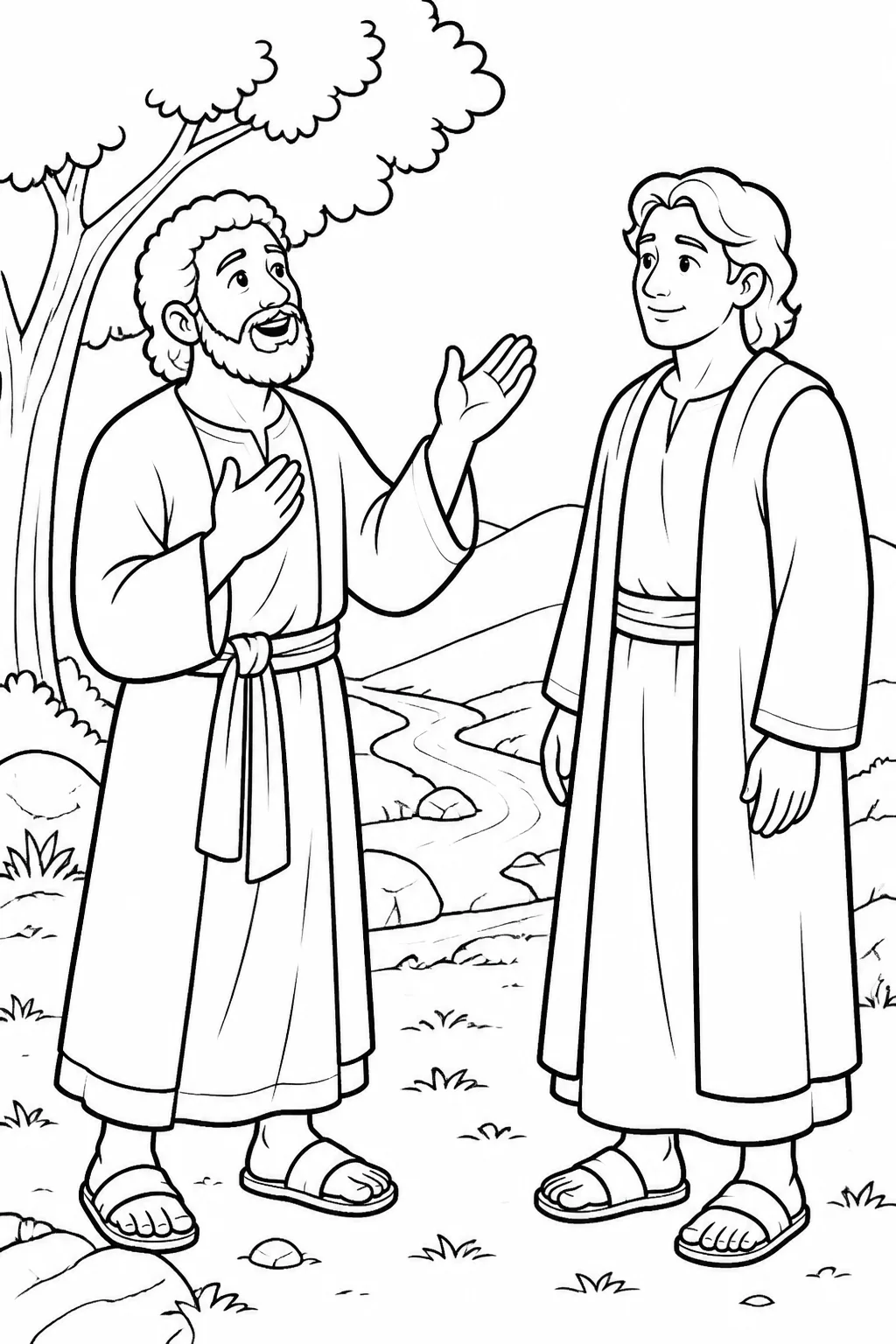
Jacob and the unnamed man at the place Jacob names Peniel, with a simple place marker and no depiction of God.

Jacob Names the Place Peniel

Genesis 32:22-32
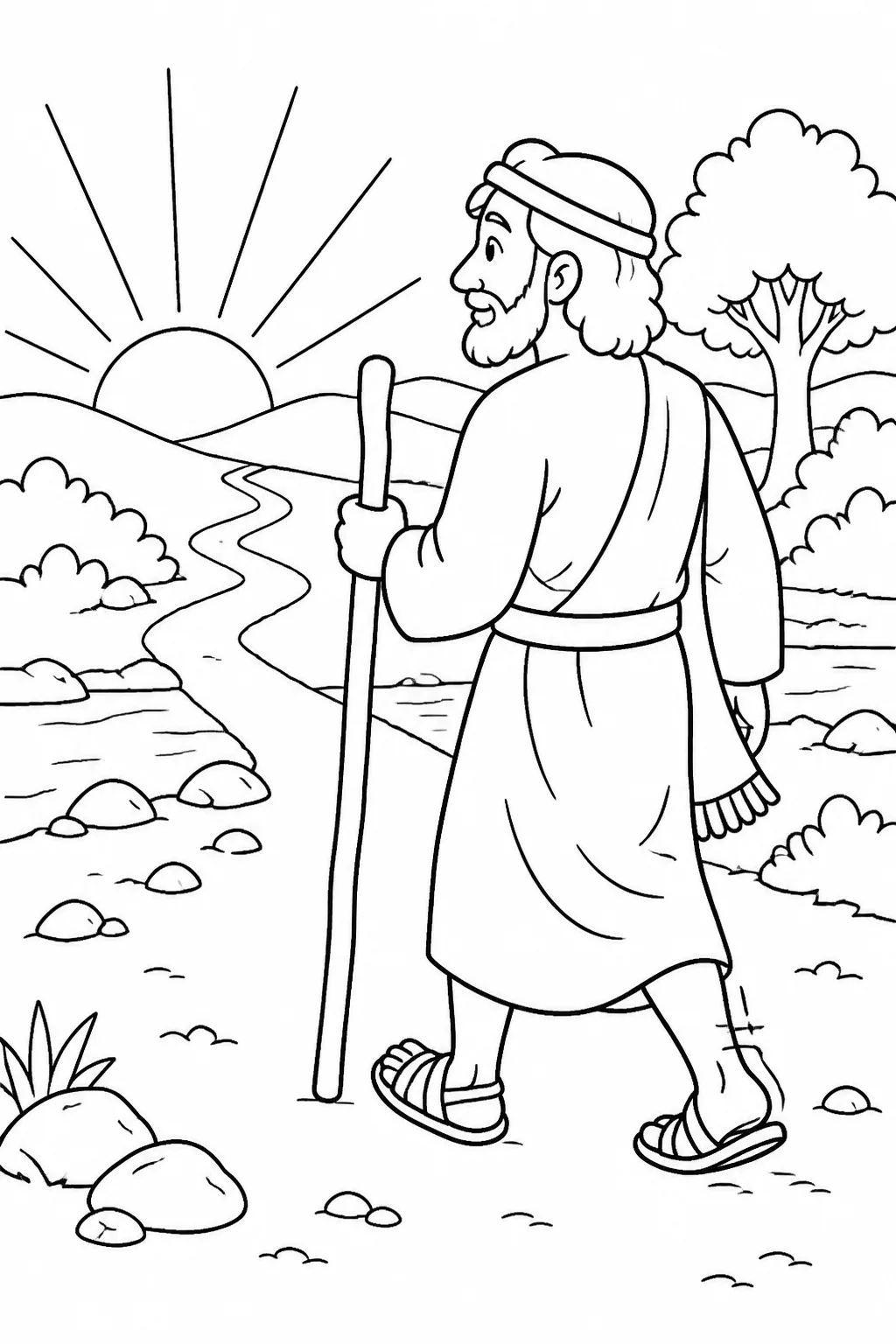
Jacob walking with a gentle limp at sunrise as he passes Penuel, showing a lasting reminder of his night encounter.

A Lasting Reminder at Penuel

Genesis 32:22-32
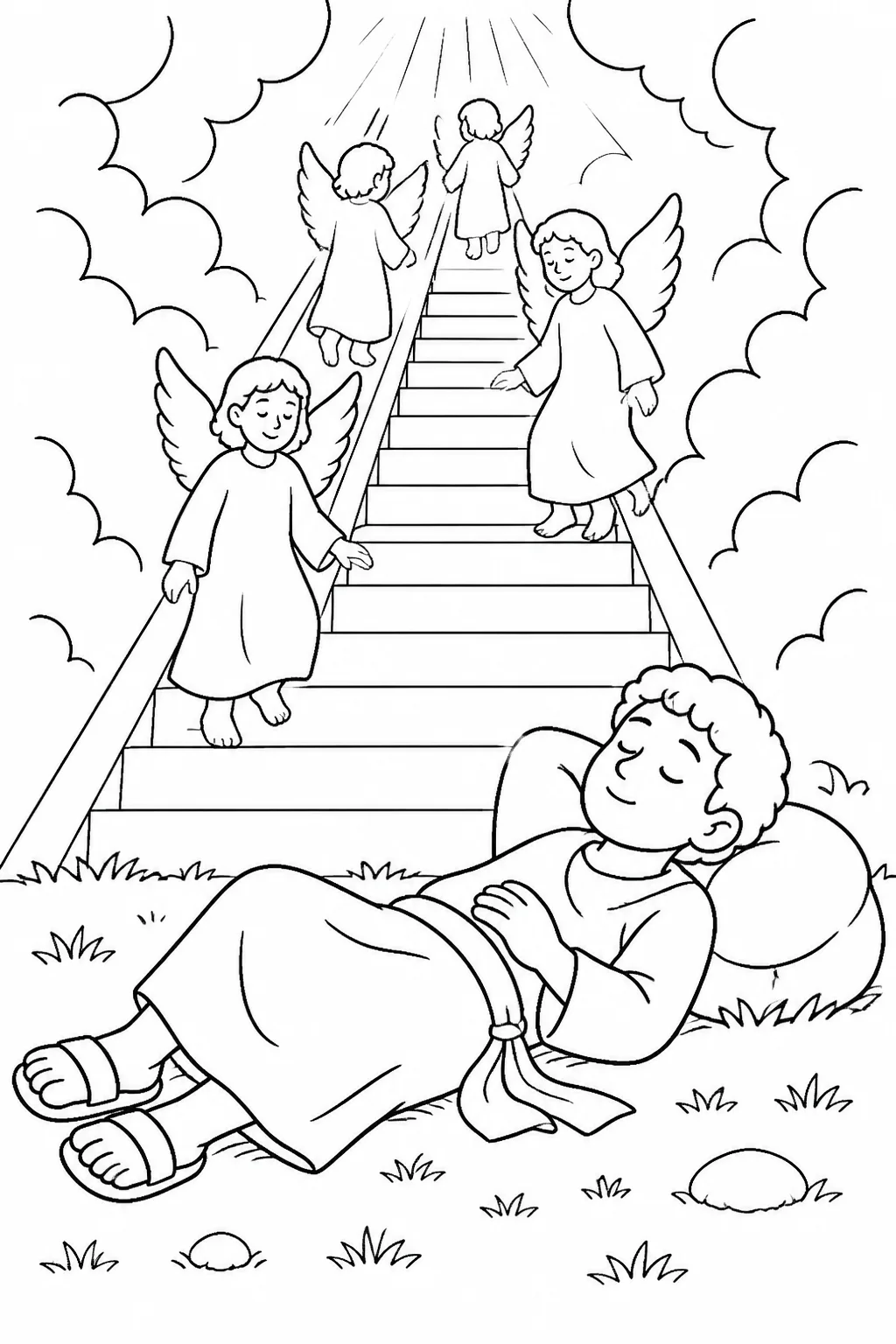
Jacob rests on the ground while dreaming of angels moving up and down a stairway or flight of steps reaching from earth to heaven.

Jacob Sees the Stairway

Genesis 28:10-22
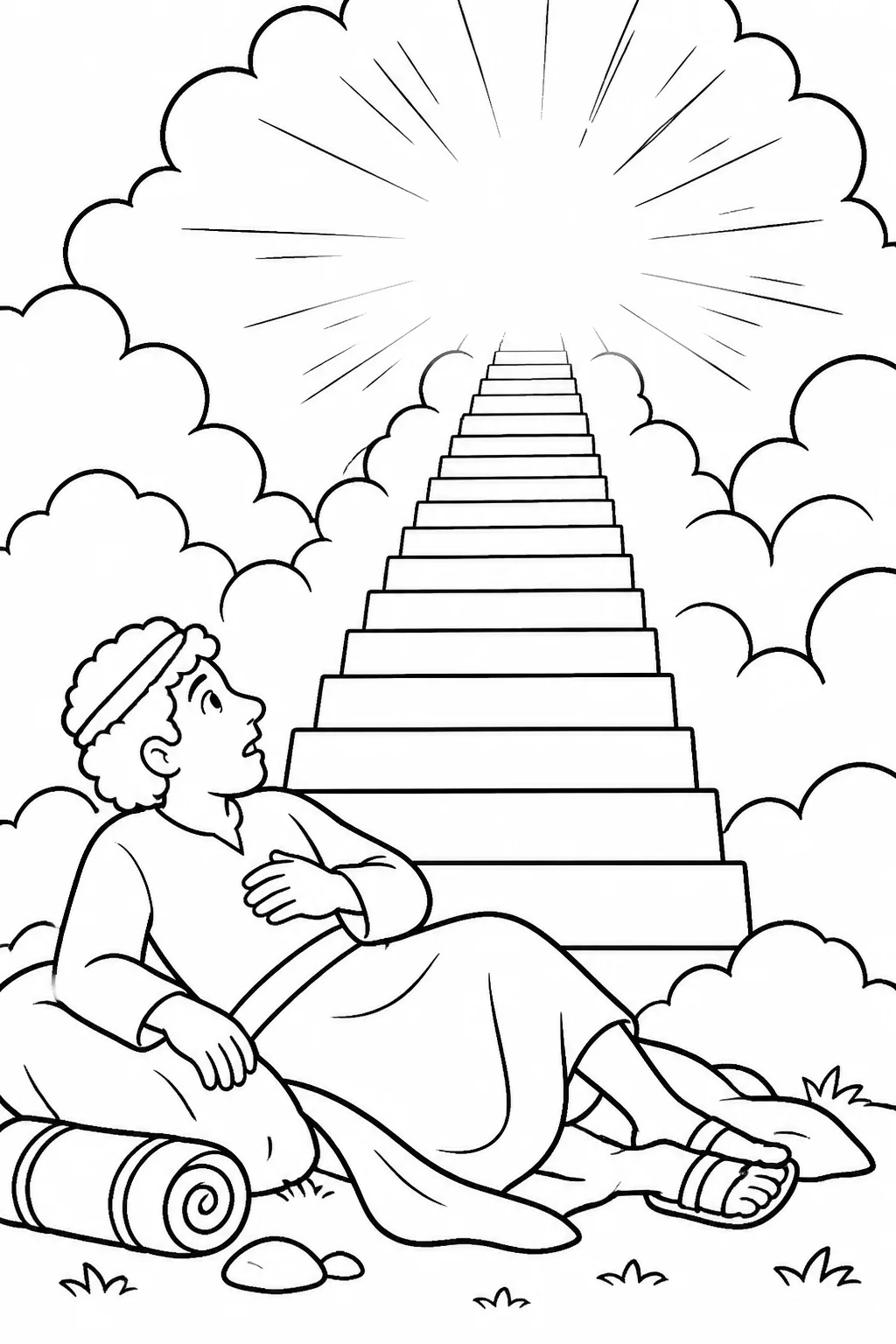
Jacob’s dream of a stairway reaching heaven, angels moving on it, and the LORD’s respectful, non-specific presence above, based on Genesis 28:10-15.

God Promises to Be With Jacob

Genesis 28:10-22
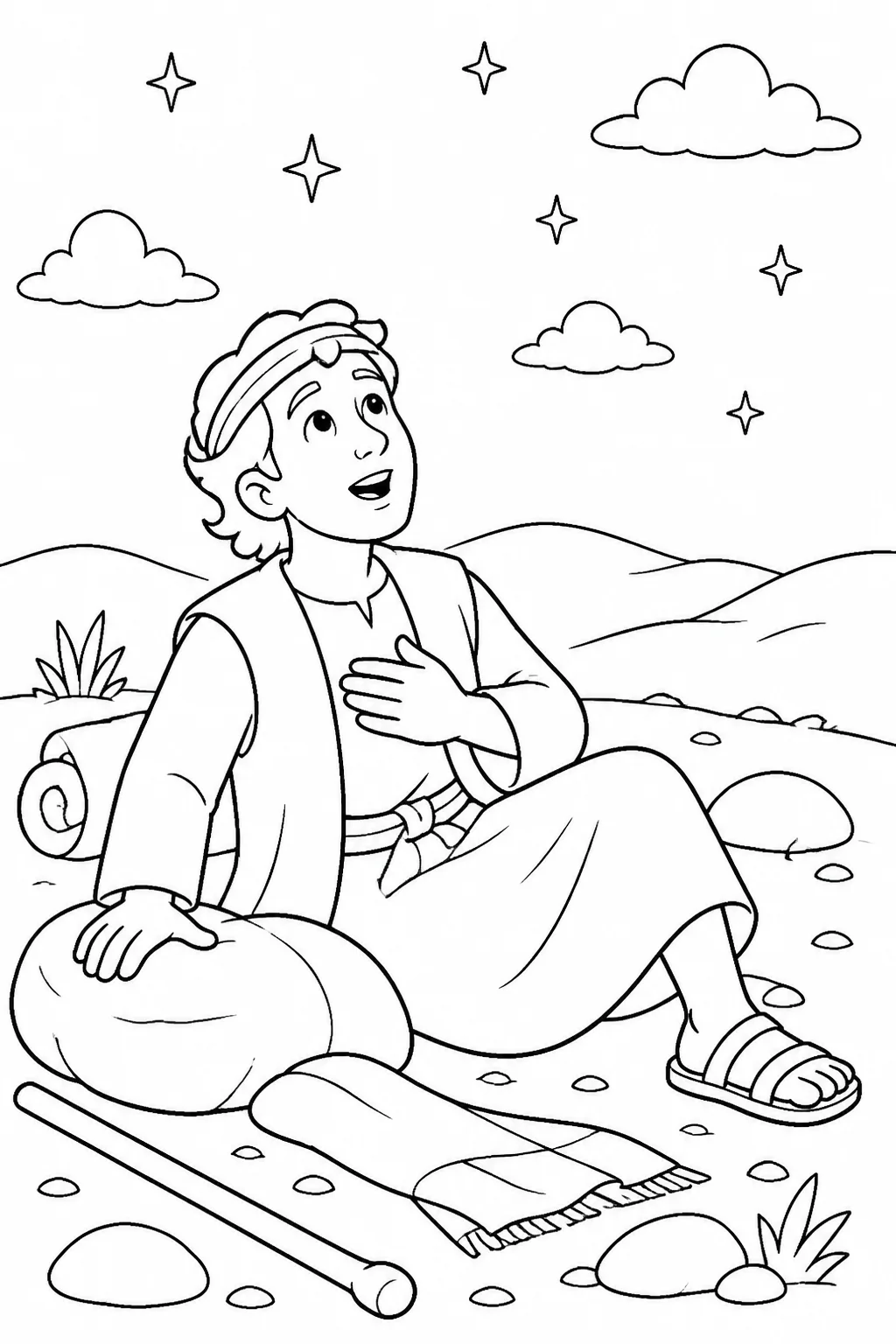
Jacob wakes beside the stone where he slept and responds with reverent amazement after realizing that the LORD is present.

Jacob Wakes and Is Amazed

Genesis 28:10-22
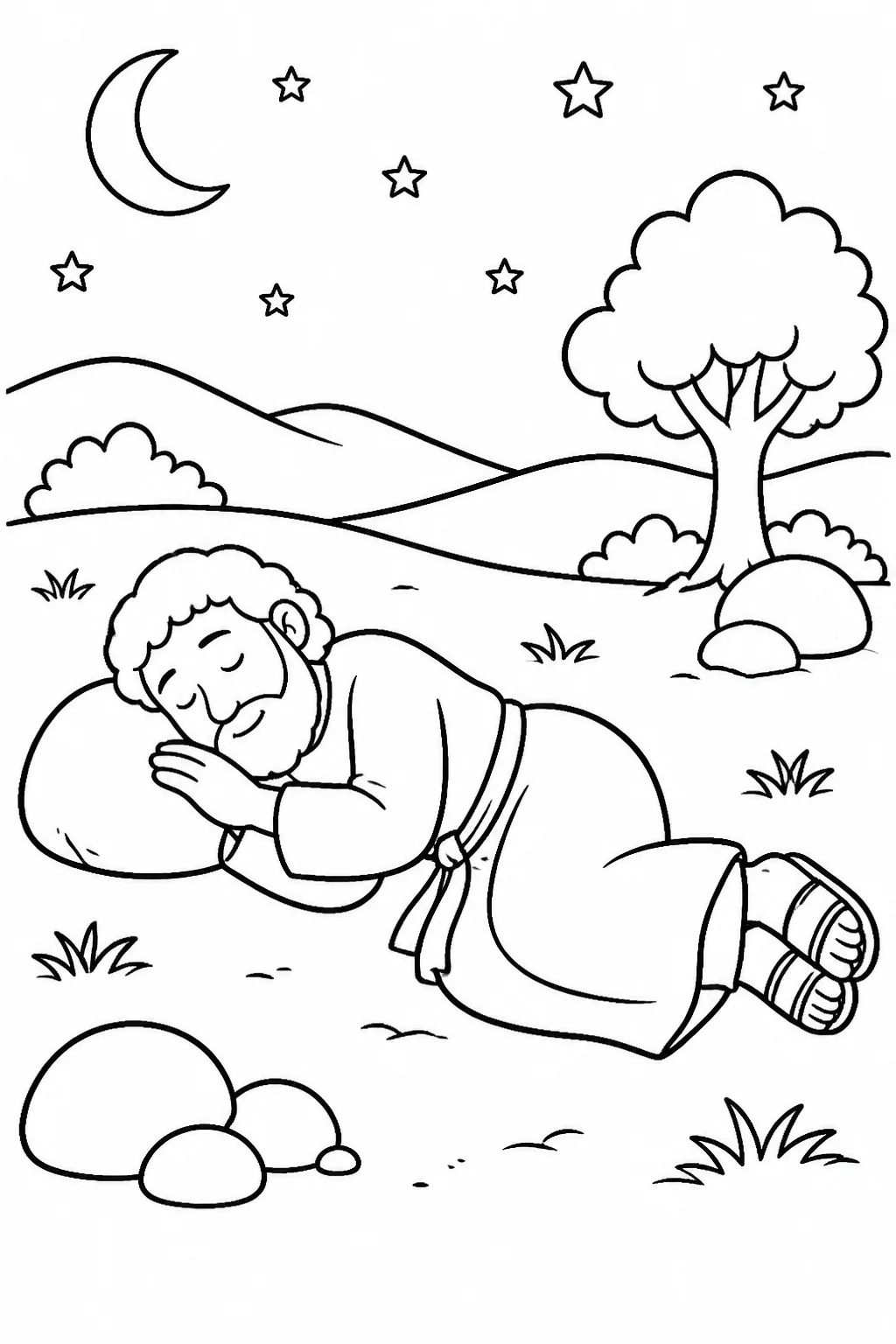
Jacob rests at night in an unnamed place, lying down with a stone as a pillow, based on Genesis 28:11.

Jacob Rests for the Night

Genesis 28:10-22
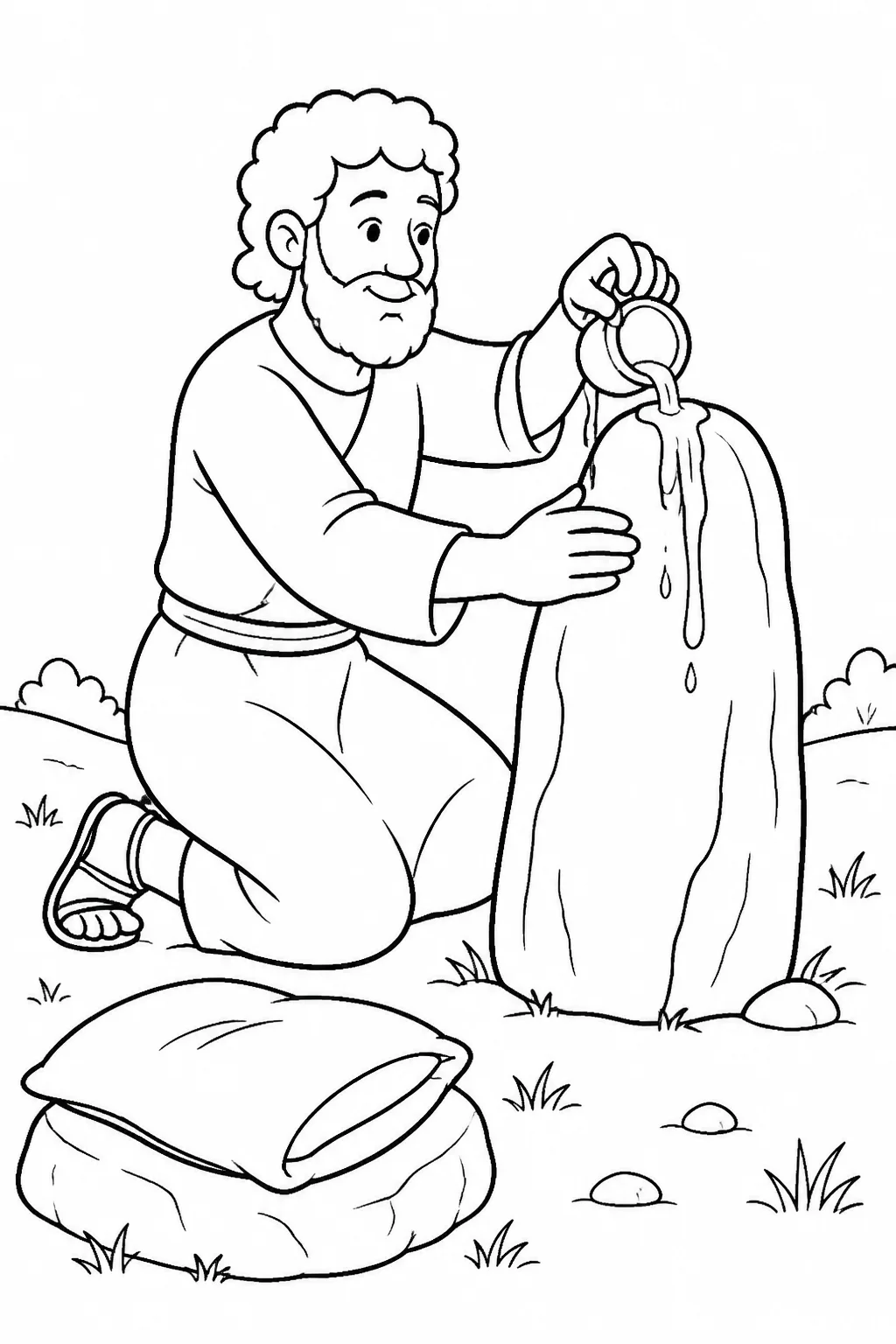
Jacob sets up the stone he used as a pillow as a pillar and pours oil on it before naming the place Bethel.

Jacob Sets Up the Stone

Genesis 28:10-22
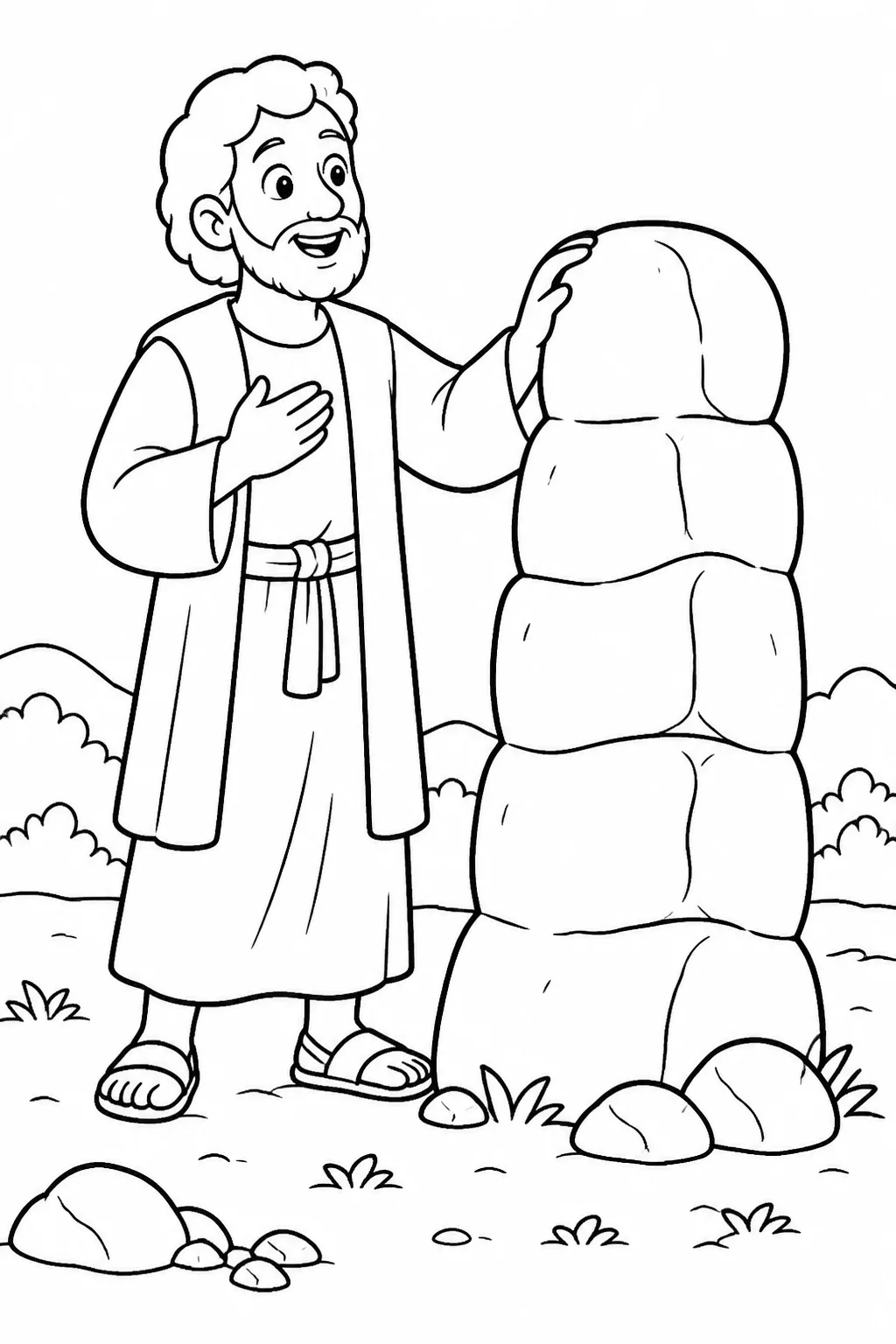
Jacob beside a stone pillar as he names the place Bethel, previously called Luz, from Genesis 28:18–19.

The Place Is Called Bethel

Genesis 28:10-22
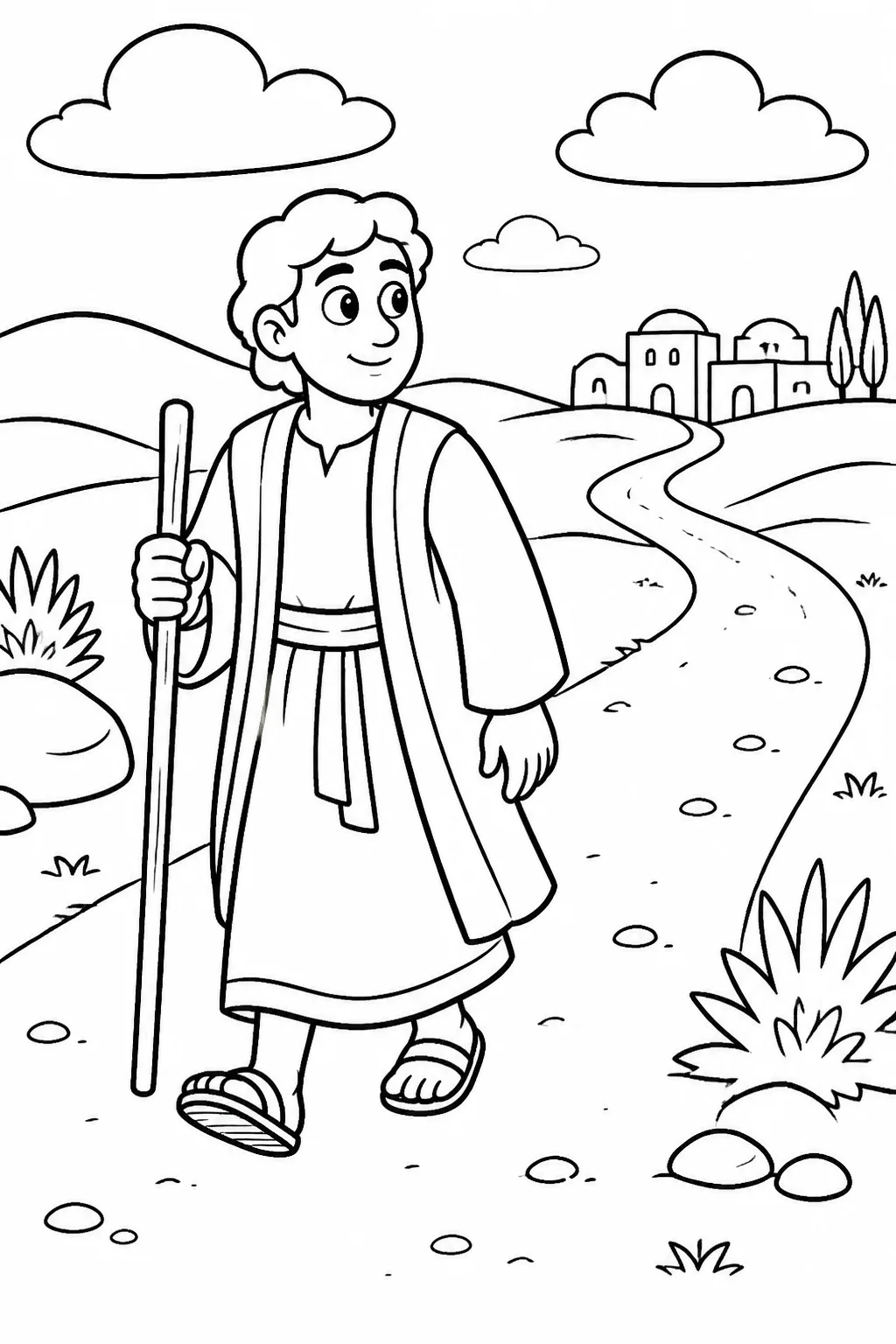
Jacob traveling alone along a road or open landscape from Beersheba toward Haran, based on Genesis 28:10.

Jacob Begins His Journey

Genesis 28:10-22
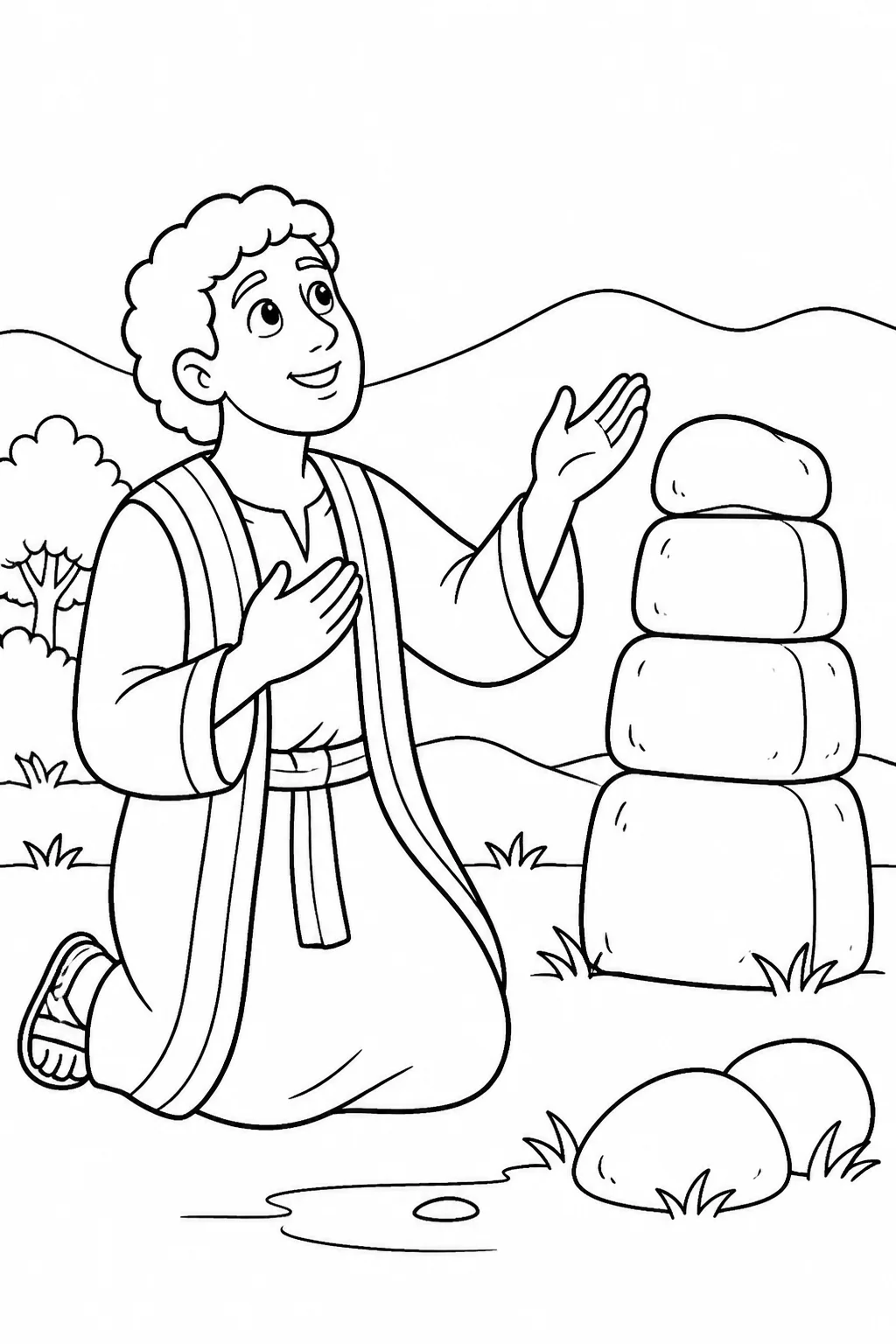
Jacob beside the stone pillar at Bethel as he makes a conditional vow about God’s presence, protection, provision, and safe return.

Jacob Makes a Conditional Vow

Genesis 28:10-22
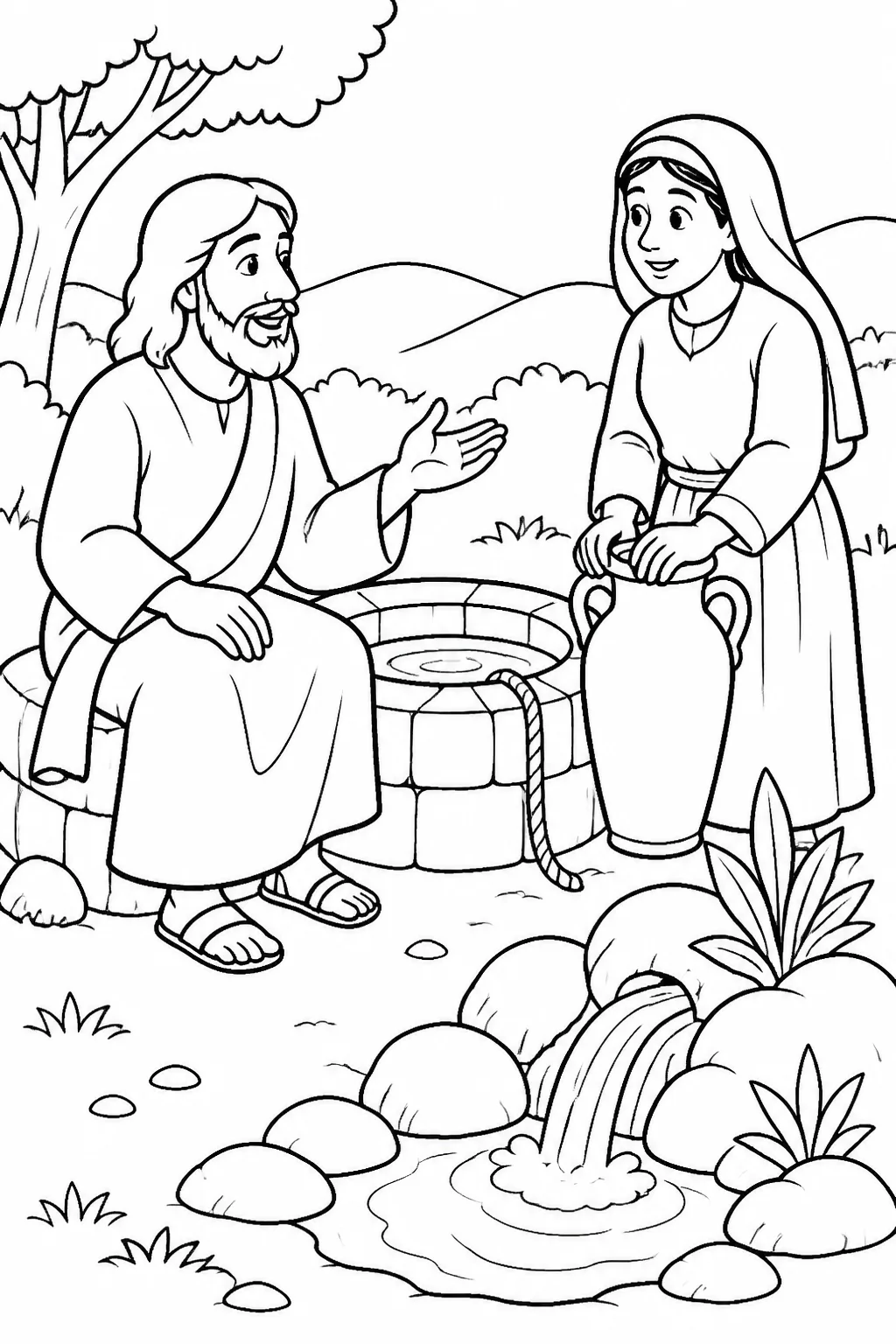
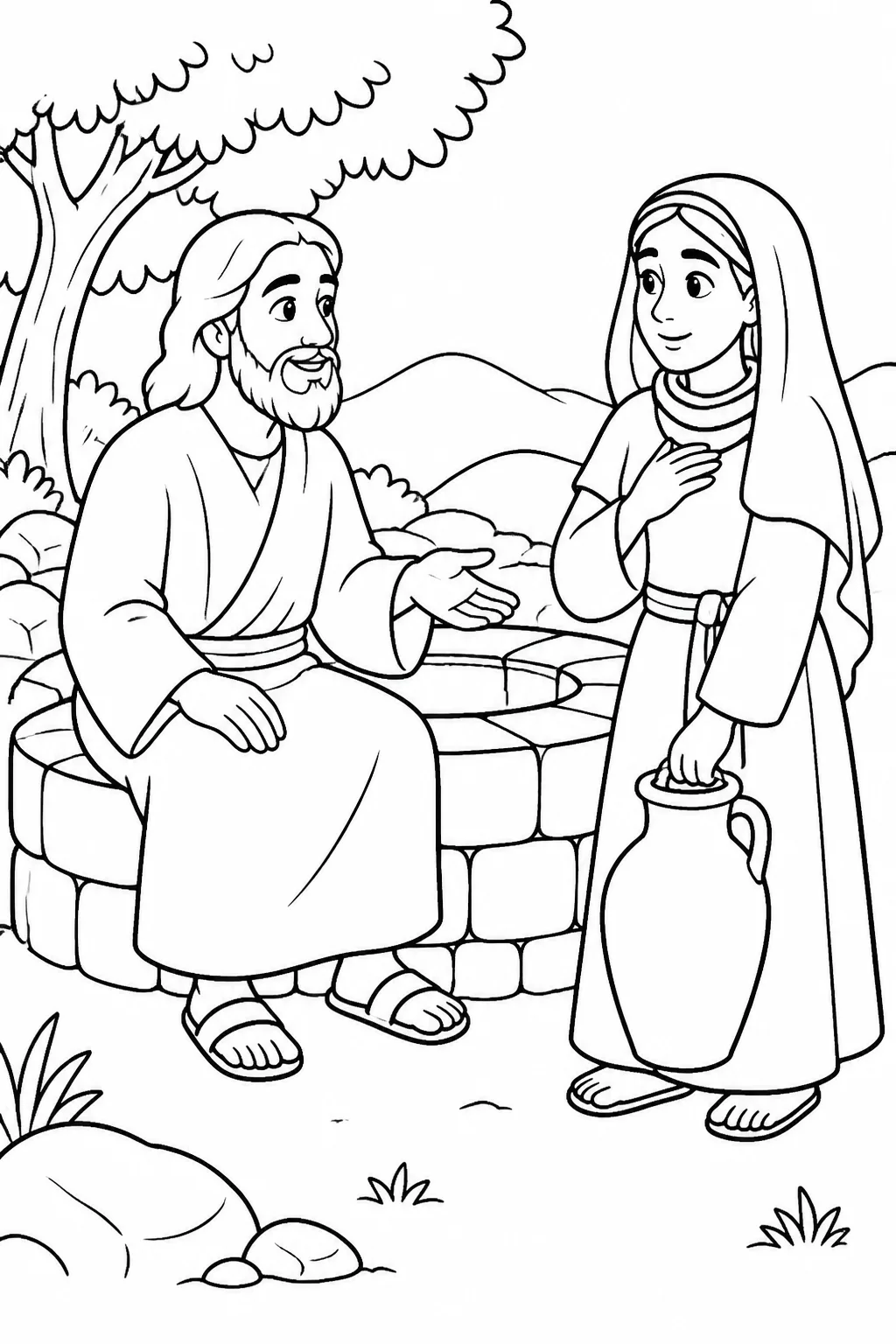
Jesus speaking with a Samaritan woman beside Jacob’s well, with ordinary well water distinct from the symbolic idea of living water.

The Gift of Living Water

John 4:1-42

Jesus speaks respectfully with a Samaritan woman beside Jacob’s well, based on John 4:16–18.

Jesus Knows the Truth

John 4:1-42

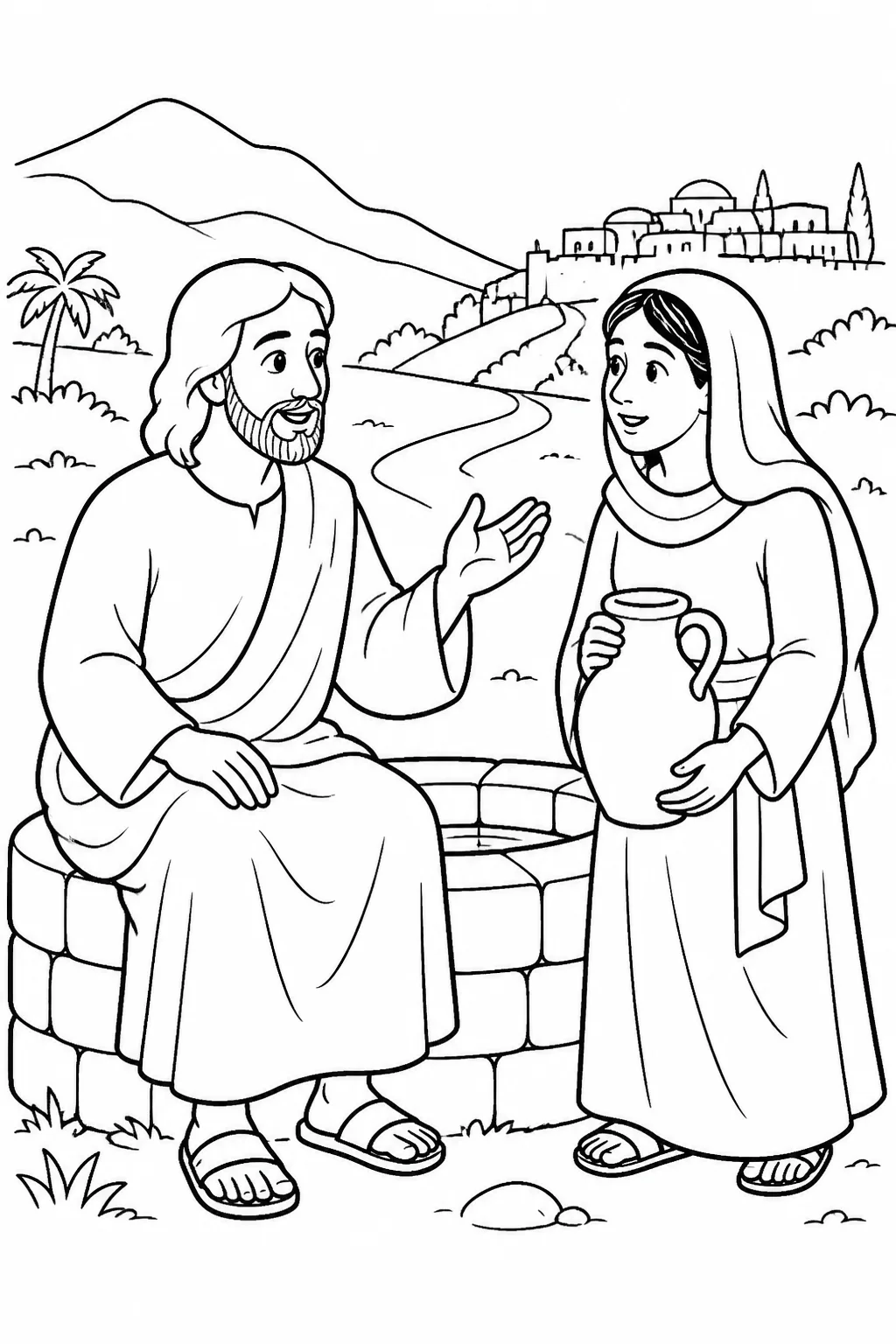
Jesus speaks with the Samaritan woman beside Jacob’s well near Sychar as they discuss worship and the Messiah.

Jesus Reveals Who He Is

John 4:1-42

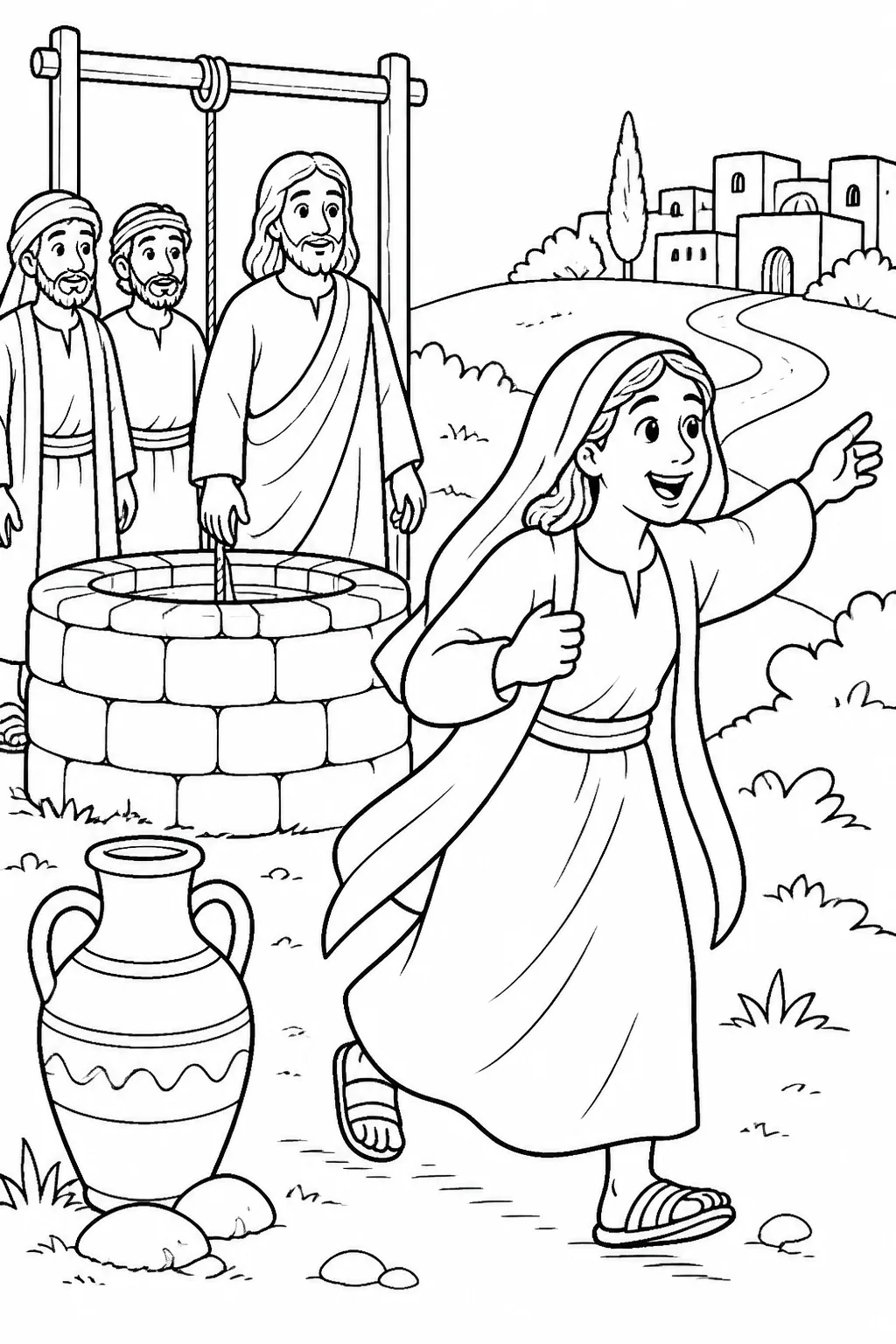
The Samaritan woman leaves her water jar at Jacob’s well and hurries toward the Samaritan city while Jesus and his disciples remain near the well.

She Leaves Her Jar and Tells the City

John 4:1-42
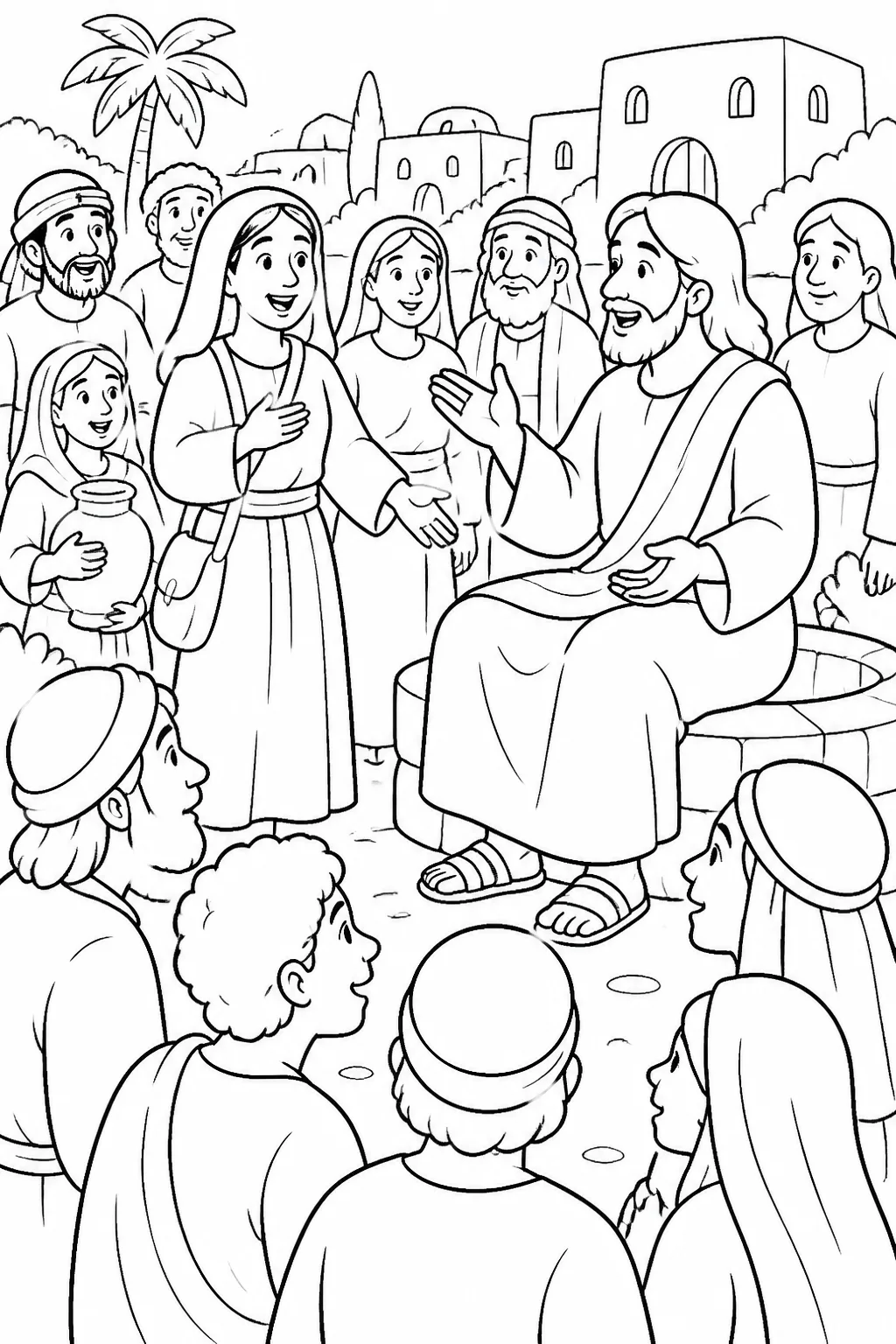
Jesus teaching many Samaritans in a city while the Samaritan woman is among them, representing her testimony and their hearing Jesus.

The Samaritans Hear Jesus

John 4:1-42
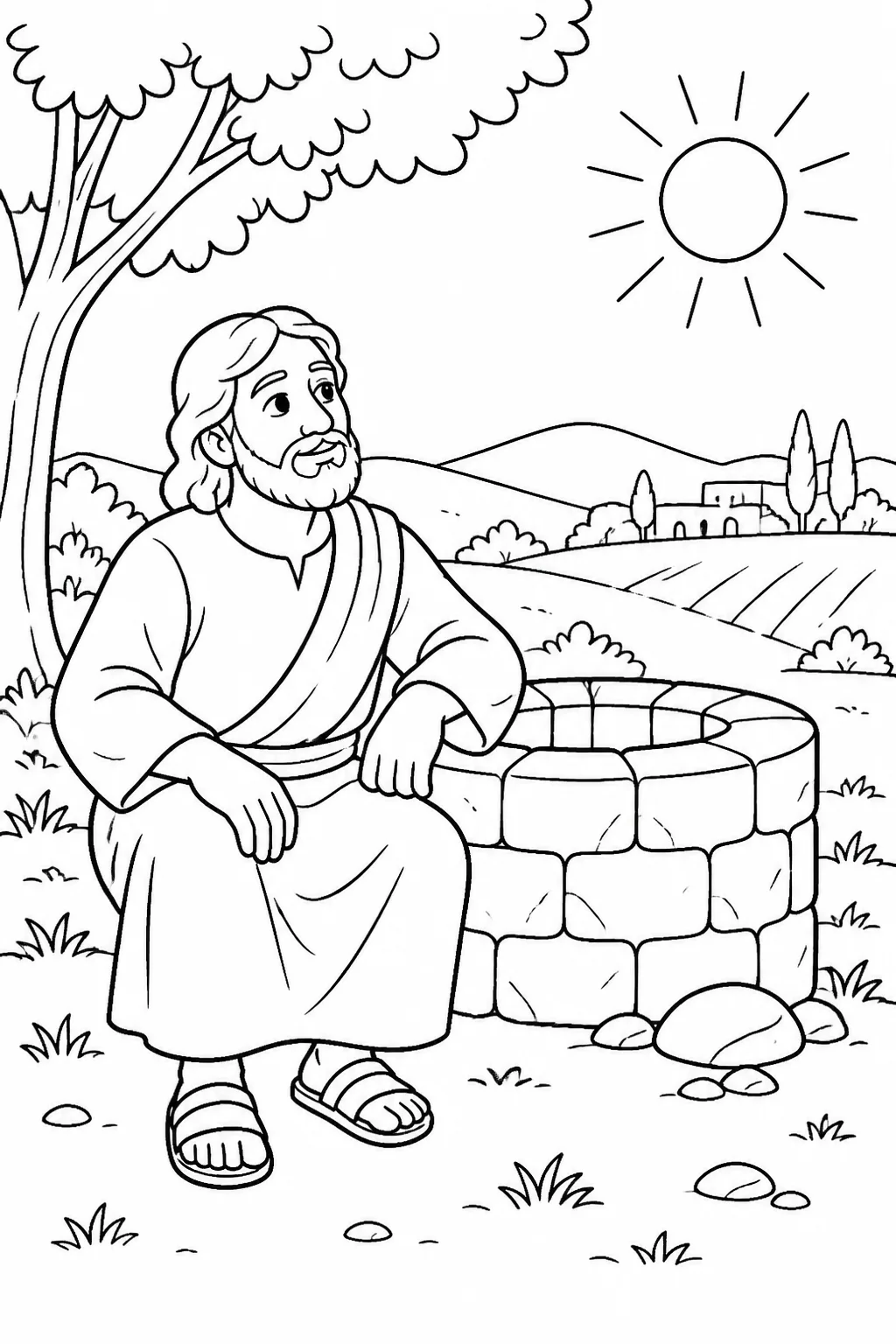
Jesus sitting beside Jacob’s well near Sychar around noon, with a nearby field and bright midday light after his journey through Samaria.

Jesus Rests at Jacob’s Well

John 4:1-42
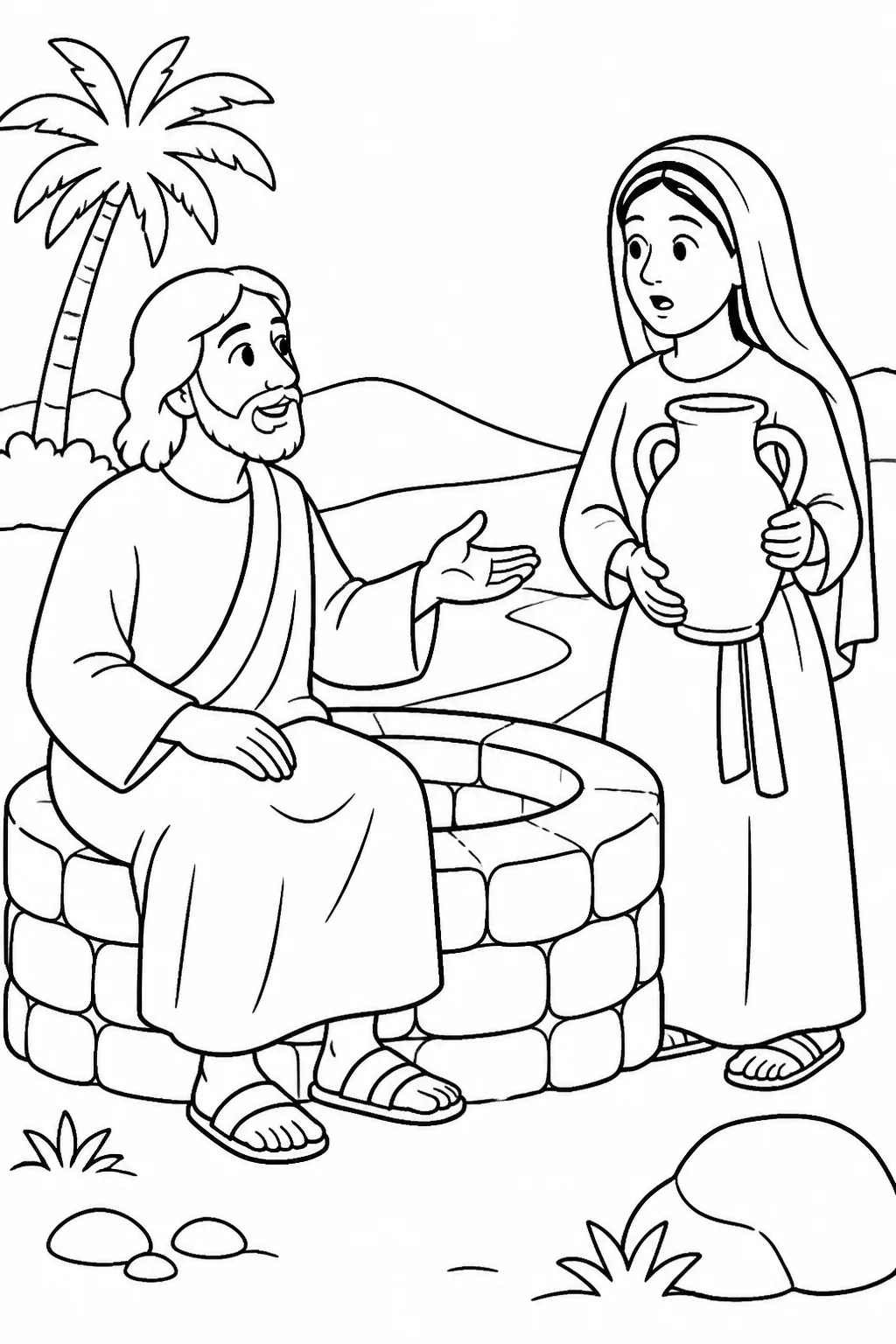
Jesus respectfully asks a Samaritan woman for a drink at Jacob’s well as she comes to draw water with a vessel.

An Unexpected Request

John 4:1-42

Jesus teaches his disciples near Jacob’s well, using nearby fields ready for harvest as an image for people being gathered for eternal life.

The Harvest Jesus Describes

John 4:1-42
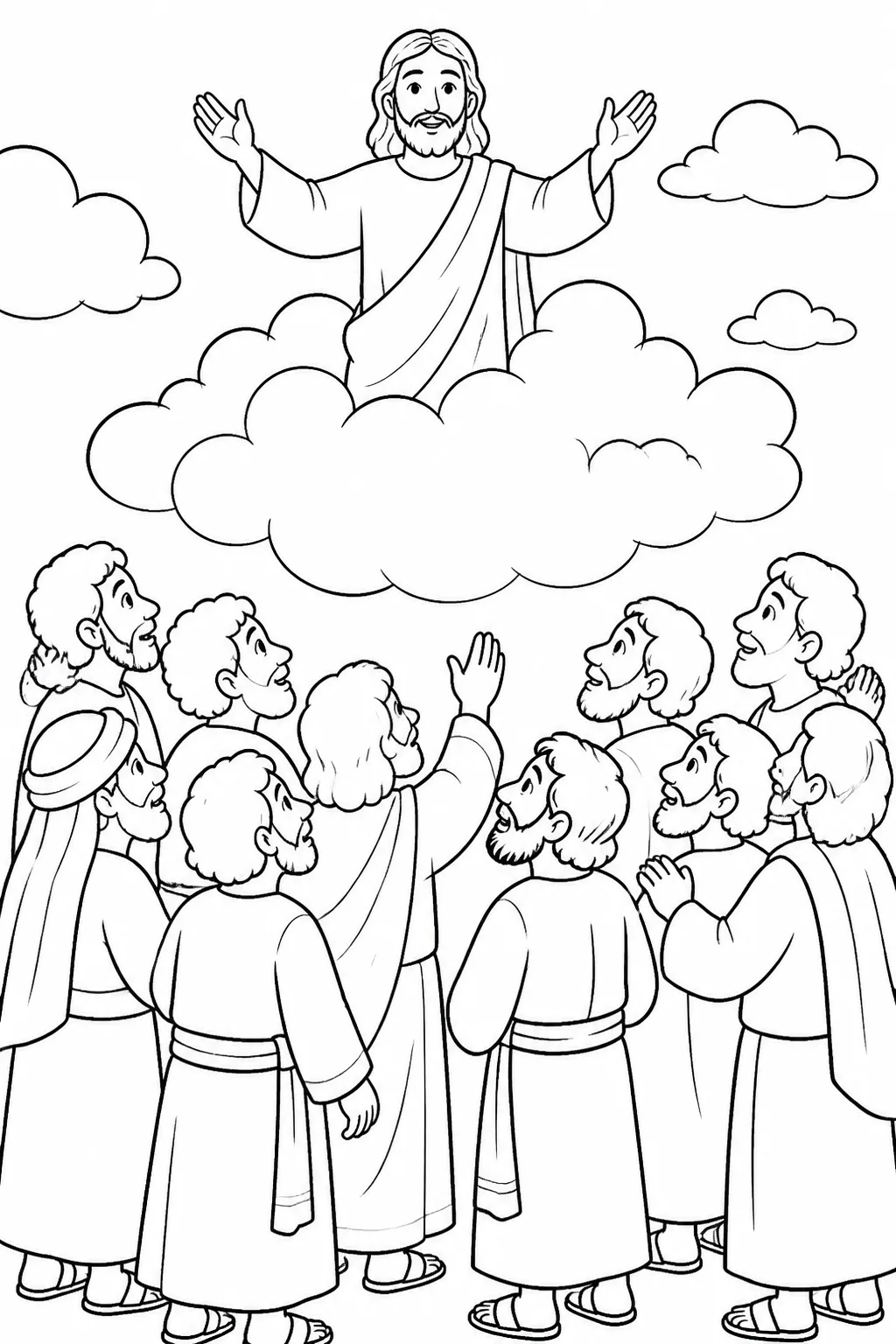
Jesus blessing the apostles as a cloud hides him from their sight beneath an open sky.

Jesus Blesses the Apostles Before Ascending

Acts 1:1-11
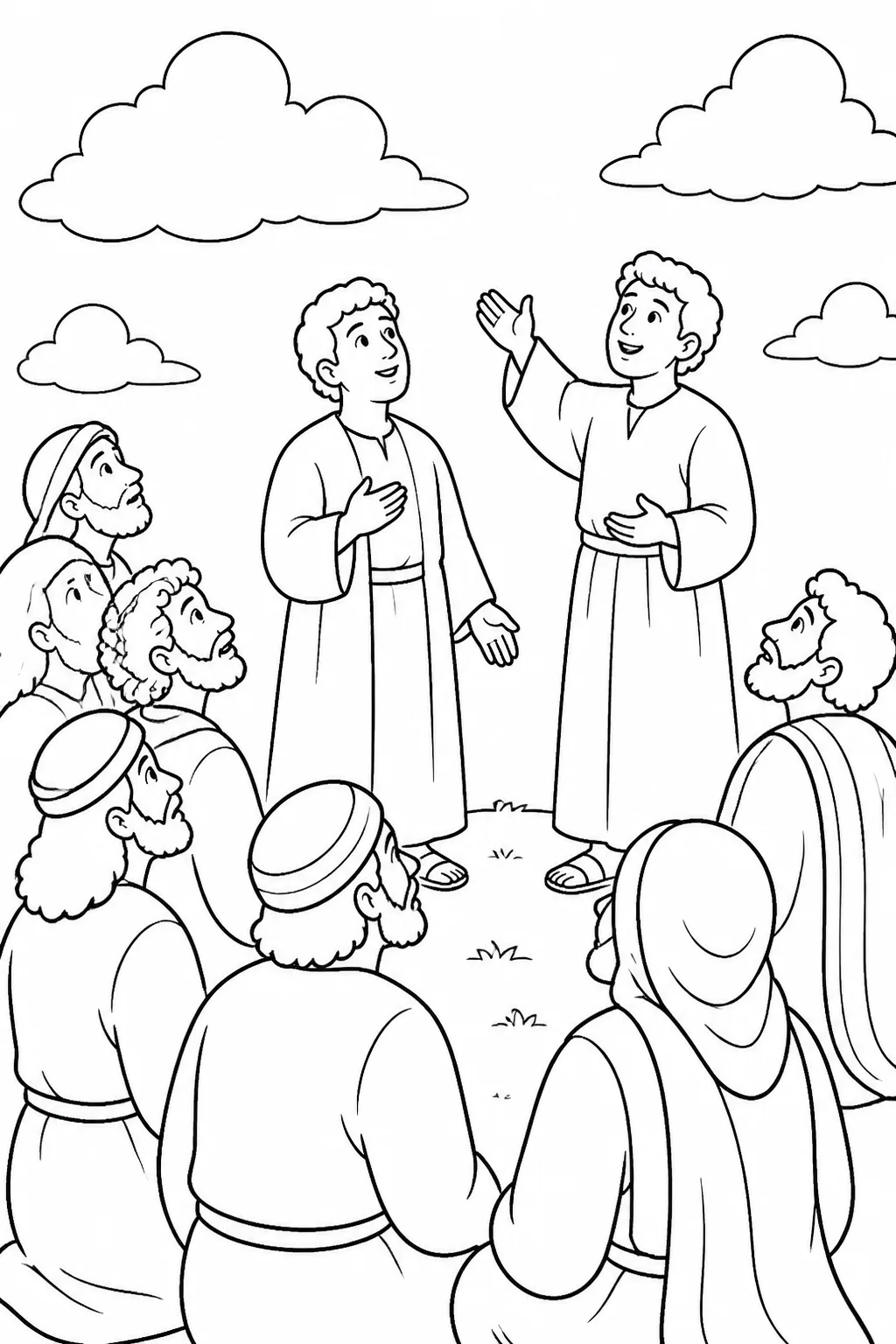
The apostles look toward heaven while two men in white clothing announce that Jesus will come again in the same way they saw him go.

The Promise of Jesus’ Return

Acts 1:1-11
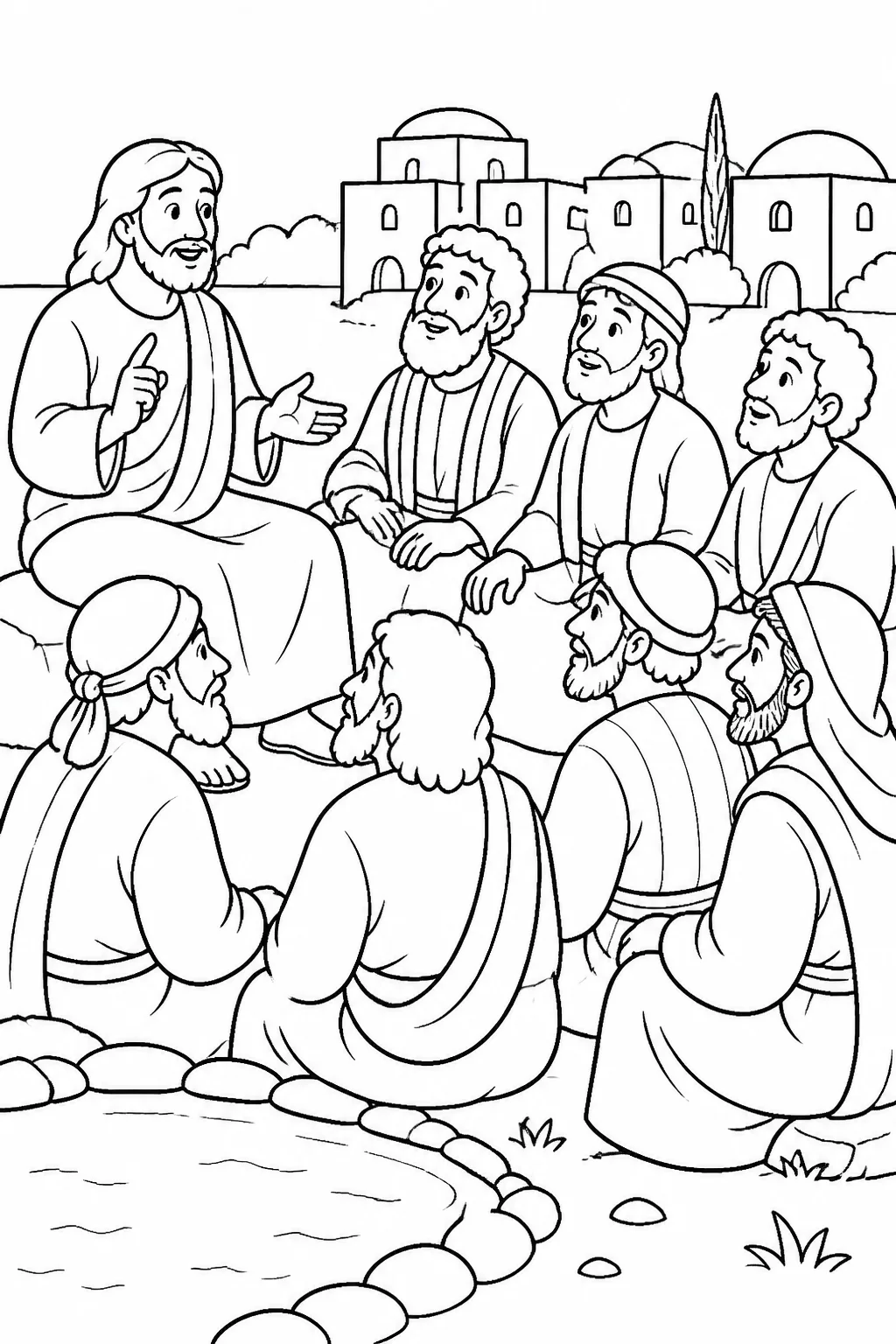
Jesus meeting with the apostles in Jerusalem and teaching them to wait for the Father’s promise of the Holy Spirit, with water as a reminder of his comparison.

Waiting for the Father’s Promise

Acts 1:1-11
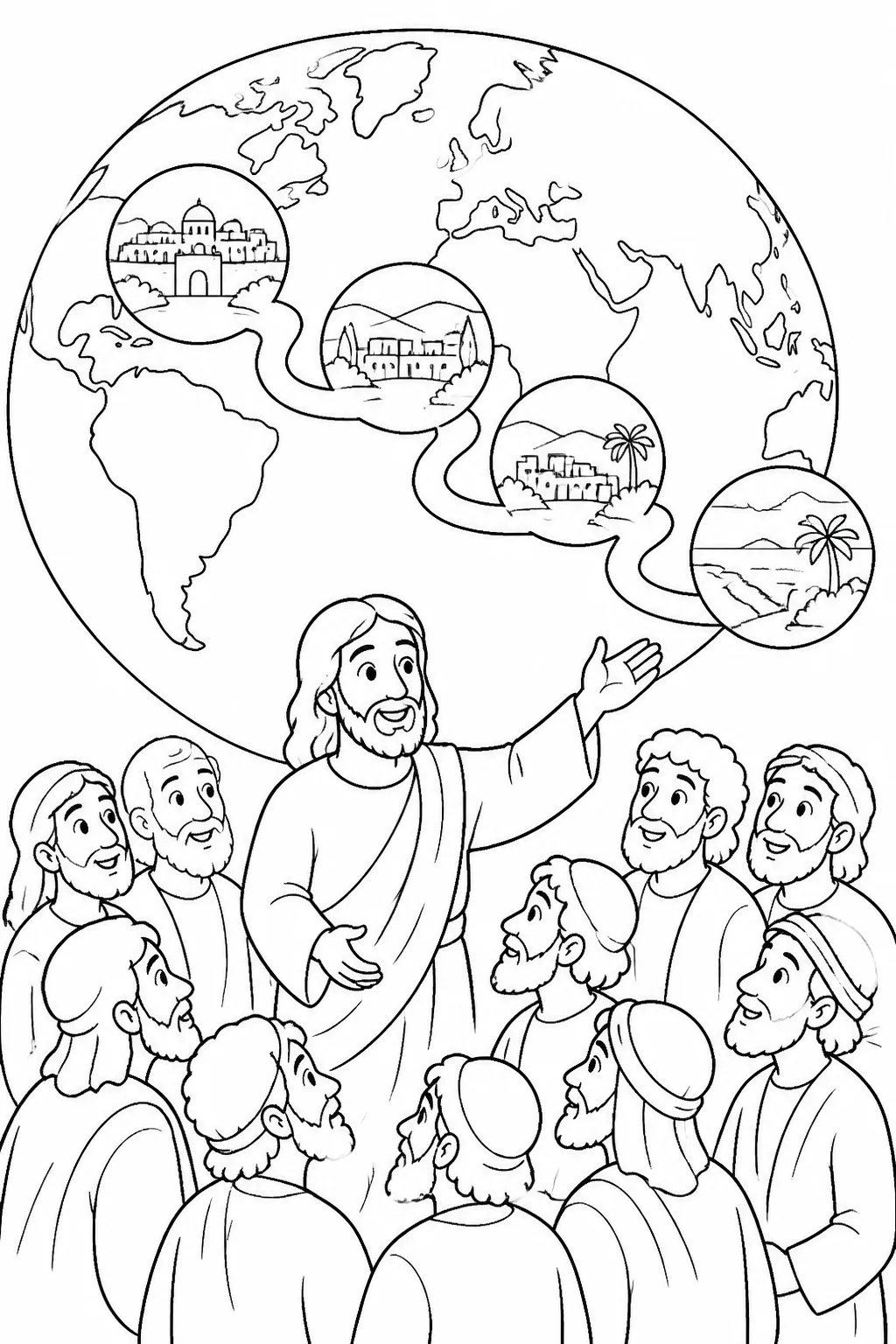
Jesus with the apostles beside a symbolic path showing Jerusalem, Judea, Samaria, and the ends of the earth, representing their mission to be his witnesses.

A Mission From Jerusalem to the Ends of the Earth

Acts 1:1-11
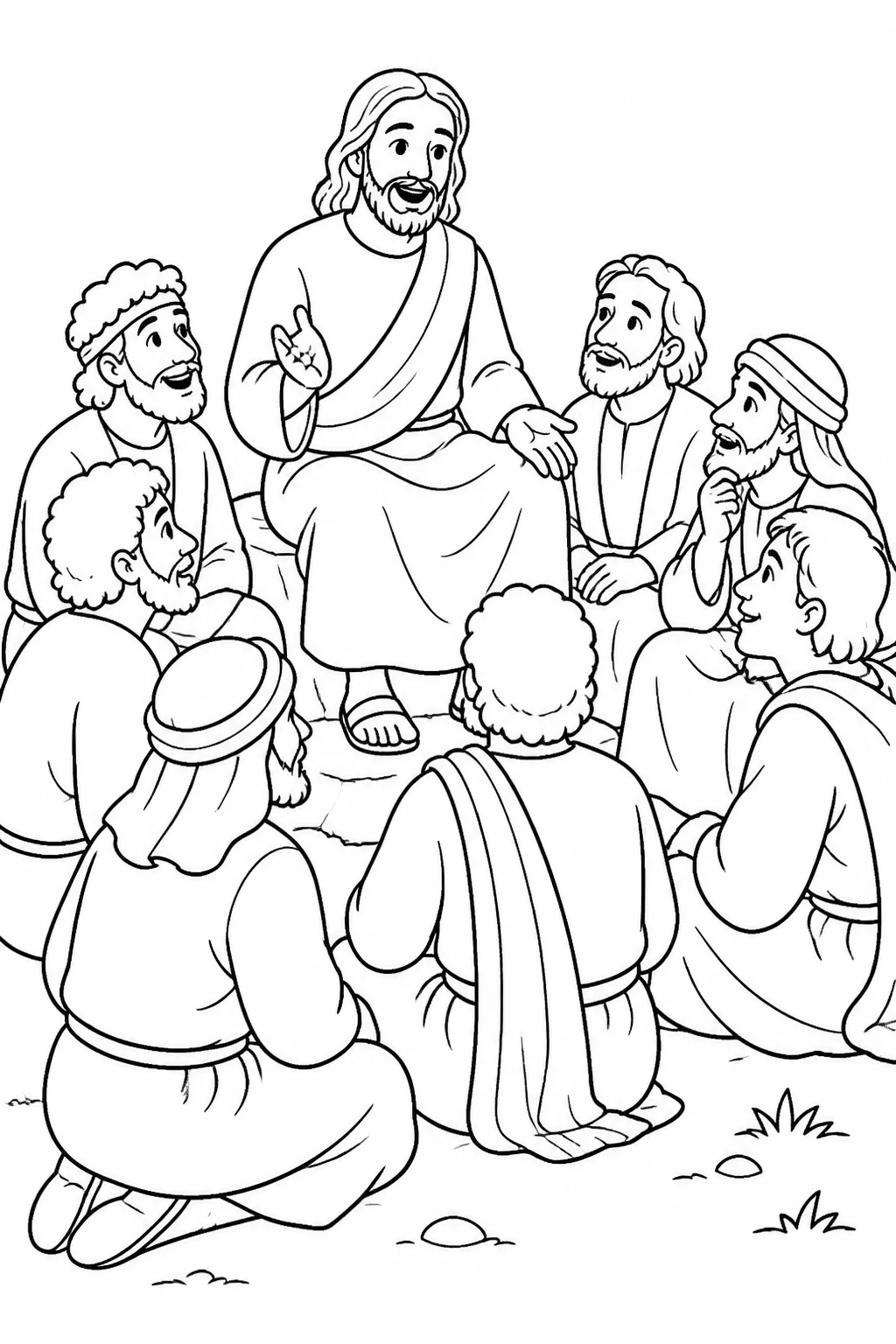
Jesus alive and present with the apostles in a simple teaching setting, speaking about the kingdom of God after his suffering.

Jesus Presents Himself Alive

Acts 1:1-11
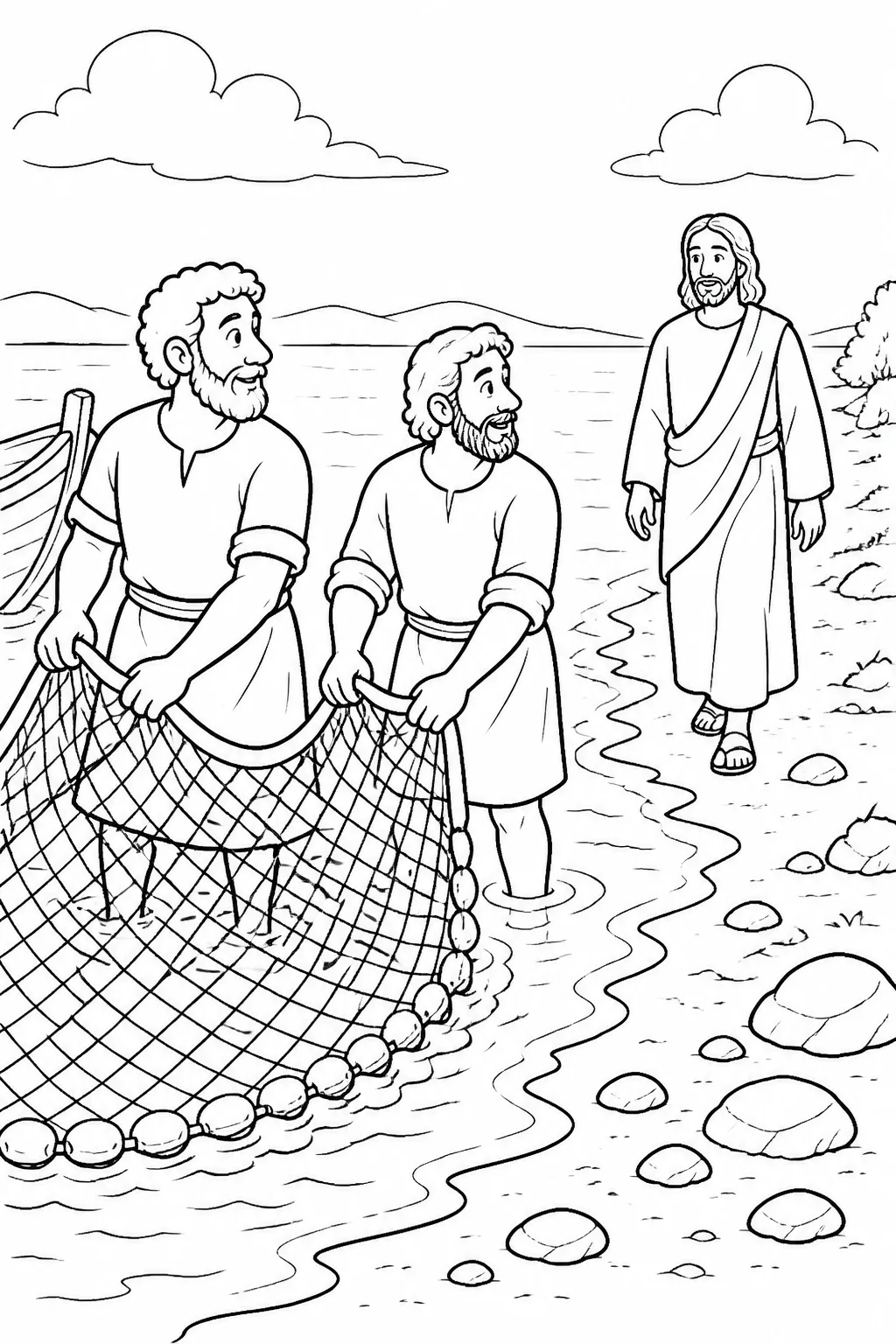
Jesus approaching Simon Peter and Andrew as they cast a fishing net beside the Sea of Galilee.

Fishermen Beside the Sea

Matthew 4:18-22
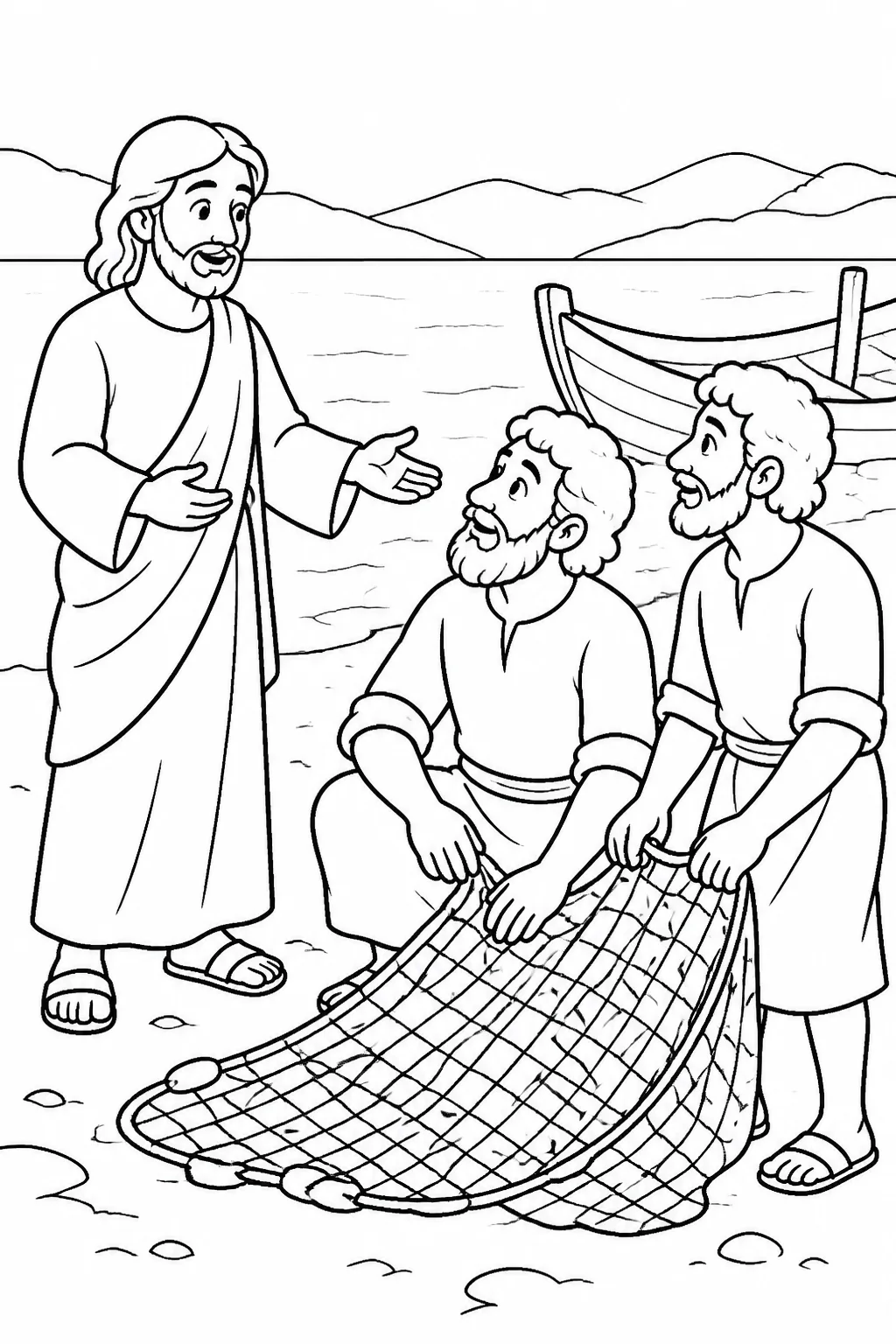
Jesus speaks to Simon Peter and Andrew beside the Sea of Galilee, inviting them to follow him near a fishing net.

Jesus Gives an Invitation

Matthew 4:18-22
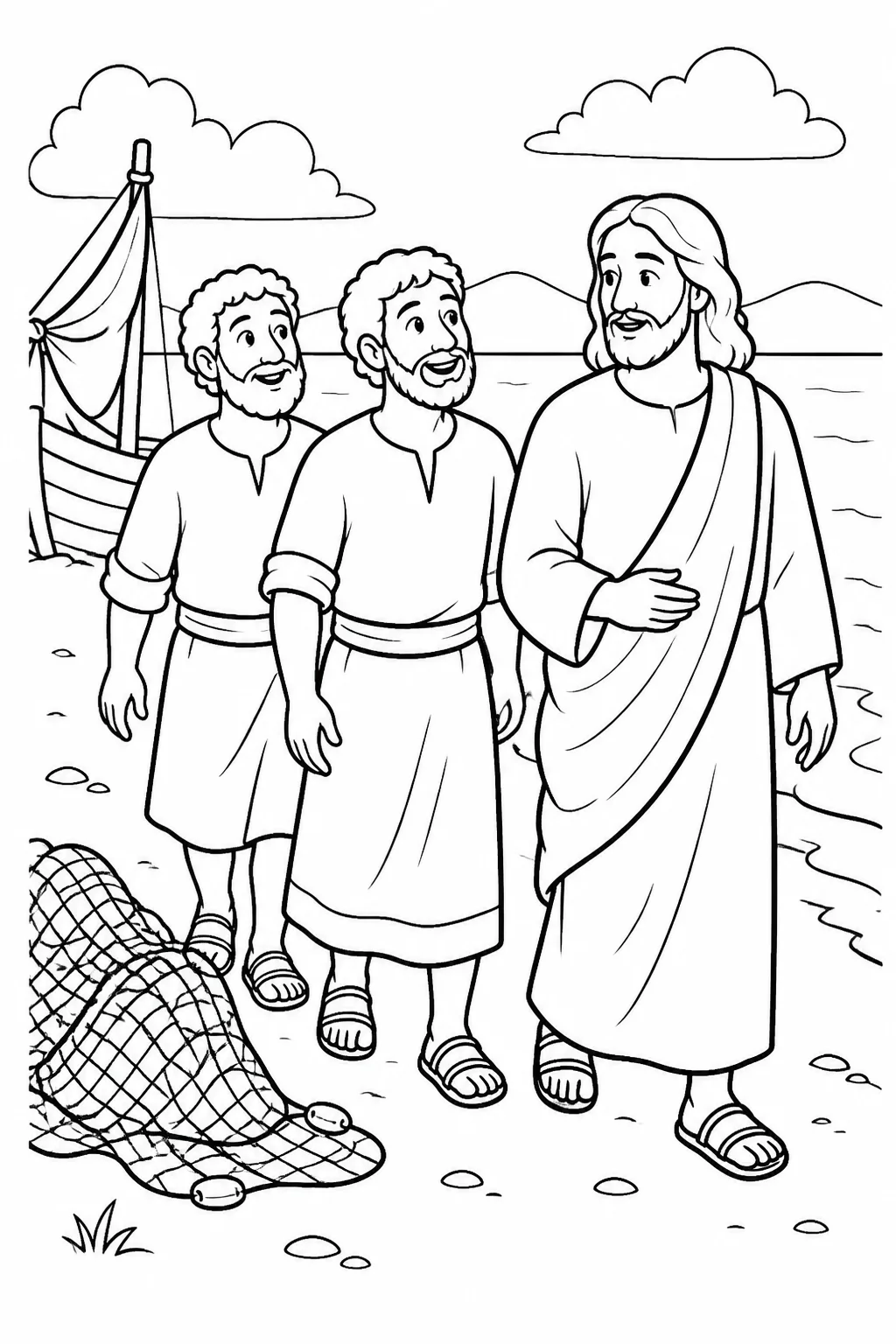
Jesus walking beside the Sea of Galilee with Simon Peter and Andrew after they leave their fishing net to follow him.

They Leave Their Nets

Matthew 4:18-22
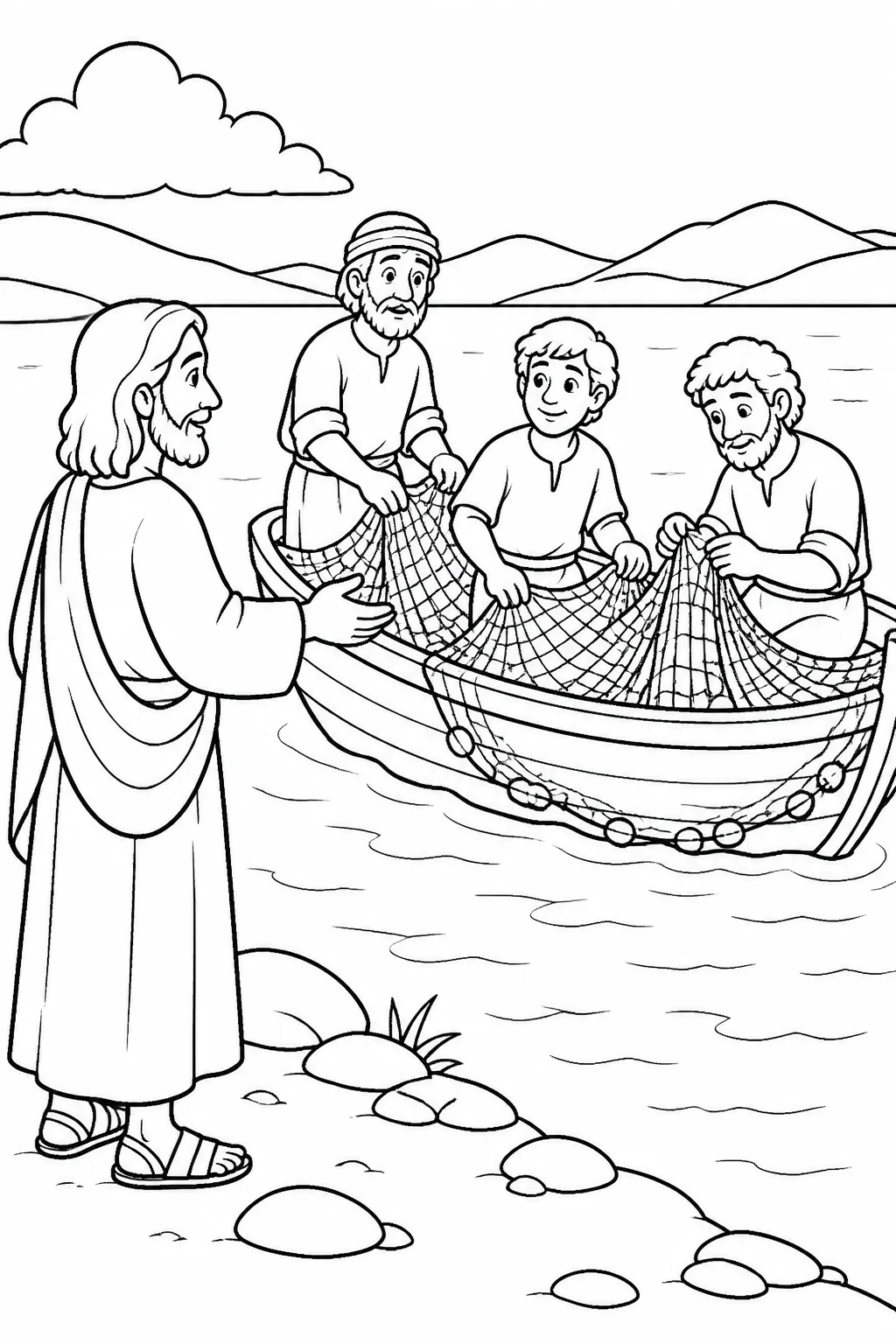
Jesus sees James and John mending fishing nets in a boat with their father Zebedee near the Sea of Galilee.

James and John Mend Their Nets

Matthew 4:18-22
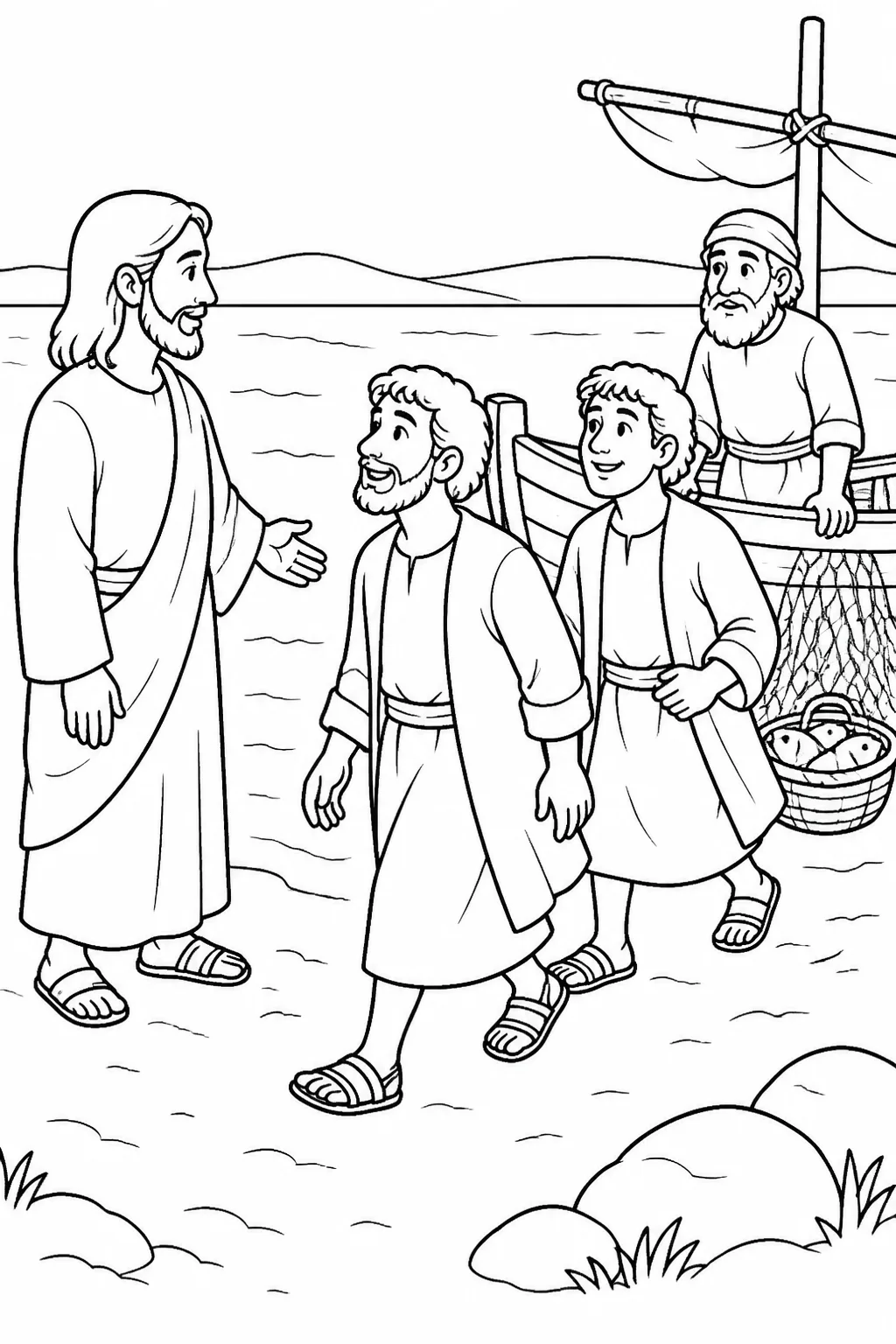
James and John leave their boat and their father Zebedee beside the Sea of Galilee to follow Jesus, based on Matthew 4:22.

James and John Follow Jesus

Matthew 4:18-22
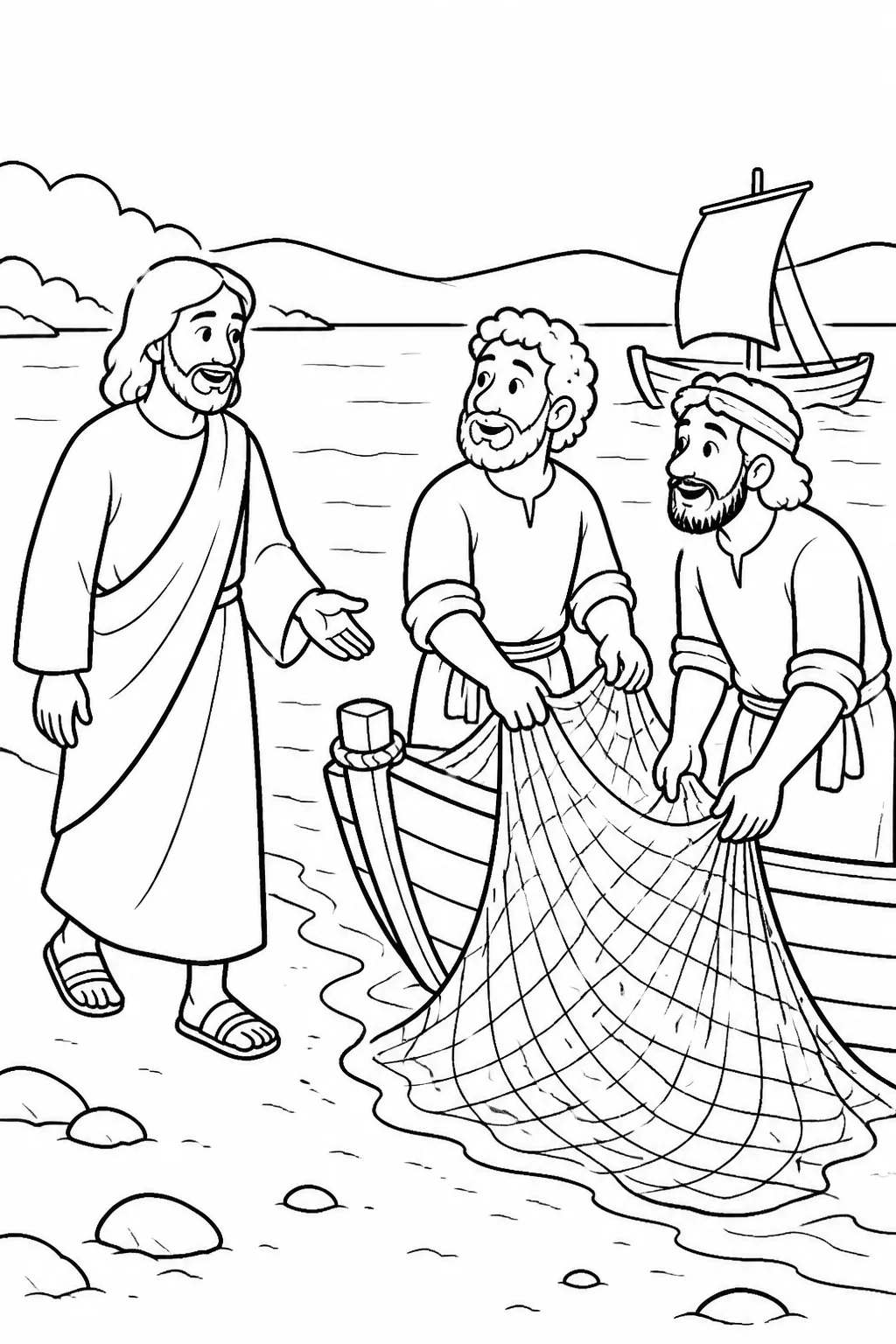
Jesus walking beside the Sea of Galilee while Simon Peter and Andrew cast a fishing net, illustrating Matthew 4:18.

A Shoreline of Fishermen

Matthew 4:18-22
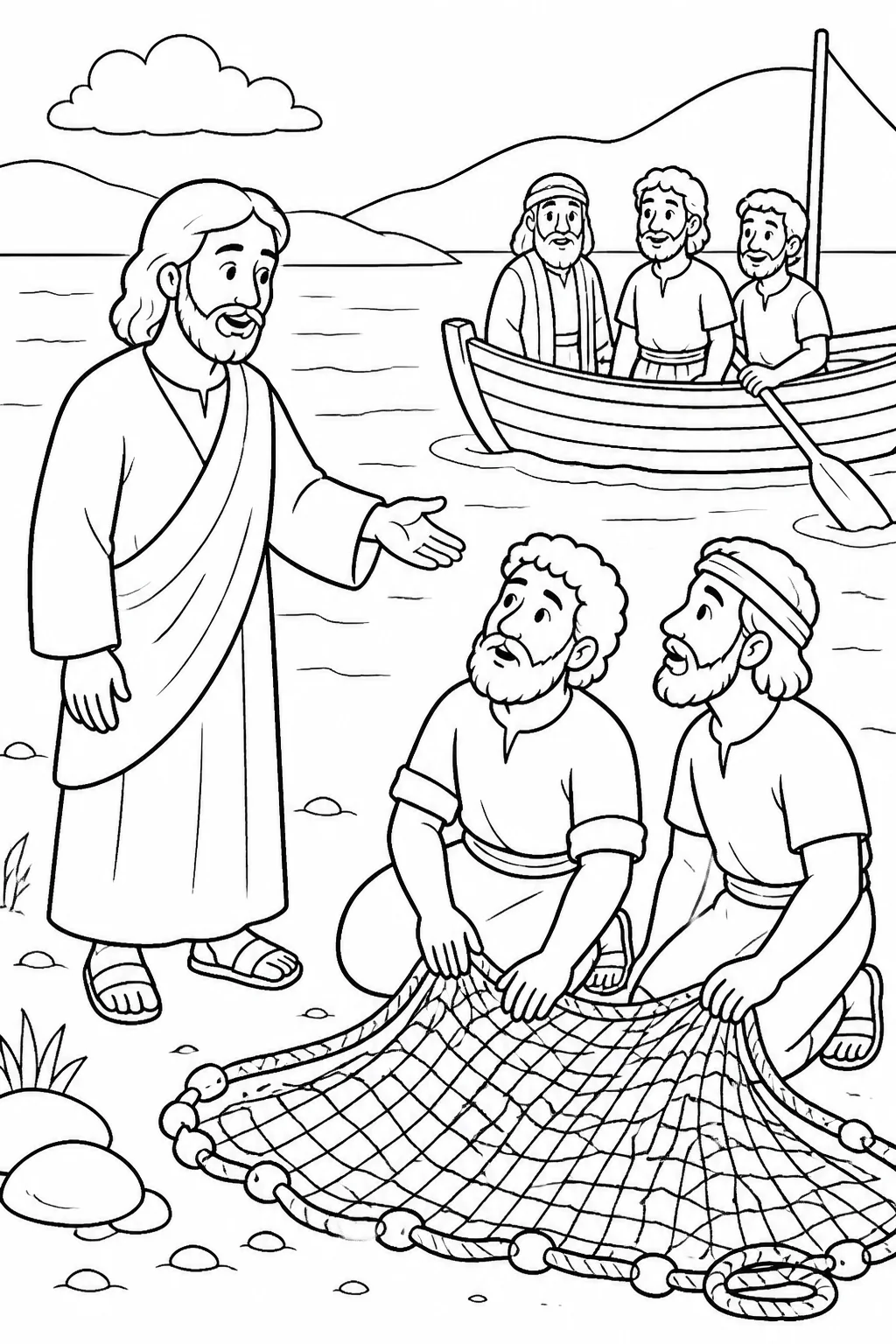
Jesus calls Simon Peter and Andrew beside a fishing net at the Sea of Galilee while James and John are in a boat with Zebedee.

The Call to Follow

Matthew 4:18-22

Jesus leads Simon Peter and Andrew along the shore of the Sea of Galilee while their fishing net is left behind.

Ready to Follow

Matthew 4:18-22

Jesus calls James and John to leave their boat and follow him while Zebedee remains by the boat at the Sea of Galilee.

From the Boat to the Shore

Matthew 4:18-22
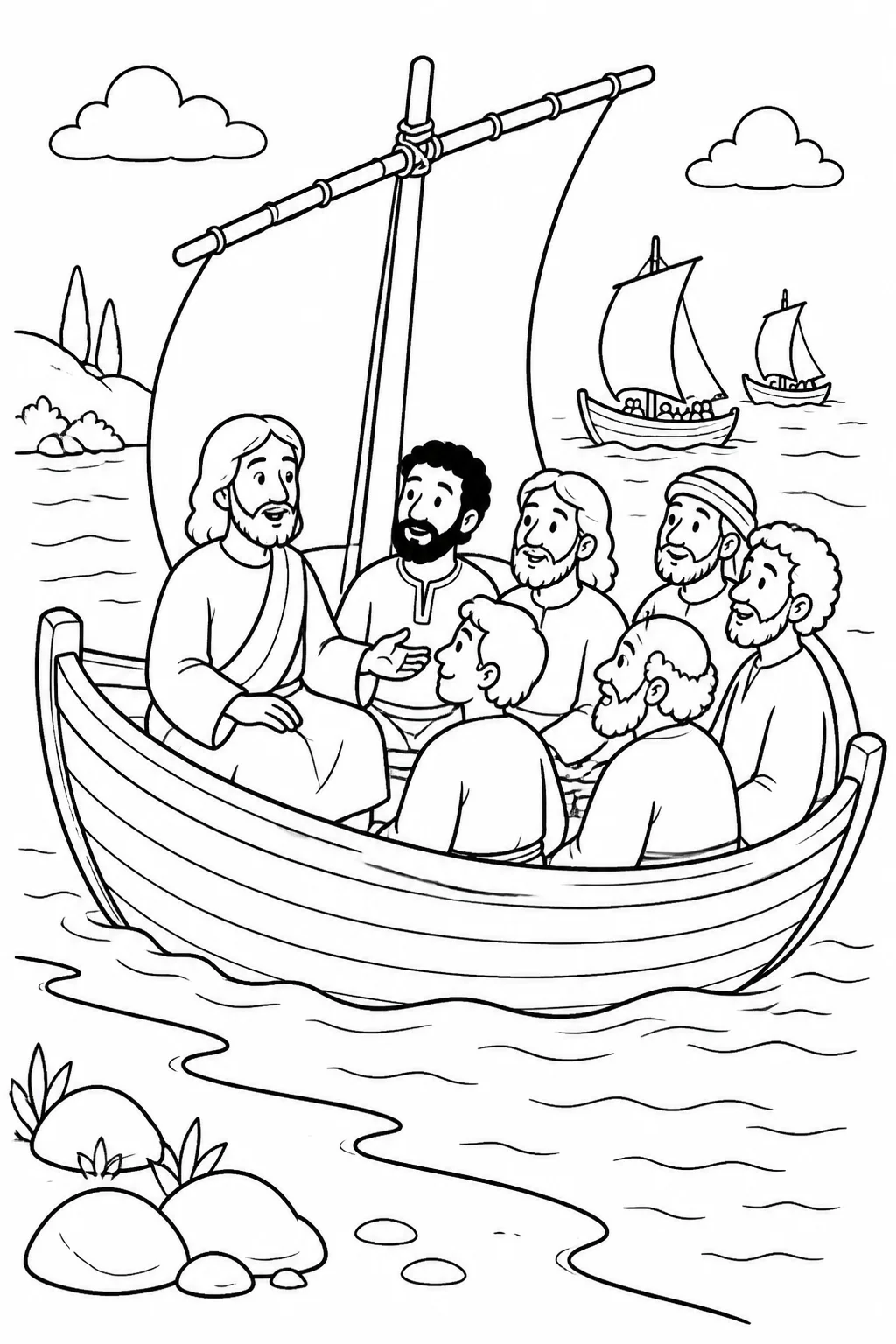
Jesus sits with several disciples in a boat as they leave the seashore and begin crossing the sea, with other boats nearby.

Setting Out Across the Sea

Mark 4:35–41
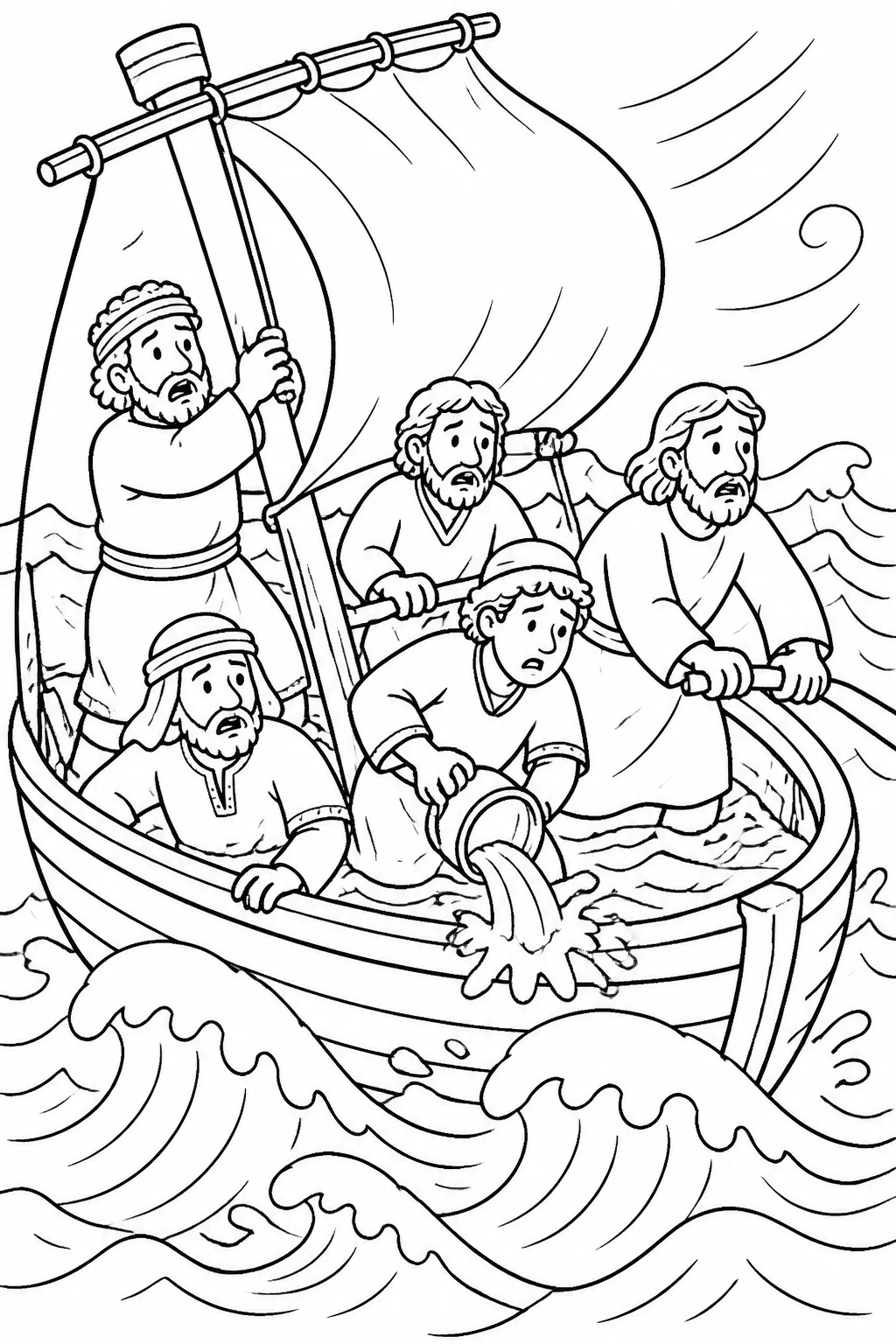
Several frightened disciples in a boat as wind and waves beat into it and water begins filling the boat.

The Storm Fills the Boat

Mark 4:35–41
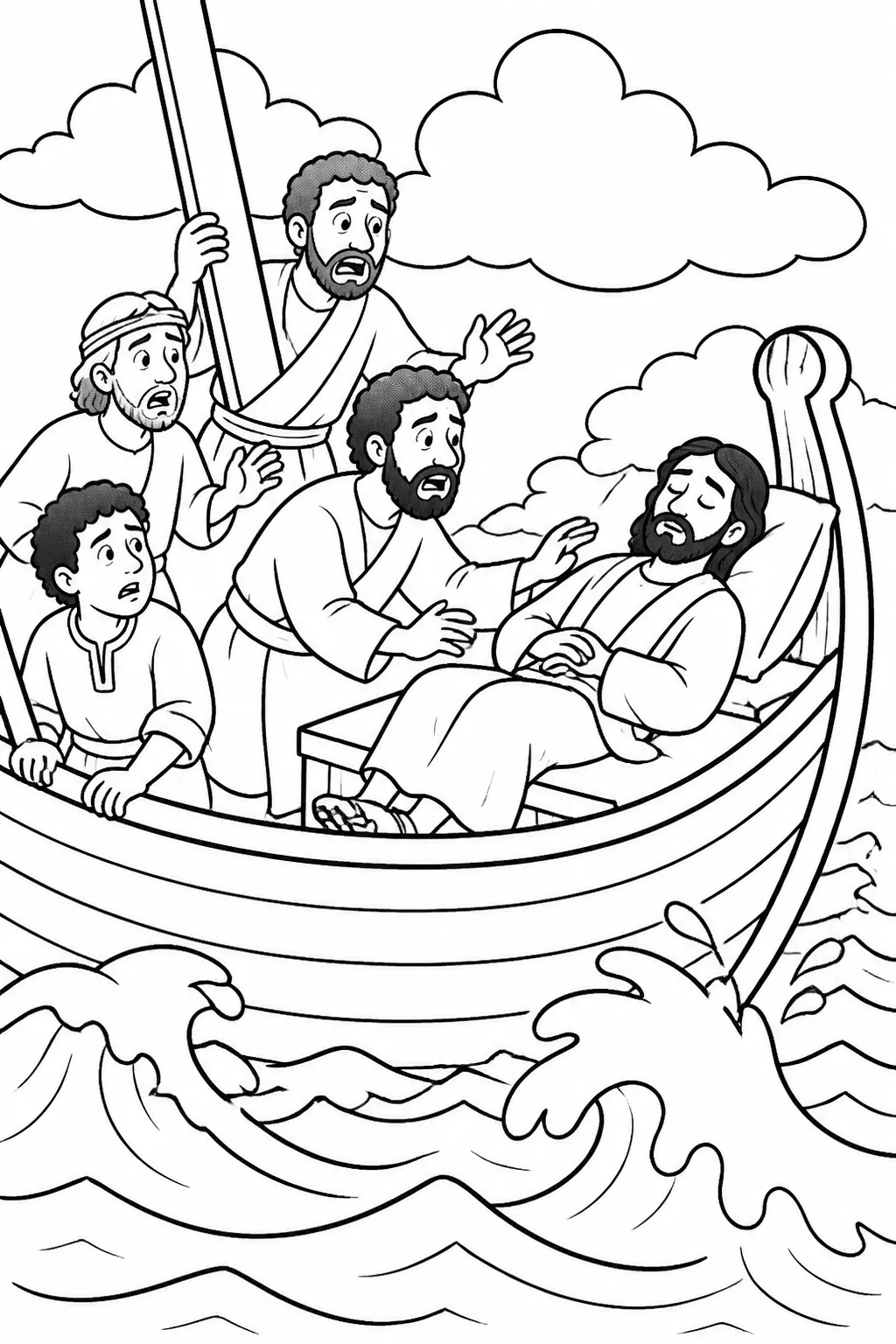
Jesus asleep on a cushion in the stern of a boat while several disciples approach to wake him, from Mark 4:38.

Jesus Sleeps on a Cushion

Mark 4:35–41
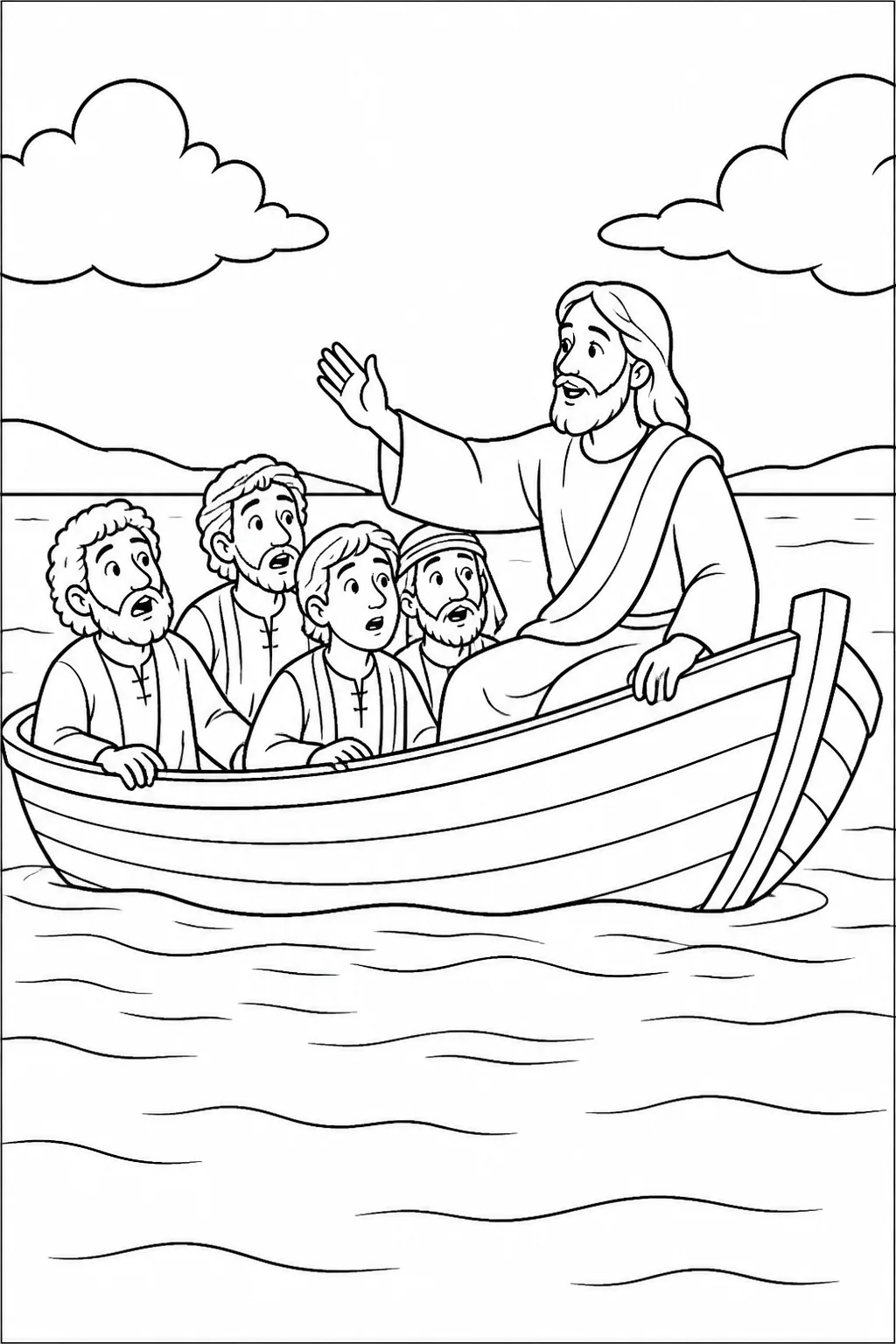
Jesus in a boat speaking to the wind and sea as the storm becomes calm, based on Mark 4:39.

Peace, Be Still

Mark 4:35–41

Jesus faces several disciples in a boat on a calm sea after the storm, asking why they are afraid and whether they still have no faith.

Questions on the Calm Sea

Mark 4:35–41
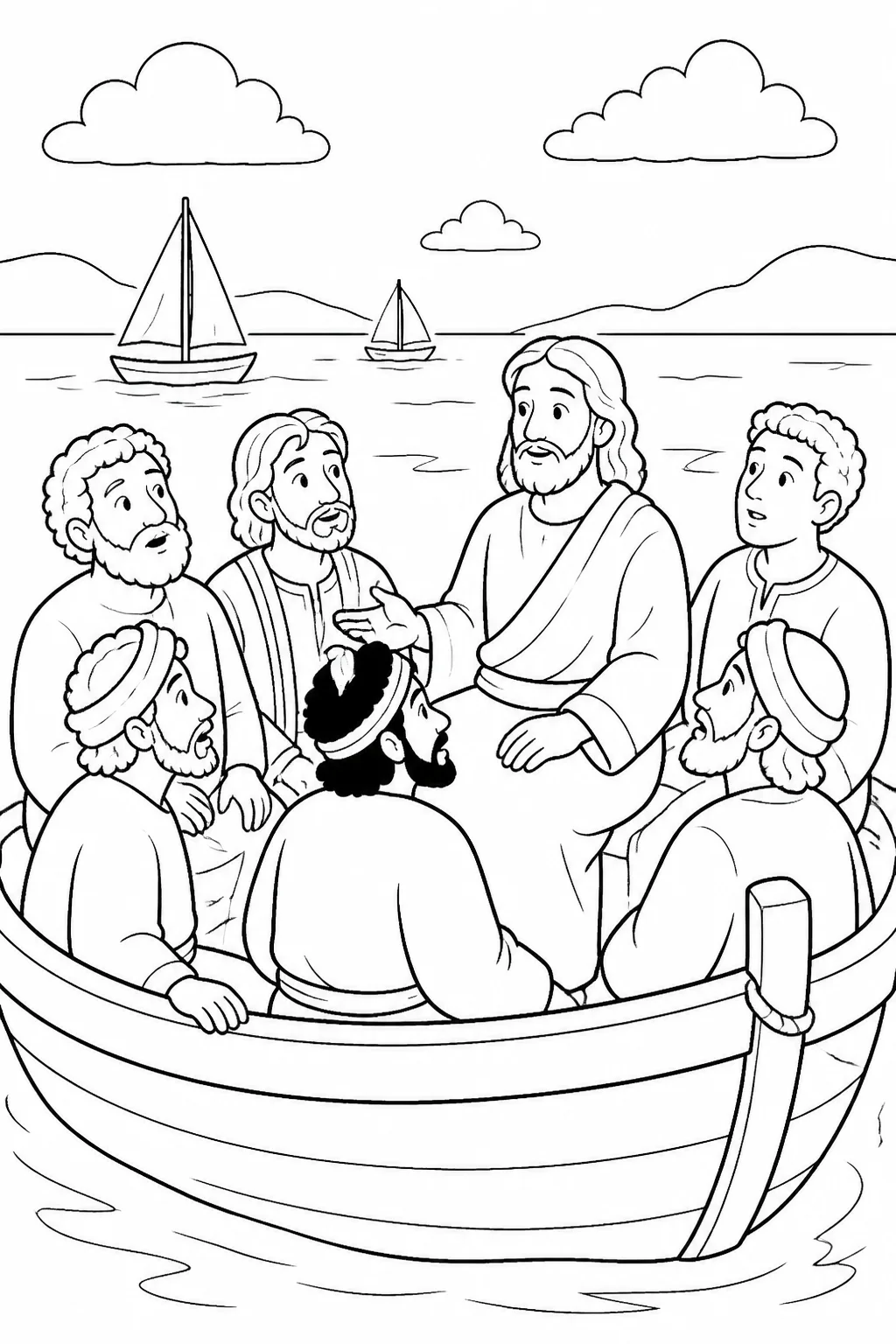
Jesus and several disciples in a boat on a calm sea after the storm, with the disciples looking toward Jesus and one another in awe.

Wonder at Jesus’ Authority

Mark 4:35–41
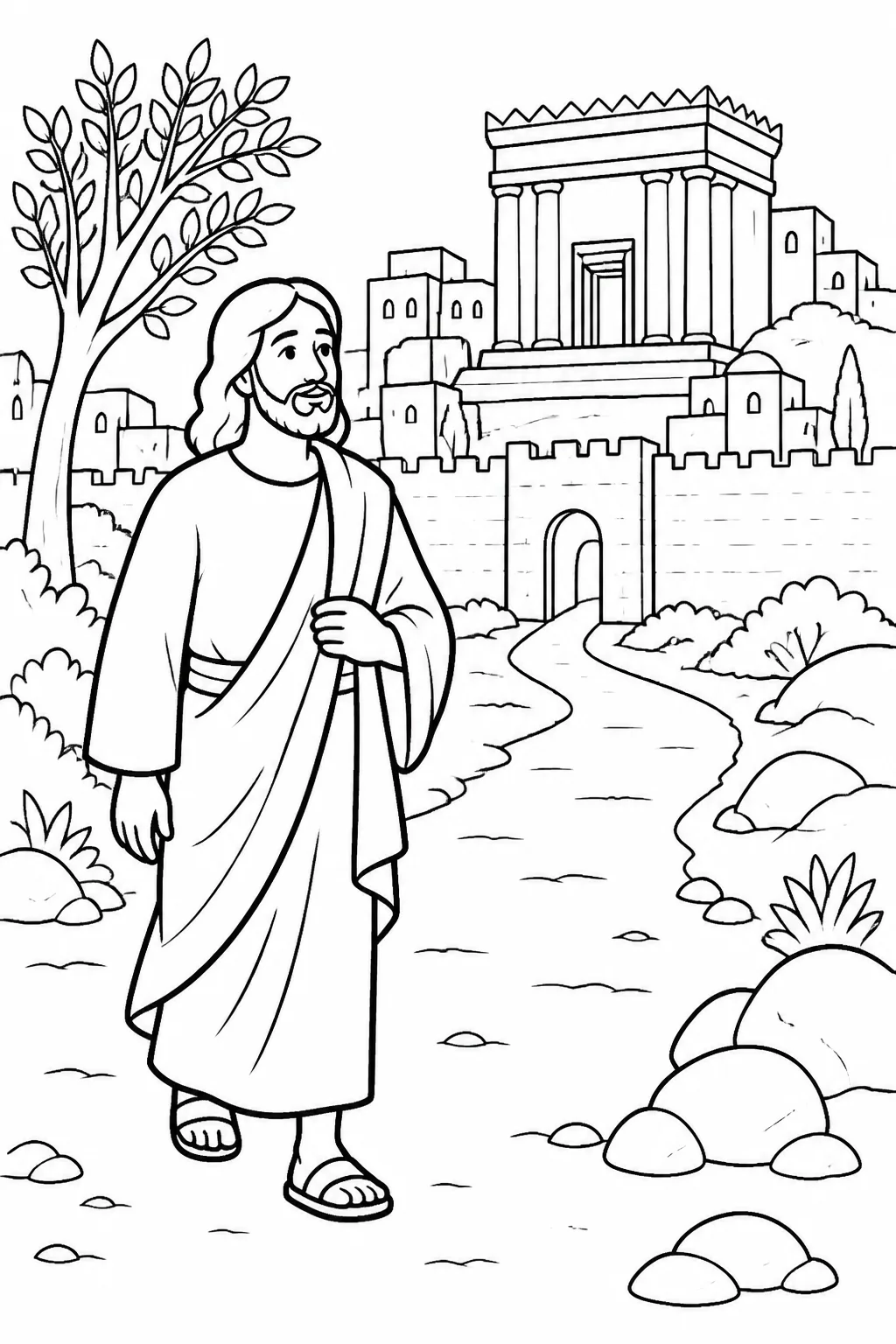
Jesus arriving in Jerusalem during Passover, with the city and temple represented in the background.

Jesus Goes to Jerusalem for Passover

John 2:13-22
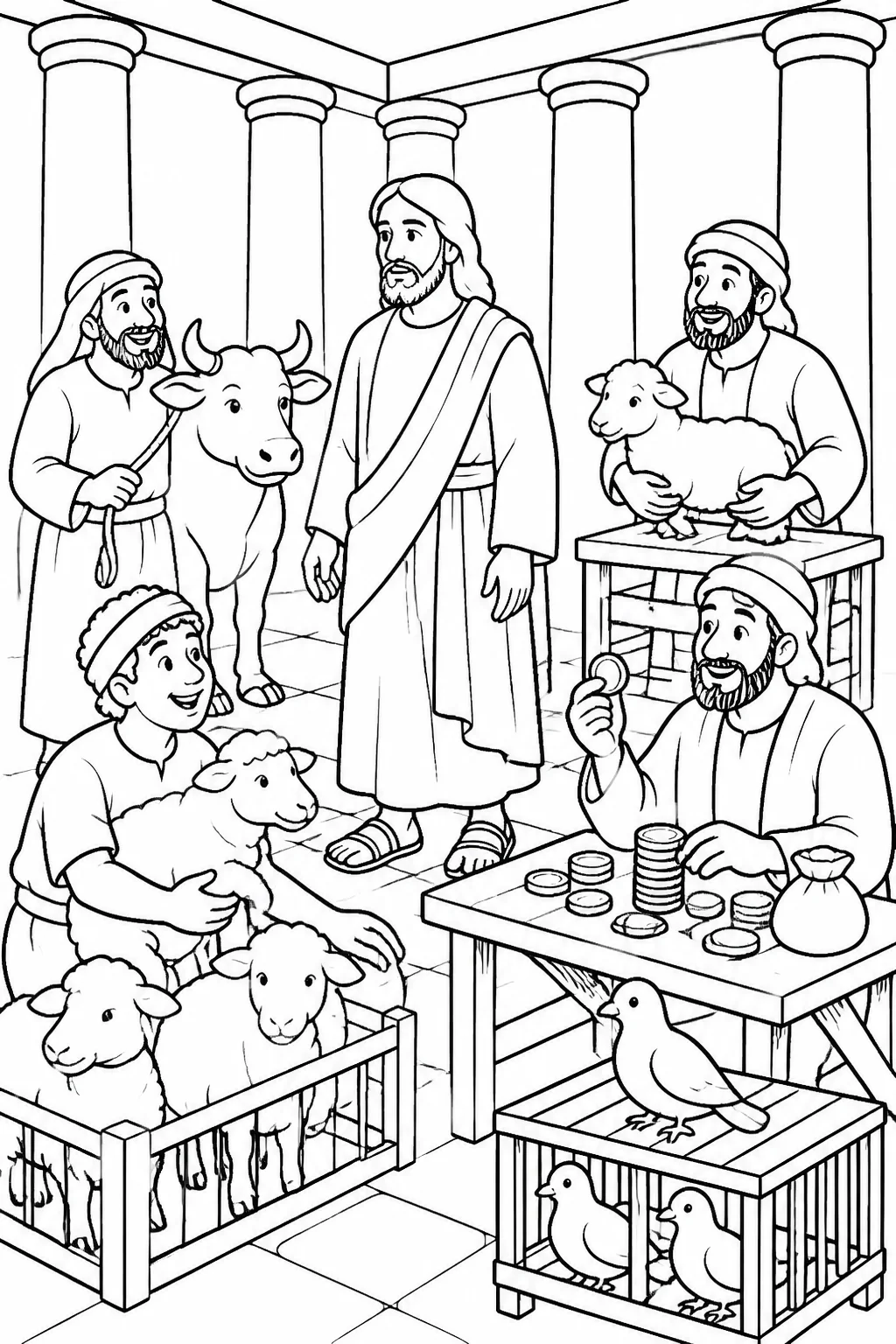
Jesus stands in the temple courts while sellers of oxen, sheep, and doves and money changers with tables are present, based on John 2:14.

Activity in the Temple Courts

John 2:13-22
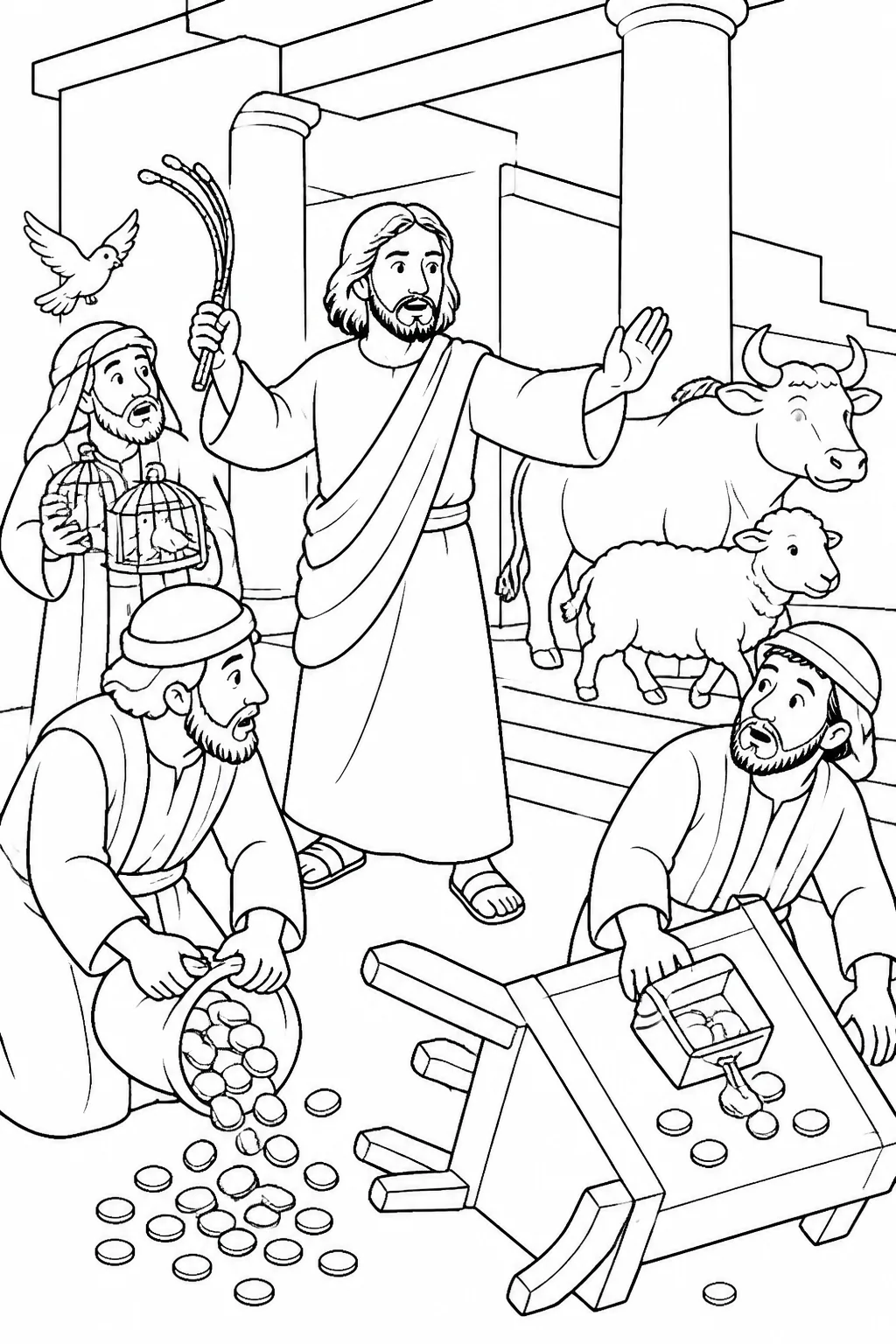
Jesus takes firm, controlled action in the temple area as sheep and oxen move away, coins spill, tables are overturned, and dove sellers are told to take their things away.

Jesus Restores Reverence

John 2:13-22
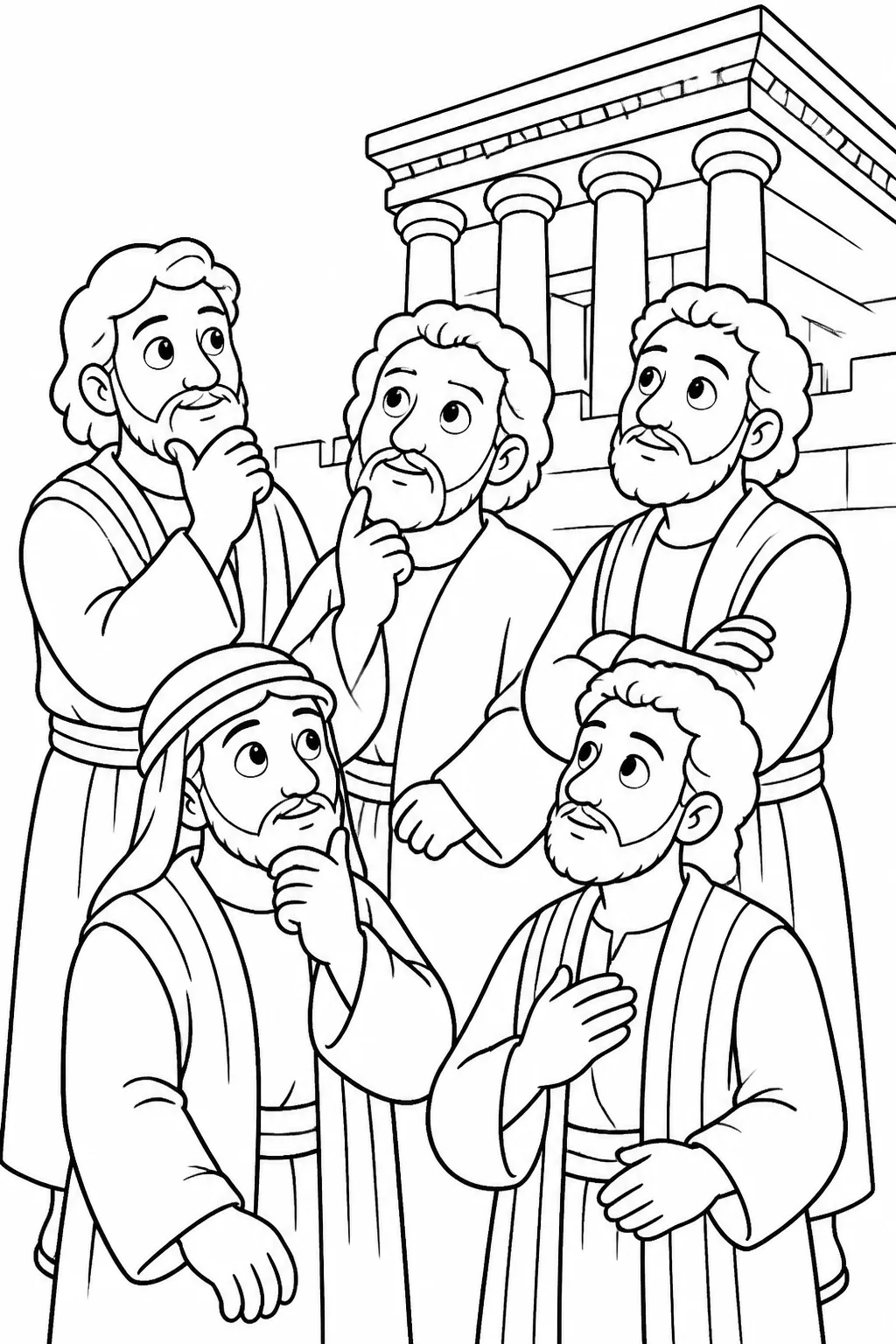
Jesus’ disciples near the temple, thoughtfully remembering the Scripture about zeal for God’s house, with a small scroll as a visual aid.

The Disciples Remember Scripture

John 2:13-22
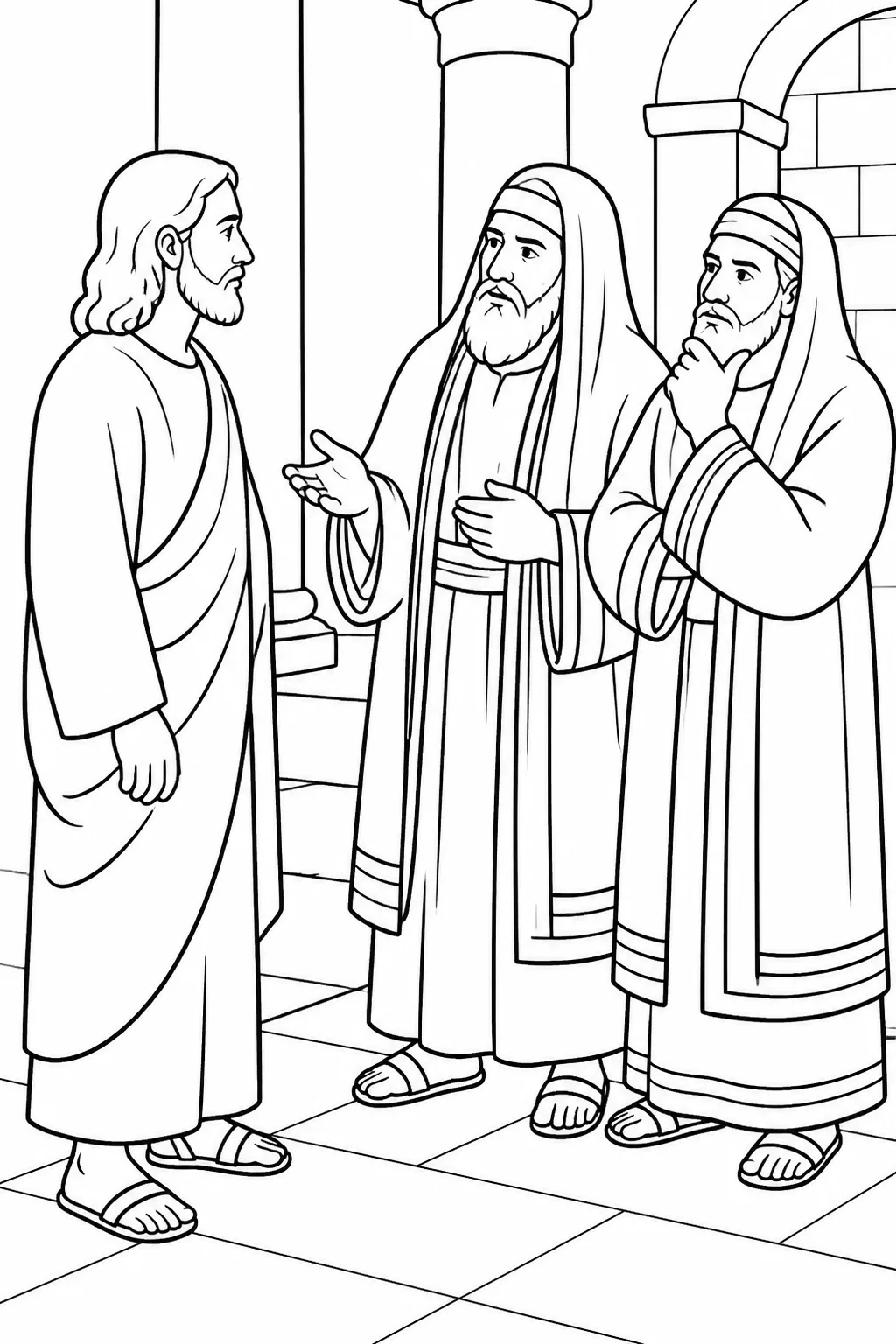
Jesus and Jewish leaders in the temple during a serious exchange about what sign Jesus can show for doing these things.

A Question About Jesus’ Authority

John 2:13-22
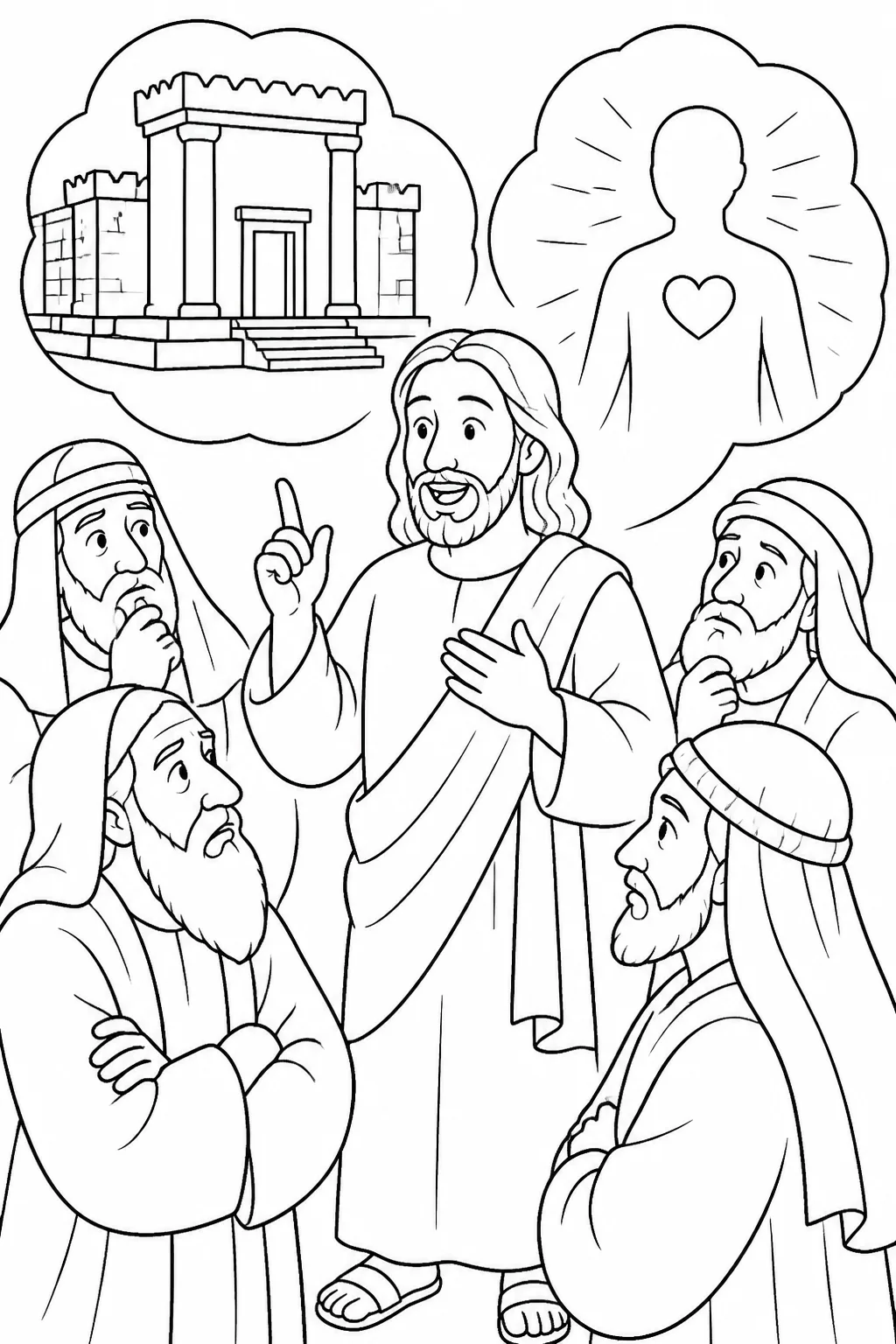
Jesus speaking with Jewish leaders in the Temple, with a respectful symbolic distinction between the Temple building and Jesus’ body.

Jesus Explains the Temple Sign

John 2:13-22
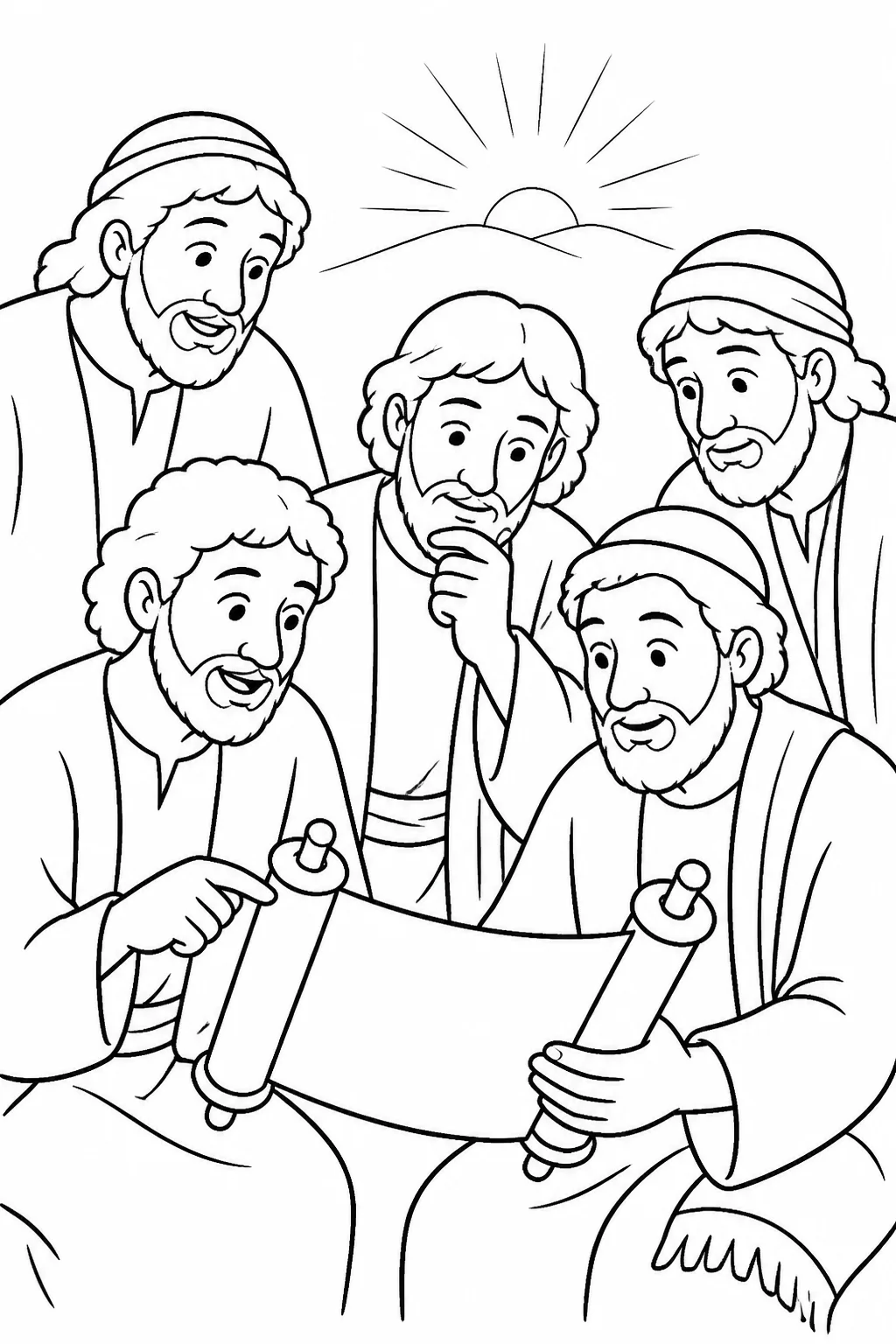
Jesus’ disciples gathered around Scripture, remembering Jesus’ words and believing after his resurrection.

The Disciples Remember and Believe

John 2:13-22
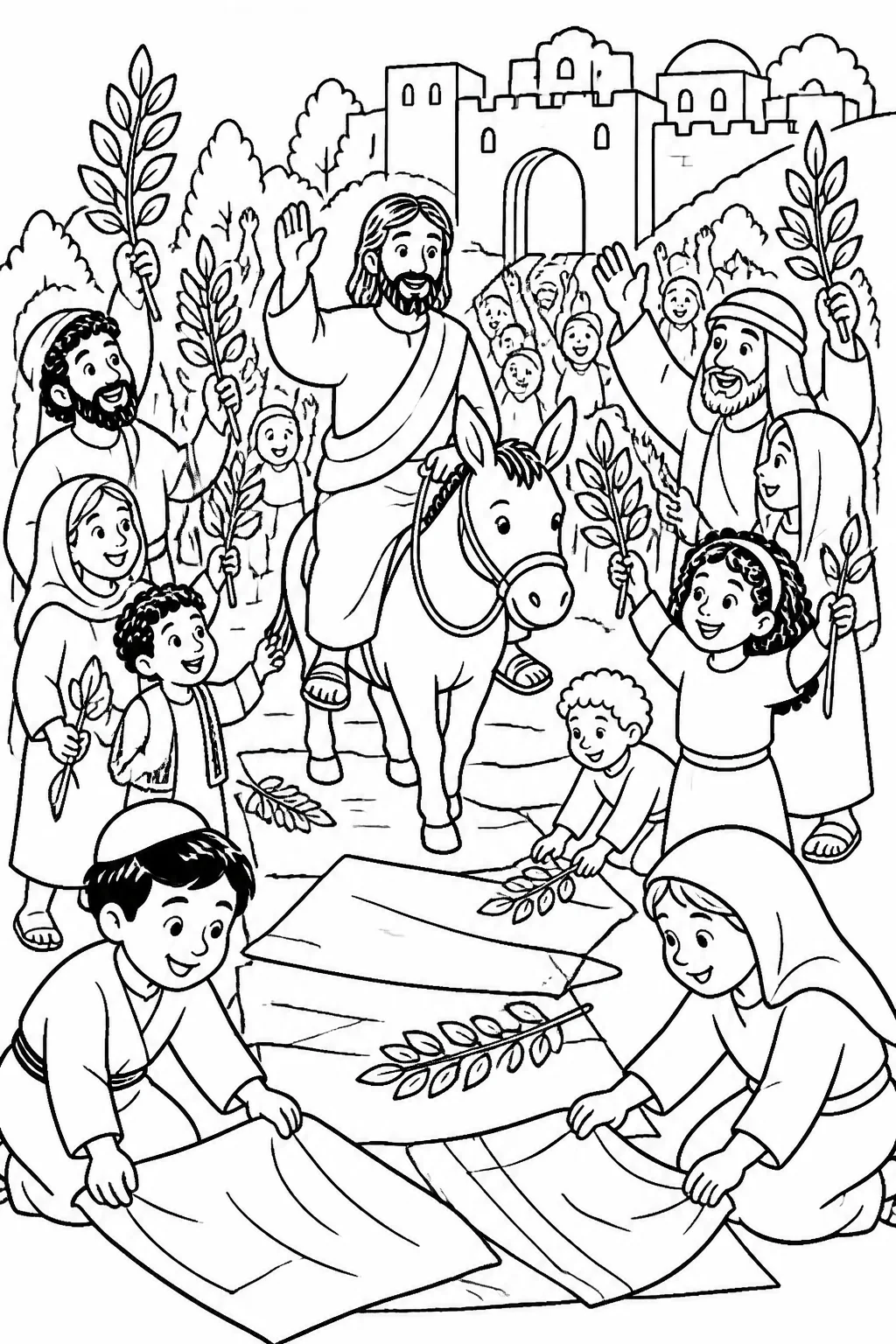
Jesus approaches Jerusalem as a crowd welcomes him by spreading cloaks and branches from trees across the road and praising him as the Son of David.

A Joyful Welcome on the Road

Matthew 21:1-11
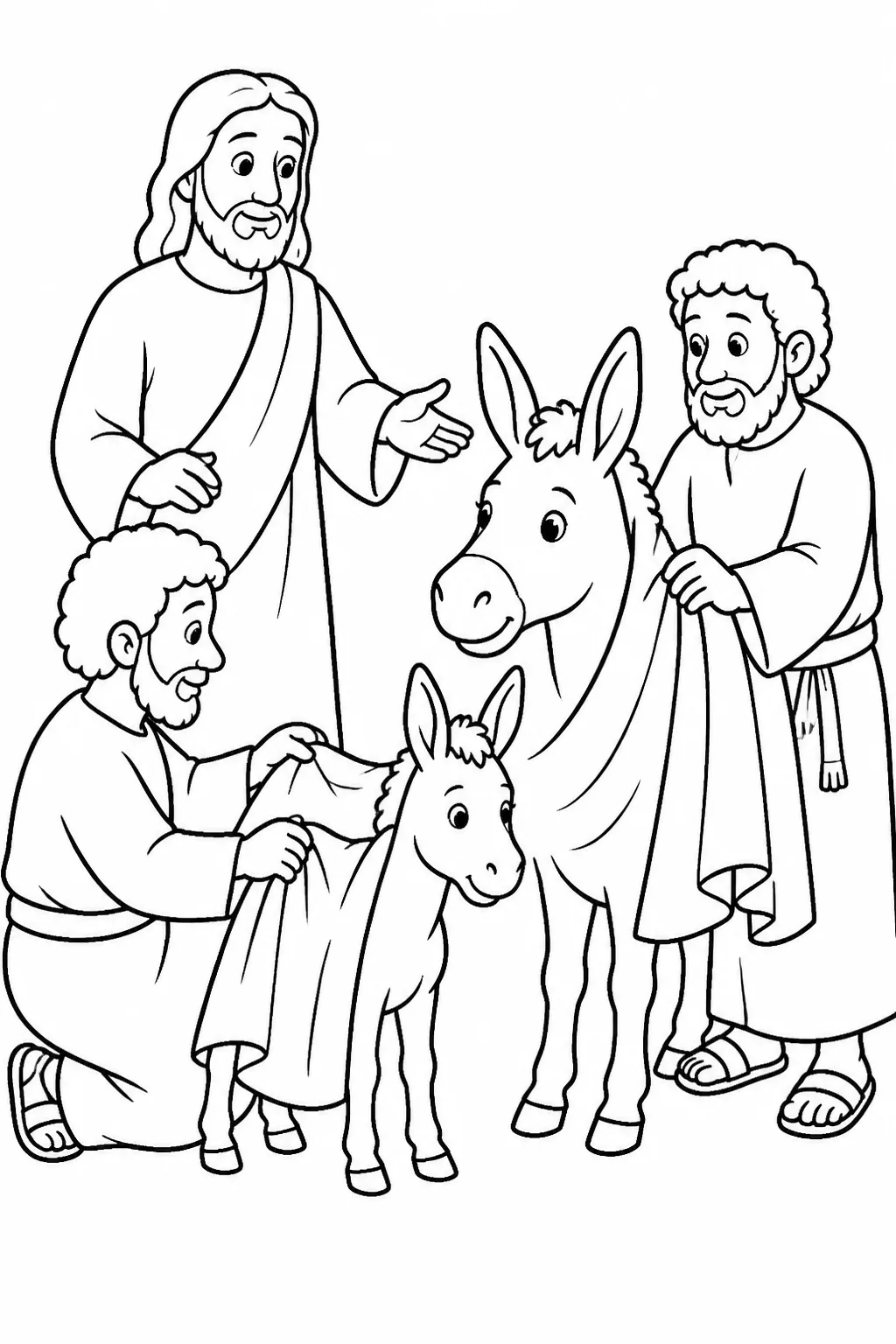
Jesus near a donkey and its colt while two unnamed disciples place cloaks on the animals, based on Matthew 21:6–7.

The Disciples Prepare the Animals

Matthew 21:1-11
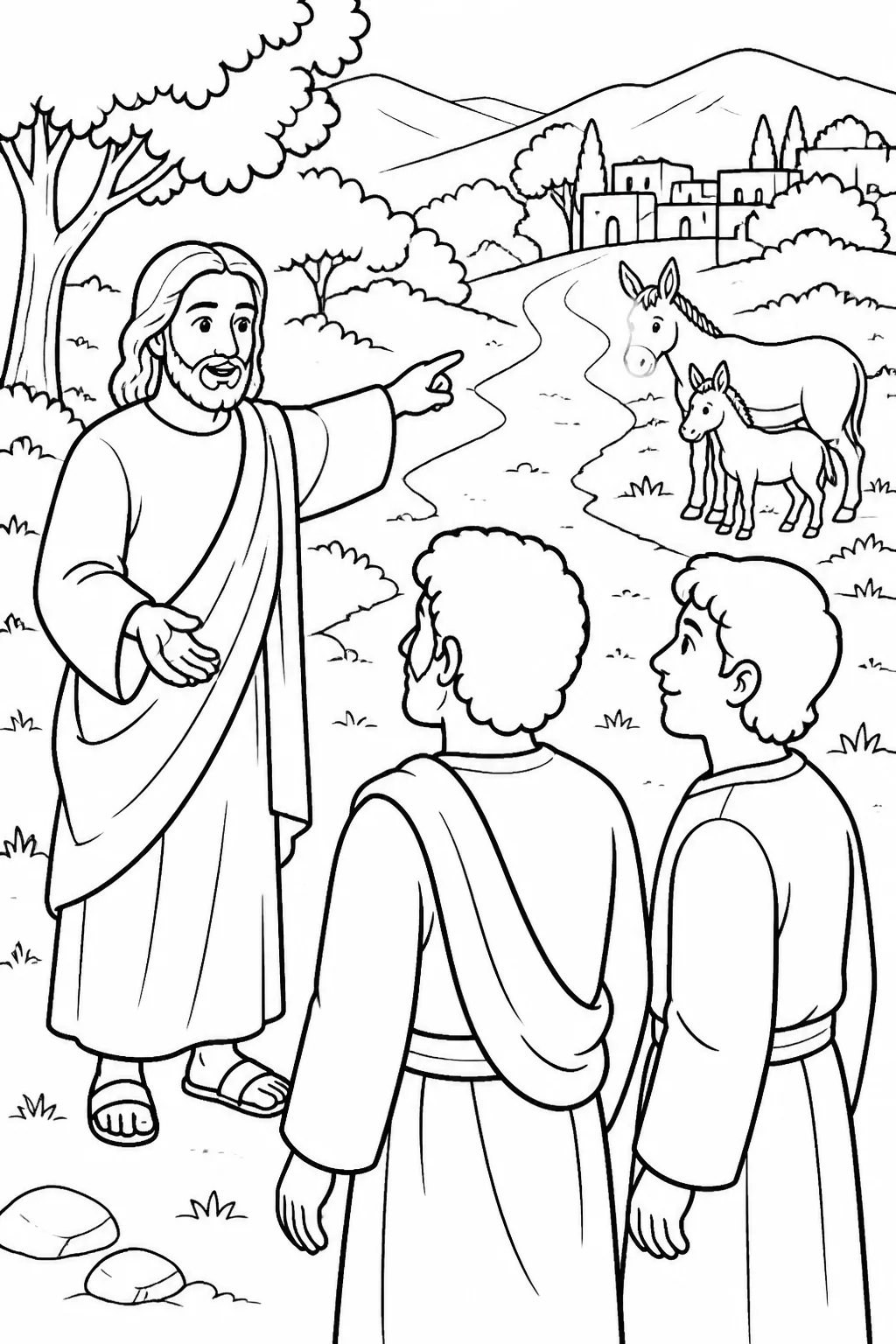
Jesus sending two unnamed disciples along a path toward a nearby village to bring a donkey and its colt near Bethphage and the Mount of Olives.

Jesus Sends Two Disciples

Matthew 21:1-11
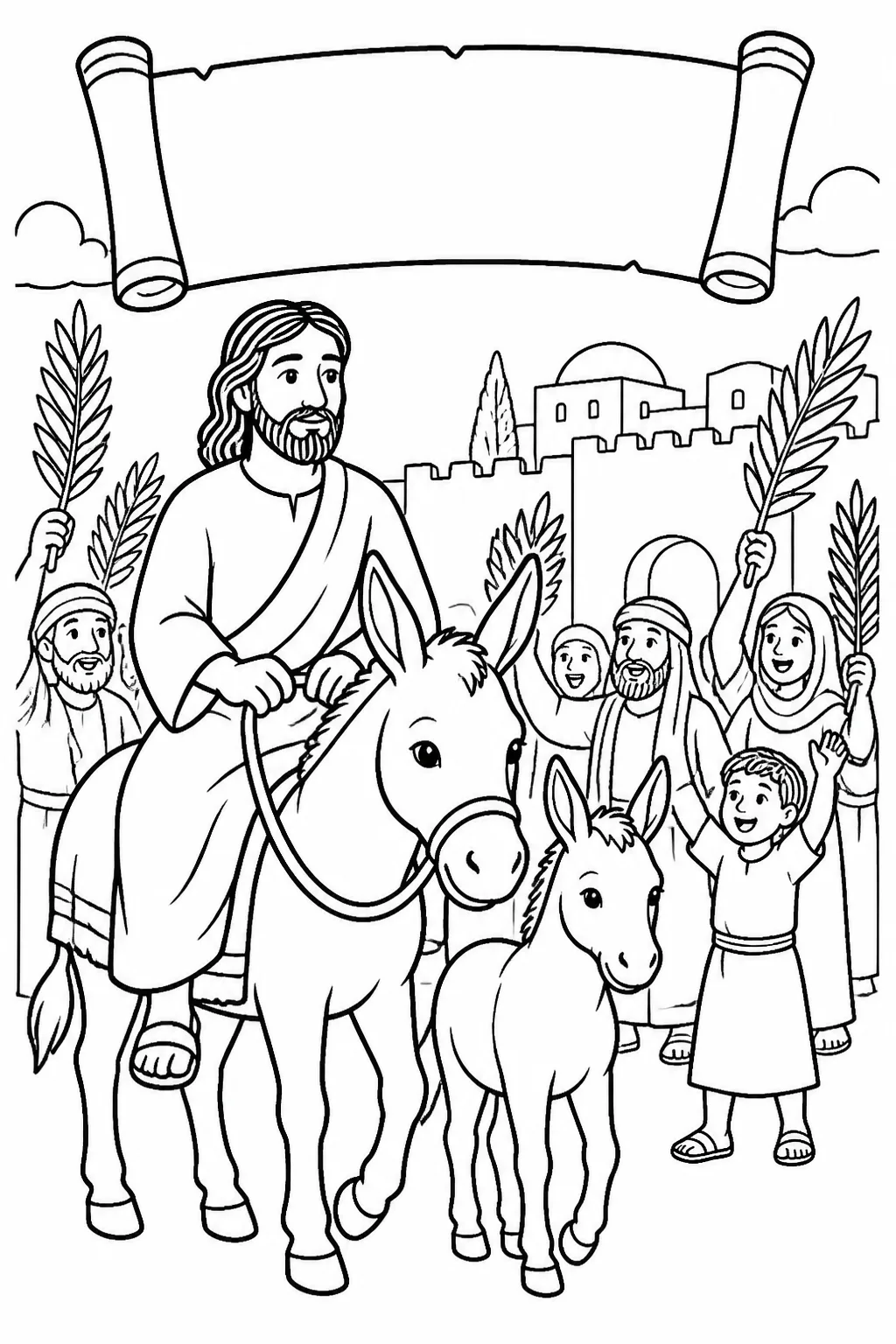
Coloring page concept of Jesus arriving humbly near Jerusalem with a donkey and its colt, alongside a scroll representing the prophetic message about the King’s coming.

The Humble King Comes

Matthew 21:1-11
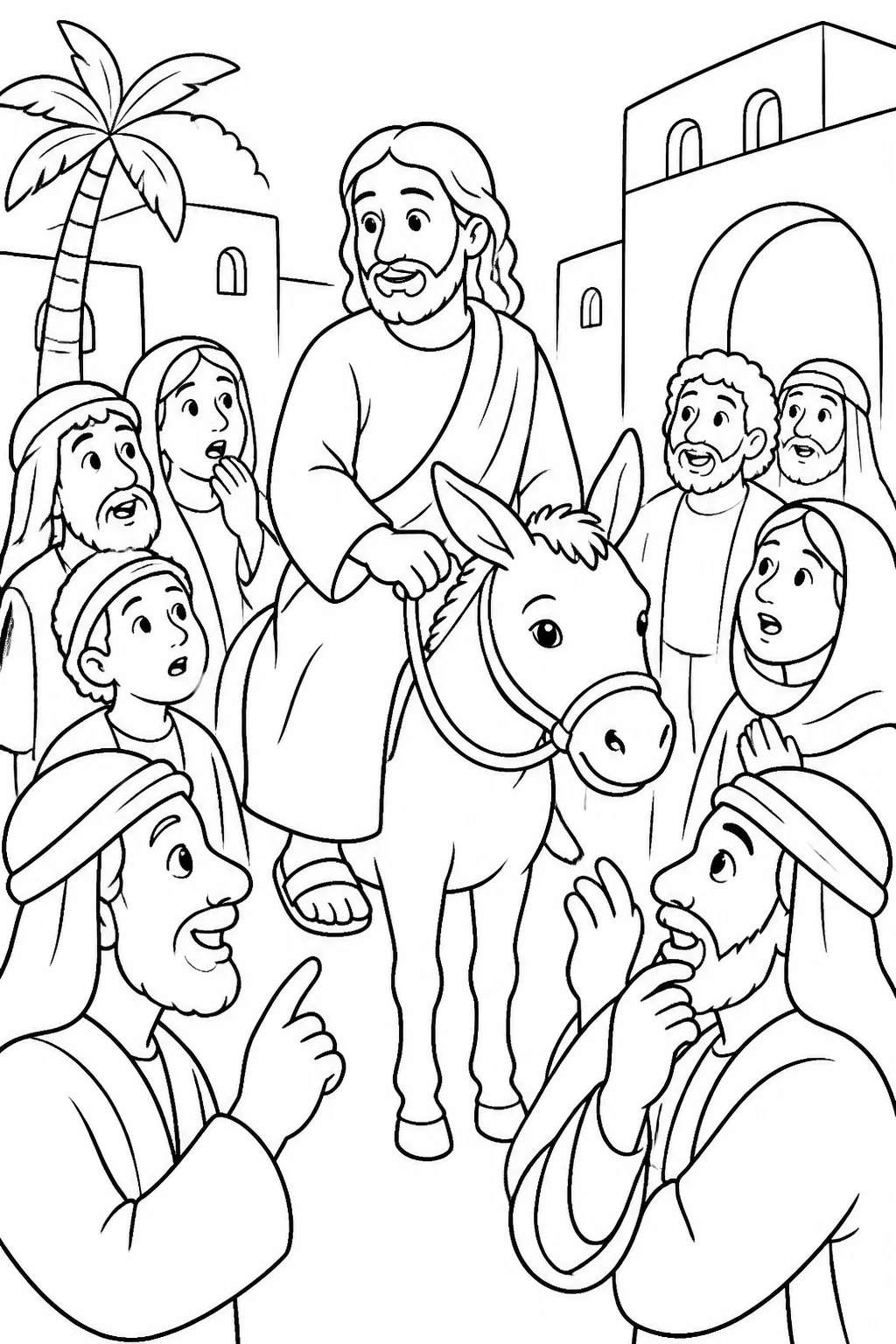
Jesus entering Jerusalem as people ask who he is, while other crowd members identify him as the prophet from Nazareth in Galilee.

Who Is He?

Matthew 21:1-11

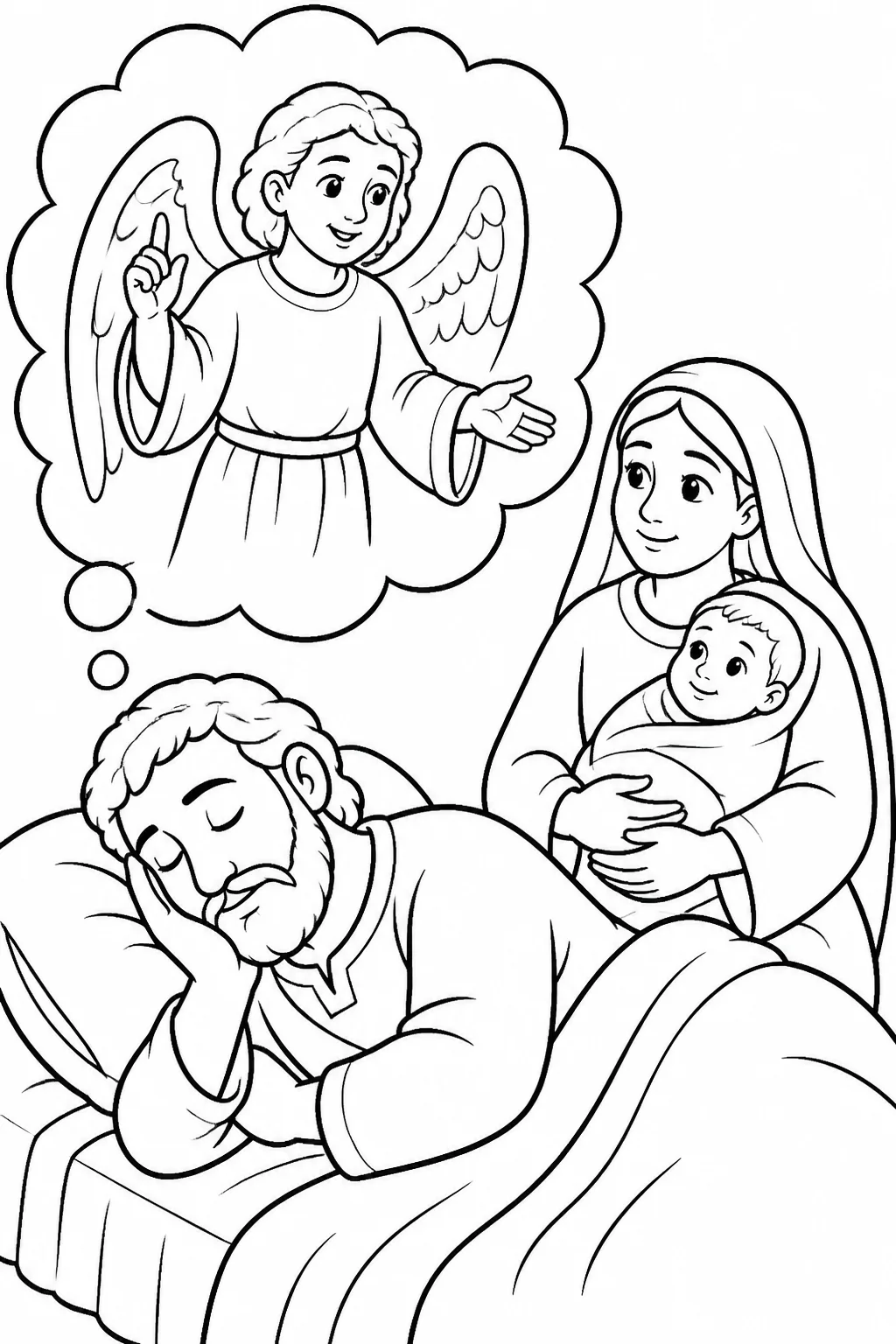
Joseph receives a warning from an angel of the Lord in a dream to take Jesus and Mary to Egypt for the child’s protection.

A Dream Warning

Matthew 2:13-23

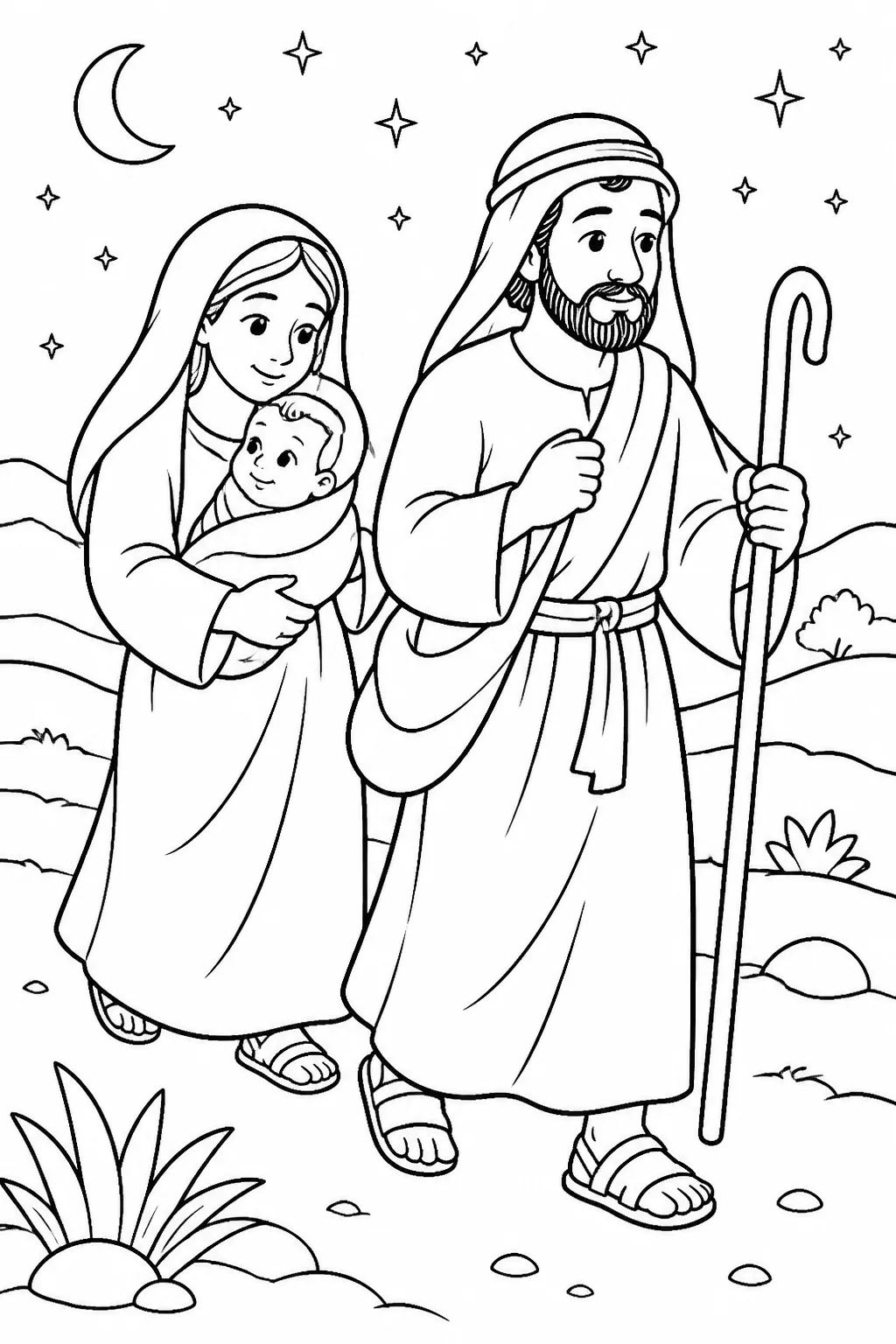
Joseph, Mary, and Jesus departing together at night for Egypt, as described in Matthew 2:14.

Leaving for Egypt at Night

Matthew 2:13-23
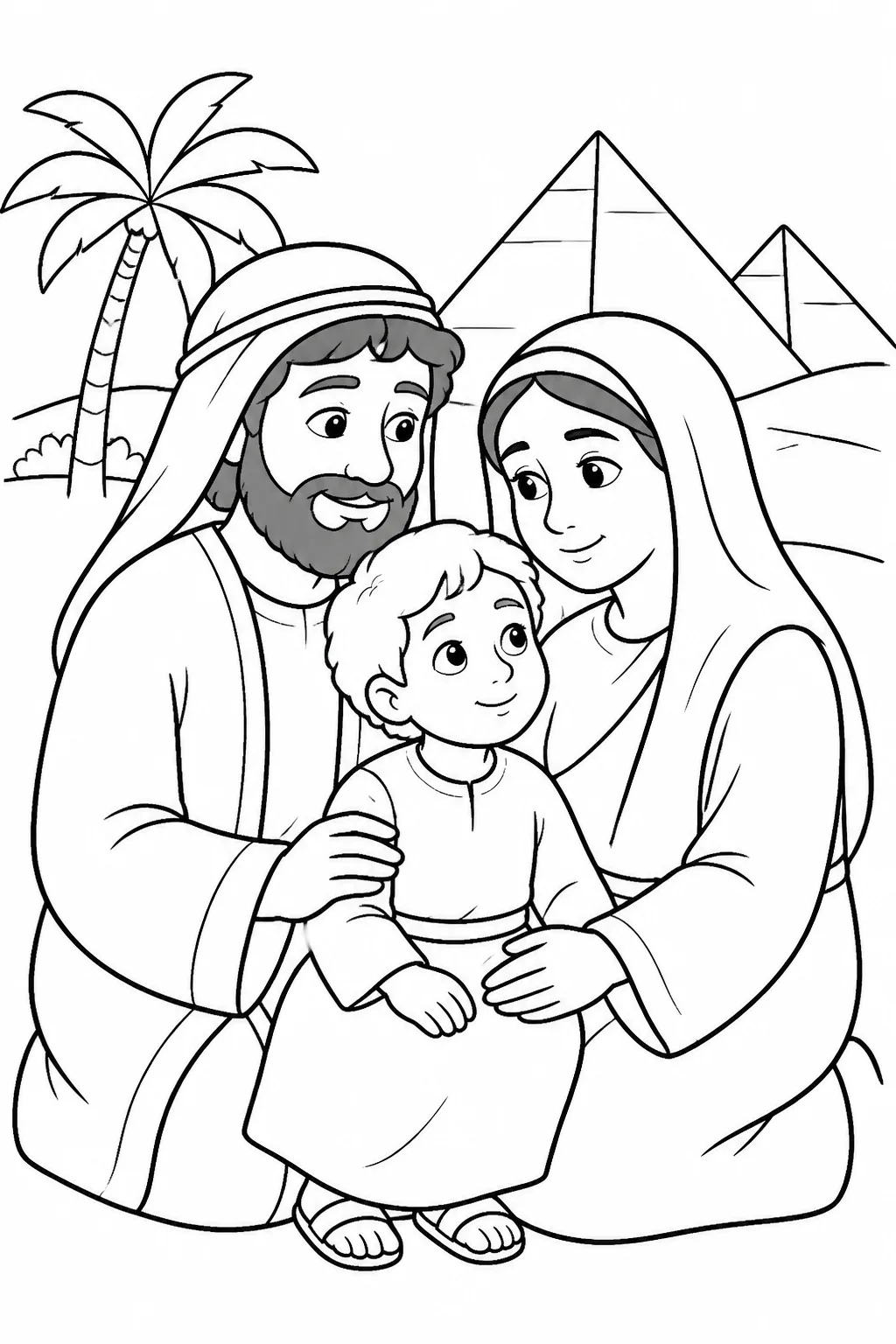
Mary, Joseph, and Jesus together in a quiet Egyptian setting, representing their protected stay in Egypt until Herod dies.

Safe in Egypt

Matthew 2:13-23

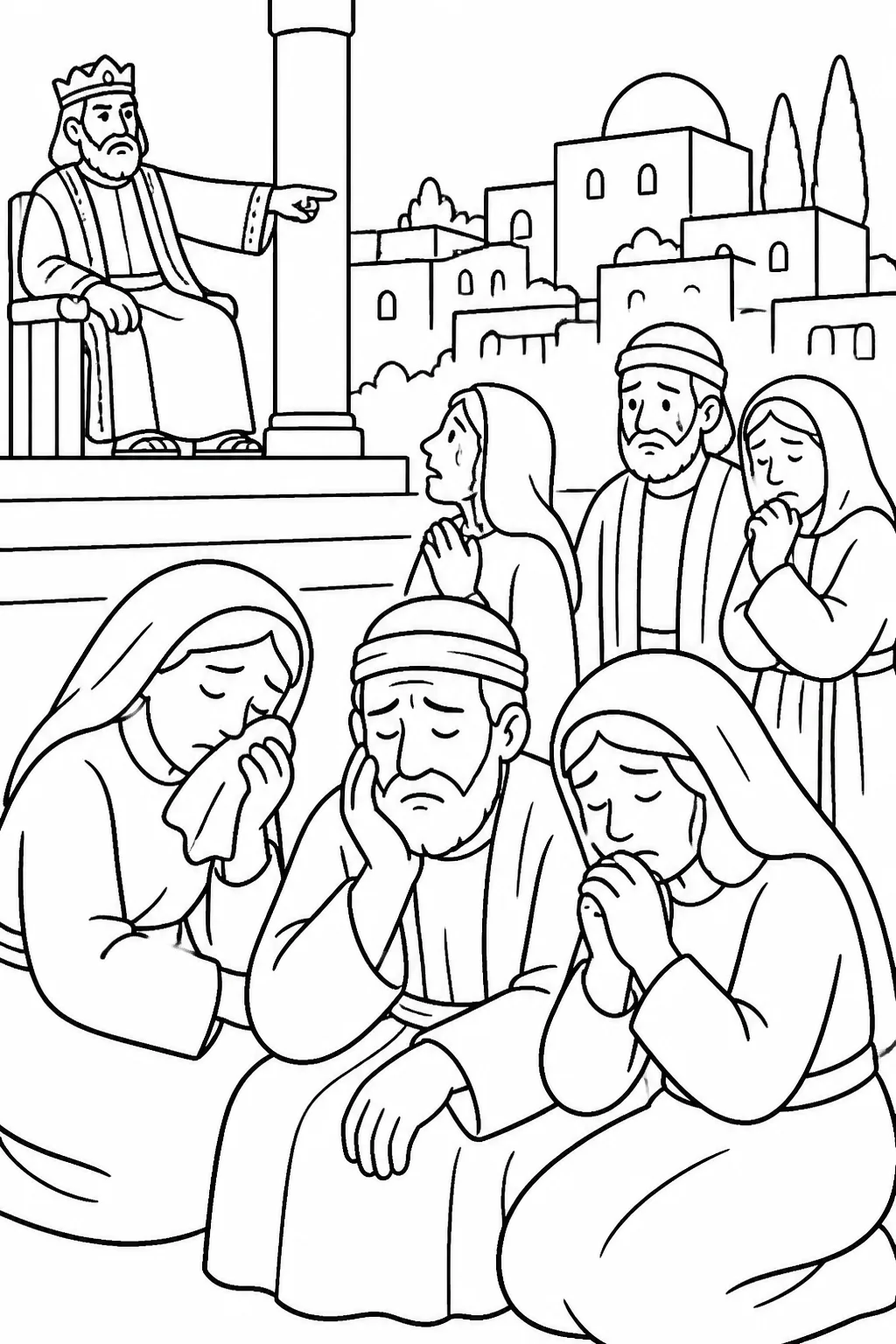
A symbolic, non-graphic depiction of Herod the Great issuing an order while parents and mourners grieve in Bethlehem.

A City in Mourning

Matthew 2:13-23

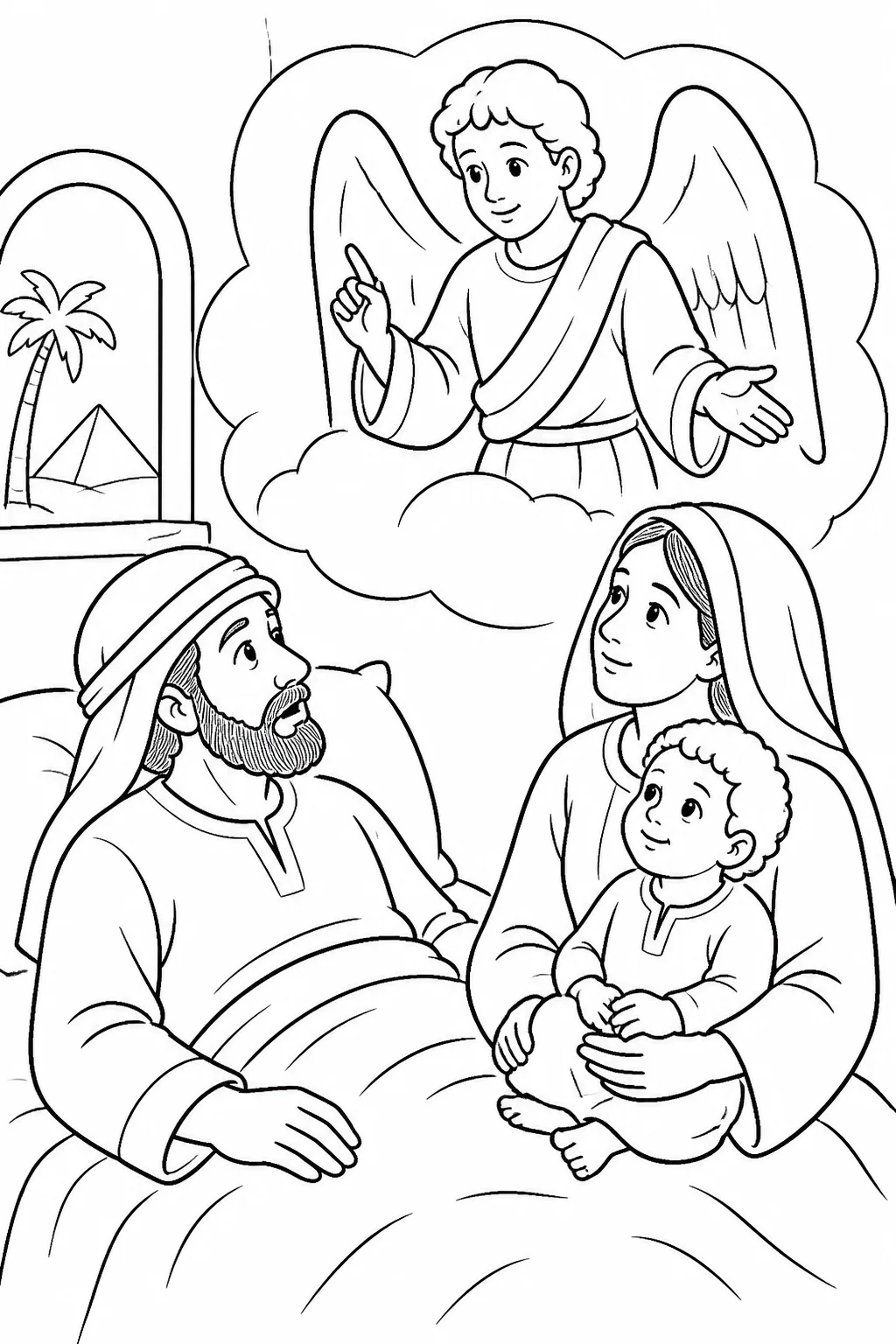
Joseph receives an angel’s message in a dream in Egypt to take Jesus and Mary back to Israel because those seeking the child’s life are dead.

The Return Is Safe

Matthew 2:13-23

Joseph leads Mary and Jesus into Nazareth in Galilee as the family settles there after Joseph is warned in a dream.

A New Home in Nazareth

Matthew 2:13-23
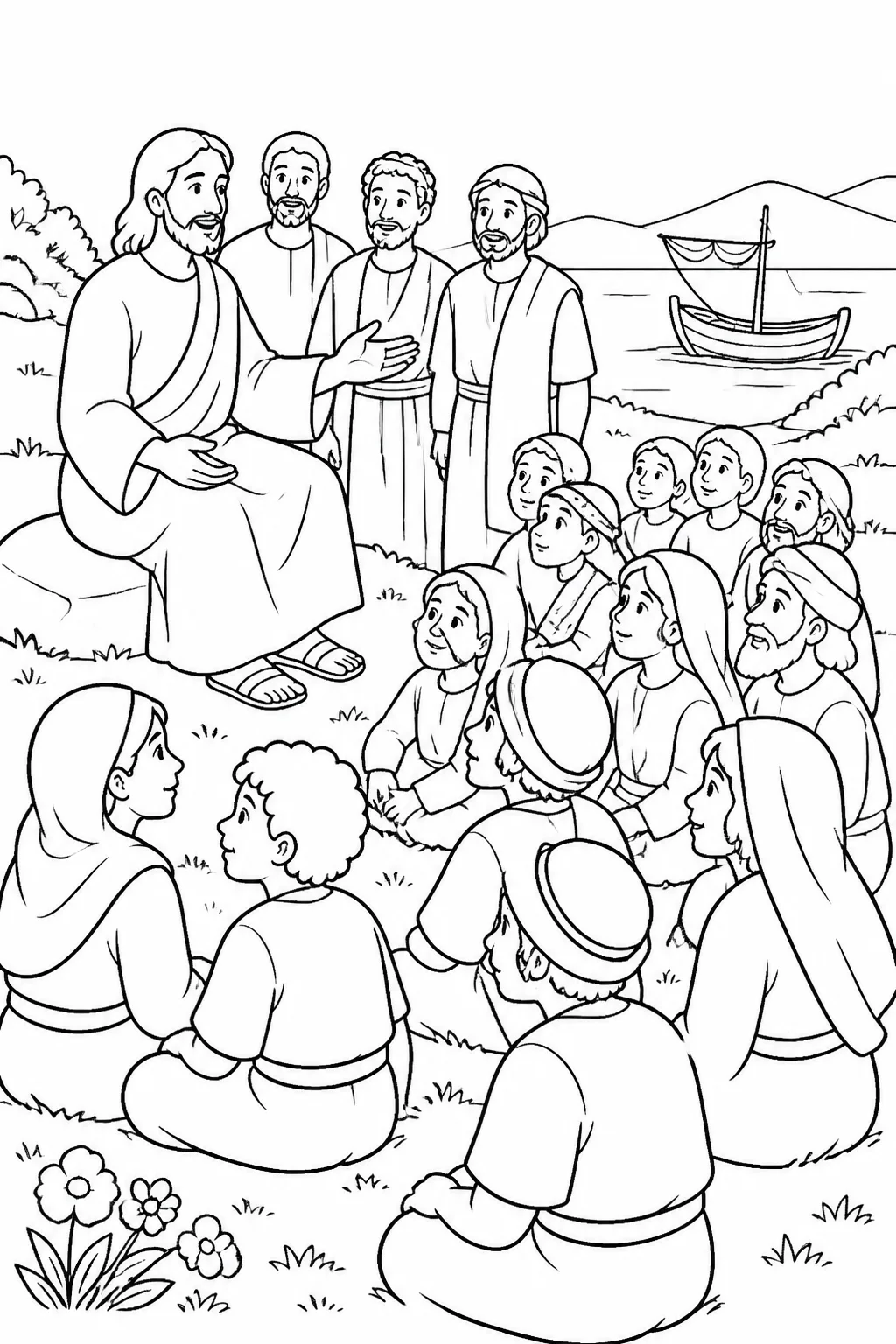
Jesus teaching a large crowd in a solitary outdoor place while the disciples stand nearby and a boat is present.

Jesus Teaches the Crowd

Mark 6:30-44

Jesus listens as the disciples discuss feeding the crowd in a solitary place, with five loaves and two fish shown in the scene.

Five Loaves and Two Fish

Mark 6:30-44
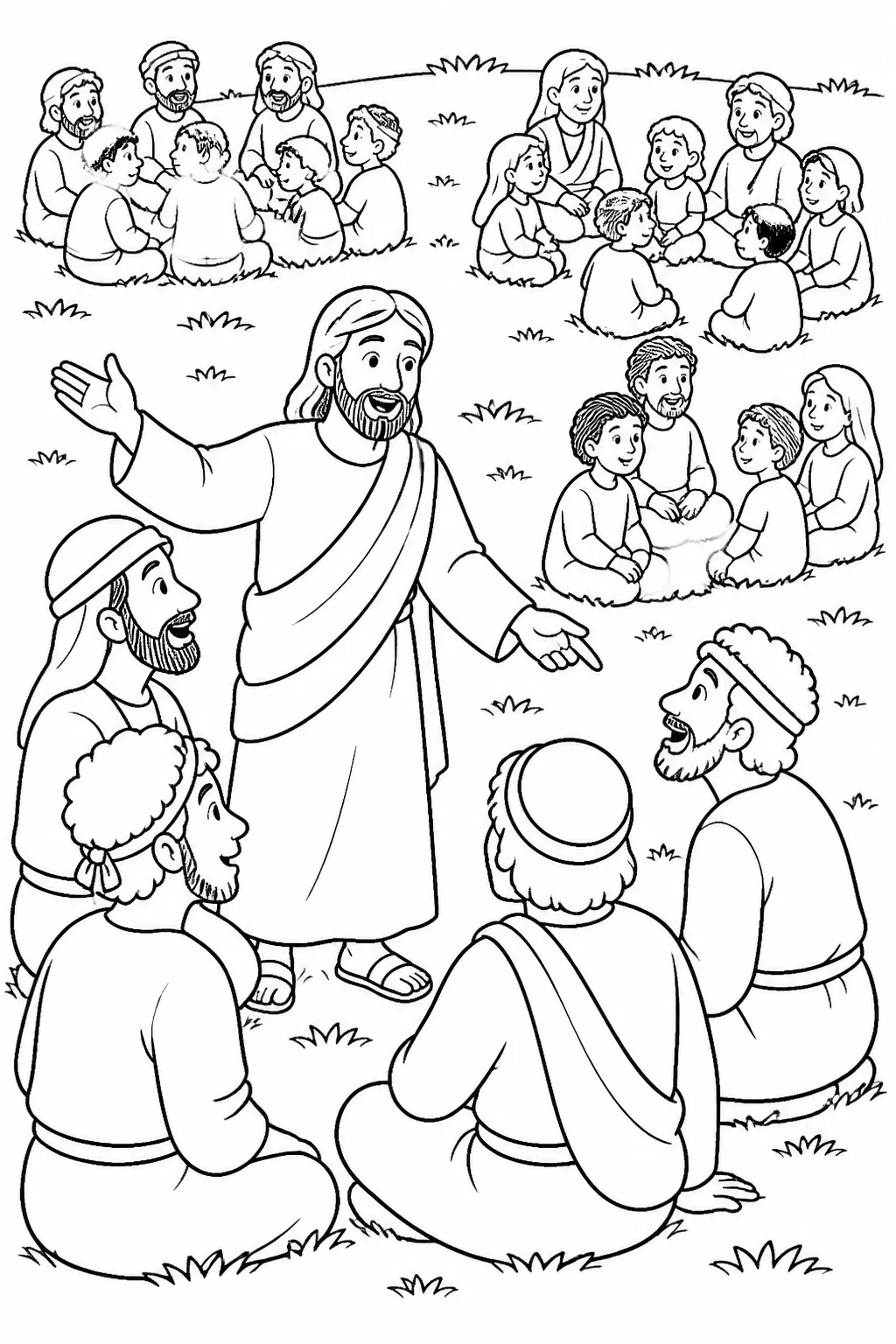
Jesus and the disciples help a crowd sit in organized groups on green grass, as described in Mark 6:39–40.

Everyone Sits on the Green Grass

Mark 6:30-44
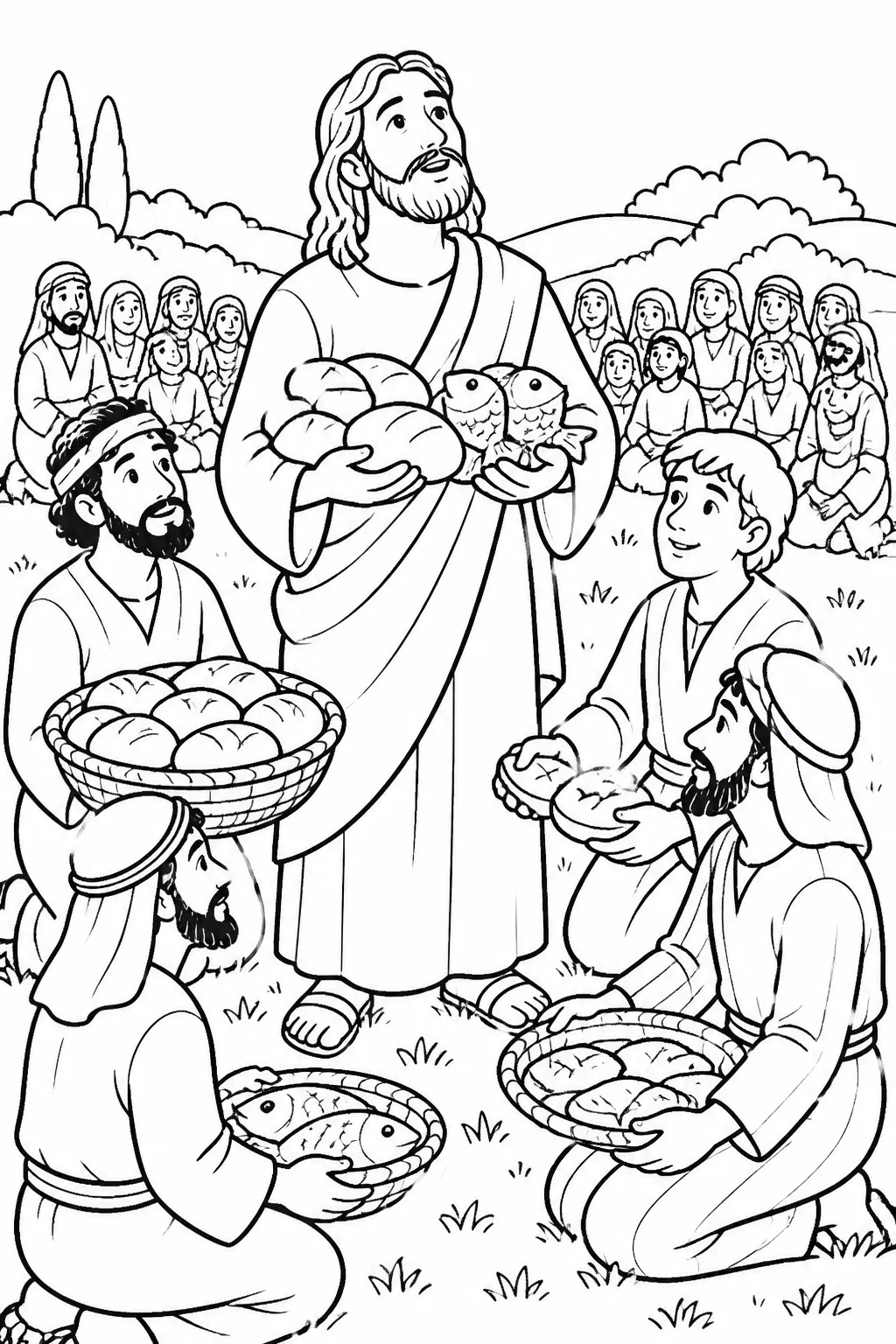
Jesus gives thanks while holding five loaves and two fish before the disciples set the food before the crowd on the grass.

Jesus Gives Thanks

Mark 6:30-44

Jesus, the disciples, and seated groups of people after a meal, with twelve baskets of broken bread pieces and fish gathered nearby.

Twelve Baskets Remain

Mark 6:30-44

Jesus with a blind man and unnamed people bringing him to Jesus in Bethsaida, based on Mark 8:22.

The Man Is Brought to Jesus

Mark 8:22-26
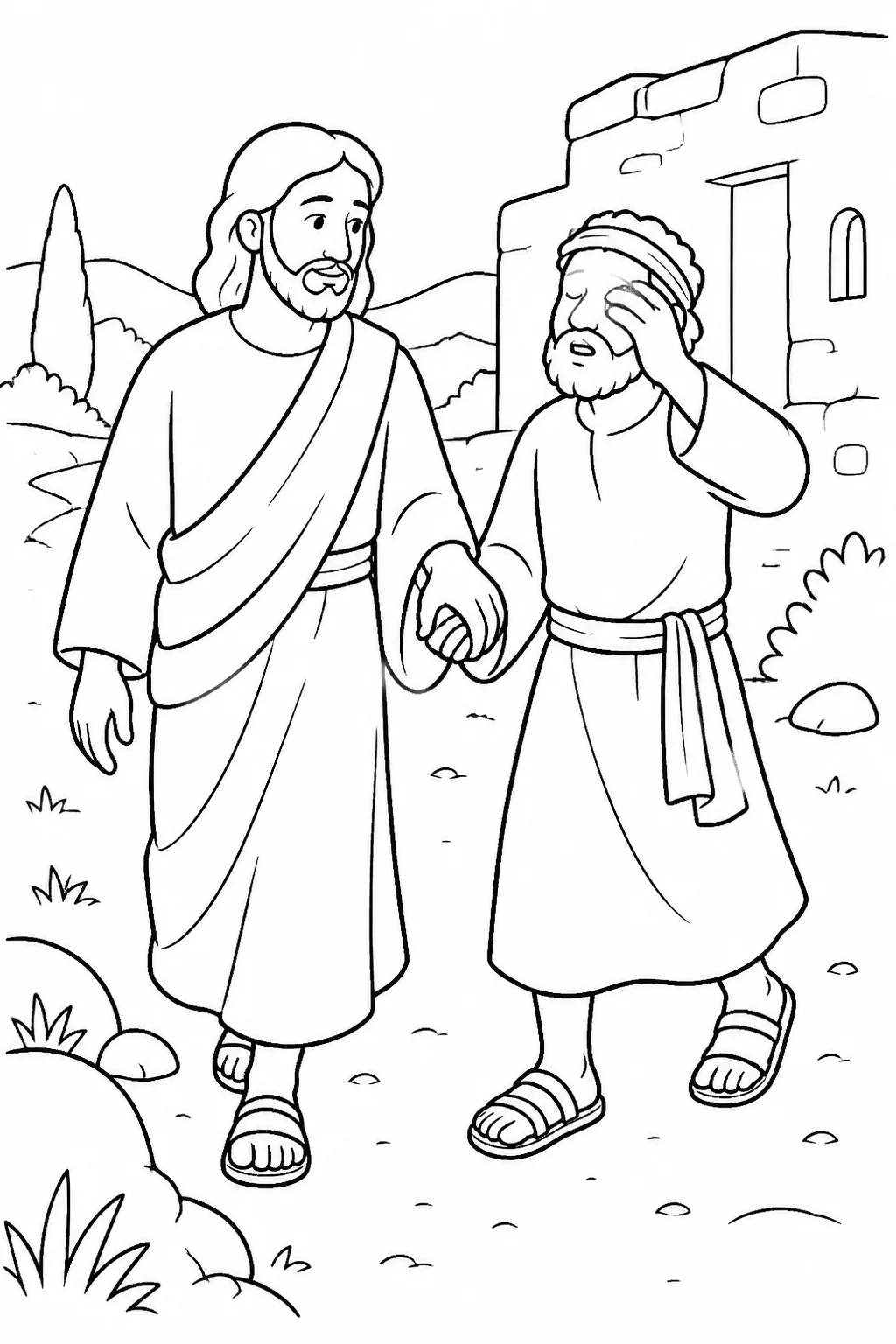
Jesus leads a blind man by the hand outside the village and asks whether he sees anything after placing His hands on the man’s eyes.

Jesus Leads Him Outside

Mark 8:22-26

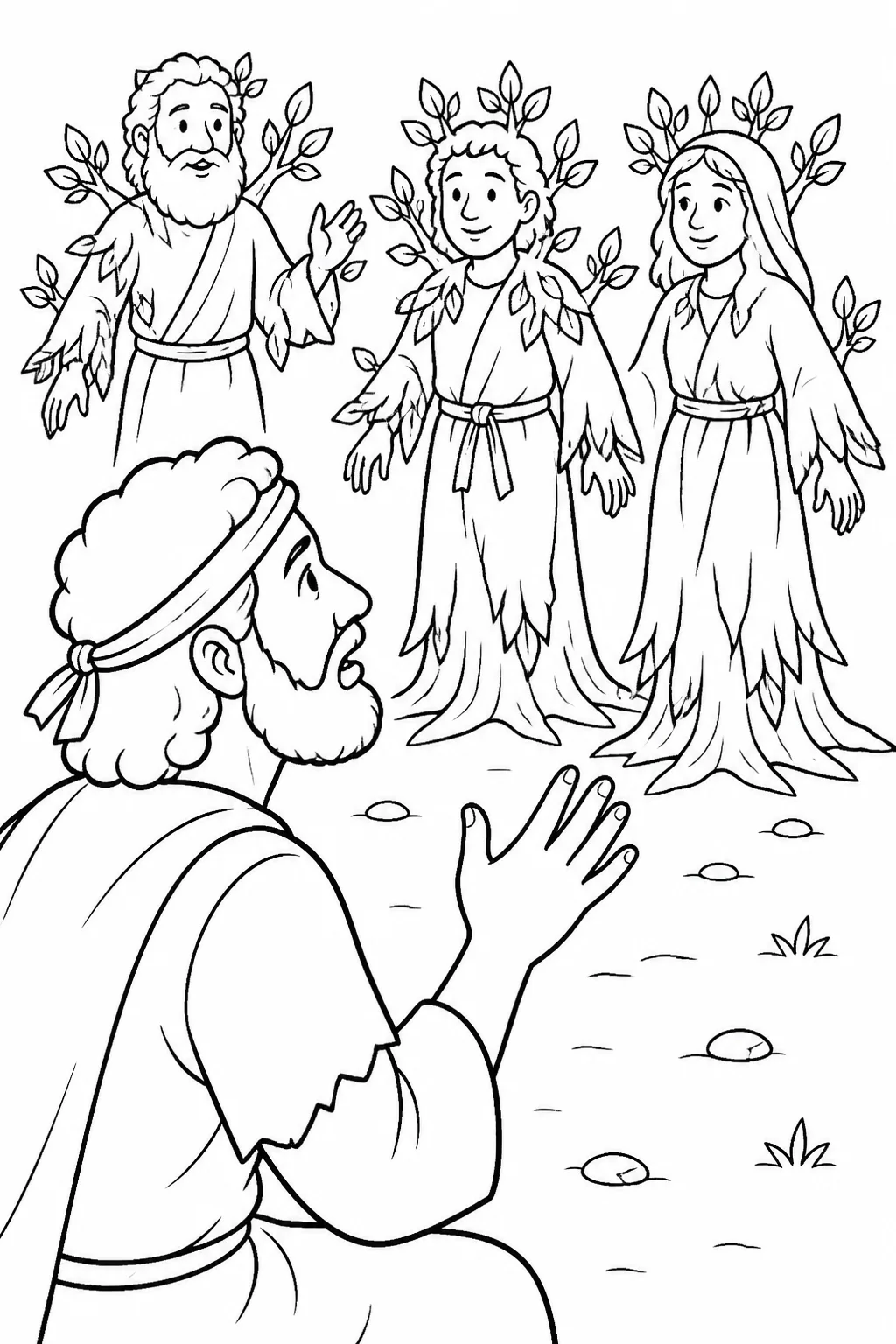
A blind man looks toward people who appear human but tree-like as his sight begins to return, illustrating Mark 8:24.

Seeing Begins to Return

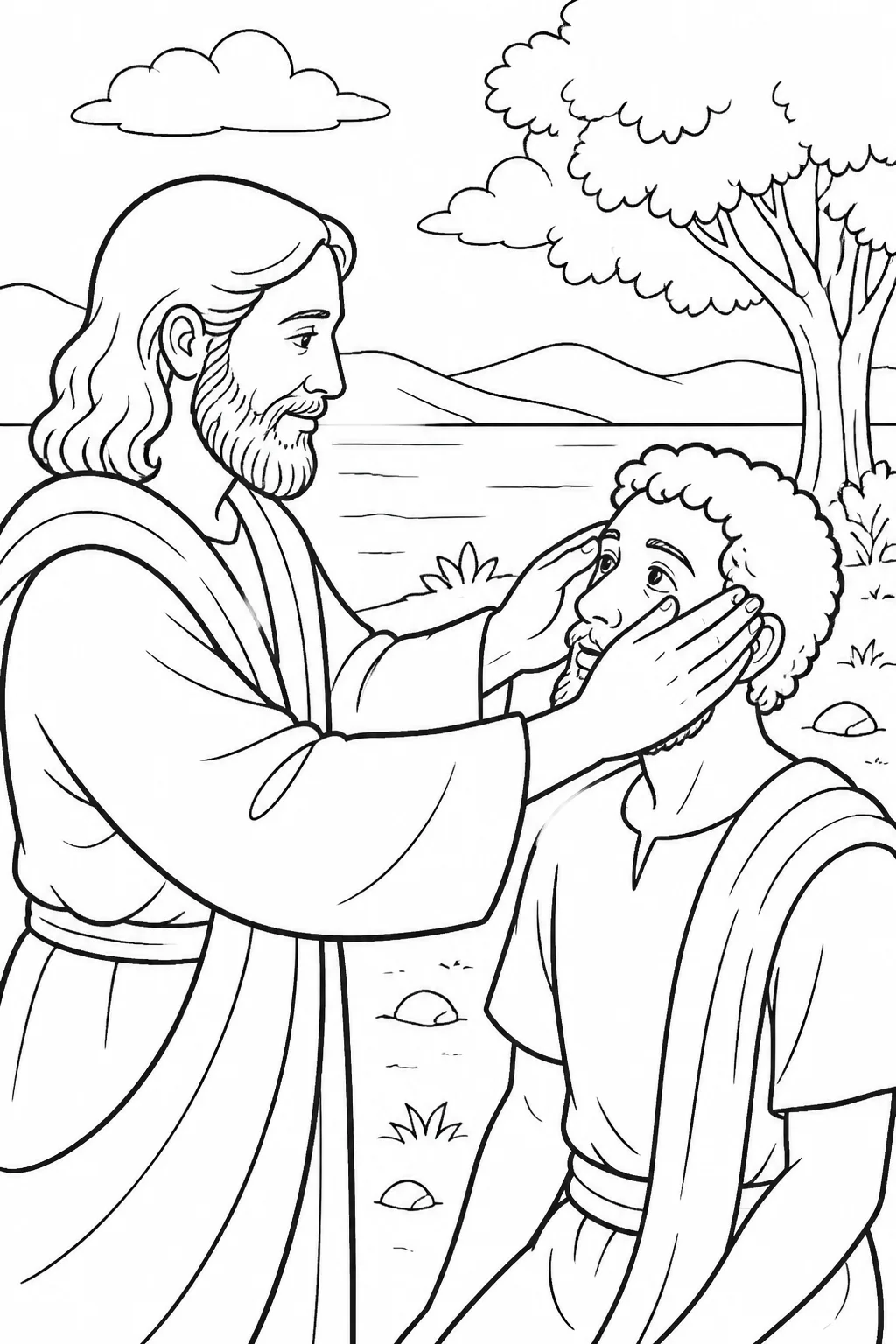
Mark 8:22-26

Jesus lays His hands on a blind man’s eyes again, and the man sees clearly outside Bethsaida.

He Sees Clearly

Mark 8:22-26

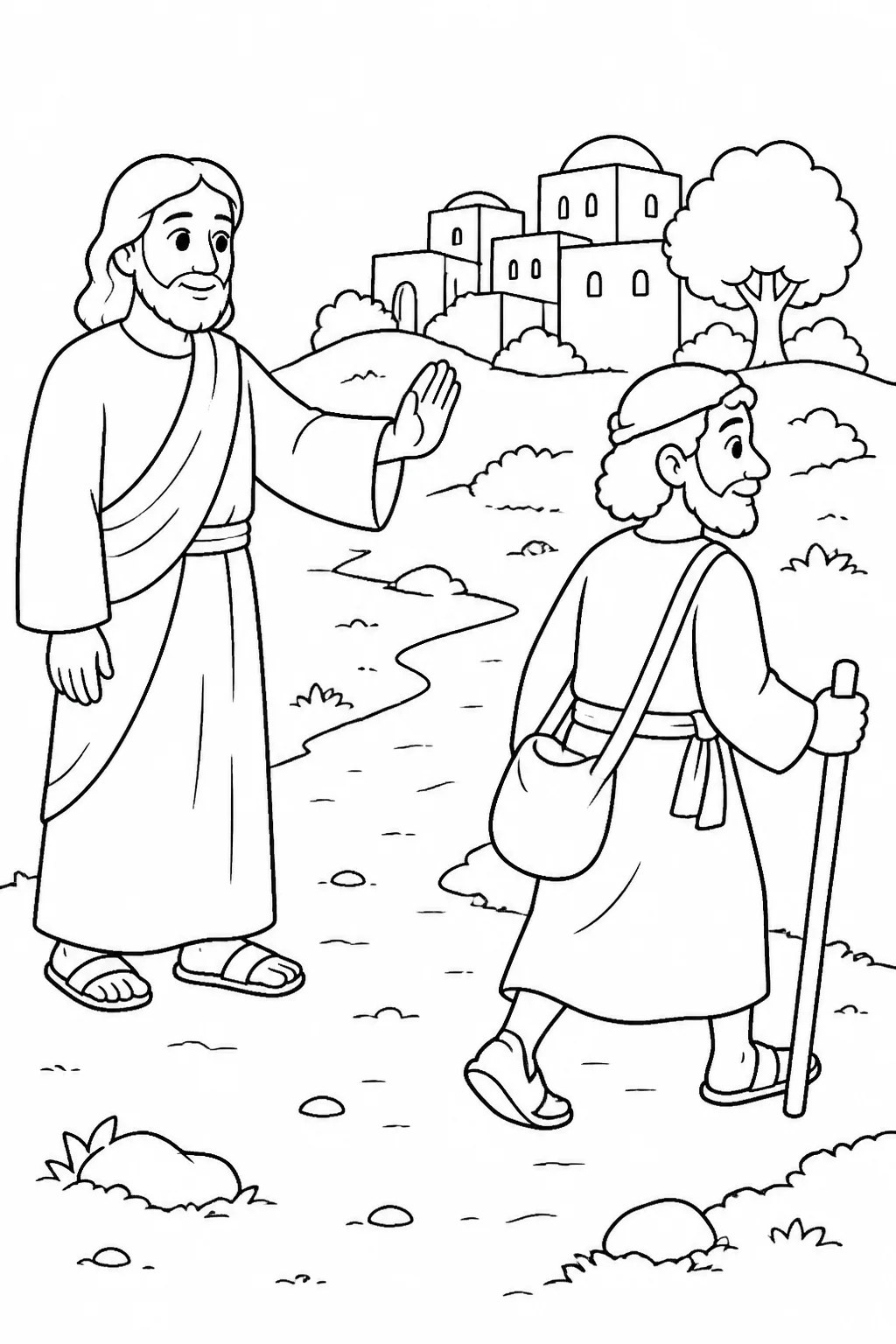
Jesus sends the man who now sees clearly toward home while the village remains behind him, illustrating Mark 8:26.

Go Home as Jesus Instructs

Mark 8:22-26
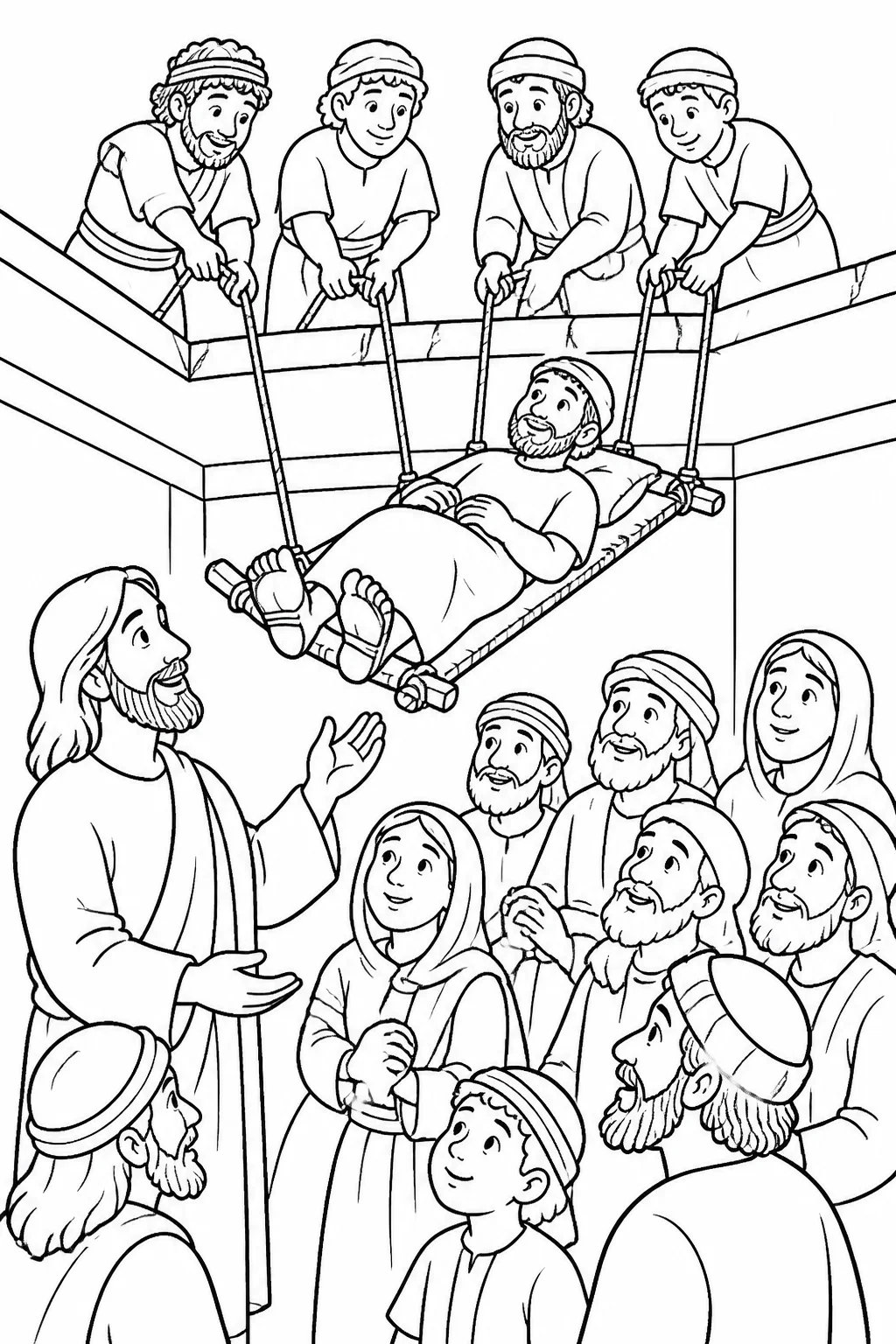
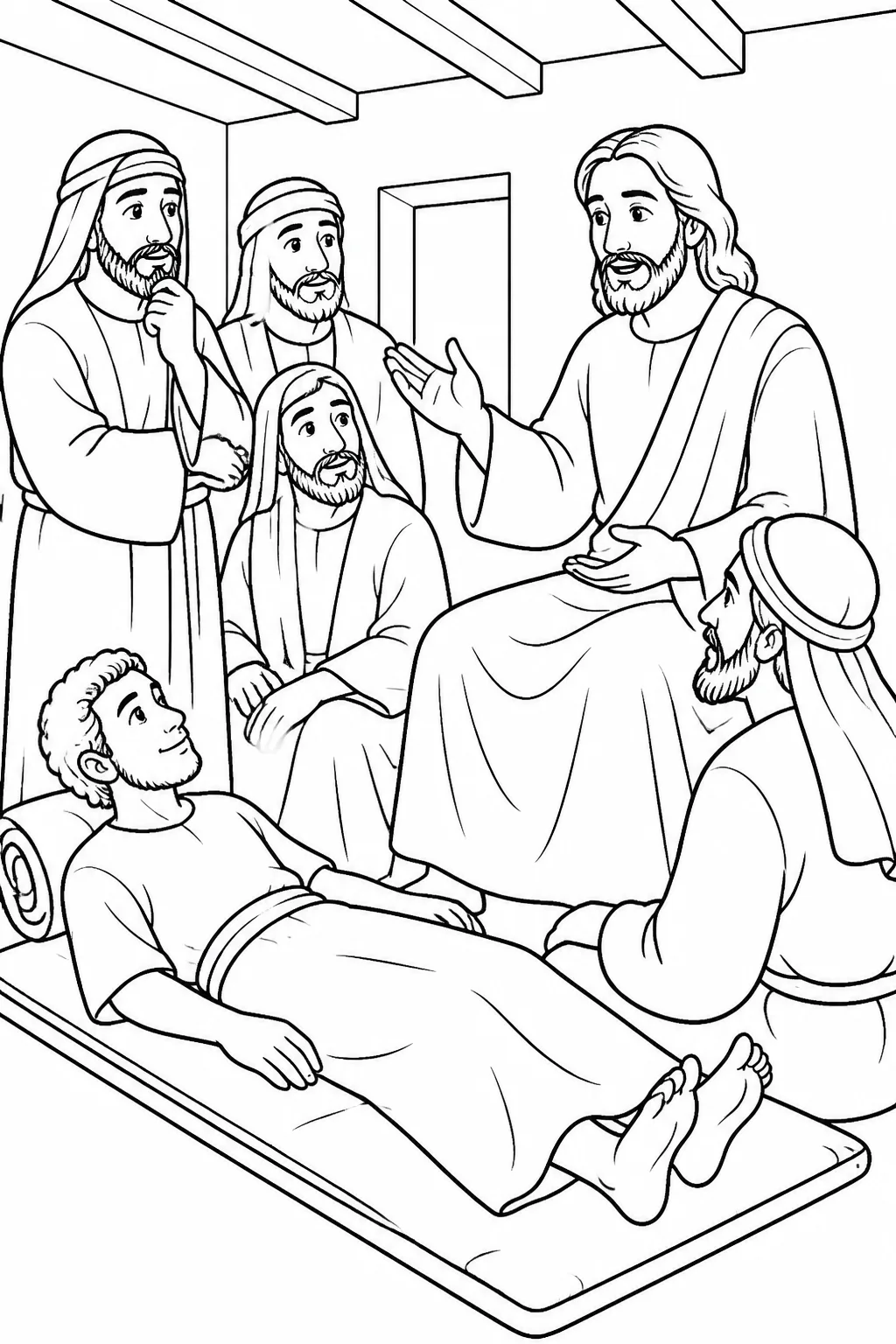
Jesus and a gathered crowd watch as four unnamed friends lower a paralyzed man on a mat through an opened roof.

Friends Bring Their Friend to Jesus

Mark 2:1-12
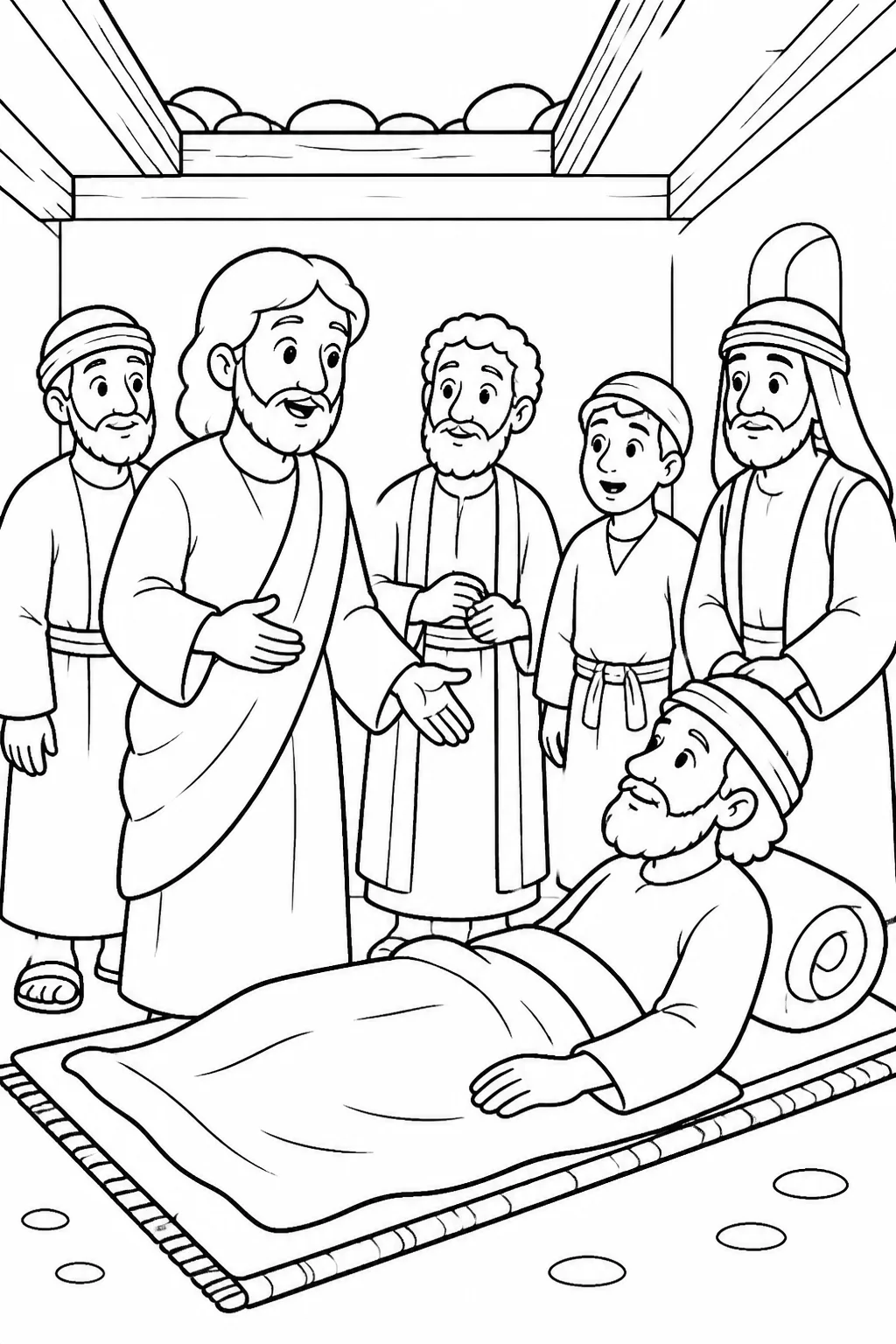
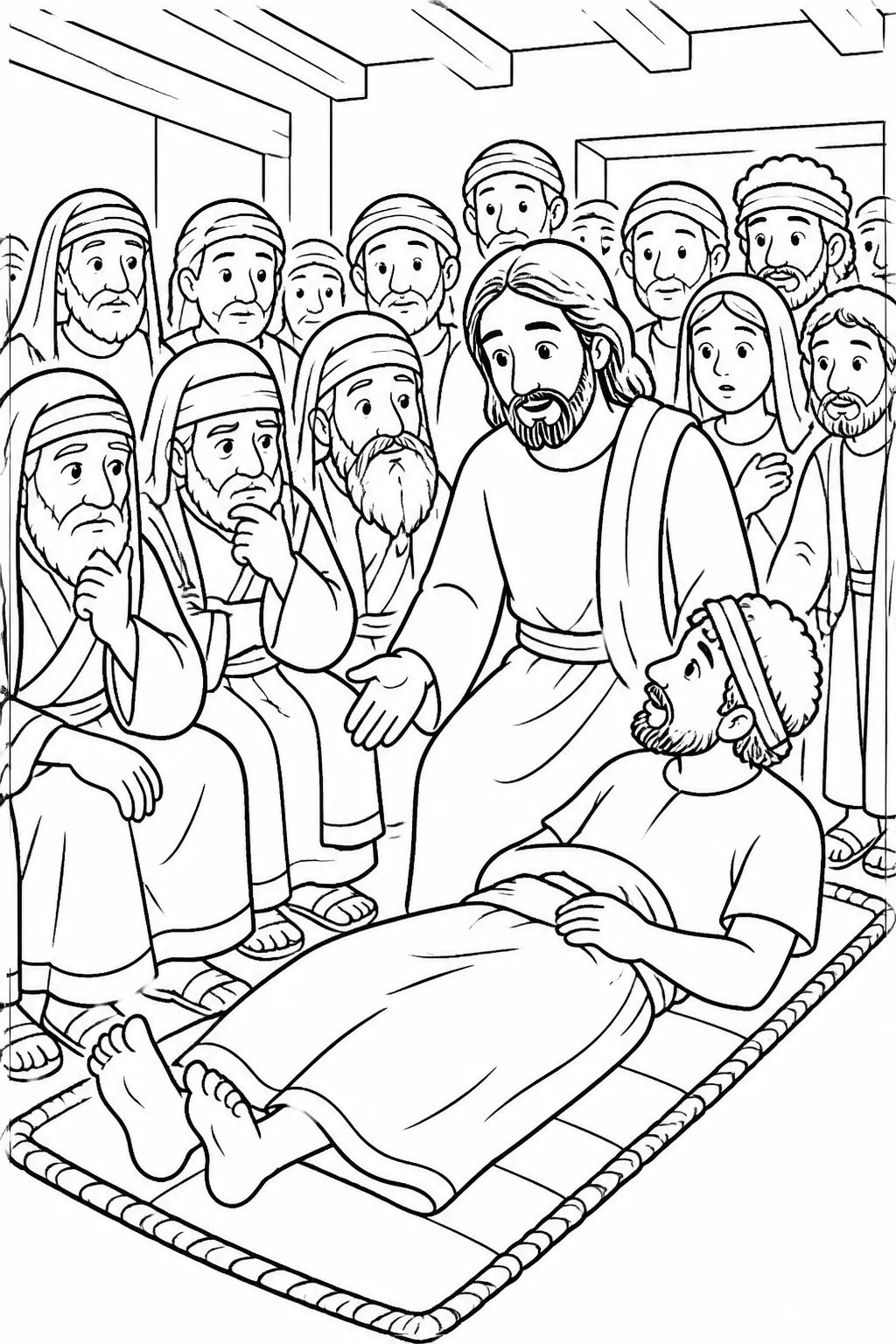
Jesus speaks to a paralyzed man on a mat inside a house beneath an opened roof, while four unnamed people and a crowd listen.

Jesus Speaks Forgiveness

Mark 2:1-12

Jesus, a paralyzed man on a mat, a gathered crowd, and several unnamed scribes with thoughtful expressions inside a crowded house.

The Scribes Wonder

Mark 2:1-12

Jesus addresses scribes in a house while a paralyzed man remains nearby on his mat, representing Mark 2:8-10.

Jesus Explains His Authority

Mark 2:1-12
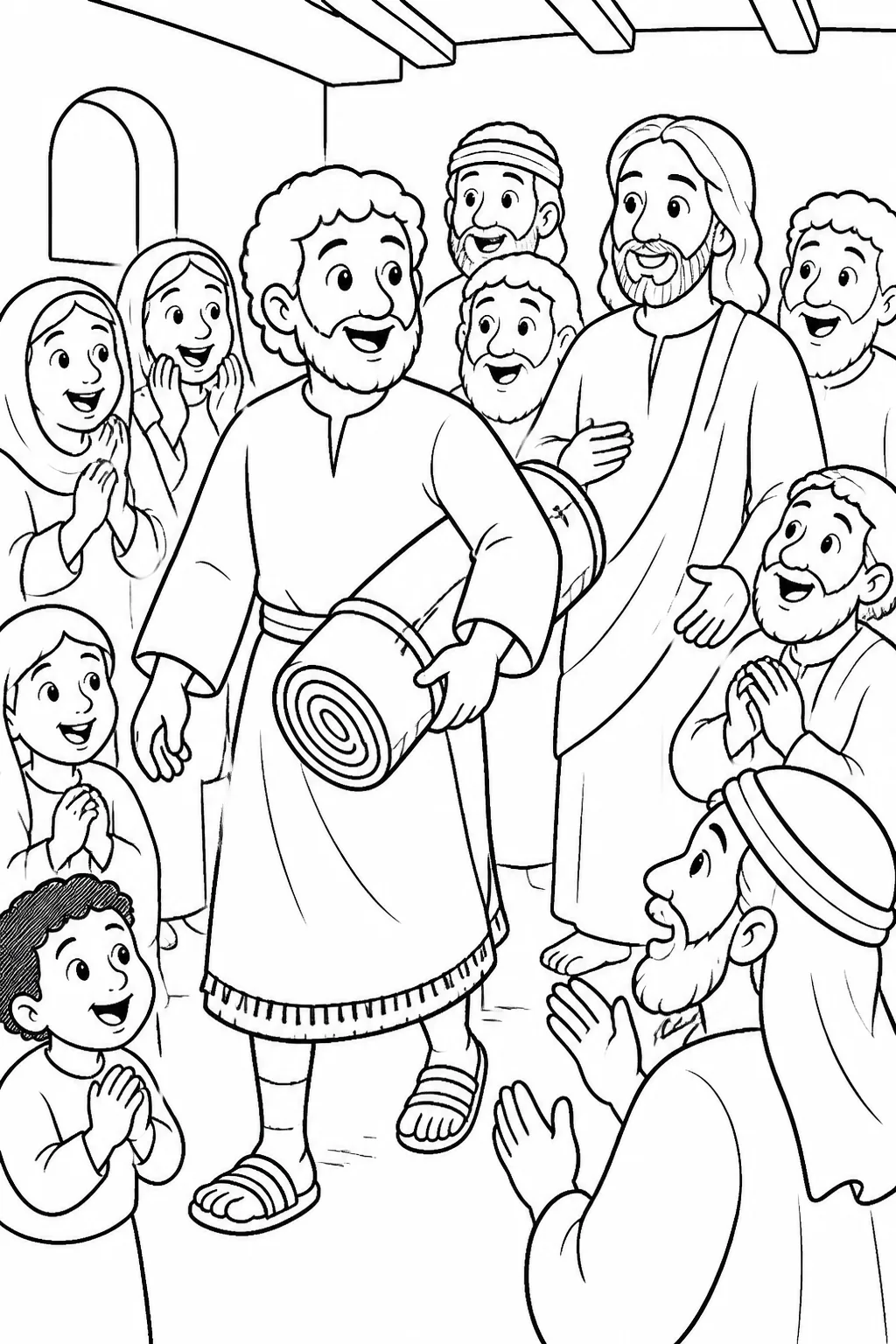
Jesus and a crowd watch as the healed man carries his mat away after Jesus commands him to get up and go home.

Get Up, Take Your Mat, and Go Home

Mark 2:1-12
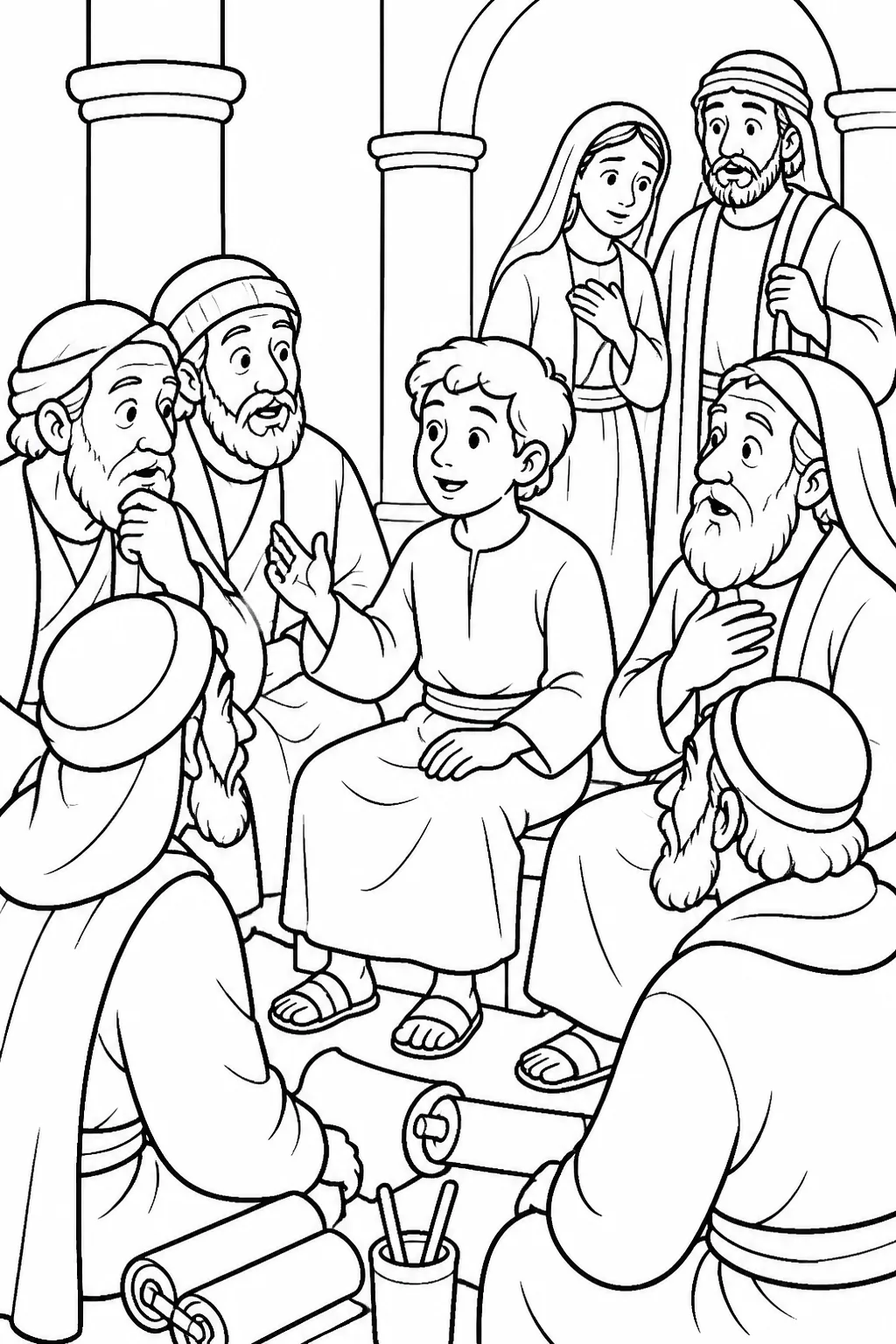
Twelve-year-old Jesus sits among temple teachers, listening and asking questions, while Mary and Joseph arrive nearby.

Jesus Listens and Asks Questions

Luke 2:41-52
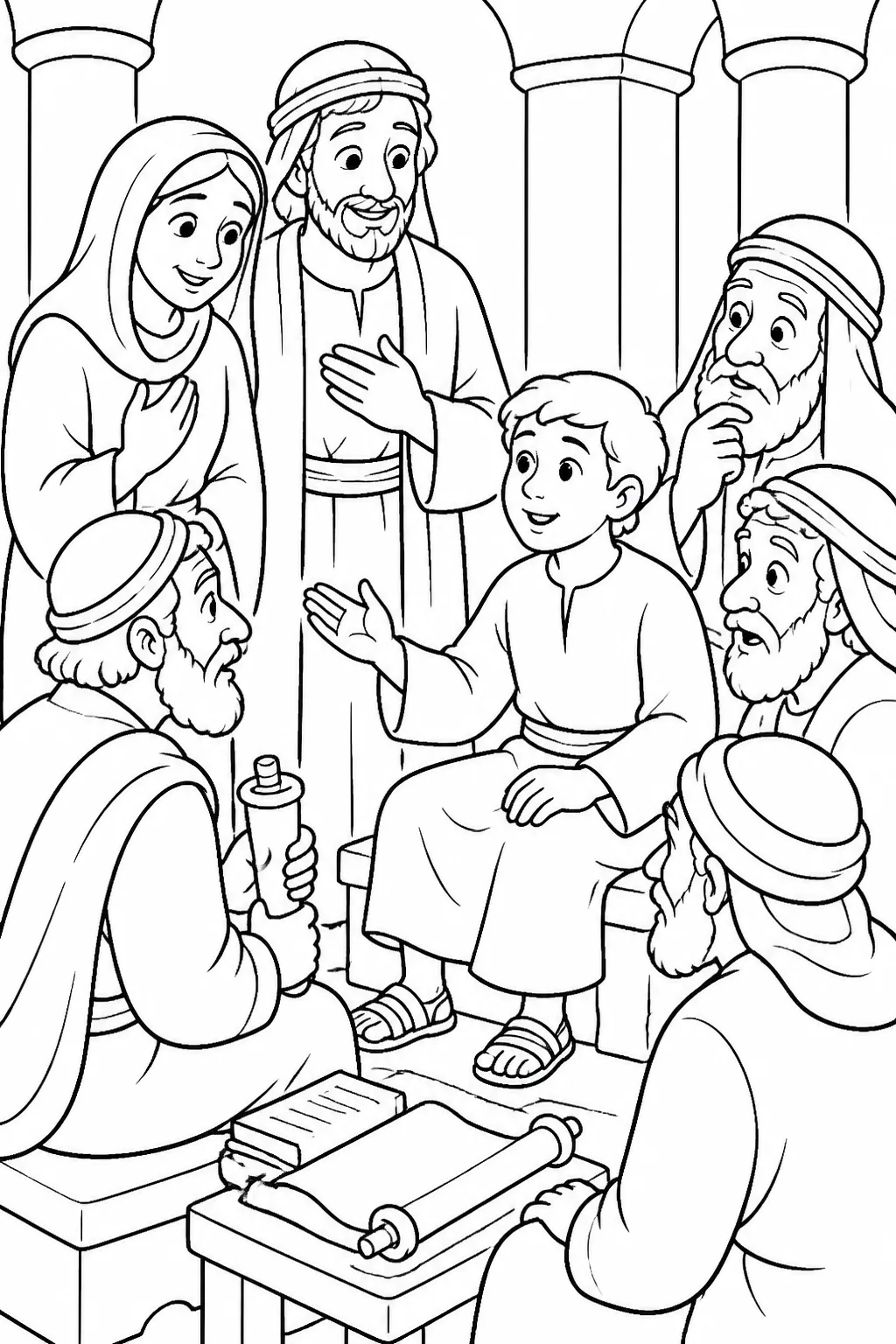
Jesus seated among several temple teachers in Jerusalem, listening and asking questions, with Mary and Joseph discovering him.

Found in the Temple

Luke 2:41-52

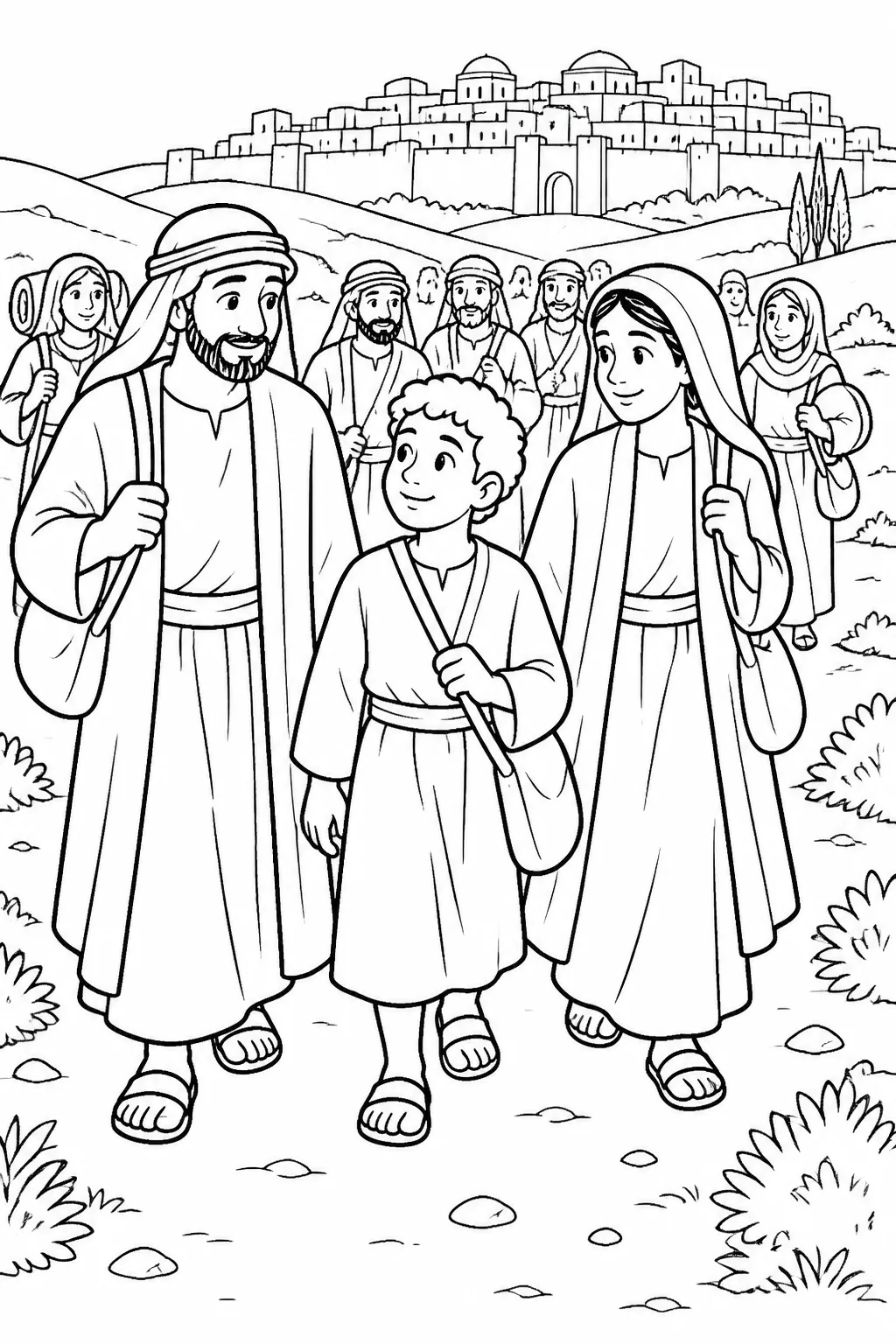
Twelve-year-old Jesus travels with Mary and Joseph among other festival travelers toward Jerusalem for Passover, with simple belongings and Jerusalem in the distance.

Traveling to Jerusalem for Passover

Luke 2:41-52
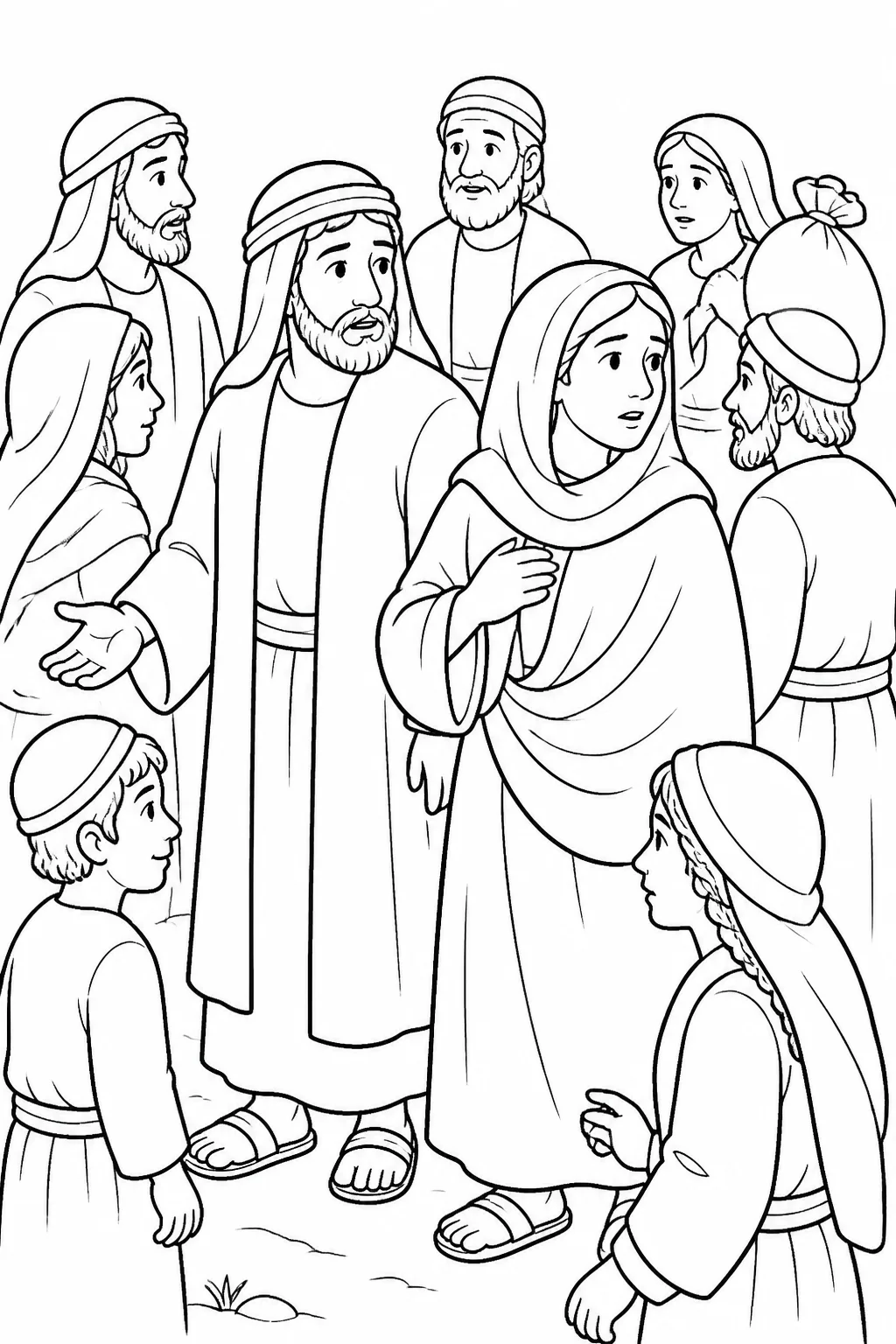
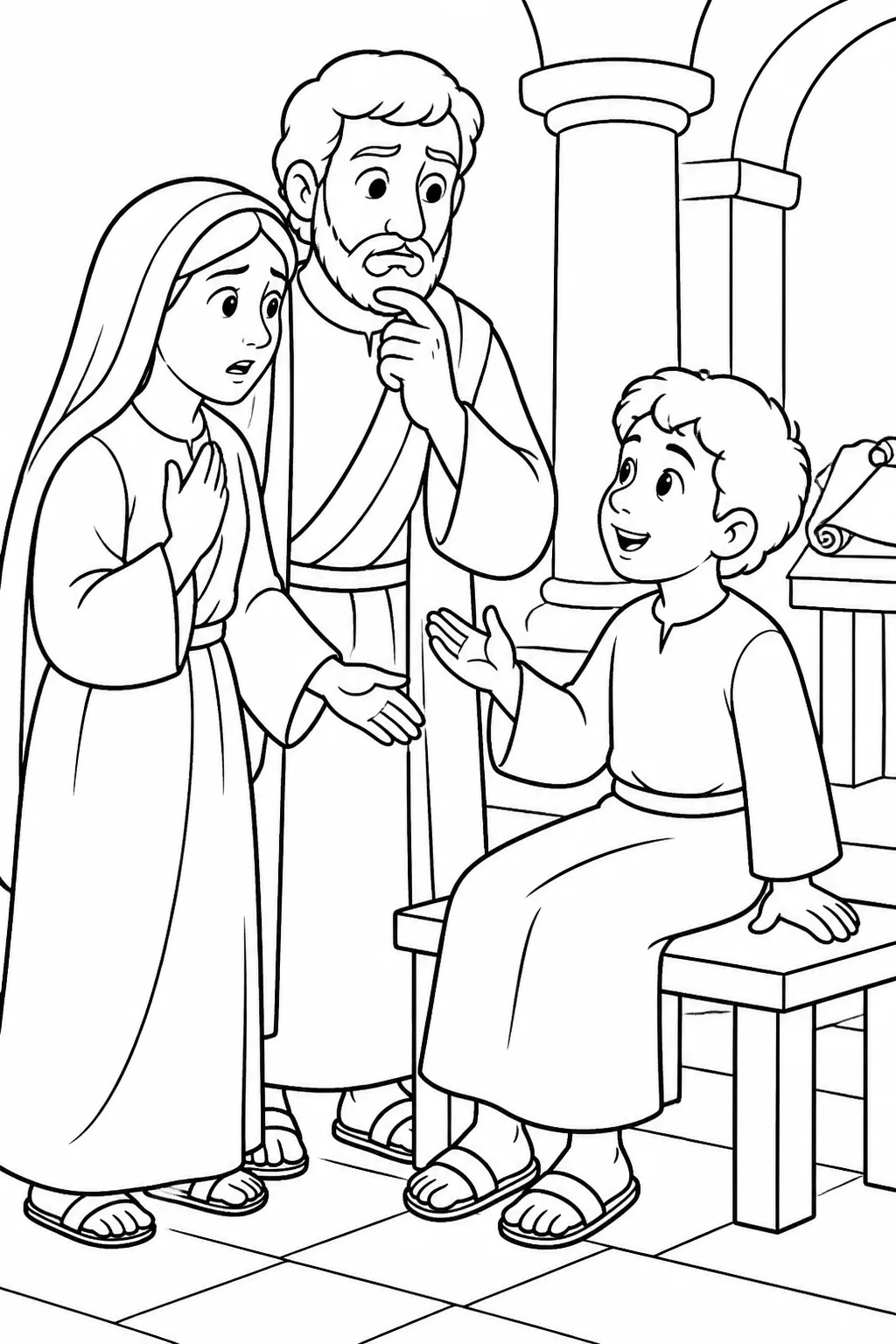
Mary and Joseph search among relatives and acquaintances in a traveling group after realizing that twelve-year-old Jesus is not with them.

Mary and Joseph Search

Luke 2:41-52

Young Jesus with Mary and Joseph inside the temple after his parents find him, with Jesus referring to his Father’s house or affairs.

Jesus Explains His Focus

Luke 2:41-52
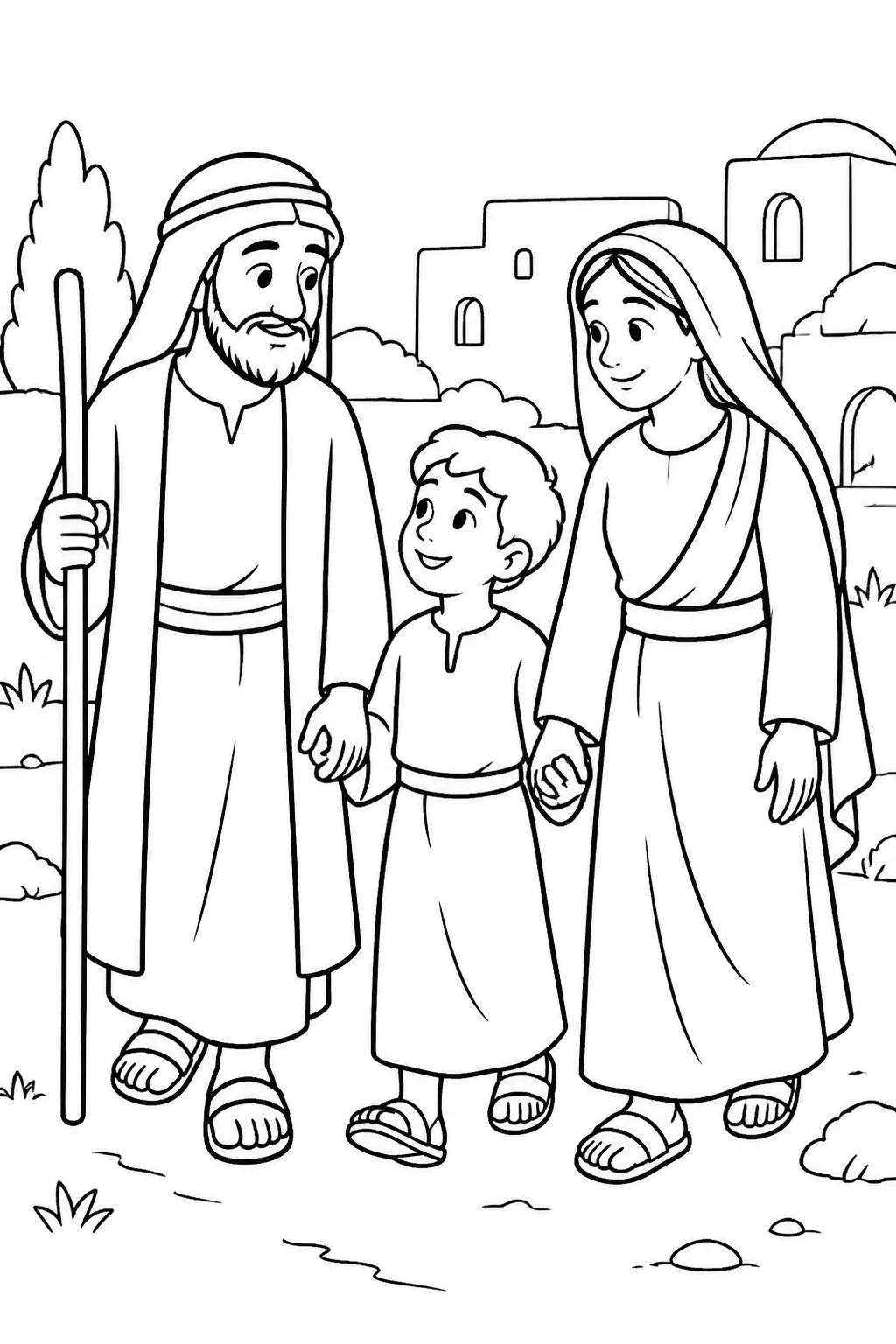
Jesus with Mary and Joseph in Nazareth, illustrating Luke 2:51–52 and Jesus’ obedience and growth.

Returning Home and Growing

Luke 2:41-52
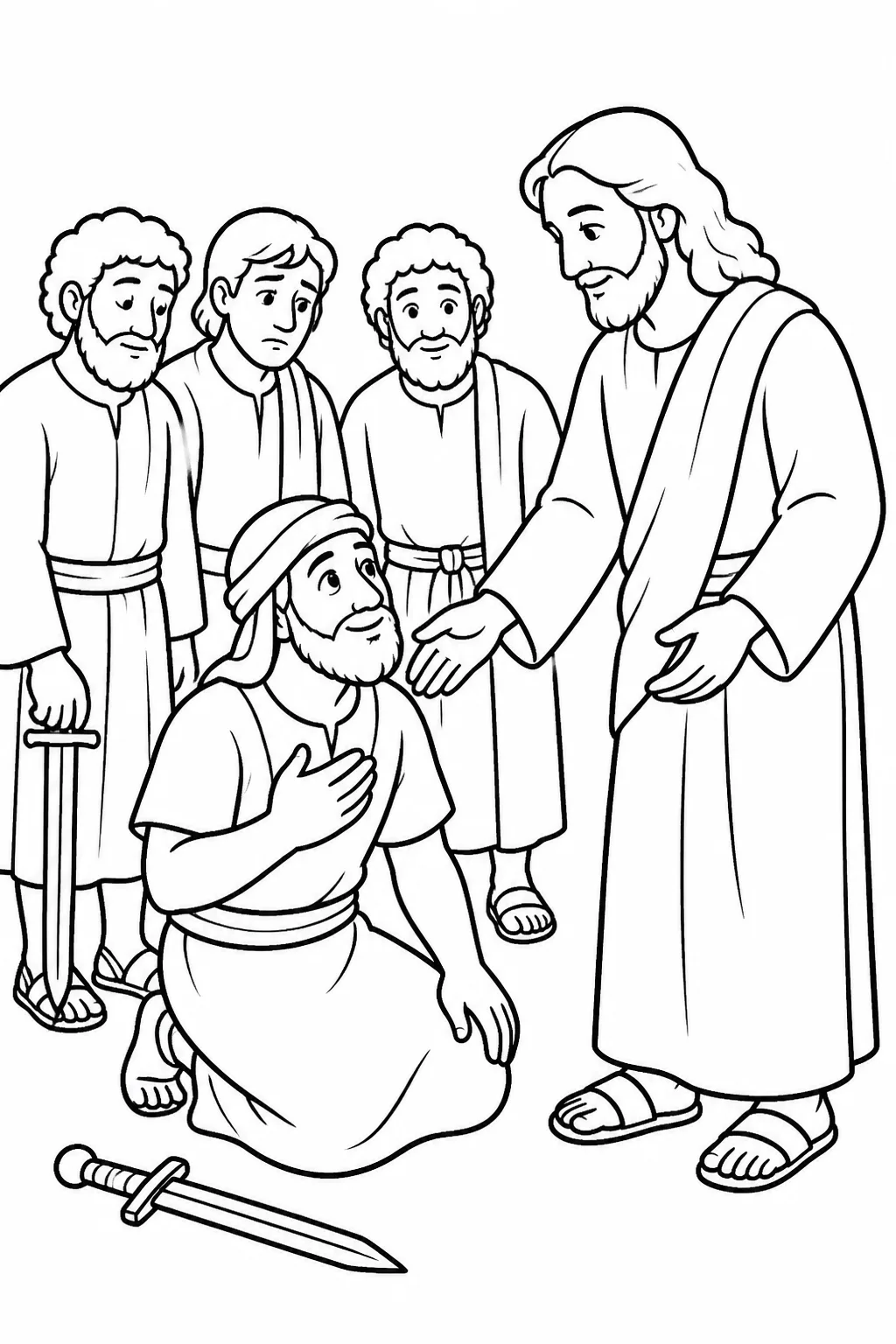
Jesus reaches toward the high priest’s unnamed servant while nearby disciples lower a sword, illustrating Luke 22:49–51.

Jesus Stops Violence and Heals

Luke 22:47–23:25
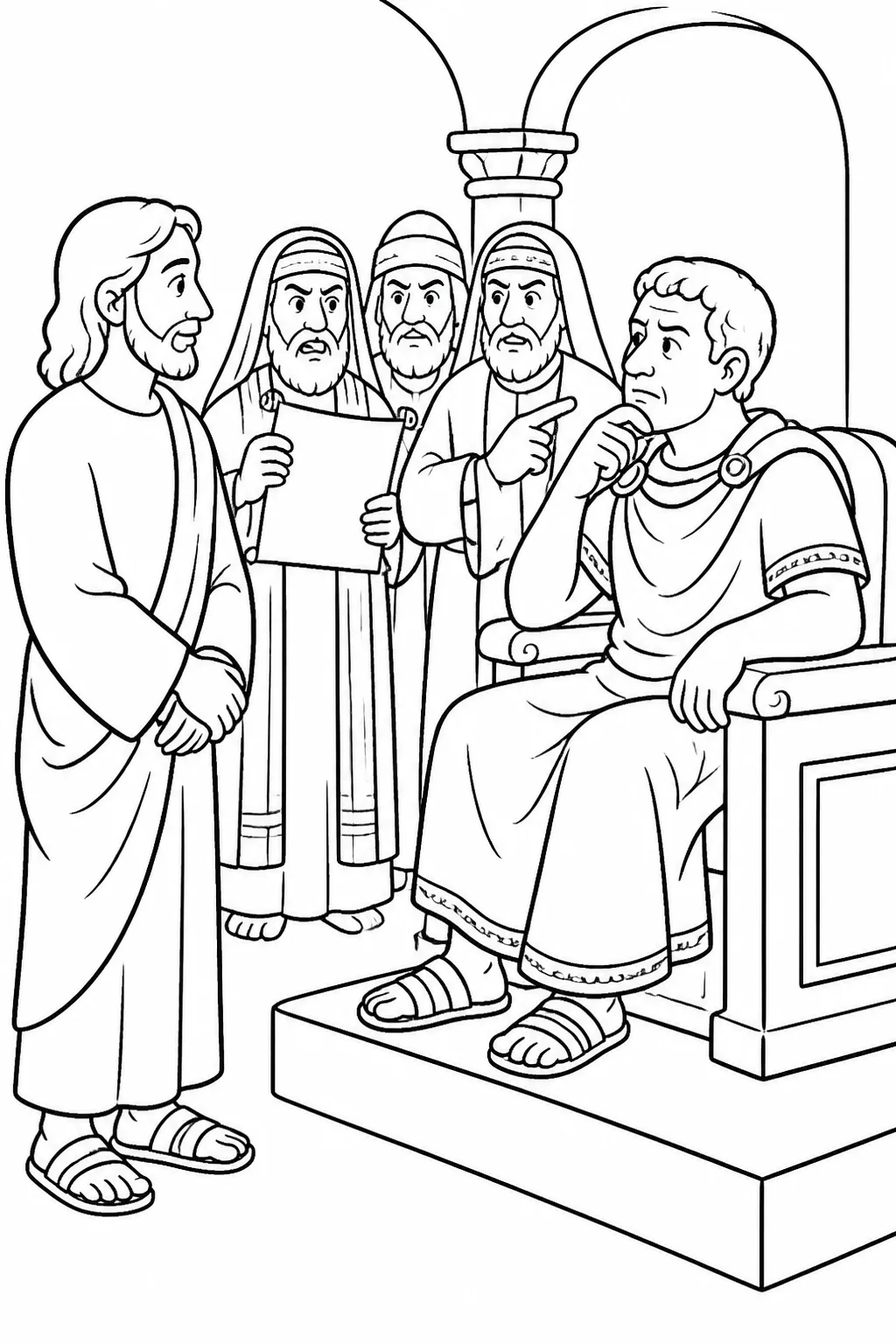
Jesus standing before Pilate while the assembly and specific accusers present the recorded accusations from Luke 23:1–5.

Jesus Before Pilate

Luke 22:47–23:25

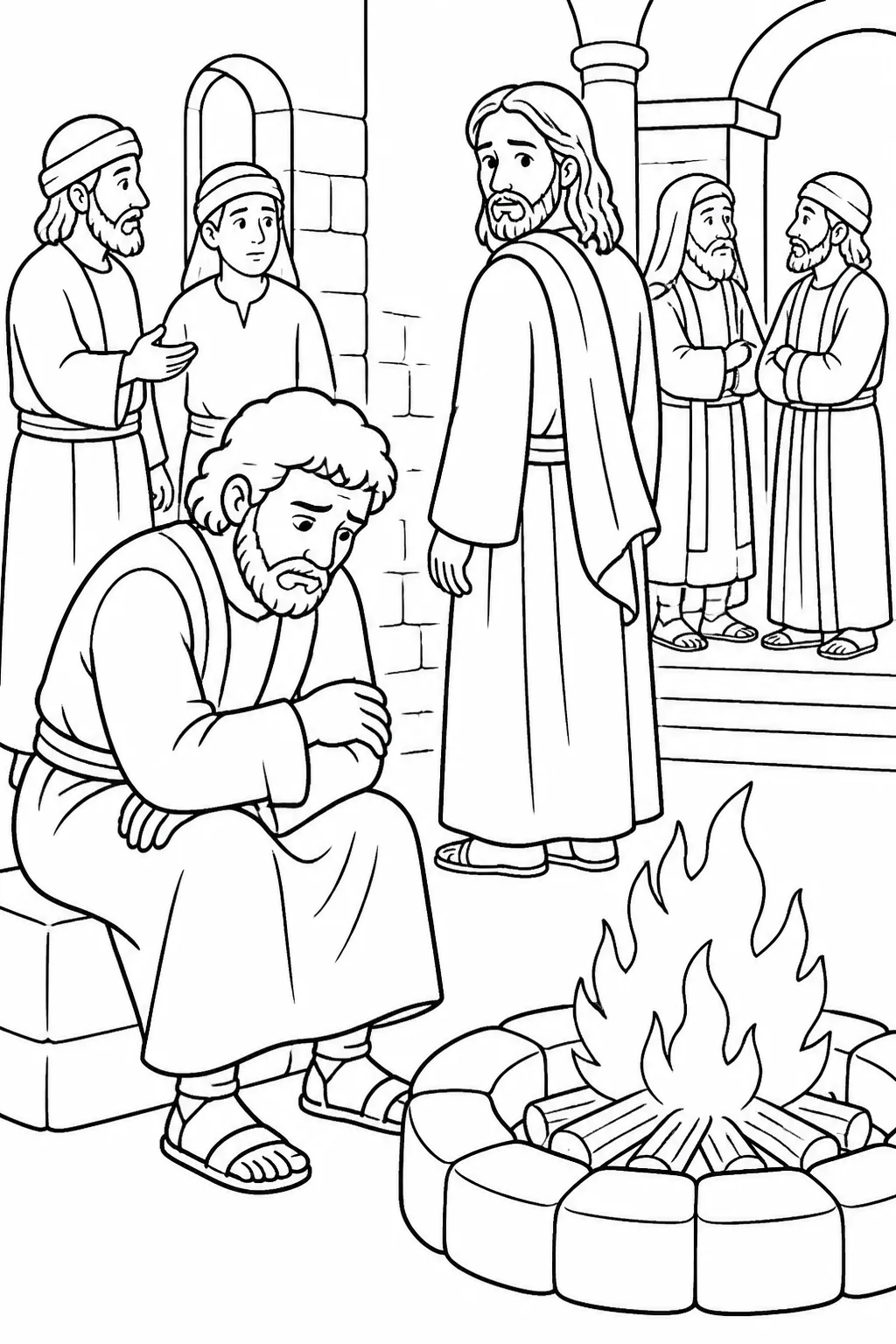
Peter sitting near a courtyard fire at the high priest’s house while Jesus looks toward him after Peter’s third denial, based on Luke 22:54–62.

Peter Remembers and Weeps

Luke 22:47–23:25
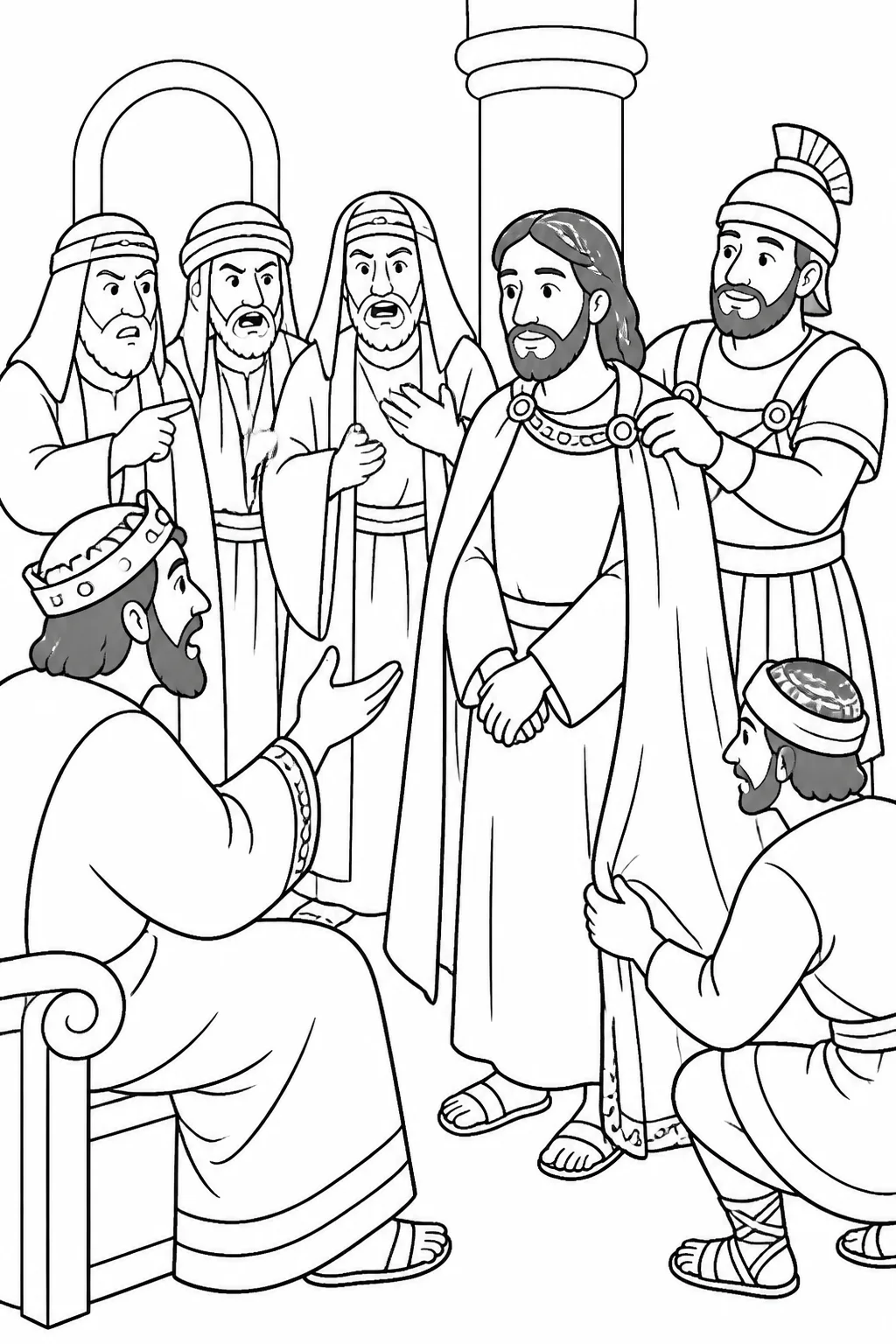
Jesus standing quietly before Herod Antipas while chief priests and scribes accuse him and soldiers place splendid clothing on him, based on Luke 23:6–12.

Jesus Stands Silent Before Herod

Luke 22:47–23:25
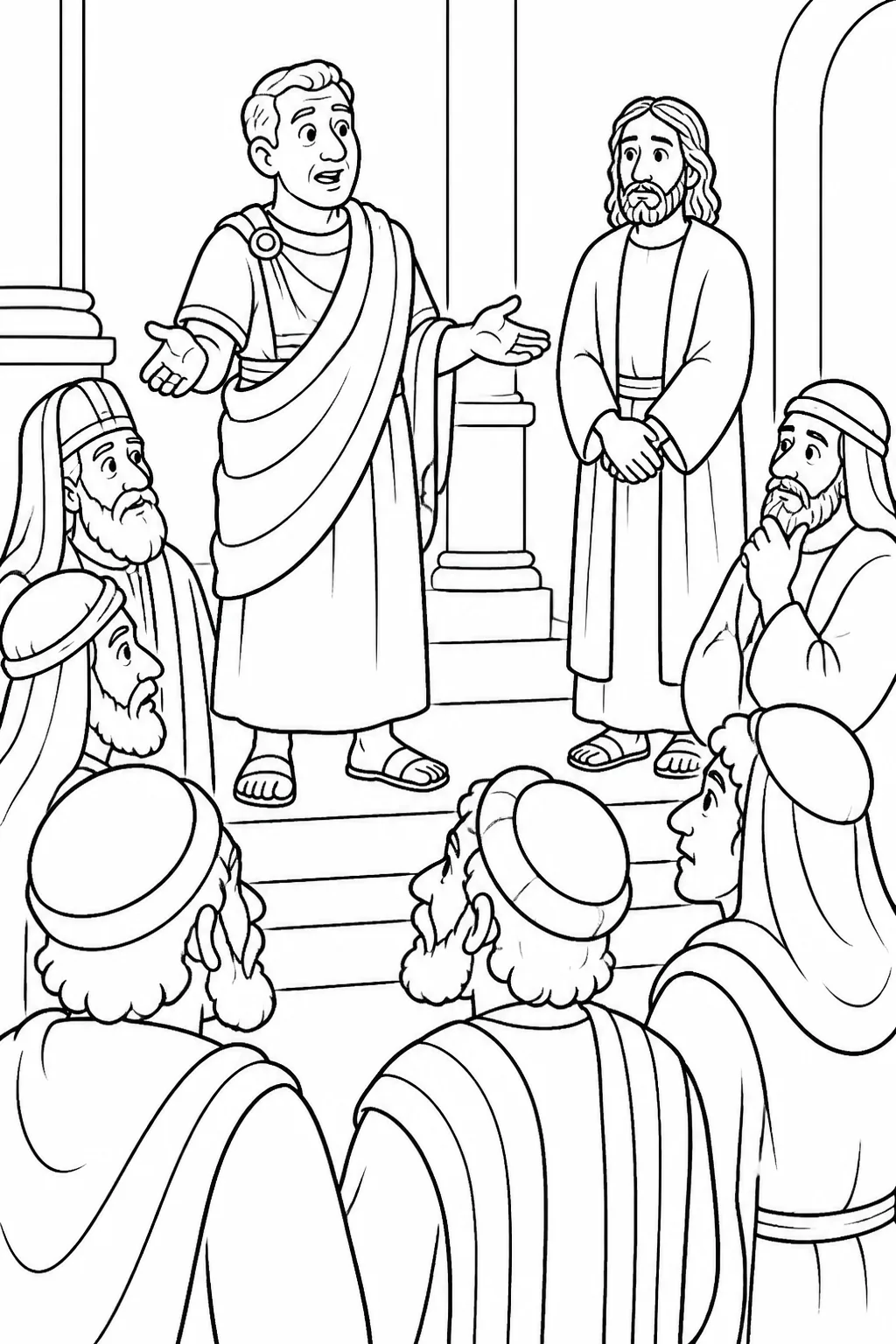
Pilate addresses the chief priests, rulers, and people while Jesus stands nearby, representing Luke 23:13–17 and Pilate’s statement that no guilt was found in Jesus.

Pilate Says Jesus Is Not Guilty

Luke 22:47–23:25
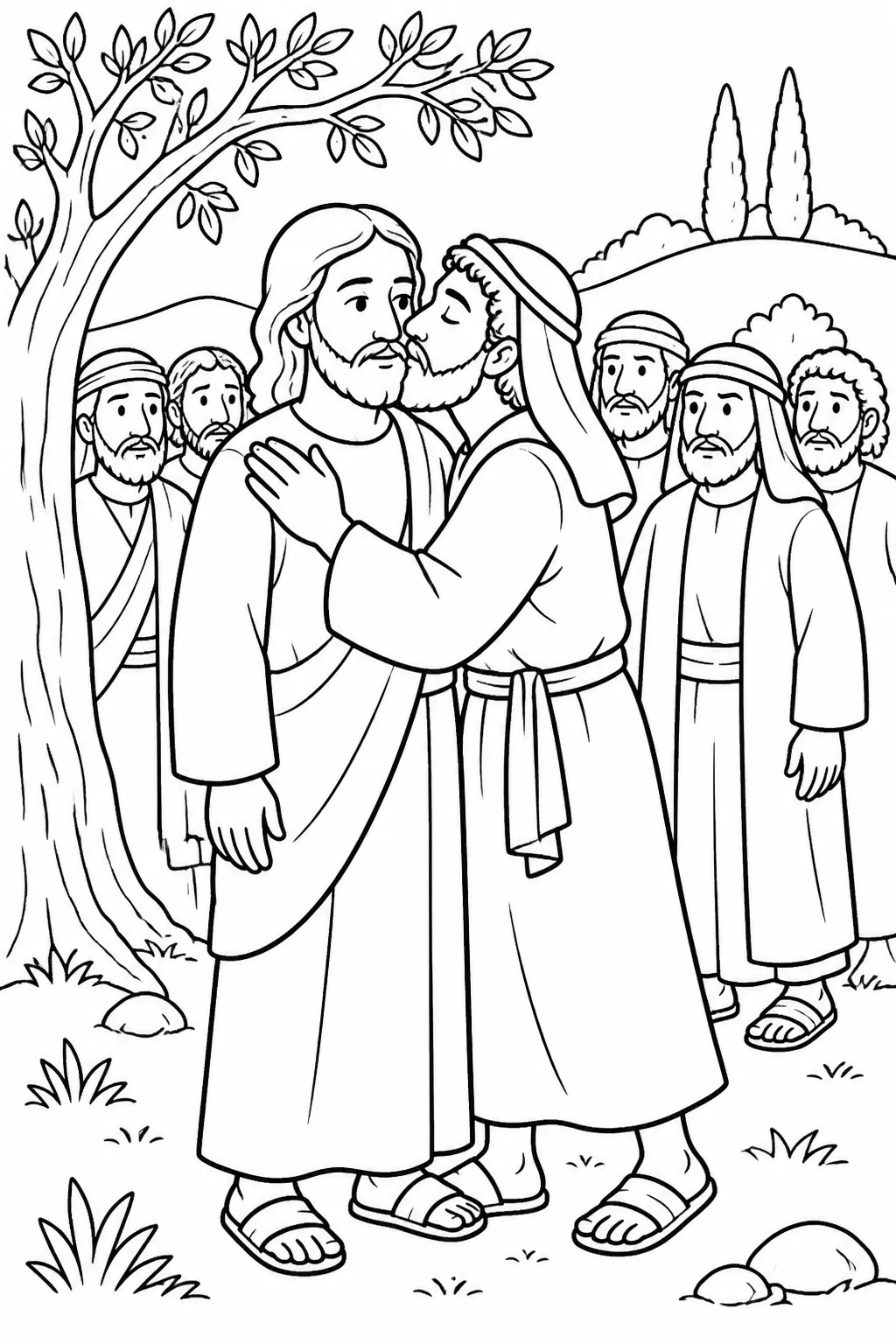
Jesus faces Judas Iscariot on the Mount of Olives as Judas approaches with a crowd and identifies Jesus with a kiss.

A Sad Greeting in the Garden

Luke 22:47–23:25
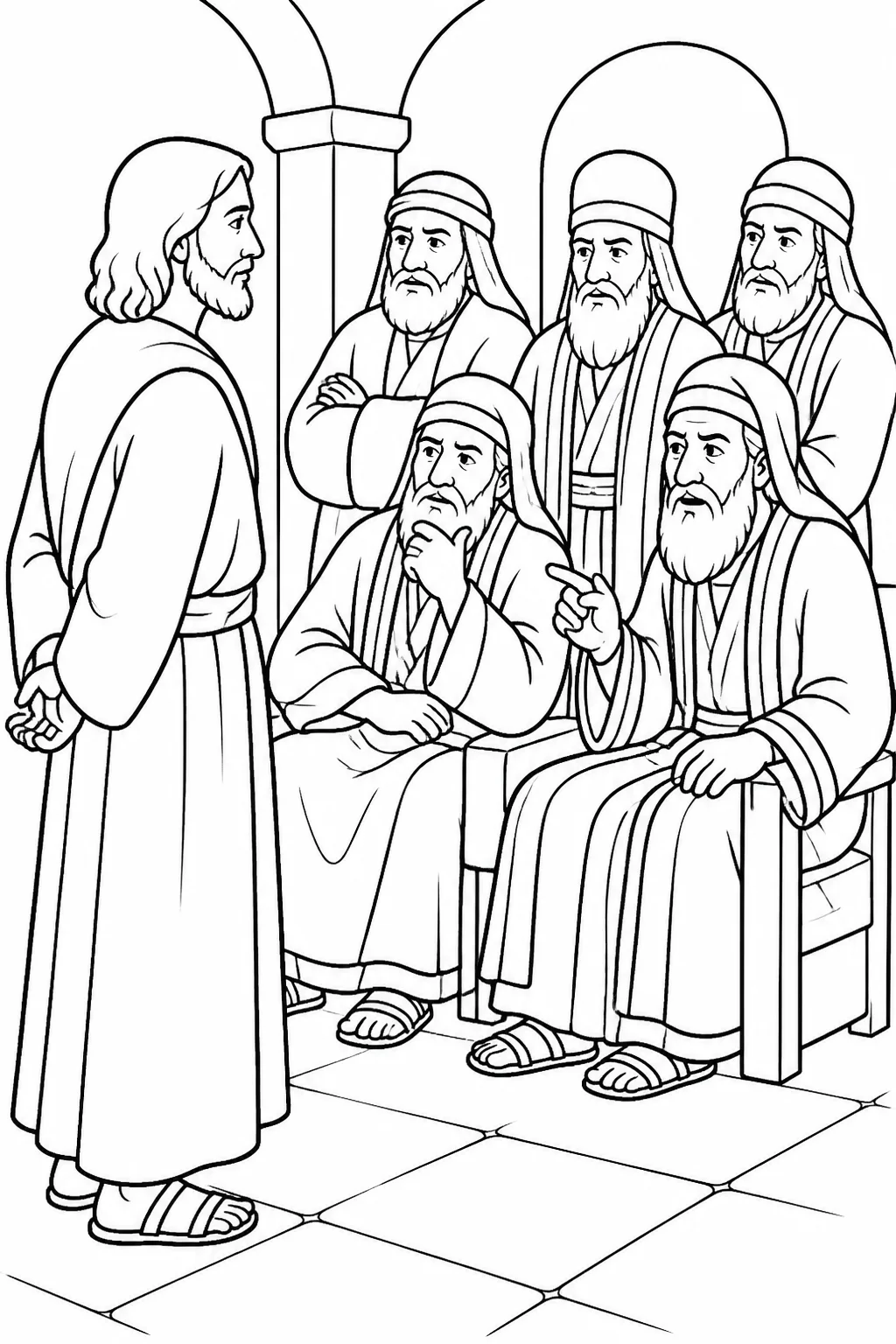
Jesus standing calmly before the council at daybreak as chief priests and elders question him about whether he is the Christ and the Son of God.

The Council Questions Jesus

Luke 22:47–23:25
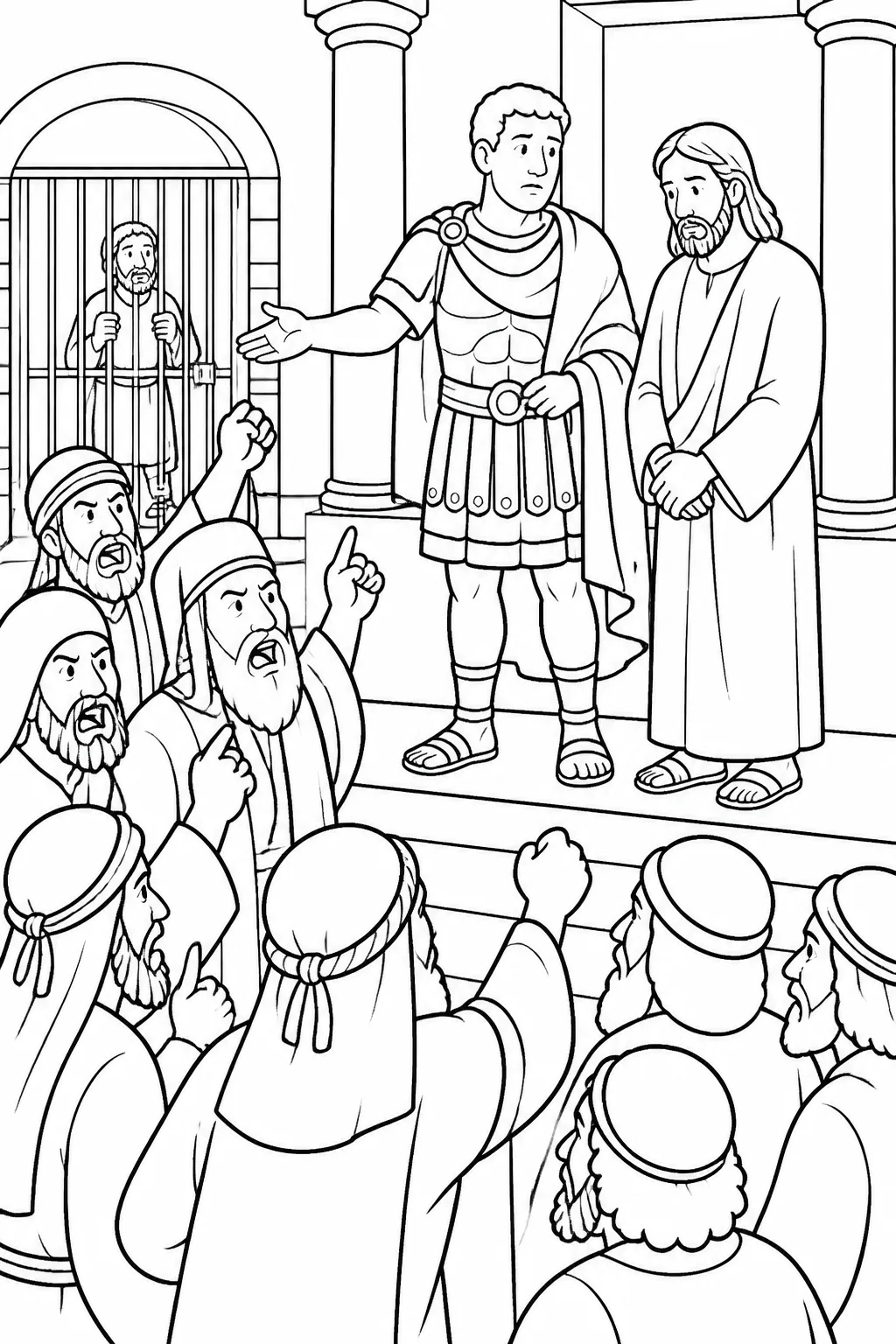
Jesus stands before Pilate at Pilate’s headquarters while a specific crowd, chief priests, and rulers call for Barabbas to be released; the scene does not show the crucifixion.

The Crowd’s Demand

Luke 22:47–23:25

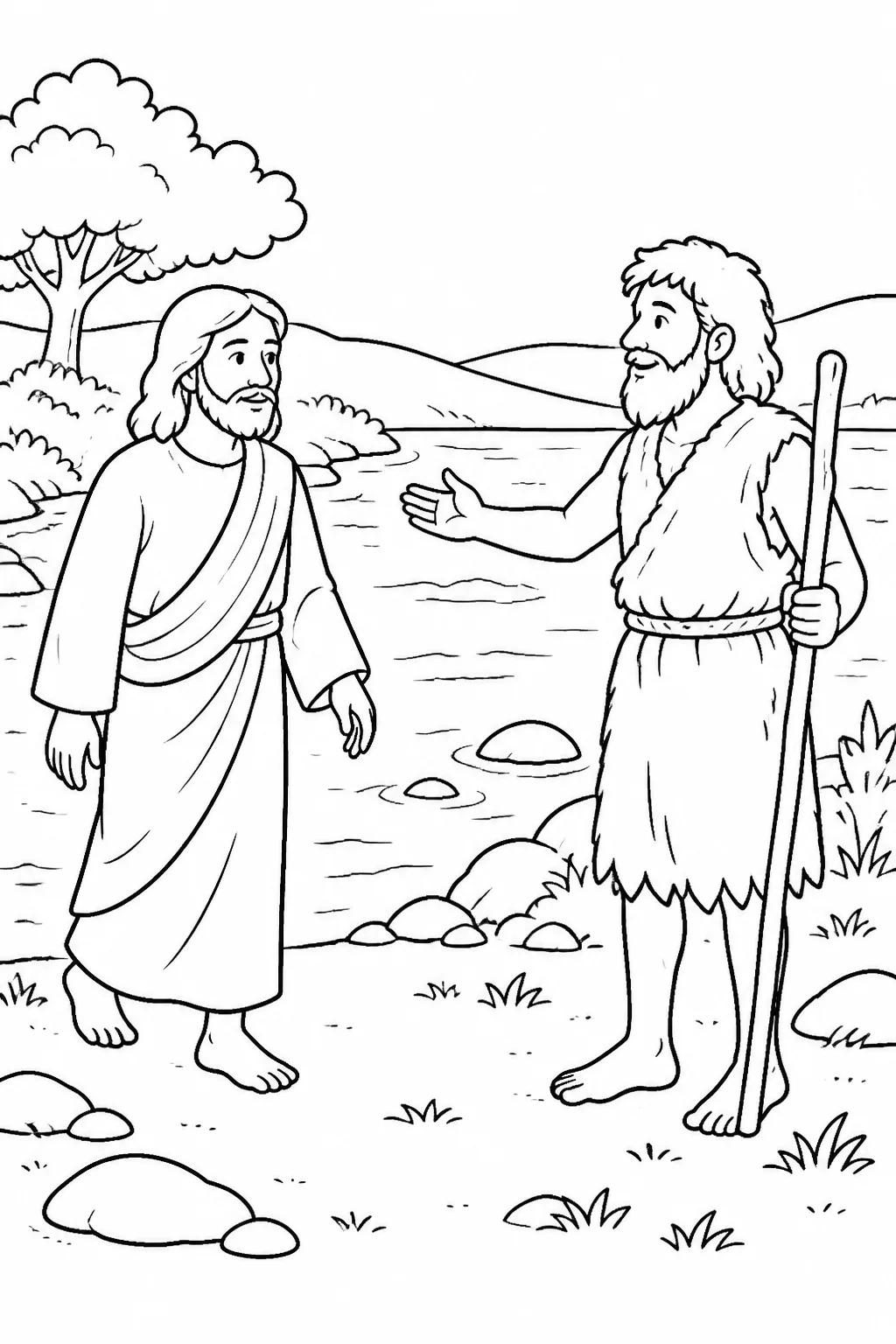
Jesus approaches John the Baptist at the Jordan River in a peaceful riverbank scene.

Jesus Comes to the Jordan

Matthew 3:13-17
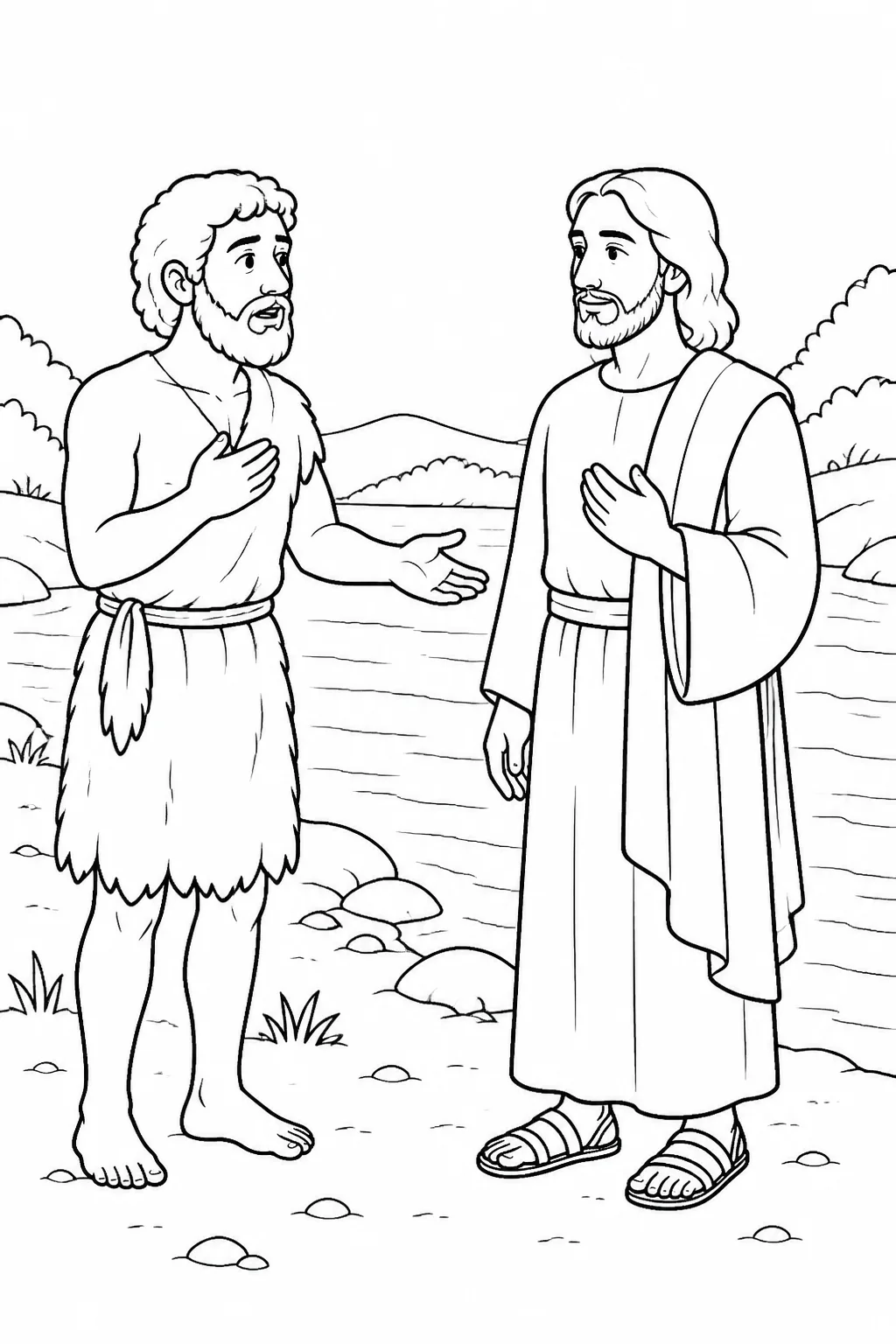
Jesus and John the Baptist having a respectful conversation beside the Jordan River before Jesus’ baptism.

A Respectful Conversation

Matthew 3:13-17
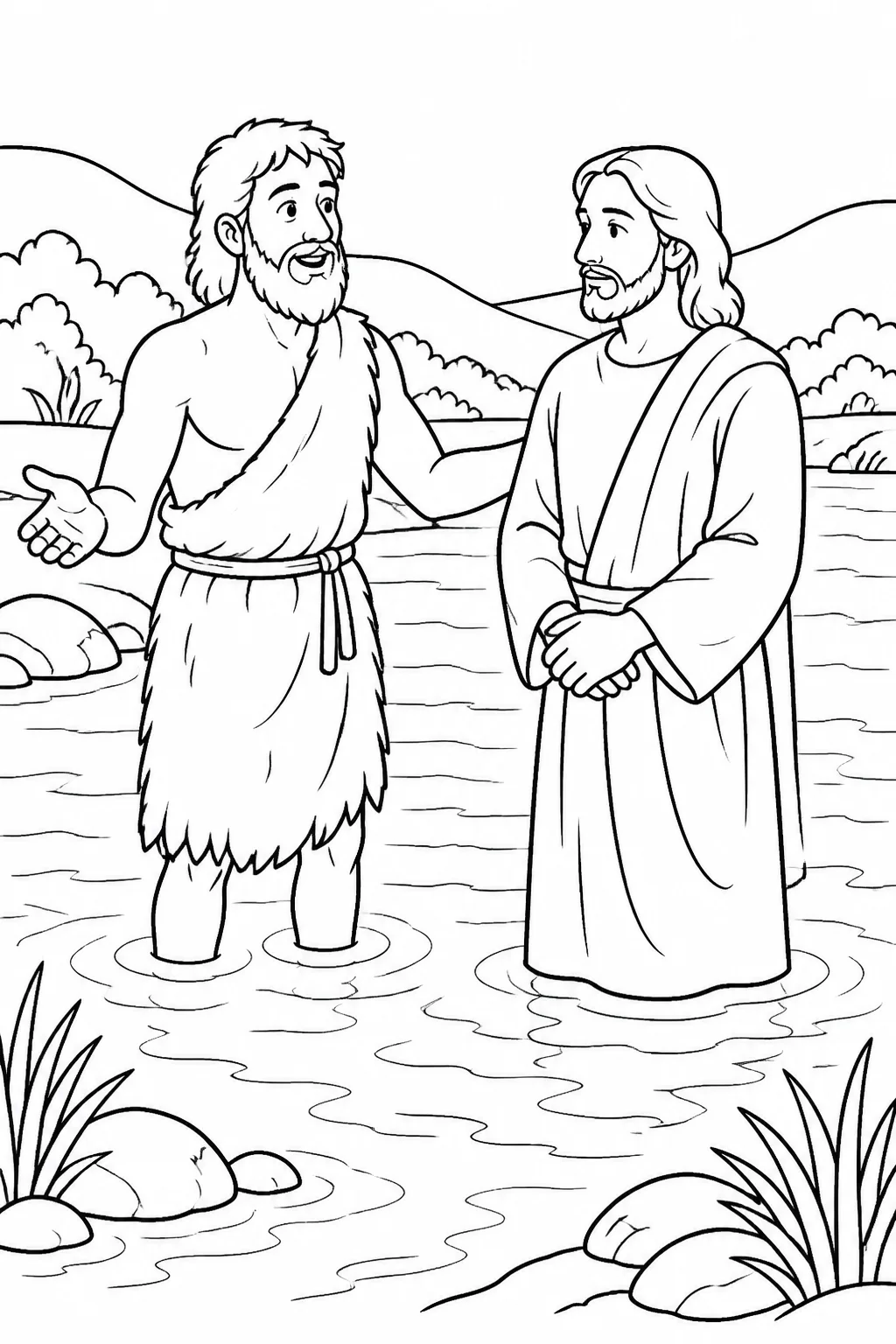
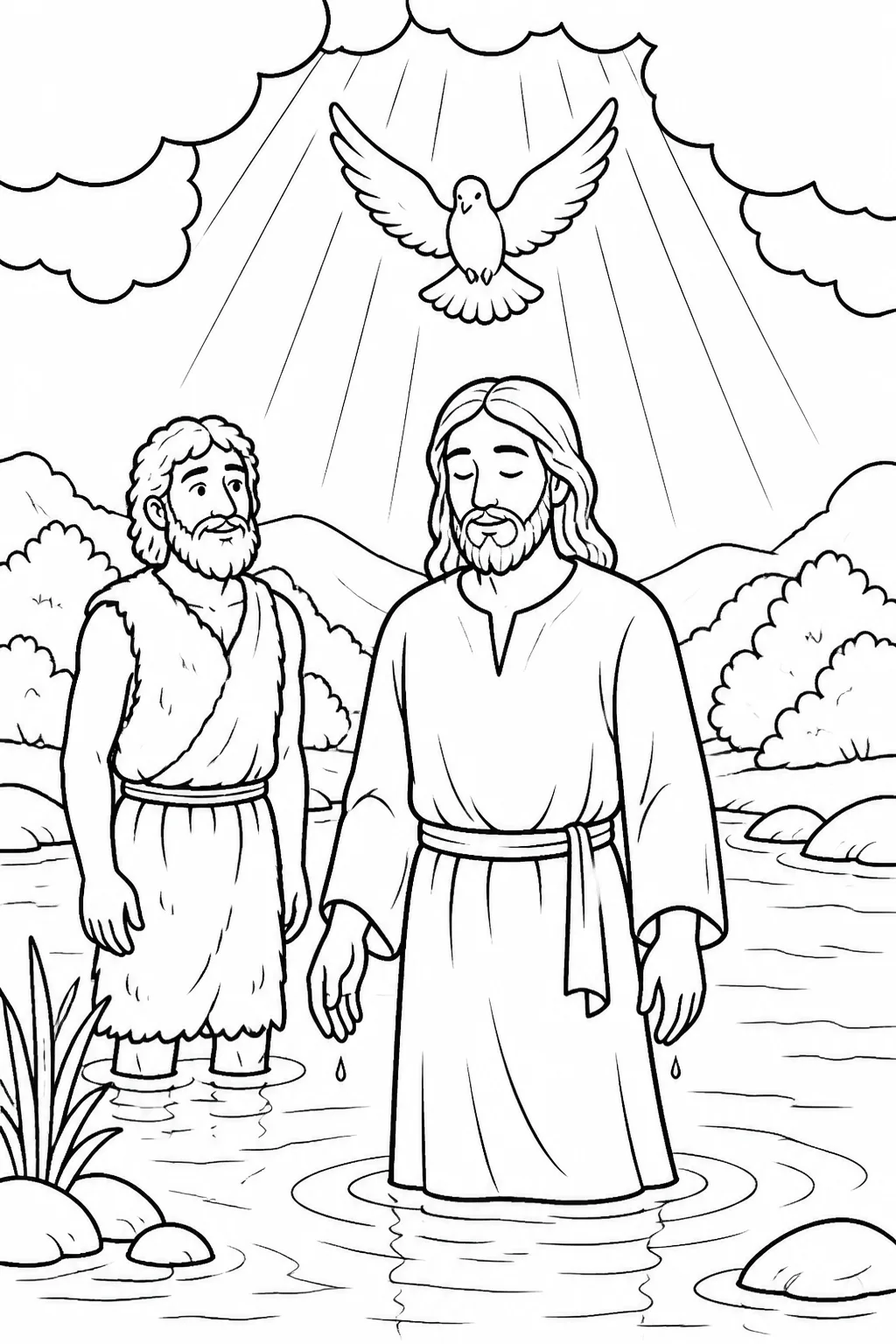
Jesus and John the Baptist stand together at the Jordan River as John permits Jesus to be baptized, with water visible.

John Permits the Baptism

Matthew 3:13-17
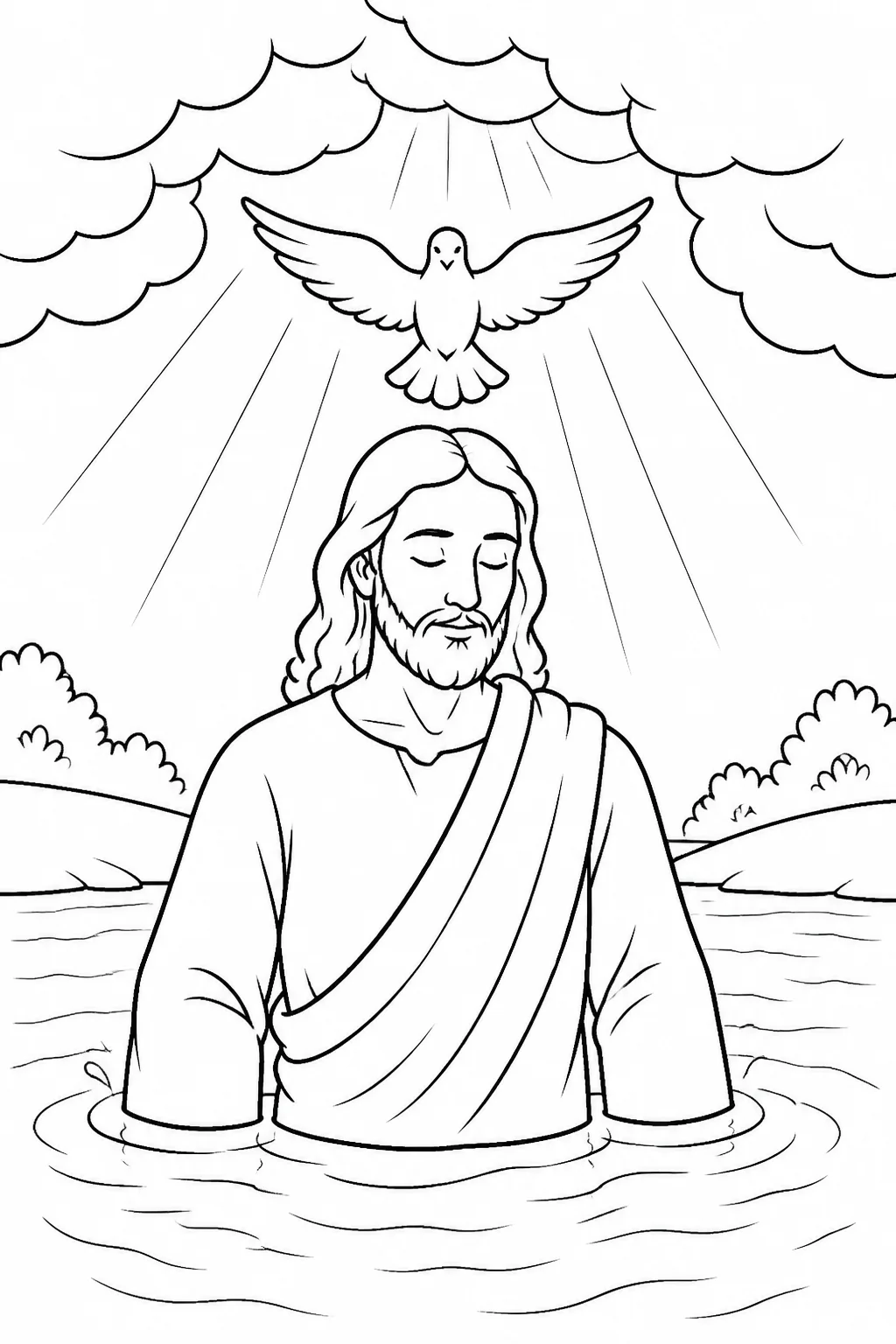
Jesus comes up from the water after being baptized; the heavens are opened, and the Spirit of God descends like a dove and rests on him.

Jesus Comes Up from the Water

Matthew 3:13-17
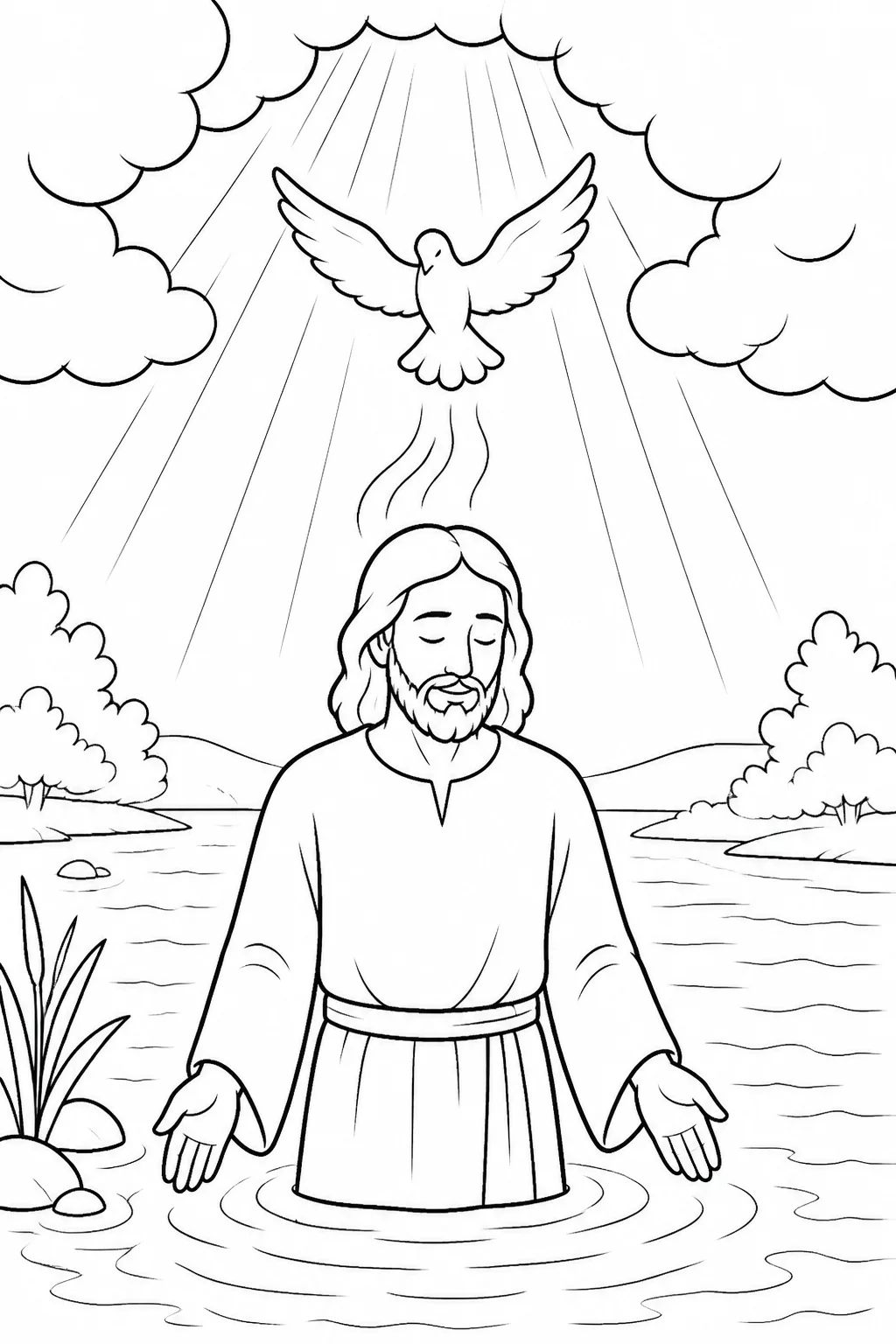
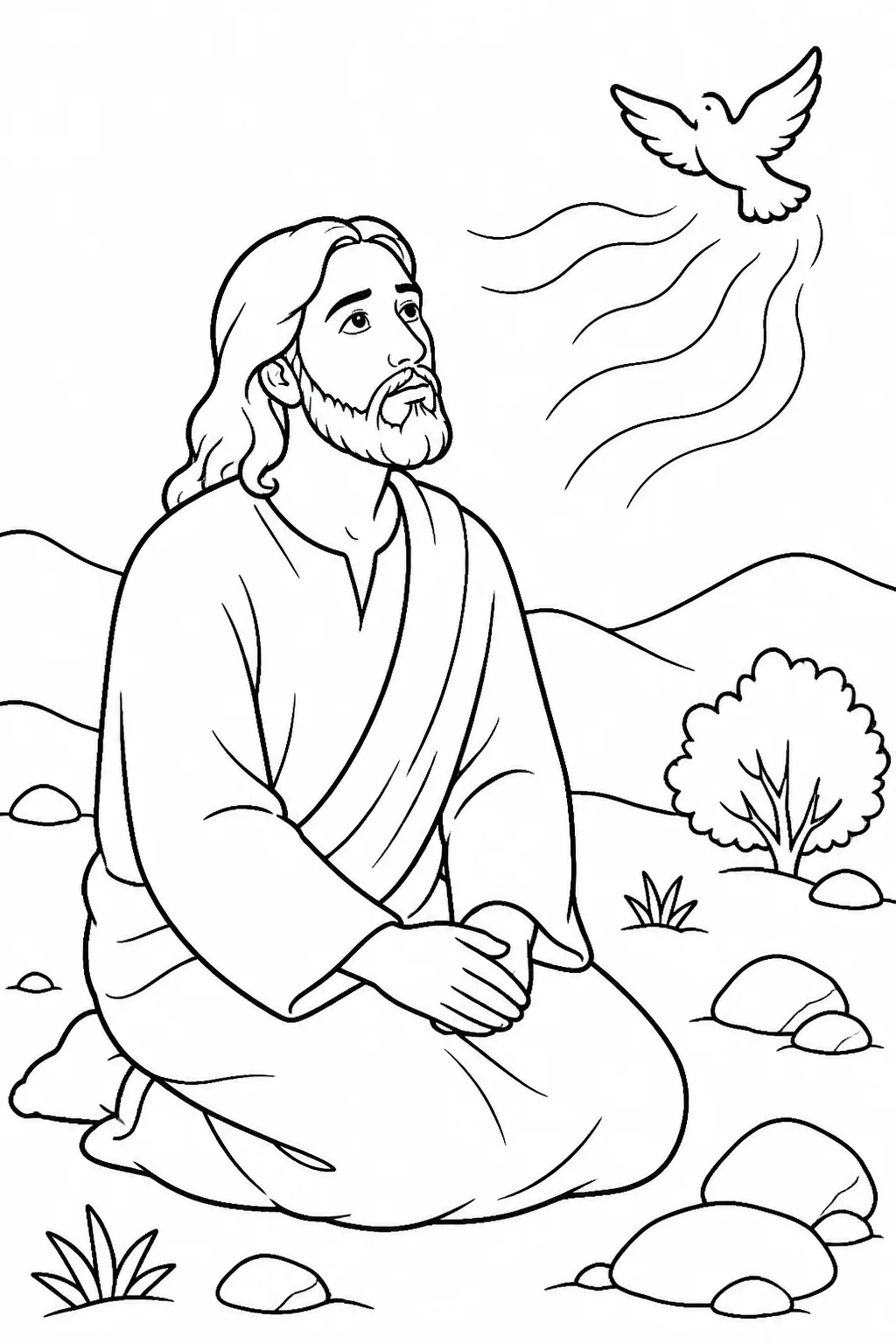
Jesus stands at the Jordan beneath the opened heavens as the Spirit of God descends like a dove and comes to rest on him.

The Spirit Descends Peacefully

Matthew 3:13-17
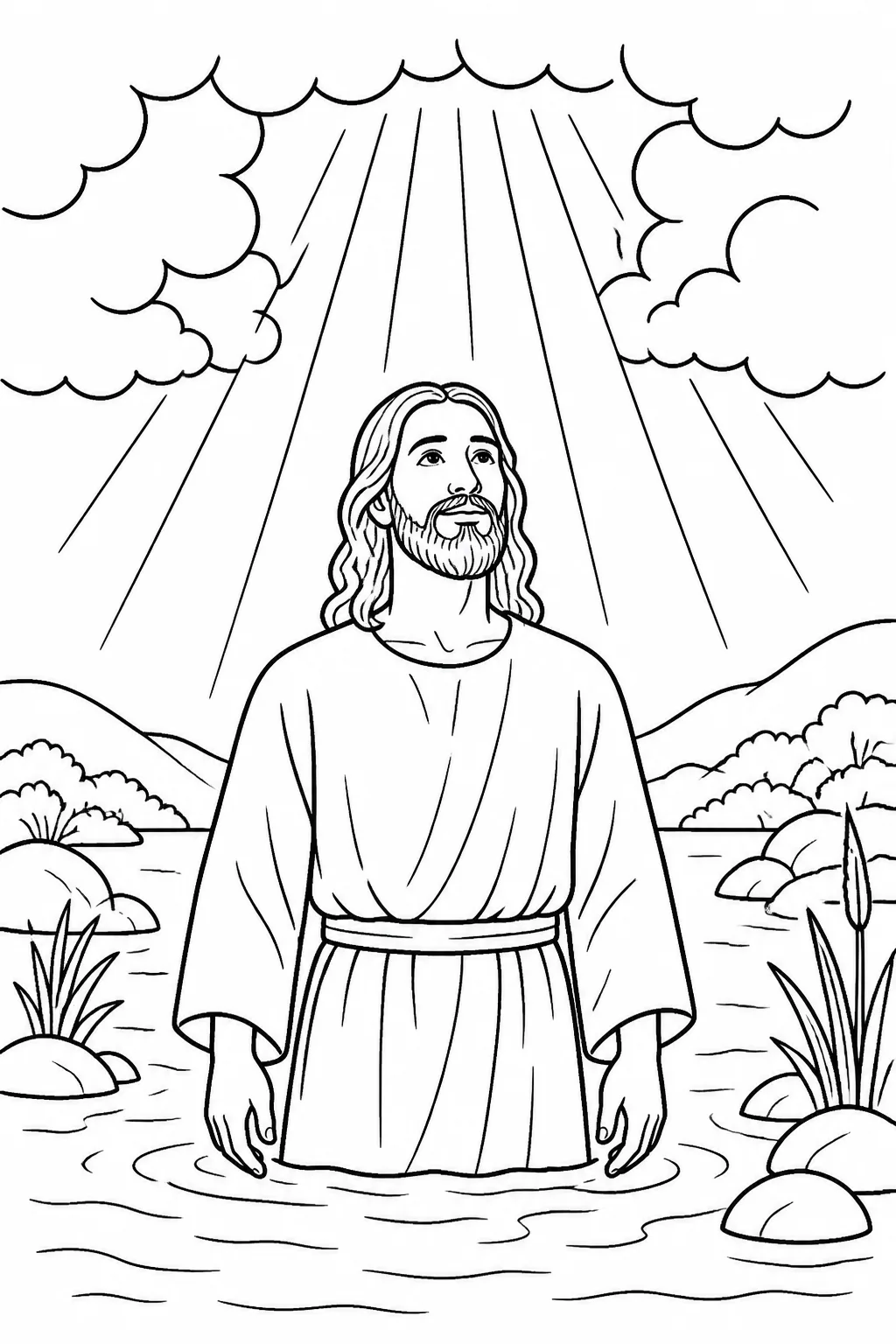
Jesus beneath the opened heavens after baptism, with a voice from heaven declaring him God’s beloved Son.

A Voice from Heaven

Matthew 3:13-17

Jesus has come up from the Jordan after baptism as the heavens open and the Spirit of God descends like a dove to rest on him; John the Baptist may be nearby.

Jesus, the Opened Heavens, and the Spirit

Matthew 3:13-17
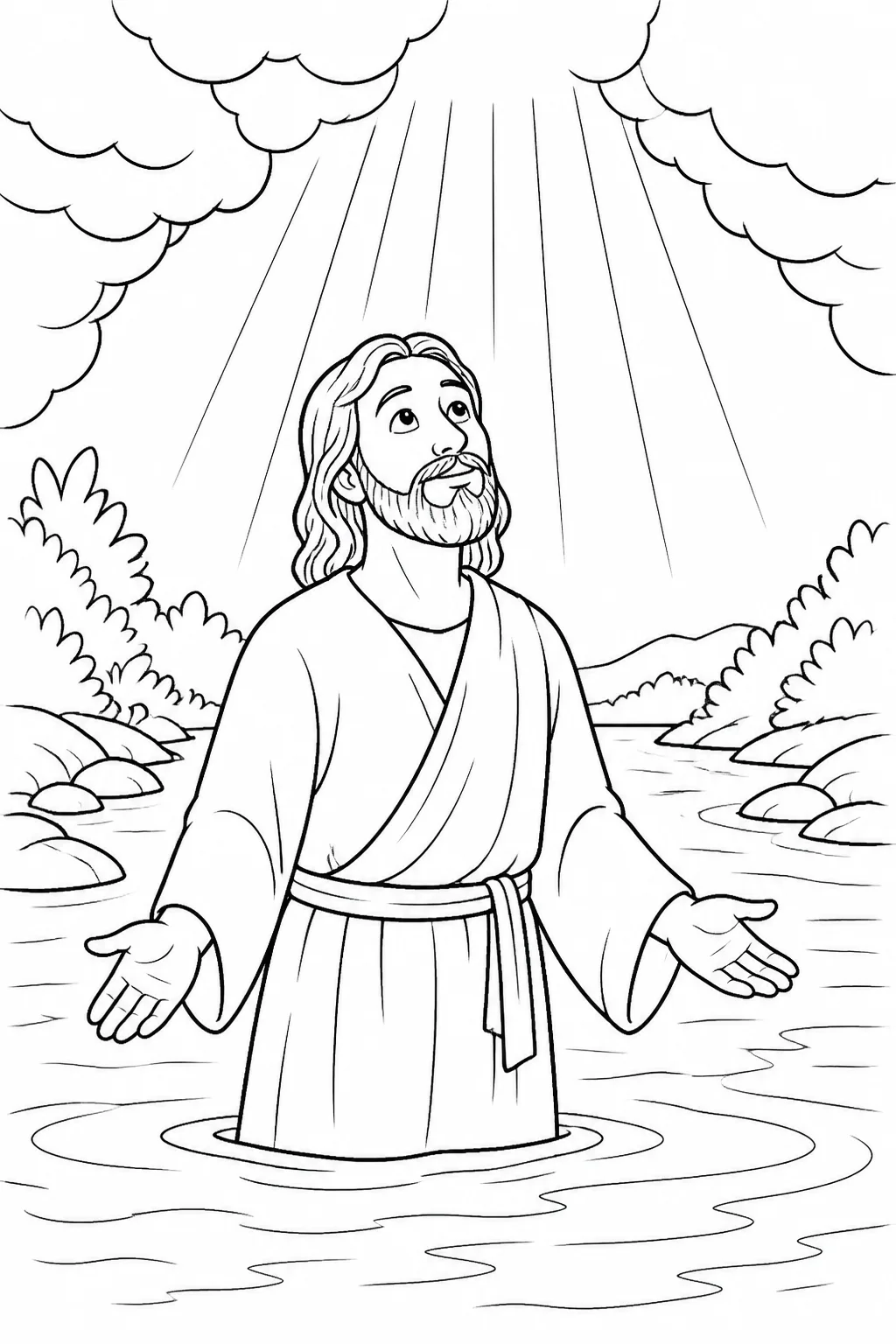
Jesus at the Jordan River beneath opened heavens as a voice from heaven declares him God’s beloved Son and expresses God’s pleasure in him.

God’s Loving Declaration

Matthew 3:13-17
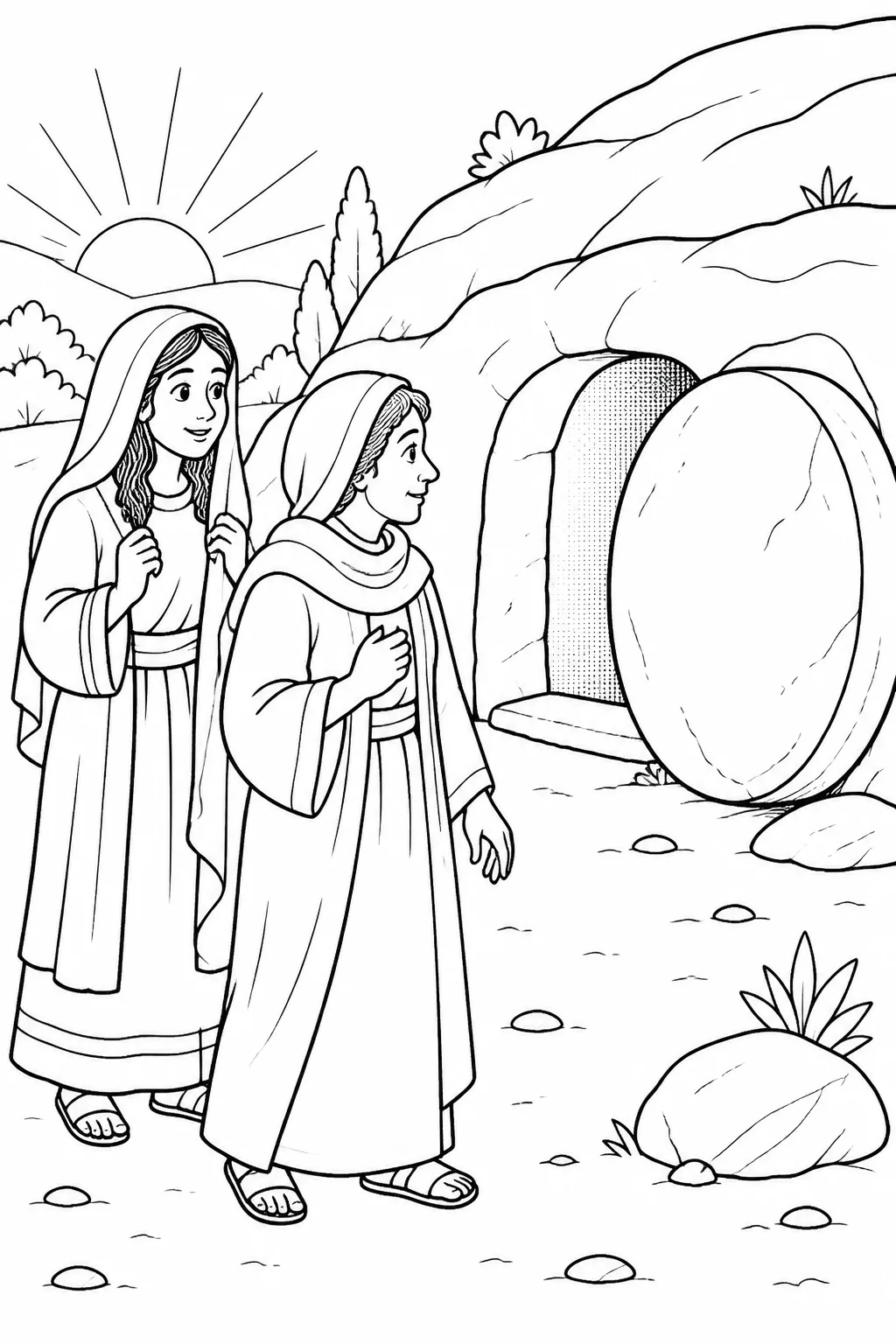
Mary Magdalene and the other Mary stand near the sealed stone at Jesus’ tomb at dawn after the Sabbath, as described in Matthew 28:1.

The Women Visit the Tomb

Matthew 28:1-20
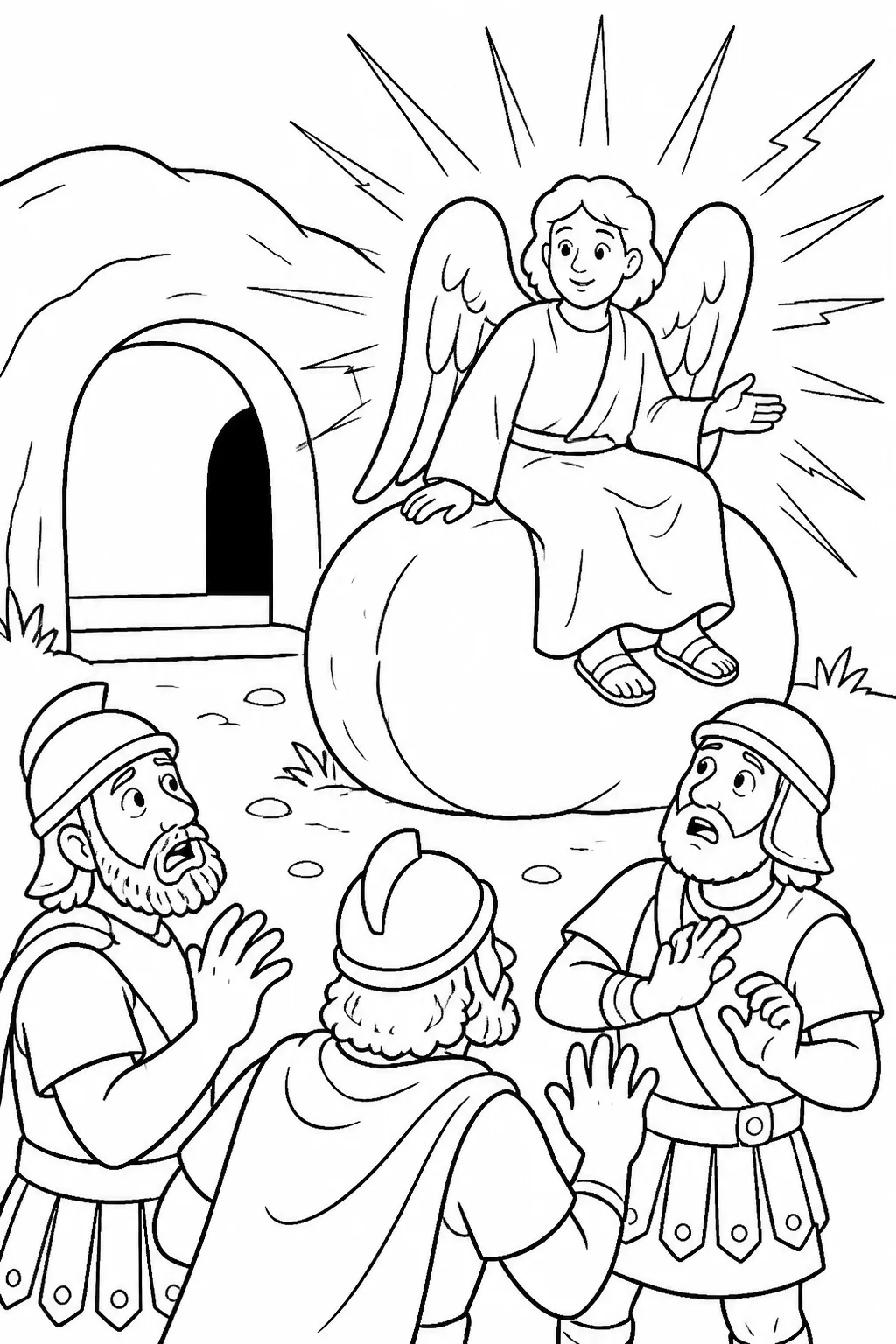
An angel of the Lord rolls back the large stone at Jesus’ tomb while guards tremble nearby, based on Matthew 28:2-4.

The Angel and the Stone

Matthew 28:1-20
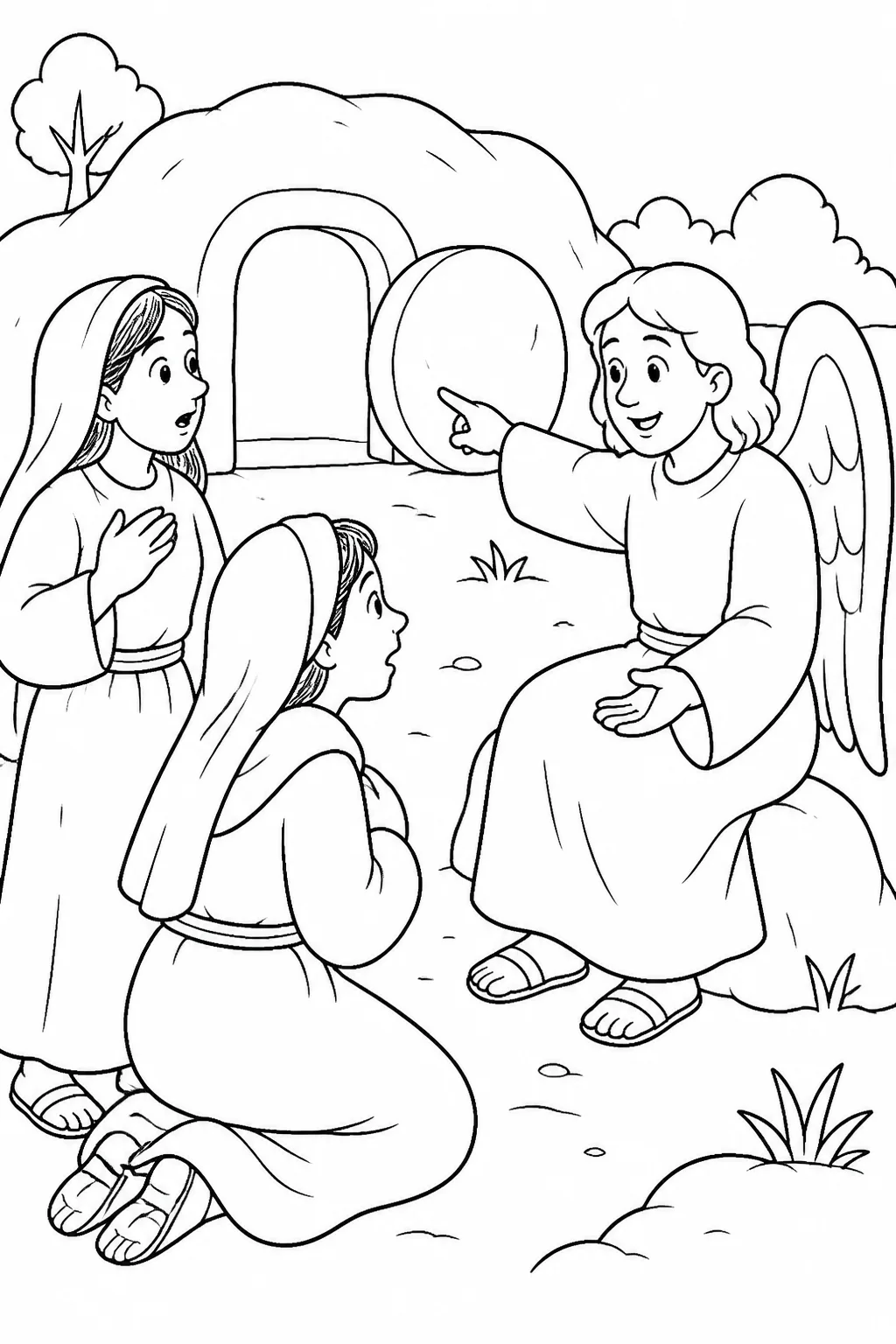
Mary Magdalene and the other Mary at Jesus’ open tomb as an angel announces that Jesus has risen and tells them to inform the disciples to go to Galilee.

The Angel Announces Jesus Is Risen

Matthew 28:1-20
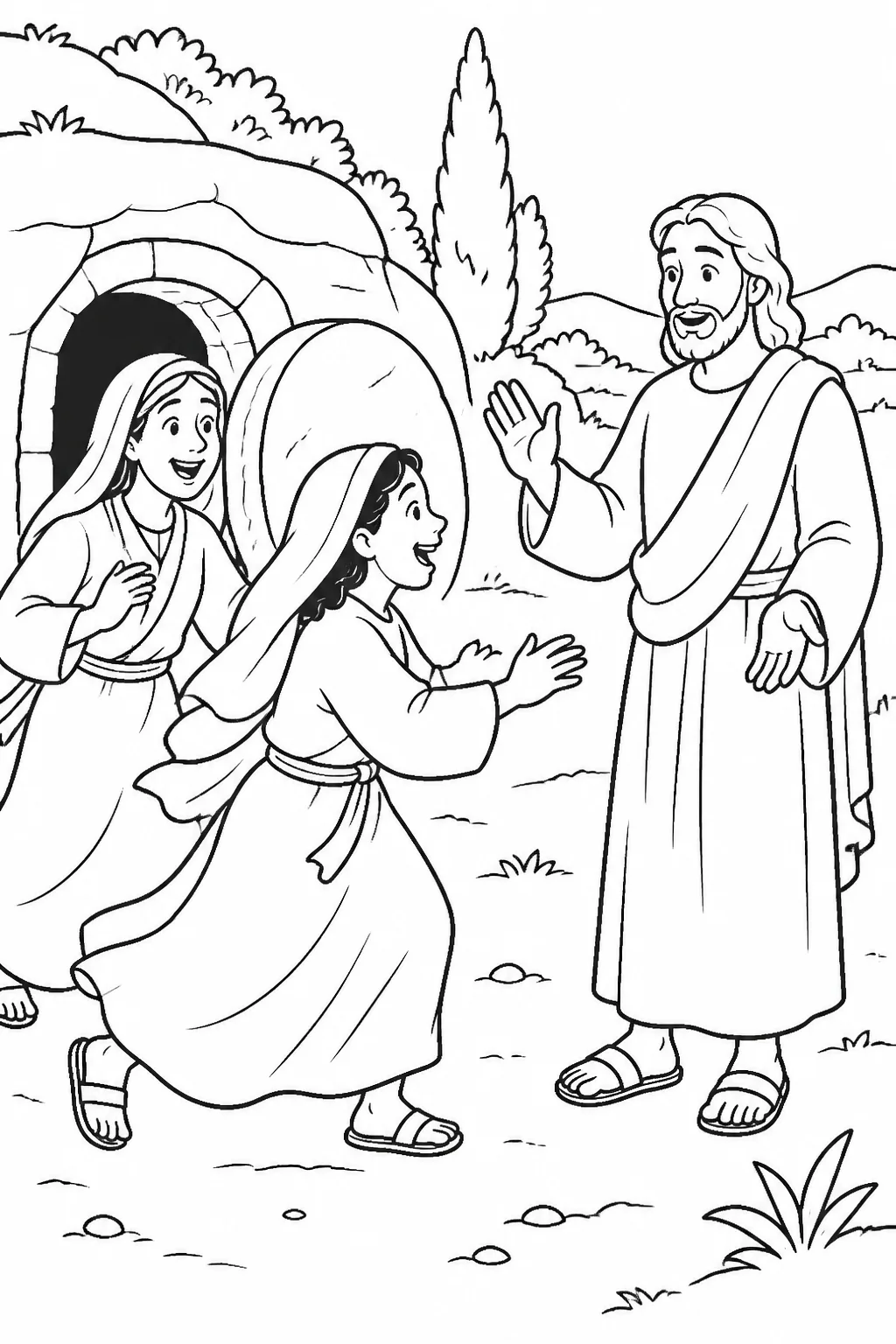
Illustration concept of Jesus meeting Mary Magdalene and the other Mary near the tomb after his resurrection, greeting them, telling them not to fear, and sending them to share a message.

Jesus Meets the Women

Matthew 28:1-20
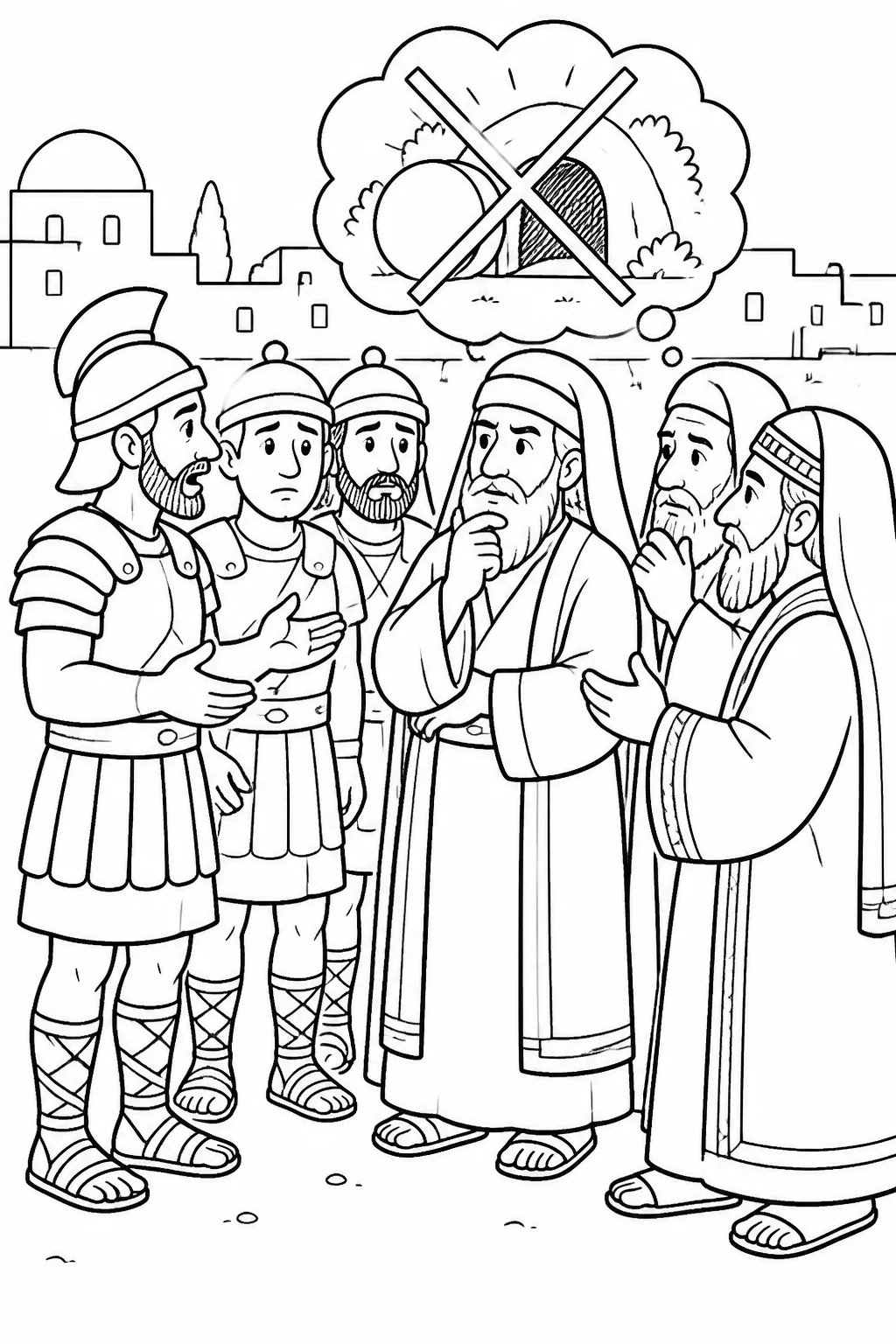
The guards report to the chief priests and elders in Jerusalem, who arrange a false explanation about Jesus’ missing body, as described in Matthew 28:11-15.

The Guards Report to the Leaders

Matthew 28:1-20
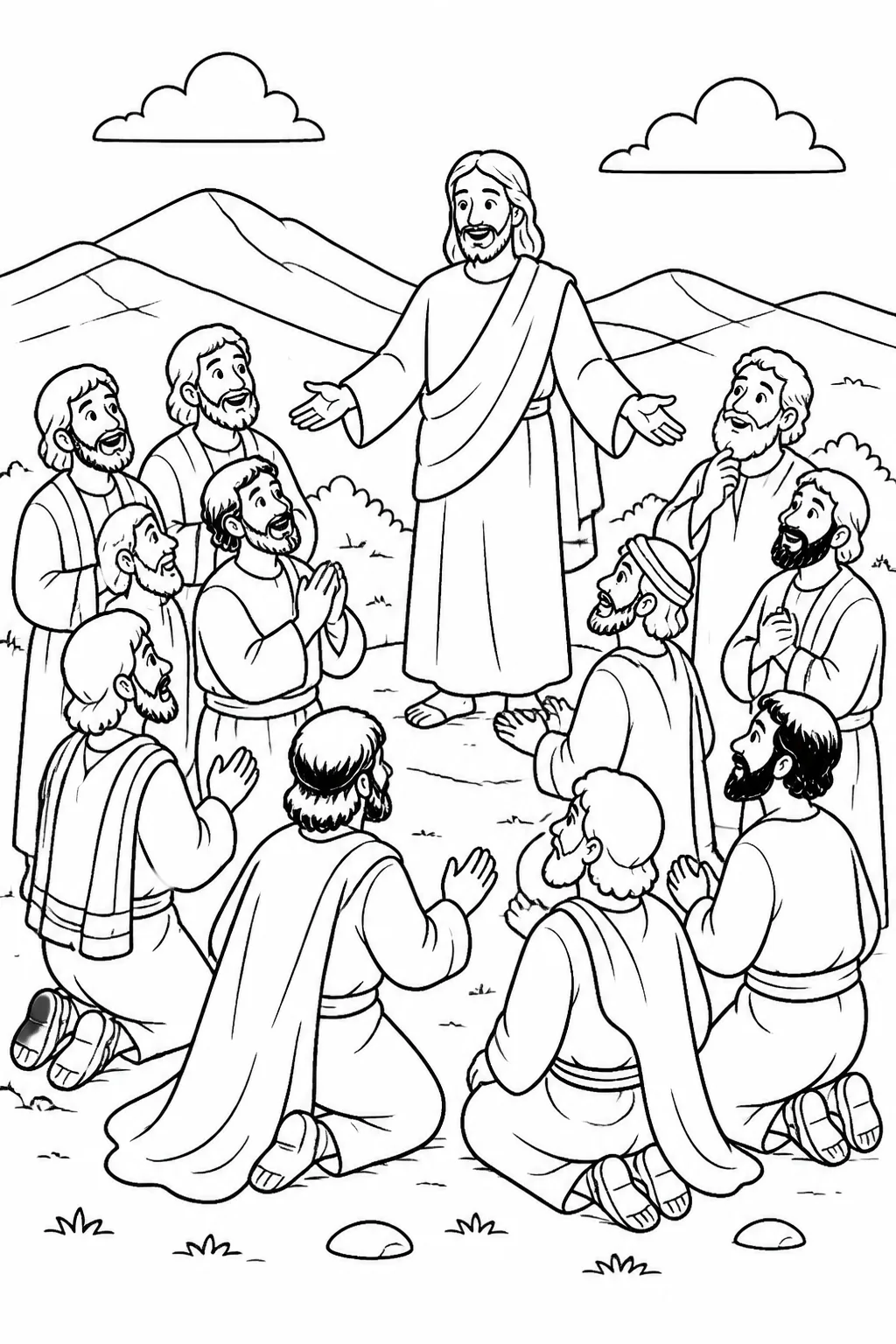
Jesus meeting the eleven disciples on a mountain in Galilee, as described in Matthew 28:16-17.

The Disciples Meet Jesus in Galilee

Matthew 28:1-20
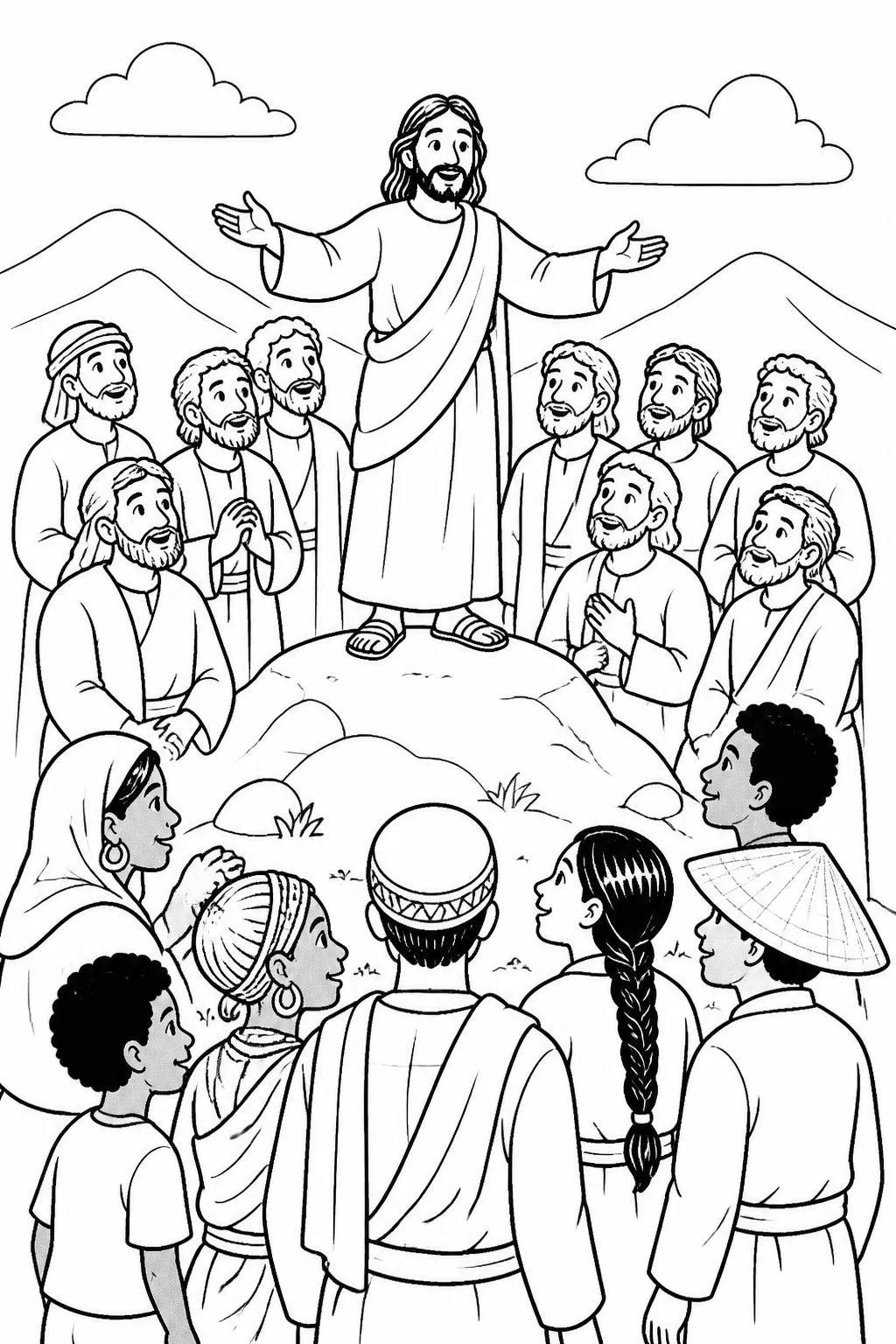
Jesus with the eleven disciples on a mountain in Galilee as he commands them to make disciples of all nations, baptize, teach, and trust his promise to be with them always.

Jesus Sends His Disciples

Matthew 28:1-20
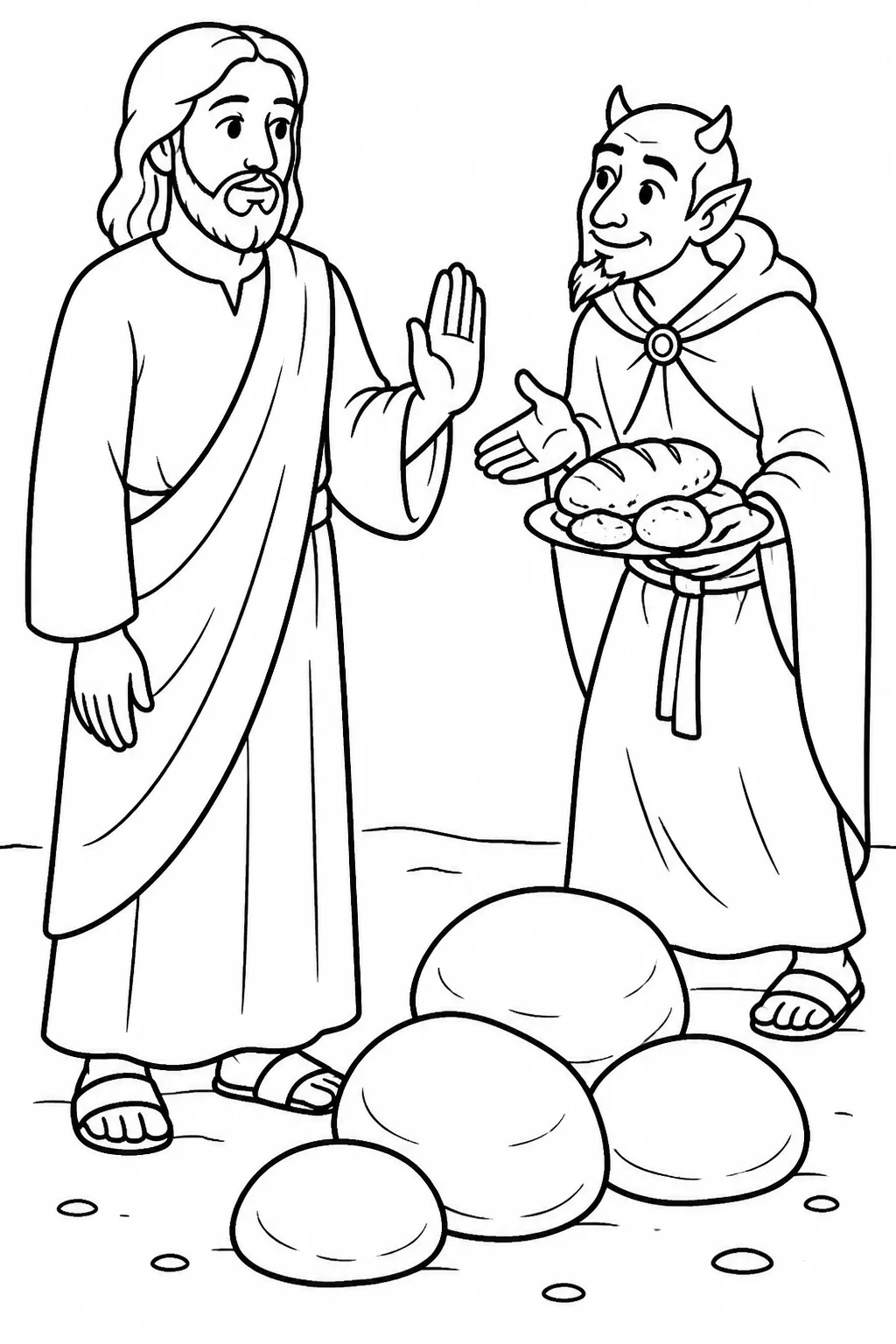
Jesus stands calmly in the wilderness beside stones while the devil presents the temptation to make them become bread; the stones remain unchanged.

Jesus Chooses God’s Word

Matthew 4:1-11
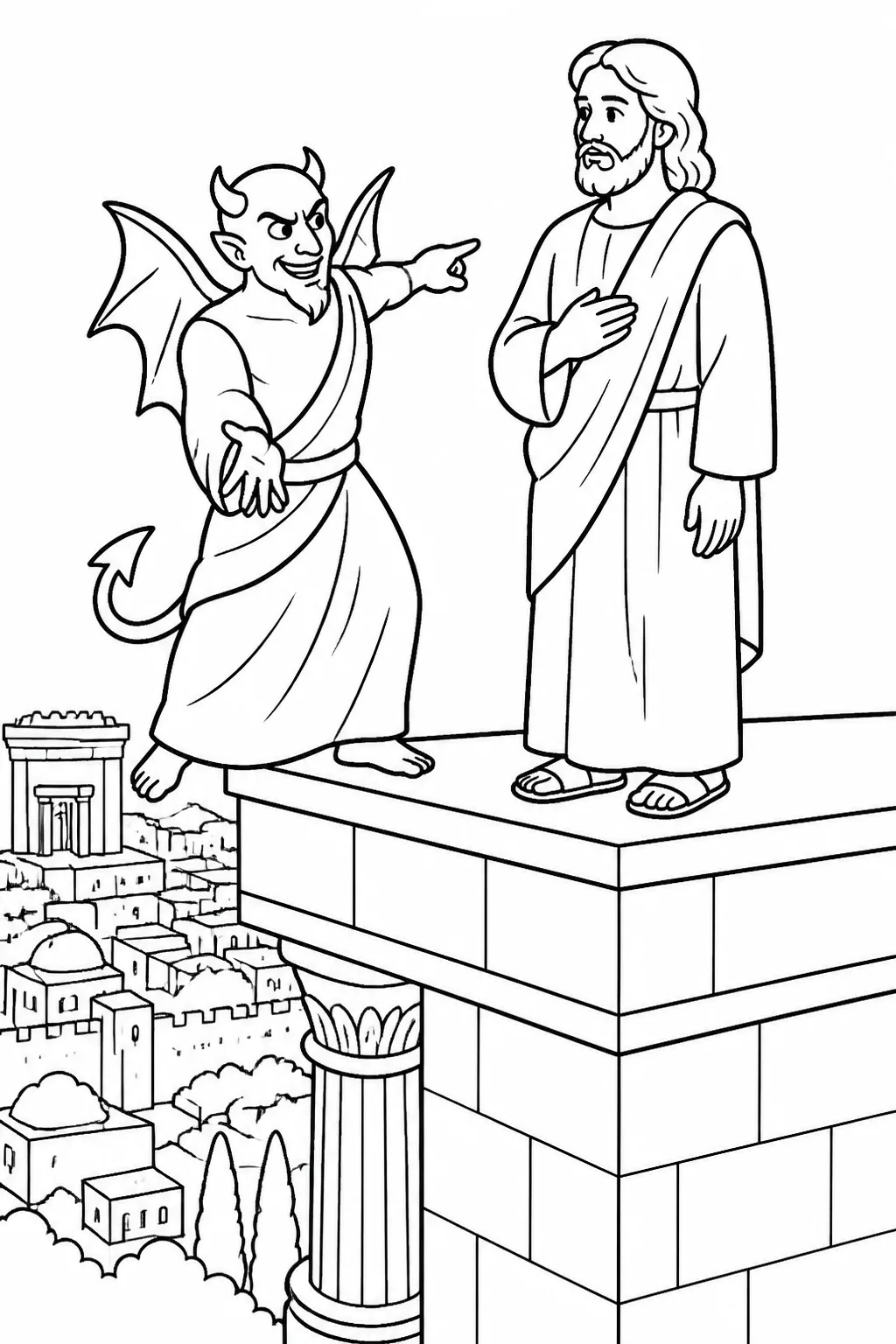
Jesus stands safely at the temple pinnacle in the holy city while the devil points toward jumping; Jesus refuses to test God.

Jesus Stands Firm at the Temple

Matthew 4:1-11
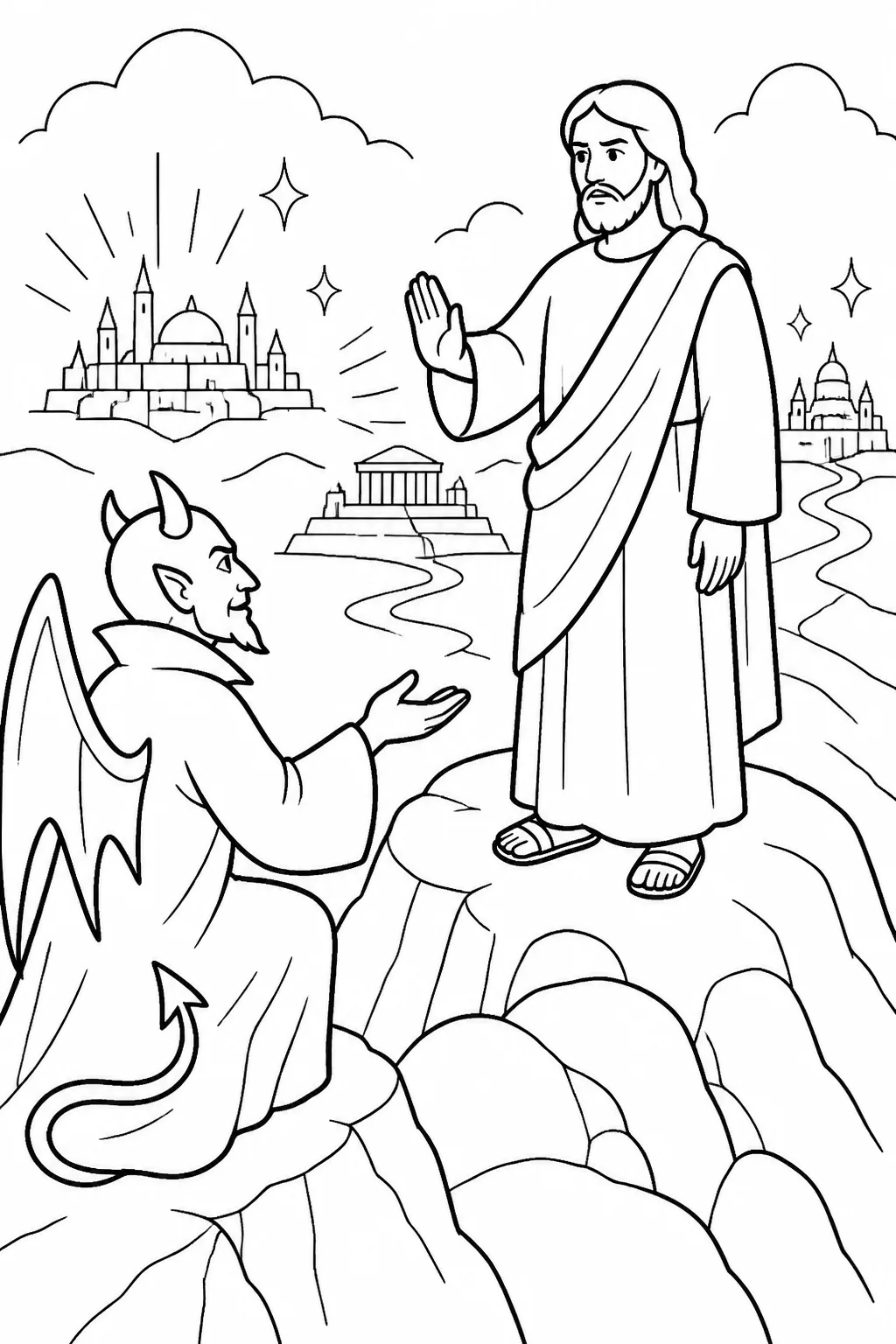
Jesus faces the devil on a very high mountain while distant abstract views suggest the kingdoms of the world and their glory; Jesus refuses the offered power and commands the devil to go.

Jesus Worships God Alone

Matthew 4:1-11
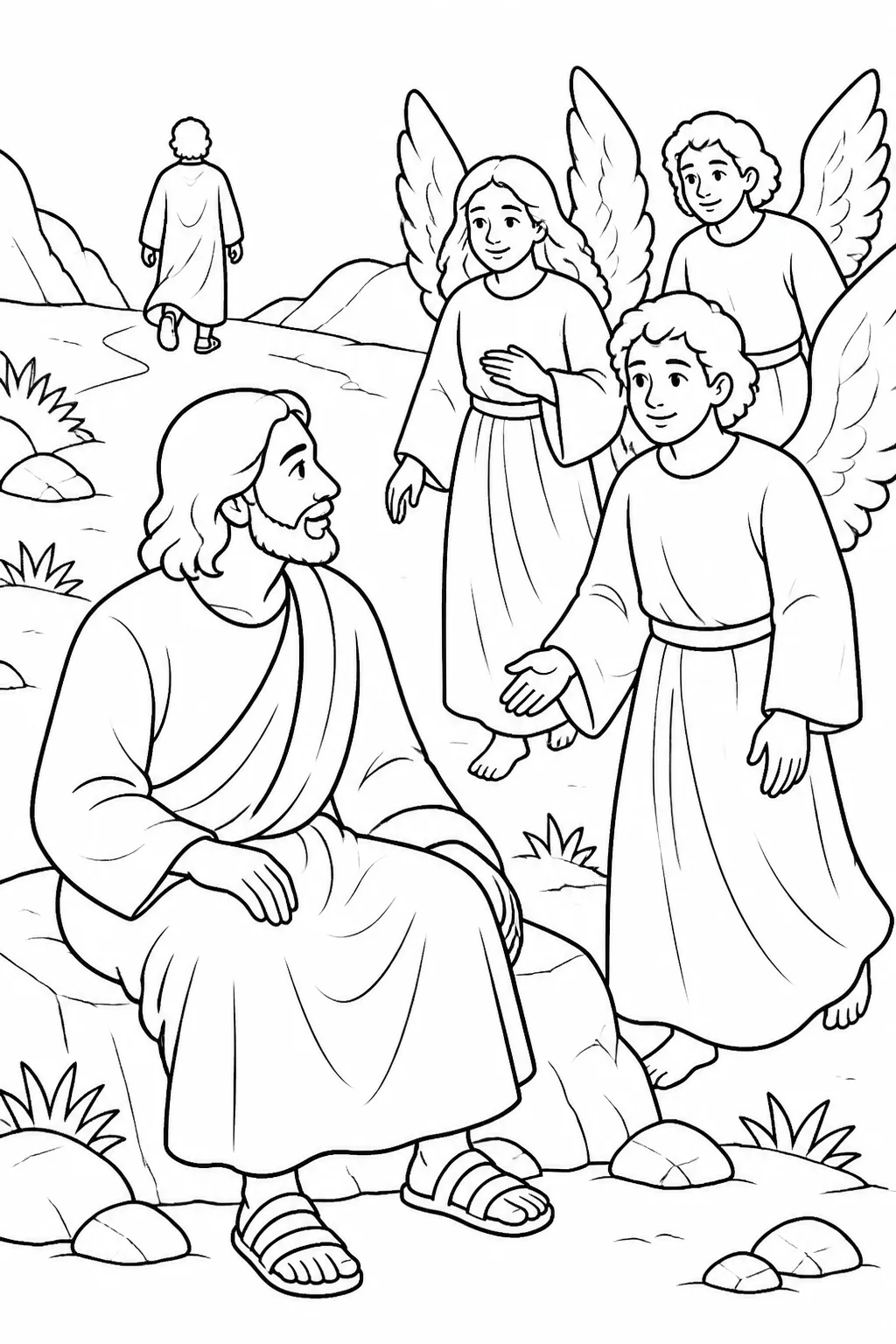
Jesus in the wilderness after the devil leaves, with angels coming to serve him, based on Matthew 4:11.

Care After the Test

Matthew 4:1-11

Jesus alone in the wilderness after fasting for forty days and forty nights, with a thoughtful and steady posture.

Jesus in the Wilderness

Matthew 4:1-11
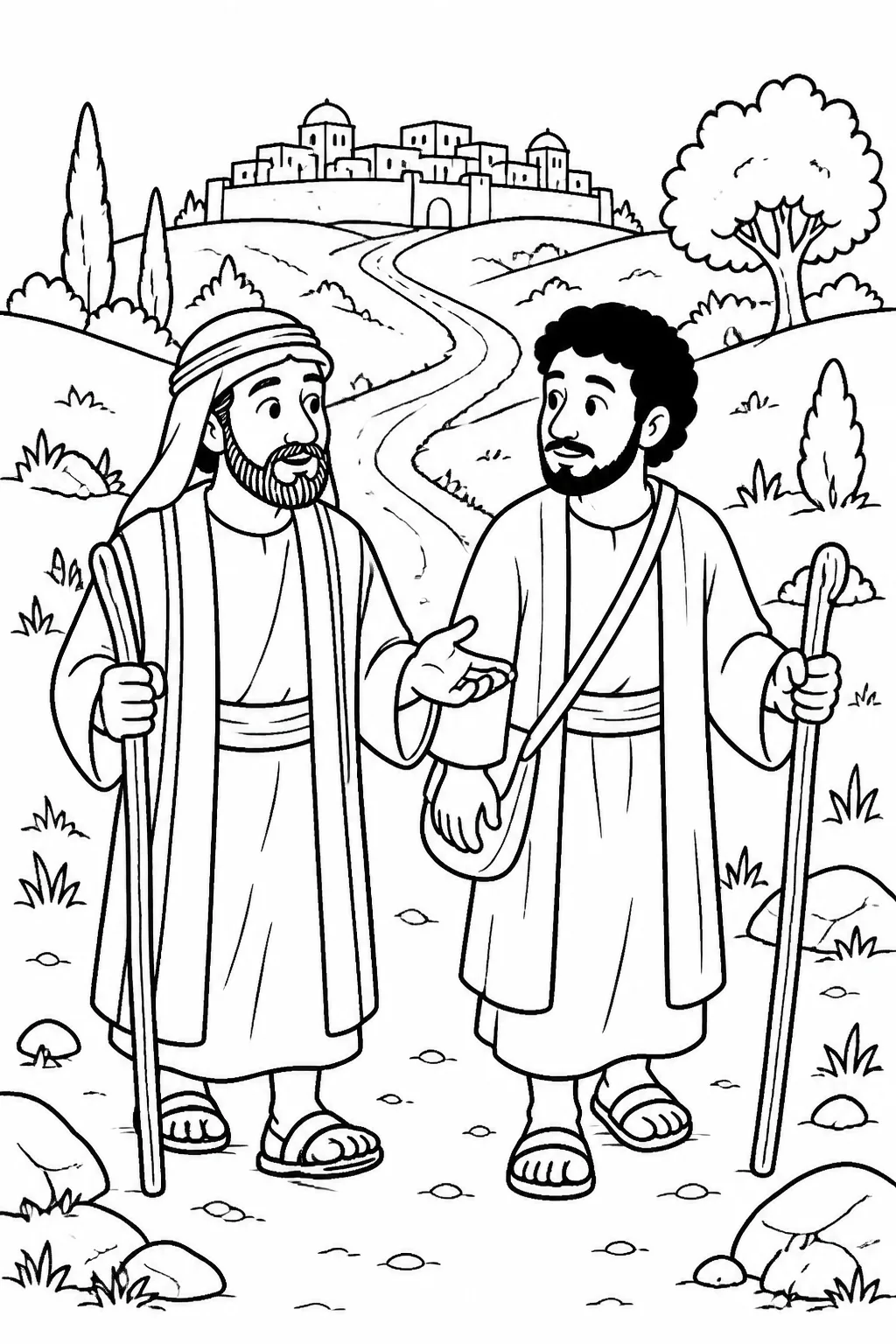
Cleopas and the unnamed second disciple traveling along the road from Jerusalem toward Emmaus, with distant Jerusalem visible.

Two Disciples Travel Toward Emmaus

Luke 24:13-35
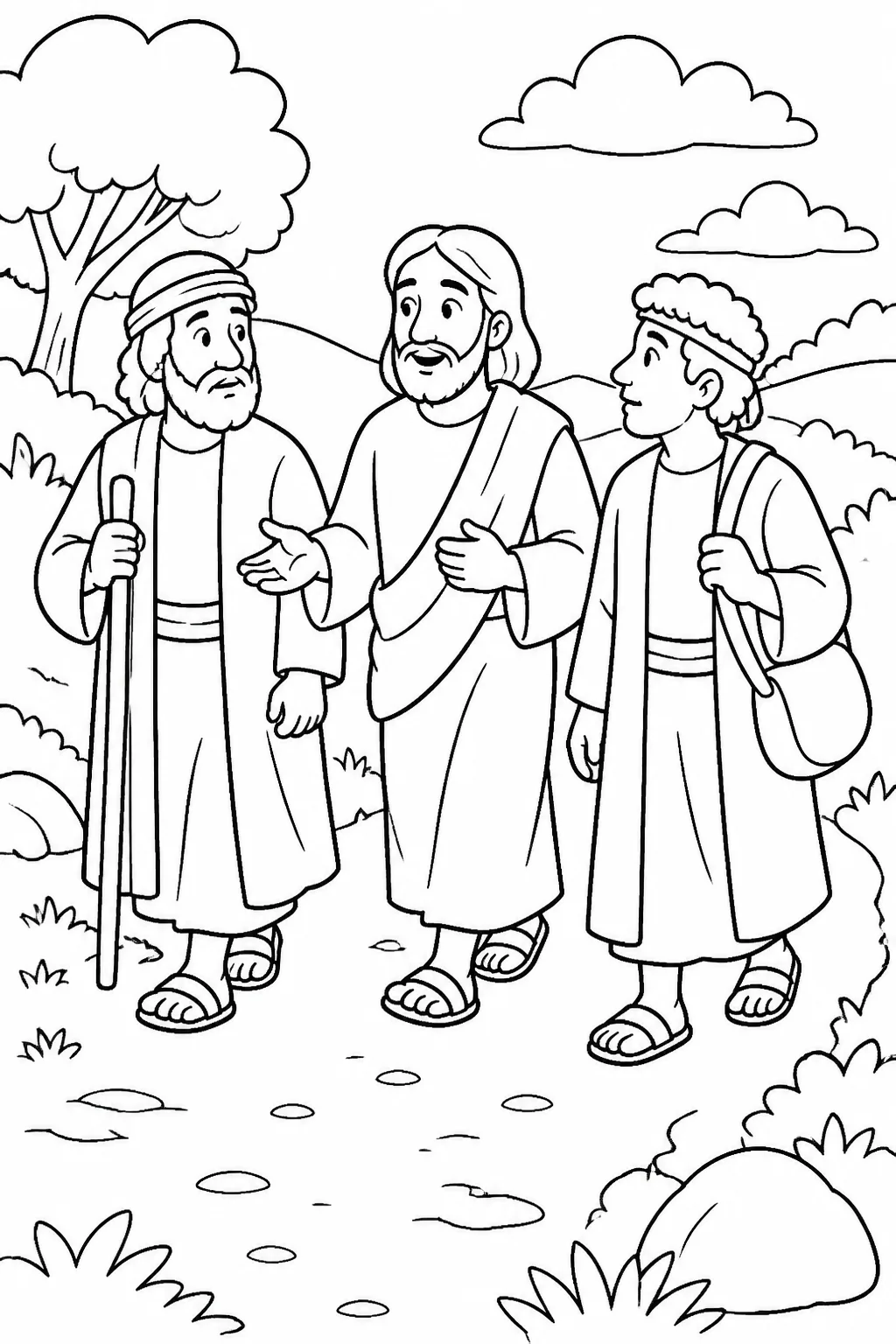
Jesus walking beside Cleopas and the unnamed second disciple on the road to Emmaus, as described in Luke 24:15-18.

Jesus Walks Beside the Disciples

Luke 24:13-35
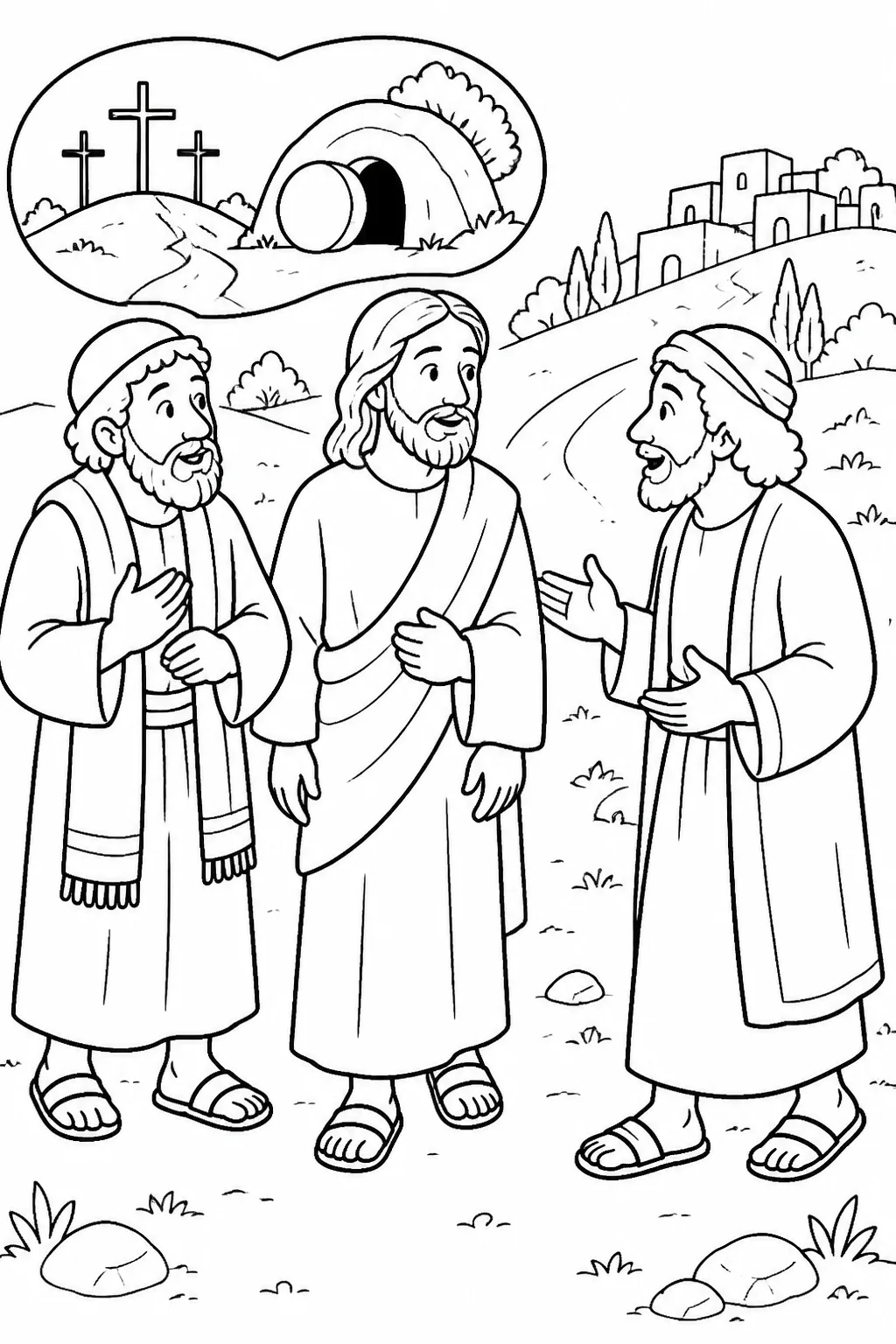
Jesus walks with Cleopas and the unnamed second disciple on the road to Emmaus as they explain the reported events in Jerusalem, including Jesus’ crucifixion and the empty tomb.

The Disciples Tell Jesus What They Heard

Luke 24:13-35
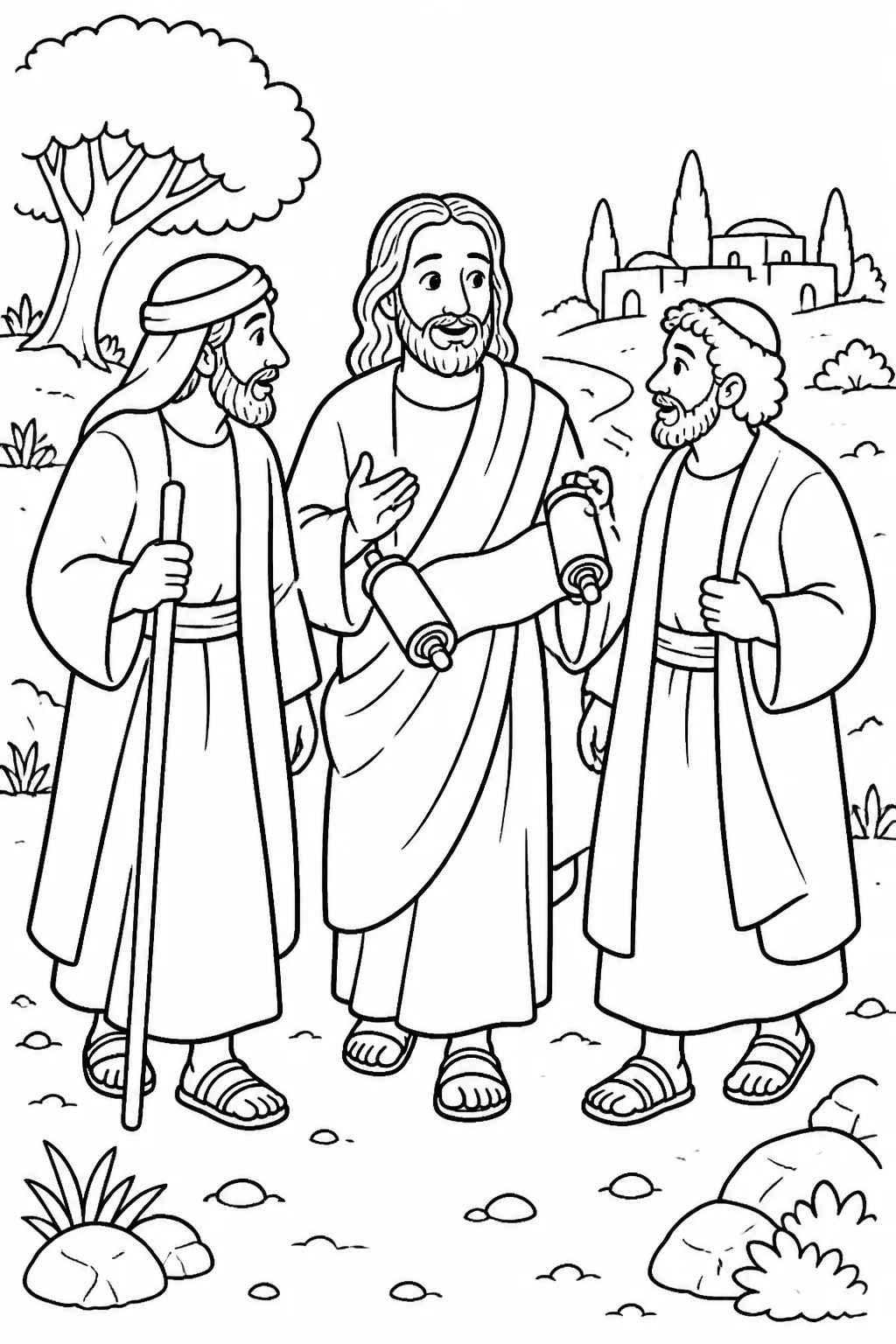
Jesus walking with Cleopas and the unnamed second disciple on the road to Emmaus while explaining the Scriptures about the Messiah’s suffering and glory.

Jesus Explains the Scriptures

Luke 24:13-35
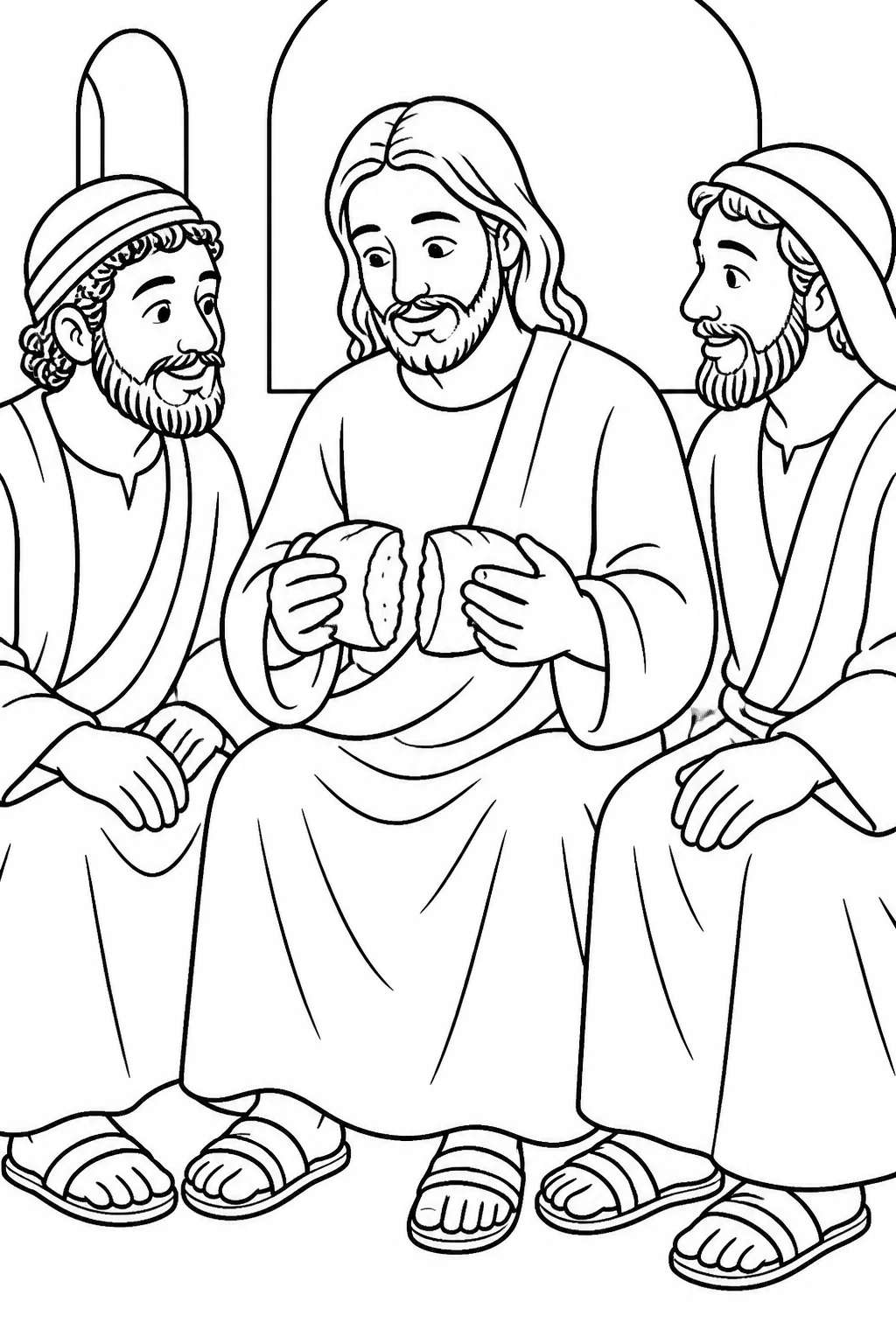
Jesus, Cleopas, and the unnamed second disciple near Emmaus as Jesus takes, blesses, breaks, and gives them bread.

They Invite Jesus to Stay

Luke 24:13-35
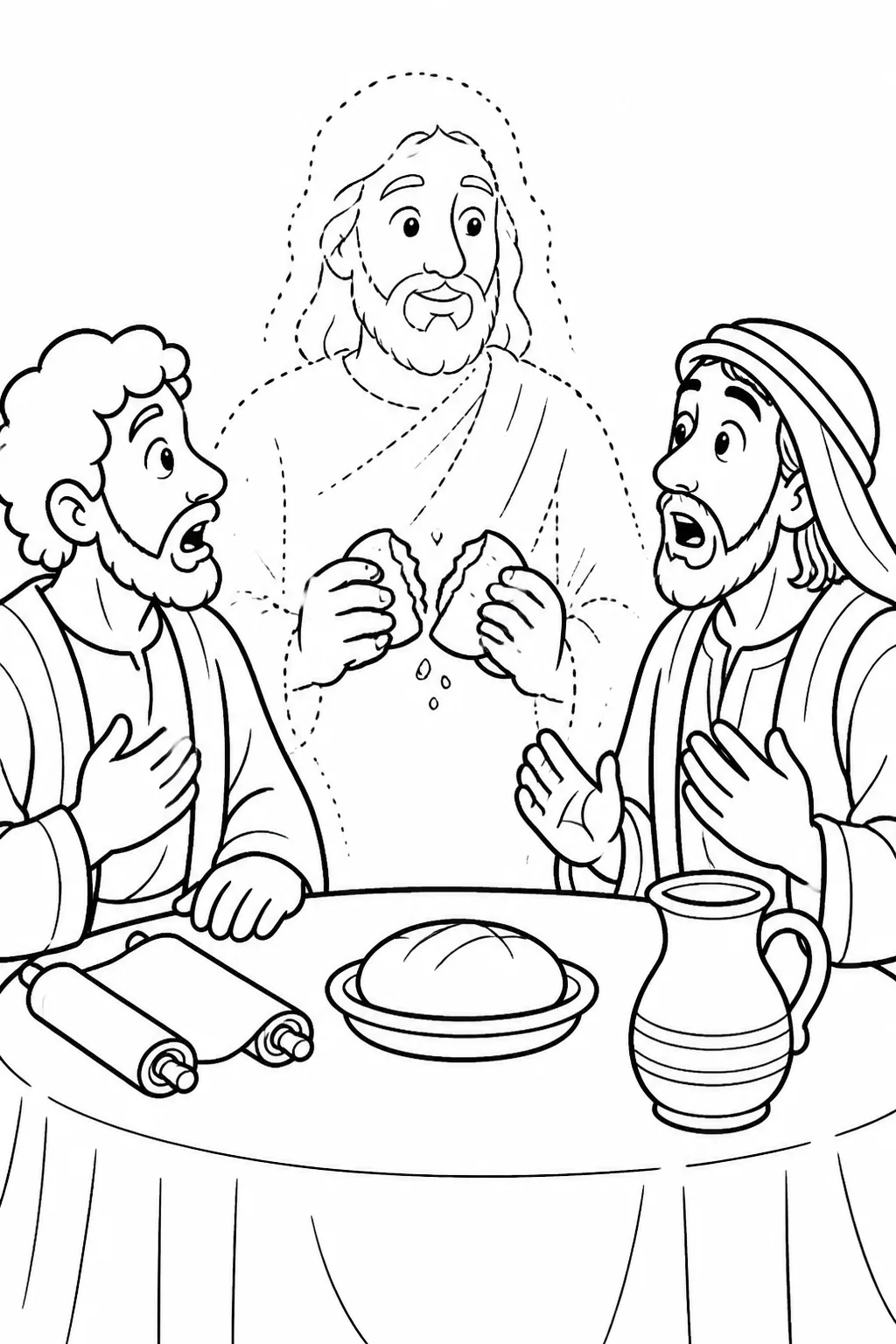
Jesus breaks bread as Cleopas and the unnamed second disciple recognize him, based on Luke 24:31-32.

They Recognize Jesus in the Breaking of Bread

Luke 24:13-35
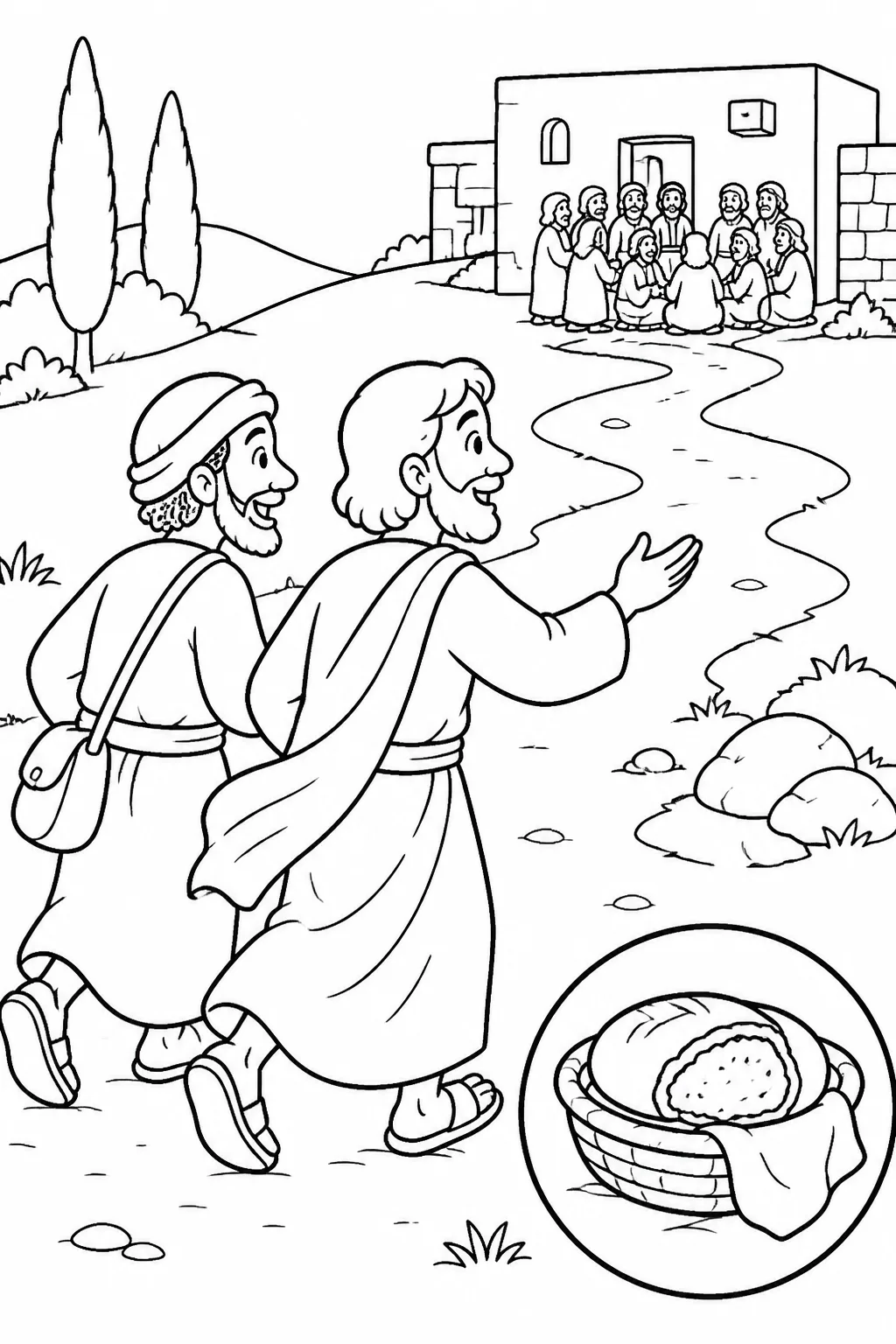
Cleopas and the unnamed disciple return from Emmaus to Jerusalem to report to the gathered disciples how Jesus was recognized in the breaking of bread.

The Disciples Return to Jerusalem

Luke 24:13-35
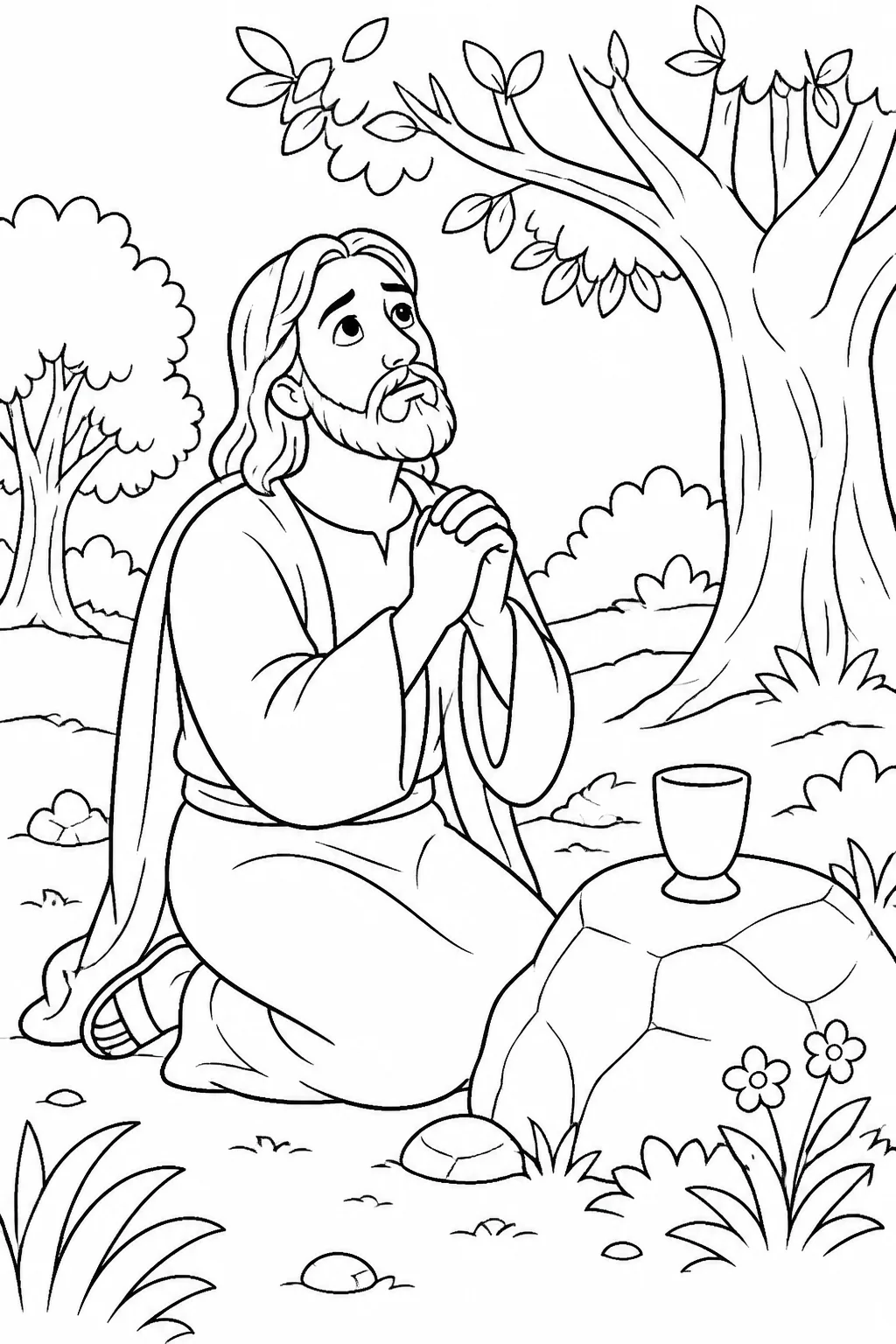
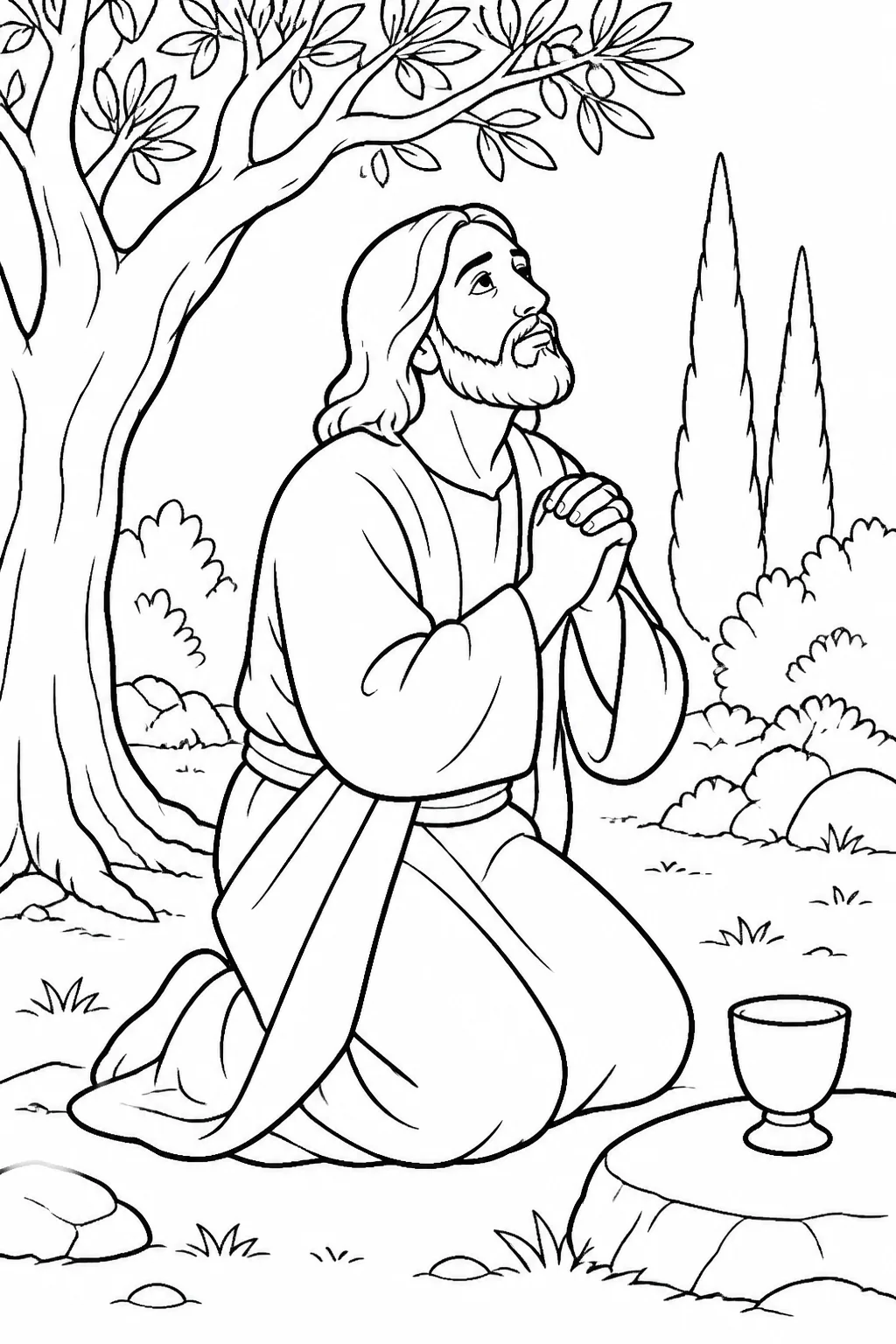
Jesus kneeling in prayer a little apart from the disciples among the trees of Gethsemane, with a simple cup symbol connected to his prayer.

Jesus Prays in the Garden

Matthew 26:36-46
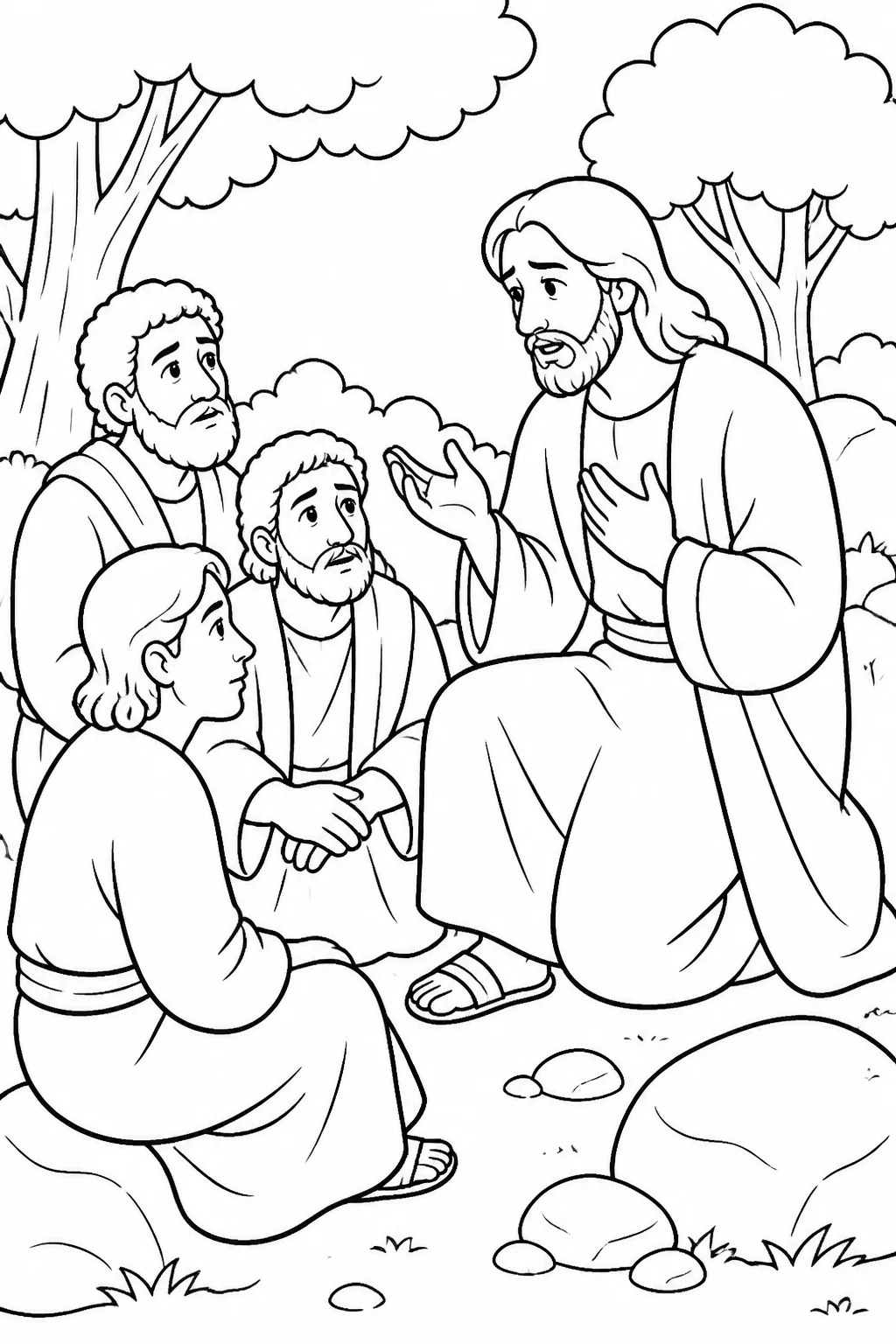
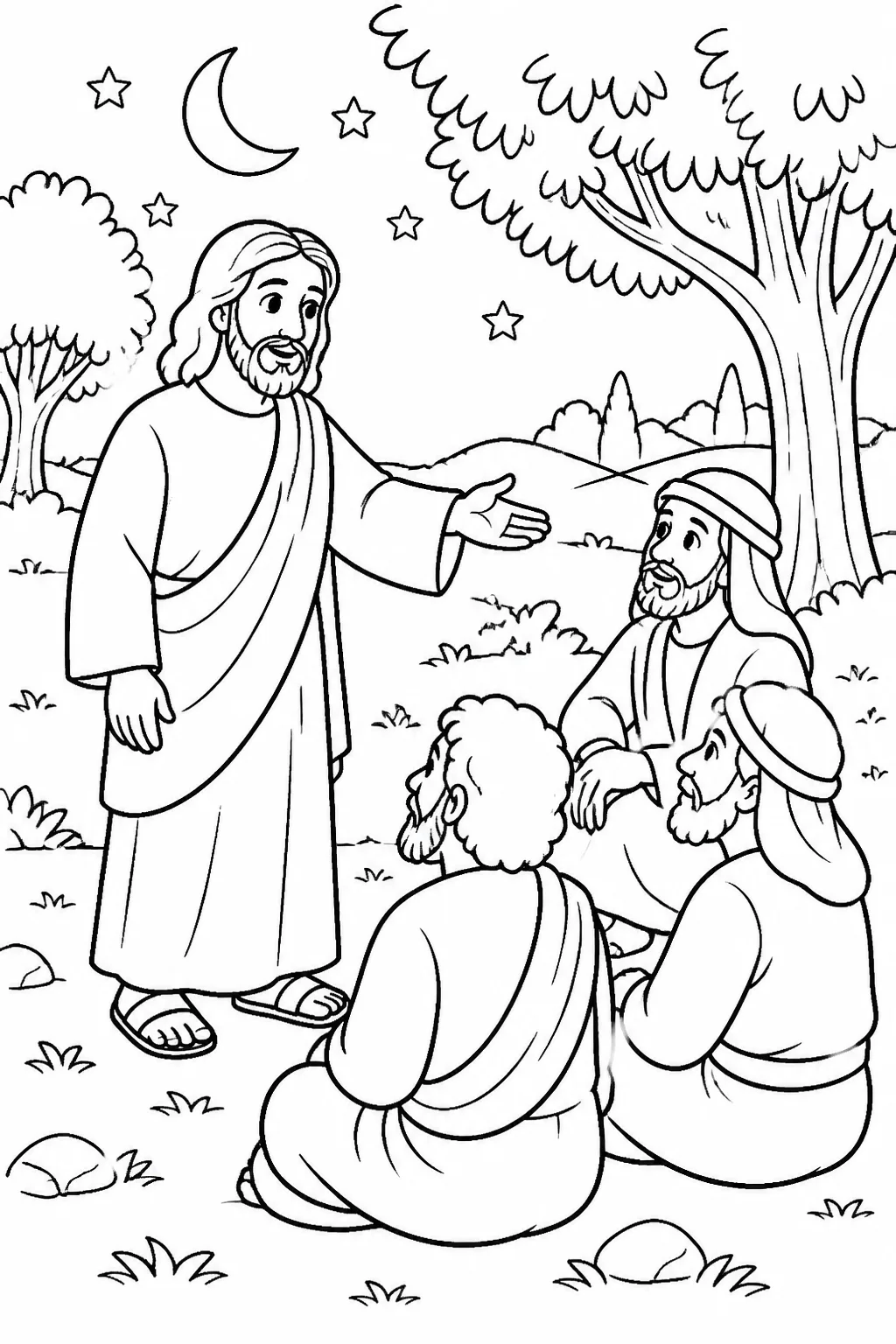
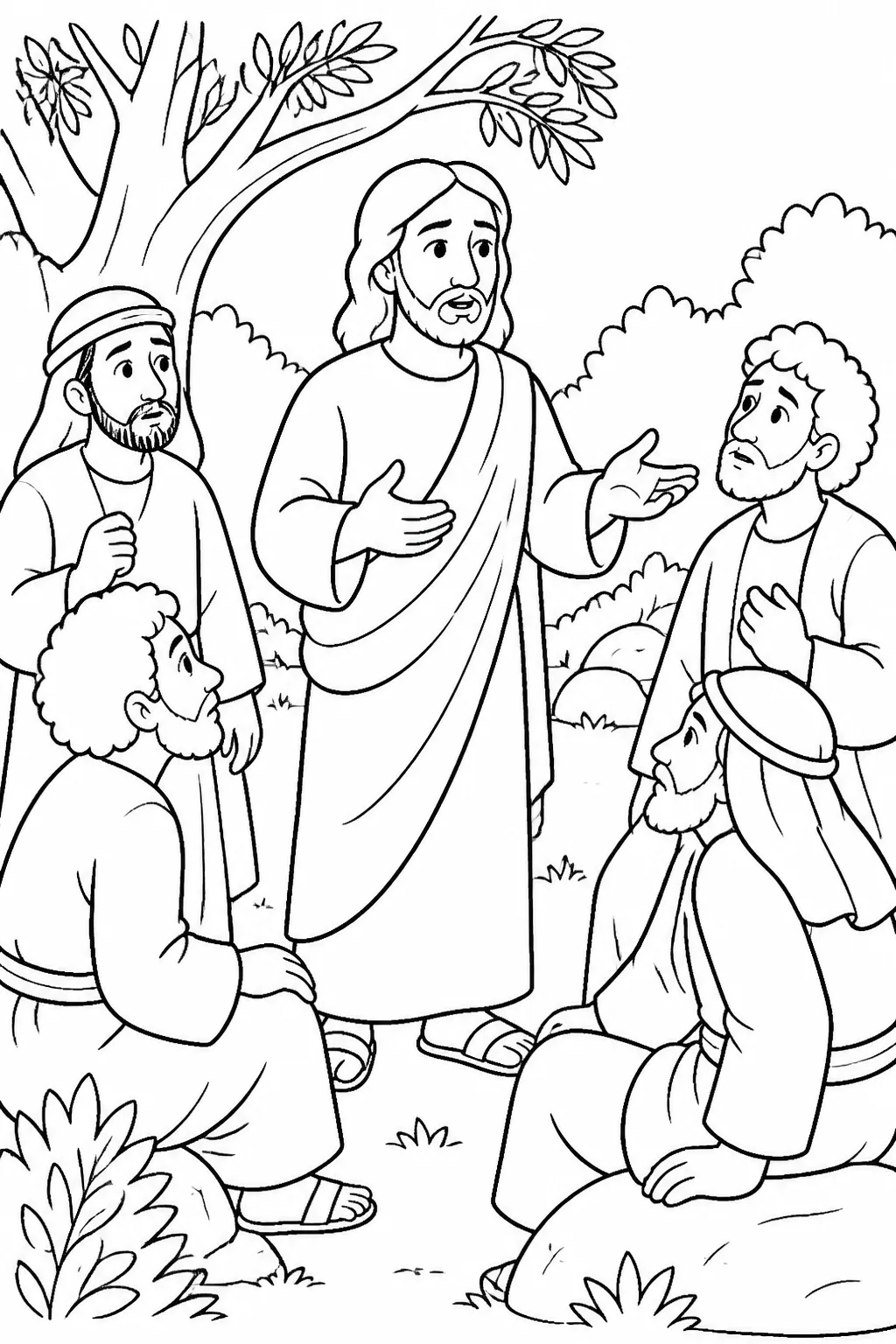
Jesus speaking earnestly with Peter and the two unnamed sons of Zebedee in the peaceful Gethsemane garden, asking them to remain and watch with him.

Watch With Me

Matthew 26:36-46

Jesus gestures for his disciples to sit in Gethsemane while he goes to pray, based on Matthew 26:36.

Jesus and the Disciples in Gethsemane

Matthew 26:36-46
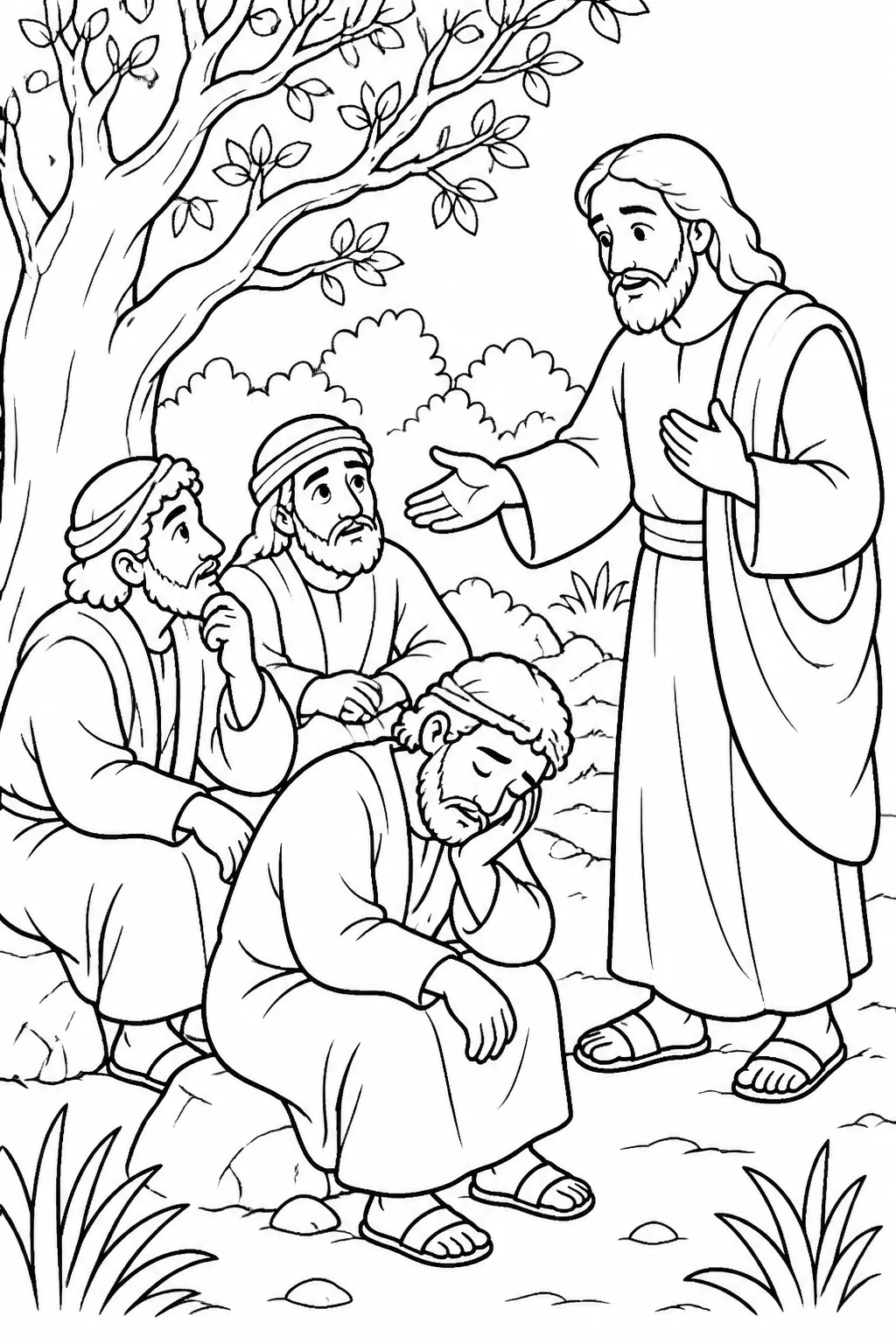
Jesus returns to Peter and the disciples in the Gethsemane garden and urges them to watch and pray.

Watch and Pray

Matthew 26:36-46

Jesus apart from sleeping disciples in the Gethsemane garden, praying for the third time with a simple cup symbol nearby.

Jesus Prays Again

Matthew 26:36-46

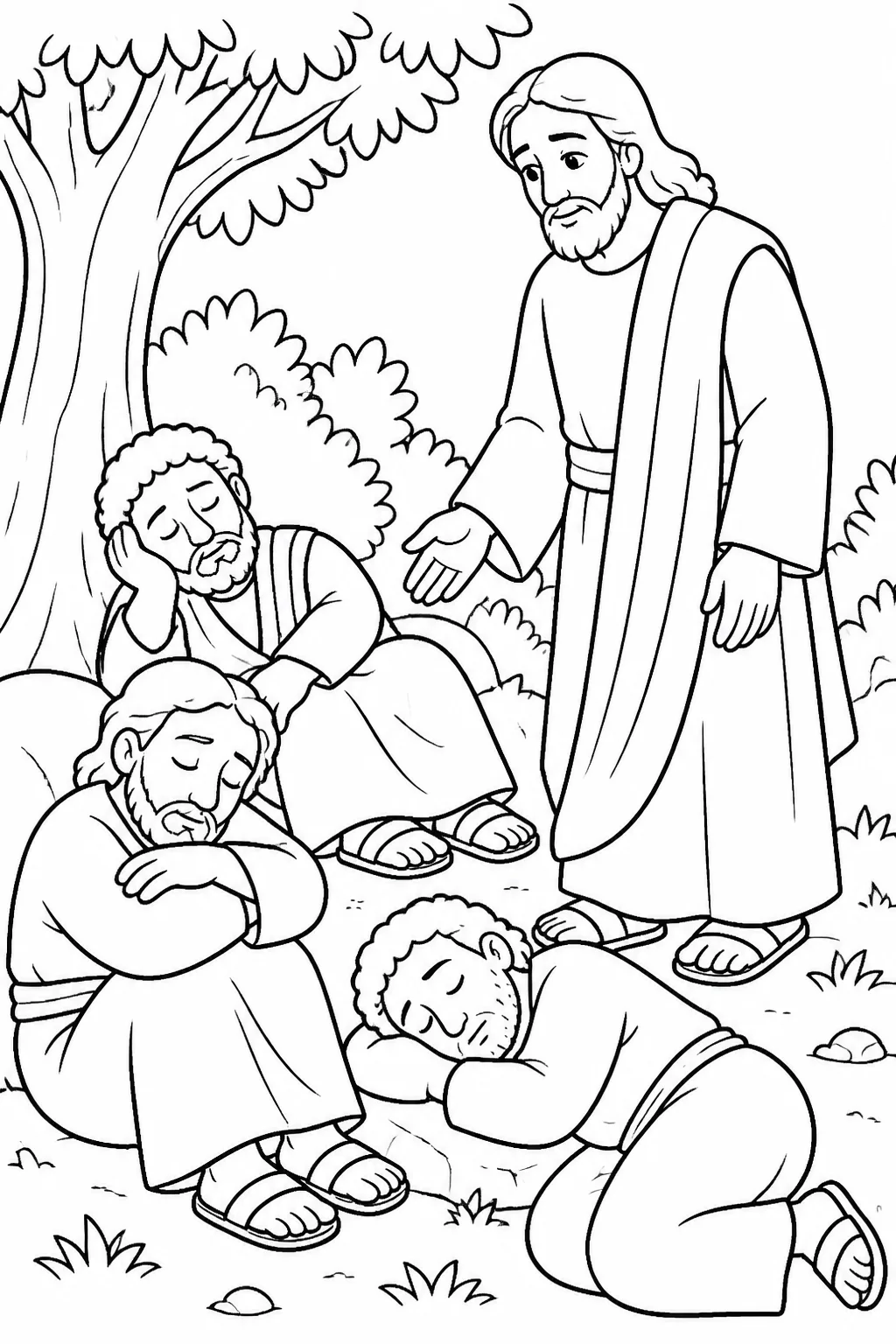
Jesus near the sleeping disciples in the quiet garden of Gethsemane, illustrating Matthew 26:43, when their eyes were heavy.

Their Eyes Were Heavy

Matthew 26:36-46
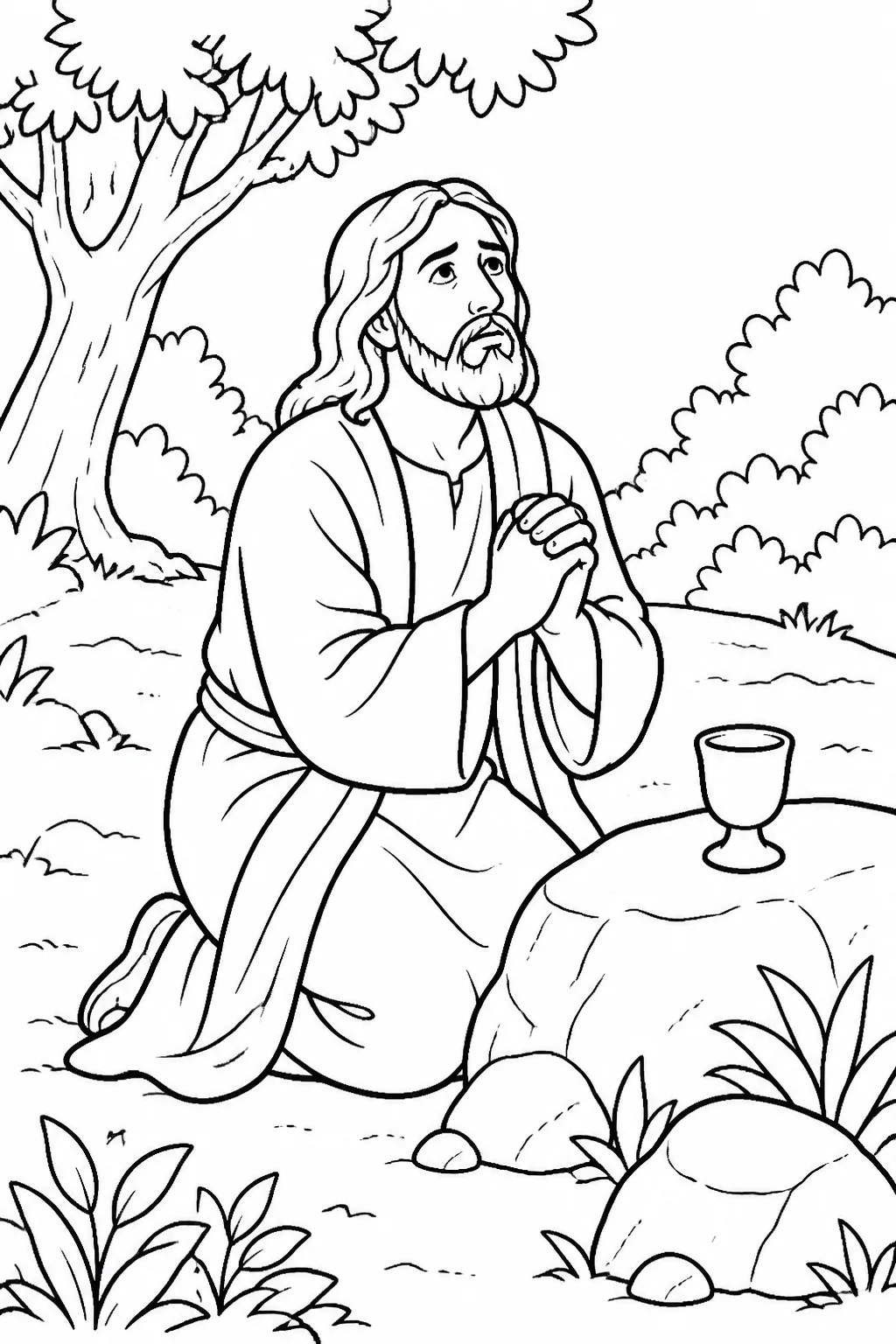
Jesus praying a second time in the Gethsemane garden about the cup and submitting to his Father’s will.

Trusting Prayer

Matthew 26:36-46

Jesus stands with the disciples in Gethsemane and tells them to rise and go because the hour is near.

The Hour Is Near

Matthew 26:36-46

Jesus steps toward a lakeshore as a large crowd gathers around him, illustrating Mark 5:21.

Jesus Returns to the Shore

Mark 5:21-43
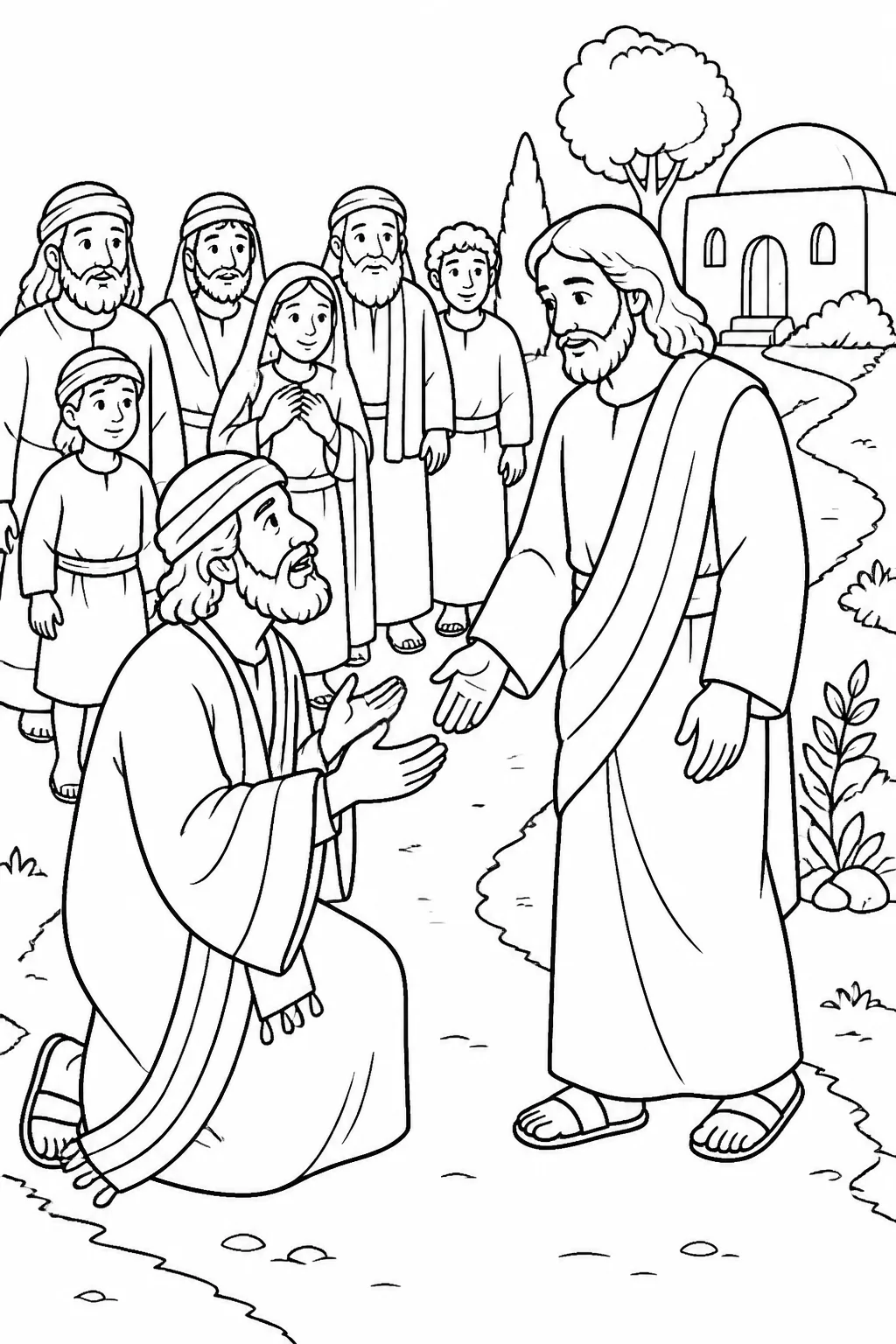
Jairus, a synagogue leader, asks Jesus to come because his twelve-year-old daughter is near death, while Jesus and the crowd begin traveling toward Jairus’s house.

Jairus Asks Jesus for Help

Mark 5:21-43
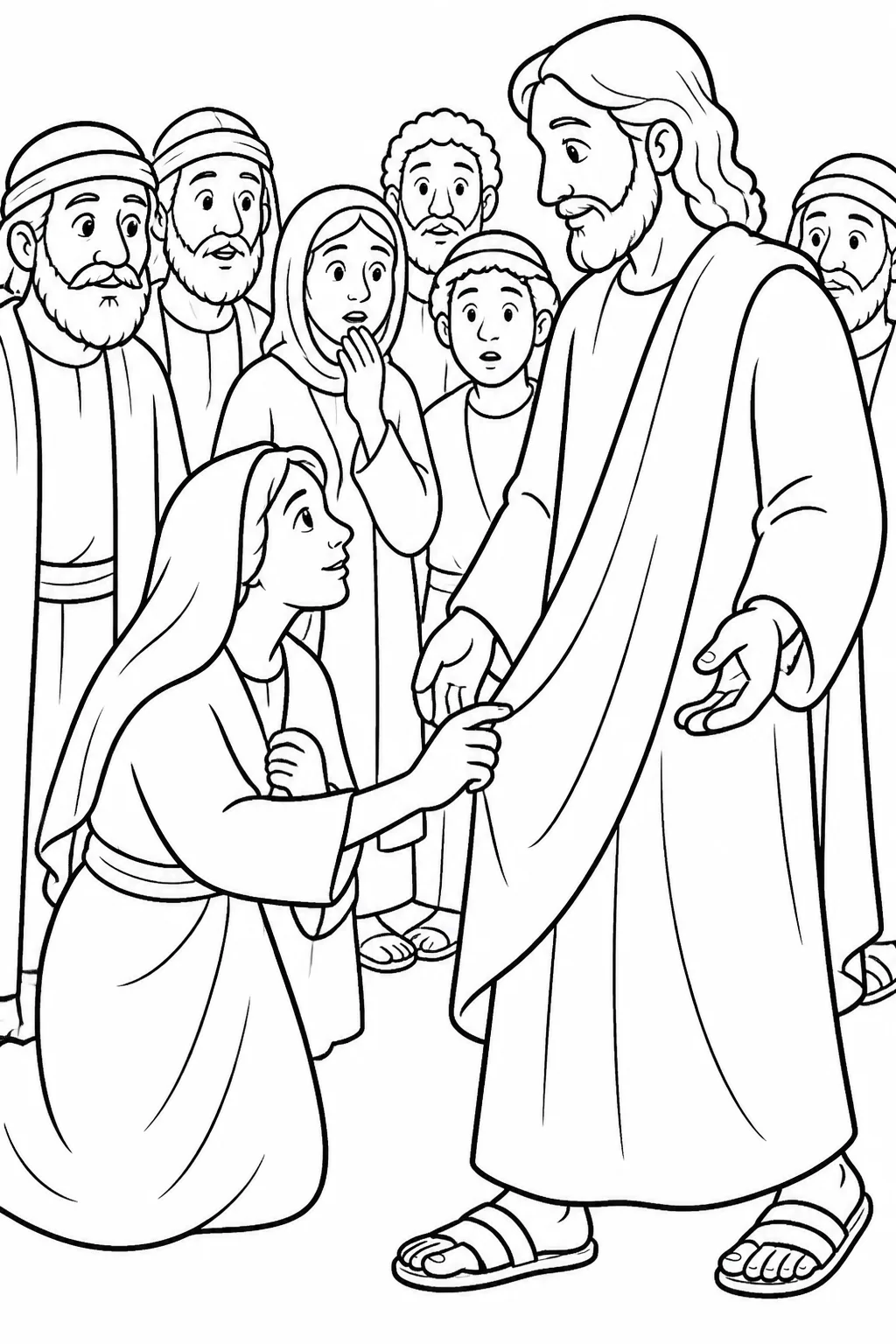
An illustration concept from Mark 5:25–34 showing an unnamed woman reaching to touch Jesus’ clothing within a crowd as Jesus turns to speak with her.

A Woman Touches Jesus’ Clothing

Mark 5:21-43
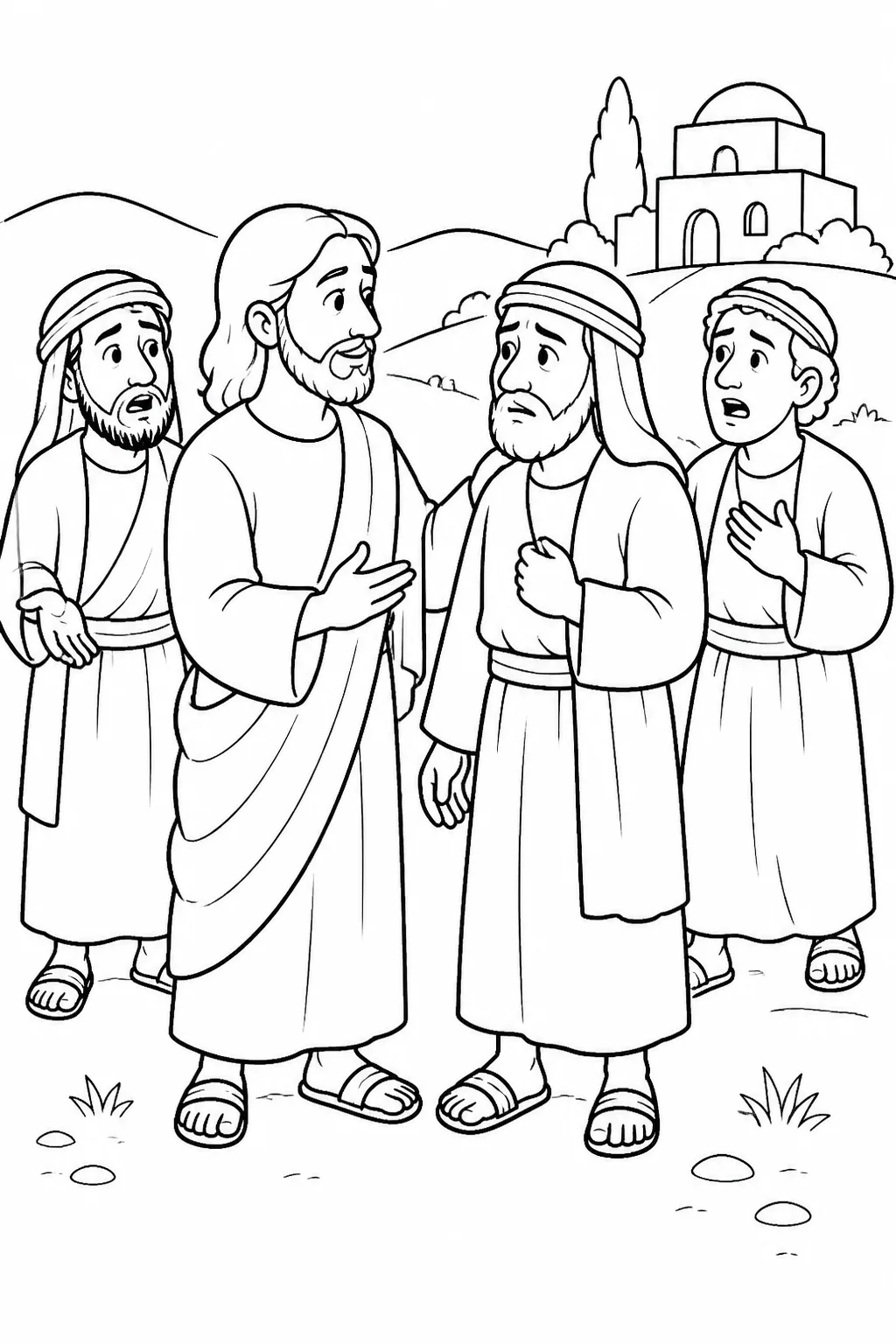
Jesus and Jairus travel toward Jairus’s house as messengers arrive with a sad report, and Jesus encourages Jairus not to fear but to believe.

Jesus Encourages Jairus

Mark 5:21-43

Jesus enters Jairus’s house with Jairus, Jairus’s wife, Peter, James, and John while mourners and people at the house are sent outside.

Jesus Enters Jairus’s House

Mark 5:21-43
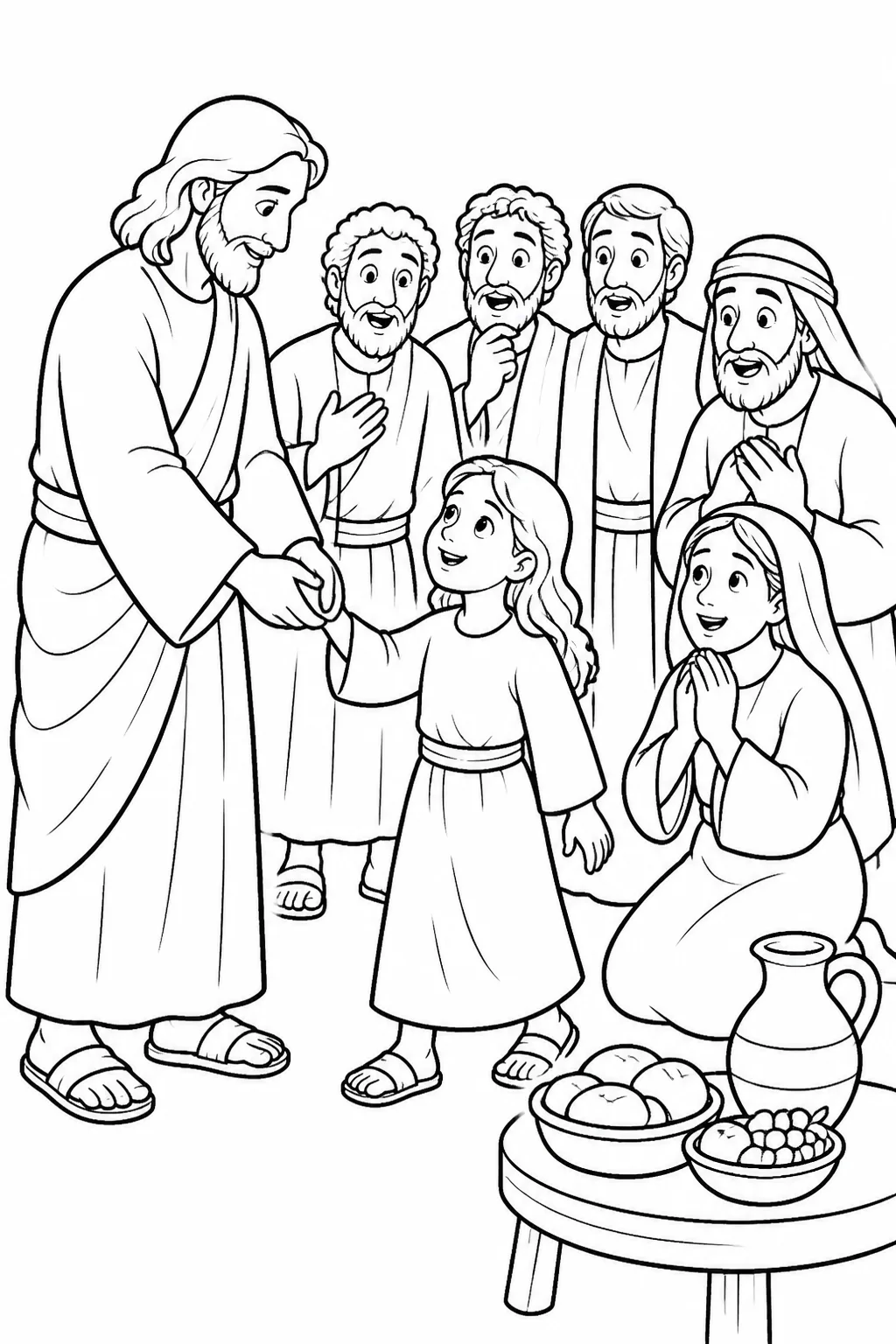
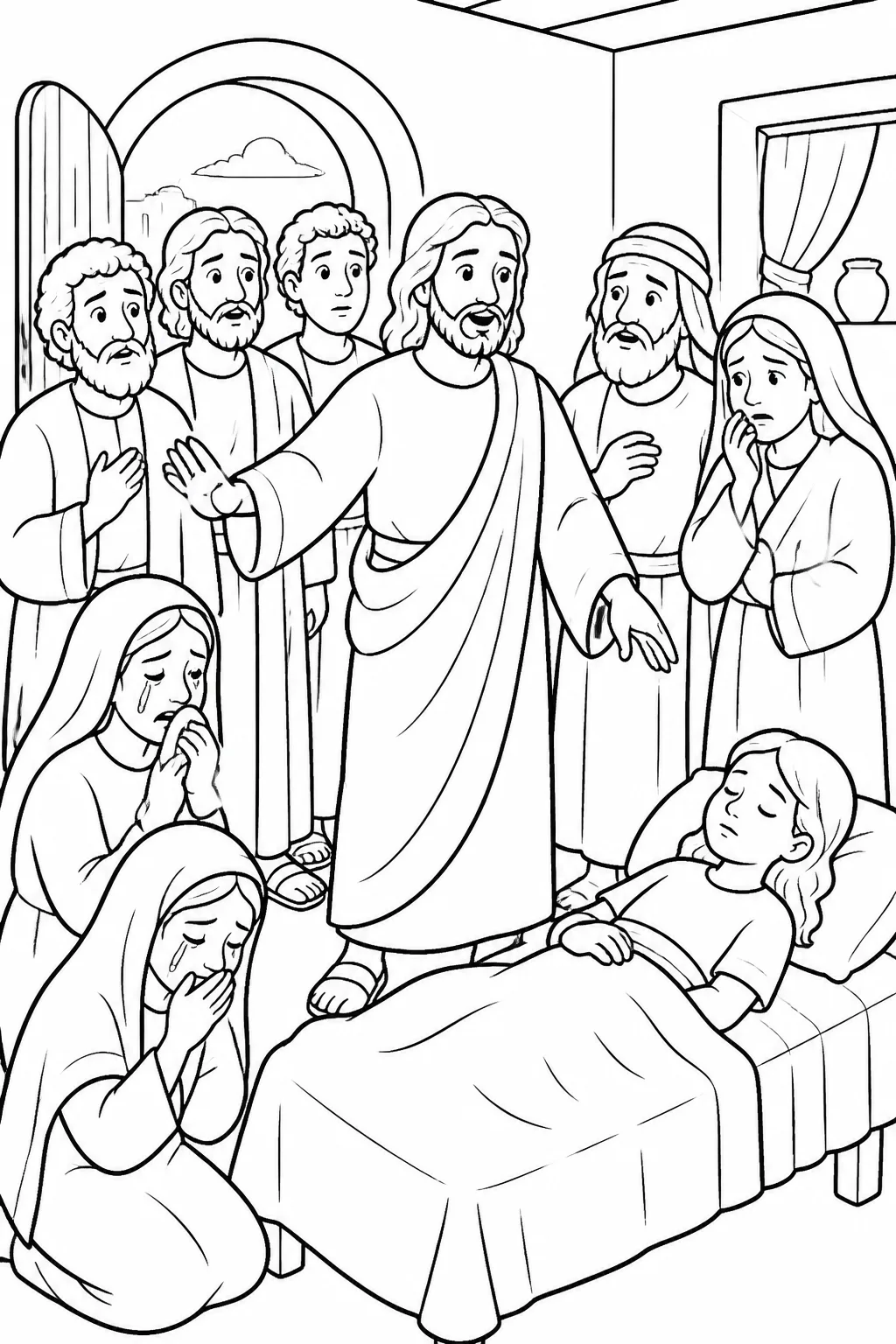
Illustration concept of Jesus taking Jairus’s daughter by the hand and telling her to get up inside Jairus’s house, with her parents and Peter, James, and John present and food nearby.

Little Girl, Get Up

Mark 5:21-43

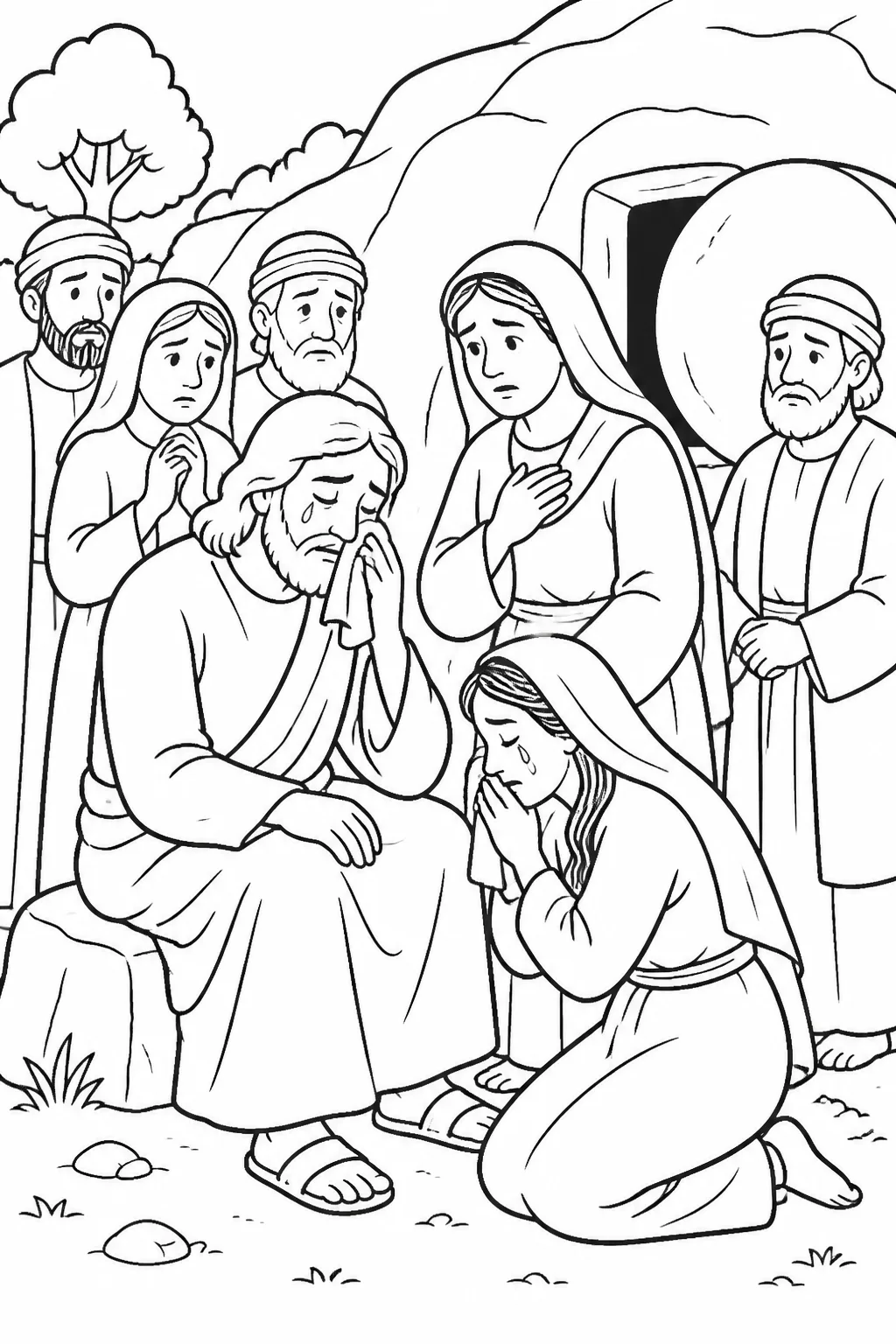
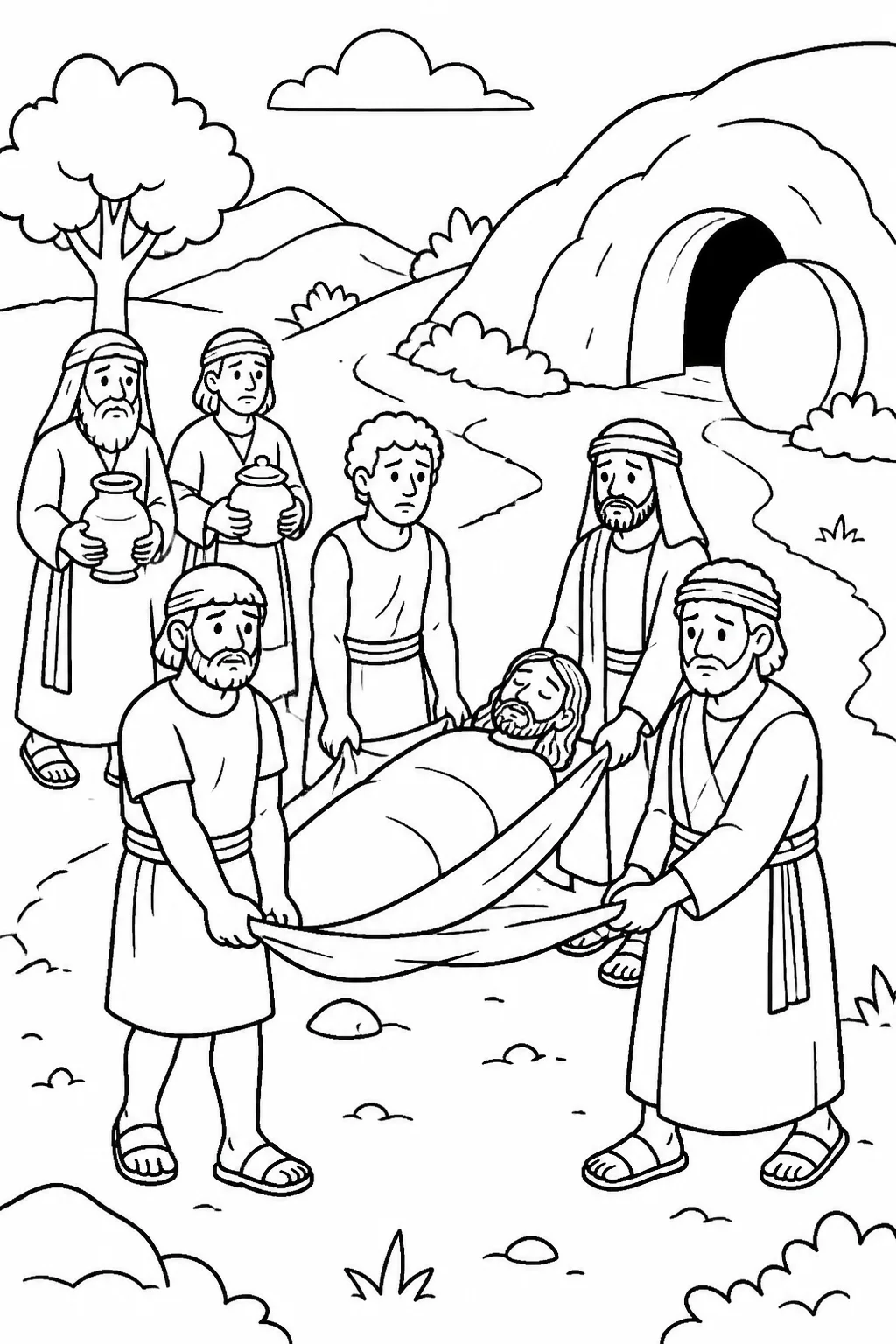
Jesus weeps with Mary, Martha, and Jews who came to comfort them near Lazarus’s tomb, with the stone-covered tomb in the background.

Jesus Shares Their Tears

John 11:1-44
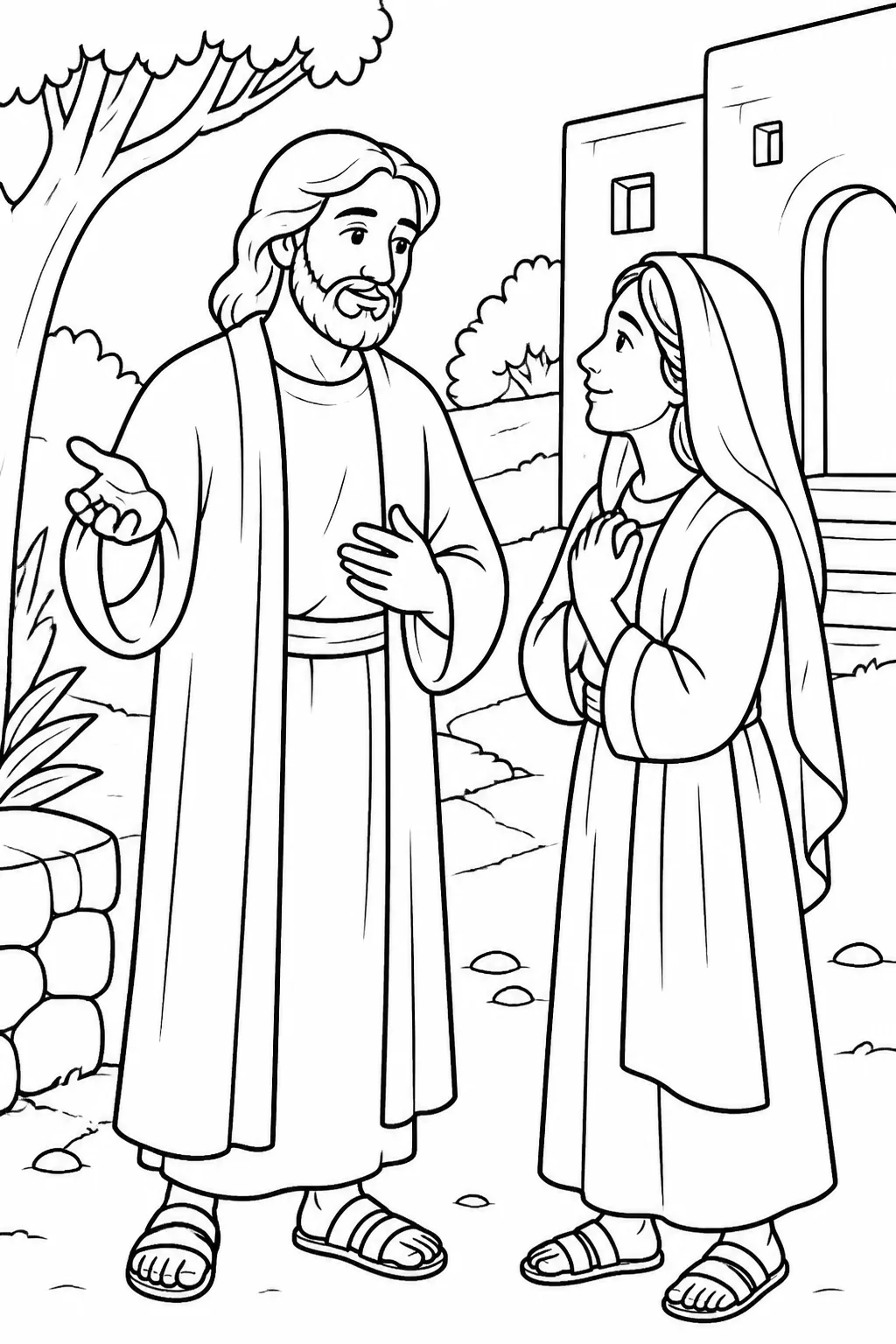
Jesus and Martha meet in Bethany while Jesus declares that he is the resurrection and the life, and Martha affirms her belief.

Martha Meets Jesus

John 11:1-44

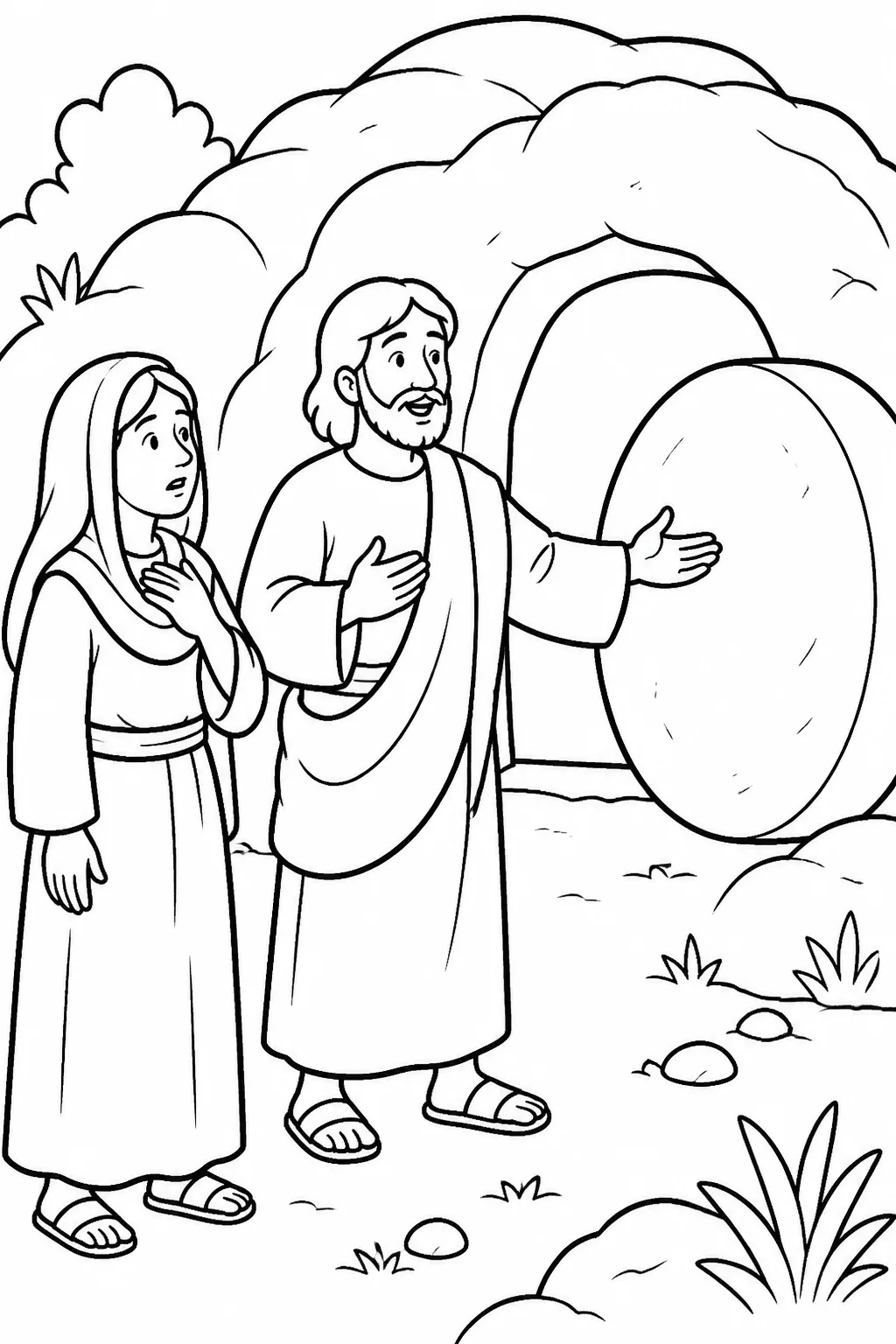
Jesus stands before Lazarus’s cave tomb while the stone covering the entrance is being moved, with Martha nearby expressing concern.

The Tomb Is Opened

John 11:1-44

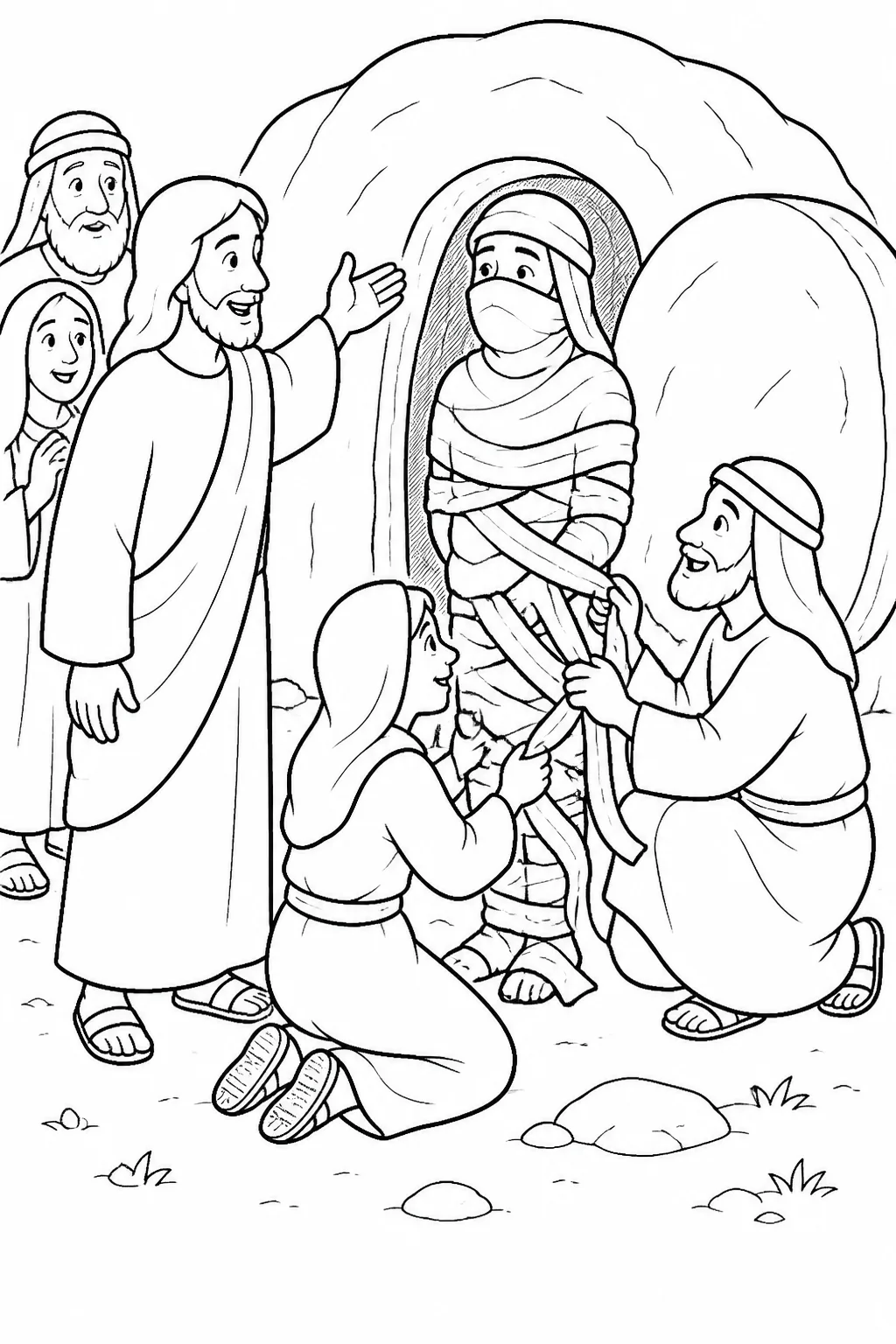
Jesus calls Lazarus out of his opened tomb while Lazarus emerges alive, still wrapped in grave clothes with a cloth covering his face, and nearby people help unbind him.

Come Out, Lazarus

John 11:1-44

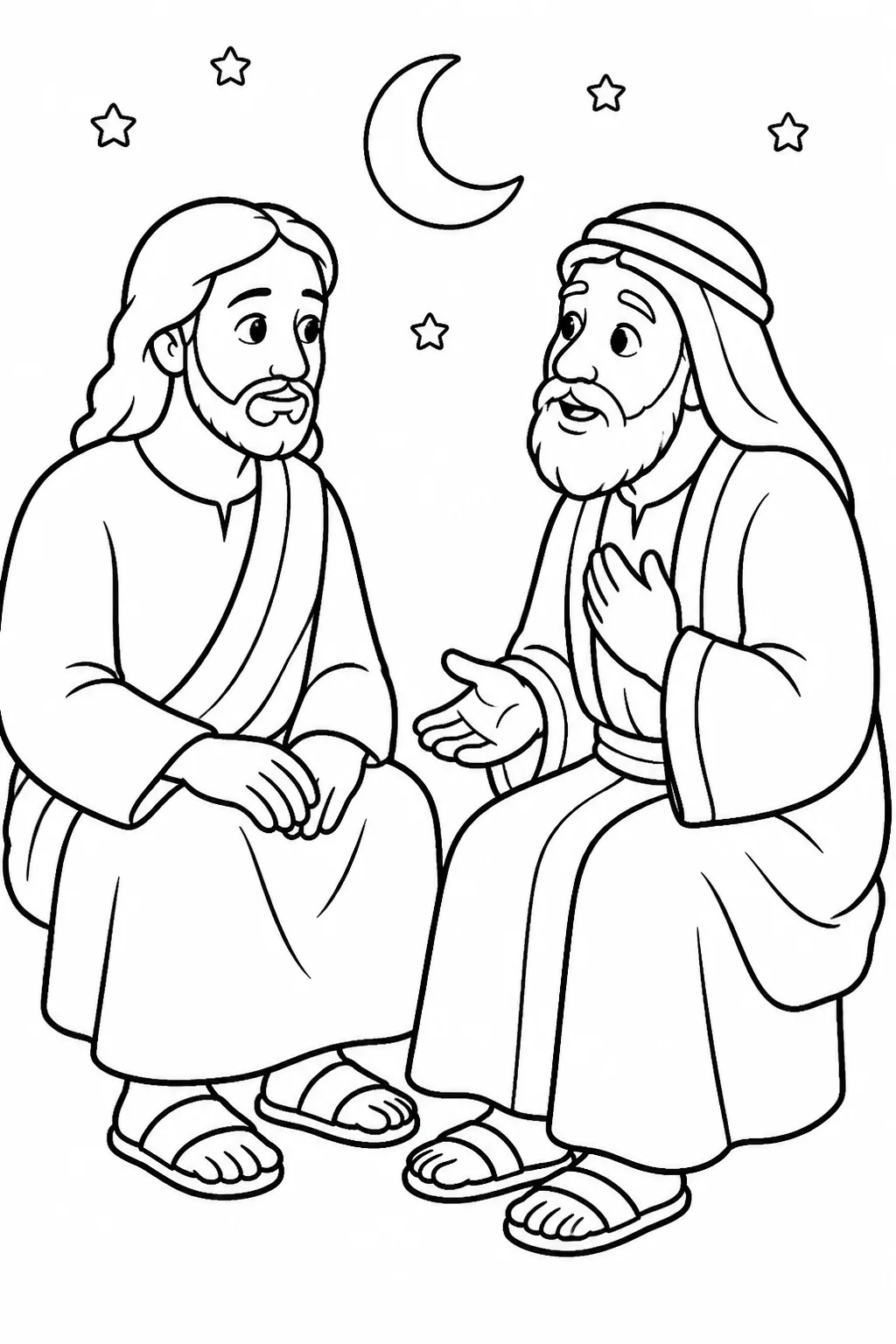
Jesus and Nicodemus meet respectfully at night in a simple, unspecified setting, beginning the conversation recorded in John 3:1-2.

Nicodemus Visits Jesus at Night

John 3:1-21
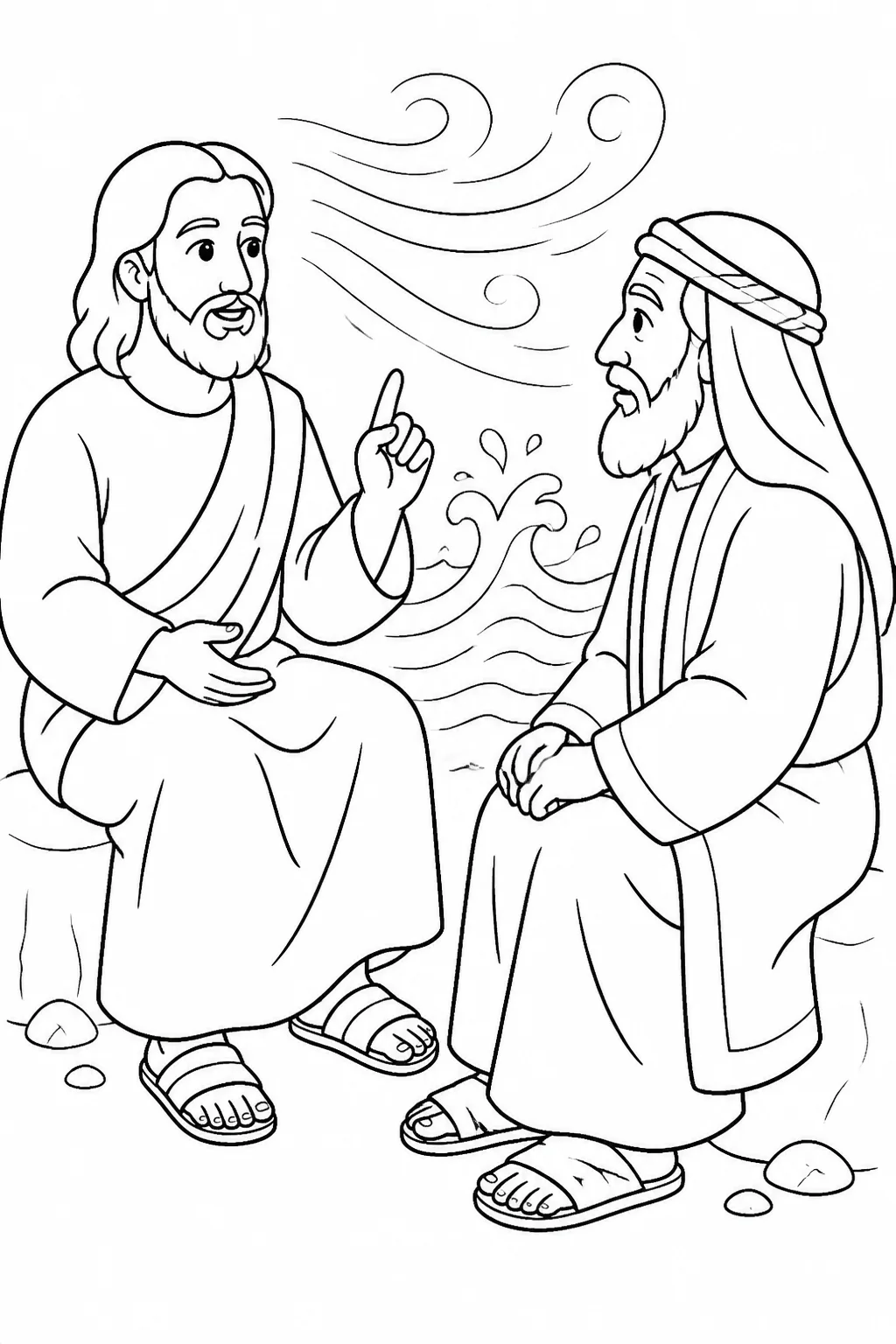
Jesus and Nicodemus in a quiet nighttime conversation, with water and wind used as symbolic imagery for Jesus’ teaching about new birth.

Jesus Teaches About New Birth

John 3:1-21
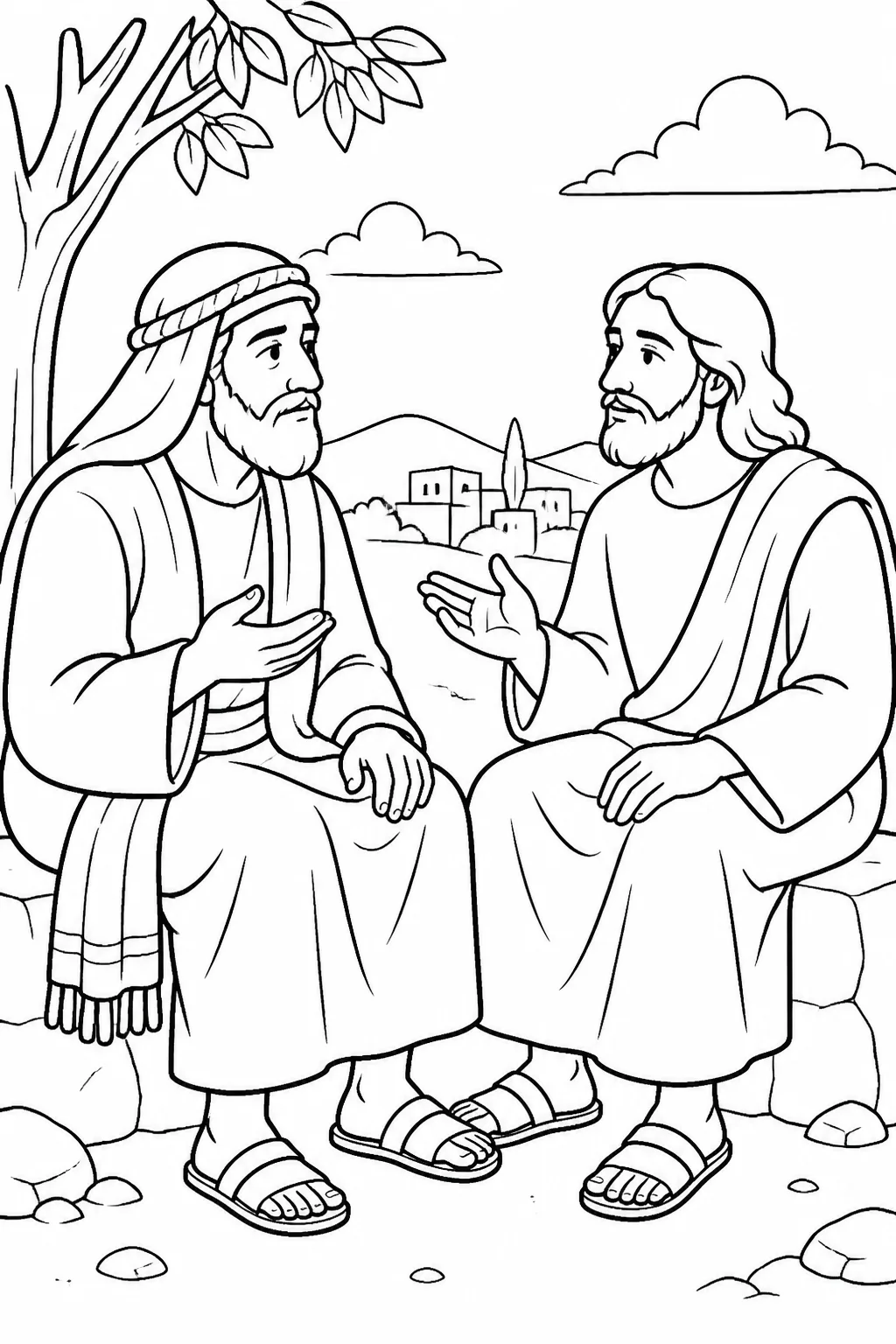
Jesus and Nicodemus in a quiet nighttime teaching conversation, with Nicodemus asking how Jesus’ teaching about earthly and heavenly things can happen.

Nicodemus Asks How

John 3:1-21

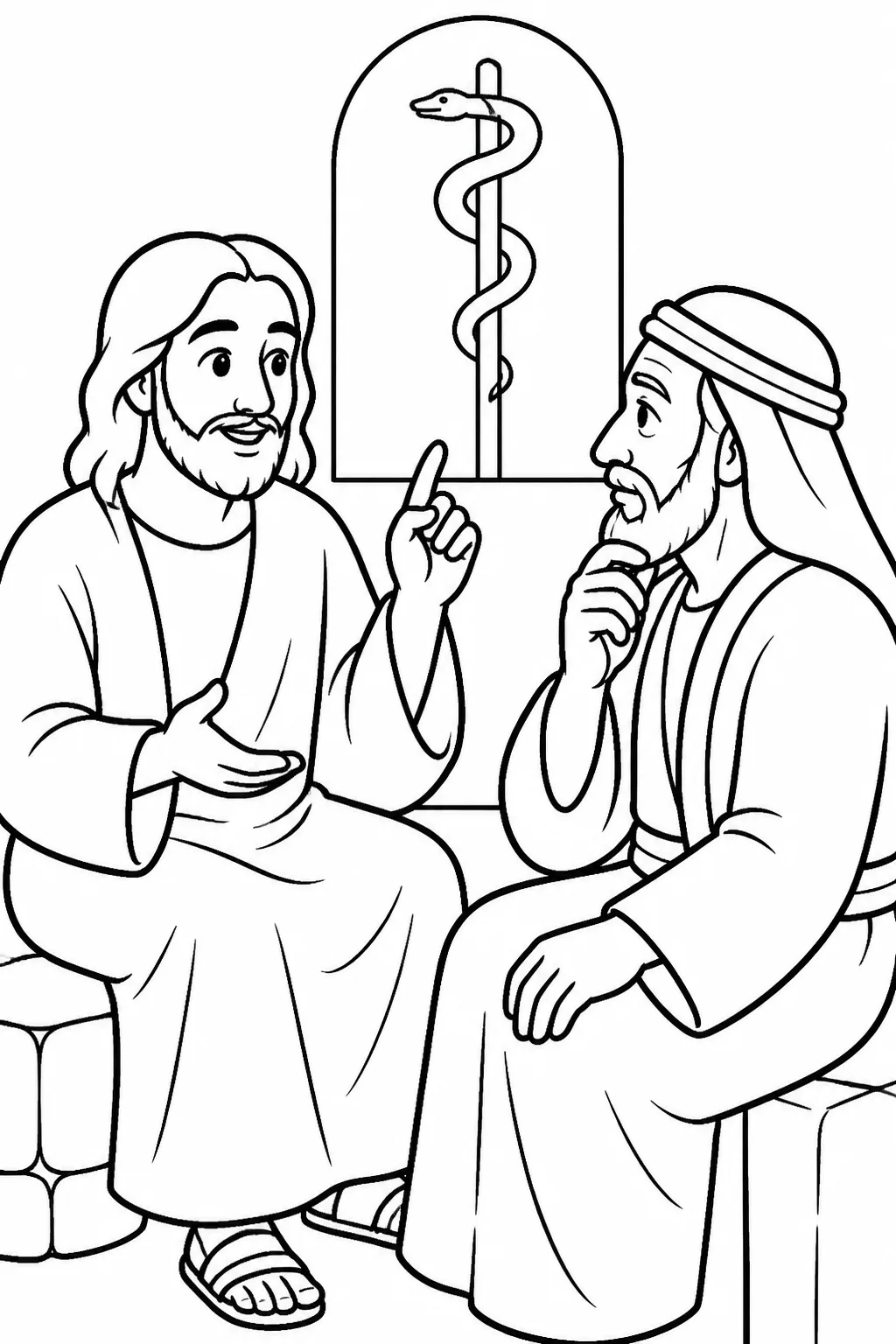
Jesus teaching Nicodemus at night with a small non-graphic lifted-serpent symbol representing Jesus’ wilderness comparison.

Jesus Gives a Wilderness Comparison

John 3:1-21
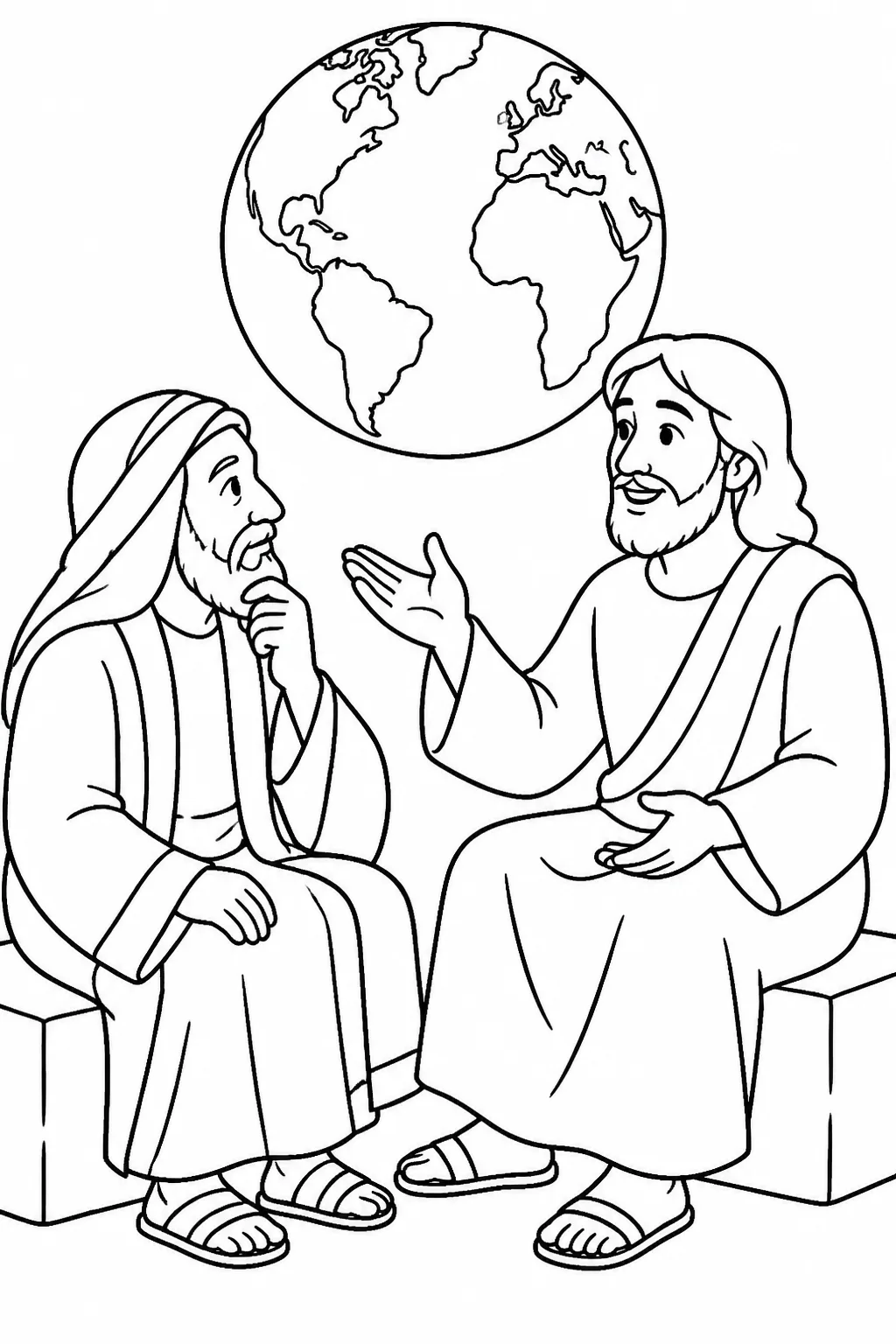
Symbolic illustration concept of Jesus teaching beside a simple world symbol about God’s love for the world and eternal life through belief in the Son.

God’s Love for the World

John 3:1-21

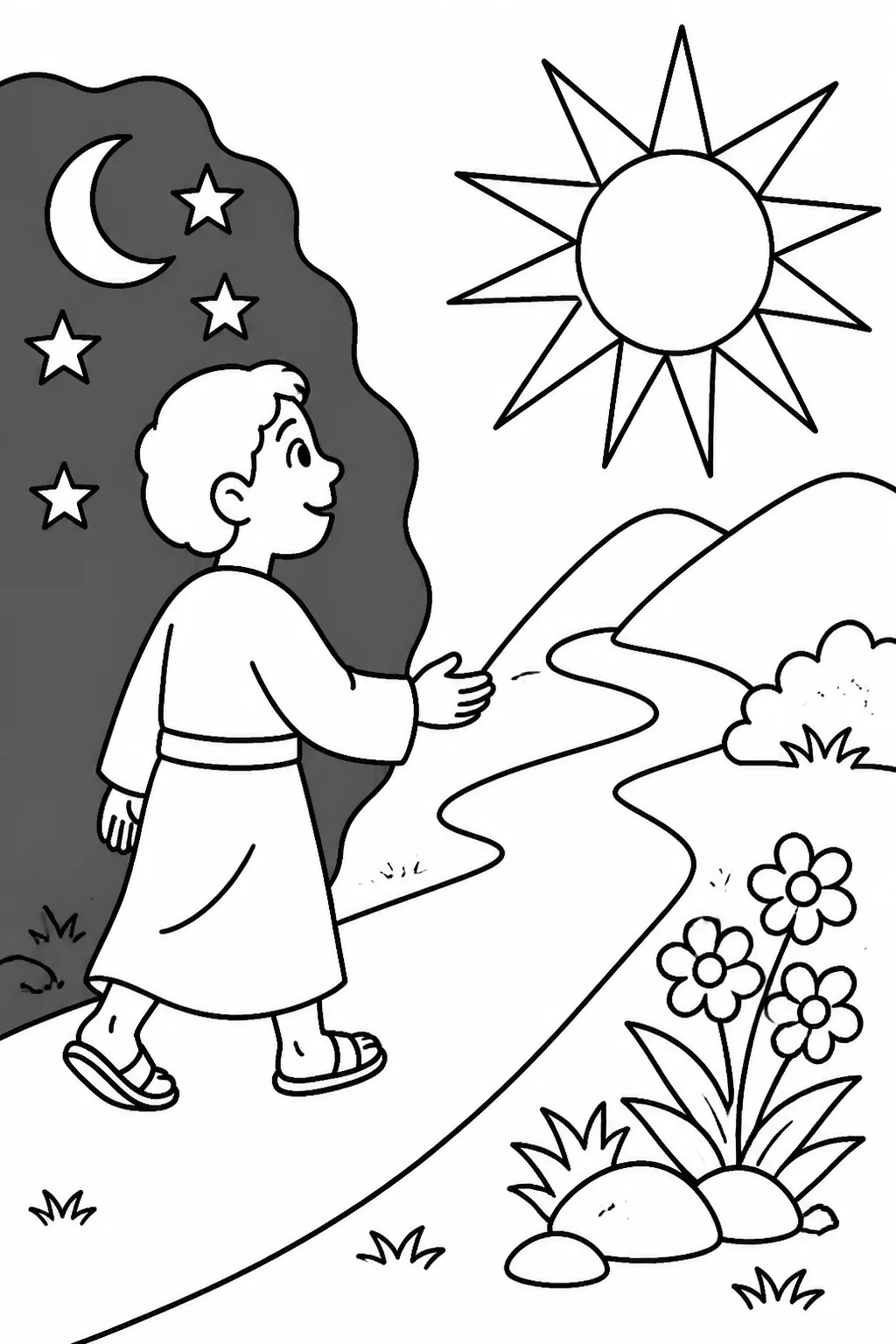
Symbolic illustration of a person coming toward a bright area, representing the teaching about light, darkness, truth, and God in John 3:19–21.

Coming Into the Light

John 3:1-21

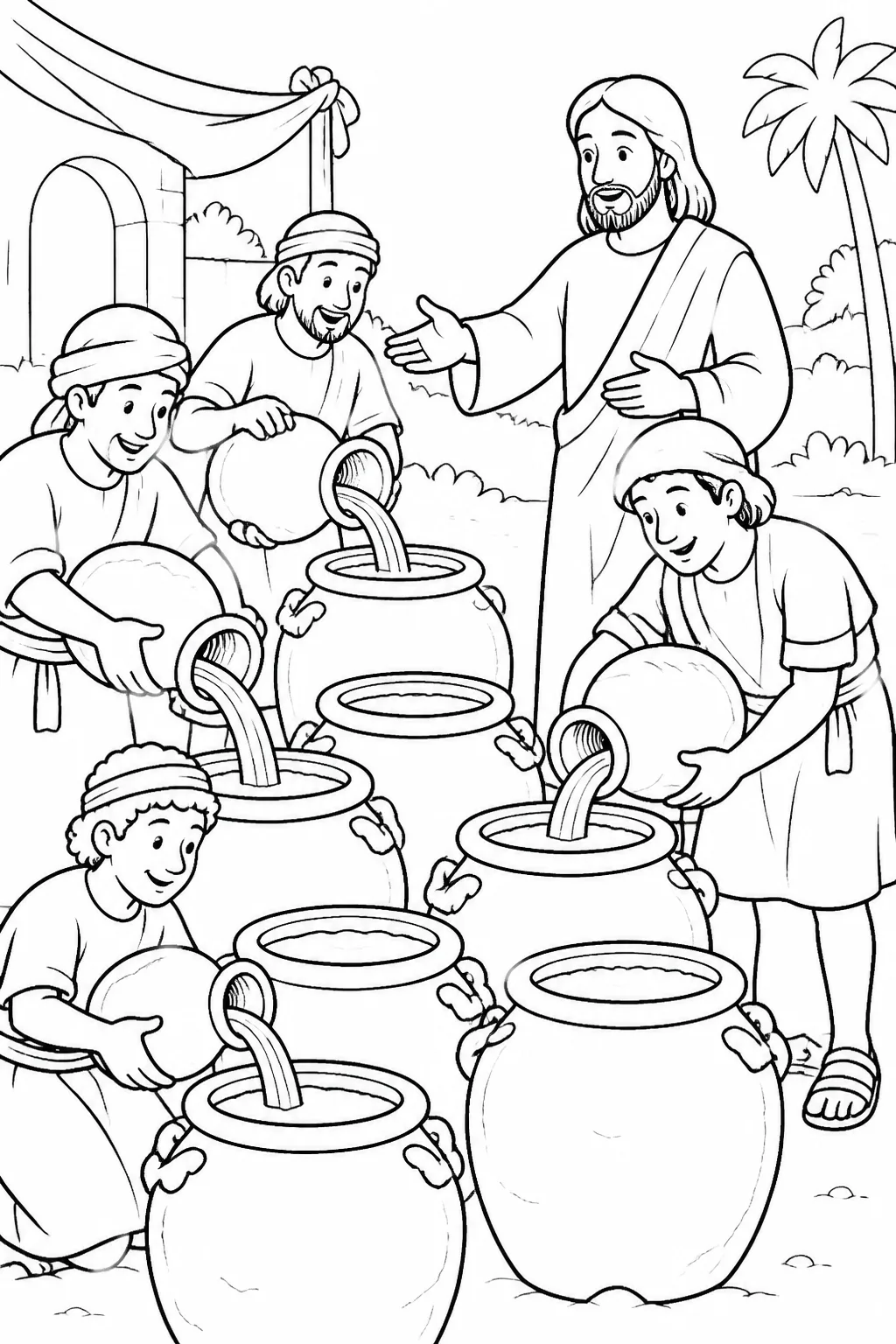
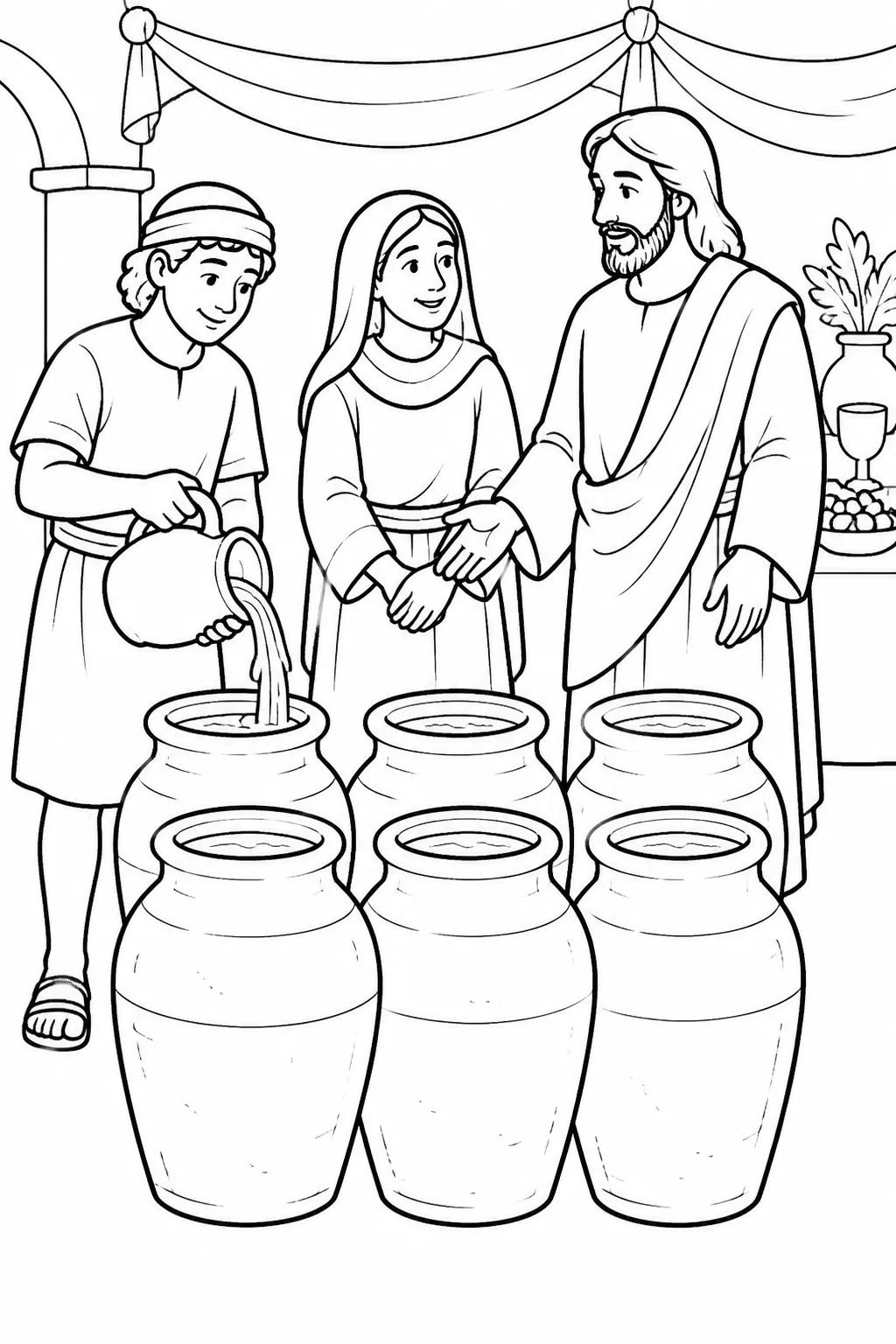
Jesus directs several servants to fill six large stone purification jars with water at a wedding setting in Cana.

Fill the Jars to the Brim

John 2:1-12
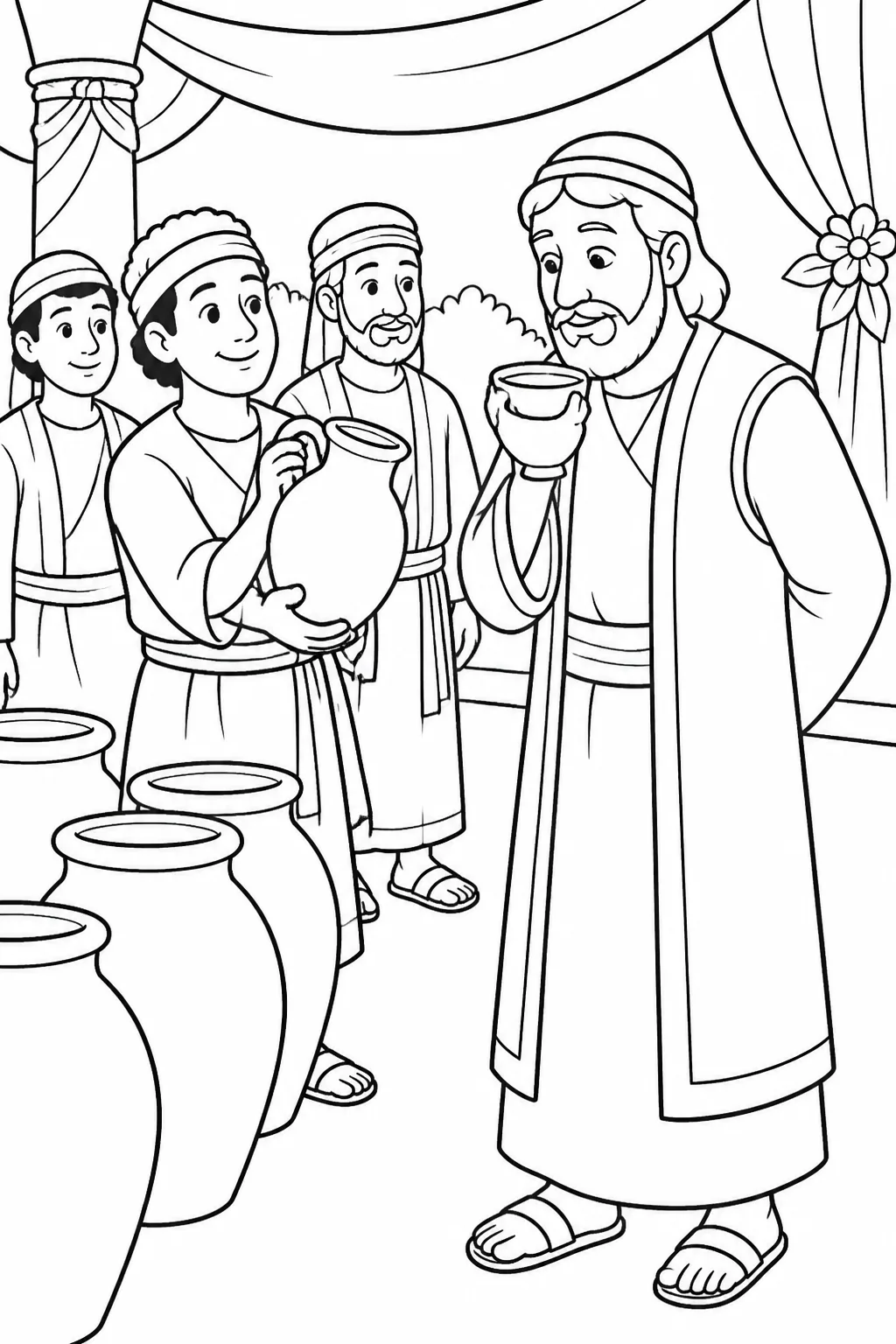
Several servants carry a small serving vessel from stone water jars toward the master of the feast at a wedding in Cana, as described in John 2:8-9.

The Servants Carry the Sign

John 2:1-12
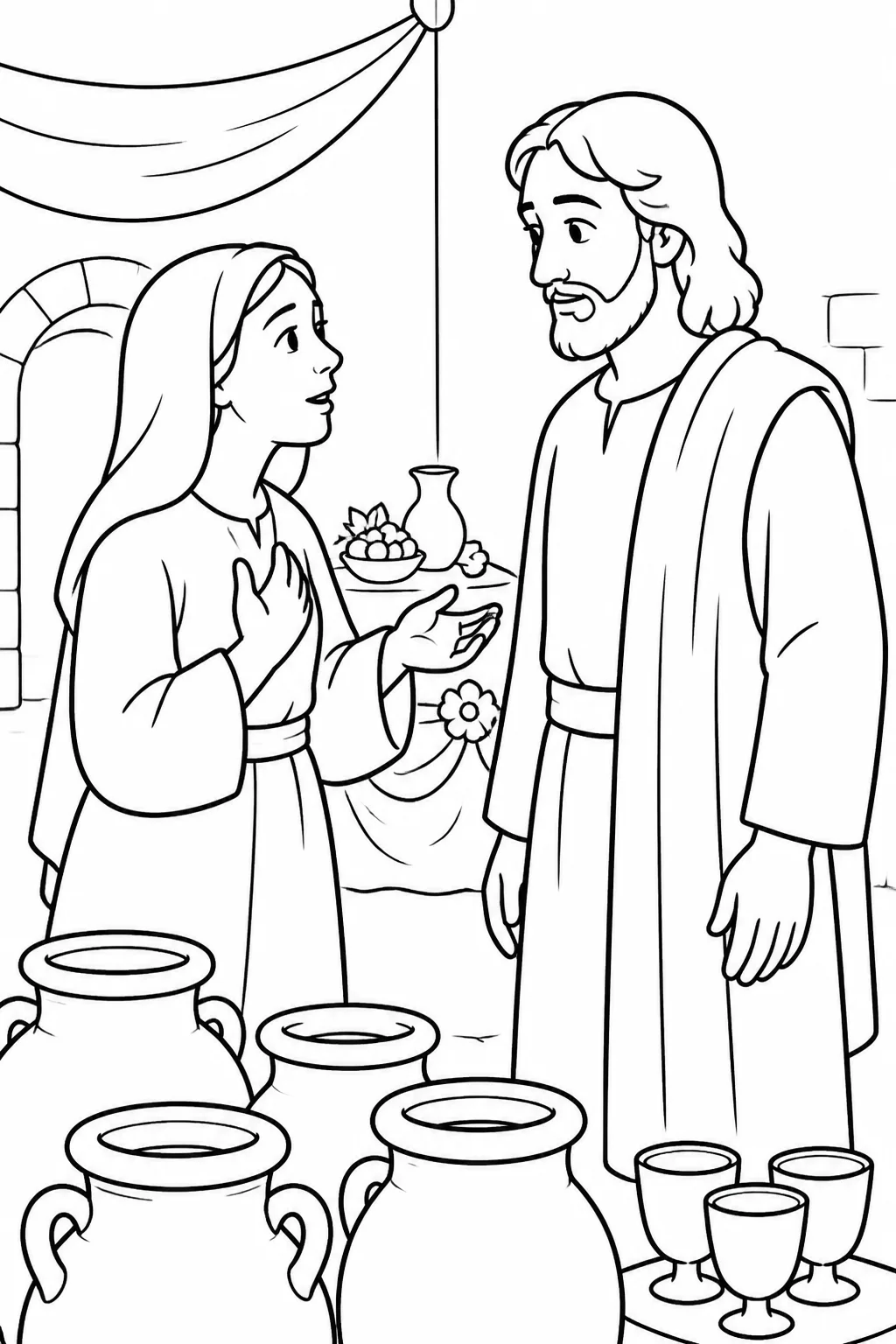
Jesus and his mother having a respectful conversation in a simple wedding setting at Cana after the wine has run out.

Bringing the Need to Jesus

John 2:1-12
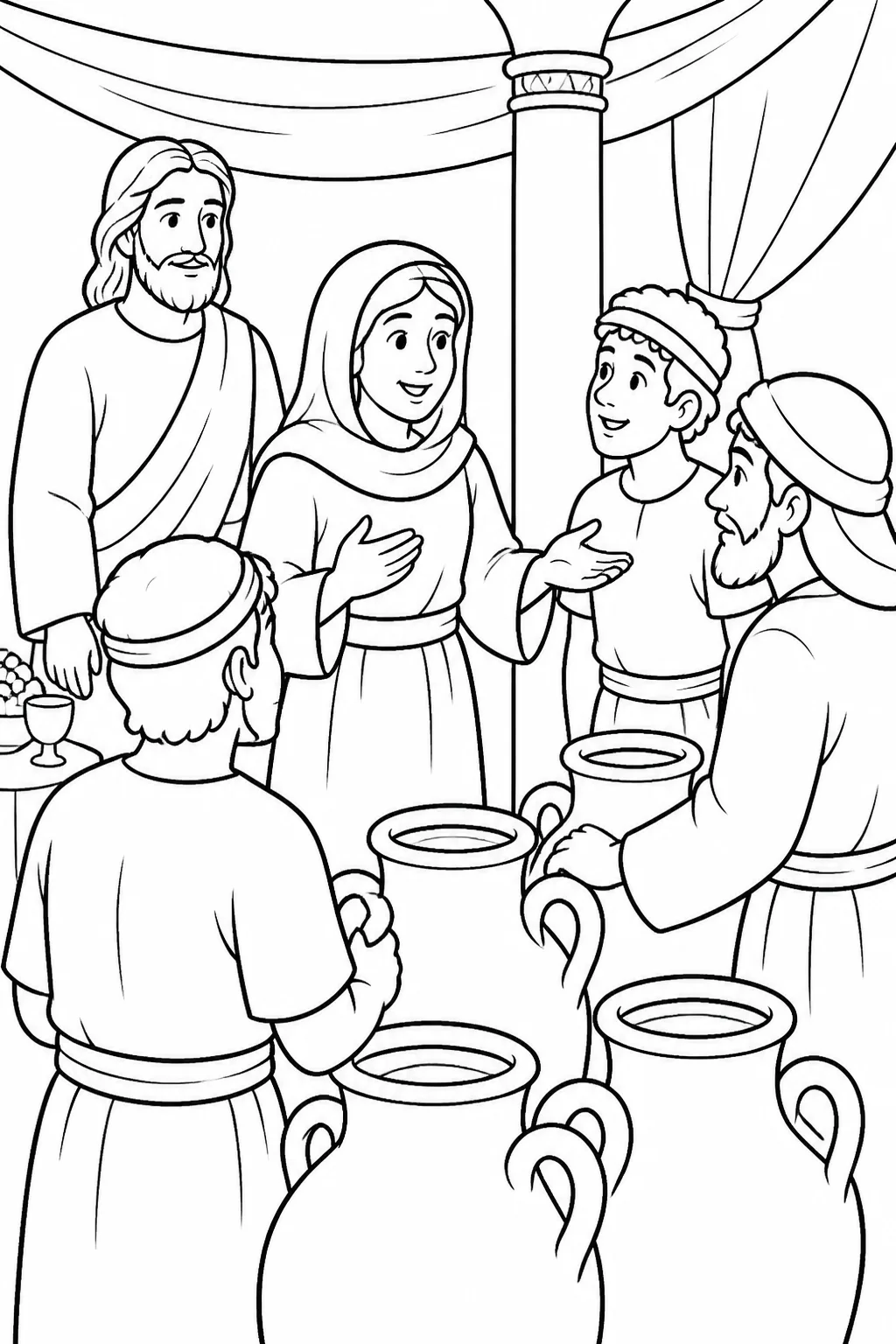
Jesus’ mother speaking with several servants at a wedding in Cana while Jesus is nearby, based on John 2:4.

Do Whatever He Says

John 2:1-12

Six stone water jars with water near a wedding setting at Cana, connected with Jesus’ first sign in John 2:6.

Six Stone Jars Nearby

John 2:1-12

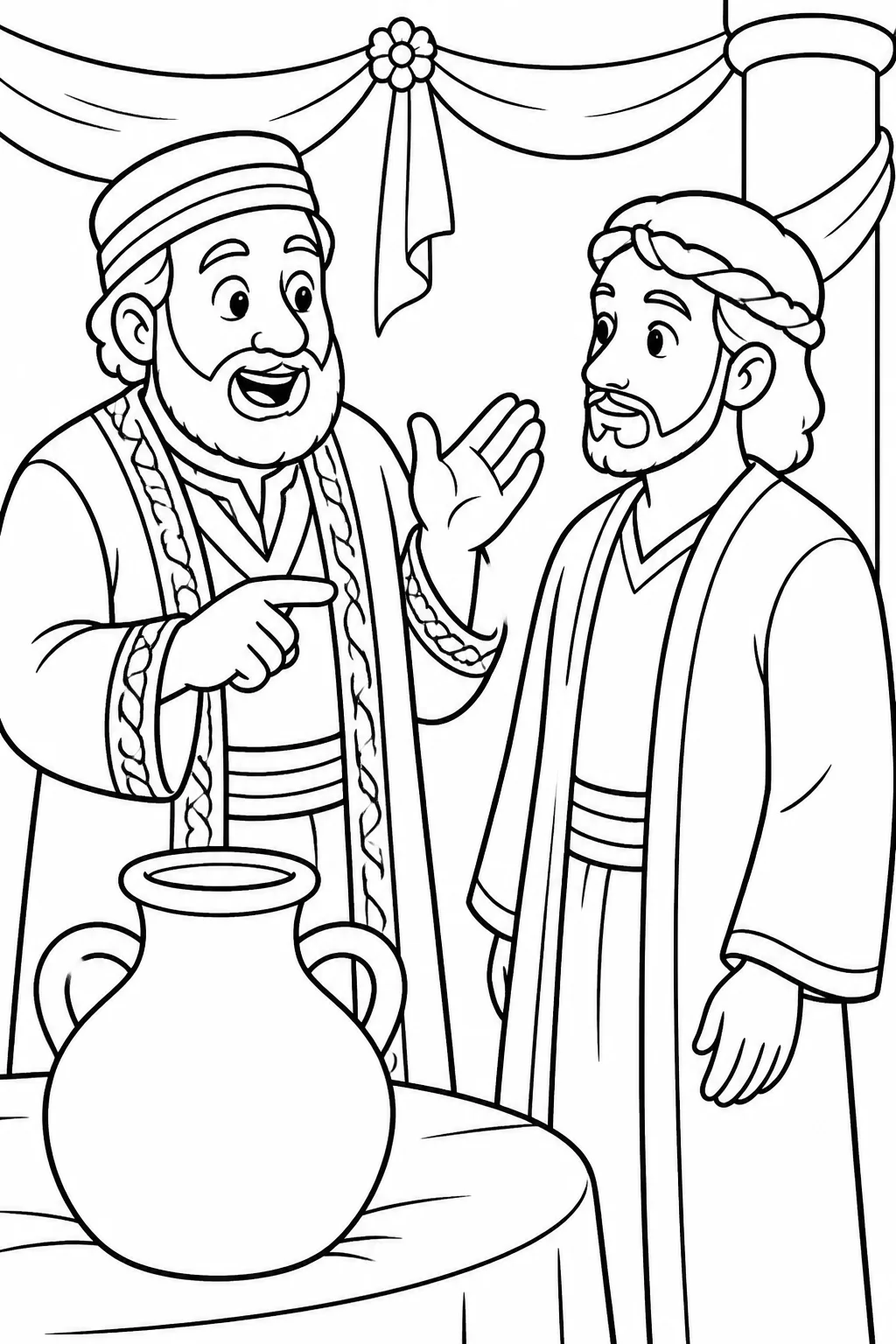
The master of the feast speaks with the bridegroom in a wedding setting about the unexpectedly good wine provided at Cana.

The Unexpected Good Wine

John 2:1-12

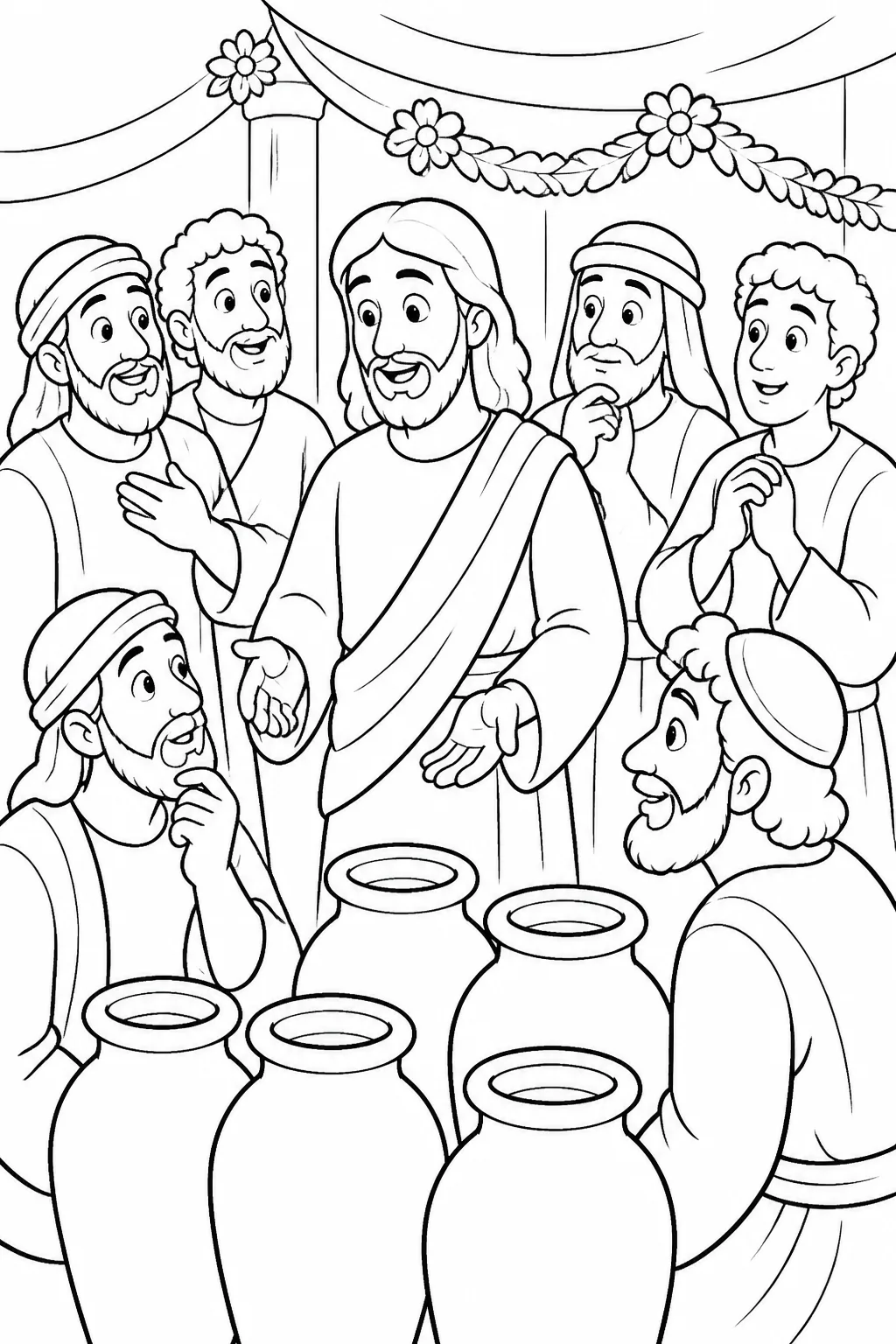
Jesus and several disciples near stone water jars at a wedding in Cana, representing the disciples’ growing belief after Jesus’ first sign.

The Disciples’ Growing Trust

John 2:1-12
Jesus and several disciples arrive as invited guests at a simple wedding setting in Cana of Galilee.

Invited to the Wedding

John 2:1-12

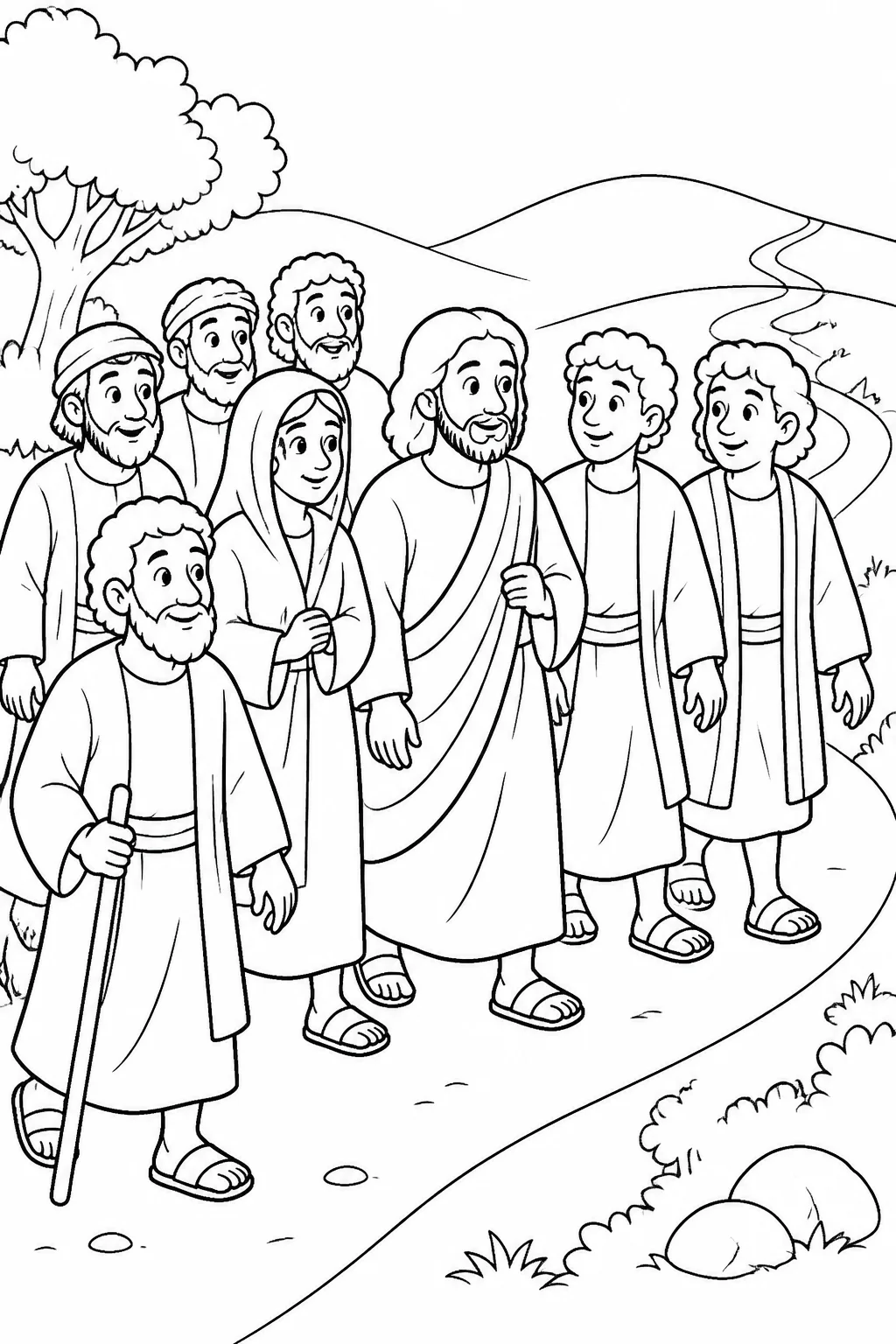
Jesus traveling with his mother, brothers, and disciples toward Capernaum after the wedding sign at Cana.

Leaving for Capernaum

John 2:1-12

Jesus arrives in a village, and Martha welcomes him into her home, illustrating Luke 10:38.

Martha Welcomes Jesus

Luke 10:38-42

Mary sitting at Jesus’ feet in Martha’s home and listening attentively to Jesus’ teaching.

Mary Listens to Jesus

Luke 10:38-42

Jesus, Martha, and Mary in Martha’s home: Martha turns to Jesus with concern while Mary sits at Jesus’ feet listening.

Martha Feels Overwhelmed

Luke 10:38-42
Jesus, Martha, and Mary in Martha’s home, with Martha asking Jesus for help while Mary listens nearby.

Martha Asks Jesus for Help

Luke 10:38-42
Jesus speaks to Martha by name in her home while Mary sits nearby at Jesus’ feet listening.

Jesus Speaks Kindly to Martha

Luke 10:38-42
Jesus speaks to Martha in her home while Mary sits at Jesus’ feet and listens.

Choosing What Matters Most

Luke 10:38-42
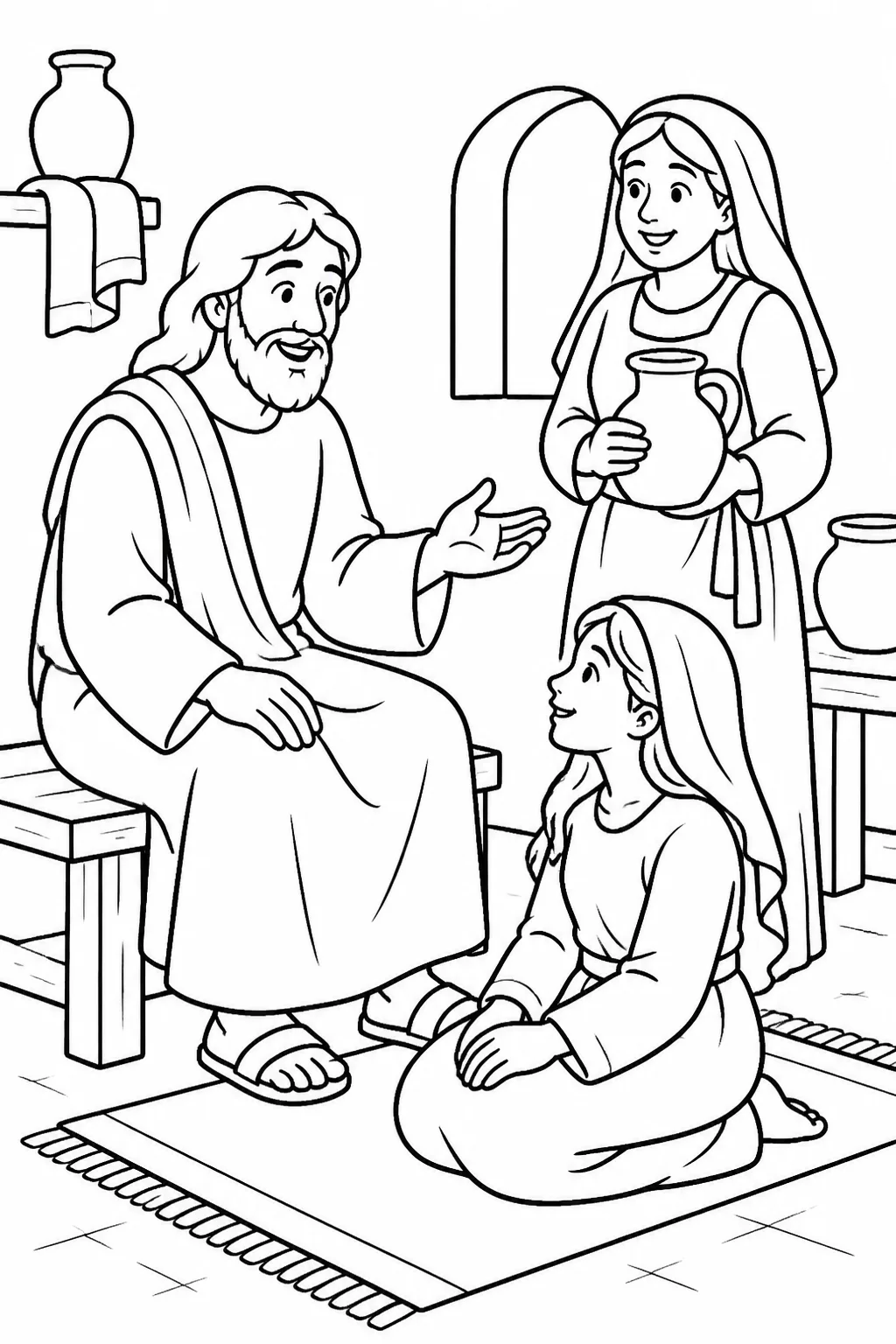
Jesus speaks in Martha’s home while Mary sits at his feet listening and Martha remains nearby, representing Mary choosing the good portion.

Mary Chooses the Good Portion

Luke 10:38-42
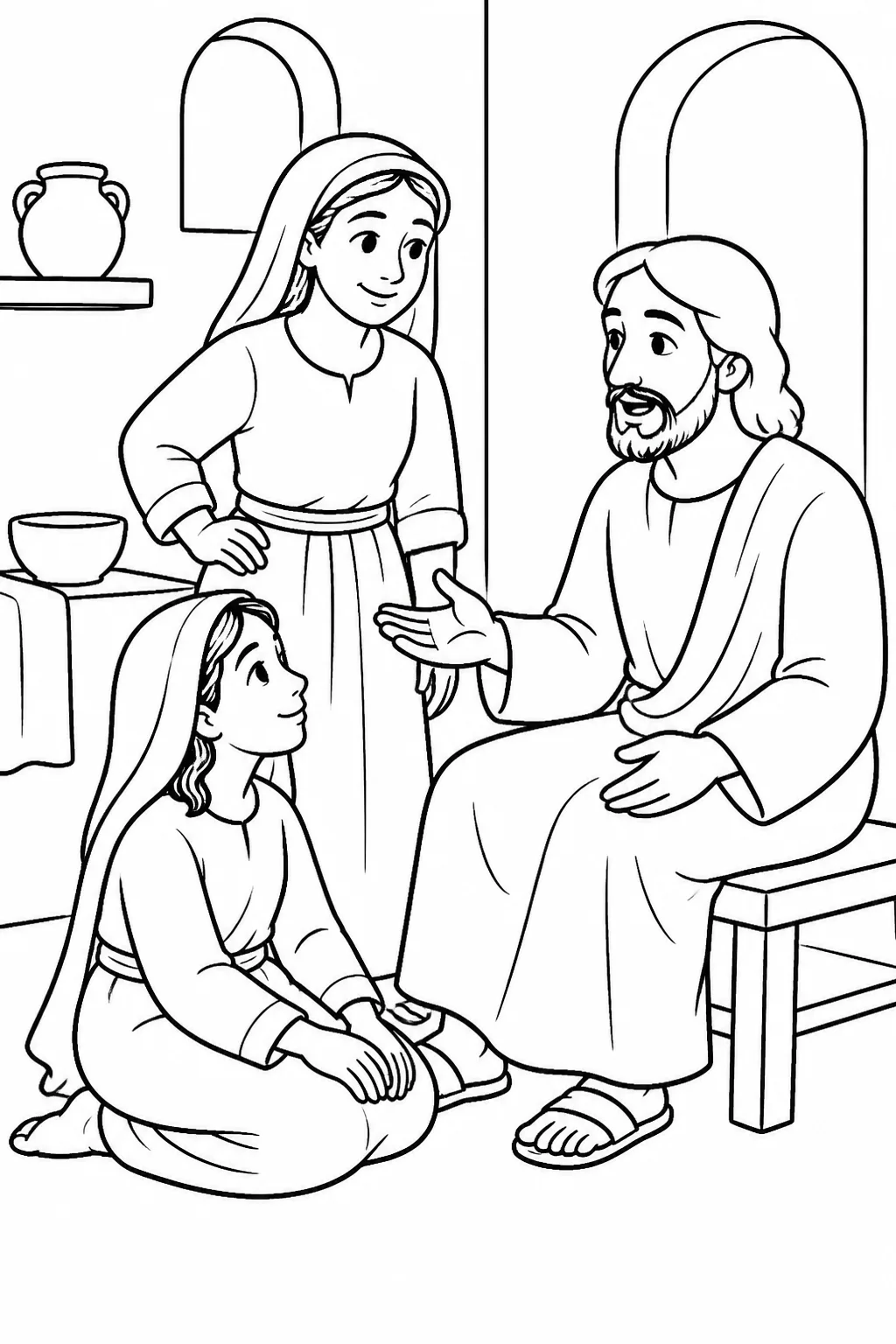
Jesus speaks in Martha’s home while Mary sits at his feet listening and Martha stands nearby after serving.

Listening and Serving in Jesus’ Presence

Luke 10:38-42
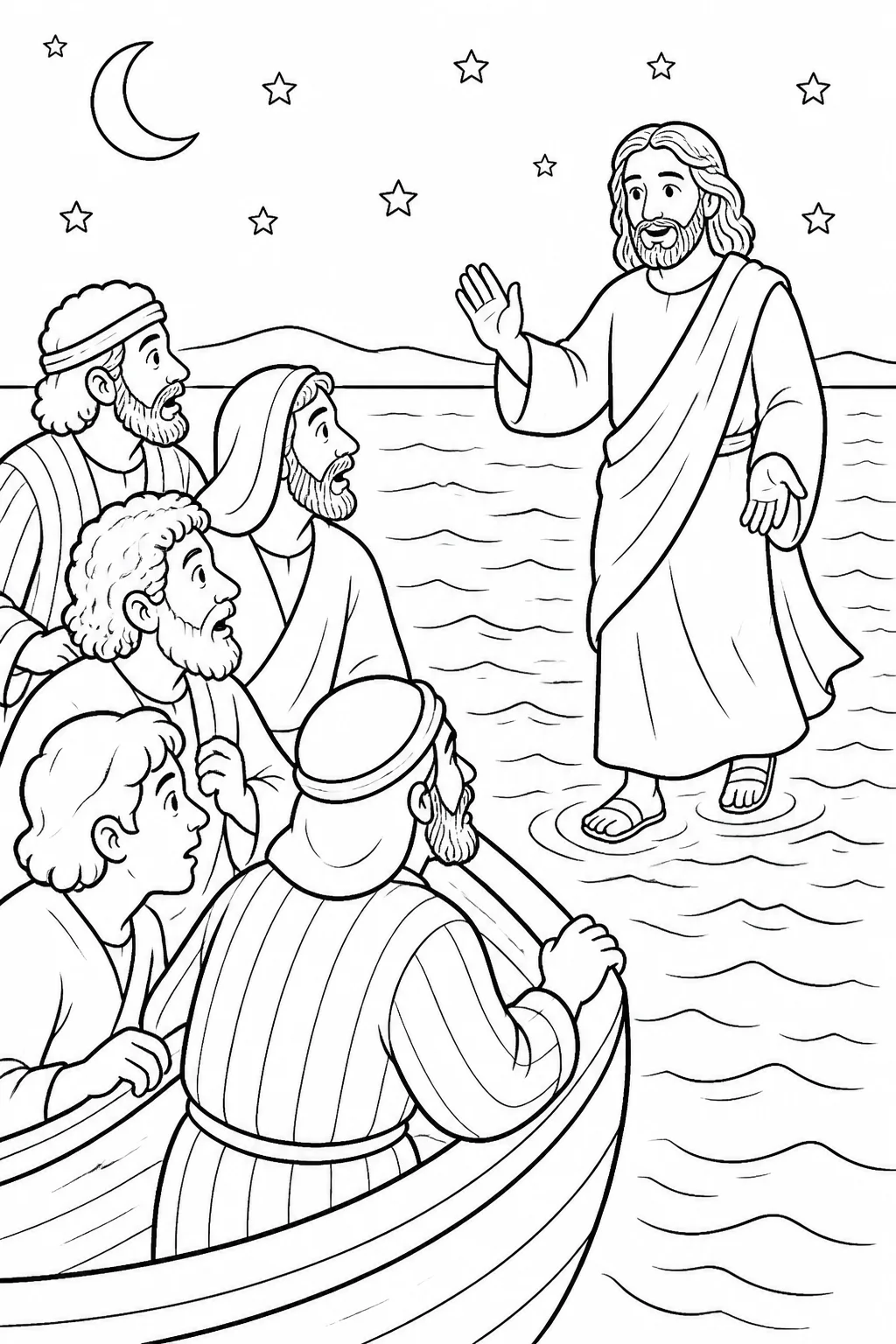
Jesus approaches a boat of disciples on the sea at night and reassures them as gentle waves move around the boat.

Jesus Reassures the Disciples

Matthew 14:22-33
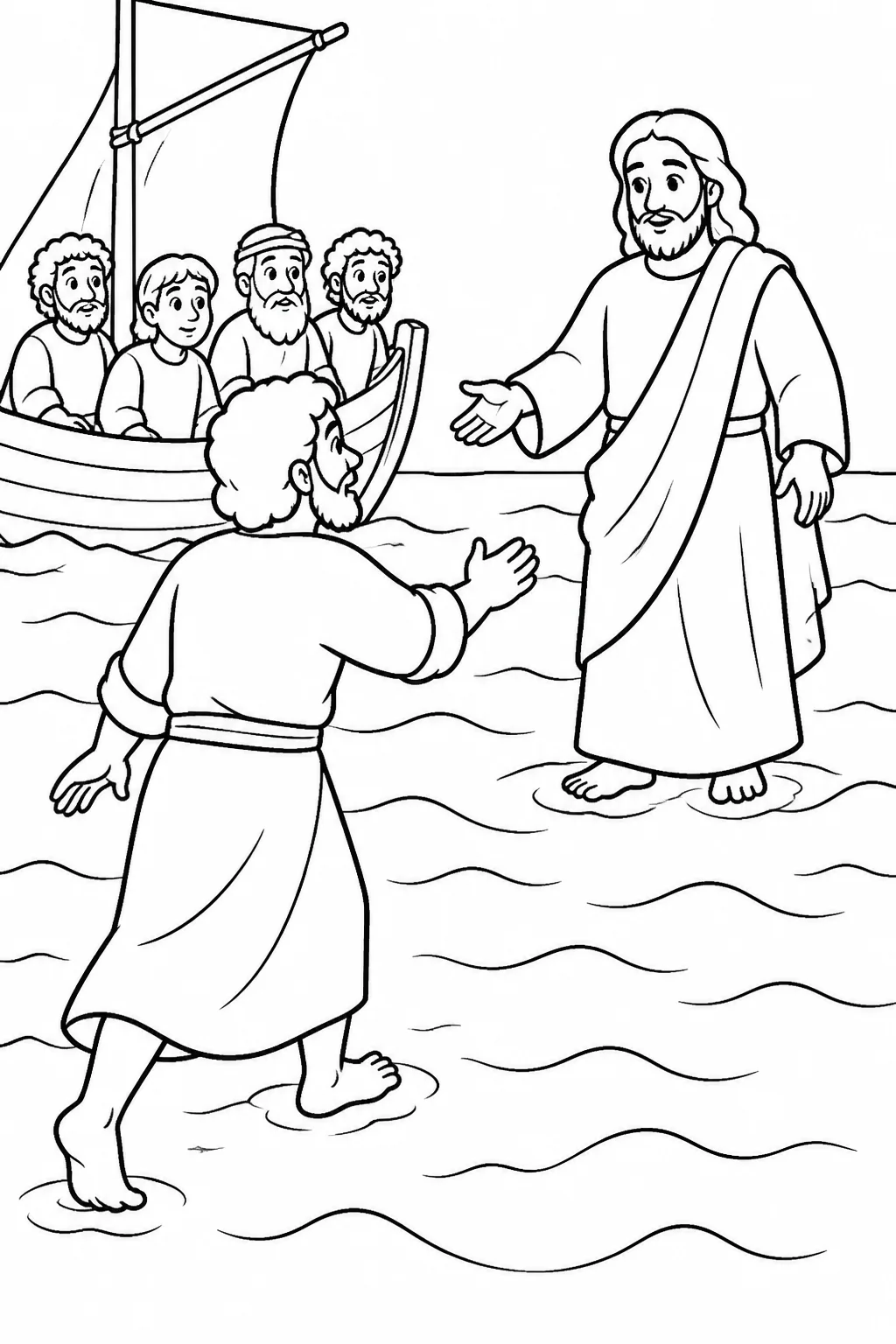
Peter steps from a boat and walks toward Jesus on the sea after Jesus commands him to come, while several disciples remain in the boat.

Peter Answers Jesus’ Call

Matthew 14:22-33
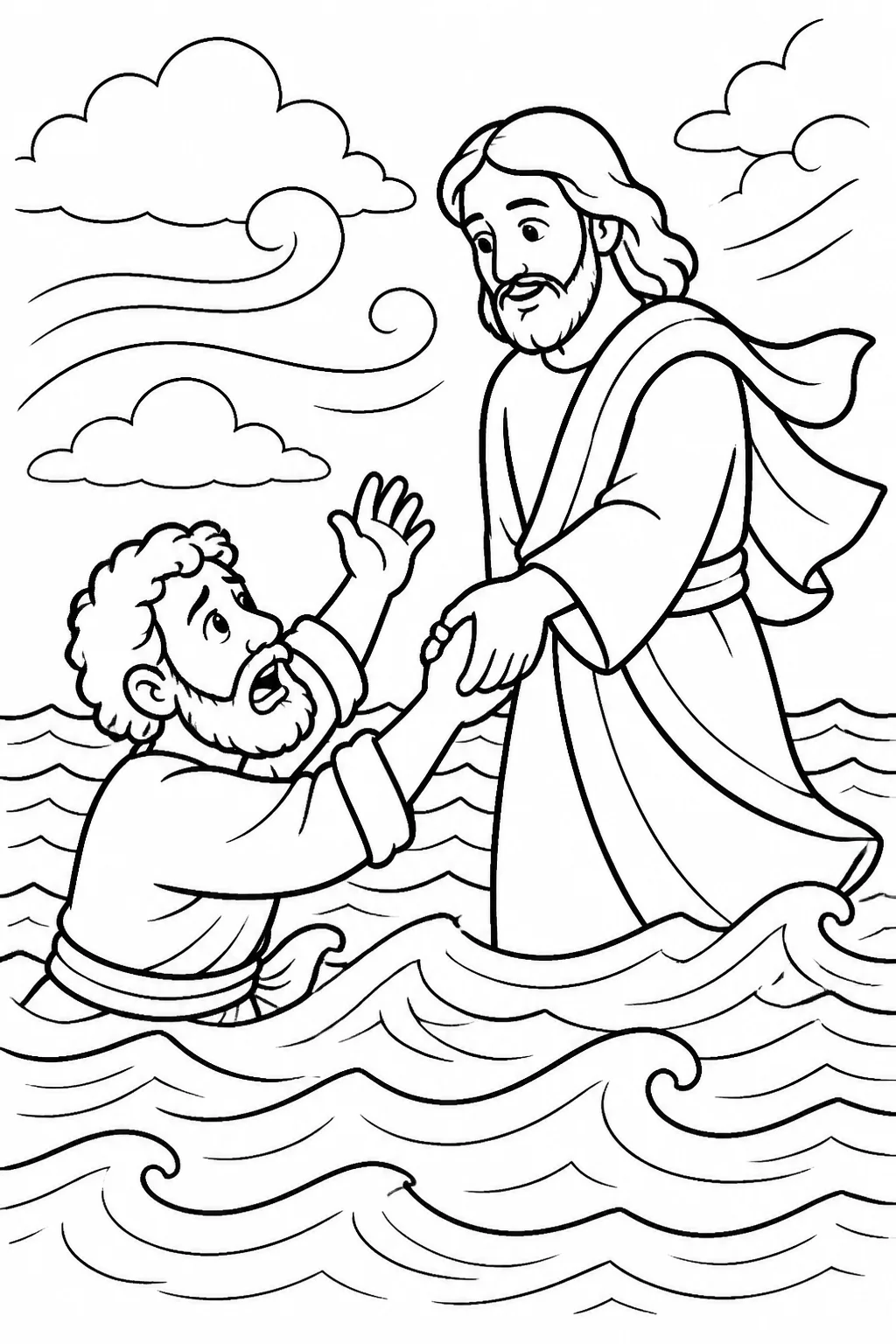
Jesus reaches out and takes hold of Peter as Peter begins to sink in the sea, with strong wind shown by waves and moving clothing.

Jesus Reaches Out to Peter

Matthew 14:22-33
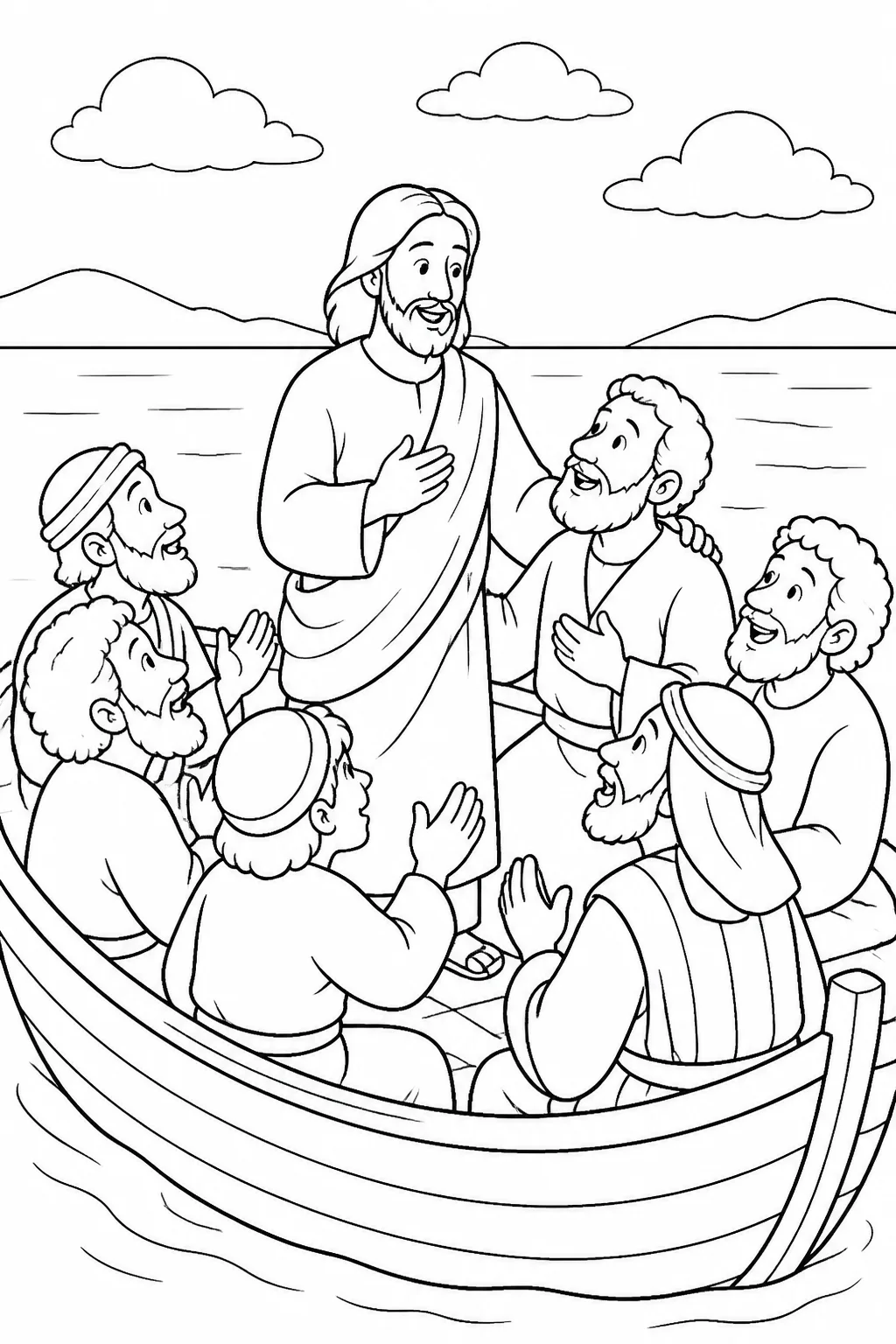
Jesus and Peter in a boat with the disciples worshiping as the wind ceases and the sea becomes calm.

The Wind Becomes Still

Matthew 14:22-33
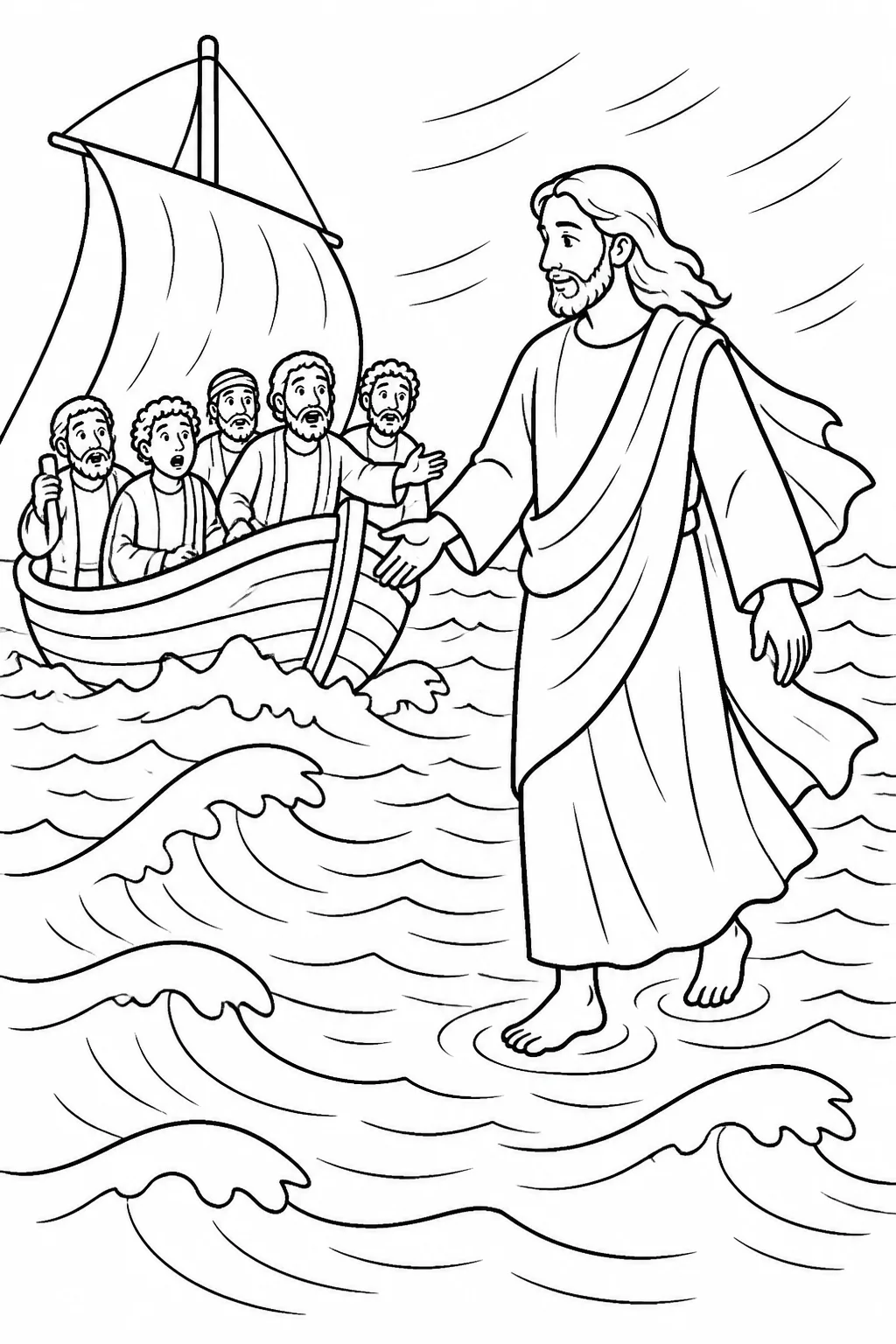
Jesus walking across the sea toward a small boat carrying several disciples while waves move around it and wind presses against them.

Jesus Comes Across the Sea

Matthew 14:22-33
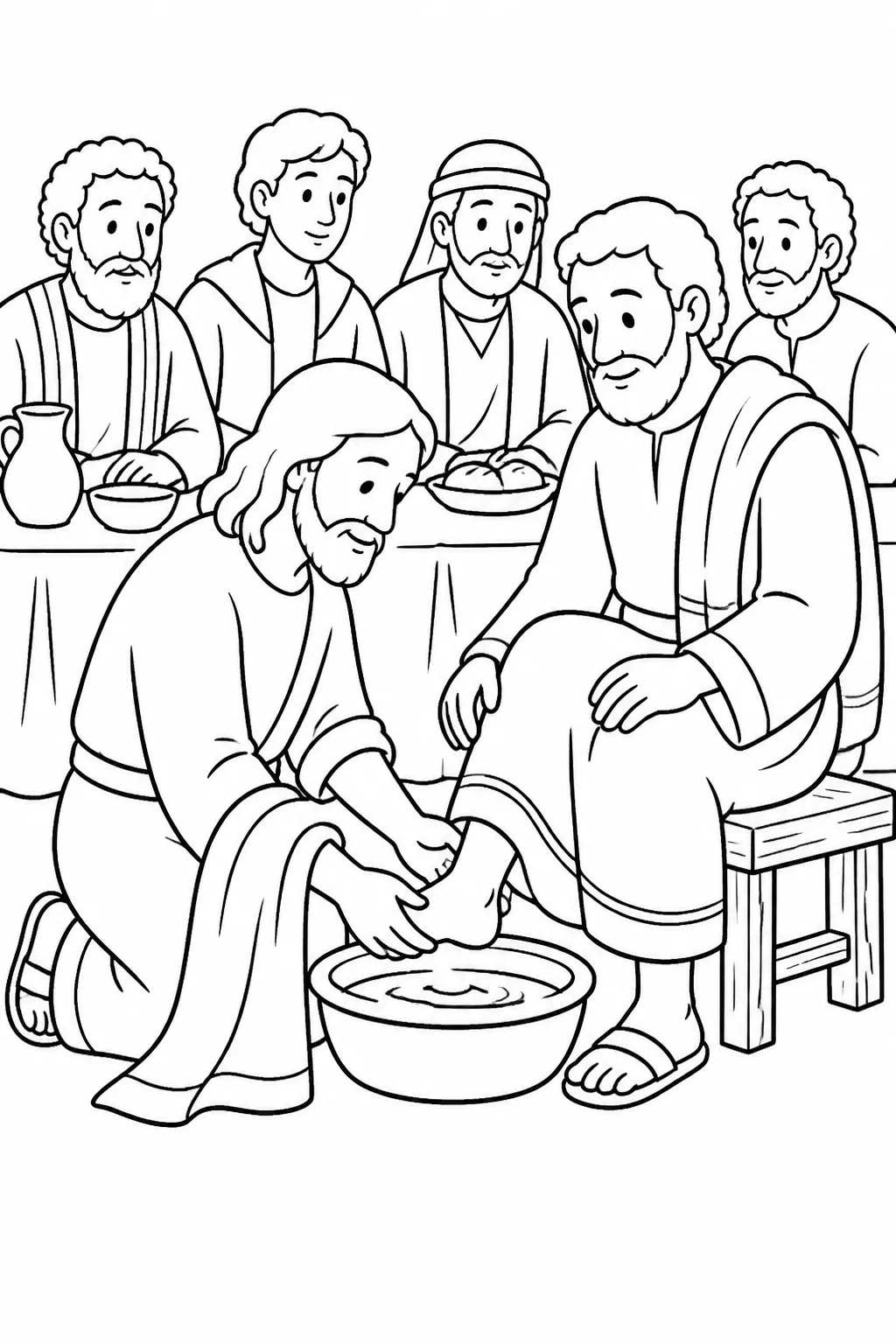
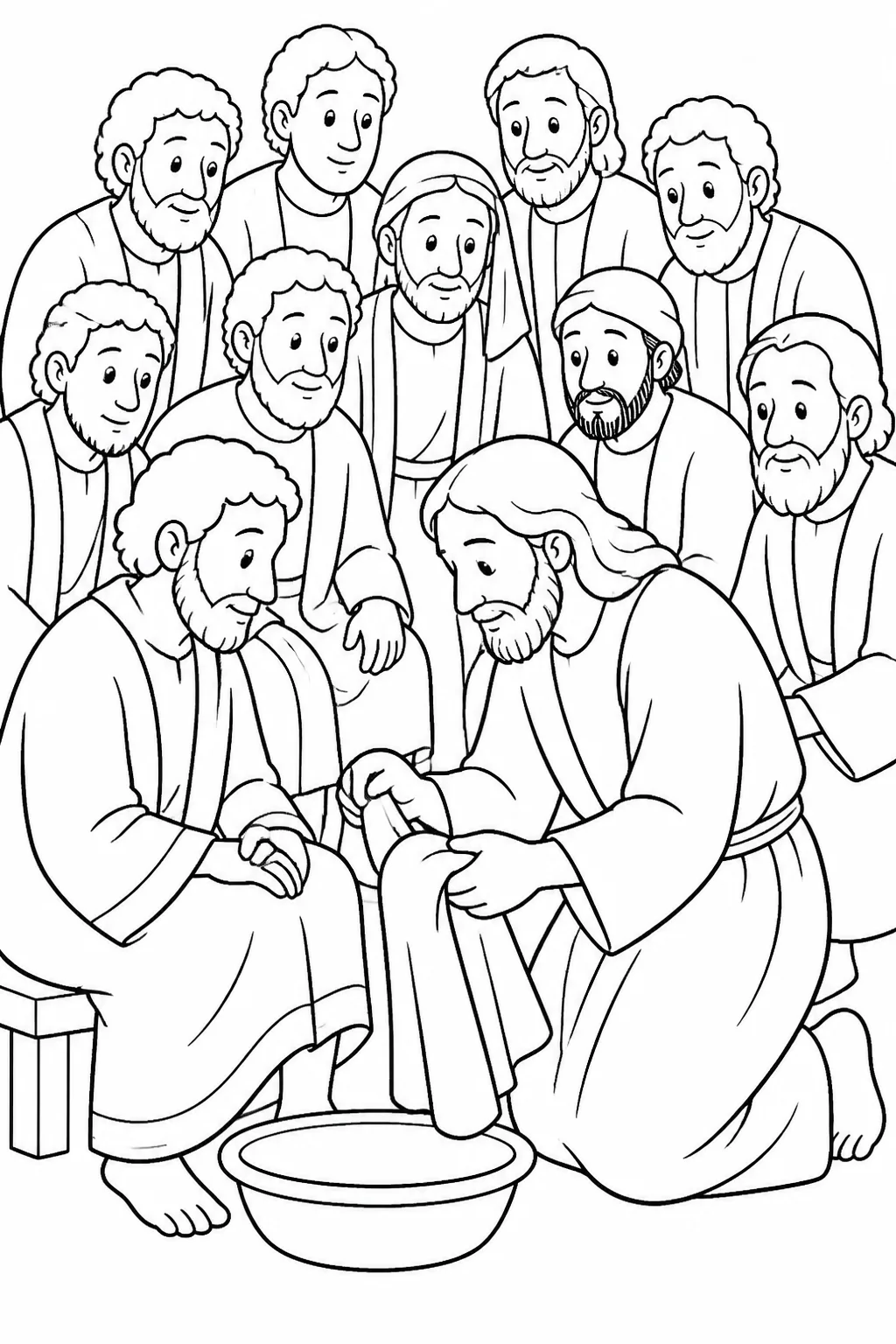
Jesus kneeling beside a disciple with a basin of water and towel while other disciples sit nearby in a supper setting.

Jesus Serves with a Basin and Towel

John 13:1-20
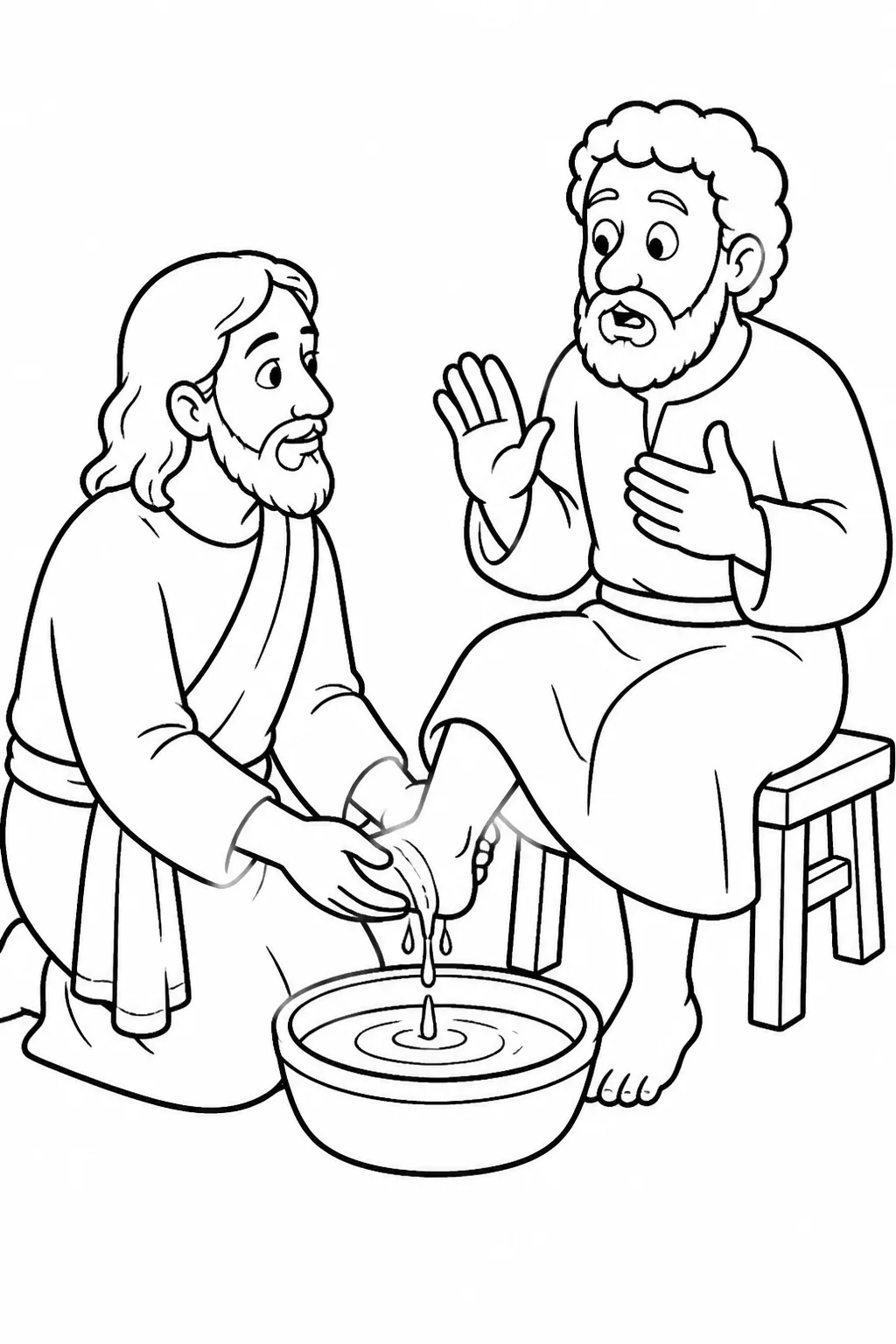
Jesus beside a basin of water as Simon Peter gestures with surprised uncertainty during their recorded exchange about Jesus washing Peter.

Peter Is Surprised by Jesus’ Service

John 13:1-20
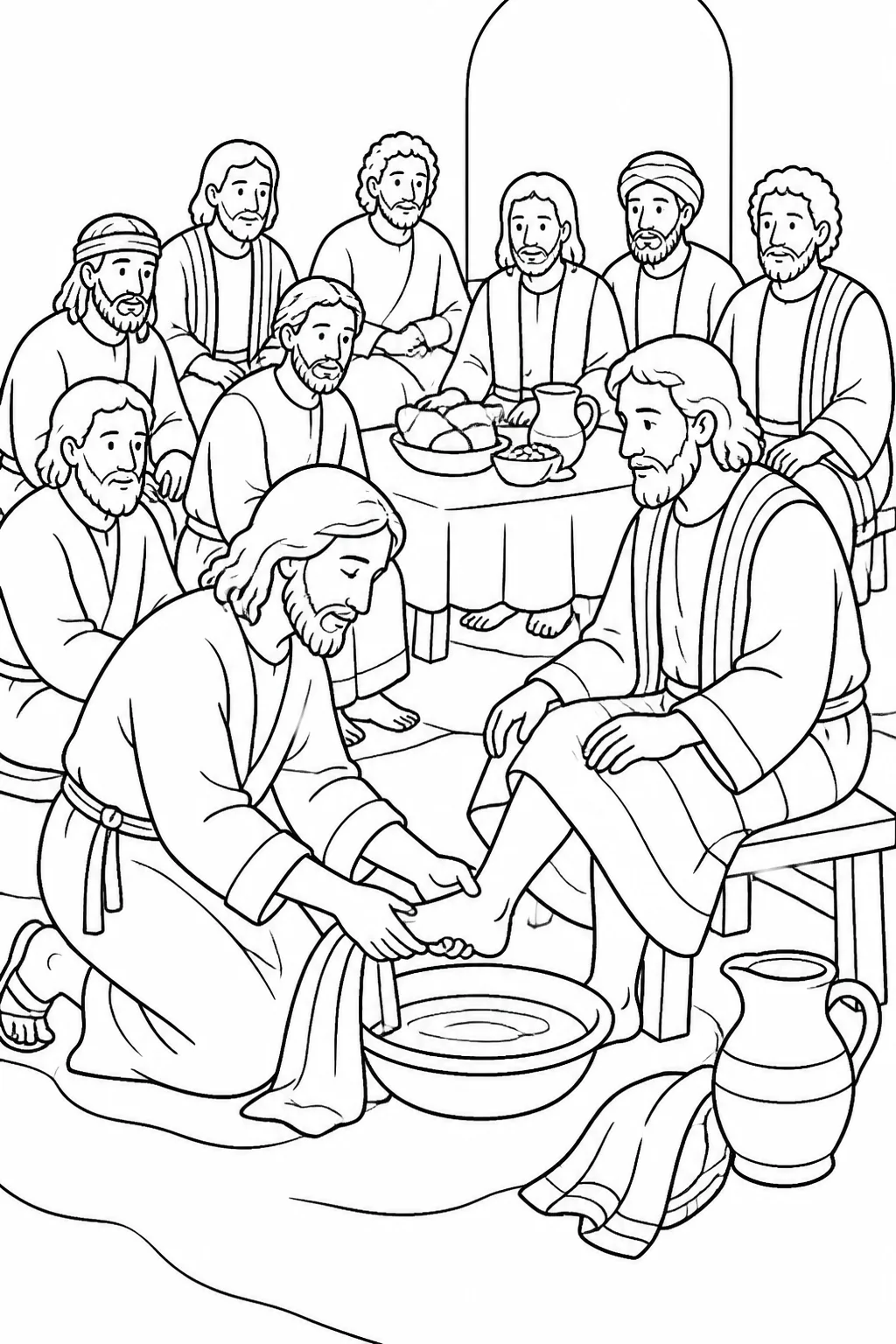
Jesus prepares to wash one disciple’s feet during a supper setting while other disciples wait nearby; a towel, basin, water, and outer garments are central.

A Circle of Humble Service

John 13:1-20
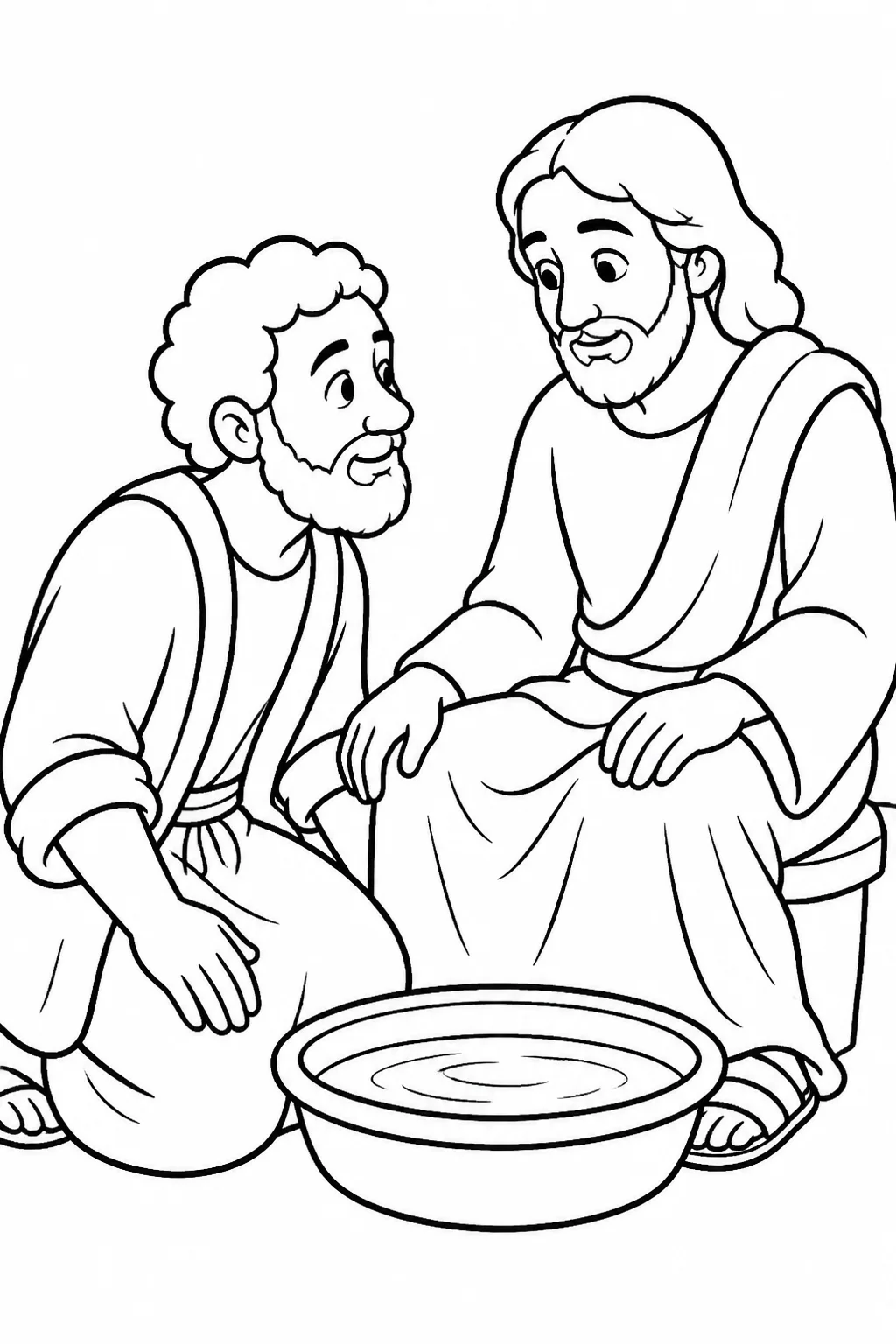
Jesus and Simon Peter beside a basin of water as Peter turns toward Jesus after initially refusing to be washed.

Peter Chooses to Be Washed

John 13:1-20
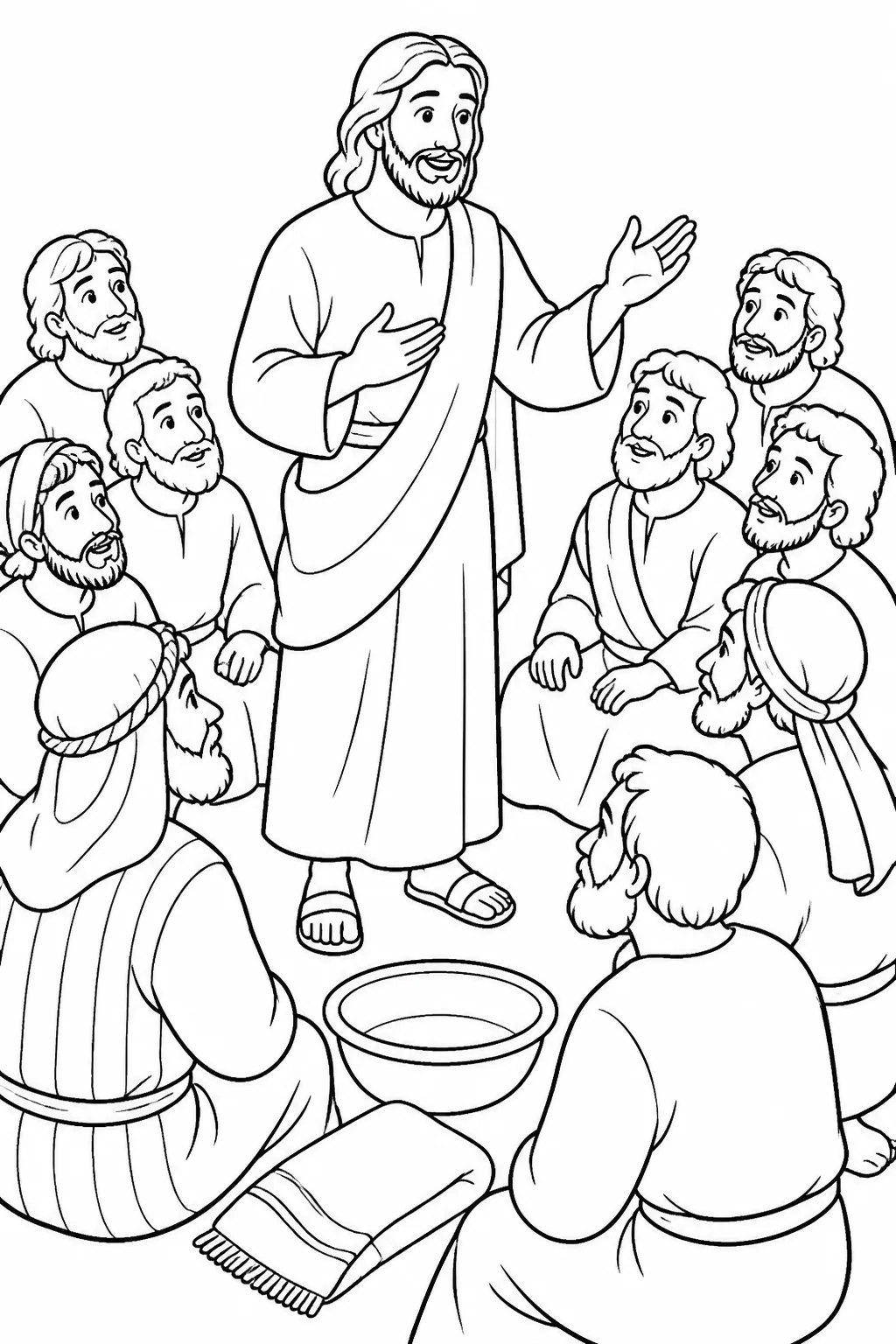
Jesus standing in his outer garments and teaching the disciples after washing their feet, with a towel and basin nearby.

Jesus Teaches by His Example

John 13:1-20
Jesus teaches the disciples after washing their feet, with a towel and basin nearby, illustrating humble service from John 13:12-17.

Follow the Example of Humble Service

John 13:1-20
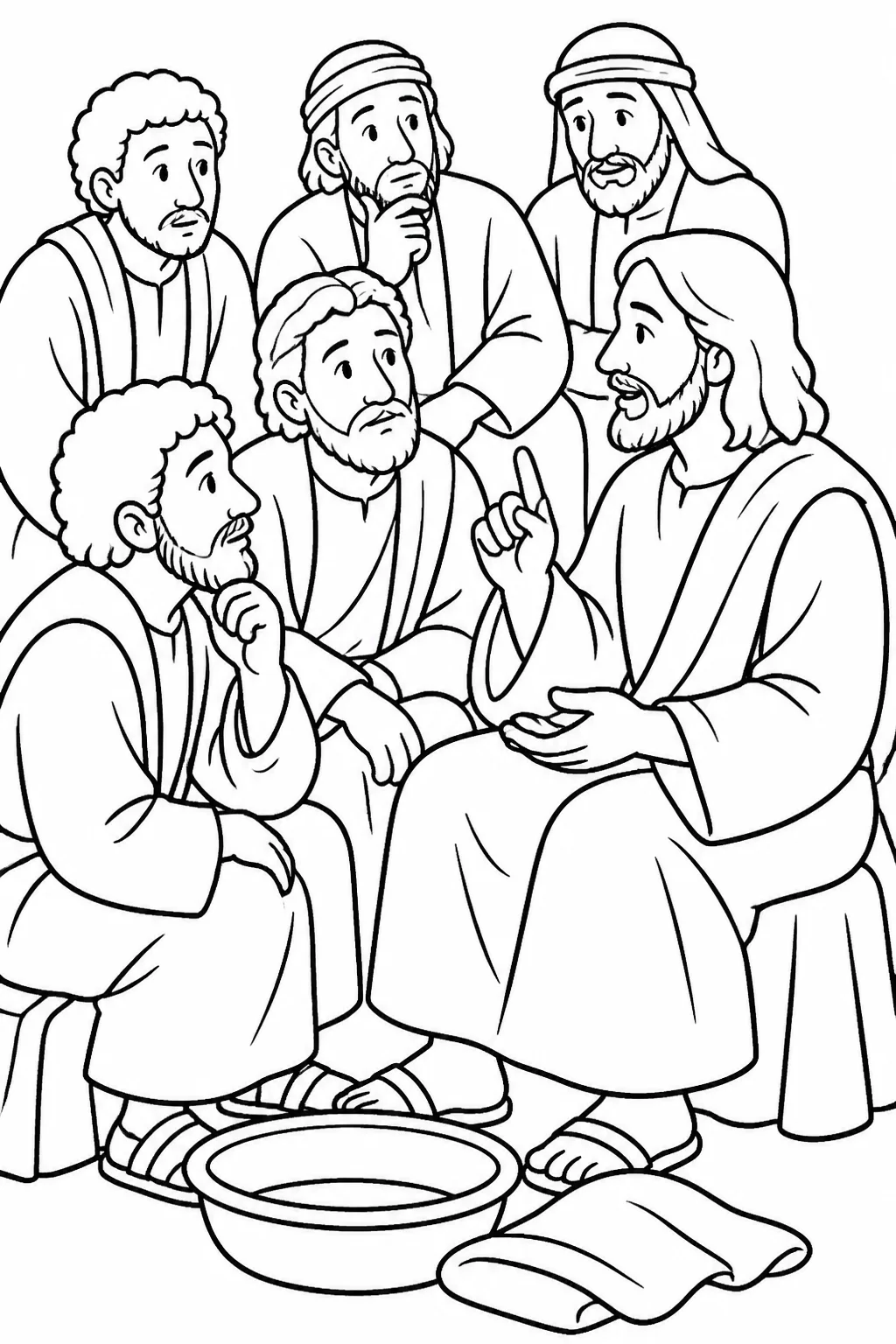
Jesus teaching the disciples after washing their feet, with a basin and towel in the foreground.

Knowing and Doing What Jesus Teaches

John 13:1-20
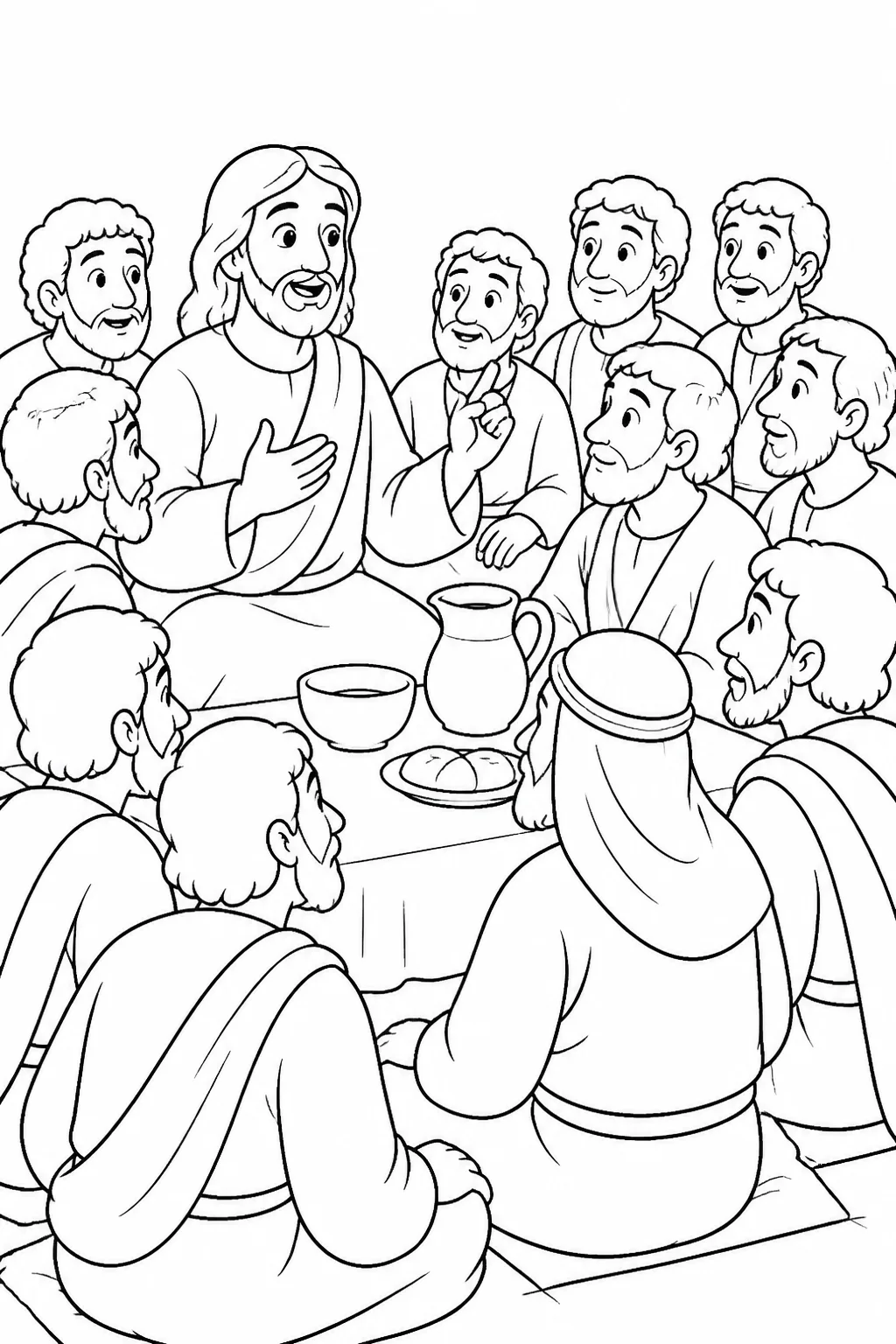
Jesus speaking to the gathered disciples in a meal setting, illustrating John 13:18–20 and his preparation of them to trust him.

Jesus Prepares His Disciples to Trust Him

John 13:1-20
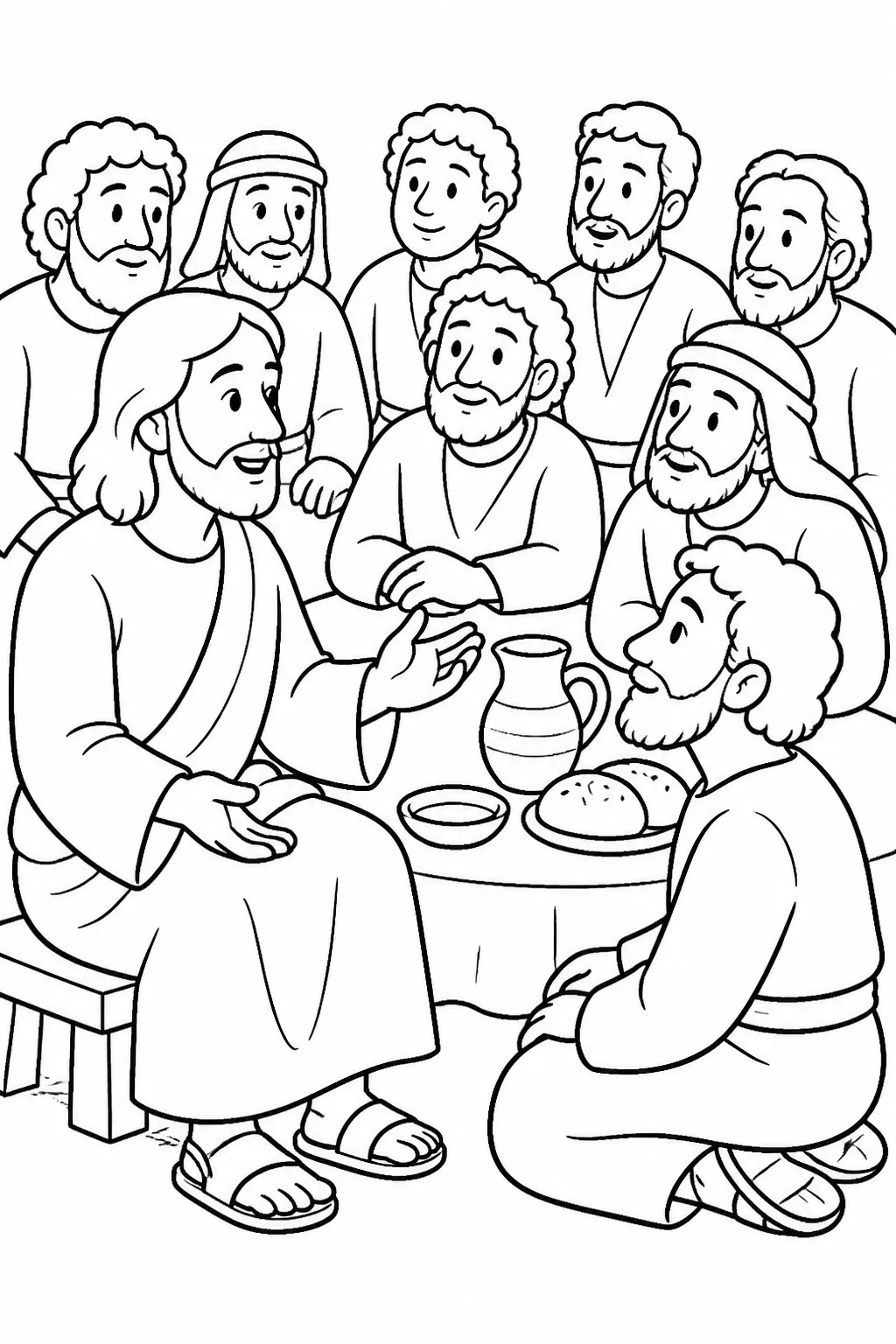
Jesus teaching the disciples during a meal about receiving the one he sends, with one disciple listening prominently among the group.

Receiving the One Jesus Sends

John 13:1-20
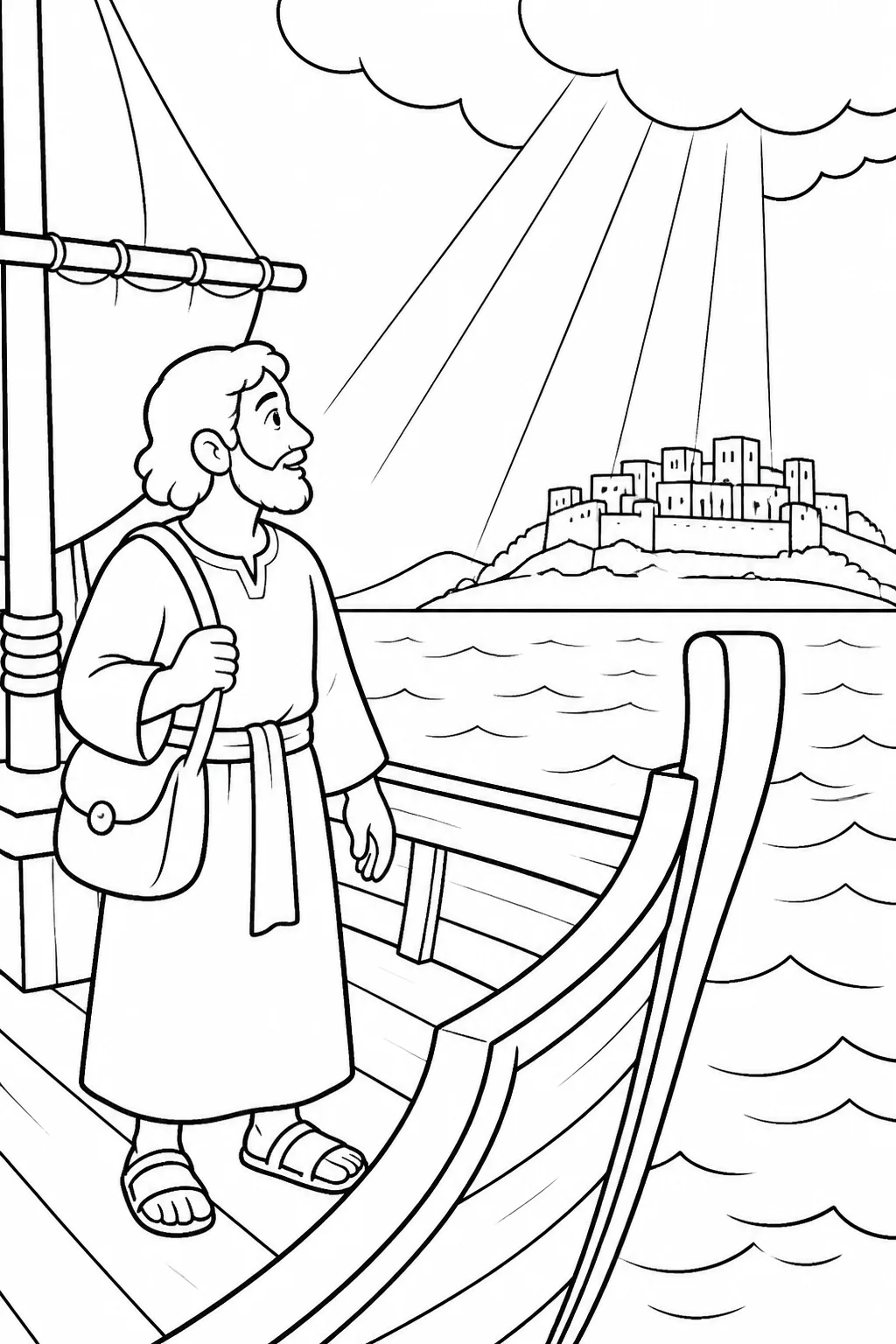
Jonah stands facing a distant view of Nineveh while a symbolic light from above represents the LORD’s command to go there.

God Sends Jonah to Nineveh

Jonah 1–4

Jonah boards a ship at Joppa to travel toward Tarshish instead of going to Nineveh, as described in Jonah 1:3.

Jonah Boards the Ship

Jonah 1–4

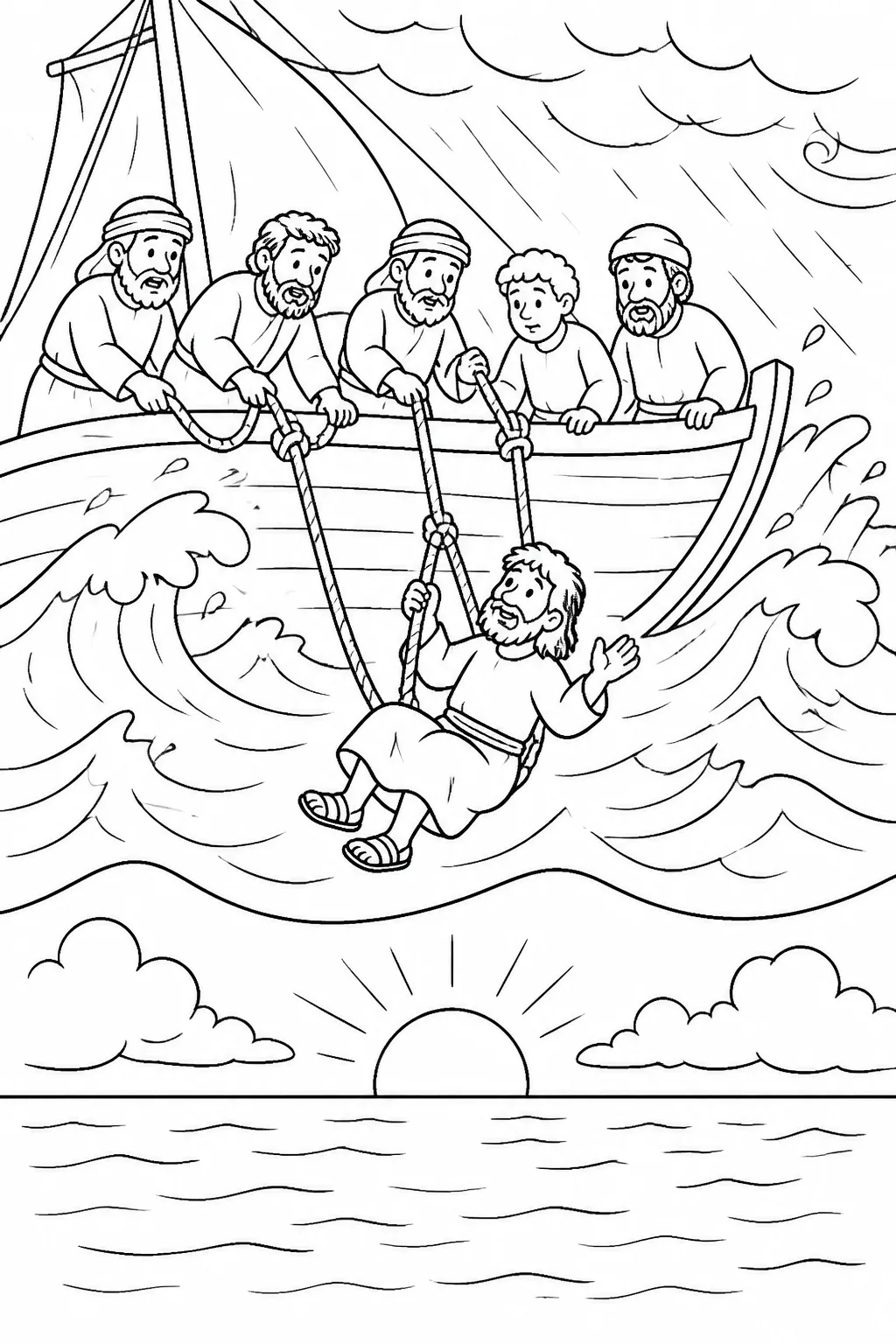
Jonah being carefully lowered from a ship toward the sea during a great storm, with sailors nearby and a calm-water cue showing the sea becoming calm.

The Storm and the Calm Sea

Jonah 1–4

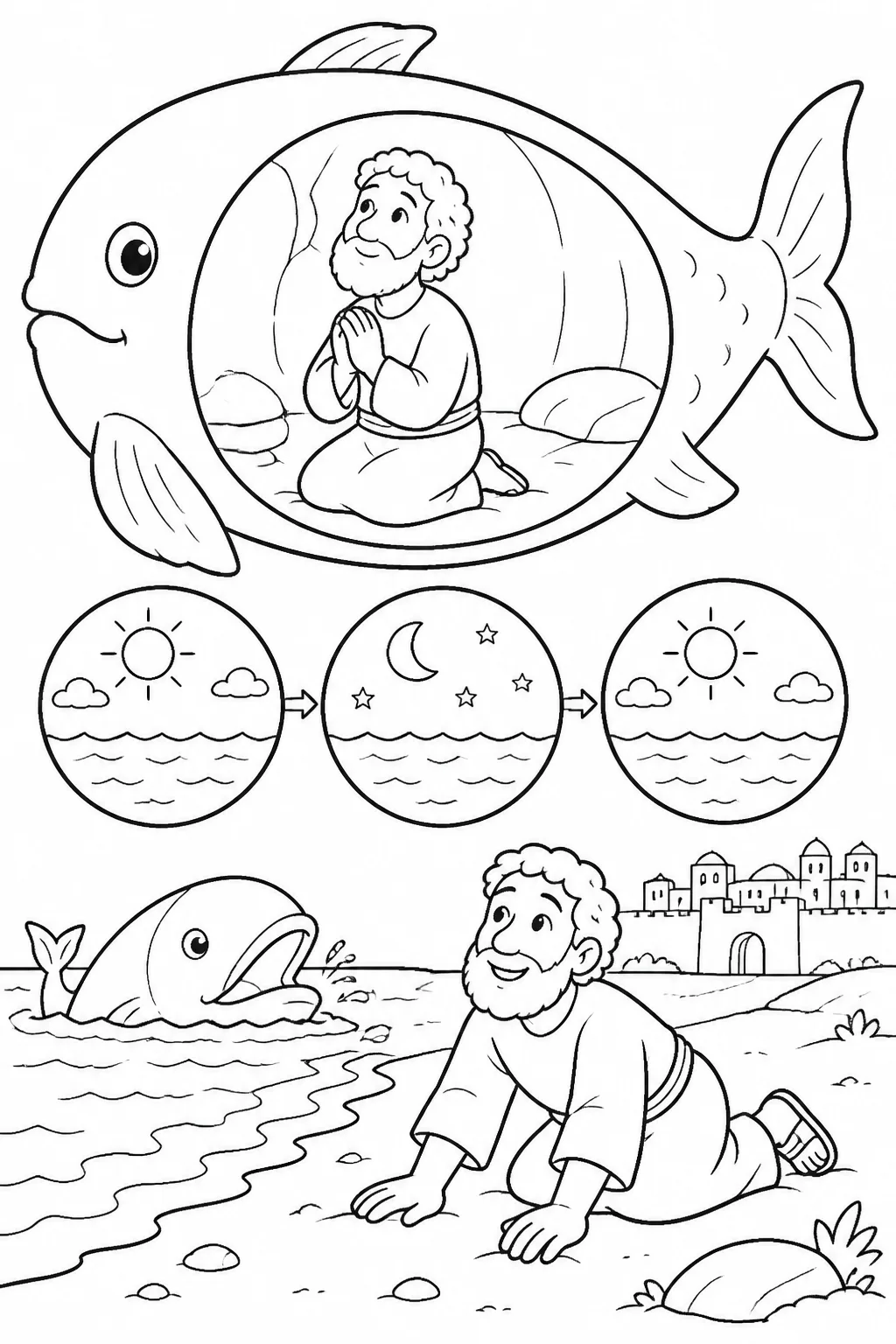
Jonah praying inside a great fish in the sea, with a sequence showing three days and three nights before his release onto dry land.

Jonah Prays Inside the Great Fish

Jonah 1–4
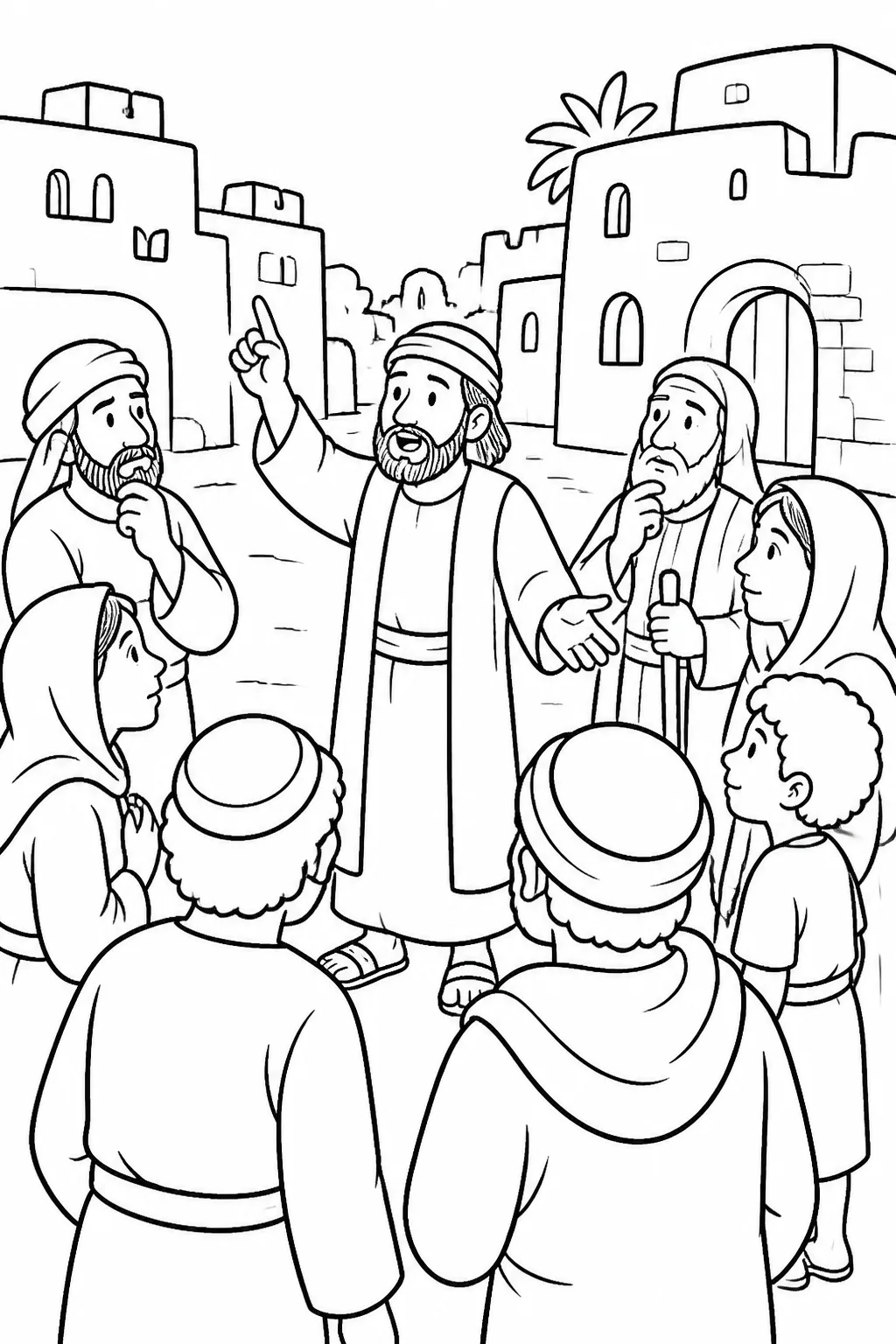
Jonah walking through Nineveh and announcing that the city will be overthrown in forty days while people listen.

Jonah Announces Nineveh’s Warning

Jonah 1–4
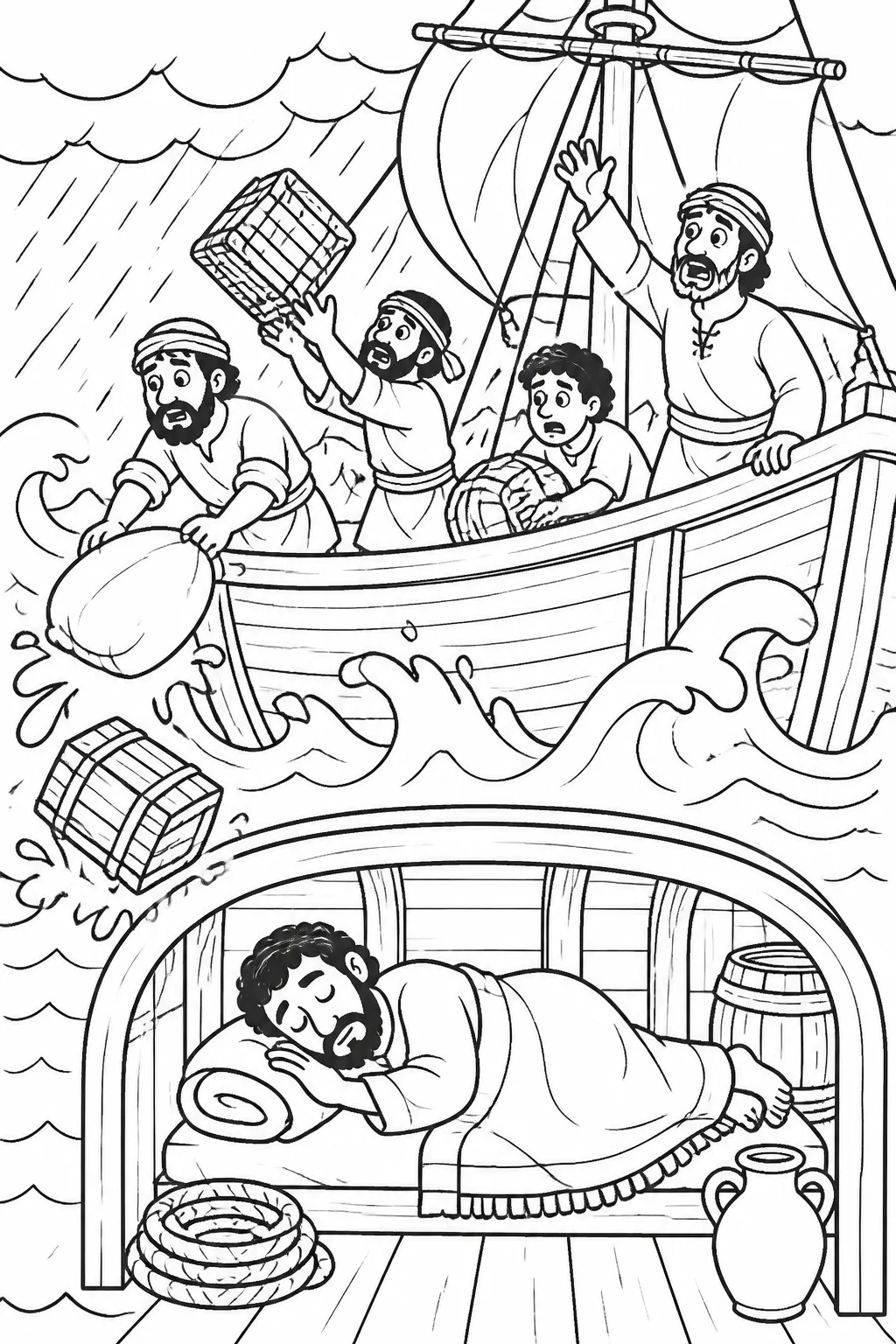
Jonah, the king of Nineveh, and people throughout Nineveh responding to God’s warning with sackcloth, ashes, humility, and repentance.

Nineveh Turns Back

Jonah 1–4

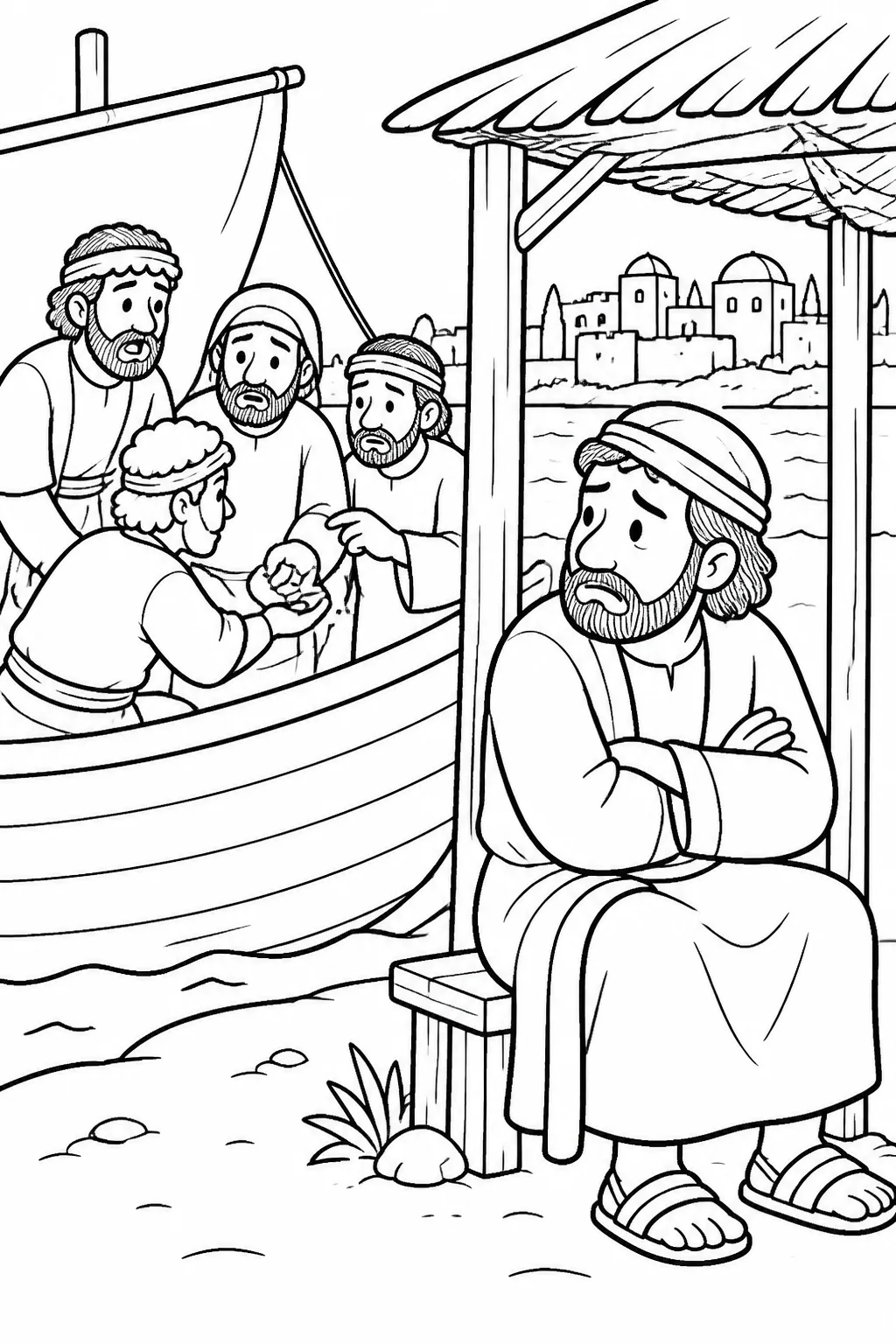
Jonah beneath a simple shelter east of Nineveh, looking toward the city while upset, based on Jonah 4:1–5.

Jonah Waits Outside Nineveh

Jonah 1–4
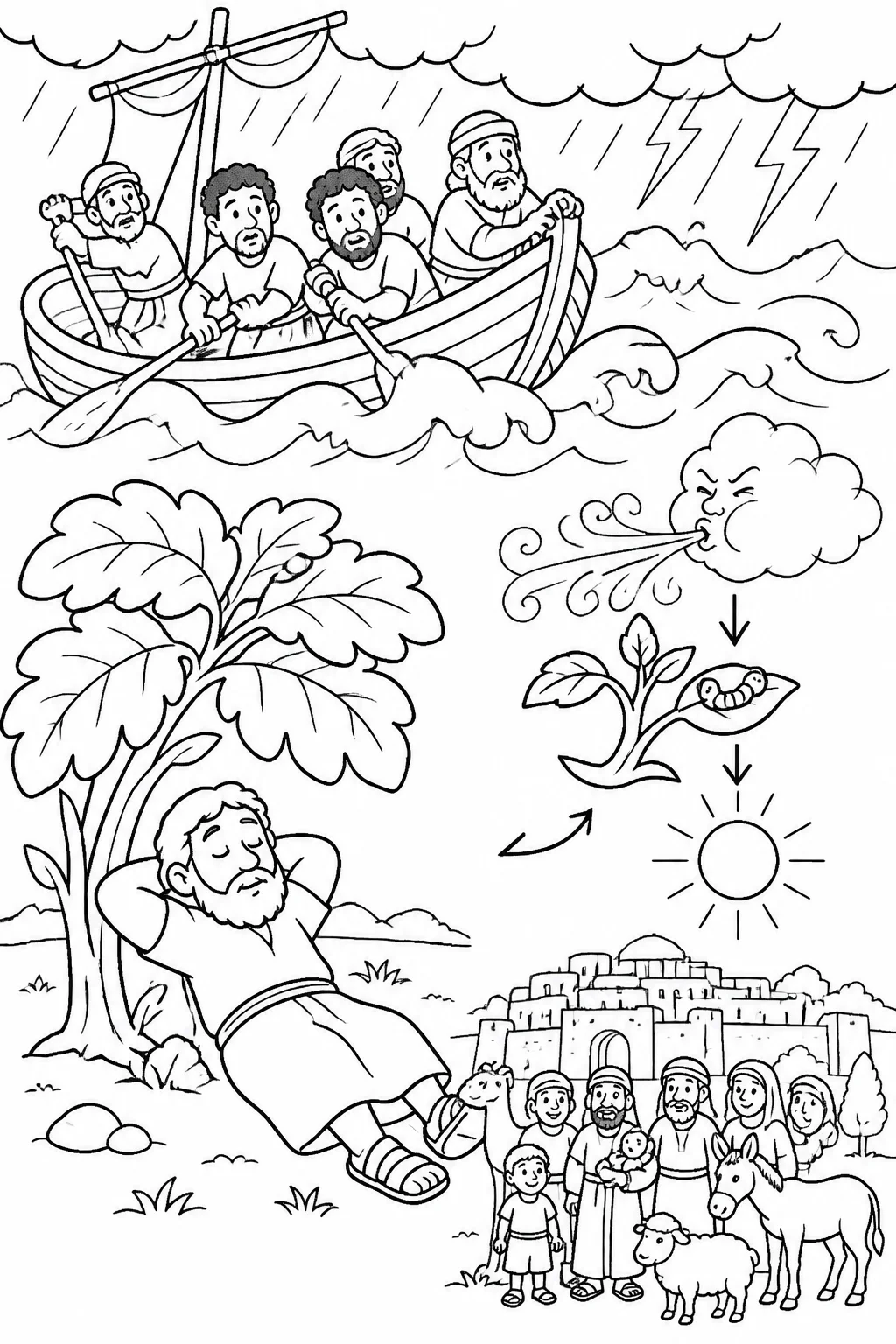
Jonah beneath a plant’s shade while a visual sequence shows the plant, worm, scorching east wind, and Nineveh with people and animals in the distance.

The Plant and God’s Question

Jonah 1–4
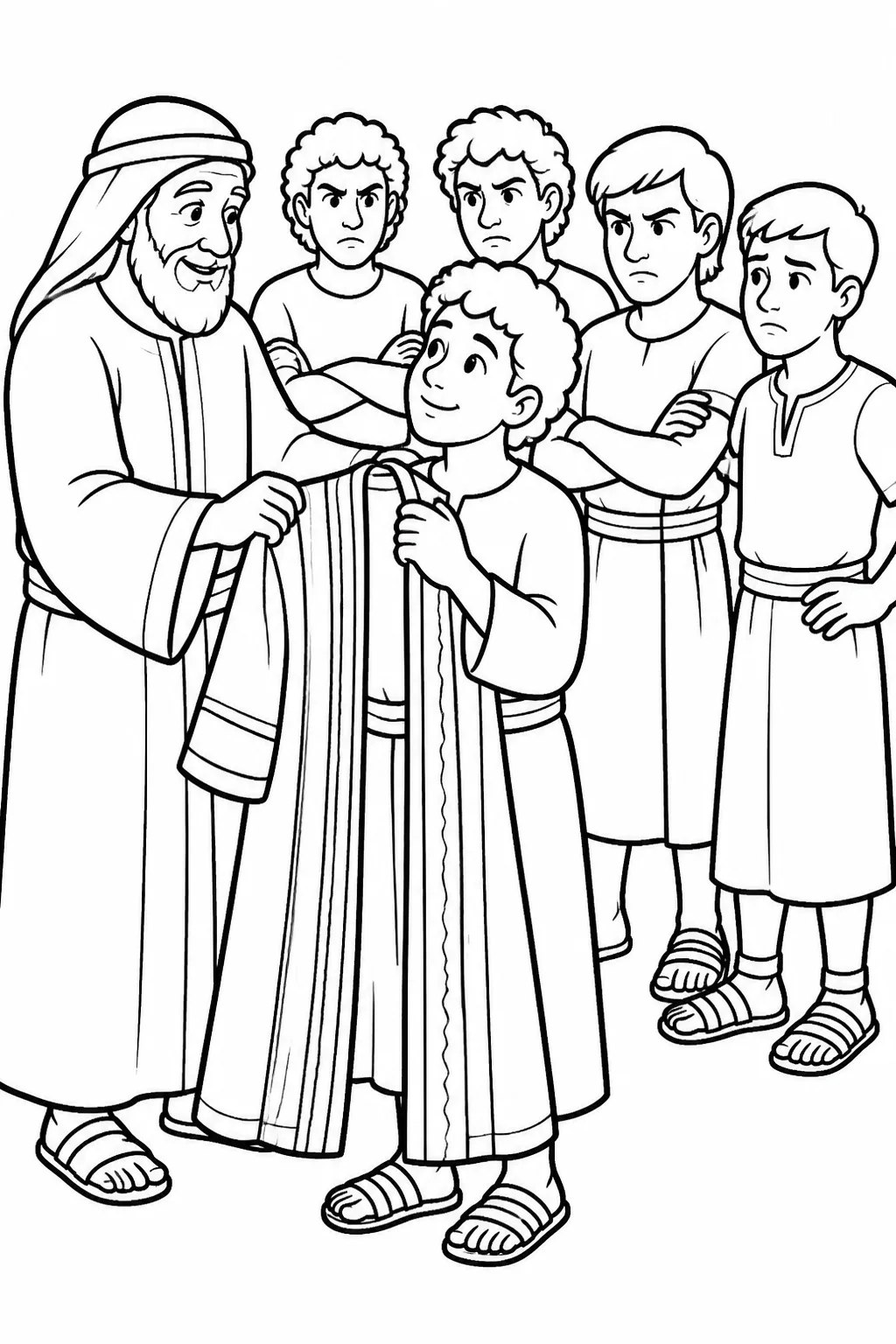
Jacob presents Joseph with a distinctive long garment while Joseph’s brothers stand nearby with unhappy expressions, illustrating favoritism and family tension from Genesis 37:1–4.

Joseph Receives a Special Garment

Genesis 37:1-36
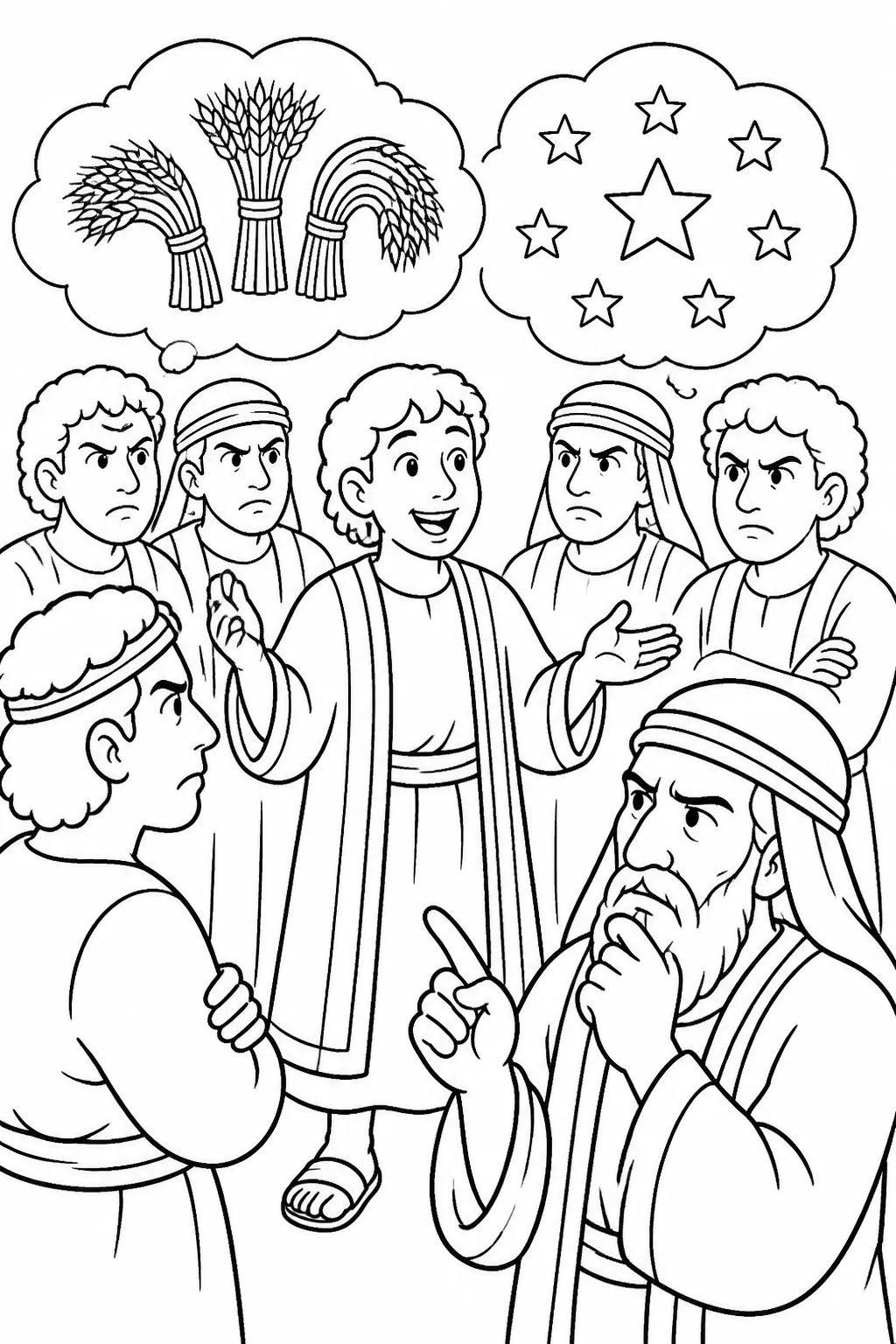
Joseph tells his brothers about dreams involving bowing sheaves and stars while Jacob responds thoughtfully.

Joseph Shares His Dreams

Genesis 37:1-36
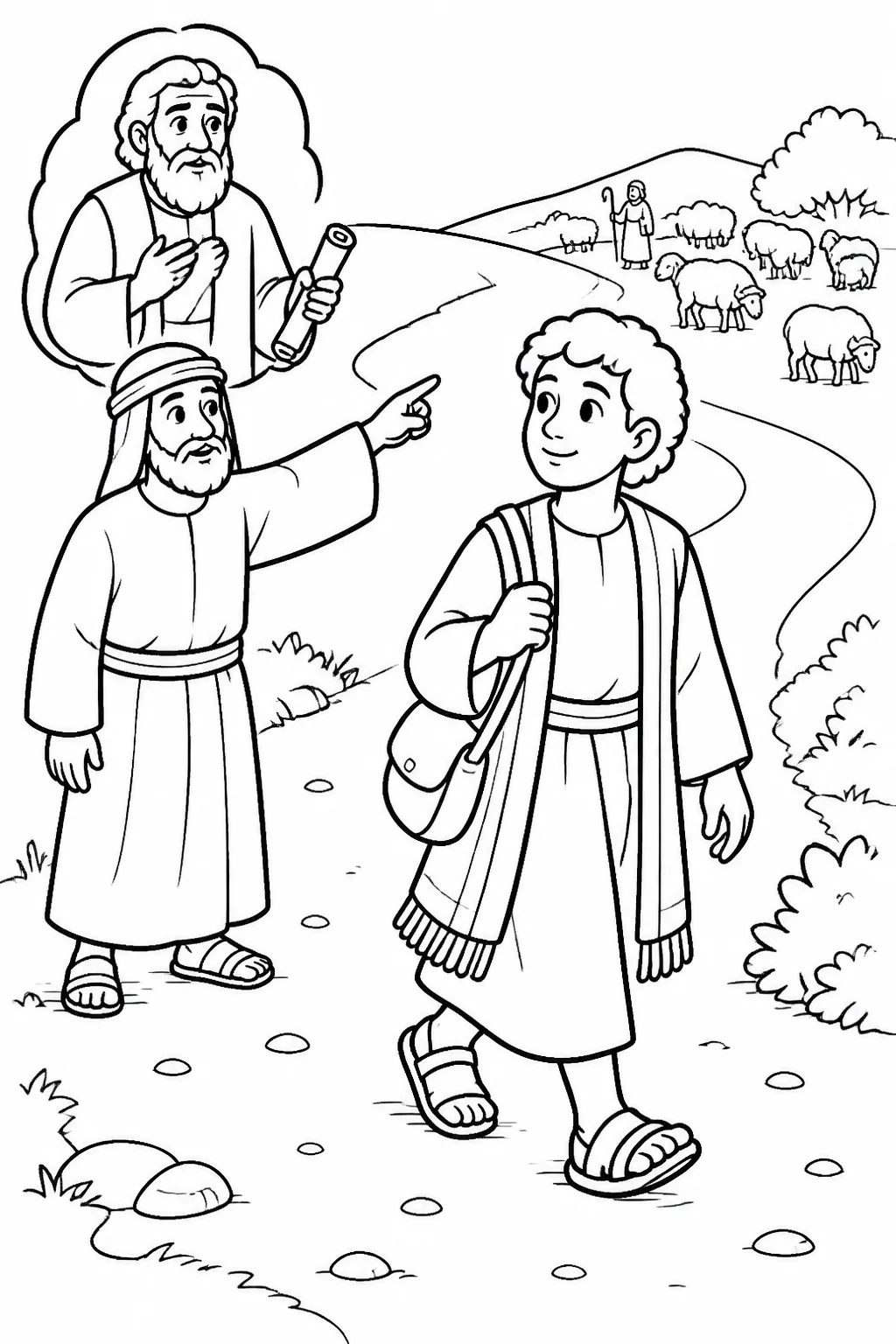
Joseph walking along a countryside path toward Dothan after an unnamed man directs him while he searches for his brothers and their flock.

Joseph Travels to Find His Brothers

Genesis 37:1-36
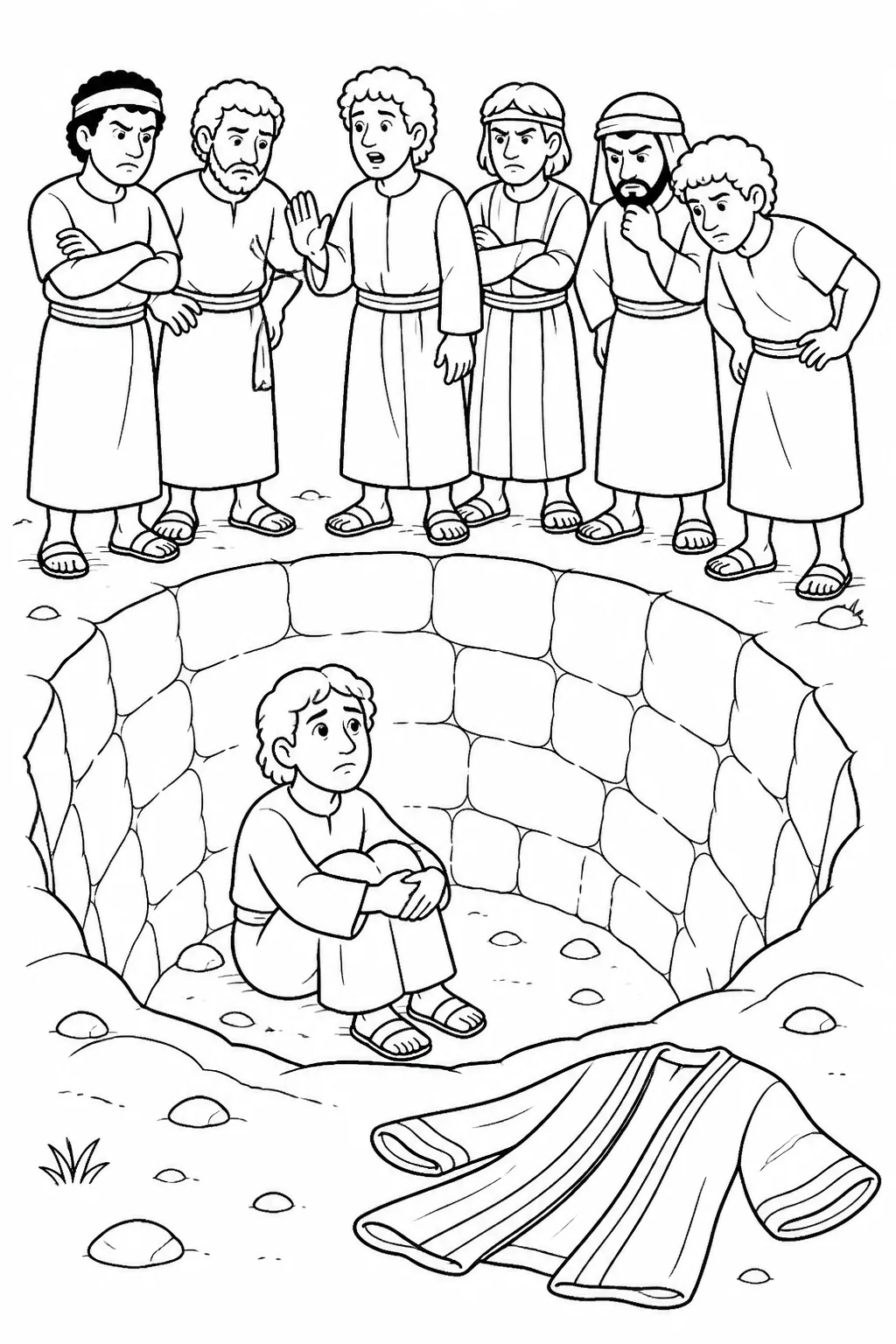
Joseph in an empty pit with his brothers above him, Reuben gesturing for restraint, and Joseph’s garment outside the pit.

Joseph Is Placed in the Empty Pit

Genesis 37:1-36
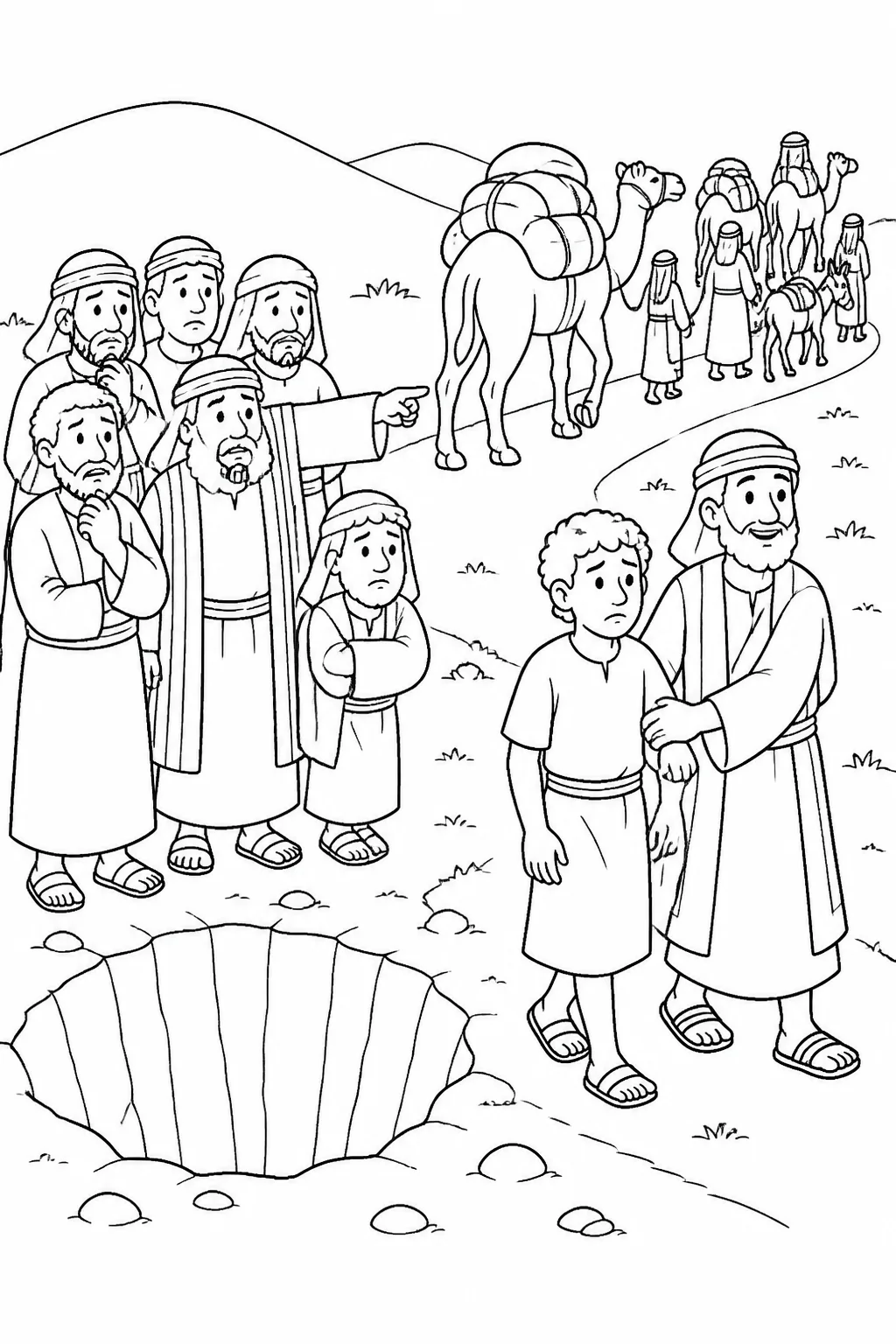
Joseph is led away against his will as his brothers stand beside a pit and a caravan of Ishmaelites travels toward Egypt.

Joseph Is Sold to Passing Traders

Genesis 37:1-36
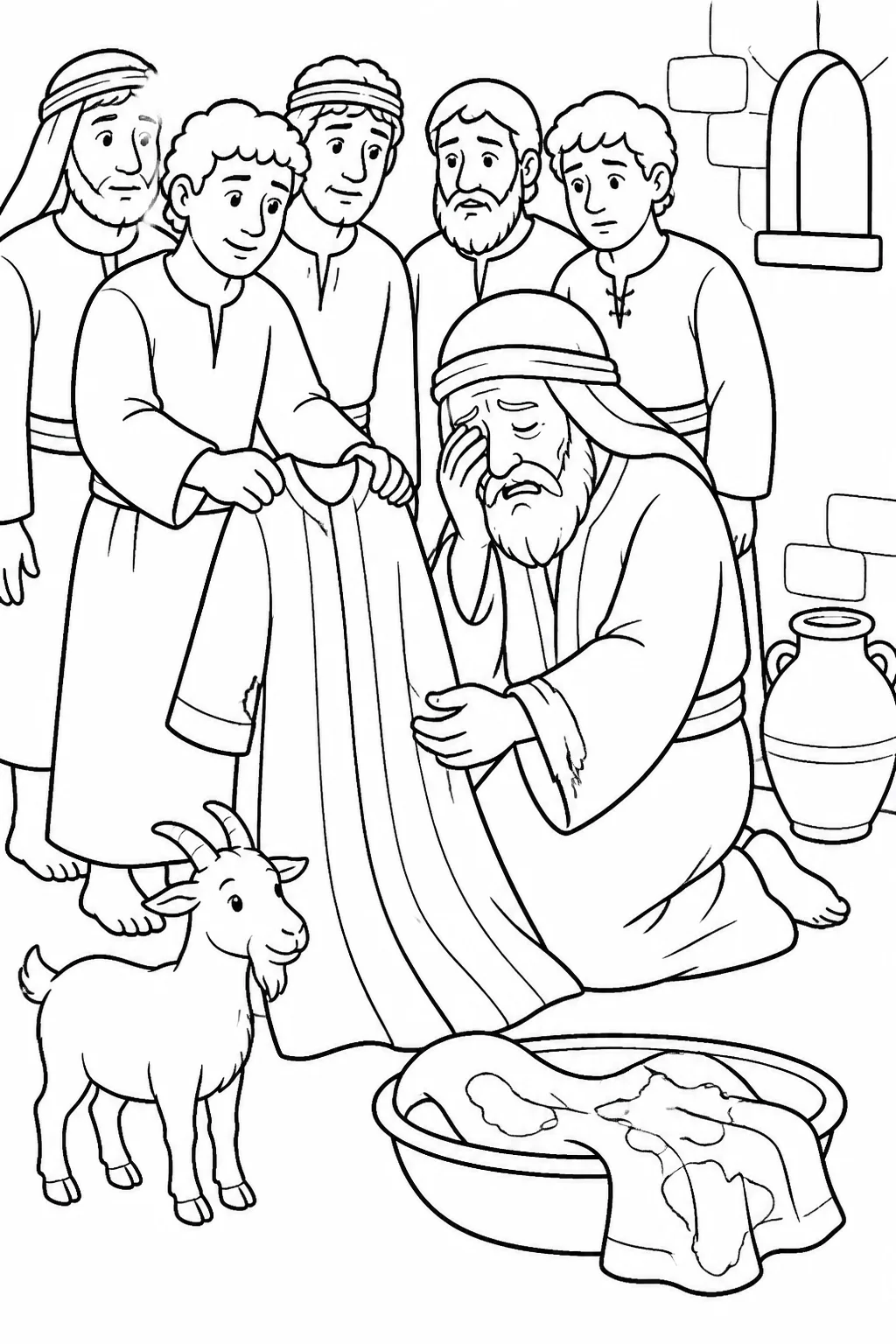
Jacob receives Joseph’s garment from his brothers and mourns, with a small goat nearby to represent the deception.

Jacob Mourns Over Joseph’s Garment

Genesis 37:1-36
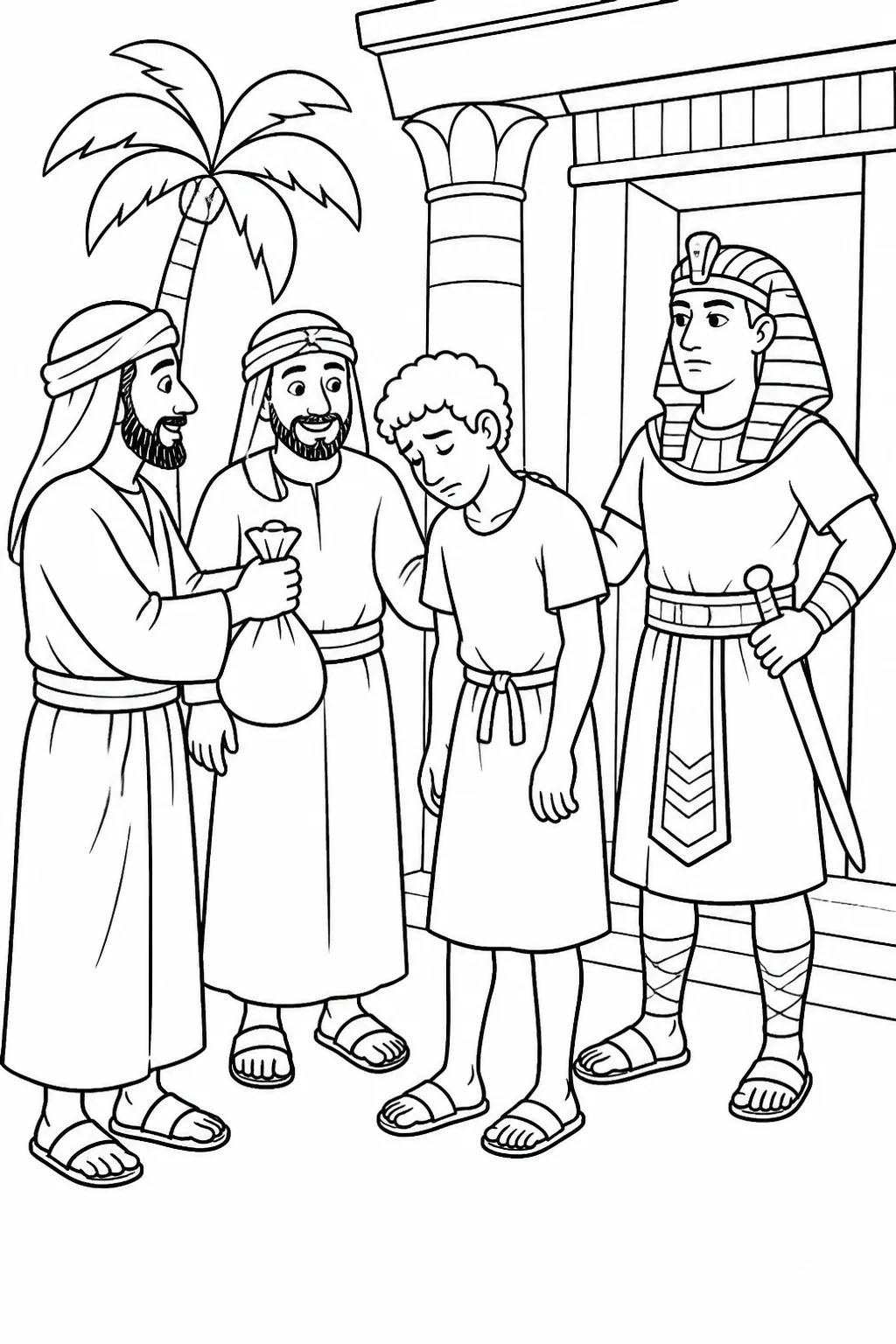
Illustration concept of Joseph arriving in Egypt as Midianites sell him to Potiphar near a simple Egyptian household entrance.

Joseph Arrives in Egypt

Genesis 37:1-36
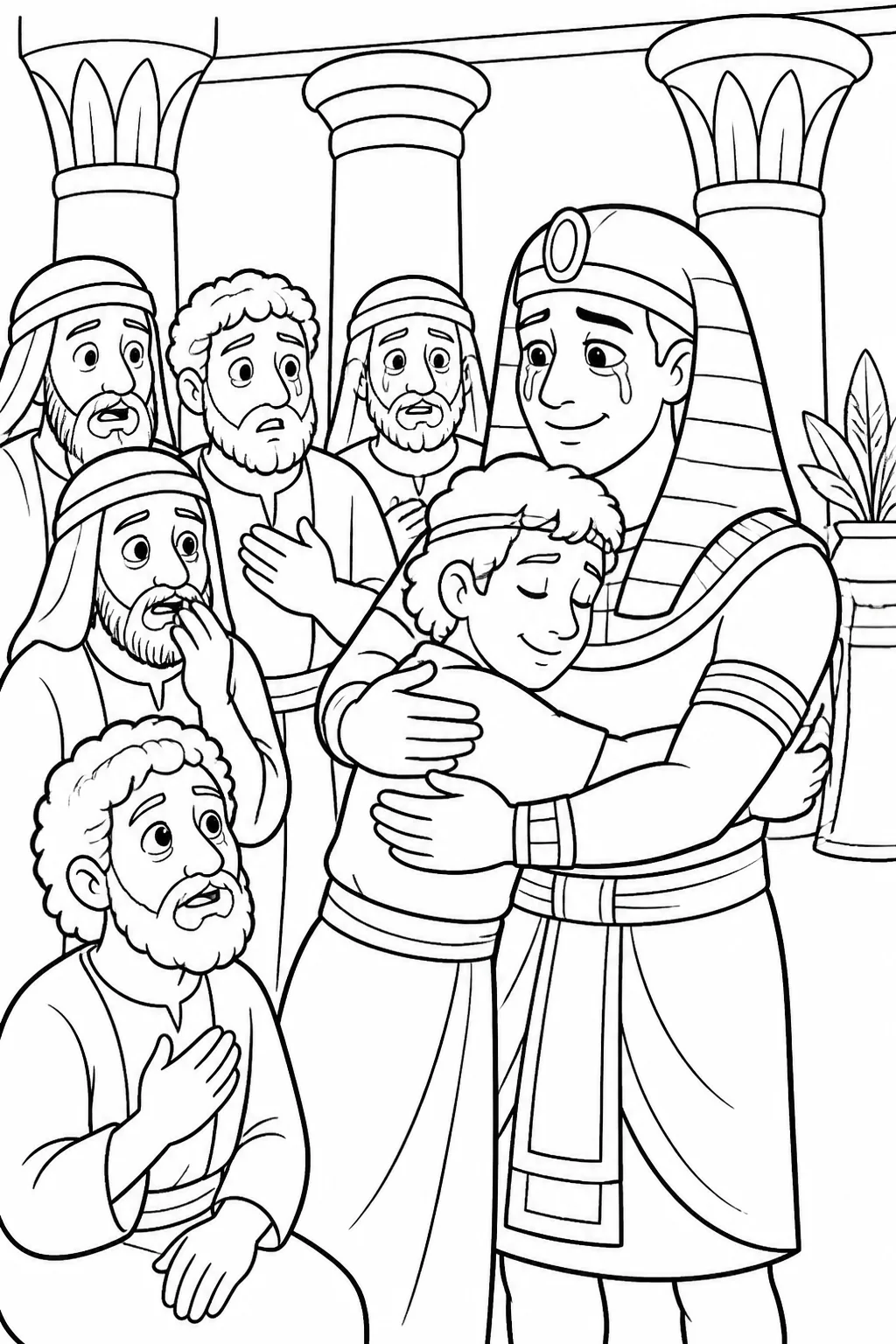
Joseph reveals his identity to his brothers in his Egyptian residence; Benjamin embraces him while the brothers listen.

Joseph Reveals Himself to His Brothers

Genesis 42:1–45:28
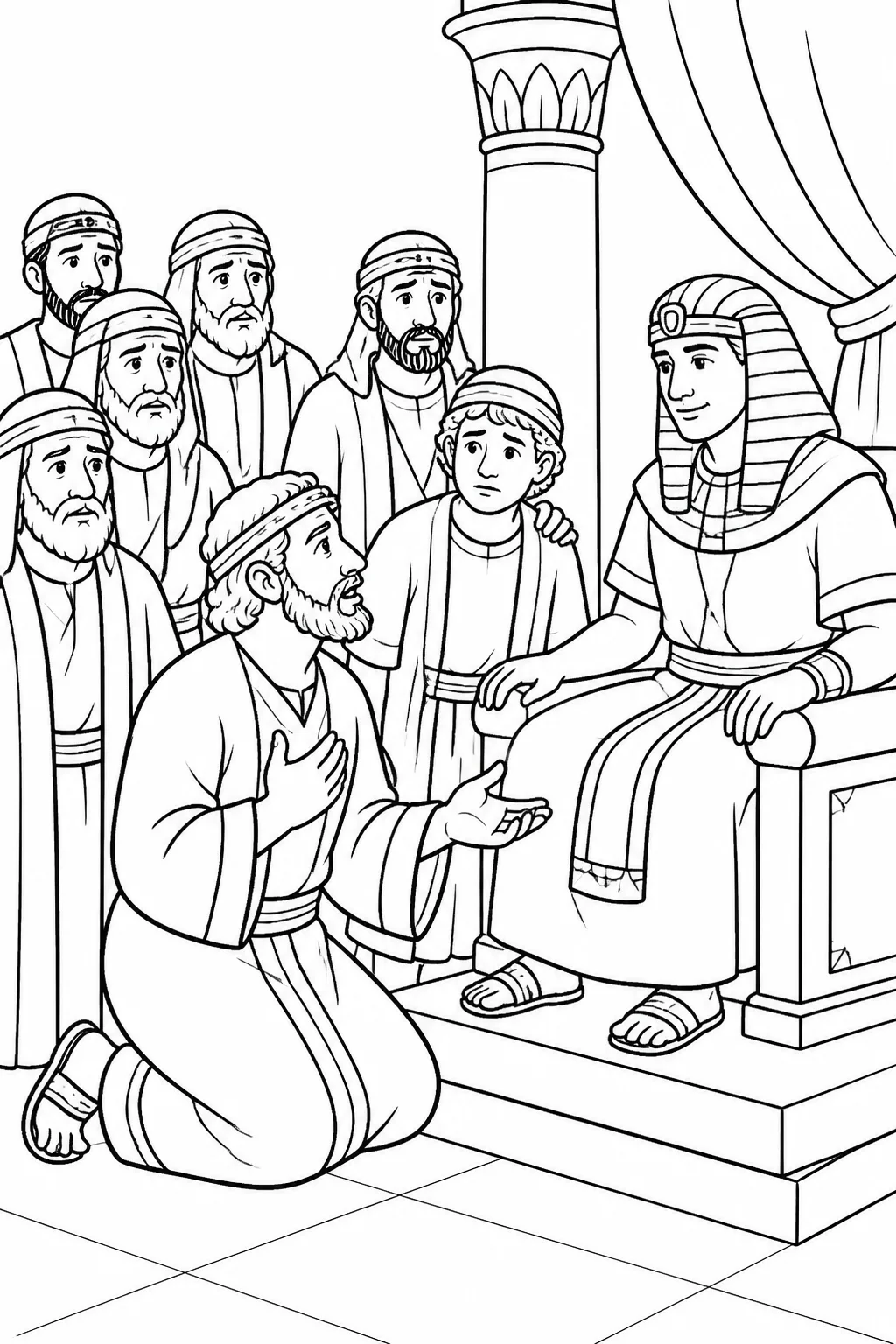
Judah speaks before Joseph in Joseph’s residence, offering to remain as a servant in Benjamin’s place while Benjamin and the other brothers stand nearby.

Judah Speaks Up for Benjamin

Genesis 42:1–45:28
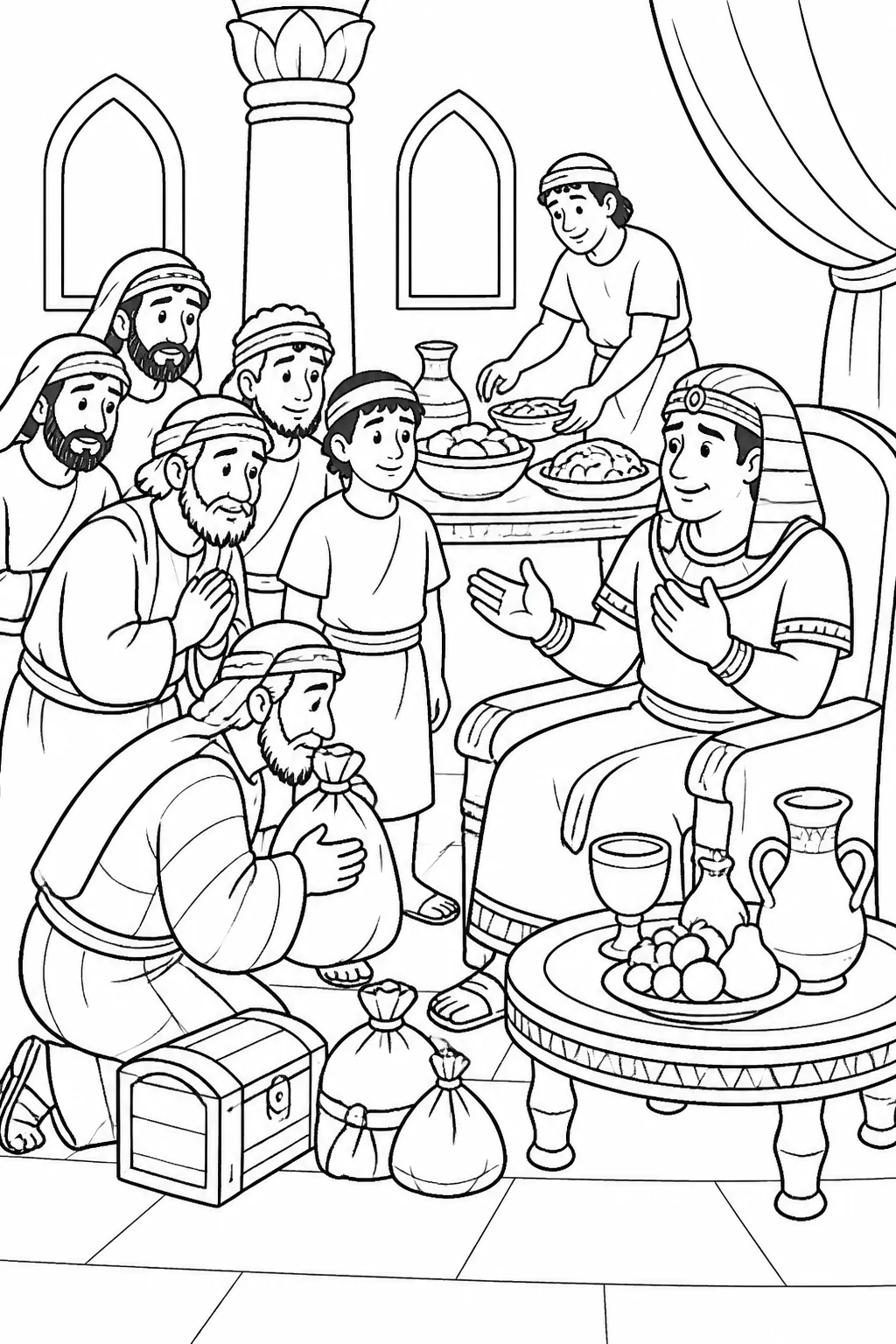
Joseph’s brothers bow before Joseph and present gifts at his house in Egypt while Benjamin and Simeon are present and a meal is prepared at separate tables.

The Brothers Meet Joseph for a Meal

Genesis 42:1–45:28
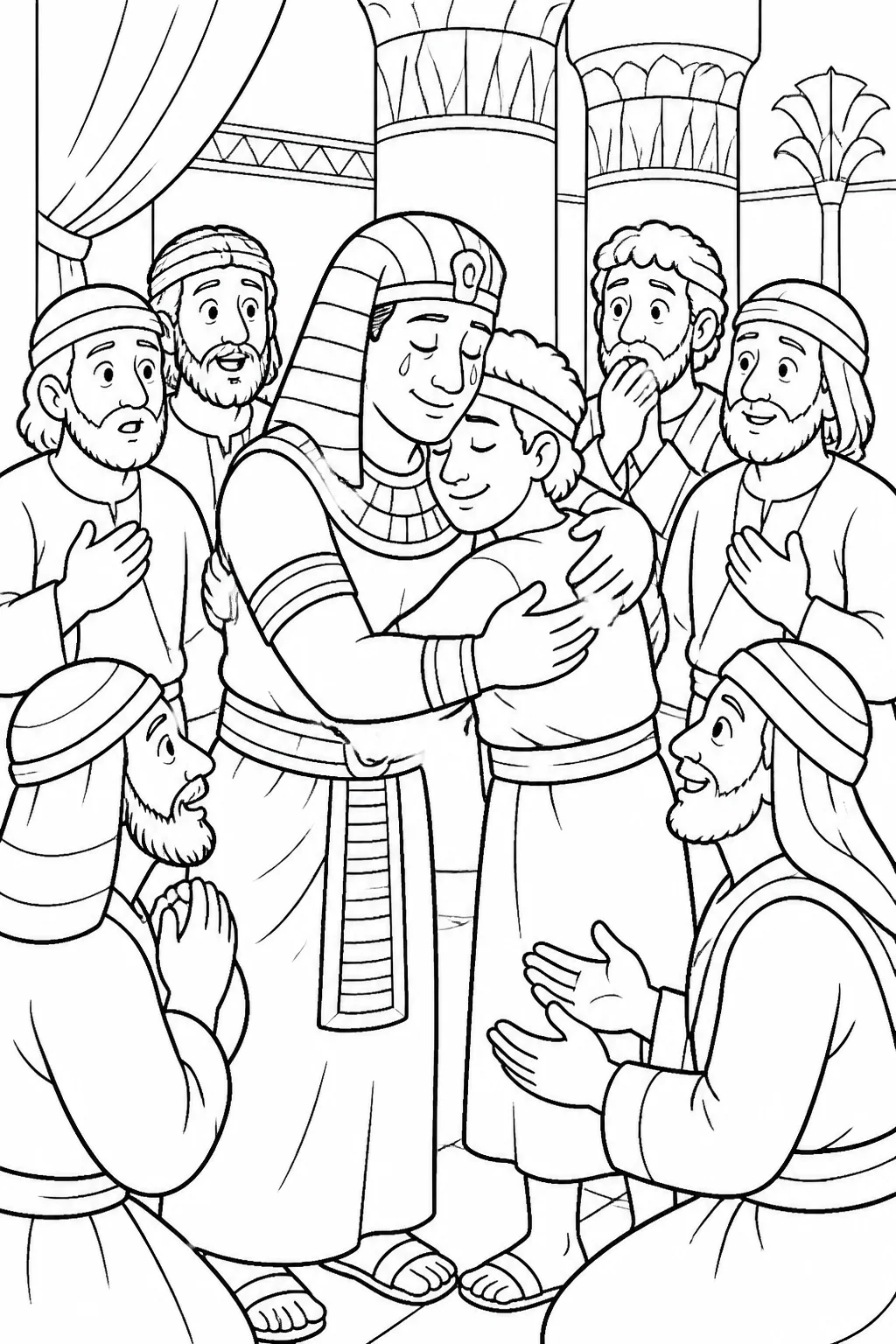
Joseph embraces Benjamin and weeps with his brothers inside Joseph’s residence in Egypt after revealing that he is Joseph.

Joseph Welcomes Benjamin

Genesis 42:1–45:28
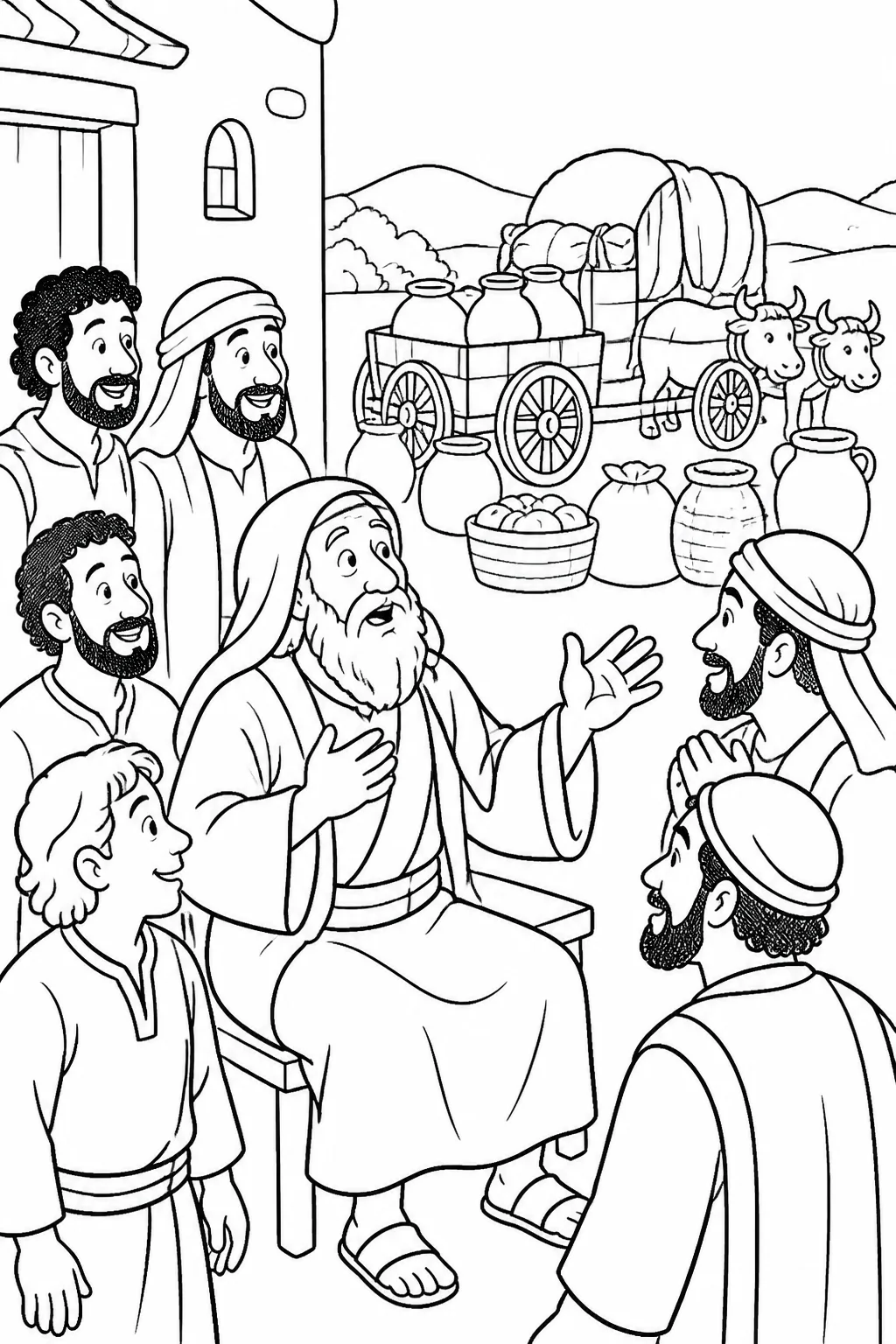
Jacob and his household hear that Joseph is alive while Egyptian wagons and provisions stand nearby in Canaan.

Jacob Sees the Wagons

Genesis 42:1–45:28
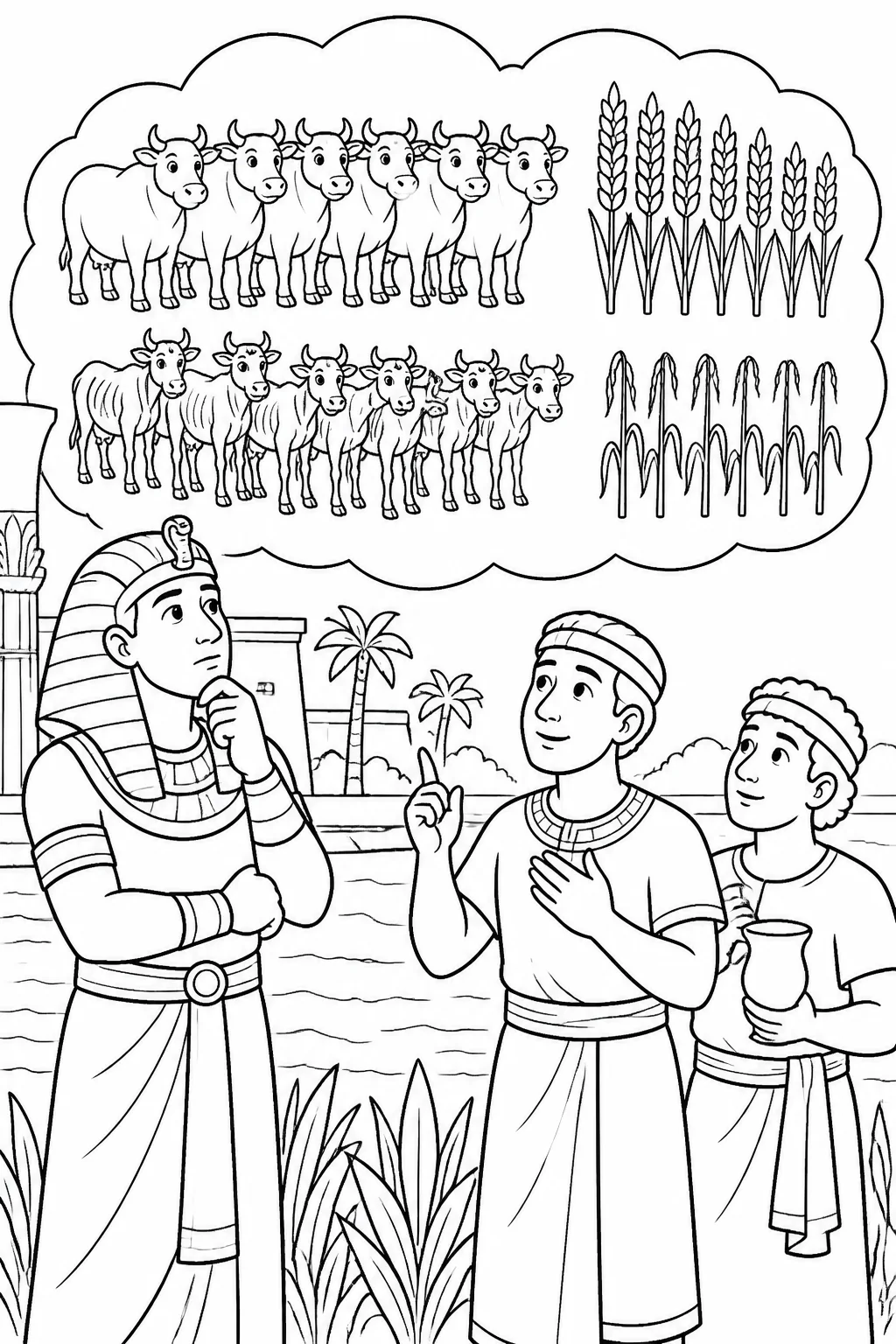
Pharaoh’s two related dreams in Genesis 41: seven healthy and thin cows and seven full and scorched ears of grain near the Nile or palace.

Pharaoh’s Two Dreams

Genesis 40:1–41:57
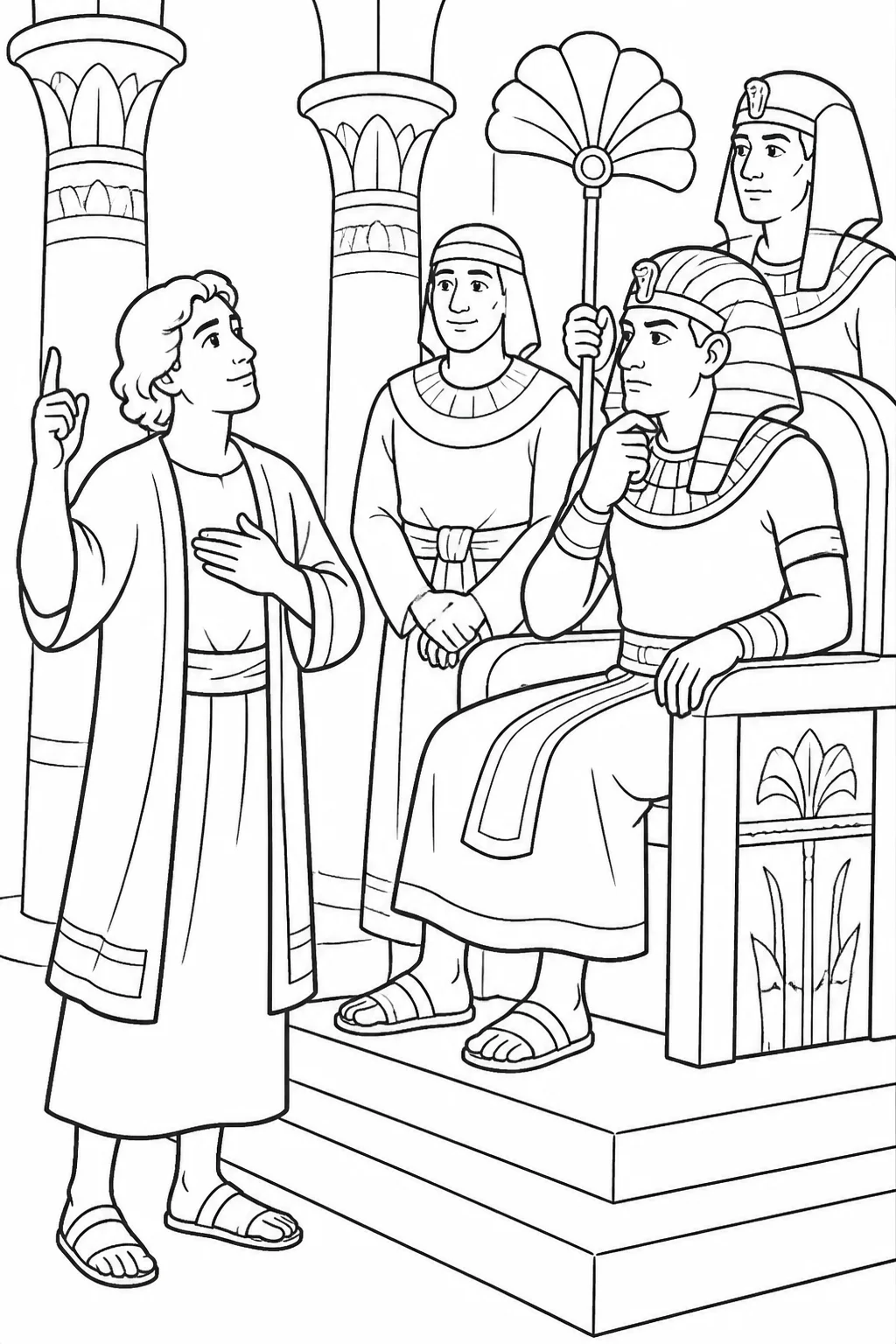
Joseph stands before Pharaoh in a palace, with servants nearby, respectfully indicating that God gives the answer to Pharaoh’s dreams.

Joseph Gives God the Credit

Genesis 40:1–41:57
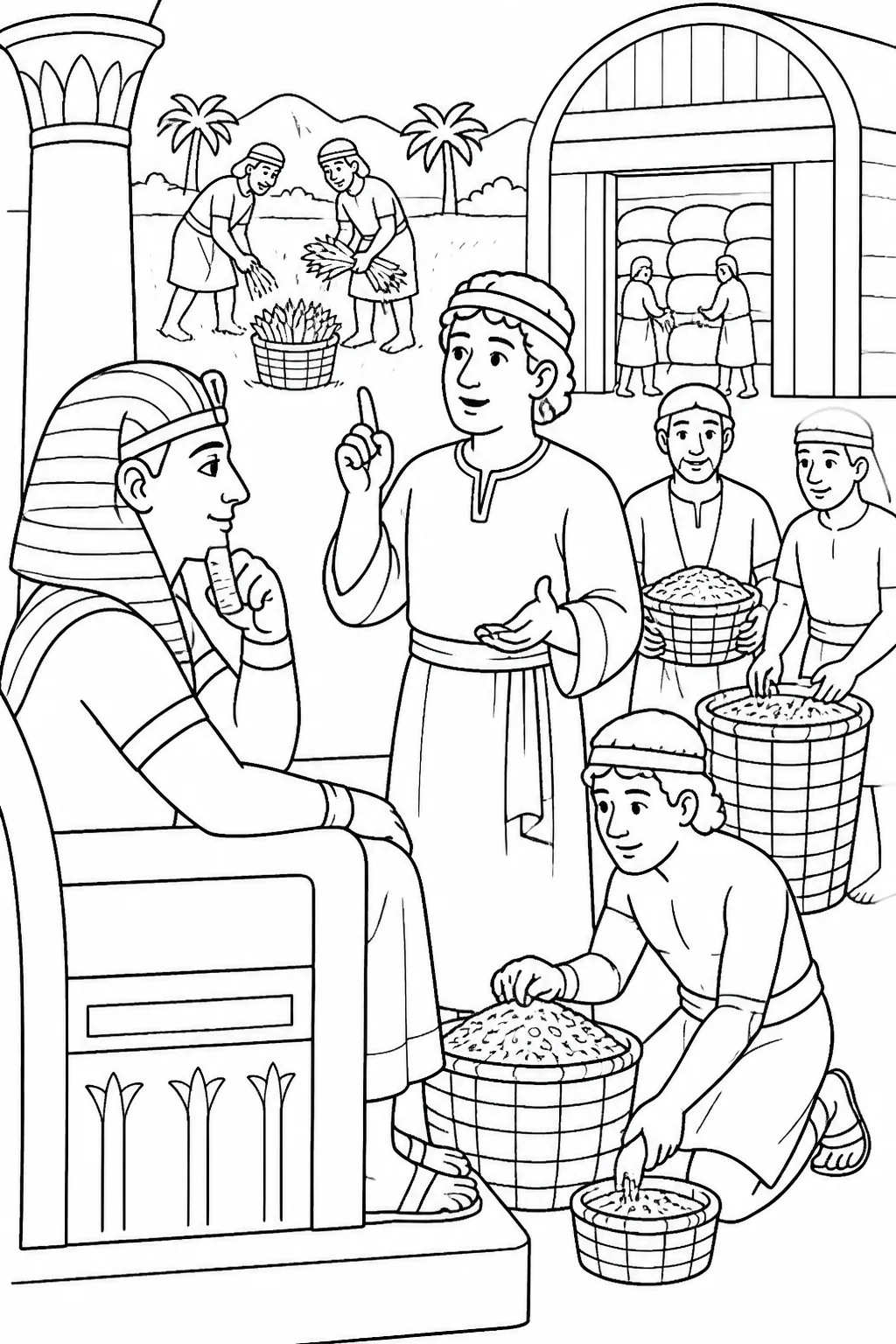
Joseph presents Pharaoh with a plan for seven years of abundant harvest followed by seven years of scarce food, including collecting one-fifth of the grain for storage.

A Plan for Abundance and Famine

Genesis 40:1–41:57
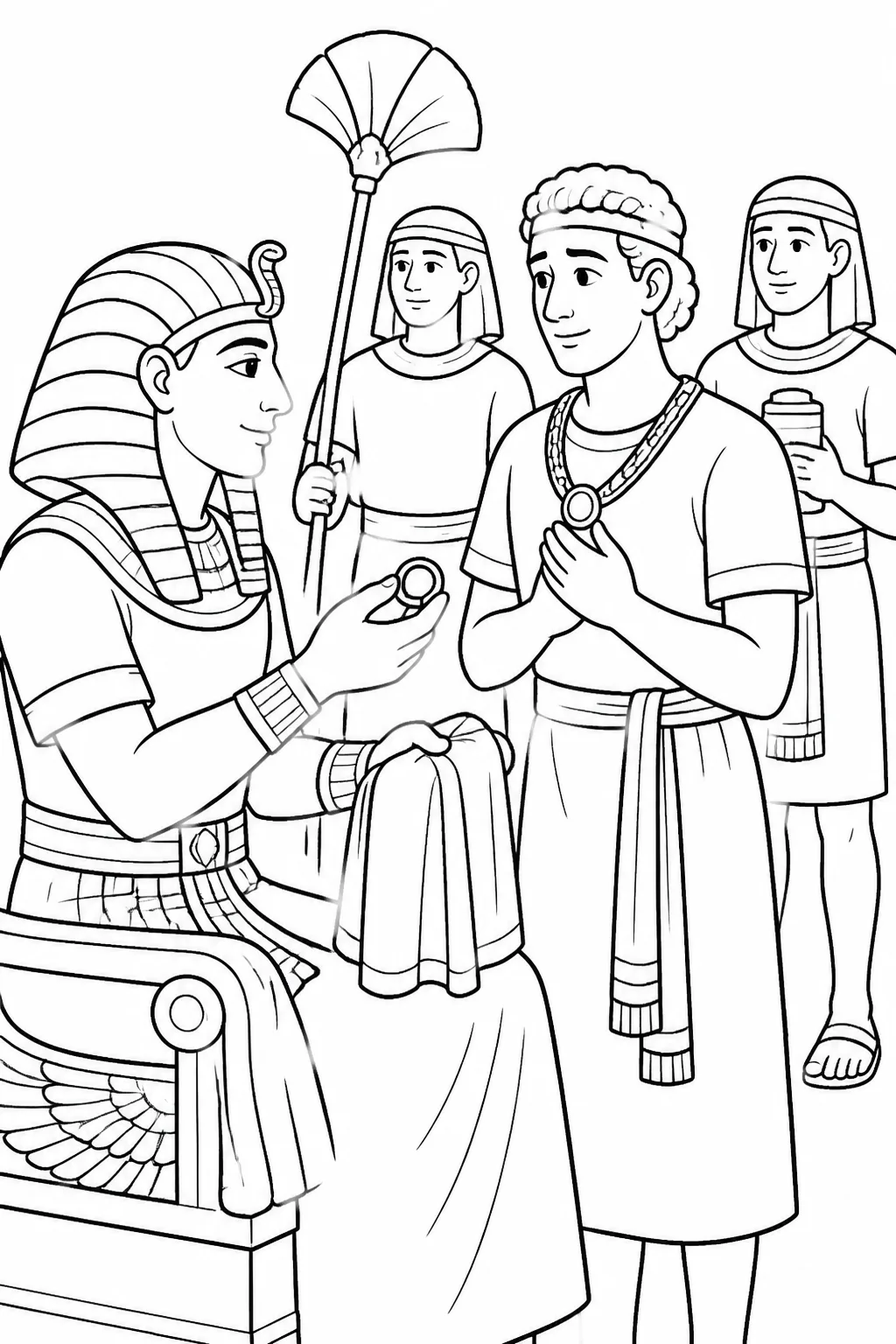
Pharaoh presents Joseph with a signet ring, fine linen clothing, and a gold chain as he appoints Joseph over Egypt, with Pharaoh’s servants nearby.

Pharaoh Entrusts Joseph with Egypt

Genesis 40:1–41:57
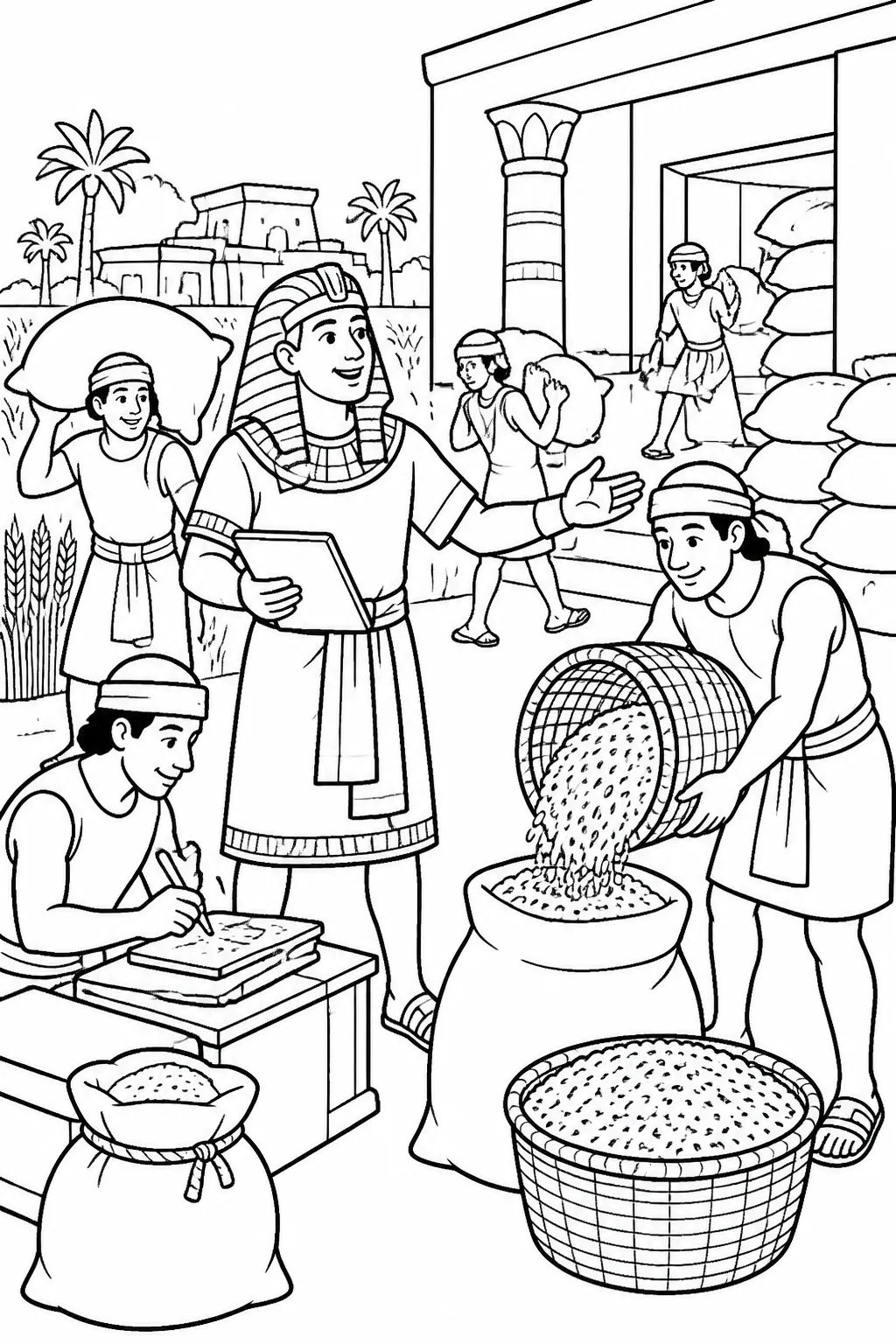
Joseph supervises workers carrying abundant grain from Egyptian fields into city storehouses, with baskets, sacks, measuring tools, and records.

Joseph Stores the Harvest

Genesis 40:1–41:57
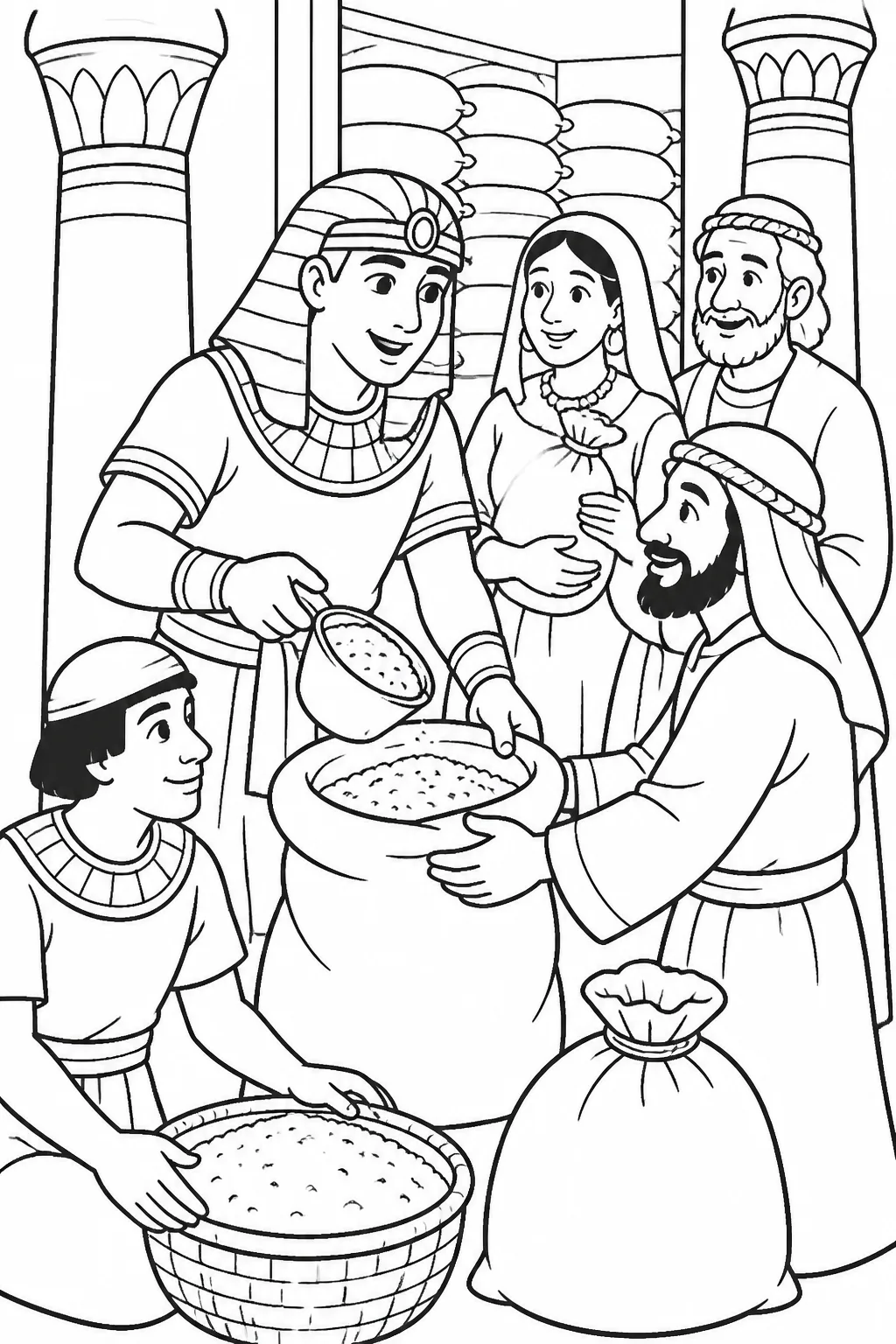
Joseph opens Egyptian grain storehouses as Egyptians and people from other lands come to buy measured grain during famine.

Food for the Famine

Genesis 40:1–41:57
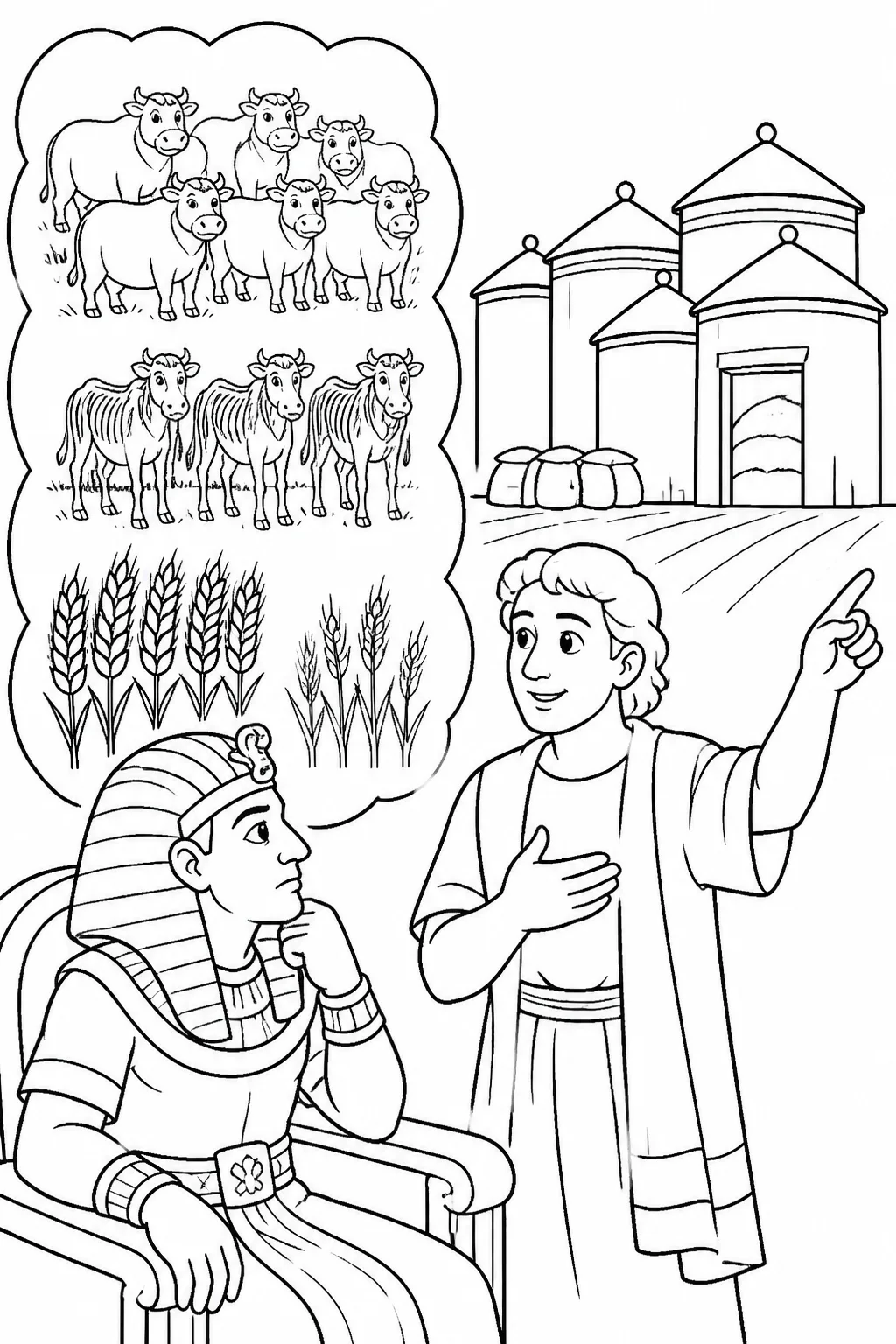
Joseph explains Pharaoh’s dreams of healthy and thin cows and ears of grain while pointing toward grain storehouses and a plan for preparation.

From Dream to Wise Preparation

Genesis 40:1–41:57
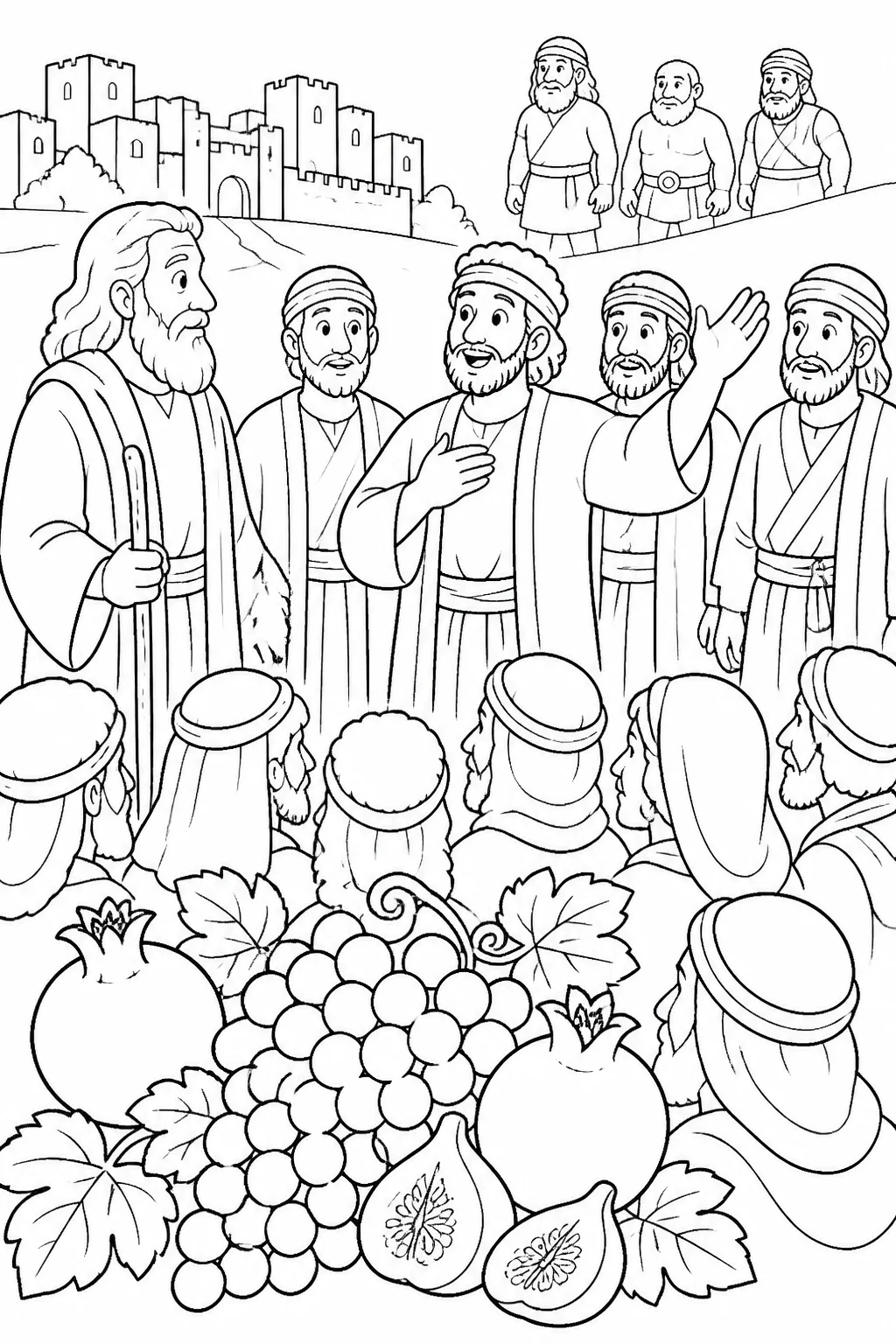
Moses, Joshua, Caleb, the other spies, and gathered Israelites hear a report about fruitful Canaan, with grapes, pomegranates, figs, and distant fortified cities.

Caleb Chooses Courage

Numbers 13:1–14:45
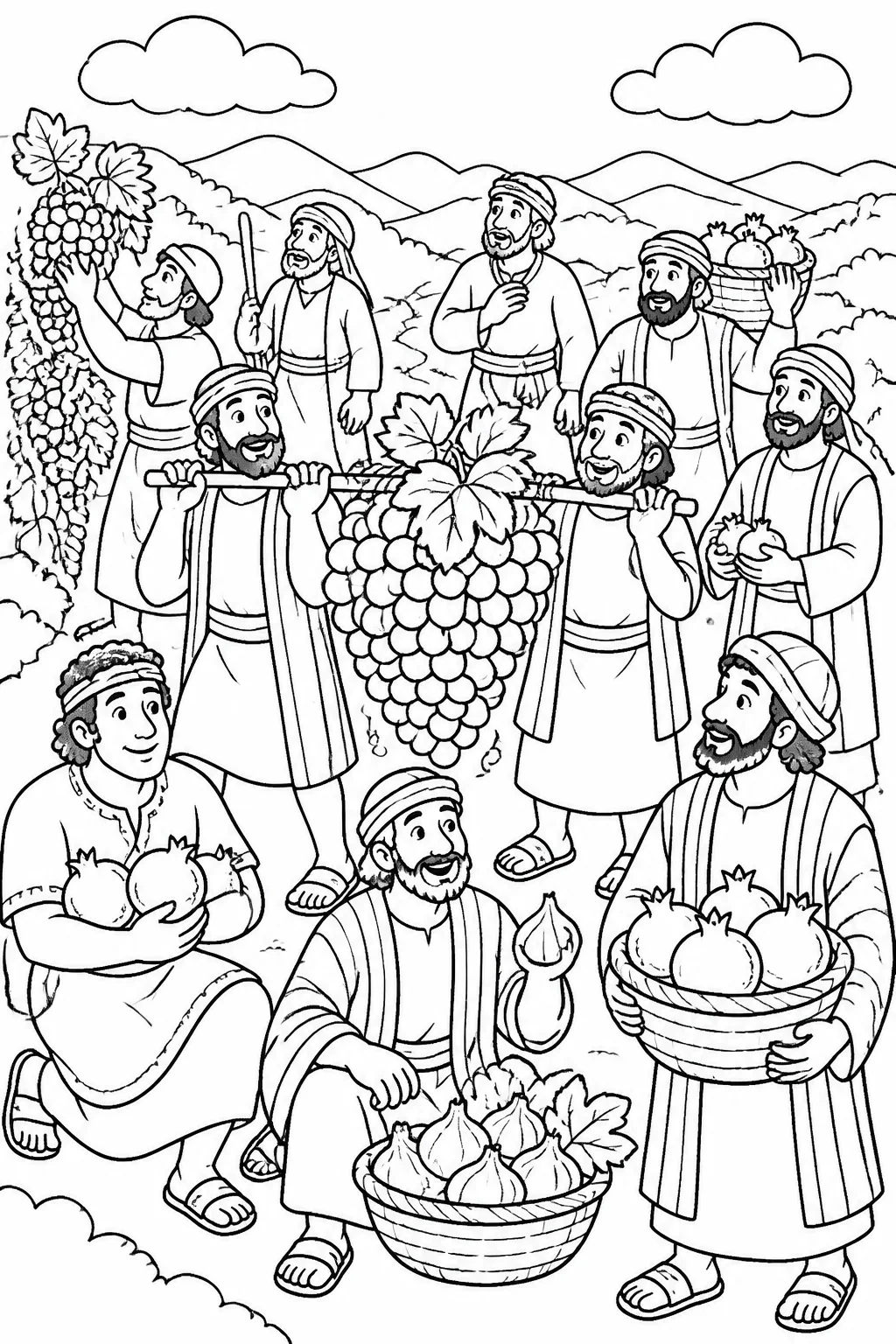
Twelve Israelite spies explore the Valley of Eshcol and carry grapes, pomegranates, and figs back from Canaan.

Exploring the Fruitful Land

Numbers 13:1–14:45
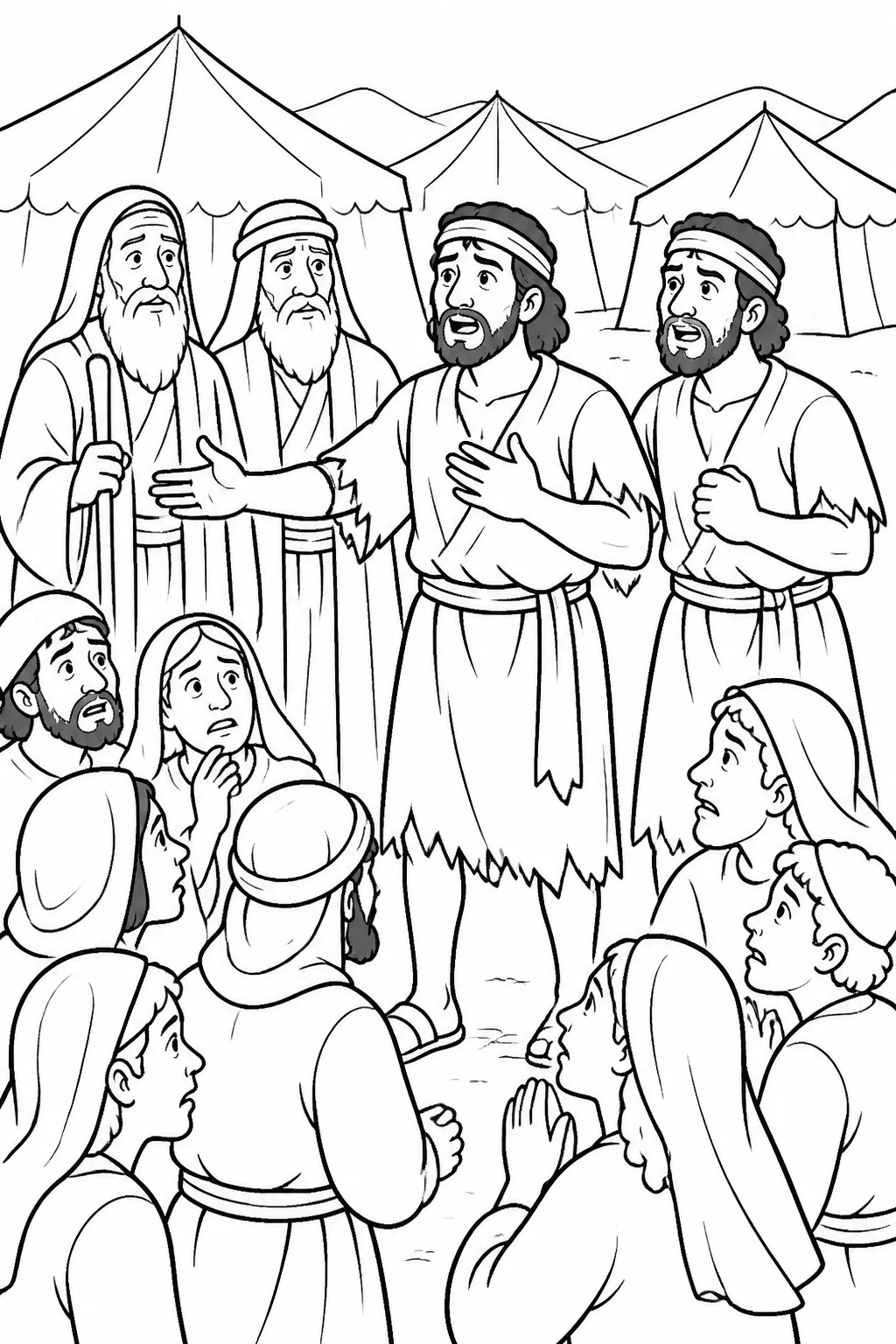
Joshua and Caleb stand in the Israelite camp with torn garments, speaking courageously to a worried community while Moses and Aaron are nearby.

Joshua and Caleb Speak with Courage

Numbers 13:1–14:45
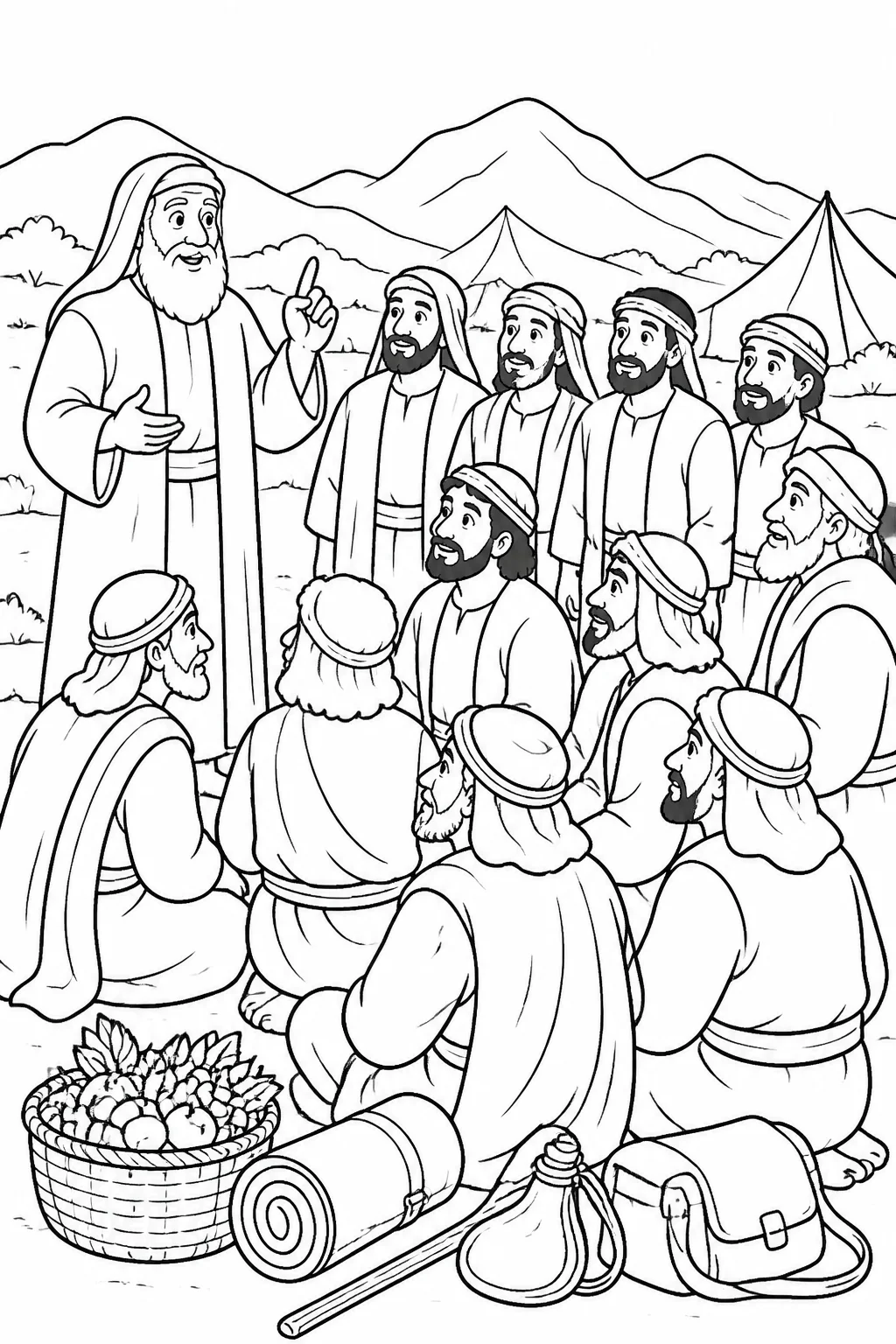
Moses gives instructions to twelve Israelite tribal leaders, including Joshua and Caleb, in a wilderness camp before they explore Canaan.

Sent to Explore Canaan

Numbers 13:1–14:45
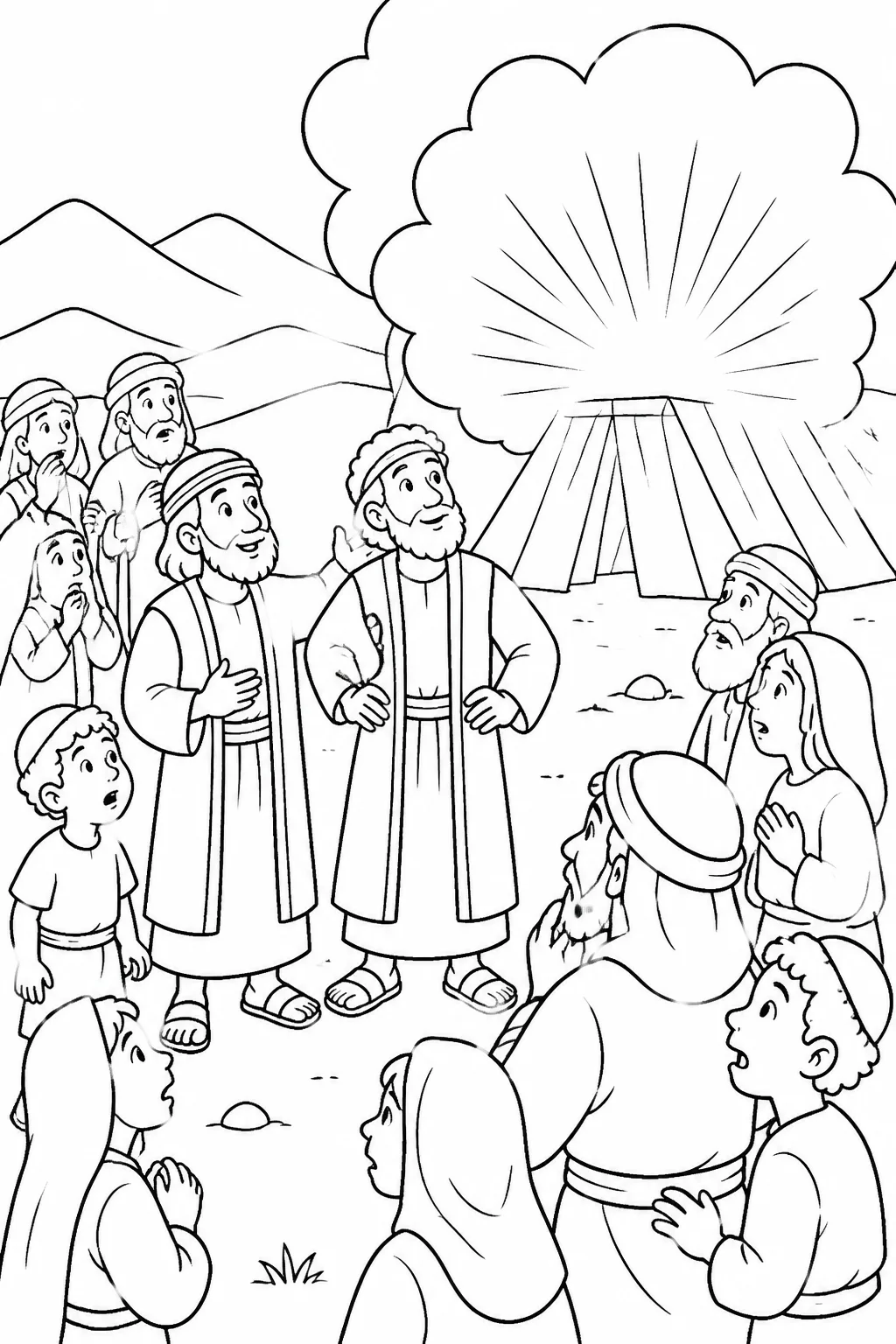
Joshua and Caleb near the tent of meeting as the Israelite community gathers and the radiant glory of the LORD appears at the tent.

The Glory Appears at the Tent

Numbers 13:1–14:45
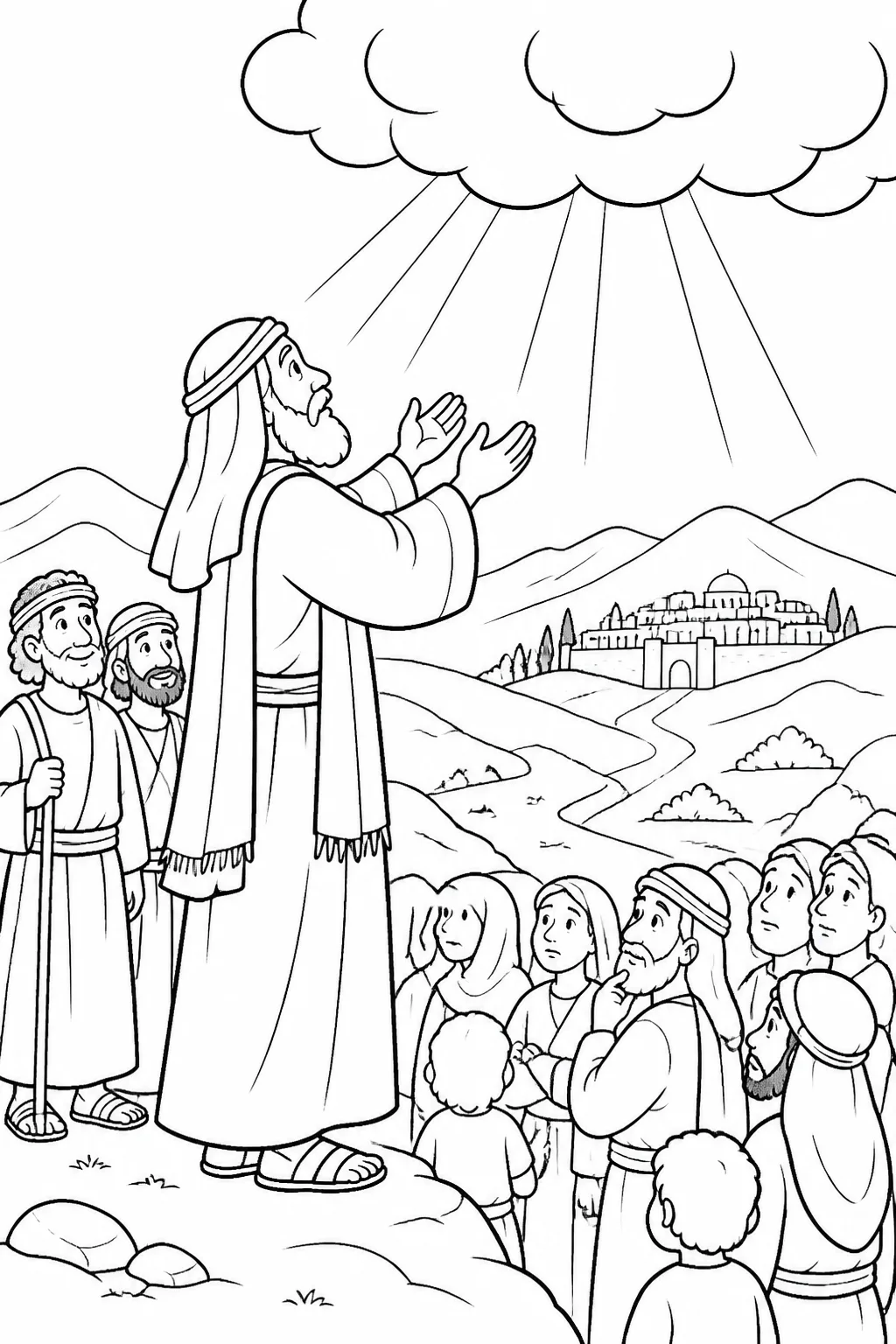
Moses praying before the LORD’s presence after the Israelites’ unbelief, with Joshua and Caleb nearby, the wilderness around them, and distant Canaan suggesting the promised land and wilderness consequence.

Moses Prays for Mercy

Numbers 13:1–14:45
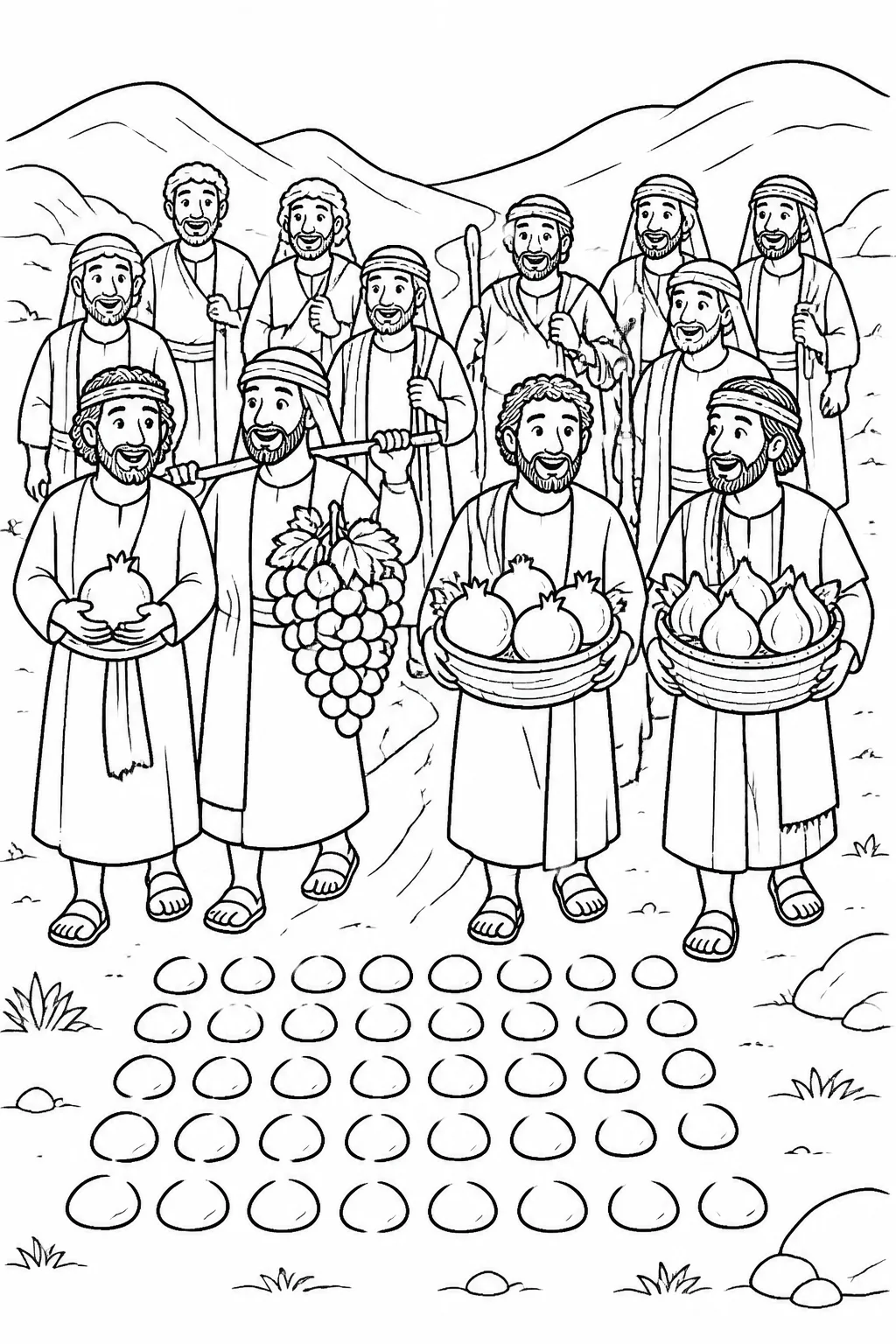
Twelve spies returning along a wilderness path after forty days, carrying grapes, pomegranates, and figs, with grouped travel markers suggesting the journey.

Forty Days of Discovery

Numbers 13:1–14:45
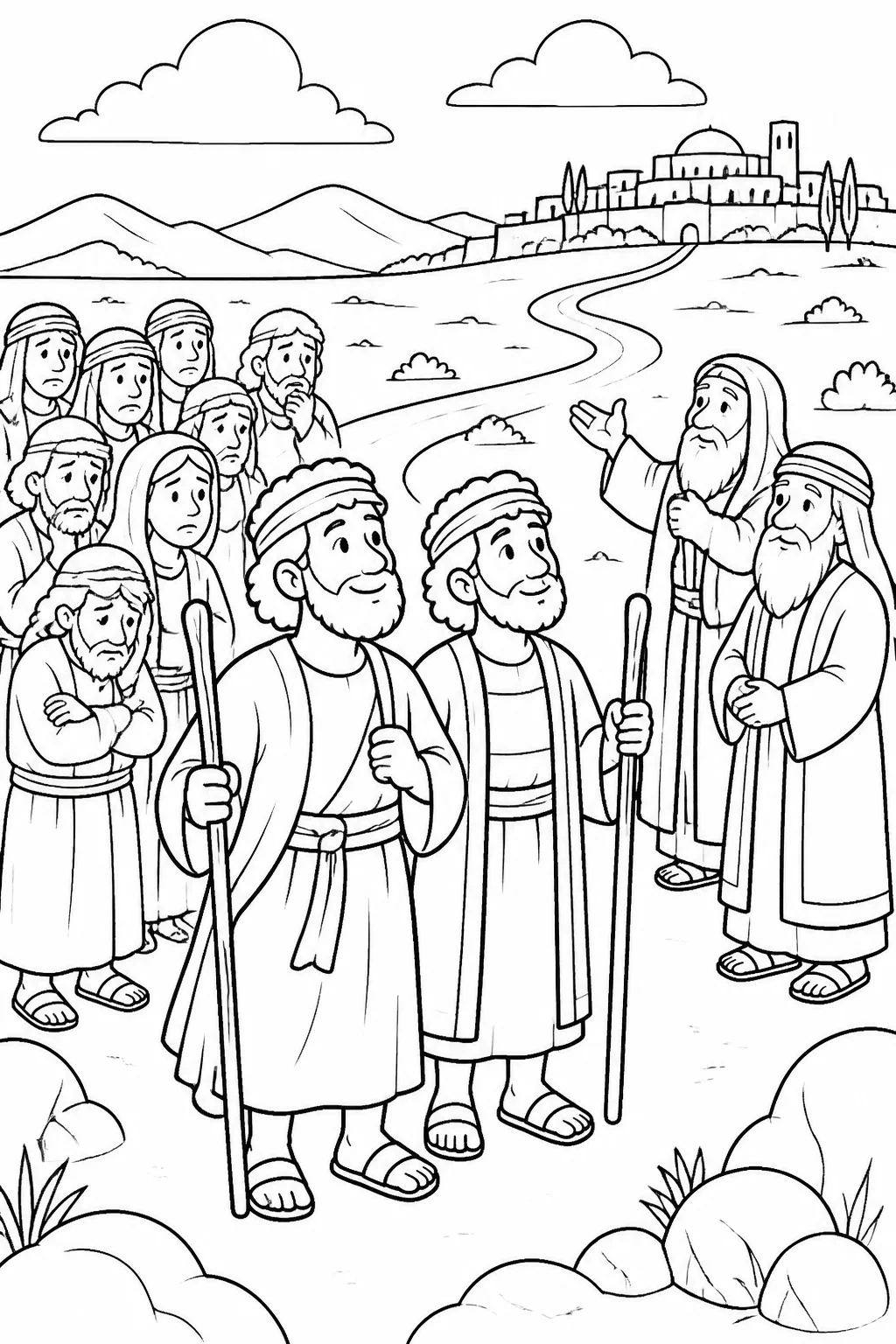
Symbolic Bible scene of Joshua and Caleb set apart from the discouraged Israelite community, with a path toward distant Canaan.

Joshua and Caleb Will Enter

Numbers 13:1–14:45
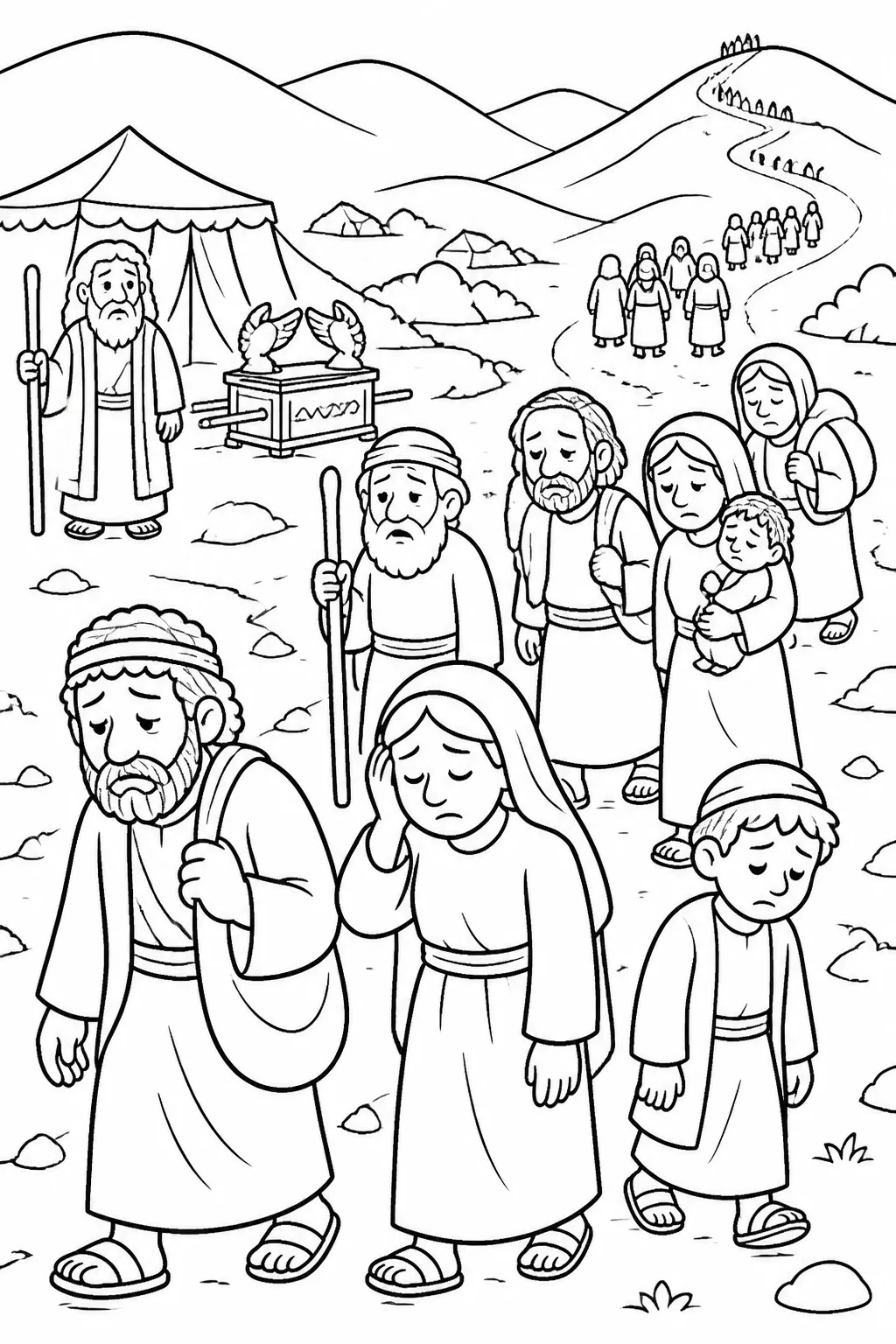
Illustration concept of the Israelite community approaching the hill country while Moses and the ark of the covenant remain in the camp, with weary travelers shown on a distant retreating path.

The People Turn Back

Numbers 13:1–14:45
Abraham stands in an open place before the LORD and asks whether the righteous should be swept away with the wicked, with optional markers for the decreasing numbers he names.

Abraham Asks for Mercy

Genesis 18:16–19:29
Lot welcomes two angels at Sodom’s city gate and invites them toward his house, where he prepares a simple meal.

Two Angels Arrive in Sodom

Genesis 18:16–19:29
Lot stands by his house door as two angels pull him inside while men from Sodom surround the house.

The Angels Protect Lot

Genesis 18:16–19:29
Lot urgently warns the men pledged to marry his daughters while two angels warn him about Sodom; Lot’s two daughters and the city are present.

Lot Warns the Others

Genesis 18:16–19:29
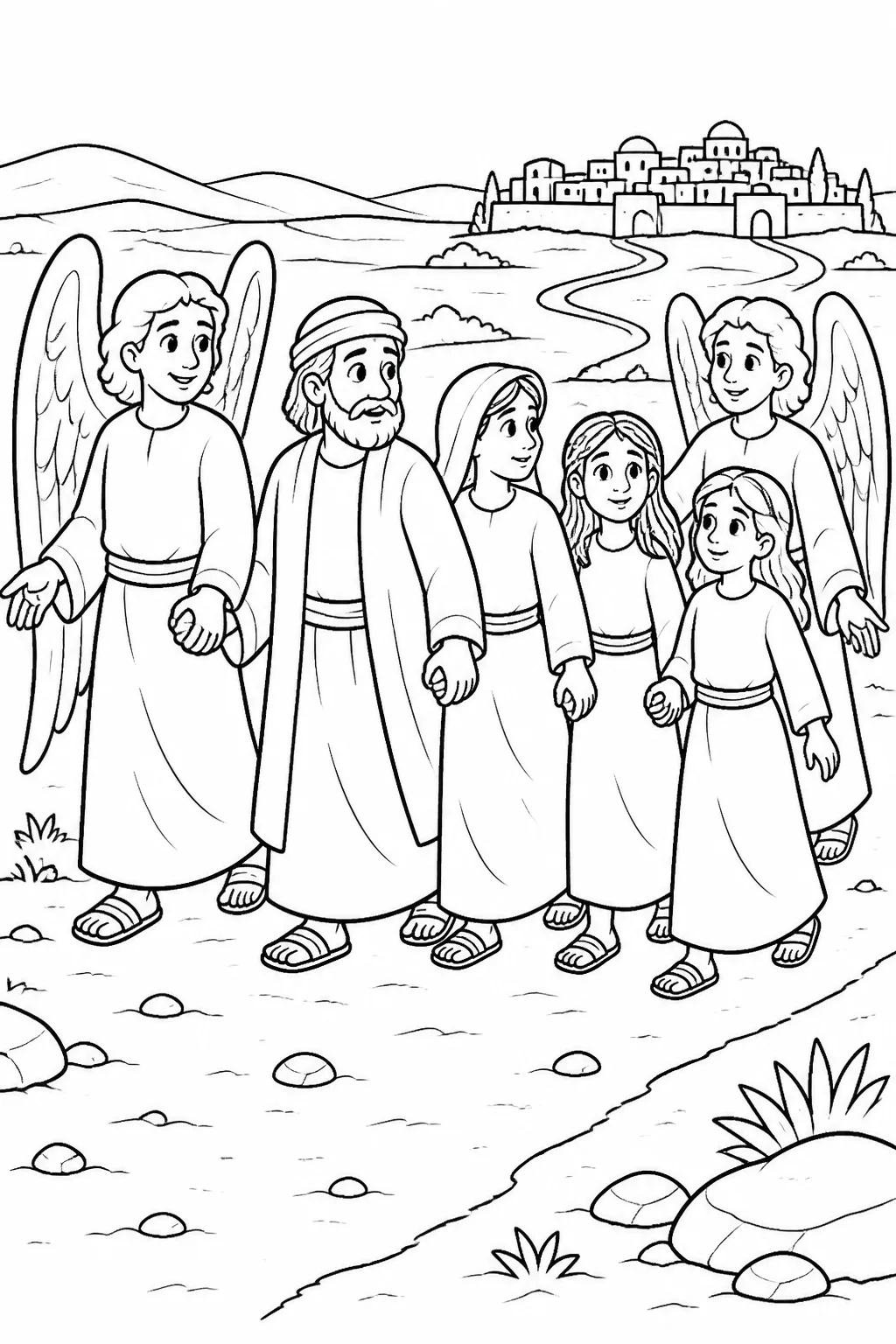
Two angels lead Lot, his wife, and his two daughters by the hand from Sodom toward Zoar across the surrounding plain at dawn.

Led Out by the Angels

Genesis 18:16–19:29
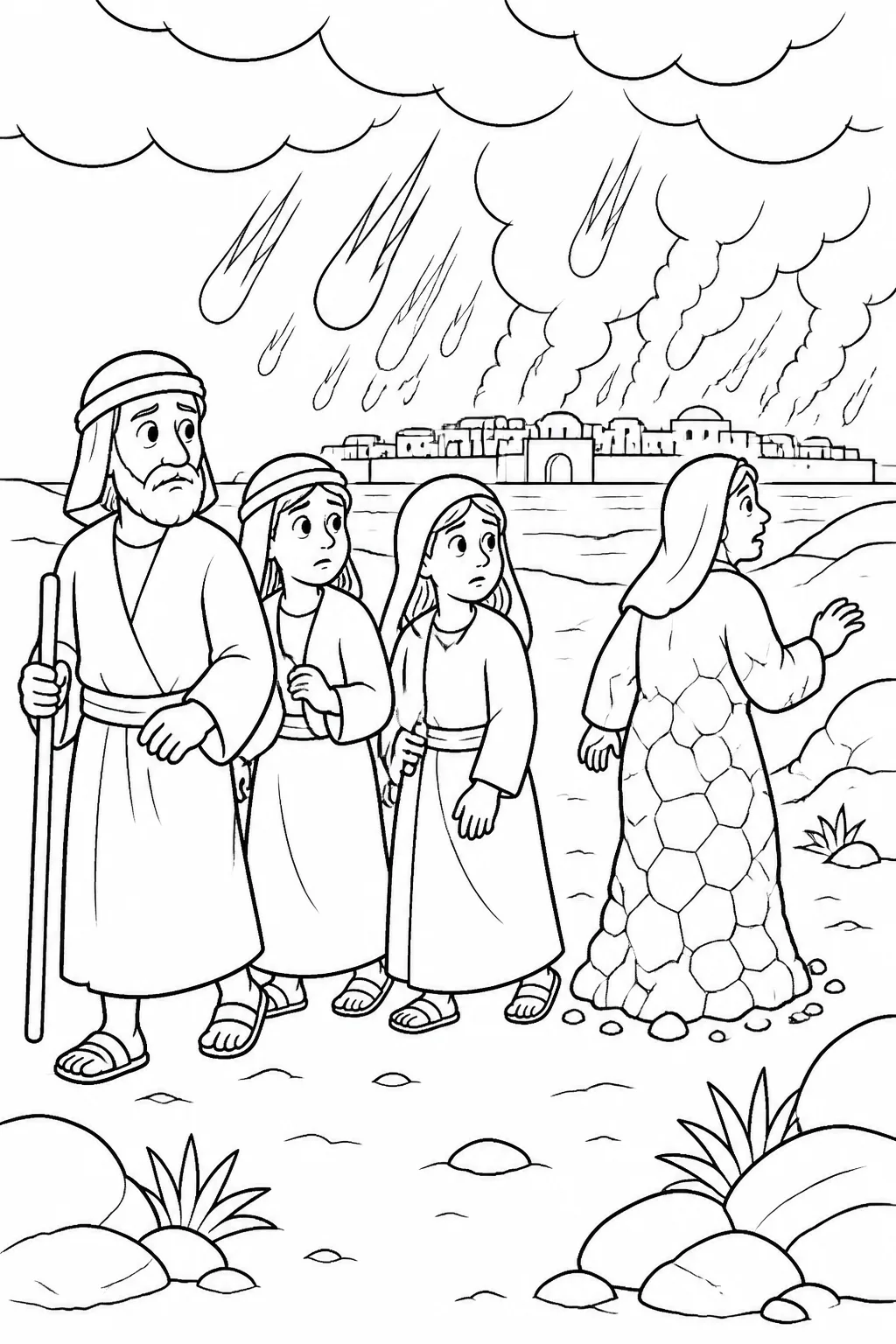
Lot, his wife, and his two daughters reach Zoar before the destruction of Sodom and Gomorrah; Lot’s wife turns back and becomes a pillar of salt.

Lot Reaches Zoar

Genesis 18:16–19:29

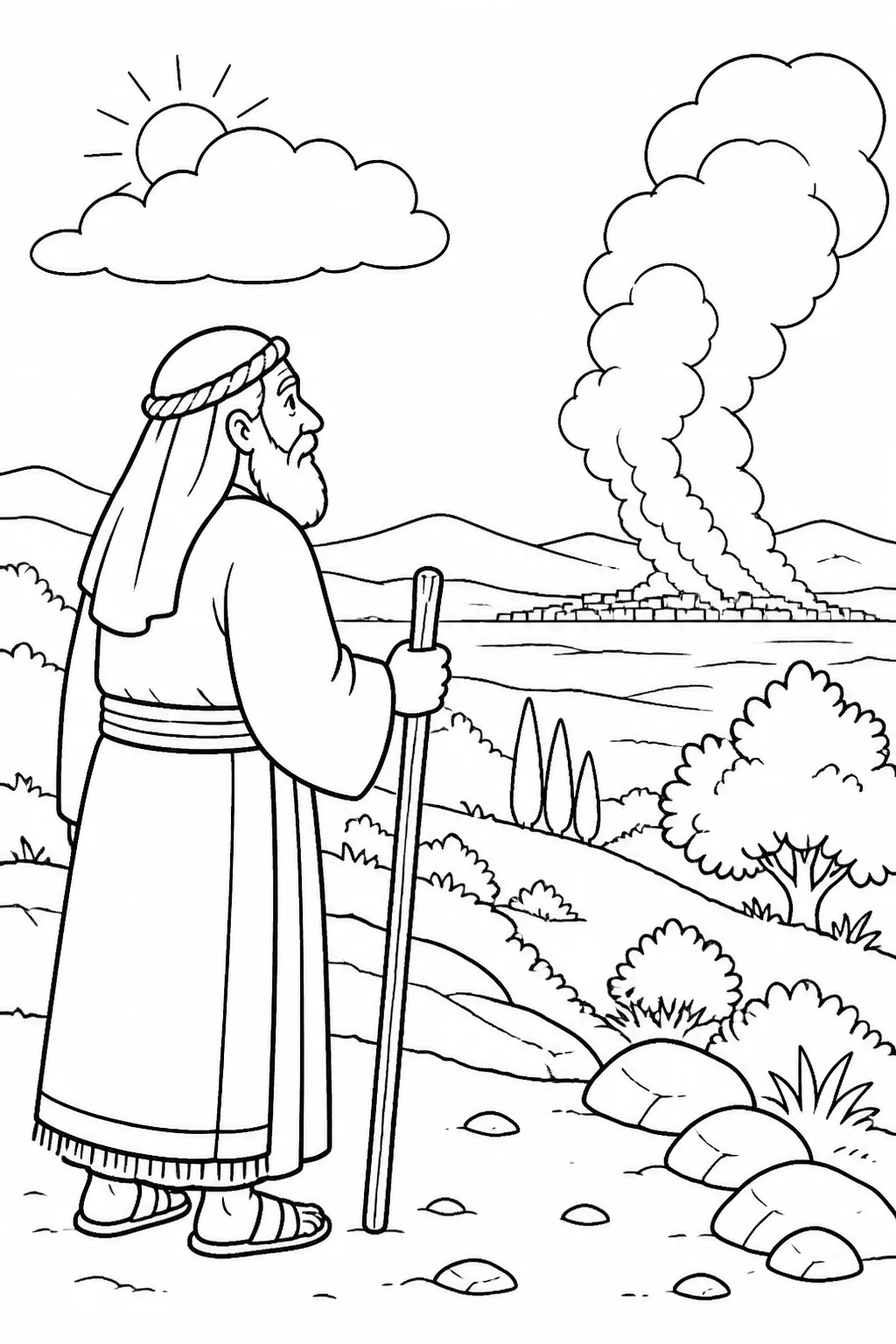
Abraham looks across the land toward smoke rising from the area of Sodom and Gomorrah, as described in Genesis 19:27–29.

Abraham Sees Smoke Rising

Genesis 18:16–19:29
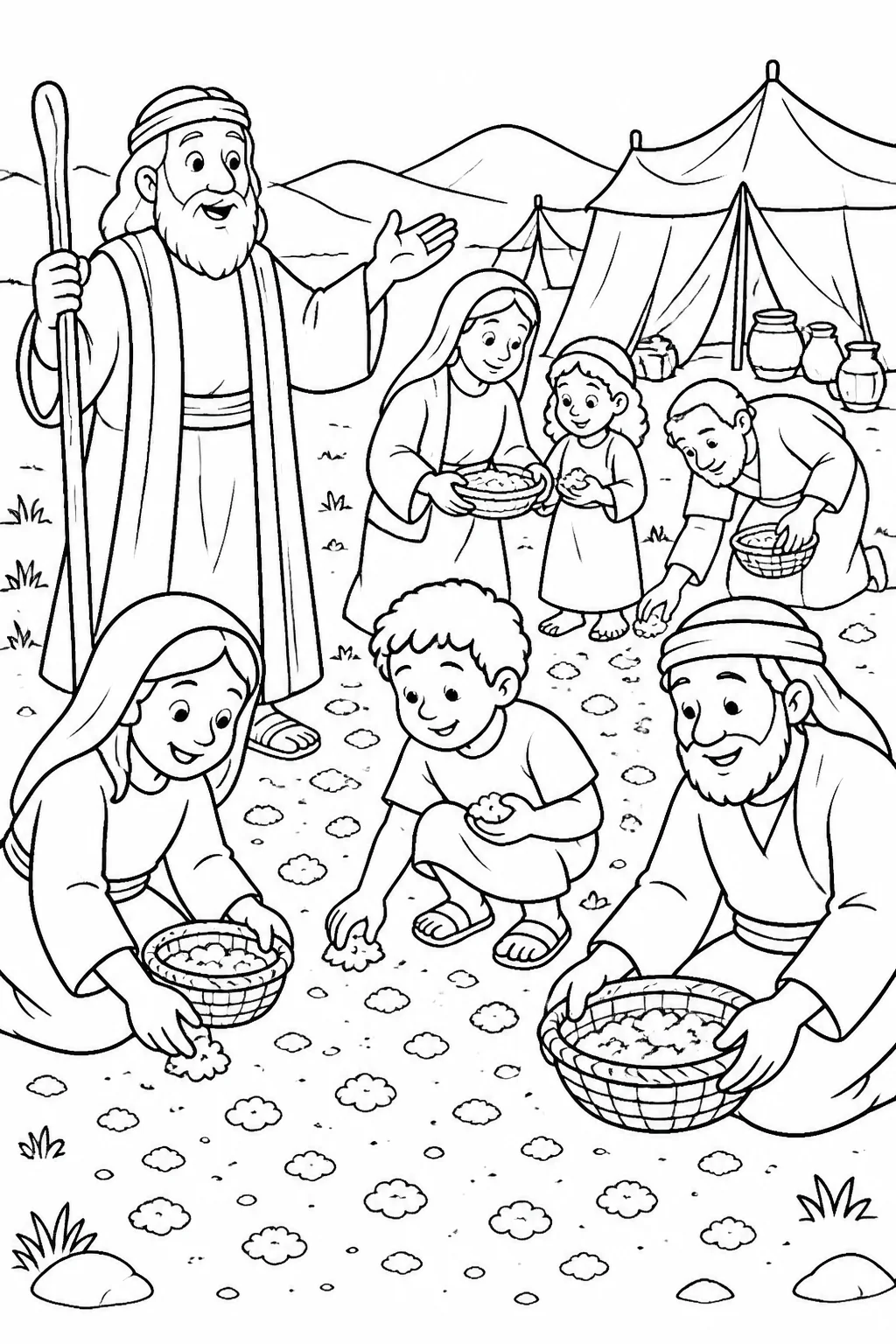
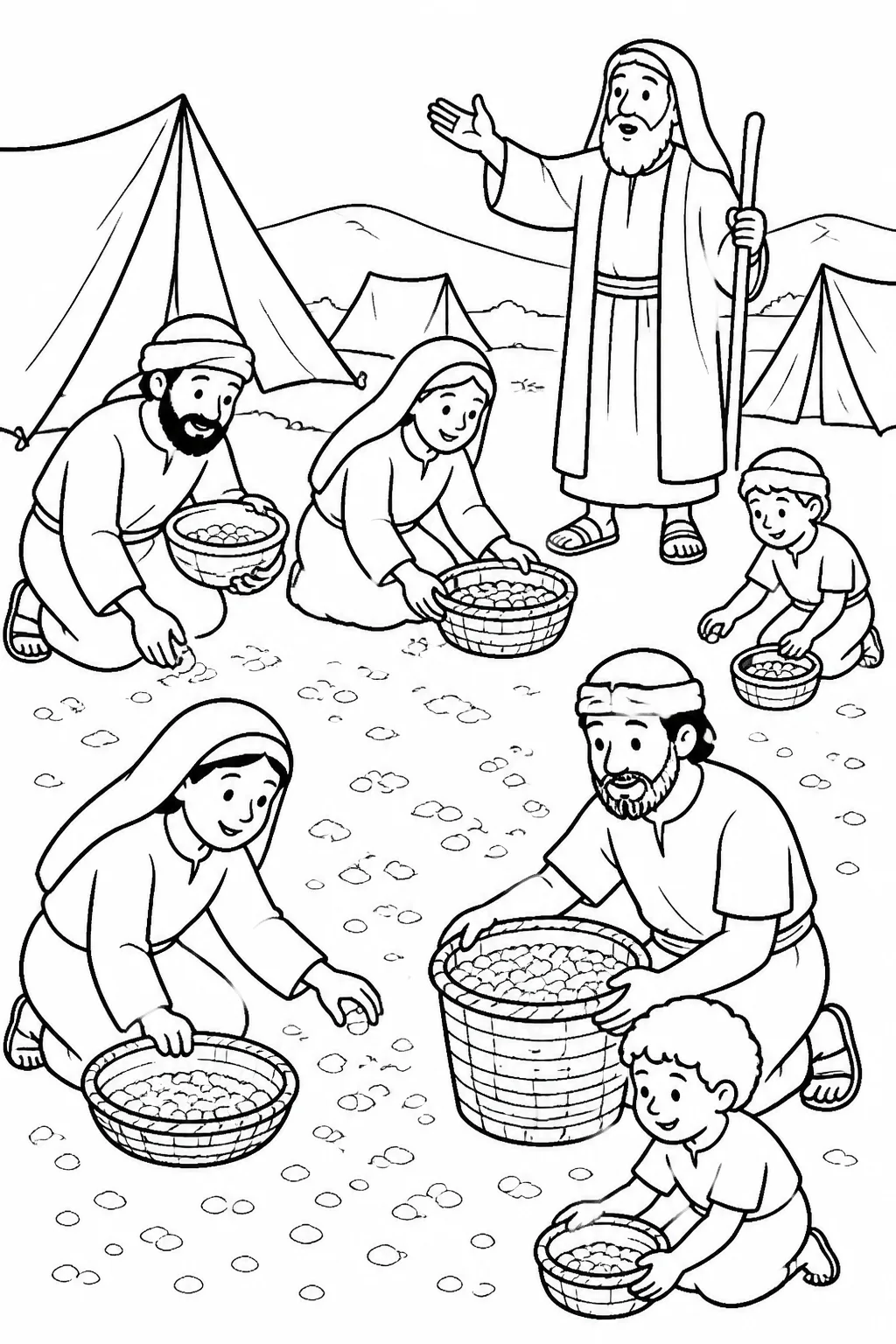
Moses and the Israelites in a wilderness camp discover fine, flaky manna on the ground after the dew lifts.

Manna on the Ground

Exodus 16:1-36

Moses gives instructions while Israelites gather manna in containers around their tents.

Gathering What Each Person Needs

Exodus 16:1-36
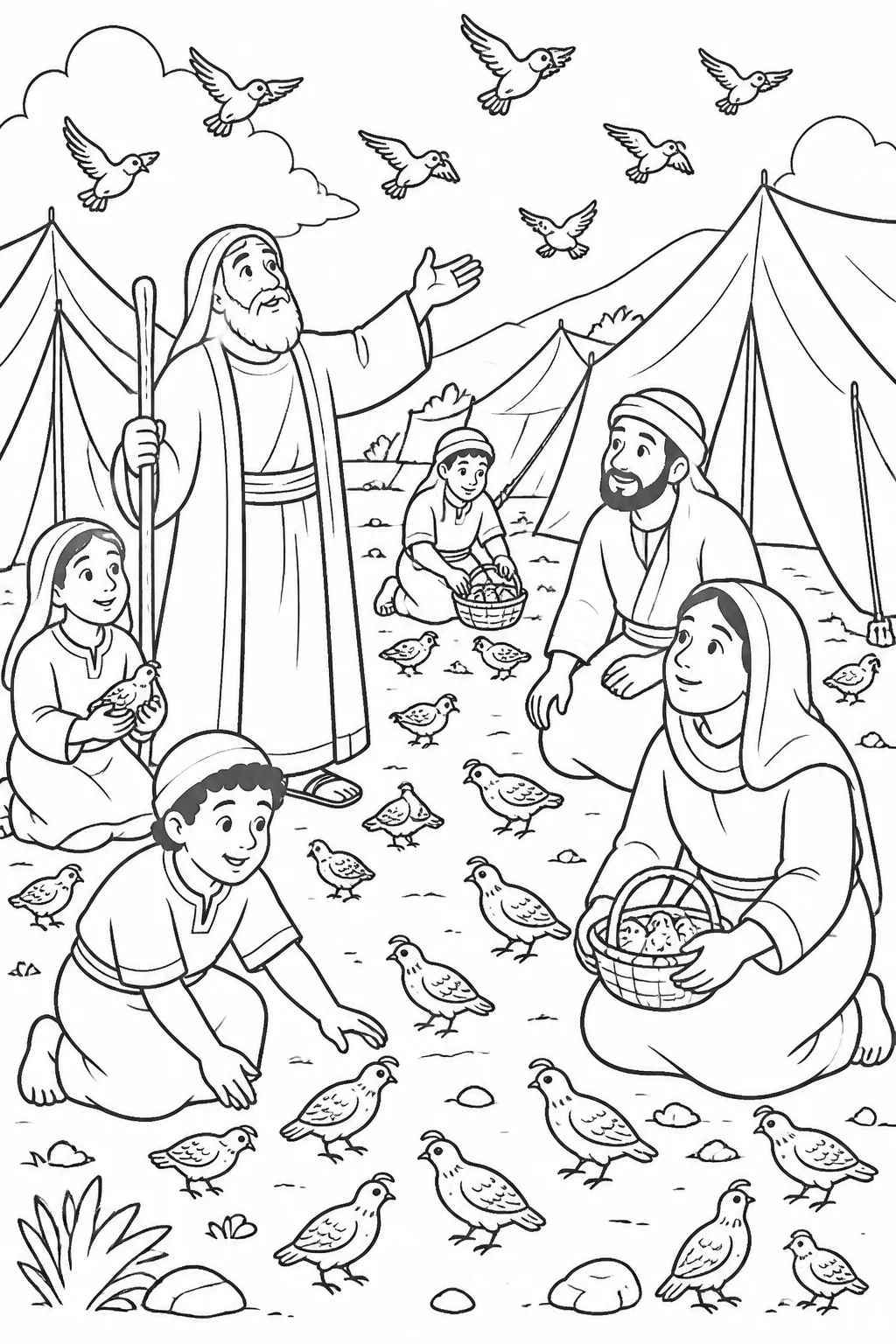
Moses and the Israelites observe quail covering the camp near their tents in the evening, based on Exodus 16:13.

Quail Around the Camp

Exodus 16:1-36

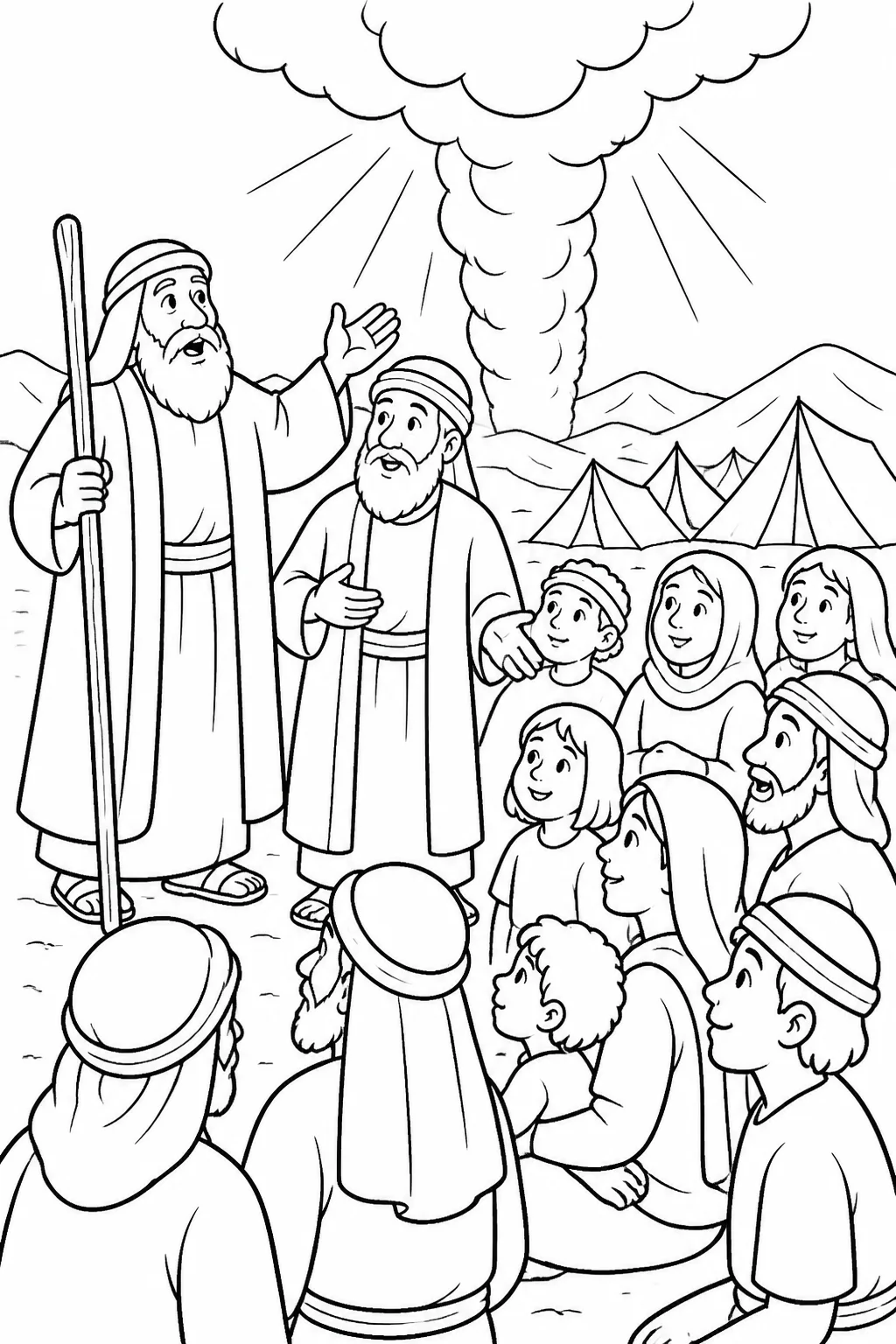
Moses and Aaron address the Israelites in their wilderness camp as they hear the LORD’s promise of evening meat and morning bread from heaven.

The Promise of Bread from Heaven

Exodus 16:1-36
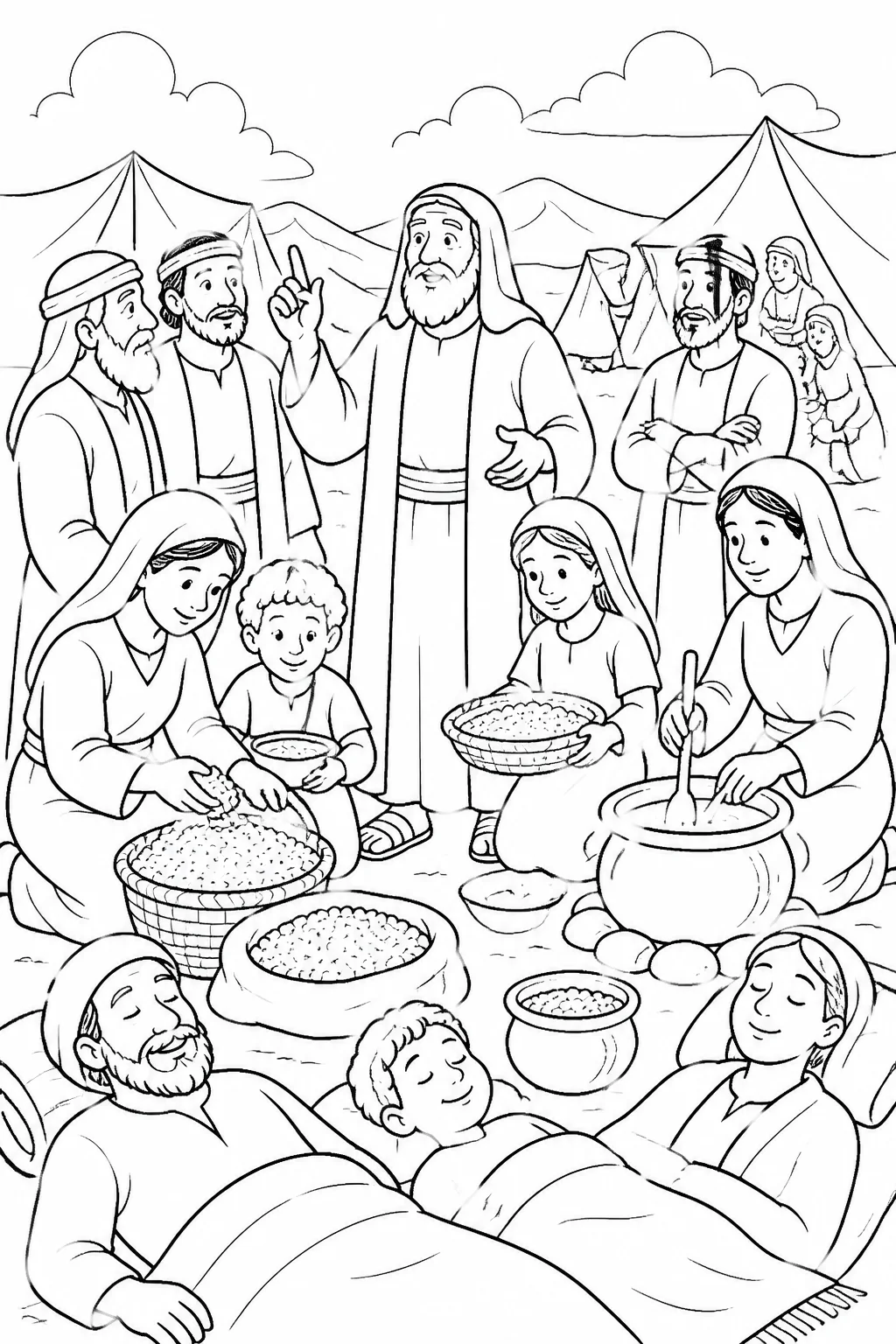
Moses speaks with the Israelites about gathering a double portion of manna on the sixth day and preparing for the Sabbath.

Preparing for a Day of Rest

Exodus 16:1-36
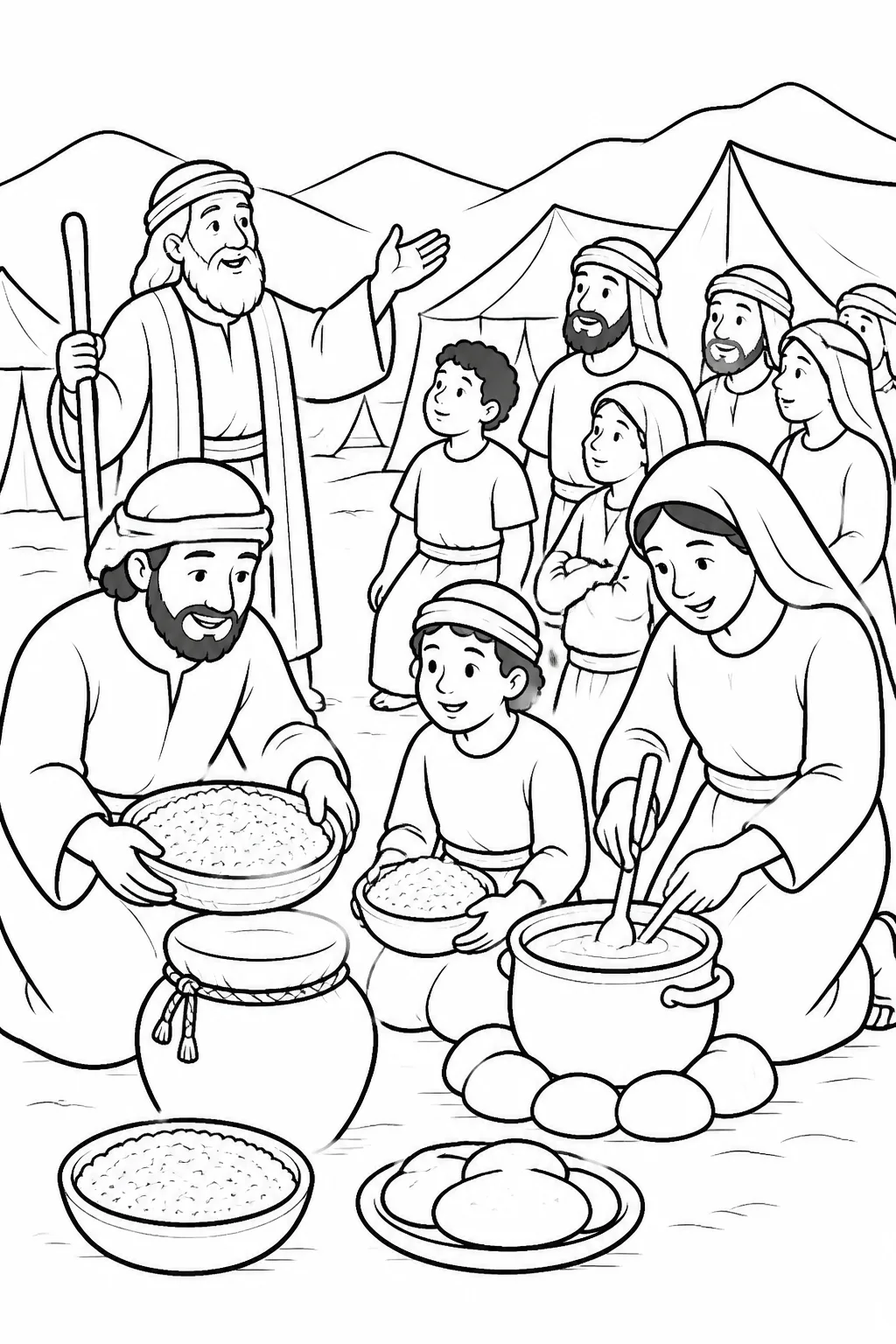
Moses teaches Israelites in the camp as they keep the double portion of manna gathered before the Sabbath, with prepared food and cooking vessels nearby.

Manna Preserved for the Sabbath

Exodus 16:1-36
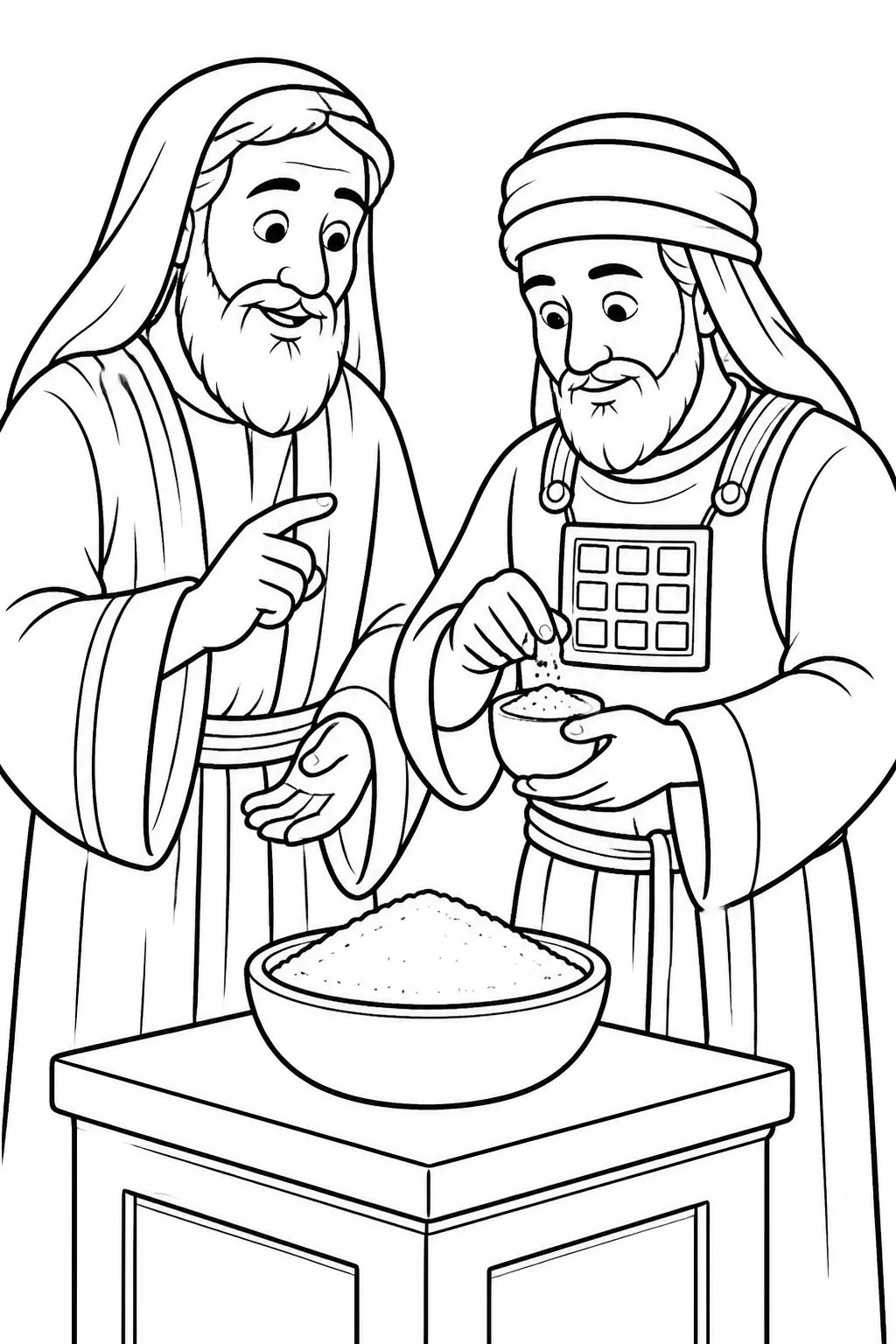
Moses instructs Aaron to keep an omer of fine, flaky manna before the testimony as a remembrance for future generations.

Remembering God’s Provision

Exodus 16:1-36
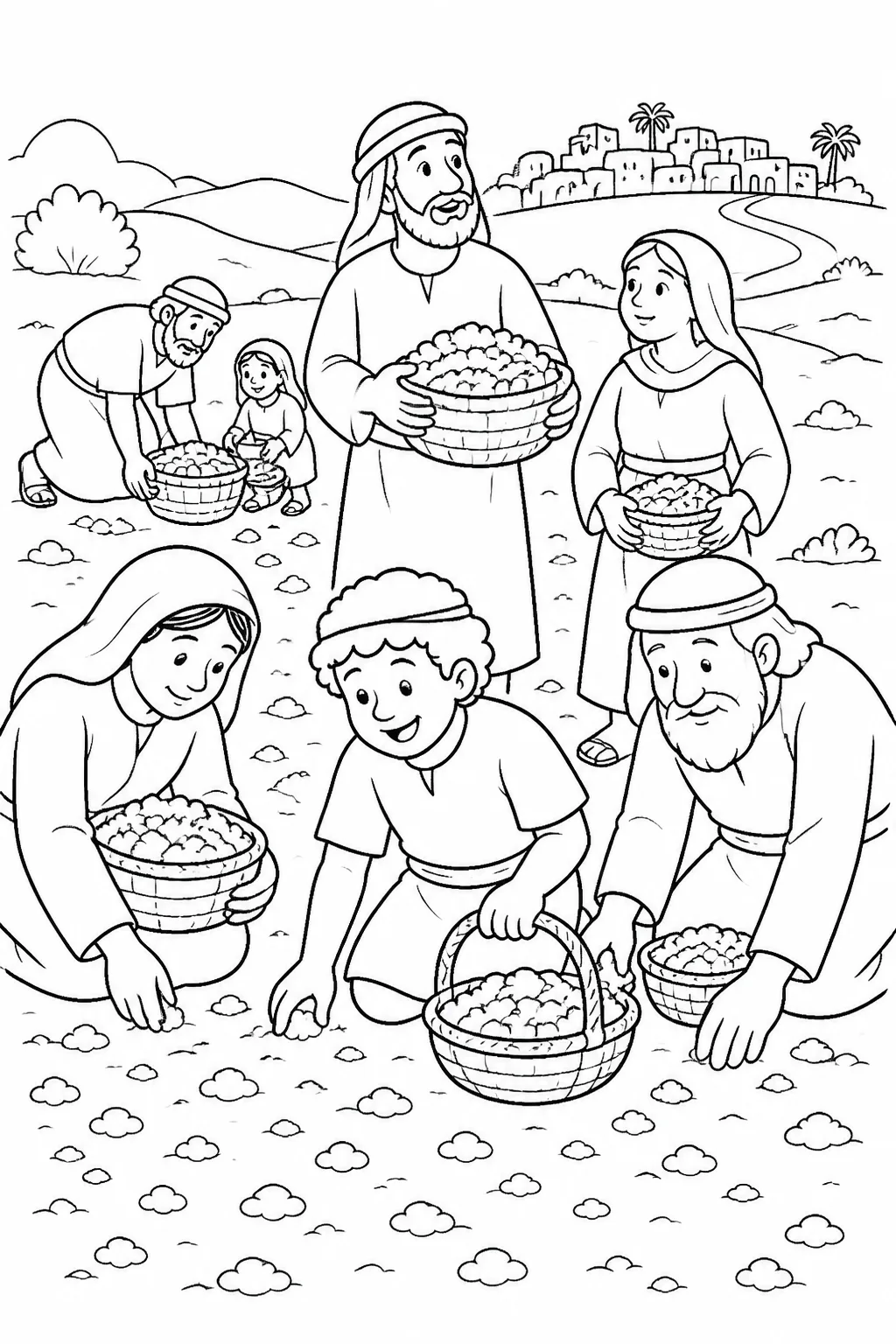
The Israelites gathering manna in the wilderness, with a distant inhabited land representing the forty years they ate manna.

Daily Food Through the Wilderness

Exodus 16:1-36
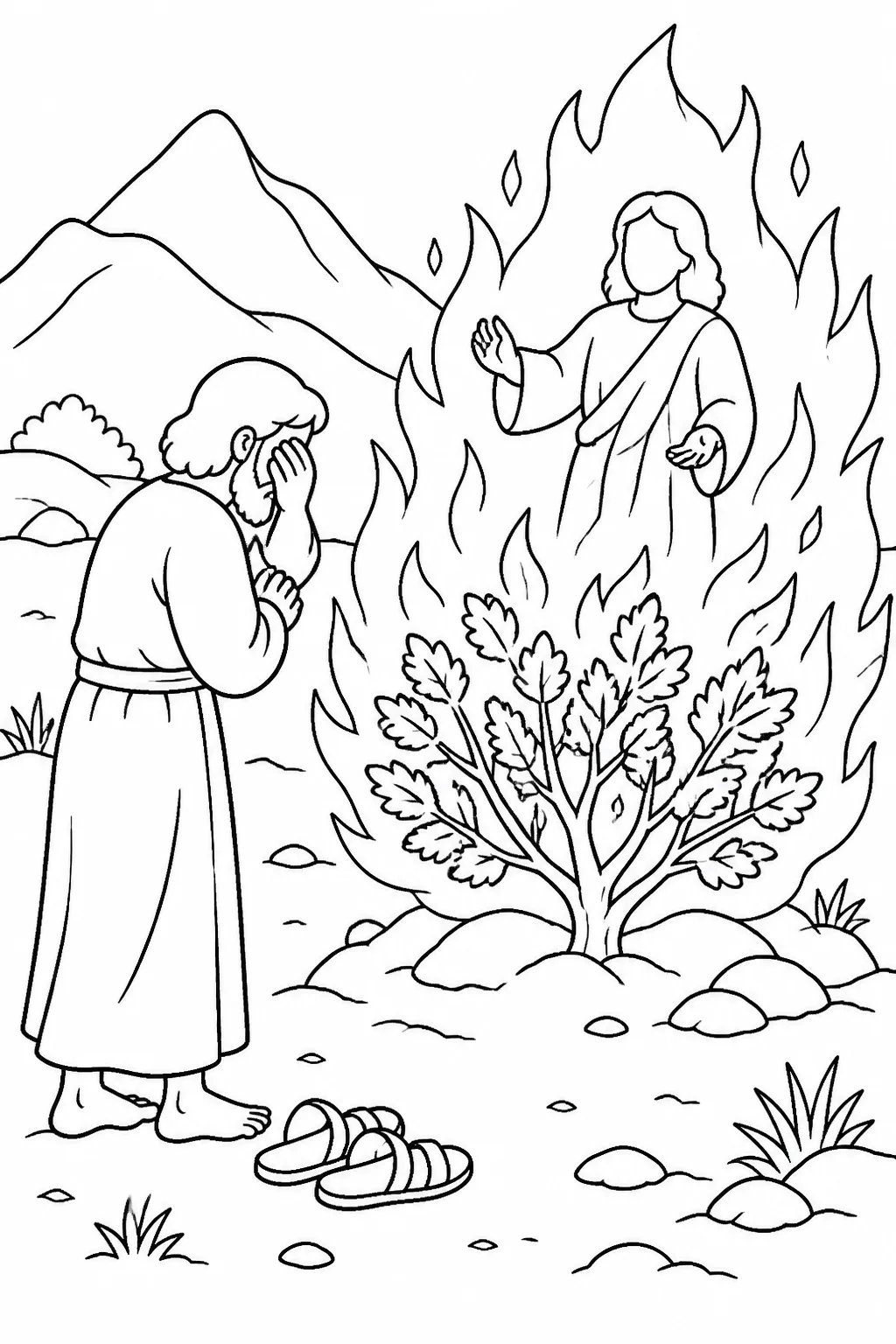
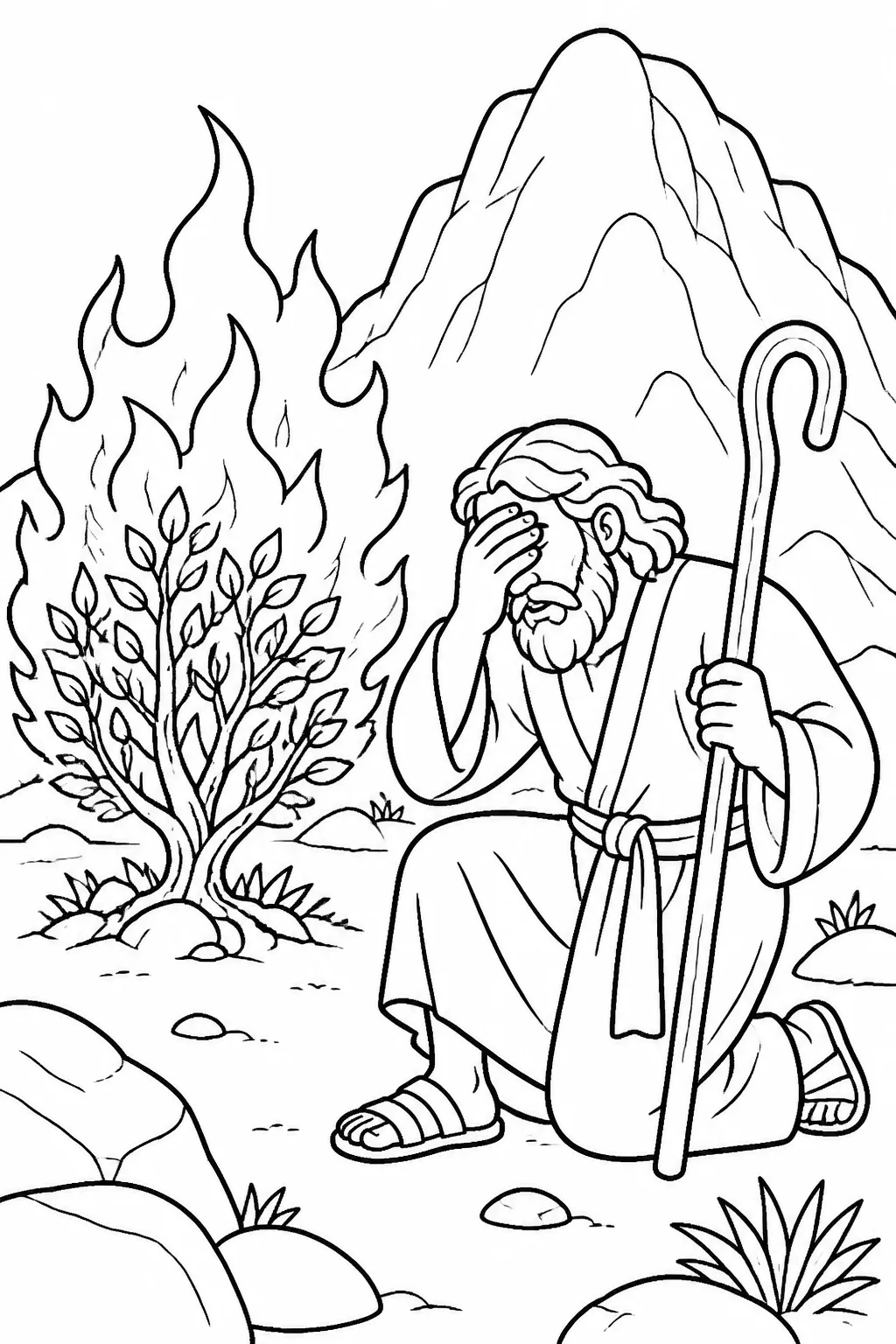
Moses reverently approaches the burning bush at Horeb, where the angel of the LORD appears within flames that do not consume the bush; Moses removes his sandals on holy ground.

Moses Approaches the Burning Bush

Exodus 3:1–4:17
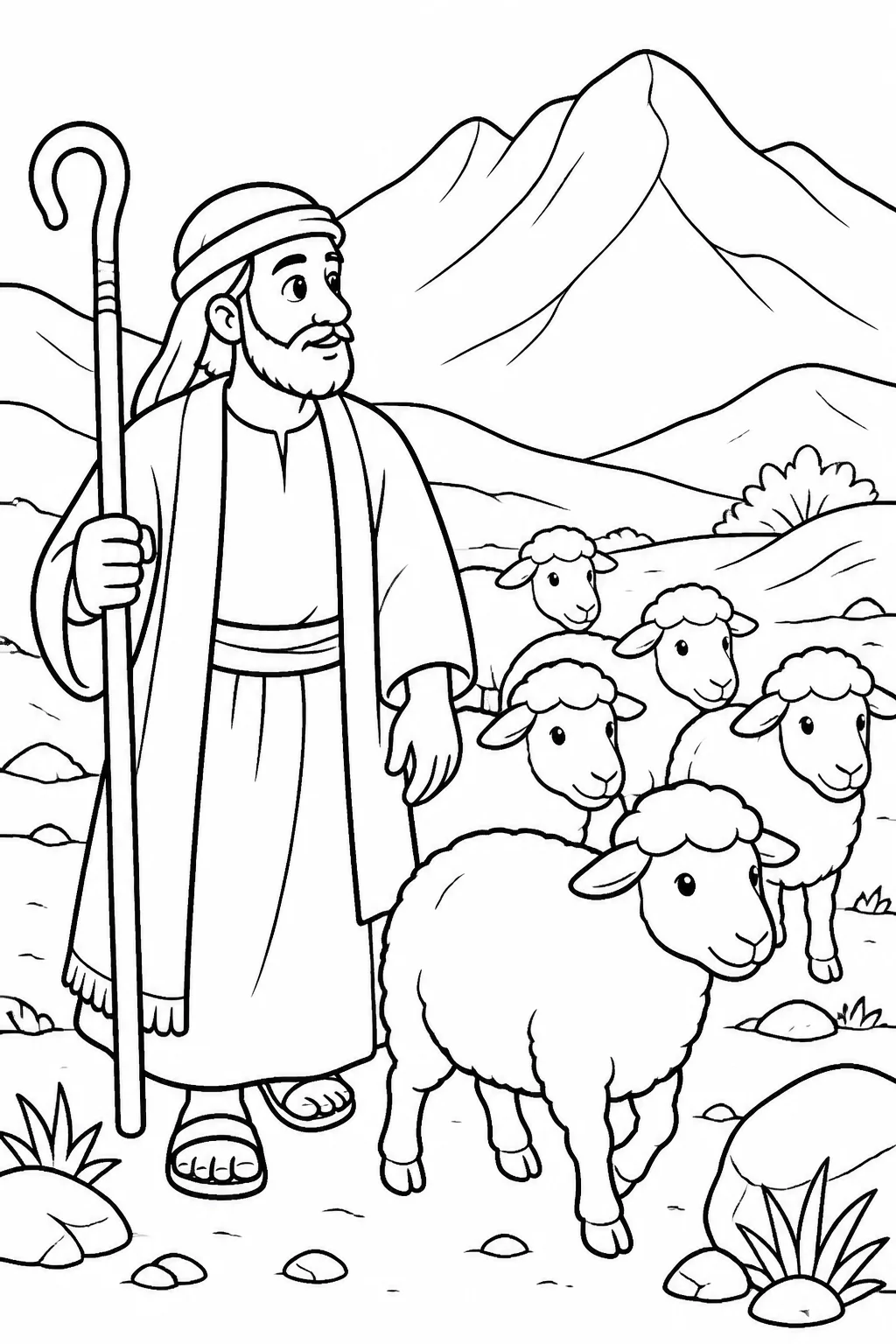
Moses tending Jethro’s flock in the wilderness as he leads the animals toward Horeb, the mountain of God.

Moses Leads the Flock to Horeb

Exodus 3:1–4:17
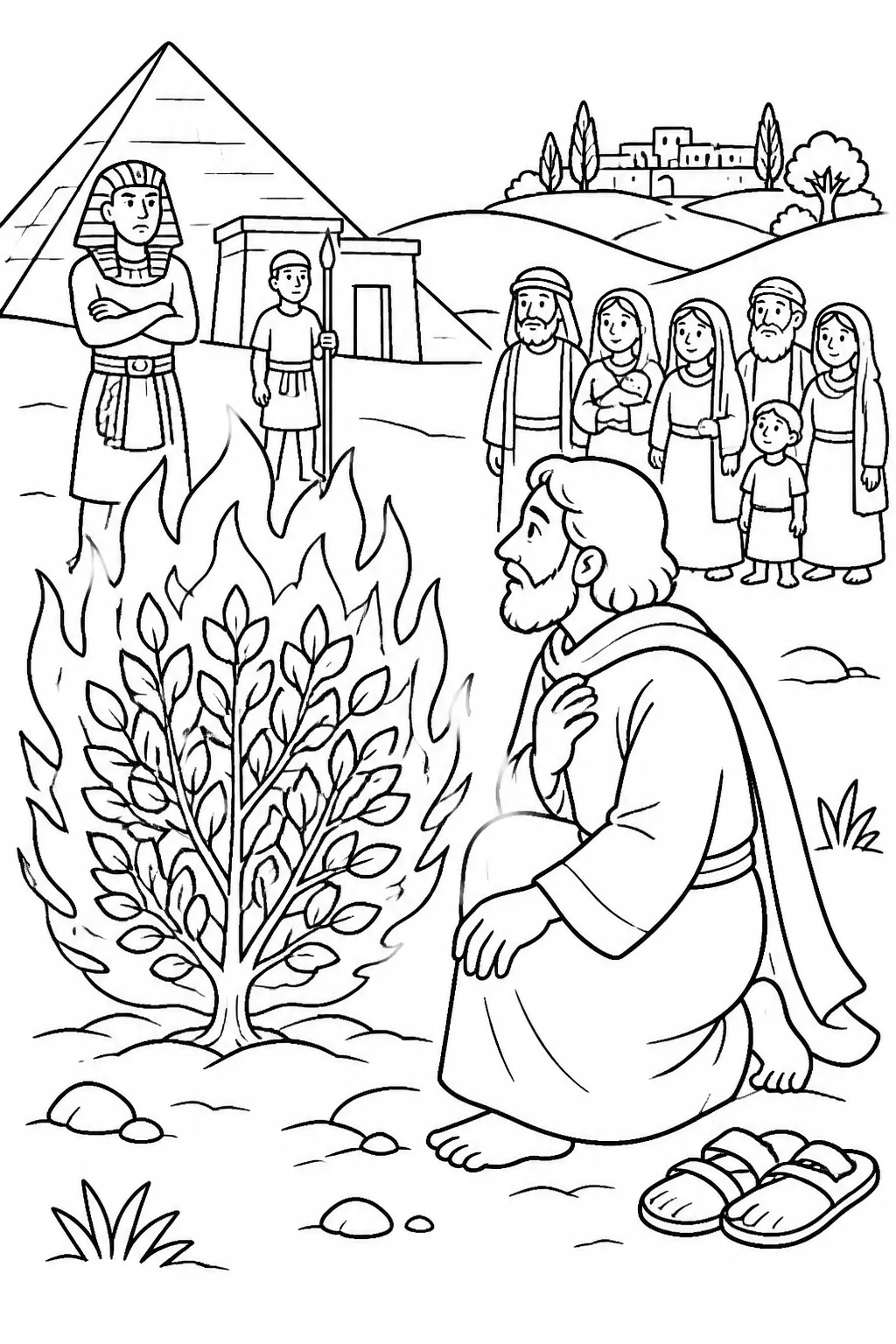
Moses listens near the burning bush as the LORD tells him that he has seen, heard, and knows the Israelites’ suffering in Egypt and sends him to Pharaoh.

God Hears His People

Exodus 3:1–4:17

Moses near the burning bush at Horeb as God promises to be with him when he goes to Pharaoh.

God Promises to Be With Moses

Exodus 3:1–4:17
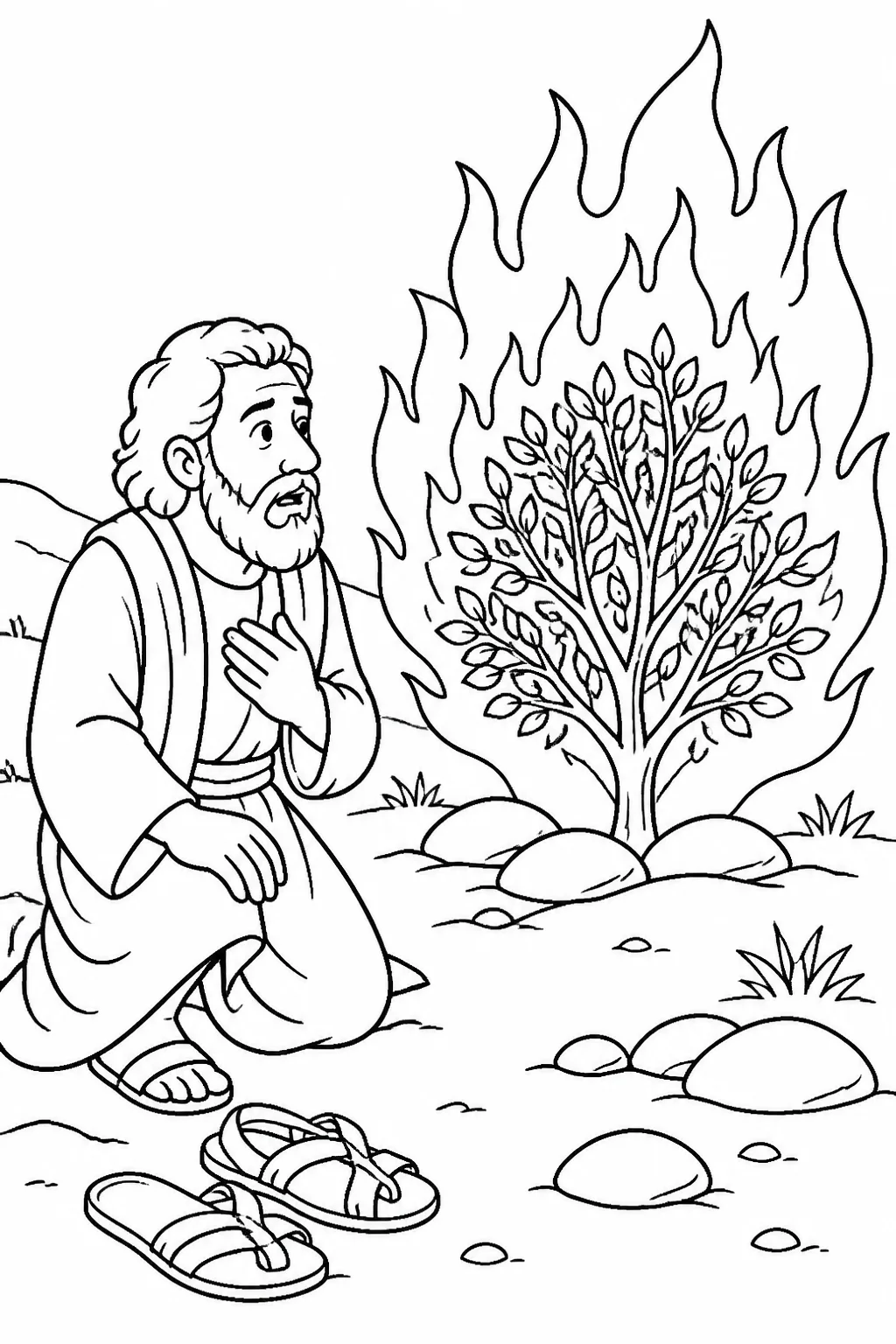
Moses asks God’s name at the burning bush, and God answers, “I AM WHO I AM” and “the LORD.”

God Reveals His Name

Exodus 3:1–4:17

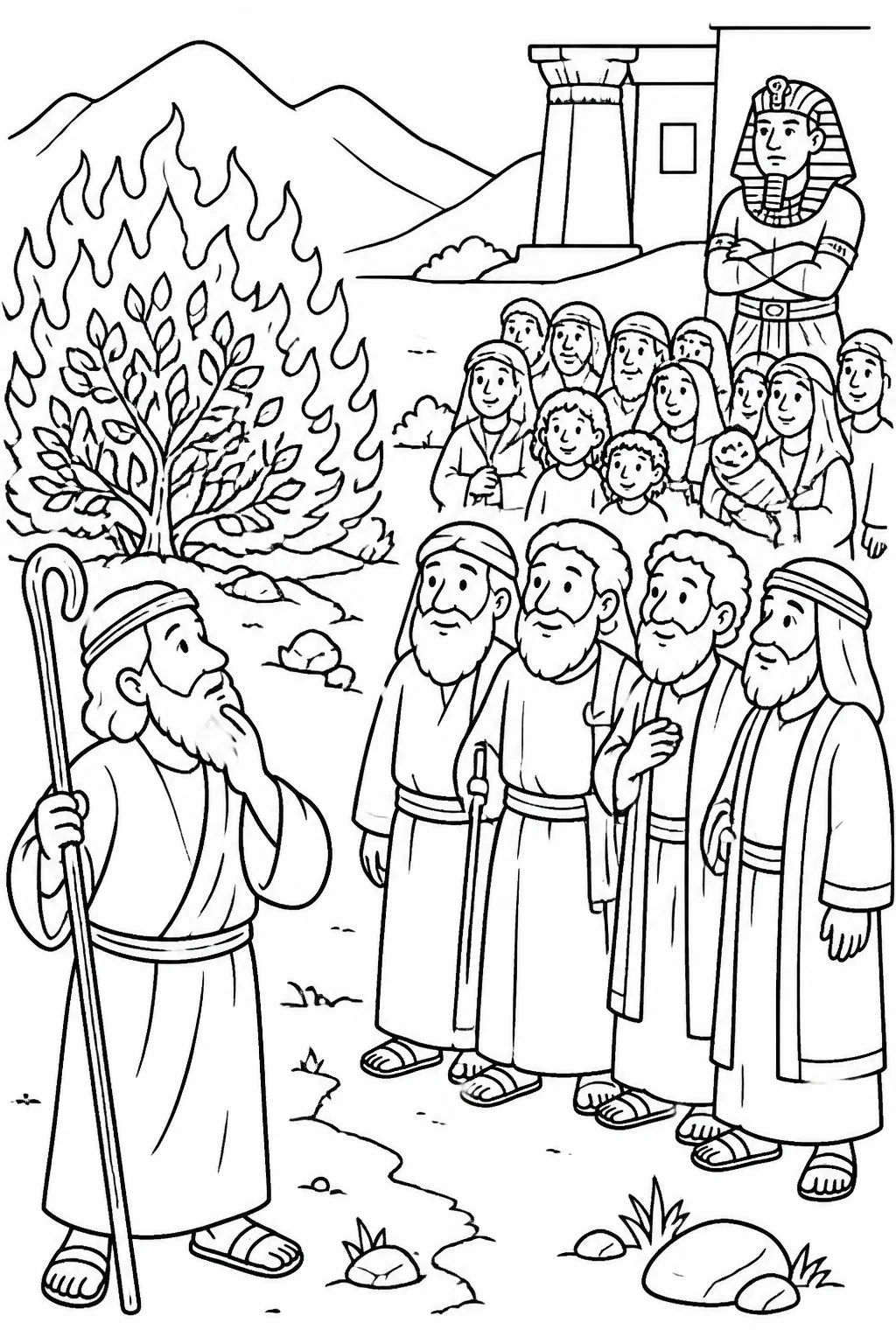
Moses receives God’s instructions to gather Israel’s elders, announce God’s promise, and ask Egypt’s king for permission for the Israelites to worship in the wilderness.

A Message for Israel’s Elders

Exodus 3:1–4:17
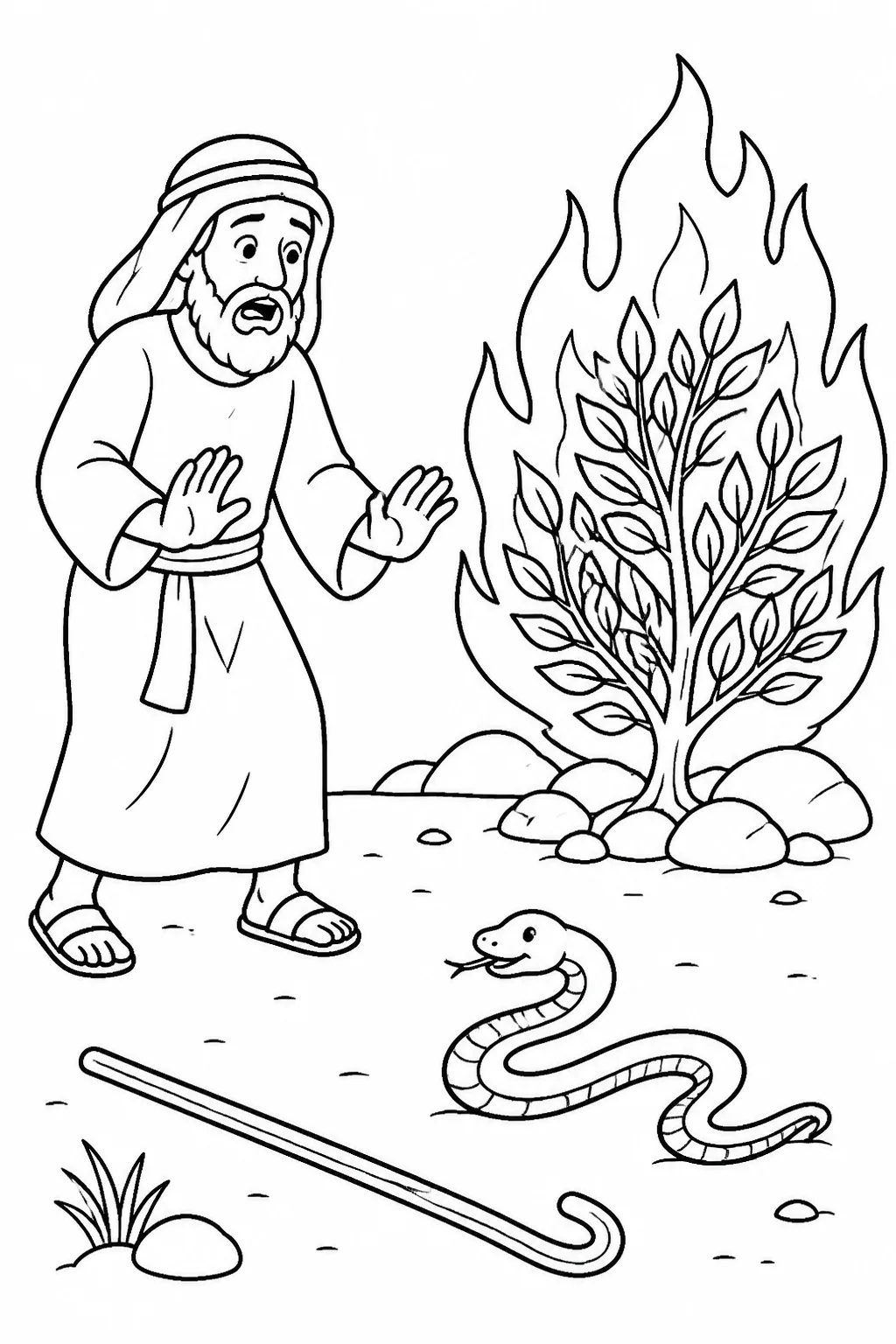
Moses listens to God near the burning bush as his staff, placed on the ground, becomes a snake.

The Staff Becomes a Sign

Exodus 3:1–4:17
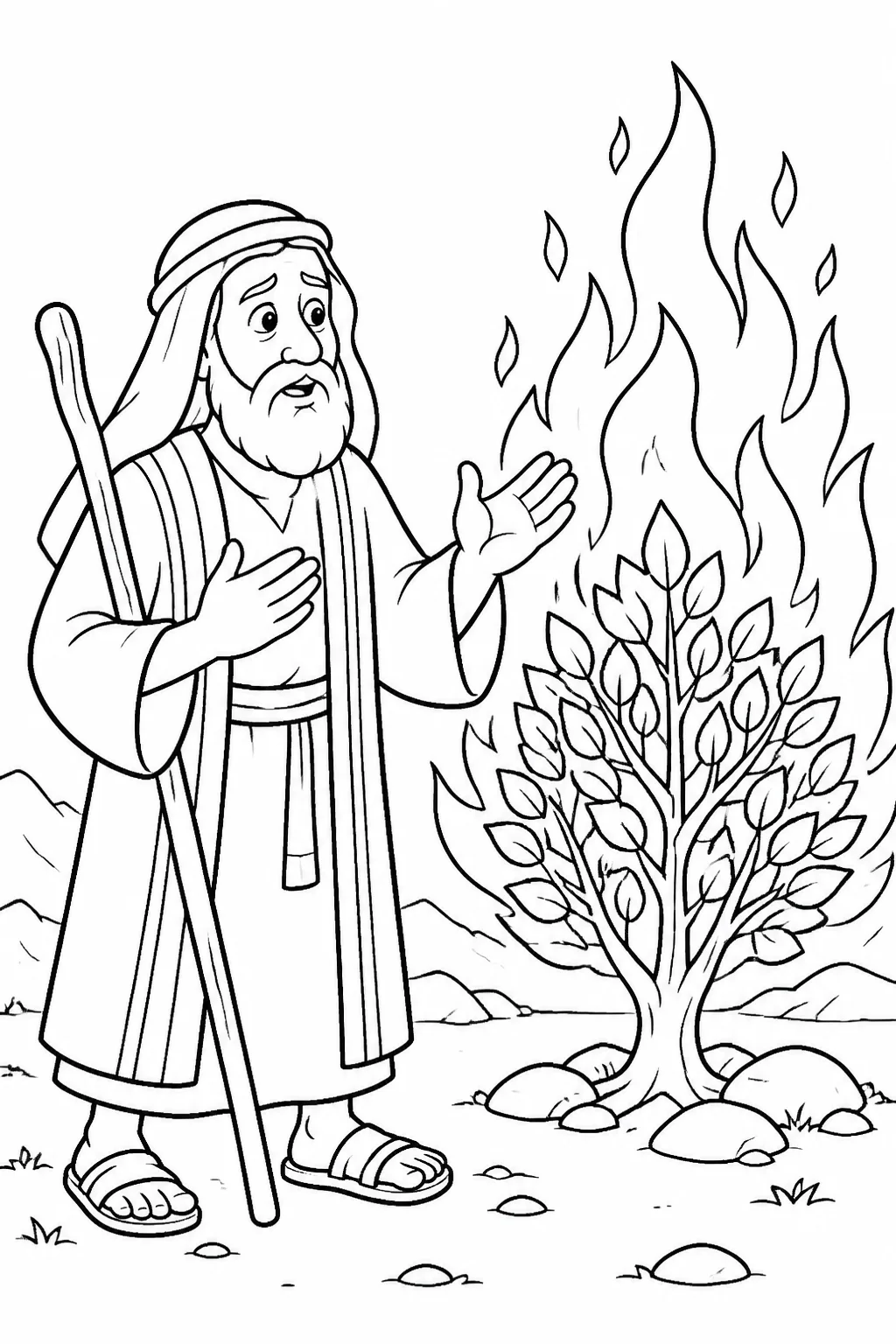
Moses listening near the burning bush as the LORD promises to help him speak and teach him what to say.

God Will Help Moses Speak

Exodus 3:1–4:17
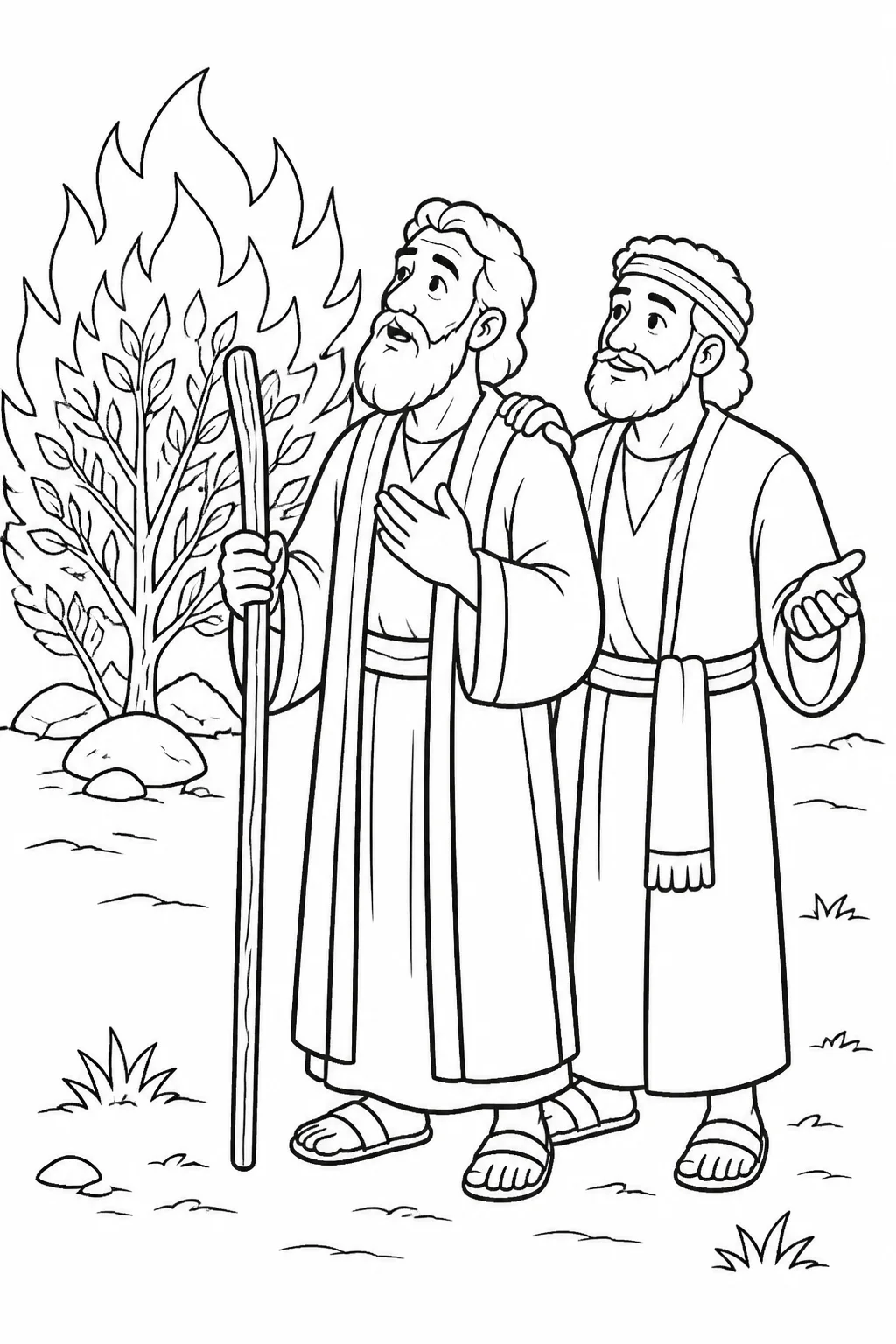
Moses holding his staff near the burning bush while Aaron stands beside him as the helper God provides.

God Provides Aaron to Help Moses

Exodus 3:1–4:17
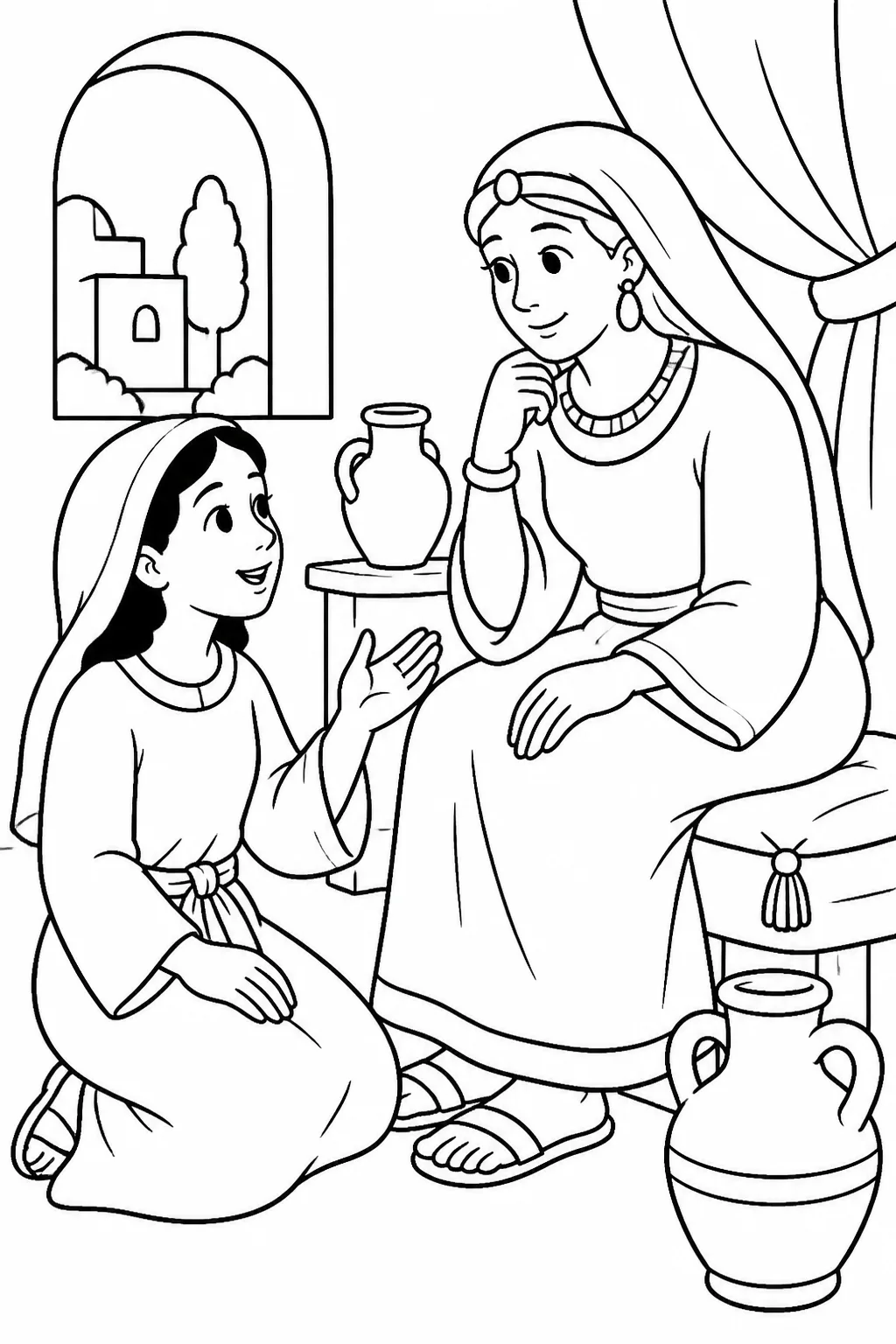
The captive Israelite girl respectfully speaks with Naaman’s wife in a simple household setting about the prophet in Samaria who could help Naaman.

A Helpful Message

2 Kings 5:1-19

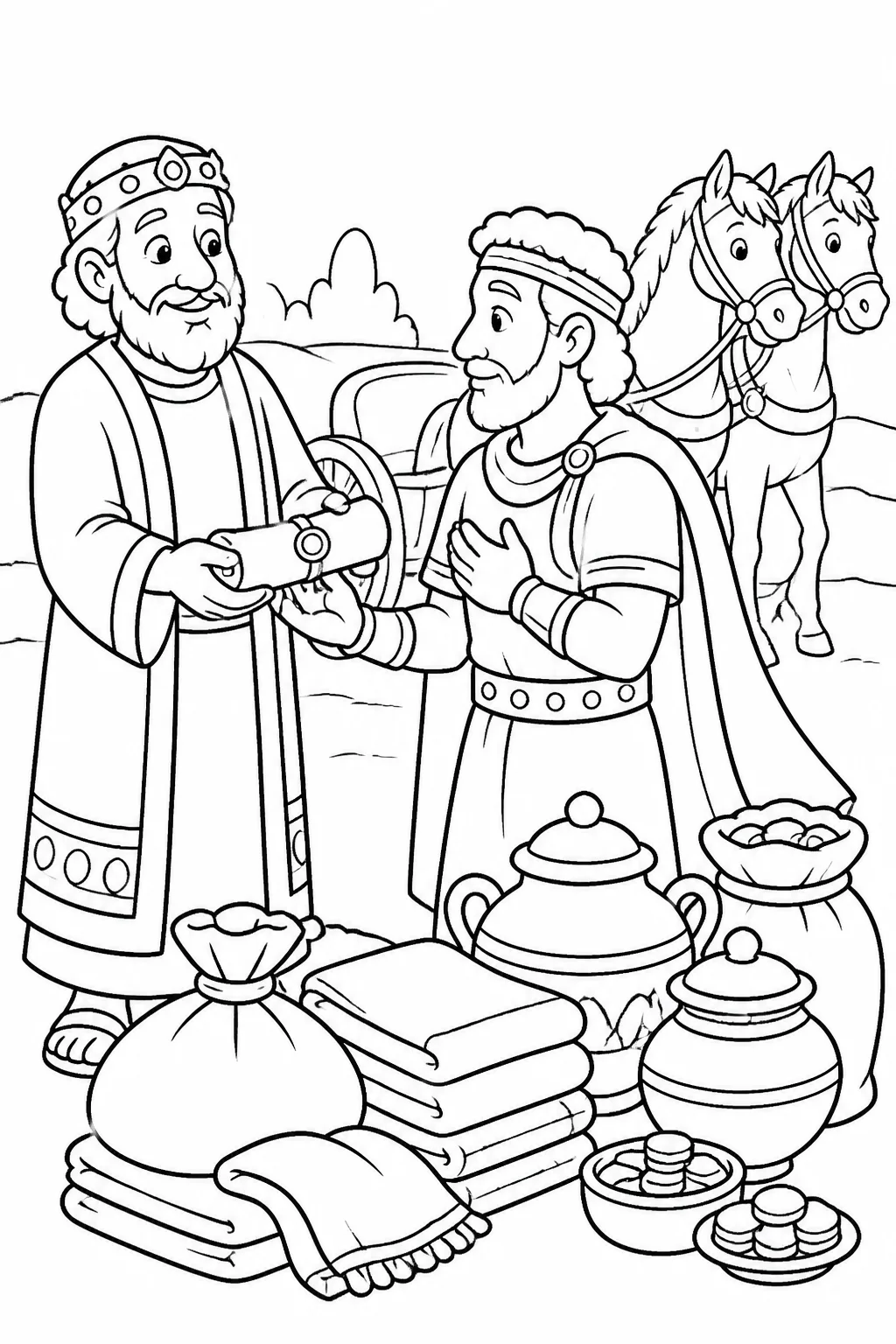
Naaman prepares to travel to Israel with the king of Aram’s letter, horses or chariots, silver, gold, and changes of clothing.

Naaman Carries the King’s Letter

2 Kings 5:1-19
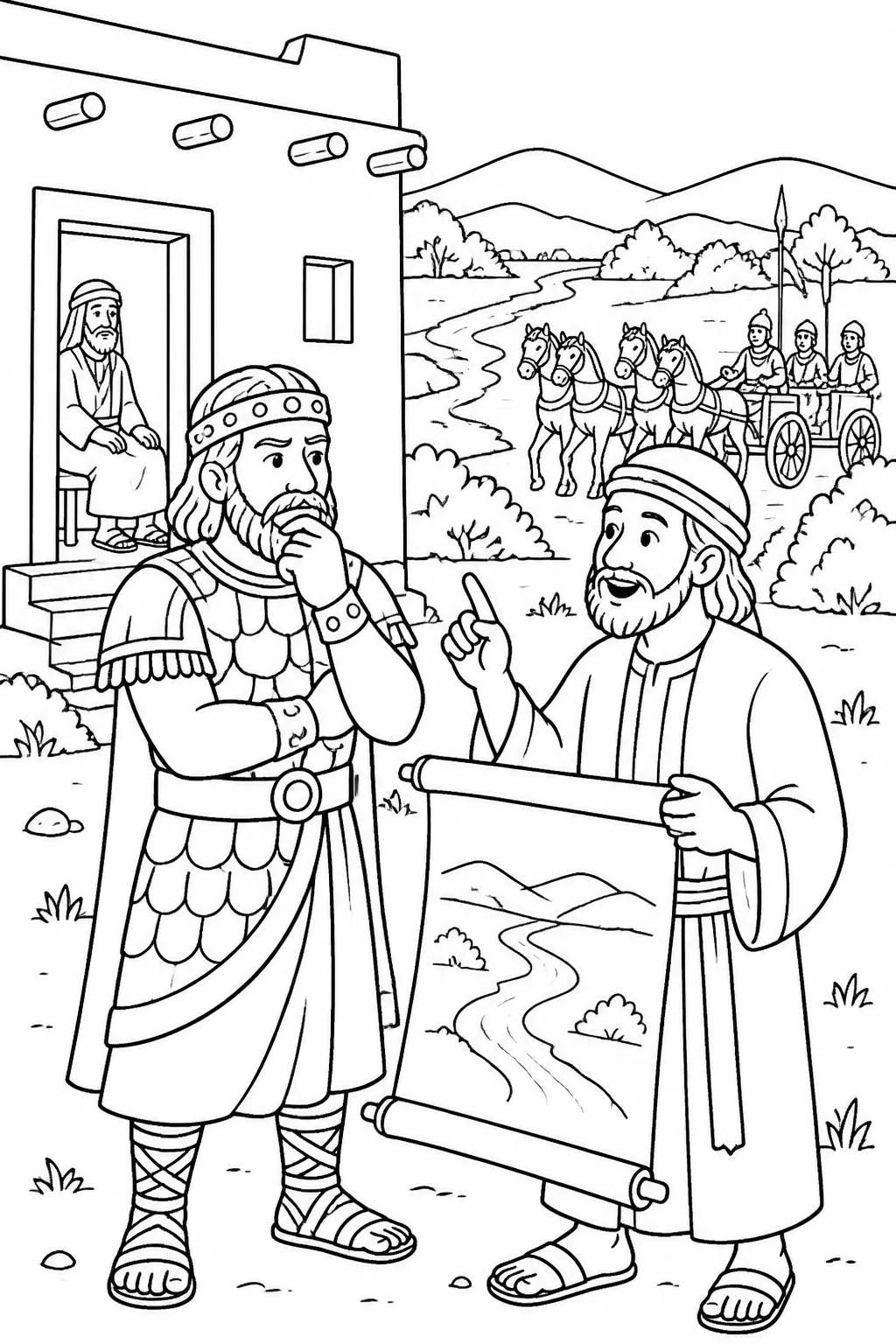
Naaman at Elisha’s house receives from Elisha’s messenger the instruction to wash seven times in the Jordan River, with Elisha nearby and horses and chariots present.

Wash in the Jordan

2 Kings 5:1-19

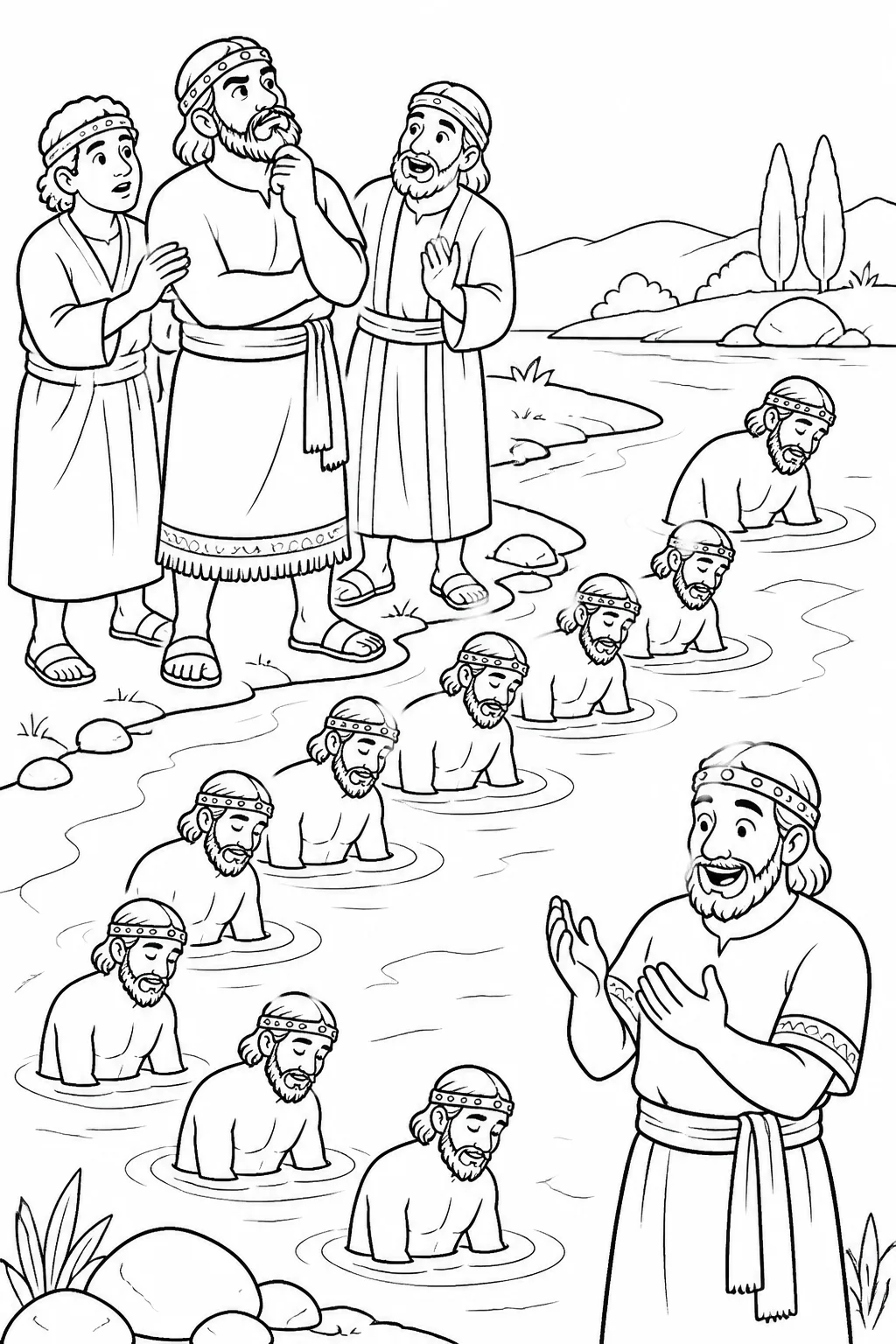
Naaman and his servants at the Jordan River as Naaman washes seven times and is restored, based on 2 Kings 5:11-14.

Naaman Chooses Obedience

2 Kings 5:1-19
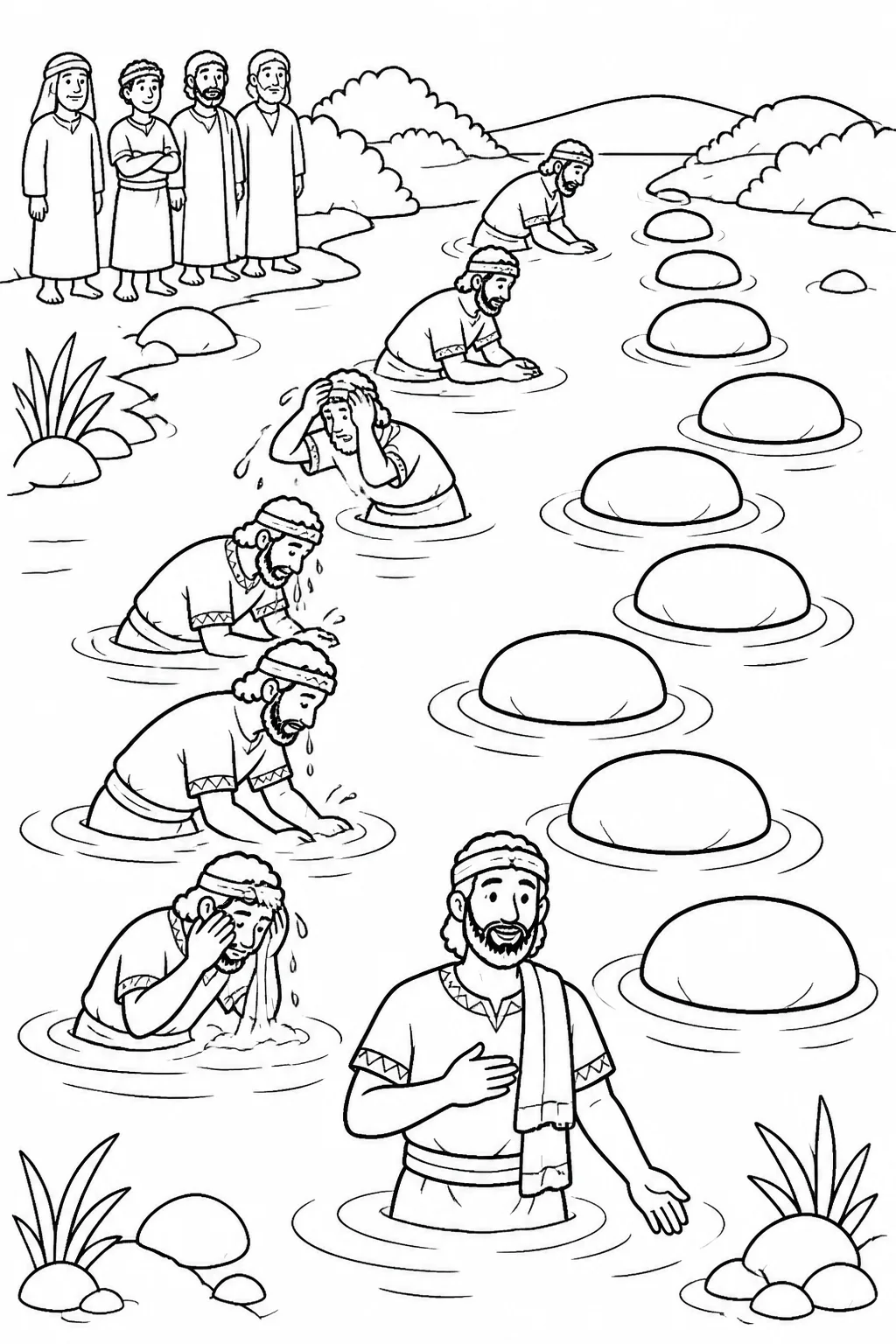
Naaman washing seven times in the Jordan River, represented by seven stones, ripples, or numbered markers.

Seven Times in the Jordan

2 Kings 5:1-19
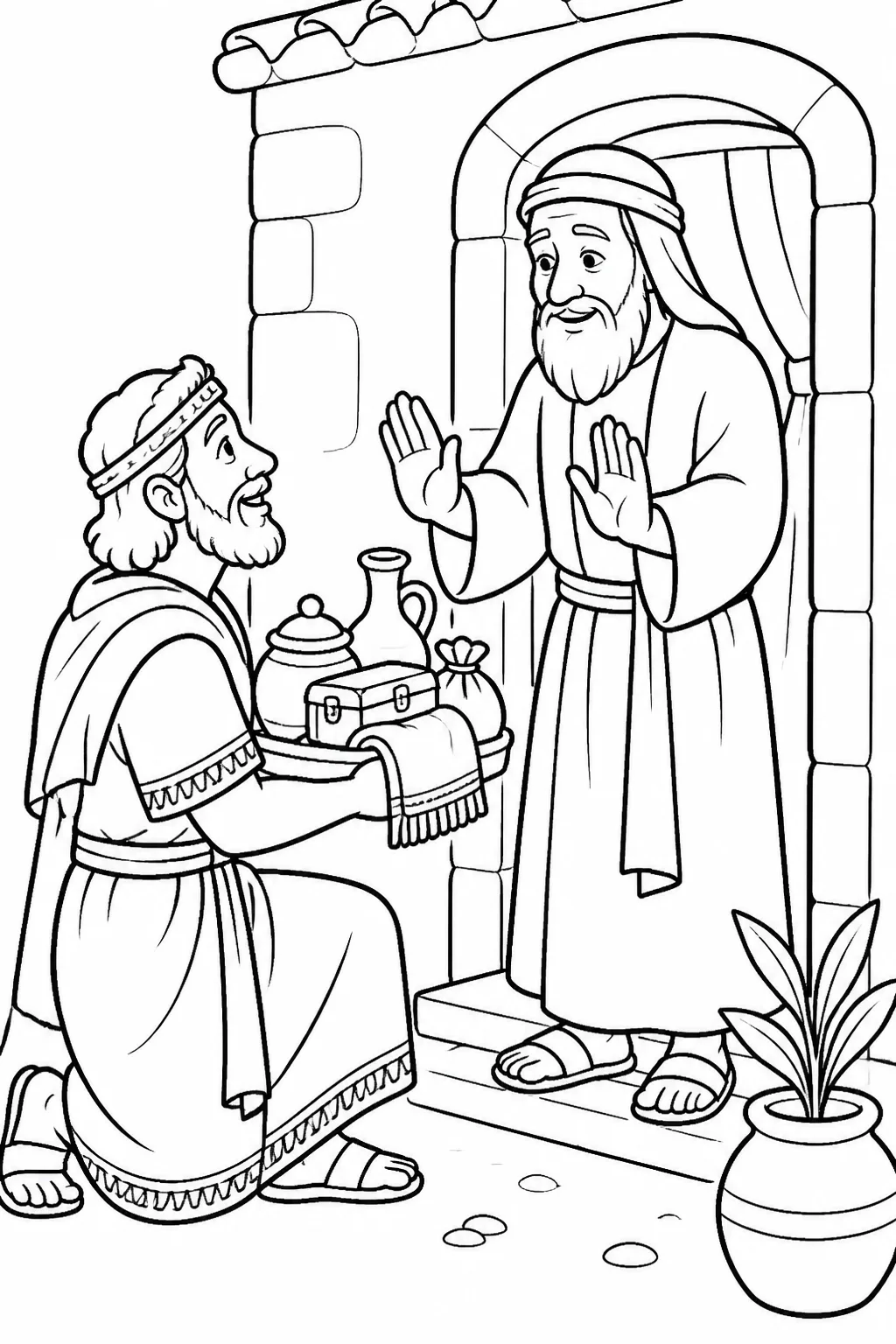
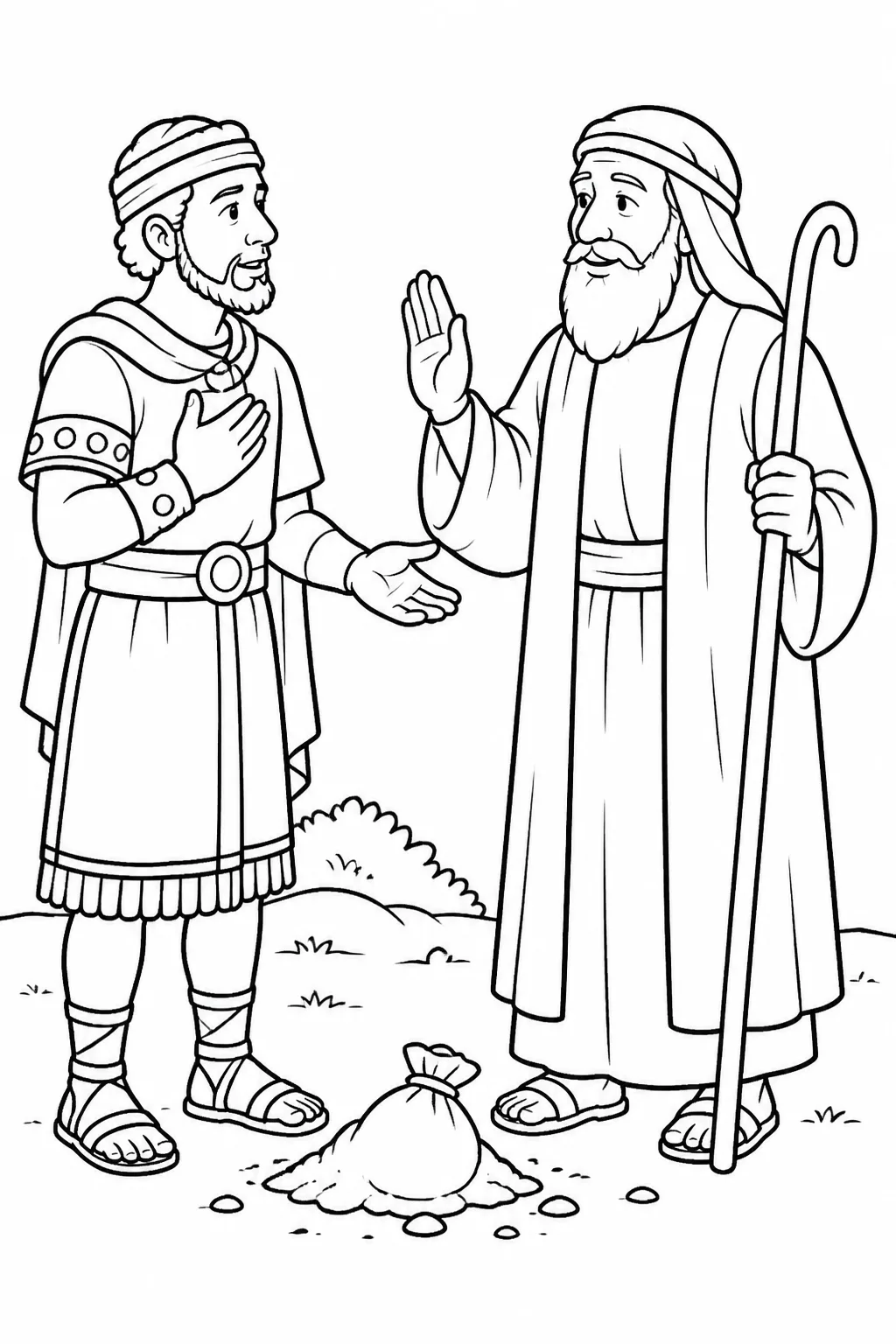
Naaman returns to Elisha at his house with gifts, while Elisha refuses them after Naaman’s healing.

Thankful, Not Paying

2 Kings 5:1-19

Naaman speaks with Elisha after his healing and receives a peaceful farewell, with a small amount of earth from Israel nearby.

Go in Peace

2 Kings 5:1-19

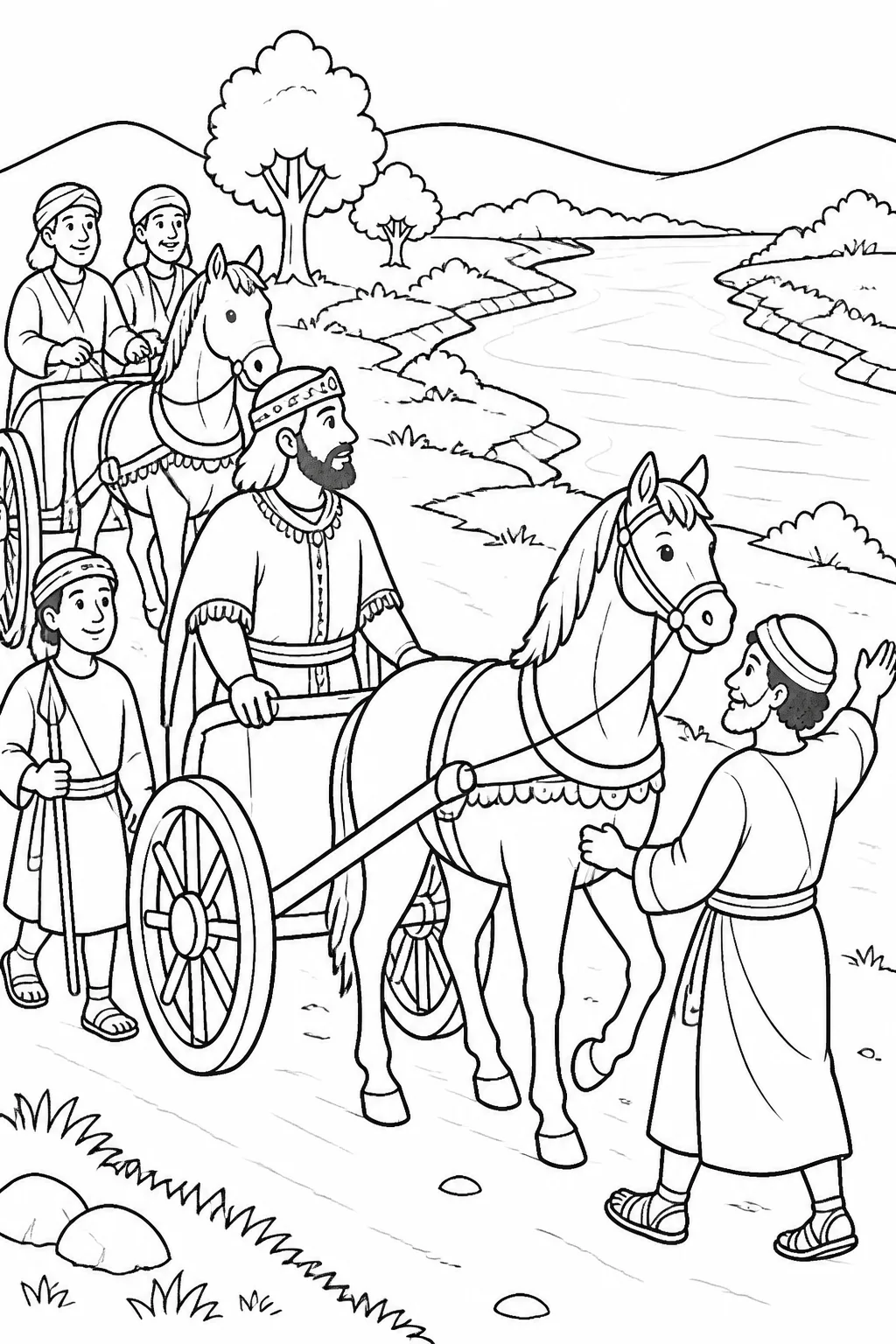
Naaman and his attendants travel with horses and chariots toward the Jordan River after receiving Elisha’s instruction through a messenger.

Following the Prophet’s Direction

2 Kings 5:1-19
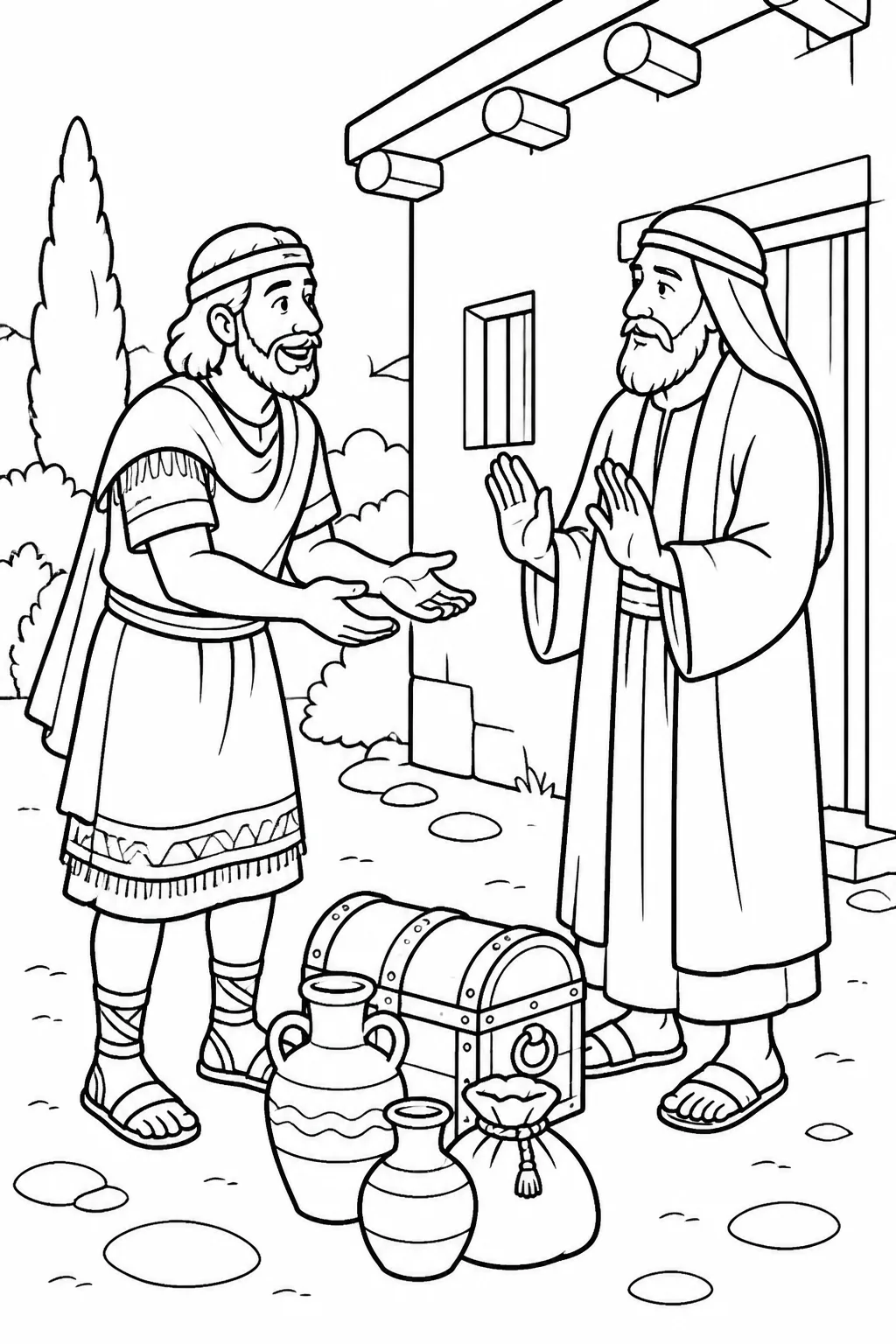
Naaman returns to Elisha at Elisha’s house after being healed, offering gifts that Elisha refuses.

Returning With Thanks

2 Kings 5:1-19

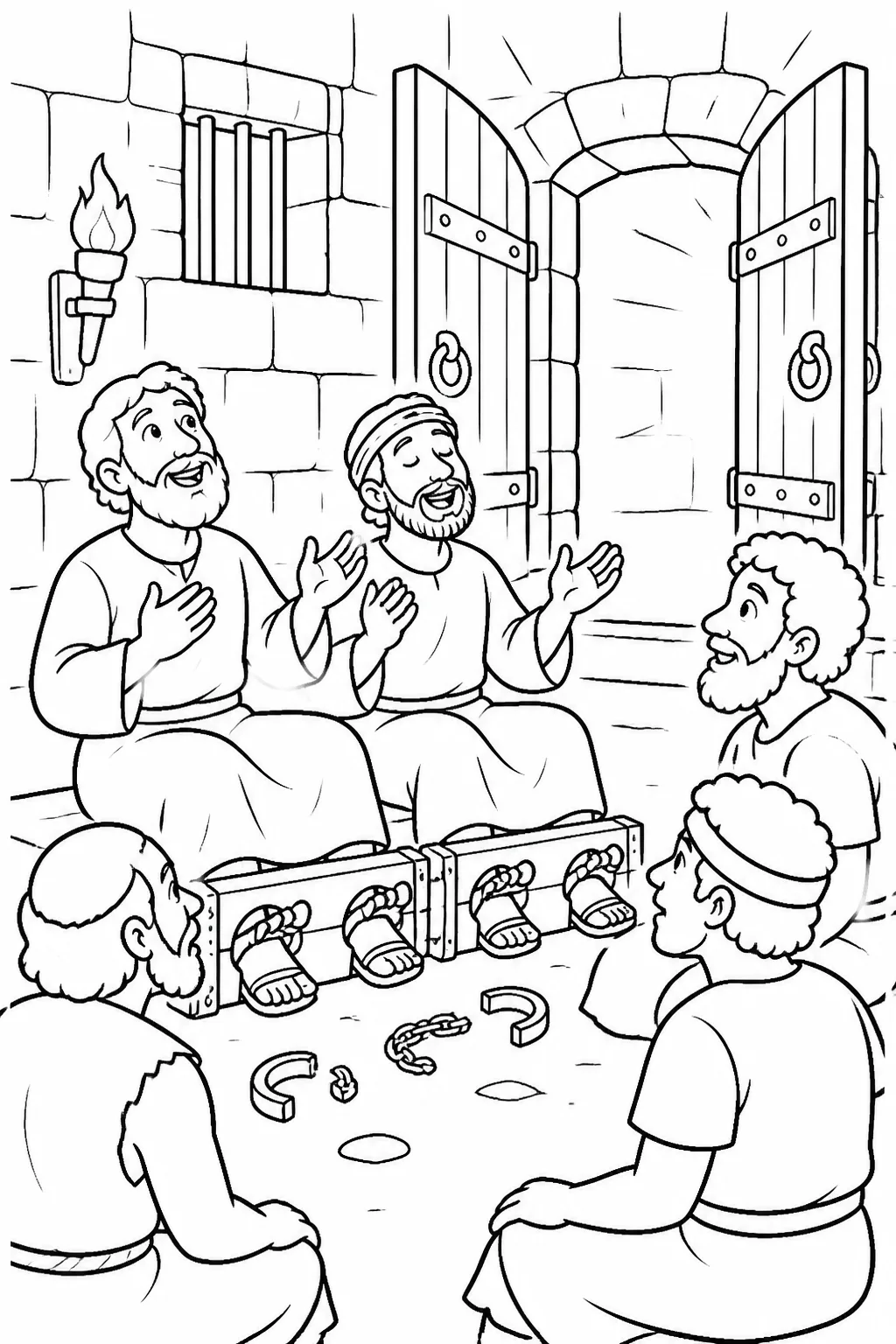
Paul and Silas in the inner prison with stocks, other prisoners listening, open prison doors, loosened bonds, and Paul calling that everyone is still there.

Songs in the Inner Prison

Acts 16:16-40
Paul and Silas with the jailer and members of his household, with lights, water for washing wounds, and food during the jailer’s joyful welcome.

The Jailer Cares for His Guests

Acts 16:16-40
Encouraging Friends at Lydia’s House from Paul and Silas Sing in Prison Bible coloring page

Encouraging Friends at Lydia’s House

Acts 16:16-40
Paul calls to the jailer inside a Philippian prison after an earthquake opens the doors and loosens the prisoners’ bonds.

Everyone Is Still Here

Acts 16:16-40

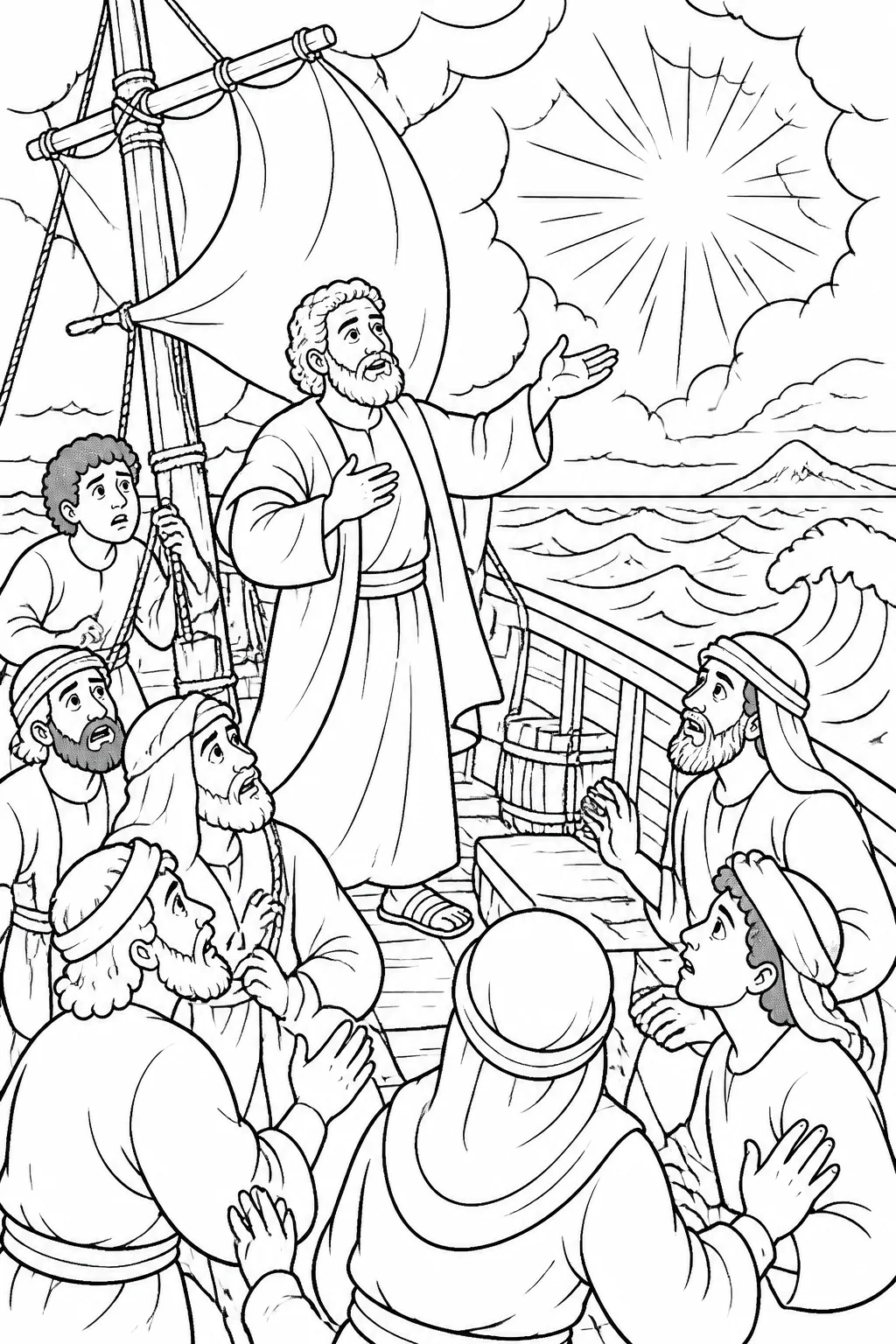
Paul encouraging passengers and sailors on a storm-tossed ship, with storm clouds, waves, a distant island, and a subtle radiant angelic presence.

Paul Encourages Everyone in the Storm

Acts 27:1-44
Paul gives thanks before breaking bread and sharing food with sailors, soldiers, and prisoners on a ship’s deck before dawn.

Paul Gives Thanks and Shares Food

Acts 27:1-44
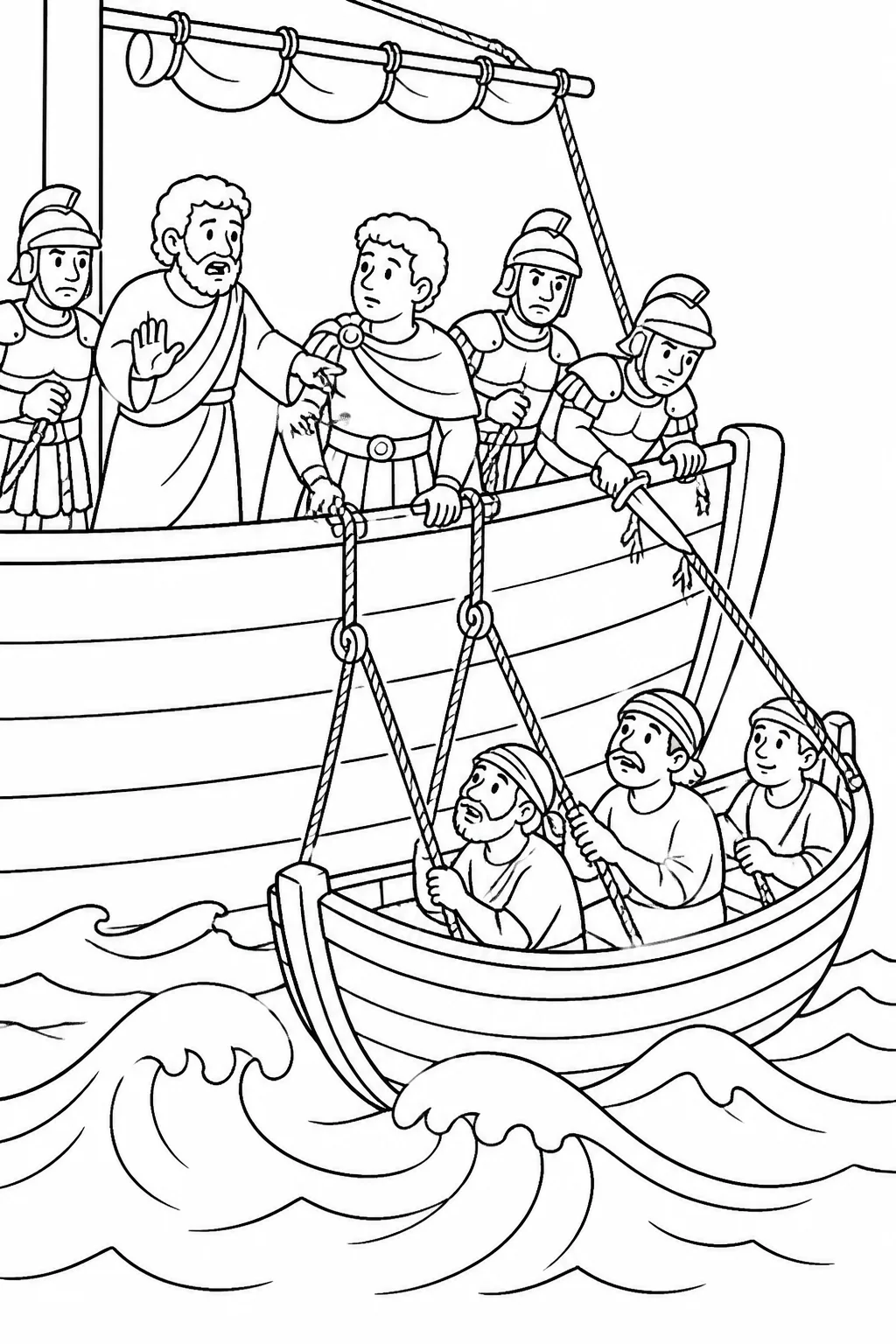
Paul warns Julius and soldiers as sailors lower a small boat and pretend to set anchors beside the main ship on a dark sea; the boat’s ropes are cut.

The Small Boat Is Cut Away

Acts 27:1-44
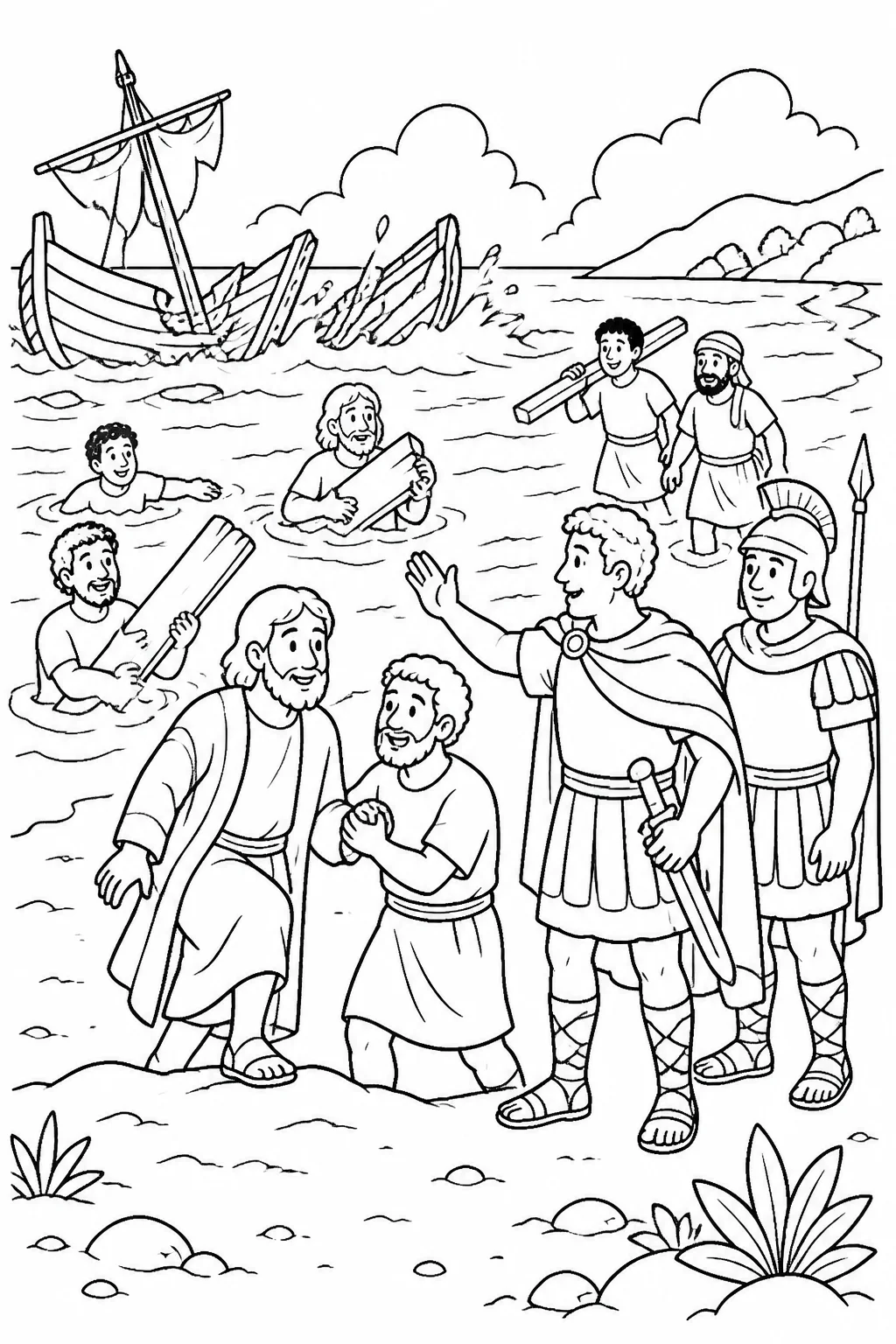
Paul, Julius, soldiers, prisoners, sailors, and other passengers reach an unnamed beach after a ship breaks apart; some swim and others use planks and ship pieces.

Everyone Reaches the Shore

Acts 27:1-44
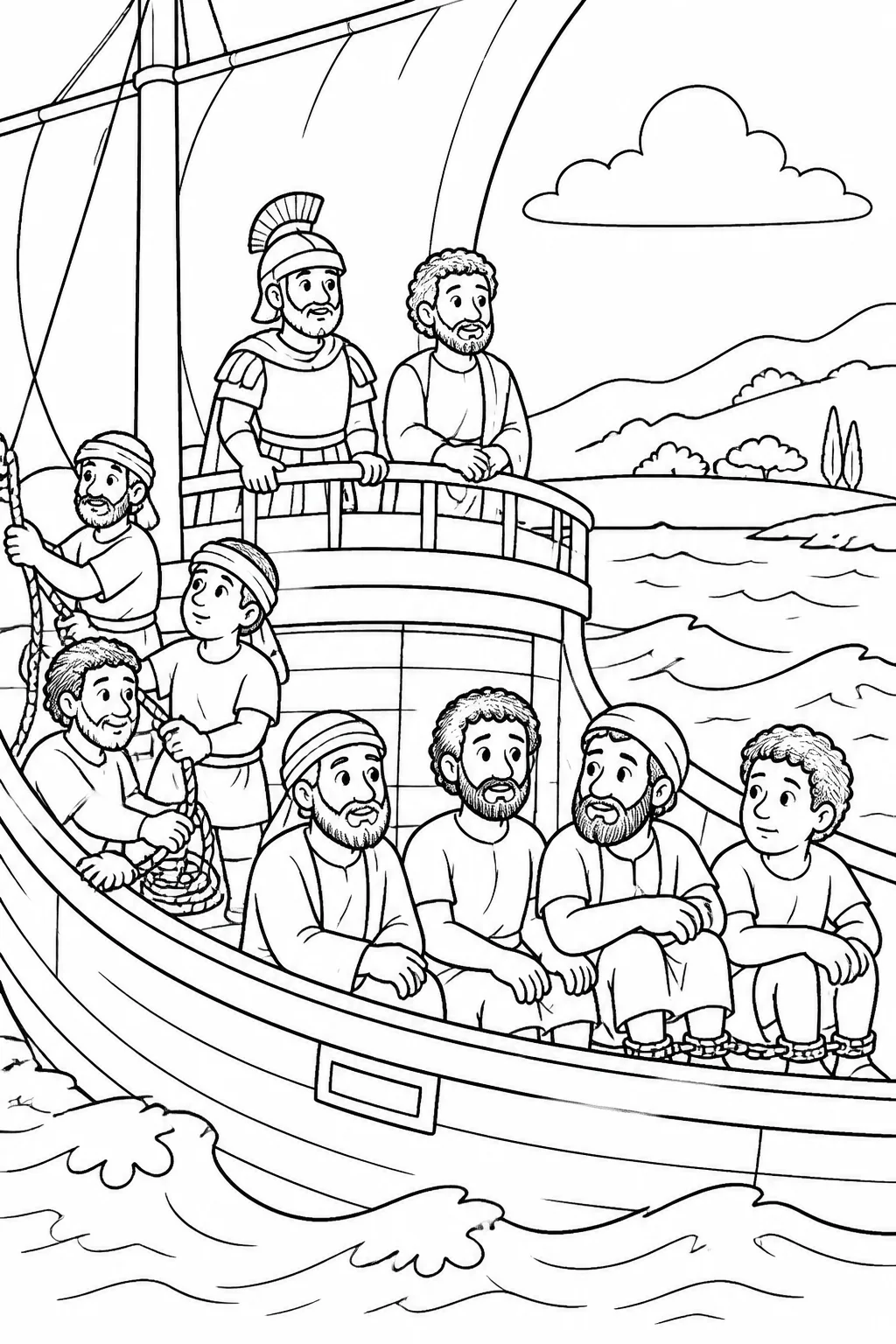
Paul travels toward Rome as a prisoner under Julius’s guard aboard a ship with other prisoners and crew, passing through difficult coastal waters toward Fair Havens.

A Difficult Journey Toward Rome

Acts 27:1-44
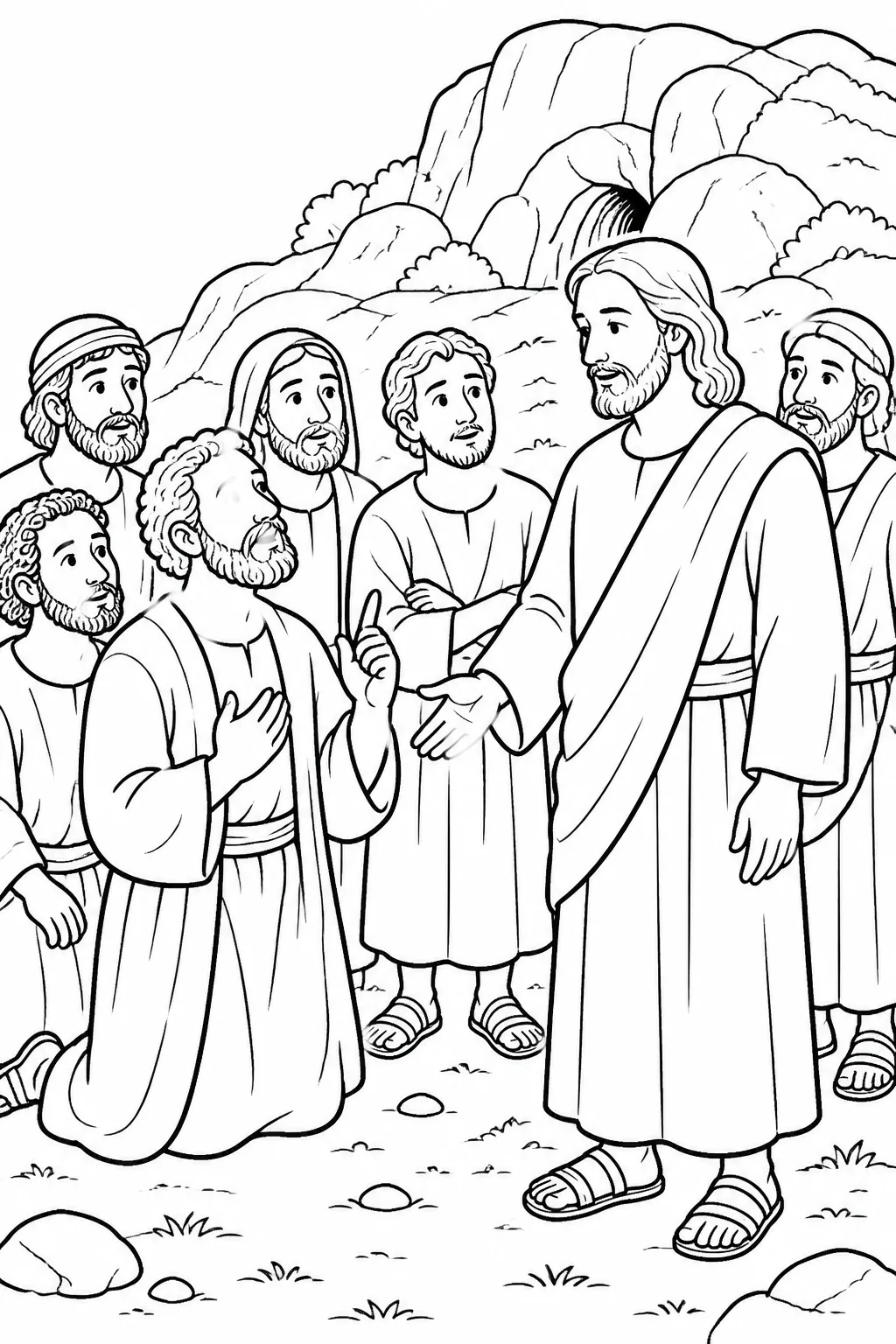
Jesus teaches his disciples in the region of Caesarea Philippi, and Simon Peter declares that Jesus is the Christ, the Son of the living God.

Peter Declares Who Jesus Is

Matthew 16:13-20
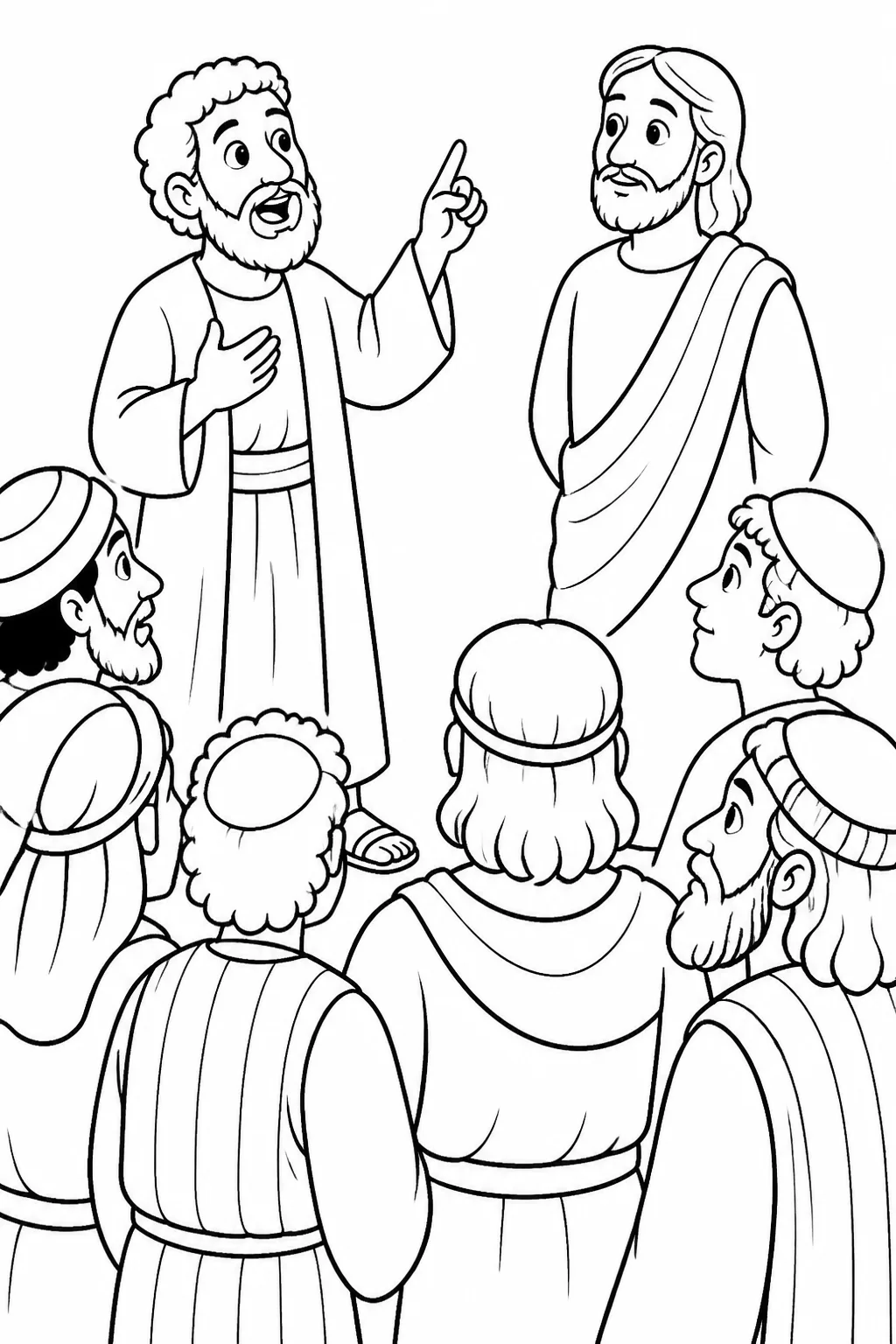
Simon Peter speaks to Jesus and the disciples as he confesses that Jesus is the Christ, the Son of the living God.

The Disciples Listen to Peter

Matthew 16:13-20
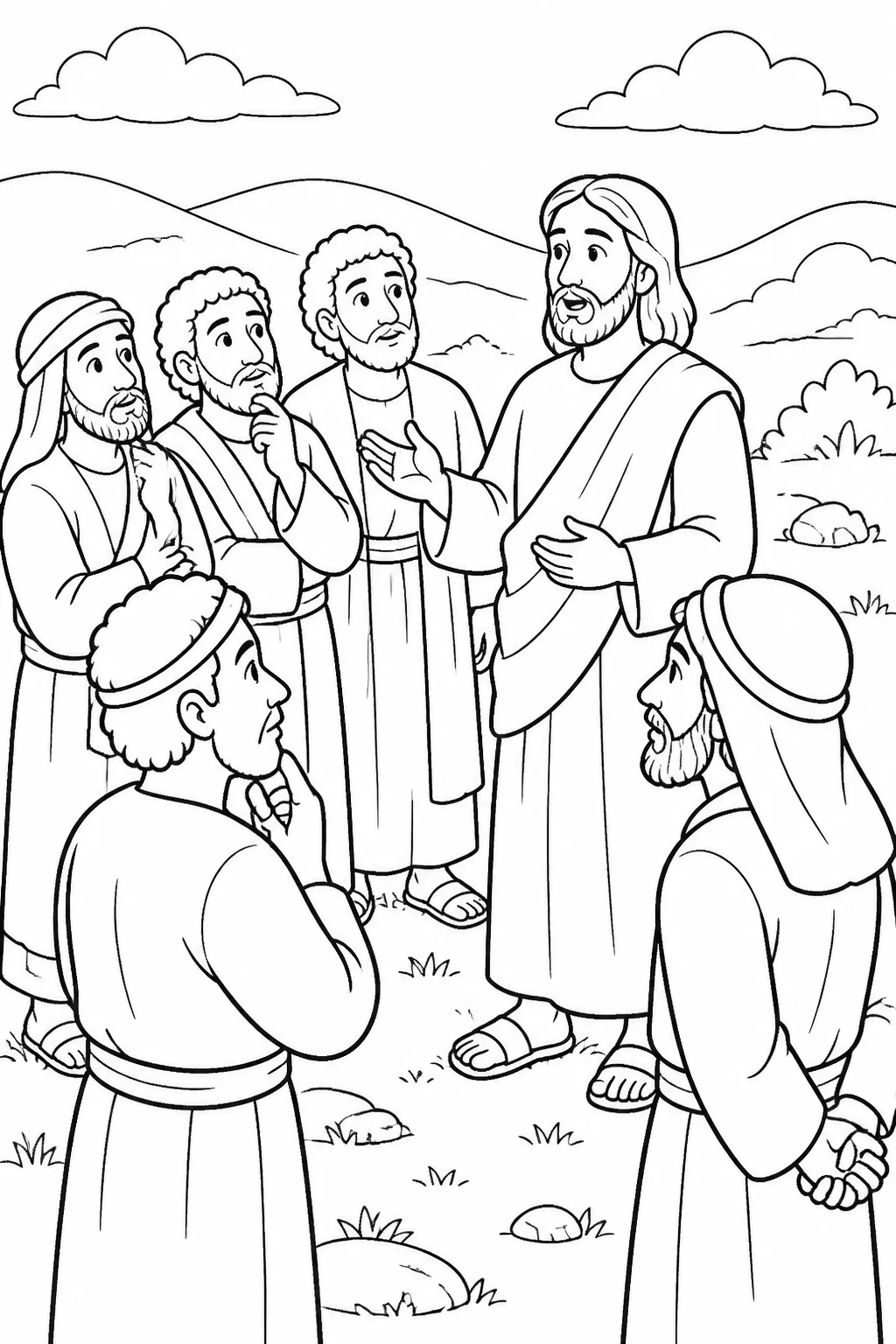
Jesus asking his disciples who people say the Son of Man is in the region of Caesarea Philippi.

Jesus Asks the Disciples a Question

Matthew 16:13-20
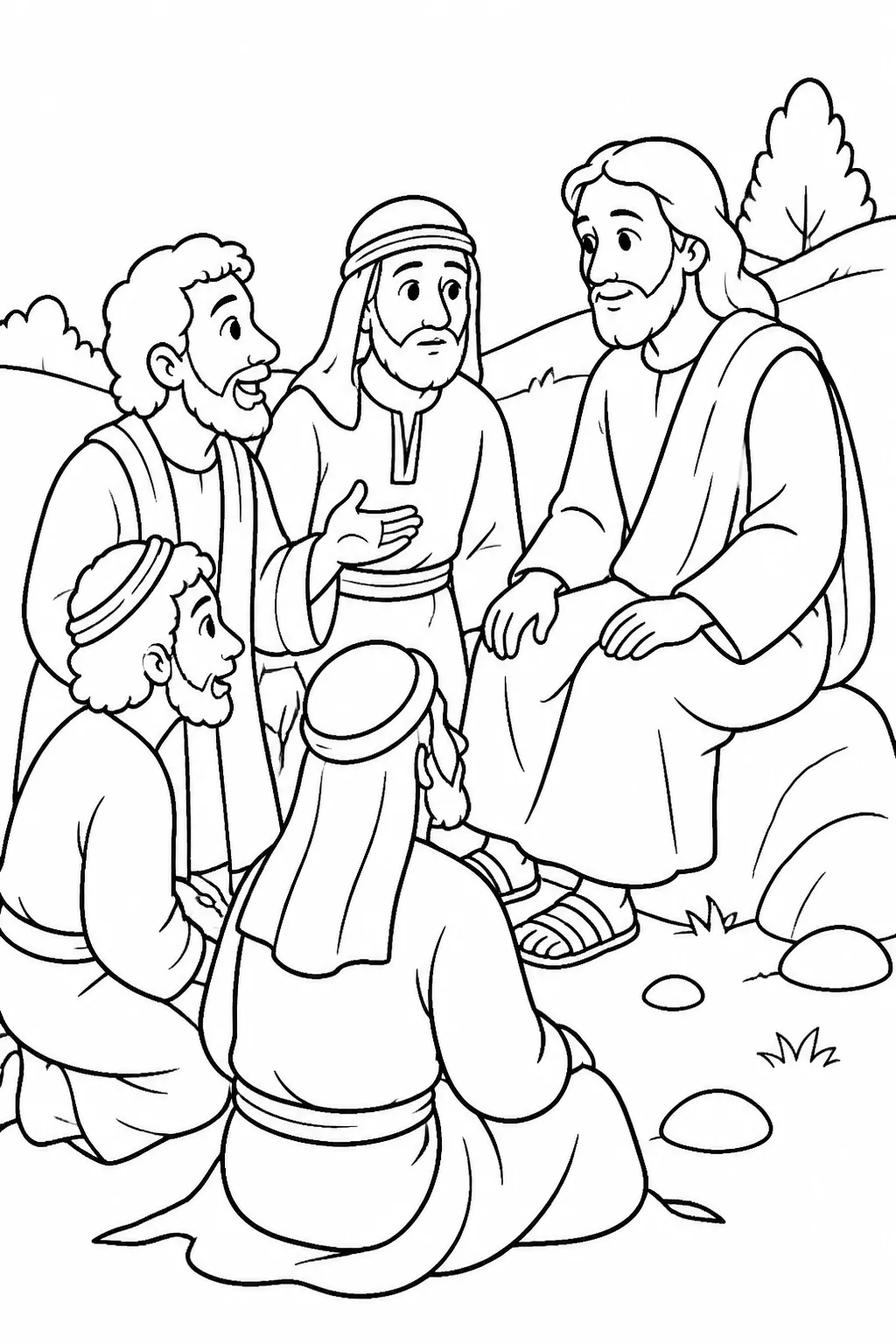
Jesus listening to the disciples as they report that people have suggested he is John the Baptist, Elijah, Jeremiah, or one of the prophets.

The Disciples Share What People Say

Matthew 16:13-20
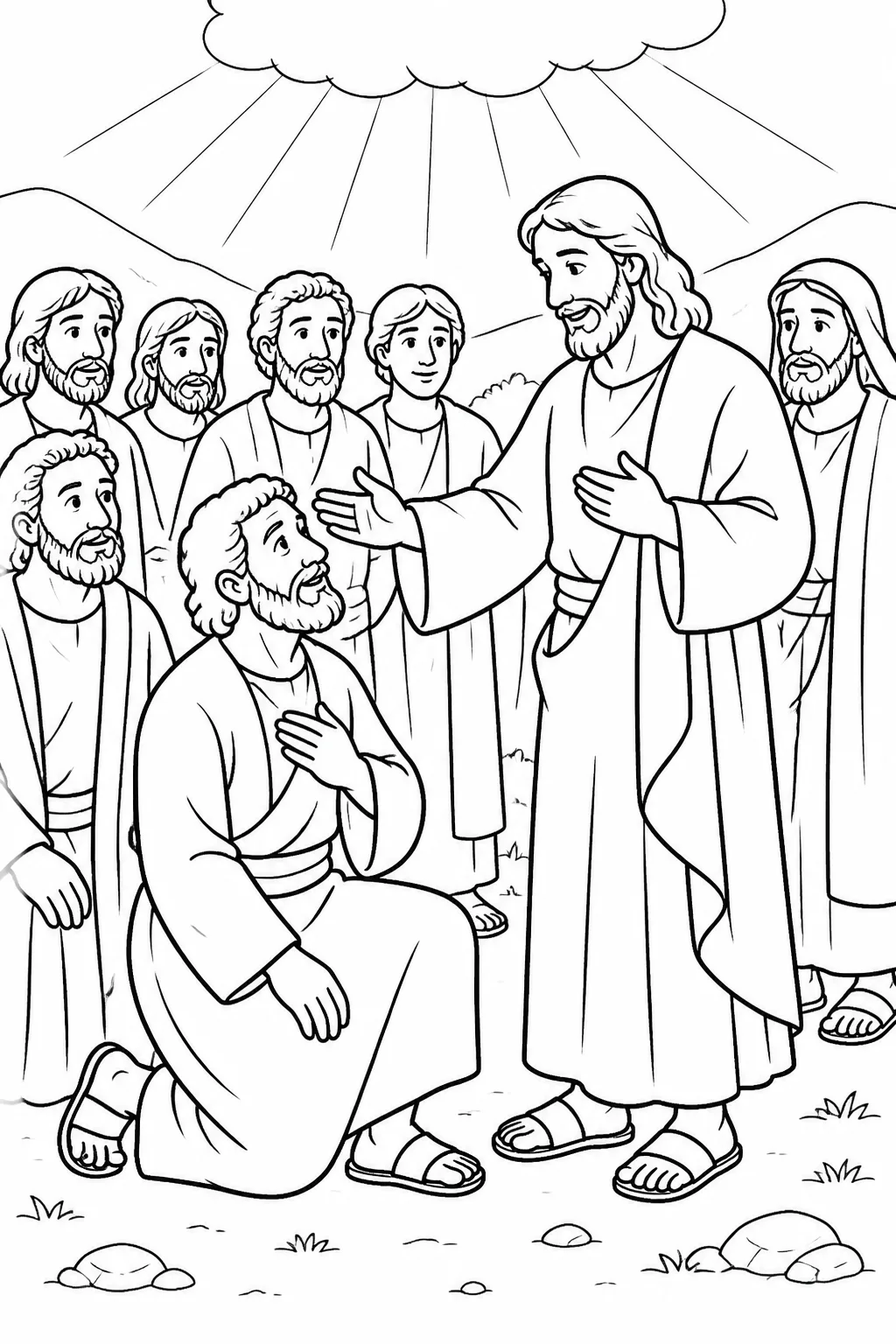
Jesus blesses Simon Peter after Peter confesses that Jesus is the Christ, while the disciples listen; the Father in heaven is represented through the passage’s words or restrained heavenly light.

Jesus Blesses Simon

Matthew 16:13-20

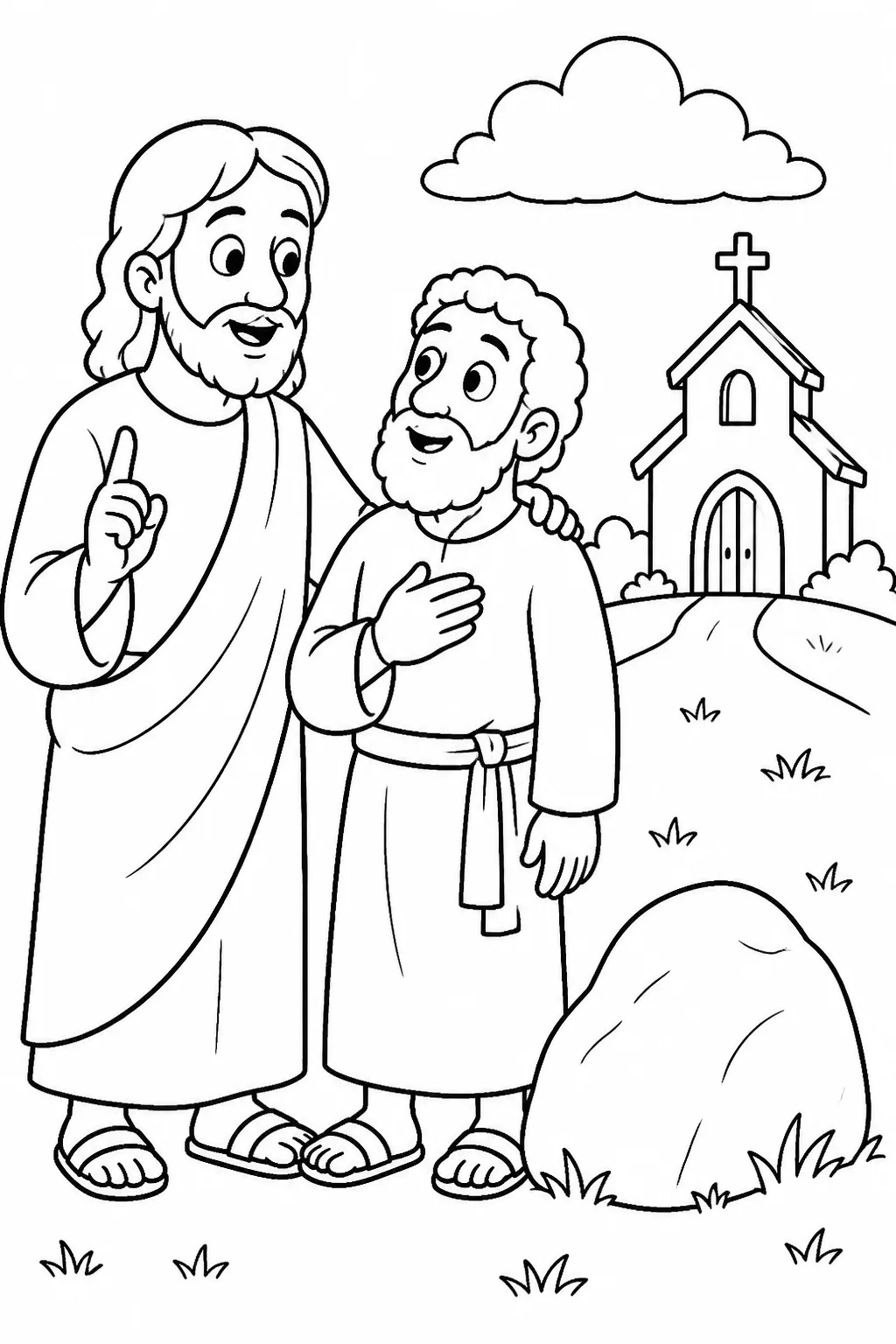
Jesus and Peter together in a teaching scene, with a rock and a modest symbolic suggestion of a church structure, representing Matthew 16:18 without interpreting “this rock.”

Jesus Speaks of Building His Church

Matthew 16:13-20
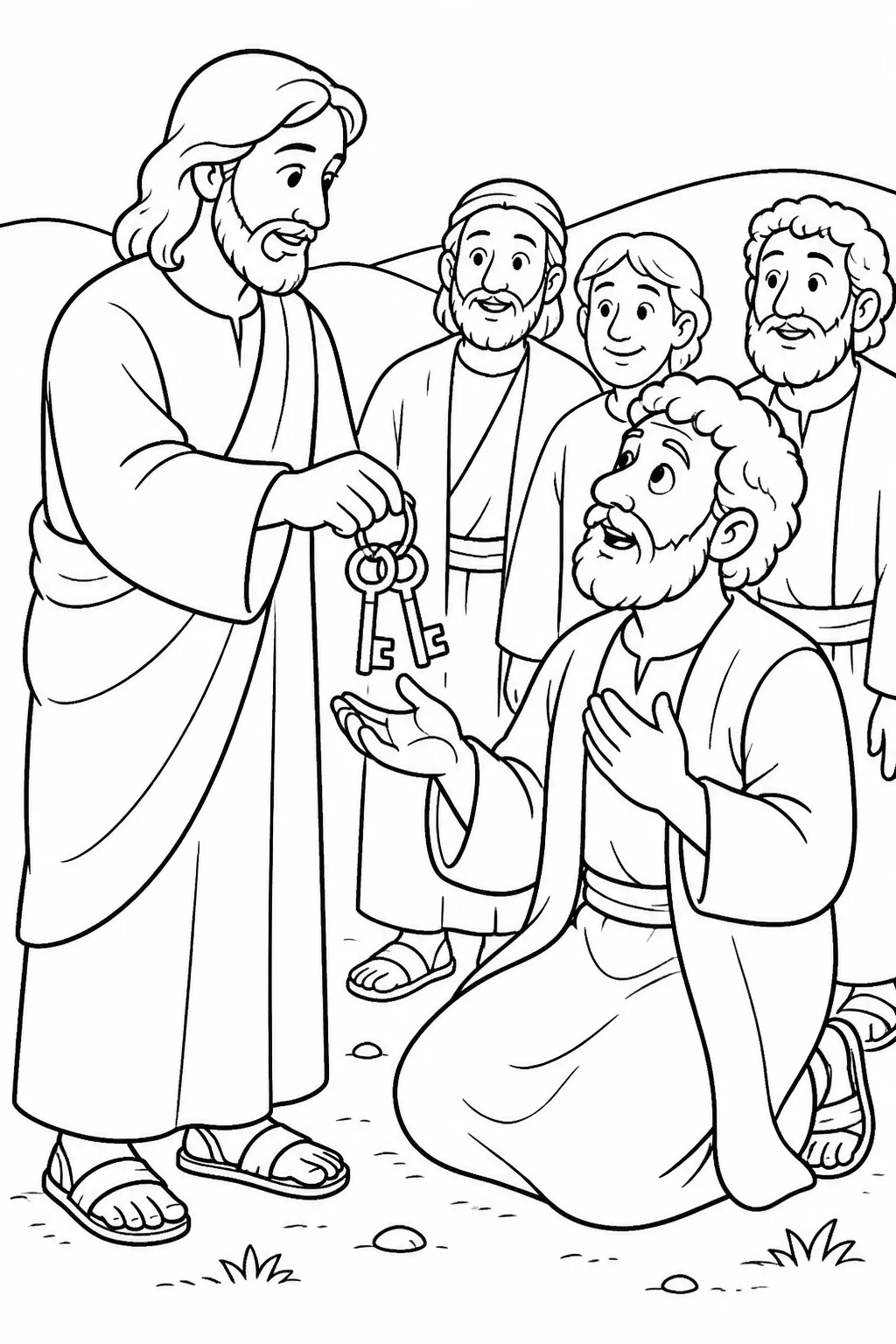
Jesus presents Peter with the keys of the kingdom of heaven while speaking about authority in Matthew 16:19.

The Keys of the Kingdom

Matthew 16:13-20
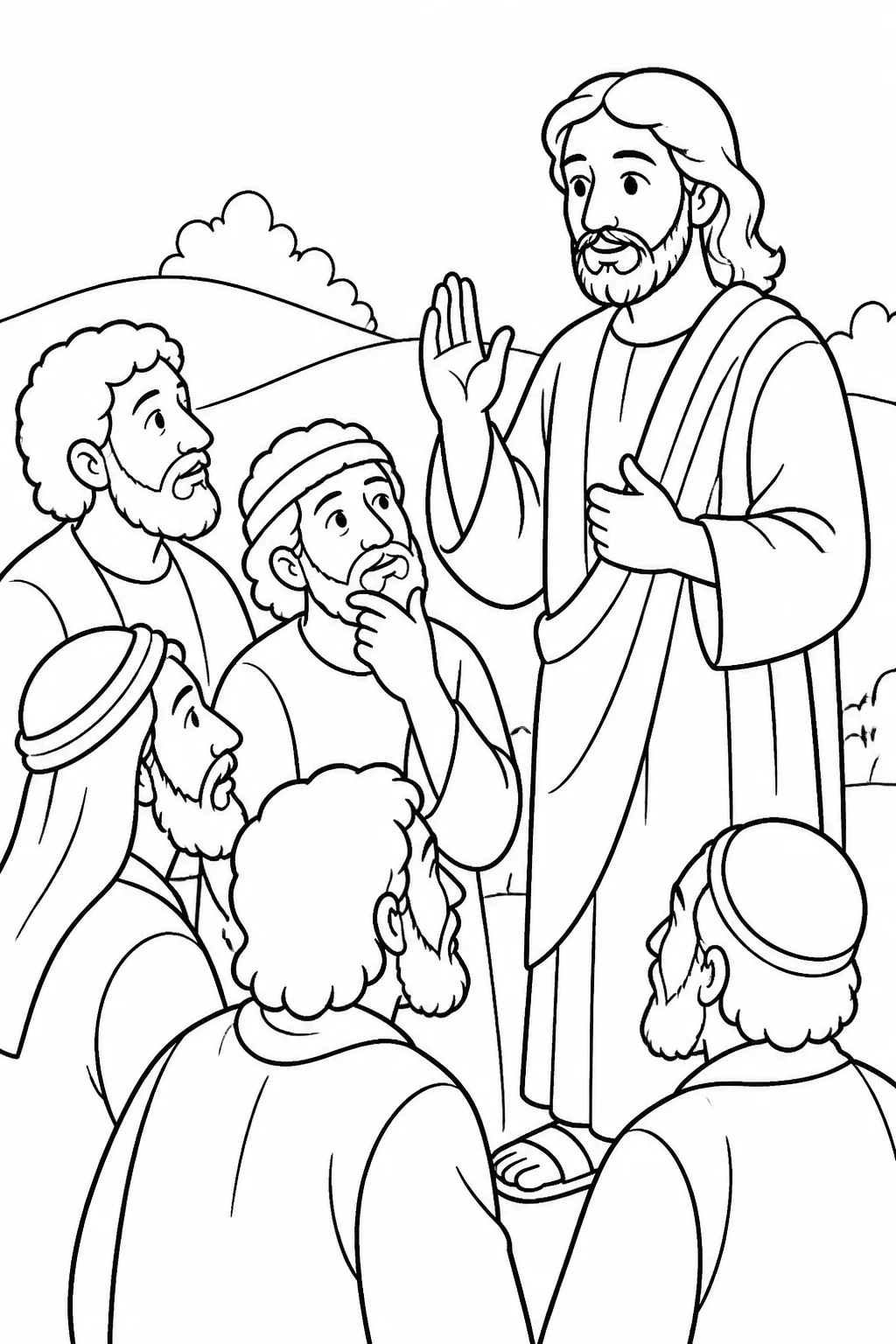
Jesus faces the disciples and instructs them not to tell anyone that he is the Christ, based on Matthew 16:20.

Jesus Gives the Disciples an Instruction

Matthew 16:13-20
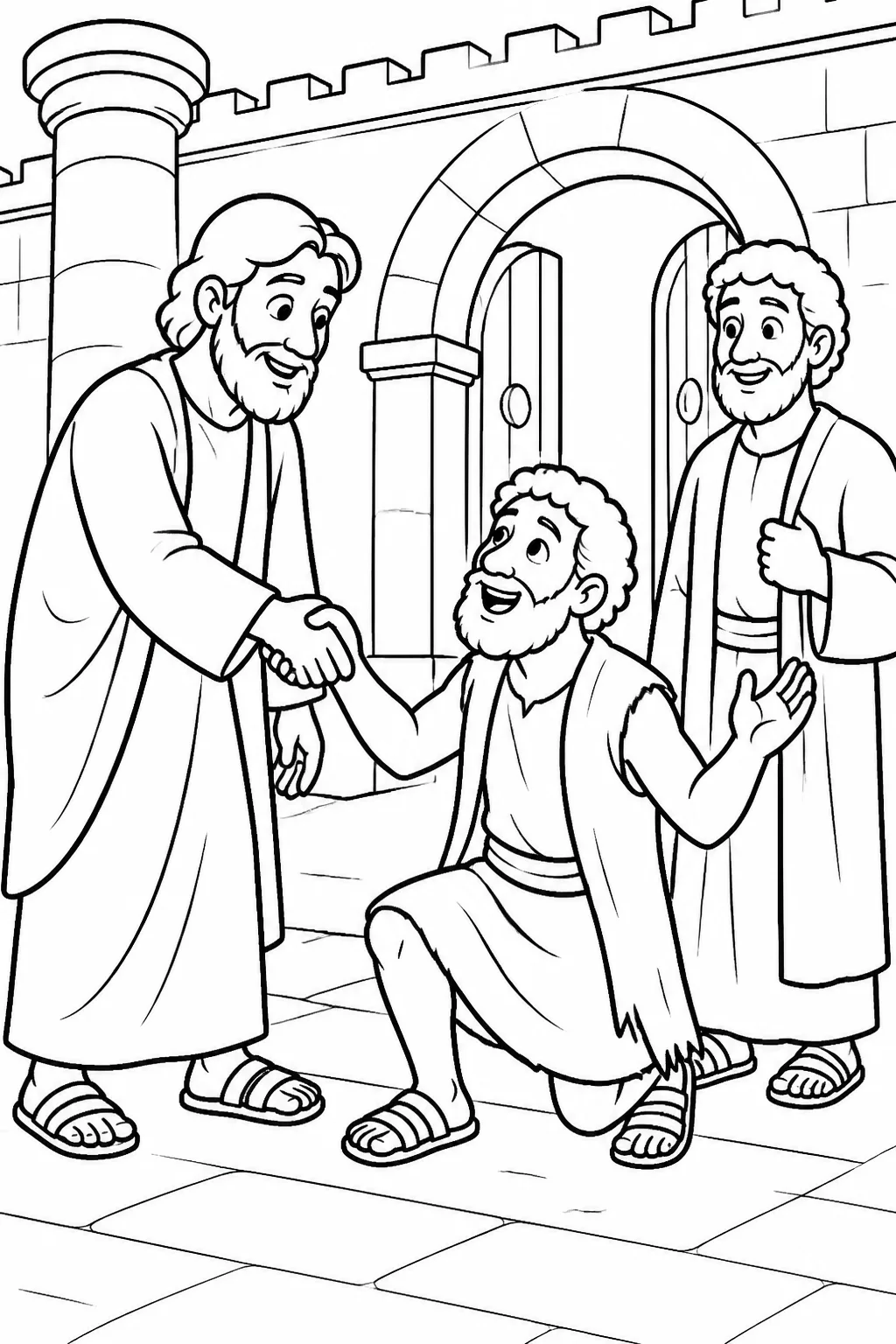
Peter reaches with his right hand to help a man unable to walk from birth rise at the Beautiful Gate, while John stands nearby; the man begins walking and praising God.

Peter Helps the Man Stand

Acts 3:1-26
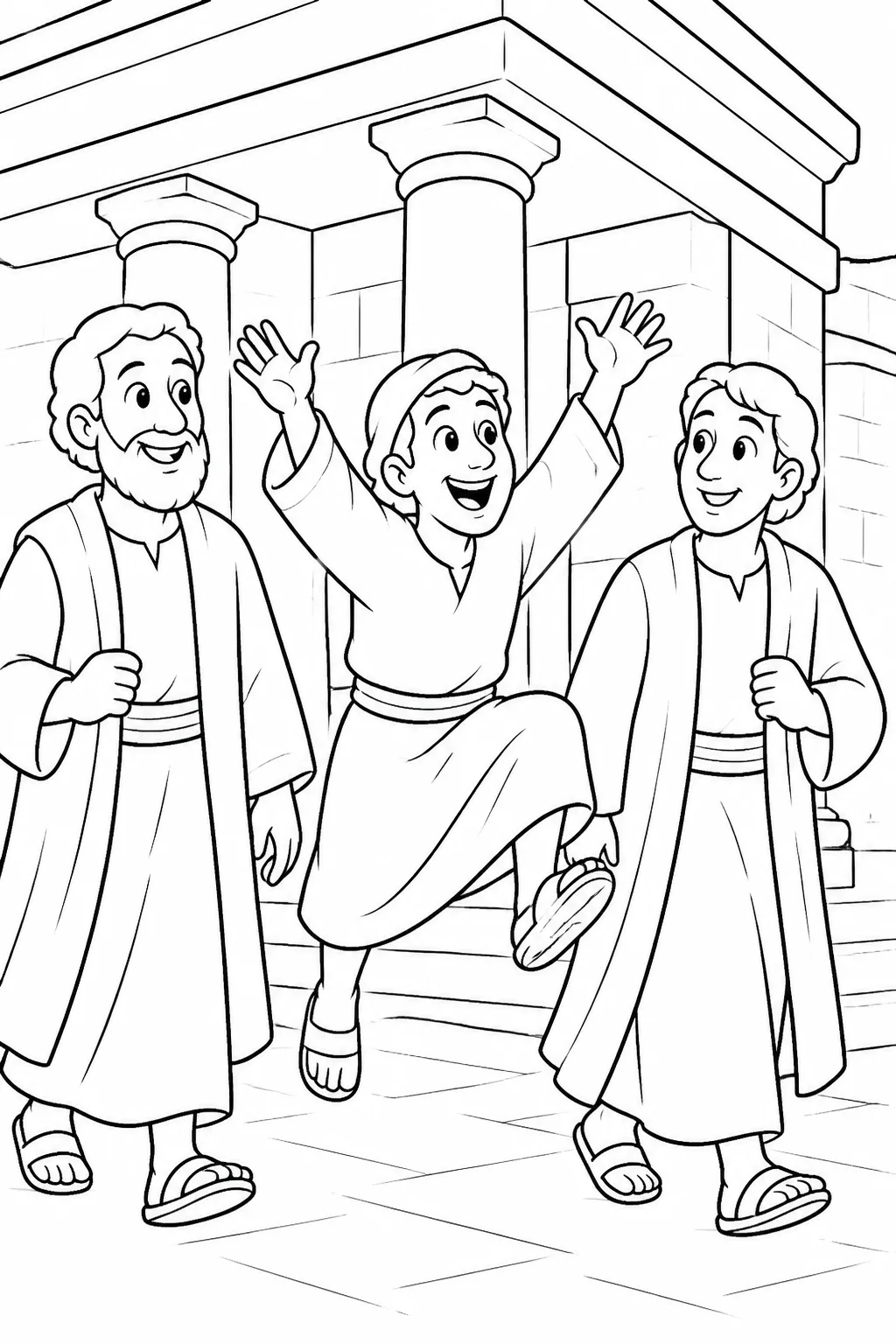
The healed man enters the temple with Peter and John, walking, leaping, and praising God.

Walking Into the Temple

Acts 3:1-26

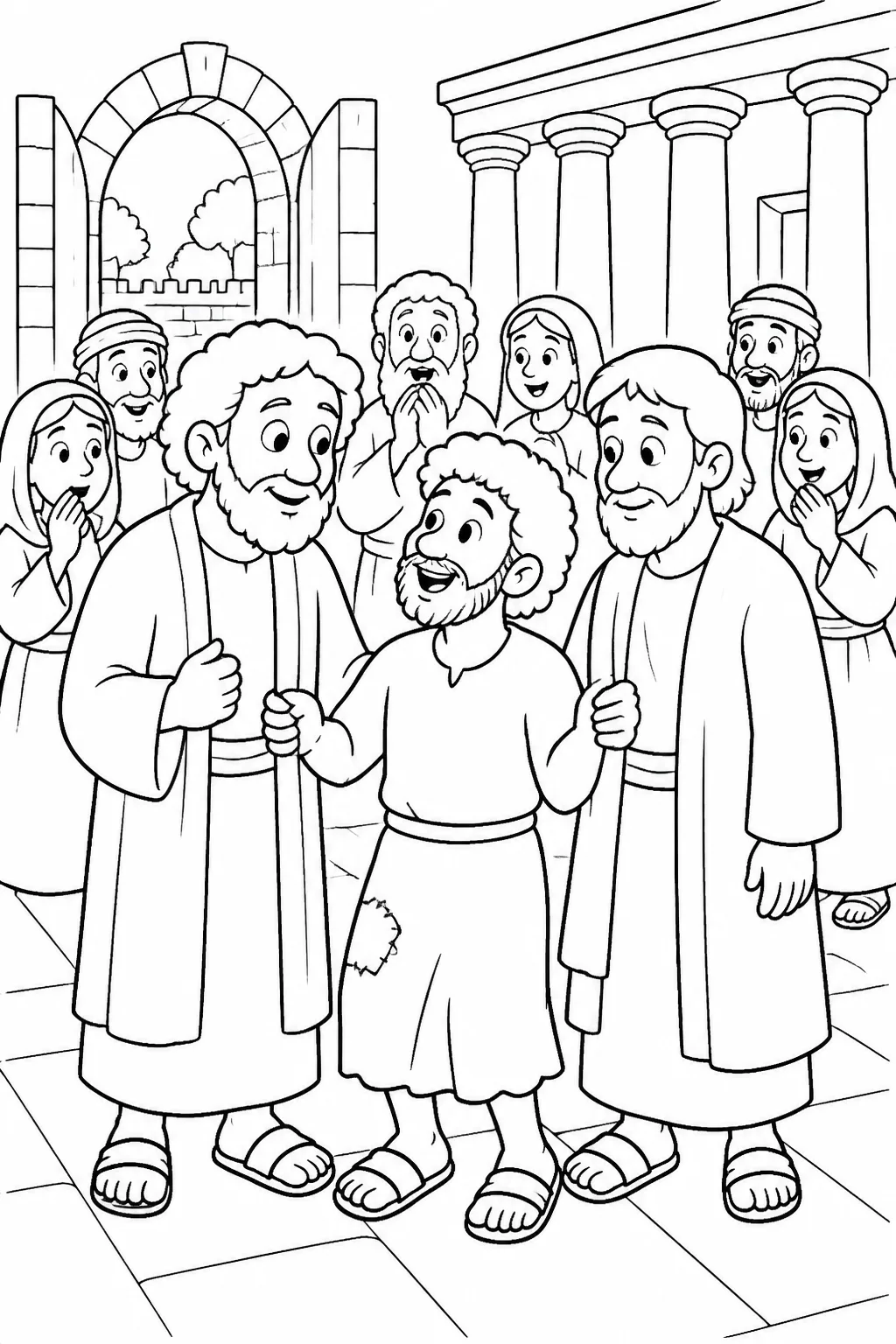
The healed man holds on to Peter and John at Solomon’s Portico while people in the temple recognize him and respond with wonder.

The People Are Amazed

Acts 3:1-26

Peter addresses the people at Solomon’s Portico with John beside him, explaining that the man’s healing came through Jesus’ name rather than Peter’s power.

Not Our Own Power

Acts 3:1-26

Peter speaking to people at Solomon’s Portico and inviting them to repent and turn back to God.

Peter Calls People to Turn Back

Acts 3:1-26
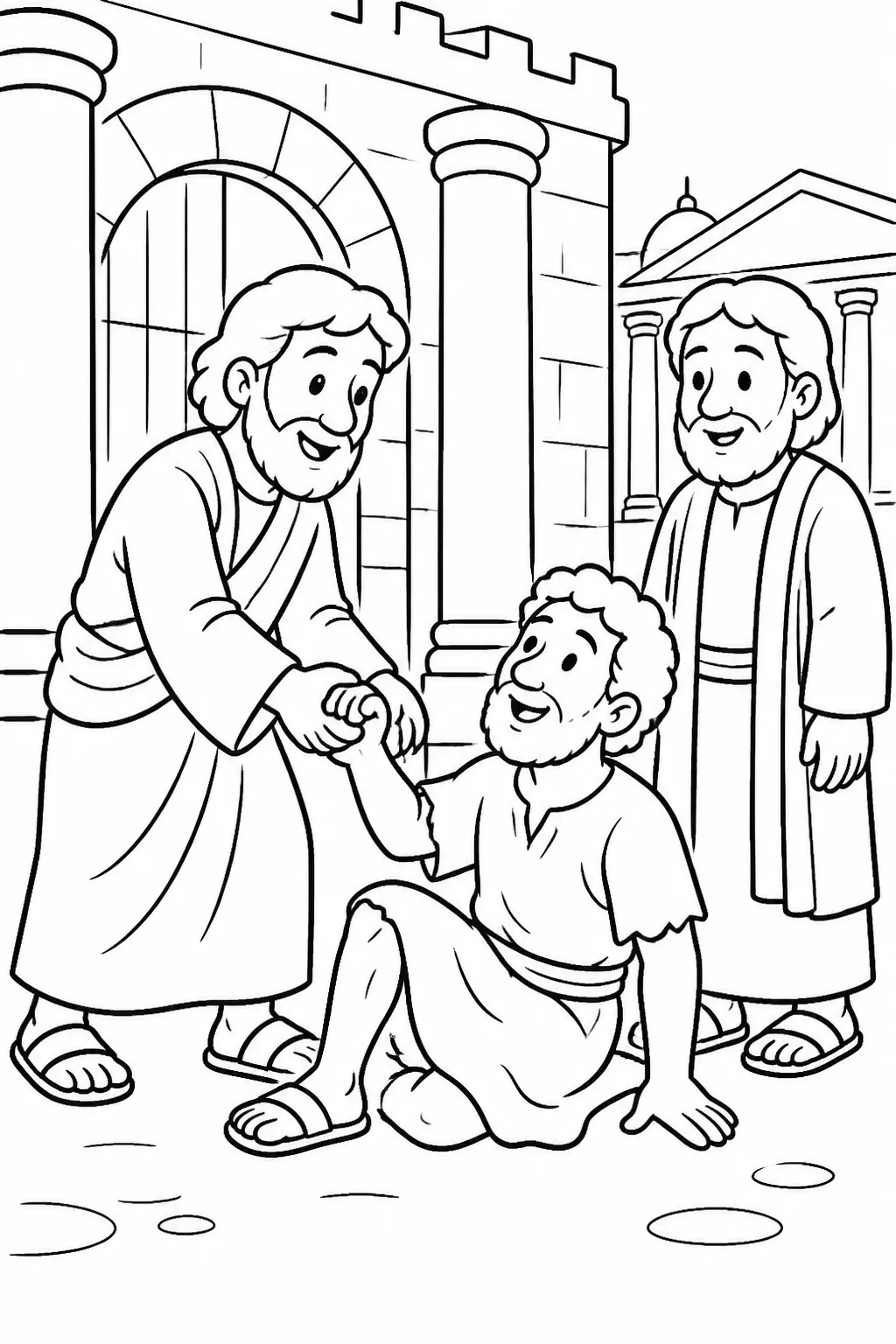
Peter raises a man unable to walk from birth by the right hand at the Beautiful Gate of the temple while John stands nearby.

Hope in Jesus’ Name

Acts 3:1-26

Peter speaking to the people at Solomon’s Portico about God’s promises and turning away from wickedness.

God’s Blessing and a New Direction

Acts 3:1-26
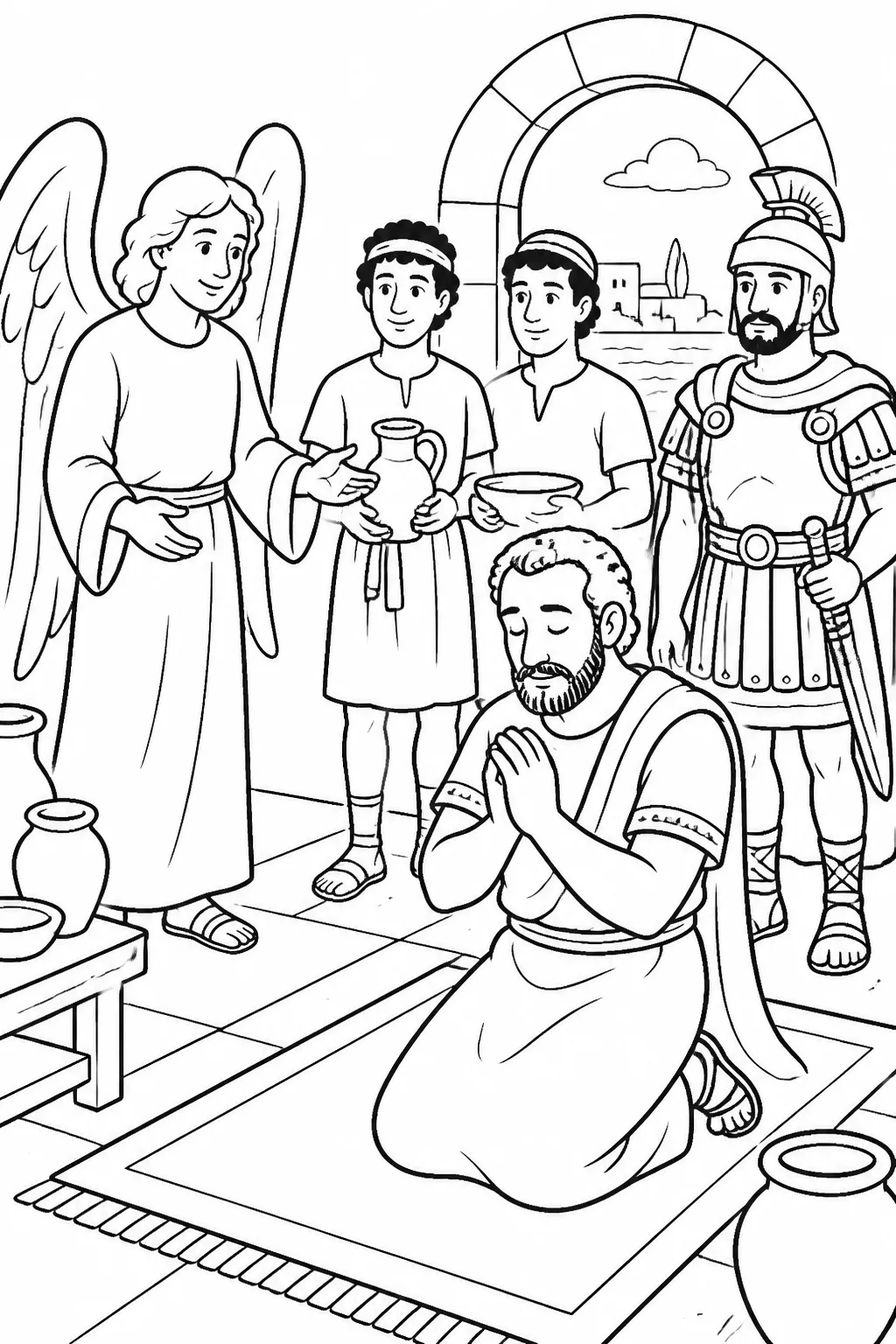
Cornelius kneeling in prayer inside his home while an angel gives him a message; two household servants and a devout soldier are ready to receive his instructions.

Cornelius Receives a Reassuring Message

Acts 10:1-48
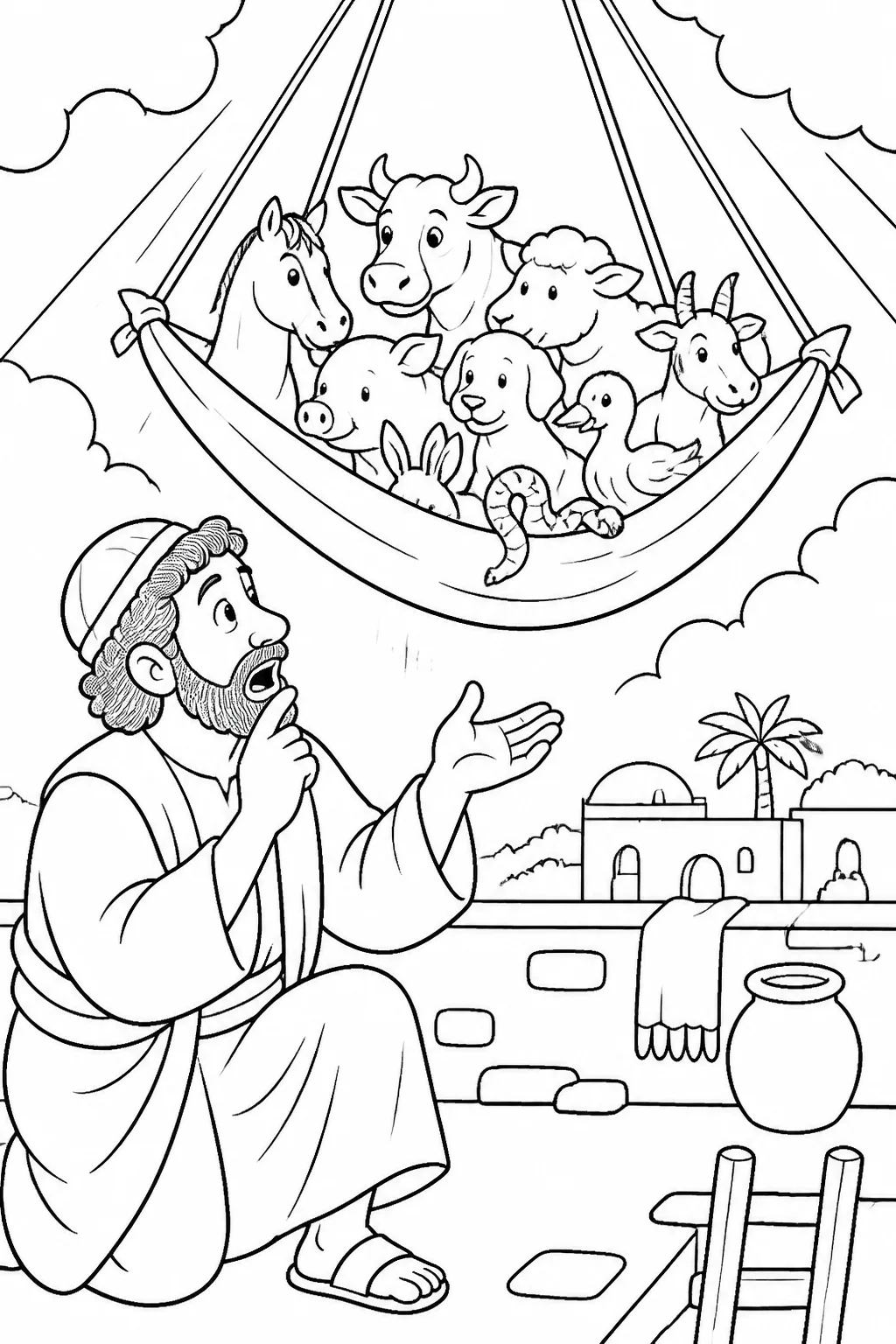
Peter on a rooftop in Joppa looks toward a large sheet-like object lowered from heaven with various animals and creatures inside, representing Acts 10:9–16.

Peter’s Rooftop Vision

Acts 10:1-48

Peter meeting Cornelius’s two household servants and a devout soldier at Simon the tanner’s house in Joppa.

Peter Meets Cornelius’s Messengers

Acts 10:1-48
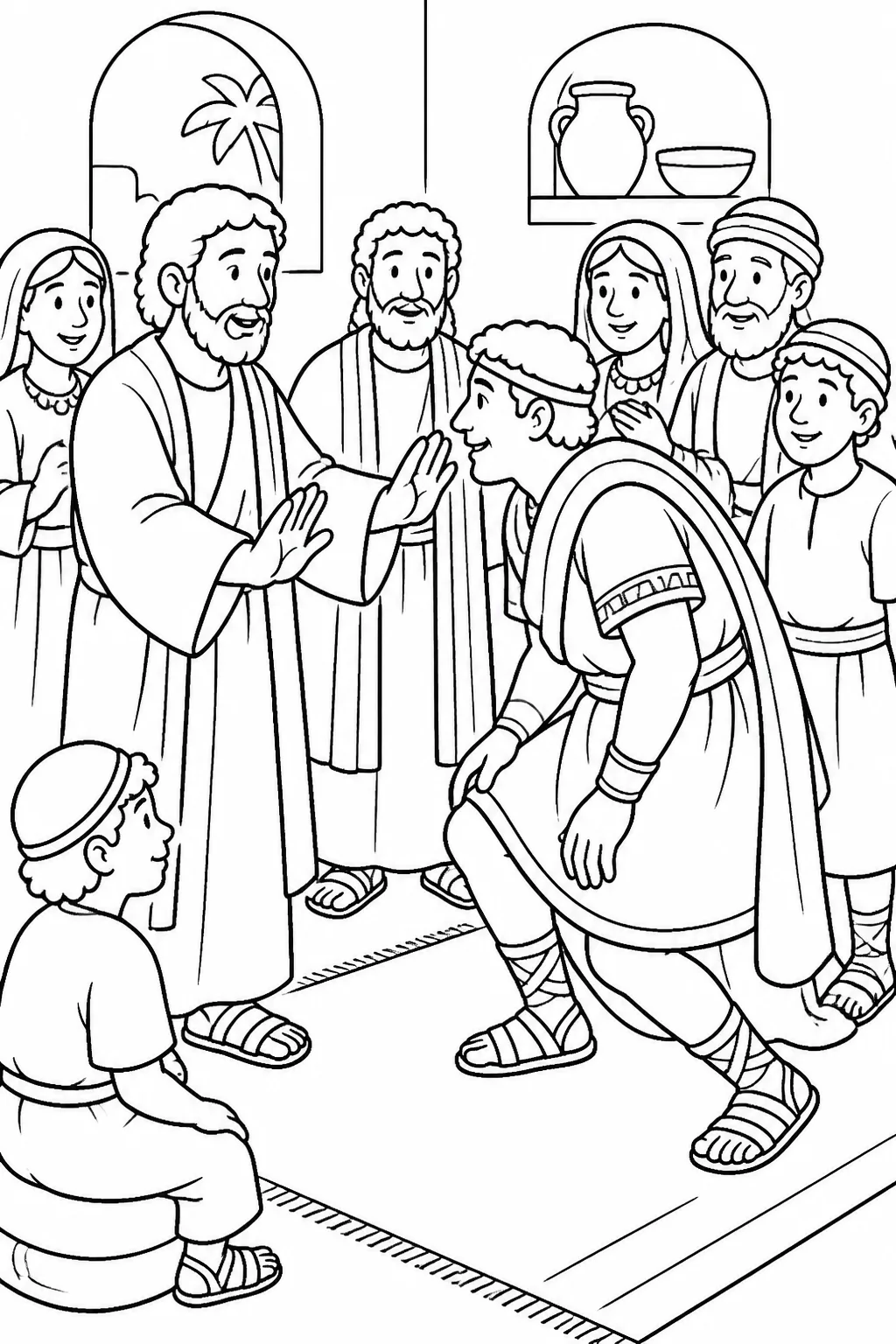
Cornelius welcomes Peter inside his house while his relatives and close friends gather to listen; Cornelius rises from a respectful bow as Peter tells him to stand.

Cornelius Gathers His Household

Acts 10:1-48
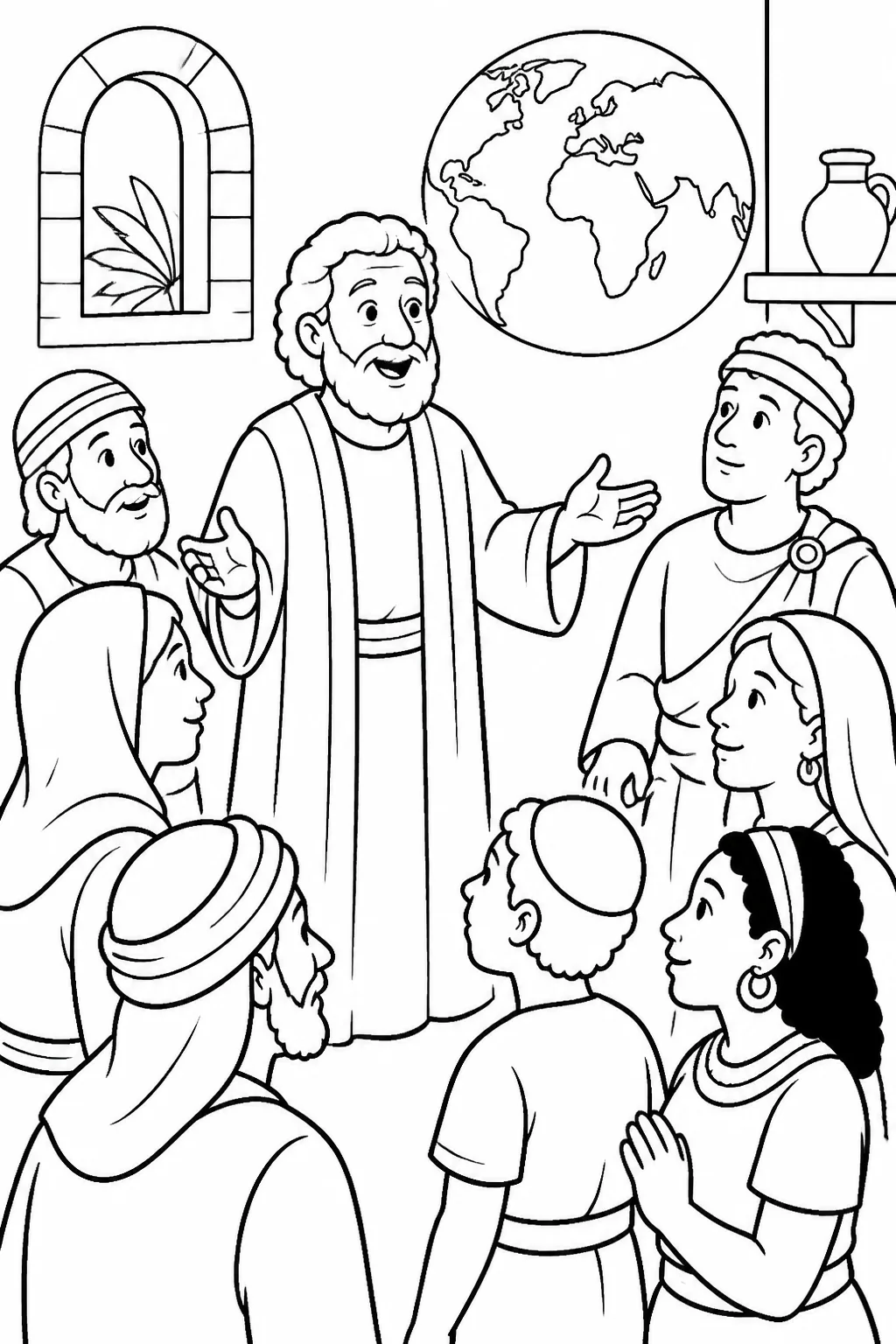
Peter speaking inside Cornelius’s house to Cornelius’s relatives, close friends, and guests from different backgrounds, illustrating Acts 10:34–43.

Good News for Every Nation

Acts 10:1-48
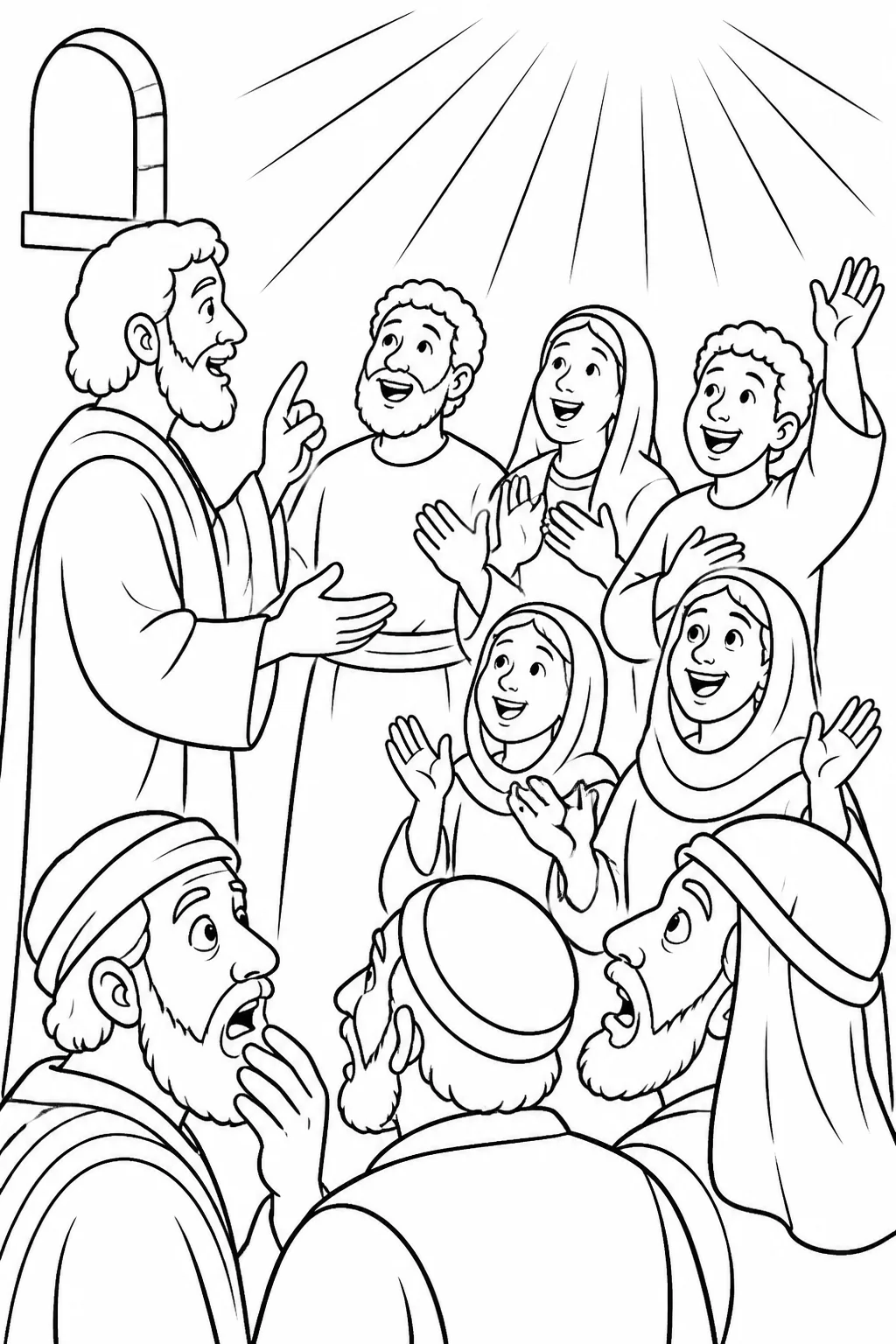
Peter speaks to Cornelius’s household as Gentile hearers receive the Holy Spirit, praise God, and surprise the circumcised believers who came with Peter.

The Holy Spirit Comes While Peter Speaks

Acts 10:1-48
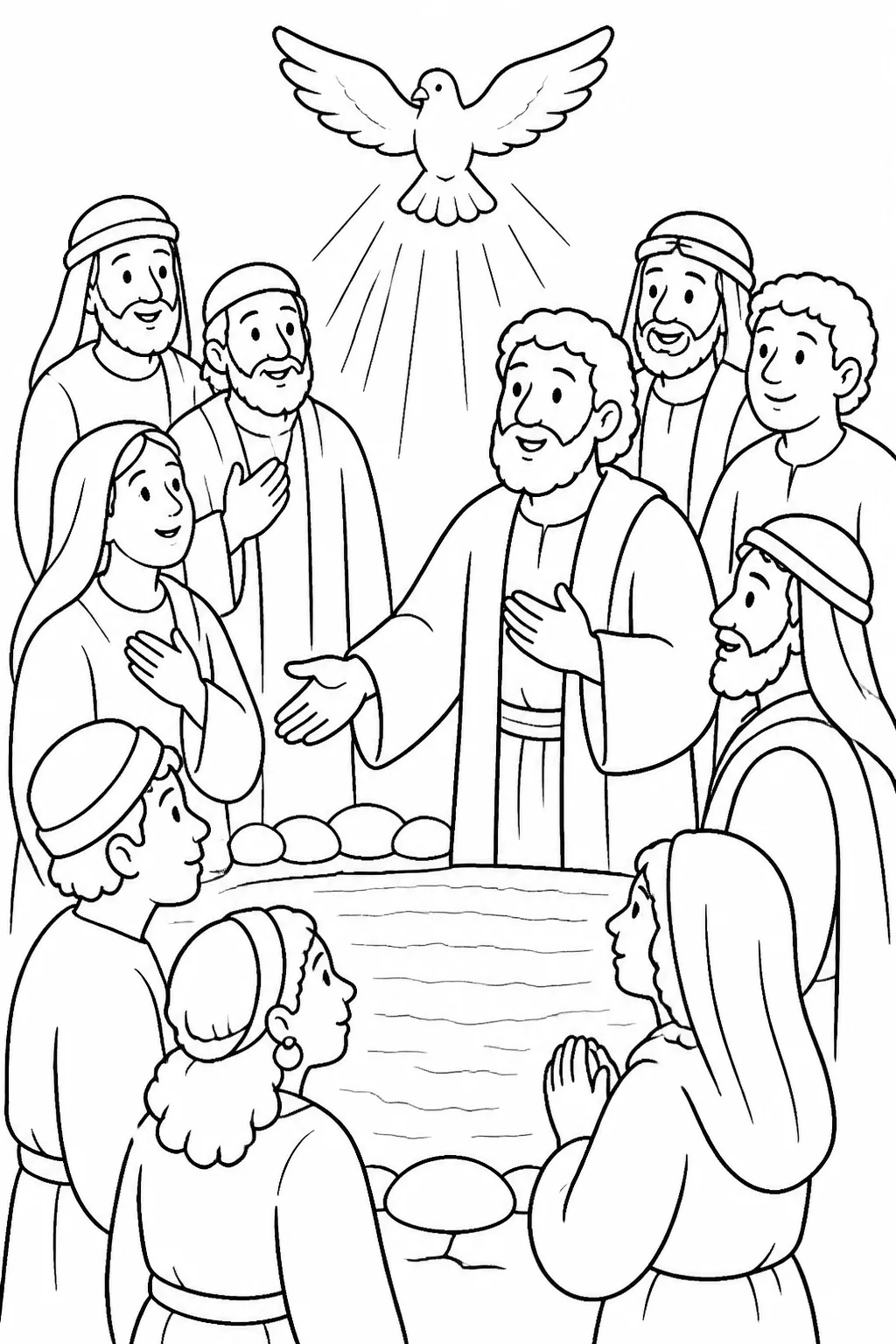
Baptism in the Name of Jesus Christ from Peter Visits Cornelius Bible coloring page

Baptism in the Name of Jesus Christ

Acts 10:1-48
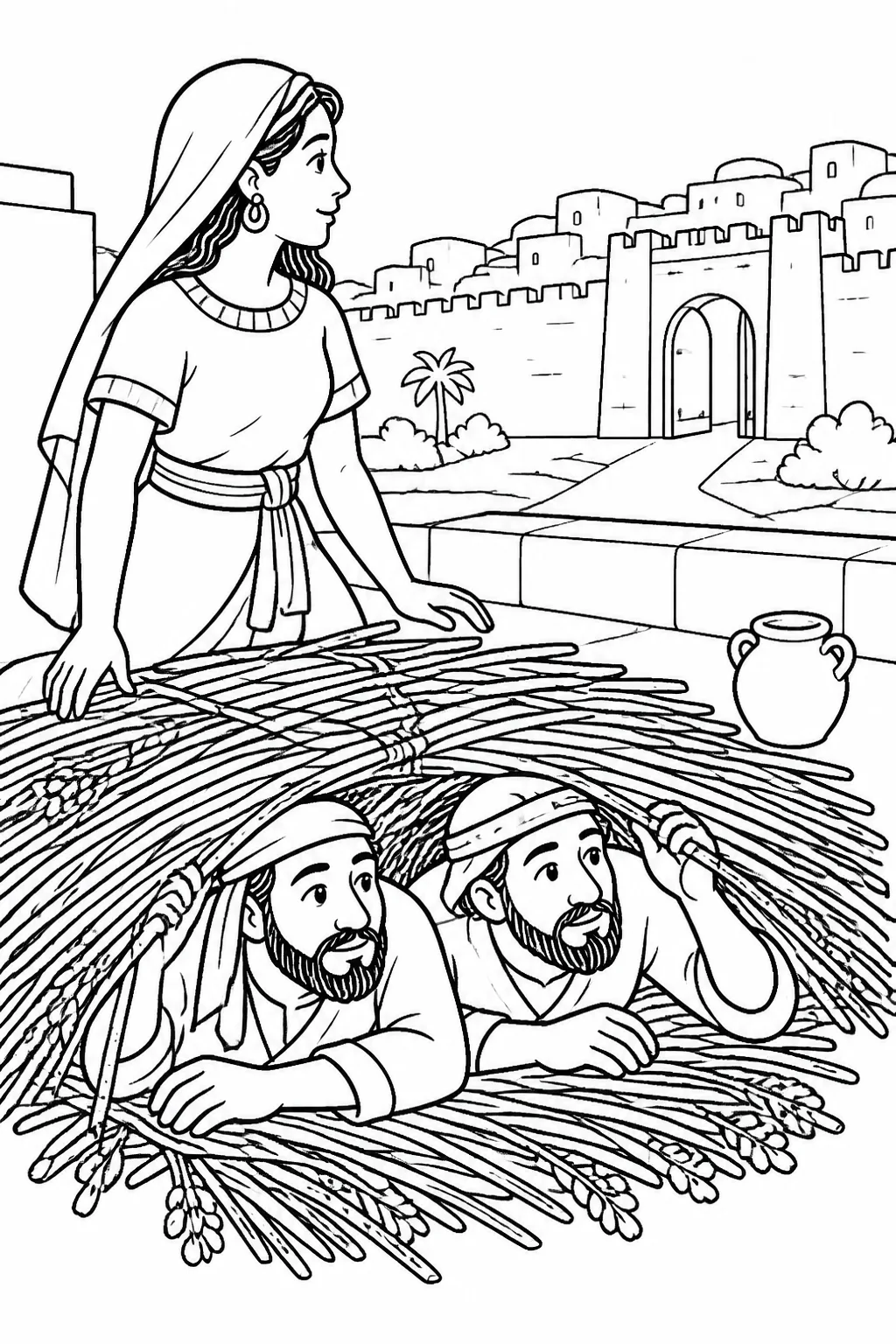
Rahab on her roof near bundles of flax while two unnamed Israelite spies hide beneath them, with Jericho’s city gate in the distance.

Rahab Hides the Spies Under the Flax

Joshua 2:1-24
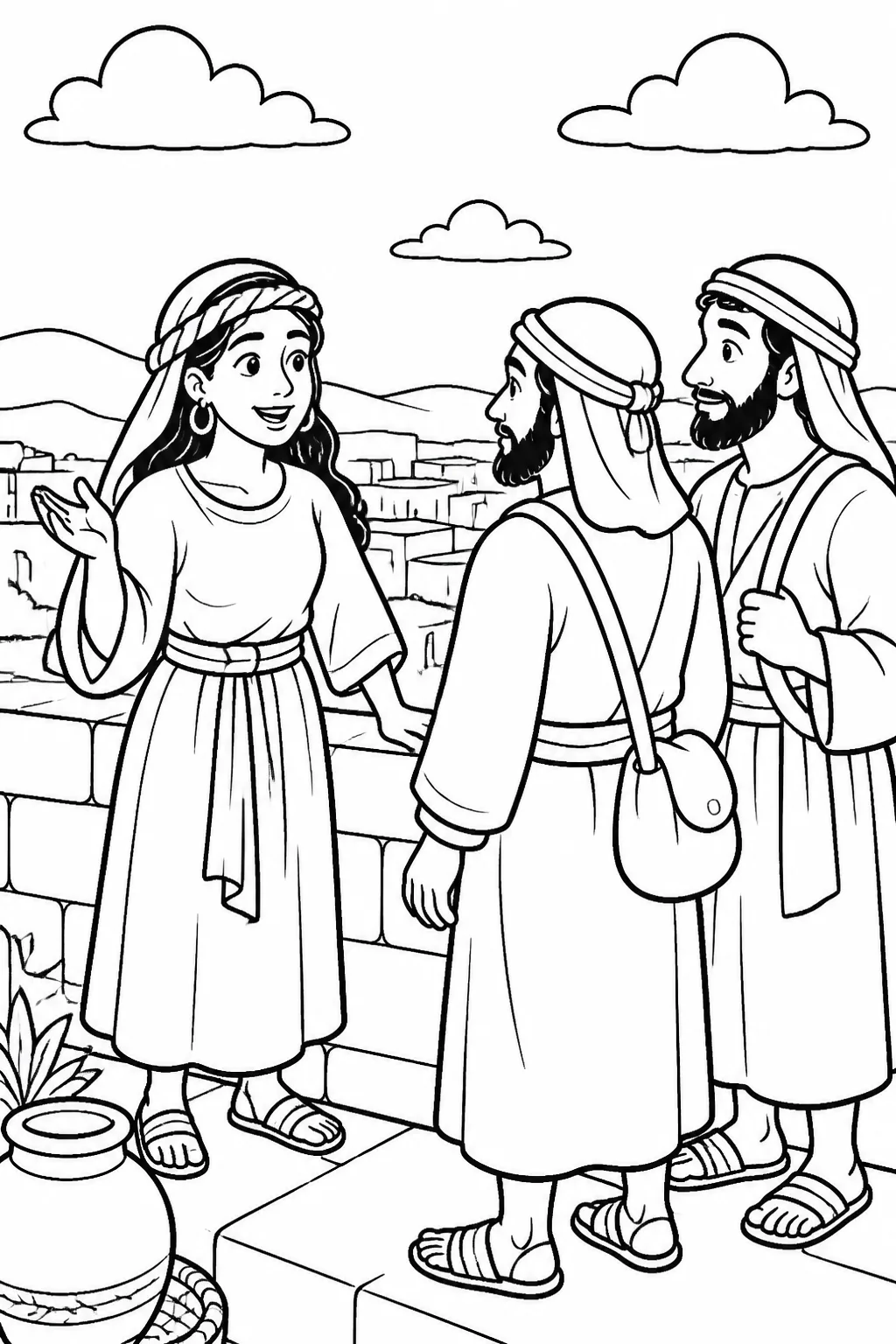
Rahab speaks with two unnamed Israelite spies on the roof of her house in Jericho beneath an open sky, based on Joshua 2:8-11.

Rahab Speaks Courageously on the Roof

Joshua 2:1-24
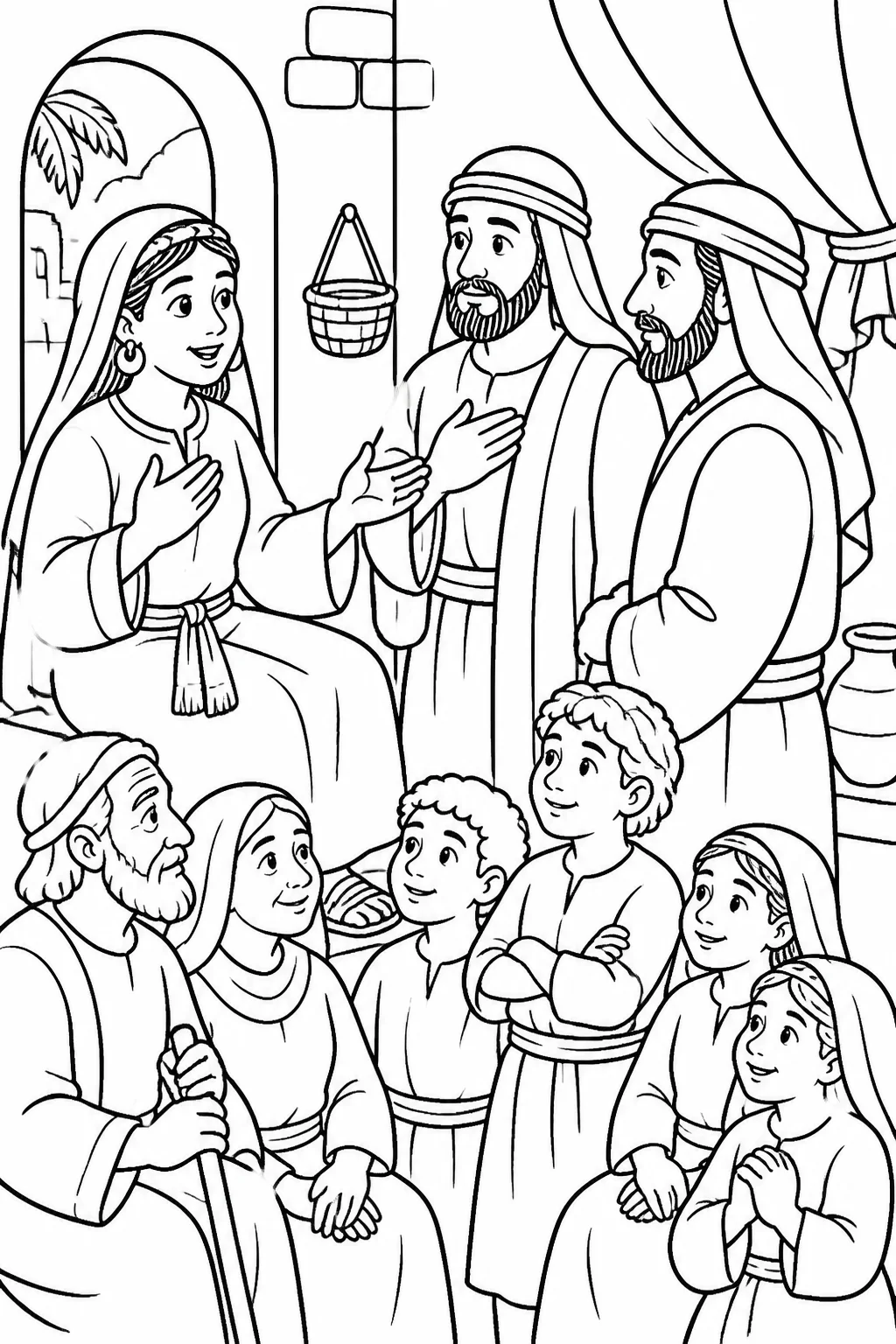
Rahab asks two unnamed Israelite spies for a promise to protect her family and household, based on Joshua 2:12-14.

Rahab Asks for Protection for Her Household

Joshua 2:1-24
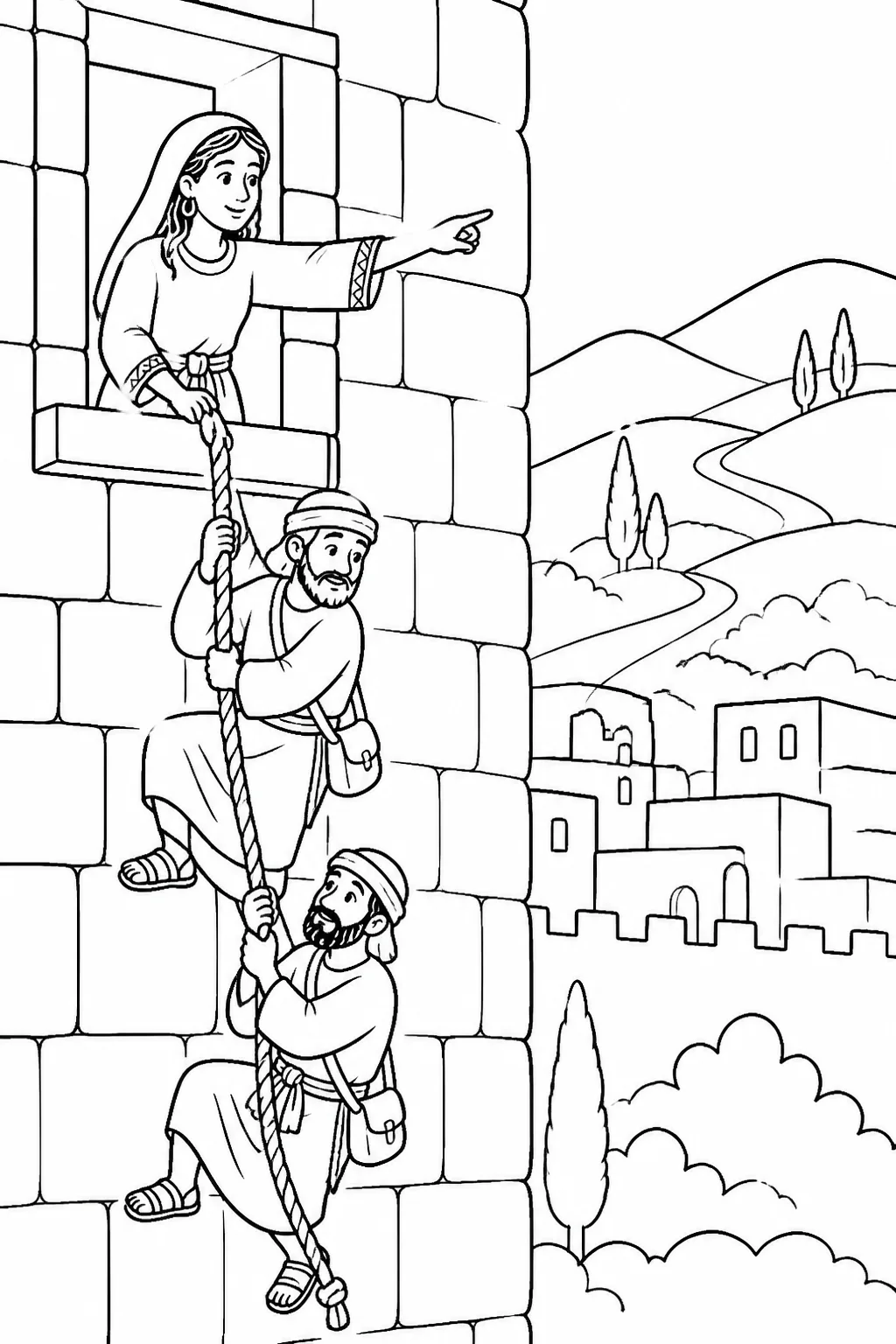
Rahab helps two unnamed Israelite spies descend by a rope through her window in Jericho’s wall and points toward the hills.

The Spies Leave Through the Window

Joshua 2:1-24
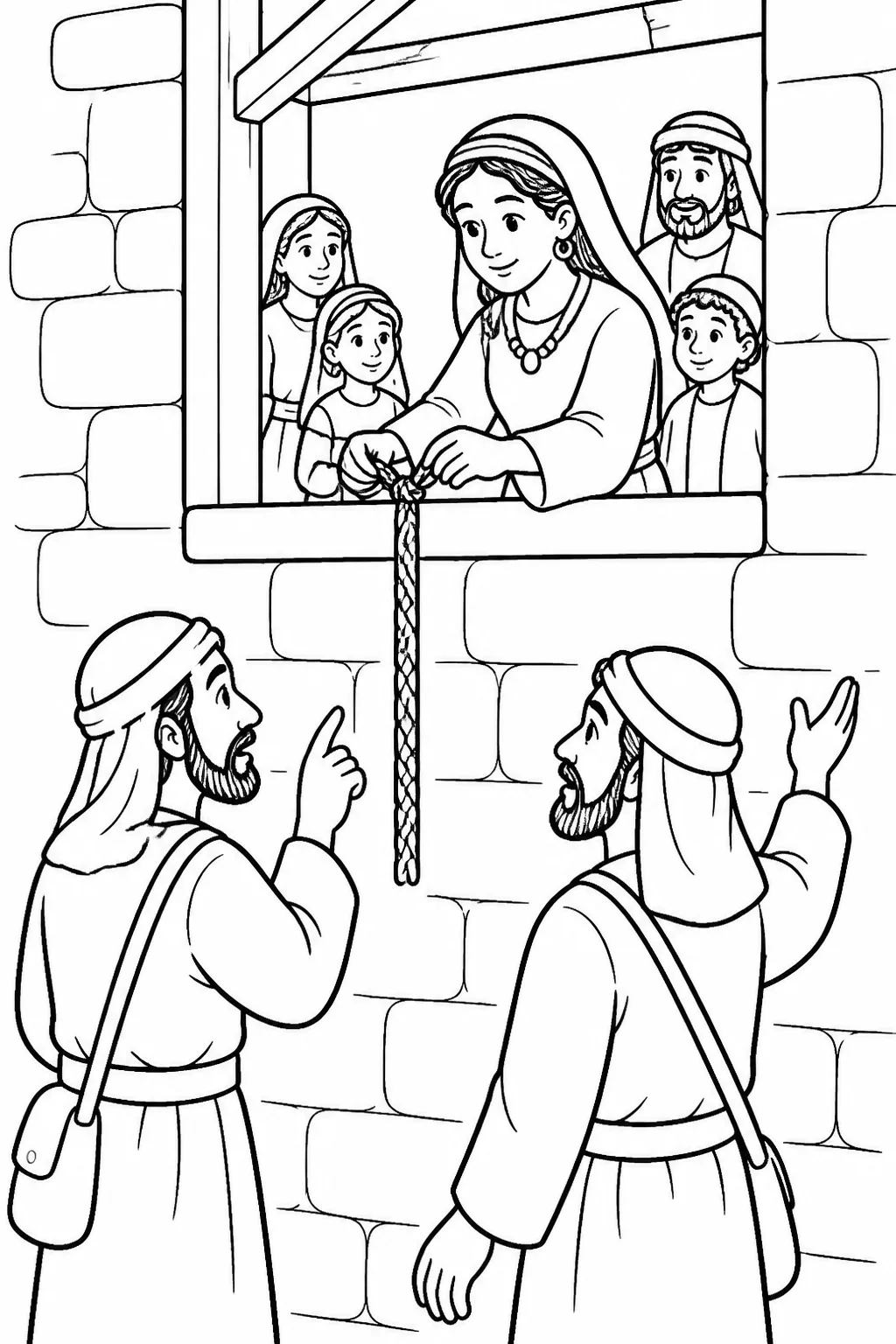
Rahab ties a scarlet cord in the window of her house while two unnamed spies gesture toward the cord and her family gathers inside.

Rahab Ties the Scarlet Cord

Joshua 2:1-24
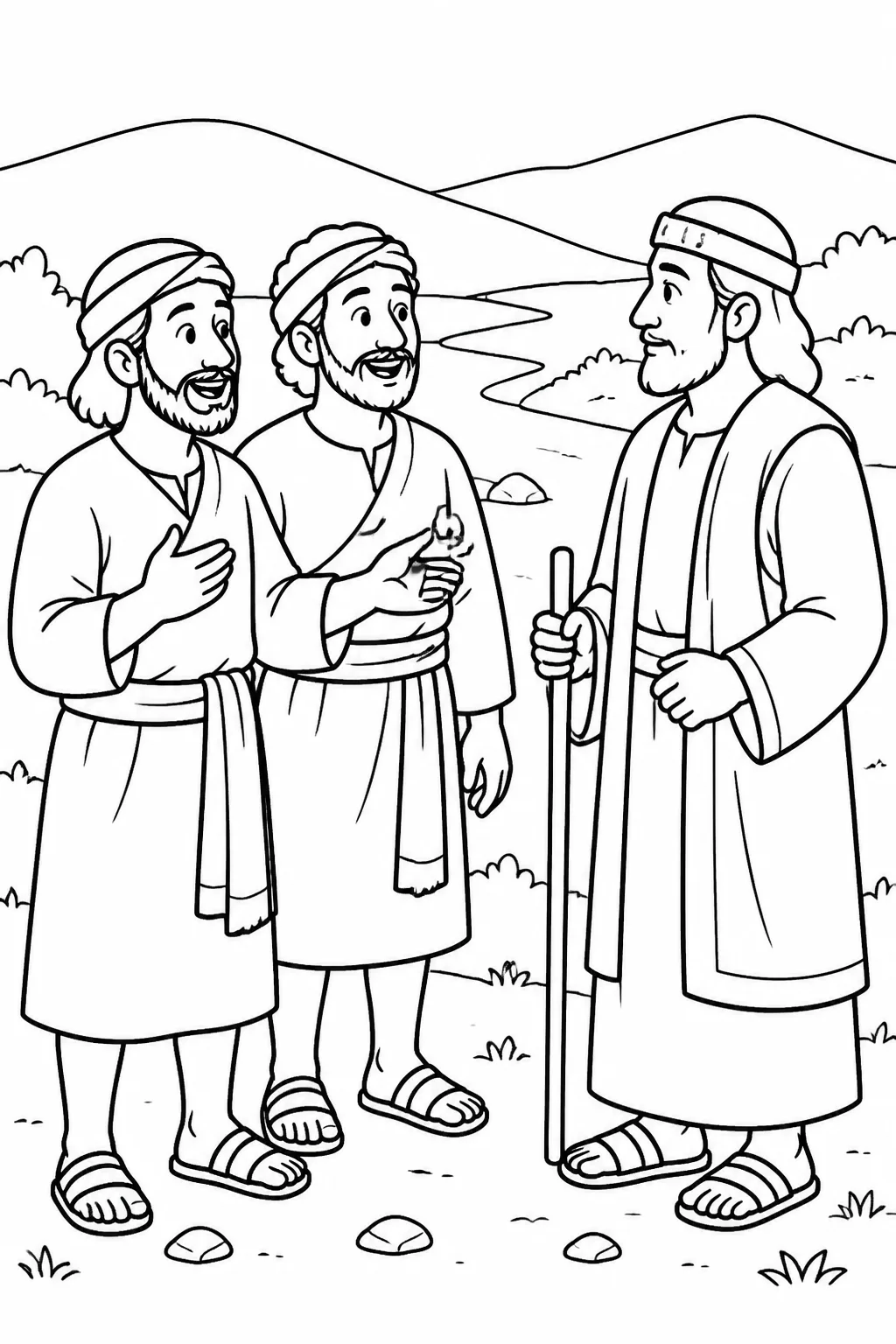
Joshua listens as two unnamed Israelite spies report their safe return from the hills and say that the LORD has given Israel the land.

The Spies Report Back to Joshua

Joshua 2:1-24
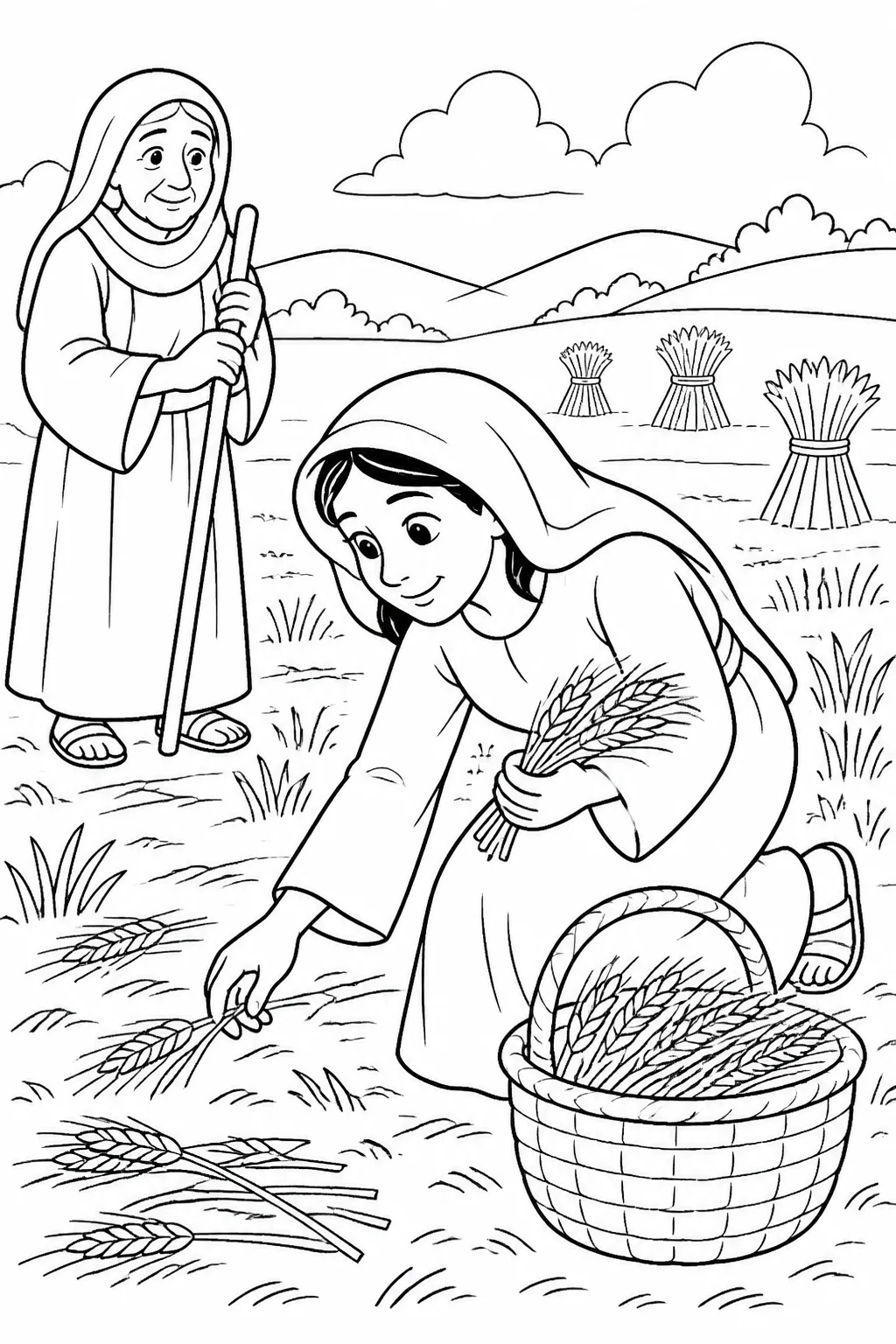
Ruth, a Moabite woman who returned to Bethlehem with Naomi, gathers leftover grain in a field with a basket or bundle.

Ruth Gathers Leftover Grain

Ruth 2:1-23
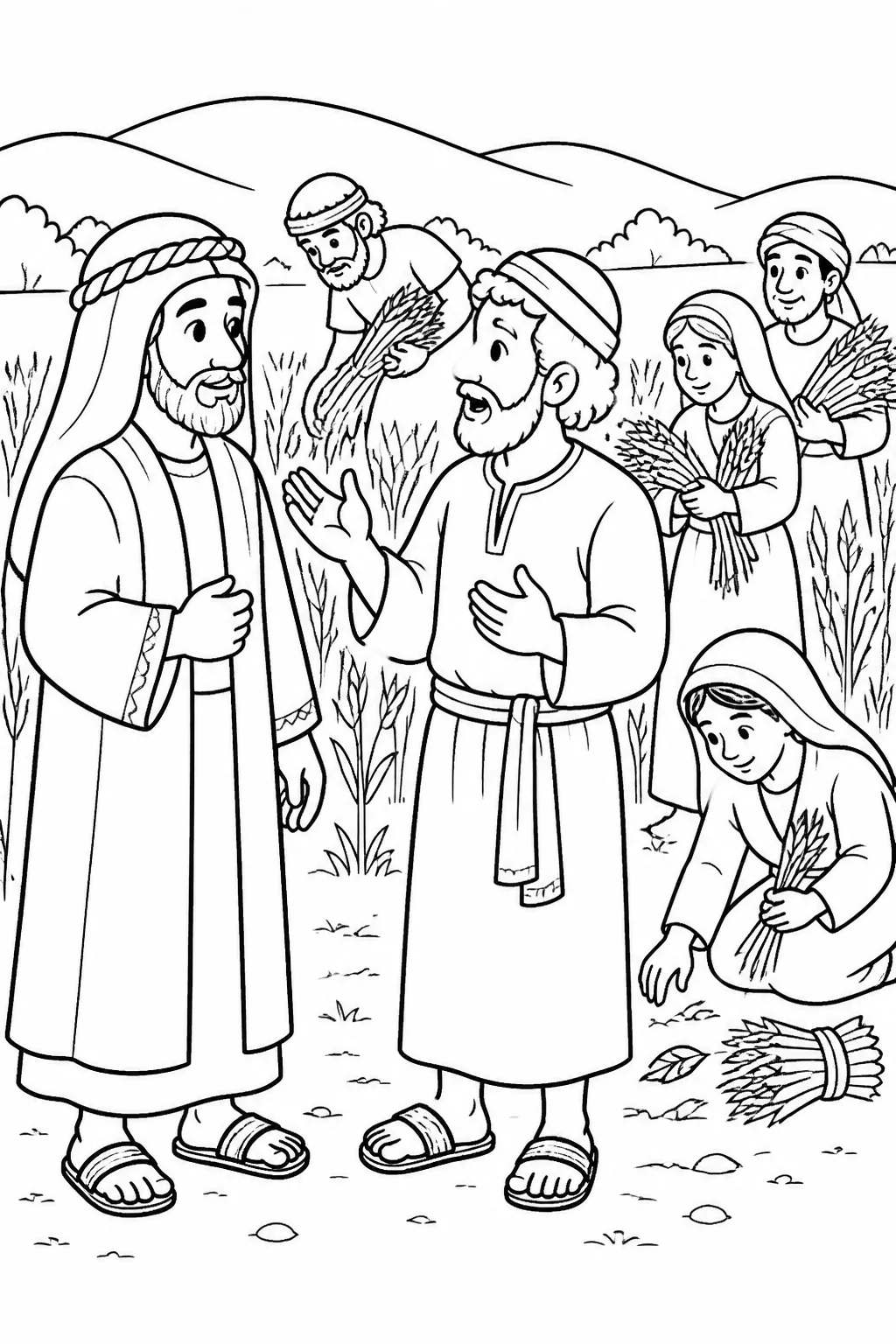
Boaz arrives in a grain field near Bethlehem and speaks with the overseer about Ruth, the Moabite woman who came with Naomi and has been gleaning since morning with a short rest.

Boaz Arrives in the Field

Ruth 2:1-23
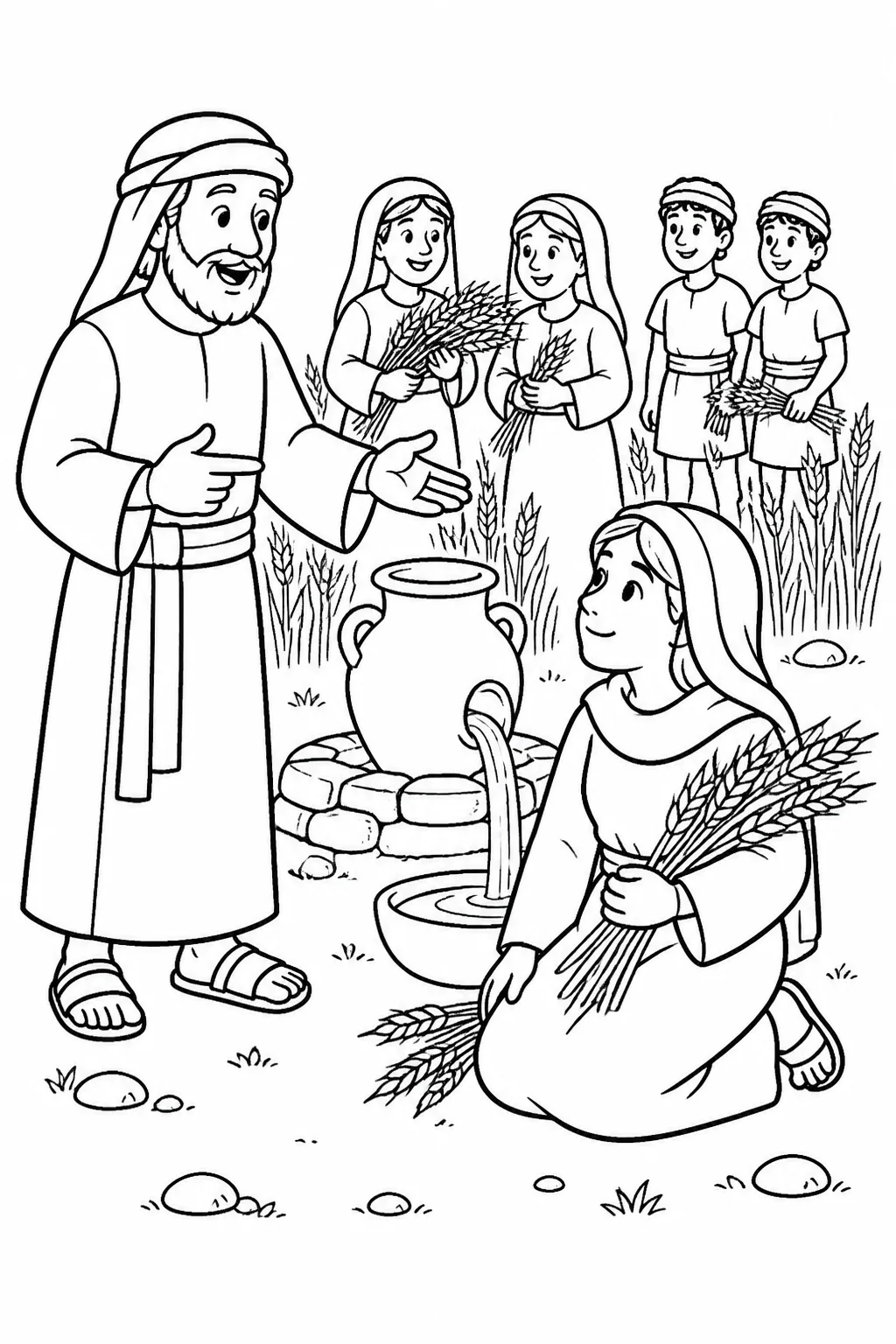
Boaz speaks with Ruth in a grain field and gives her instructions to stay with the female workers and drink the workers’ water.

Boaz Gives Ruth Safe Instructions

Ruth 2:1-23
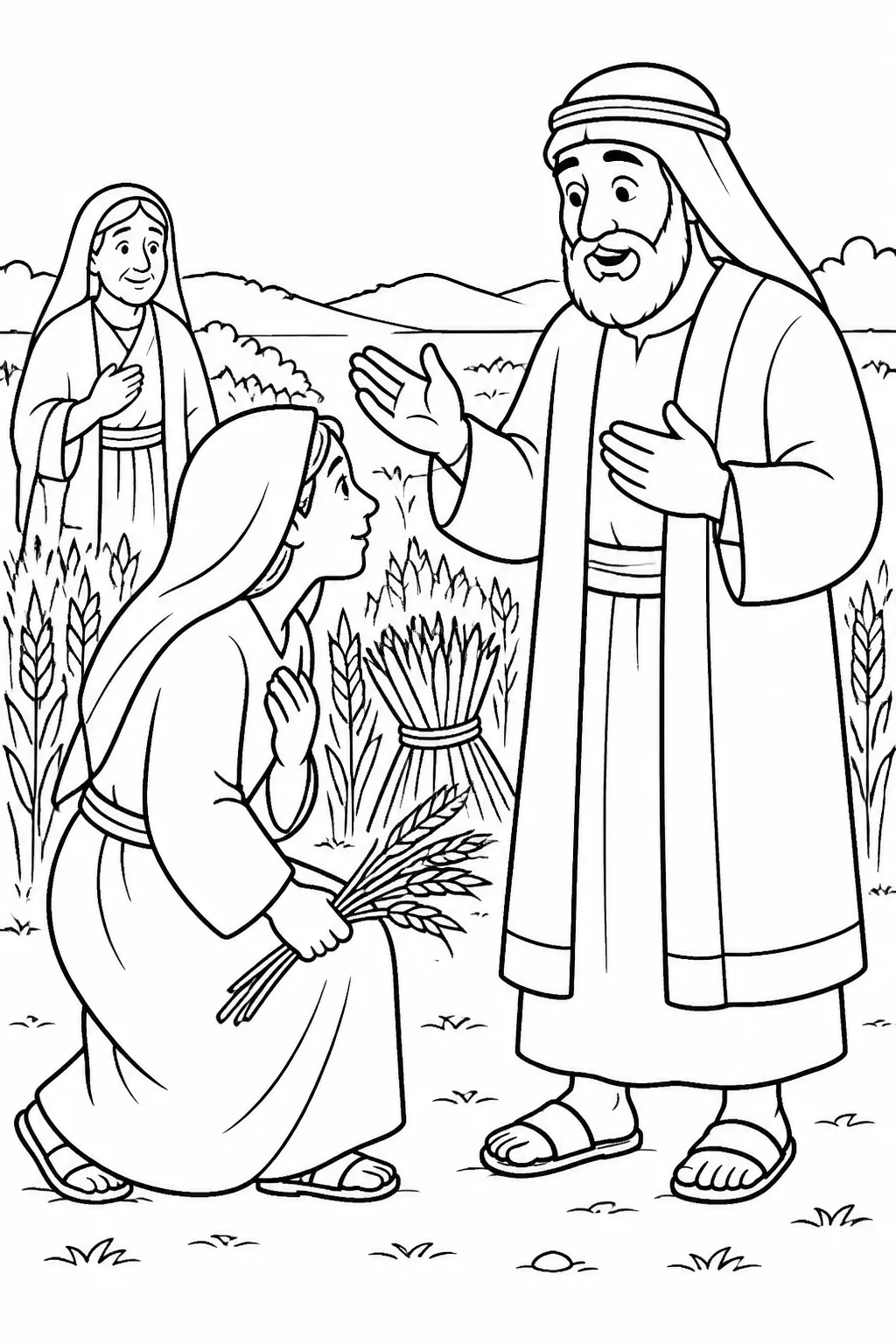
Ruth bows before Boaz in a grain field and asks why he has shown kindness to her, a Moabite foreigner, as described in Ruth 2:10-13.

Ruth Receives Kindness

Ruth 2:1-23

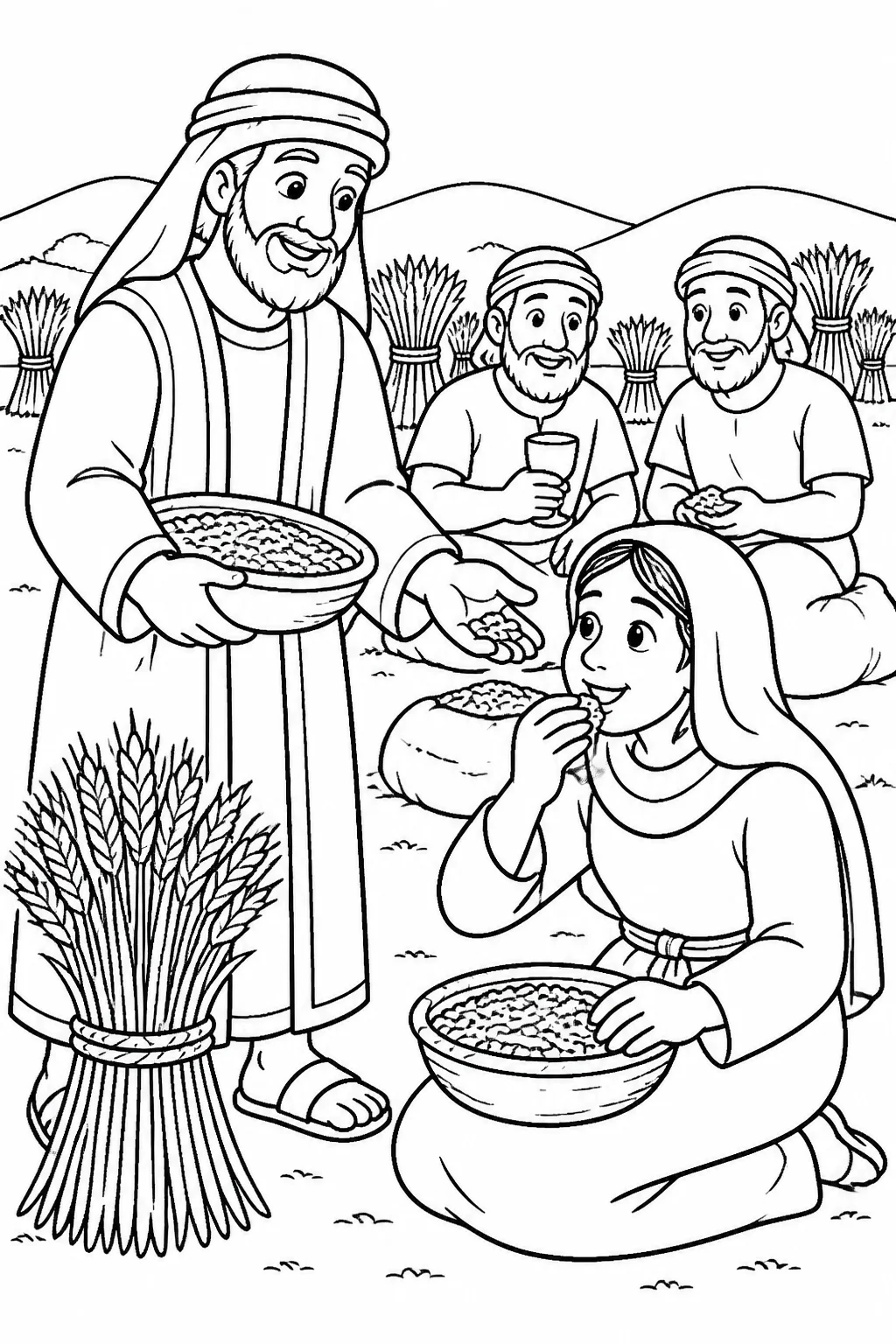
Boaz shares roasted grain with Ruth at mealtime and tells workers to leave extra grain for her among the sheaves in his field.

Boaz Shares Food with Ruth

Ruth 2:1-23
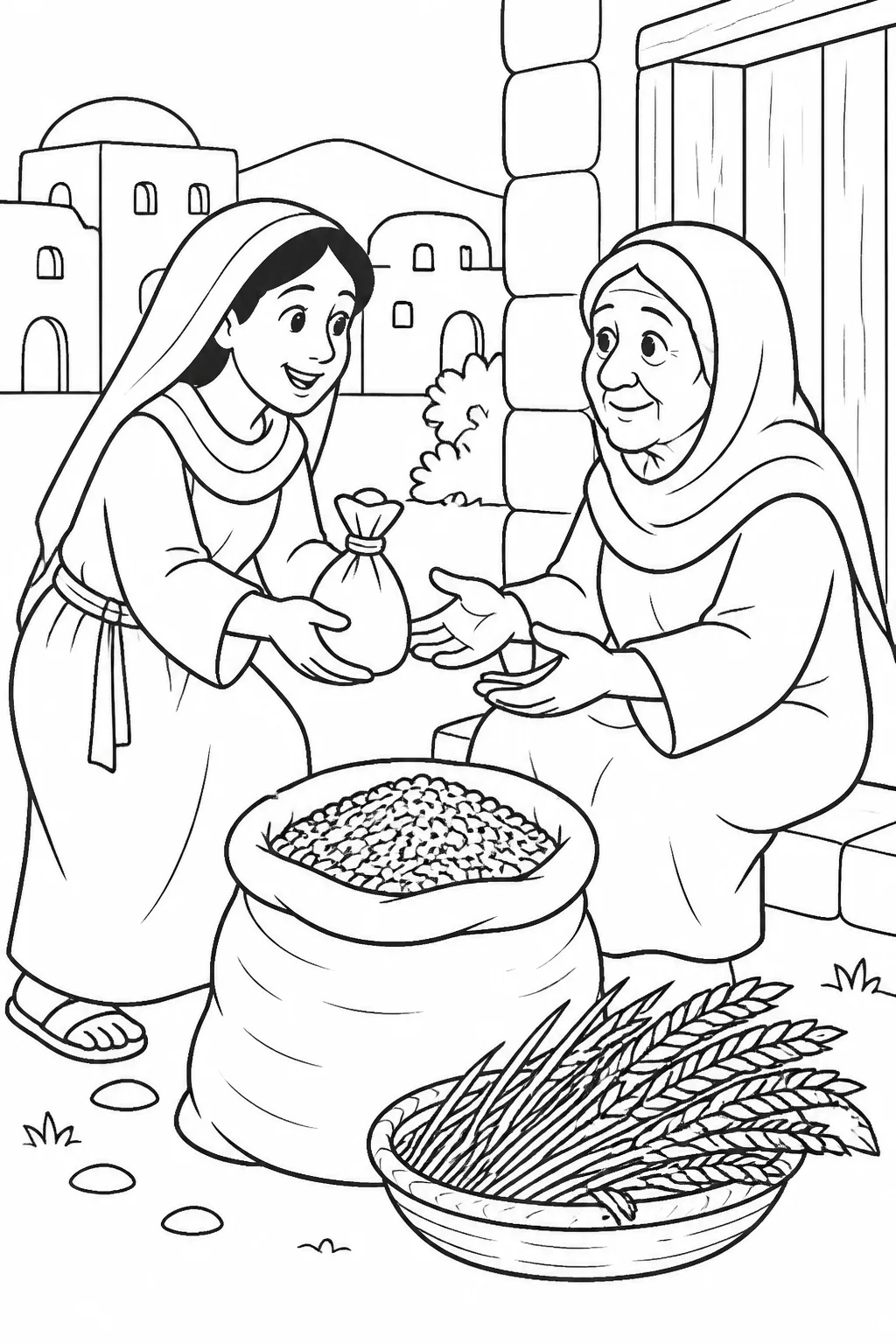
Ruth brings gathered barley and food saved from a meal to Naomi in Bethlehem after gleaning in Boaz’s field.

Ruth Returns with a Harvest

Ruth 2:1-23
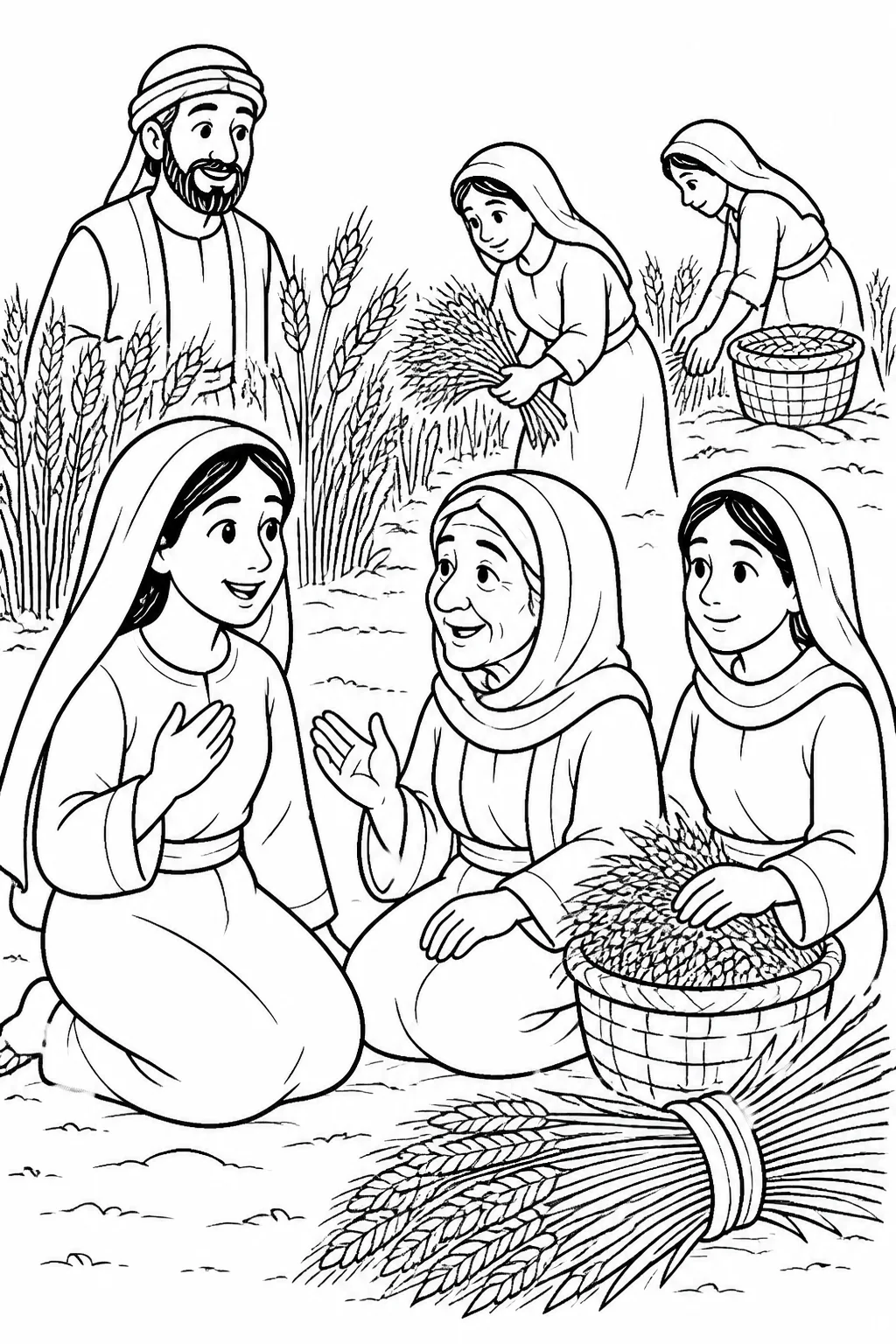
Ruth and Naomi discuss Ruth’s gleaning in Boaz’s field and the provision of gathered grain during the barley and wheat harvests.

Ruth and Naomi Are Provided For

Ruth 2:1-23
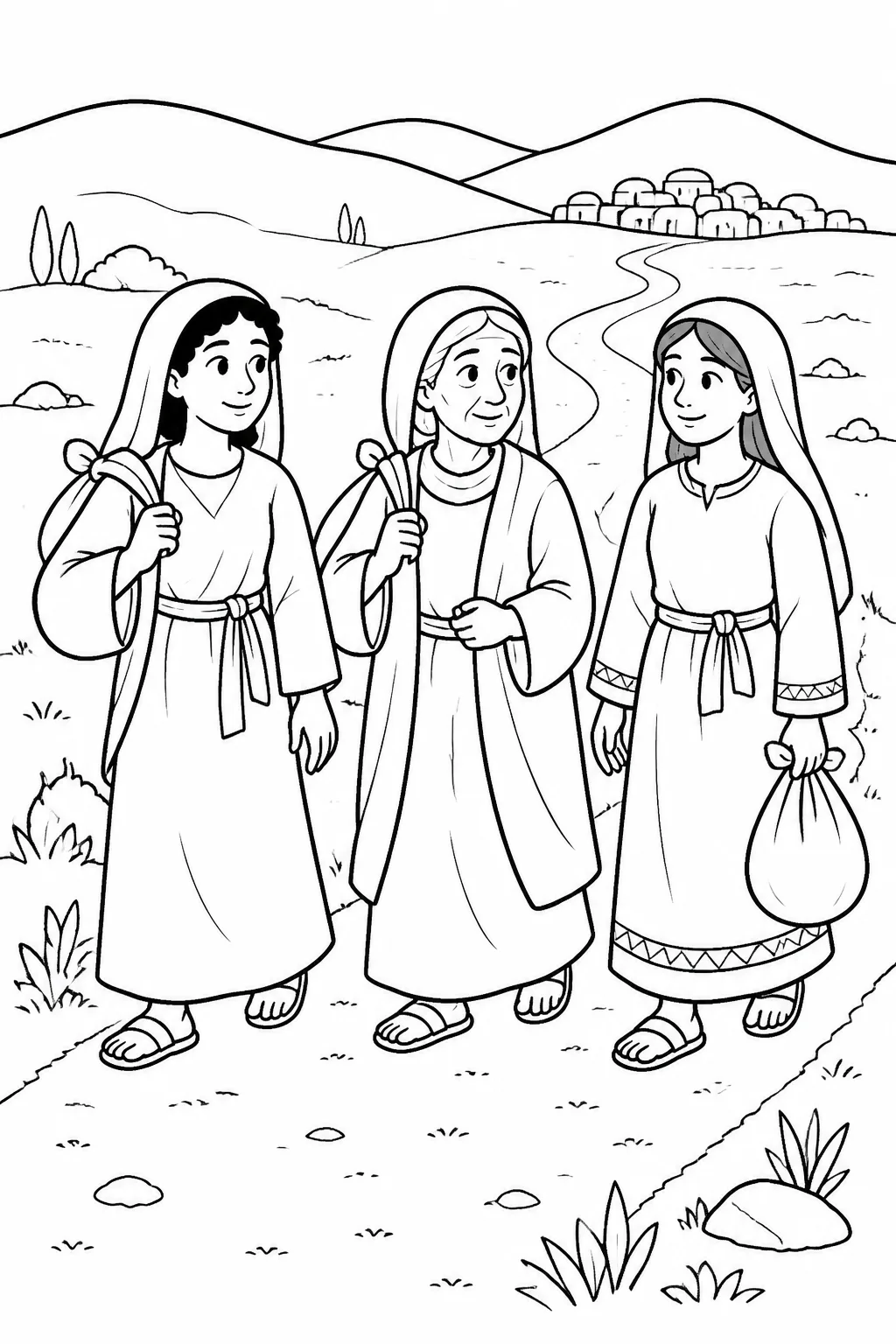
Naomi, Ruth, and Orpah walking with simple travel bundles along a road from Moab toward Bethlehem, based on Ruth 1:6–7.

Returning Toward Bethlehem

Ruth 1:1-22
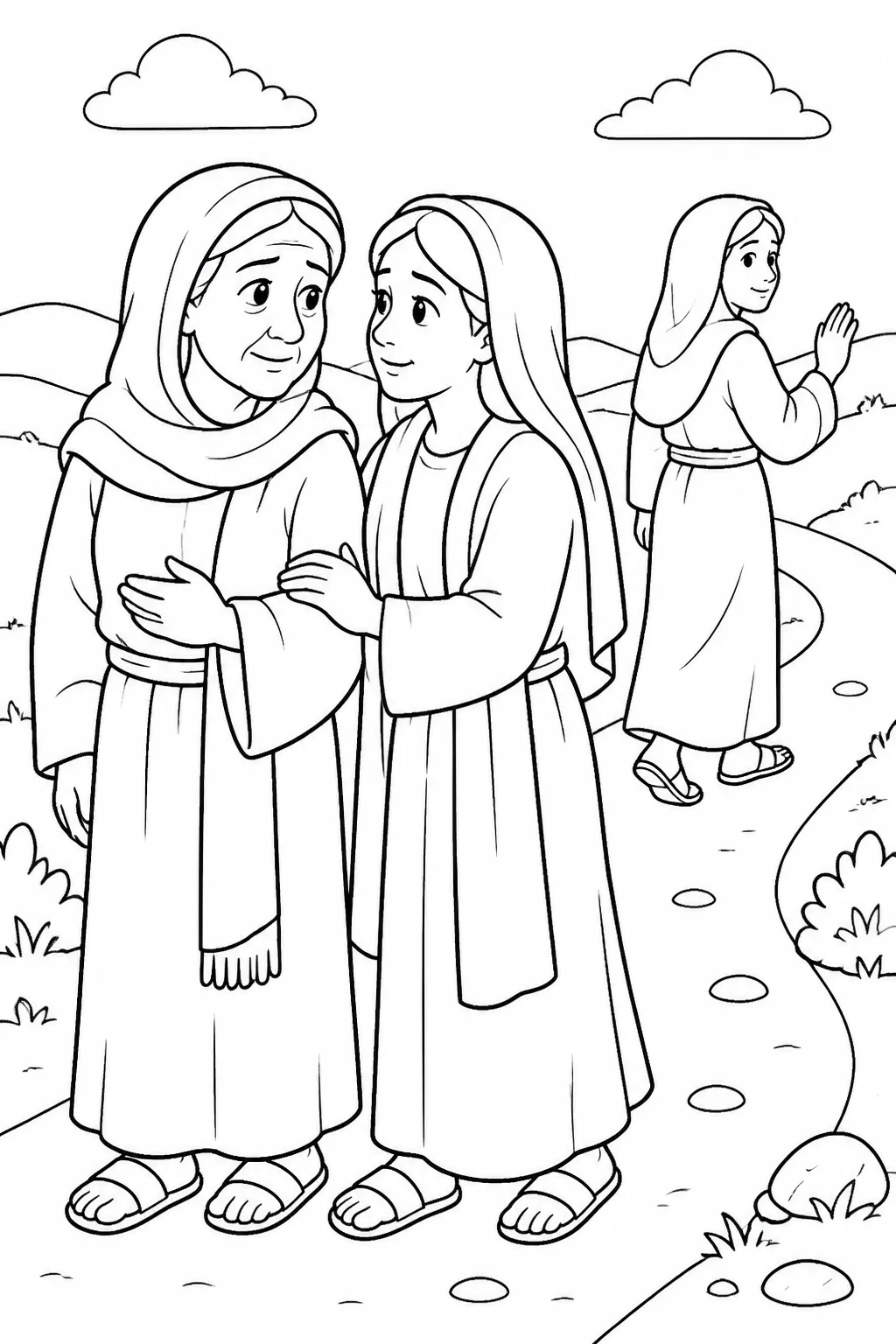
Ruth stays beside Naomi on the road from Moab to Bethlehem while Orpah says goodbye and turns back, based on Ruth 1:14–18.

Ruth Chooses to Stay

Ruth 1:1-22

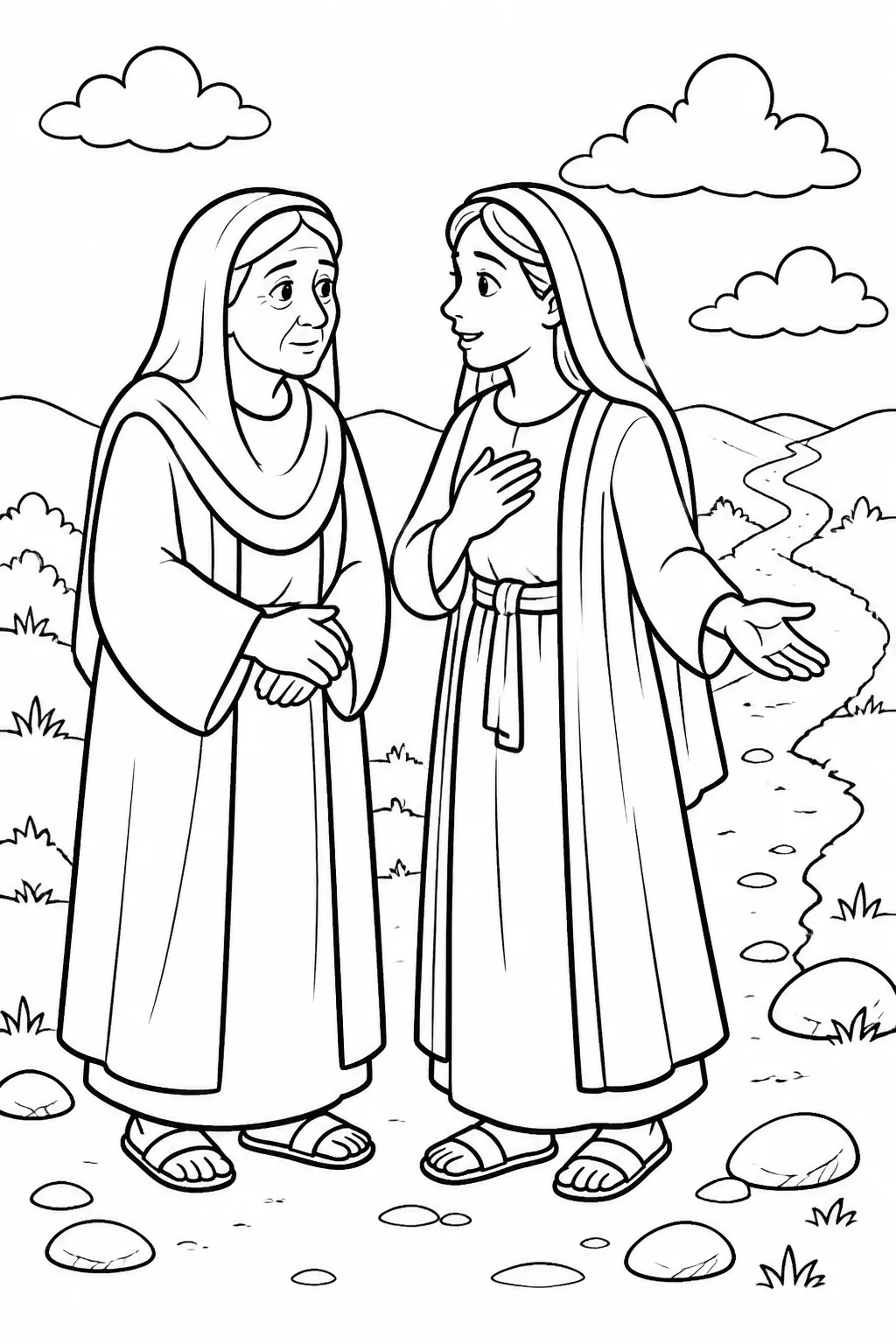
Ruth and Naomi standing together on the road from Moab toward Bethlehem as Ruth promises to remain with Naomi.

Where You Go, I Will Go

Ruth 1:1-22

Naomi and Ruth return together to Bethlehem as women of the town notice them, with barley fields beginning to harvest nearby.

Naomi Returns to Bethlehem

Ruth 1:1-22
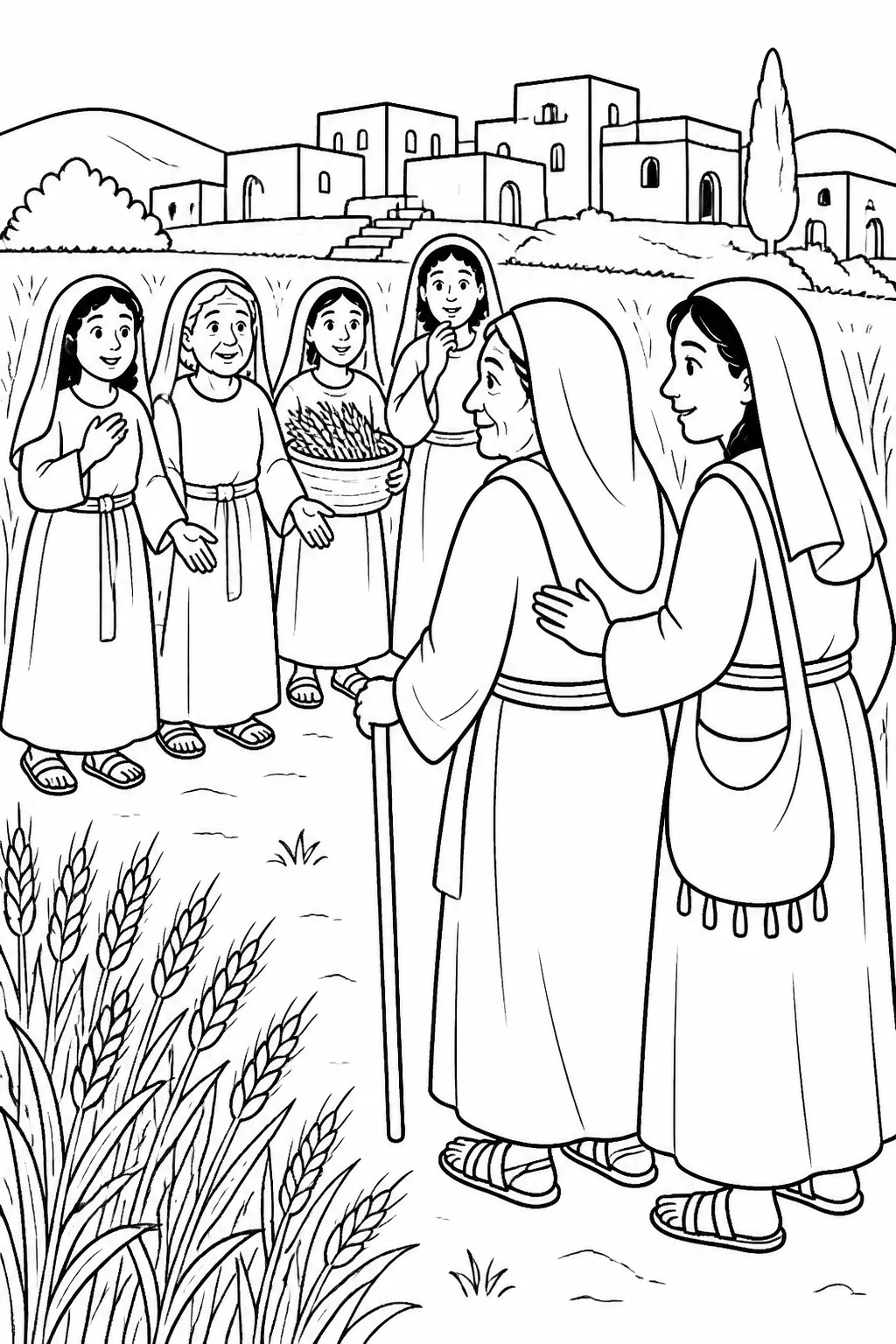
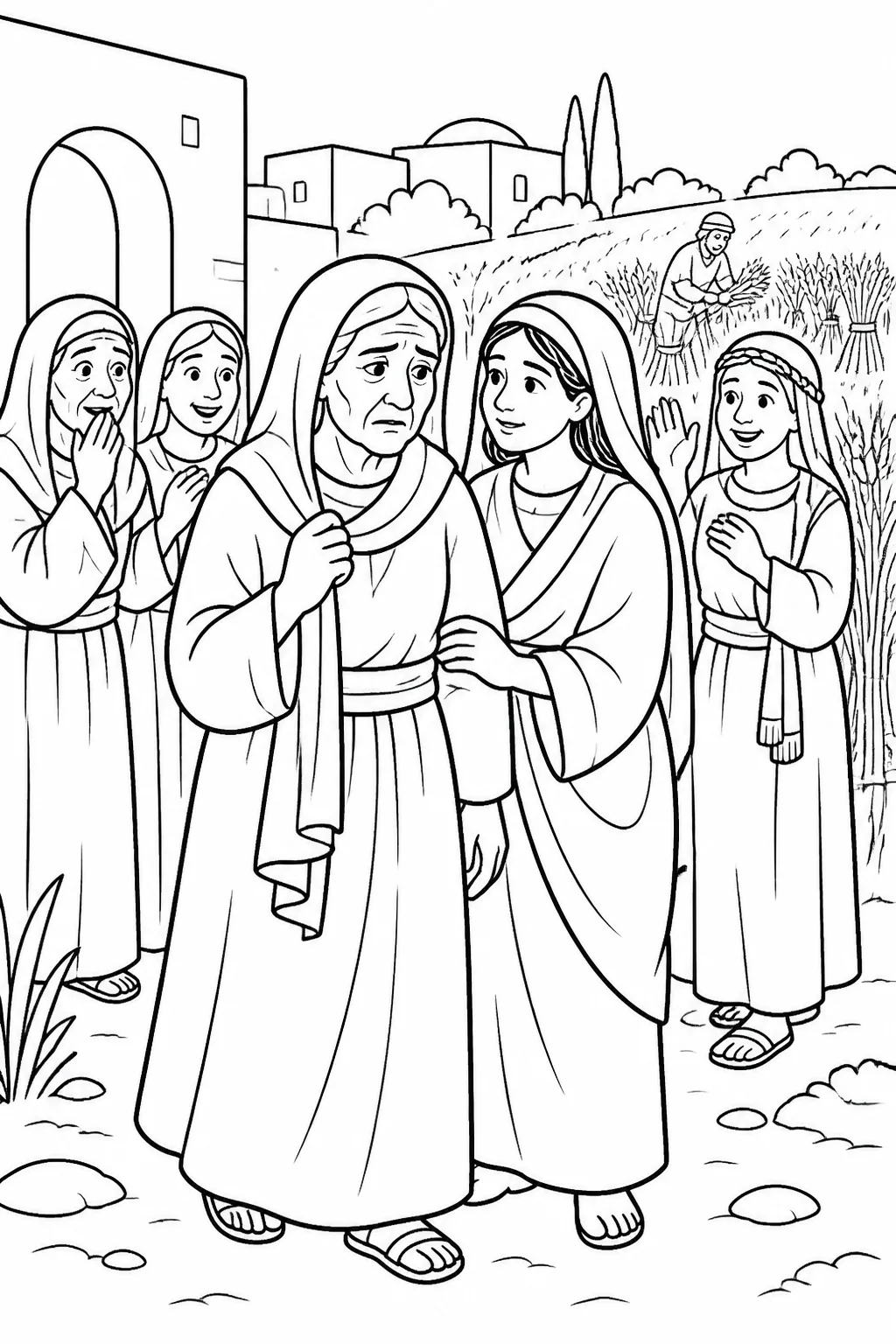
Naomi and Ruth arrive together at the edge of Bethlehem as women of the town notice them; the scene represents Ruth 1:19–22 and the beginning of the barley harvest.

The Town Notices Them

Ruth 1:1-22

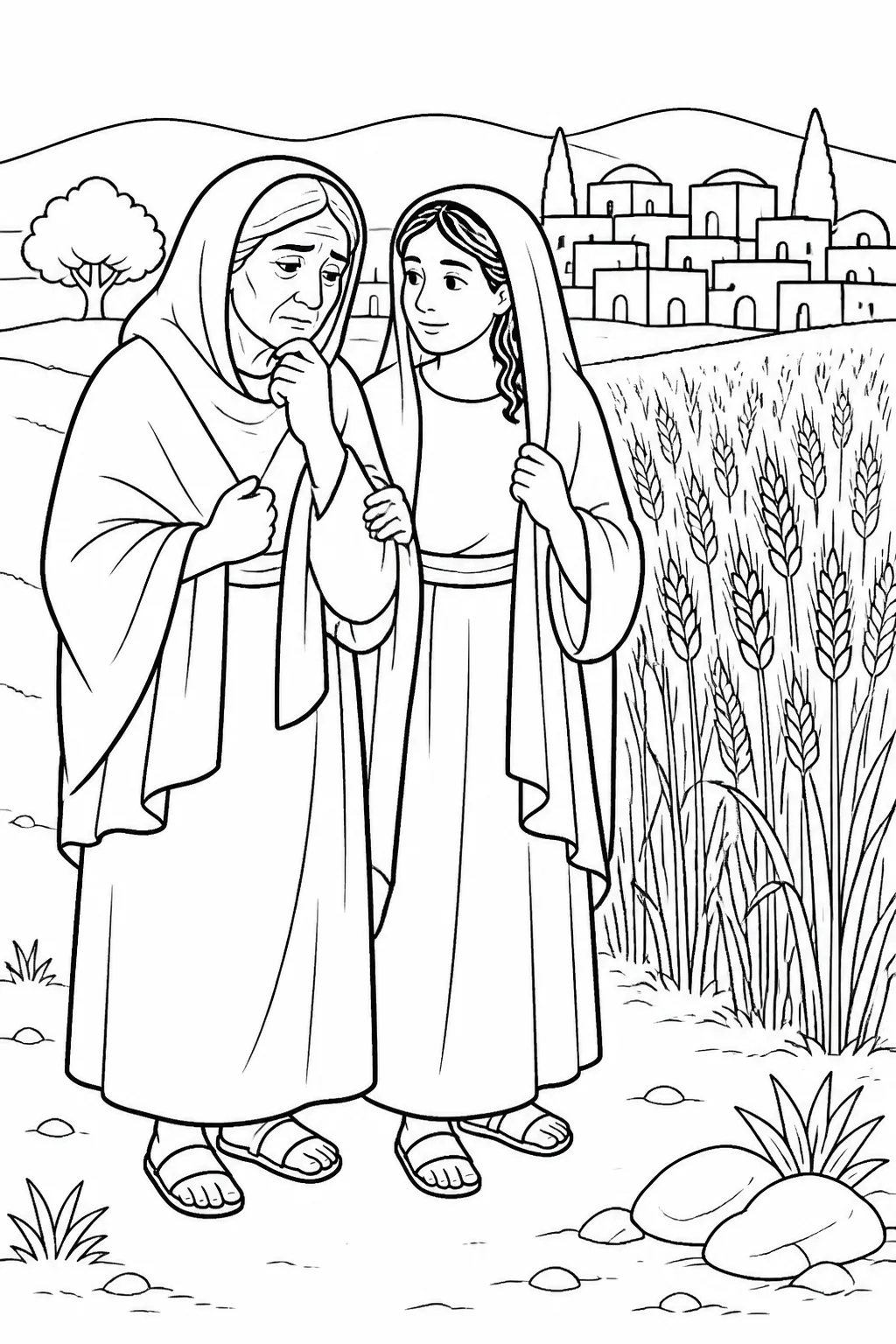
Naomi and Ruth together near Bethlehem beside a barley field at the beginning of harvest, with Naomi burdened by grief and Ruth faithfully beside her.

Together at the Harvest Season

Ruth 1:1-22
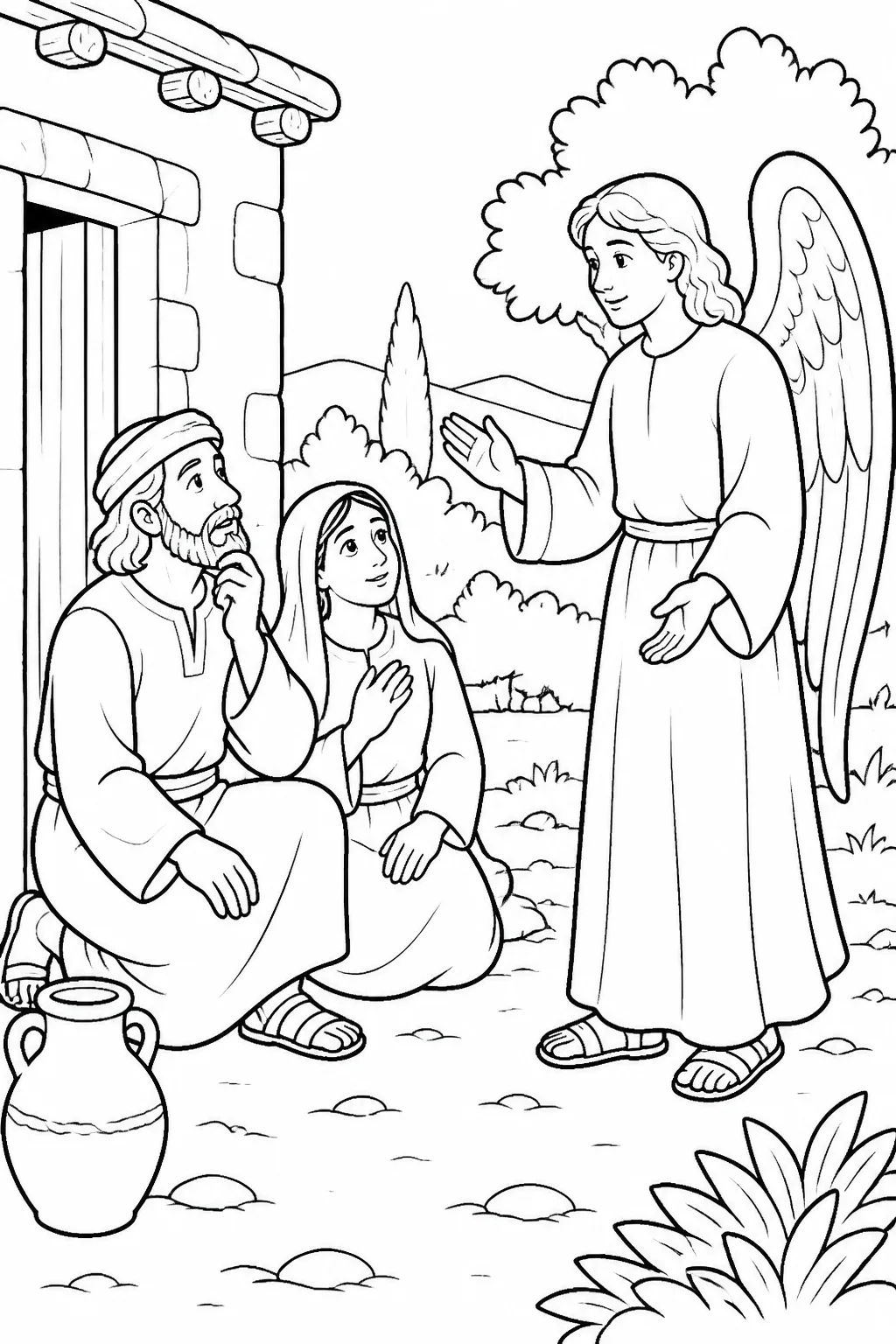
Samson’s unnamed mother, Manoah, and the angel of the LORD near their home as Samson’s birth and calling are announced.

Samson Is Set Apart for God

Judges 13:1–16:31
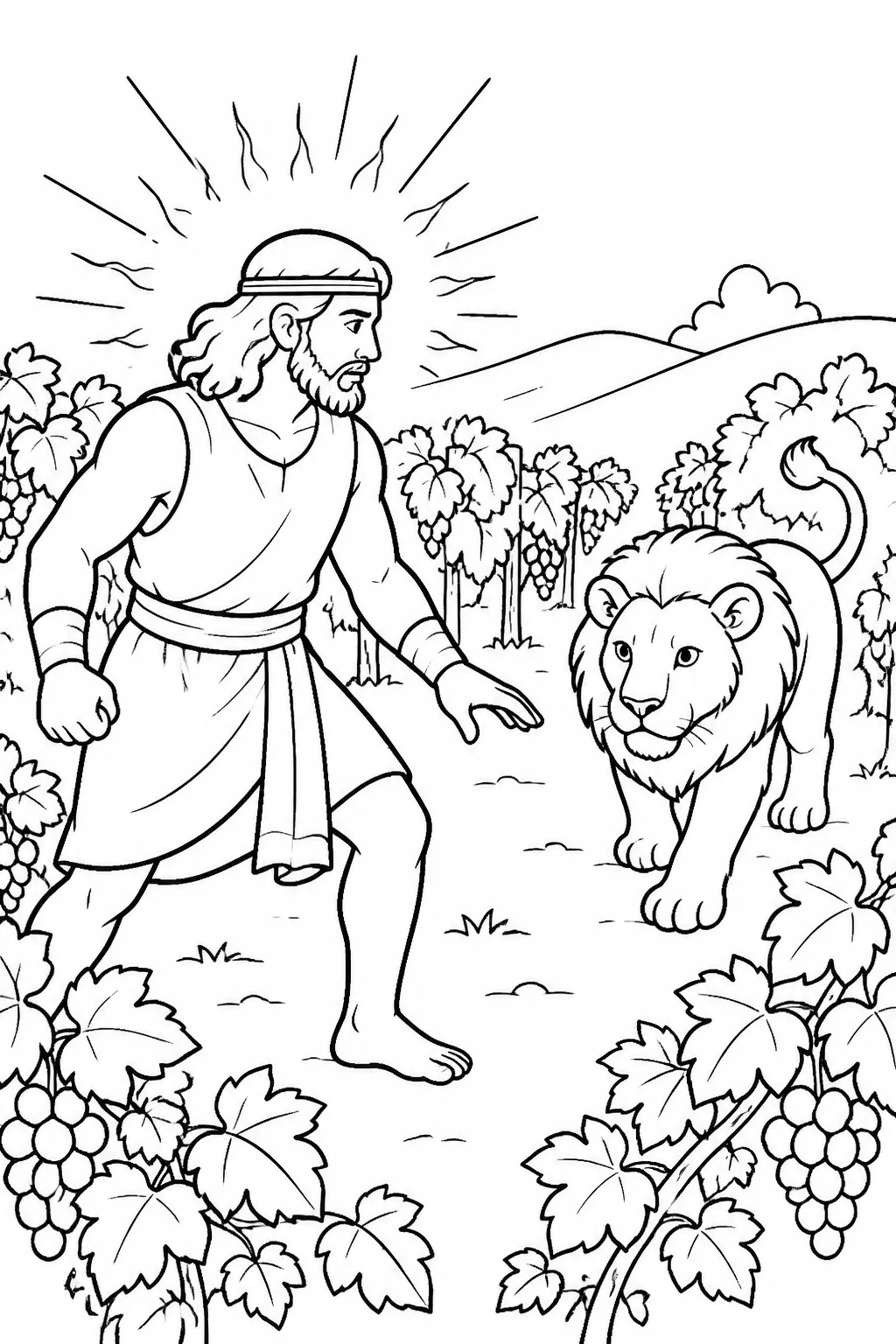
Samson faces a young lion in the vineyards of Timnah, illustrating Judges 14:1–20 and the LORD’s empowerment of Samson.

Samson Faces the Young Lion

Judges 13:1–16:31
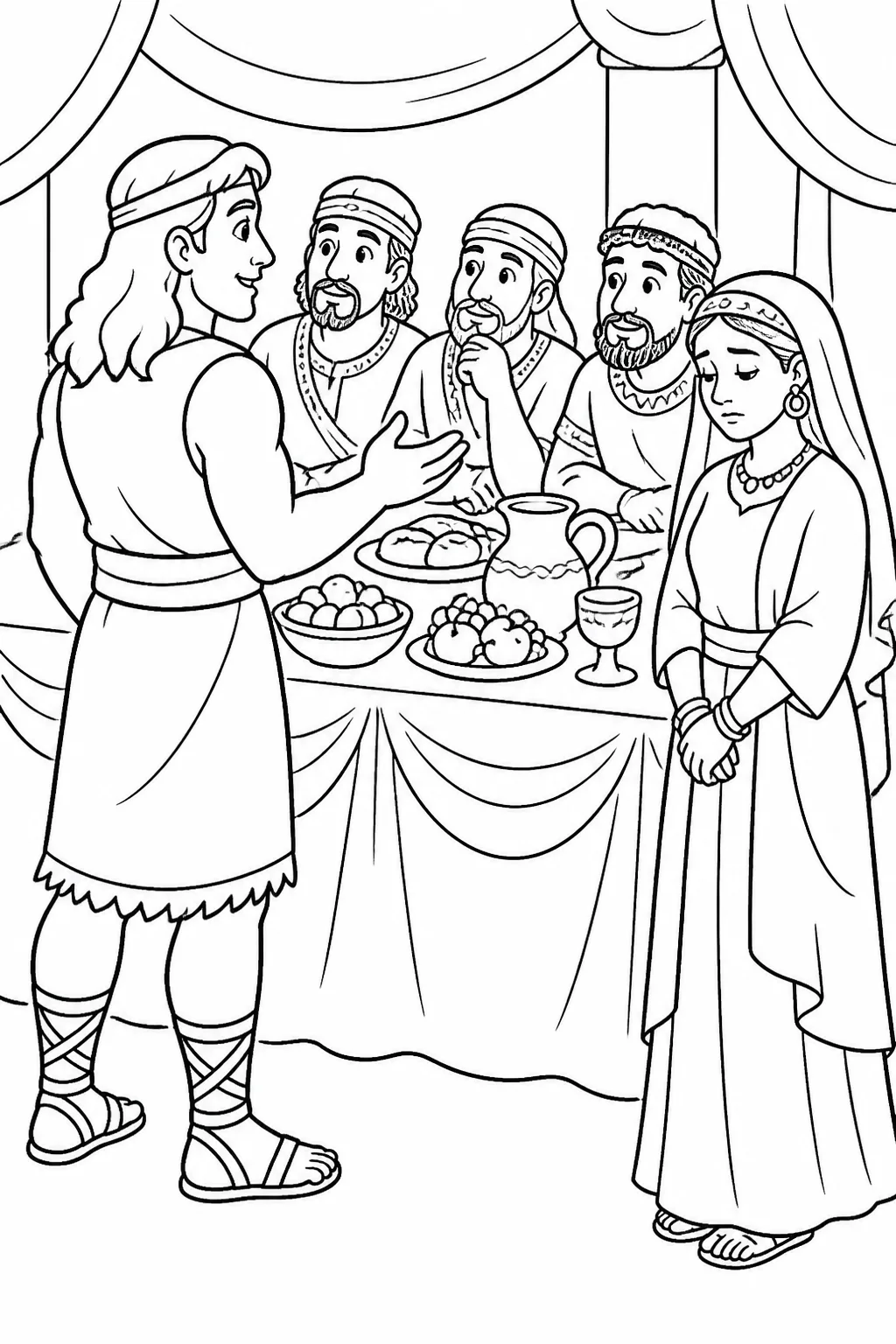
Samson faces Philistine companions at a Timnah wedding feast while his Timnahite wife stands nearby, suggesting broken trust around the riddle.

The Riddle at the Wedding Feast

Judges 13:1–16:31
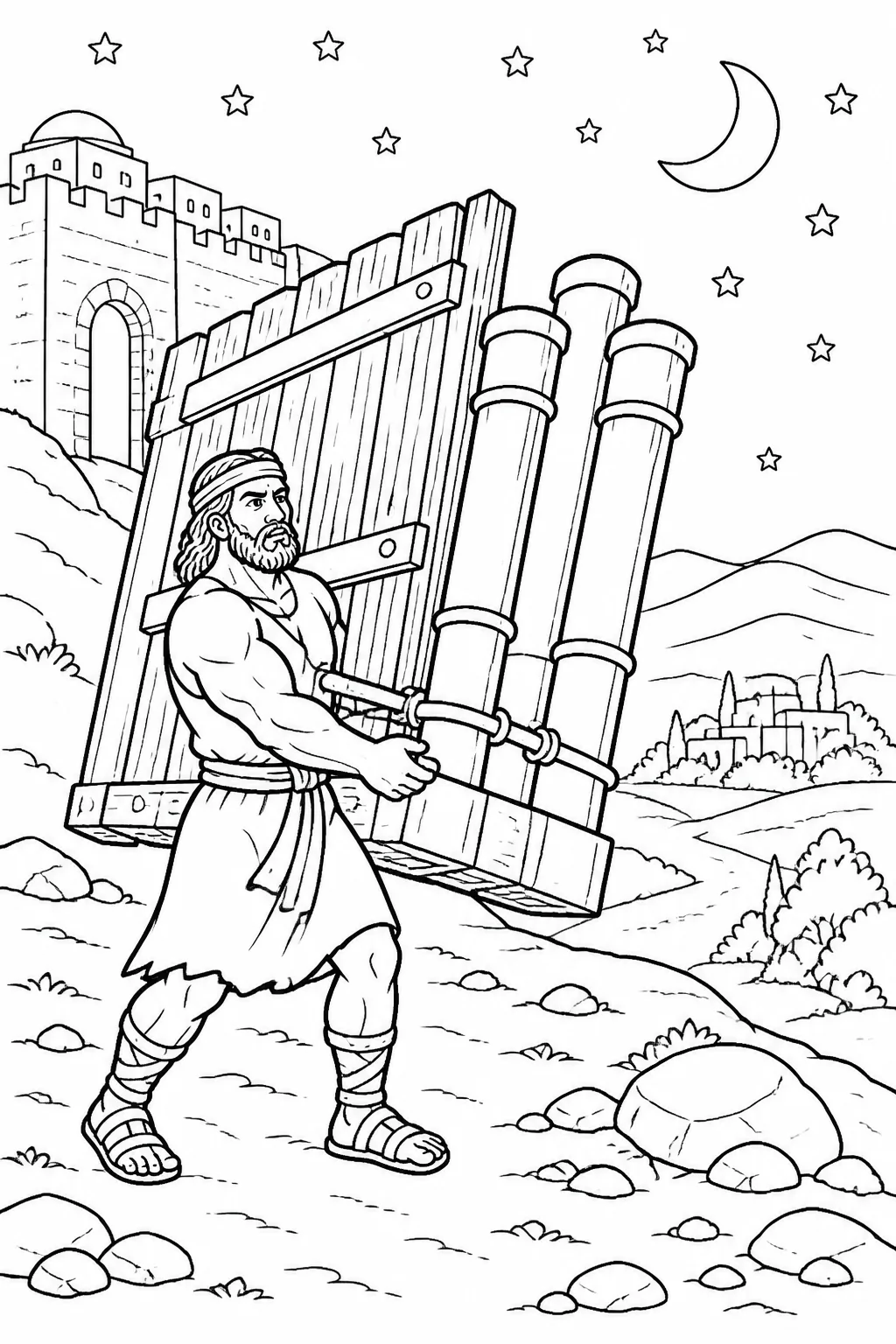
Samson carries the removed doors, posts, and bars of Gaza’s city gate toward the hill near Hebron at night.

Samson Carries the City Gate

Judges 13:1–16:31
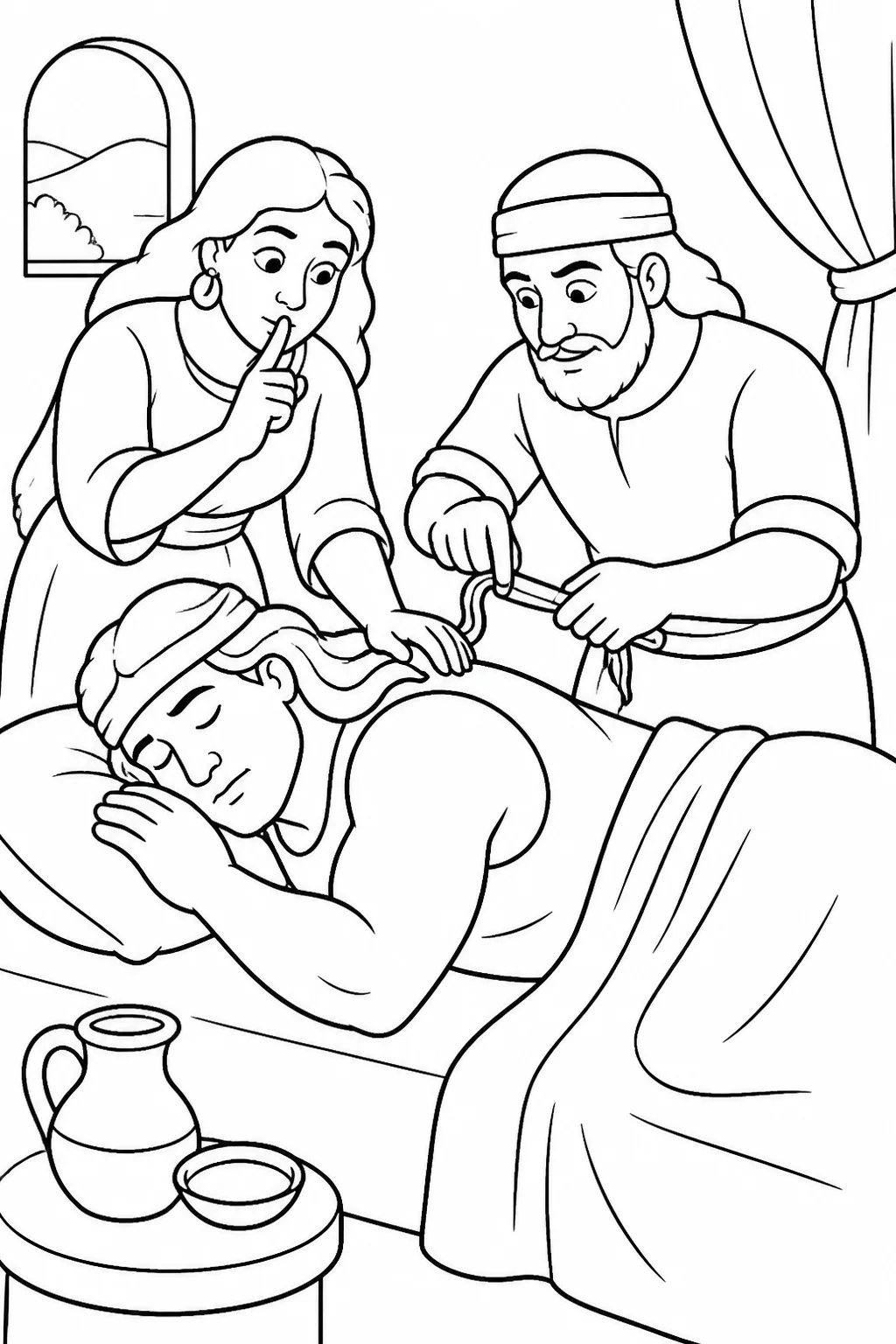
Samson asleep indoors while Delilah and a man shave his seven locks in the valley of Sorek, illustrating Judges 16:4–22.

Samson Reveals His Secret

Judges 13:1–16:31
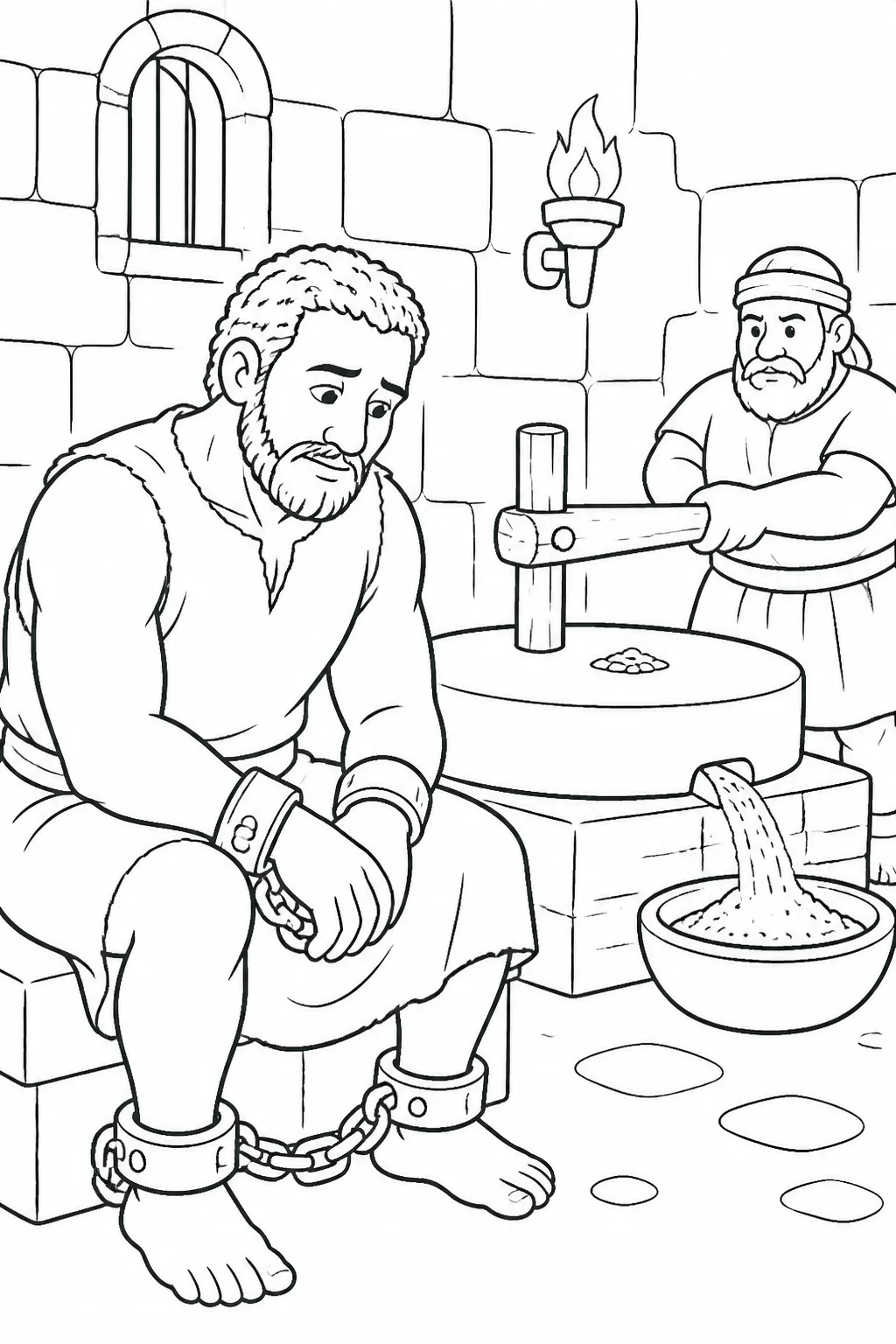
Samson in the Philistine prison at Gaza with bronze shackles and a grain mill, his short hair beginning to grow again.

Samson Remembers His Calling in Prison

Judges 13:1–16:31
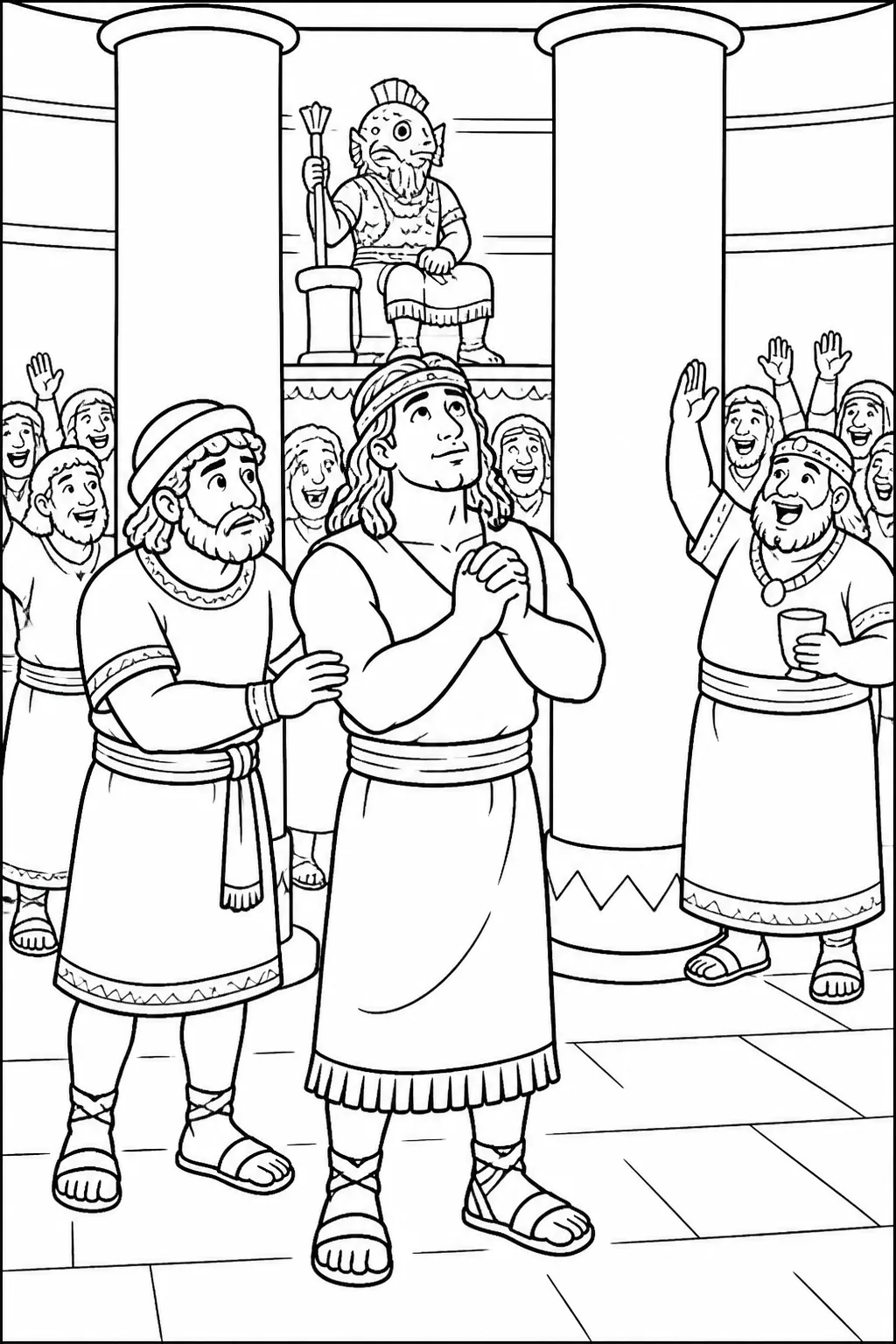
Samson prays for strength while standing between the pillars of Dagon’s temple, with a servant guiding him and Philistines gathered nearby.

Samson Prays in Dagon’s Temple

Judges 13:1–16:31
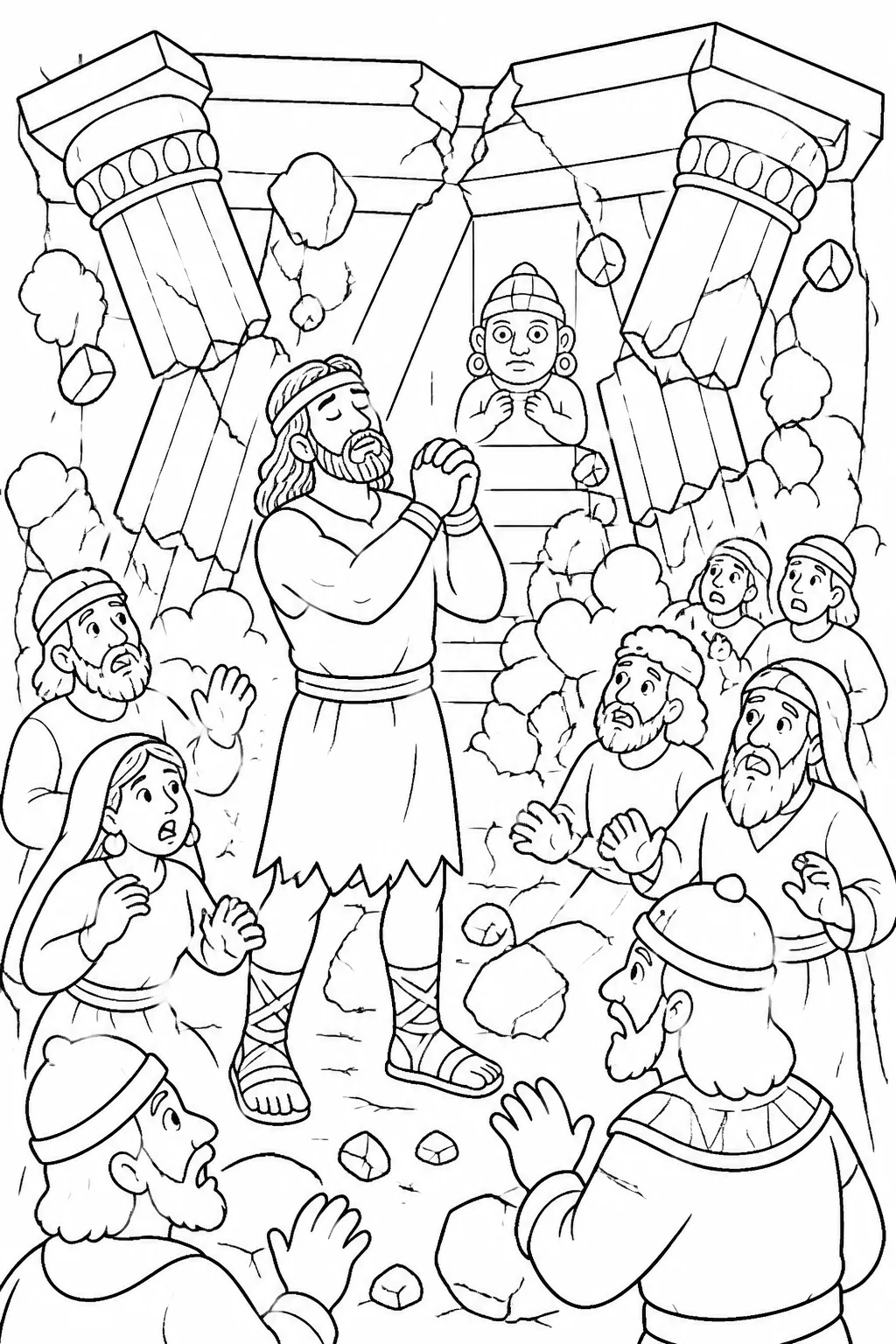
A symbolic, non-graphic illustration concept of Samson at Dagon’s temple during its collapse, with broken pillars, dust, and subdued gathered silhouettes.

The Temple Falls

Judges 13:1–16:31

Samson’s brothers and his father’s household carry him toward the tomb of Manoah his father in a quiet landscape.

Samson’s Family Buries Him

Judges 13:1–16:31
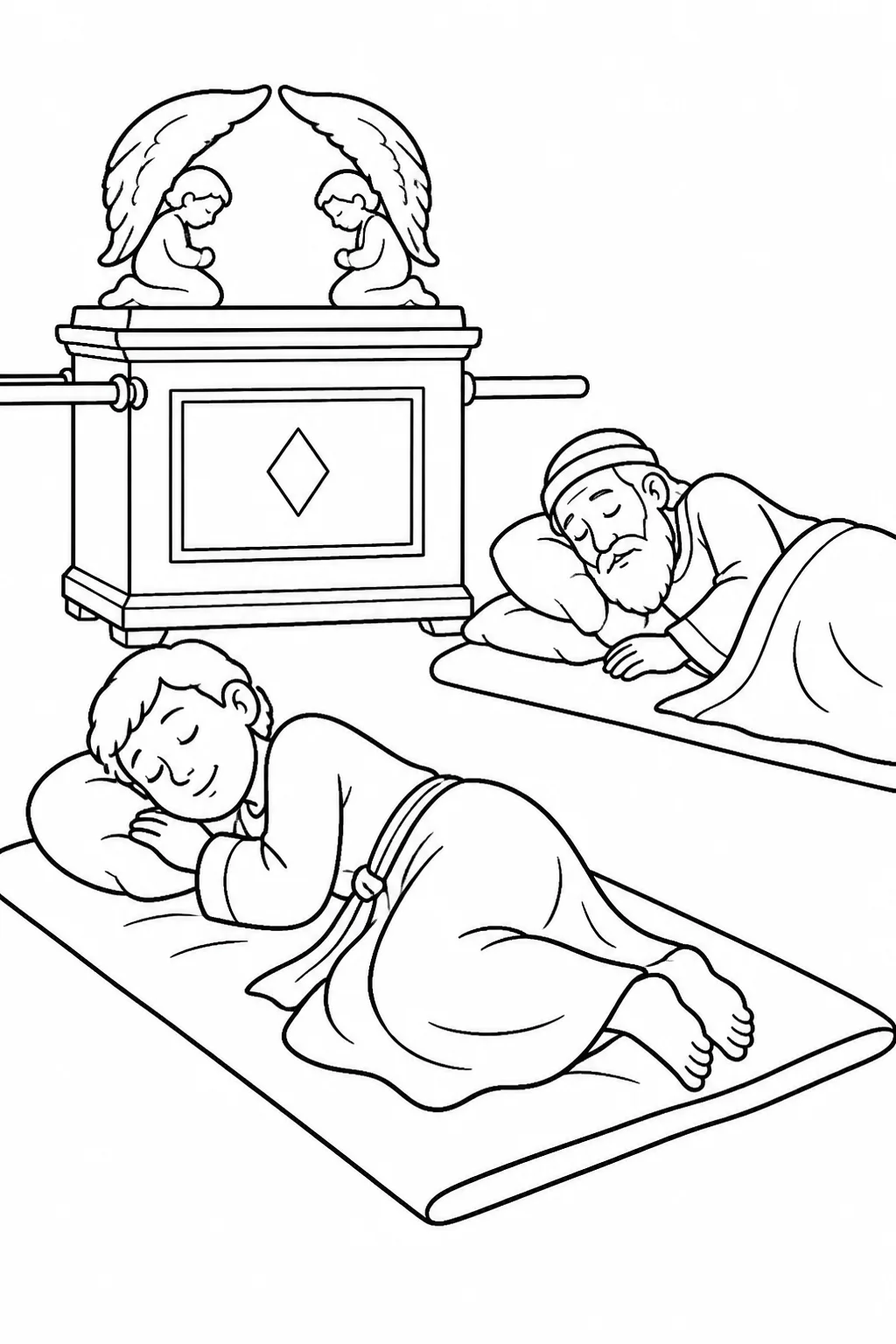
Samuel resting near the ark of God in the LORD’s temple while Eli rests in his own place, based on 1 Samuel 3:1-3.

Samuel Rests Near the Ark

1 Samuel 3:1-21
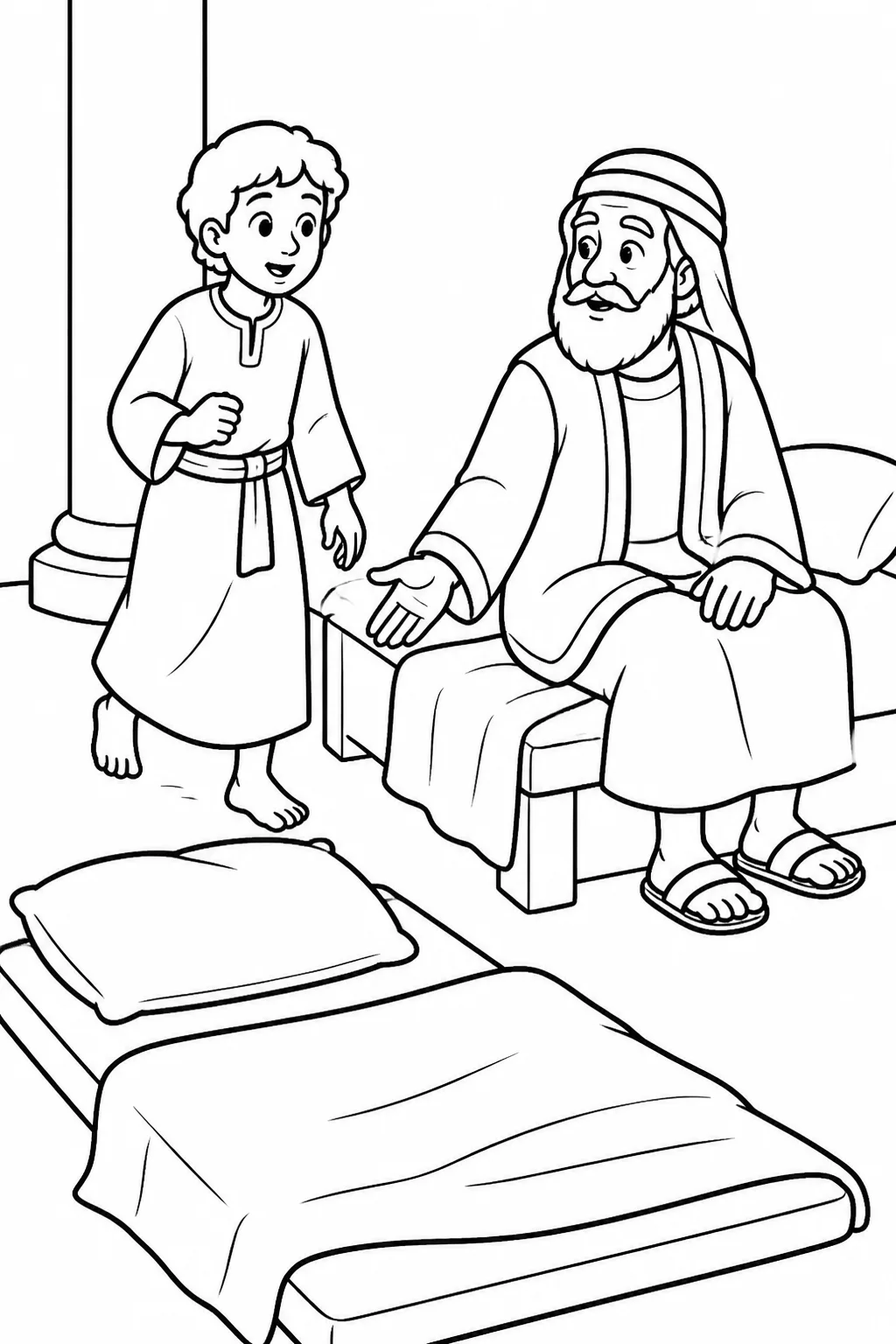
Samuel goes from his sleeping place to Eli after hearing his name, believing Eli called him; Eli tells Samuel he did not call him and sends him back to lie down.

Samuel Answers the Call

1 Samuel 3:1-21
Samuel goes to Eli after hearing a call, and Eli teaches him how to answer the LORD.

Eli Helps Samuel Listen

1 Samuel 3:1-21
Samuel listening reverently in the LORD’s temple as the LORD calls him and gives a serious message, based on 1 Samuel 3:10-14.

Samuel Says, “Speak, LORD”

1 Samuel 3:1-21
Samuel tells Eli everything the LORD said after opening the doors of the house of the LORD.

Samuel Tells Eli the Truth

1 Samuel 3:1-21
Samuel at Shiloh as the people of Israel recognize him as established as a prophet of the LORD.

Samuel Is Recognized as a Prophet

1 Samuel 3:1-21
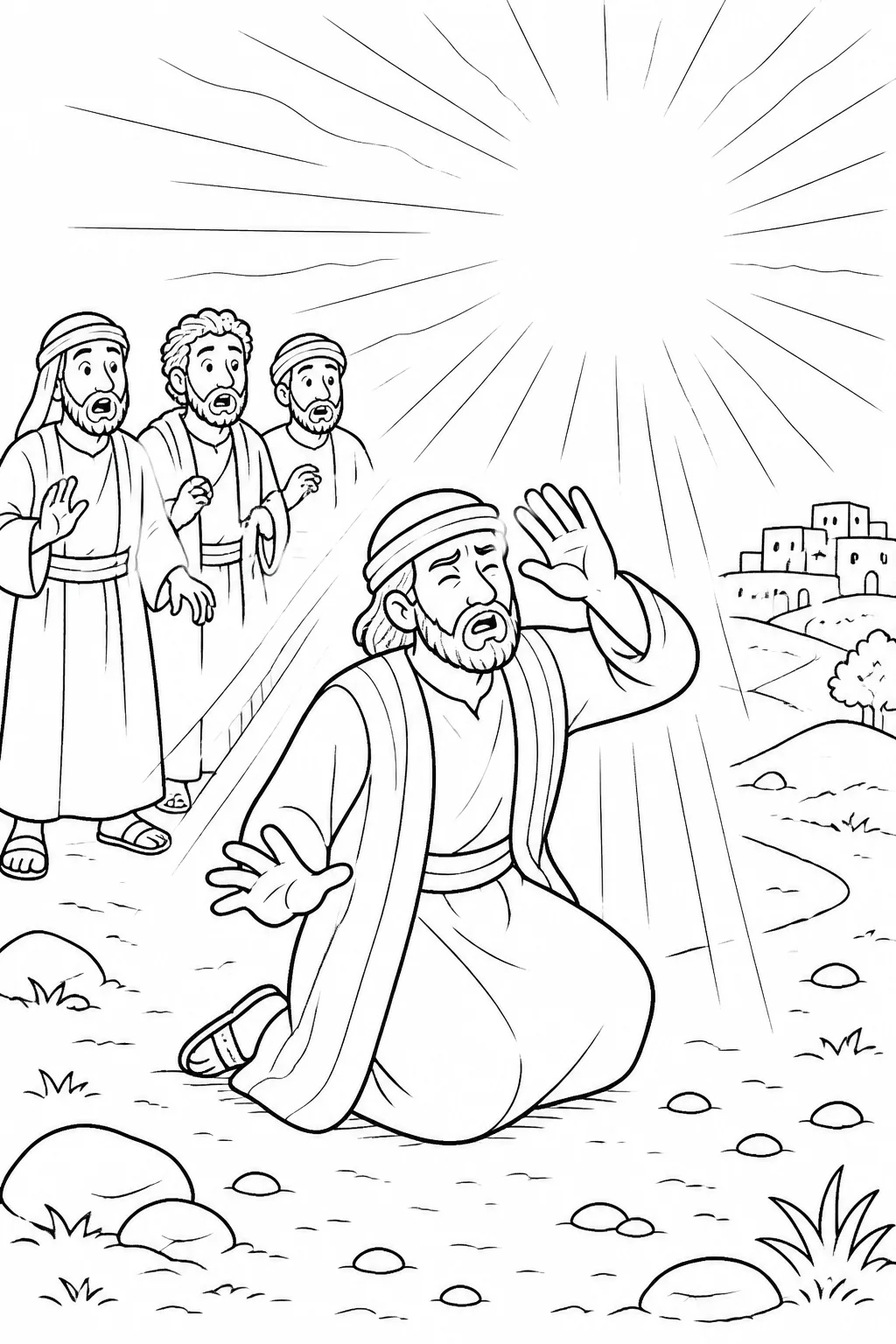
Saul kneels on the road near Damascus as heavenly light surrounds him, while his unnamed traveling companions stand nearby; Jesus is represented through the light and voice.

Light on the Road to Damascus

Acts 9:1-19
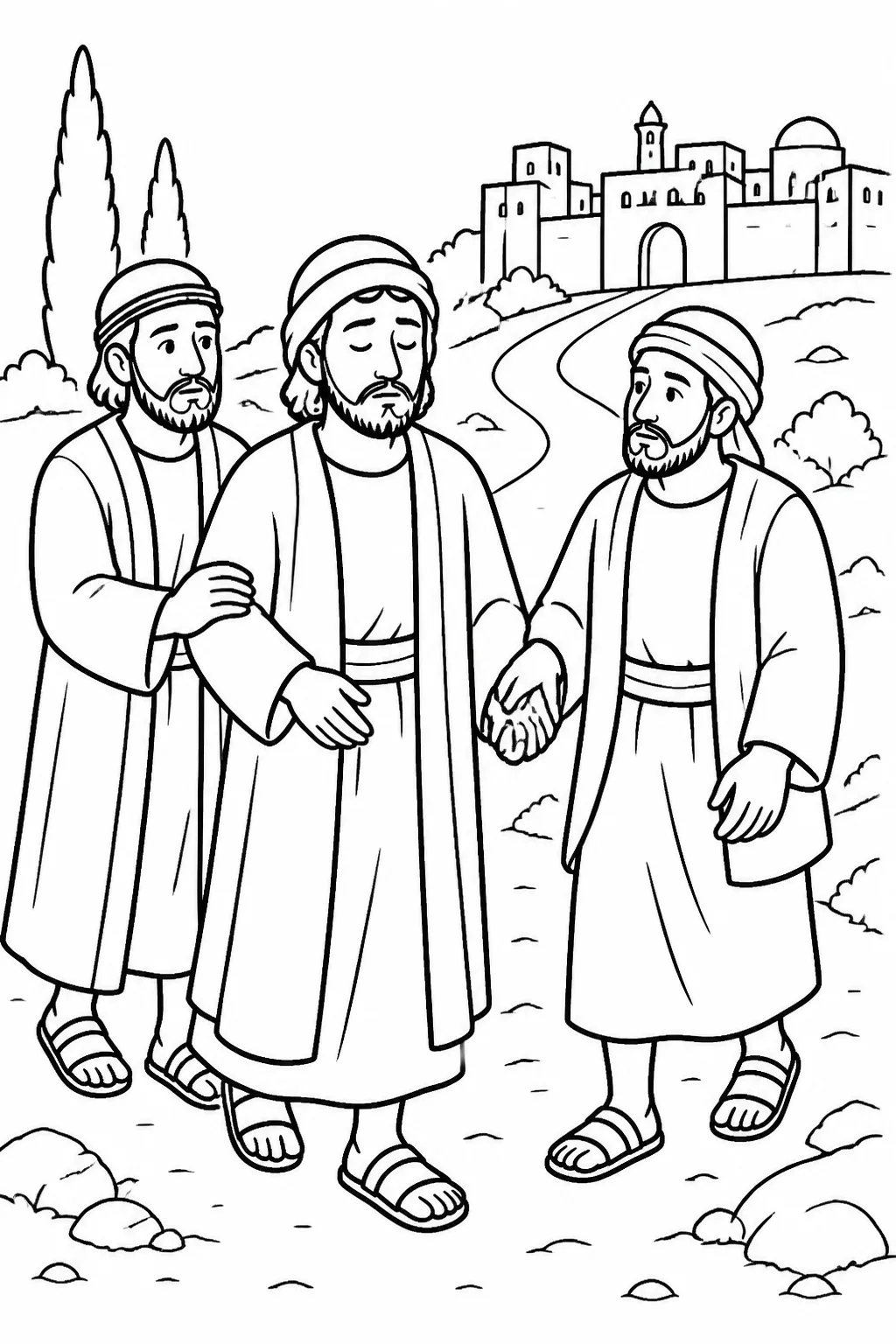
Saul with his eyes closed is led by unnamed companions along the road toward Damascus after he temporarily loses his sight.

Led into Damascus

Acts 9:1-19

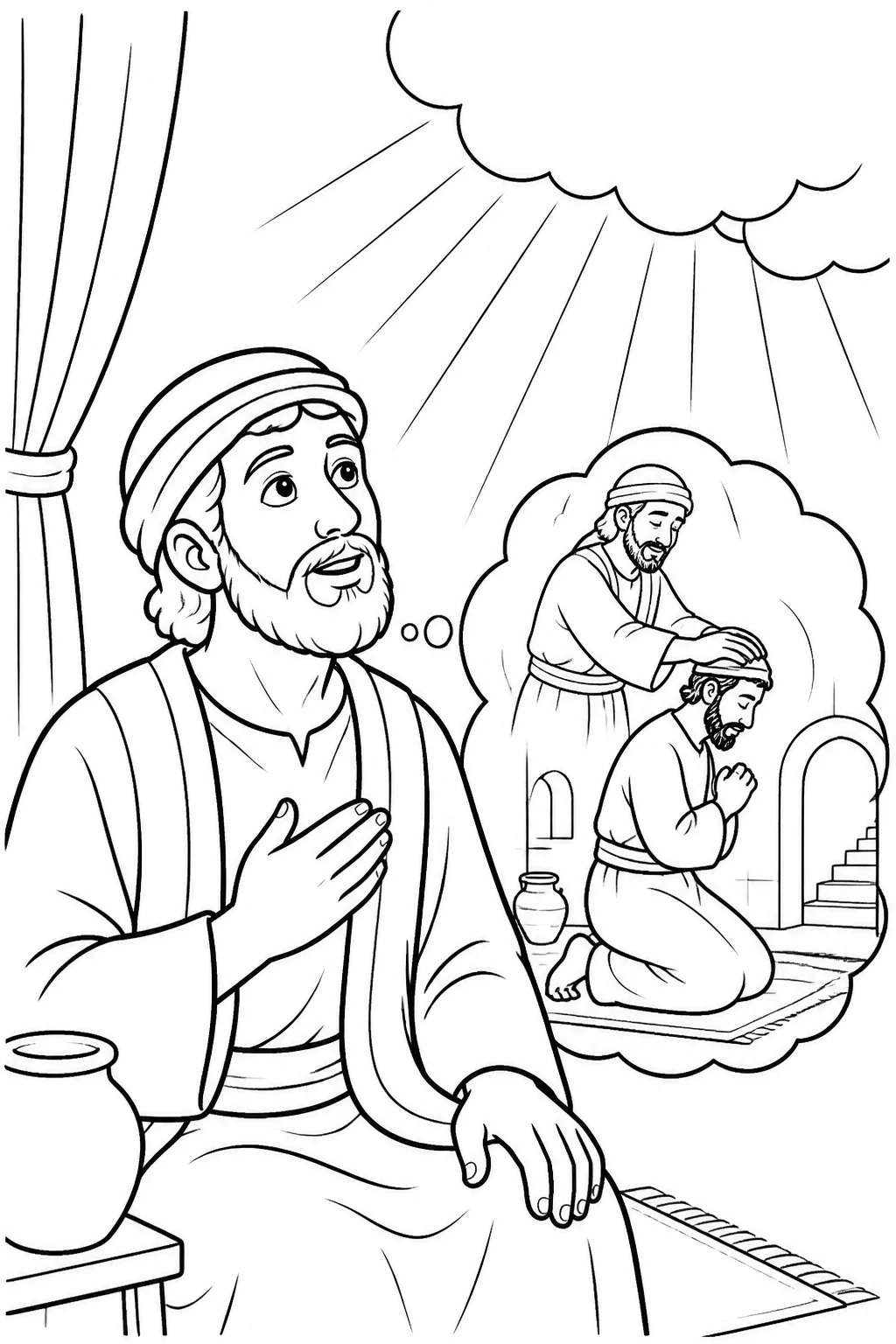
Ananias listens during a vision while Saul prays in Judas’s house on Straight Street and envisions Ananias laying hands on him.

Ananias Is Sent to Saul

Acts 9:1-19

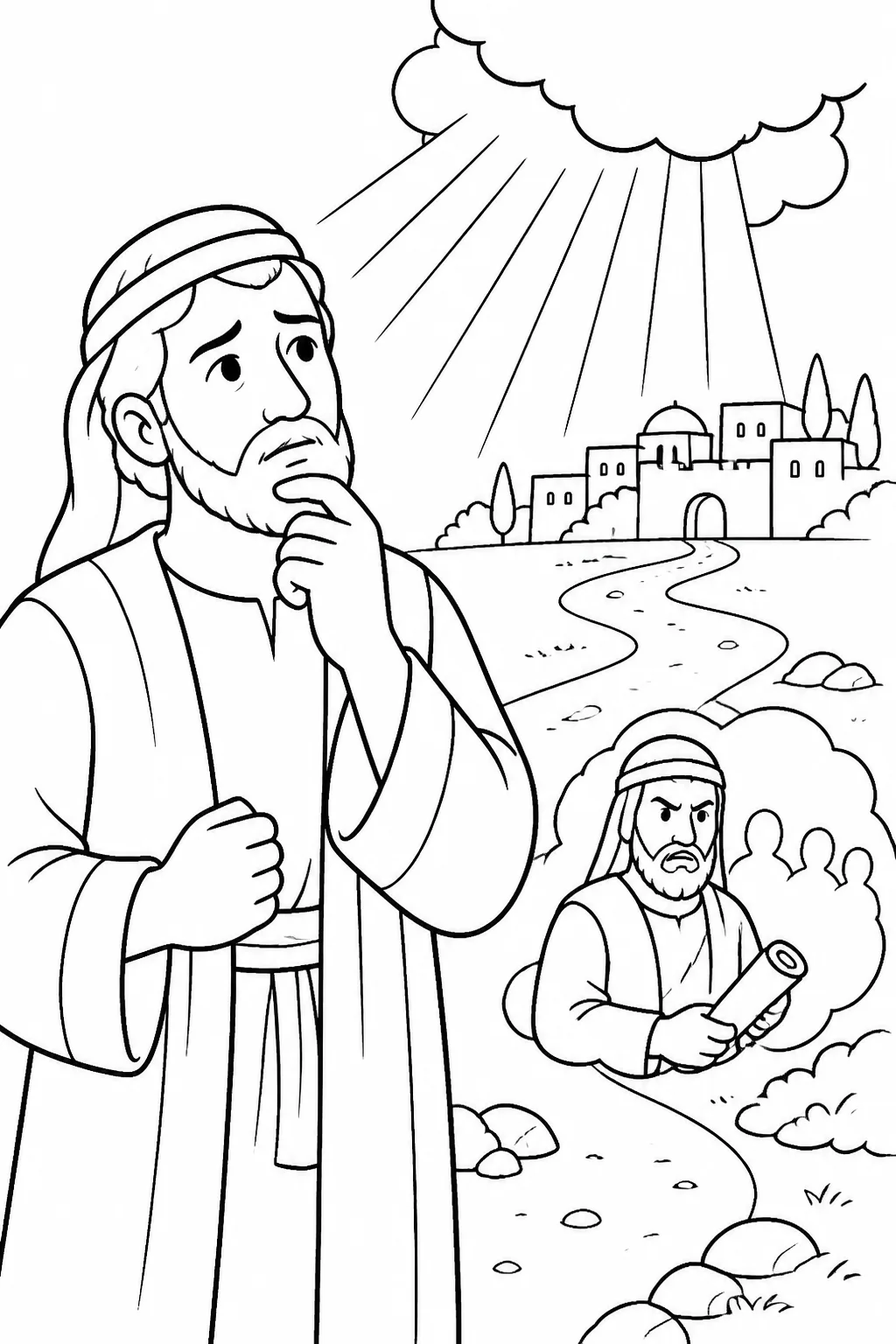
Ananias considers Jesus’ instruction to go to Saul in Damascus, with a symbolic path and reminder of Saul’s harmful past.

A Difficult Mission

Acts 9:1-19

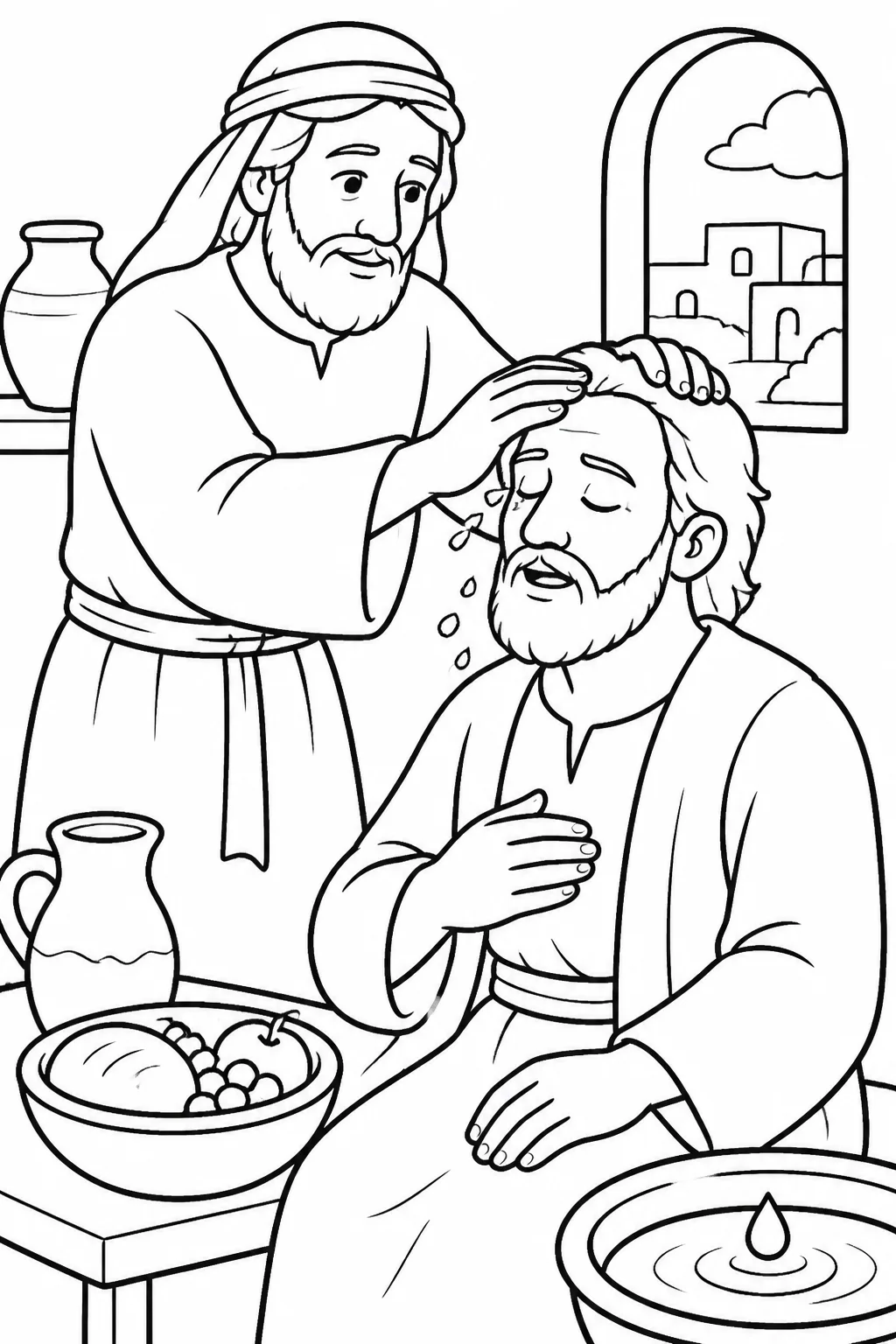
Ananias lays hands on Saul inside a house in Damascus as simple scale shapes fall from Saul’s closed eyes; a bowl of food is nearby.

Saul Regains His Sight

Acts 9:1-19

Ananias cares for Saul in a house in Damascus as Saul receives sight, with water representing baptism and food showing restored strength.

A New Beginning

Acts 9:1-19

Saul speaking about Jesus as the Son of God in a Damascus synagogue, with disciples and other listeners nearby.

Saul Proclaims Jesus

Acts 9:1-19

Saul on the road near Damascus kneeling beneath a heavenly light while Jesus speaks from heaven, represented only by light and voice.

Saul’s Direction Changes

Acts 9:1-19

Solomon praying in a simple dream setting at Gibeon as he asks the LORD for an understanding heart to govern God’s people.

Solomon Asks for an Understanding Heart

1 Kings 3:3-28
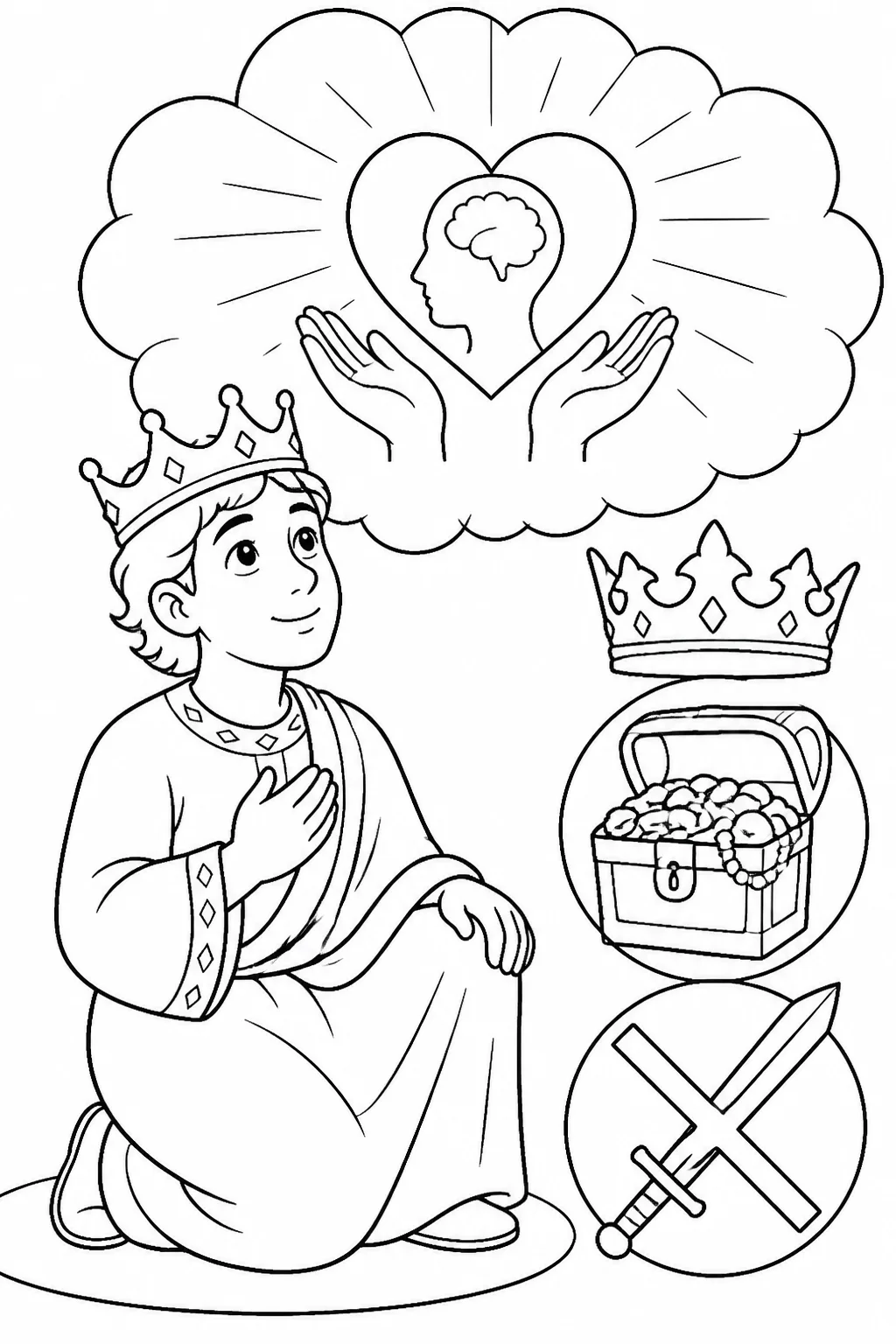
Solomon shown with a crown, treasure chest, symbolic rejected sword, and an understanding-heart symbol, representing his request for wisdom to lead God’s people.

God Is Pleased With Solomon’s Unselfish Request

1 Kings 3:3-28
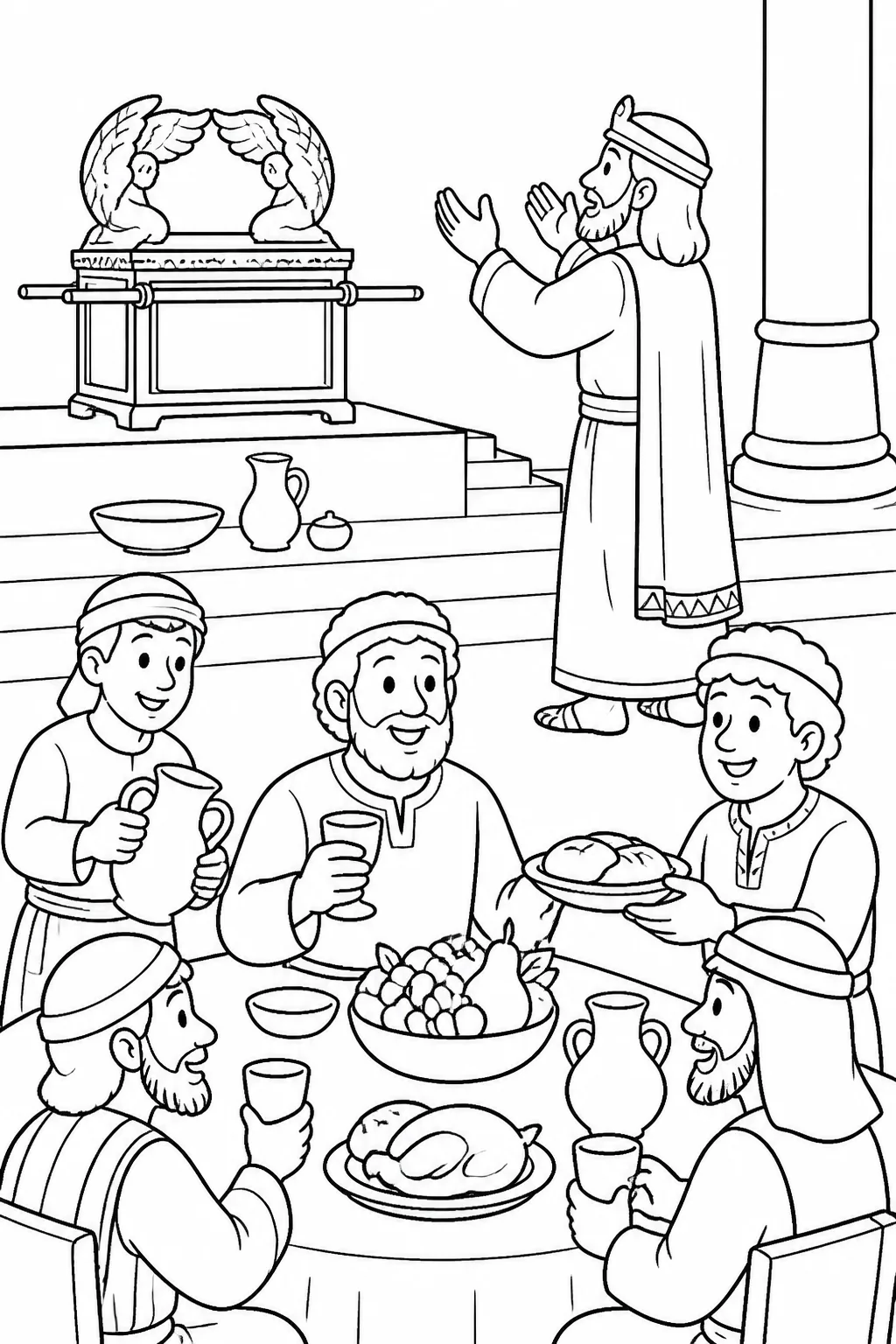
Solomon worshiping before the ark of the covenant in Jerusalem, with simple offerings, servants, and a nearby feast table.

Solomon Gives Thanks Before the Ark

1 Kings 3:3-28
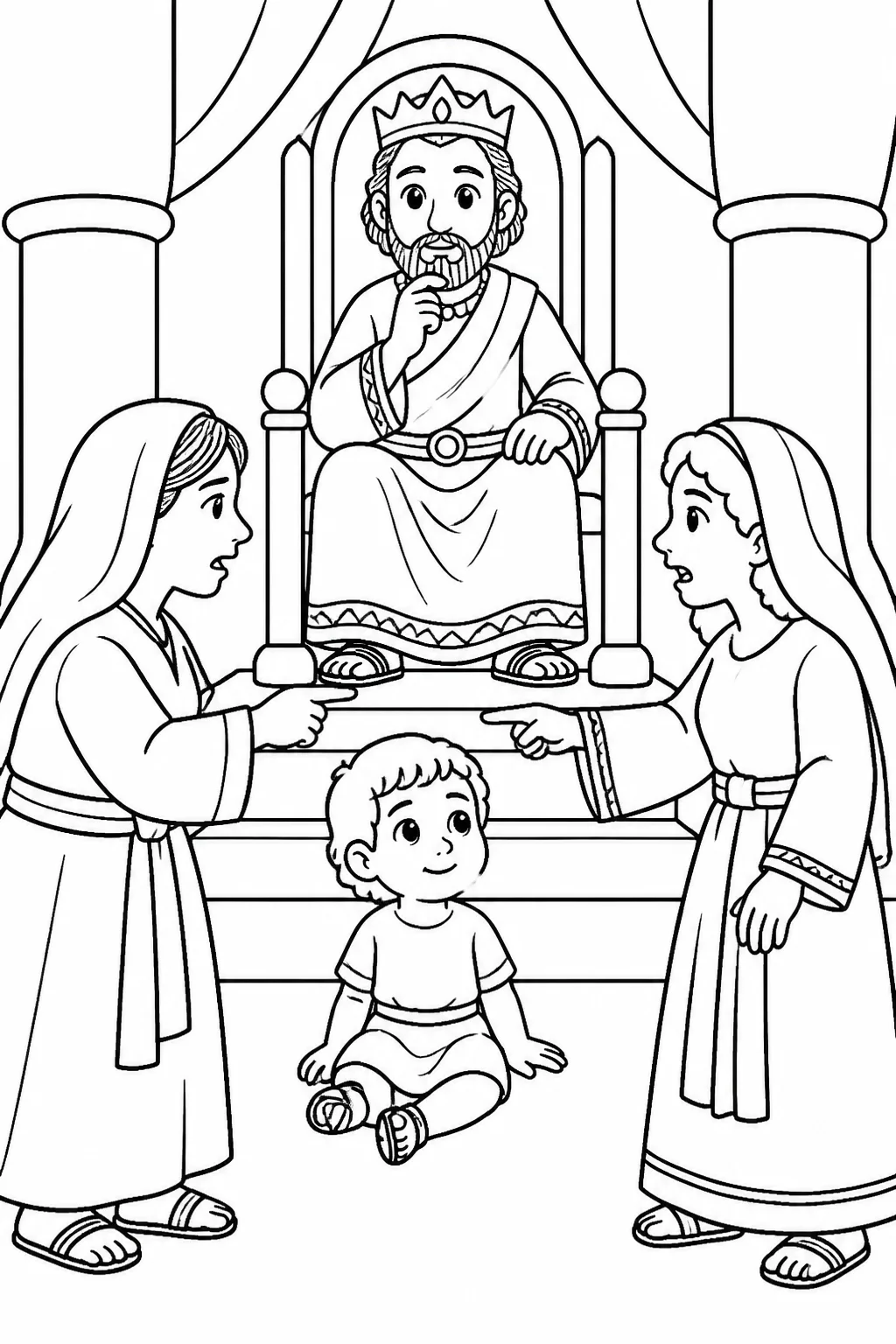
Solomon’s court with two unnamed women making conflicting claims about one living child; the dead child is not shown.

A Difficult Dispute Comes Before Solomon

1 Kings 3:3-28
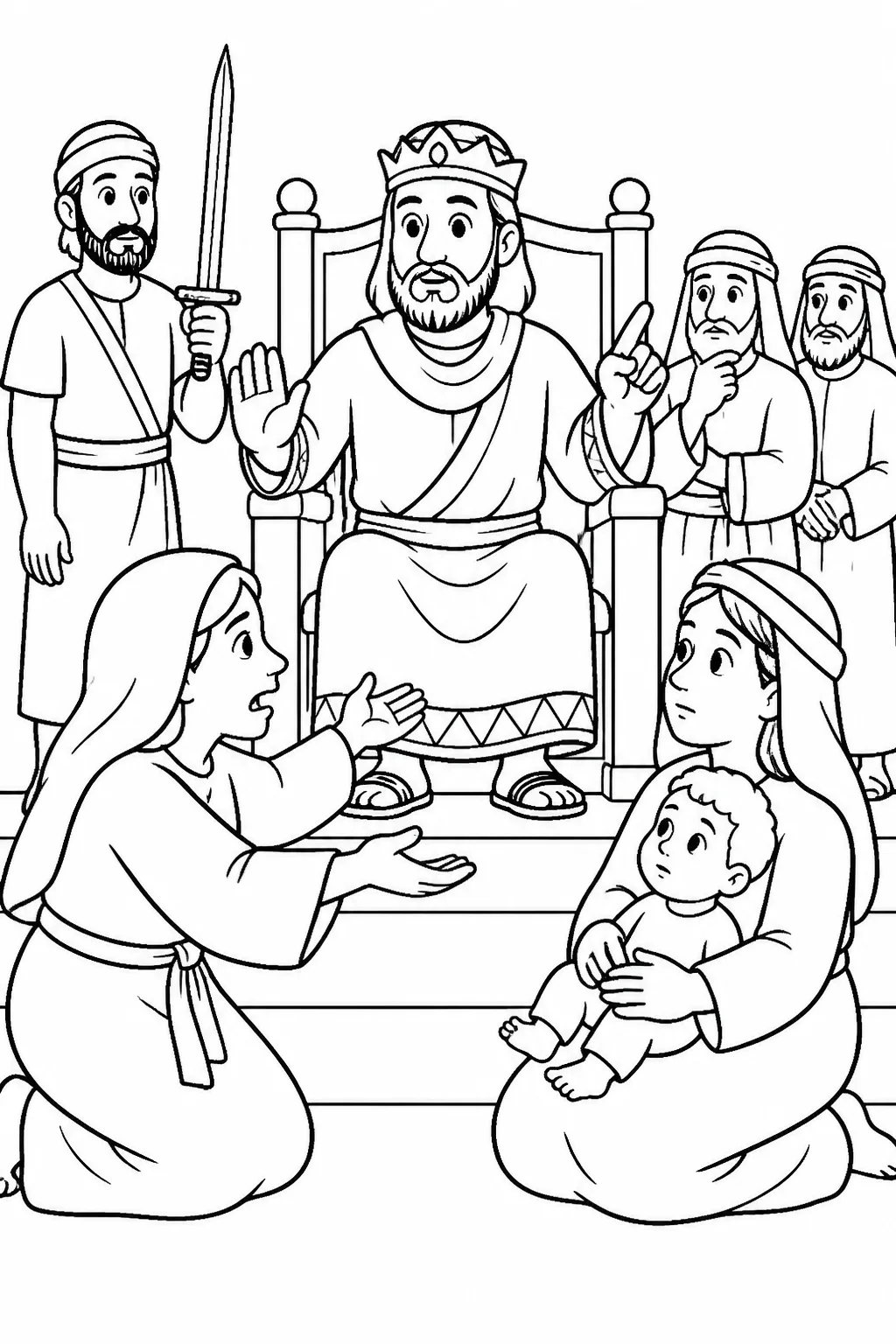
Solomon’s court scene with two unnamed women, one living child, and a safely held sword representing Solomon’s test; the child is unharmed.

Solomon Reveals Compassion Through a Test

1 Kings 3:3-28
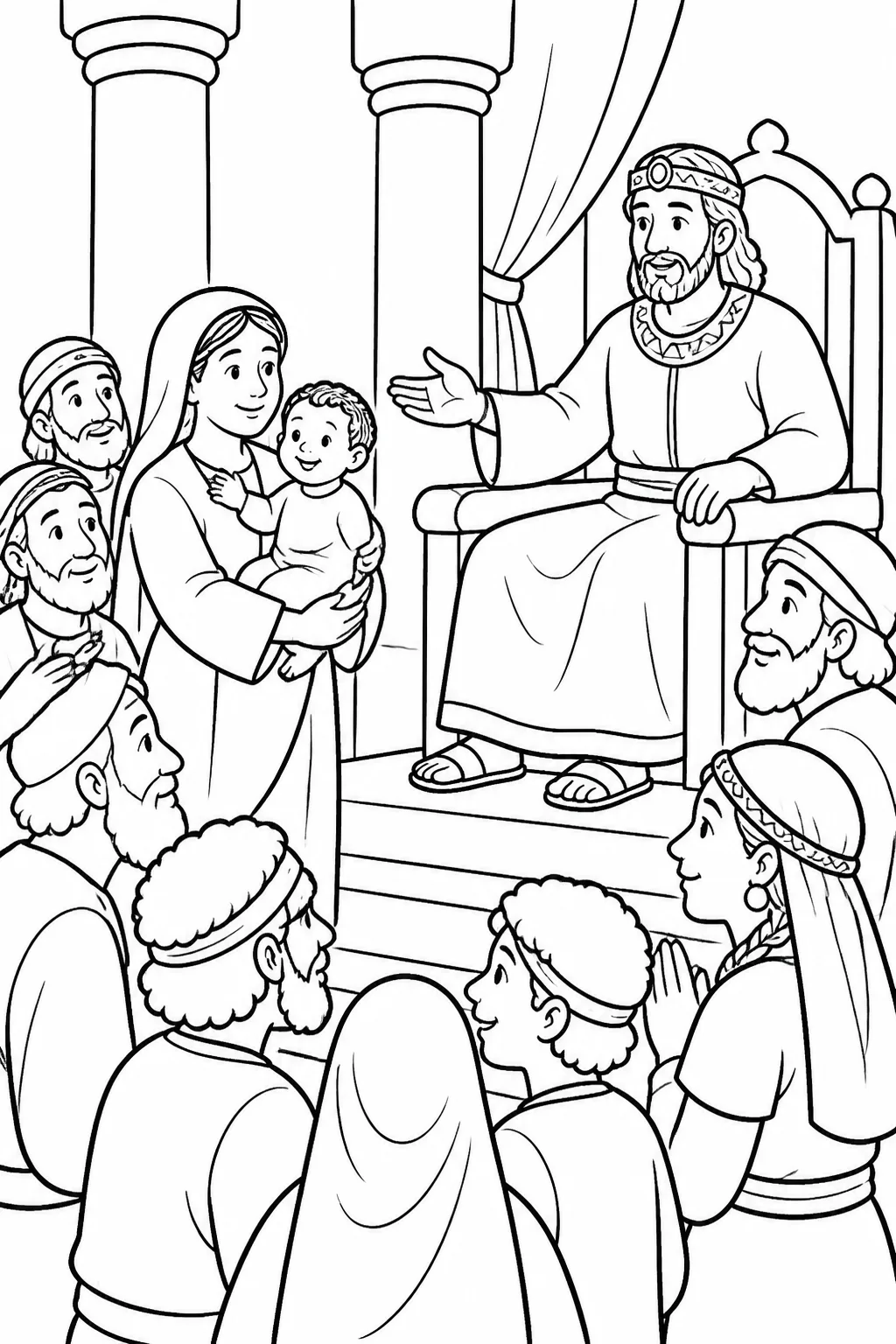
Solomon in his court with the living child safely beside the recognized mother while people of Israel listen and recognize his God-given wisdom.

Israel Recognizes Wise and Just Leadership

1 Kings 3:3-28
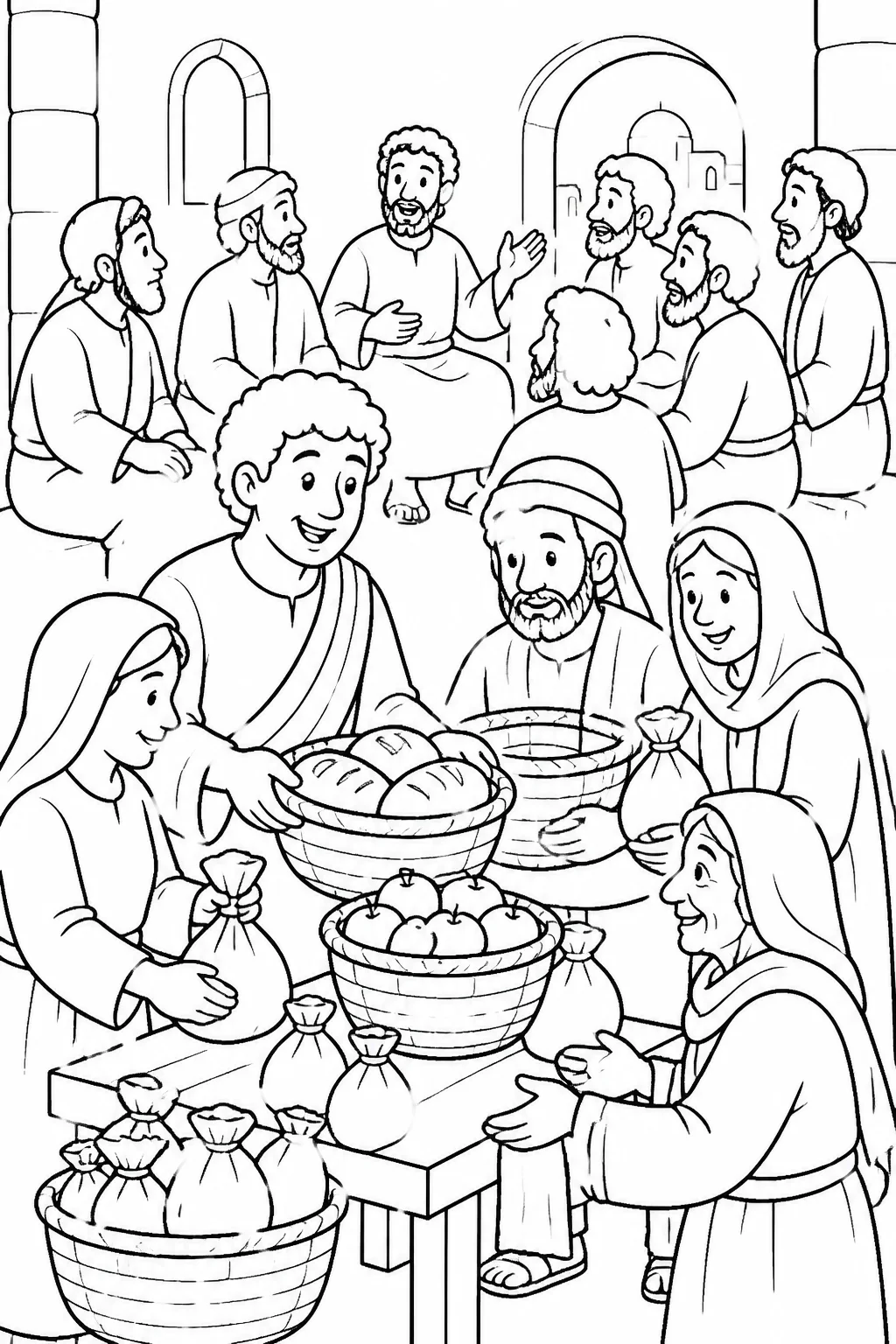
Stephen, the apostles, and disciples organize fair daily care for widows at tables with baskets of food in the Jerusalem church.

Caring for the Widows

Acts 6:1–7:60

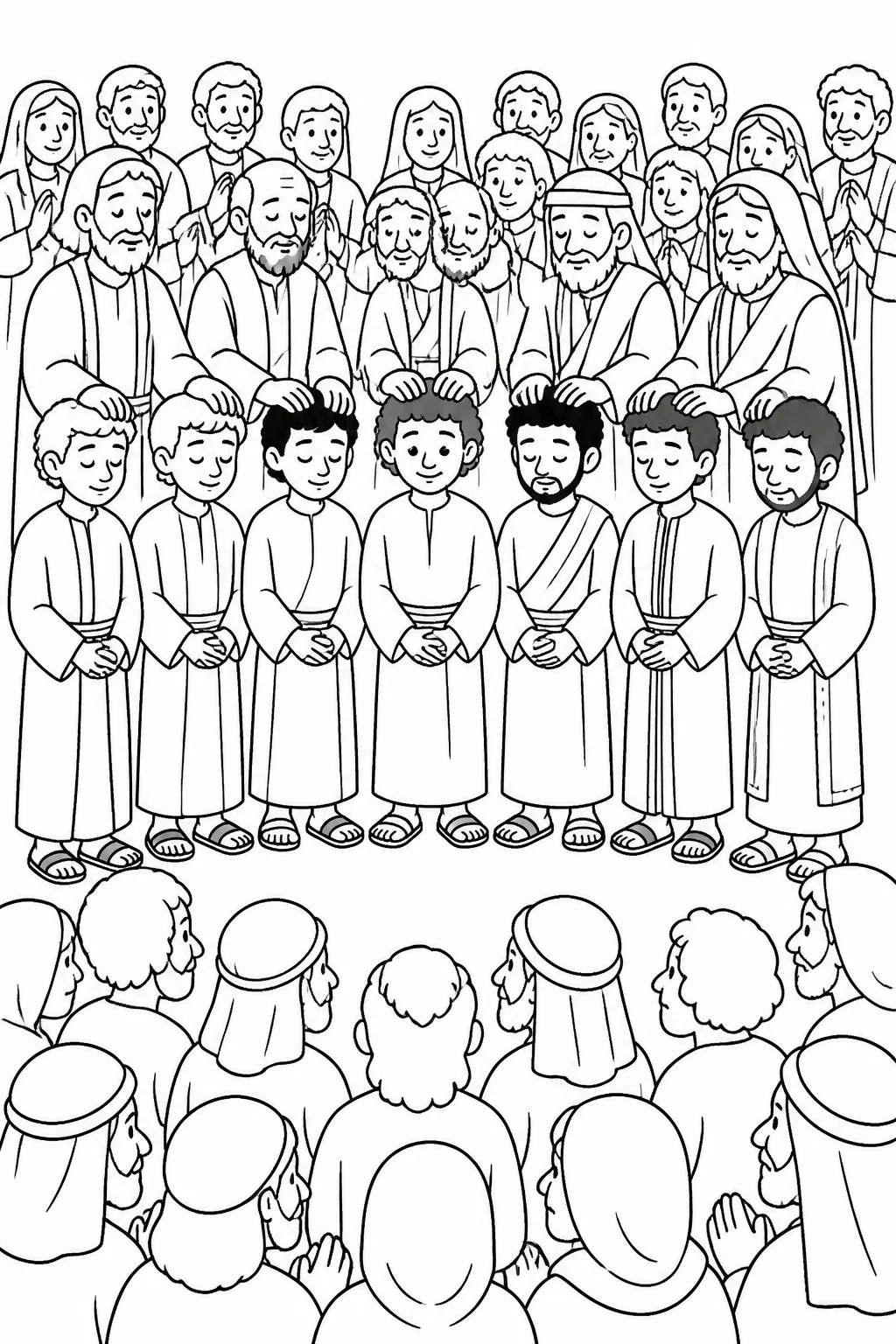
Stephen and six other named servants stand before the gathered church community as the apostles pray and lay hands on them in Jerusalem.

The Seven Are Chosen

Acts 6:1–7:60

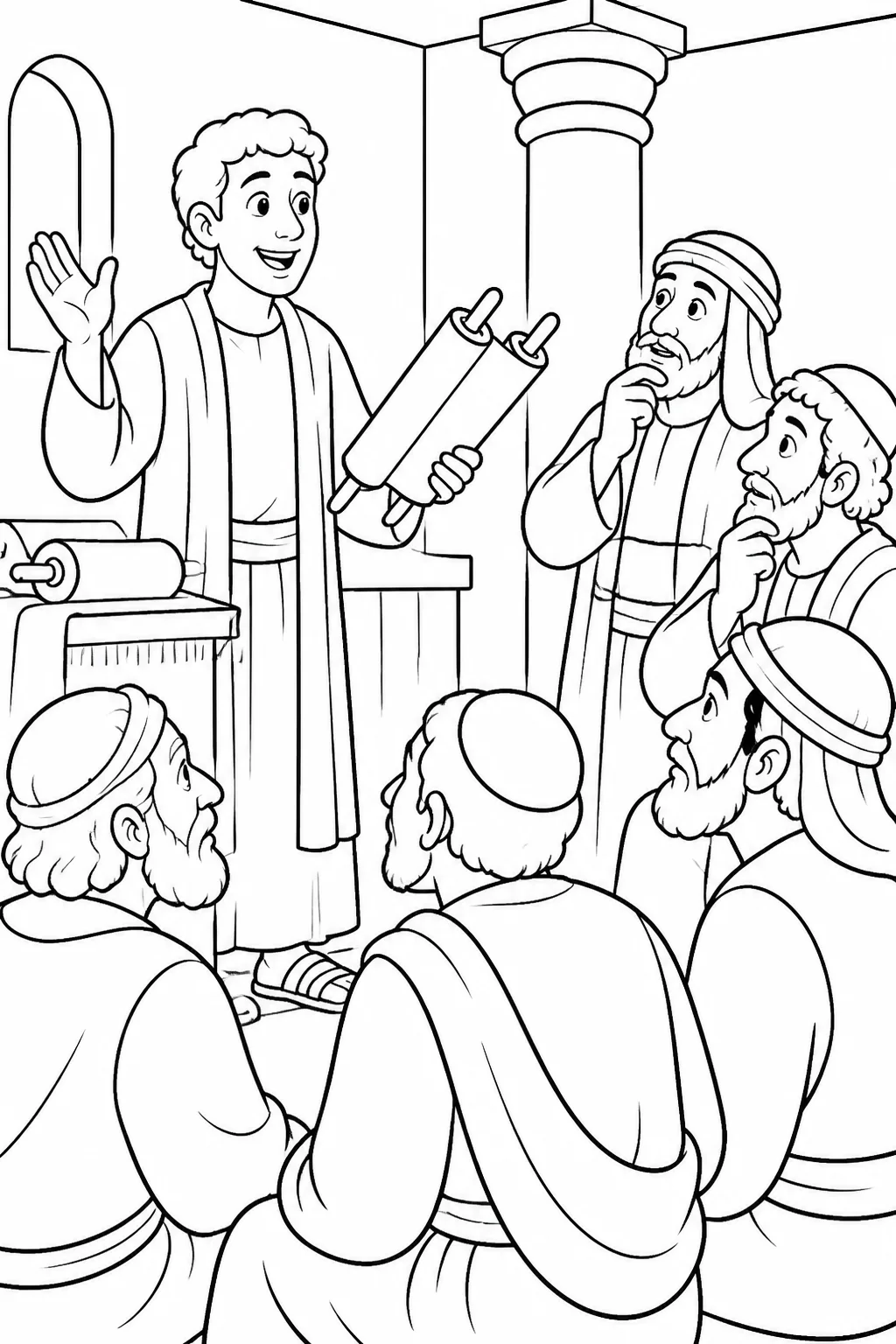
Stephen speaking with an open scroll or raised hand to thoughtful listeners in a Jerusalem synagogue, based on Acts 6:8–10.

Stephen Speaks with Wisdom

Acts 6:1–7:60
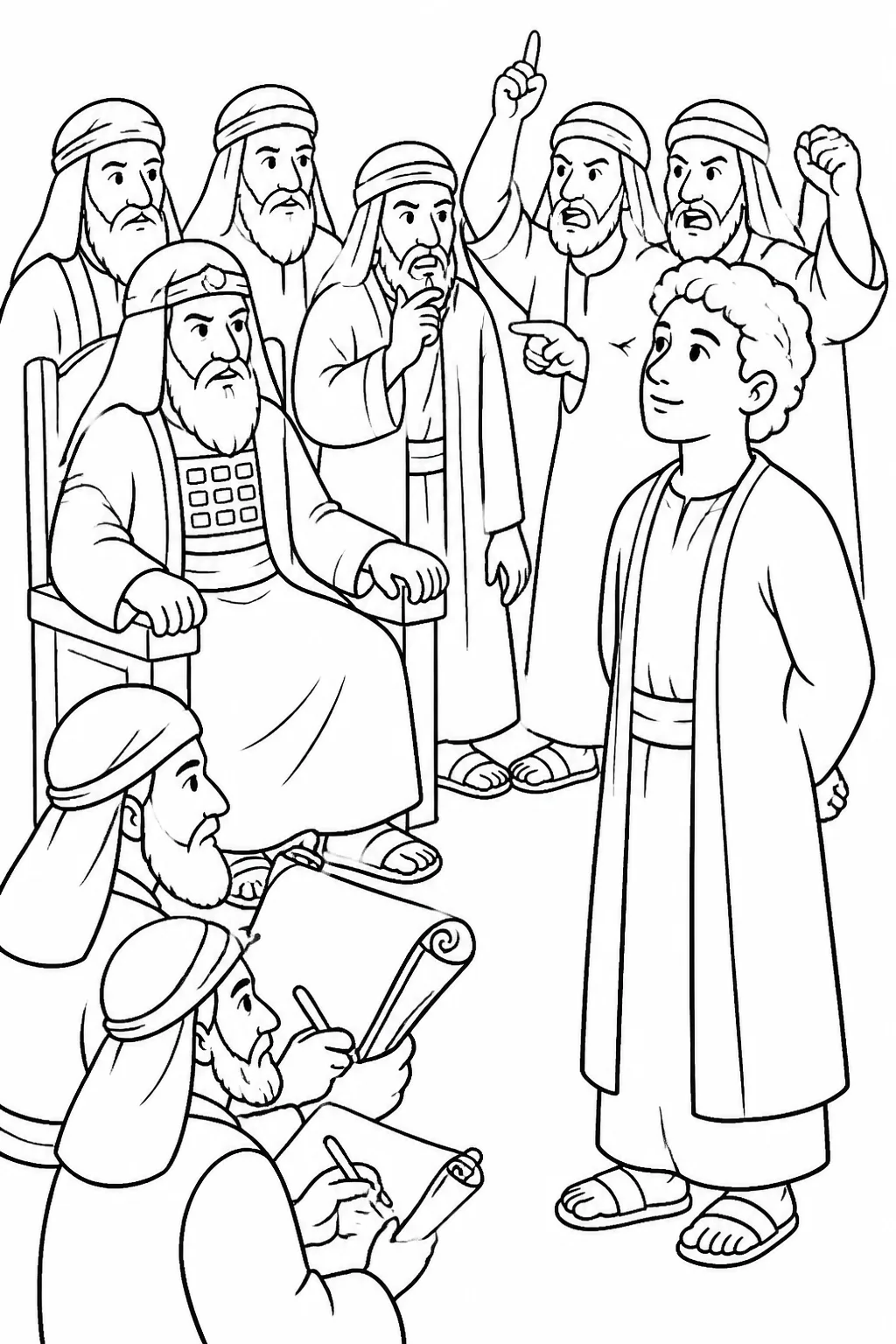
Stephen standing respectfully before the council in Jerusalem while the high priest, council members, elders, scribes, and false witnesses are present.

Stephen Before the Council

Acts 6:1–7:60
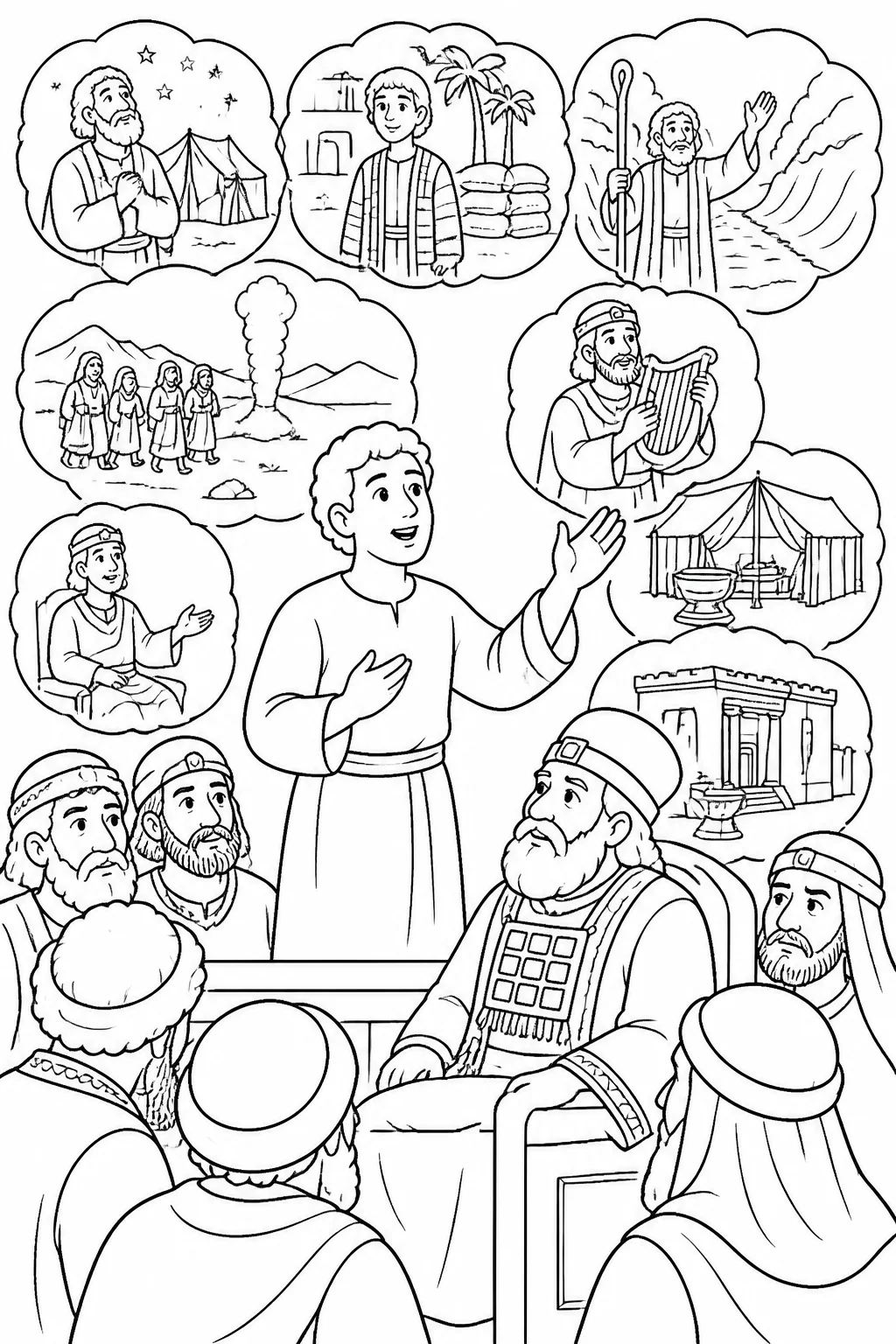
Stephen addresses the high priest and council while symbolic references represent Abraham, Joseph, Moses, the wilderness, David, Solomon, a tabernacle, and the temple.

God Guided His People

Acts 6:1–7:60

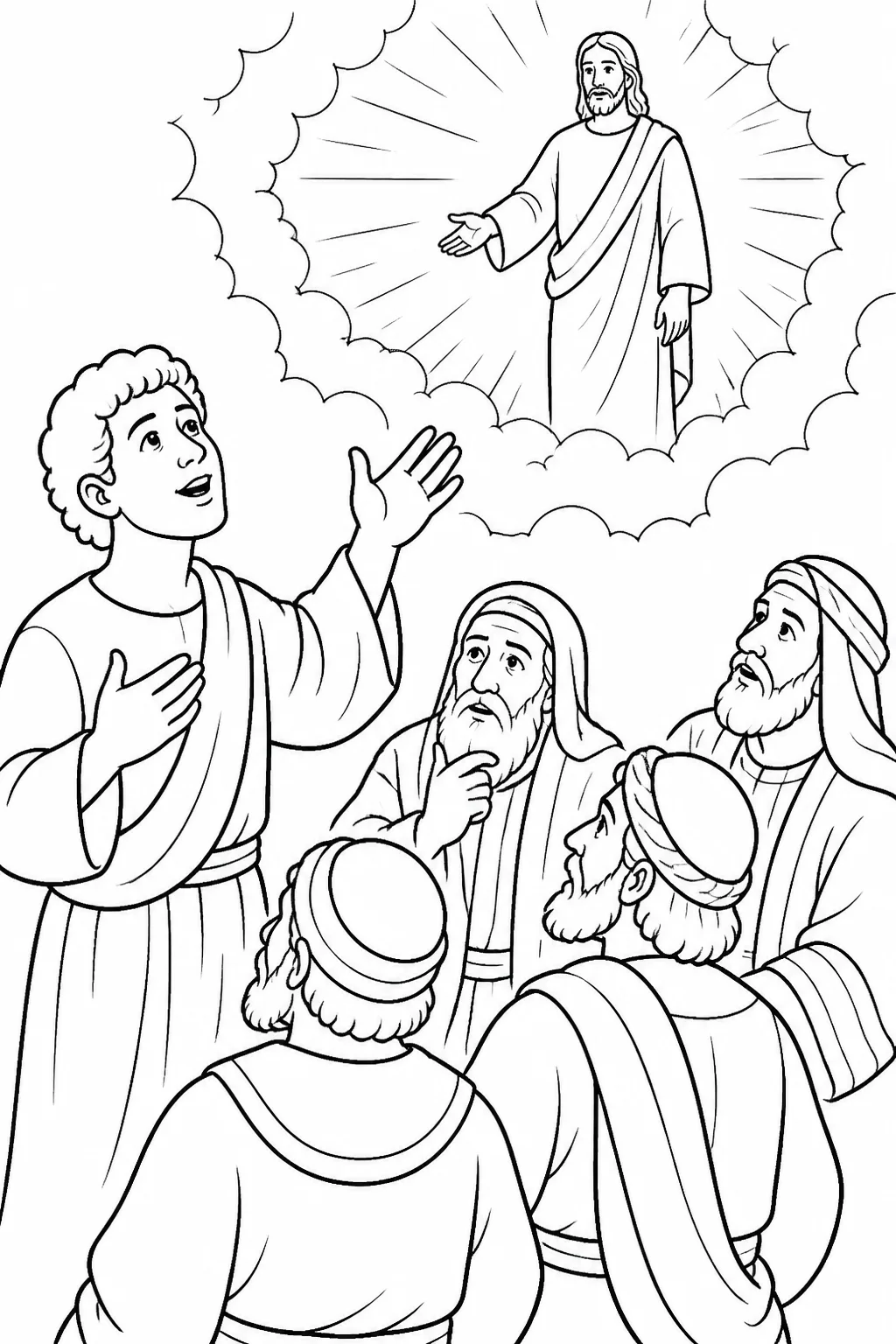
Stephen looks upward before the council and reports seeing heaven open, God’s glory, and Jesus standing at God’s right hand.

Stephen Sees Jesus Standing

Acts 6:1–7:60
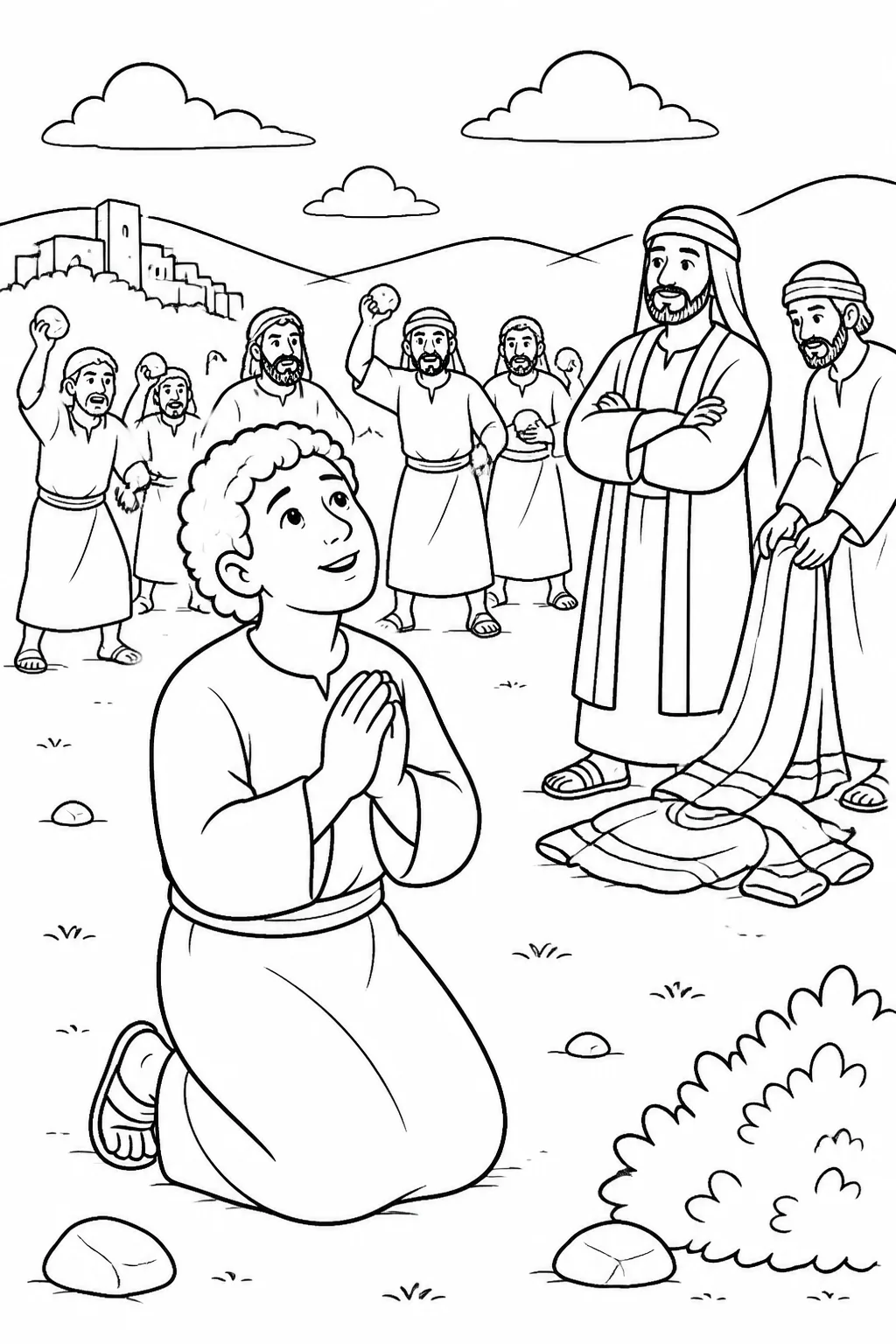
Stephen Prays and Forgives from Stephen’s Faithful Witness Bible coloring page

Stephen Prays and Forgives

Acts 6:1–7:60
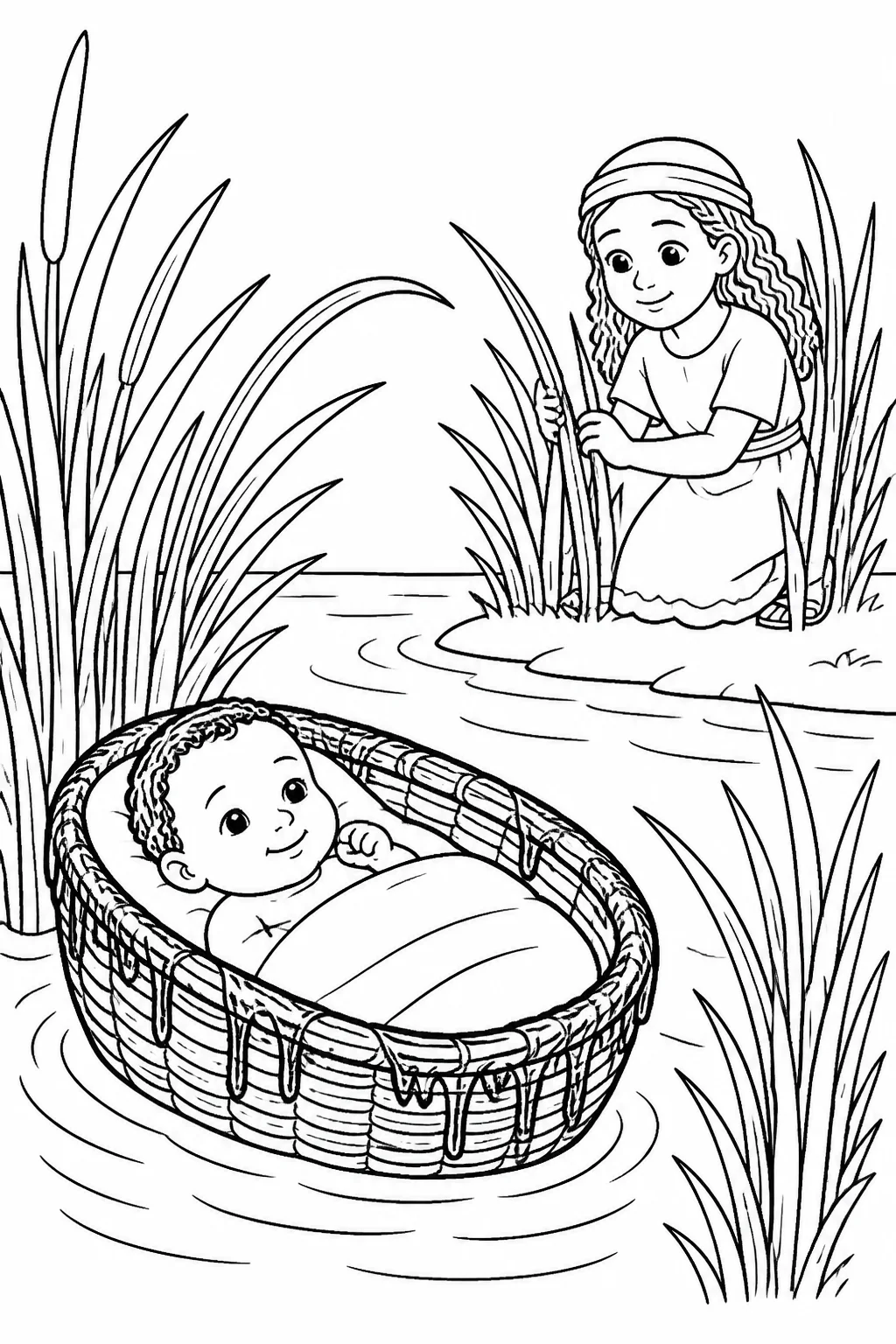
Baby Moses resting in a papyrus basket coated with bitumen and pitch among the reeds beside the Nile while his sister watches from a distance.

Moses Hidden in the Basket

Exodus 1:8–2:10
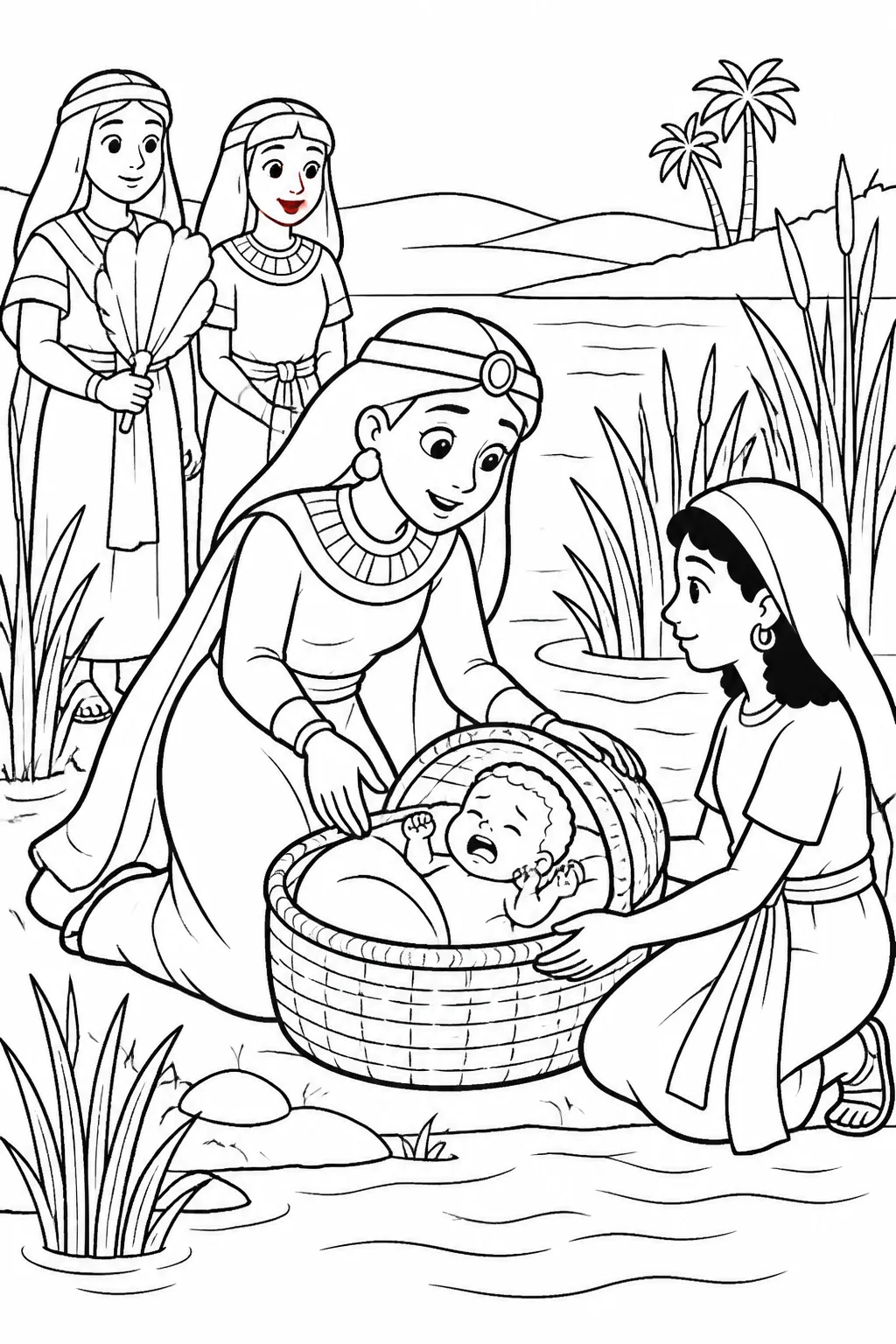
Pharaoh’s daughter discovers baby Moses in a basket among the reeds beside the Nile, with a servant and attendants nearby.

A Compassionate Discovery

Exodus 1:8–2:10
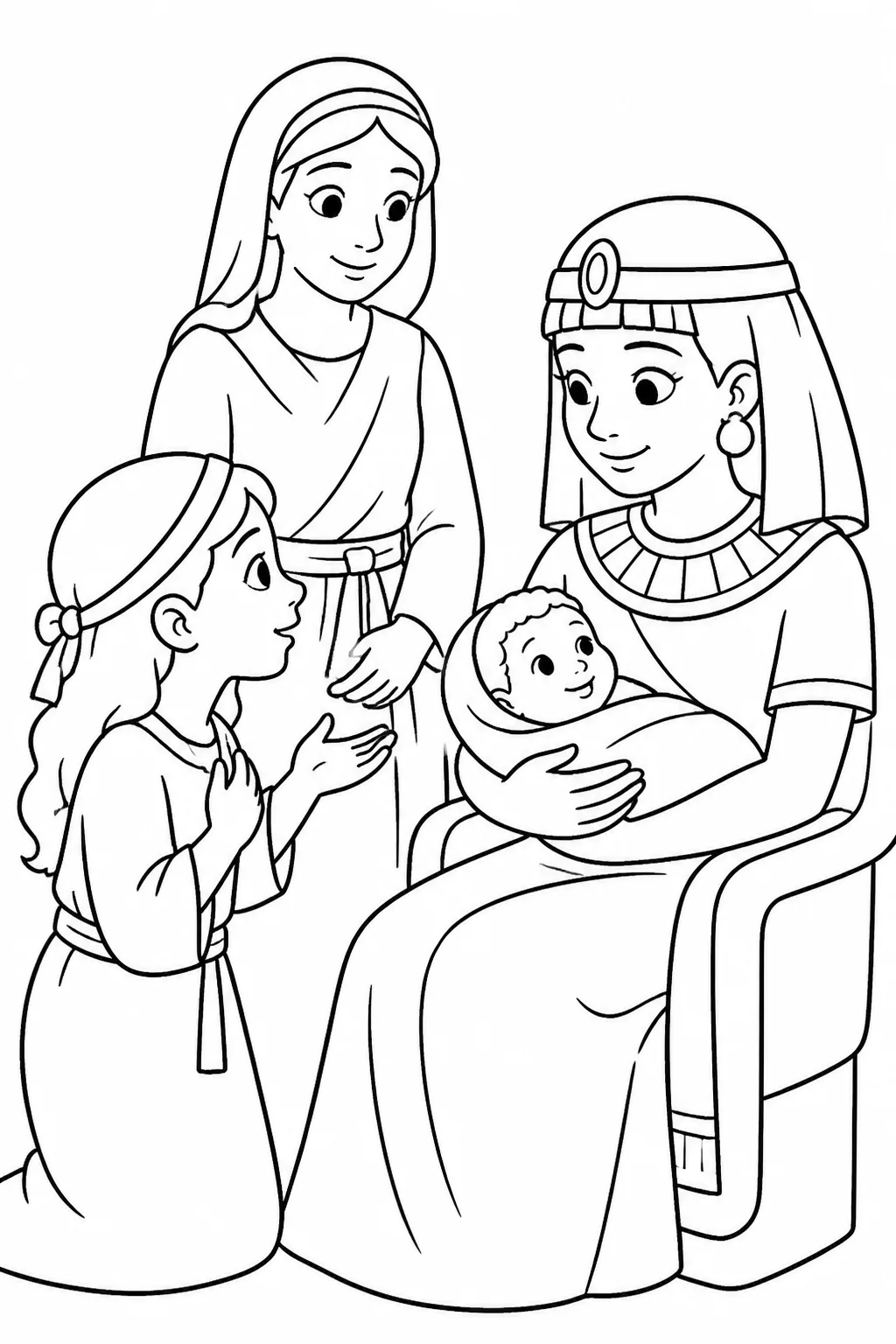
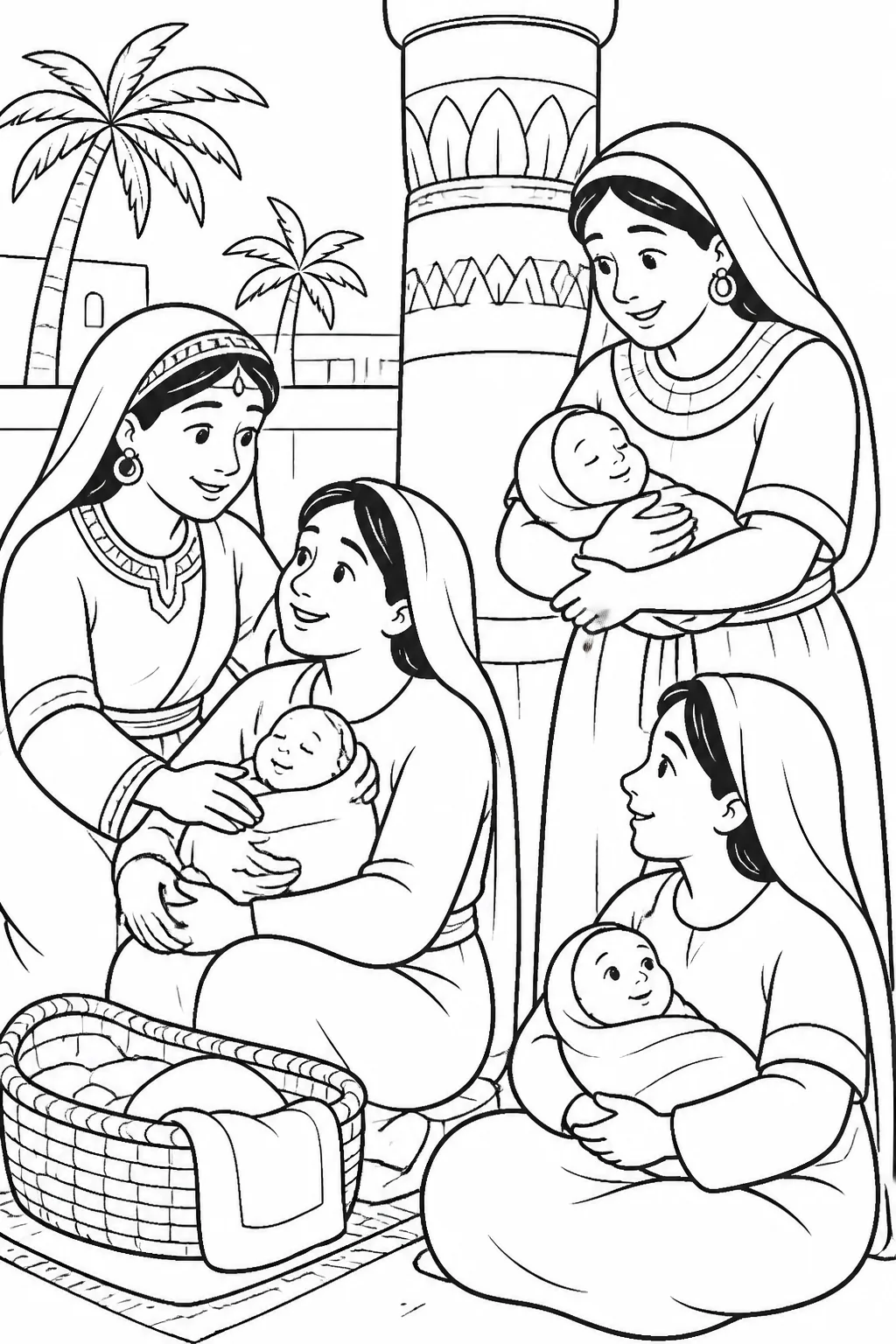
Moses’s sister asks Pharaoh’s daughter whether she should call a Hebrew woman to nurse baby Moses, leading to Moses’s mother caring for him.

A Brave Question

Exodus 1:8–2:10

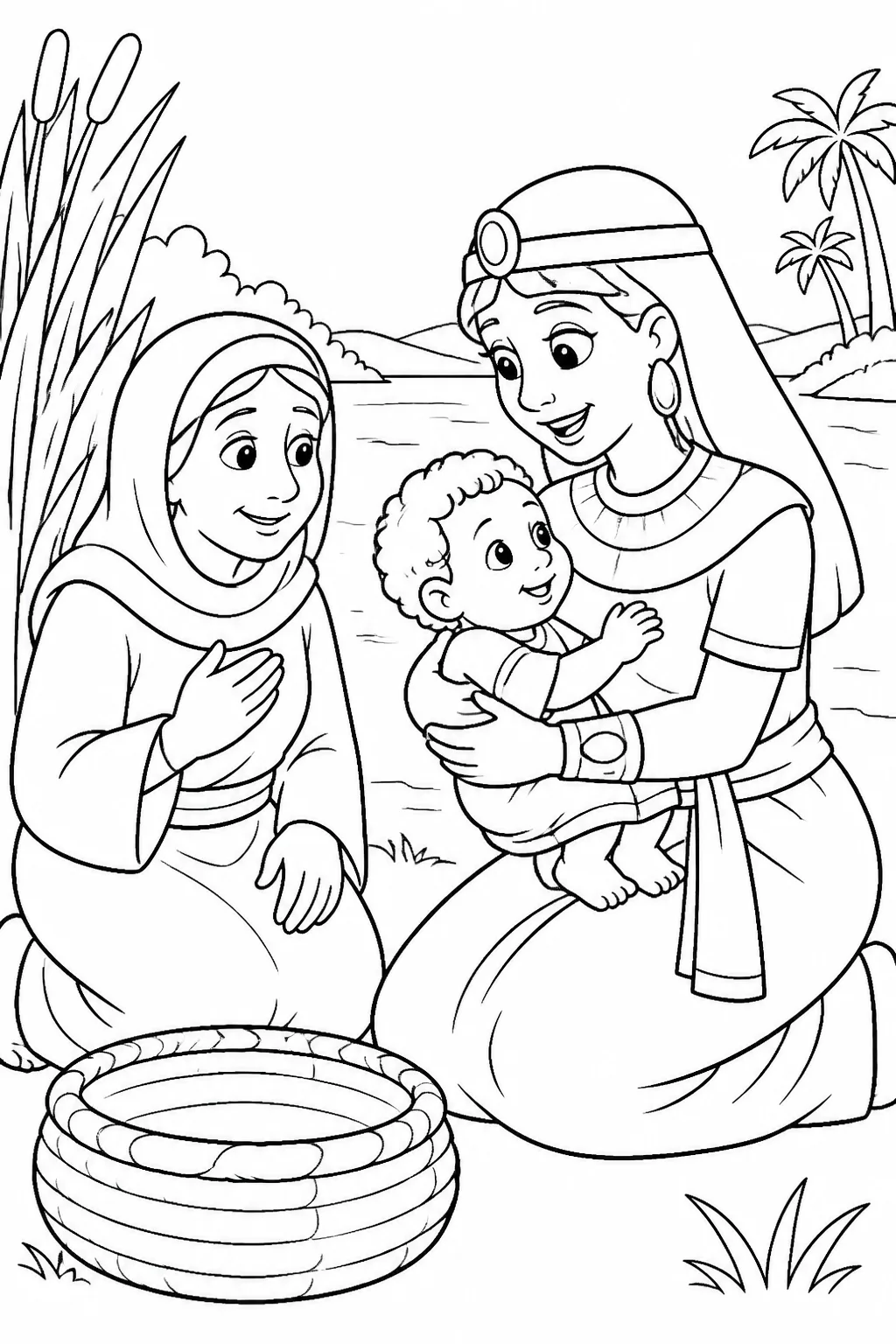
Moses with his mother and Pharaoh’s daughter beside a water setting, representing Moses being welcomed as her son and named Moses because he was drawn from the water.

Moses Is Welcomed

Exodus 1:8–2:10

The Midwives Choose Courage from The Baby Moses Bible coloring page

The Midwives Choose Courage

Exodus 1:8–2:10
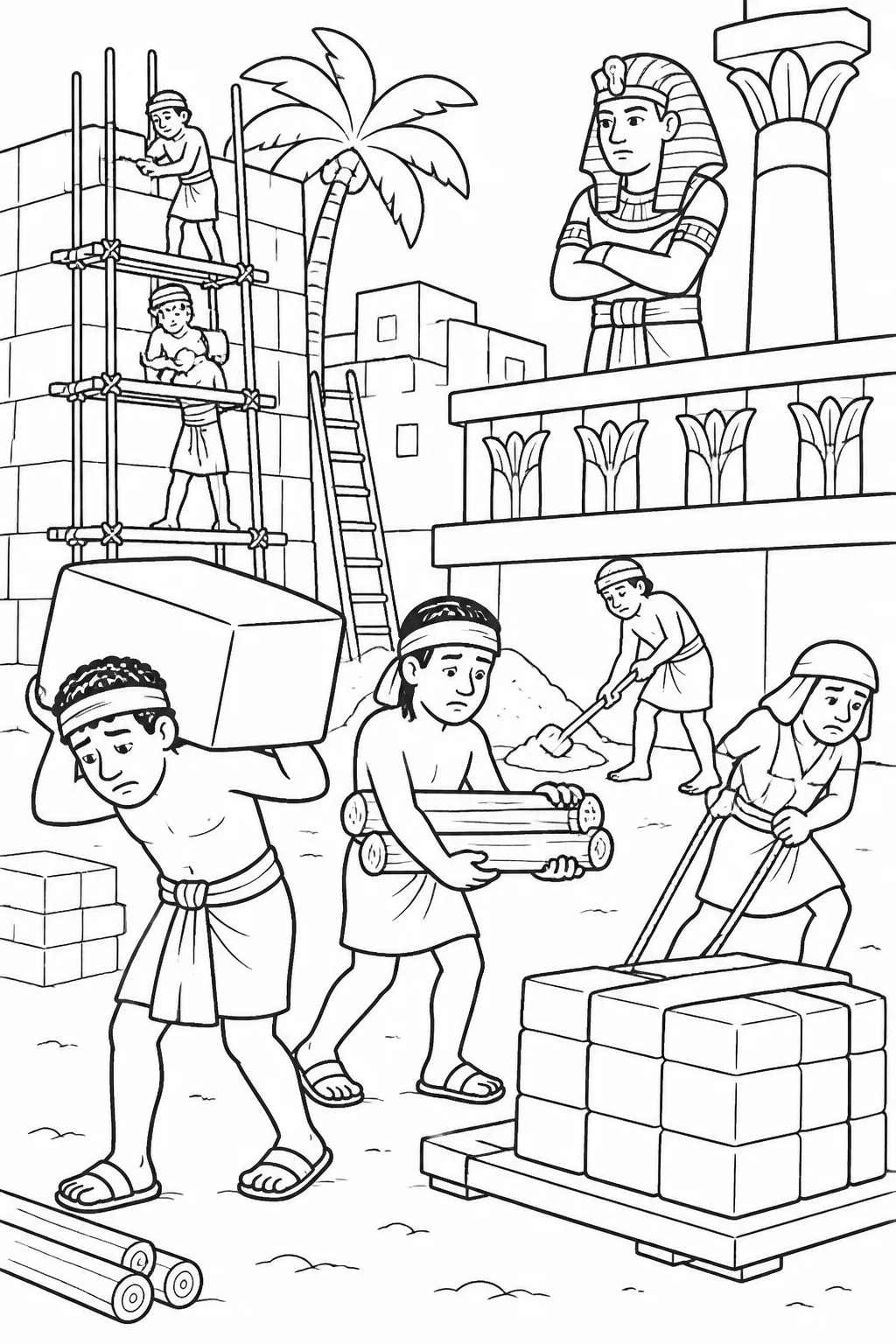
Israelite workers carry construction materials while laboring on the store cities Pithom and Raamses in Egypt as the new king watches from a distance.

Unfair Work in Egypt

Exodus 1:8–2:10

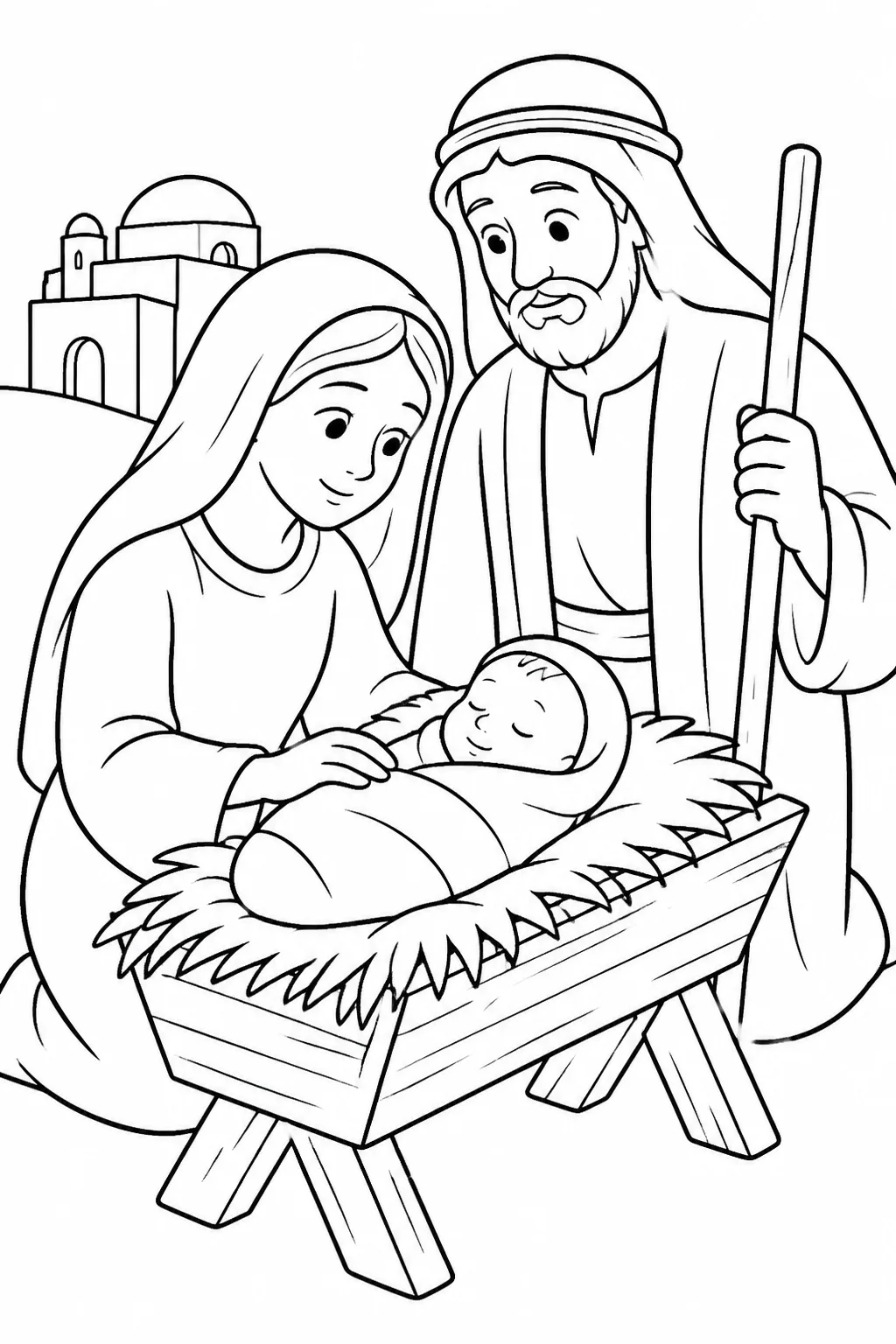
Child-friendly Bible illustration concept of Mary and Joseph with baby Jesus wrapped in cloths and lying in a manger in Bethlehem.

Jesus Is Born

Luke 2:1-20

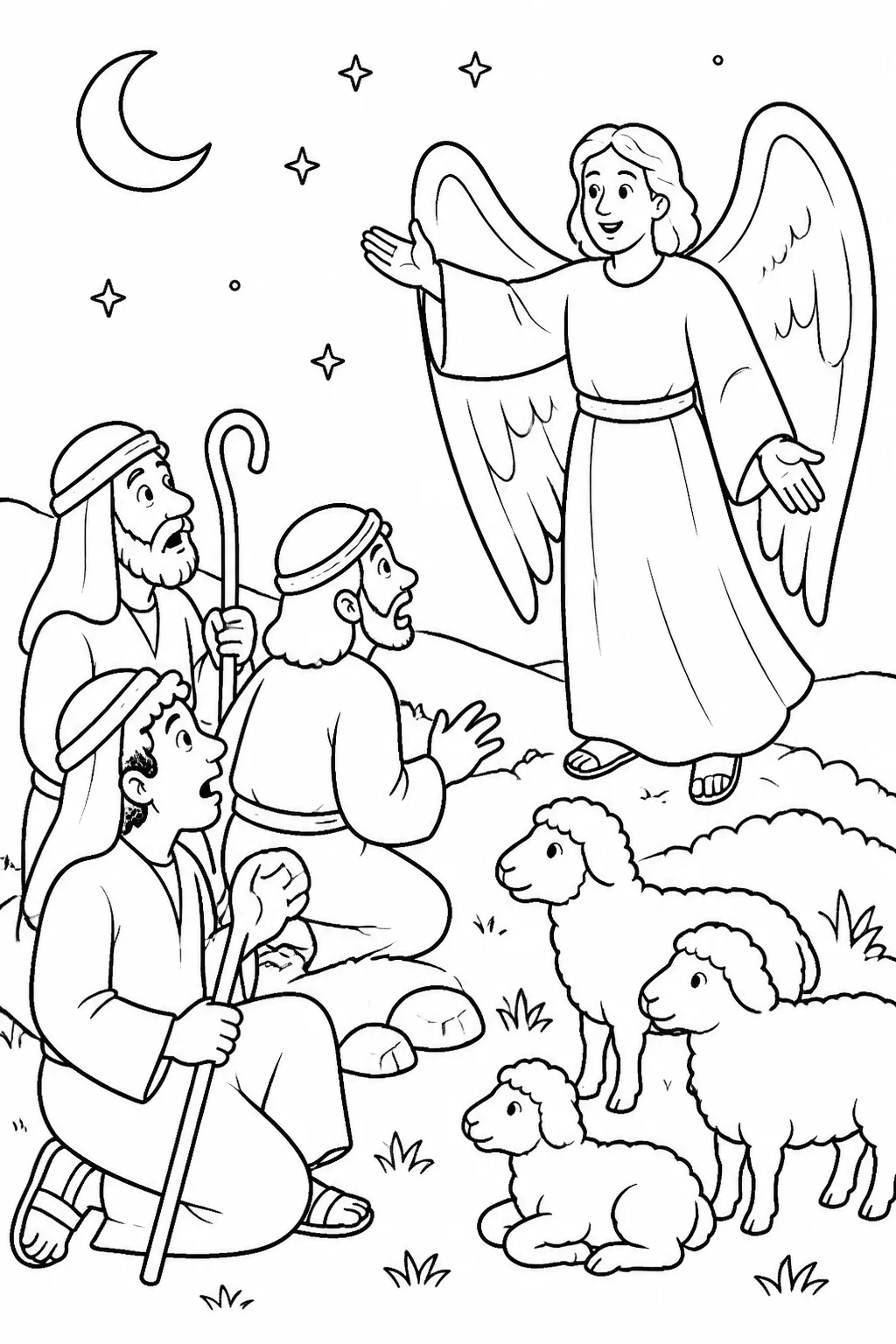
Shepherds guard their flock at night in the fields as an angel of the Lord appears and announces the joyful news of the Savior’s birth.

Do Not Be Afraid

Luke 2:1-20

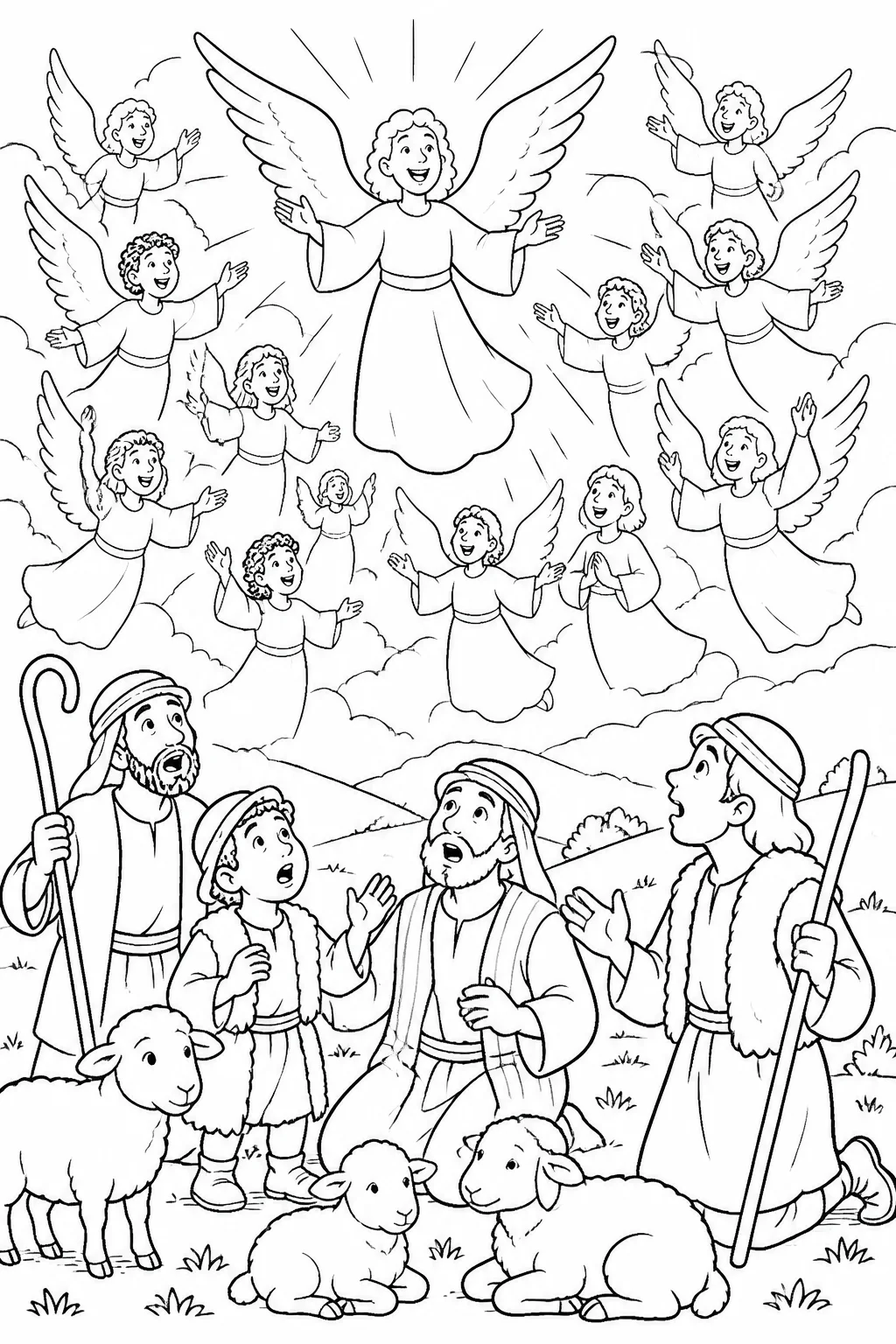
An angel of the Lord and a multitude of the heavenly host praise God above shepherds in the fields during the announcement of Jesus’ birth.

Glory and Peace

Luke 2:1-20

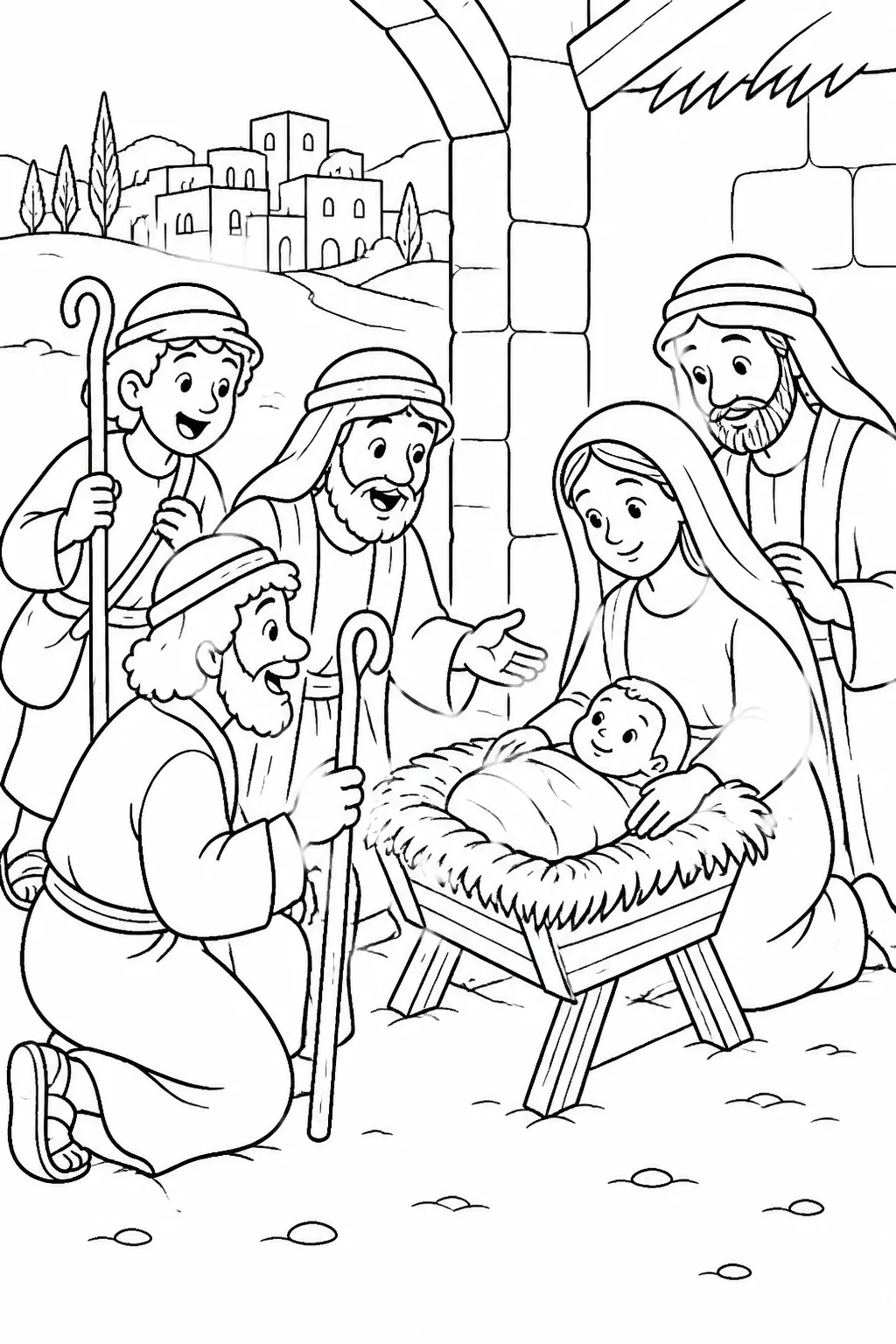
Shepherds arriving in Bethlehem to see Mary, Joseph, and baby Jesus lying in a manger.

The Shepherds Go Quickly

Luke 2:1-20

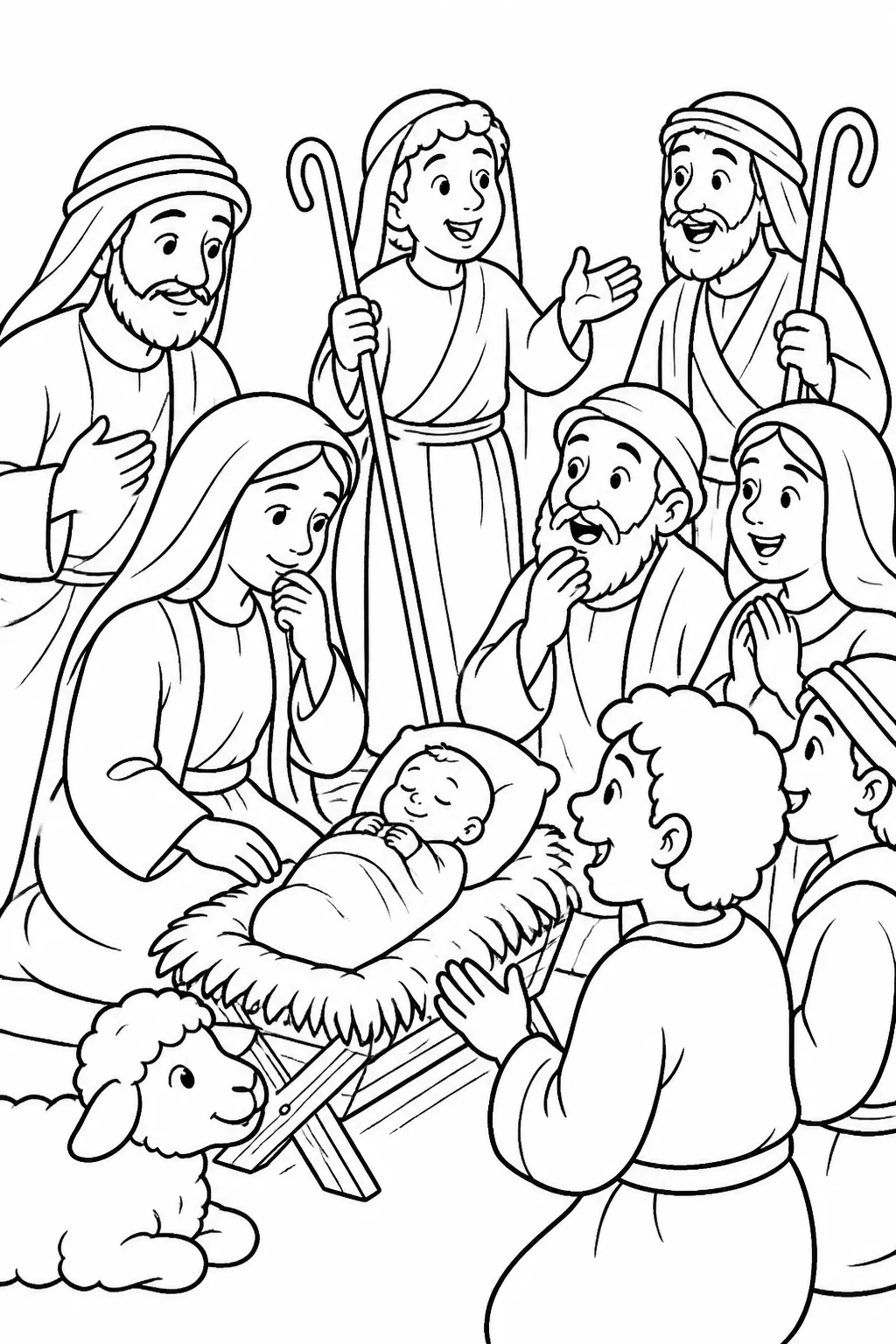
Mary reflects while shepherds share what they were told about Jesus with listeners and leave praising God.

Mary Reflects and Shepherds Praise

Luke 2:1-20
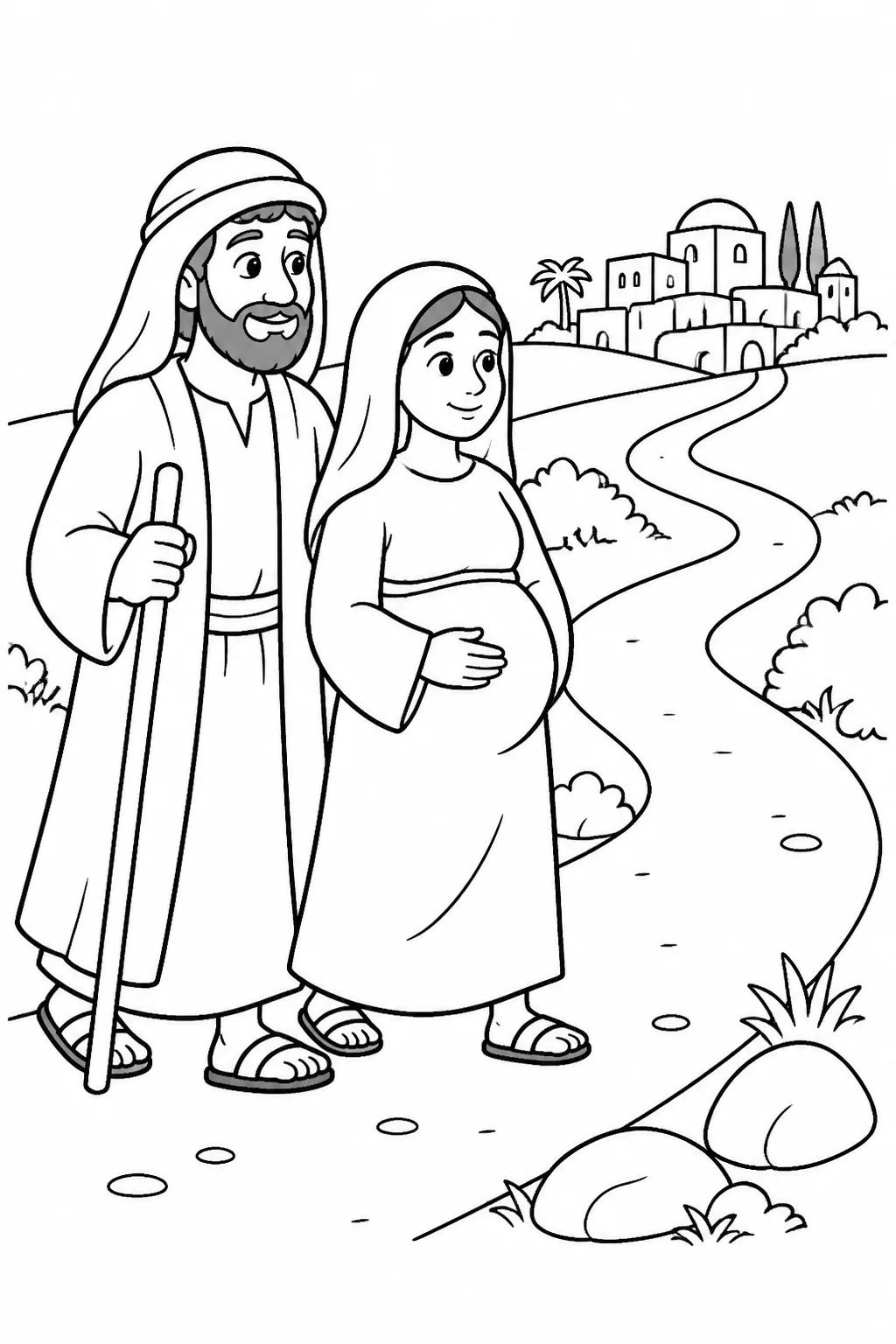
Mary and Joseph traveling together on a simple path from Nazareth in Galilee toward Bethlehem in Judea.

Mary and Joseph Travel to Bethlehem

Luke 2:1-20
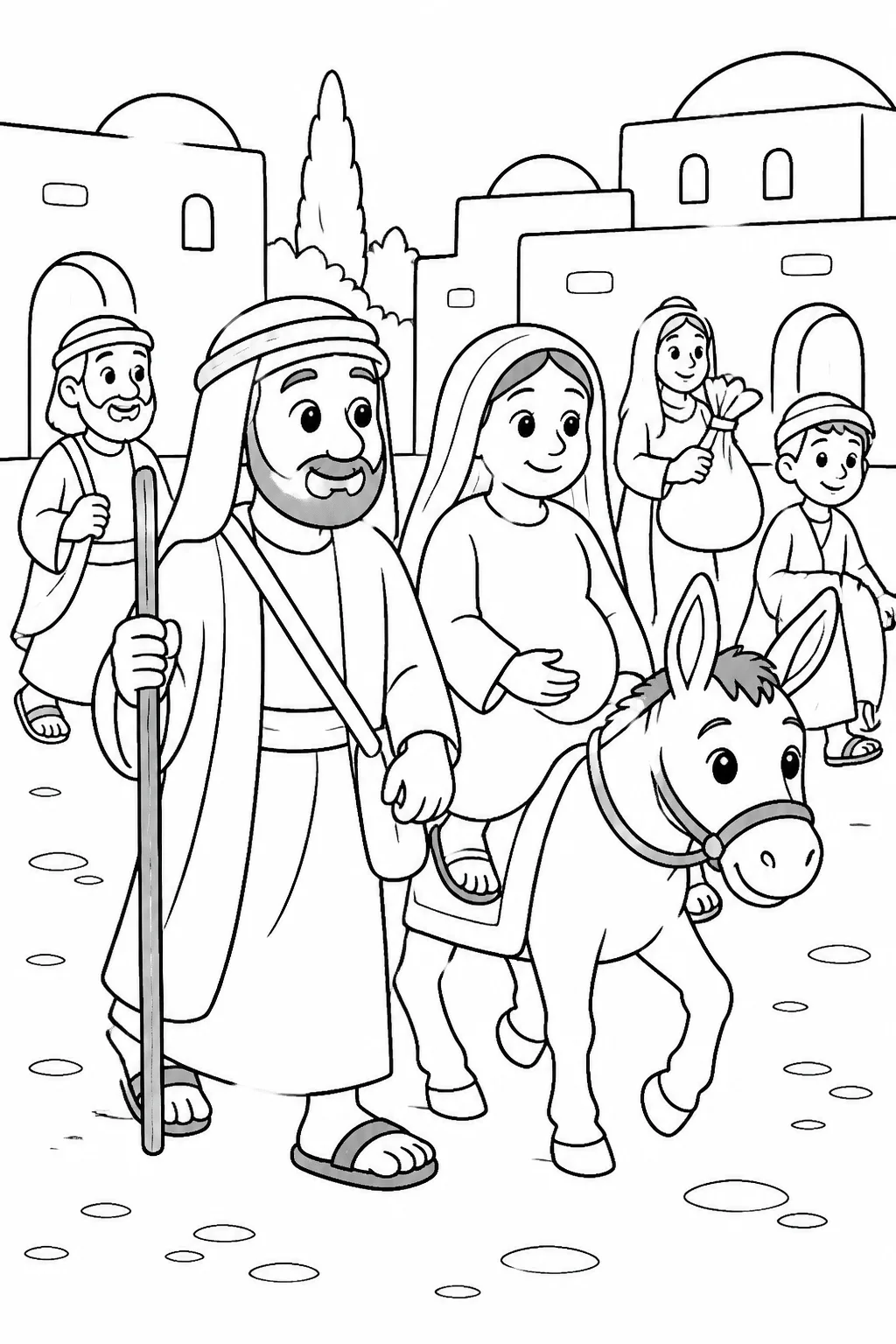
Joseph and other indistinct townspeople traveling to a town to register under the order of Caesar Augustus, with a simple record-keeping cue.

People Travel to Register

Luke 2:1-20
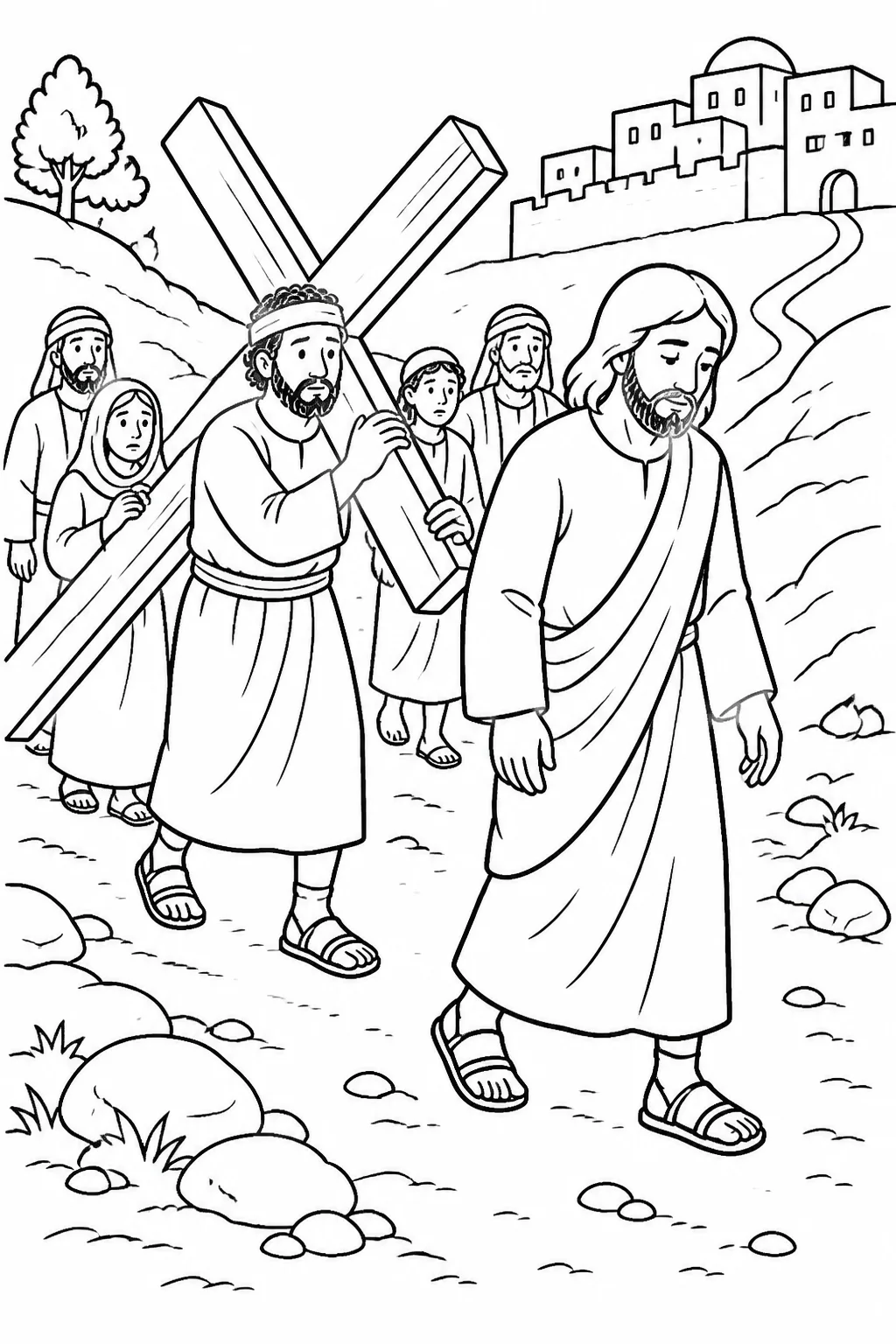
Jesus walking ahead of Simon of Cyrene as Simon carries the cross behind him on the road from Jerusalem, shown symbolically and without graphic details.

Simon Helps Carry the Cross

Luke 23:26-49
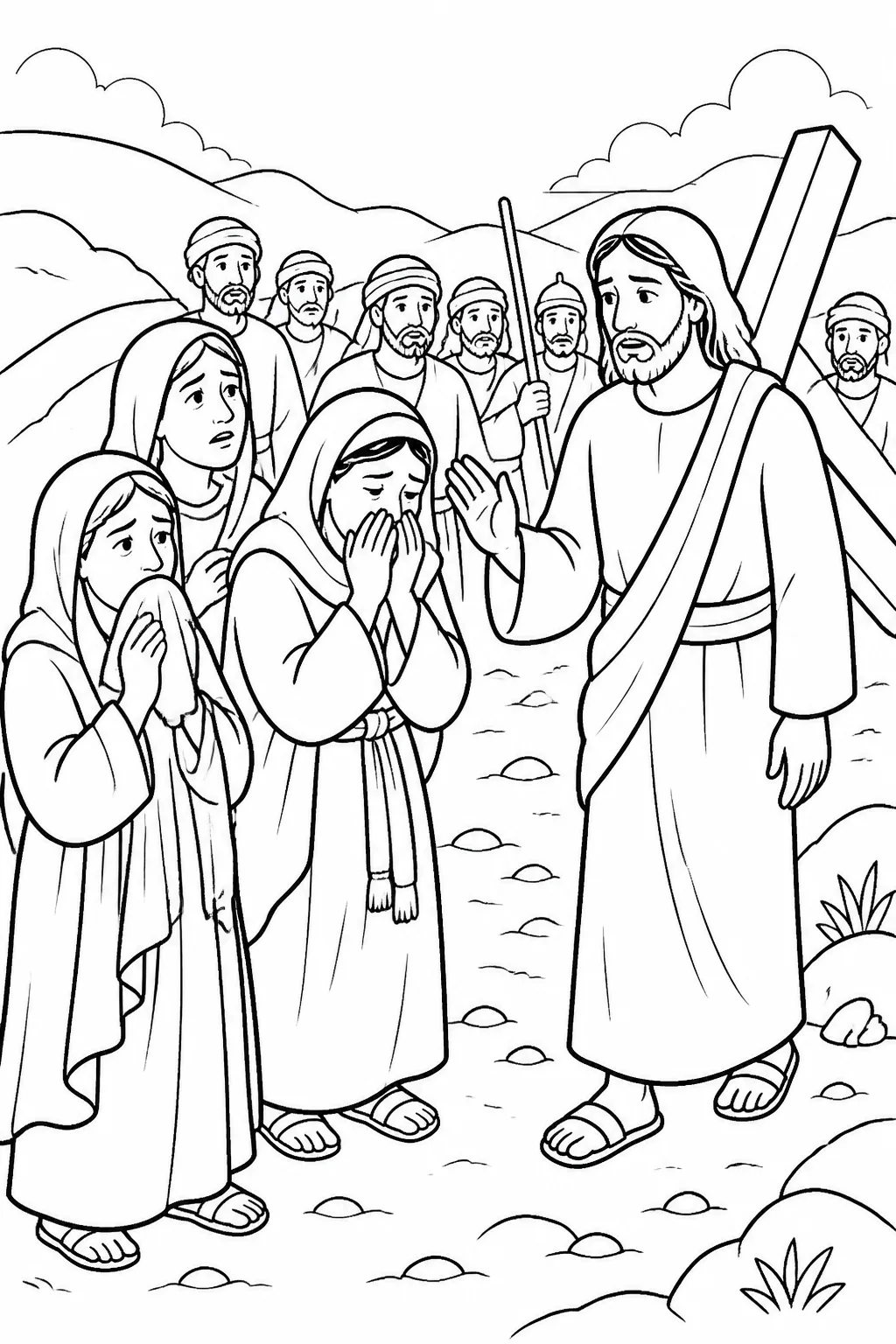
Jesus speaks to mourning women of Jerusalem as a crowd follows along the road to crucifixion.

Jesus Speaks to the Mourning Women

Luke 23:26-49
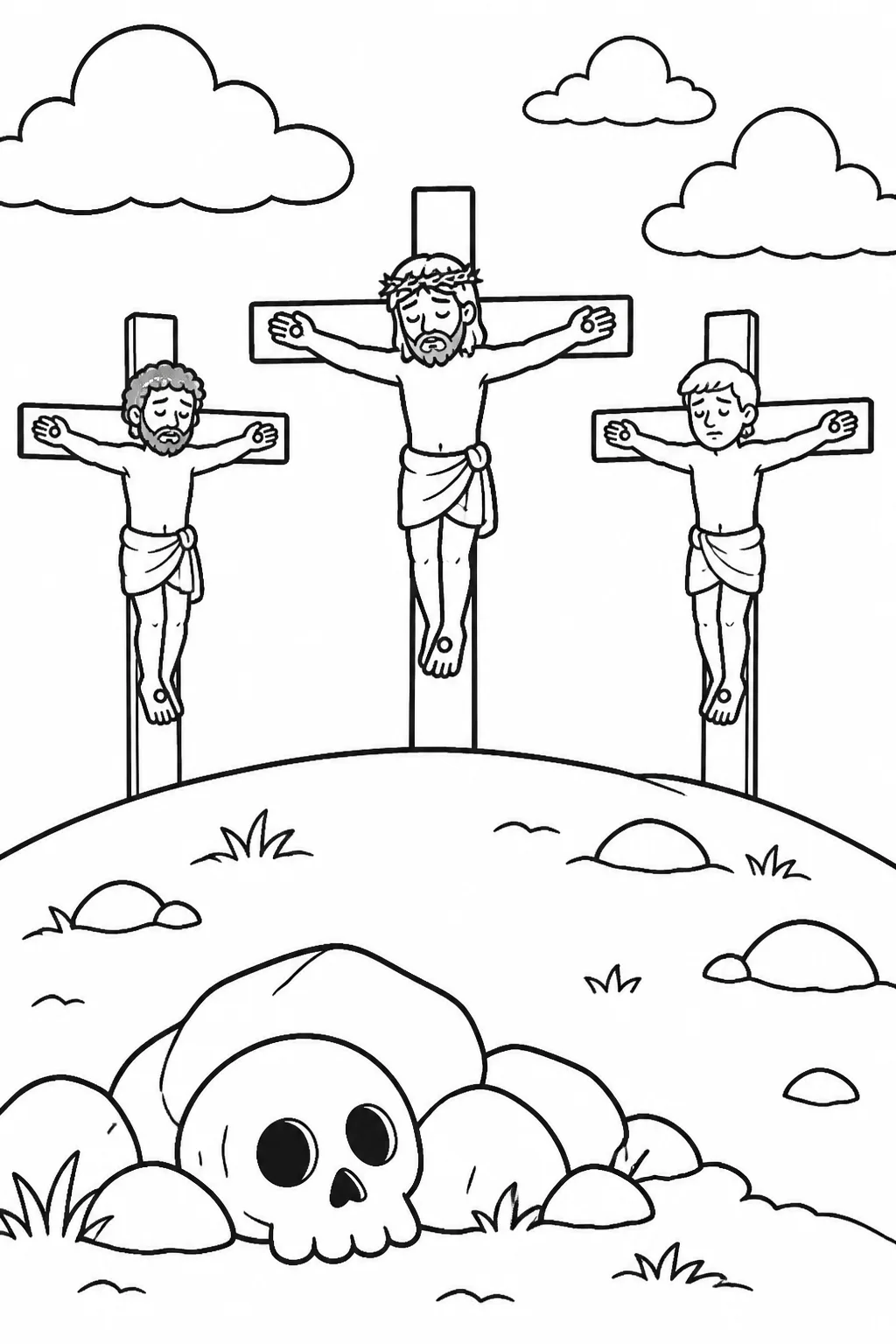
Symbolic scene of Jesus at the center of three crosses at the place called The Skull, with two unnamed criminals on either side.

The Place Called The Skull

Luke 23:26-49
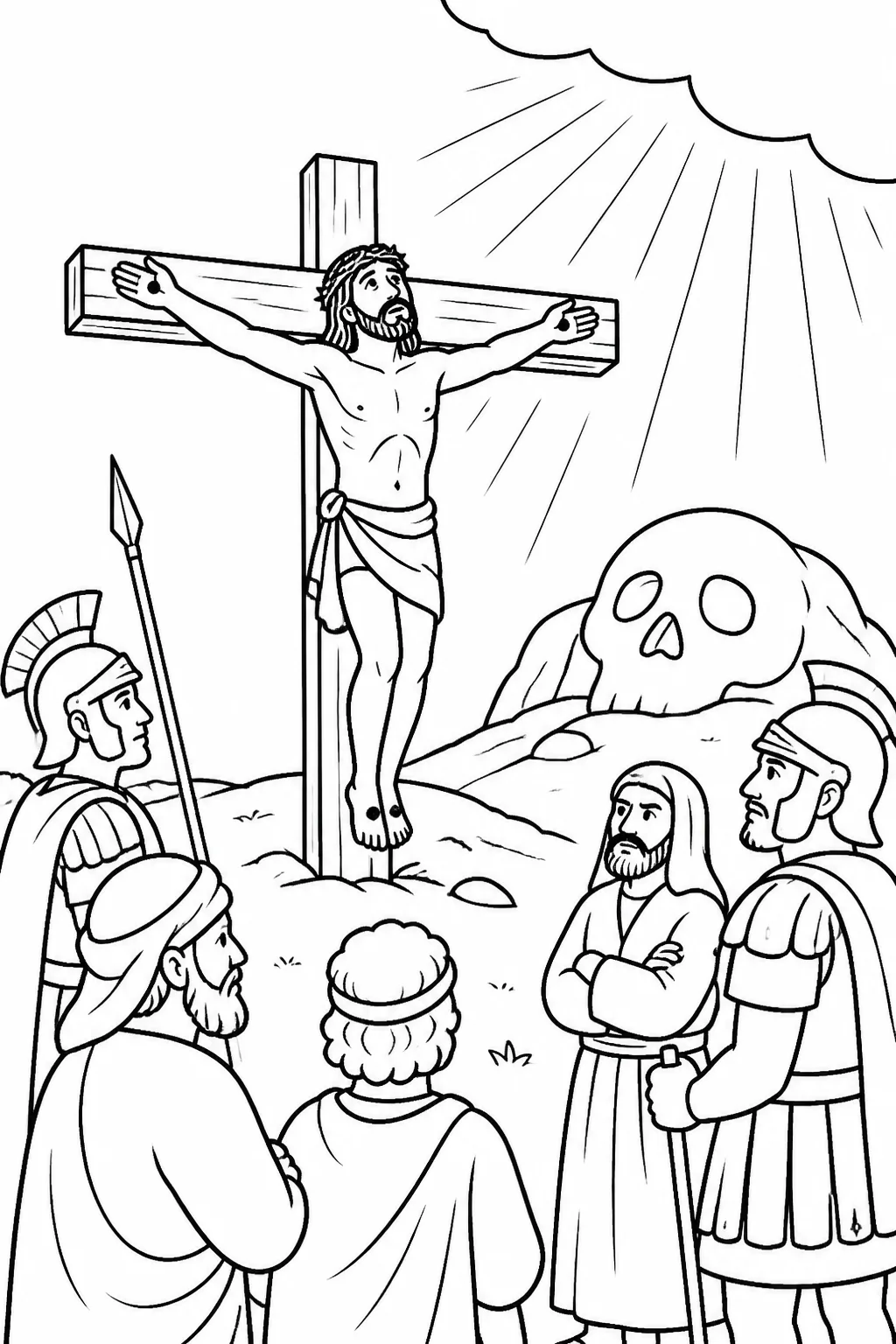
A reverent symbolic scene of Jesus praying near the cross at The Skull while those responsible for the crucifixion are present.

Jesus Prays for Forgiveness

Luke 23:26-49
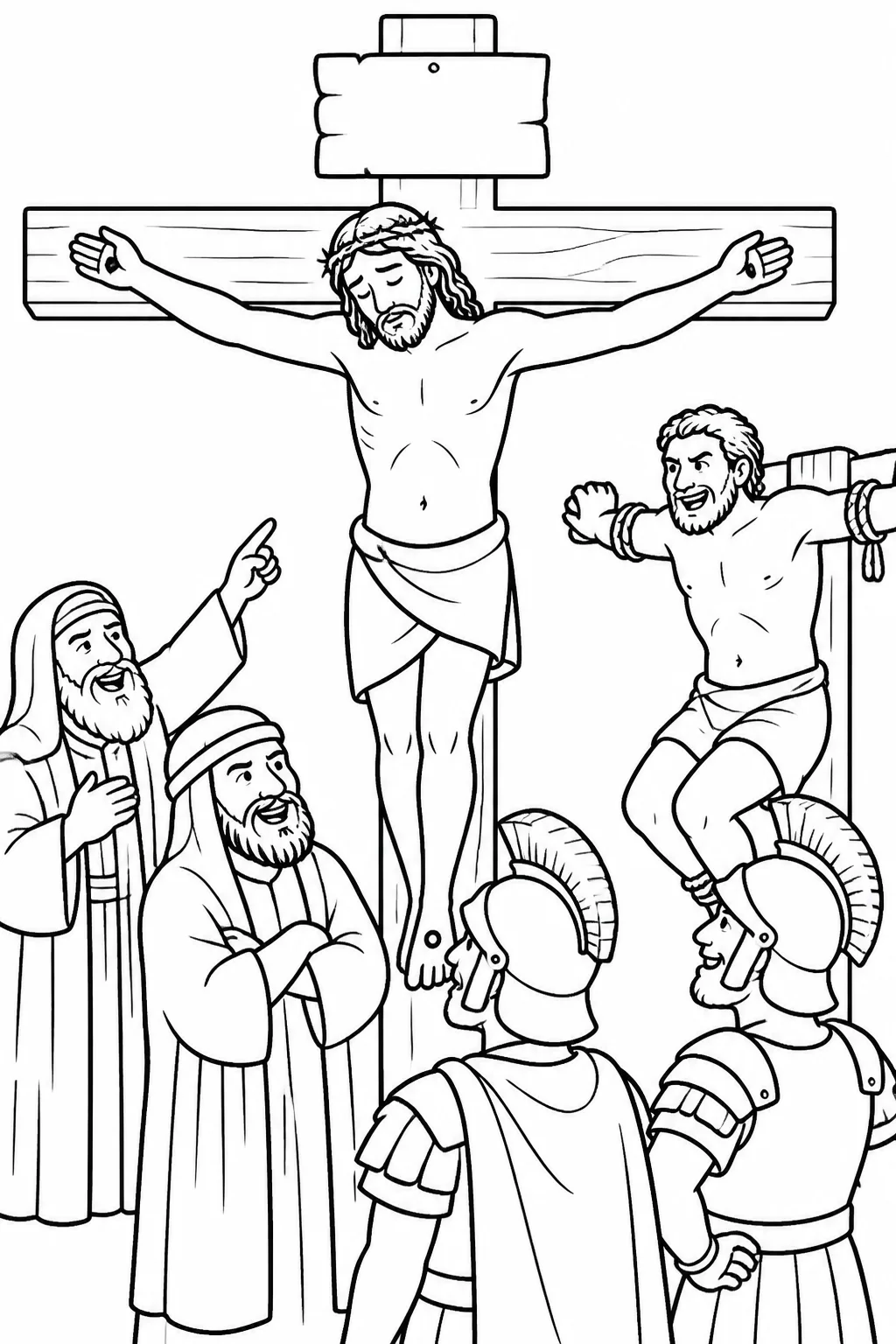
Jesus on the cross with a written notice above him identifying him as the King of the Jews, while rulers, soldiers, and one criminal mock him.

The Notice Above Jesus

Luke 23:26-49

Jesus between two unnamed criminals at the crucifixion, with one asking Jesus to remember him and a peaceful symbolic representation of paradise.

A Promise of Paradise

Luke 23:26-49

Symbolic illustration of the land beneath a darkened sky with a simple temple curtain torn in two, representing Luke 23:44–45.

Darkness Covers the Land

Luke 23:26-49
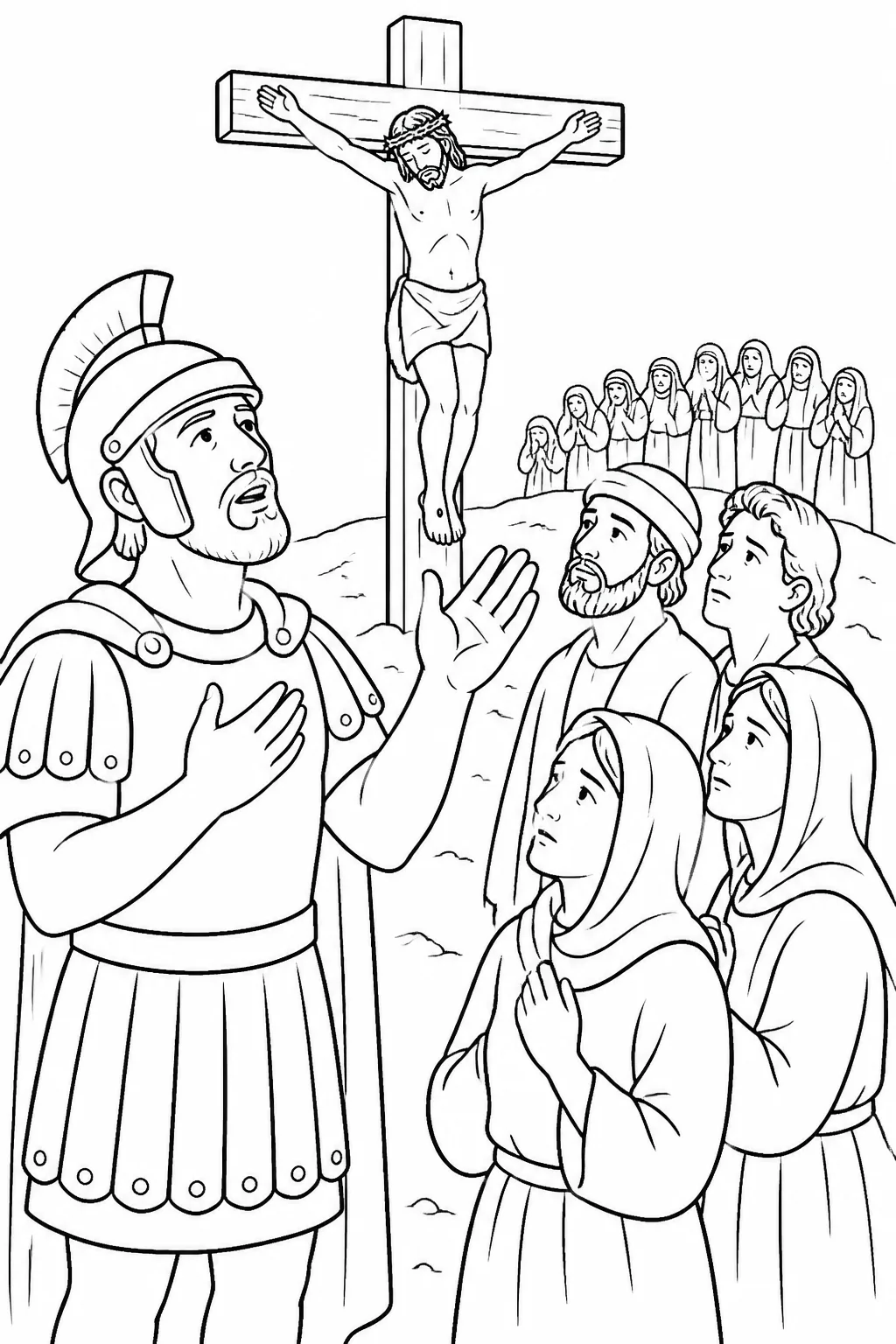
Jesus on the cross at the place called The Skull, with the centurion nearby praising God and declaring Jesus righteous while mourners and Jesus’ followers observe from a distance.

The Centurion Praises God

Luke 23:26-49
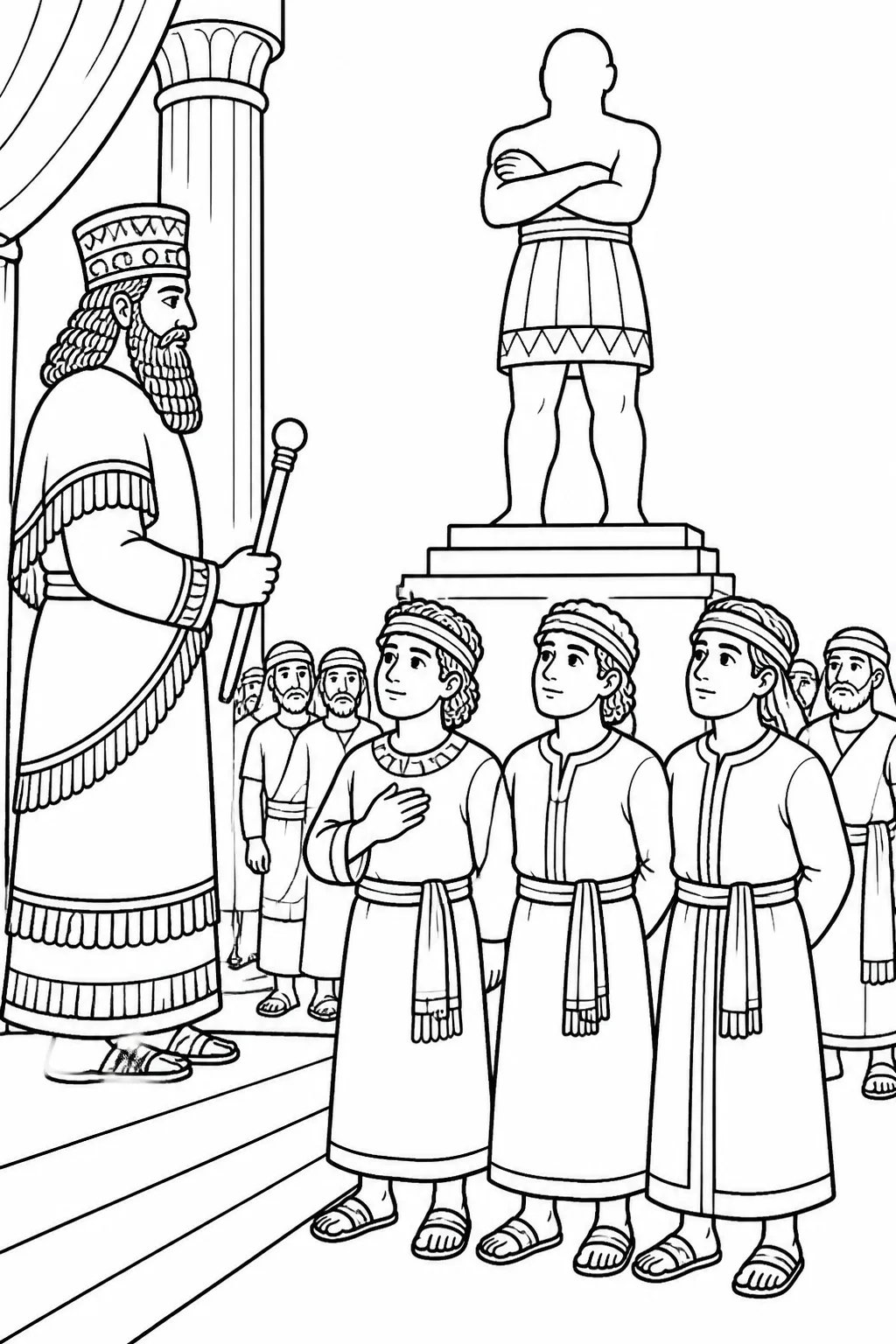
Shadrach, Meshach, and Abednego standing together before Nebuchadnezzar, a large gold statue, and a royal gathering in Daniel 3.

Faithful Before the Gold Statue

Daniel 3:1-30
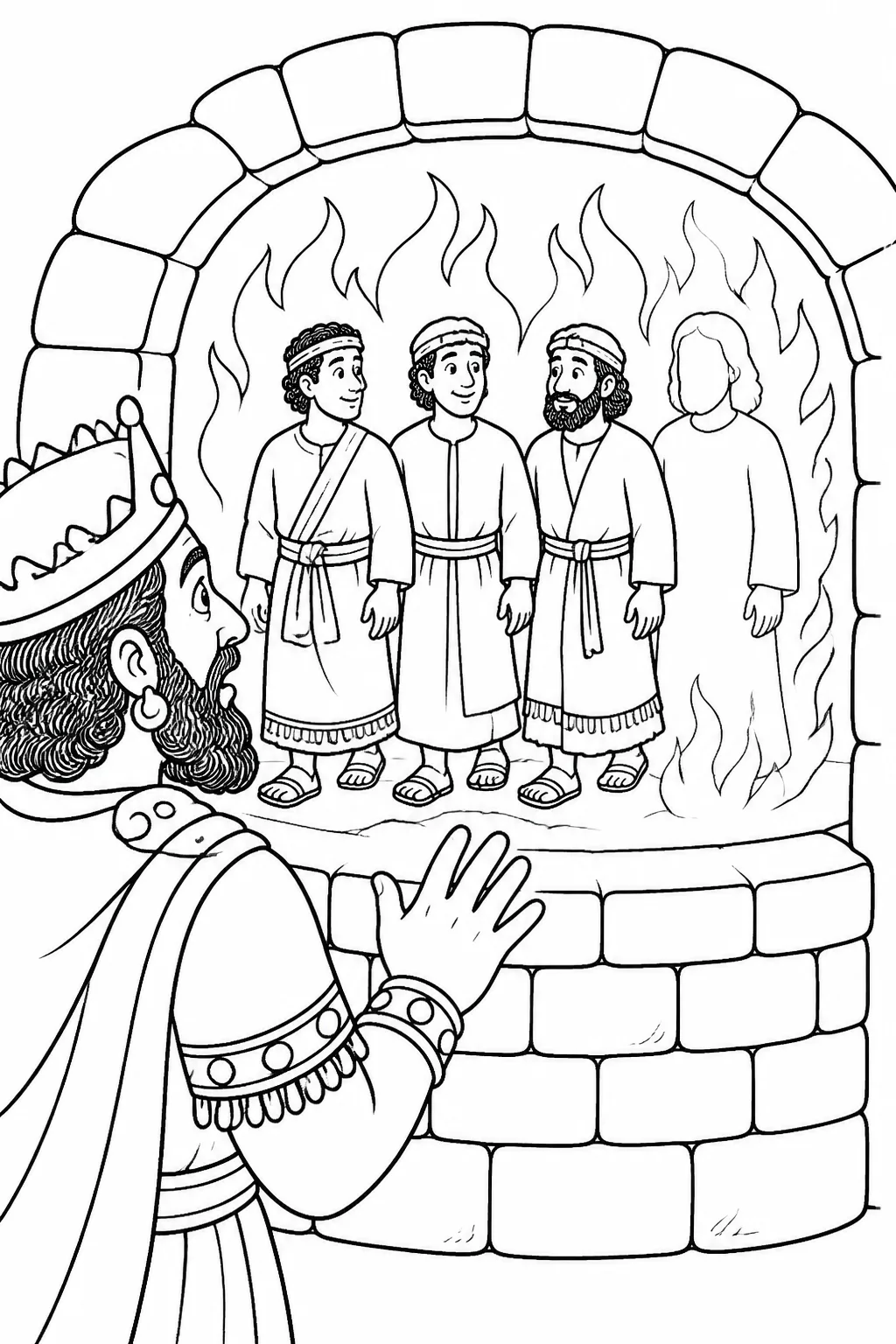
Shadrach, Meshach, and Abednego walk unbound and unharmed inside the furnace while Nebuchadnezzar sees a fourth figure with them.

Not Alone in the Fire

Daniel 3:1-30

Nebuchadnezzar calls Shadrach, Meshach, and Abednego from the furnace while officials inspect them and find their bodies, hair, garments, and smell unharmed.

Protected Through the Fire

Daniel 3:1-30
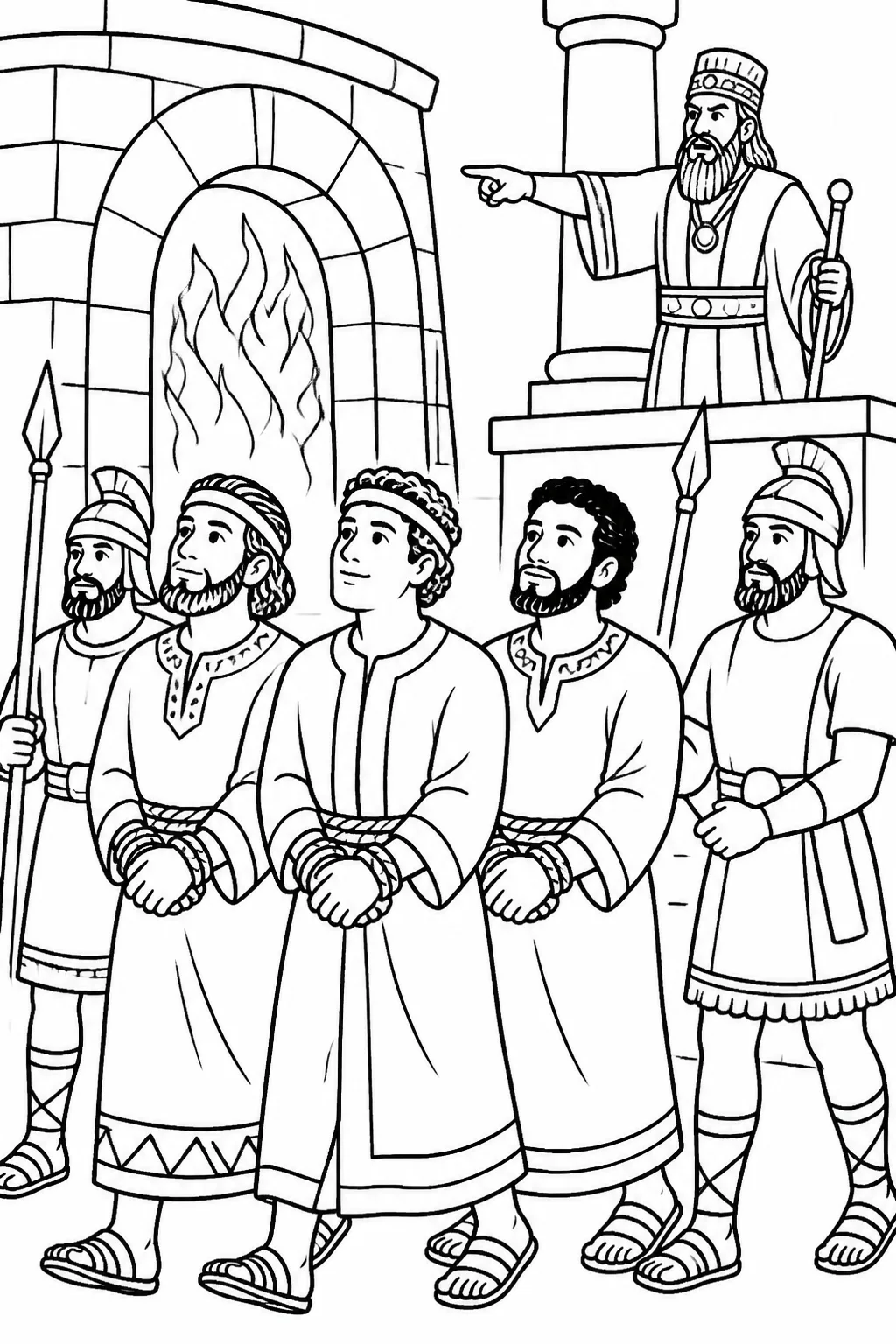
Shadrach, Meshach, and Abednego, bound and wearing their garments, are brought toward the blazing furnace as Nebuchadnezzar’s order is carried out.

Courage Under Pressure

Daniel 3:1-30

Nebuchadnezzar, officials, and assembled peoples near a large gold statue on the plain of Dura as musical instruments signal a command to bow, with some people kneeling and others standing.

The Command on the Plain of Dura

Daniel 3:1-30
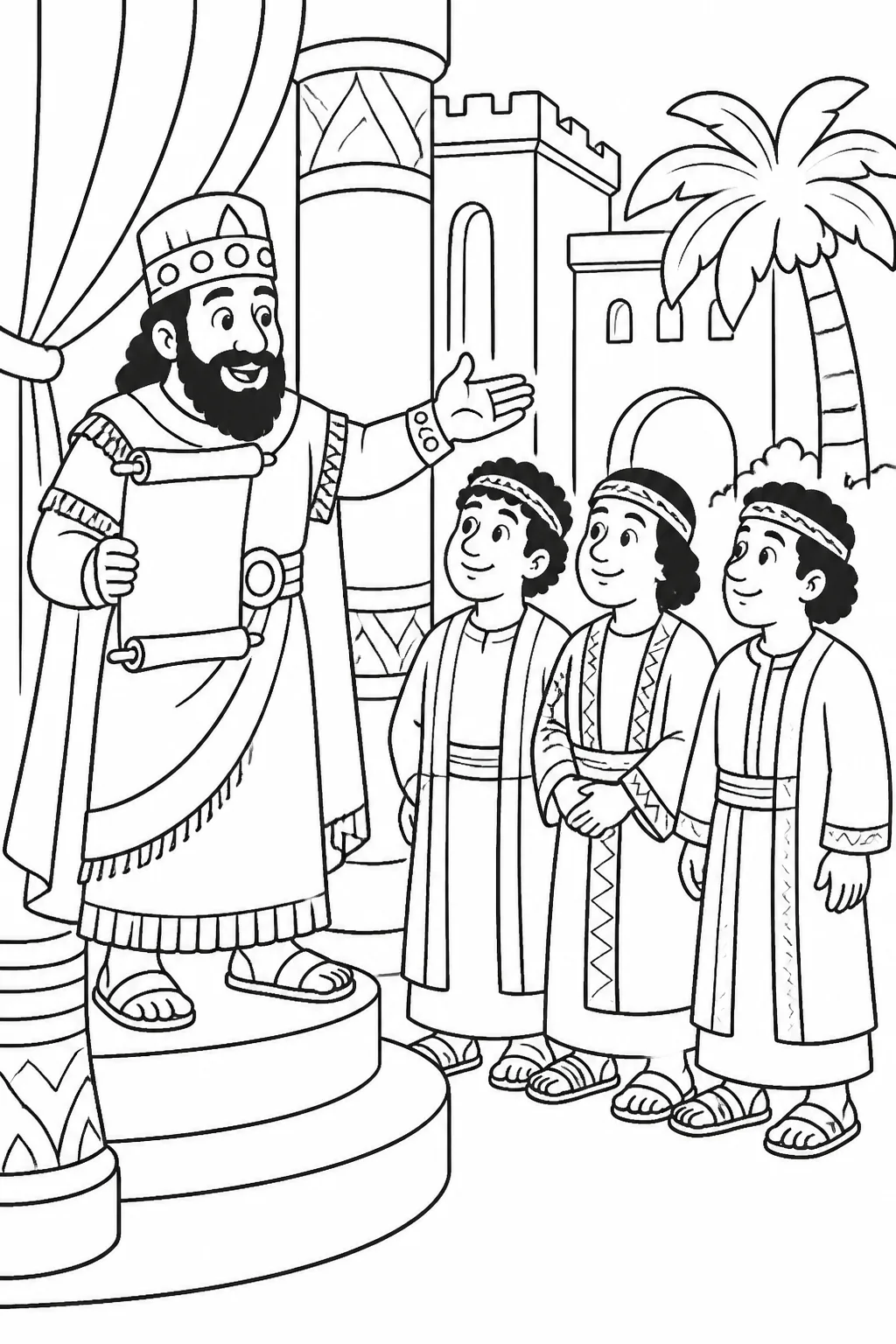
Nebuchadnezzar publicly praises the God of Shadrach, Meshach, and Abednego after their rescue, with a royal decree suggesting his announcement.

The King Recognizes God’s Greatness

Daniel 3:1-30
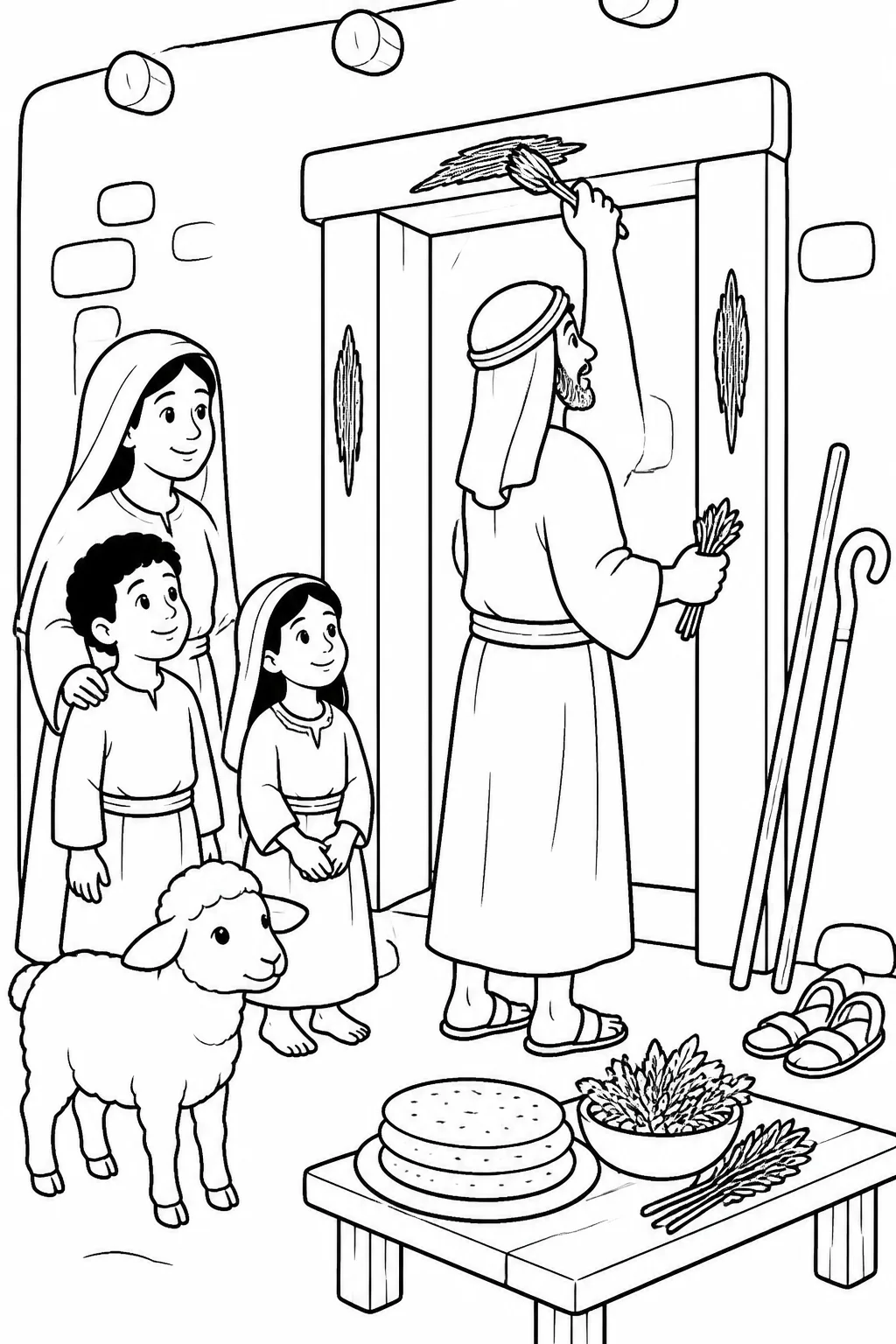
An Israelite family near its home prepares for the first Passover as an adult marks the doorway and lamb, unleavened bread, bitter herbs, staffs, and sandals represent the instructions in Exodus 12:1-13.

The Marked Doorway

Exodus 12:1-32

An Israelite household inside a home in Egypt shares roasted meat, unleavened bread, and bitter herbs while dressed with sandals and staffs, ready for the Passover.

Ready for the Passover Meal

Exodus 12:1-32
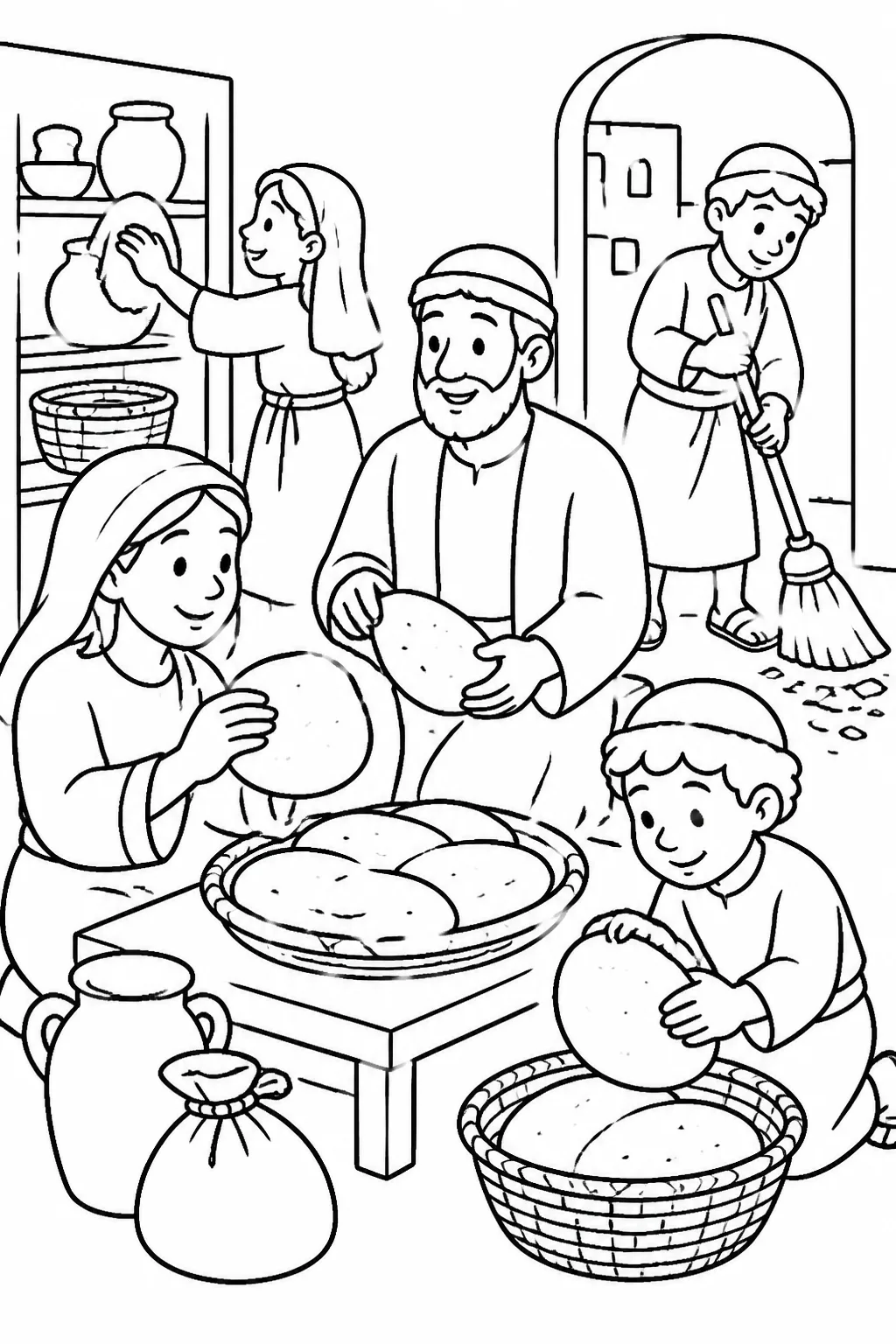
Israelite families gather in an Israelite house with unleavened bread and household items associated with removing leaven, representing the commanded festival in Exodus 12:14–20.

Remembering with Unleavened Bread

Exodus 12:1-32
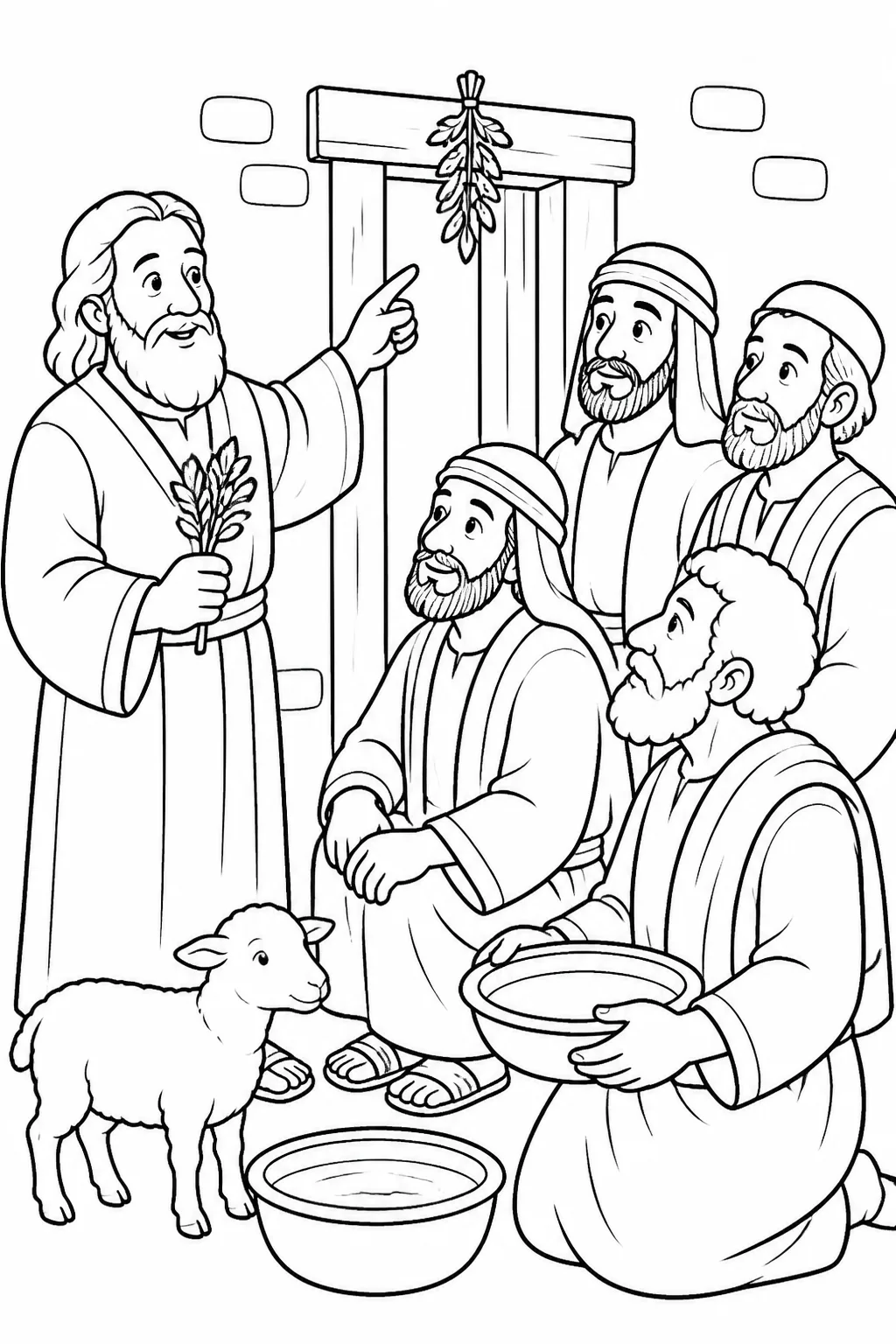
Moses instructs Israelite elders near their homes about using hyssop, basins, Passover animals, and marked doorways.

Moses Instructs the Elders

Exodus 12:1-32
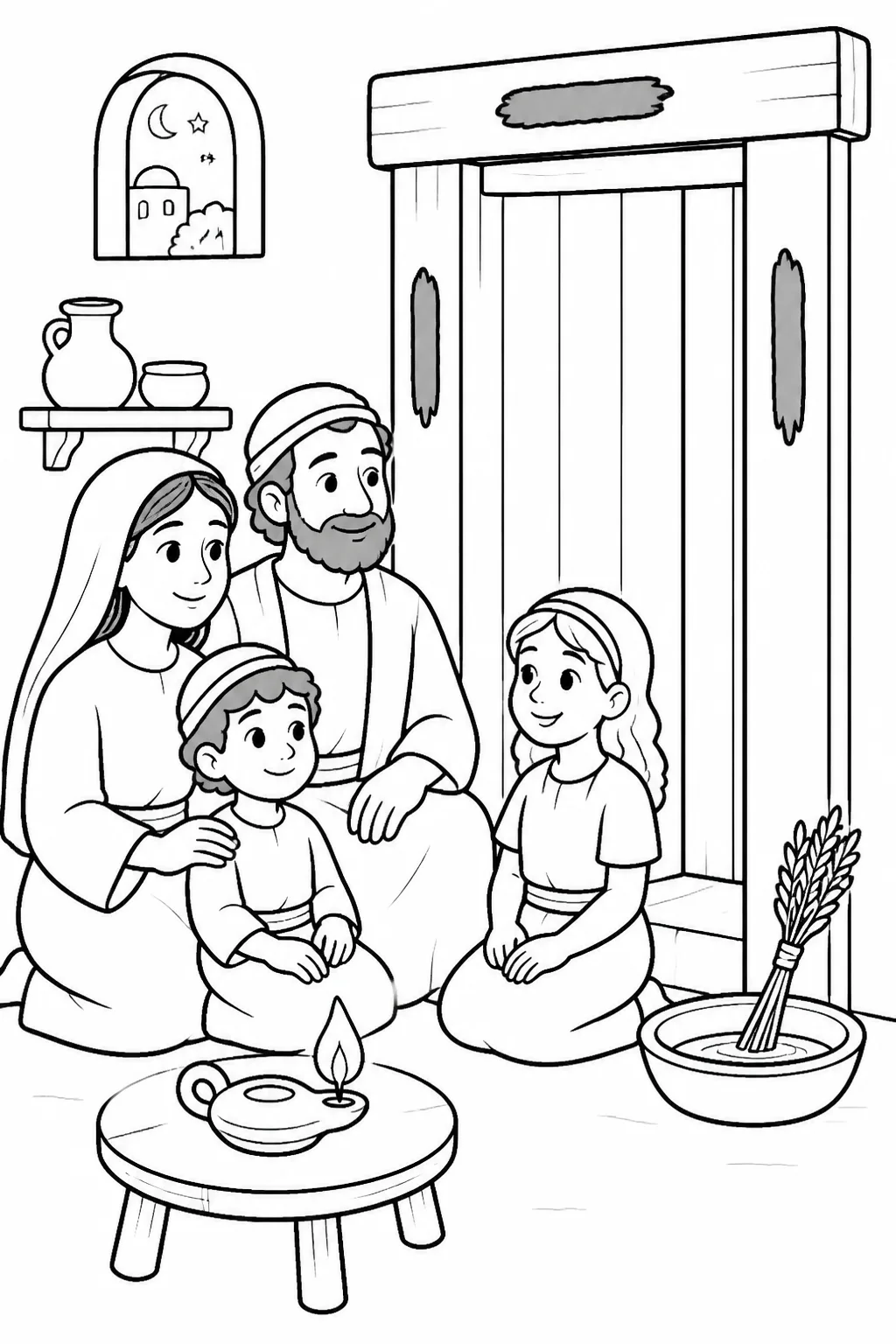
An Israelite family waits inside a home near a doorway marked according to Passover instructions, with hyssop or a basin nearby and a small lamp.

Waiting Safely Inside

Exodus 12:1-32

Moses with Israelite elders and families bowing in worship near Passover preparations and doorways marked with blood applied using hyssop.

The People Bow and Worship

Exodus 12:1-32
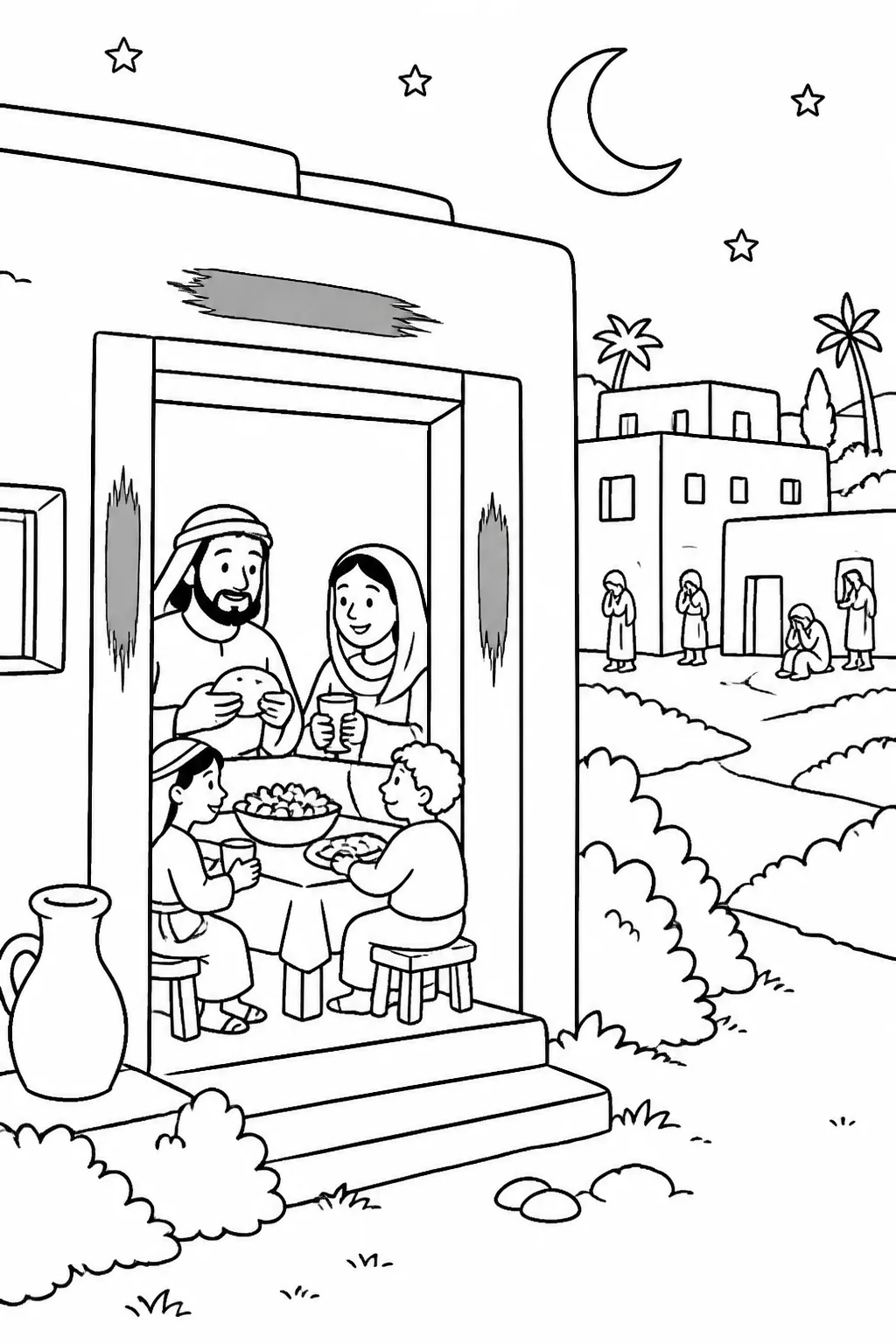
Nighttime Bible illustration concept showing marked Israelite doorways, Israelite families safely indoors, and Egyptian homes in the distance with subdued signs of grief.

The Marked Homes Are Spared

Exodus 12:1-32
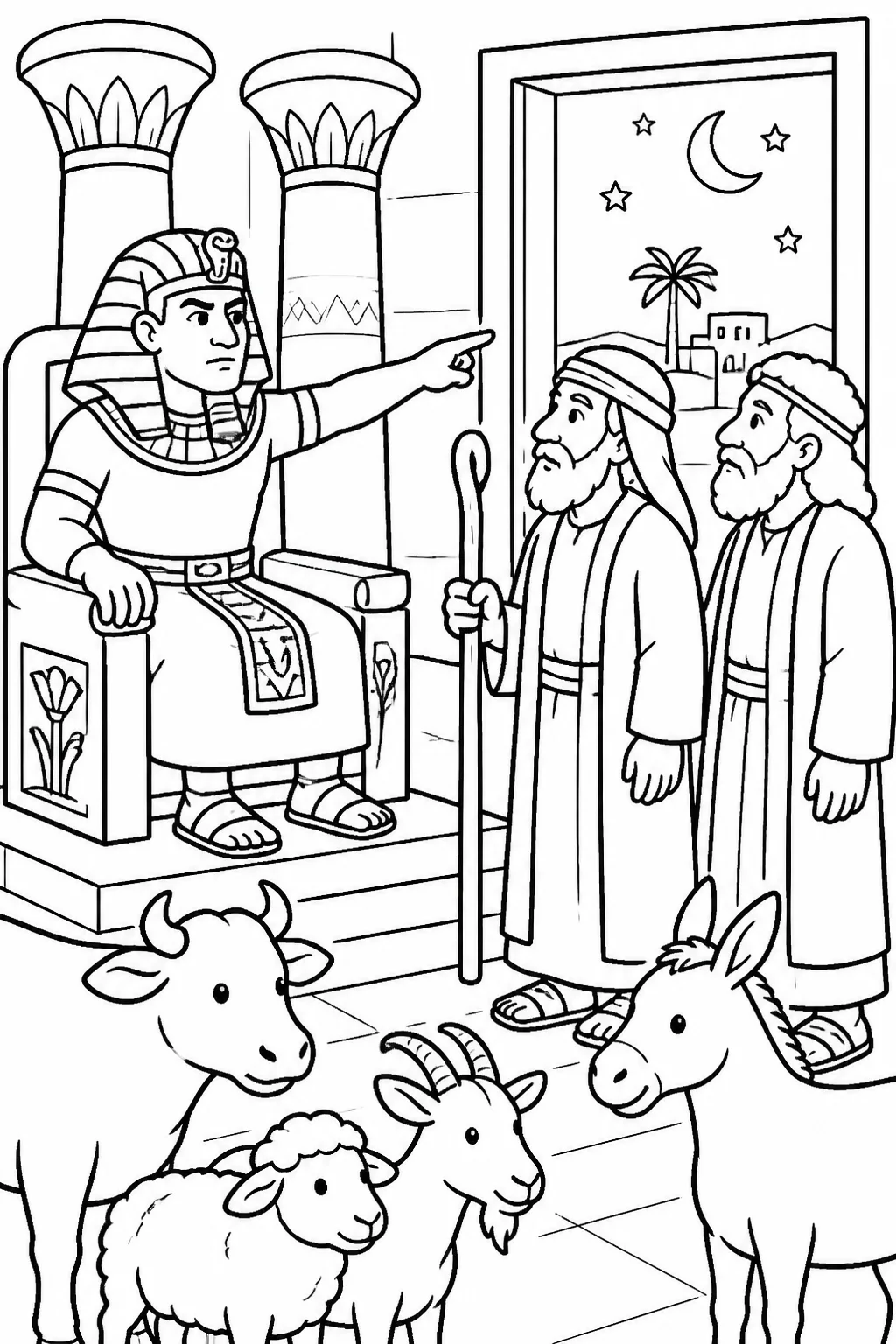
Pharaoh summons Moses and Aaron at night in Egypt and commands the Israelites to leave, worship the LORD, and take their flocks and herds.

Pharaoh Gives the Command

Exodus 12:1-32
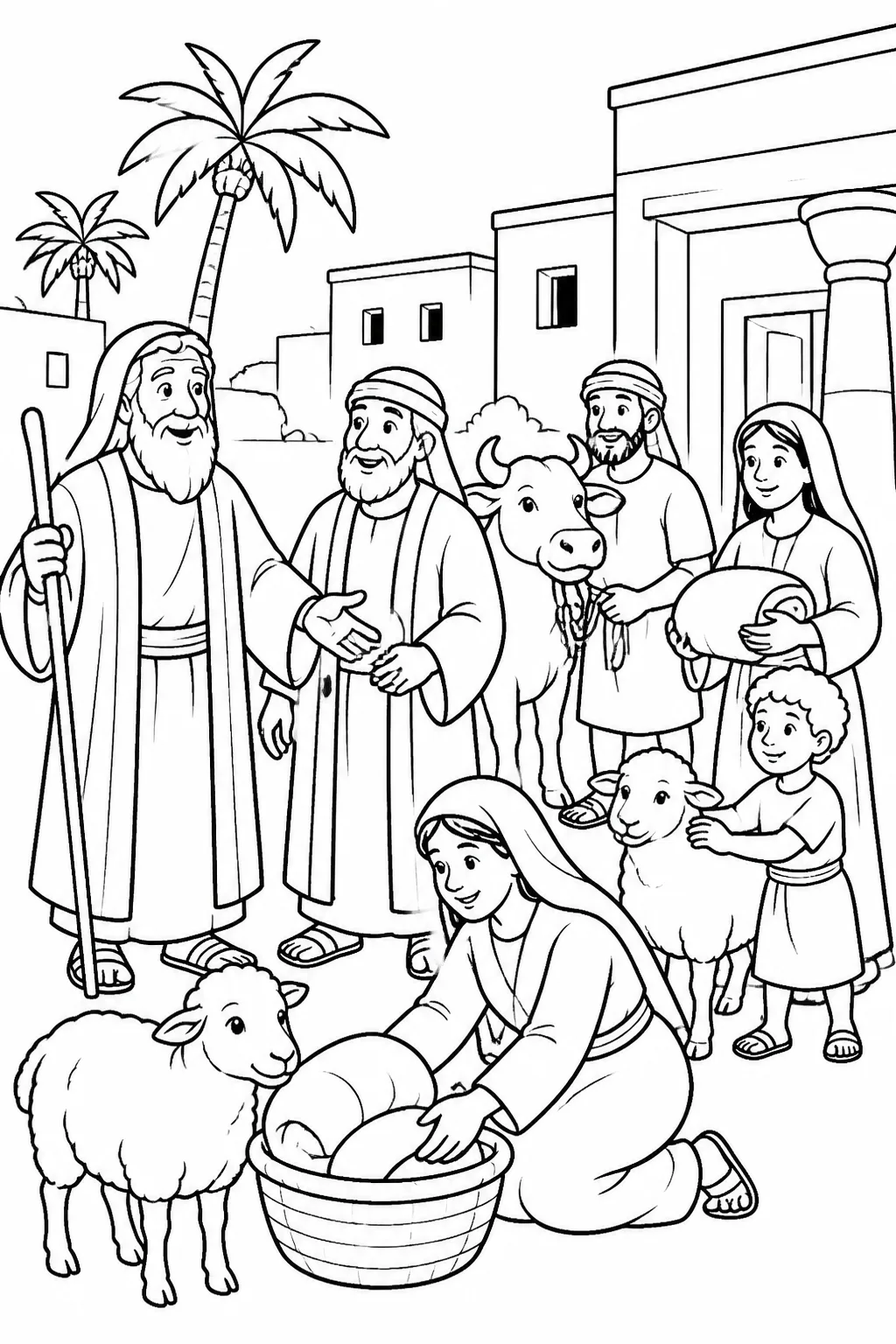
Moses and Aaron with Israelites near flocks and herds in an Egyptian courtyard as the people prepare after Pharaoh commands them to leave.

The People Prepare Their Flocks

Exodus 12:1-32
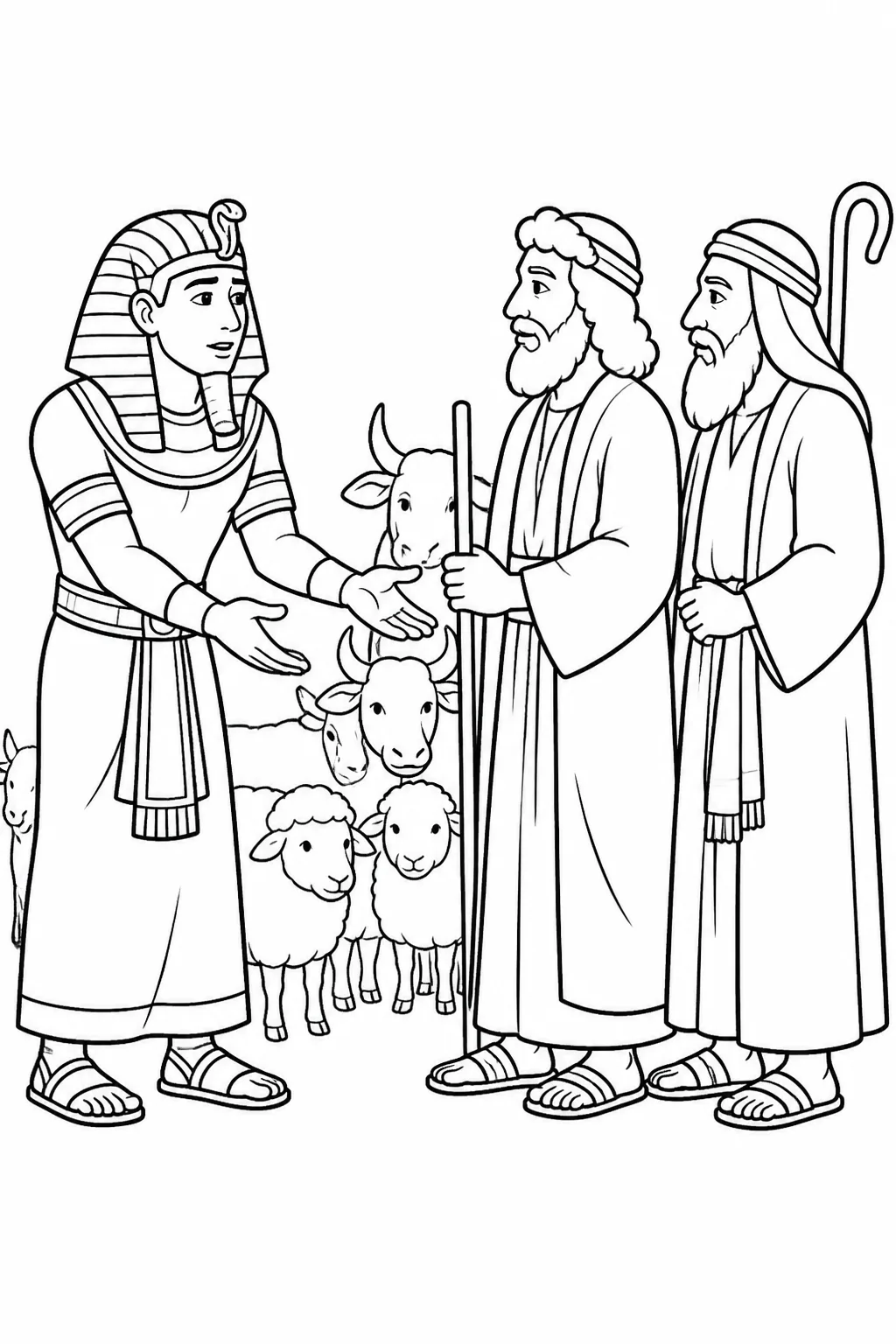
Pharaoh faces Moses and Aaron as he orders Israel to leave Egypt, worship the LORD, and take their flocks and herds, while asking for a blessing.

A Final Request for Blessing

Exodus 12:1-32
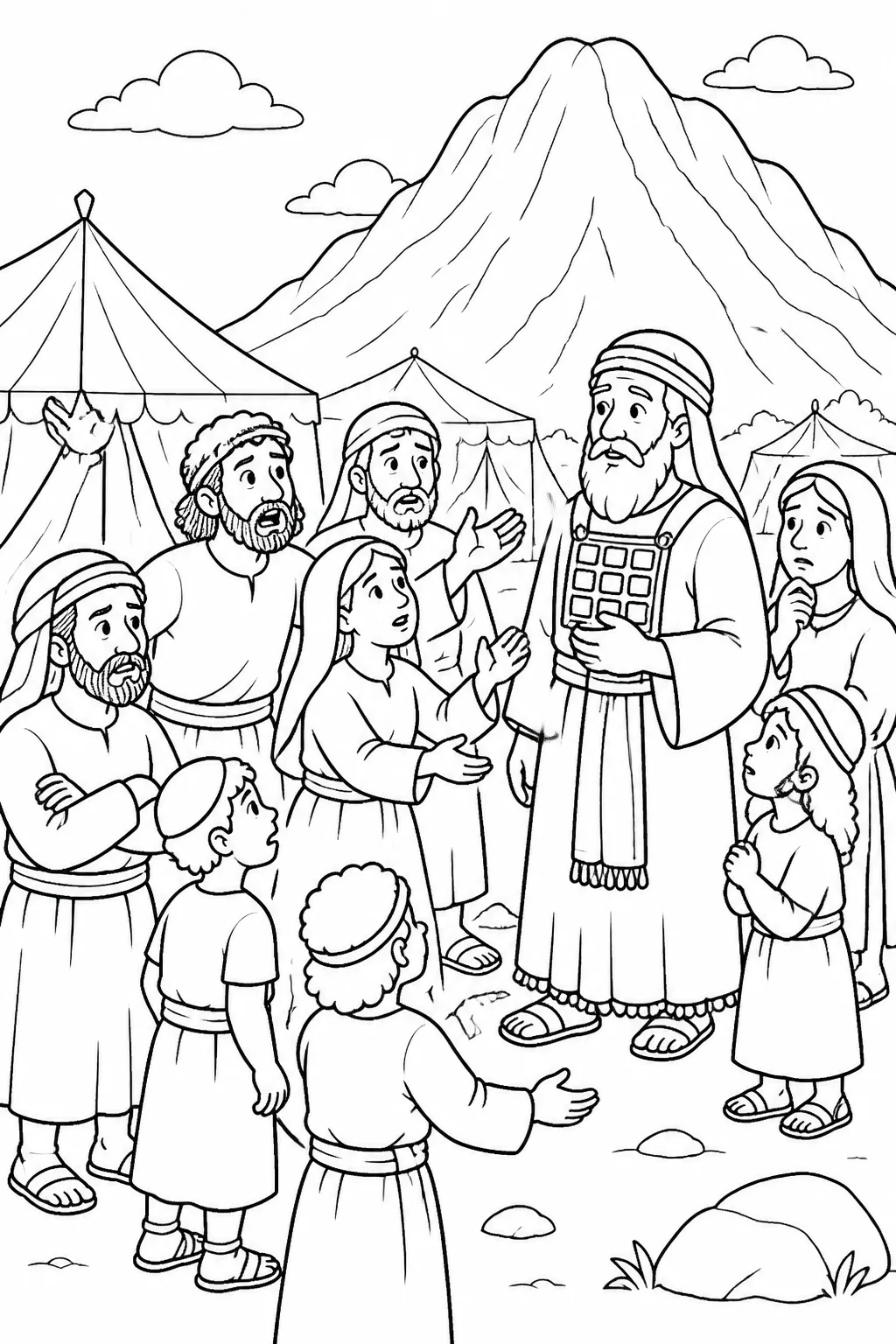
The Israelites gather around Aaron at the camp near Mount Sinai and ask him to make gods to go before them while Moses is delayed on the mountain.

Waiting for Moses

Exodus 32:1-35

Aaron forms a golden calf from the Israelites’ gold earrings while the people gather near an altar in the camp.

The Golden Calf Is Made

Exodus 32:1-35
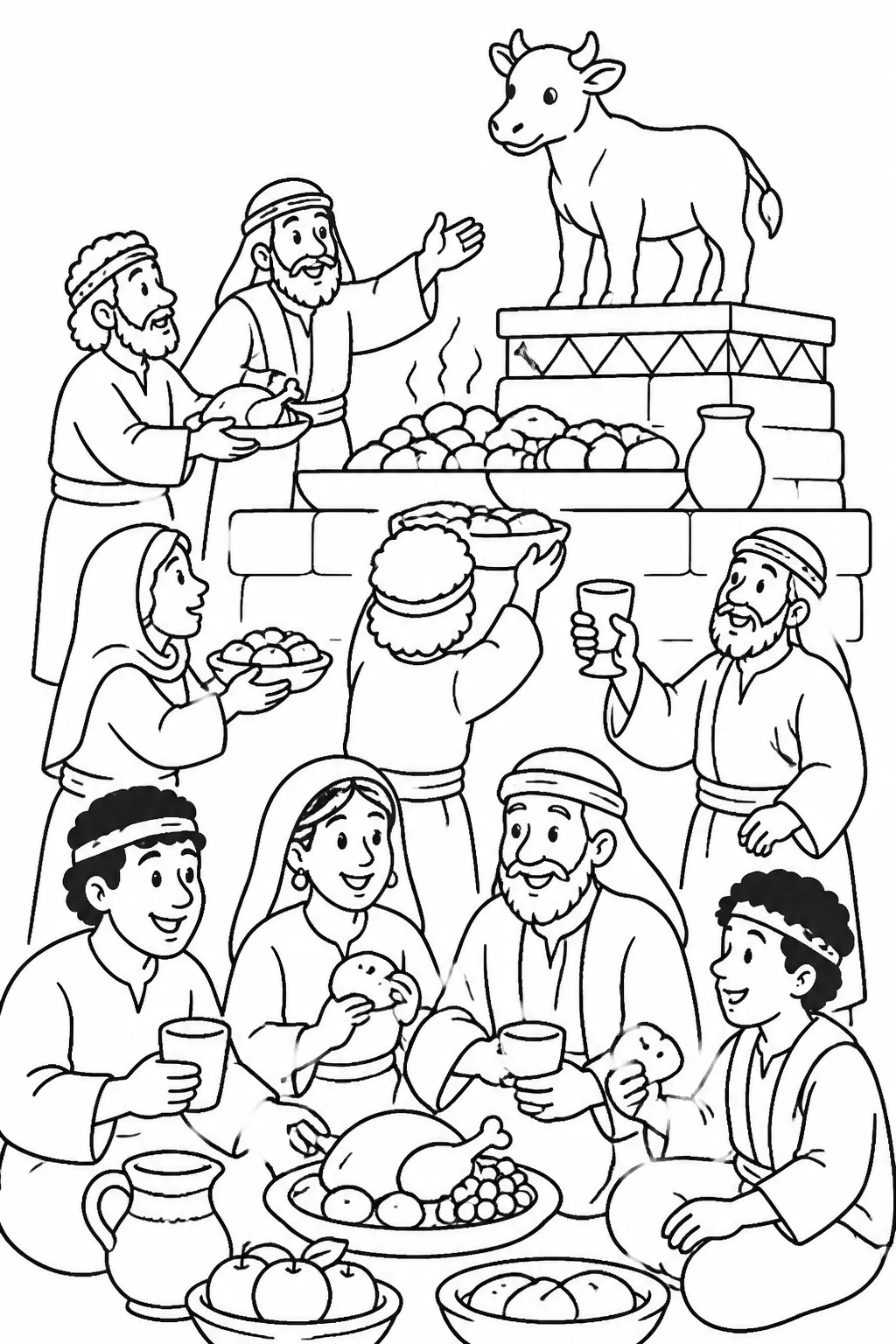
The Israelites offer burnt offerings and peace offerings at an altar before the golden calf, then eat, drink, and play; Aaron is present.

A Feast Before the Calf

Exodus 32:1-35
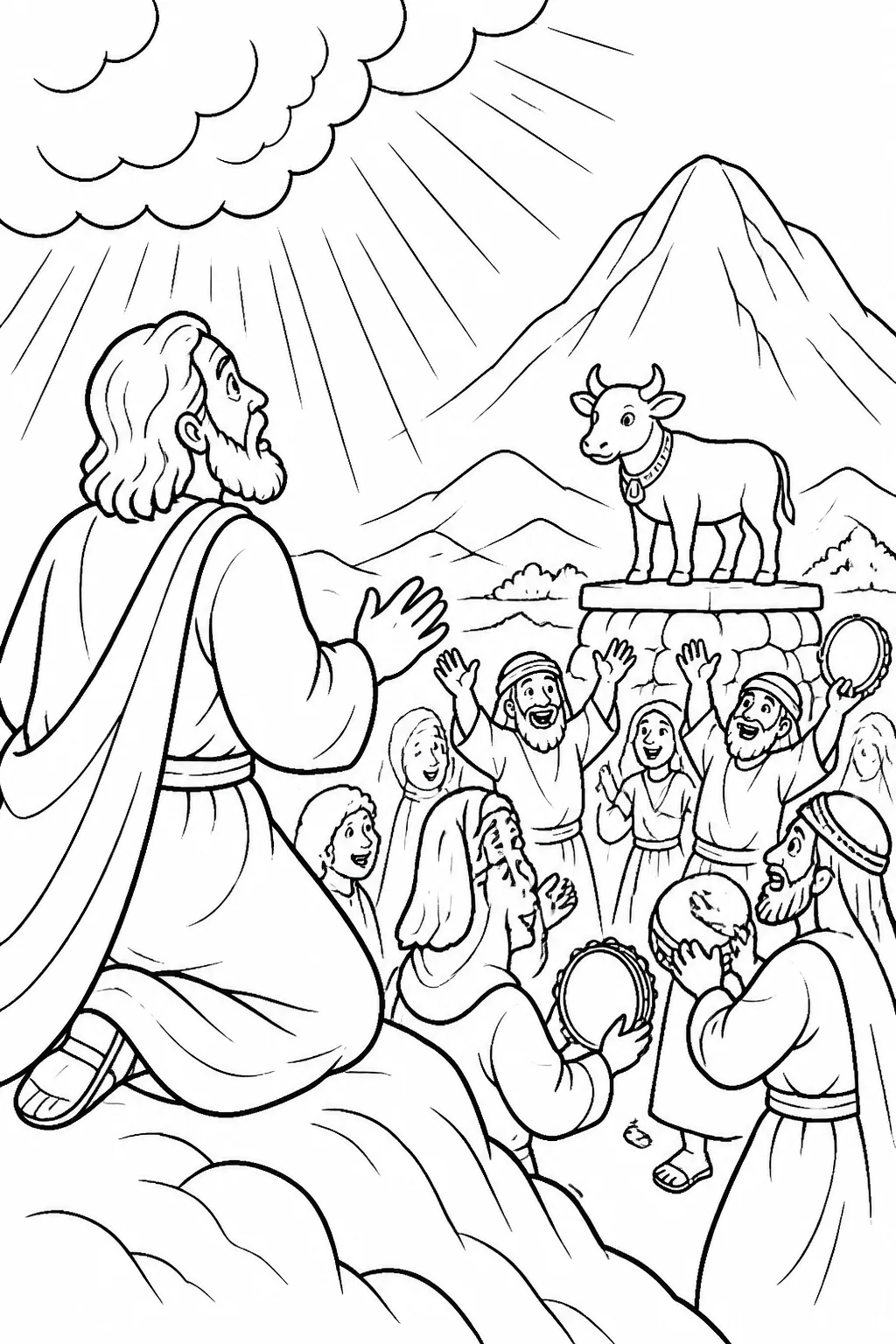
Moses on Mount Sinai receives the LORD’s warning about the Israelites and the golden calf below.

The LORD Warns Moses

Exodus 32:1-35

Moses praying to the LORD at Mount Sinai for the Israelites after their worship of the golden calf.

Moses Prays for the People

Exodus 32:1-35
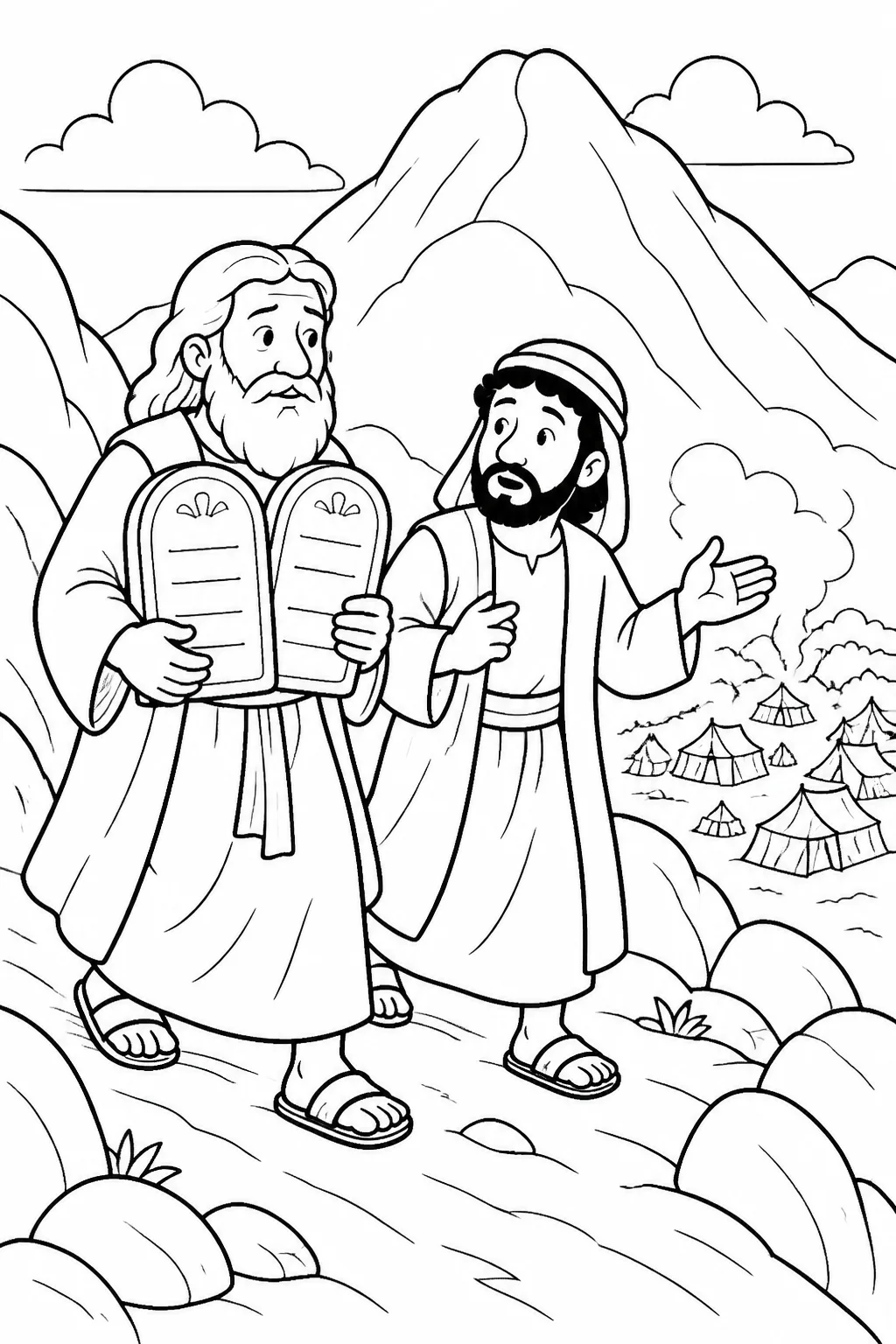
Moses and Joshua come down Mount Sinai toward Israel’s camp while Moses carries the two covenant tablets.

Moses Comes Down with the Tablets

Exodus 32:1-35
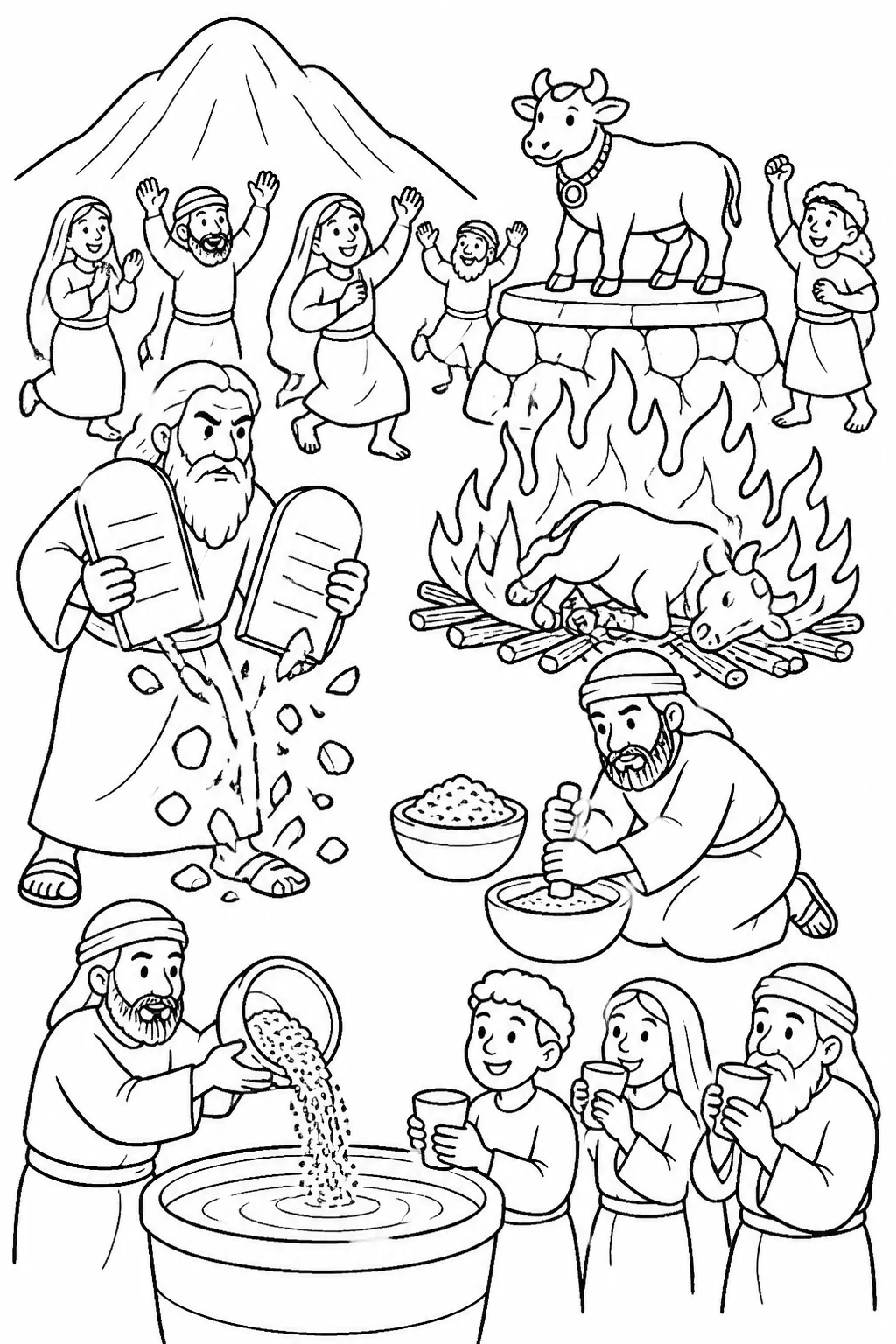
Moses at the foot of Mount Sinai after seeing the golden calf and dancing, with the broken covenant tablets, destroyed calf, and water described in Exodus 32:19-20.

The Covenant Is Broken

Exodus 32:1-35
Moses questions Aaron in the Israelite camp about the golden calf, the gold, the Israelites’ pressure, and Aaron’s explanation about the fire.

Moses Questions Aaron

Exodus 32:1-35

Moses calls for those on the LORD’s side at Israel’s camp gate, and the sons of Levi gather to him after the golden calf worship.

Who Is on the LORD’s Side?

Exodus 32:1-35
Moses seeks forgiveness from the LORD for the Israelites after their worship of the golden calf, near Mount Sinai.

Moses Seeks Forgiveness

Exodus 32:1-35
A Samaritan kneels beside a wounded traveler on the roadside, binding his wounds with bandages while oil and wine containers and the Samaritan’s animal are nearby.

The Samaritan Shows Compassion

Luke 10:25-37
A Samaritan helps a wounded traveler onto his own animal beside a roadside, with an inn in the distance, illustrating Luke 10:33–35.

A Ride to the Inn

Luke 10:25-37

The Good Samaritan tends the wounded traveler inside an inn while the innkeeper stands nearby, with bandages, oil, and wine representing the care described in Luke 10:33–35.

Care at the Inn

Luke 10:25-37

A Samaritan gives two denarii to an innkeeper for the continued care of the wounded traveler at an inn.

The Samaritan Pays for Care

Luke 10:25-37
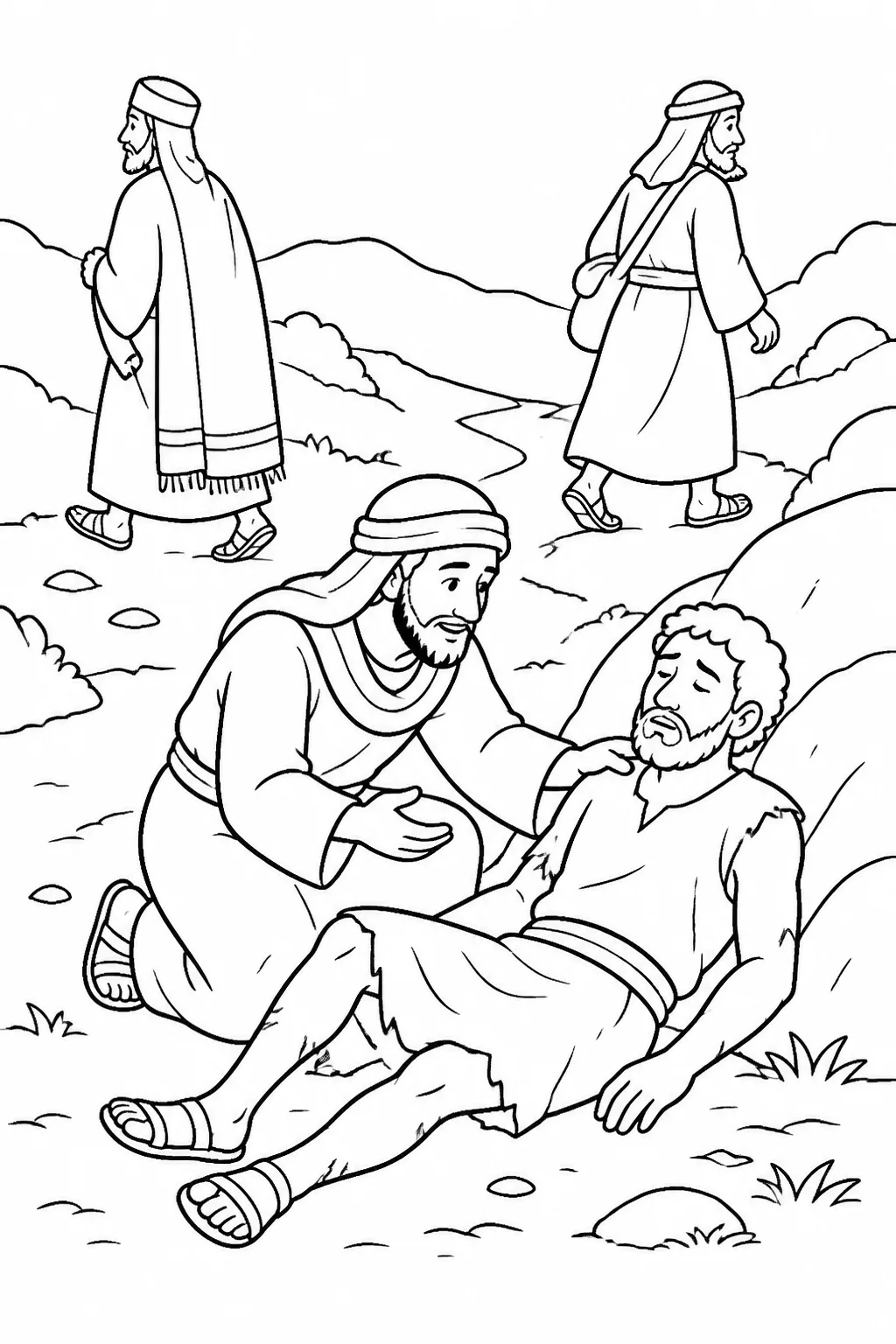
A roadside scene from Jesus’ parable in Luke 10:31–32: a priest and a Levite pass by while a Samaritan approaches a wounded traveler.

Some Pass By, One Stops to Help

Luke 10:25-37
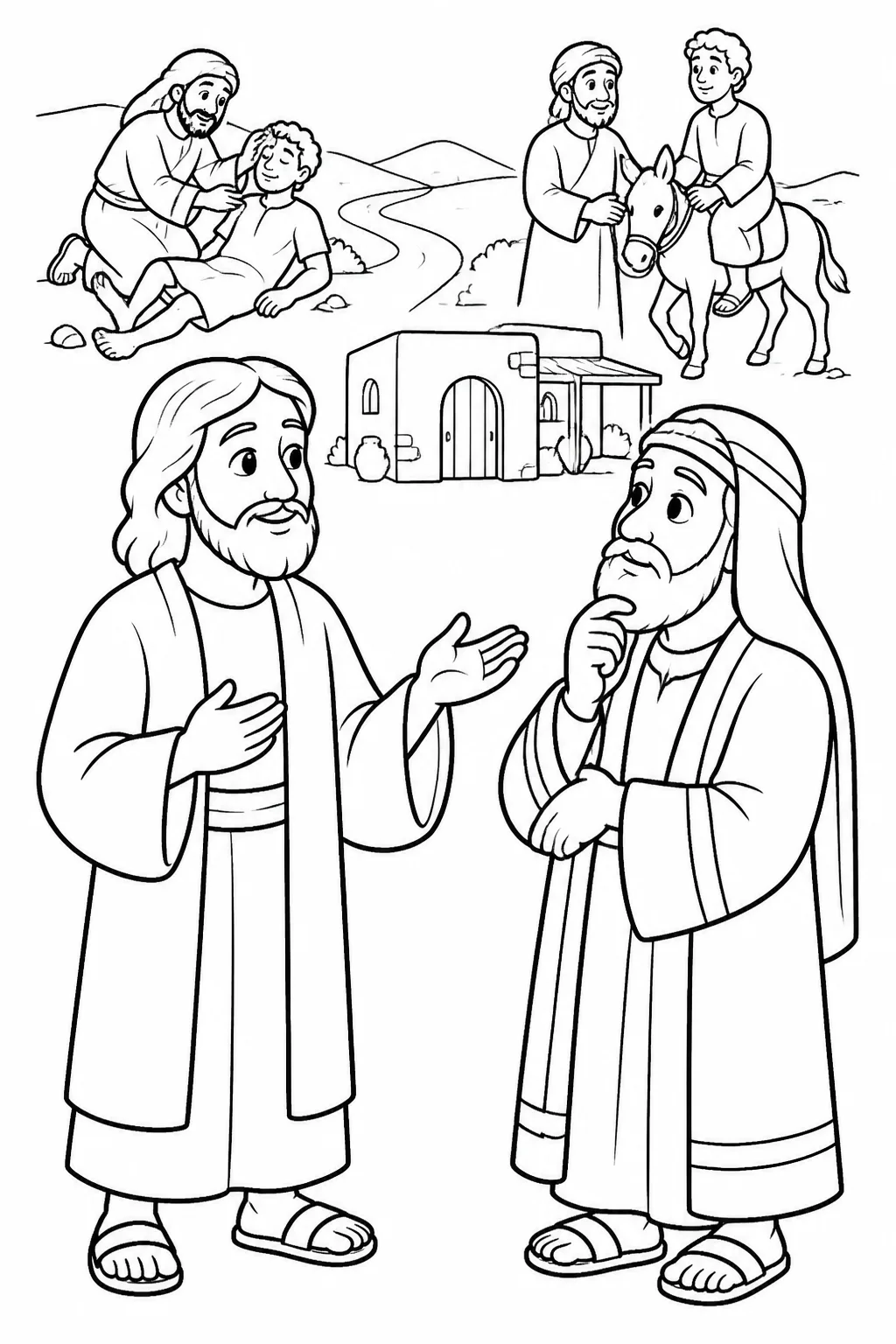
Jesus speaks with a law expert after telling the parable of the Good Samaritan; background scenes show the Samaritan caring for the wounded traveler and connecting Jesus’ command with merciful action.

Go and Do Likewise

Luke 10:25-37

Jesus and a law expert with the Good Samaritan helping a wounded traveler, while a priest, a Levite, and an inn appear in the surrounding parable scene.

The One Who Showed Mercy

Luke 10:25-37
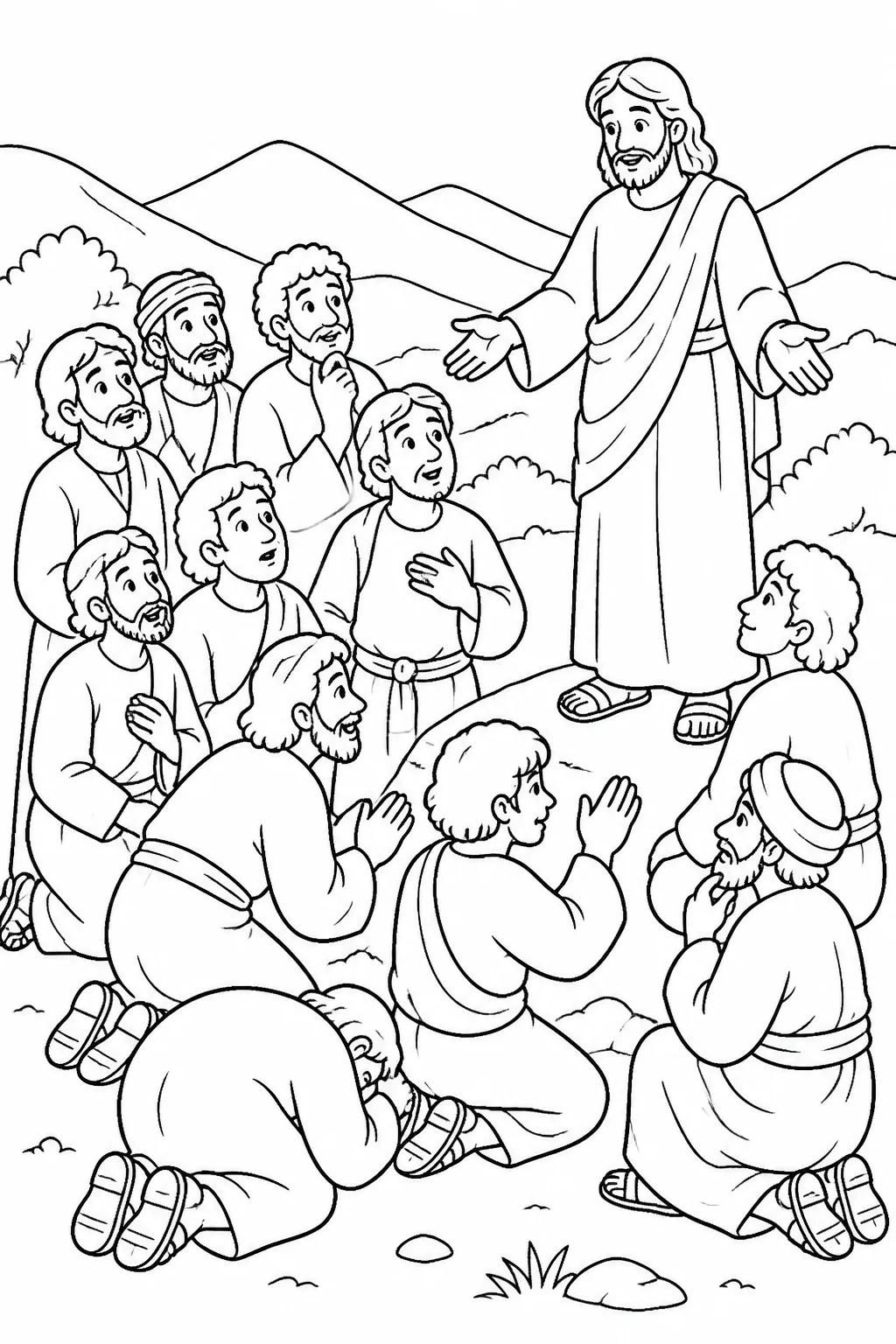
Jesus meets the eleven disciples on an unnamed mountain in Galilee; some worship him while others show uncertainty, reflecting Matthew 28:16–17.

The Disciples Meet Jesus on the Mountain

Matthew 28:16-20
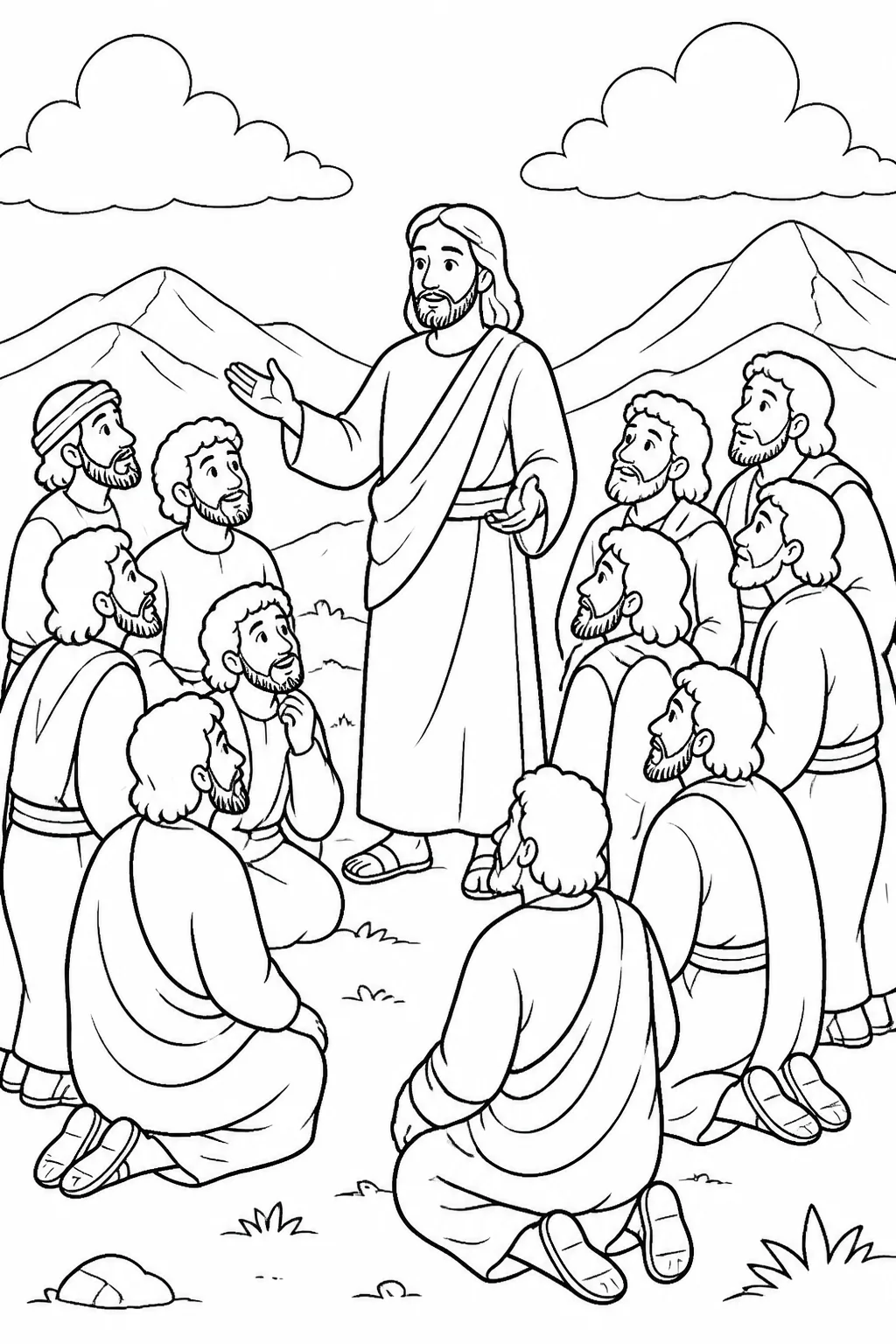
Jesus teaching the eleven disciples on a mountain in Galilee about his authority over heaven and earth.

Jesus Declares His Authority

Matthew 28:16-20
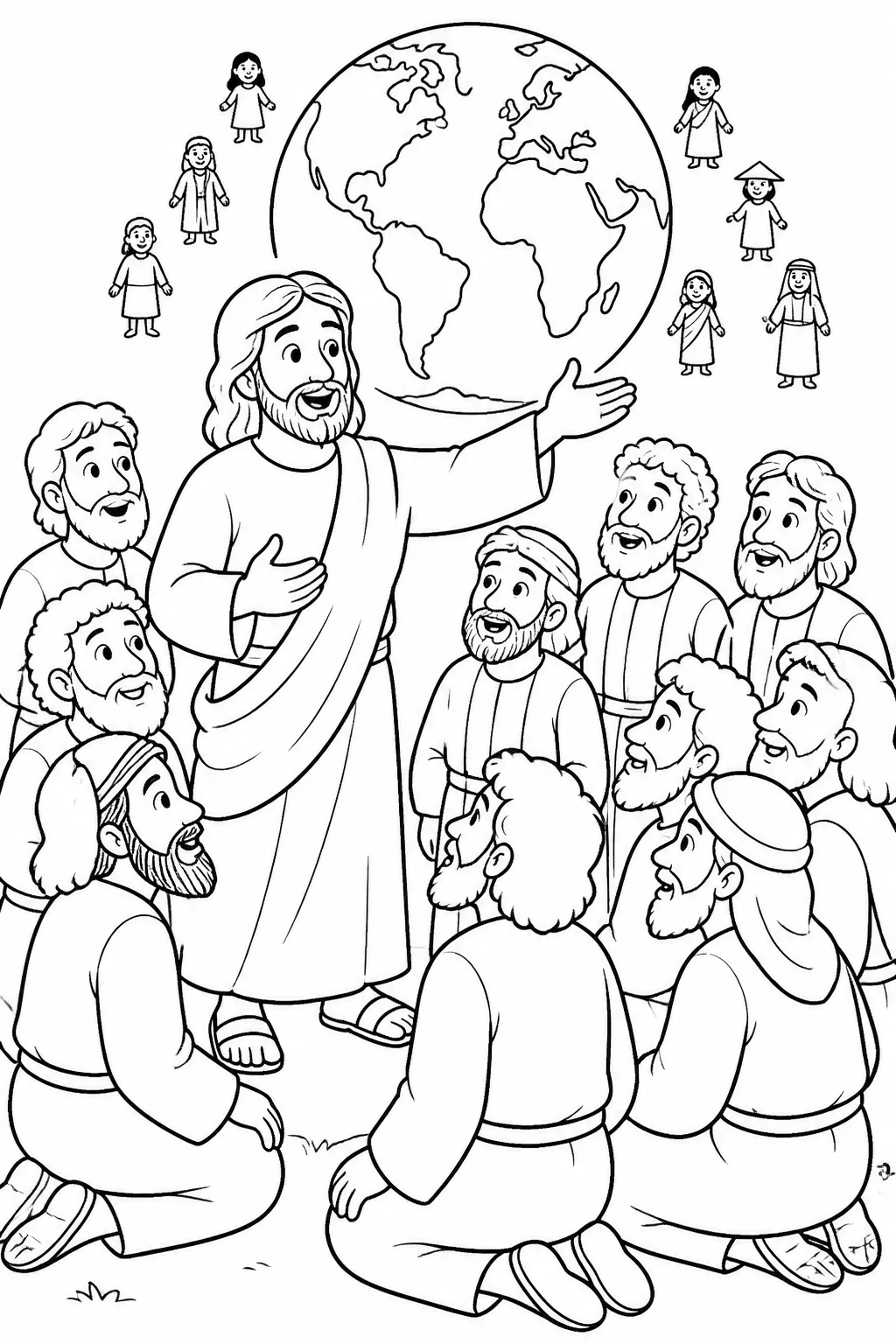
Jesus gestures outward while the eleven disciples listen on an unnamed mountain in Galilee, with a simple symbolic representation of all nations.

Go and Make Disciples

Matthew 28:16-20
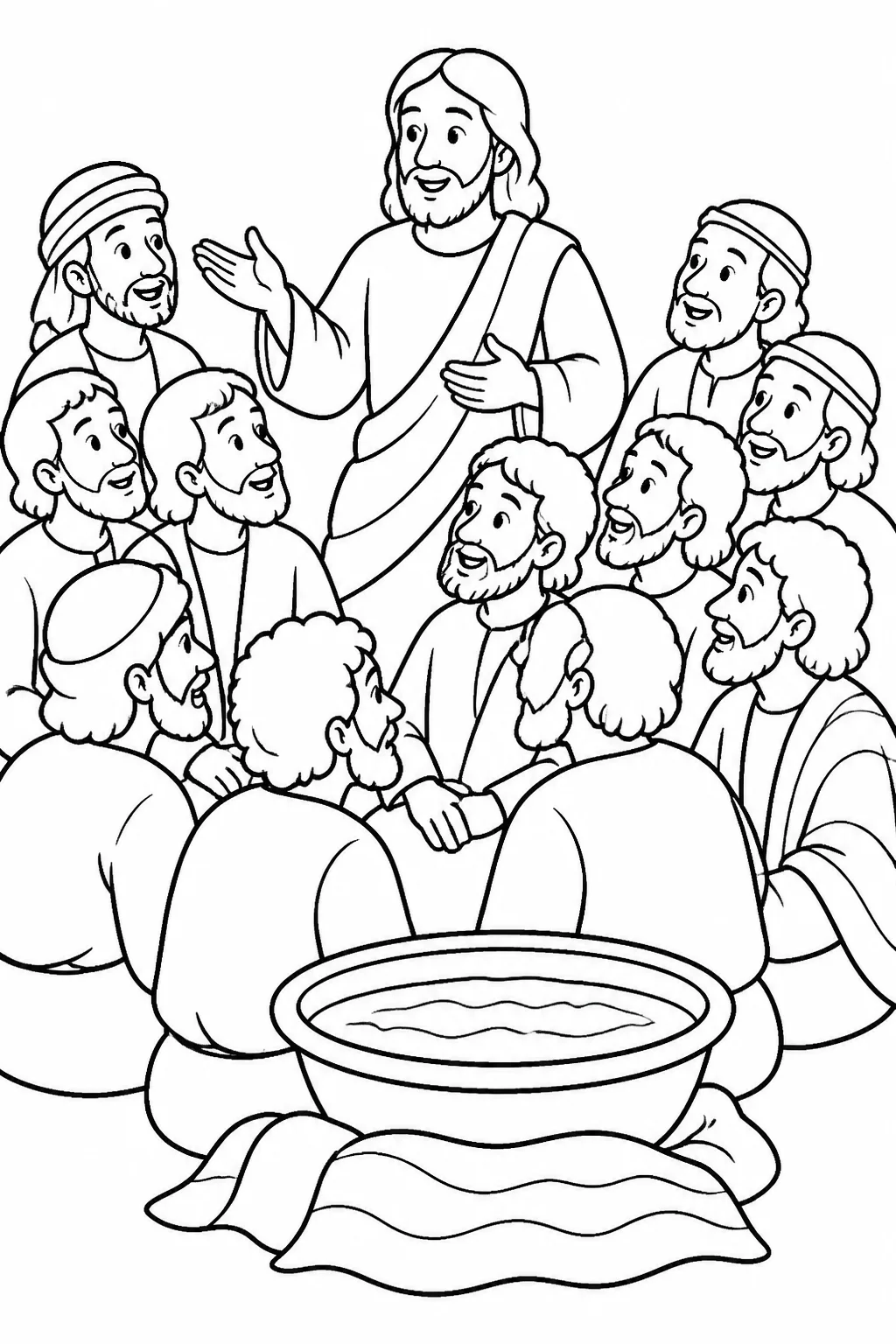
Jesus teaching the eleven disciples on a mountain in Galilee, with a simple water basin and the phrase “Father, Son, and Holy Spirit” nearby.

Baptized in the Triune Name

Matthew 28:16-20
Jesus teaching the eleven disciples on a mountain in Galilee, with scrolls or teaching materials representing learning and following his commands.

Learn and Follow Jesus’ Teaching

Matthew 28:16-20
Jesus standing near the eleven disciples on a mountain in Galilee beneath an open sky, illustrating his promise to be with them always.

Jesus Promises to Be With Them

Matthew 28:16-20
Jesus teaching the eleven disciples on a mountain in Galilee about making disciples of all nations, baptism, teaching obedience, and his continuing presence.

The Disciples Listen to Jesus’ Commission

Matthew 28:16-20
The apostles and other believers gathered together in one unspecified place in Jerusalem as Pentecost arrives.

Together on the Day of Pentecost

Acts 2:1-41
The apostles and other believers gathered in one place as swirling lines represent a sound like rushing wind and divided tongues resembling fire rest above each believer.

Wind and Fire-Like Signs

Acts 2:1-41

A multicultural crowd in Jerusalem hears believers speaking in many languages about God’s mighty works; some listeners look amazed or puzzled while a few mock them gently.

Many People Hear God’s Mighty Works

Acts 2:1-41
Peter with the eleven apostles addresses the crowd in Jerusalem while a scroll symbolizes Joel’s prophecy about God pouring out his Spirit.

Peter Explains the Holy Spirit’s Coming

Acts 2:1-41
Peter teaches a crowd about Jesus’ mighty works, crucifixion, resurrection, exaltation, and lordship, with Scripture scrolls and Jesus represented respectfully as alive.

Peter Proclaims Jesus as Lord and Messiah

Acts 2:1-41
Peter speaks with listeners near water while people are baptized and other believers welcome them, representing Acts 2:37–41.

A Welcoming Invitation to Repent and Be Baptized

Acts 2:1-41
Peter and John follow an unnamed man carrying a jar of water to a furnished upper room where they prepare the Passover meal at a table.

Preparing the Passover Meal

Luke 22:7-23
Jesus sharing the Passover meal with the apostles at a table, based on Luke 22:14-16.

Jesus Shares the Passover

Luke 22:7-23
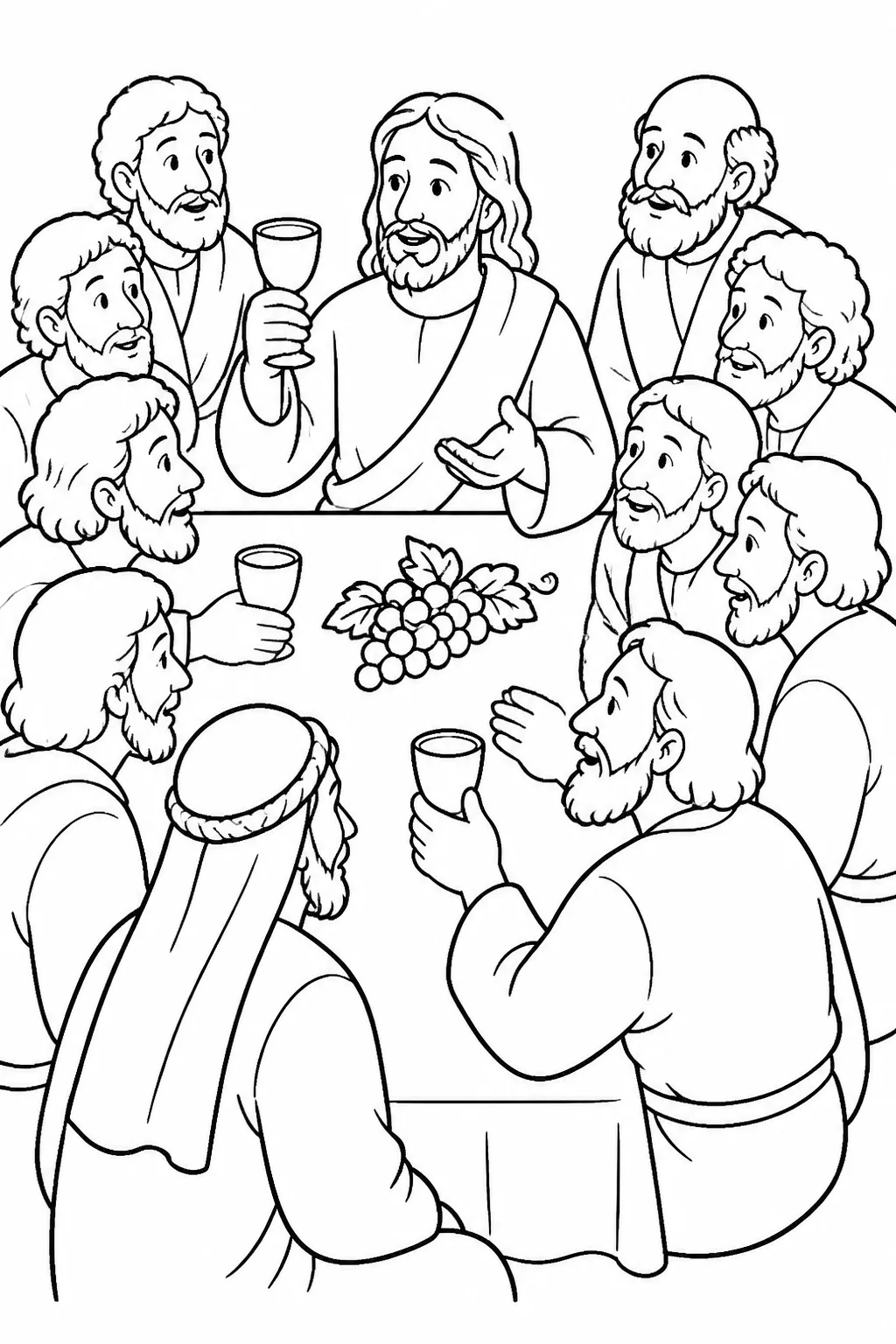
Jesus gives thanks for a cup and tells the apostles to divide it among themselves during the Passover meal, as described in Luke 22:17–18.

The Cup Shared Among Them

Luke 22:7-23
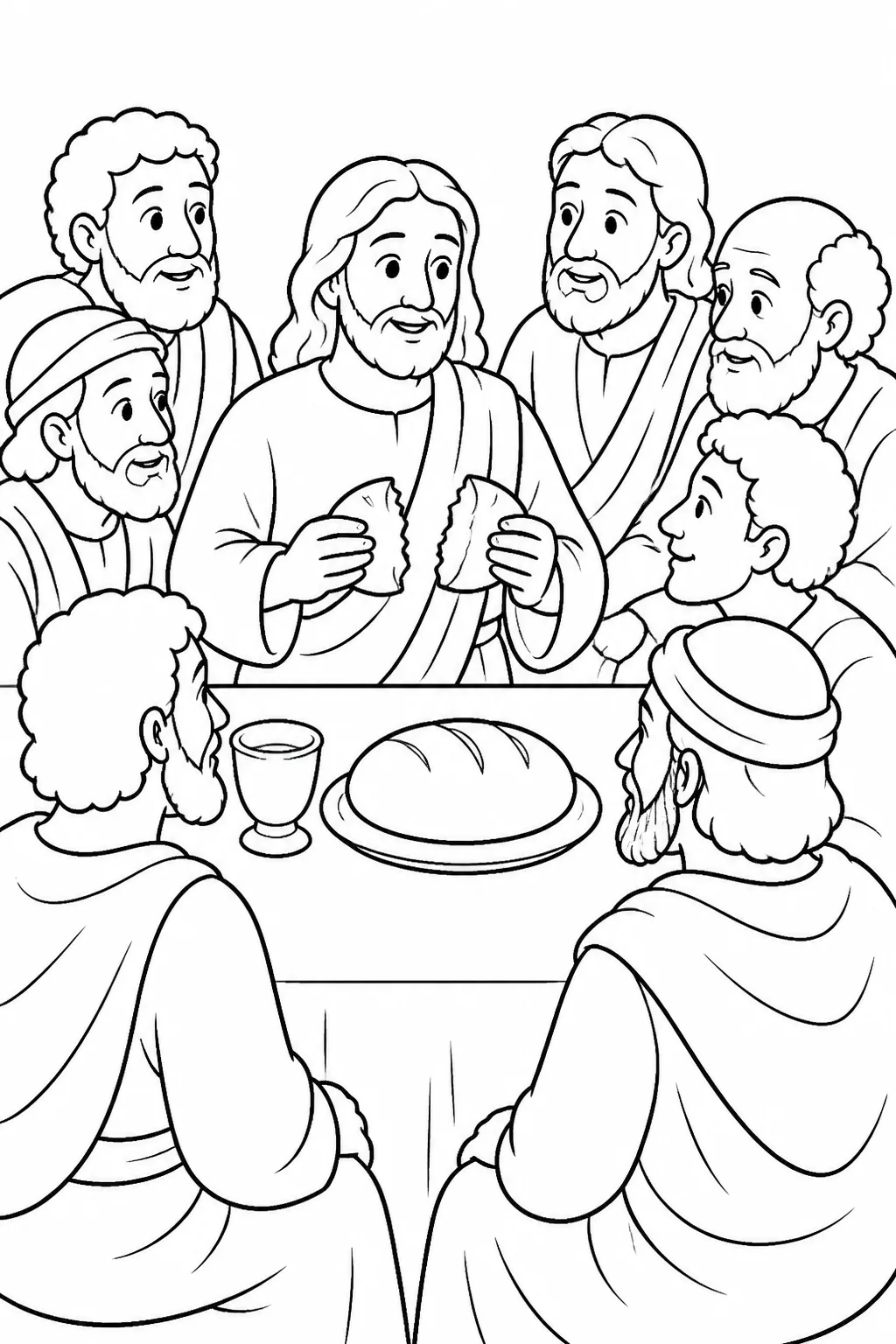
Jesus gives thanks, breaks bread, and gives it to the apostles at the Passover table, telling them to remember him.

Bread to Remember Jesus

Luke 22:7-23

Jesus holding a cup at the table with the apostles after the Passover meal, as they respond to his words about the new covenant and an unnamed betrayer.

The Cup and Troubled Questions

Luke 22:7-23
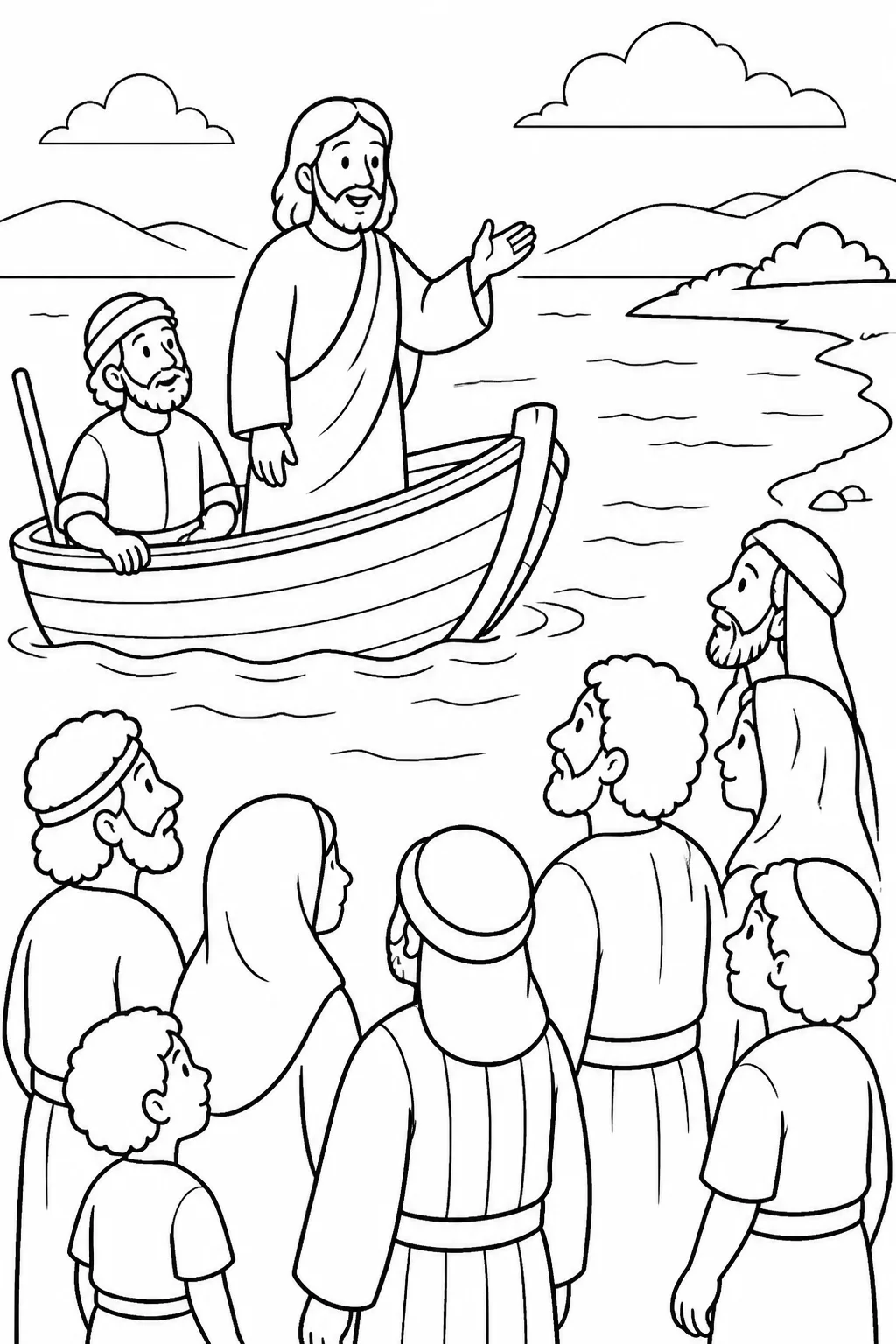
Jesus teaching a non-specific crowd from Simon’s boat near the shore of the Lake of Gennesaret, based on Luke 5:1-3.

Jesus Teaches from the Boat

Luke 5:1-11
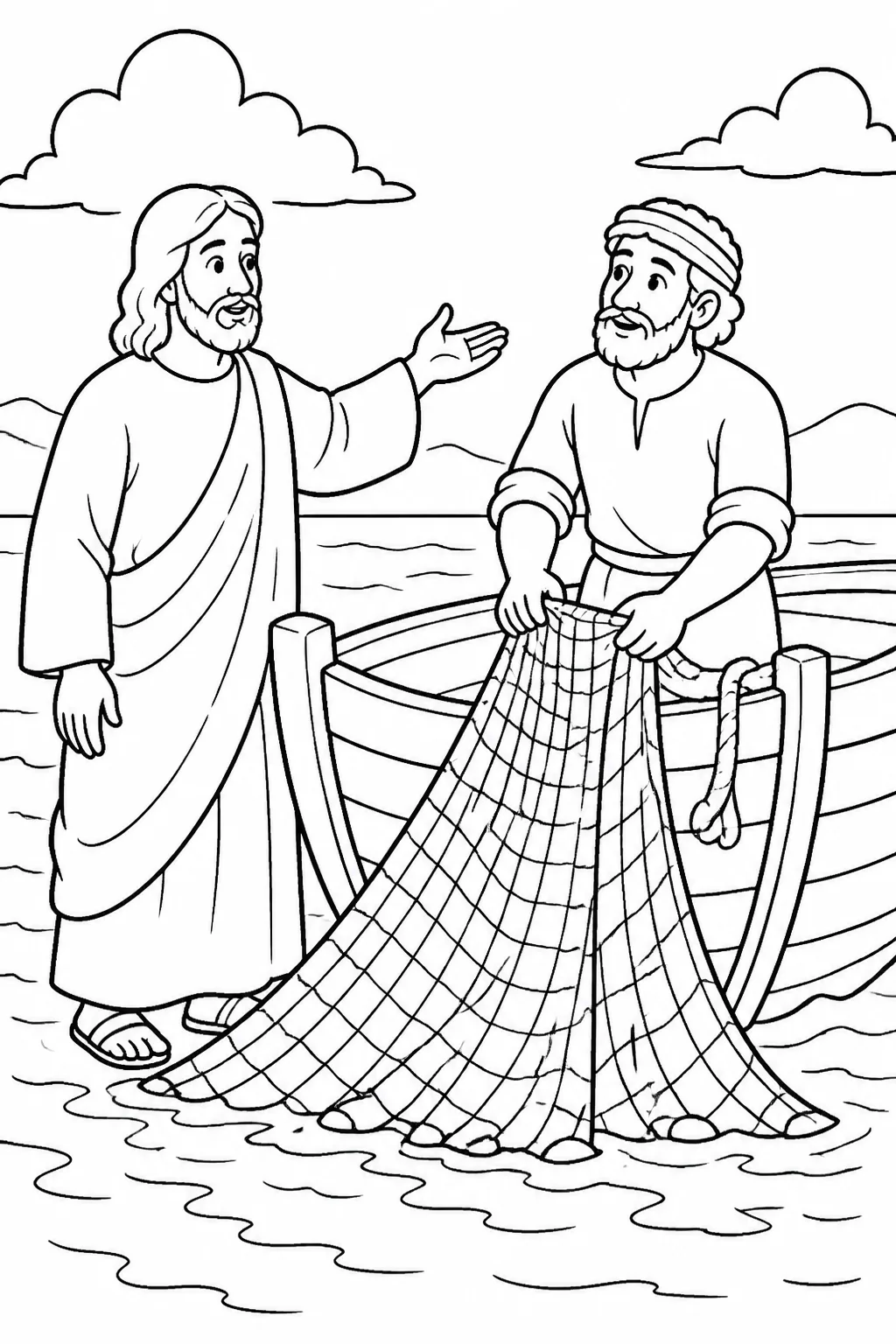
Jesus directs Simon in a boat on deep water to lower the fishing nets after a night with no catch.

Let Down the Nets

Luke 5:1-11

Simon signals James and John for help as overflowing fishing nets fill two boats with a great catch of fish on the Lake of Gennesaret.

The Great Catch

Luke 5:1-11

Simon Peter kneeling at Jesus’ knees in a boat on the Lake of Gennesaret after the great catch of fish, while James and John look on in astonishment.

Simon’s Awe and Humility

Luke 5:1-11

Jesus reassures Simon Peter as Simon Peter, James, and John bring two boats to shore and follow Jesus.

Do Not Be Afraid

Luke 5:1-11

Jesus stands with Simon Peter, James, and John at the shore beside two boats after the great catch of fish, illustrating Luke 5:10–11.

Following Jesus from the Shore

Luke 5:1-11
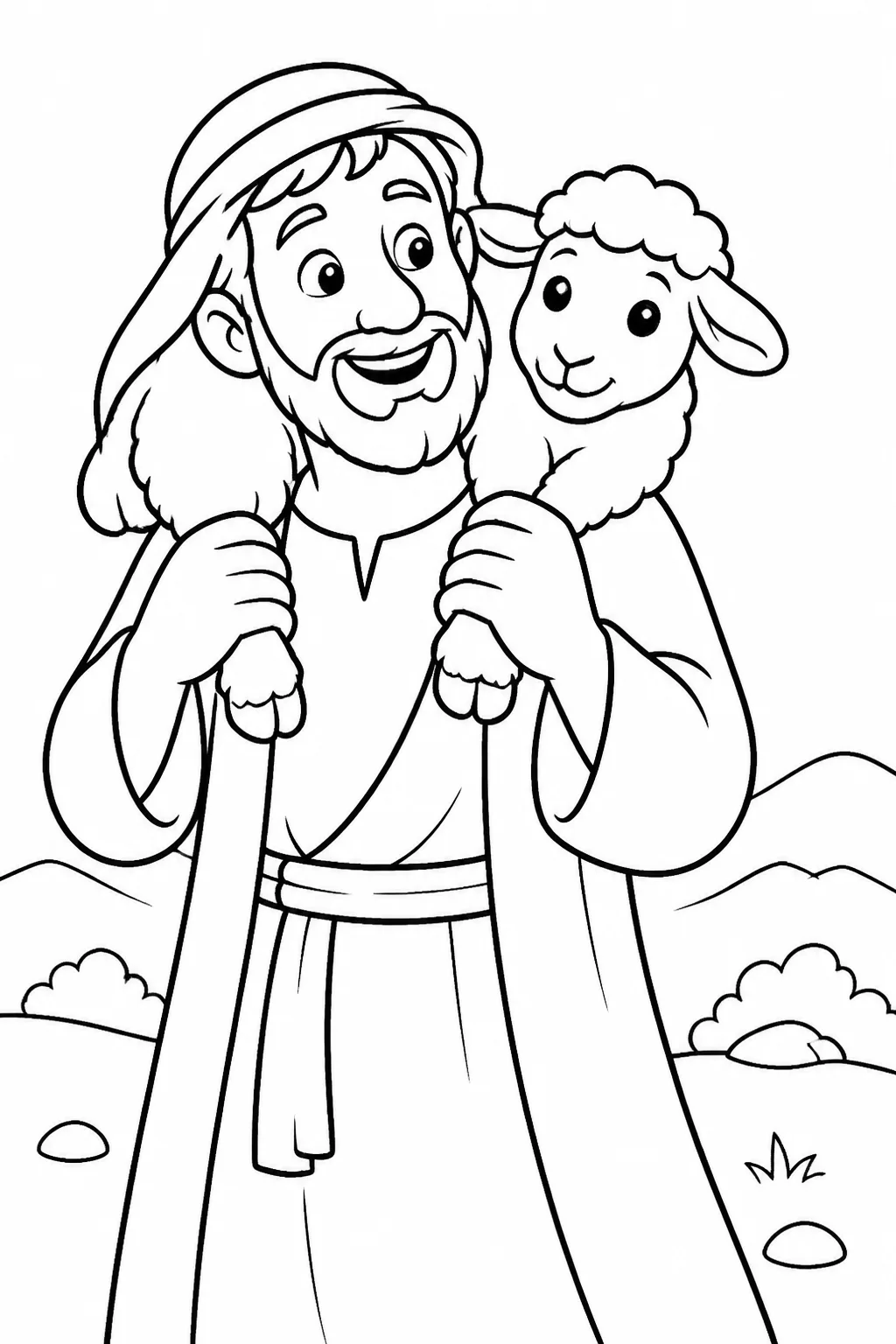
A joyful shepherd carries the found sheep across his shoulders in a simple wilderness setting, illustrating Luke 15:5-6.

The Shepherd Carries the Found Sheep

Luke 15:1-7
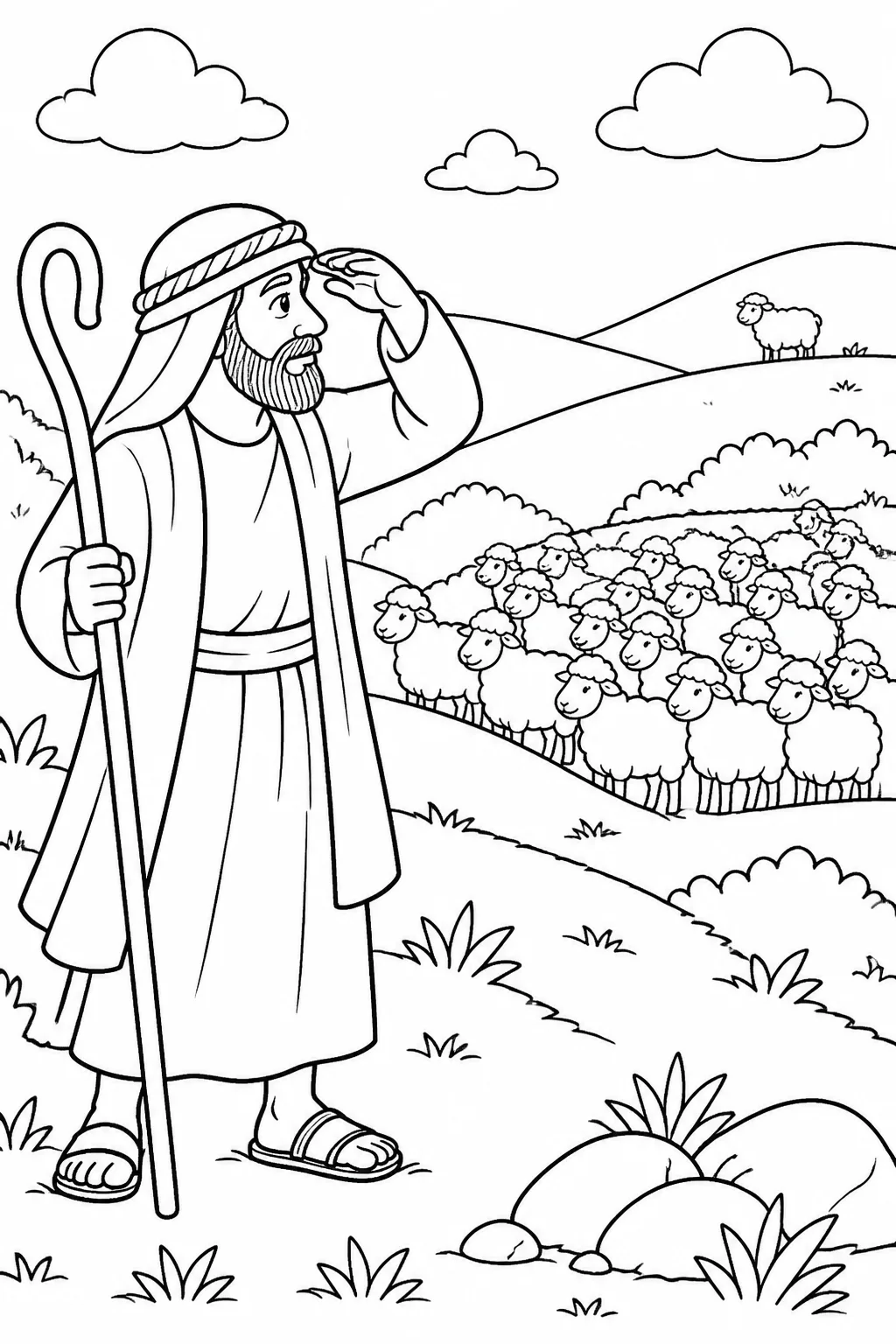
A shepherd searches the wilderness for one missing sheep while ninety-nine sheep remain together in the background.

The Shepherd Searches for One

Luke 15:1-7
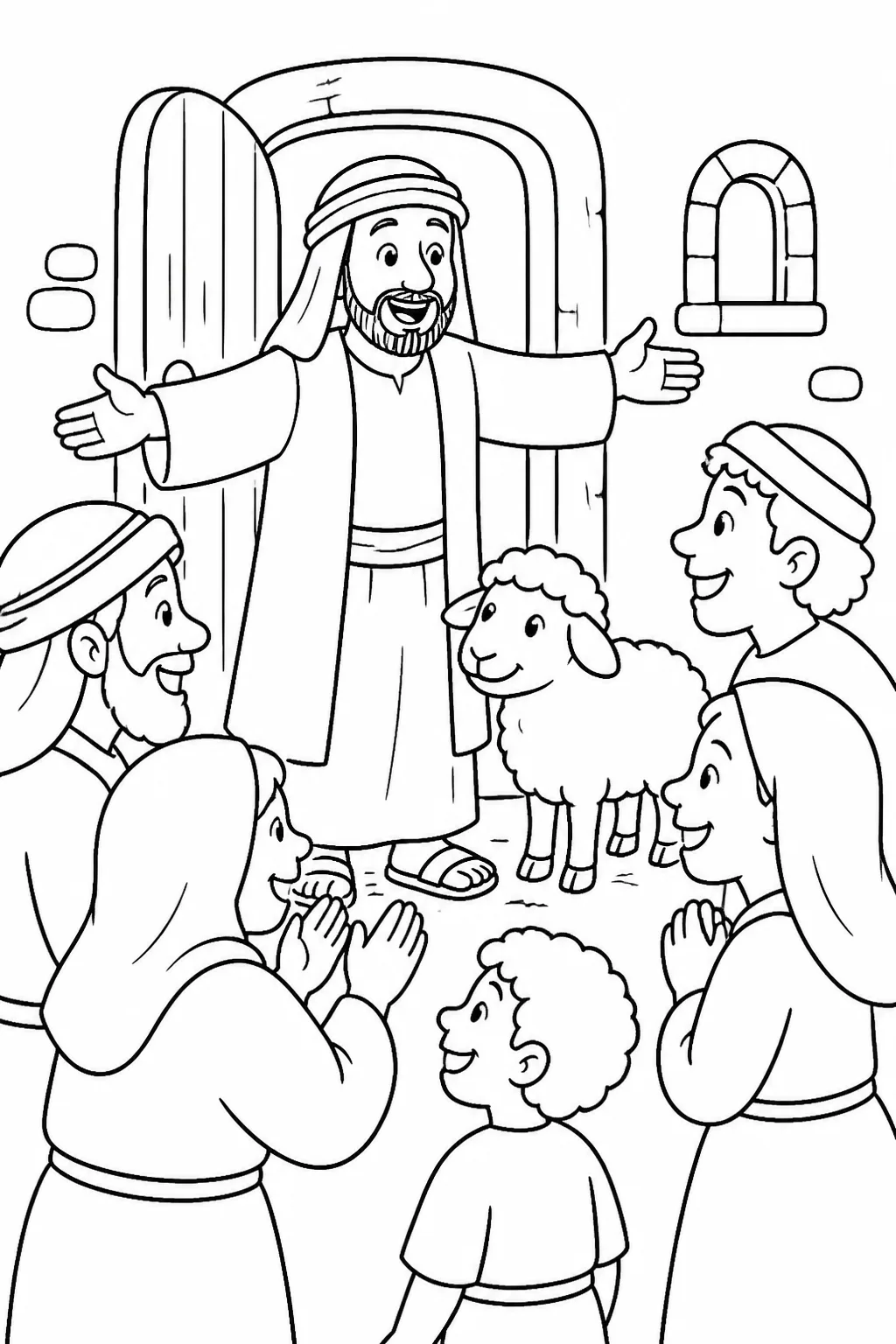
A shepherd welcomes friends and neighbors to rejoice with him at home because his lost sheep has been found.

Rejoice With Me

Luke 15:1-7

Jesus speaking to people gathered around Him while a shepherd searches for one lost sheep among one hundred sheep in the wilderness.

Jesus Asks the Shepherd Question

Luke 15:1-7
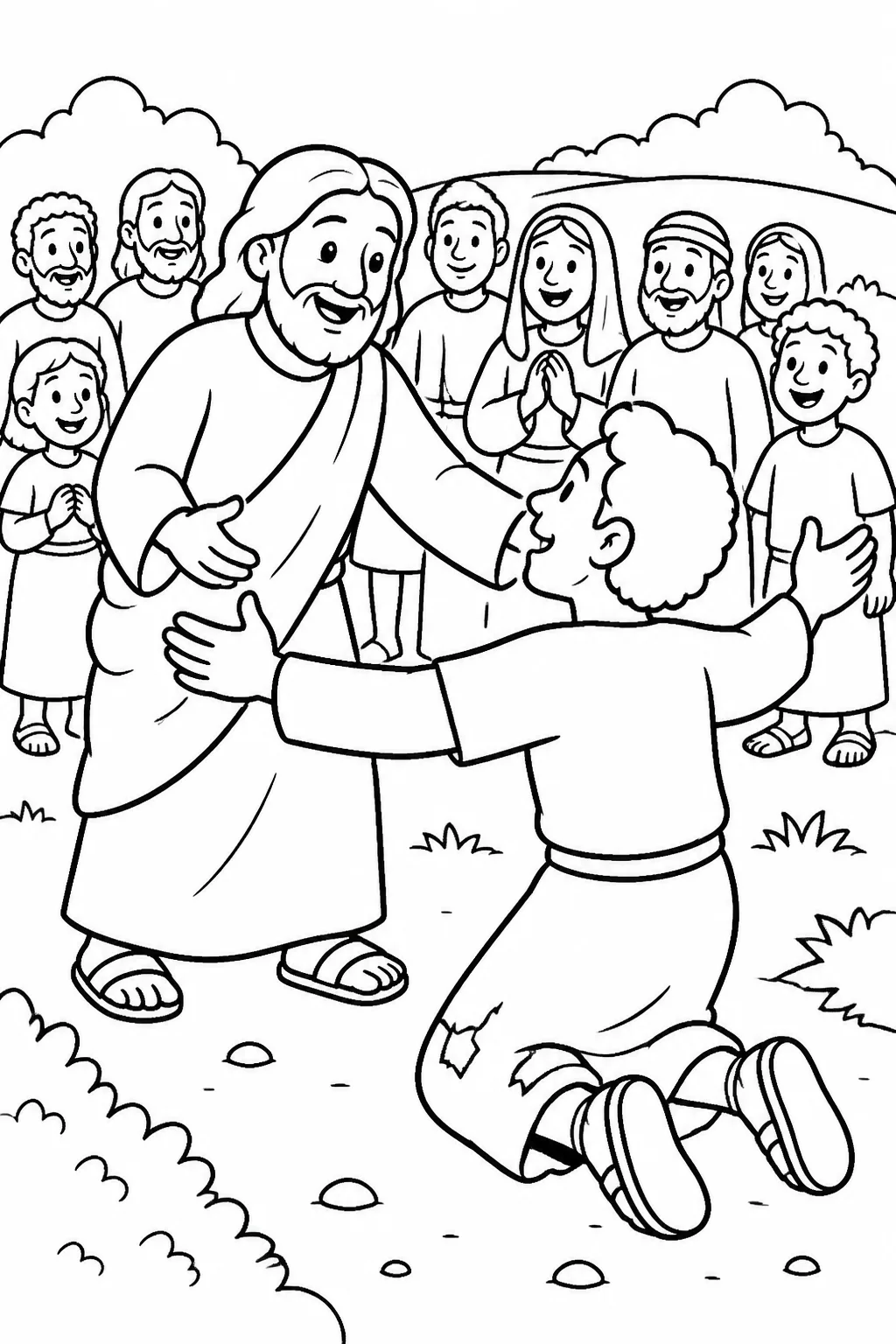
Jesus teaching about one repentant person turning back to God, with ninety-nine righteous people represented respectfully in a bright heavenly setting.

Joy When One Turns Back

Luke 15:1-7

Illustration concept of the father seeing his returning younger son, running to embrace and kiss him near the father’s house as the son begins an honest confession.

A Compassionate Welcome

Luke 15:11-32
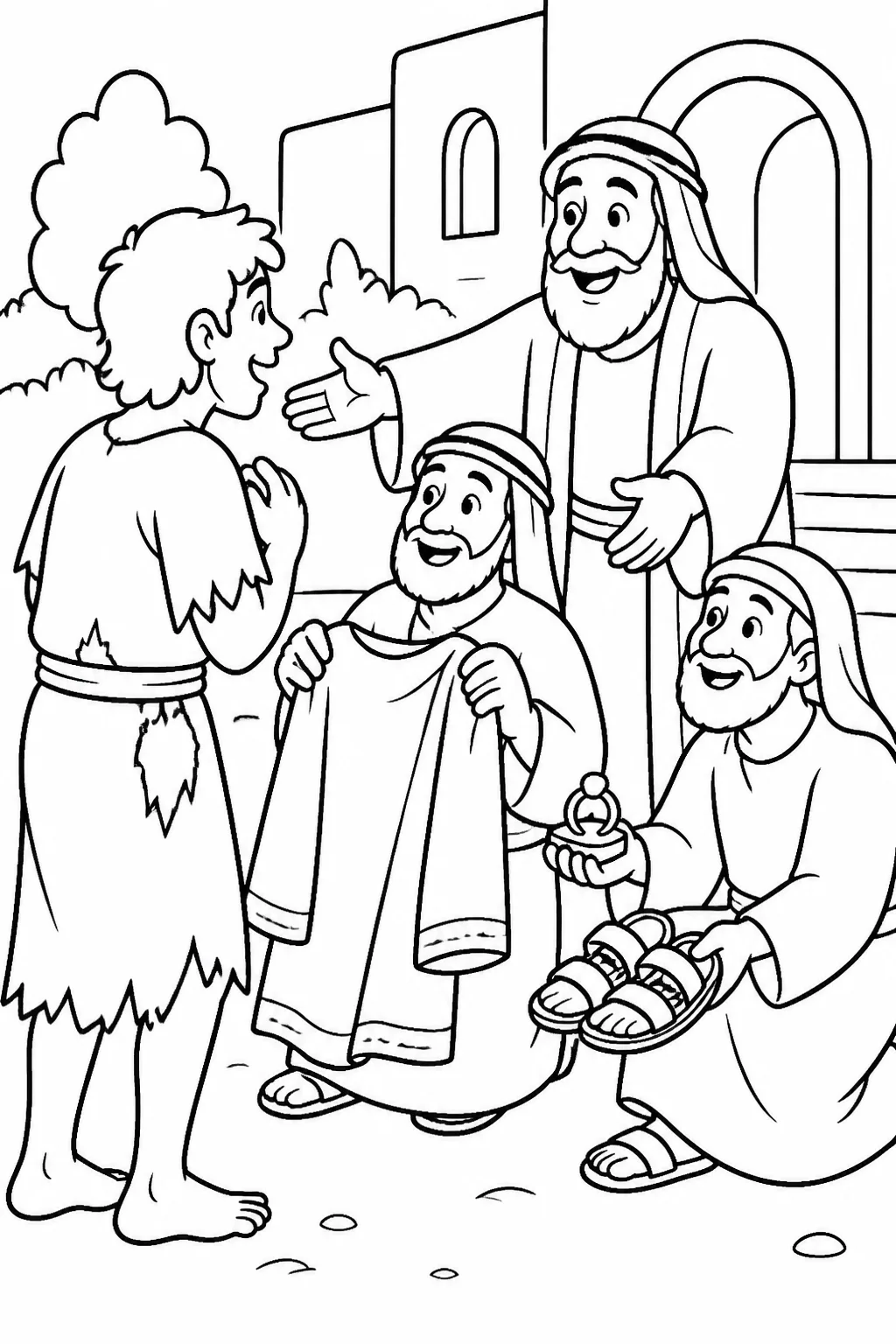
The father’s servants bring a robe, ring, and sandals for the returning younger son at the father’s house.

Restored to the Family

Luke 15:11-32

The younger son from Jesus’ parable choosing to return along a path toward his father’s house.

Choosing to Return

Luke 15:11-32

The younger son in a citizen’s fields feeding pigs during a severe famine, longing for food in a distant country.

In Need Far from Home

Luke 15:11-32

The younger son gathers his property and travels away from his family’s property along a path toward a distant country.

The Distant Country

Luke 15:11-32

A father with his younger and older sons at their family property as the younger son asks for his share and the father divides the property.

The Father Divides the Property

Luke 15:11-32
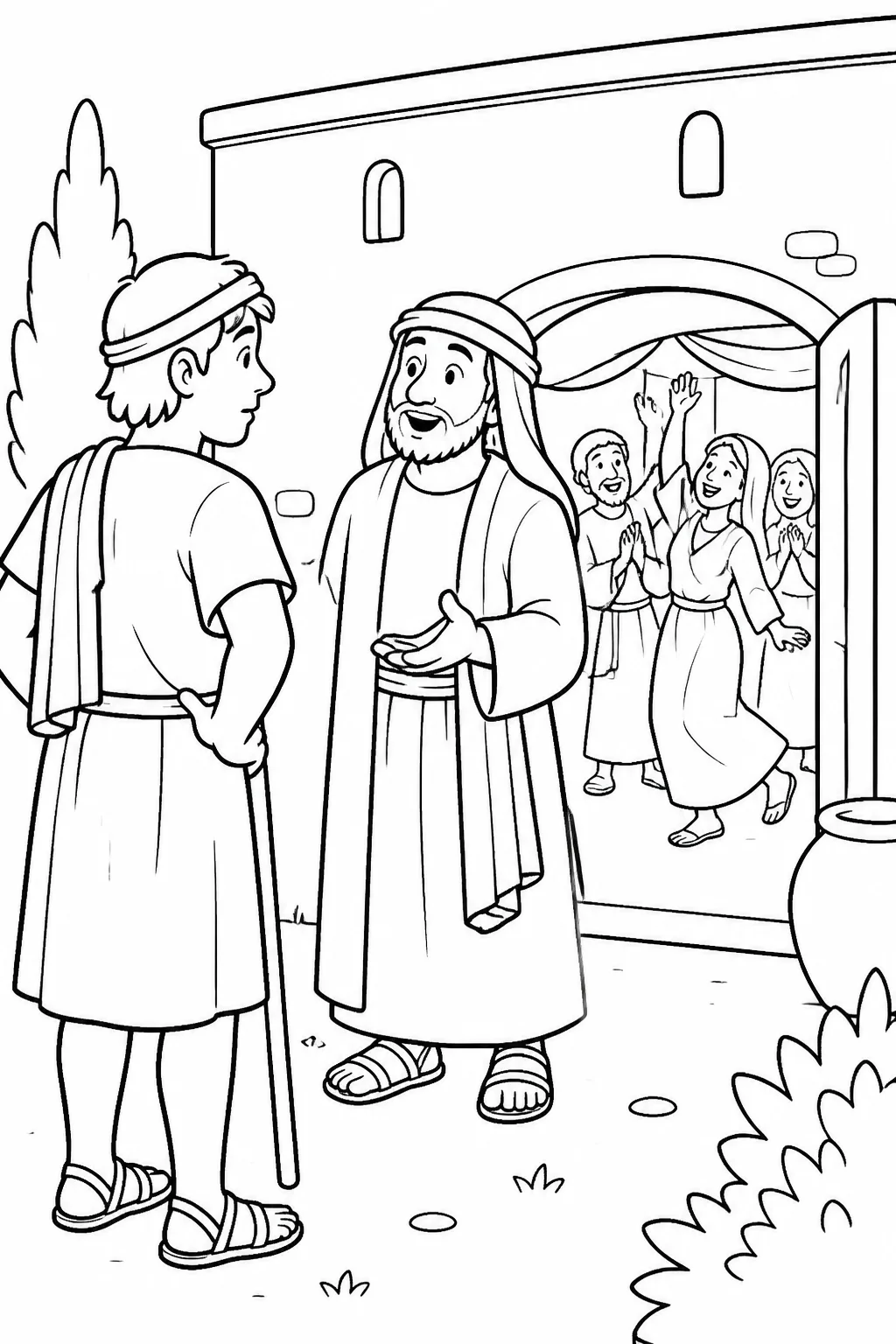
The older son approaches his father’s house from the field, hears music and dancing, and learns from a servant that his younger brother has returned safely and a celebration has begun.

Music at the House

Luke 15:11-32

The older son stands outside the father’s house while his father comes out to plead with him about the celebration for his returning brother.

A Difficult Conversation

Luke 15:11-32
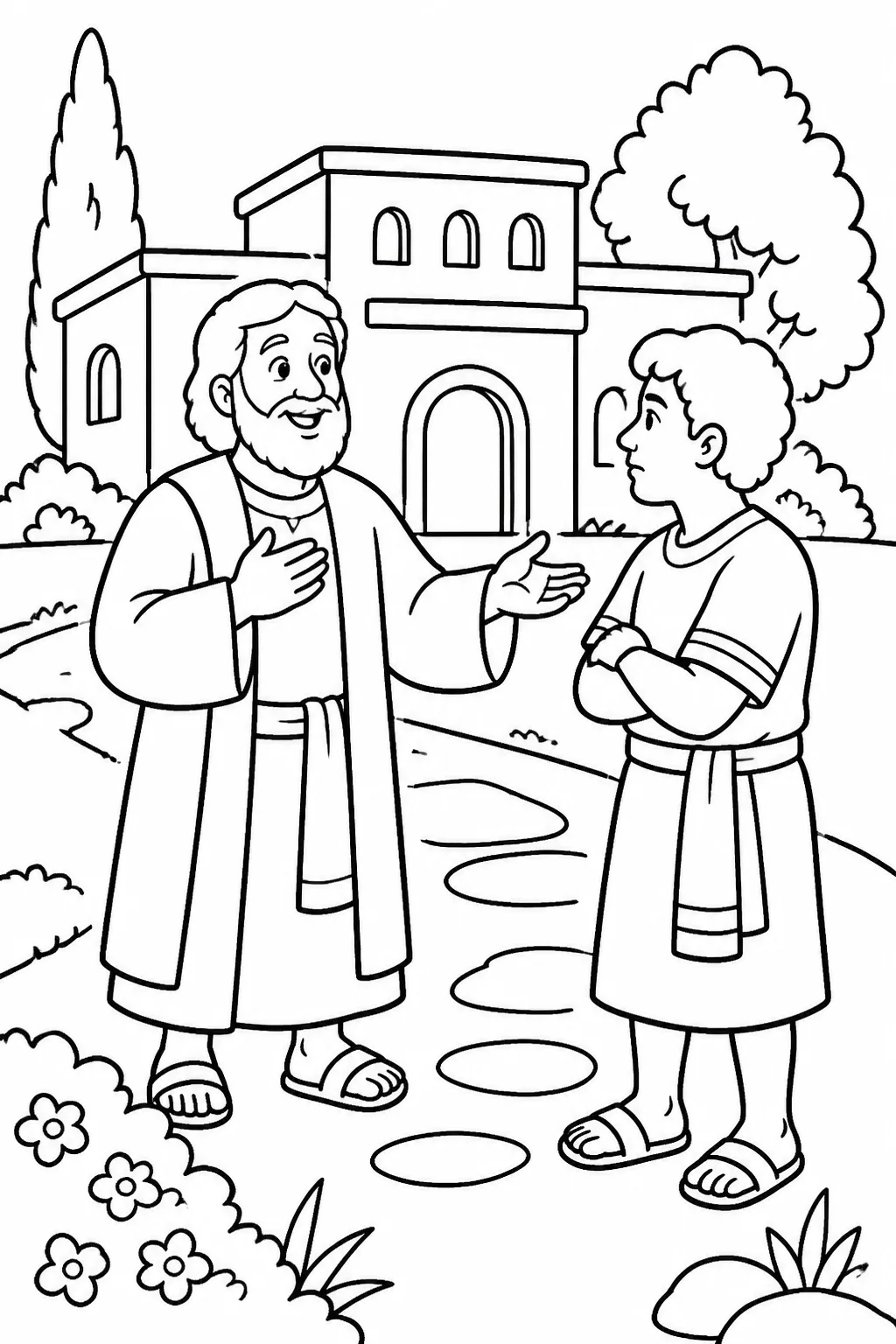
The father speaks with the older son beside the father’s house and property, explaining why celebrating the returning brother is fitting.

An Invitation to Rejoice

Luke 15:11-32
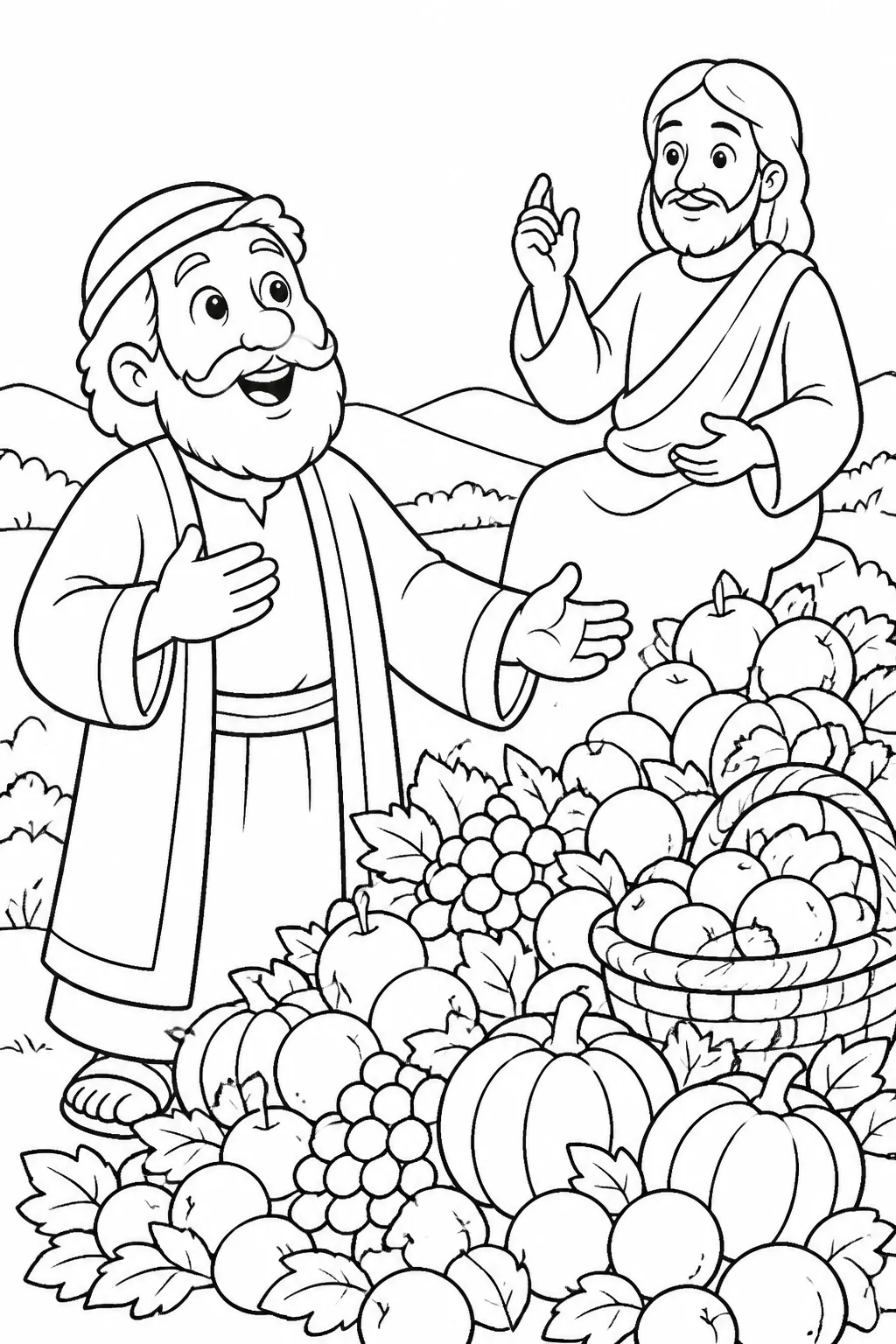
Jesus tells a parable about a rich man whose land produces an abundant harvest, illustrating the lesson about storing treasure for oneself and being rich toward God.

The Land Produces an Abundant Harvest

Luke 12:13-21
The rich man considers replacing his barns with larger barns to store his abundant crops, grain, and goods.

Building Bigger Barns

Luke 12:13-21

Jesus teaches a crowd while a man asks Him to tell his brother to divide an inheritance, illustrating Jesus’ warning that life does not consist in the abundance of possessions.

Jesus Warns Against Greed

Luke 12:13-21
Symbolic illustration of the rich man beside stored possessions, with a quiet path or nighttime setting showing that possessions remain when his life ends; God is represented non-humanly.

Possessions Cannot Go With Him

Luke 12:13-21
Jesus teaching beside treasure, with open hands showing gratitude and attention toward God, illustrating the conclusion of the parable of the rich fool.

Rich Toward God

Luke 12:13-21

Lazarus seated beside the rich man’s gate, with the rich man’s table beyond it and dogs nearby, illustrating Luke 16:20–21.

Lazarus at the Gate

Luke 16:19-31

The unnamed rich man in purple and fine linen beside a lavish daily feast, with his gate visible, illustrating Luke 16:19.

A Life of Luxury

Luke 16:19-31

Lazarus is carried by unnamed angels toward Abraham’s side, with a simple, respectful indication of the rich man’s burial in the background.

Carried to Abraham’s Side

Luke 16:19-31
A symbolic Bible scene showing Abraham with Lazarus beside him and the rich man far away, raising a hand in request, representing Luke 16:23–24.

A Distant Request

Luke 16:19-31

Symbolic illustration of Abraham and comforted Lazarus separated from the unnamed rich man by a broad, uncrossable chasm, based on Luke 16:25–26.

The Uncrossable Chasm

Luke 16:19-31

The rich man gestures toward his five unnamed brothers while Abraham points to scrolls representing Moses and the Prophets.

Listen to Moses and the Prophets

Luke 16:19-31
Abraham speaks with the unnamed rich man while scrolls representing Moses and the Prophets are shown in the foreground.

The Story’s Final Lesson

Luke 16:19-31
Moses and the people of Israel gathered at their camp in the Wilderness of Sinai before Mount Sinai.

Israel Camps Before Mount Sinai

Exodus 19:1–20:21
Moses reports God’s words to Israel’s elders and gathered people at their camp before Mount Sinai; the people promise to do everything God has said.

The People Promise to Listen

Exodus 19:1–20:21
Moses and the people of Israel prepare respectfully at the foot of Mount Sinai, with clean garments and a boundary around the mountain.

Preparing to Meet God

Exodus 19:1–20:21
Moses stands at the foot of Mount Sinai while the people of Israel respond with awe as the mountain is surrounded by thick cloud, smoke, fire, lightning, and a loud trumpet sound.

Thunder and Cloud at Sinai

Exodus 19:1–20:21
Moses and Aaron near the permitted approach to Mount Sinai while priests and the people of Israel remain behind a boundary, with God’s presence represented by the holy mountain, cloud, smoke, or darkness.

Respecting the Holy Boundary

Exodus 19:1–20:21
Moses and the people of Israel listen at Mount Sinai as God’s presence is represented by radiant cloud, fire, smoke, and holy darkness.

God Speaks the Ten Commandments

Exodus 19:1–20:21
Moses approaches thick darkness over smoking Mount Sinai while the people of Israel stand at a distance, with thunder, lightning, and trumpet sound described in Exodus 20:18–21.

Moses Approaches the Thick Darkness

Exodus 19:1–20:21
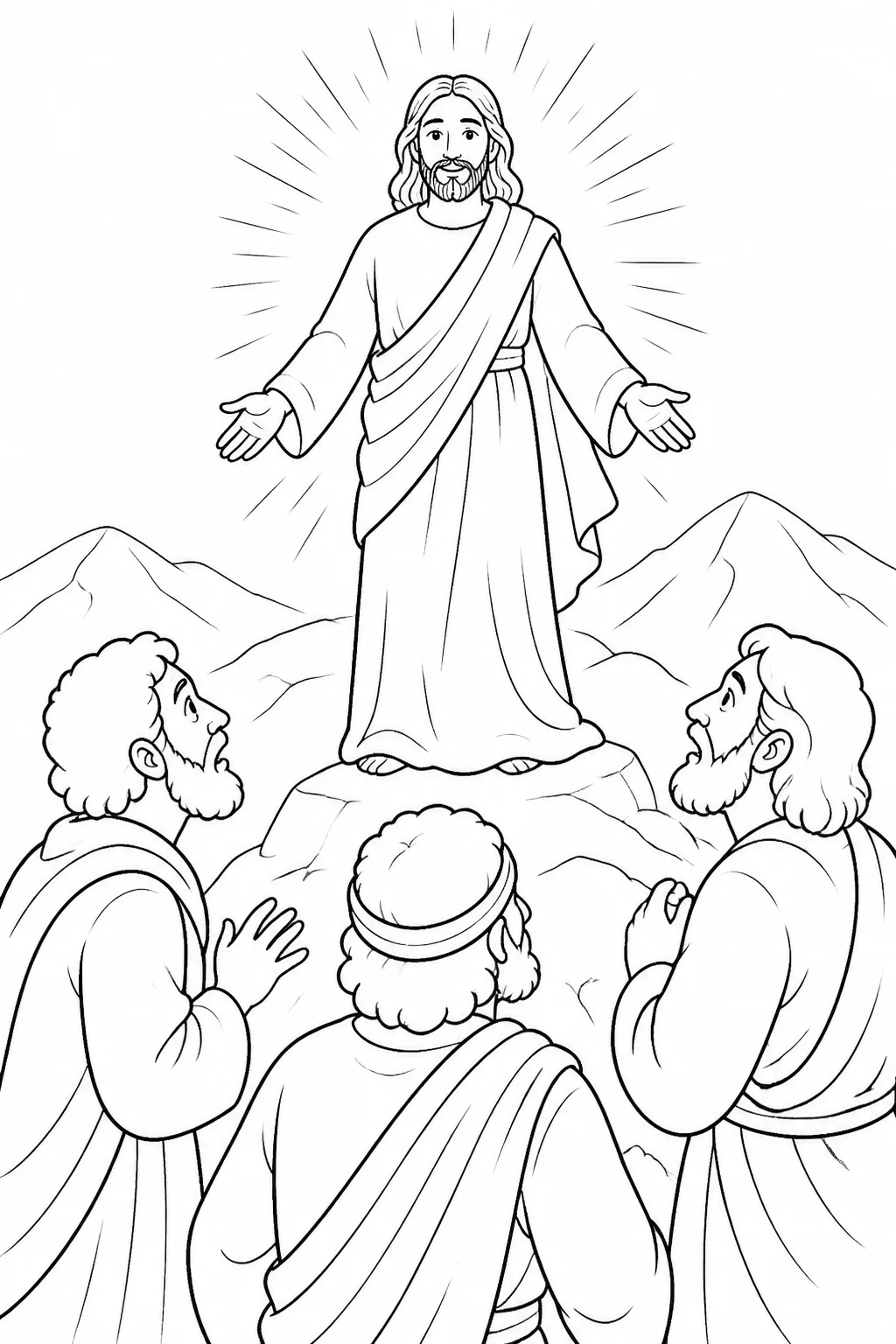
Jesus on a high mountain with his face shining like the sun and clothing white as light before Peter, James, and John.

Jesus Shines with Glory

Matthew 17:1-13
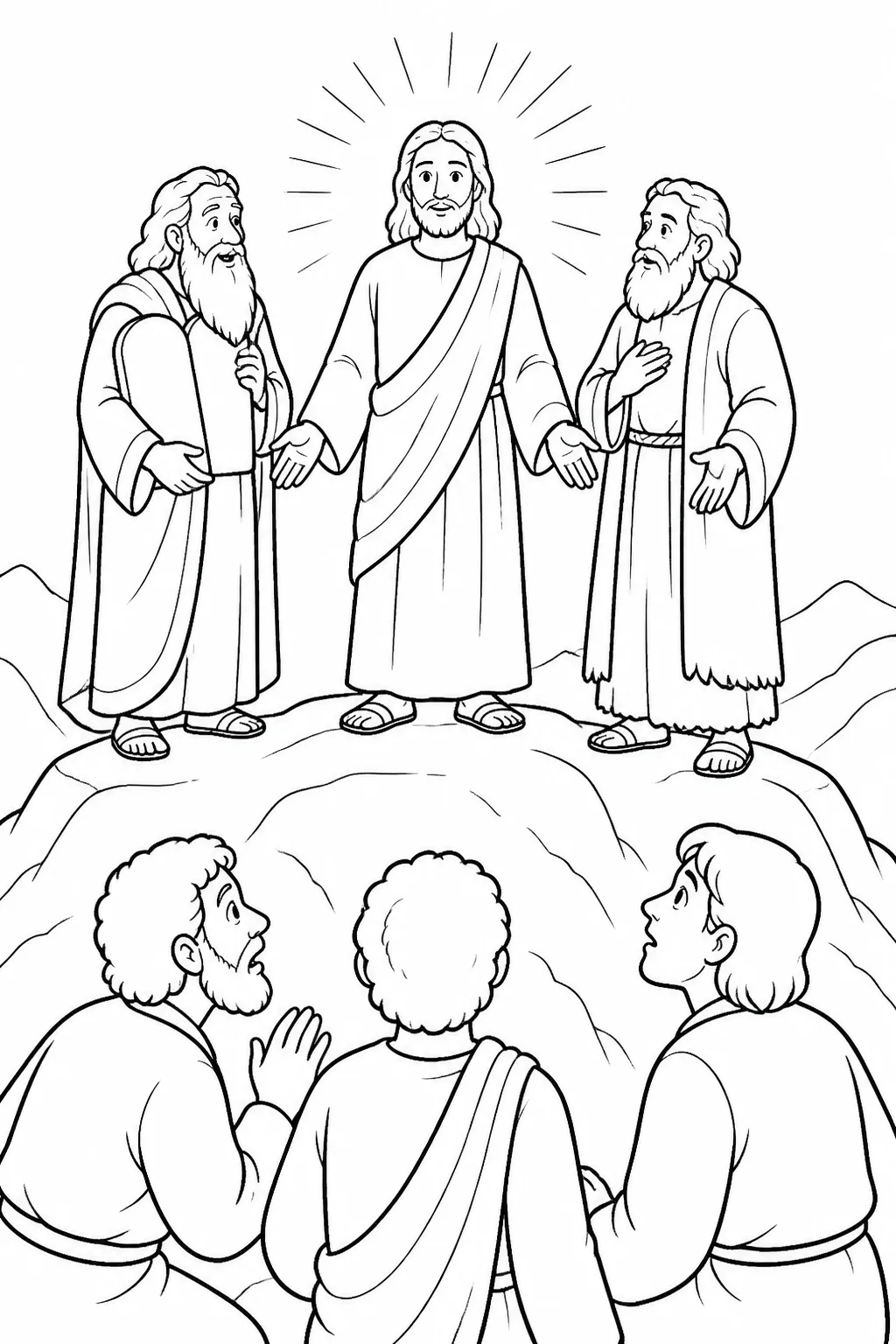
Jesus stands radiantly on a high mountain while Moses and Elijah speak with him, as Peter, James, and John observe.

Moses and Elijah Speak with Jesus

Matthew 17:1-13
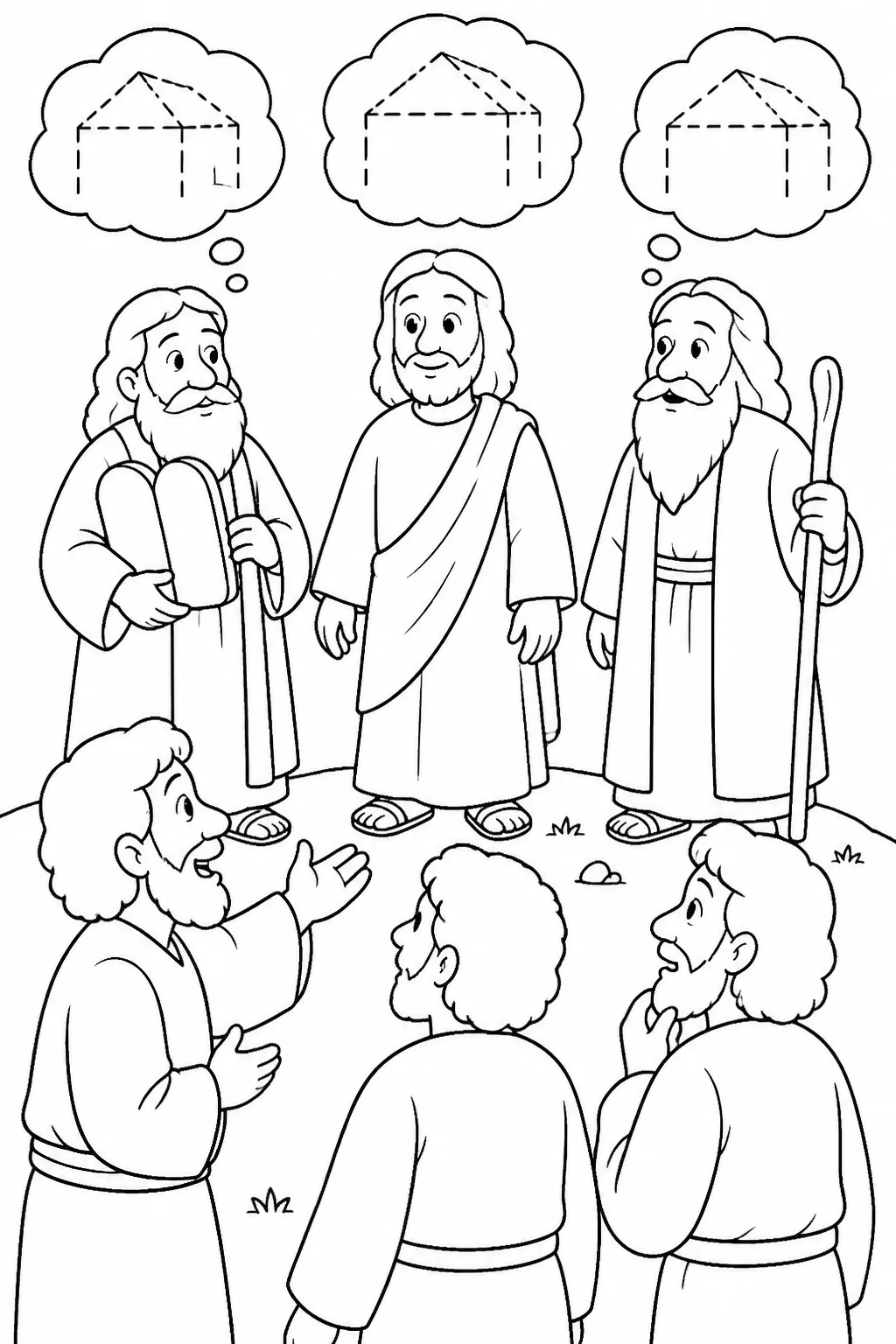
Jesus, Moses, Elijah, Peter, James, and John on a high mountain as Peter offers three proposed shelters during the Transfiguration.

Peter Offers Three Shelters

Matthew 17:1-13
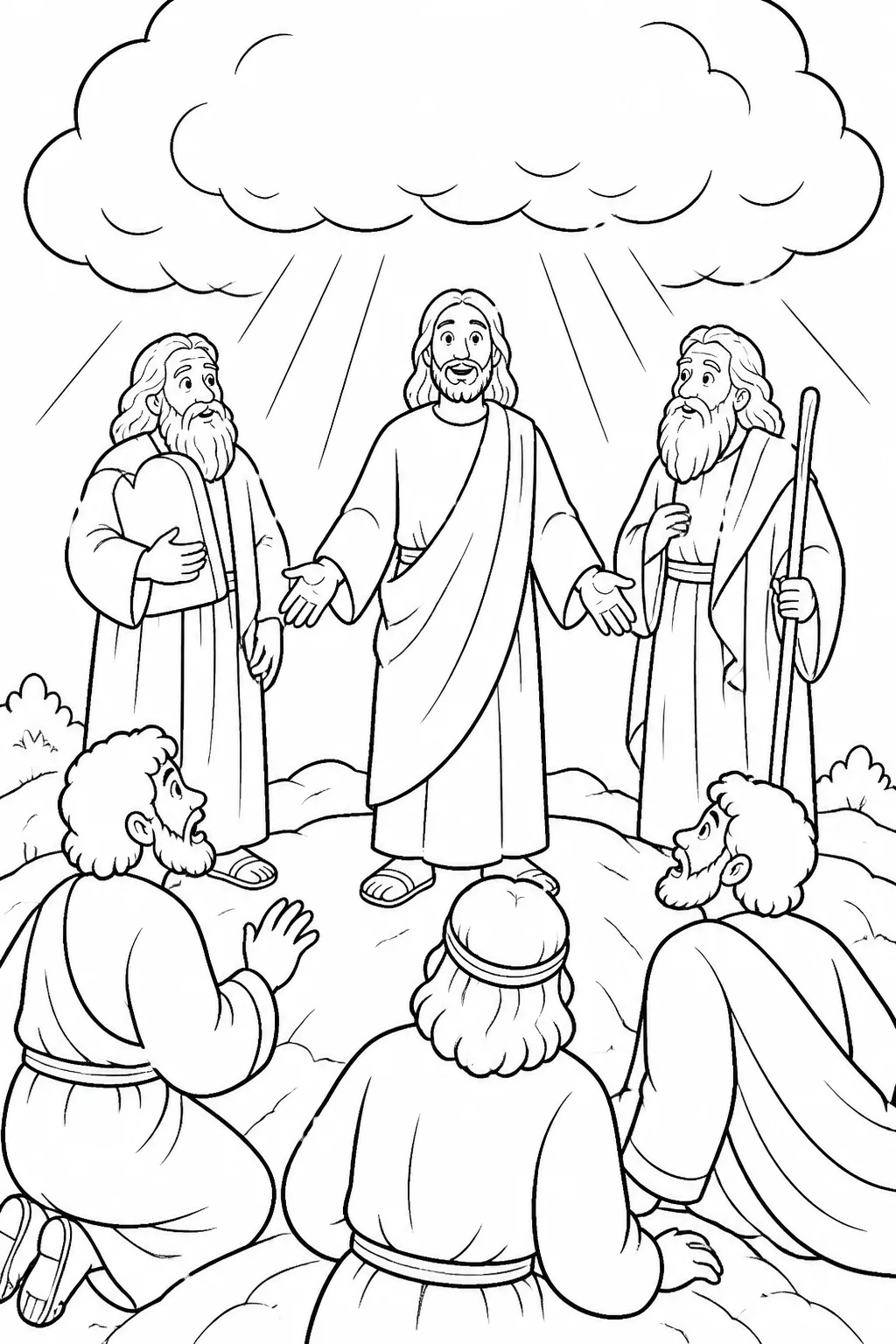
Jesus, Peter, James, John, Moses, and Elijah gathered on a high mountain as a bright cloud overshadows them during the Transfiguration.

Listen to Jesus

Matthew 17:1-13

Jesus reaches down to comfort Peter, James, and John after they fall facedown beneath a bright cloud on a high mountain.

Jesus Says, “Do Not Be Afraid”

Matthew 17:1-13
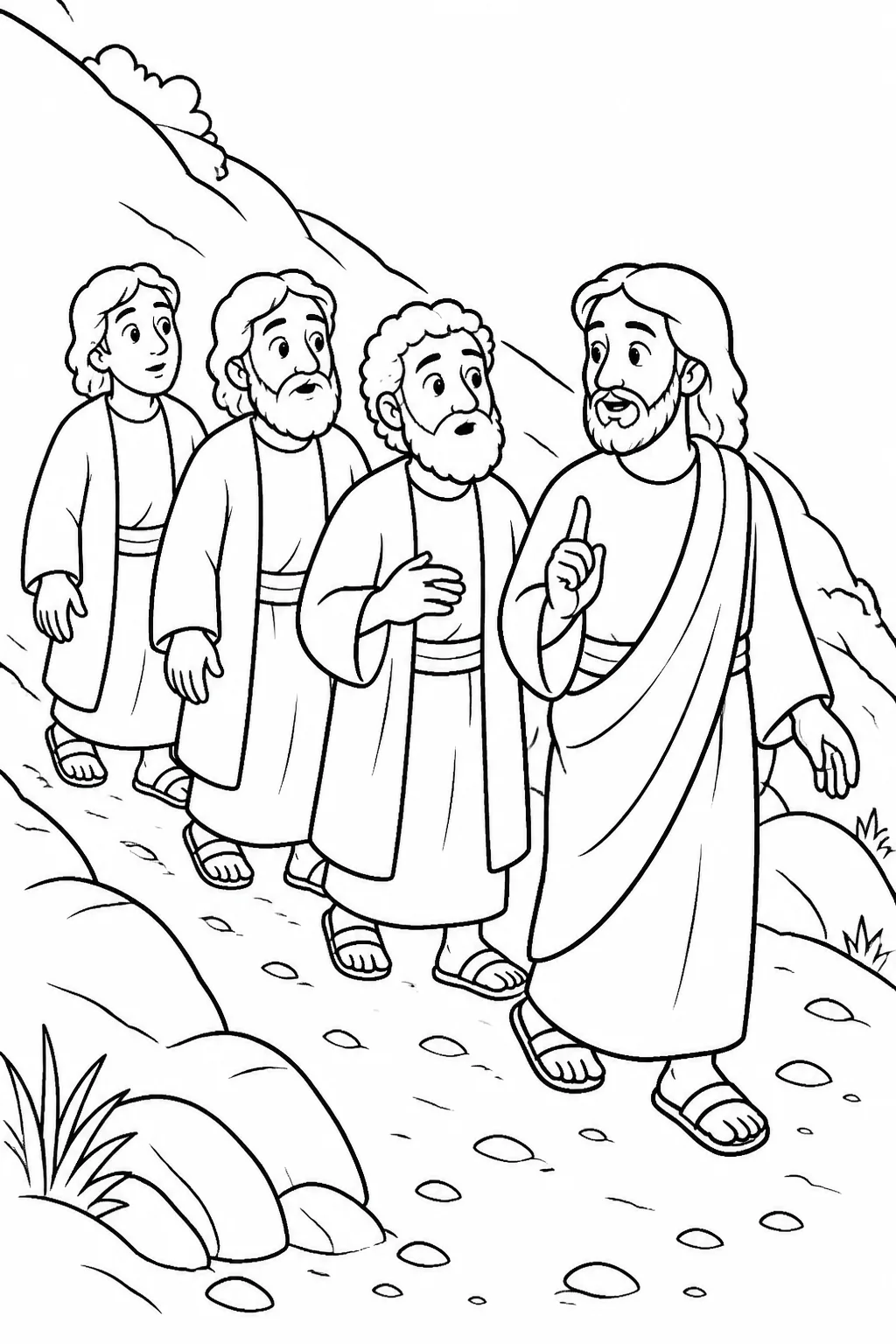
Jesus leads Peter, James, and John down a mountain path and instructs them not to tell anyone about the vision until the Son of Man has been raised from the dead.

Keeping the Vision Private

Matthew 17:1-13
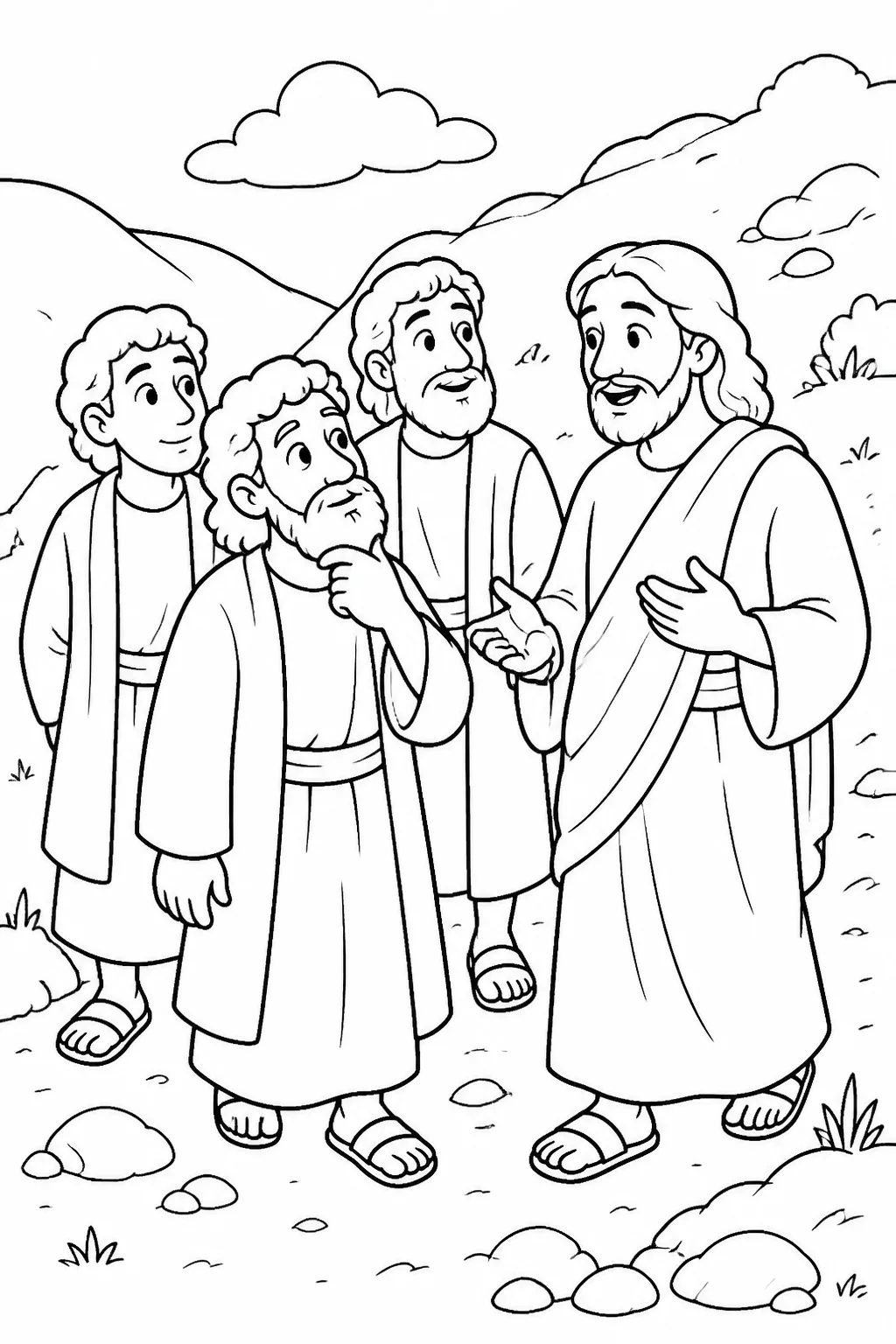
Jesus walking down a mountain with Peter, James, and John while explaining their question about Elijah.

Understanding Jesus’ Teaching

Matthew 17:1-13
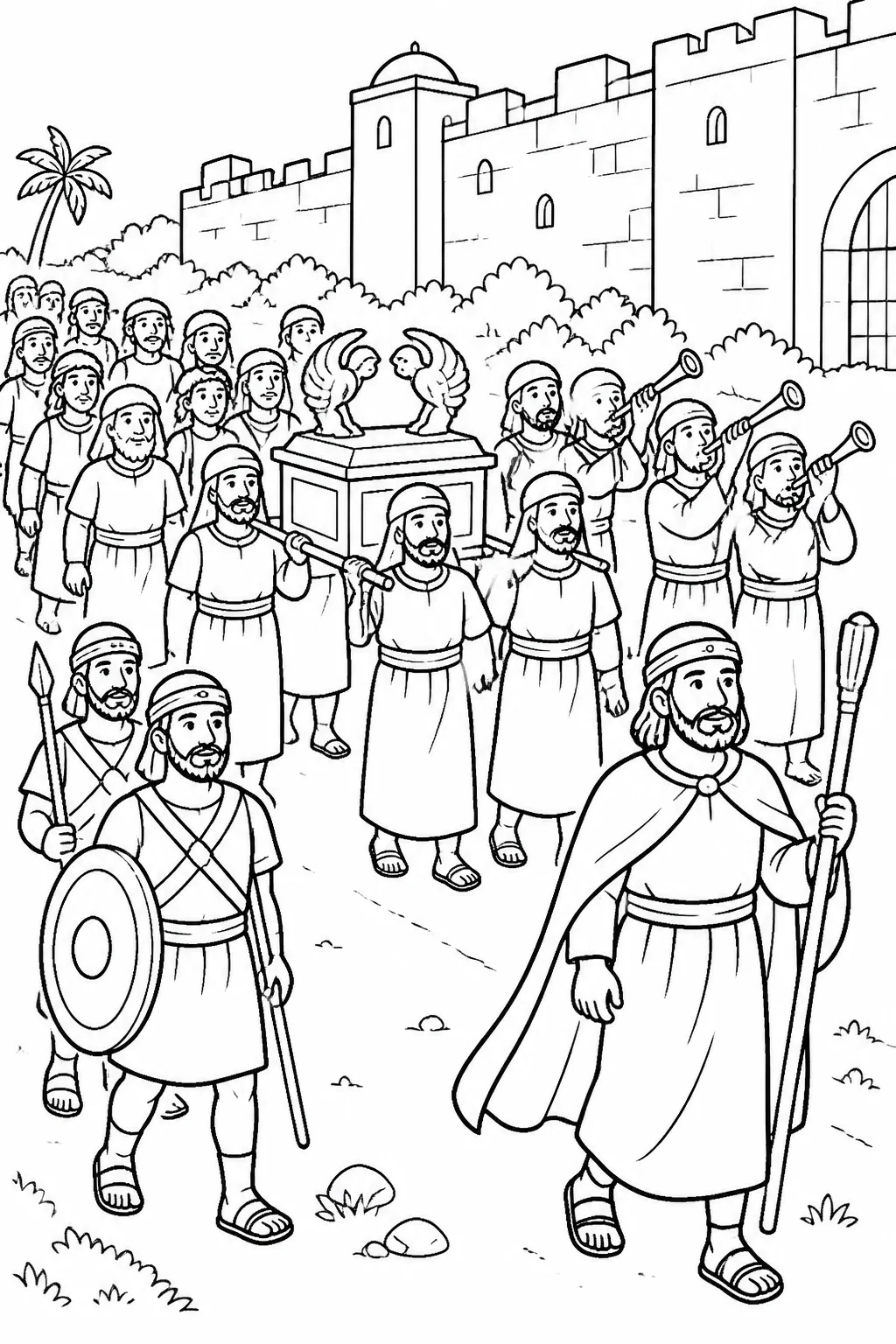
Joshua leads the priests, armed men, and people of Israel in a quiet procession with the ark and trumpets around Jericho’s standing wall during the first six days.

The Quiet March Around Jericho

Joshua 6:1-27
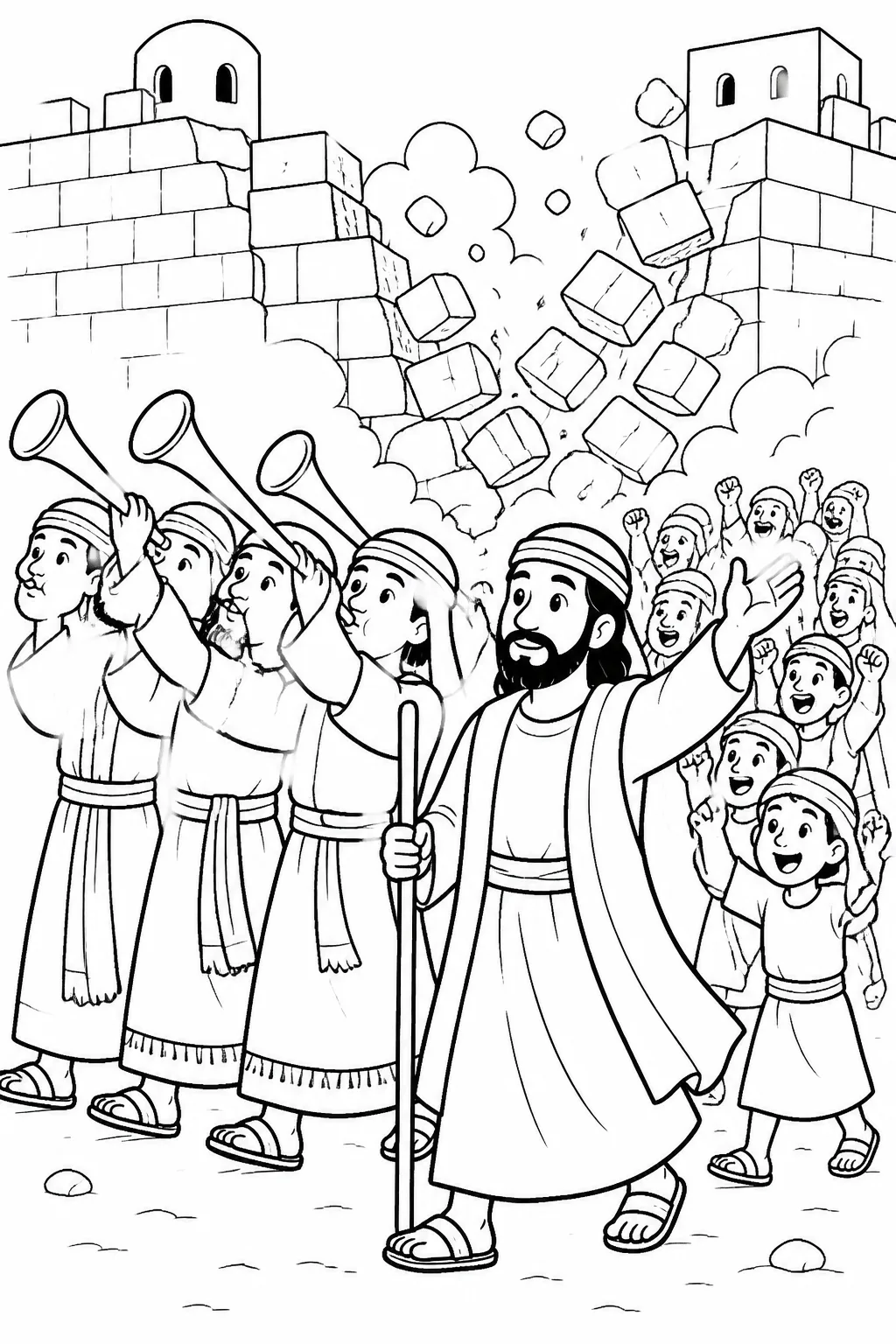
Joshua, the priests, and the people of Israel at Jericho’s wall during the seventh circuit, with trumpets sounding and the people shouting as the wall falls.

The Seventh Circuit and Trumpet Blast

Joshua 6:1-27
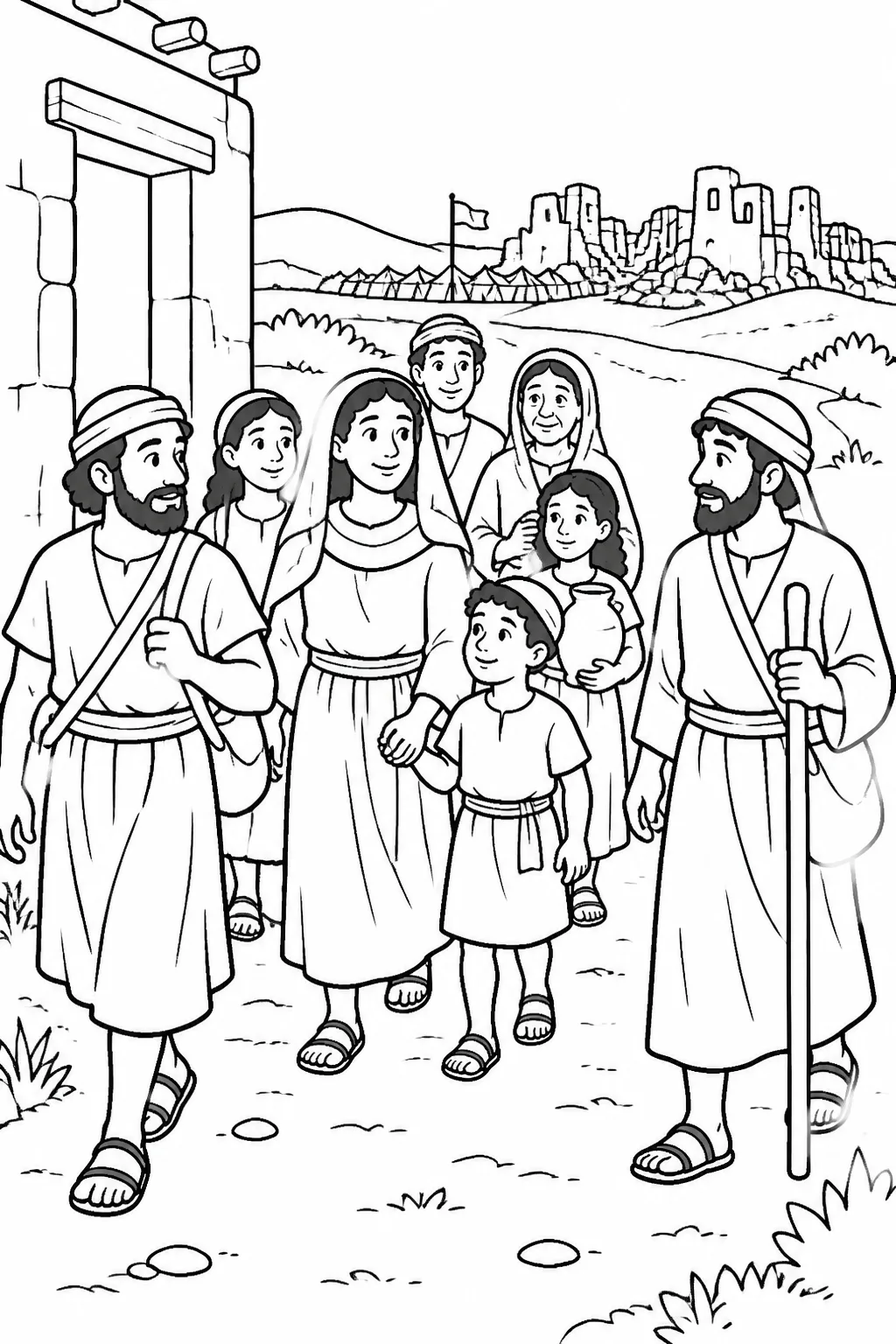
Rahab and Her Household Are Brought to Safety from The Walls of Jericho Fall Bible coloring page

Rahab and Her Household Are Brought to Safety

Joshua 6:1-27
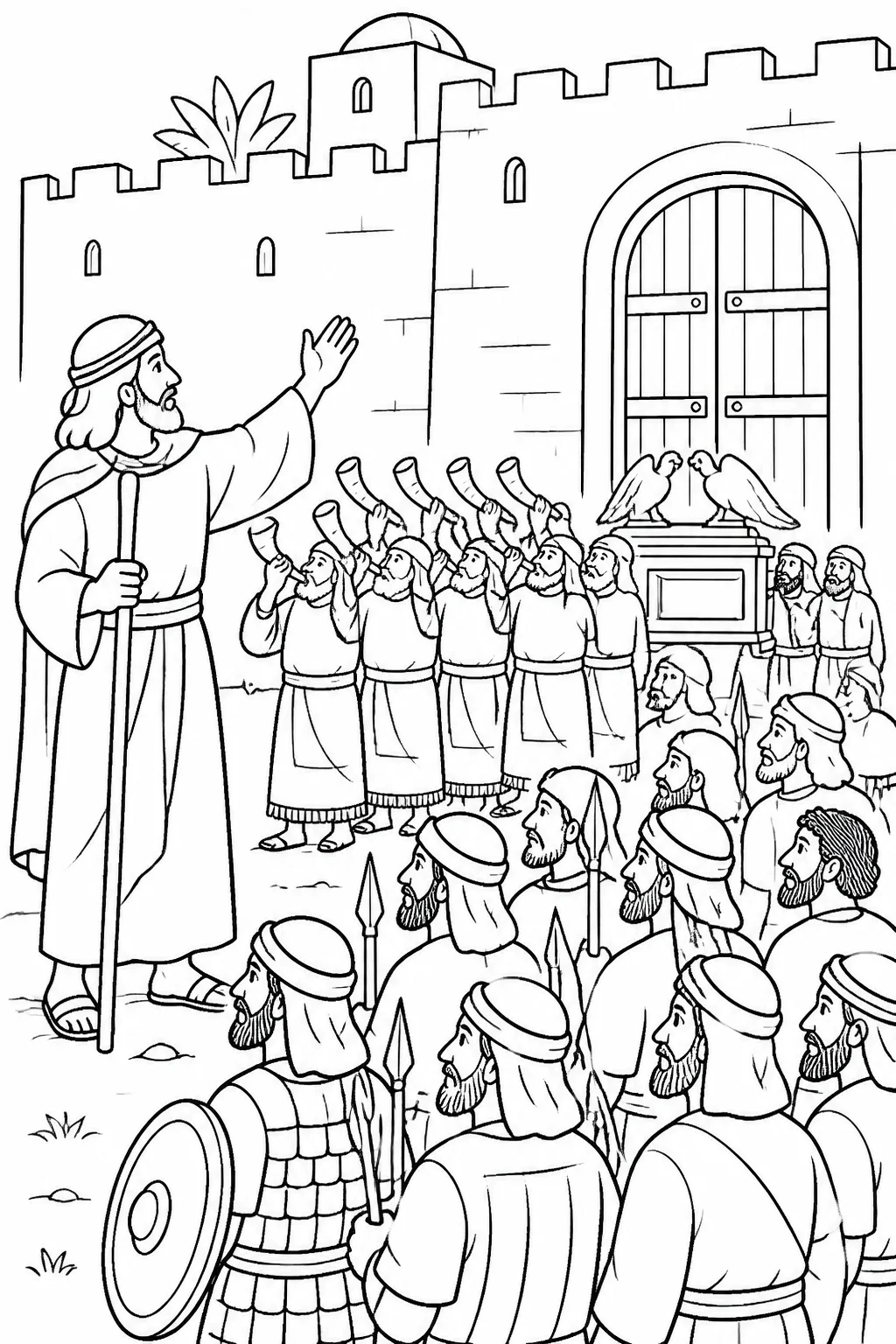
Joshua leads Israel’s organized procession before Jericho’s closed city, with armed men, seven priests carrying trumpets, the ark of the covenant, and a rear guard.

The Command to March Around the Closed City

Joshua 6:1-27
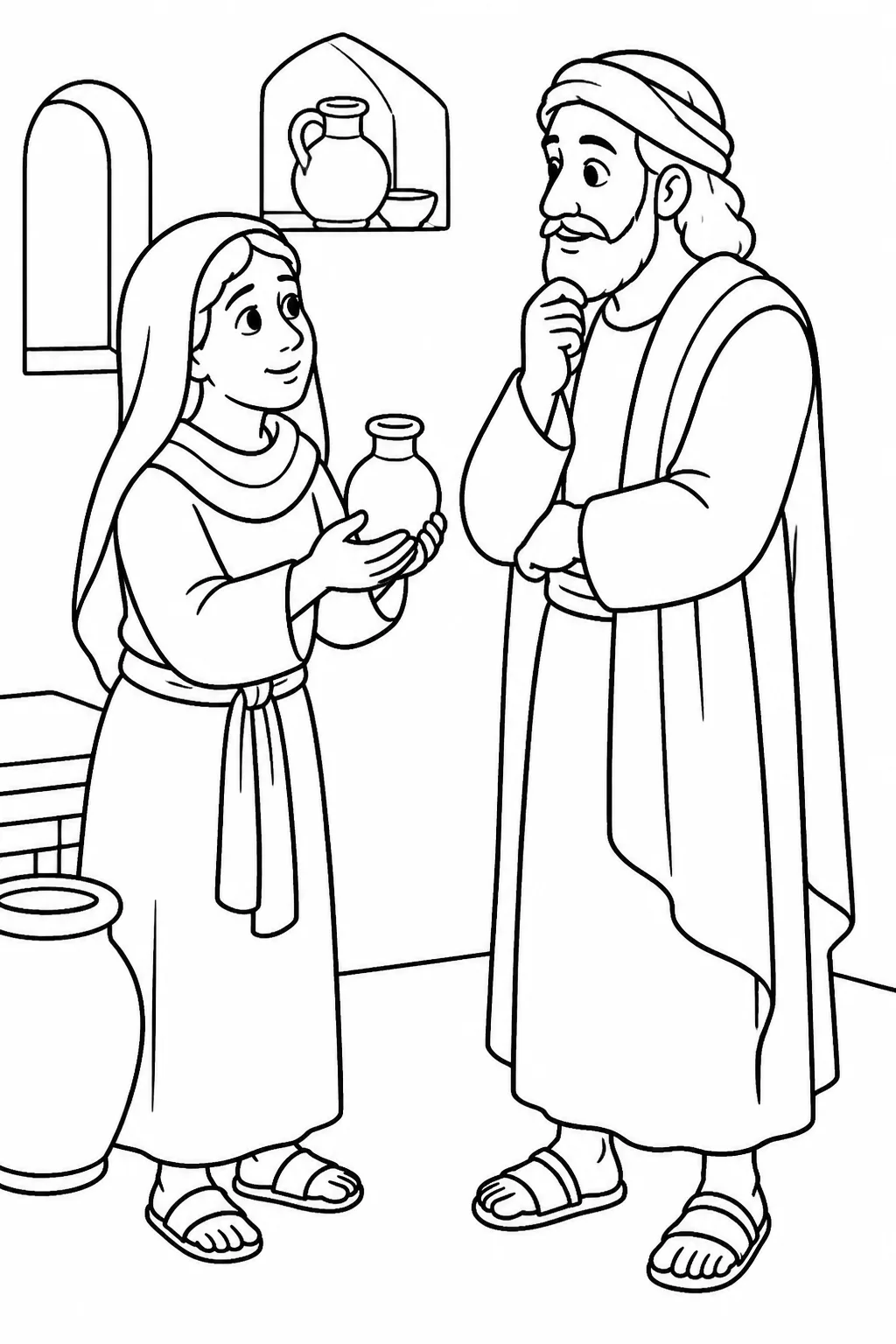
Elisha listens as an unnamed widow shows him a small jar of oil inside her house, based on 2 Kings 4:2.

The Widow Shows Her Jar of Oil

2 Kings 4:1-7
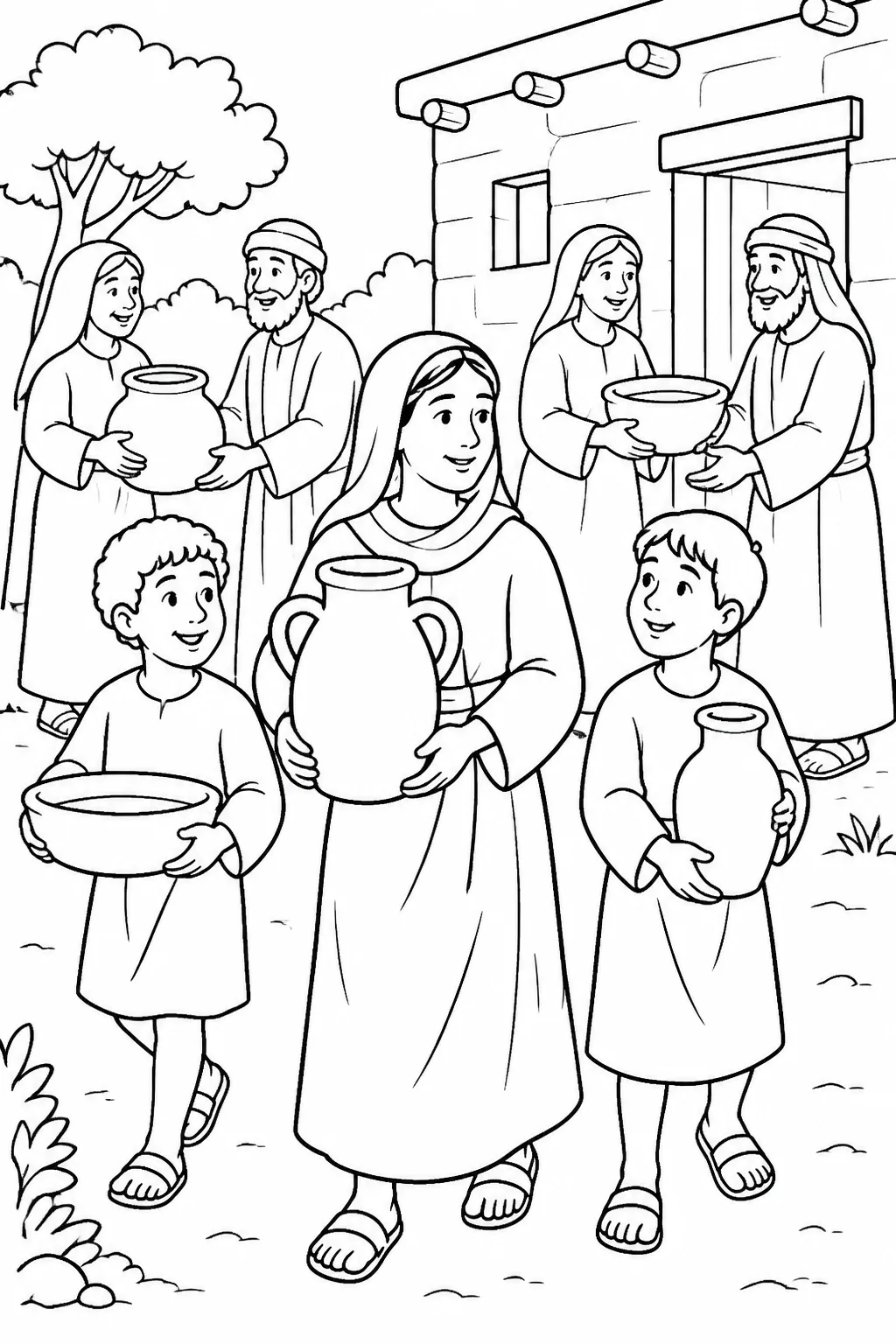
The unnamed widow and her two sons carry empty containers borrowed from several neighbors toward their home, preparing to follow Elisha’s instruction.

Borrowing Empty Containers

2 Kings 4:1-7
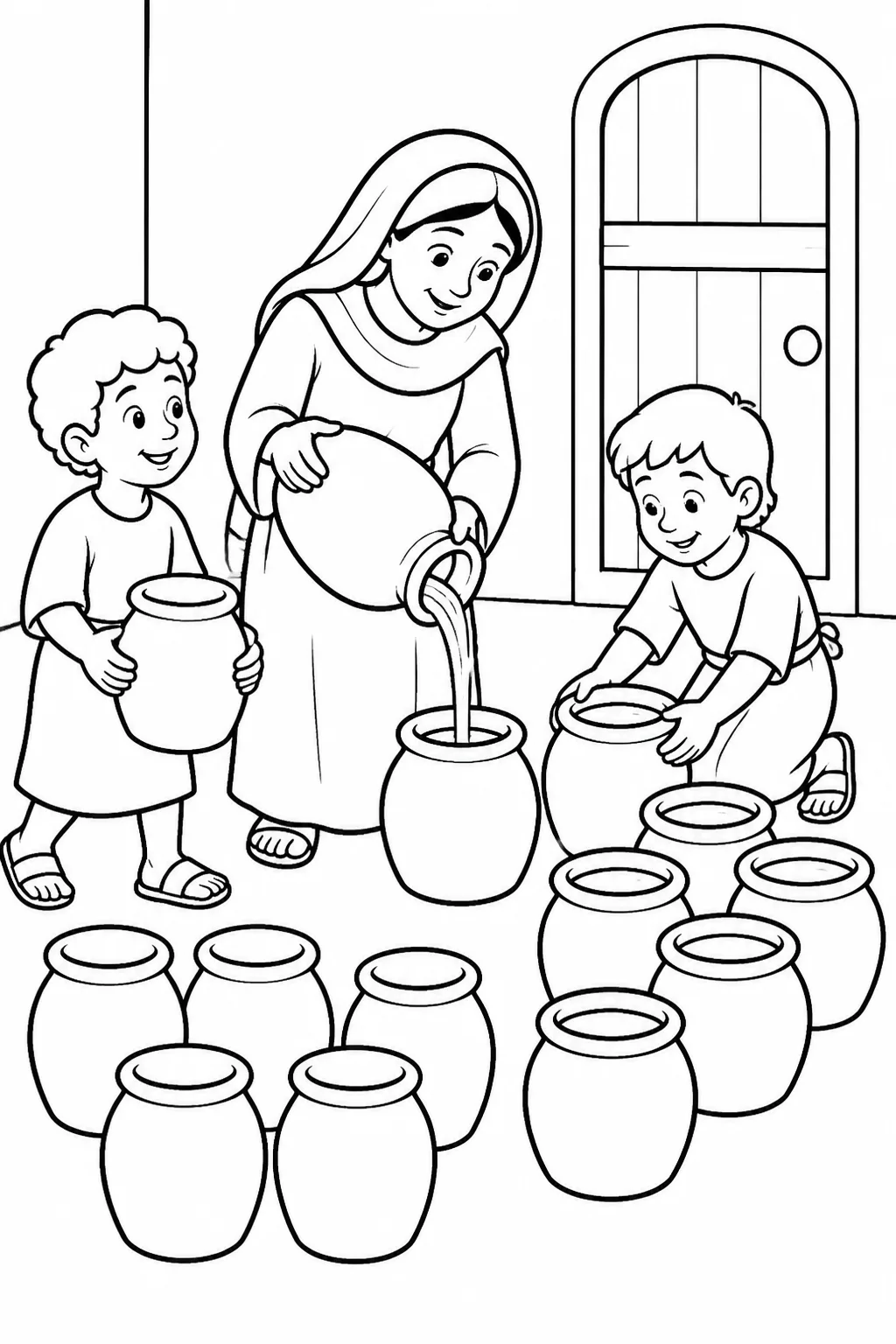
An unnamed widow pours oil from a jar into containers inside her closed household while her two sons bring empty containers and set filled ones aside.

Oil Fills the Containers

2 Kings 4:1-7
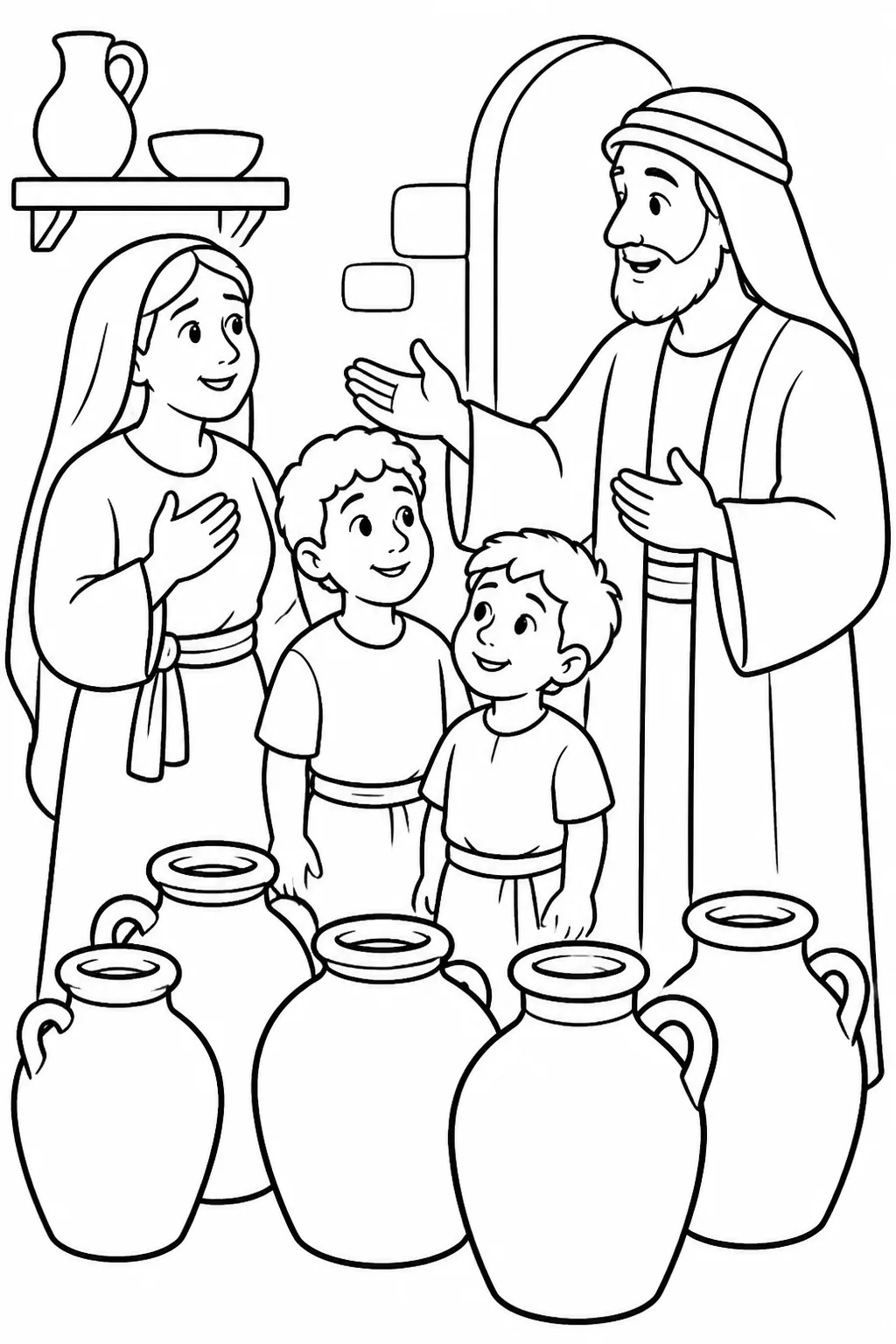
An illustration concept of the unnamed widow, her two sons, Elisha, and containers of oil in the household setting, showing provision for the family.

Provision for the Family

2 Kings 4:1-7
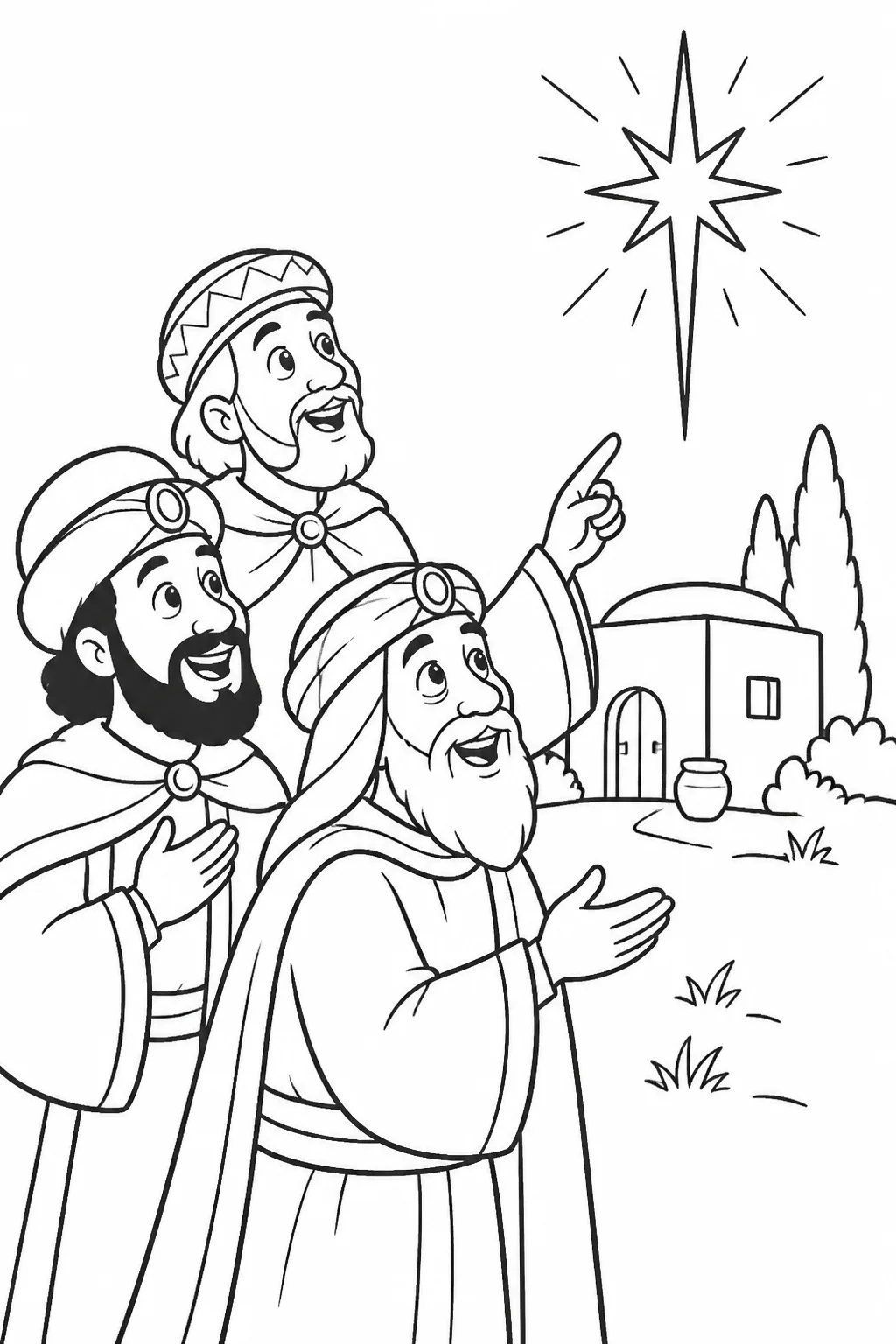
Magi from the east follow a star toward the place where Jesus is and rejoice when the star rests over the house.

Following the Star to Jesus

Matthew 2:1-12
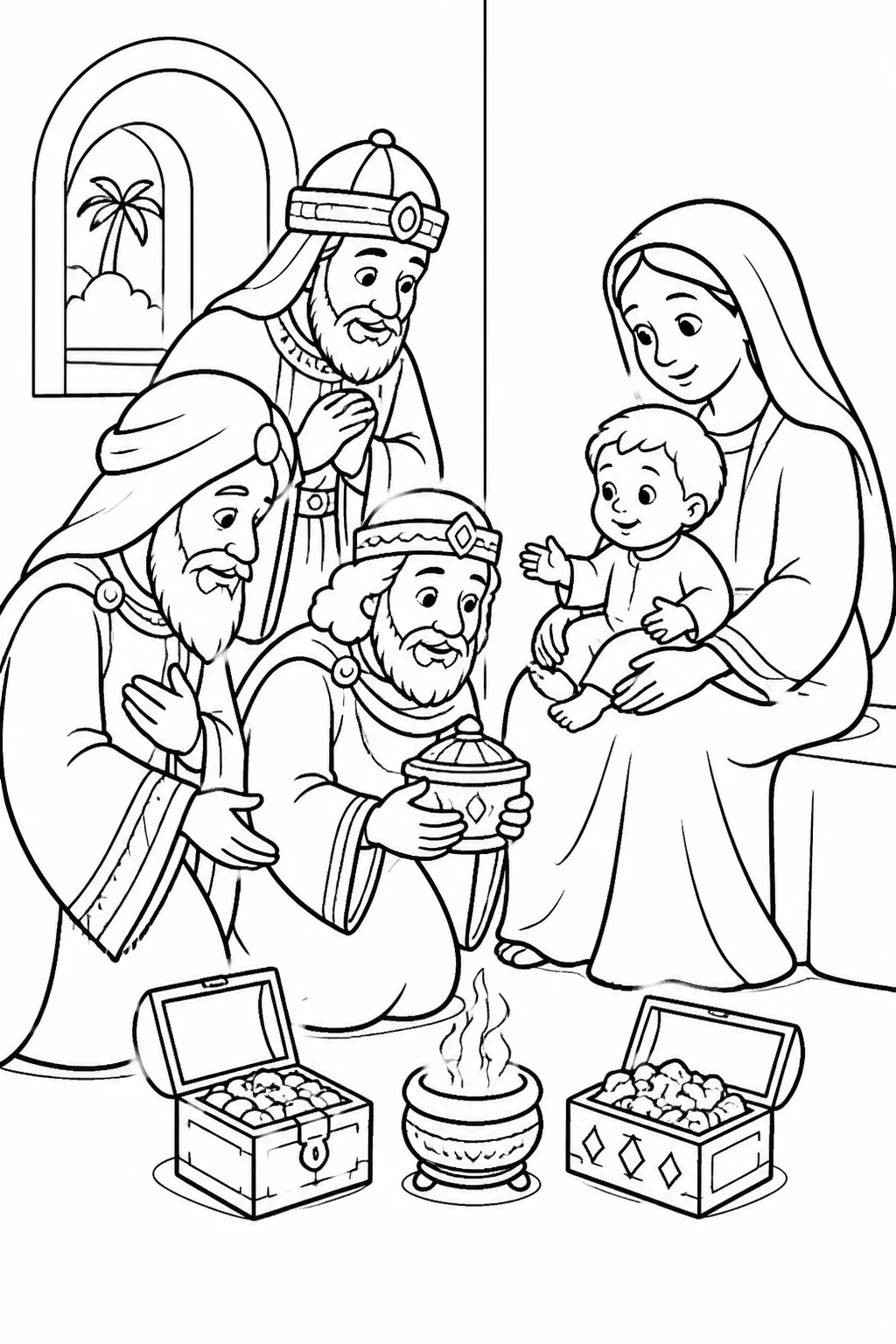
Magi from the east bow before Jesus, who is with Mary his mother inside a house, while gold, frankincense, and myrrh are presented.

The Magi Worship Jesus

Matthew 2:1-12
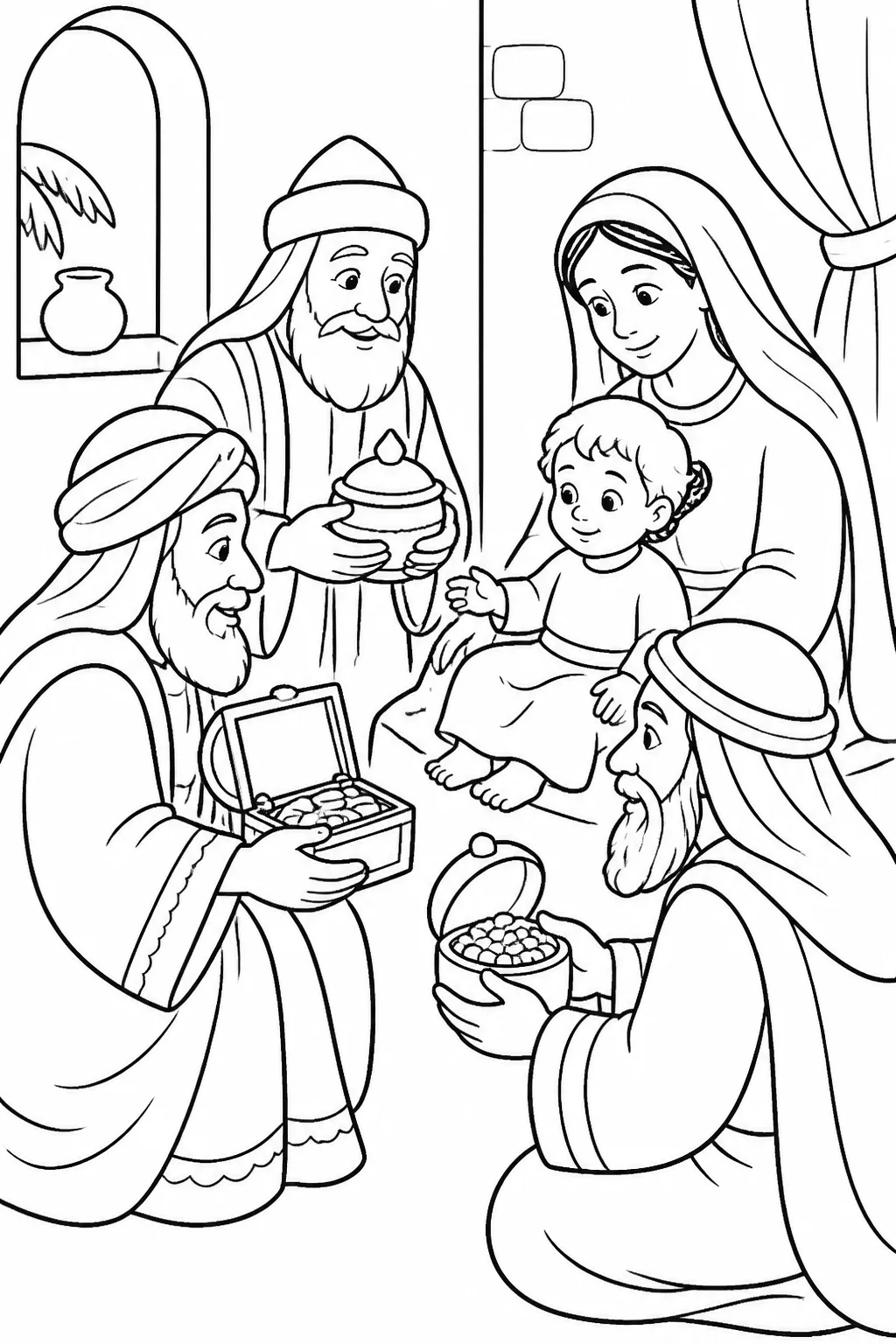
Magi from the east present gold, frankincense, and myrrh to Jesus in a house while Mary, Jesus’s mother, stands nearby.

Treasures for the Child

Matthew 2:1-12
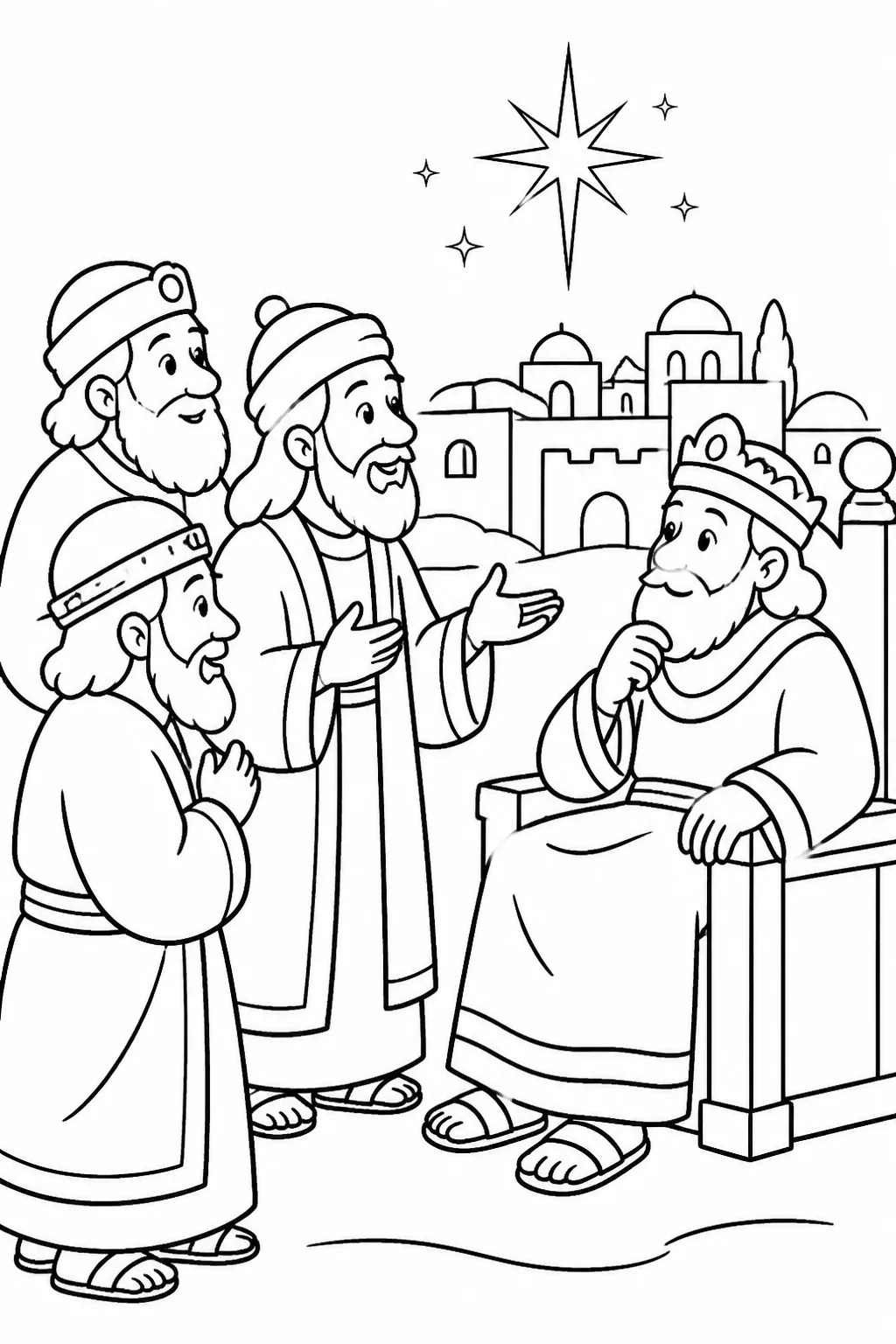
Magi from the east arrive in Jerusalem and seek the child born king of the Jews, telling Herod they saw his star and came to worship him.

Seeking the Child Born King

Matthew 2:1-12
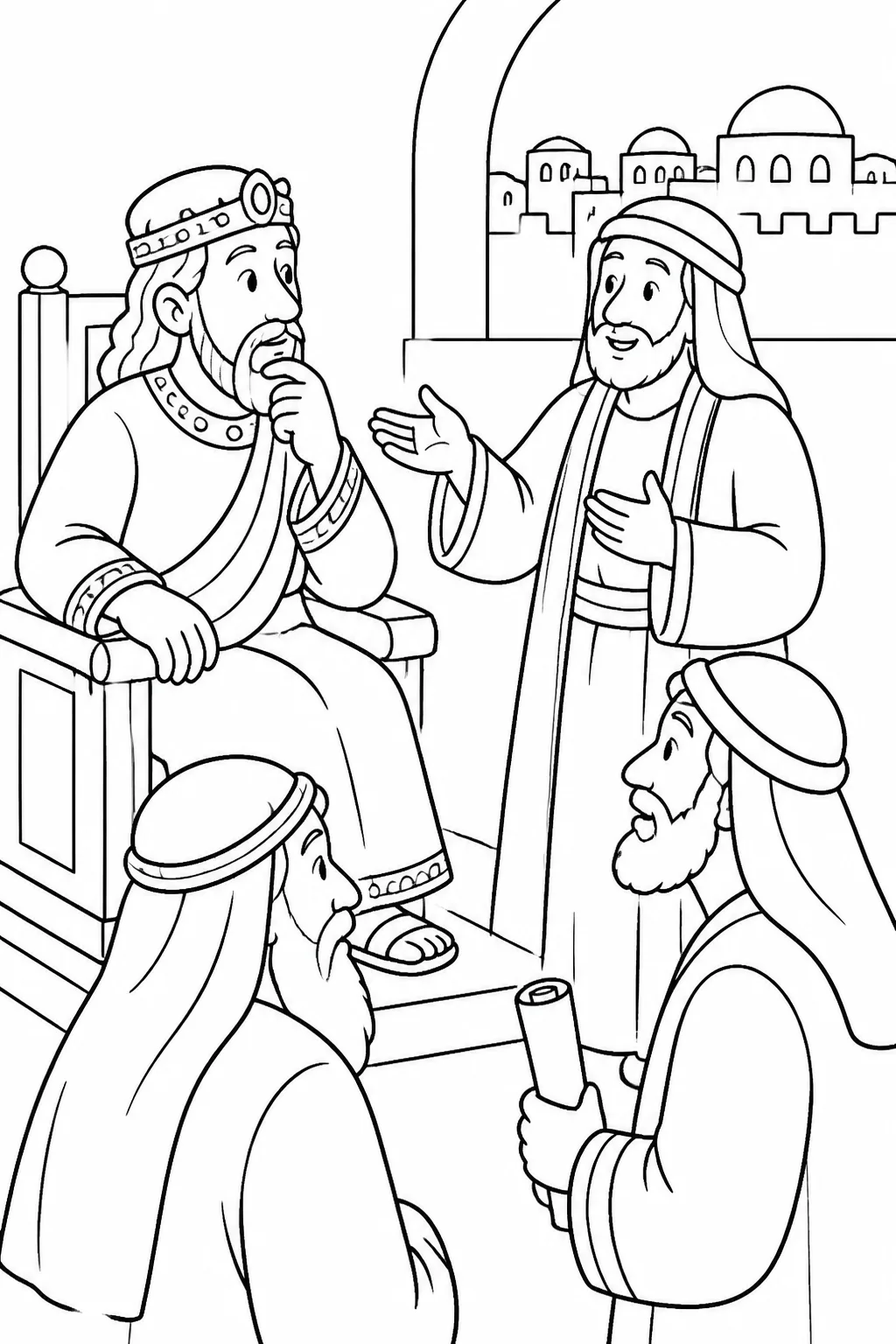
Herod the king asks the chief priests and scribes in Jerusalem where the Christ is to be born, and they answer Bethlehem in Judea.

The Answer About Bethlehem

Matthew 2:1-12
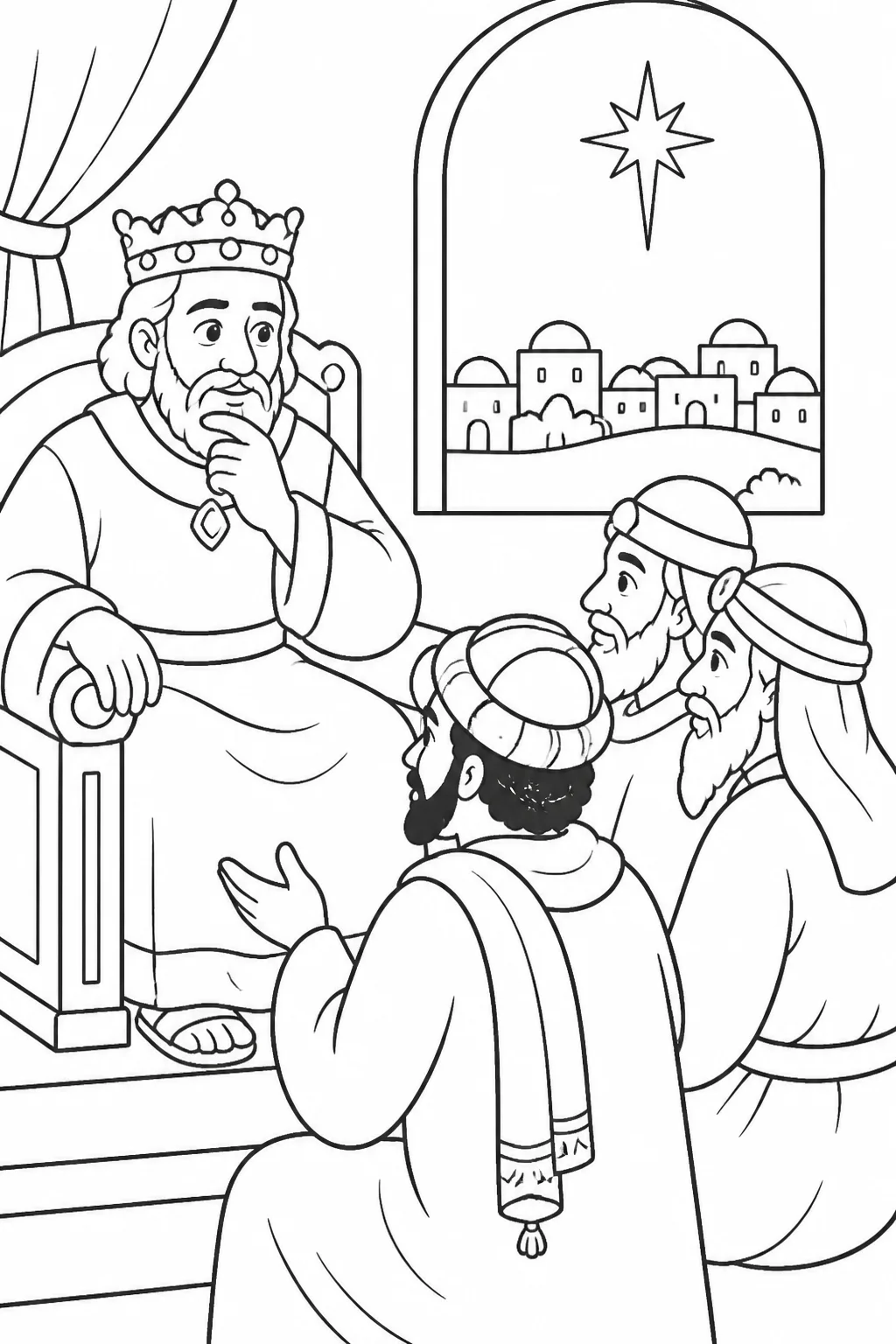
Herod the king secretly speaking with Magi from the east and sending them to Bethlehem to search for the child after learning when they saw the star.

Herod Sends Them to Bethlehem

Matthew 2:1-12
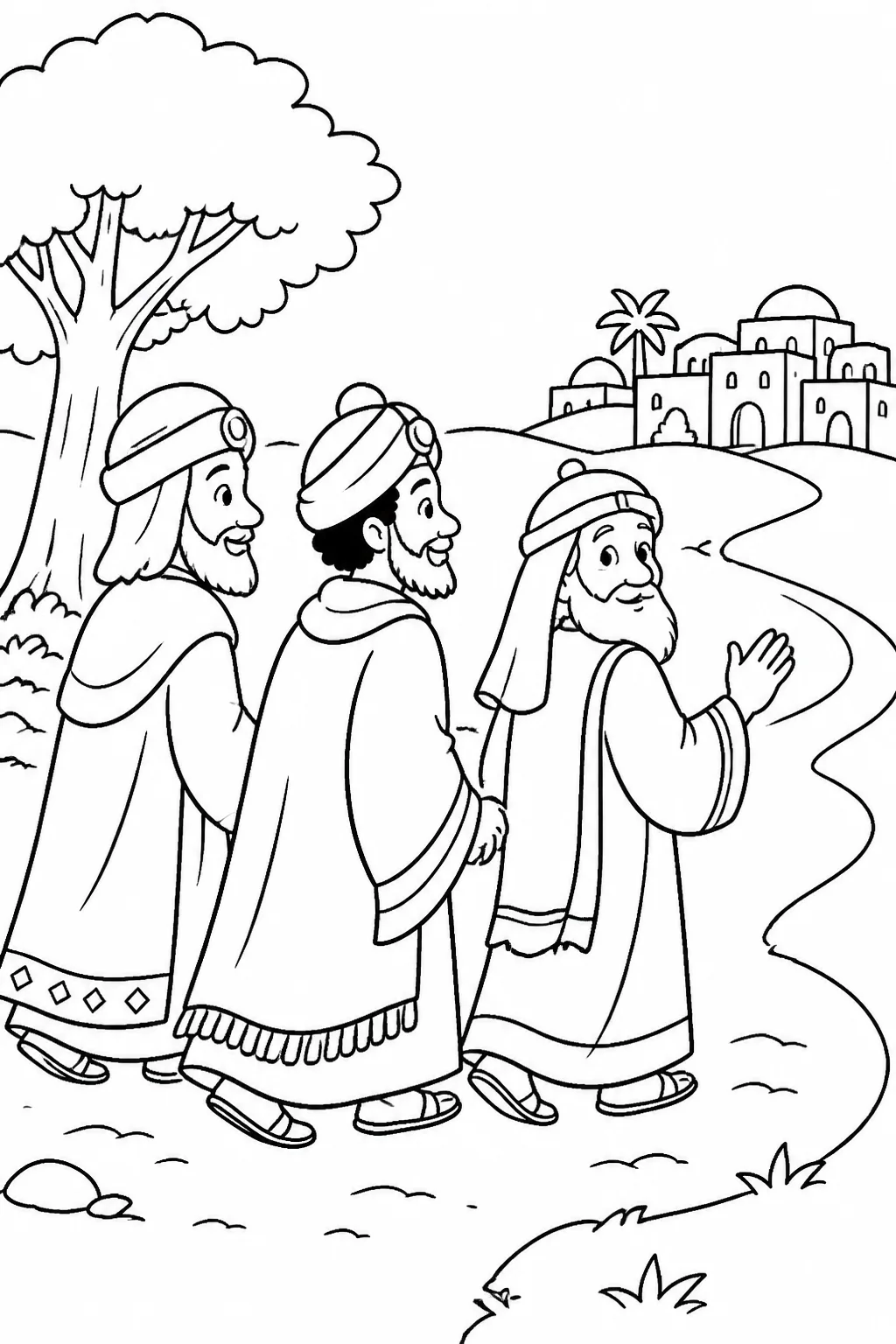
Magi from the east returning to their country by another way after being warned in a dream not to return to Herod.

Returning by Another Way

Matthew 2:1-12

Kingdom Coloring library

Search the whole kingdom

Gathering suggestions…